 By
By  May 19th, 2018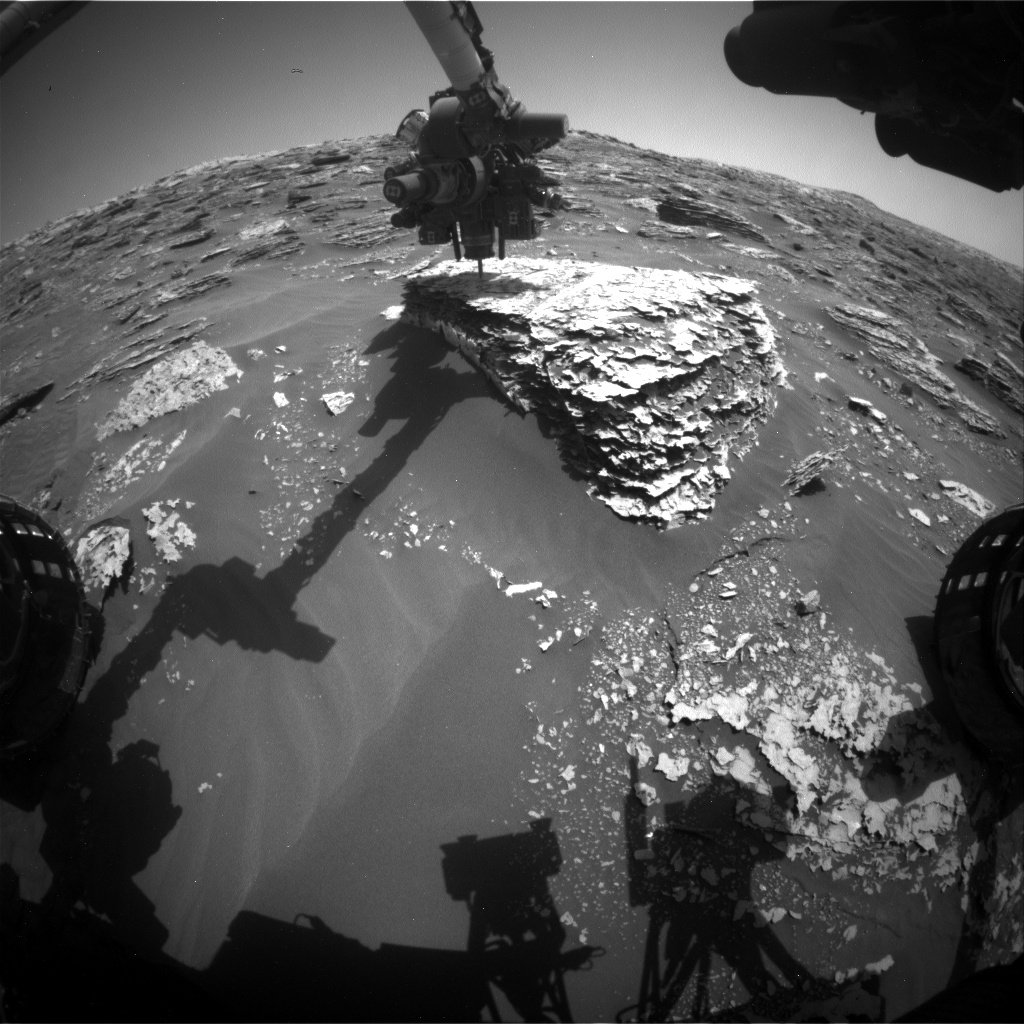
Curiosity Front Hazcam Right B image acquired on Sol 2055, May 18, 2018.
Credit: NASA/JPL-Caltech
Will Mars get the drill?
NASA’s Curiosity Mars rover is now in Sol 2056 implementing a step-wise drilling of the target “Duluth.”
The robot’s Dust Removal Tool (DRT) has brushed a section of the target, prepping it for drilling.
According to JPL, engineers have been working for the past year to restore the rover’s full drilling capabilities, which were hampered in 2016 due to a mechanical problem.

Curiosity Navcam Left B photo taken on Sol 2055, May 18, 2018.
Credit: NASA/JPL-Caltech
Percussion technique
If all goes well, Curiosity controllers will be adding “percussion” to a new technique already in use on Mars.
“This new technique is called Feed Extended Drilling, or FED. It lets Curiosity drill more like the way a person would at home, using the force of its robotic arm to push its drill bit forward as it spins. The new version of FED adds a hammering force to the drill bit,” notes a JPL statement.
Why Duluth?
In the United States, Duluth, Minnesota has one of the coolest climates in the U.S. due to its proximity to the world’s largest and one of the deepest freshwater lakes.
“The drill target ‘Duluth’ on Mars was also once near the shore of a large freshwater lake. Its climate is also relatively cool, so the name is apropos,” explains Roger Wiens, a geochemist at Los Alamos National Laboratory in New Mexico.
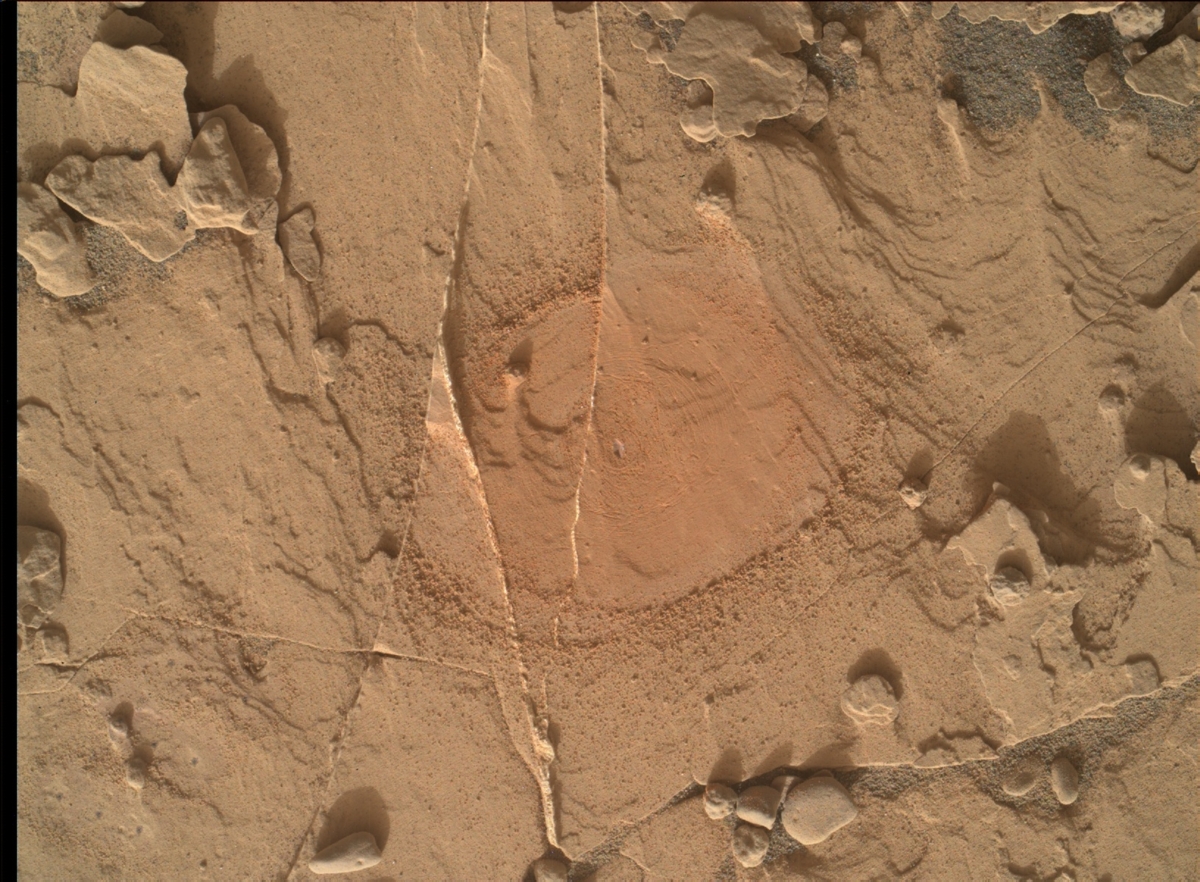
The robot’s Dust Removal Tool (DRT) has brushed a section of the target, prepping it for drilling. Curiosity Mars Hand Lens Imager (MAHLI) produced this image on Sol 2055, May 18, 2018.
Credit: NASA/JPL-Caltech/MSSS
The name of the drill site was almost changed when it was realized that “Duluth” was already used for a Chemistry and Camera (ChemCam) target way back on Sol 292. “Normally we don’t use names more than once, but the team decided an exception was warranted,” Wiens adds.
 Posted in Space News

