 By
By  May 15th, 2018
Curiosity Front Hazcam Right B image taken on Sol 2051, May 14, 2018.
Credit: NASA/JPL-Caltech
NASA’s Curiosity Mars rover is working Sol 2052 science duties. However, a recent drive did not wheel the rover into an expected spot.
“We’ve been here before,” reports Scott Guzewich, an atmospheric scientist at NASA’s Goddard Space Flight Center in Greenbelt, Maryland: “Rather than driving almost 11 meters, Curiosity only drove about 1/2 meter before stopping. So, we found ourselves looking at images of previous wheel tracks and contact science targets rather than a new location.”
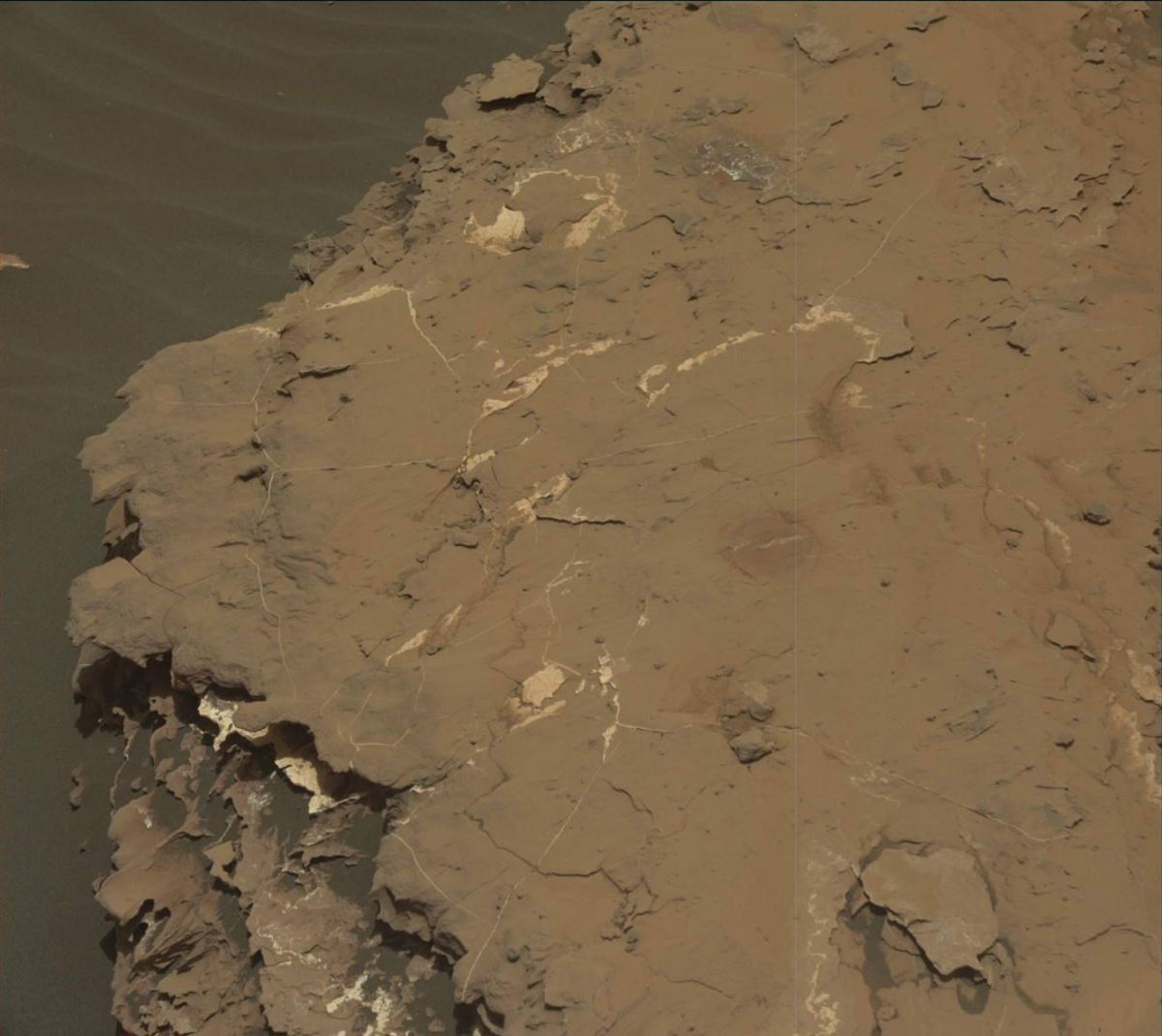
Curiosity Mastcam Left image acquired on Sol 2050, May 13, 2018.
Credit: NASA/JPL-Caltech/MSSS
New drilling attempt
Scientists had expected to start examining a new location within the robot’s arm reach (or a very short drive’s reach) of a possible location for a next drilling attempt.
The priority now is to recover that drive, which left plenty of time for some additional targeted and untargeted science.
This included instrument looks at “Brownell” and “Mahtowa”, additional Mastcam images of “Munger” and “Itasca”, and taking a Navcam dust devil movie.
Dust devils
Following the drive, the plan calls for Curiosity to use Chemistry and Camera (ChemCam) specialized software – Autonomous Exploration for Gathering Increased Science (AEGIS). That software autonomously directs the robot’s cameras to interesting science targets.

Curiosity Mars Hand Lens Imager (MAHLI) photo produced on Sol 2050, May 13, 2018.
Credit: NASA/JPL-Caltech/MSSS
Along with AEGIS activity, the rover will make a longer version of a Navcam dust devil movie.
“We often schedule dust devil movies closer to midday, when dust devils are more common, but it’s important to also observe at other times of day to understand their frequency and patterns,” Guzewich explains.
 Posted in Space News

