 By
By  May 2nd, 2018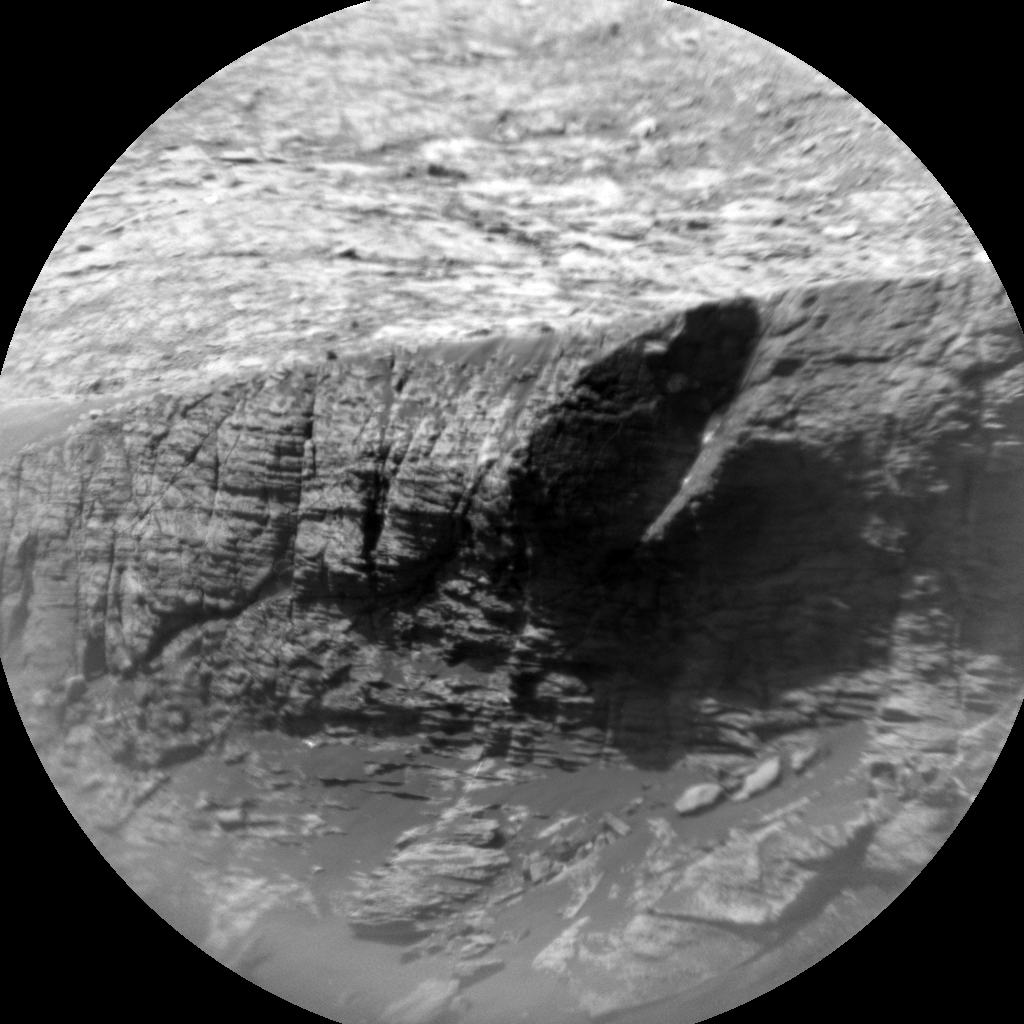
Curiosity ChemCam Remote Micro-Imager photo of Red Cliff taken on Sol 2038, May 1, 2018
Credit: NASA/JPL-Caltech/LANL
NASA’s Mars Curiosity rover is now in Sol 2039, following some impressive preliminary imaging of “Red Cliff,” reports Rachel Kronyak, a planetary geologist at the University of Tennessee in Knoxville.
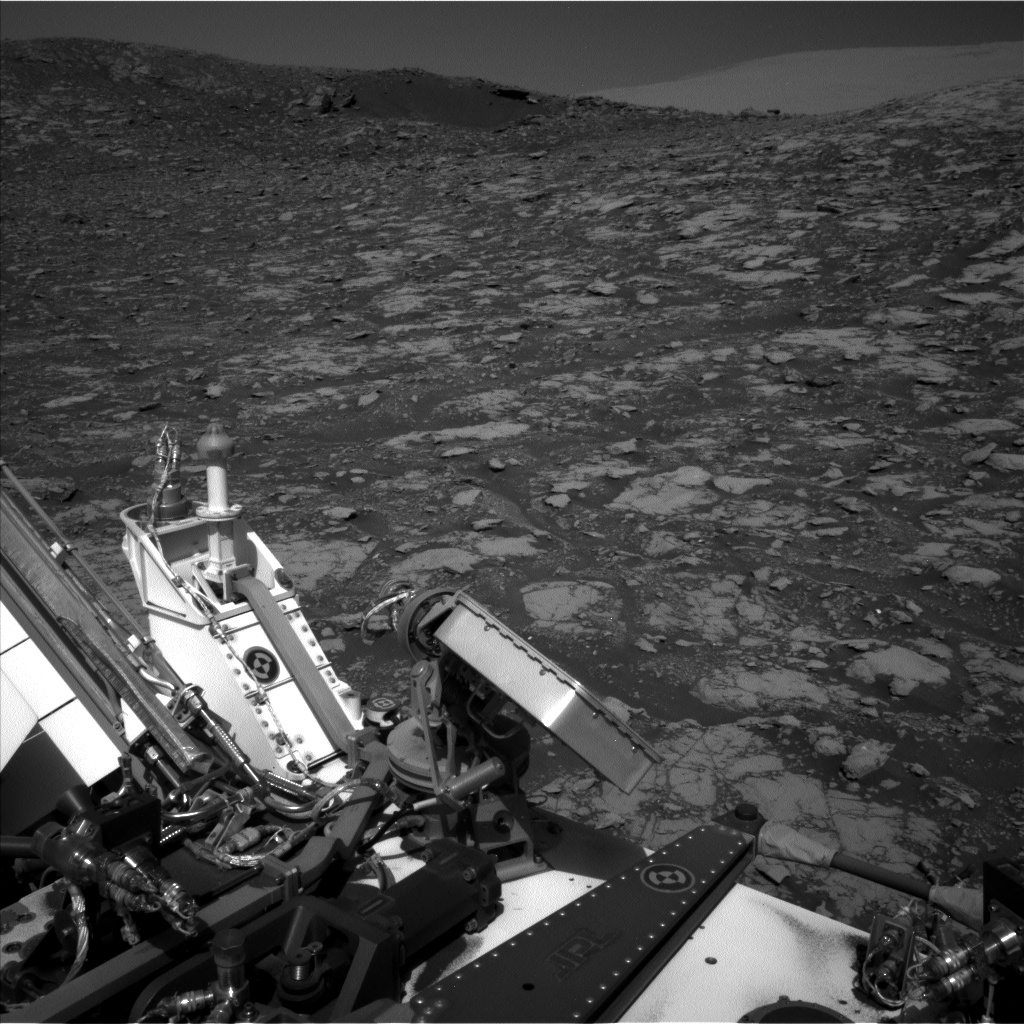
Curiosity Navcam Left B image acquired on Sol 2039, May 2, 2018.
Credit: NASA/JPL-Caltech
The plan now scripted calls for the robot to take additional imagery of Red Cliff “before continuing to drive toward a location where we think we are likely to drill. Kronyak adds.
Small scale studies
“We have a short science block to start the day, during which we’ll use Mastcam to take some context imaging of our surroundings and upcoming terrain,” Kronyak explains. On the plan is using the rover’s Chemistry and Camera (ChemCam) Remote Micro-Imager (RMI) to extend the coverage of Red Cliff.
“These RMI images give us a really great opportunity to study small-scale stratigraphic details in rocks that are pretty far away from the rover,” Kronyak points out.
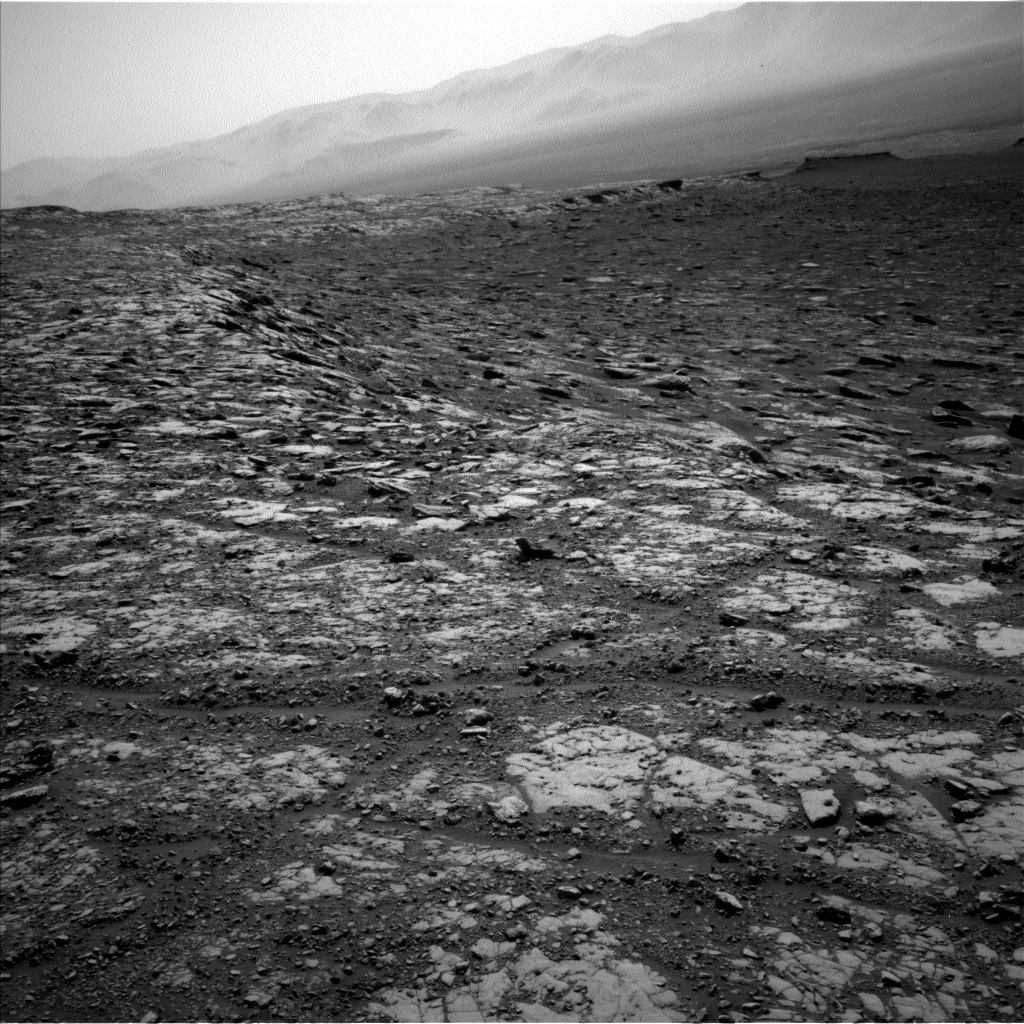
Curiosity Navcam Left B image acquired on Sol 2039, May 2, 2018.
Credit: NASA/JPL-Caltech
Post-drive duties
Following the science block, Curiosity is to drive and take a standard sequence of post-drive images.
Also on tap is taking a dust devil movie with Navcam as well as a post-drive Autonomous Exploration for Gathering Increased Science (AEGIS) observation to collect some preliminary geochemical information at the rover’s next location.
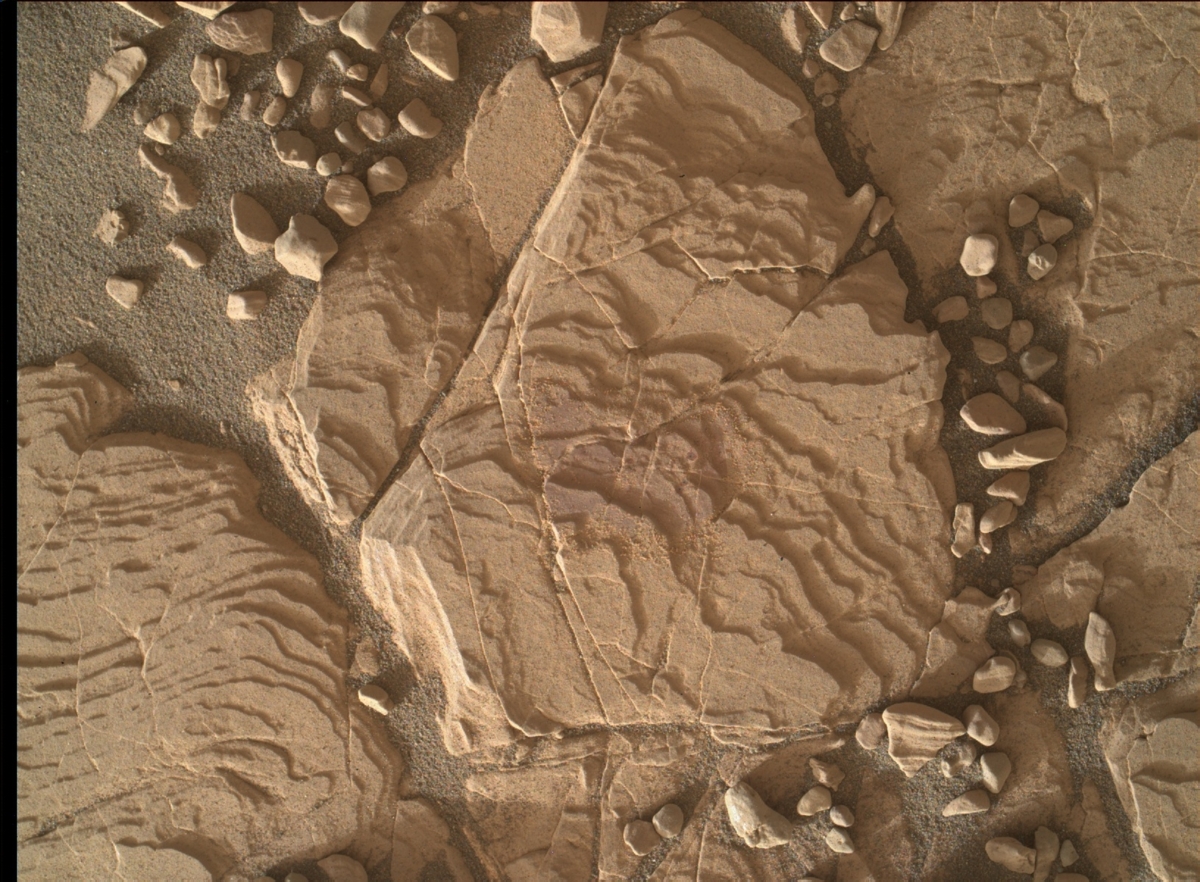
Curiosity Mars Hand Lens Imager (MAHLI) taken on Sol 2038, May 1, 2018.
Credit: NASA/JPL-Caltech/MSSS
Curiosity will then take standard Rover Environmental Monitoring Station (REMS) and Dynamic Albedo of Neutrons (DAN) data, Kronyak concludes, “to round out another great day on Mars!”
 Posted in Space News

