 By
By  April 10th, 2018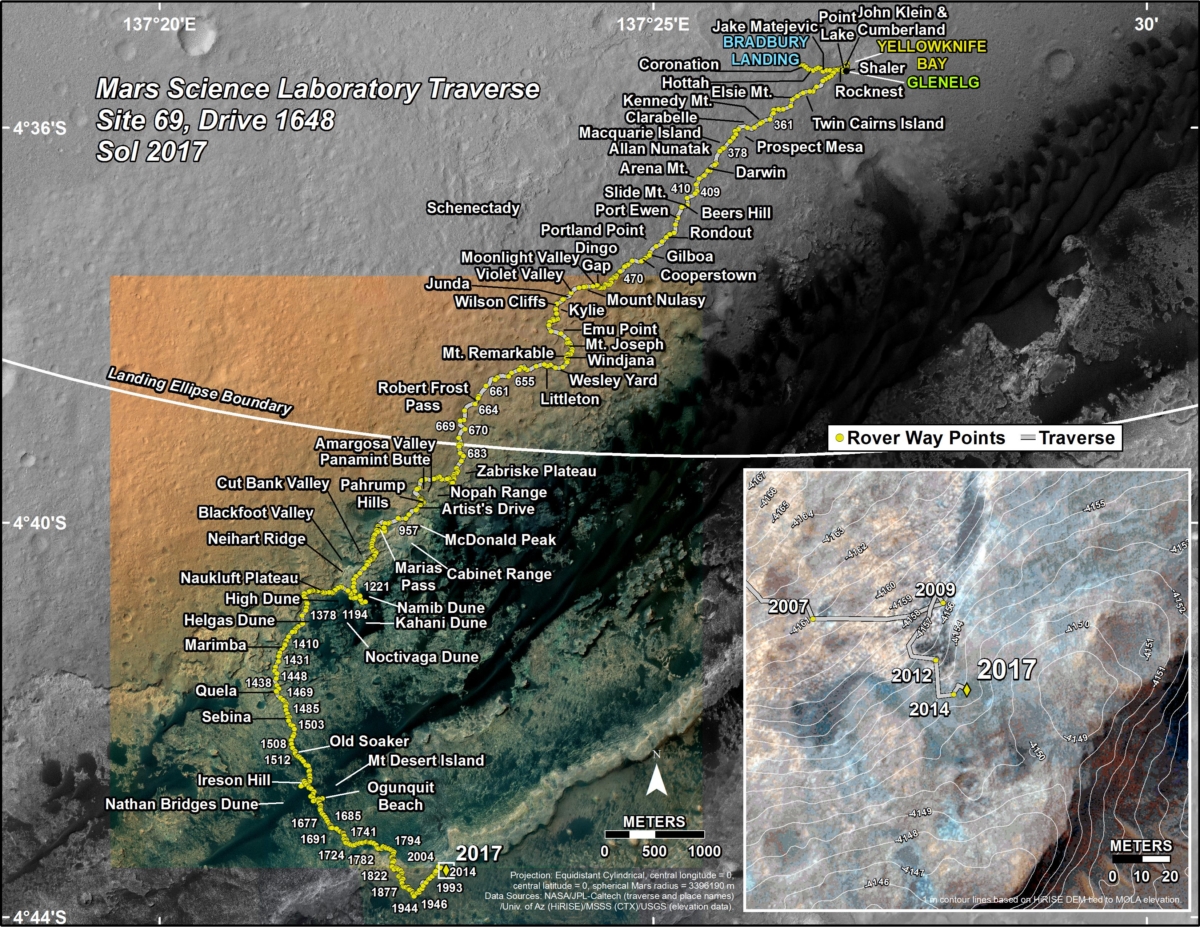
Credit: NASA/JPL-Caltech/Univ. of Arizona
New Curiosity traverse map through Sol 2017:
This map shows the route driven by NASA’s Mars rover Curiosity through the 2017 Martian day, or sol, of the rover’s mission on the Red Planet (April 09, 2018).
Numbering of the dots along the line indicate the sol number of each drive. North is up. The scale bar is 1 kilometer (~0.62 mile).
From Sol 2014 to Sol 2017, Curiosity had driven a straight line distance of about 16.34 feet (4.98 meters), bringing the rover’s total odometry for the mission to 11.60 miles (18.68 kilometers). The rover landed on Mars in August of 2012.
The base image from the map is from the High Resolution Imaging Science Experiment Camera (HiRISE) in NASA’s Mars Reconnaissance Orbiter.
Meanwhile, the Mars robot is now carrying out Sol 2018 science duties.
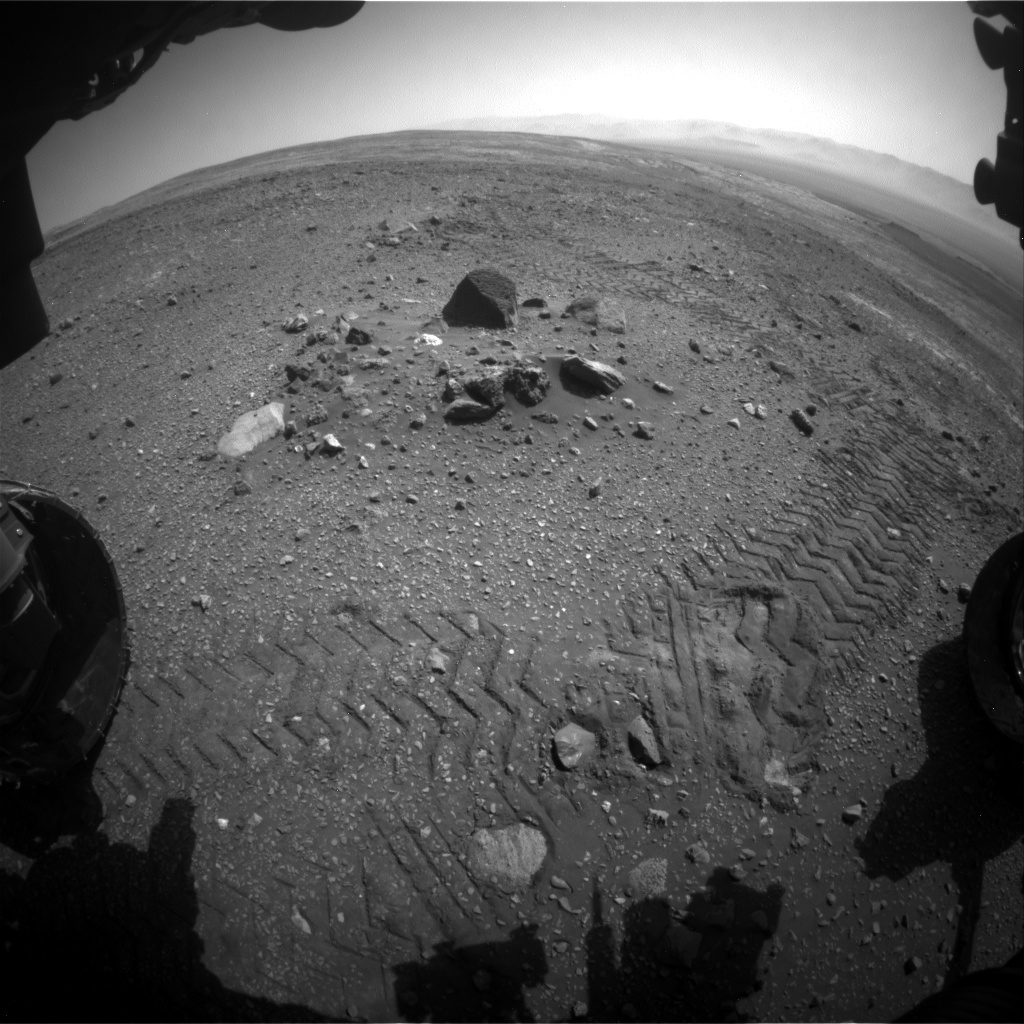
Curiosity Front Hazcam Left B image acquired on Sol 2017, April 9, 2018.
Credit: NASA/JPL-Caltech
Eclectic mix of targets
“An eclectic mix of rock targets has kept our team’s attention for another sol today,” reports Scott Guzewich, an atmospheric scientist at NASA’s Goddard Space Flight Center in Greenbelt, Maryland. “The sheer number of possible science investigations led us to initially oversubscribing our science plan and thus needing to prioritize.
A full contact science sol is in the works to study targets “Hopeman” and “Askival”, “Tyndrum2” and “Ledmore.”
What is especially unusual about the plan, Guzewich adds, is use of the Mars Hand Lens Imager (MAHLI) MAHLI’s to shine a (UV) light on the situation and image “Askival” after sunset. Also a depth profile at Askival is on tap.
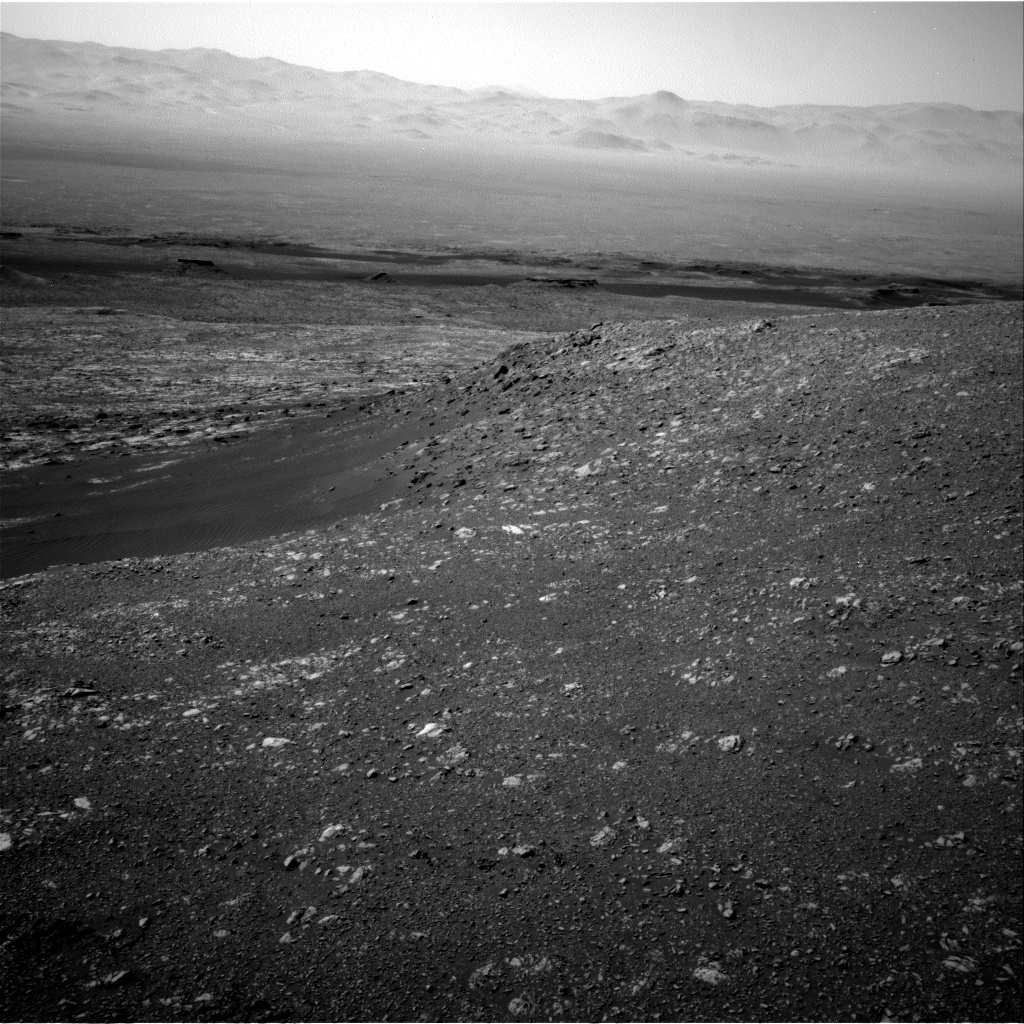
Curiosity Navcam Right B photo taken on Sol 2017, April 9, 2018.
Credit: NASA/JPL-Caltech
A depth profile, Guzewich explains, is where the rover’s Chemistry and Camera (ChemCam) shoots its laser at the same spot 150 times to measure how the composition changes with depth into the rock or soil.
“Last, but certainly not least to me as the environmental science theme lead today, is to conduct a dust devil survey around local solar noon. We are seeing a great deal of dust devil activity lately with a noticeable increase over the last few weeks as we move closer to the start of southern hemisphere spring,” Guzewich concludes.
 Posted in Space News

