 By
By  March 5th, 2018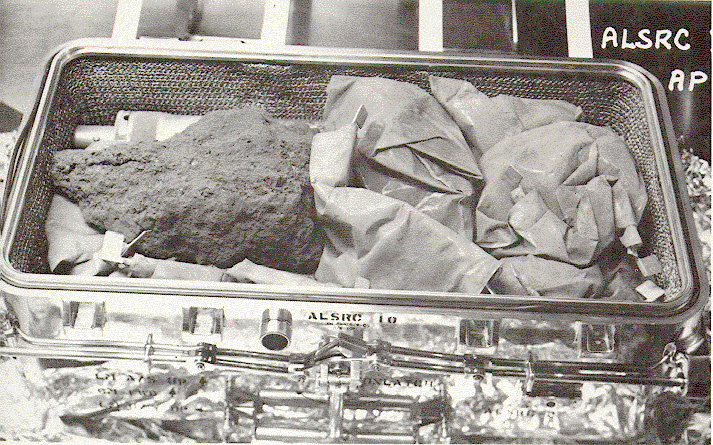
One of the Apollo 16 sample boxes being opened in the Lunar Receiving Laboratory on Earth. The box contains a large rock and many small sample bags.
Credit: NASA/Johnson Space Center
Apollo moonwalkers between 1969 and 1972 brought back to Earth a total of nine containers of lunar materials that were sealed on the lunar surface. Two of the larger sealed samples were collected from Apollo 17.
Three sealed samples from Apollo 15, 16, and 17 remain unopened.
According to several key lunar researchers, now is the right time to consider opening at least one of the still sealed sample containers.
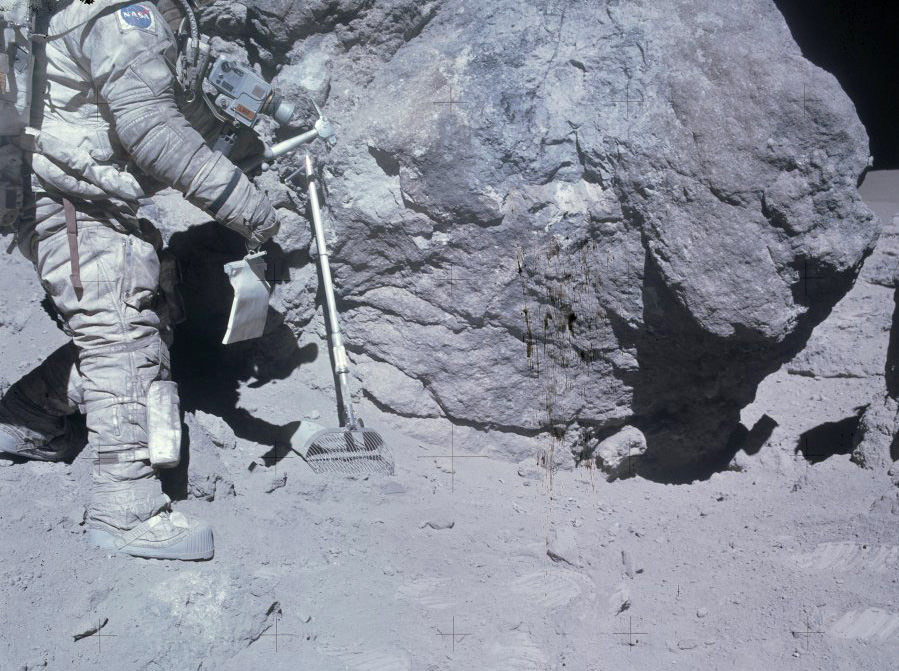
Apollo 16 astronaut Charlie Duke collects lunar samples during moon walk.
Credit: NASA/Johnson Space Center
Pristine and unstudied
Apollo’s set of unopened samples contain pristine and unstudied lunar material.
Moreover, given that the total sample mass within the unopened containers of moon specimens exceeds projected masses returned by future robotic missions, each of the unopened samples should be treated as an individual lunar mission, lunar experts contend.

Apollo 17 mission in December 1972 surveyed the Taurus-Littrow highlands and valley area. This site was picked as a location where rocks both older and younger than those previously returned from other Apollo missions might be found.
Credit: NASA/Johnson Space Center
For more information on this idea, please go to my new Space.com story at:
Should We Open Some Sealed Apollo Moon Samples?
March 5, 2018 07:15am ET
https://www.space.com/39870-should-we-open-sealed-apollo-moon-samples.html
 Posted in Space News

