 By
By  June 1st, 2017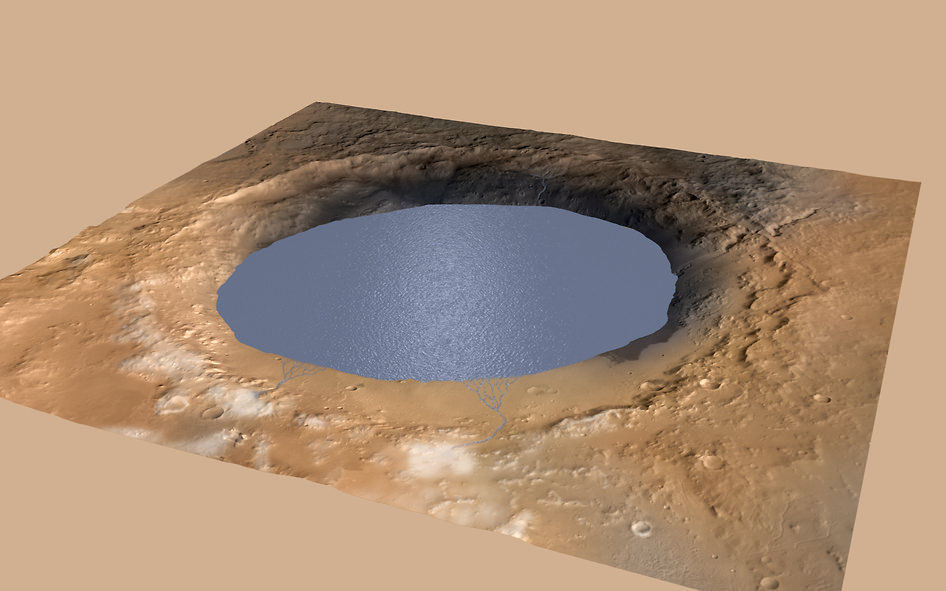
Simulated view of Gale Crater Lake on Mars depicts a lake of water partially filling Mars’ Gale Crater, receiving runoff from snow melting on the crater’s northern rim. Evidence of ancient streams, deltas and lakes that NASA’s Curiosity Mars rover mission has found in the patterns of sedimentary deposits in Gale Crater suggests the crater held a lake such as this more than three billion years ago, filling and drying in multiple cycles over tens of millions of years.
Credit: NASA/JPL-Caltech/ESA/DLR/FU Berlin/MSSS
Evidence is stacking up from NASA’s Curiosity rover on Mars that an ancient lake in Gale Crater would have provided multiple opportunities for different types of microbes to survive.
Early rover findings point to the presence of a lake more than three billion years old in the crater. New research suggests that the lake had chemical and physical properties very similar and common to lakes on Earth.
Chemical conditions
A new study has defined the chemical conditions that existed in the lake, research that utilized Curiosity’s research tools to determine that Gale Lake was stratified. Stratified bodies of water exhibit sharp chemical or physical differences between deep water and shallow water.
In Gale’s lake, shallow water was richer in oxidants than deeper water.
Chemical conditions that existed in the lake on Mars, a research team reports, could have supported microbial life, including those that thrive in oxidant-rich conditions, those that thrive in oxidant-poor conditions, and those that inhabit the interface between both conditions.

Joel Hurowitz science team member on the Mars Science Laboratory (MSL) Curiosity rover.
Credit: Stony Brook University
Co-existing environments
“These were different, co-existing environments in the same lake,” said geoscientist Joel Hurowitz, an Assistant Professor in the Department of Geosciences at Stony Brook University. He is lead author of a paper titled Redox stratification of an ancient lake in Gale crater, Mars, set to be published in the June 2 edition of the journal Science.
“This type of oxidant stratification is a common feature of lakes on Earth, and now we have found it on Mars,” Hurowitz added in a university press statement.
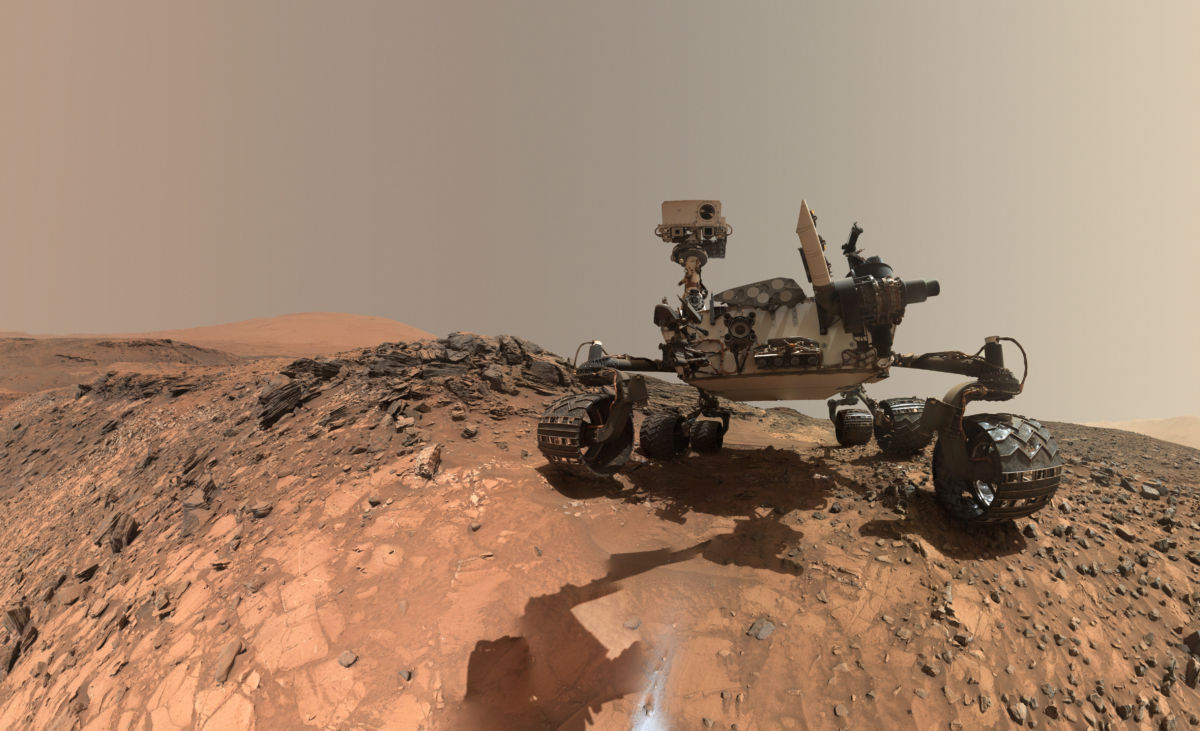
Curiosity Mars rover: On the prowl for science since August 2012.
Credit: NASA/JPL
Quiet waters
The international team of 22 scientists (co-authors of the paper) also document fluctuations in the climate of ancient Mars.
The method the team used for detecting changes in ancient climate conditions on Mars resembles how ice cores are used to study past temperatures on Earth. It is based on comparing differences in the chemical composition of layers of mud-rich sedimentary rock that were deposited in quiet waters of the lake.
 Posted in Space News

