 By
By  May 22nd, 2017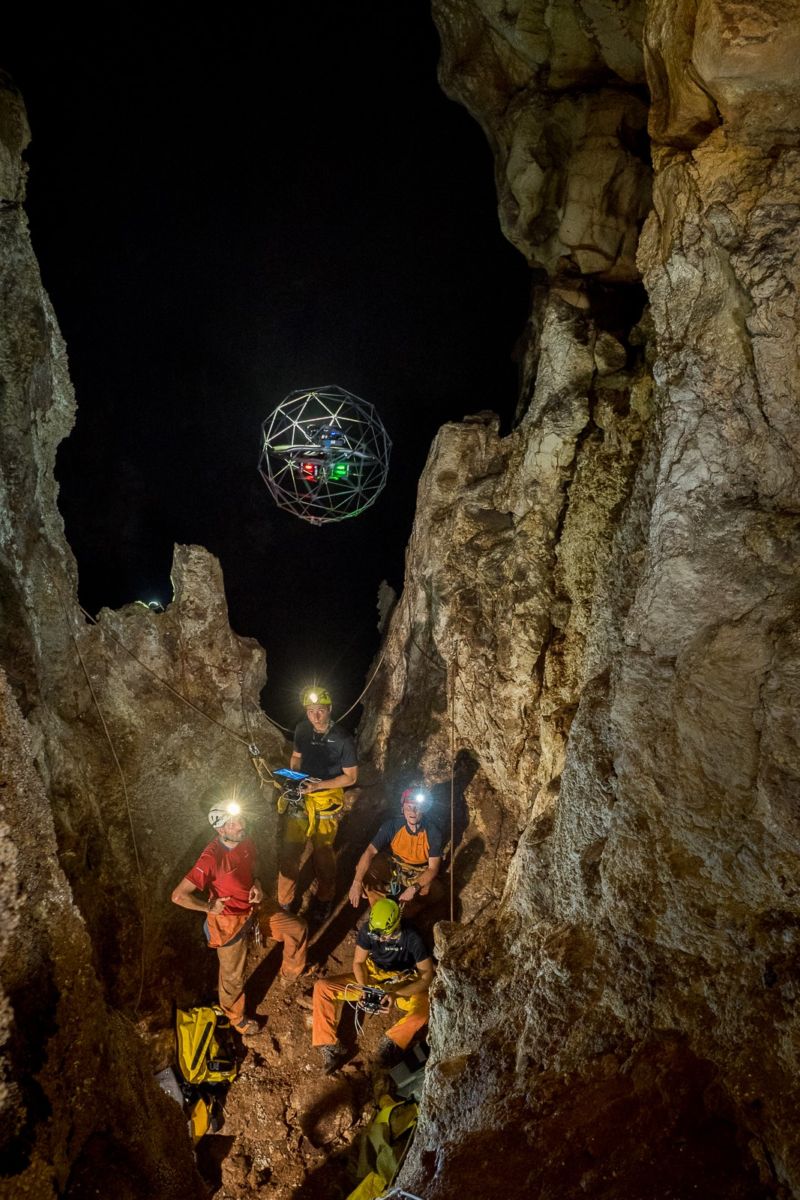
Flyability drone is unleashed in Cucchiara cave.
Credit: ESA
Cave divers have been utilizing a drone to explore caverns – a technology that could be a valuable plus in future exploration of lava tubes on Mars.
The drone was tested during the European Space Agency’s (ESA) Cooperative Adventure for Valuing and Exercising human behavior and performance Skills course (CAVES-X1) expedition. ESA astronaut Luca Parmitano took part in the caving expedition.
The scientific outing was organized by La Venta Association and the Commissione Grotte Eugenio Boegan and took place in the La Cucchiara caves near Sciacca, Sicily.
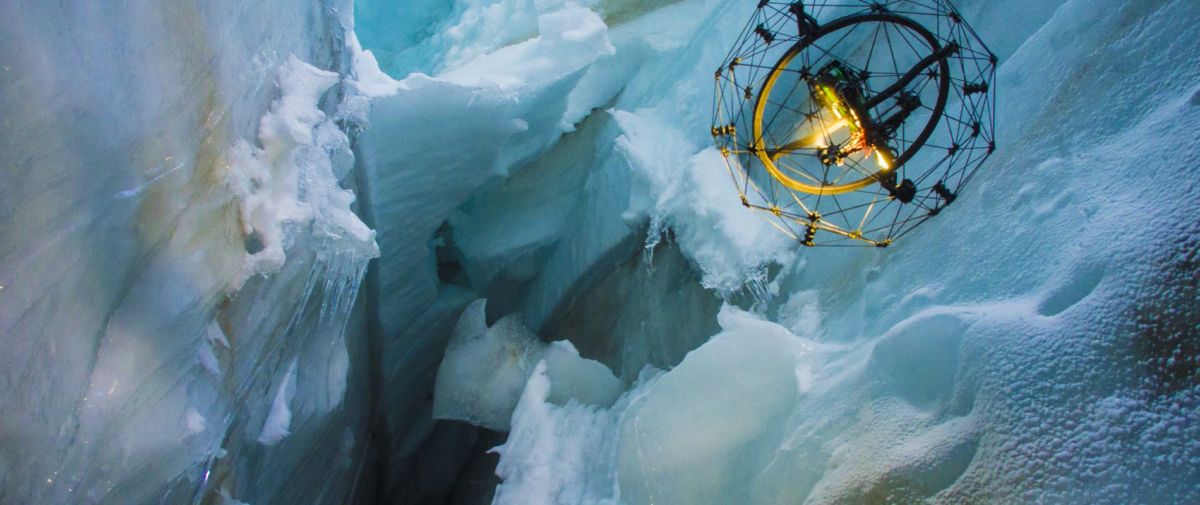
Drone dives into icy crevasse.
Credit: Flyability
Hard-to-reach spaces
Using a Flyability drone, the hardware can probe hard-to-reach spaces. The drone deliberately bumped into walls to learn how to navigate and to map tight areas that are too dangerous for humans.
ESA’s course coordinator, Francesco Sauro, an experienced caver and field geologist, said the drone used its thermal camera to map how the cave continued all the way to an unexplored area featuring water, impossible to reach for humans. “These tests will help us understand which technologies can be used in future exploration of lava tubes on Mars, for example,” he added in an ESA press statement.
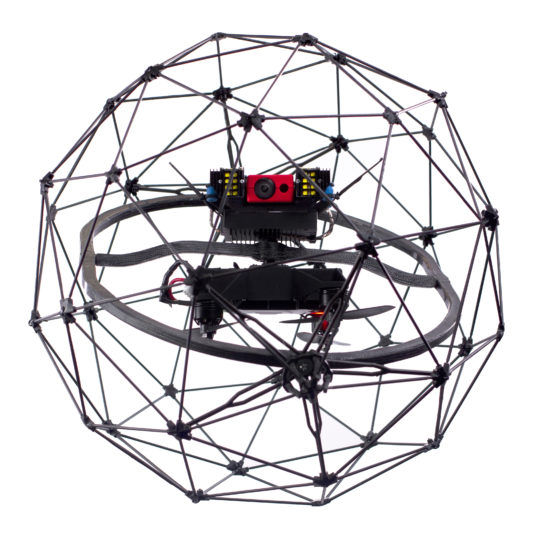
Credit: Flyability
ESA’s strategy sees humans and robots working together to explore and build settlements on planetary bodies.
Nine flights
Within the caverns of Sicily, temperatures can rise to 37°C, making the exploration in darkness even more difficult.
The drone was launched into a 100 m-high vertical tunnel.
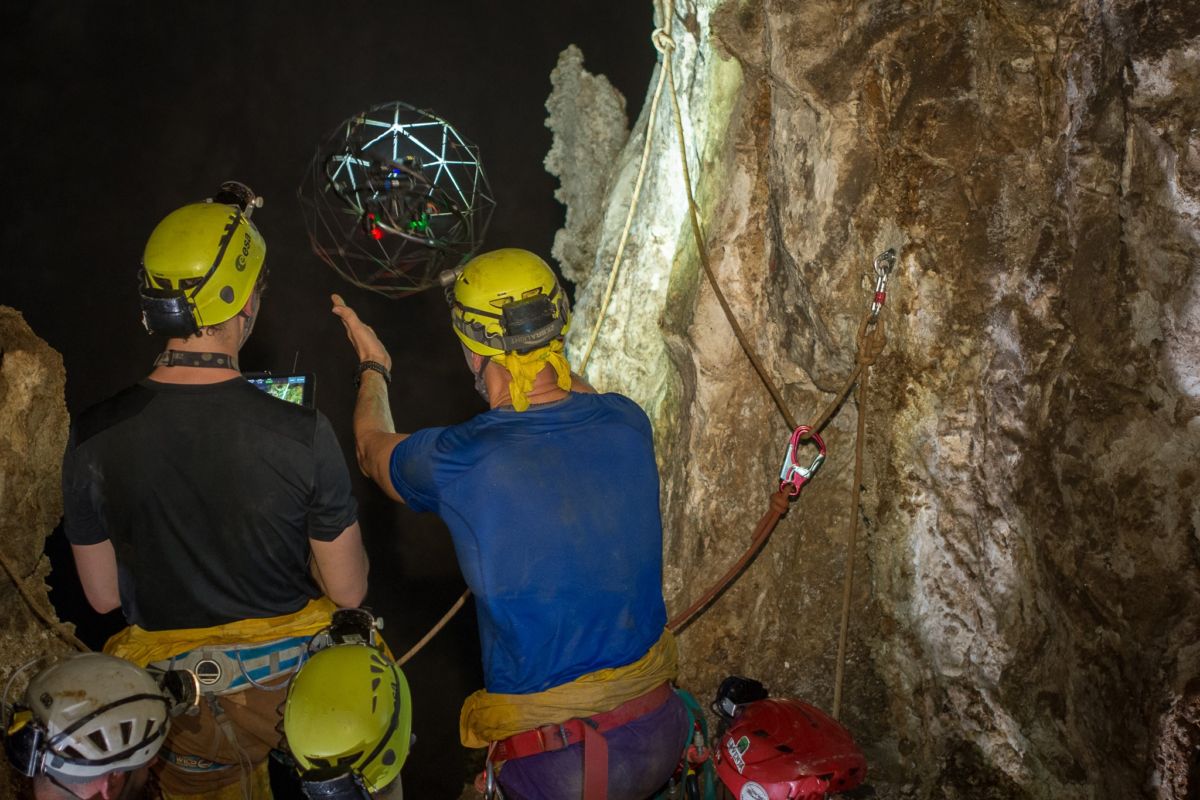
ESA astronaut Luca Parmitano with the Flyability team flying the drone in the Cucchiara Cave.
Credit: ESA–N. Russo www.natalinorusso.it
Two operators — one for the cameras and one for the drone itself — searched deep into the tunnel for hot spots and mapping never-seen-before areas. The thermal camera allowed the operators to pinpoint areas where temperatures are estimated to be higher than 40°C – circular conduits that are now earmarked for future exploration.
Inside the abyss, hot and cold air currents mix and form condensation so high it resembles continuous rain in the shaft. Despite these difficult conditions, ESA reports that the drone performed flawlessly over its nine flights.
For more information on the Flyability drone technology, go to the company’s website at:
 Posted in Space News

