 By
By  May 10th, 2017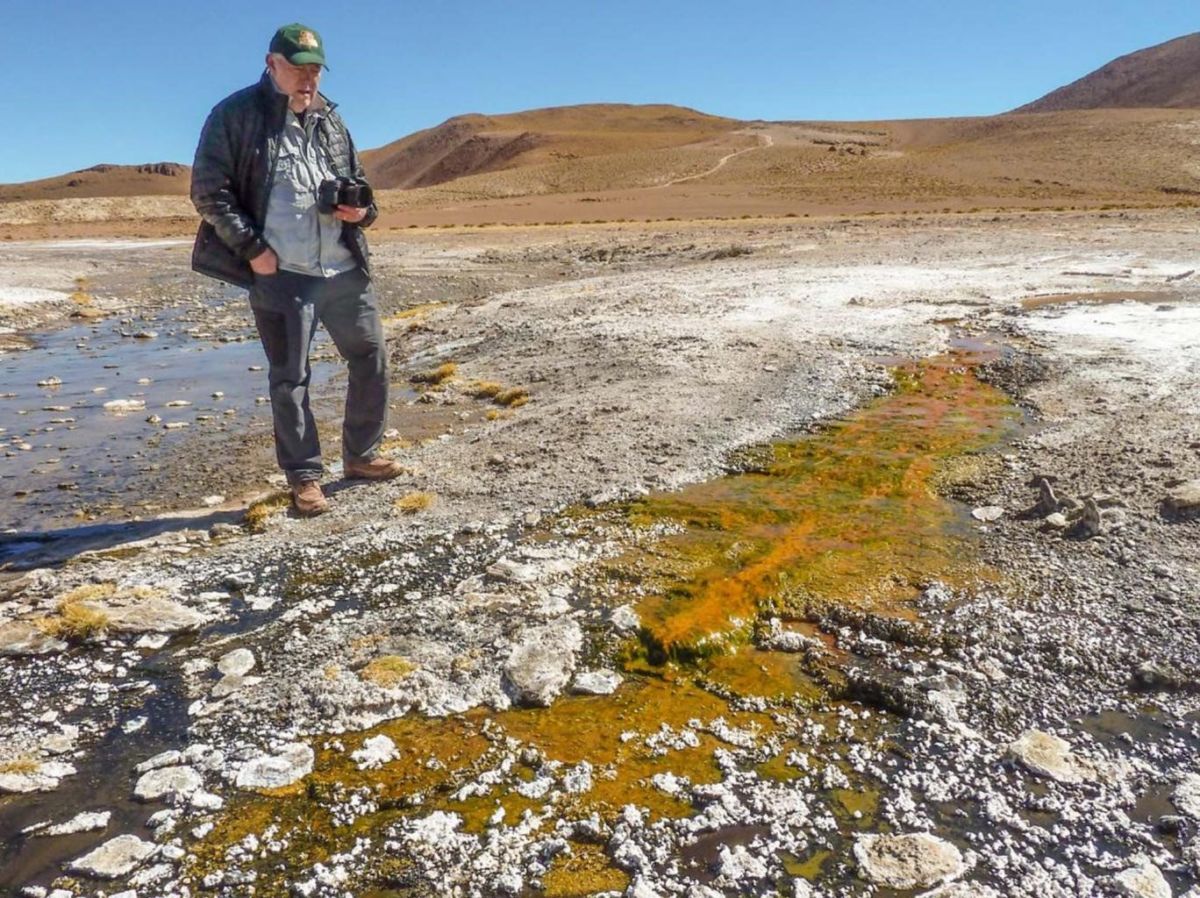
Arizona State University astrobiologist Jack Farmer studies an outflow colored by microorganisms that flows from the hot springs at El Tatio in Chile. The microorganisms appear nearly identical to silica structures found by the NASA Spirit rover at a site on Mars.
Credit: Steve Ruff
Billions of dollars have been spent in reconnoitering Mars since the 1960s. That world has been on the receiving end from Earth of robotic flybys, photo-snapping orbiters and numbers of nose-diving craft onto its surface.
Indeed, the Red Planet has been radar pinged, crashed into, soft landed upon, scooped up, digested and laser zapped, wheeled across and generally scuffed up.
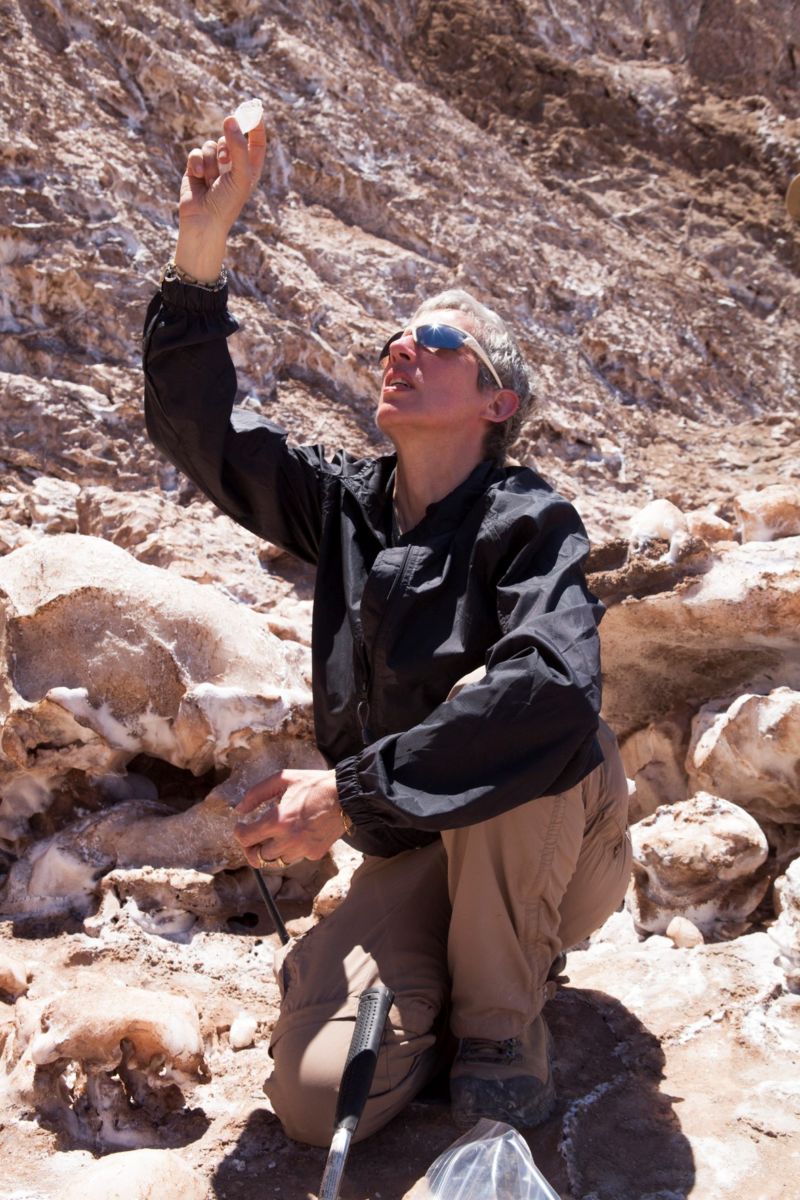
Nathalie Cabrol, Senior Research Scientist and Director of the Carl Sagan Center at the SETI Institute in Mountain View, California. Cabrol is shown here at Salar Grande, Atacama Desert, Chile in November 2016, looking for signs of microbial colonies in salt crystals.
Credit: Victor Robles, Campoalto/SETI Institute NAI Team 2016.
Poker-faced world
Decades later it remains a poker-faced world – with the house odds suggesting it could be an extraterrestrial address for life. If so, Mars is not giving up its secrets easily — or to stretch the metaphor more – holding its cards tight.
Scientists continue to, quite literally, chip away at finding the truth. Locating evidence of present-day life on that planet is viewed by Mars researchers as a watershed event but also a perplexing quest.
Take a look at my new story for Scientific American story at:
The Search for Life on Mars Is about to Get Weird
https://www.scientificamerican.com/article/the-search-for-life-on-mars-is-about-to-get-weird/
 Posted in Space News

