 By
By  April 13th, 2020
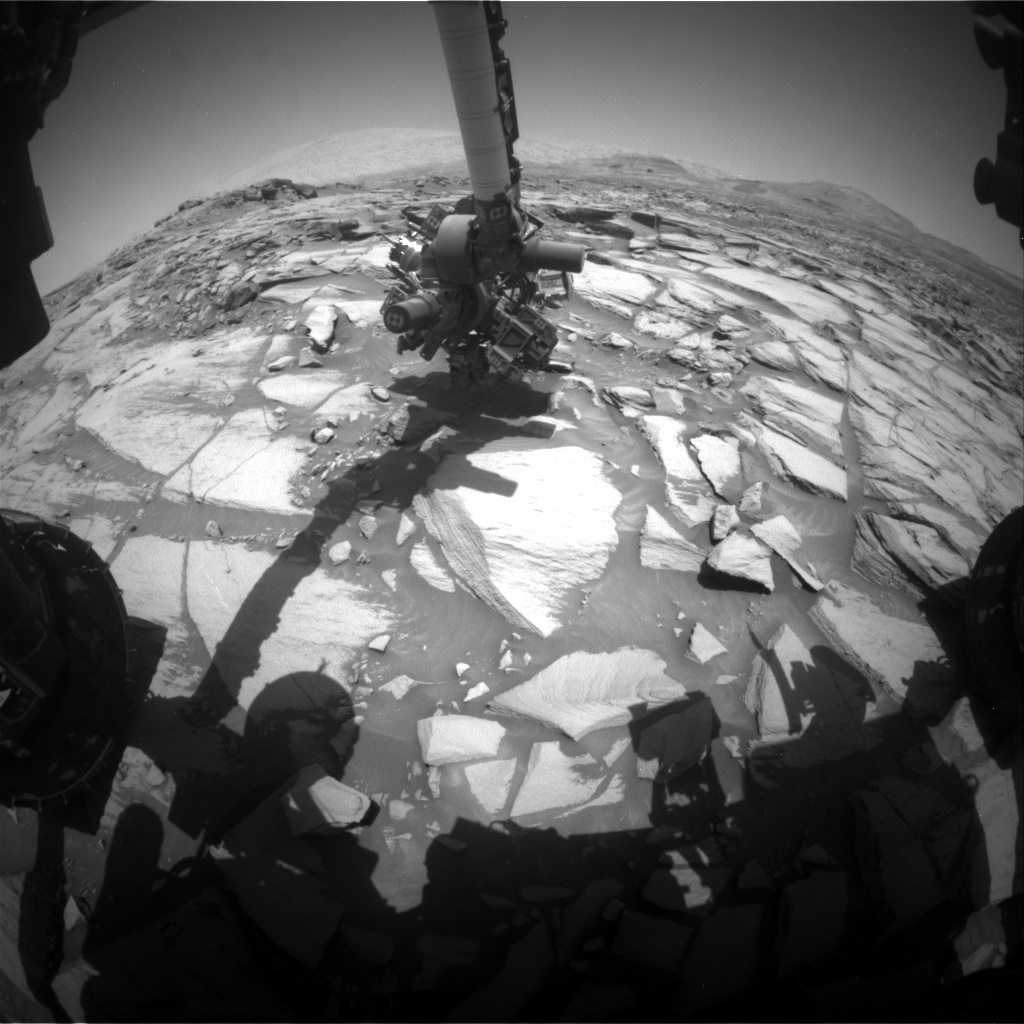
Curiosity Front Hazard Avoidance Camera Right B image taken on Sol 2732, April 13, 2020.
Credit: NASA/JPL-Caltech
NASA’s Curiosity Mars rover has just started Sol 2733 operations.
Following a drive away from the Edinburgh drill site last Wednesday, Curiosity has a brand-new parking spot for this weekend’s science activities, reports Rachel Kronyak, a planetary geologist at NASA’s Jet Propulsion Laboratory.
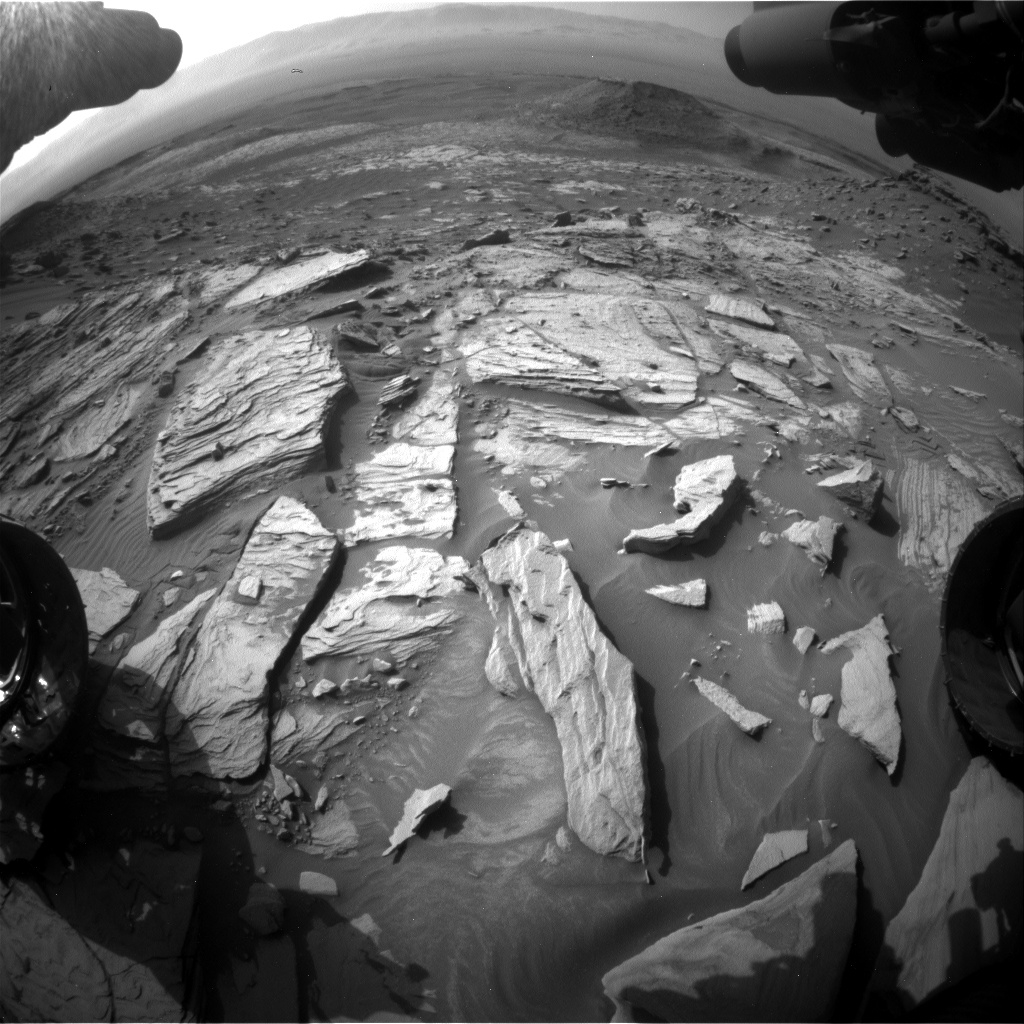
Curiosity Front Hazard Avoidance Camera Right B image taken on Sol 2732, April 13, 2020.
Credit: NASA/JPL-Caltech
Sand ripples
“The drive put us right in front of a nice patch of sand ripples,” Kronyak notes. “We’ll devote several of our weekend activities to investigating targets around this little patch of sand.”
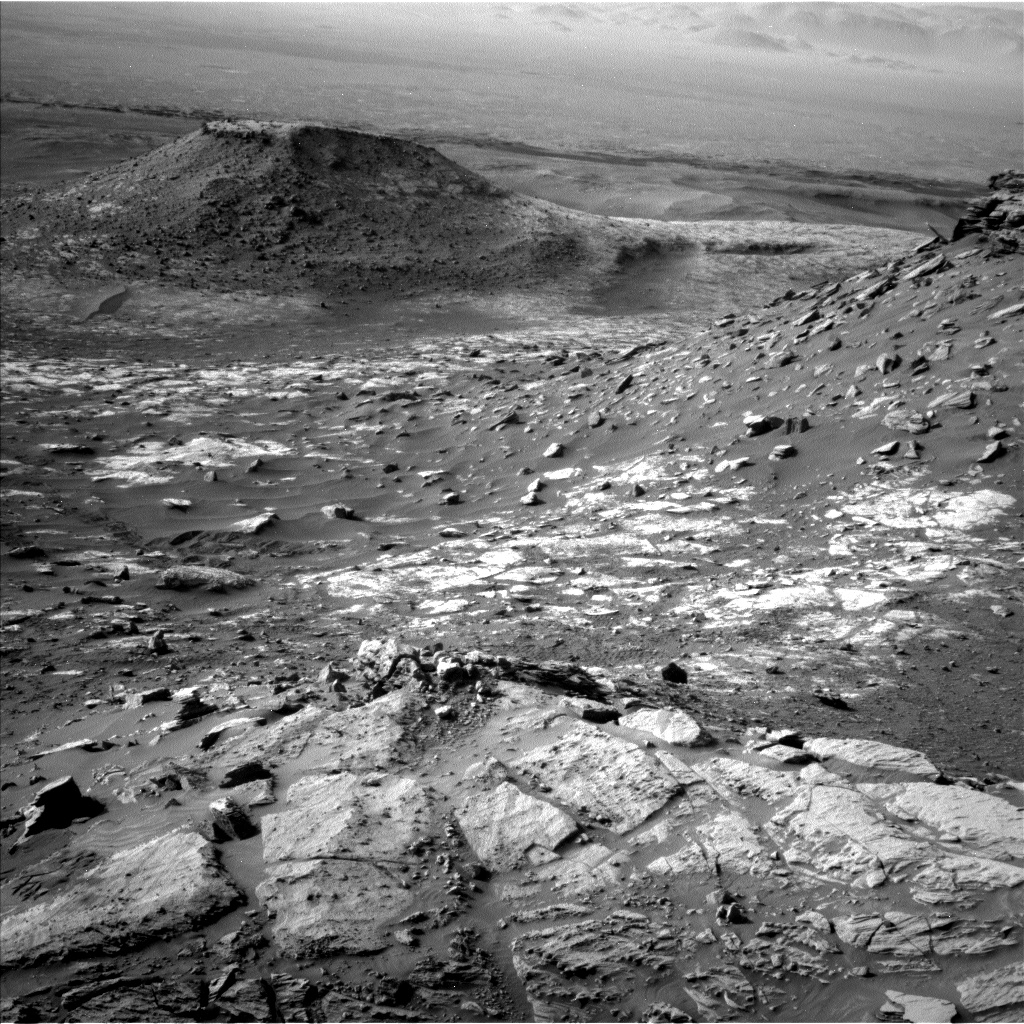
Curiosity Left B Navigation Camera photo acquired on Sol 2732, April 13, 2020.
Image Credit: NASA/JPL-Caltech
The robot had s a “soliday” this past weekend, which occurs every few weeks to allow the Earth and Mars schedules to sync back up. “That means our weekend plan is only two sols instead of the three,” Kronyak adds.
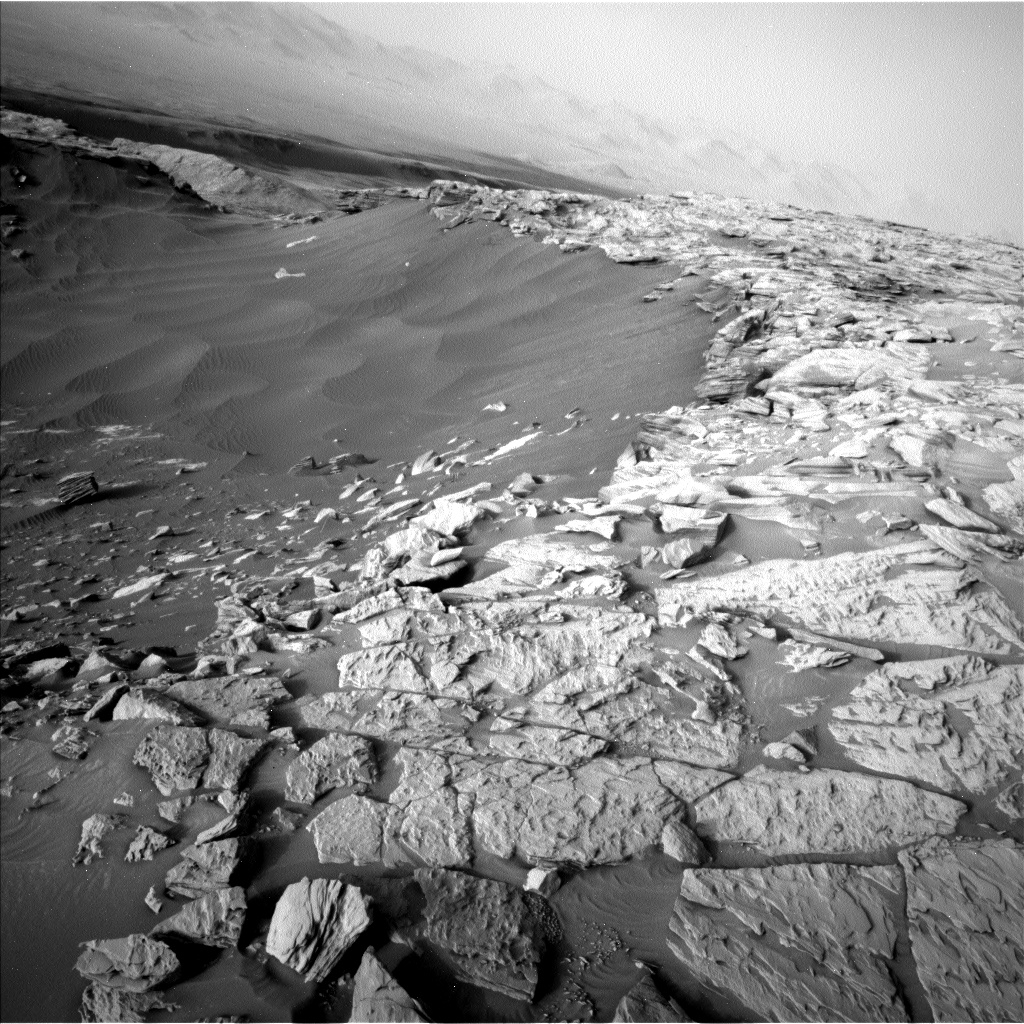
Curiosity Left B Navigation Camera photo acquired on Sol 2732, April 13, 2020.
Image Credit: NASA/JPL-Caltech
Science block
On the first sol of that weekend plan, Sol 2731, there was a hefty 2-hour science block during which Curiosity was slated to perform a suite of Chemistry and Camera (ChemCam), Mastcam, and Navcam observations.
The plan called for use of the ChemCam laser to probe targets “The Borders,” “Dryhope,” and “Chalifornia.”
“The Borders and Chalifornia are bedrock targets, and, as the name suggests, Dryhope is a soil target,” Kronyak explains. The plan called for using the Mastcam to take documentation images of the ChemCam targets as well as an additional large mosaic to document the stratigraphy of the Greenheugh pediment as the rover continues to drive down the pediment.

Curiosity Left B Navigation Camera photo acquired on Sol 2732, April 13, 2020.
Image Credit: NASA/JPL-Caltech
To finish out the science block, Navcam and Mastcam were to search for dust devils and monitor the atmosphere. In the afternoon and overnight, the robot was scheduled to perform contact science (including the Mars Hand Lens Imager (MAHLI) and Alpha Particle X-Ray Spectrometer (APXS) instruments) on the “Auld Reekie” soil target.
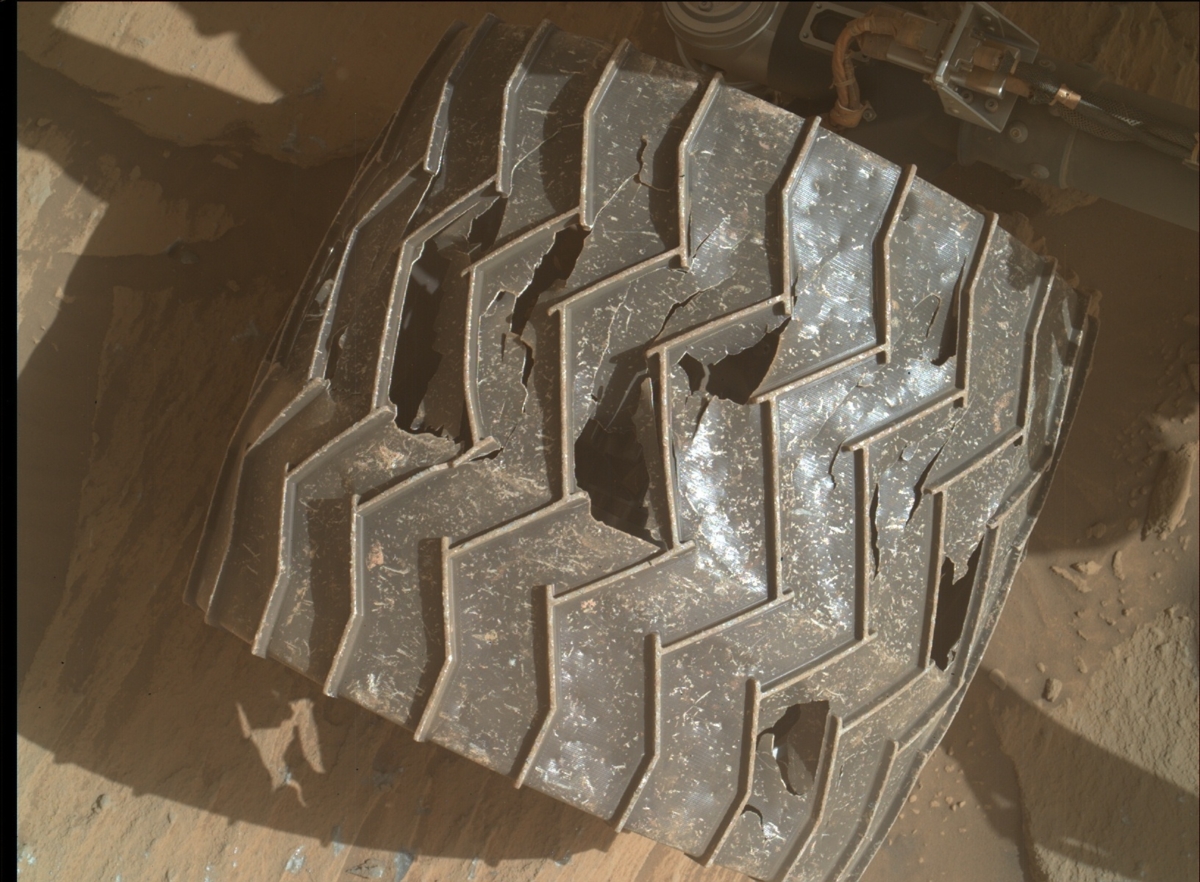
Curiosity Mars Hand Lens Imager photo produced on Sol 2732, April 13, 2020.
Credit: NASA/JPL-Caltech/MSSS
Inspecting rover wheels
On the second sol, Sol 2732, the plan entailed Curiosity to wake up first thing in the morning to perform some additional atmospheric observations, including Mastcam tau and crater rim extinction images as well as a Navcam line-of-sight image and cloud-monitoring movies.
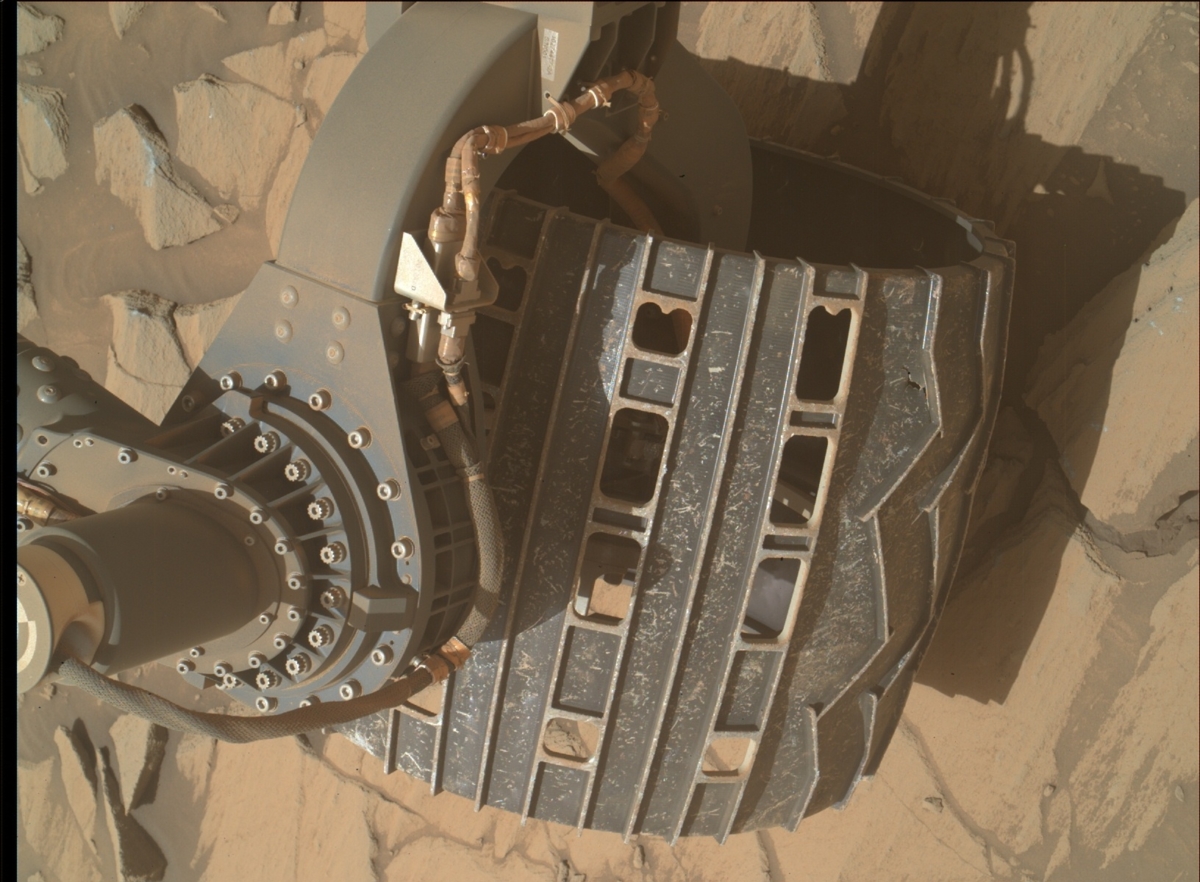
After those observations, a series of MAHLI images of Curiosity’s wheels were called for, before getting back on the road to continue the drive down off the Greenheugh pediment. Following that drive, the plan had the rover taking standard post-drive images, Kronyak reports.

HUGE Mastcam100 panoramic taken on Sol 2700.
NASA/JPL-Caltech/Damia Bouic
 Posted in Space News

