 By
By  April 13th, 2020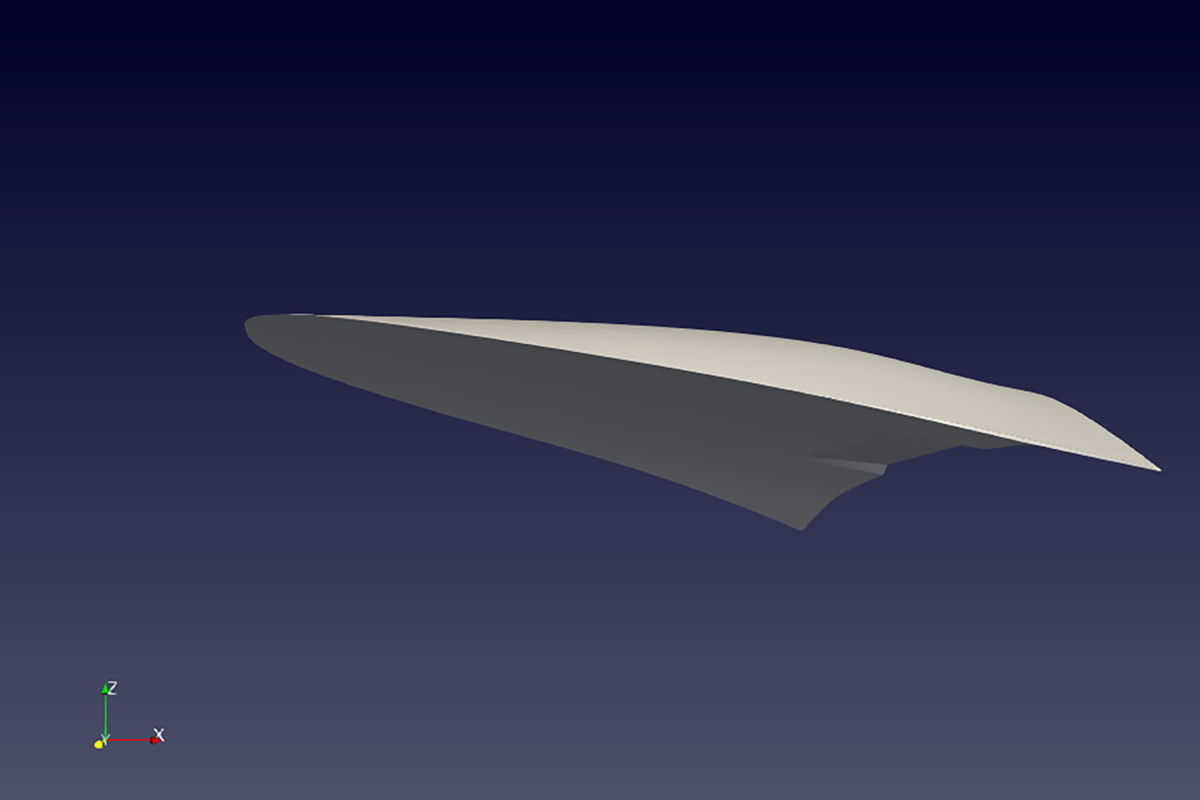
Illustration of the capsule waverider in glide orientation. Courtesy: P. Rodi/Rice University
A new capsule/waverider concept could be useful in delivering cargo to Mars.
This new waverider concept is part space capsule, part hypersonic glider that’s capable of surviving a fiery return from outer space before gliding like a surfer on its own shock wave.
While the Red Planet’s atmosphere is thin, spacecraft need heat shields to survive entry. This heating, the planet’s rock-strewn surface and the communications lag between Earth and Mars combine to make landings on Mars tricky.

Mars needs cargo!
Credit: NASA
“That’s a real problem for NASA,” explains Patrick Rodi of Rice University’s Brown School of Engineering. “This concept would allow you to come in as a capsule, flip over to a waverider, glide around, look things over, find your landing spot and then either drop off equipment with parachutes, glide in and skid across the Martian surface, or pitch up and land on the vehicle’s tail. It gives you a lot of options,” he explained in a university statement.
Boost-glide
During his 23-year career at Lockheed Martin, Rodi worked on advanced programs at the famed Skunk Works in Palmdale, California, and on the Orion space capsule program in Houston.
“This is my sixth new class of waverider vehicles, and it’s what is known as a boost-glide vehicle, which is a big deal in hypersonics these days,” Rodi points out.
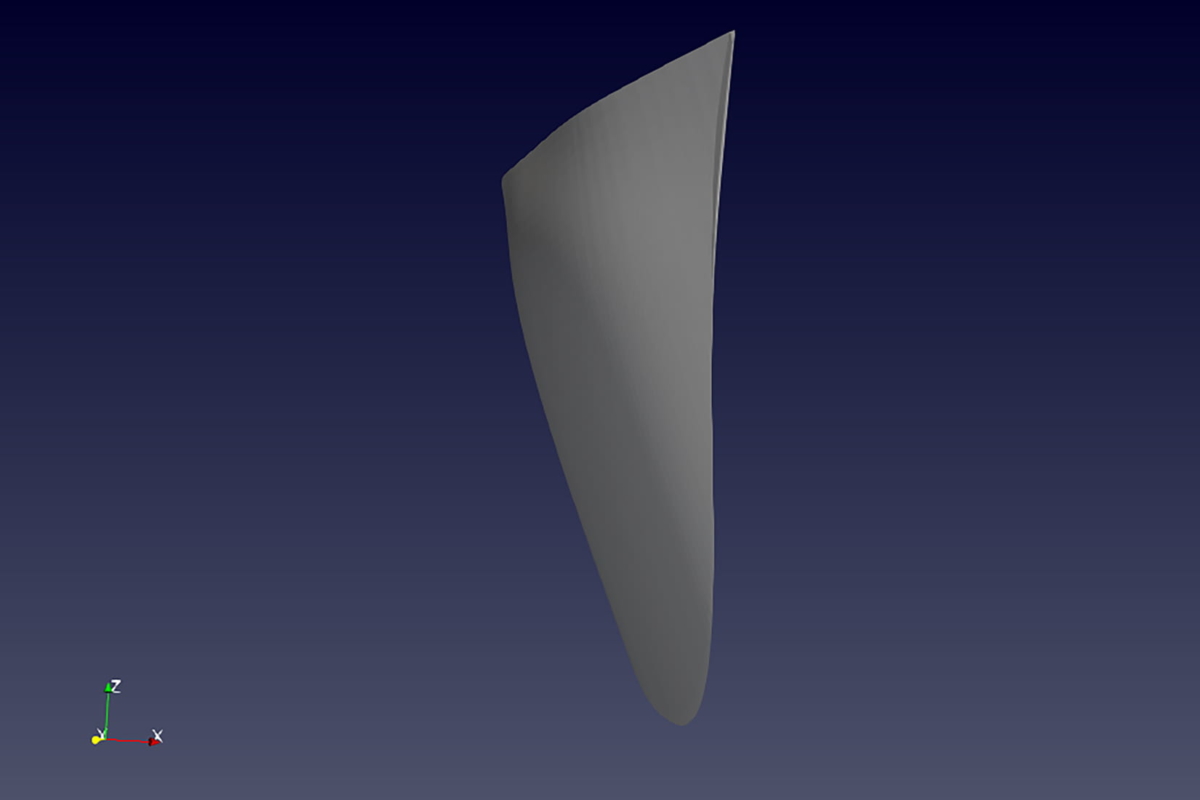
In its boost orientation, the capsule waverider has the blunt shape reminiscent of a traditional space capsule heat shields. Courtesy: P. Rodi/Rice University
“Other vehicles have shock waves,” Rodi says. “But the shock waves are separated from the vehicle, and high-pressure leaks around that little gap between the shock wave and the body itself.” The waverider design stops the high-pressure air from leaking away.
“You’re expending energy to compress the air, and now you’re using that high-pressure air as efficiently as possible,” Rodi adds. “You’re not losing that lift. You’re capturing it by shaping the geometry, riding the wave. And it’s very efficient. That’s the big thing about waveriders. The lift-to-drag ratio is really high, which correlates linearly with gliding distance, or range, the metric you’re looking for.”
Balancing demands
“When it first enters the atmosphere, it punches pretty deep, and it gets really, really hot,” Rodi notes.
“There’s high-pressure loading, high heating. For re-entry you want something that can survive that high heating. Basically, you want a vehicle that kind of looks like a traditional space capsule. As a glider, you want something that’s very efficient, with a high lift-to-drag ratio.”
Rodi says that his capsule waverider class balances those demands. On one side, it has the rounded, blunt shape reminiscent of a traditional space capsule heat shield. On the opposite side, it is a wing-shaped waverider glider.
 Posted in Space News

