 June 23rd, 2014
 Author: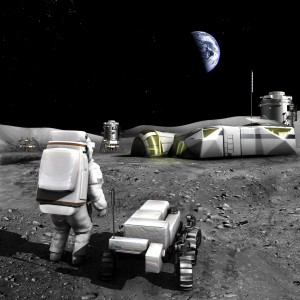
A European forum is addressing the issue of who owns the Moon? There is a growing debate within scientific, entrepreneurial and policy circles regarding lunar resources and access to those resources on Earth’s nearest celestial neighbor. Experts on these issues are being brought together by Google Lunar XPRIZE at the EuroScience Open Forum (ESOF) 2014, […]
 Posted in

Think big – that’s the astronomical and technical view of Martin Barstow of the University of Leicester in England. Barstow is giving a talk at the National Astronomy Meeting (NAM 2014) in Portsmouth, England on June 24, set to call for governments and space agencies around the world to back the Advanced Technologies Large Aperture Space […]

Here’s a new one from me on use of satellite imagery to look for Noah’s Ark – a lightning rod article given all the reader comments! Noah’s Search: Probing Satellite Imagery for Lost Ark http://www.space.com/26318-noah-ark-search-satellite-images.html

It is called the Integrated Space Plan or ISP for short. In the late 1980s, an ISP was drafted by Ron Jones, then at the aerospace giant, Rockwell International. The sweeping look into the future was developed to give a visual representation showing how the major space infrastructure elements fit together. Fast forward to today. […]

Forget the smell of team spirit. Try getting a tantalizing whiff of Titan. Data from the Cassini spacecraft’s Composite Infrared Spectrometer has been used to simulate Titan’s chemistry. A research team has been able to classify a previously unidentified material discovered by the Cassini spacecraft in the moon’s smoggy haze. Titan’s dirty orange color comes […]

New story from me up on SPACE.com: China’s ‘Lunar Palace’ for Space Research Tested on Earth http://www.space.com/26267-china-lunar-palace-space-research-mission.html

Jupiter’s moon Europa could fall under the intense scrutiny of tiny spacecraft making use of “cold atom sensing technology.” That’s a new idea by Draper Laboratory in Cambridge, Mass – a concept that won a $100,000 NASA Innovative Advanced Concepts (NIAC) Program award earlier this month. Draper Laboratory is developing the low-cost concept for NASA […]

Yes, the Sun has its spots! And now you can take part in research that can help with some of solar physics’ unanswered questions, such as: Are sunspots born complex or do they evolve to become complex? Do sunspot groups that are more complex produce more eruptions? There’s a new Zooniverse project now online called […]

What is Virgin Galactic up to now? Here’s a new story from me on SPACE.com: http://www.space.com/26237-virgin-galactic-commercial-spaceline-progress.html

In asteroid speak, it’s known as 2014 HQ124. The space rock appears to be an elongated, irregular object that is at least 1,200 feet (370 meters) wide on its long axis. This particular asteroid was only recently discovered by NASA’s NEOWISE mission, a space telescope adapted for scouting the skies for the infrared light emitted […]

