 December 28th, 2015
 Author: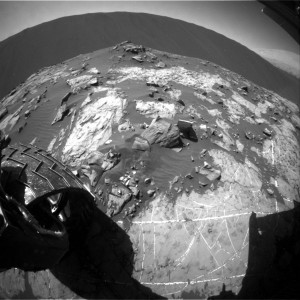
NASA’s Curiosity rover on Mars has entered Sol 1206. New imagery from the robot includes added surveys of sand dunes. The dunes close to Curiosity’s current location are part of “Bagnold Dunes,” a band along the northwestern flank of Mount Sharp inside Gale Crater. Thanks to observations of this dune field from orbit, analysis […]
 Posted in
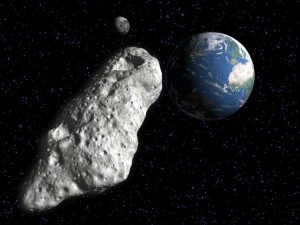
By now the surprises under the tree have been unwrapped…but here’s a gift that is sure to keep on giving – the Solar System. Comets and asteroids, the Moon and Mars and other distant destinations – all are rife with resources for the taking – or are they? Economic adventurism Back in November of this […]
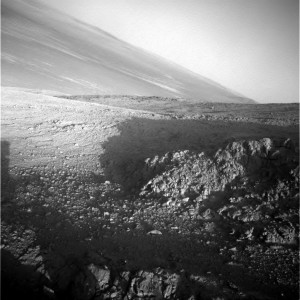
NASA’s Opportunity Mars rover is busy at work inside “Marathon Valley” on the west rim of Endeavour Crater. The robot is now in Sol 4238 of its mission. Opportunity was launched on July 7, 2003 as part of NASA’s Mars Exploration Rover (MER) program. The airbag-encapsulated robot came to full stop in Meridiani Planum on […]

NASA’s Curiosity Mars rover has entered Sol 1203, recovering from an issue with its robotic arm. Engineers ran diagnostics to better understand what happened with the arm. It is very likely that the arm hardware is okay, but the diagnostics will allow rover operators to avoid the problem in the future. Due to the arm […]
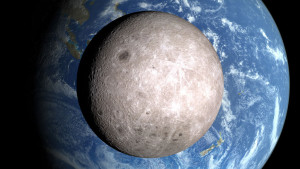
Europe’s reach for the Moon is loud and proud. That’s evident in new details following a European Space Agency (ESA) led meeting, an international symposium on “Moon 2020-2030 – A New Era of Coordinated Human and Robotic Exploration.” The meeting was held December 15-16 at ESA/ESTEC in Noordwijk, The Netherlands. Upshot: The Moon is […]

The first U.S. production in several decades of plutonium-238 is being energetically spotlighted by NASA and the Department of Energy (DOE). Researchers at DOE’s Oak Ridge National Laboratory (ORNL) in Tennessee have restored a U.S. capability dormant for nearly 30 years. Roughly the mass of a golf ball, the 50 grams of plutonium-238 […]

After thorough examination, NASA managers have decided to call off the planned March 2016 launch of the Interior Exploration using Seismic Investigations Geodesy and Heat Transport (InSight) mission. The decision follows unsuccessful attempts to repair a leak in a section of the prime instrument in the science payload. A leak that previously had prevented the […]
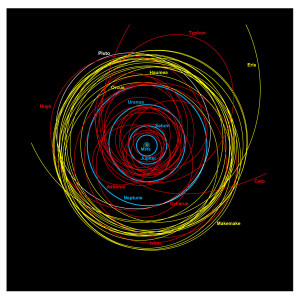
Giant comets could pose danger to life on Earth. That’s the word from a team of astronomers from Armagh Observatory and the University of Buckingham. They report that the discovery of hundreds of giant comets in the outer planetary system over the last two decades means that these objects pose a much greater hazard to […]

Try and not let the “Mars-now” folks know. But there is increasing interest in Europe to prioritize the Moon as humankind’s next deep space destination. That was clearly evident given an international symposium held December 15-16 on “Moon 2020-2030 – A New Era of Coordinated Human and Robotic Exploration,” staged at the European Space Agency’s […]

Landing on Mars in August 2012, NASA’s Curiosity rover has driven closer to and imaged the lee side of Namib Dune, “and they reveal a lot of great details about the dune morphology,” reports Lauren Edgar, a research geologist at the USGS Astrogeology Science Center in Flagstaff, Arizona. Today, Sunday, is a day without planning […]

