 July 16th, 2016
 Author: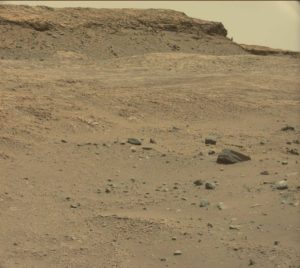
NASA’s Curiosity rover on Mars is now in Sol 1402 activities, a weekend plan of duties ahead defined at “hefty.” According to Lauren Edgar, a research geologist at the USGS Astrogeology Science Center in Flagstaff, Arizona, “we knew it would be a big plan going into the weekend.” The plan jelled as it was […]
 Posted in
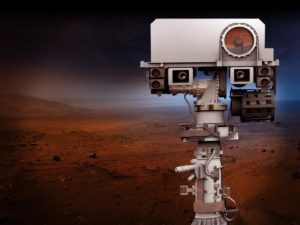
The building of NASA’s next Mars rover has been given a go-ahead. Launch of the Mars machinery is targeted for the summer of 2020, arriving on the Red Planet in February of 2021. In the hope of reducing risk and shaving off dollars, the 2020 rover would look much like its six-wheeled, one-ton predecessor, Curiosity, […]
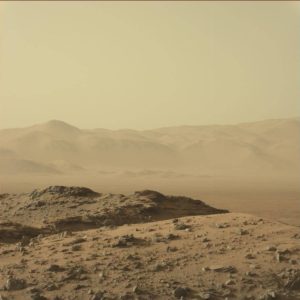
Now in Sol 1400, NASA’s Curiosity Mars rover recently drove roughly 105 feet (32 meters) closer to a blocky deposit known as “Bimbe.” We’ve identified several notable blocky deposits in orbital images, and this will be our last chance to fully investigate one of these deposits on the ground to try to determine their […]
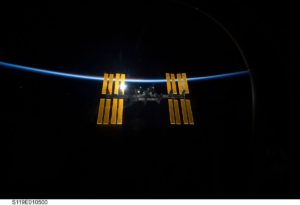
At yesterday’s Senate hearing, NASA’s William H. Gerstenmaier, Associate Administrator of Human Exploration and Operations, made note of a new Request for Information (RFI) to further the idea of private sector use of the International Space Station. Wanted: industry ideas That RFI is called: Advancing Economic Development in Low Earth Orbit (LEO) via Commercial […]
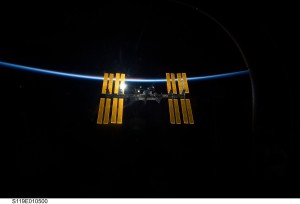
NASA has issued an informative new report titled the Economic Development of Low Earth Orbit. The document is edited by Patrick Besha, Editor, Senior Policy Advisor, NASA and Alexander MacDonald, Editor, Senior Economic Advisor, NASA. This wide-ranging collection of papers ranges from “Selecting Policy Tools to Expand NASA’s Contribution to Technology Commercialization” and “Protein Crystallization […]
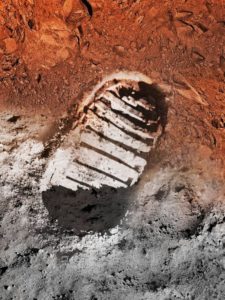
U.S. Sen. Ted Cruz (R-Texas), chairman of the Subcommittee on Space, Science, and Competitiveness, convened a subcommittee hearing today titled “NASA at a Crossroads: Reasserting American Leadership in Space Exploration.” The hearing asked witnesses to focus on the importance of ensuring consistency in policy to best leverage investments made in human space exploration. Also, the […]
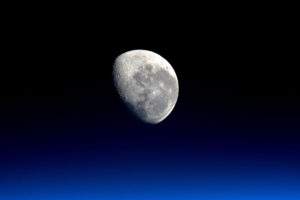
A senior Harvard astrophysicist is waving a cautionary flag about a loophole in the United Nations Outer Space Treaty that allows nations to exploit the Moon’s resources. In particular, the scientist sees a race to claim the lunar “Peaks of Eternal Light,” bathed in near-perpetual sunlight and thus ideal for a photovoltaic power station. […]

NASA’s Curiosity Mars rover is deep into Sol 1398, back on line and in full operations. New imagery indicates that the Mars machinery is back in photo-taking mode, relaying new photos of its surroundings. Meanwhile, engineers continue to sharp shoot why the rover put itself into a safe standby mode on July 2. The rover […]

U.S. Sen. Ted Cruz (R-Texas), chairman of the Subcommittee on Space, Science, and Competitiveness, will convene a subcommittee hearing tomorrow titled “NASA at a Crossroads: Reasserting American Leadership in Space Exploration.” The hearing promises to focus on the importance of ensuring consistency in policy to best leverage investments made in human space exploration. […]

It is an important year for China’s burgeoning human spaceflight program. Chinese news agencies report that the country’s second orbiting space lab –Tiangong-2 — has been delivered over the weekend from Beijing by rail to the Jiuquan Satellite Launch Center. According to a statement from China’s manned space engineering office, the vessel will undergo assembling […]

