“This year marks half a century since Spinoff began capturing the commercial impact of NASA. As we explore the universe for the benefit of all, NASA remains committed to ensuring technologies developed for space exploration and discovery have direct benefits here on Earth,” explains Daniel Lockney, Program Executive for NASA’s Technology Transfer Program at NASA […]

NASA has selected a number of global volunteers to track the Orion spacecraft during the crewed Artemis II mission’s journey around the Moon. The space agency’s SCaN (Space Communication and Navigation) program announced last week 34 participants to support the Artemis/Orion launch, and the 10-day journey around the Moon, and the crew’s return to Earth. […]

The Pale Blue Data Point – An Earth-Based Perspective on the Search for Alien Life by Jon Willis; The University of Chicago Press; 256 pages; Hardcover, $26.00. As a professor of astronomy at the University of Victoria in British Columbia, Willis has written a highly-engaging, captivating and timely book. In the preface of this volume, […]

Blue Origin successfully completed on January 22 the 38th flight for the suborbital New Shepard program and first of 2026. The crew included: Tim Drexler, Linda Edwards, Alain Fernandez, Alberto Gutiérrez, Jim Hendren, and Laura Stiles.     New Shepard has now flown 98 humans (92 individuals) into space, with some people flying more than […]

This report from the Atlantic Council illuminates important defense and force planning considerations. Its three scenarios span a catastrophic nuclear detonation (NUDET) in low Earth orbit to debris-generating anti-satellite (ASAT) weapons to less aggressive action against commercial satellites. The report makes the case for the development of policies, practical strategies, and more effective acquisition programs […]

China’s first emergency operation in its human spaceflight program came to an end as an uncrewed Shenzhou 20 return capsule parachuted into the Dongfeng landing site in north China’s Inner Mongolia Autonomous Region on January 19. The spacecraft had spent 270 days in orbit, docked for nine months to the country’s Tiangong space station. And […]

The value of two-way communication input and output between NASA and the planetary science community via specialized advisory groups (AGs) has been devalued. That assessment comes from the space agency’s Science Mission Directorate, providing yet another wait-a-minute moment. “Unfortunately, despite the recognized value of the AGs,” [NASA’s Planetary Science Division] “PSD can no longer formally […]

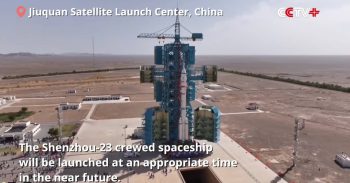
China’s uncrewed Shenzhou-20 return capsule parachuted into the Dongfeng landing site in north China’s Inner Mongolia Autonomous Region on January 19 at 09:34 (Beijing Time). That capsule’s original return date had been delayed due to concerns over tiny cracks found in the capsule’s viewport window, damage thought caused by a high-speed run-in with space debris. […]

There’s some new planetary defense news – specific to nuking an Earth-threatening asteroid. Experiments at CERN’s Super Proton Synchrotron (SPS) suggest that metal-rich asteroids are more resistant than previously assumed. The asteroid tests challenge nuclear-deflection models. The European Organization for Nuclear Research is known as CERN. There have been those advocates that, in the case […]

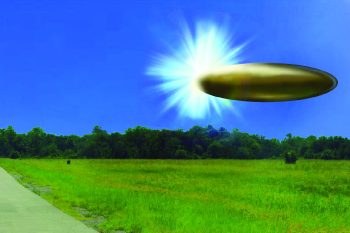
The ongoing investigation and study of Unidentified Aerial Phenomena (UAP) has received a legislative boost. UAP legislation has been submitted to the Vermont legislature to create a state level, 10-person UAP task force. The Vermont bill establishes a statewide task force to scientifically evaluate unidentified aerial activity. The bill assigns responsibility for the scientific analysis […]