 By
By  February 7th, 2019
Credit: NASA
Renewed interest in exploration of the Moon has the potential to benefit lunar science greatly and could evolve into a program facilitated by partnerships between commercial companies and NASA’s Science Mission Directorate (SMD).
That’s the view of companion reports issued today by the National Academies of Sciences, Engineering, and Medicine.
The two studies are:
Review of the Planetary Science Aspects of NASA SMD’s Lunar Science and Exploration Initiative
Review of the Commercial Aspects of NASA SMD’s Lunar Science and Exploration Initiative

Credit: Blue Origin
Spotlighted in the reports are the rapid and effective steps NASA’s science directorate has taken in responding to a 2017 presidential directive to lead an innovative and sustainable program of exploration with commercial and international partners, beginning with a near-term focus on the Moon.

Private sector Moon rover.
Credit: Carnegie Mellon/Mark Maxwell
Many unknowns
That said, however, the two reports find that the activities undertaken to date — although aligned with community consensus for lunar science priorities — do not replace missions recommended in the National Academies’ most recent planetary science decadal survey.
Furthermore, the reports indicate success is susceptible to many unknowns, such as the ability of standardized commercial lunar landers to interface with complex science payloads.
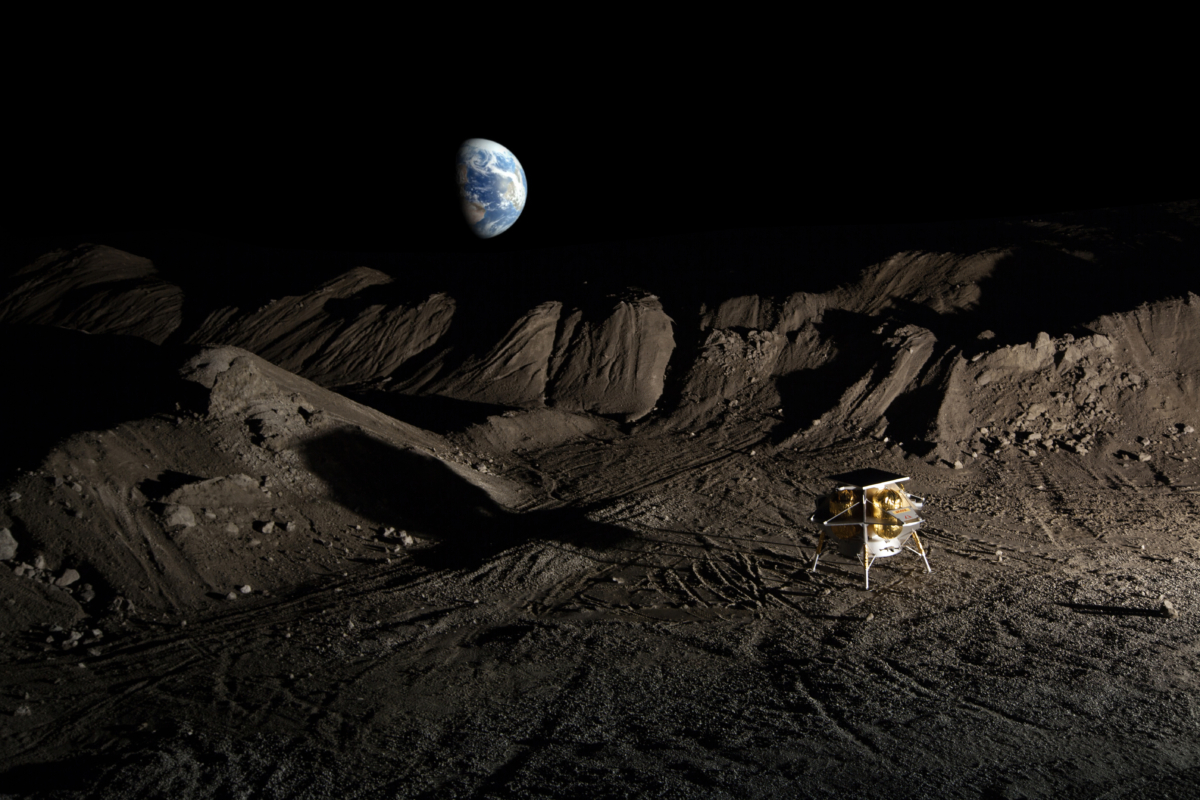
Peregrine lunar lander
Credit: Astrobotic
Point of divergence
Asked to respond to the reports, Inside Outer Space received this comment from Astrobotic CEO, John Thornton:
“Overall, I’m heartened by the findings in these two reports. These reports affirm that the Administration and NASA did the right thing by instituting [the Commercial Lunar Payload Services] (CLPS), and Congress’s bipartisan funding support for the program is opening badly needed new pathways for U.S. lunar science and exploration,” Thornton said in a statement.
“The only point of divergence we had with the reports is the finding that commercial lander interfaces are not yet well defined for the payload community,” Thornton noted. “We’re now on version 3 of our publicly available Payload User’s Guide, and we have an extensive customer support program to facilitate payload conceptualization, development, and integration. We stand ready today to serve the needs of the science community with our Peregrine lander.”
Reports available
The studies — issued by the Committee on Astrobiology and Planetary Sciences — were sponsored by NASA and are available here:
 Posted in Space News


Hi Leonard,
Just wondering if anyone made you aware of the Commercial Lunar Propellant Architecture study. This is not a NASA study, but instead a work of 30 co-authors released last fall. It’s more focused on production and commercial feasibility. The two NASA studies point the way to some exploration approaches that would produce data useful for propellant production. The CLPA study is online here: https://www.philipmetzger.com/mining-for-rocket-fuel-on-the-moon/
Warm regards,
Gordon Roesler