 By
By  September 1st, 2018
Credit: Exploration Vessel (E/V) Nautilus
Exploration Vessel (E/V) Nautilus is exploring regions of the ocean seeking out new discoveries in biology, geology, and archaeology. As part of this assignment, a research team is probing an underwater area that may mimic Saturn’s moon Enceladus.
The expedition is currently collecting fluid samples from Pele’s Pit for a project studying hydrothermal vents as an analog for future space exploration.
Underwater volcano
Now underway is investigating Lō`ihi Seamount, an underwater volcano off the southeastern coast of the Big Island of Hawai`i.
It is the first time an expedition is carrying out the SUBSEA (Systematic Underwater Biogeochemical Science and Exploration Analog) research program.
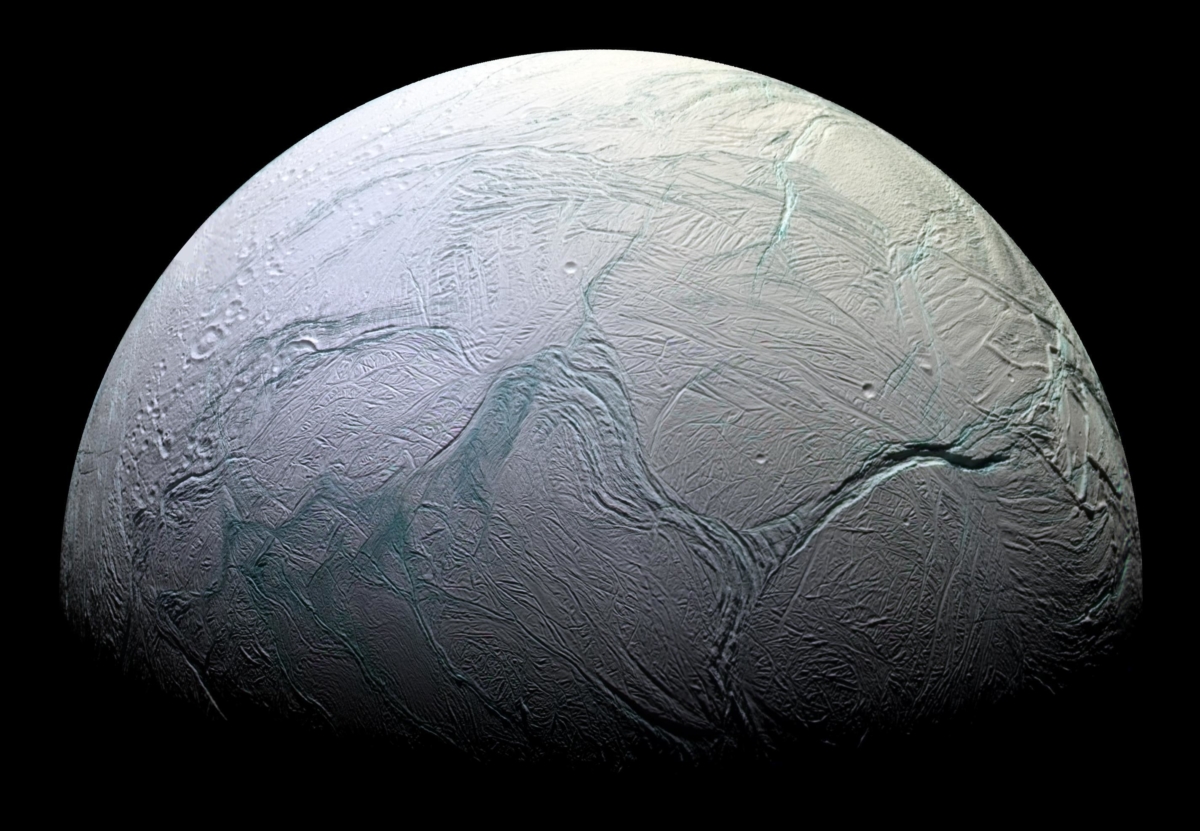
Saturn’s moon Enceladus.
Credit: NASA
Deep sea, deep space
This partnership between NASA Ames Research Center, NOAA’s Office of Ocean Exploration and Research (OER), Woods Hole Oceanographic Institution, and various academic centers brings together both ocean and space exploration teams aboard E/V Nautilus to study how deep sea and interplanetary exploration could share similar approaches.
The expedition is running from August 23 – September 12, 2018, co-led by Darlene Lim of NASA Ames and Christopher German of the Woods Hole Oceanographic Institution.
Microbial life
Scientists think that the ocean worlds of the outer solar system could potentially have the right conditions for microbial life, and Lo’ihi Seamount has similar characteristics researchers can learn from.
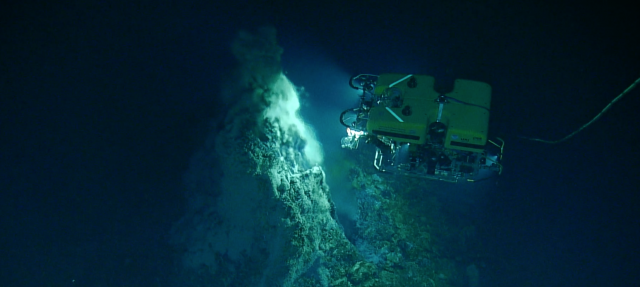
Credit: Exploration Vessel (E/V) Nautilus
This active hydrothermal venting site has the type of volcanic activity, water temperatures and chemical reactions that researchers think may exist on Saturn’s moon Enceladus.
The SUBSEA team will study the environmental conditions and life around Lo’ihi’s hydrothermal vents, and also investigate whether this site has been affected by recent Kīlauea volcanic activity.
To watch this expedition via live video, go to:
 Posted in Space News

