 By
By  November 10th, 2014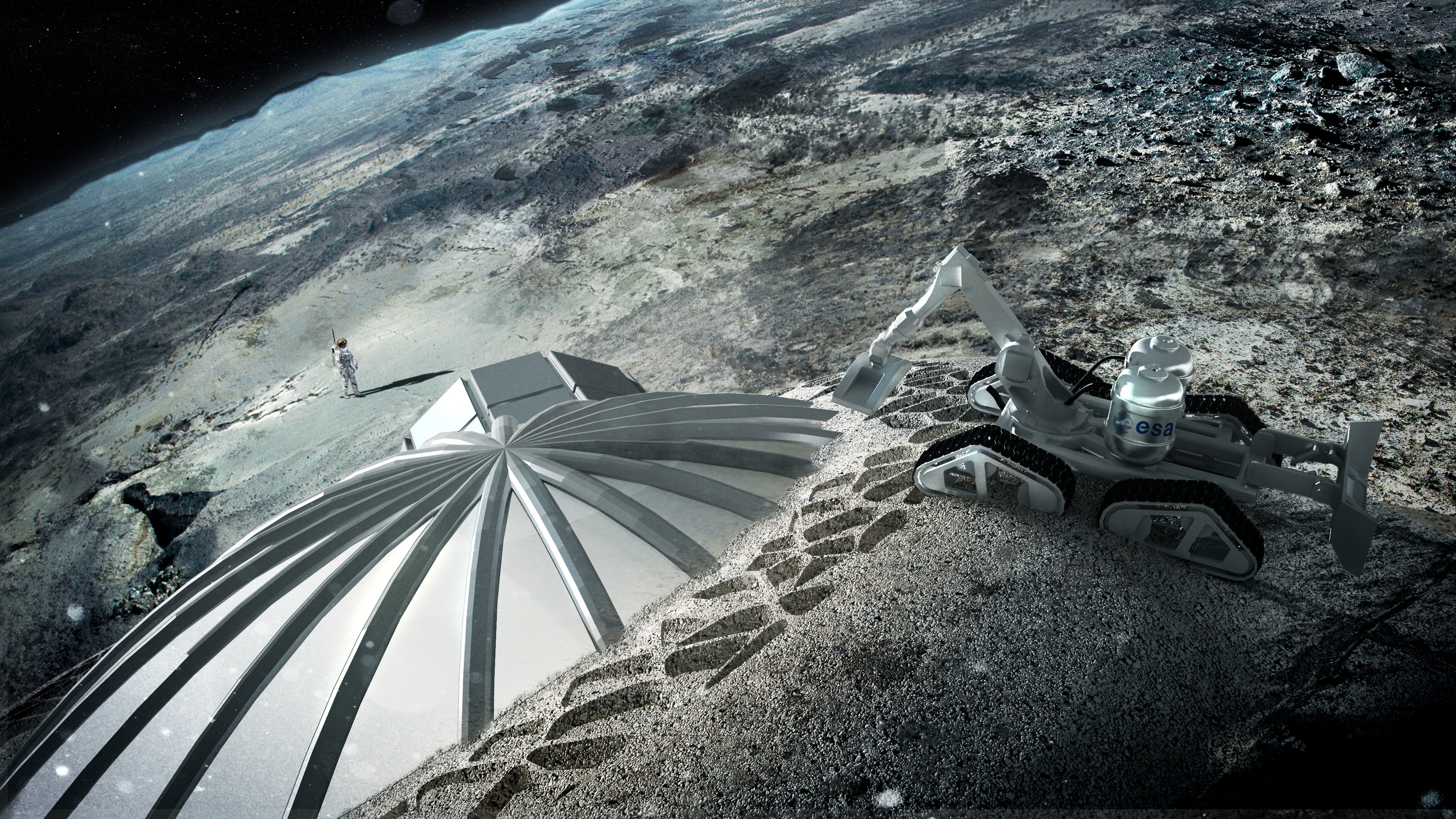
Credit: Foster+Partners
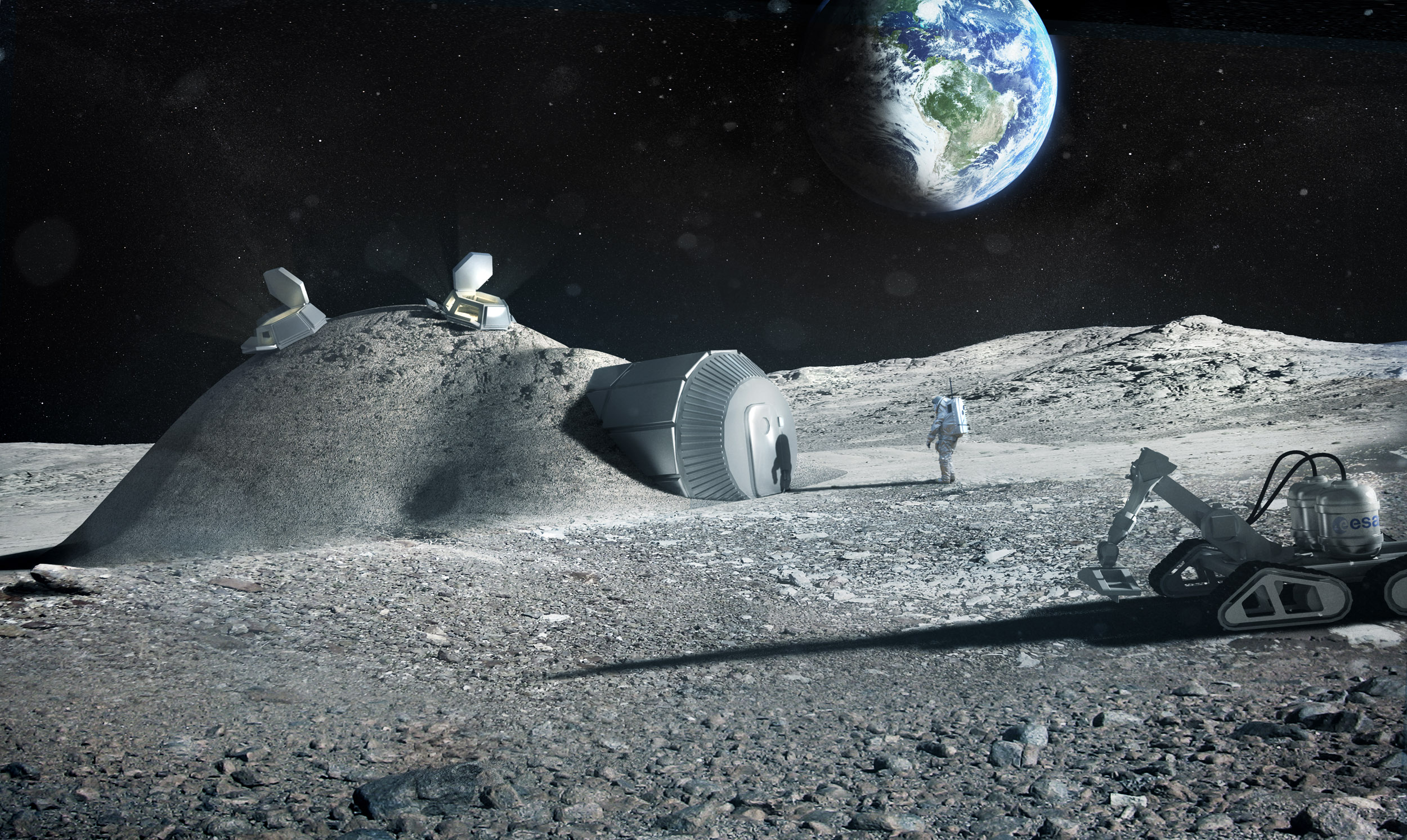
The European Space Agency (ESA) is working with architects at Foster+Partners to evaluate constructing a Moon base via 3D printing using lunar soil.
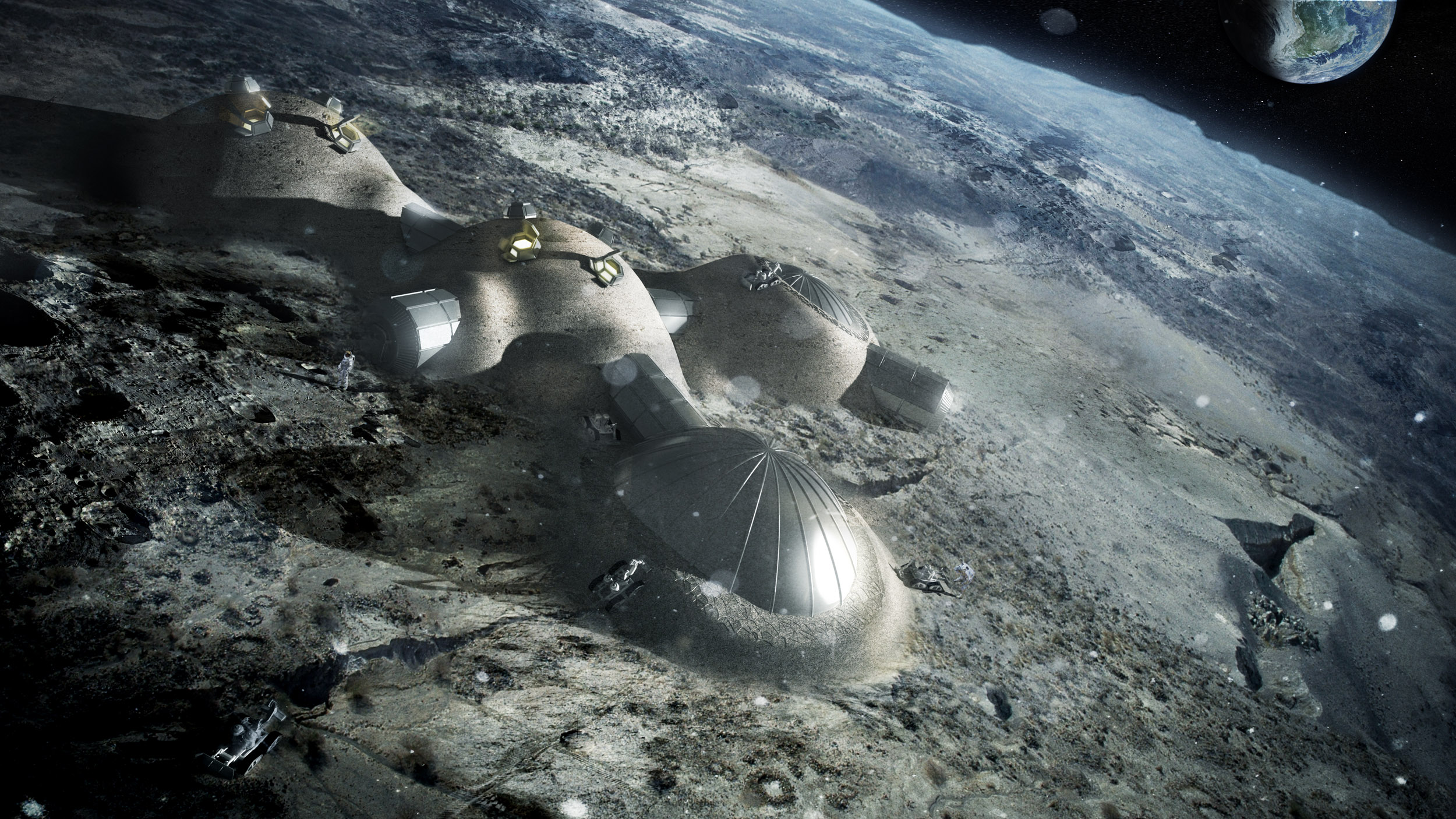
Started in 2013, the collaboration is eying the rim of Shackleton Crater at the lunar south pole for the base location. A multi-dome lunar base could be built based on the 3D printing concept. Once assembled, the inflated domes would be covered with a layer of 3D-printed lunar regolith by robots to help protect the occupants against space radiation and micrometeoroids.
Credit: ESA/Foster+Partners
Why Shackleton Crater?
The Moon’s rotation is such that the Sun only grazes its poles at low angles. The result is a near-constant “peak of eternal light” along the rim of Shackleton Crater, beside regions of permanent shadow.
Building a Moon base in the vicinity of such a site would offer plentiful solar power, and relief from the extremes of heat and cold found across the rest of the Moon.
Inflatable dome
The base is first unfolded from a tubular module that can be easily transported by space rocket. An inflatable dome then extends from one end of this cylinder to provide a support structure for construction.
Layers of regolith are then built up over the dome by a robot-operated 3D printer to create a protective shell.
ESA is due to investigate another lunar 3D printing method: harnessing concentrated sunlight to melt regolith rather than using a binding liquid.
Credit: ESA/Foster+Partners
Additive manufacturing
In reality, according to ESA, any lunar base remains firmly on the drawing board, but adds that each small step forward in research makes future lunar colonization a little more feasible.
Last month, more than 350 experts came together for a two-day Additive Manufacturing for Space Applications workshop at ESA’s ESTEC technical center in Noordwijk, the Netherlands. They discussed the potential of 3D printing – also known as “additive manufacturing” – to transform the way the space industry operates and begin preparing common standards for its use.
Go to a video detailing Europe’s approach to Moon base building at:
 Posted in Space News

