 By
By  June 2nd, 2023
Curiosity’s location as of Sol 3846. Distance driven since landing is 18.65 miles/30.01 kilometers.
Image credit: NASA/JPL-Caltech/Univ. of Arizona
NASA’s Curiosity Mars rover at Gale Crater is now performing Sol 3847 duties.
“What do you do when you are driving through challenging terrain? Well, hit a new record!” That’s the word from Susanne Schwenzer, a planetary geologist at The Open University; Milton Keynes, U.K.
The robot has passed the 19 mile (30 kilometers) mark! “Way to go Curiosity!”
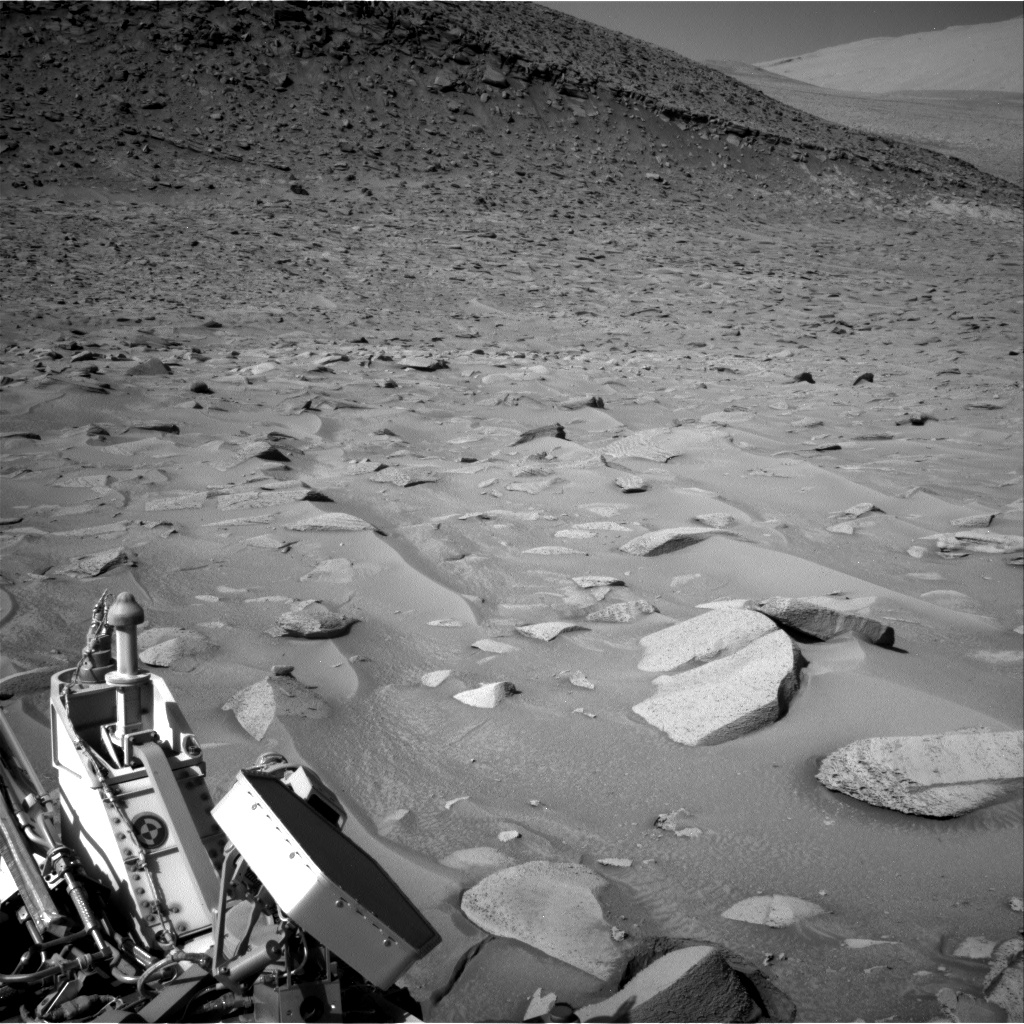
Curiosity Right B Navigation Camera image taken on Sol 3846, June 1, 2023.
Image credit: NASA/JPL-Caltech
Rover milestone
“That’s a Mars rover milestone only the NASA Opportunity rover has reached so far,” Schwenzer points out. “That was around June 2011 and just over 2610 sols into the mission with Opportunity on its way between Victoria and Endeavour Crater. At Endeavour crater Opportunity had driven a marathon on Mars – remember Marathon Valley?”
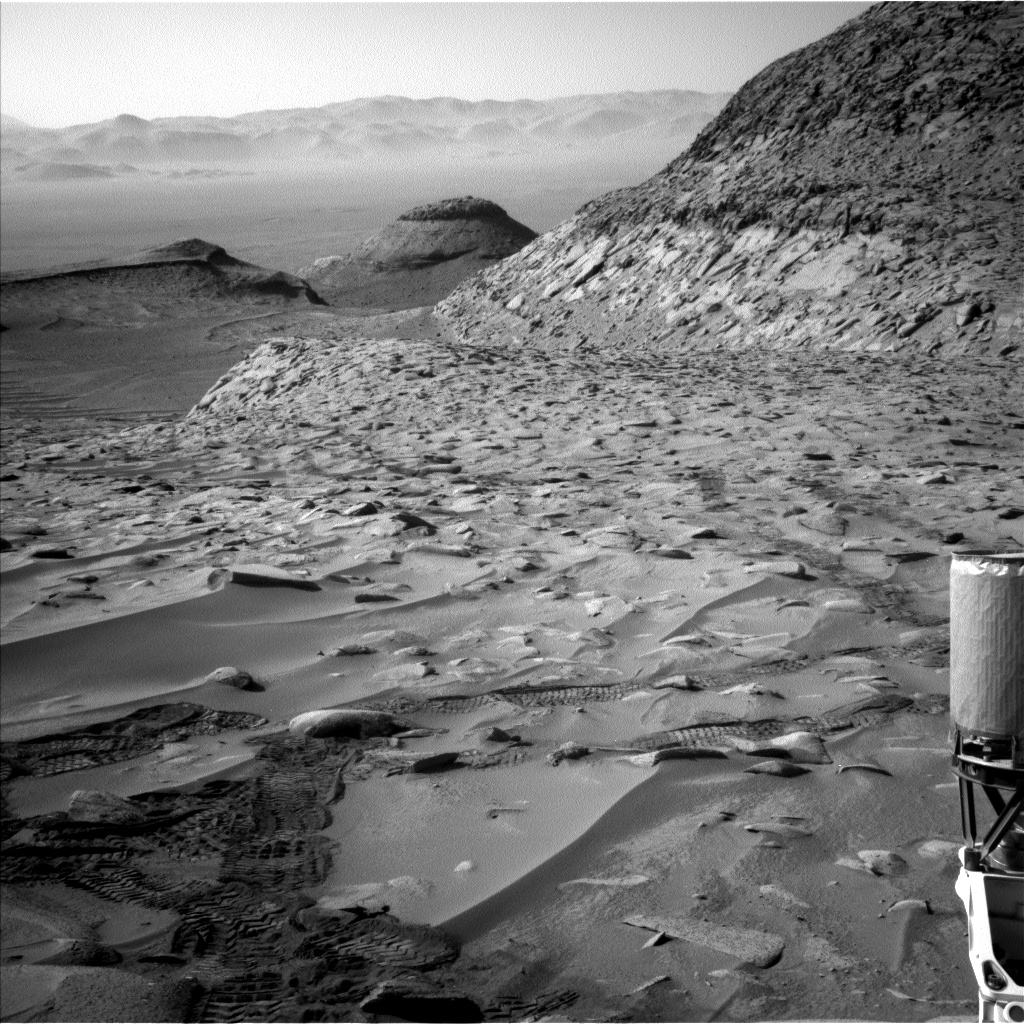
Curiosity Left B Navigation Camera image taken on Sol 3846, June 1, 2023.
Image credit: NASA/JPL-Caltech
Schwenzer adds that Curiosity driving is especially difficult for rover drivers right now. “One of us remarked they wouldn’t want to walk through there, let alone drive.”
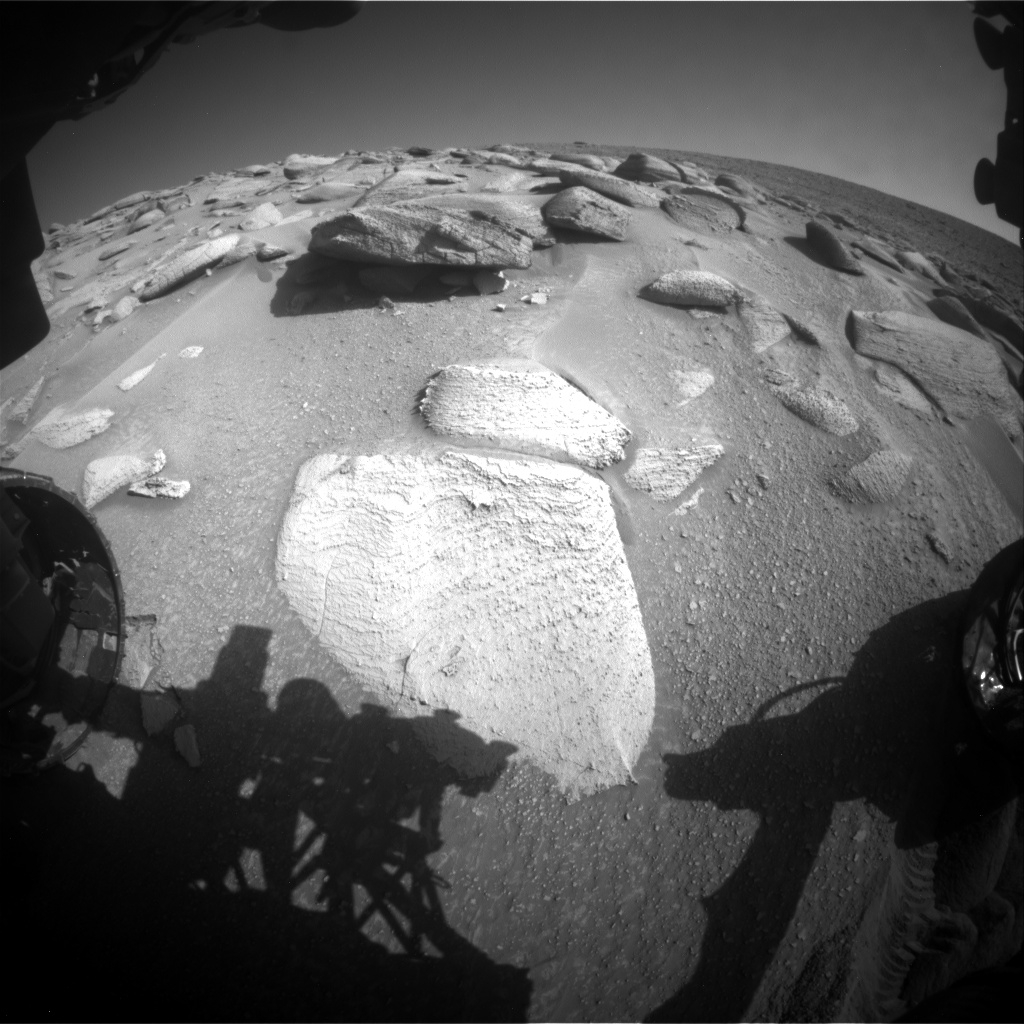
Curiosity Front Hazard Avoidance Camera Left B image taken on Sol 3846, June 1, 2023.
Image credit: NASA/JPL-Caltech
Wheels on the ground
But rover drivers are experts, not only getting the robot to the next stop, Schwenzer reports, but also parking the Mars machinery with all wheels safely on the ground so that the robotic arm can be used.
“And we are making best use of the opportunity investigating target ‘Cujubim’ after using the DRT [Dust Removal Tool].”
There is a three spot Alpha Particle X-Ray Spectrometer (APXS) raster on the target and of course Mars Hand Lens Imager (MAHLI) documentation. In addition, MAHLI looks at the target “Cumbal” to further document the sedimentary structures around Curiosity.
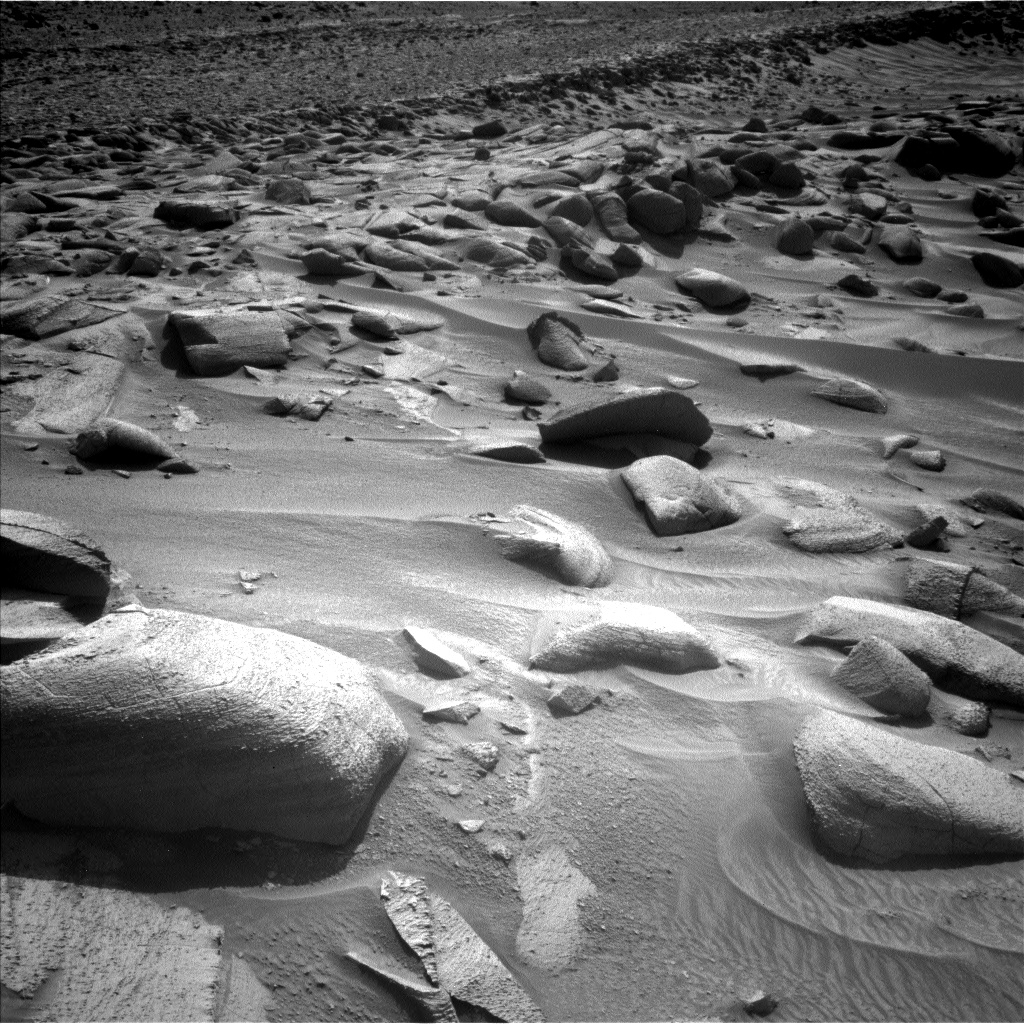
Curiosity Left B Navigation Camera image taken on Sol 3846, June 1, 2023.
Image credit: NASA/JPL-Caltech
Sedimentary structures
A recently acquired Remote Micro-Imager (RMI) photo illustrates some of those interesting things. “It shows the sedimentary structures, all the laminae, but also the nodules within, which will tell us a full story of how those rocks formed, one lamina at a time, and then there must have been another watery event forming the nodules,” Schwenzer observes.
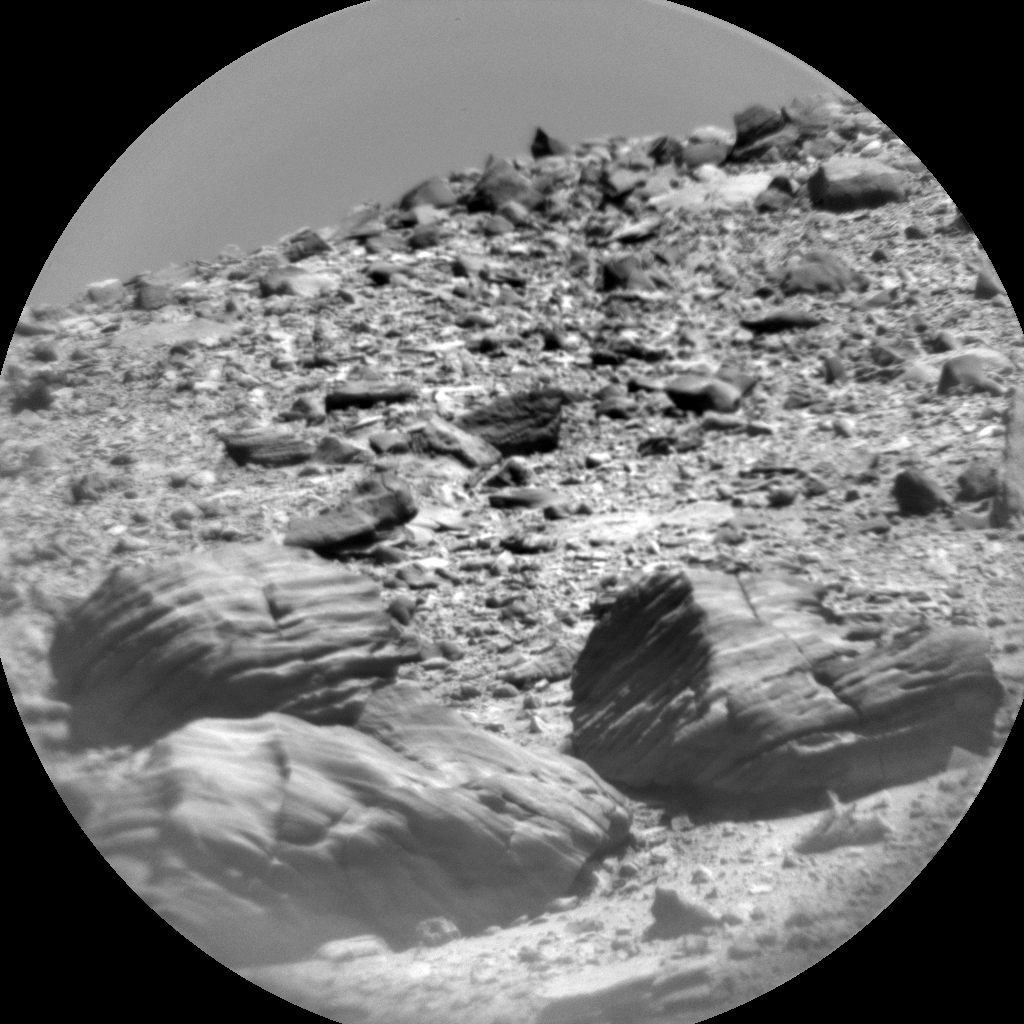
Curiosity Chemistry & Camera (ChemCam) Remote Micro-Imager (RMI) image acquired on Sol 3846, June 1, 2023.
Image credit: NASA/JPL-Caltech/LANL
A recent plan calls for two more RMIs looking into the distance to discern more of those sedimentary structures.
The rover’s Chemistry and Camera (ChemCam) is also keeping its laser busy on two bedrock targets, both also with nodules, which have the target names “Cariacau” and “Crique Yolande,” and there will be an AEGIS [Autonomous Exploration for Gathering Increased Science) after the drive. AEGIS is a software suite that permits the rover to autonomously detect and prioritize targets.
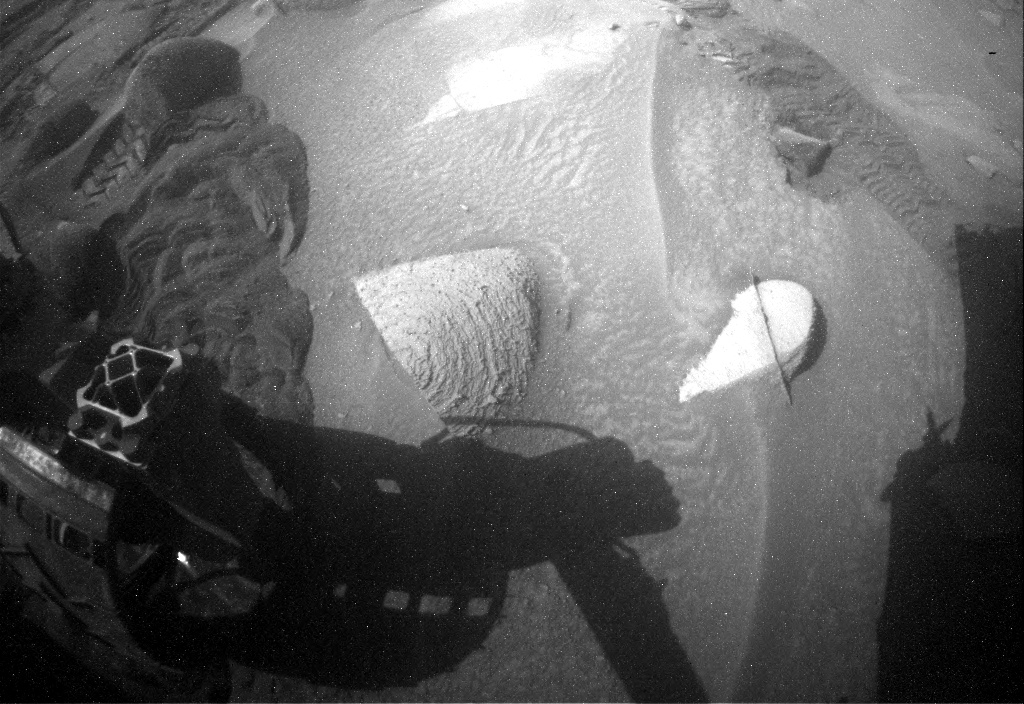
Curiosity Rear Hazard Avoidance Right B Camera photo taken on Sol 3846, June 1, 2023.
Image credit: NASA/JPL-Caltech
Environmental data
Also in the plan, Mastcam has two multispectral observations, one on the DRT spot, and one on target “Crique Rubin.” Mastcam further images targets “Cariacau” and “Paleomeu River,” and another target in front of the rover both to further document all the interesting features surrounding the vehicle.
In addition, the environmental theme group is to conduct the regular atmospheric monitoring, and also have the Dynamic Albedo of Neutrons (DAN) look for water in the underground and task the Mars Descent Imager (MARDI) to take an image after the drive.
“And now, raise a glass (or cup) with your favorite beverage,” Schwenzer concludes, “to wish the rover well navigating all the boulders ahead!”
 Posted in Space News

