 By
By  December 12th, 2025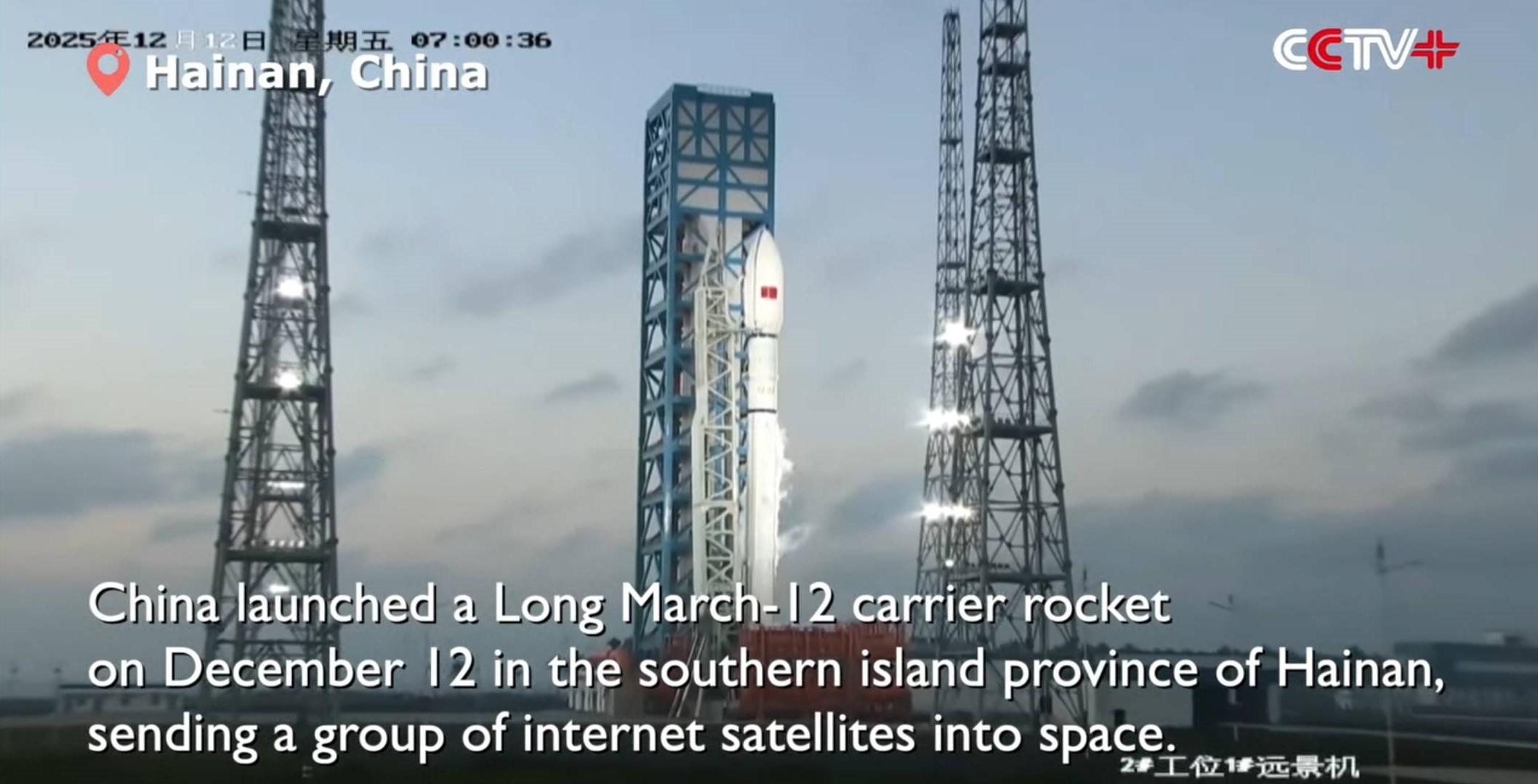
Image credit: CCTV/Inside Outer Space screengrab
China lofted a Long March-12 carrier rocket on December 12 from the southern island province of Hainan. The booster sent a group of internet satellites into space – with the Philippine Space Agency (PhilSA) on the other end of expected debris from the rocket launch.
The Long March-12 departed the Hainan commercial spacecraft launch site. The payloads, the 16th group of low-orbit internet satellites, entered into preset orbit successfully, according to China Central Television (CCTV).
The launch was the 616th flight mission of the Long March carrier rocket series, according to the launch site.
Drop zone
Meanwhile, the Philippine Space Agency confirmed the launch, projecting that rocket leftovers may fall within an identified drop zone approximately 23 nautical miles away from Puerto Princesa and 21 nautical miles away from Tubbataha Reefs Natural Park.
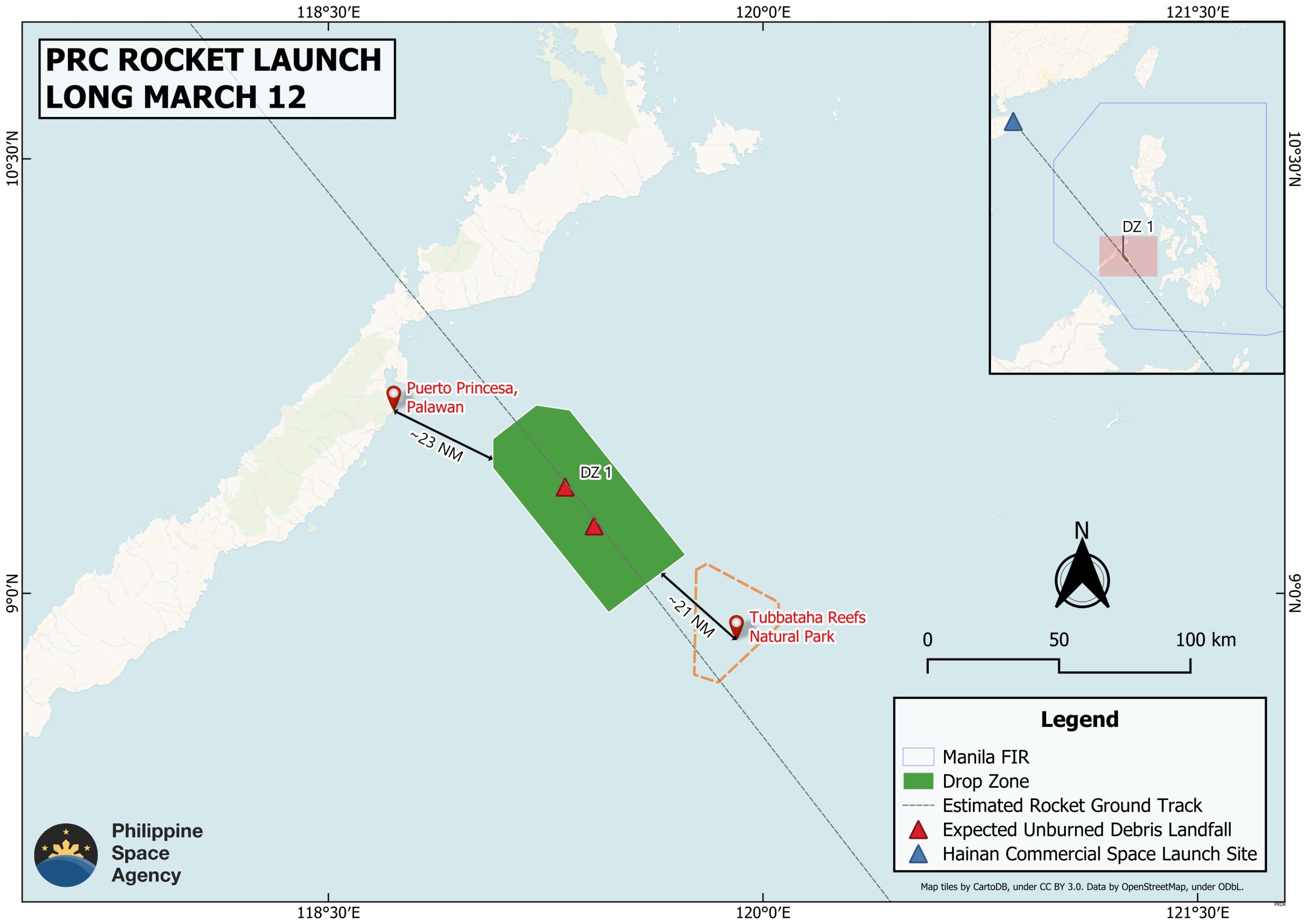
Image credit: PhilSA
The drop zone is within Philippine archipelagic waters.
Details of the rocket drop zone were disclosed through a Notice to Airmen (NOTAM) warning of an “aerospace flight activity.”
Unburned debris
PhilSA disseminated a pre-launch report to relevant government agencies and authorities prior to the launch.
“Unburned debris from rockets, such as the booster and fairing, are designed to be discarded as the rocket enters outer space. While not projected to fall on land features or inhabited areas, falling debris poses danger and potential risk to ships, aircraft, fishing boats, and other vessels that will pass through the drop zone,” warned a PhilSA statement.

Image credit: Philippine Space Agency
“There is also a possibility for the debris to float around the area and wash toward nearby coasts,” PhilSA said. “Additionally, the possibility of an uncontrolled re-entry to the atmosphere of the rocket’s upper stages returning from outer space cannot be ruled out at this time.”

Rocket debris recovered in 2022.
Image credit: Philippine Coast Guard
Toxic substances
As it repeatedly has done from past launches from China, PhilSA reiterated its advice for the public to inform local authorities if suspected debris is sighted.
“PhilSA also cautions against retrieving or coming in close contact with these materials that may contain remnants of toxic substances such as rocket fuel.”
 Posted in Space News

