 By
By  September 10th, 2022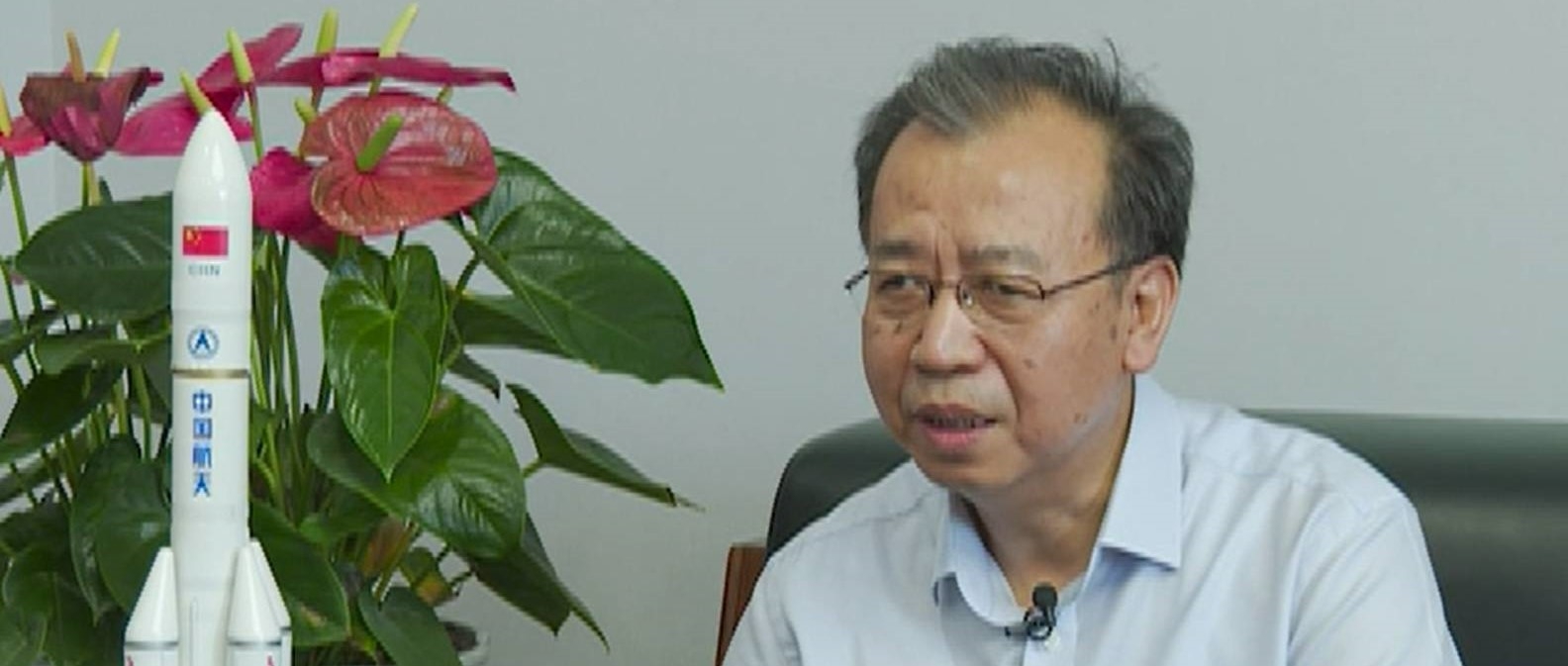
Liu Jizhong, director of Lunar Exploration and Space Program Center under China National Space Administration (CNSA).
Credit: CCTV/Inside Outer Space screengrab
China’s Moon exploration plans are moving ahead smoothly. This fourth phase consists of three missions: the Chang’e-6, Chang’e-7, and Chang’e-8 lunar spacecraft, to be implemented in the following 10 years.
Liu Jizhong, director of Lunar Exploration and Space Program Center under China National Space Administration (CNSA), observes that as backup of the Chang’e-5 probe, the Chang’e-6 will endeavor to retrieve samples from the far side of the Moon and return them to the Earth.

The lunar far side as imaged by NASA’s Lunar Reconnaissance Orbiter using its LROC Wide Angle Camera.
Credit: NASA/Goddard/Arizona State University
“The production of the Chang’e-6 probe has almost been completed,” Liu told China Central Television (CCTV). “To better understand the Moon and given that the Chang’e-4 went to the far side of the Moon, we, after discussion among engineers and scientists, decided to have the Chang’e-6 probe to retrieve samples from the far side of the Moon and return them to Earth. The samples will be much more valuable.”

Artist’s view of Lunar Research Station to be completed by 2035. Credit: CNSA/Roscosmos
Lunar research station
The Chang’e-7 probe, which is under research, will probe the south pole of the Moon and help with the building of a basic structure of a lunar research station.
“The goal of these missions is to lay a foundation for the lunar research station. So there are a lot technological issues to be tackled and it is a tough challenge to explore the energy on the Moon. However, with the foundation we’ve built up and an excellent team, I believe we will succeed,” said Liu.

Credit: Society of Science and Technology, CAS
Moon sample management
Liu said that regulations have been made to stipulate lunar soil distribution and international cooperation to ensure the samples were taken in appropriate conditions that meet scientific research standards, Liu told China Global Television Network (CGTN).
“The China National Space Administration has issued lunar sample management regulations covering the whole administration process, with guidelines specifying assignment of responsibility, process of distribution and international cooperation,” said Liu.

Chinese President Xi Jinping inspects Chang’e-5 lunar sample return capsule.
Credit: CCTV/Inside Outer Space screengrab
“Since the return of the Chang’e-5 lunar samples, we’ve distributed four batches of samples thus far, with the application of the fifth batch being reviewed and soon to be distributed. As for the four batches of samples already distributed, we’ve organized a team of scientists to strictly evaluate the applications and assess the purpose and value of the research. So far, more than 50 grams of samples have been distributed,” Liu said.

Box indicates Chang’e-5 lander on the basaltic plains of Oceanus Procellarum (“Ocean of Storms”) in December 2020. Credit: NASA/LROC/ASU
Strategic steps
“The mission plans for future Chang’e-7 and Chang’e-8 will pivot on the goal of building a lunar research station, which requires technical breakthroughs. Meanwhile, we will carry out a survey of the resources on the Moon to lay a better foundation for future space exploration,” Liu added in the CGTN interview.
China’s lunar exploration program was launched in 2004, with three strategic steps of orbiting the Moon, landing on the lunar surface and returning samples from the Moon.
In 2007, Chang’e-1 completed China’s first lunar orbiting and at the end of 2020, Chang’e-5 returned with around 1.7 kilograms of lunar samples.
 Posted in Space News

