 By
By  August 25th, 2024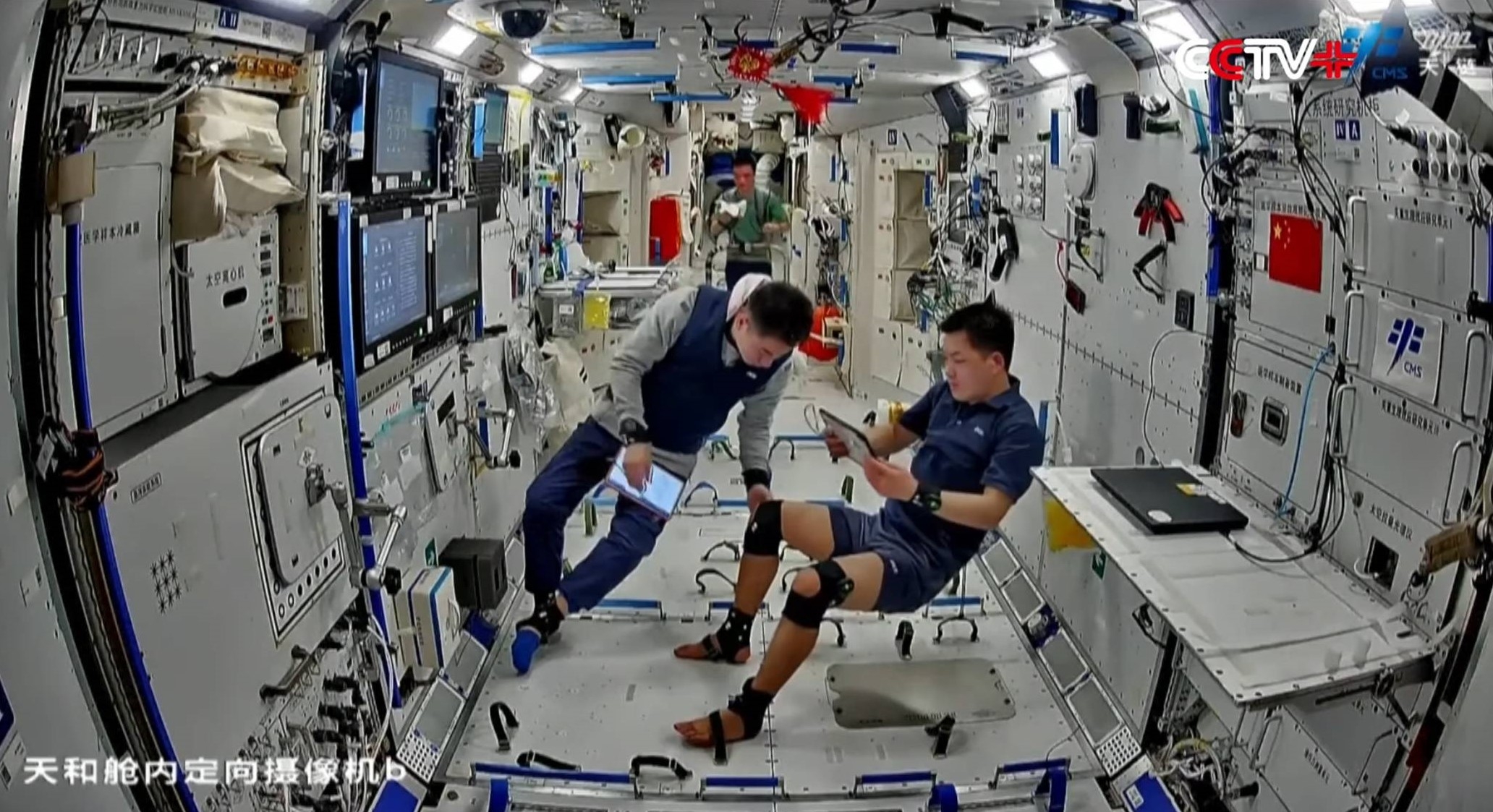
Image credit: CCTV/Inside Outer Space screengrab
The mission of China’s Shenzhou-18 crew continues, living onboard the country’s space station for about four months.
The trio of space travelers — Ye Guangfu, Li Cong, and Li Guangsu — boarded the Tiangong space station in late April.
According to the China Manned Space Agency (CMSA) the space crew recently carried out experiments on emergency decision-making, in-orbit emotional states and aerospace medicine. They have conducted a series of space science experiments, including environmental monitoring and equipment maintenance.

Image credit: CCTV/Inside Outer Space screengrab
Emergency decision-making
In a Central China Television (CCTV) overview, the crew is using an experimental information management computer and specialized testing software to conduct assessments of their emergency decision-making abilities and in-orbit emotional states.
“Ground-based researchers will analyze the collected data to evaluate the astronauts’ decision-making capabilities and emotional responses, aiming to understand the underlying patterns,” the CCTV video explains.
“The astronauts used visual coordination testing devices to complete eye-hand coordination tests, including point-to-point tracking and finger movements in mid-air,” CCTV explains. “Ground researchers are expected to use the results to study changes in the stability, accuracy and coordination of the astronauts’ fine motor control skills during spaceflight, providing valuable references for future mission procedures and human-machine interface design.”

Image credit: CCTV/Inside Outer Space screengrab
Acupuncture stimulation
Traditional Chinese medicine theories are in play with the crew using portable acupoint stimulation devices for electrical stimulation and completed evaluation forms afterward.
“This research aims to understand how acupoint stimulation can regulate cardiovascular function and prevent muscle atrophy in microgravity conditions,” CCTV reports
Muscle adaptability experiments are being performed with the crew carrying out tests on Achilles tendon stiffness, lower-limb kinematics and foot pressure using specialized equipment to gather data on changes in muscle structure and function.
“Ground researchers will compare pre-flight and post-flight data to clarify the biomechanical effects of long-term weightlessness and in-orbit exercise on the lower limbs,” CCTV adds.

Image credit: CCTV/Inside Outer Space screengrab
Alloy investigation
In an earlier CCTV report, China’s orbiting Tiangong space station is being used to help deliver new alloy materials that might play a role in advancing key industries.
“It used to be hard to prepare these alloys on the ground. Through our research, we can now achieve the solidified structures of alloy we need,” said Zhao Jiuzhou, leader of a research team at the Institute of Metal Research, Chinese Academy of Sciences.
“We can produce materials with small, evenly distributed dispersive phase particles within the matrix by regulating and controlling the experiments,” Zhao told CCTV. “It is now possible to make materials with the ‘shell-core’ structure, a structure like the dragon fruit, to serve different needs.”
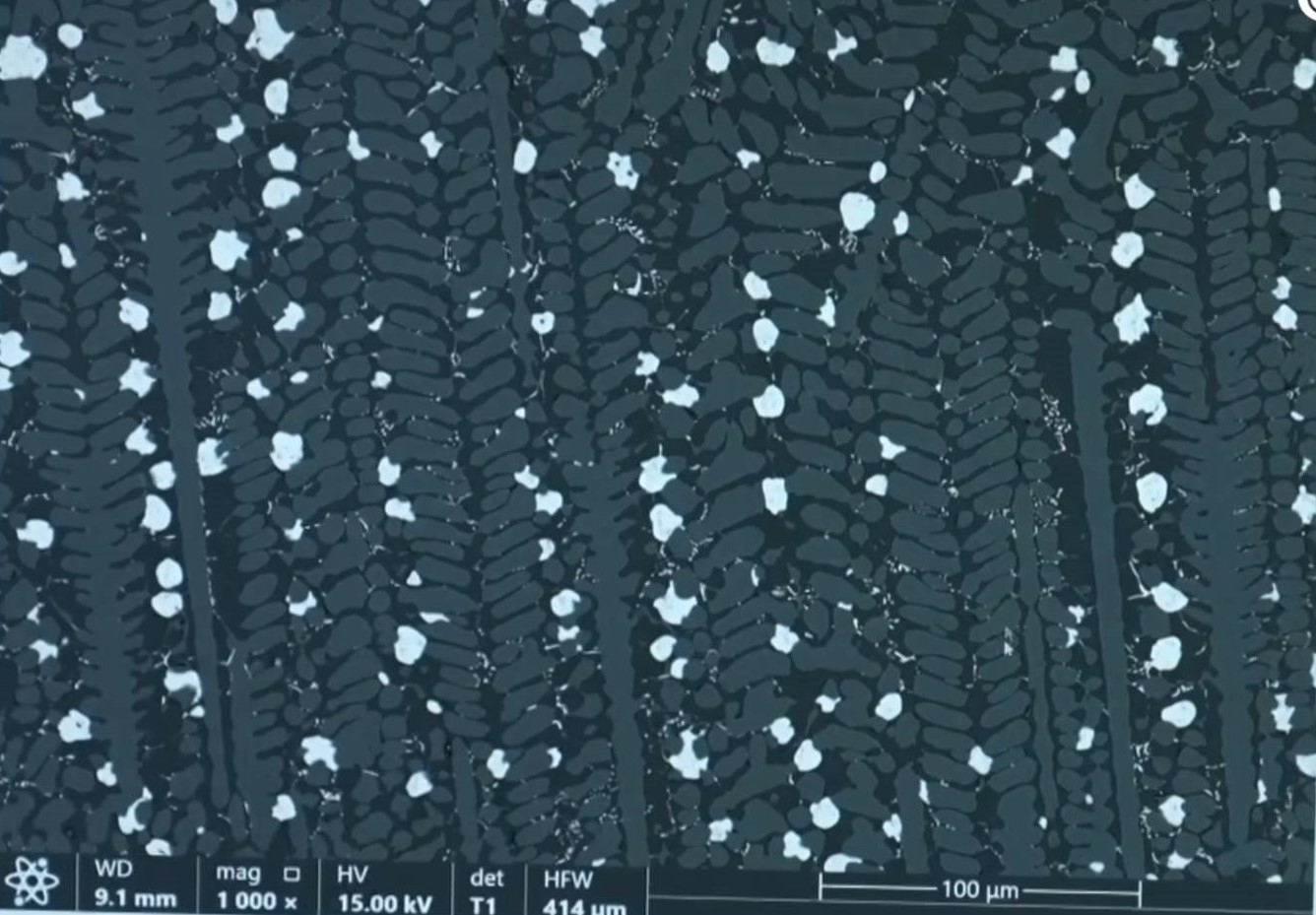
Microgravity experimentation to create new products. Image credit: CCTV/Inside Outer Space screengrab
Lab cabinets
CCTV reports that Zhao and his team have had more lab time made available to them since the Tiangong space station began construction in 2021, with experiments carried out during the Shenzhou-13, Shenzhou-15 and Shenzhou-16 piloted space missions.
The experiments involved a “high temperature material science lab cabinet” and a “container-free material science lab cabinet” installed within the space station.
“We are now exploring practical applications and hoping to start some international collaborations. We have made a lot of progress in alloy solidification theory and maybe we can develop alloys tailored to industrial needs in the future,” Zhao said.

China space station is captured in this photo taken by the departing Shenzhou-16 crew.
Image credit: CMS
The team’s research so far, CCTV reports, “has led to new methods for creating copper-based sealing bush alloys and noble metal alloys, which are in high demand in the mechanical and electronics industries.”
China launched the Shenzhou-18 piloted spaceship on April 25, with the taikonaut trio slated to carry out a six-month mission on the orbiting outpost.
Go to these CCTV videos detailing onboard space station life and work at:
https://www.facebook.com/share/v/ZLGcshfuVcDKd6mR/
https://www.facebook.com/share/v/bXPSMNDfzF9pb3f5/
 Posted in Space News

