 By
By  March 2nd, 2023
Image credit: CGTN/Inside Outer Space screengrab
China’s Shenzhou-15 crew has carried out a second spacewalk outside the country’s Tiangong space station.
According to the China Manned Space Agency (CMSA), Fei Junlong, commander of the mission, along with colleague Zhang Lu, have completed the spacewalk and have returned to the station’s Wentian lab module.
The third crew member, Deng Qingming, stayed inside the orbiting outpost to provide support for the spacewalking twosome.

Image credit: CGTN/Inside Outer Space screengrab
Science experiments
The three astronauts were sent to the country’s space station in late November last year. Over the past three months, they have fulfilled multiple tasks, ranging from spacewalks to scientific experiment cabinet tests and cargo exit tasks in the Wentian and Mengtian lab modules.
In addition, experiments and testing in the fields of space science research and application are progressing steadily as planned, according to China Central Television (CCTV).
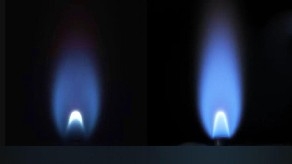
Image credit: CMSA/CCTV
Combustion, skin epidermis tests
“In coordination with the ground team, the astronauts successfully performed the first in-orbit ignition test with Mengtian’s combustion cabinet, which carries a device to measure the velocity field in the combustion region,” CCTV reports. “The test has verified the functions of the experiment system and the accuracy of the experiment process, laying a foundation for follow-up projects.”
In addition, the astronaut trio has obtained the three-dimensional structural images of their skin epidermis and superficial dermis with the country’s self-developed two-photon microscope.
“The event marked the success of the in-orbit verification experiments of the two-photon microscope, providing a promising tool for future health monitoring of astronauts in orbit,” CCTV reports.

Image credit: CCTV Video News Agency/CMSA/Inside Outer Space screengrab
Gravity loses its grip
The very first ball of flame was ignited on Feb. 16 aboard Mengtian, one of the two lab modules that make up the basic T-shaped structure of the space station along with the core module, with camera footage capturing the stunning and rarely-seen image in an environment where gravity loses its grip on materials of all forms.
Using methane as fuel, the test was carried out in the lab module’s combustion cabinet, which is designed for conducting experiments that involve fire.
Underlying physics
According to experts, CCTV reports, the flame, dome-shaped or spherical, looked different from that on Earth because of a lack of buoyancy and meager oxygen flow.

Fast paced series of missions completed China’s space station by end of 2022.
Credit: CMSA/CCTV/Inside Outer Space screengrab
The test allows scientists to learn about the underlying physics behind flame structure and behavior. Moreover, finding out about how fire spreads and behaves in space is crucial for the safety of future astronauts on the space station and for understanding and controlling fire on Earth.
The combustion science experiment system on board the space station was designed by the Institute of Engineering Thermophysics under the Chinese Academy of Sciences.
Mengtian modules
China plans to carry out more than 40 combustion experiments on board the space station by the end of this year.
Launched in October 2022, the Mengtian lab module is used for studying microgravity and carrying out experiments in fluid physics, materials science, combustion science and fundamental physics. It has completed more than 50 tasks as planned over the months.
In the next three months, the Shenzhou-15 mission will continue to carry out experiments and tests, and conduct extravehicular activities (EVAs) as well as cargo exit tasks.
 Posted in Space News

