Archive for the ‘Space News’ Category
 Author:
  August 23rd, 2024
Wait-a-Minute!
Image credit: Barbara David
The high drama of a “stranded” Starliner two-person crew needing “rescue” comes to a head in a wait-a-minute weekend.
NASA Administrator Bill Nelson and leadership will hold an internal Agency Test Flight Readiness Review on Saturday, Aug. 24, for NASA’s beleaguered Boeing Crew Flight Test.
Right after that top leadership gathering, about an hour later, NASA will host a live news conference at 1 p.m. Eastern Time from the agency’s Johnson Space Center in Houston.
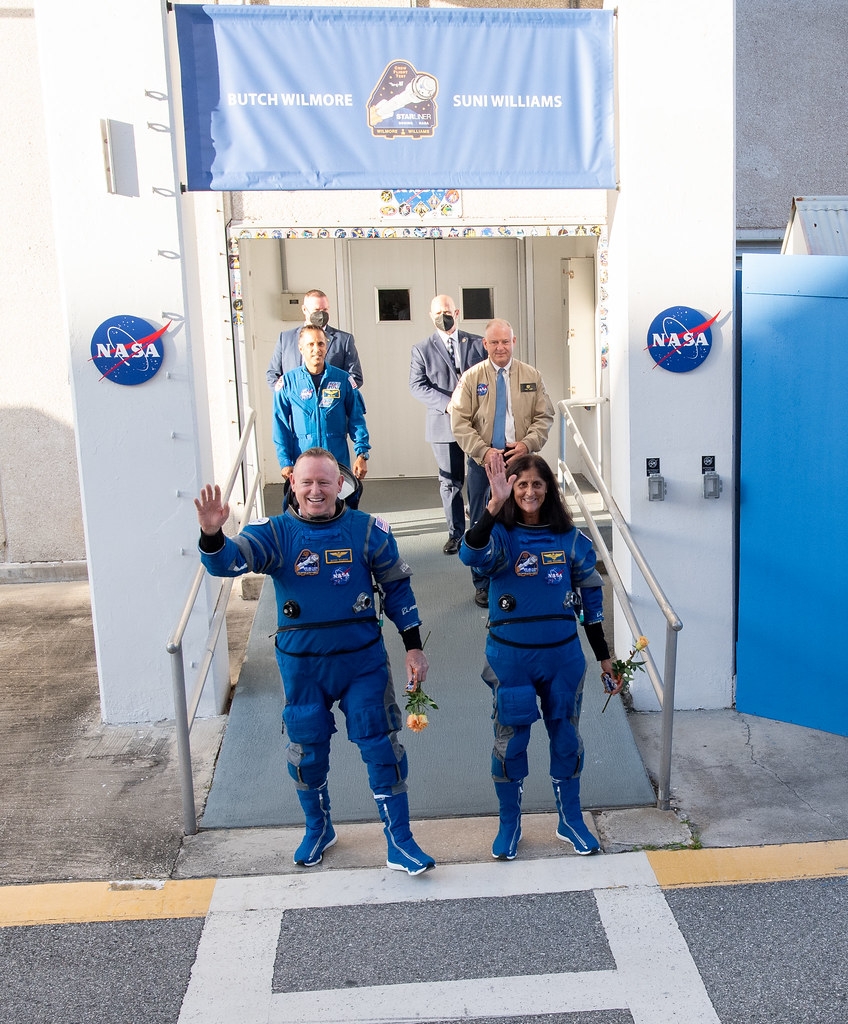
NASA astronauts Butch Wilmore, left, and Suni Williams, wearing Boeing spacesuits, wave to viewers in pre-launch photo.
Image crrdit: NASA/Joel Kowsky
Technical challenges
Both NASA and Boeing experts, as well as safety-of-flight gurus have assessed data. That information has been gathered both in space and on the ground, focused on issues that cropped up with the Starliner’s propulsion and helium systems “to better understand the ongoing technical challenges,” explains NASA.
During Starliner’s flight to the space station, some of the spacecraft’s thrusters did not perform as expected. Furthermore, several leaks were observed in Starliner’s helium system.
“The review will include a mission status update, review of technical data and closeout actions, as well as certify flight rationale to proceed with undocking and return from the space station,” NASA adds.

Boeing Starliner attached to International Space Station. Coming home empty?
Image credit: NASA
Abandon in place?
But will astronauts Butch Wilmore and Suni Williams be onboard the Starliner for a projected land touchdown?
Now safely tucked inside the International Space Station, the twosome were launched aboard Boeing’s Starliner on June 5 for a projected 8 day mission.
There’s chatter about use of the SpaceX Dragon to retrieve the astronauts. But that “abandon in place” decision for the duo means they’d stay put on the ISS until late February of next year.
NASA would replan the agency’s SpaceX Crew-9 mission by launching only two crew members instead of four in late September.

Boeing “Doghouse” unit containing thrusters.
Image credit: Boeing
Wilmore and Williams would then return to Earth after the regularly scheduled Crew-9 increment early next year.
If that’s the path they’ll need SpaceX space suits; the Boeing Starliner space suits are not compatible with the Dragon spacecraft.
Auto-piloting
Also in the decision mix is returning Starliner to Earth on auto-pilot mode, empty of crew next month. Doing so means uploading new software into Starliner for re-entry and a parachute landing, perhaps in New Mexico.

Starliner artwork depicts landing in New Mexico.
Credit: Boeing
So, once again, it’s high drama on the high seas of space.
Early musings
For some early musings about this simple twist of fate flight, go to:
Return of Starliner: Doghouse Deliberations
https://www.leonarddavid.com/return-of-starliner-doghouse-deliberations/
Starliner’s Saga: Tuning in the “Uncertainty Band”
https://www.leonarddavid.com/starliners-saga-tuning-in-the-uncertainty-band/
Boeing Starliner: NASA’s “Deposit, No-return” Decision?
https://www.leonarddavid.com/boeing-starliner-nasas-deposit-no-return-decision/
Watch the media event on NASA+, NASA Television, the NASA app, YouTube, and the agency’s website.
Go to:

Wait-a-Minute!
Image credit: Barbara David
 Posted in

SpaceX Starlink Satellites over Carson National Forest, New Mexico, photographed soon after launch.
Credit: Mike Lewinsky/Creative Commons Attribution 2.0
A new entry in the mega-constellation controversy has entered the Earth-circling satellite ring fray.
“The new space race doesn’t need to create massive space waste,” suggests Lucas Gutterman of the U.S. Public Interest Research Group’s (PIRG) Education Fund.
The central message is that more foresight and regulation is needed before our Earth’s orbit is crowded with thousands of satellites.
“That’s why we’re calling on the Federal Communications Commission (FCC) to pause new satellite internet low earth orbit satellite launches until it conducts environmental reviews for satellite mega-constellations. The FCC also needs to end the environmental categorical exclusion of satellites,” the PIRG group has announced.
Gutterman is director of the PIRG’S Designed to Last Campaign, U.S. PIRG Education Fund.
That PIRG arm is “fighting against obsolescence and e-waste and winning concrete policy changes that extend electronic consumer product lifespans and hold manufacturers accountable for forcing upgrades or disposal.”

An image of the NGC 5353/4 galaxy group made with a telescope at Lowell Observatory in Arizona, USA on the night of Saturday 25 May 2019. The diagonal lines running across the image are trails of reflected light left by more than 25 of 60 Starlink satellites as they passed through the telescope’s field of view. Although this image serves as an illustration of the impact of reflections from satellite constellations, please note that the density of these satellites is significantly higher in the days after launch (as seen here) and also that the satellites will diminish in brightness as they reach their final orbital altitude.
Credit: Victoria Girgis/Lowell Observatory
Wanted: Environmental reviews
Gutterman explains that the number of satellites in mega-constellations that power satellite internet has increased by 127 times in five years.
That increase has come in large part due to SpaceX and its Starlink system.
“At peak deployment of these disposable satellites, 29 tons of metal will re-enter our atmosphere per day. That’s almost like a Jeep Cherokee falling from space every hour,” Gutterman adds.
The PIRG analysis notes that the Federal Communications Commission (FCC) has granted licenses for over 30,000 satellites to SpaceX alone, without requiring environmental impact studies. That said, the FCC “should coordinate closely with regulators to require extensive environmental reviews for the new space age.

Image credit: Johan Swanepoel/Adobe Stock via RAND
Ramifications
Underscored by PIRG are ramifications of putting in place mega-constellations, such as atmospheric pollution, rocket launch emissions, space debris and collisions, as well as light pollution – a concern raised in astronomical circles.
Called out by PIRG, the FCC should:
- Pause new satellite internet low Earth orbit satellite launches until the Federal Communications Commission conducts environmental reviews for mega-constellations.
- FCC should end the environmental categorical exclusion of satellites.
Short window of time
PIRG’s concluding view is that new large scale technologies require oversight and study.

Image credit: NOAA
“The long term effects of this massive change to our environment aren’t clear. What is clear is that we can bring the world online without the unknown environmental harms of satellite mega-constellations,” explains PIRG.
“The FCC should coordinate closely with the EPA, NASA, and other national and international regulators to require extensive environmental reviews for the new space age. We’re in a short window of time when we can prevent making a mess of space and our atmosphere rather than spend decades cleaning it up,” they conclude.
For more information on PIRG and its interest in these space issues, go to: “Are satellites bad for the environment?” at:
https://pirg.org/edfund/articles/are-satellites-bad-for-the-environment/

Image credit: CCTV/Inside Outer Space screengrab
A team of Chinese researchers are delving into techniques to extract water from the Moon – making use of lunar samples rocketed to Earth to pursue their investigation.
According to China Central Television (CCTV), scientists at the Ningbo Institute of Materials Technology and Engineering are looking into an approach that would be capable of yielding up to over 165 pounds (76 kilograms) of water from around one ton of lunar soil.
The work is cited as “setting the stage for the establishment of future lunar research stations,” according to CCTV based on reporting by China Media Group (CMG).

Photo taking during Chang’e-5 surface sampling.
Credit: CCTV/Inside Outer Space screengrab
Daily hydration needs
“Extensive analyses by the research team prove that this innovative water extraction method can generate approximately 51 to 76 milligrams of water from a single gram of lunar soil,” CCTV reports. “By extrapolation, a ton of lunar soil can yield around 51 to 76 kilograms of water – equivalent to over 100 bottles of 500 milliliters each – capable of meeting the daily hydration needs of 50 individuals.”
In an interview with China Media Group, Wang Junqiang, a researcher of the Ningbo Institute of Materials Technology and Engineering said that even if water naturally exists on the Moon, the high-vacuum environment makes it evaporate very quickly, leaving the natural satellite acutely short of the liquid.
“Instead of thinking about directly detecting water, we separate it,” Wang said. “There is hydrogen and oxygen in water. Can we study the sources of these two elements separately and then generate water through chemical reactions? This provides a good scientific research plan or new idea for future lunar exploration,” he said.

Earth’s Moon continues to surprise.
Credit: NASA
Focusing sunlight
Wang predicted that experiments on the Moon may possibly test water-producing ideas before 2030, or even ahead of China’s Chang’e-8 mission around 2028.
Wang and colleagues are evaluating use of a concave mirror or a Fresnel lens to focus sunlight to heat the lunar soil to more than 1,500 Celsius degrees and melt it, which will produce water vapor.
“We can collect the water vapor and use it as drinking water. At the same time, we can also electrolyze the water to obtain oxygen and hydrogen. Oxygen is an essential substance for us to breathe, so there is no problem for human[s] to stay alive. In addition, hydrogen is an energy source. We can burn it or use it to generate electricity in fuel cells,” Wang said.

Image credit: CCTV/Inside Outer Space screengrab
Hydrogen reserves
In addition, Wang added that the heated lunar soil can generate iron, as well as ceramic glass.
“We can use iron as building materials and magnetic materials, as magnetic materials play an indispensable role in the field of electrical power and electronics. And ceramics and steel are essential for building materials too. So we can build houses on the Moon,” said Wang.

Image credit: CCTV/Inside Outer Space screengrab
Research colleague, Chen Xiao, added that as investigators heated the titanium iron ore in lunar soil, anticipating the release of helium, they were instead astonished by the output of bubbles. Lunar soil minerals, enriched over billions of years by solar wind exposure, harbor substantial hydrogen reserves.
“When subjected to high temperatures, hydrogen interacts with iron oxides within the minerals, yielding elemental iron and copious amounts of water. The lunar soil liquefies at temperatures exceeding 1,000 degrees Celsius, liberating water vapor produced during this transformative reaction,” CCTV reports.
Lab samples
As reported by CCTV, Wang stated that the work has resulted in a completely new method of water production.
“The naturally occurring water on the Moon is typically between 0.0001 percent and 0.02 percent, making extraction incredibly difficult. Through this method, the water content we obtain can exceed 5 percent of the lunar soil weight, at least 250 times more than the natural water content,” said Wang.
This new In-situ Resource Utilization (ISRU) work involved samples rocketed from the Moon via China’s Chang’e-5 mission in December 2020, an effort that hurled to Earth 1,731 grams of primarily rocks and soil from the lunar surface.

Far side scenery taken by Chang’e-6 lander/ascender.
Image credit: CNSA/CLEP
Also, China’s Chang’e-6 Moon mission returned 1,935 grams of samples from the far side of the Moon. The country is pressing forward on plans to realize a crewed Moon landing by 2030 to carry out lunar scientific exploration and related technological experiments.
Go to this video that spotlights China’s ISRU work at:
https://www.facebook.com/NewsContent.CCTVPLUS/videos/846836970450005
Also, go to the research paper — “Massive Water Production from Lunar Ilmenite through Reaction with Endogenous Hydrogen” — at:
https://www.cell.com/action/showPdf?pii=S2666-6758%2824%2900128-0


Credit: Big Ear Radio Telescope
Viewed as one of the oddest radio transmissions from afar ever detected, the famous “Wow! Signal” is cited as compelling evidence for extraterrestrial intelligence.
It was back in 1977 that the Ohio State University Big Ear radio telescope detected the Wow! Signal, a long-standing and intriguing signal of extraterrestrial origin.
But researchers from the Planetary Habitability Laboratory at the University of Puerto Rico at Arecibo are proposing a less ETish explanation.

Image credit: UCLA SETI
Archived data
New research, led by Abel Méndez, marks the first phase of the “Arecibo Wow!” project, an ambitious endeavor to search for similar signals using archived data from the former Arecibo Observatory.
The Wow! Signal may have been caused by a unique astrophysical event. They point to the sudden brightening of a cold hydrogen cloud due to stimulated emission from a transient strong radiation source, such as a magnetar flare or a soft gamma repeater (SGR).
These rare events might cause hydrogen clouds to momentarily shine much brighter, potentially explaining the fleeting nature of the Wow! Signal.

Image credit: Arecibo Wow! Project
False positives
According to the “Arecibo Wow!” project page, “this hypothesis not only accounts for the unique characteristics of the Wow! Signal but also highlights a new source of false positives in the search for extraterrestrial technosignatures.”
Méndez adds that the study suggests that the Wow! Signal was likely “the first recorded instance of maser-like emission of the hydrogen line.”
This hypothesis may redefine our understanding of such signals, Méndez and colleagues assert, and guide future searches for extraterrestrial life.

Image credit: SETI Post-detection Hub
How this new reason for the Wow! Signal — likely caused by a rare astrophysical event — receives its own critique in scientific circles remains to be seen.
Go to the research paper — “Arecibo Wow! I: An Astrophysical Explanation for the Wow! Signal” — at:
https://arxiv.org/pdf/2408.08513
Meanwhile, for further information, visit the Arecibo Wow! Project page at:
Also, go to this informative video on the Wow! Signal at:
https://youtu.be/r6rPNPVQp0Y?si=1Ly_LhITW0x50c3m
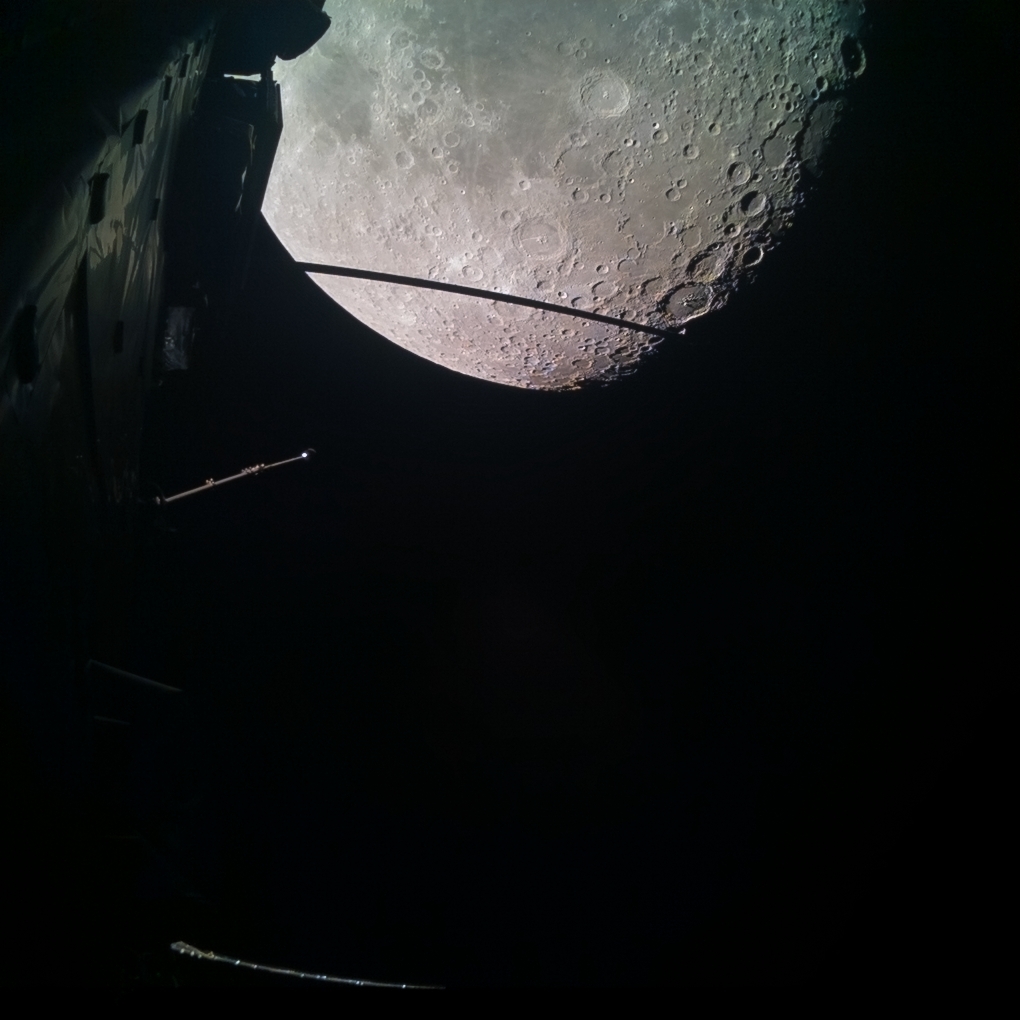
Juice image taken by Juice monitoring camera 1 (JMC1) at 23:25 CEST. The image shows some sign of real color differences in the large-scale features on the lunar surface.
Image credit: ESA/Juice/JMC; acknowledgement: Simeon Schmauß & Mark McCaughrean (image processing)
Part 1 of the first-ever lunar-Earth flyby, the European Space Agency’s Jupiter Icy Moons Explorer (Juice) zipped by the Moon.
Juice took these images with its onboard monitoring cameras just before midnight CEST on August 19, around its closest approach to the Moon.
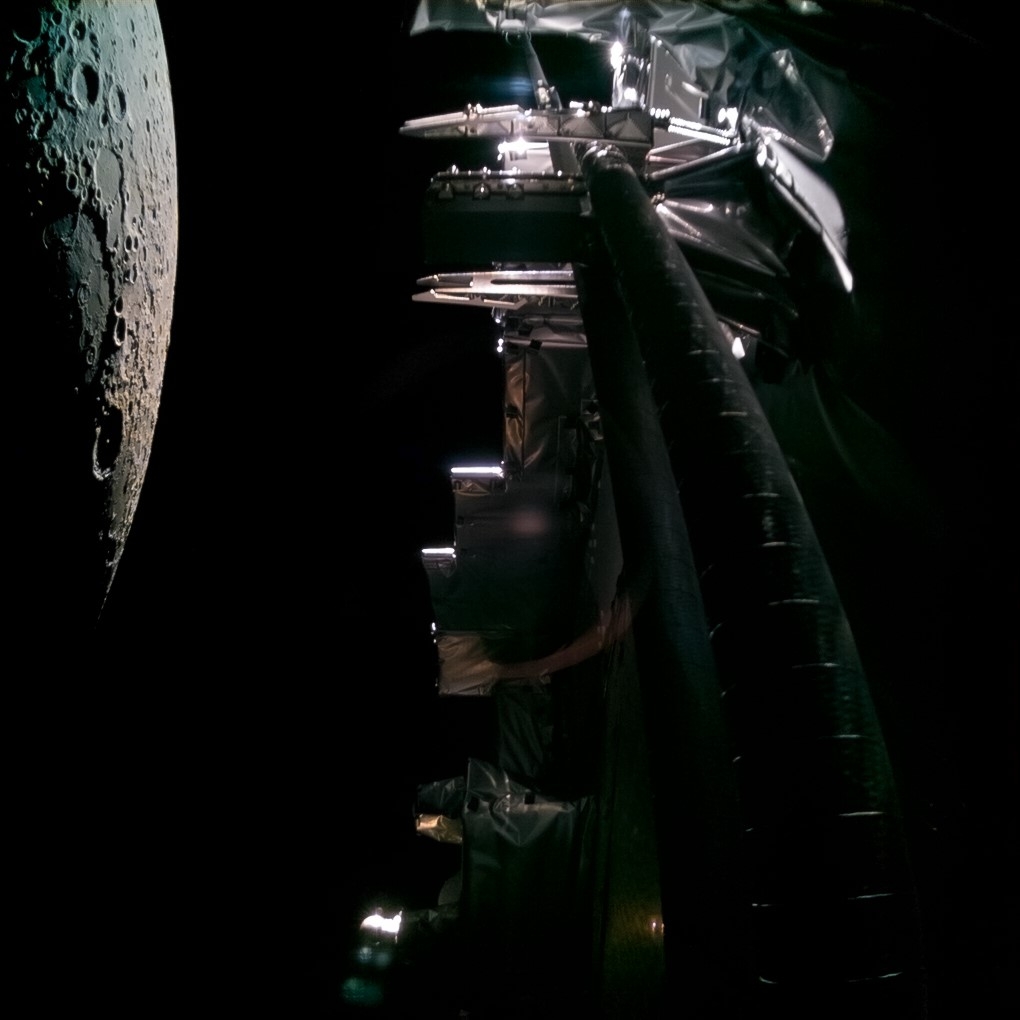
View of our cratered Moon as captured by the Juice monitoring camera 1 (JMC1) soon after Juice made its closest approach to the Moon. On the left side of the image we see parts of the spacecraft itself.
Image credit: ESA/Juice/JMC; acknowledgement: Simeon Schmauß & Mark McCaughrean (image processing)
This successful flyby of the Moon slightly redirected Juice’s path through space to put it on course for a flyby of Earth on August 20, 2024.
Rewatch the livestream of Juice’s first Moon images, including Q&A with the team at:

Image credit: ESA TV

Image credit: ESA/ATG/CC BY-SA 3.0 IGO
The European Space Agency spacecraft — the Jupiter Icy Moons Explorer (Juice) — zips by the Moon at 23:15 Central European Summer Time (CEST) tonight.
Juice will then flyby Earth, zooming within the altitude of satellites in geostationary and medium-Earth orbits.
For a select set of viewers with powerful binoculars or telescopes here on Earth, Juice should be observable as the spacecraft passes overhead, flying directly over Southeast Asia and the Pacific Ocean.

Image credit: ESA/ATG/CC BY-SA 3.0 IGO
Double gravity assist
Juice is the first ever double gravity assist by a spacecraft.
Juice was launched by the European Space Agency (ESA) in April 2023 and destined to arrive at Jupiter in July 2031.
But to get to its destination, double dipping, trajectory bending maneuvers are set to take place on August 19 and 20.

Image credit: ESA
Juice’s trajectory through space and time will redirect it on a course for a flyby of Venus in August 2025, then onto its Jupiter arrival some six years later.
Zooming science
As Juice passes by the Moon and Earth, ESA will be activating the spacecraft’s ten science instruments.

Image credit: ESA
The Moon-Earth flyby provides a “prime test environment” for instrument teams to collect and analyze data from an actual surface in space for the first time. It will give scientists and engineers the chance to calibrate instruments, smooth out any remaining issues, “and who knows, they may even make some surprising scientific discoveries,” an ESA statement suggests.

Image credit: ESA
To keep your eye on the whereabouts of Juice, go to:
https://juicept.esac.esa.int/where/
Go to this live event flyby of the Moon at:
https://blogs.esa.int/rocketscience/2024/08/19/join-us-live-as-juice-flies-past-the-moon/
Boeing Starliner attached to International Space Station. Coming home empty?
Image credit: NASA
NASA held another in a series of media briefings on August 14, providing an update on the continuing, complex, and sometimes confusing Boeing Crew Flight Test.
Bottom line from NASA: “Mission managers continue to evaluate the Starliner spacecraft’s readiness in advance of decisional meetings no earlier than next week regarding the return of NASA astronauts Butch Wilmore and Suni Williams.”
Engineering lingo
NASA’s Boeing Crew Flight Test launched on June 5 on a United Launch Alliance Atlas V rocket from Cape Canaveral Space Force Station in Florida.
Boeing “Doghouse” unit containing thrusters.
Image credit: Boeing
Wilmore and Williams arrived at the International Space Station on June 5 for their pre-ordained eight day mission before returning to Earth.
For Boeing, they are literally in the “doghouse” – perhaps unfortunate engineering lingo — because “doghouses” are where Starliner’s control thrusters are located that proved troublesome.
Both Boeing and NASA teams are trying to figure out why multiple thrusters on the good ship “Calypso” failed during docking.
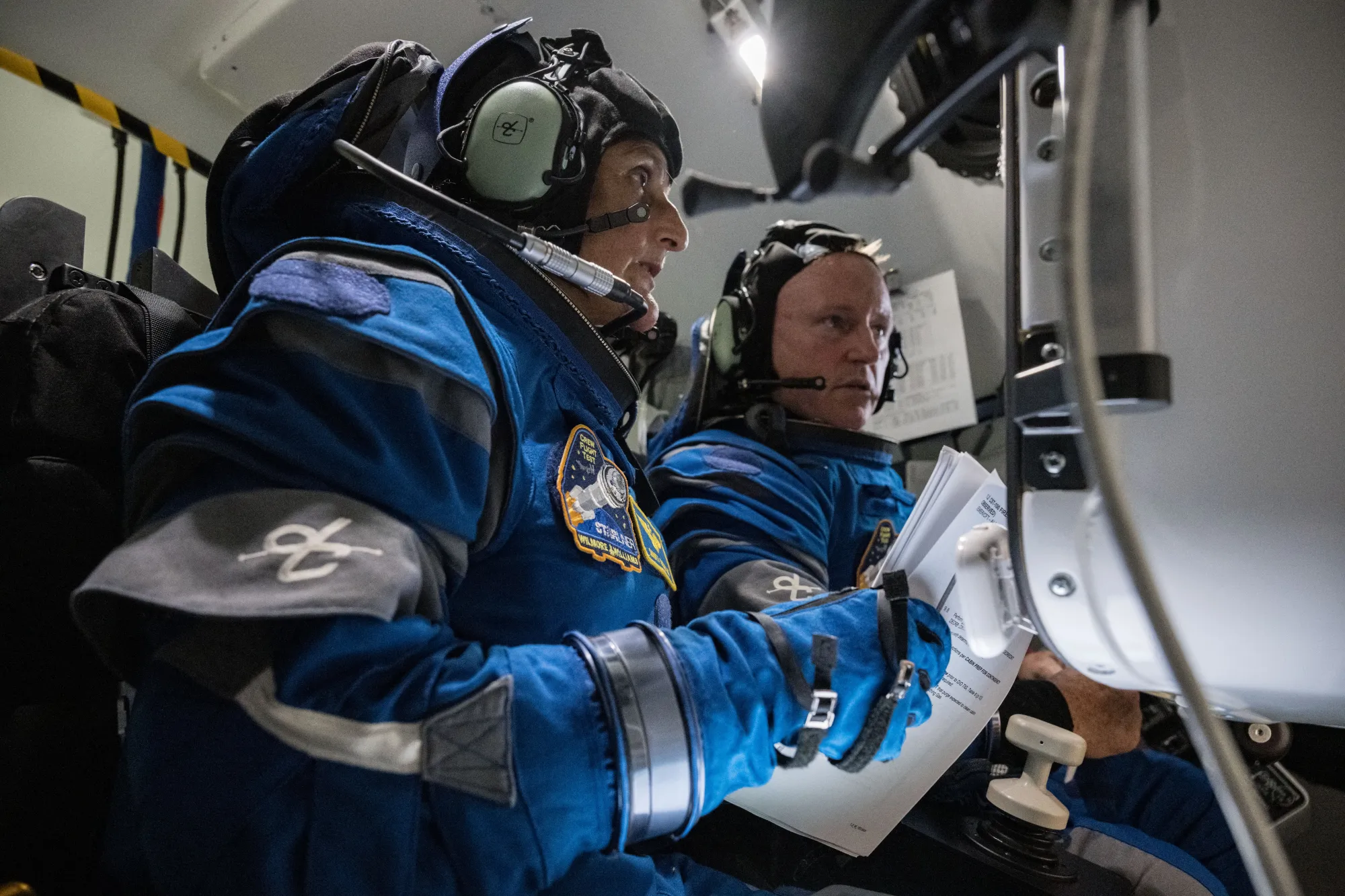
NASA astronauts Suni Williams (left) and Butch Wilmore during pre-launch Boeing Starliner spacecraft simulator workout at NASA’s Johnson Space Center.
Image credit: NASA/Robert Markowitz
Partnership
The Crew Flight Test is an end-to-end test of the Starliner system as part of the agency’s Commercial Crew Program – a partnership with American private industry to open the aperture wider to low Earth orbit and the space station to more people, science, and commercial opportunities.
Yesterday’s briefing by NASA involved:
— Ken Bowersox, associate administrator, NASA’s Space Operations Mission Directorate
— Joel Montalbano, deputy associate administrator, NASA’s Space Operations Mission Directorate
— Russ DeLoach, chief, NASA’s Office of Safety and Mission Assurance
— NASA chief astronaut Joe Acaba
— Emily Nelson, chief flight director, NASA’s Flight Operations Directorate

Image credit: Land landing of Starliner.
Image credit: Boeing
Their titles give you an idea of what’s underway at NASA as it plots a course of action regarding the troubled Starliner and how best to bring back its two-person crew safe and sound back to terra firma.
Go/no-go
Forthcoming is a NASA go/no-go on returning Starliner stuffed with a crew or perhaps empty. Perhaps SpaceX and its Dragon spacecraft might serve as a “rescue option” for returning Wilmore and Williams.
But then there are other complications.
NASA astronauts Butch Wilmore, left, and Suni Williams, wearing Boeing spacesuits.
Image crrdit: NASA/Joel Kowsky
“The Boeing suit is made to work with the Starliner spacecraft and the SpaceX suit is made to work with the Dragon spacecraft. Both were designed to fit the unique nature of their respective spacecraft,” responded NASA spokesperson Steven Siceloff to my Inside Outer Space question via email.
Also, there have been reports that the Starliner can’t fly home without a crew. But that appears not to be the case.
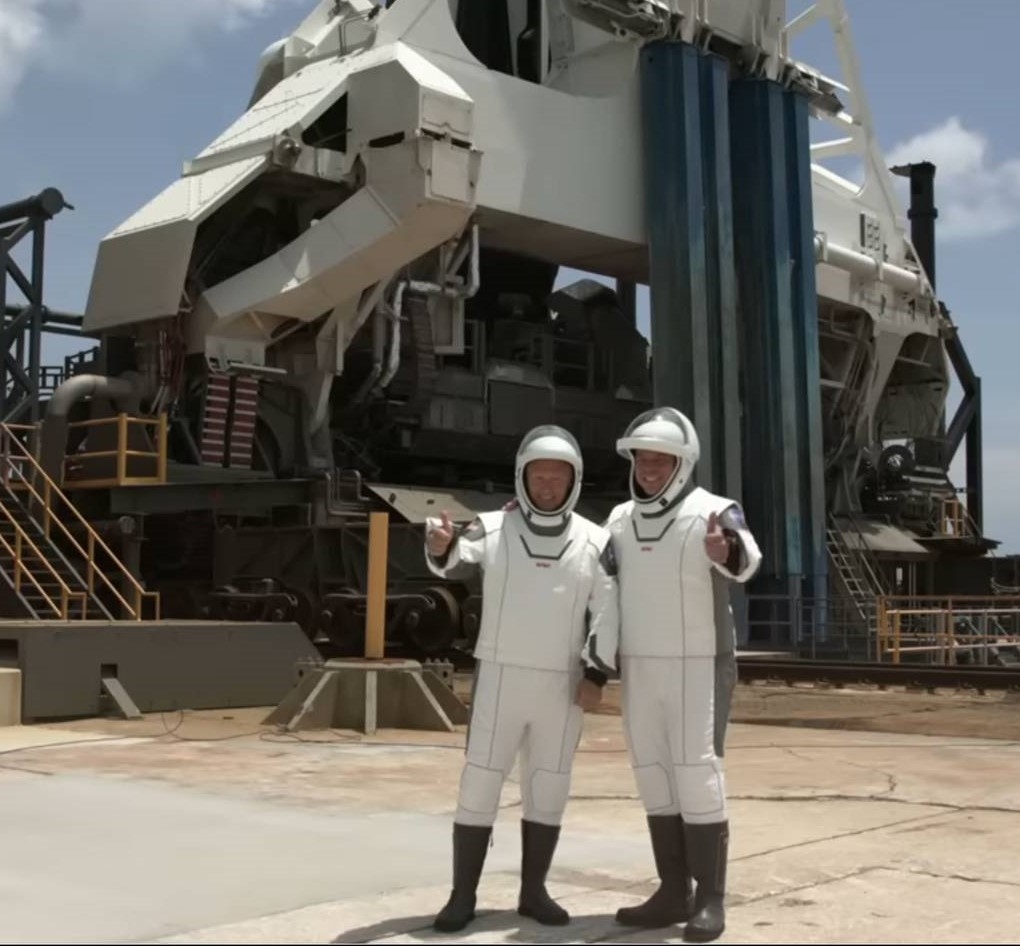
SpaceX Dragon astronauts and their spacesuits. Doug Hurley (left), and Robert Behnken ready for departure on Crew Dragon Demo-2 mission on May 30, 2020.
Image credit: NASA TV/Inside Outer Space
“Starliner flies autonomously and can fly itself back – it did that during OFT-2 [an uncrewed Orbital Flight Test-2 of Starliner back in May 2022.] There are details that are specific to the mission that have to be updated but the overall system is built for the autonomous flight,” Siceloff added.
High drama
All of this high drama is coming to closure, perhaps prior to the end of this month.
So stay tuned…
In the meantime, give a listen to the recent media briefing: NASA’s Boeing Crew Flight Test (Aug. 14, 2024) in replay mode on Youtube at:
BTW: Here are my early musings about this evolving situation looking for a solution:
Starliner’s Saga: Tuning in the “Uncertainty Band”
https://www.leonarddavid.com/starliners-saga-tuning-in-the-uncertainty-band/
Boeing Starliner: NASA’s “Deposit, No-return” Decision?
https://www.leonarddavid.com/boeing-starliner-nasas-deposit-no-return-decision/

Image credit: NASA/JPL-Caltech/MSSS/Inside Outer Space screengrab
NASA’s Perseverance Mars rover is busily scouting about at its Jezero Crater site and has collected seven cores of aqueously deposited sandstones and siltstones.
These samples from the front of Jezero’s western fan are all likely older than the oldest signs of widespread life on Earth. The samples were collected by NASA’s Perseverance rover in 2022 during its exploration of the crater’s western slope.
The hydrated, sulfate-bearing mudstone has the highest potential to preserve organic matter and biosignatures. The carbonate-bearing sandstones can be used to constrain when and for how long Jezero crater contained liquid water.

Ancient Jezero Crater is depicted in this artistic view, replete with shoreline of a lake that dried up billions of years ago.
Credit: NASA/JPL-Caltech/MSSS/JHU-APL
Fan front
The findings suggest that the rocks were originally deposited by water, or may have formed in the presence of water. Jezero Crater was likely once a watery, habitable environment. This “fan front” is suspected by researchers to be an ancient delta that was created by sediment that flowed with a river and settled into what is now a dried-out lakebed.
The same minerals may preserve organic and inorganic signals of abiotic, prebiotic and biological processes. Indeed, if life existed on Mars, scientists think that it could be preserved in the layers of sediment along the fan front.

Jezero Crater – home base for Perseverance rover.
Credit: NASA/JPL-Caltech/MSSS/JHU-APL
Habitable environments
That’s the nitty-gritty of a new research paper – “Astrobiological Potential of Rocks Acquired by the Perseverance Rover at a Sedimentary Fan Front in Jezero Crater, Mars” — in the journal AGU Advances.
“These rocks confirm the presence, at least temporarily, of habitable environments on Mars,” says the study’s lead author, Tanja Bosak, professor of geobiology in MIT’s Department of Earth, Atmospheric, and Planetary Sciences.
“What we’ve found is that indeed there was a lot of water activity,” Bosak explains in an MIT statement. “For how long, we don’t know, but certainly for long enough to create these big sedimentary deposits.”

Illustration shows NASA’s Perseverance rover exploring inside Mars’ Jezero Crater, a 28-mile-wide (45-kilometer-wide) feature believed to an ancient lake-delta system in a hunt for signs of past microscopic life.
NASA/JPL-Caltech
Ideal material
Bosak and her colleagues have found evidence of certain minerals in the sediments that are known to precipitate out of water.
“We found lots of minerals like carbonates, which are what make reefs on Earth,” Bosak states. “And it’s really an ideal material that can preserve fossils of microbial life.”
On the other hand, the researchers also identified sulfates in some samples that were collected at the base of the fan front.
Sulfates are minerals that form in very salty water — another sign that water was present in the crater at one time — though very salty water, Bosak notes, “is not necessarily the best thing for life.”
If Jezero Crater was entirely filled with very salty water, then it would be difficult for any form of life to thrive.

On the prowl at Jezero Crater, NASA’s Mars Perseverance rover is loaded with scientific equipment.
Image credit: NASA/JPL-Caltech/MSSS
Trickle-down theory
On the other hand (2), if only the bottom of the lake were briny, that could be an advantage, at least for preserving any signs of life that may have lived further up, in less salty layers, that eventually died and drifted down to the bottom, according to the MIT statement.
“However salty it was, if there were any organics present, it’s like pickling something in salt,” Bosak says. “If there was life that fell into the salty layer, it would be very well-preserved.”
All of this speculation underscores the need for the Perseverance collected samples to be intensively studied here on Earth. Bosak says laboratory instruments will have more than enough sensitivity to detect any organic matter that might lie within.
“On Earth, once we have microscopes with nanometer-scale resolution, and various types of instruments that we cannot staff on one rover, then we can actually attempt to look for life,” Bosak concludes.
Take a read of “Astrobiological Potential of Rocks Acquired by the Perseverance Rover at a Sedimentary Fan Front in Jezero Crater, Mars” at:
https://agupubs.onlinelibrary.wiley.com/doi/full/10.1029/2024AV001241

Cutaway view of Mars InSight lander and data it collected.
Image credit: James Tuttle Keane and Aaron Rodriquez
Data collected by NASA’s InSight Mars lander keeps on revealing the inner secrets of the Red Planet.
While InSight’s mission ended in 2022, data relayed by the lander during its four-year mission suggests the presence of liquid water in the Red Planet’s crust.
The Mars lander gathered information from the ground directly beneath it such as the speed of Marsquake waves that, in turn, enable scientists to deduce what substances reside subsurface.

This image shows InSight’s domed Wind and Thermal Shield, which covers the Seismic Experiment for Interior Structure (SEIS) seismometer.
NASA/JPL-Caltech
Statistical inference
Rock physics models and Bayesian inversion (a method of statistical inference) were used to identify combinations of lithology, liquid water saturation, porosity, and pore shape.
That data is consistent with a mid-crust on Mars composed of fractured igneous rocks saturated with liquid water at roughly 7 miles (11.5 kilometers) to 12 miles (20 kilometers) depth.
Best evidence to date
The analysis, led by Vashan Wright, a geophysicist at UC San Diego’s Scripps Institution of Oceanography, “provides the best evidence to date that the planet still has liquid water in addition to that frozen at its poles,” according to a media statement.
Wright is a geophysicist who studies tectonics, paleoclimate, paleoseismicity, and earthquake-triggered hazards such as landslides, submarine slides, and tsunamis.
Along with Wright, study authors are Matthias Morzfeld from Scripps Oceanography and Michael Manga from the University of California Berkeley.

Mars beckons. Human explorers can maximize the science output for unraveling the complex nature of the Red Planet.
Image credit: NASA/Pat Rawlings
Implications for past or extant life
“While available data are best explained by a water-saturated mid-crust, our results highlight the value of geophysical measurements and better constraints on the mineralogy and composition of Mars’ crust,” the research team reports.
“Our results have implications for understanding Mars’ water cycle, determining the fates of past surface water, searching for past or extant life, and assessing in situ resource utilization for future missions,” the researchers point out in their paper appearing in the Proceedings of the National Academy of Sciences.
Habitable environment
“Establishing that there is a big reservoir of liquid water provides some window into what the climate was like or could be like,” said Manga, a UC Berkeley professor of earth and planetary science in a statement.
“And water is necessary for life as we know it. I don’t see why [the underground reservoir] is not a habitable environment. It’s certainly true on Earth — deep, deep mines host life, the bottom of the ocean hosts life. We haven’t found any evidence for life on Mars, but at least we have identified a place that should, in principle, be able to sustain life.”
To access the paper – “Liquid water in the Martian mid-crust” – go to:
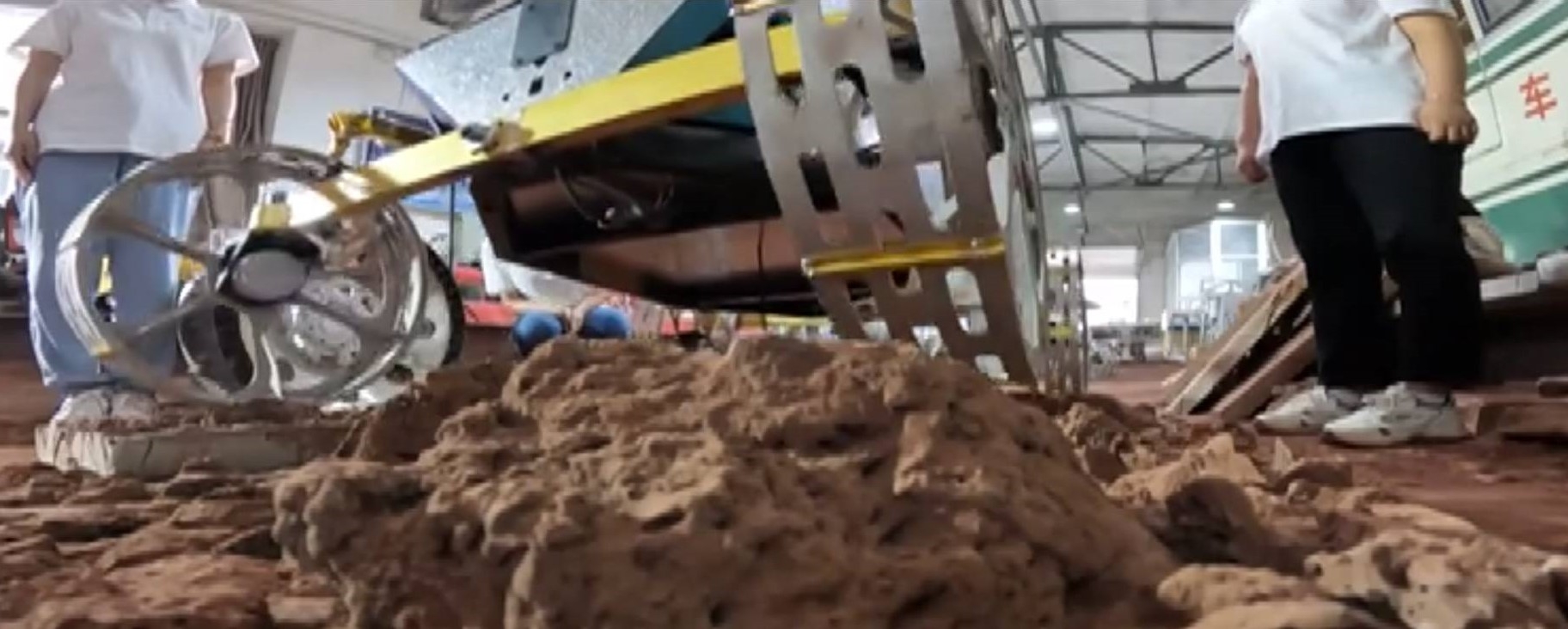
Image credit: CCTV/Inside Outer Space screengrab
\Researchers at Jilin University in northeast China are working on Moon and Mars rovers, ringing out functions of the machines for future missions.
“We are here to test the interaction between the small wheels and lunar soil. Our goal is to make the rover go further and perform better on the surface of the moon,” Zhang Rui, professor at the College of Biological and Agricultural Engineering of Jilin University told China Central Television (CCTV).
Intelligent rover
By resorting to the sensors on the wheels, researchers can accurately analyze the operation of the rover in different environments, which will provide data for the rover’s “intelligent brain”.
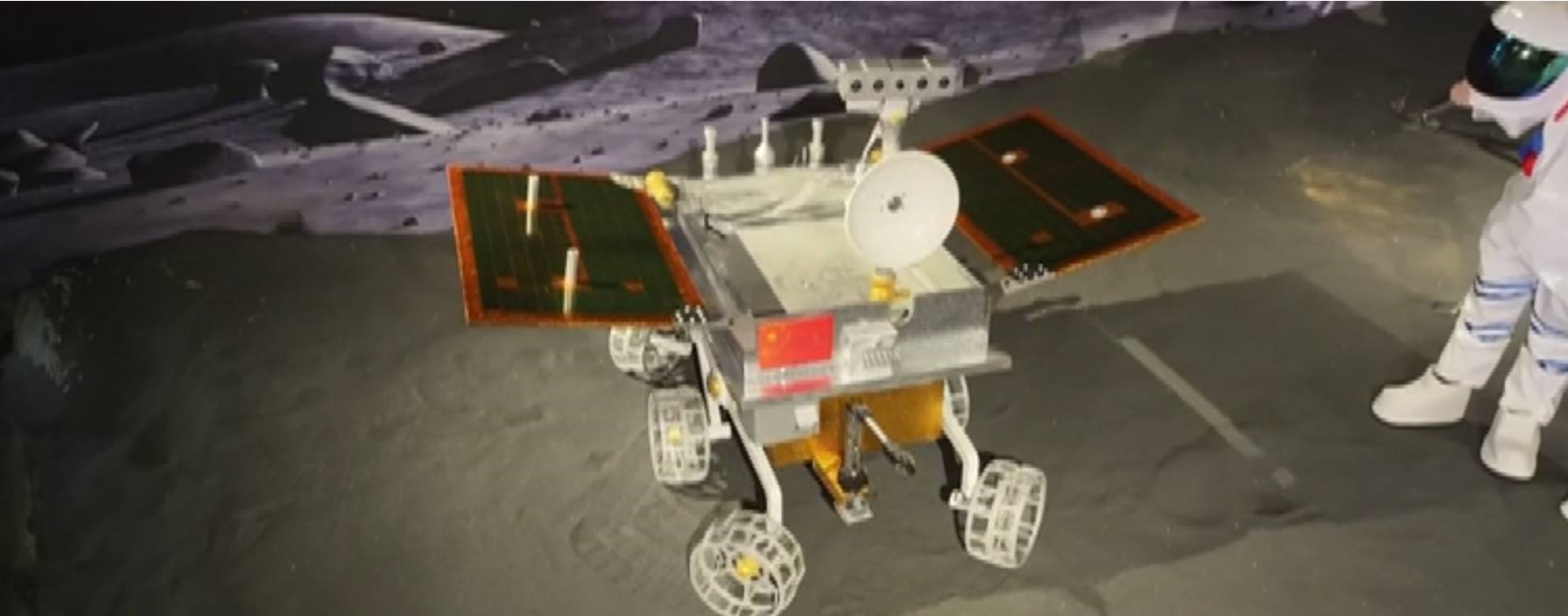
Image credit: CCTV/Inside Outer Space screengrab
A simulated moonscape has been designed, complete with obstacles and pits for day/night trial runs, to train the “intelligent brain” of a vehicle for future lunar tasks.
Road conditions on Mars
Work is also underway on Mars rovers. “A string of road conditions that the future rovers may encounter on Mars was simulated,” a recent CCTV broadcast noted.
“The four-wheel drive vehicle, developed by those Chinese researchers, can travel on soft Martian soil and cross obstacles over 20 centimeters high.”
Used during testing are simulated soils that mimic those found on Mars and the Moon.

Li Xiujuan, senior engineer of the College of Biological and Agricultural Engineering.
Image credit: CCTV/Inside Outer Space screengrab
Core technologies
“We are now working on simulated Martian and lunar soil. Through the research, we can provide a stronger foundation for deep space exploration,” Li Xiujuan, senior engineer of the College of Biological and Agricultural Engineering, explained to CCTV.
“We make the rover or the vehicle carrying the corresponding payload pass through the surface of simulated lunar soil. And we’ll make timely adjustments in accordance with its reactions when it encounters rocks or other obstacles, so that we can cope with all the foreseeable difficulties on the moon,” said Li.

Image courtesy U.S. Defense Intelligence Agency (DIA) in its “2022 Challenges to Security in Space” report.
At the research team lab, core technologies developed were used in the recent retrieval of samples from the Moon’s far side, rocketed back to Earth by the Chang’e-6 mission in June of this year.
Moon-Mars exploits
China is gearing up for development of the International Lunar Research Station (ILRS). That facility projected for the 2030 time frame would involve robotic surrogates as well as human crews. This planned lunar base is being led by the China National Space Administration and Russia’s Roscosmos.
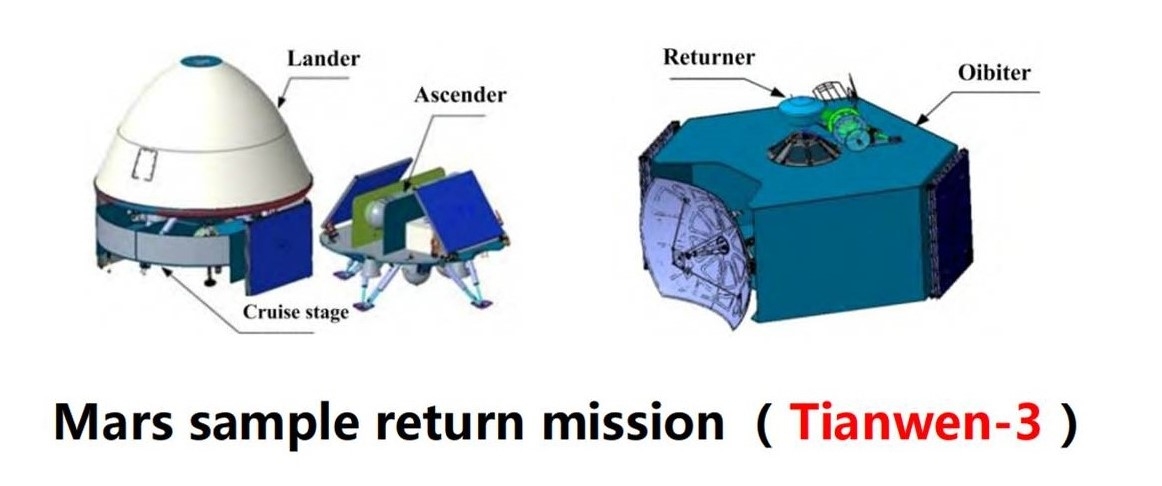
Image credit: Kanyan Xu/COSPAR
Regarding robotic exploration of Mars, China is working on its Tianwen-3 mission. That effort is designed to hurl samples from the Red Planet to Earth, perhaps in the 2030 time period.
Back in 2021, the Tianwen-1 Mars lander mission involved the Zhurong rover that explored Utopia Planitia.

