Archive for the ‘Space News’ Category
 Author:
  October 17th, 2024
The United States Government Accountability Office (GAO), a federal watchdog organization, has issued another look at the NASA Artemis, back to the Moon, program.
This GAO report – “Exploration Ground Systems Program Could Strengthen Schedule Decisions” – found that the program has made progress, but the Artemis schedule poses challenges.
Schedule driver
The Exploration Ground Systems (EGS) program develops and operates the systems and facilities necessary to integrate and launch rockets and spacecraft and then recover crew for the Artemis missions.
“NASA is planning to spend billions of dollars on the Artemis missions. This includes over $3 billion specifically for EGS from fiscal years 2024 through 2028,” the GAO report notes. “The EGS program was a key contributor during the launch of Artemis I in November 2022.”

The program will support crewed Artemis launches in upcoming years. Since Artemis I, EGS continues to improve facilities and develop capabilities for future Artemis missions, such as the EGS’s Mobile Launcher 2 (ML2) which is the primary schedule driver for Artemis IV.
Much work remains
Artemis II and III launches (planned for September 2025 and 2026, respectively): EGS is making progress refurbishing the Mobile Launcher 1—the structure used to transport and launch key systems—and modifying elements to support crew during these missions.
“New capabilities are taking longer than planned, and the program has only limited time to address potential issues,” the GAO report adds.

Artemis IV launch (planned for September 2028): EGS has made some progress toward this mission, such as modifying facilities to accommodate processing and launching the larger Space Launch System (SLS) Block 1B launch vehicle.
“However, much work remains, some of which cannot start until after the Artemis III launch,” the GAO report explains.
To review the GAO report — “Exploration Ground Systems Program Could Strengthen Schedule Decisions” – go to:
 Posted in

Image credit: ASE
What happens when you blend Earth + music + movies created by astronauts?
The outcome is EarthMusicTheater.org, “for the good of Earth…and joy of music.”
There’s a featured movie every Friday, explains Dan Barstow, Education Mission Specialist for the Association of Space Explorers (ASE). He is managing their archive of stunning photos and movies of Earth.
“Over the past couple of years, I’ve worked with astronauts + musicians to make some really stunning Earth + music movies,” Barstow tells Inside Outer Space. “It’s like a free ticket to Earth orbit, with some superb music, an interesting creative blend of astronauts and creative musicians.”
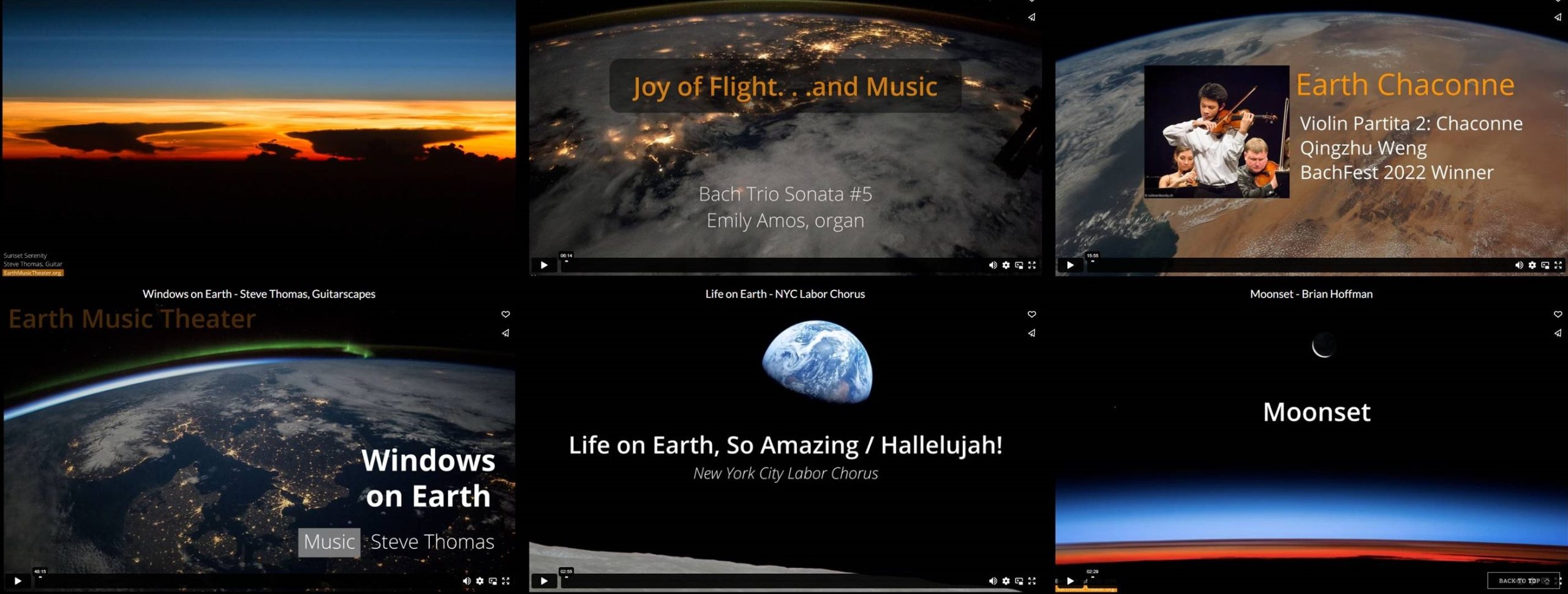
Image credit: ASE
Seeking serenity
The Association of Space Explorers (flown astronauts from 38 countries) leads this Earth Music project. Indeed, ASE members took many of these movies while on the International Space Station.
Each movie features glorious views of Earth from orbit, along with music by world-class musicians. And there’s a new movie every Friday, free on the web.
For example, a new addition is “Pathway to Center” featuring Laura Zaerr playing harp to help us find serenity in life’s challenges, as we fly over a powerful hurricane.
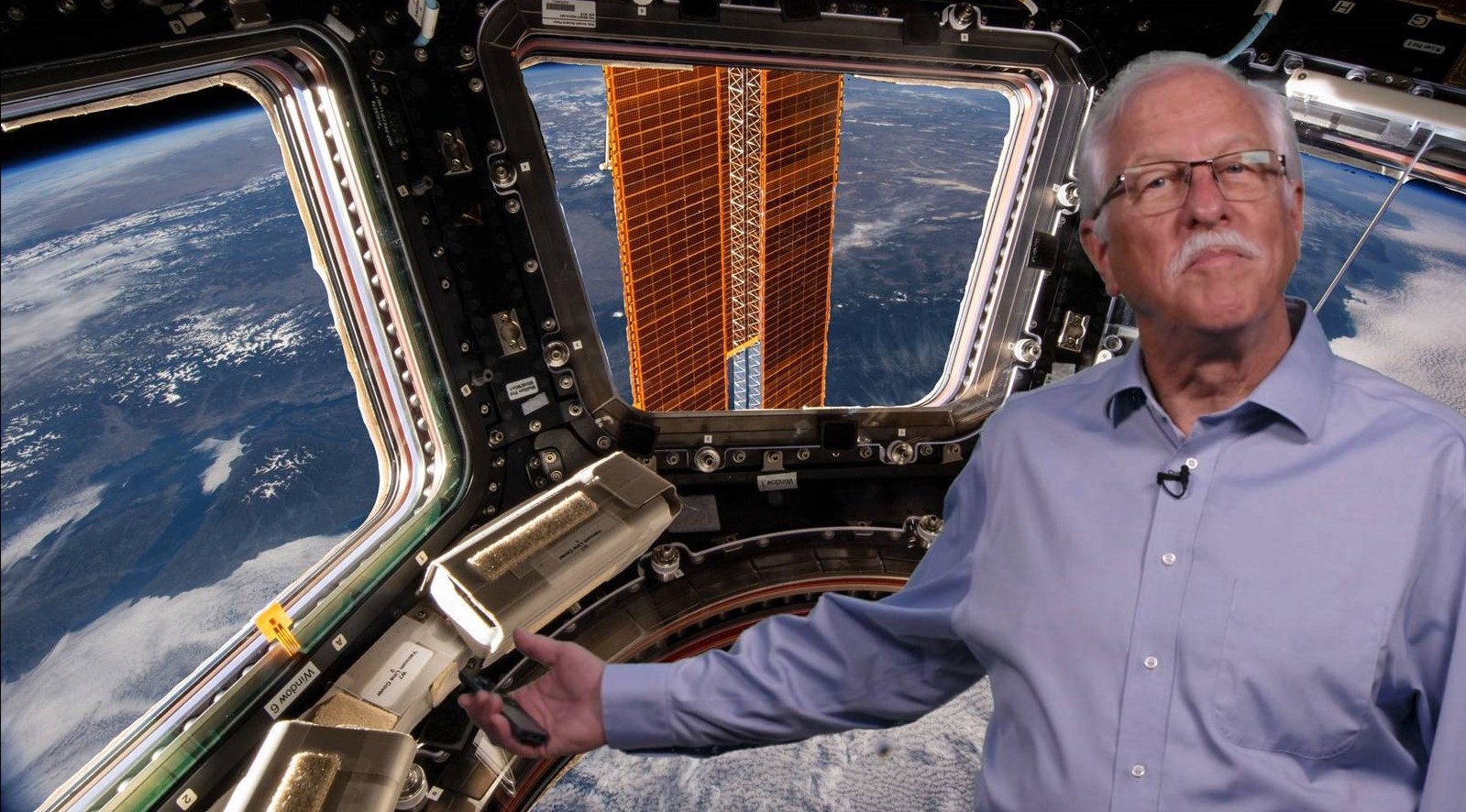
Image credit: ASE/Inside Outer Space screengrab
Two destructive hurricanes recently hit Florida and the US Southeast and the movie features a hurricane fly-over, “as a metaphor for all the struggles we go through, and the need to find inner peace when we most need it.”
Creative team
Backing the effort is a creative team:
- Astronauts took the photos from the International Space Station.
- Musicians explore Earth movies and select their music.
- Movie-makers put pieces together to make the whole.
“We hope humanity will see Earth with new eyes, and hear music with new ears,” notes the website. “Earth inspires the musicians, astronauts…and you.”
To view the innovative collection of movies, go to:
https://www.earthmusictheater.org/
Also, check out Dan Barstow’s presentation to the astronauts at a recent ASE Congress held this month in Amsterdam. Go to:

Image credit: CCTV/Inside Outer Space screengrab
China has rolled out a roadmap of space research goals for the period 2024 to 2050.
The agenda is reportedly the first of its kind at a national level and was unveiled Tuesday by the Chinese Academy of Sciences (CAS), the China National Space Administration (CNSA) and the China Manned Space Agency.
Details were revealed at a press conference held by the State Council Information Office in Beijing, China.
As explained by the state-run China Central Television (CCTV), China’s space science plan includes 17 priority areas under five key scientific themes: the extreme universe, space-time ripples, panoramic view of Sun-Earth, habitable planets, and biological and physical sciences in space, Ding Chibiao, vice president of the CAS said at the press conference.

Ding Chibiao, vice president of the CAS.
Image credit: CCTV/Inside Outer Space screengrab
Research themes
The theme of extreme universe focuses on exploring the origin and evolution of the universe, revealing the physical laws under extreme cosmic conditions. The priority areas range from dark matter and extreme universe to the universe’s origin and evolution, as well as the detection of cosmic baryonic matter, according to the program.
Other themes are:
- The theme of space-time ripples centers on detecting medium to low-frequency gravitational waves and primordial gravitational waves, with the goal of uncovering the nature of gravity and space-time. The priority area within this theme is space-based gravitational wave detection.
- The Sun-Earth panoramic view theme involves the exploration of the sun, the Earth, and the heliosphere to unravel the physical processes and laws governing the complex interactions within the Sun-Earth system. Priority areas include Earth’s cycle systems, comprehensive observations of the Earth-Moon, space weather observation, three-dimensional solar exploration, and heliosphere exploration.
- Scientists will also explore the habitability of celestial bodies in the solar system and exoplanets, as well as search for extraterrestrial life. Key areas in the subject cover sustainable development, the origin and evolution of the solar system, characterization of planetary atmospheres, the search for extraterrestrial life, and exoplanet detection.
- The theme of biological and physical sciences in space seeks to reveal the laws of matter movement and life activities under space conditions to deepen the understanding of fundamental physics, such as quantum mechanics and general relativity. Priority areas encompass microgravity science, quantum mechanics and general relativity, and space life sciences.
Phased approaches
The newly issued roadmap outlines China’s space science development through 2050.

China space station is captured in this photo taken by the departing Shenzhou-16 crew.
Image credit: CMS
“In the first phase, leading up to 2027, China will focus on operating its space station, implementing the manned lunar exploration project, and the fourth phase of its lunar exploration program as well as the planetary exploration project,” Ding said. “Five to eight space science satellite missions will be approved and a number of original achievements with significant international influence will be made during the period.”
From 2028 to 2035, China will continue to operate its space station operation, Ding added, implement the manned lunar exploration project and construct the international lunar research station, the ILRS.
“In the third phase from 2036 to 2050, China will launch over 30 space science missions and ascend to an advanced world level in key areas,” said Ding.

Yang Xiaoyu, director of the System Engineering Department of the CNSA.
Image credit: CCTV/Inside Outer Space screengrab
Moon research station
In regards to the International Lunar Research Station, it’s a two-phased initiative.
According to Yang Xiaoyu, director of the System Engineering Department of the CNSA, the first phase, the basic configuration phase, will focus on establishing a comprehensive lunar-based research platform to enable regular scientific experiments and verification of resource utilization technologies.
The second phase, the expansion phase, aims to create a large-scale, stable, and fully functional lunar research platform “capable of carrying out long-term unmanned operations, allowing short-term human presence, and conducting comprehensive lunar surface scientific research, resource development, and technology verification,” said Yang.
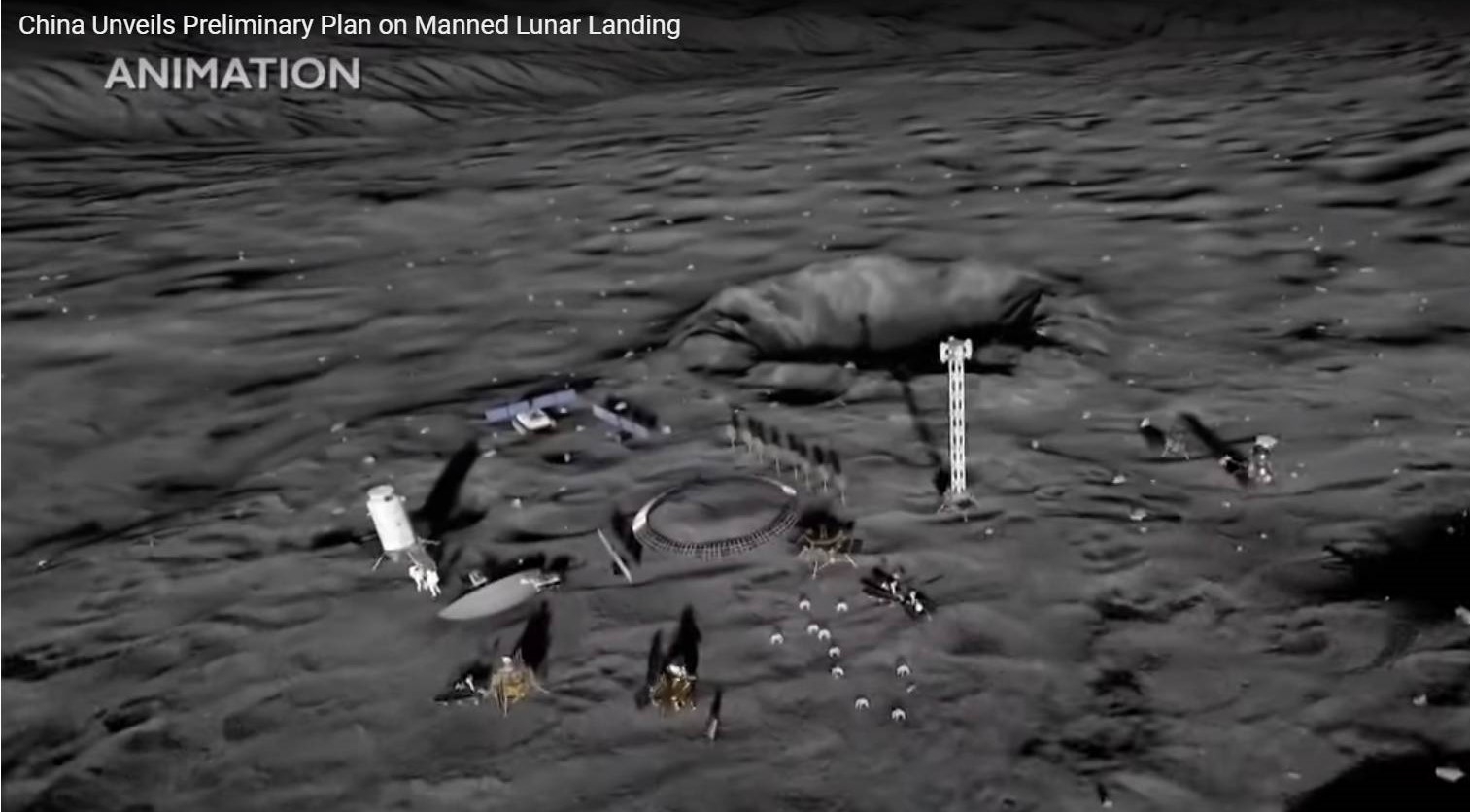
Artist’s view of International Lunar Research Station . Credit: CNSA
The CNSA launched the ILRS cooperation initiative globally in 2017, aiming to build a basic model by 2035 in the lunar south pole region, and to establish a lunar research station connecting the Moon’s south pole, equator, and far side by 2050.
Yang noted that the ILRS project involves signed cooperation agreements with 17 countries and international organizations and are prepared to offer various collaborative opportunities to international partners.
“We will engage in extensive cooperation with our partners on joint feasibility studies, joint design of the ILRS, technical collaboration, overall mission planning and implementation, and scientific data sharing,” said Yang.

China’s Chang’e-7 is to launch a mini-scout that will overfly a shadowed crater at the Moon’s south pole to look for possible traces of water or ice.
Image credit: CCTV/Inside Outer Space screengrab
Lunar south pole
As for upcoming Moon exploration projects China is moving forward with launching the Chang’e-7 and Chang’e-8 probes in the near-term.
Chang’e-7 will probe the environment and resources of the lunar south pole.
Chang’e-8 will carry out technical verification of the in-situ utilization of lunar resources.

China’s Chang’e-8 lunar lander, a bridge build to the International Lunar Research Station.
Image credit: CNSA
“They will form the basic model of the lunar scientific research station that we are currently demonstrating. The two will also jointly conduct a comprehensive multi-physics exploration of the lunar internal structure,” said Yang.
Lin Xiqiang, deputy director of the China Manned Space Agency, also underscored that China has been steadily preparing for its historic launch of a crewed mission to the Moon and the establishment of a lunar research station.
At Tuesday’s conference, Lin and other officials from the Chinese Academy of Sciences and the China National Space Administration also said that the ILRS initiated by China will be constructed from 2028 to 2035, and approximately 15 scientific satellite missions will be carried out during this period. And from 2036 to 2050, China will launch over 30 space science missions.

Image credit: CCTV/CGTN/Inside Outer Space screengrab
Planetary exploration
As for planetary exploration objectives, China will also carry out asteroid exploration, work towards sample return missions on Mars, and press ahead with further planetary exploration in the solar system.
On the books are launchings of Tianwen-2, Tianwen-3, and Tianwen-4 in the future.
Tianwen-2 will deliver samples from asteroids. Tianwen-3 will retrieve samples from Mars. Tianwen-4 is designed to study Jupiter and its satellites and probe the space and internal structure of Jupiter, Yang said.
Starship’s fifth flight test launched on Sunday, October 13. The fifth flight test of Starship took another step towards full and rapid reusability.
The primary objectives of the test flight were met: the first ever return to launch site and catch of the Super Heavy booster; another Starship reentry and landing burn, and an on-target, soft splashdown of Starship in the Indian Ocean.
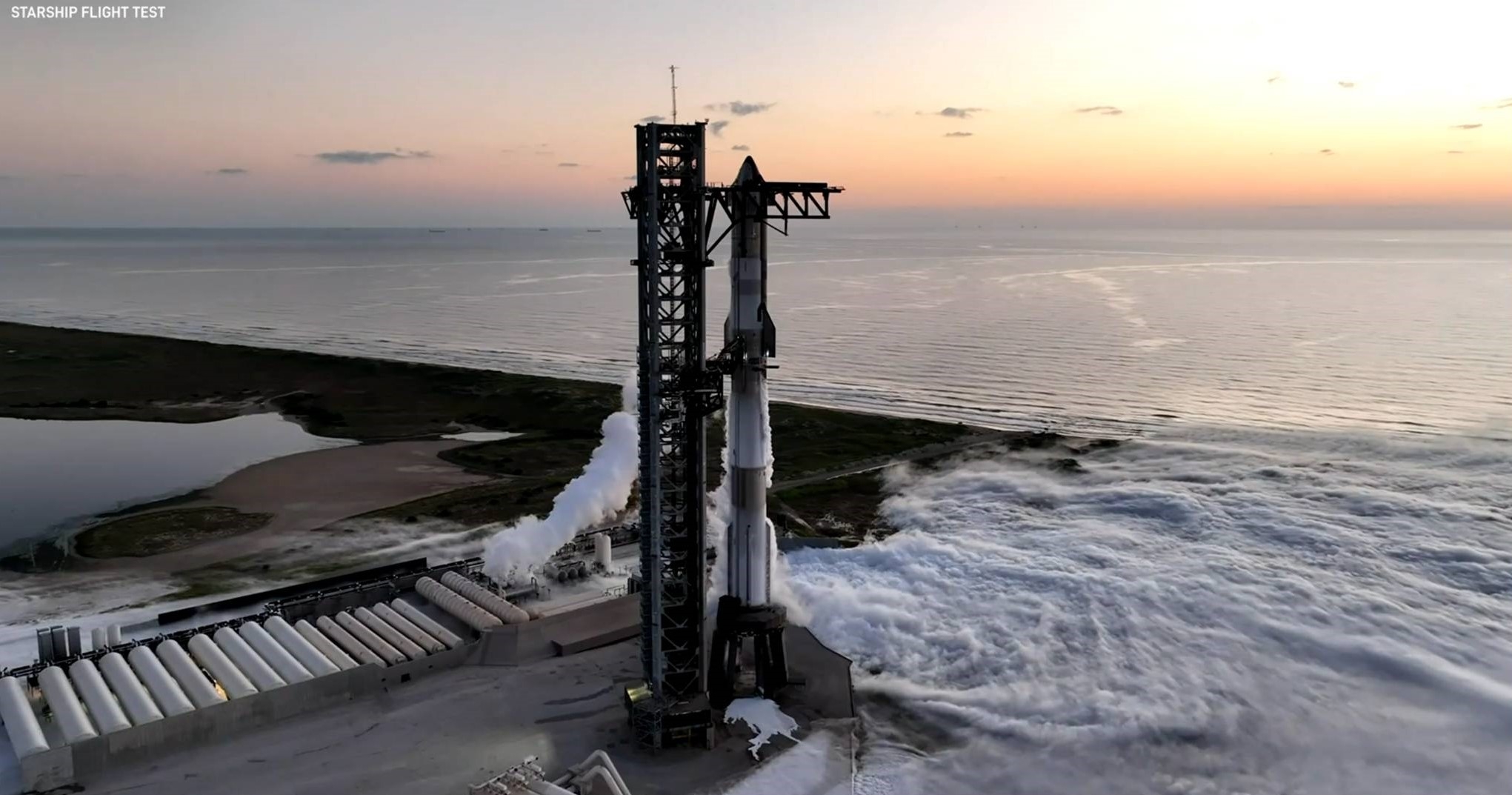
Image credit: SpaceX/Inside Outer Space screengrab

Image credit: SpaceX/Inside Outer Space screengrab
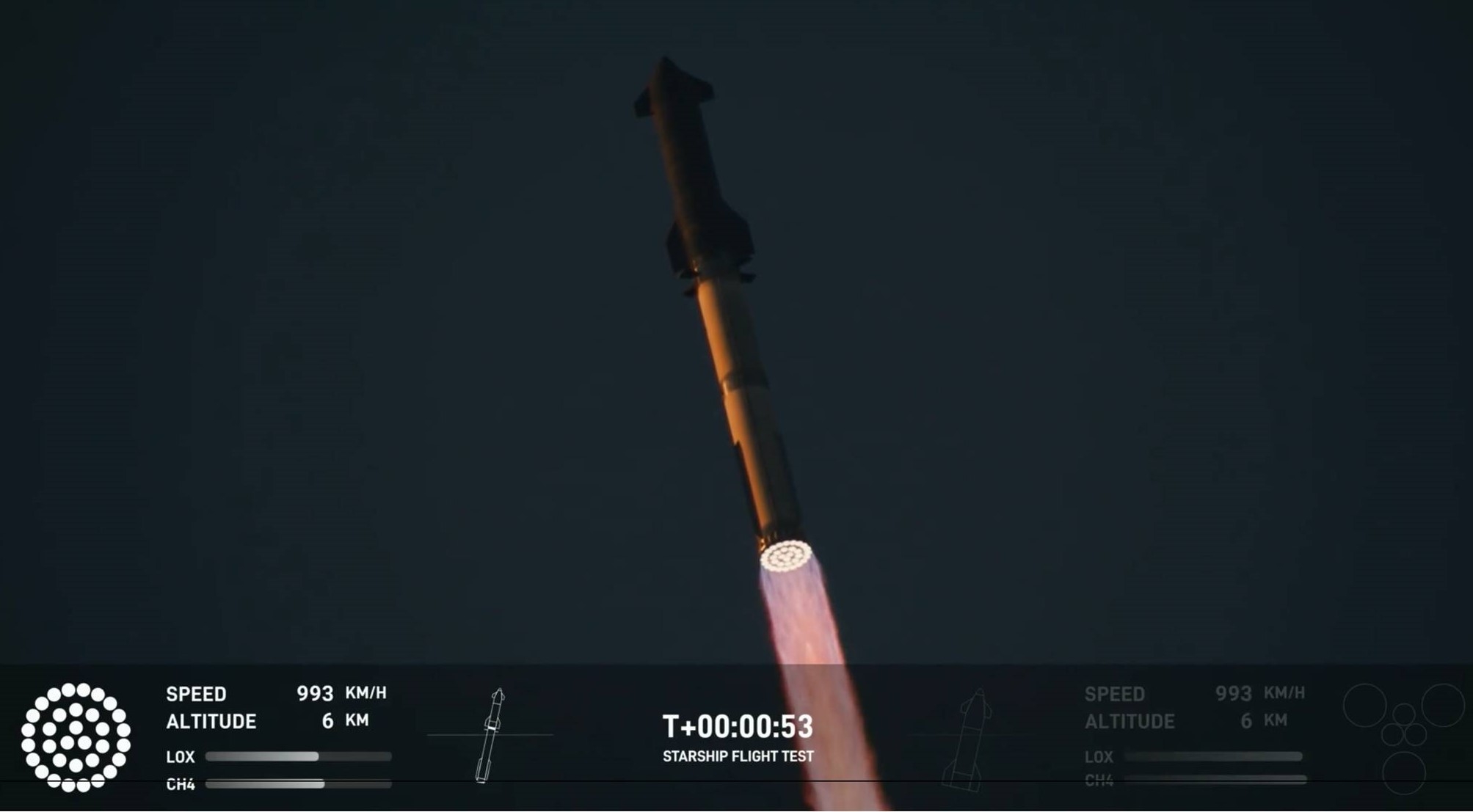
Image credit: SpaceX/Inside Outer Space screengrab
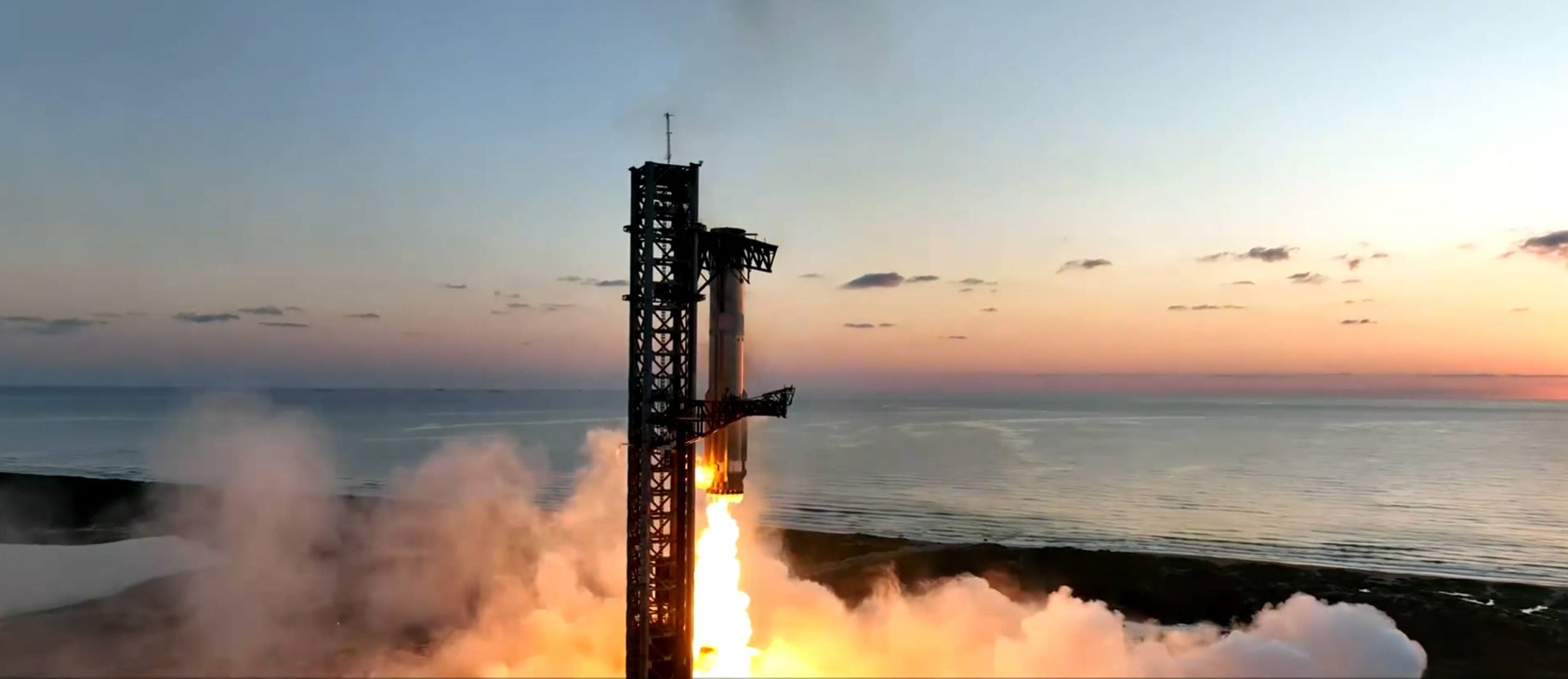
Image credit: SpaceX/Inside Outer Space screengrab
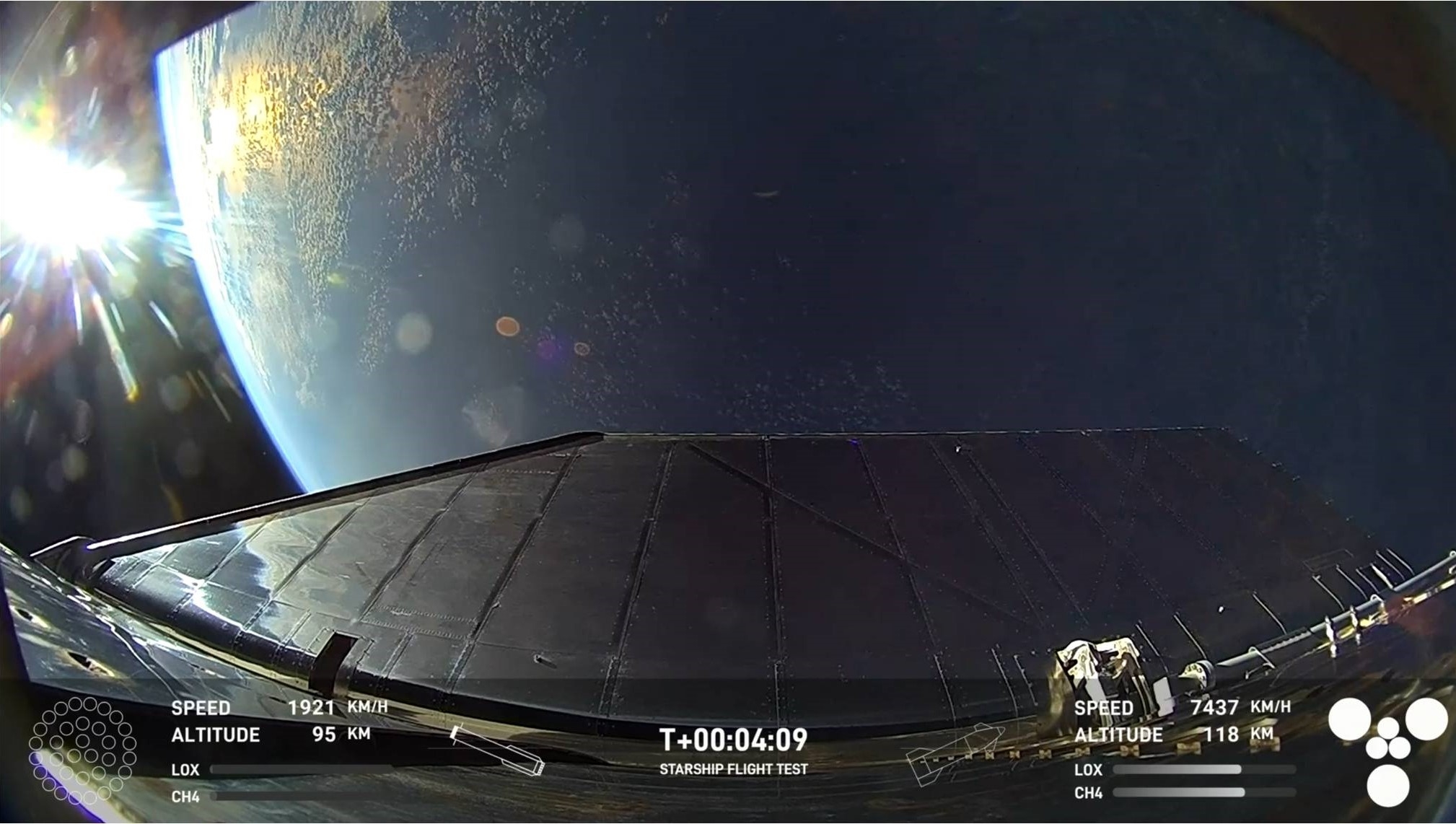
Image credit: SpaceX/Inside Outer Space screengrab
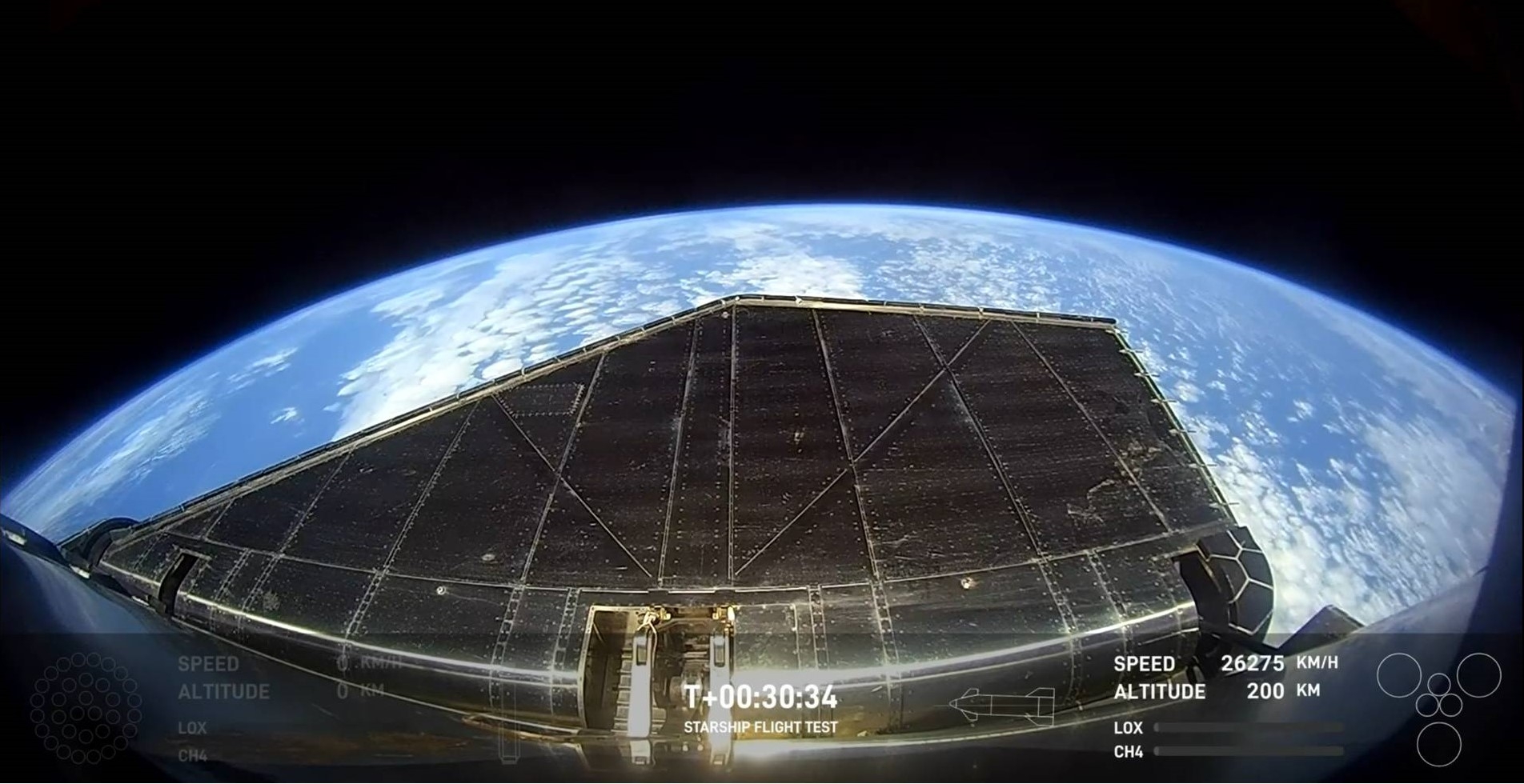
Image credit: SpaceX/Inside Outer Space screengrab
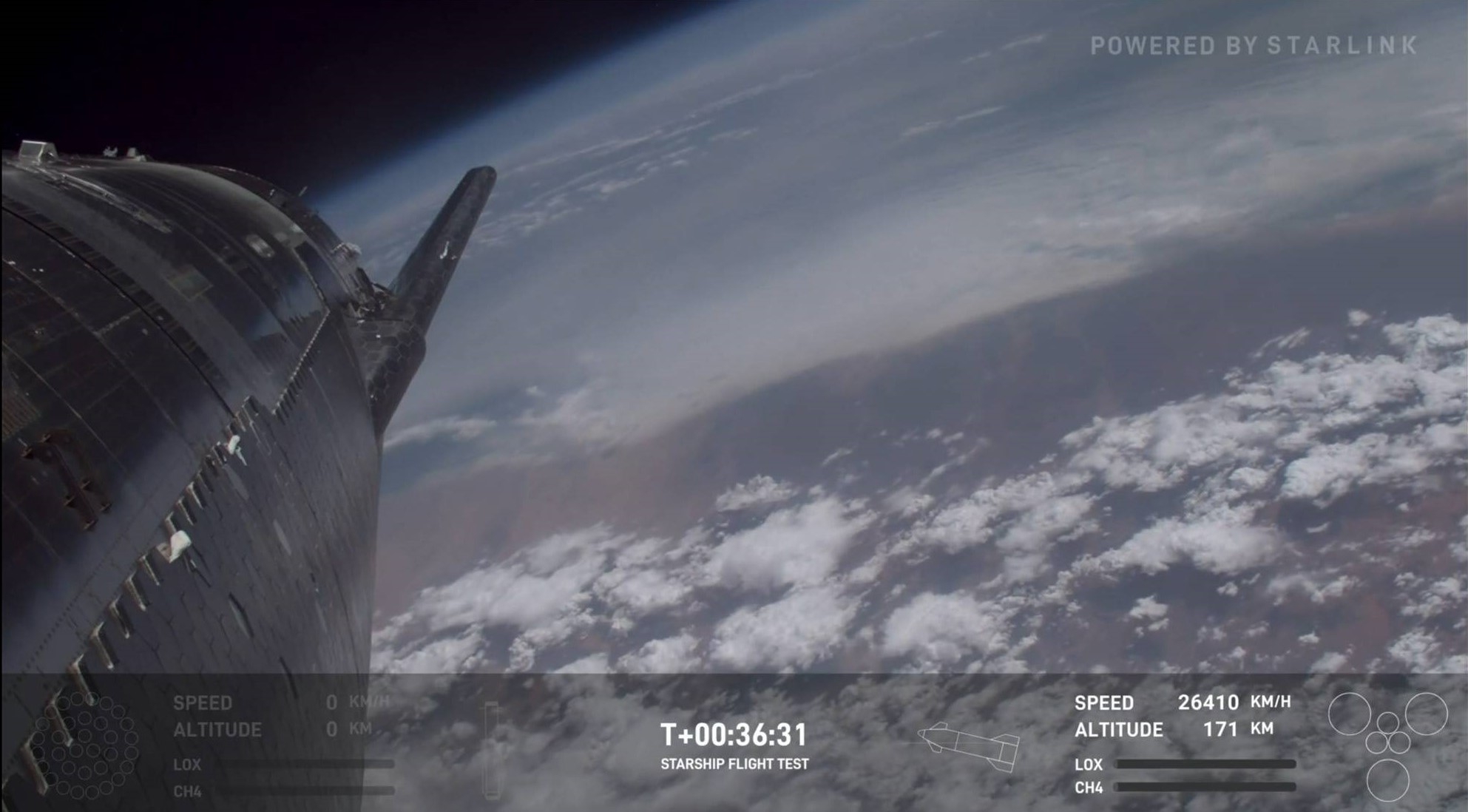
Image credit: SpaceX/Inside Outer Space screengrab
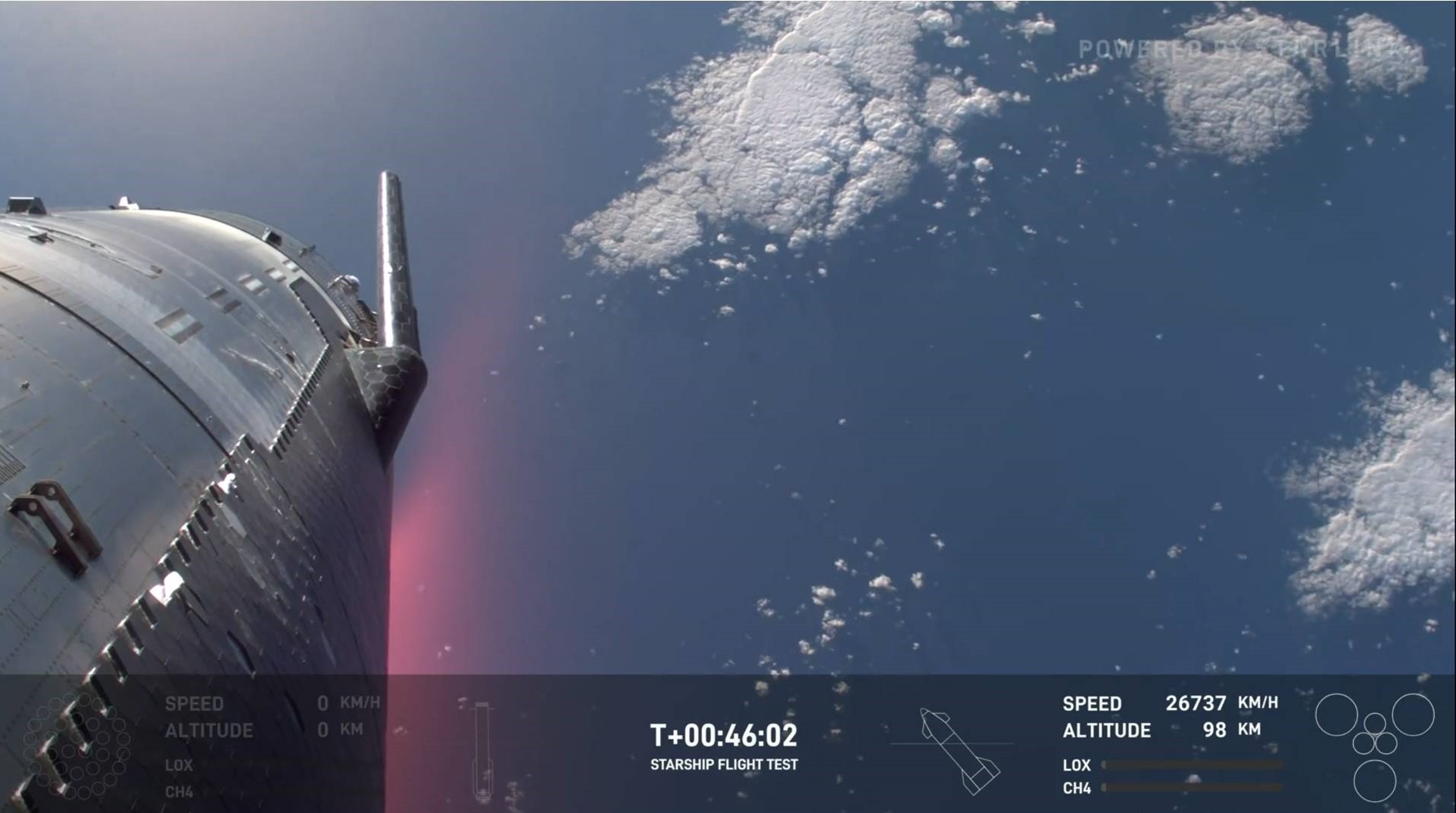
Image credit: SpaceX/Inside Outer Space screengrab
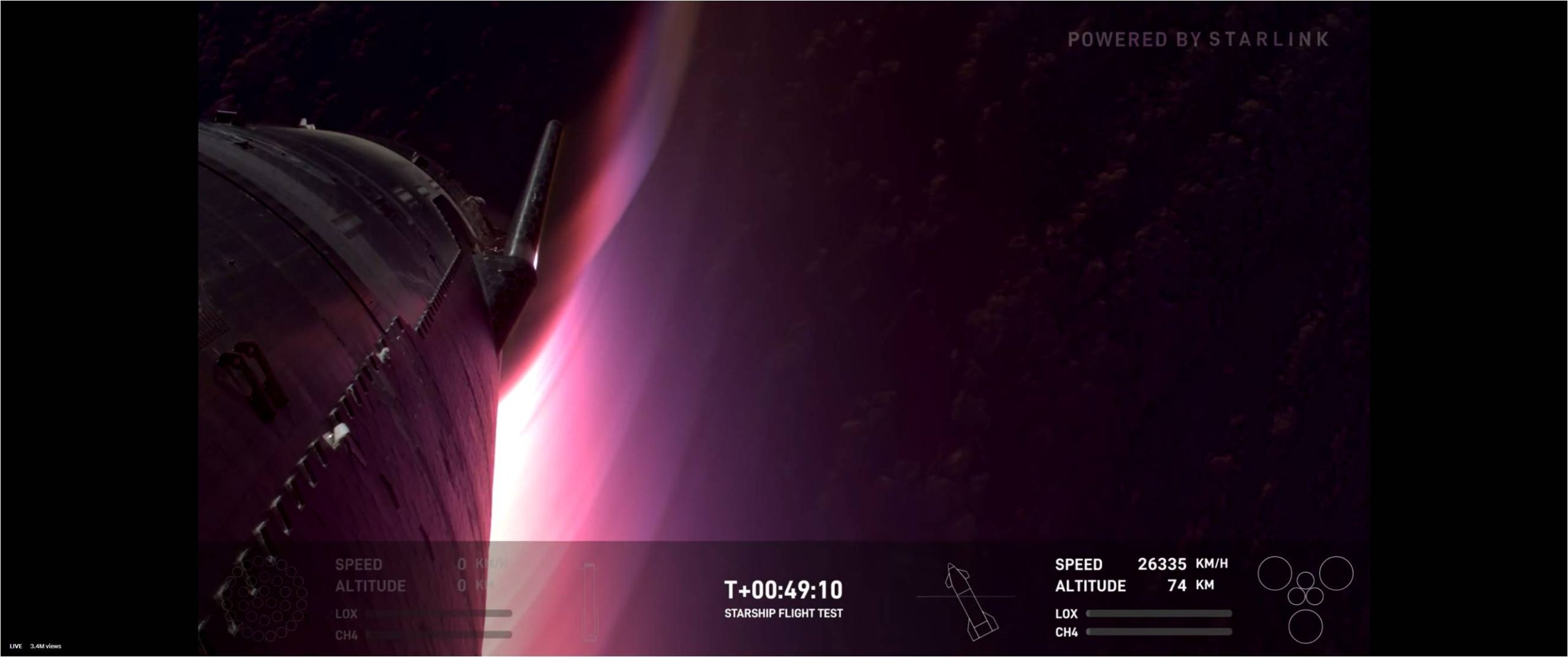
Image credit: SpaceX/Inside Outer Space screengrab
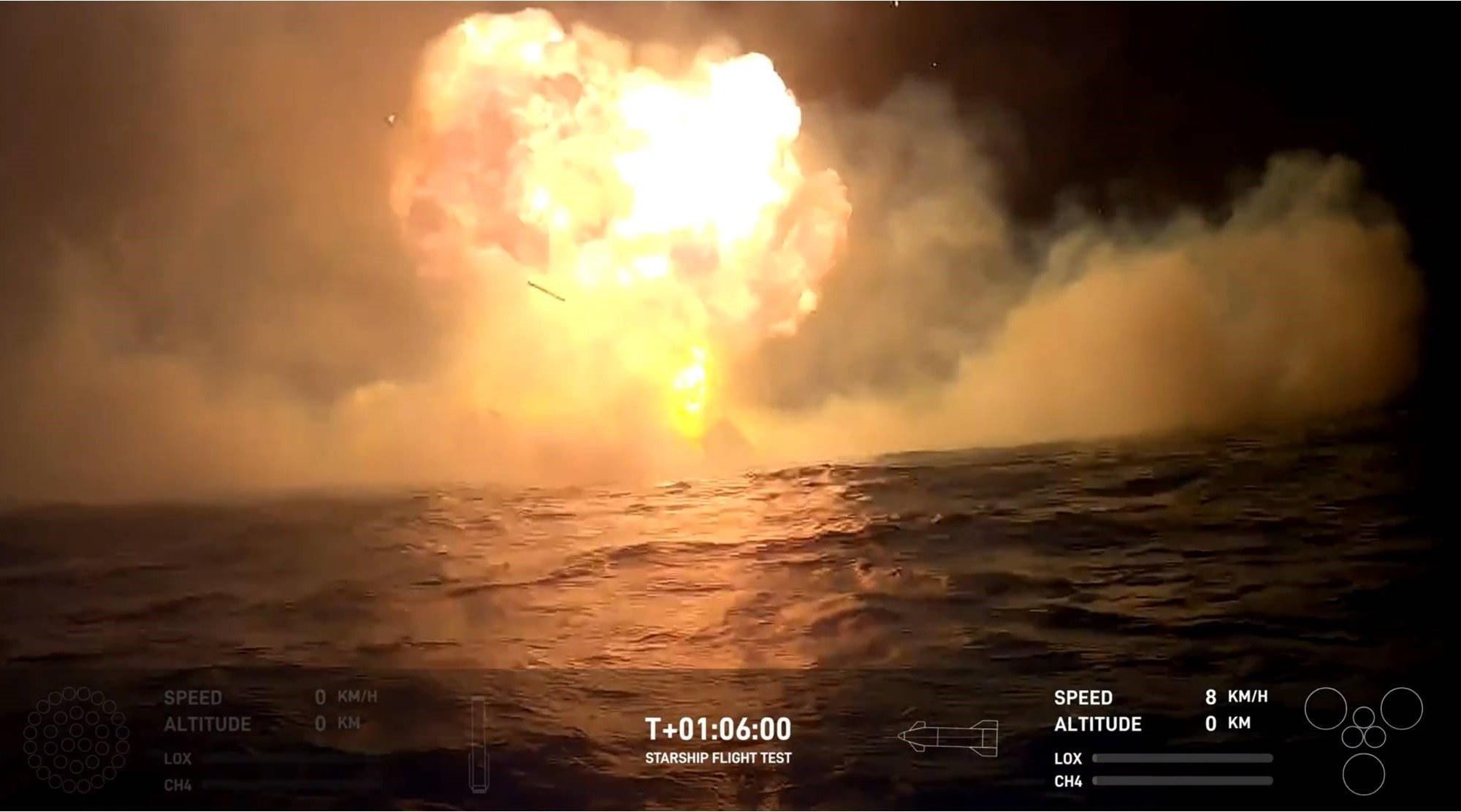
Image credit: SpaceX/Inside Outer Space screengrab
For mission replay, go to:
https://www.spacex.com/launches/mission/?missionId=starship-flight-5

Image credit: SpaceX
The Elon Musk/SpaceX Starship’s fifth flight test from Texas could launch as soon as October 13, pending regulatory, FAA approval.
That approval has just been issued: “The FAA has issued a license modification authorizing SpaceX to launch multiple missions of the Starship/Super Heavy vehicle on the Flight 5 mission profile.”
According to the FAA in an October 12 statement, it determined SpaceX met all safety, environmental and other licensing requirements for the suborbital test flight.
“The Flight 5 mission profile involves launch of the combined Starship/Super Heavy vehicle from Boca Chica, Texas, a return to the launch site of the Super Heavy booster rocket for a catch attempt by the launch tower, and a water landing of the Starship vehicle in the Indian Ocean west of Australia,” adds the FAA determination.
The Starship’s launch window will open as early as 7:00 a.m. Central Time on October 13.
To view the action, you can watch at:
https://www.spacex.com/launches/mission/?missionId=starship-flight-5
Or go to the new X TV app.
How could this possibly work?
According to SpaceX, the fifth flight test of Starship has the primary objectives of attempting the first ever return to launch site and catch of the Super Heavy booster and another Starship reentry and landing burn, aiming for an on-target splashdown of Starship in the Indian Ocean.
For a detailed review of what may take place, go to the Everyday Astronaut website that asks: “How Could This Possibly Work?!”
Go to:
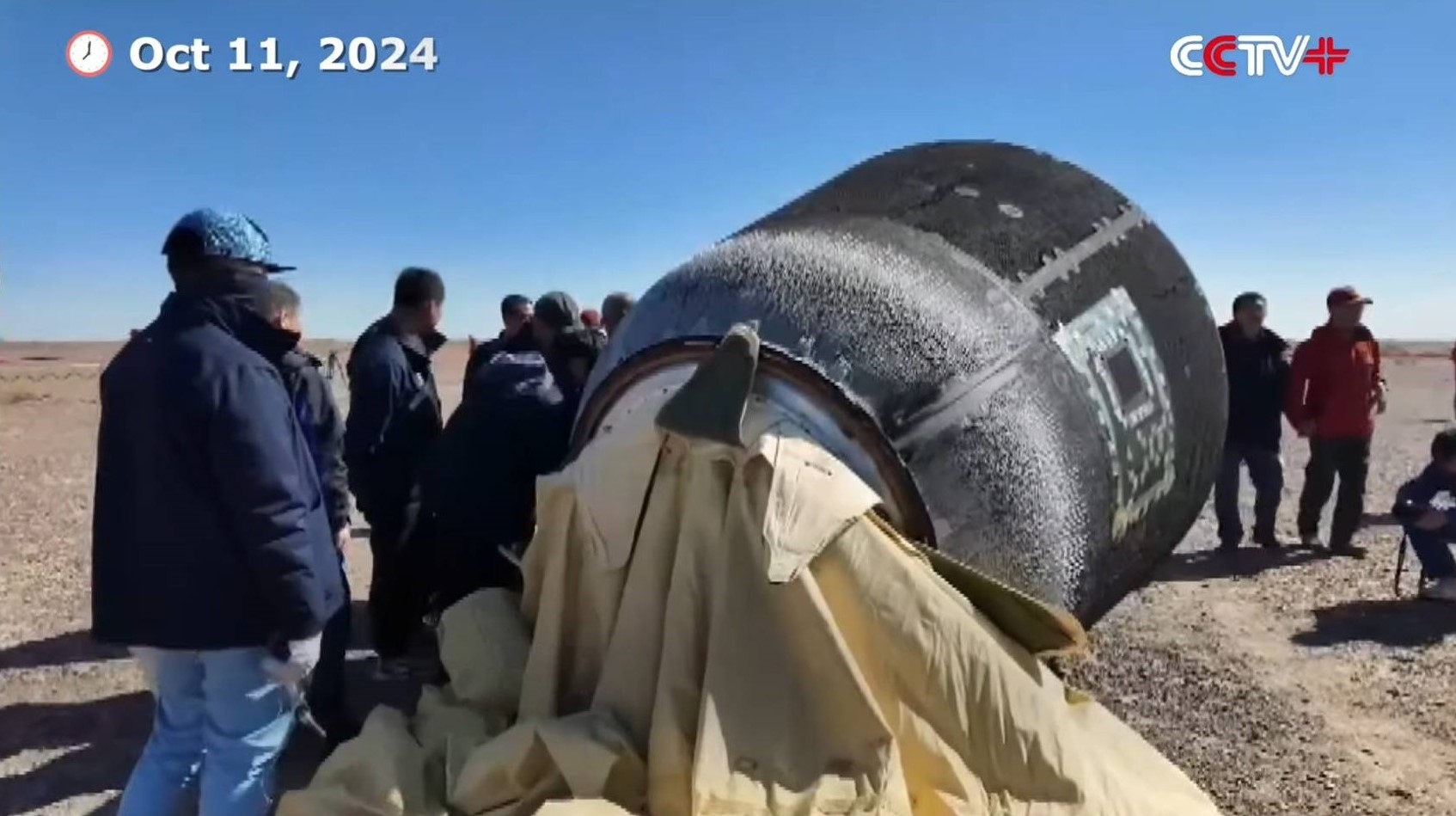
Image credit: CCTV/Inside Outer Space screengrab
China’s first “reusable, returnable” test satellite returned to Earth, landing in the Dongfeng landing site in north China’s Inner Mongolia Autonomous Region.
The capsule of the Shijian-19 mission came to full stop on October 11. The craft was launched on September 27 by a Long March-2D rocket from the Jiuquan Satellite Launch Center in northwest China.
According to the China National Space Administration (CNSA) the satellite performed experiments related to micro-gravity conditions, including the breeding of micro-organisms in space and the validation of new space technologies.
Payloads from five countries, including Thailand and Pakistan, were aboard the spacecraft.
The Shijian-19 satellite reportedly enhances the technical level and application efficiency of China’s returnable satellites, while also reducing operational costs.
A review of the landing site imagery would suggest the craft reenters nose first, deploying airbags to cushion its touchdown.
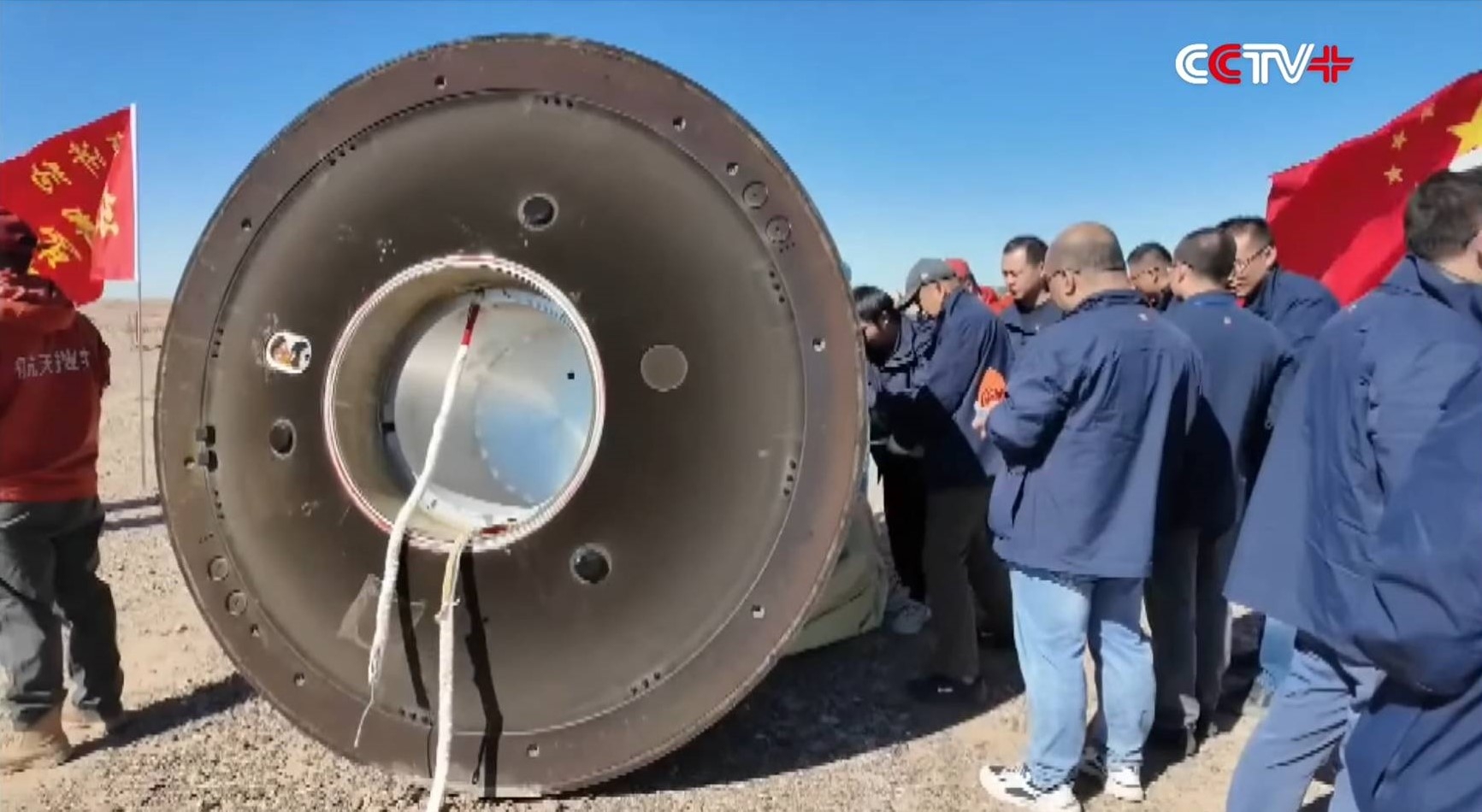
Image credit: CCTV/Inside Outer Space screengrab
Space breeding
A variety of plant seeds were selected from different locations. This space breeding experimentation focused, for example, on high mutation efficiency and shorter breeding cycles.
“This effort aims to elevate China’s space breeding technology and accelerate the innovation of germplasm resources, thereby supporting the nation’s goal of technological self-reliance in seed development,” according an earlier report by China Central Television (CCTV).
“Researchers also plan to capitalize on the Shijian-19’s reusability to conduct space experiments, providing in-orbit testing opportunities for domestic components and materials,” CCTV added.
The Chinese program would appear to mirror Russia’s ongoing Bion satellite effort as well as NASA’s Biosatellite activity, now in retired status.
Go to this video showing recovery operations at:

Artist rendering of the X-37B performing an aerobraking maneuver using the drag of Earth’s atmosphere.
Image credit: Boeing Space
The Air Force has announced that the classified X-37B robo-plane is soon to start a series of “novel maneuvers” prior to reentry to a designated landing site – likely Kennedy Space Center.
This U.S. space plane was launched to a highly elliptical high Earth orbit aboard a Falcon Heavy rocket back on December 28, 2023.
That aerobraking term means that the space plane is to change its orbit around Earth and “safely dispose of its service module components,” in accordance with recognized standards for space debris mitigation, according to a Secretary of the Air Force Public Affairs posting today.

X-37B space plane. Image credit: Boeing/Inside Outer Space screengrab
In the statement, Secretary of the Air Force Frank Kendall explained that this novel series of maneuvers by the Orbital Test Vehicle-7 (OTV-7) mission “demonstrates the Space Force’s commitment to achieving groundbreaking innovation as it conducts national security missions in space.”
Series of passes
The announcement also noted that this is the first time the U.S. Space Force and the X-37B have attempted to carry out a dynamic aerobraking maneuver, “leveraging six successful missions of operating the space plane safely, as well as decades of general lessons learned from the scientific community conducting Moon and Mars missions.”
The use of the aerobraking maneuver allows the craft to carry out a series of passes using the drag of Earth’s atmosphere. Doing so enables the spacecraft to change orbits while expending minimal fuel.

OTV-6 was the first mission to introduce a service module that expanded the capabilities of the spacecraft.
Image credit: Staff Sgt. Adam Shanks
“Once the aerobrake maneuver is complete, the X-37B will resume its test and experimentation objectives until they are accomplished, at which time the vehicle will de-orbit and execute a safe return as it has during its six previous missions,” the statement adds.
There was no specific time noted as to actual return of the craft to a landing strip.
Distinctive mission
The Air Force Rapid Capabilities Office (AFRCO) has managed the X-37B program since 2010, meant to push forward the next generation of reusable space capabilities for the United States Space Force.
This OTV-7 mission of the U.S. military’s unique X-37B robotic space plane is decidedly distinctive.
For the first time, the Boeing-built craft was hurled spaceward atop a SpaceX Falcon Heavy booster, “with a wide range of test and experimentation objectives,” explains a U.S. Space Force press statement. Reportedly OTV-7 is the fourth flight of this particular craft; there are believed to be only two vehicles for the program.

Image credit: SpaceX
Service module
As explained in the Air Force statement, the last space plane flight, OTV-6, was the first mission to introduce a service module that expanded the capabilities of the spacecraft.
That module hosted more experiments than any of the previous space plane missions. In the OTV-6 flight, the service module was detached in orbit from the space plane before its landing, necessary due to the aerodynamic forces seen by the X-37B vehicle upon re-entry.
Once detached, the free-floating service module from that previous mission was disposed of “in compliance with best practices,” according to the Air Force.

X-37B Air Force space plane.
Credit: Boeing/Inside Outer Space Screengrab
First use technologies
Flight roster
Here’s a listing of previous flights of the space plane:
OTV-1: launched on April 22, 2010 and landed on December 3, 2010, spending over 224 days on orbit.
OTV-2: launched on March 5, 2011 and landed on June 16, 2012, spending over 468 days on orbit.
OTV-3: launched on December 11, 2012 and landed on October 17, 2014, spending over 674 days on-orbit.
OTV-4: launched on May 20, 2015 and landed on May 7, 2015, spending nearly 718 days on-orbit.
OTV-5: launched on September 7, 2017 and landed on October 27, 2019, spending nearly 780 days on-orbit.
OTV-6: Launched on May 17, 2020 and landed on November 12, 2022, circling Earth for 908 days.
OTV-7: Lofted on December 28, 2023. Landing date and where/TBD.
First use in space
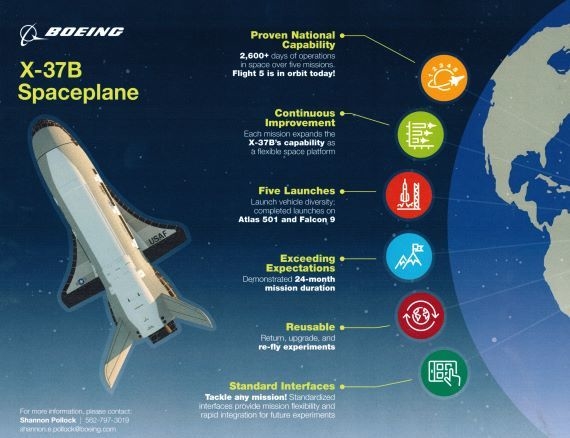
In past Boeing-supplied information, the company says the X-37B is designed to operate in low-Earth orbit, 150 to 500 miles above the Earth.
X-37B handout.
Credit: Boeing
Additionally, the vehicle makes use of several “first use in space” technologies including:
— Avionics designed to automate all de-orbit and landing functions.
— Flight controls and brakes using all electro-mechanical actuation; no hydraulics on board.
— Use of a lighter composite structure, rather than traditional aluminum.
— New generation high-temperature wing leading-edge tiles and toughened uni-piece fibrous refractory oxidation-resistant ceramic (TUFROC) tiles and advanced conformal reusable insulation (CRI) blankets.
Chief of U.S. Space Operations, General Chance Saltzman, said in the new posting that “this first of a kind maneuver from the X-37B is an incredibly important milestone for the United States Space Force as we seek to expand our aptitude and ability to perform in this challenging domain.”

Image credit: Felix Schöfbänker
China’s space plane
Considered by many as a copycat version of X-37B, China’s experimental space plane recently rolled to full stop in September on a landing strip. Little is known about the craft.
It was hurled into orbit on December 14, 2023 atop a Long March 2F rocket from the Jiuquan Satellite Launch Center in northwest China.
The whatever it is and does spacecraft touched down after 268 days of in-orbit operation, making its touchdown on September 6, 2024.
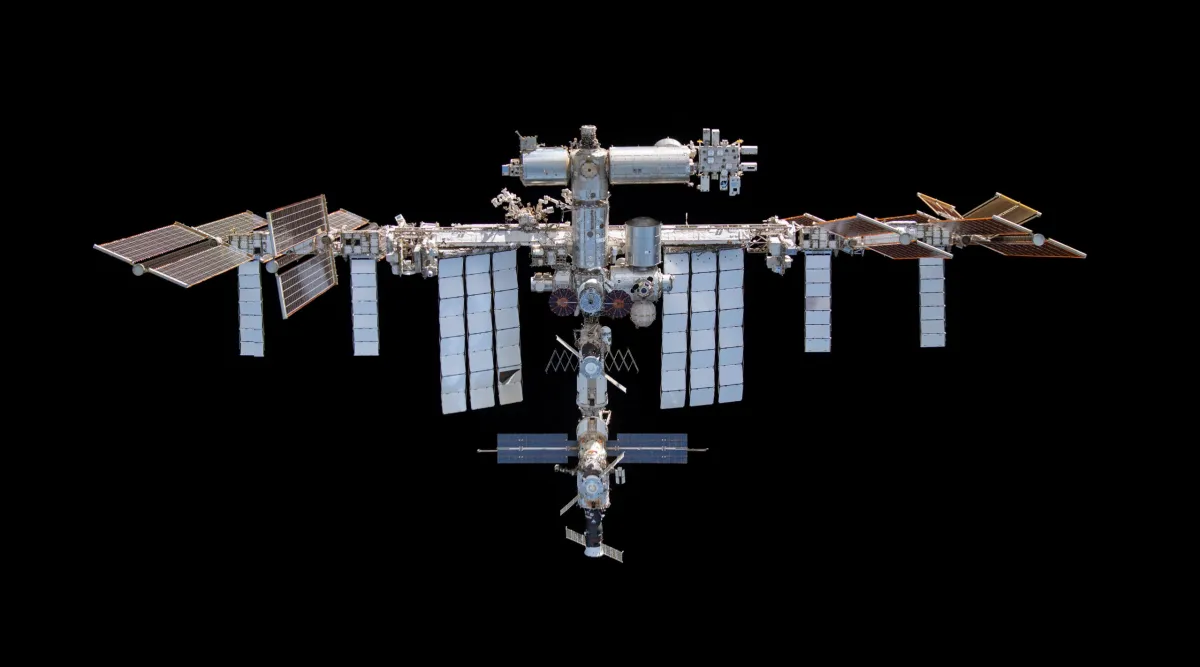
Image credit: NASA
NASA is faced with safely deorbiting, in one fell swoop, over 400 tons of space hardware in a few years – and ocean specialists are not keen on the move.
Sustaining operations of the International Space Station through 2030 is touch-and-go, prior to its now planned slam-dunk reentry in early 2031 into isolated ocean territory.
NASA has examined, but rejected several options for decommissioning the ISS, including disassembly and return to Earth, shoving the facility into a higher orbit, even a natural orbital decay scenario with random reentry.

Image credit: SpaceX
Purposeful pile driving
NASA announced last June the selection of SpaceX to design the United States Deorbit Vehicle (USDV) under a contract worth up to $843 million.
In a NASA white paper on purposeful pile driving of the ISS into the ocean, a space agency analysis concluded that “using a U.S.-developed deorbit vehicle, with a final target in a remote part of the ocean, is the best option for station’s end of life.”
For details, go to my new SpaceNews story – “Ocean experts raise concerns over deorbiting the International Space Station” at:
https://spacenews.com/ocean-experts-raise-concerns-over-deorbiting-the-international-space-station/

CAPSTONE, NASA’s cis-lunar pathfinder CubeSat.
Image credit: NASA/Daniel Rutter
NASA’s CAPSTONE mini-spacecraft recently marked its 100th orbit in the near-rectilinear halo orbit (NRHO). This Moon mission has been awarded by NASA an extension of its mission after operating in its NRHO for 670-plus days.
CAPSTONE is now funded until December 2025.
CAPSTONE stands for Cislunar Autonomous Positioning System Technology Operations and Navigation Experiment, a microwave oven-sized CubeSat weighing a modest 55 pounds.
Software smarts
Launched in June 2022 aboard a Rocket Lab Electron booster from New Zealand, CAPSTONE is owned and operated by Advanced Space of Westminster, Colorado.

Jeffrey Parker, chief technology officer of Advanced Space (left) explains the CAPSTONE mission to U.S. Senator John Hickenlooper over a full-size model of the spacecraft.
Credit: Advanced Space/Jason Johnson
The mission extension allows further demonstration of Cislunar Autonomous Positioning System (CAPS) experiments, as well as showcasing a first-of-its-kind artificial intelligence/machine learning software to detect anomalies and navigation data, and learn how to perform autonomous maneuvers.
NRHO is the locale of NASA’s cislunar Gateway space station. That outpost is to shore up long-term human exploration of the Moon, allowing crews to access the lunar south pole – an early priority zone for the space agency’s Artemis program.
Cross-link
Bradley Cheetham, Advanced Space’s President and CEO said in a statement: “In five years, CAPSTONE has gone from a bright idea by a small business to a mission that continues well past its expected end date.”
By extending CAPSTONE’s mission it also allows further collaboration with the Lunar Reconnaissance Orbiter (LRO) team at NASA Goddard Space Flight Center. That partnership comes via a recently extended Space Act Agreement to evaluate, and when appropriate, conduct opportunities for cross-link data collection between the two spacecraft.
Credit: Advanced Space
Advanced Space will work with spacecraft operations partners at Tyvak Nano-Satellite Systems (a Terran Orbital Corporation).
Advanced Space is the owner and operator of CAPSTONE for NASA and prime contractor for the Air Force Research Laboratory’s Oracle project – designed to develop cislunar space situational awareness capabilities.
For more information on Advanced Space and the CAPSTONE mission, go to:
Experts say that the United States is lacking a “go-get-em” capability for in-space rescue.
Image credit: Aerospace Corporation
All those eye-catching, arguably clickbait headlines of bringing home stranded astronauts stuck in space underscores a worrisome reality. The United States is lacking a “go-get-em” capability for in-space rescue.
The lessons of Apollo, Skylab and the space shuttle with respect to the rescue of astronauts in space appear to have been forgotten.
That memory lapse comes at a time when more folks are flying into space from multiple nations, many tucked inside commercially provided spacecraft.

Boeing Starliner attached to International Space Station. Came home empty.
Image credit: NASA
The recent Boeing Starliner escapade with conked out control thrusters and helium leaks is a case in point.
Mix in gutsy missions of private crews performing high-altitude spacewalks without a spaceship docking port or being the first to rocket into polar orbit around the Earth or heading off to the Moon.
For more details, go to my new Space.com story – “US needs ‘space rescue service’ to help astronauts in distress, experts say – ‘We’re not planning to do it, and you can’t do a rescue on the fly. You have to plan ahead of time’” at:
https://www.space.com/us-needs-space-rescue-service-astronauts-distress

