Archive for the ‘Space News’ Category
 Author:
  November 14th, 2024
Image credit: CCTV/Inside Outer Space screengrab
China’s next supply ship is ready for liftoff from the Wenchang Spacecraft Launch Site in the southern island province of Hainan.
Loaded with supplies for now orbiting space station taikonauts, China’s Tianzhou-8 cargo craft will be carried by a Long March-7 Y9 rocket. A joint rehearsal for the launch was conducted on Wednesday.
According to China Central Television (CCTV), compared to its predecessors, Tianzhou-6 and Tianzhou-7, the Tianzhou-8 cargo spacecraft boasts a larger cargo capacity — an increase of more than 200 more liters of space and more than 100 kilograms of cargo load.

Image credit: CCTV/Inside Outer Space screengrab
Lunar bricks
Alongside astronaut supplies and experimental facilities, CCTV adds that the Tianzhou-8 cargo spacecraft will carry bricks made of varying compositions from lunar soil simulant to the Tiangong space station.
These lunar bricks will undergo outside the station exposure tests to assess their durability in extreme conditions and their potential use in constructing lunar bases, CCTV reporting explains.
To view a video showing pre-launch rollout of the cargo craft, go to:
 Posted in

The U.S. Government Accountability Office (GAO) has identified three technologies in science, technology, and engineering that are trending toward maturity: Gene editing, Biodegradable bioplastics, and guess what – Space-based manufacturing of semiconductor crystals.
Space-based manufacturing of semiconductor crystals, may enable the production of high-quality semiconductors, the GAO reports.
“The unique conditions of space—such as microgravity, a natural vacuum, and reduced contamination—could enable the production of semiconductor crystals with fewer defects and greater purity than those manufactured on Earth,” the report explains.
Of what on-Earth use?
“These semiconductors could lead to more powerful computers, faster communication systems, and improved consumer electronics,” notes the GAO document.

As for the implications, GAO spotlights the dependency on foreign supply chains for raw materials, and safeguarding the spacecraft needed for enabling such manufacturing.
“A potential consideration for policymakers is whether a comprehensive licensing framework for investment, development, and intellectual property protection would benefit the development of these technologies,” concludes the GAO study.
GAO developed this report focused on technologies approximately 10 years on the horizon. “The goal is to provide foresight into developing technologies that could have significant impacts on Americans,” the report explains.
Go to the full GAO report at:

Image credit: NASA
As humanity prepares to “reboot” Earth’s Moon, one expected outcome is putting in place a sustained human presence on that nearby world. There is need to develop long-term and reliable lunar surface infrastructure and systems for safe robotic and crewed exploration.
That assignment won’t be easy.
To establish a permanent foothold on the Moon, future crews must deal with impact hazards, moonquakes, rough and tumble terrain, radiation, as well as thermal day/night issues. And don’t forget the pesky lunar dust.

Image credit: NASA
Suite of videos
It’s dubbed Lunar Engineering 101 by experts at The Johns Hopkins University Applied Laboratory (APL) for NASA’s Lunar Surface Innovation Initiative, part of the agency’s Space Technology Mission Directorate.
An informative suite of videos has been produced by the Lunar Surface Innovation Consortium (LSIC), which is managed by APL.

Image credit: Breakthrough, Innovative and Game-changing (BIG) Idea Challenge/NASA
“Lunar Engineering 101 combines the knowledge obtained and lessons learned from previous missions to provide a resource for technology developers with the background needed to design systems to withstand extreme conditions on the lunar surface,” explains APL’s Milena Graziano, the Lunar Engineering 101 point of contact.
Subject matter experts
The videos serve as a resource for engineers, Graziano adds, by presenting the main characteristics of lunar surface environments — including reduced gravity, radiation, dust, regolith, moonquakes, and others — along with their respective challenges and hardware design considerations to ensure system function and reliability.
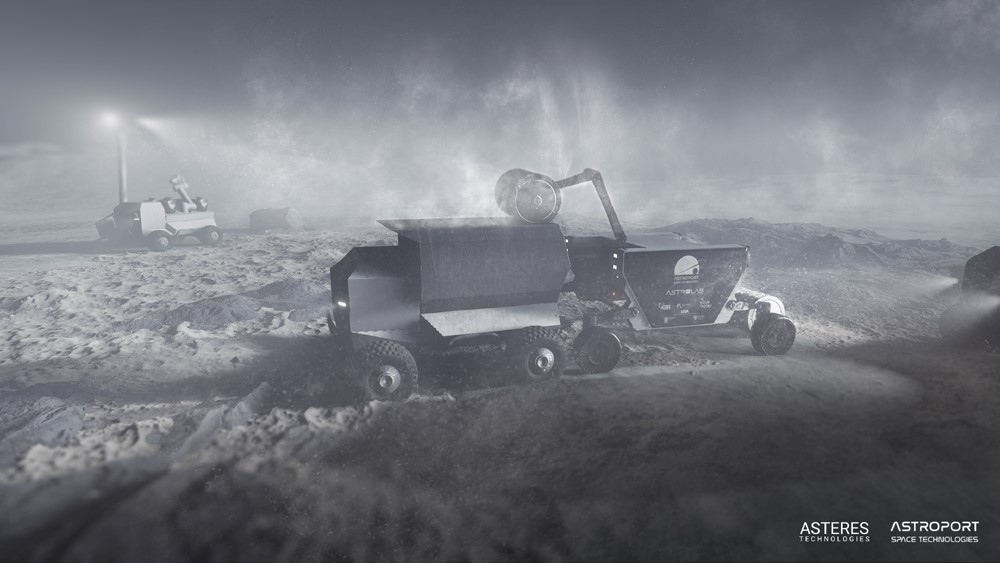
Image credit: Astroport Space Technologies
“This new resource has been prepared by subject matter experts in lunar science and spacecraft engineering to serve as an aid to engineers and scientists, providing an overview of the content, topics, and key practices that will prove beneficial to the development of lunar systems,” Graziano points out.
Go to the videos at:

Image credit: U.S. Congress/Inside Outer Space screengrab
Testimony of a new congressional hearing on the topic of Unidentified Anomalous Phenomena (UAP) has been released.
The open hearing today, on November 13, is being staged by the House subcommittee on Cybersecurity, Information Technology, and Government Innovation as well as the National Security, the Border, and Foreign Affairs subcommittee.

Credit: Piplsay
Pull back the curtain
According to a joint hearing statement the hearing “will attempt to further pull back the curtain on secret UAP research programs conducted by the U.S. government, and undisclosed findings they have yielded. The hearing will examine the Department of Defense’s (DoD) reluctance to appropriately declassify material on UAPs, and ways to make sure the American public is better informed on this topic.”
“This is our second hearing on the topic of UAPs and the American people are tired of the obfuscation and refusal to release information by the federal government,” observes Chairwoman Nancy Mace (R-S.C.) and Subcommittee on National Security, the Border, and Foreign Affairs Chairwoman Glenn Grothman (R-Wis.).

Credit: SatelliteInternet.com
“Americans deserve to understand what the government has learned about UAP sightings, and the nature of any potential threats these phenomena pose,” Mace and Grothman state.
“We can only ensure that understanding by providing consistent, systemic transparency. We look forward to hearing from expert witnesses on ways to shed more light and bring greater accountability to this issue,” said Mace and Grothman.

Credit: Orbitz
Written testimony
- Tim Gallaudet, Rear Admiral, U.S. Navy (RET.), Chief Executive Officer, Ocean STL Consulting, LLC: “As a former science agency leader, I have always sought the truth in human knowledge and thought. Now that we know UAP are interacting with humanity, and these include unidentified submerged objects (USOs) in the ocean40, we should not keep our heads stuck in the sand, but boldly face this new reality and learn from it.”
https://oversight.house.gov/wp-content/uploads/2024/11/Updated-Testimony-Gallaudet.pdf
- Luis Elizondo, former Department of Defense Official and author of the recently released book: Imminent: Inside the Pentagon’s Hunt for UFOs: “Let me be clear: UAP are real. Advanced technologies not made by our Government – or any other government – are monitoring sensitive military installations around the globe. Furthermore, the U.S. is in possession of UAP technologies, as are some of our adversaries. I believe we are in the midst of a multi-decade, secretive arms race — one funded by misallocated taxpayer dollars and hidden from our elected representatives and oversight bodies.”
https://oversight.house.gov/wp-content/uploads/2024/11/Written-Testimony-Elizondo.pdf
- Michael Gold, former NASA Associate Administrator of Space Policy and Partnerships; Member of NASA UAP Independent Study Team: “When NASA studies celestial objects and phenomena, planets, black holes, and galaxies, it does so with equipment that has been developed specifically for such tasks. If NASA had to study space with data collected from fighter cockpit cameras, radar from military installations, and cell phones, very little good science would be done. Therefore, it’s worth considering building instruments tailored to study the UAP phenomena.”
https://oversight.house.gov/wp-content/uploads/2024/11/Written-Testimony-Gold.pdf
- Michael Shellenberger, founder of Public, a group that focuses on free speech, civilization, and humanity: “President-elect Trump ran on and was elected with a mandate to make government more transparent and release long-held secrets on everything from Covid origins and the Hunter Biden laptop to the JFK files and UAPs. I encourage Congress to help the President-elect make that commitment a reality, including by extending stronger protections to at-risk whistleblowers, putting in place protransparency leaders of DOD and IC [Intelligence Community] organizations, and passing the UAP Disclosure Act.”
https://oversight.house.gov/wp-content/uploads/2024/11/Written-Testimony-Shellenberger.pdf
Tune in today
Today’s hearing is open to the public and is being livestreamed online starting at 11:30 am Eastern Time at:

Up close and personal! Scene from Earth vs. the Flying Saucers circa 1956.
Credit: Columbia Pictures

Image credit: SCU
Stand by for a new congressional hearing on the topic of Unidentified Anomalous Phenomena (UAPs).
The open hearing on November 13, 2024 is being staged by the House subcommittee on Cybersecurity, Information Technology, and Government Innovation as well as the National Security, the Border, and Foreign Affairs subcommittee.
According to a joint hearing statement the hearing “will attempt to further pull back the curtain on secret UAP research programs conducted by the U.S. government, and undisclosed findings they have yielded. The hearing will examine the Department of Defense’s (DoD) reluctance to appropriately declassify material on UAPs, and ways to make sure the American public is better informed on this topic.”

Image credit: Yannick Peings, Marik von Rennenkampff/AIAA
Tired of obfuscation
“This is our second hearing on the topic of UAPs and the American people are tired of the obfuscation and refusal to release information by the federal government,” observes Chairwoman Nancy Mace (R-S.C.) and Subcommittee on National Security, the Border, and Foreign Affairs Chairwoman Glenn Grothman (R-Wis.).

Image credit: RAND
“Americans deserve to understand what the government has learned about UAP sightings, and the nature of any potential threats these phenomena pose,” Mace and Grothman state.
“We can only ensure that understanding by providing consistent, systemic transparency. We look forward to hearing from expert witnesses on ways to shed more light and bring greater accountability to this issue,” said Mace and Grothman.

Image credit: NASA UAP study group
Image credit: NASA
Who is testifying?
Tim Gallaudet, Rear Admiral, U.S. Navy (RET.), Chief Executive Officer, Ocean STL Consulting, LLC
Luis Elizondo, former Department of Defense Official and author of the recently released book: Imminent: Inside the Pentagon’s Hunt for UFOs
Michael Gold, former NASA Associate Administrator of Space Policy and Partnerships; Member of NASA UAP Independent Study Team
Michael Shellenberger, founder of Public, a group that focuses on free speech, civilization, and humanity.
The hearing will be open to the public and livestreamed online starting at 11:30 am Eastern Time on Wednesday, November 13 at:

UAP have been reported by Navy pilots unlike anything they have ever witnessed.
Image credit: Enigma Labs/Lt. Cmdr. Alex Dietrich

Image credit: CCTV/Inside Outer Space screengrab
China is outing details regarding a reusable space cargo shuttle, showcasing the space plane at the Zhuhai airshow.
The airshow is being held November 12 to 17 with a scaled model of the Haolong craft on display.
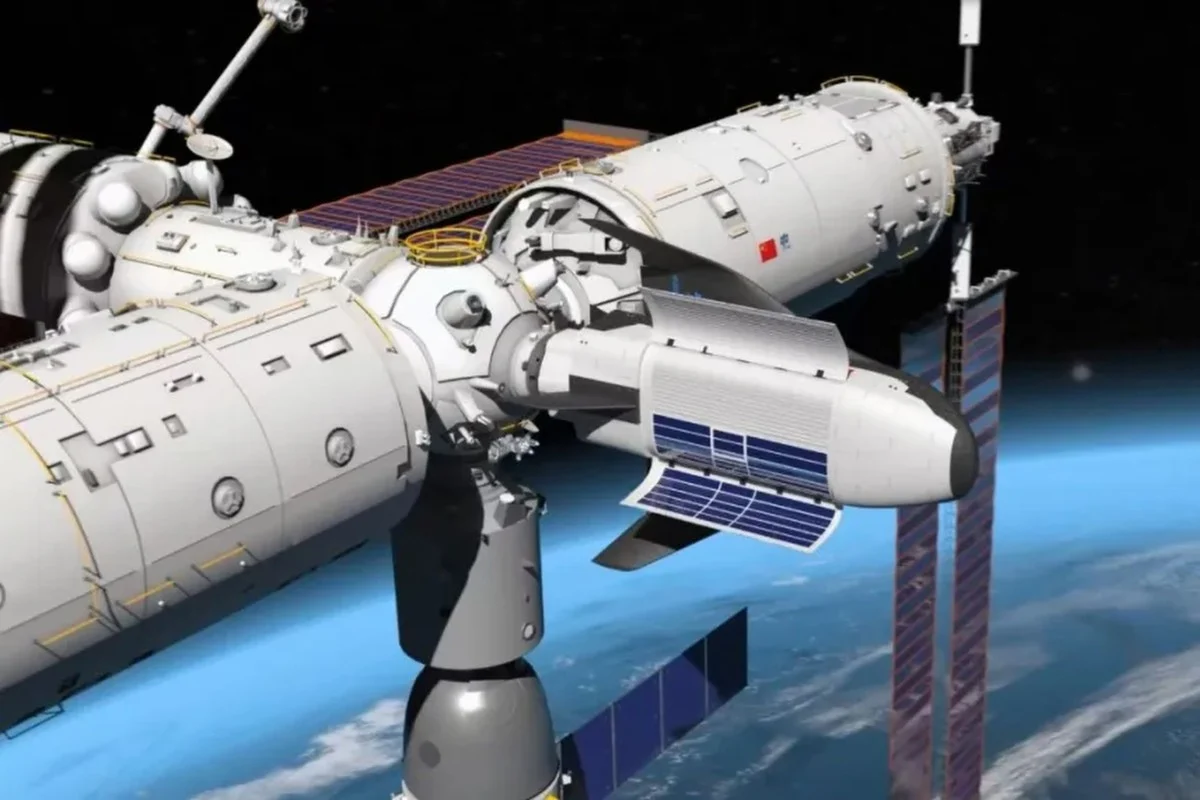
“The Haolong space cargo shuttle is a winged aircraft with an aerodynamic design featuring a large wingspan and a high lift-to-drag ratio, said Fang Yuanpeng, chief designer of Haolong space cargo shuttle in a China Central Television (CCTV) interview.
“With blunt-nosed fuselage and large, swept-back delta wings, it combines the characteristics of both spacecraft and aircraft, allowing it to be launched into orbit by a carrier rocket and land on airport runway like a plane,” Fang added.
Reportedly, the space plane will have a 1.8 ton capacity and comes replete with folding wings.
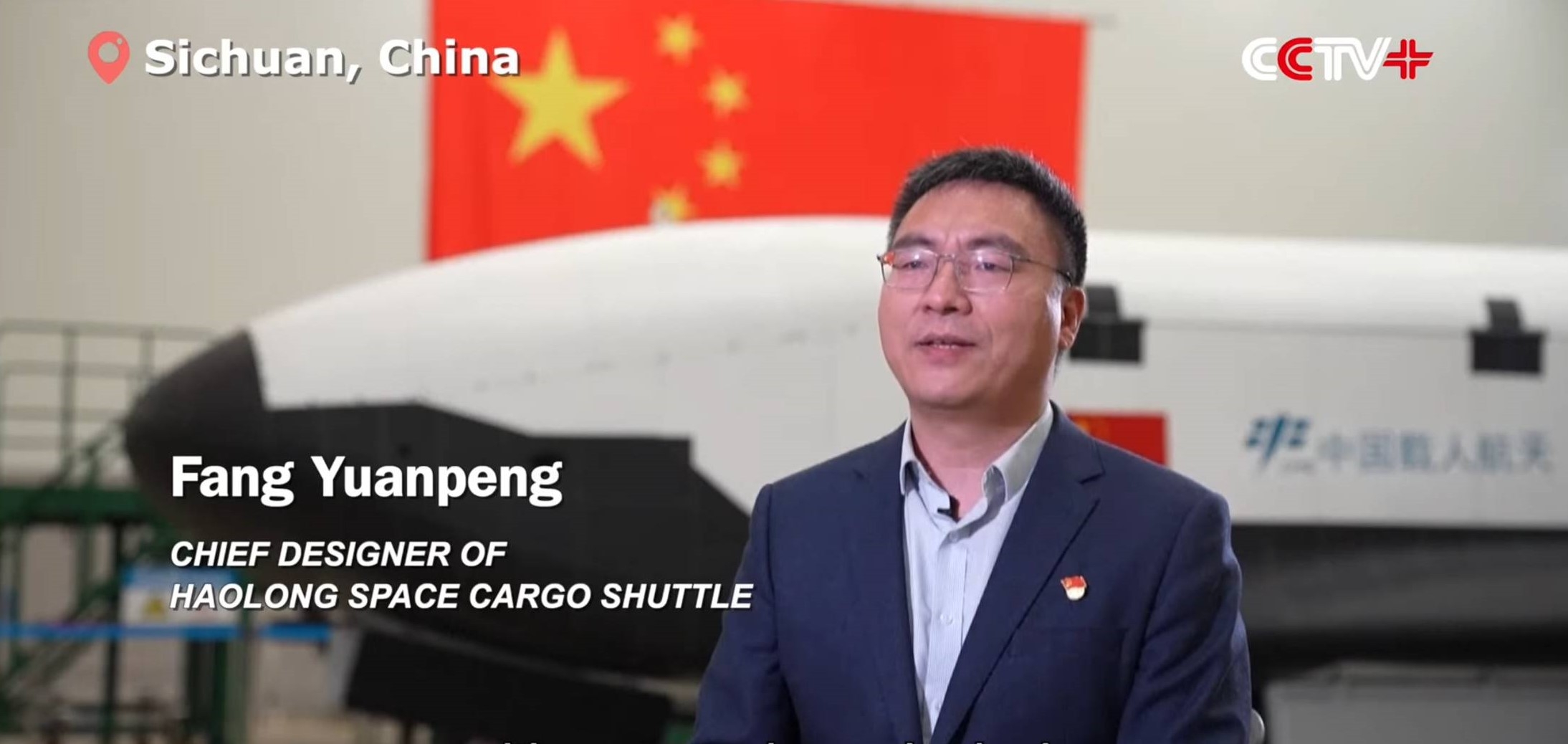
Image credit: CCTV/Inside Outer Space screengrab
Low-cost, reusable
Haolong is being developed by the Chengdu Aircraft Design and Research Institute under the Aviation Industry Corporation of China (AVIC), and is designed as a low-cost, reusable spacecraft for transporting cargo to China’s space station.
“After completing the cargo transport mission, it can perform a horizontal landing on airport runways,” Fang said, “enabling it to meet cargo transport needs both to and from the space station. Furthermore, its reusability helps reduce costs in spacecraft development and cargo transportation.”
According to CCTV, the cargo space shuttle is 33 feet (10 meters) long and 26 feet (8 meters) wide, weighing less than half of China’s now in use Tianzhou supply ships.

Image credit: CCTV/Inside Outer Space screengrab
Auto-pilot
“During the docking period,” Fang said, “the cargo hold of Haolong will be opened and connected to the space station cabin, and astronauts can enter and exit the cargo hold freely to fetch the cargo brought to the space station or place the materials to be sent to Earth according to their needs.”
After completing a cargo transport mission, Haolong will separate from the space station, autonomously deorbit and brake, re-enter the atmosphere, and land horizontally on a designated airport runway without power on auto-pilot mode, added Fang. After inspection, maintenance and repair, the craft would be ready for a repeat performance, he said.

Image credit: CCTV/Inside Outer Space screengrab
Flight verification
As stated by CCTV, Haolong has recently been selected as one of the winners of a China Manned Space Agency’s solicitation for a low-cost cargo transportation system and has secured a contract for the flight verification phase.
At present, explains CCTV, the design scheme of the space shuttle has been completed, and the project has entered the stage of full-scale engineering research and development.
In viewing the newly issued animations, Haolong appears to be a double-take on the Sierra Space Dream Chaser, now being readied for its maiden flight next year from Florida.
Go to this informative video at:
https://www.facebook.com/share/v/1TaKEfmKRV/
Also an AVIC promotion film as posted by the
China ‘N Asia Spaceflight website at:
https://x.com/i/status/1855875068913734045

Image credit: CCTV/Inside Outer Space screengrab
Tianzhou-7 cargo ship departs China’s space station. Image credit: CCTV/CMSA/Inside Outer Space screengrab
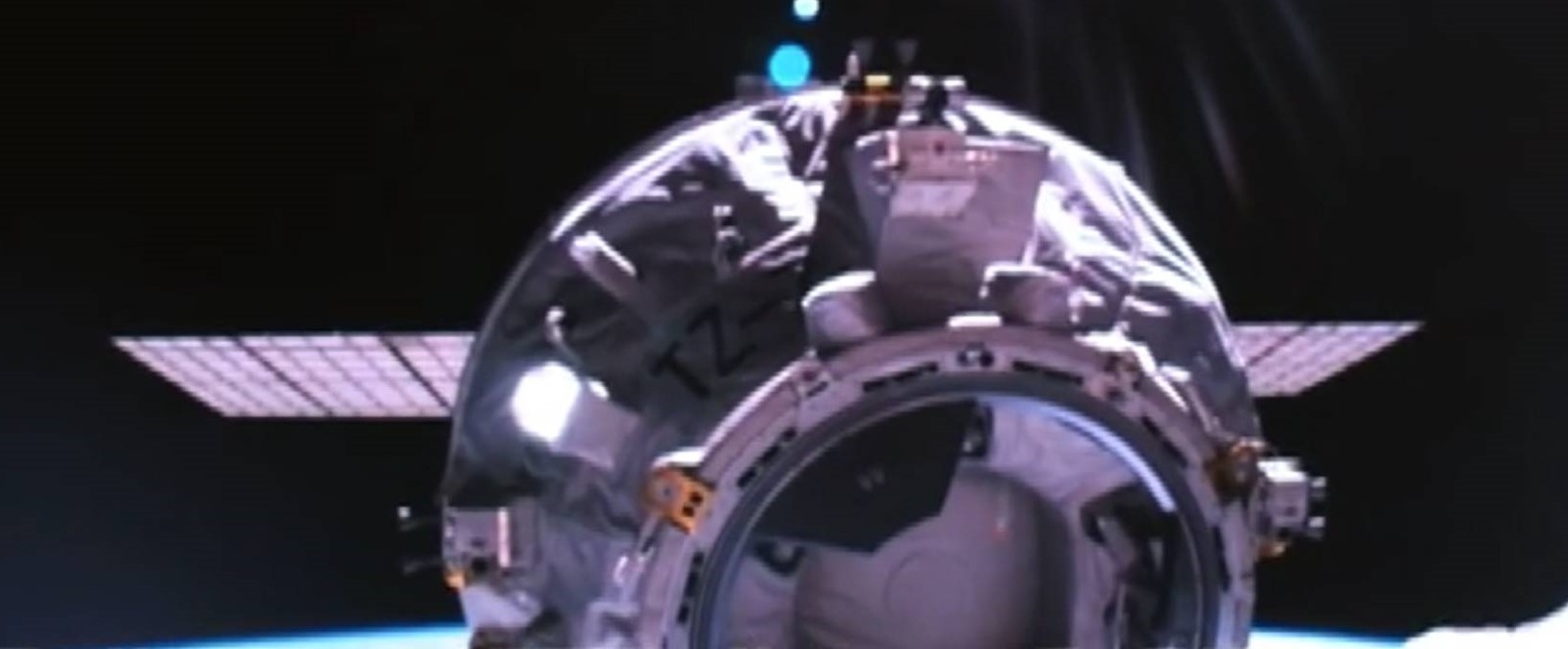
China’s Tianzhou-7 supply craft has separated from the country’s space station, a step that signals the upcoming launch of a new cargo craft to the orbital outpost.
The Tianzhou-7 separated from the station combination on Sunday, according to the China Manned Space Agency (CMSA).
The cargo craft will re-enter the atmosphere in a controlled manner soon, the CMSA added.
China launched the Tianzhou-7 cargo spacecraft on January 17 from the Wenchang Spacecraft Launch Site in its southern Hainan Province. It later docked with the rear port of the Tianhe core module of the multi-module space station.
Artwork shows the design of the HaoLong space shuttle cargo-carrier.
Image credit: WeChat/ Aviation Industry Corporation of China
Space logistics
As recently reported by China’s Xinhua news agency, work is underway to scope out space logistics in the future, including a space cargo shuttle.
Late last month, the CMSA detailed the winners of its solicitation for overall schemes aimed at low-cost cargo transportation to China’s station.
One system is the Qingzhou cargo spacecraft sporting a volume of up to 27 cubic meters as blueprinted by the Innovation Academy for Microsatellites of the Chinese Academy of Sciences (IAMCAS).
This cargo spacecraft would be launched by the Lijian-2 rocket that’s manufactured by CAS Space.
Winged craft
Another design is the HaoLong space cargo shuttle, developed by the Chengdu Aircraft Design and Research Institute under the Aviation Industry Corporation of China (AVIC).
HaoLong is a winged, reusable spacecraft, incorporating a large wingspan, high lift-to-drag ratio, and a reusable technology plan, according to the Xinhua report.
HaoLong would be launched by a carrier rocket, dock with the space station, later executing de-orbit braking and re-entry maneuvers, culminating in a horizontal landing on an airport runway.
Credit: CMSA
Overall, China is looking to establish an energetic and competitive landscape in the low-cost cargo spacecraft sector, one that will also rely on the country’s expanding commercial launch industry.
Next supply ship
Due to the impact of typhoon Yagi on the Wenchang Space Launch Center in Hainan province, China’s next cargo mission to the Tiangong space station, the Tianzho- 8 supply ship has been rescheduled to launch in mid-November, according to Lin Xiqiang, deputy director of the CMSA.

Image credit: CCTV/CMSA/Inside Outer Space screengrab
Meanwhile, a newly aired video by China Media Group captures the process of the handover between China’s Shenzhou-18 and Shenzhou-19 crews at the space station, including samples and equipment for scientific experiments.
Go to video at:

Image credit: CSIS Aerospace Security Project
“There is a lot of promise—and hype—around the future of humankind in cislunar space. But there are also hard realities,” explains a report by the Aerospace Security Project, a study arm of the Center for Strategic and International Studies (CSIS).
Salmon Swimming Upstream – charting a course in cislunar space points out that “only the United States and China are positioned to develop and launch crewed spacecraft to the Moon.”
The report’s title was prompted by Apollo 11 moonwalker, Neil Armstrong, the first person on the Moon: “I think we’re going to the Moon because it’s in the nature of the human being to face challenges. It’s by the nature of his deep inner soul . . . we’re required to do these things just as salmon swim upstream.”
Common ground
A key comment by the report’s principal author, Clayton Swope, and contributing author, Louis Gleason is that cislunar space and beyond is probably the best environment—maybe the only environment today—where the United States and China, as well as many other nations, can find common ground on shared interests.

Image credit: CSIS Aerospace Security Project
“The United States should seize this opportunity, both for U.S. national interests and for humankind more broadly,” the report concludes.
Policies and activities
This informative report features:
- National Cislunar Policies and Activities
- International Space Governance Frameworks
- Non-space International Frameworks with Analogues to Space Governance
- Cislunar Governance and Policy Challenges
- Cislunar Operational and Infrastructure Challenges
- Key Considerations for Next Steps
To access the report — Salmon Swimming Upstream – charting a course in cislunar space – go to:

Image credit: Initiative for Interstellar Studies
Here’s a travel dispatch…
A design competition has been announced to explore the feasibility of crewed interstellar travel via generation ships, using current and near-future technologies.
Called Project Hyperion, the contest centers on crafting a generation ship designed for long-duration interstellar travel, where the journey may take centuries to complete.
The idea behind a generation ship is that the initial crew would live, reproduce, and die on the ship, with their descendants continuing the journey until reaching the long-haul destination point. These ships are self-sustaining ecosystems, featuring agriculture, habitation, and other essential life-support systems to ensure survival across multiple generations.

Image credit: Initiative for Interstellar Studies
Multi-disciplinary teams
The competition is offering cash prizes and is running from November 1, 2024 to June 2, 2025 and is open to all. Announcement of the winners is pegged at June 2, 2025.
There is a registration fee of $20 with inscriptions to be accepted until December 15, 2024.
The team composition for competing in the contest is to be multi-disciplinary. A suggested makeup of each team is having at least one architectural designer; at least one engineer; at least one social scientist (sociologist, anthropologist, etc.).

Starships in our lifetime
Sponsor of the Project Hyperion design competition is the Initiative for Interstellar Studies (i4is) is based in London, England with a U.S. sister office in Oak Ridge, Tennessee.
The Initiative is working towards the achievement of interstellar flight through knowledge to the stars — Starships in our lifetime.
For more information, go to:
https://www.projecthyperion.org/
A downloadable brief on the competition can be found at:
https://www.projecthyperion.org/_files/ugd/91ab16_ce159a8f438b4f529a46df6b70681978.pdf
The Initiative for Interstellar Studies website is at:

Reverence is the second Sierra Space Dream Chaser craft taking shape on the factory floor in Louisville, Colorado.
Image credit: Barbara David
LOUISVILLE, Colorado – A stroll through the factory floor of Sierra Space yields an eye-full of hardware destined for Earth orbit, from the commercial company’s second space plane now in build-up mode to work on large inflatable habitats that offer ultra-roomy, in-space housing for future crews.

Shooting Star cargo modules under assembly and testing at Sierra Space. The first module is complete and now at NASA’s Kennedy Space Center.
Image credit: Barbara David
Meanwhile, the inaugural flight of the Dream Chaser, space plane Tenacity to the International Space Station, is slated for liftoff atop a United Launch Alliance (ULA) Vulcan Centaur launch vehicle no earlier than May 2025. Tenacity is now at NASA’s Kennedy Space Center in Florida.

Shawn Buckley, vice president of Space Destinations and In-Space Infrastructure at Sierra Space explains company roadmap.
Image credit: Barbara David
Adjacent to the factory floor here at Sierra Space is mission control to support Dream Chaser operations. The control room features a live feed from NASA’s Johnson Space Center.

Angie Wise, Sierra Space’s chief safety officer and senior vice president for mission assurance in mission control that will support Dream Chaser operations.
Image credit: Barbara David
Take a tour of Sierra Space by visiting my new SpaceNews story — Sierra Space expands spaceplane fleet with in-house mission control – at:
https://spacenews.com/sierra-space-expands-spaceplane-fleet-with-in-house-mission-control/

