Archive for the ‘Space News’ Category
 Author:
 March 7th, 2025

Firefly Aerospace’s Blue Ghost lander safely touched down in the eastern part of the Moon’s Mare Crisium.
Image credit: ASU/NASA GSFC
The Firefly Aerospace Blue Ghost lunar lander continues to check off operations of its science experiments.
Blue Ghost successfully landed in Mare Crisium on March 2 and is now operating payloads for a complete lunar day (about 14 Earth days).
Firefly Aerospace reports that eight out of ten NASA-sponsored payloads have met their mission objectives – “with more action to come.”

Image credit: Firefly Aerospace
Science activities
Those reported science activities on the Moon are:
Surface Access Arm deployment of the Lunar PlanetVac (LPV): Honeybee Robotics, a Blue Origin company
Electrodynamic Dust Shield (EDS): NASA Kennedy Space Center
Next Generation Lunar Retroreflector (NGLR): University of Maryland
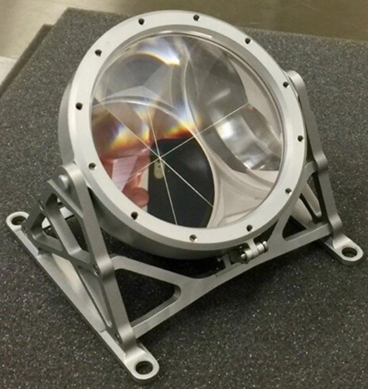
A Next Generation Lunar Retroreflector (NGLR) sits on an adjustable multidirectional mount.
Image credit: International Laser Ranging Service
Regolith Adherence Characterization (RAC): Aegis Aerospace
Radiation Tolerant Computer (RadPC): Montana State University
Lunar GNSS Receiver Experiment (LuGRE): Italian Space Agency (ASI); NASA Goddard Space Flight Center
Lunar Instrumentation for Subsurface Thermal Exploration with Rapidity (LISTER): Texas Tech University
Stereo CAmera for Lunar Plume-Surface Studies (SCALPSS): NASA Langley Research
In a video, the Lunar PlanetVac is shown successfully collecting, transferring, and sorting lunar soil from the Moon using pressurized nitrogen gas.
Go to: https://youtu.be/5drBYiUCCsg?si=TVuWcbyRomBkqmi4
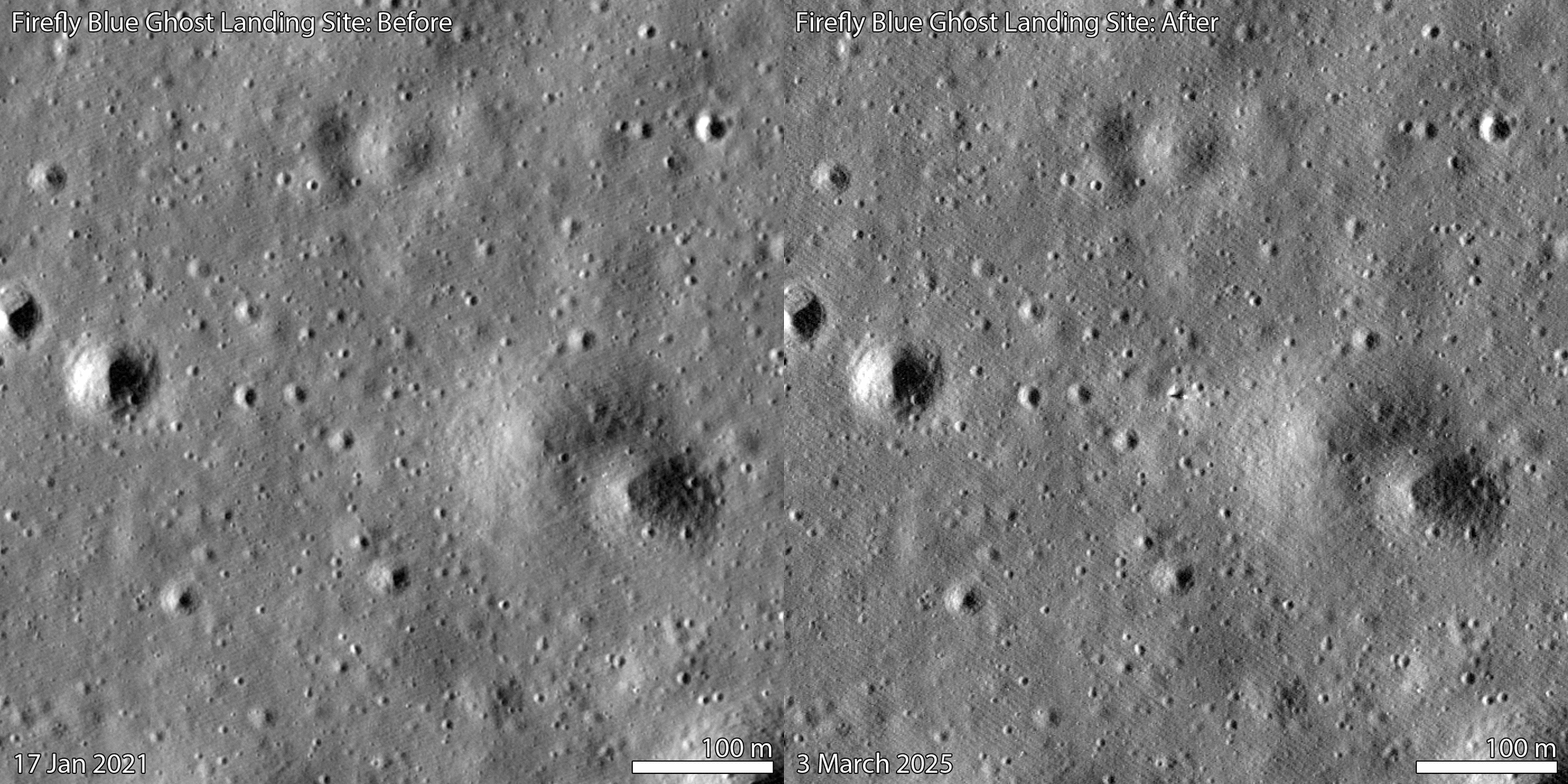
Also, before-and-after image blink emphasizes the Blue Ghost engine plume disturbance of the surface. Images taken by NASA’s Lunar Reconnaissance Orbiter (LRO).
Image credit: NASA/GSFC/Arizona State University
Go to: https://www.lroc.asu.edu/ckeditor_assets/pictures/1493/content_FireflyBlink_v2.gif
 Posted in


Intuitive Machines IM-2 lunar lander within SpaceX Falcon 9 payload fairing.
Image credit: SpaceX
The latest lander to touch down on the Moon is the Intuitive Machine IM-2 mission. However, its status appears not to be optimal, apparently tipped over on landing.
On March 6, the Athena lander made its way down to attempt a landing in Mons Mouton, a lunar plateau near the Moon’s South Pole.
The effort is part of NASA’s CLPS (Commercial Lunar Payload Services) initiative and the space agency’s Artemis campaign to establish a long-term lunar presence.

Intuitive Machines (IM-2), a Nova-C lunar lander dubbed Athena is to investigate the Moon’s south pole. Onboard the lander is the Polar Resources Ice Mining Experiment-1 (PRIME-1), a NASA experiment designed to search for water ice on the Moon.
Image credit: Intuitive Machines
Troubled landing
“We don’t believe we’re in the correct attitude,” said Steve Altemus, co-founder, President, and Chief Executive Officer of Intuitive Machines. The precise location of the lander is not known, due to a spacecraft diversion, in automated mode, from its planned landing site.
While making an evident troubled landing, the craft is power charging, with up and down links operating.
A full assessment of what happened with Athena is still to come – and imagery from the lander itself on the surface are on tap. Furthermore, NASA’s Lunar Reconnaissance Orbiter is on schedule in a few days to snag over-flight imagery in the area, to scout for the lander’s true locale.

IM-2 mission controllers.
Image credit: Intuitive Machines/Inside Outer Space screengrab
Conflicting data
While IM-2 teams are dealing with conflicting data, the onboard inertial measurement hardware is saying the lander is on its side. The craft came down outside of an intended 50-meter landing zone.
It is presently unclear what orientation Athena is in; what A,B,C,or D side of the probe is facing up is unknown.
Depending on figuring out the lander’s orientation will enable, perhaps, some onboard experiments to be performed. Once the lander’s attitude is known, IM-2 team members and NASA will set priorities for work ahead, putting that into a mission package.
One issue revealed is that the lander’s laser altimeters were “noisy,” more than anticipated, and remained noisy all the way to the Athena’s touchdown.

Steve Altemus, co-founder, President, and Chief Executive Officer of Intuitive Machines, details Athena’s condition at press briefing.
Image credit: Intuitive Machines/Inside Outer Space screengrab
Replay of earlier mission?
In a bit of a retro-replay, the landing seems similar to the IM-1 mission of the group’s Odysseus lunar lander. That $118 million IM-1 spacecraft was victorious in February 2024 in becoming the first U.S.-built probe to make a lunar touchdown since the Apollo 17 human-carrying moon trek over 50 years earlier.
However, it too was not a glitch-free ride to its intended destination, Malapert A, near the moon’s south pole.
Odysseus’ laser rangefinders did not function, threatening its landing.
Coming in hot
Thanks to a rapid response team at the company, other onboard navigation instrumentation was quickly repurposed to get the craft down to under a mile from its pre-planned landing area.

Back in 2024., Steve Altemus, chief executive officer and co-founder, Intuitive Machines uses model to describe IM-1’s attitude on the Moon’s surface.
But the six-legged lander came in hot.
The IM-1 mission arrived with a higher downward and horizontal speed than designed for, hitting harder and skidded across sloping terrain, snapping off some of its landing gear in the process.
Meanwhile the Odysseus engine was still firing. And when the engine quieted down the lander tipped over to roughly 30 degrees off the surface. That cock-eyed landing reduced the sunlight reaching its solar panels and also compromised several antennas that made transmission to and from the moon “off-nominal” in space speak.
For IM-2 press conference replay, go to:
Intuitive Machines-2 Lunar Landing News Conference
Image credit: Firefly Aerospace
Firefly Aerospace reports that their Blue Ghost Moon lander is engaged in surface operations of select NASA payloads.
Those operations include the deployment of the Lunar PlanetVac and sampling lunar regolith, deploying the Electrodynamic Dust Shield and demonstrating dust mitigation, capturing images from the Stereo CAmera for Lunar Plume-Surface Studies (SCALPSS).

Image credit: Firefly Aerospace

I think I’m going to hurl! Considerable plume interaction with the lunar surface.
Image credit: Firefly Aerospace
Rocket plume
SCALPSS is provided by NASA’s Langley Research Center and uses stereo imaging photogrammetry to capture the impact of the lander’s rocket plume on lunar regolith as the craft descended.
Indeed, landing imagery taken by Blue Ghost shows material being tossed into the air from the spacecraft’s plume.
One object is shown being flung into the air, impacting the lunar surface a distance away.
Go to landing video at:
https://youtu.be/NpHhEybJdxg?si=6_aeMSVSySDn6o_M

Lunar PlanetVac deployed by Blue Ghost.
Image credit: Firefly Aerospace
Blast of gas
The Lunar PlanetVac is to showcase pneumatic sample collection of lunar regolith by collecting and sorting regolith within its sample collection chamber. Upon deployment to the surface, PlanetVac fires a blast of gas into the lunar surface. That action lofts lunar surface material into a collection chamber for visual (camera) inspection.
PlanetVac is a device developed by Honeybee Robotics (Blue Origin).

Image credit: U.S. Capitol
The ongoing steps taken by President Donald Trump’s administration to transform and reduce in size the federal workforce is a work in progress. The topsy-turvy action plan is already impacting the space science and exploration community.
The shake-up includes the President Trump-okayed establishment of the Department of Government Efficiency (DOGE), an advisory group to modernize and perk up the effectiveness of the federal government.
Playing DOGE ball
Billionaire Elon Musk, the SpaceX founder and CEO of Tesla, is heading the controversial and confusing DOGE undertaking, with buyouts and out-the-door firings of employees to attain objectives.

What? Me Worry
Image credit: Elon Musk by Walter Isaacson/Simon & Schuster
How does this play out for space exploration?
Go to my new Sky and Telescope piece – “Federal Shake-up: Impacts on Space Science and U.S. Leadership” – at:
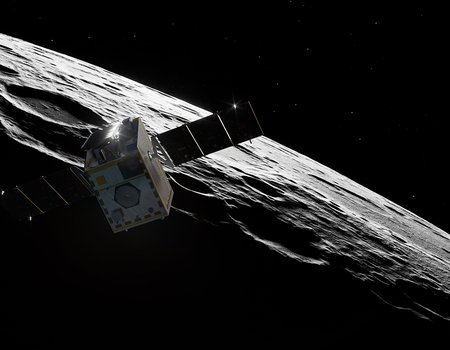
Artwork depicts on-duty Lunar Trailblazer. Image credit: Lockheed Martin
A water-scouting Moon orbiter has been in trouble since its deployment February 26 as a ride share payload atop a SpaceX Falcon 9 booster.
Ground controllers for the NASA/Caltech-led Lunar Trailblazer have valiantly been trying to re-establish communications with the small satellite.
“Based on telemetry before the loss of signal last week and ground-based radar data collected March 2, the team believes the spacecraft is spinning slowly in a low-power state,” explained NASA is a statement.
The team will continue to monitor for signals “should the spacecraft orientation change to where the solar panels receive more sunlight, increasing their output to support higher-power operations and communication,” said NASA.
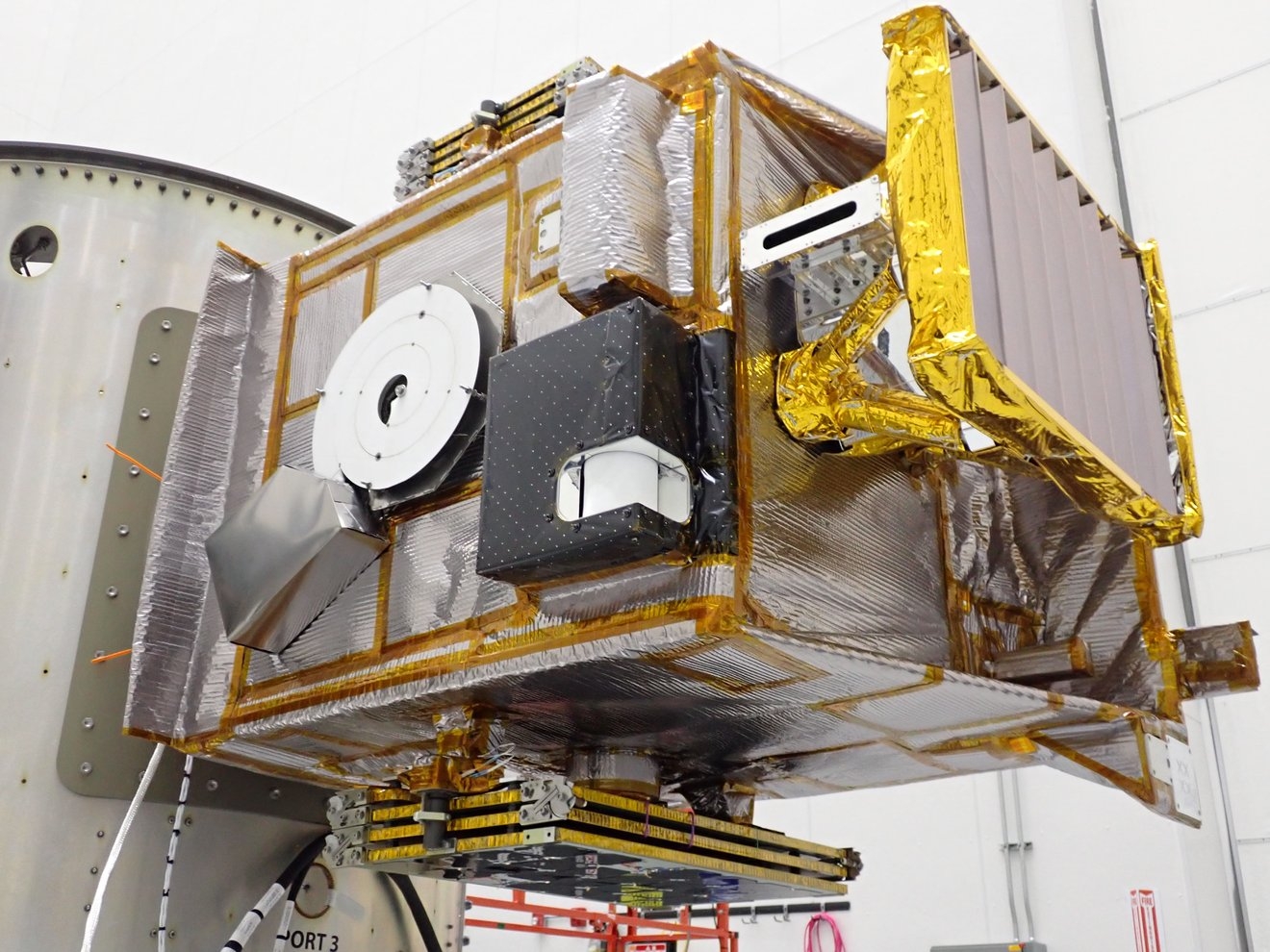
NASA’s Lunar Trailblazer is seen at SpaceX’s payload processing facility within NASA’s Kennedy Space Center in Florida. Fueled and attached to an adaptor used for secondary payloads, the small satellite rode along with another Moon mission, the Intuitive Machines’ IM-2 lander due to make a lunar touchdown this week.
Image credit: SpaceX
Precluded TCMs
NASA’s Deep Space Network is in use, along with ground-based observatories to better understand Lunar Trailblazer’s orientation.
But Lunar Trailblazer’s woes have also precluded the execution of post-launch trajectory correction maneuvers, or TCMs – small thruster operations to adjust the small spacecraft’s flight path.
Ideally, future TCMs would put the probe into its planned science orbit around the Moon.
“The team is now working to define alternative TCM strategies that could be used after reacquiring communications and establishing normal spacecraft functionality,” the NASA statement points out. “These alternative TCM strategies may be able to place Lunar Trailblazer in lunar orbit and allow it to complete some of its science objectives.”

Image credit: Lunar Trailblazer Team
Patrol mode
Lunar Trailblazer is designed to circuit the Moon in patrol mode to detect signatures of ice in reflected light, pinpointing the locales of ice or water trapped in rock at the Moon’s surface.
Mission operators at Caltech’s Lunar Trailblazer in Pasadena, California, did establish communications with the small satellite as expected following deployment.
However, the team subsequently received engineering data indicating intermittent power system issues. They lost communication with the spacecraft Thursday morning at about 4:30 a.m. Pacific Standard Time.
Several hours later, the spacecraft turned on its transmitter.

Reporter Leonard David in Lockheed Martin clean room gets up-close view of Lunar Trailblazer before launch.
Image credit: Barbara David
Curio platform
Lunar Trailblazer was developed and built by Lockheed Martin, with the aerospace firm also integrating the craft’s science instruments.
The spacecraft weighs a modest 440 pounds (200 kilograms) and measures 11.5 feet (3.5 meters) wide when its solar panels are fully deployed.
“We’ve been working closely with our partners at NASA JPL and Caltech throughout the mission,” said Lockheed Martin in a statement provided to Inside Outer Space. “Our spacecraft team onsite and our mission operations team in Denver are advising the Caltech-led flight operations team with solutions. We’re dedicated to the health and safety of Lunar Trailblazer and its mission.”
Lunar Trailblazer utilized the aerospace company’s new Curio platform. Curio is a scalable smallsat spacecraft architecture, designed to aid deep-space exploration and to probe scientific questions in a cost-efficient way.
Higher risk posture
In a NASA-provided statement to Inside Outer Space, the space agency-approved life cycle cost for the mission is price-tagged at $94.1 million.
Lunar Trailblazer was a selection of NASA’s SIMPLEx (Small Innovative Missions for Planetary Exploration) competition.
“To maintain the lower overall cost, SIMPLEx missions have a higher risk posture and less-stringent requirements for oversight and management,” NASA explains. “This higher risk acceptance bolsters NASA’s portfolio of targeted science missions designed to test pioneering technologies.”
For more information on this eagerly-awaited mission, go to my pre-launch Space.com story – “SpaceX to launch water-hunting moon probe ‘Lunar Trailblazer’ on Feb. 26” — at:
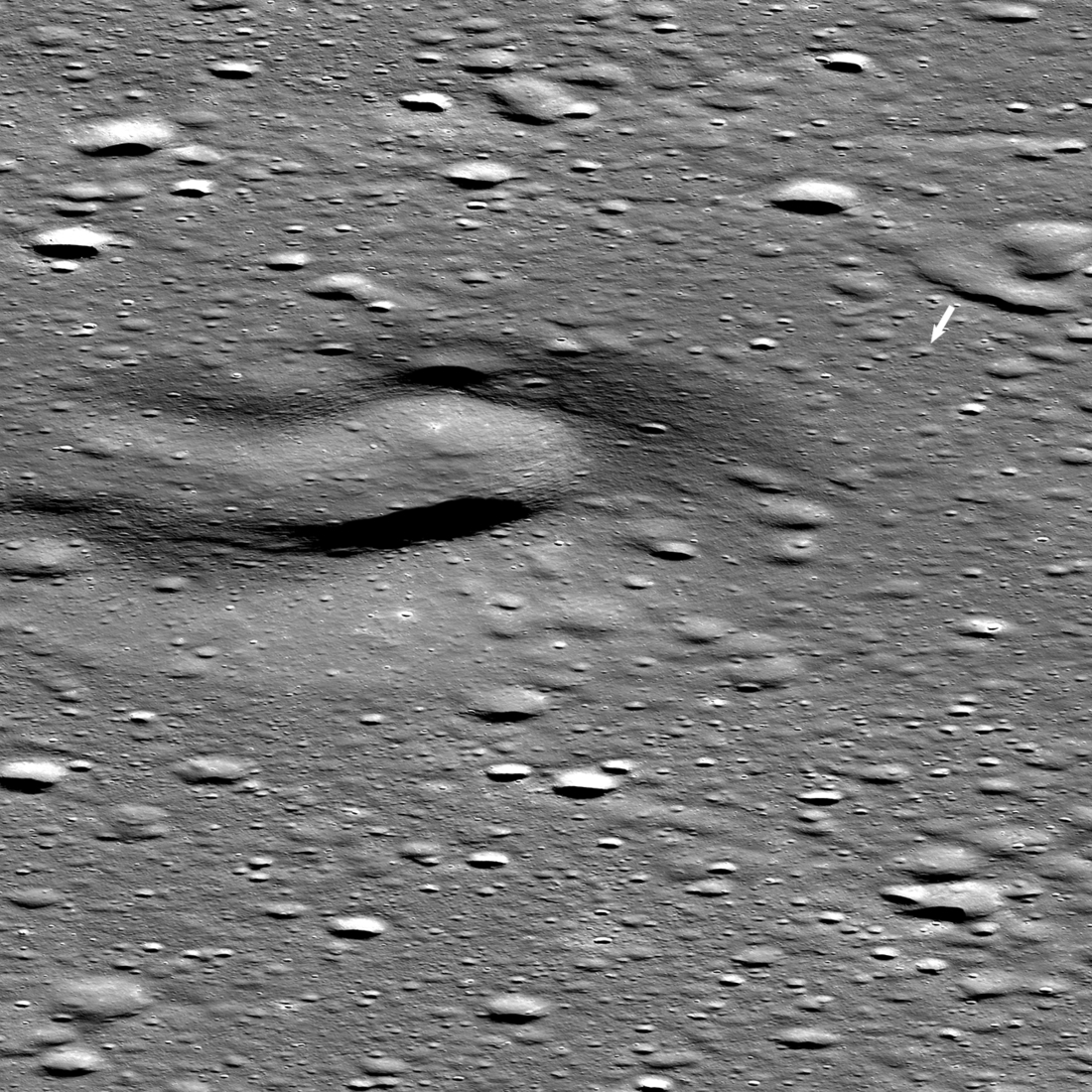
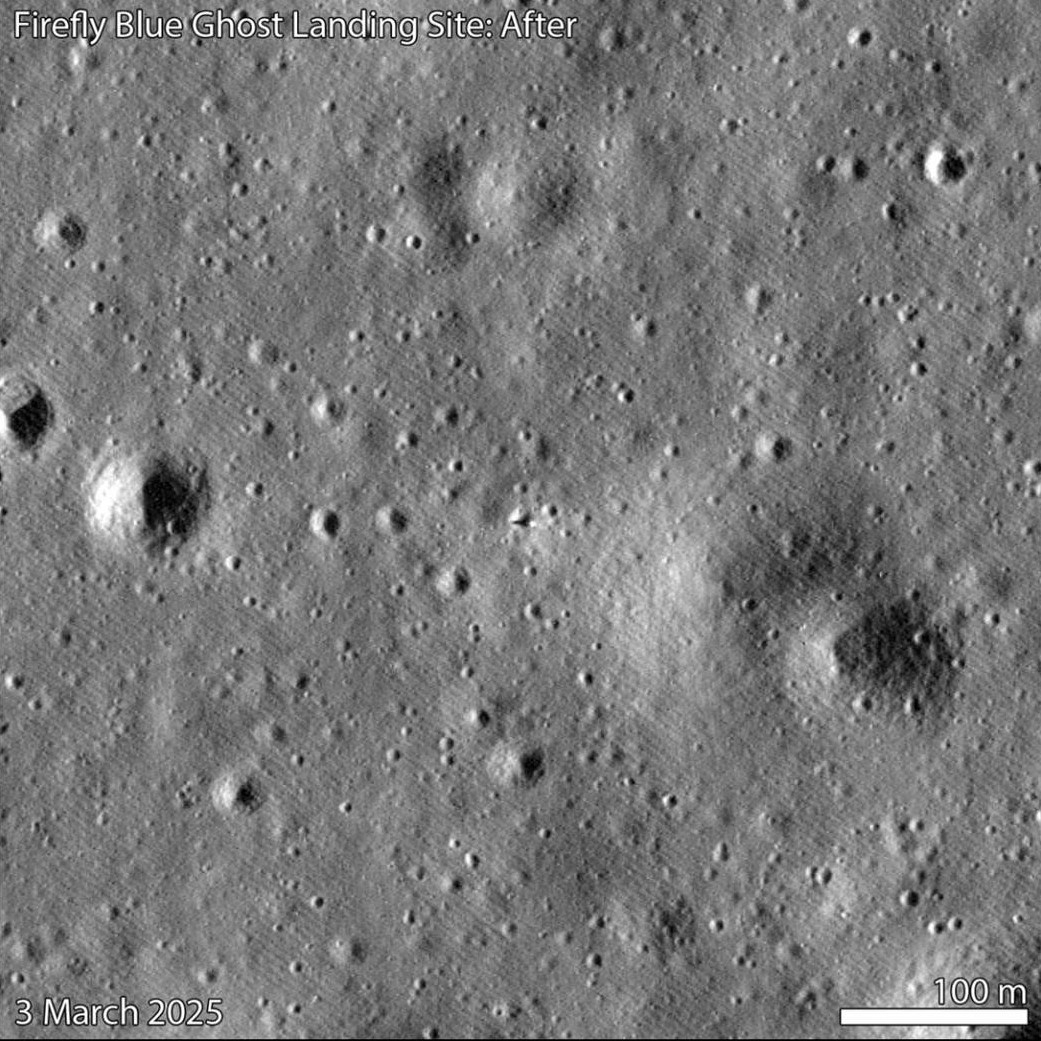
The Firefly Blue Ghost lunar lander set down on the Moon March 2nd. The landing site (arrow) is about 4,000 meters from the center of Mons Latreille, a large volcanic cone.
Image credit: NASA/GSFC/Arizona State University
The sharp-shooting camera system onboard NASA’s Lunar Reconnaissance Orbiter (LRO) has spotted the landing locale of the commercial Blue Ghost lander.
Firefly Aerospace’s Blue Ghost lander safely touched down in the eastern part of the Moon’s Mare Crisium at 19 degrees north and 62 degrees east reports Mark Robinson, leader of the LROC system.

NASA’s Lunar Reconnaissance Orbiter (LRO).
Credit: NASA’s Goddard Space Flight Center Conceptual Image Lab
The Lunar Reconnaissance Orbiter Camera, or LROC, is a system of three cameras mounted on the Lunar Reconnaissance Orbiter (LRO) that capture high resolution black and white images and moderate resolution multi-spectral images of the lunar surface.
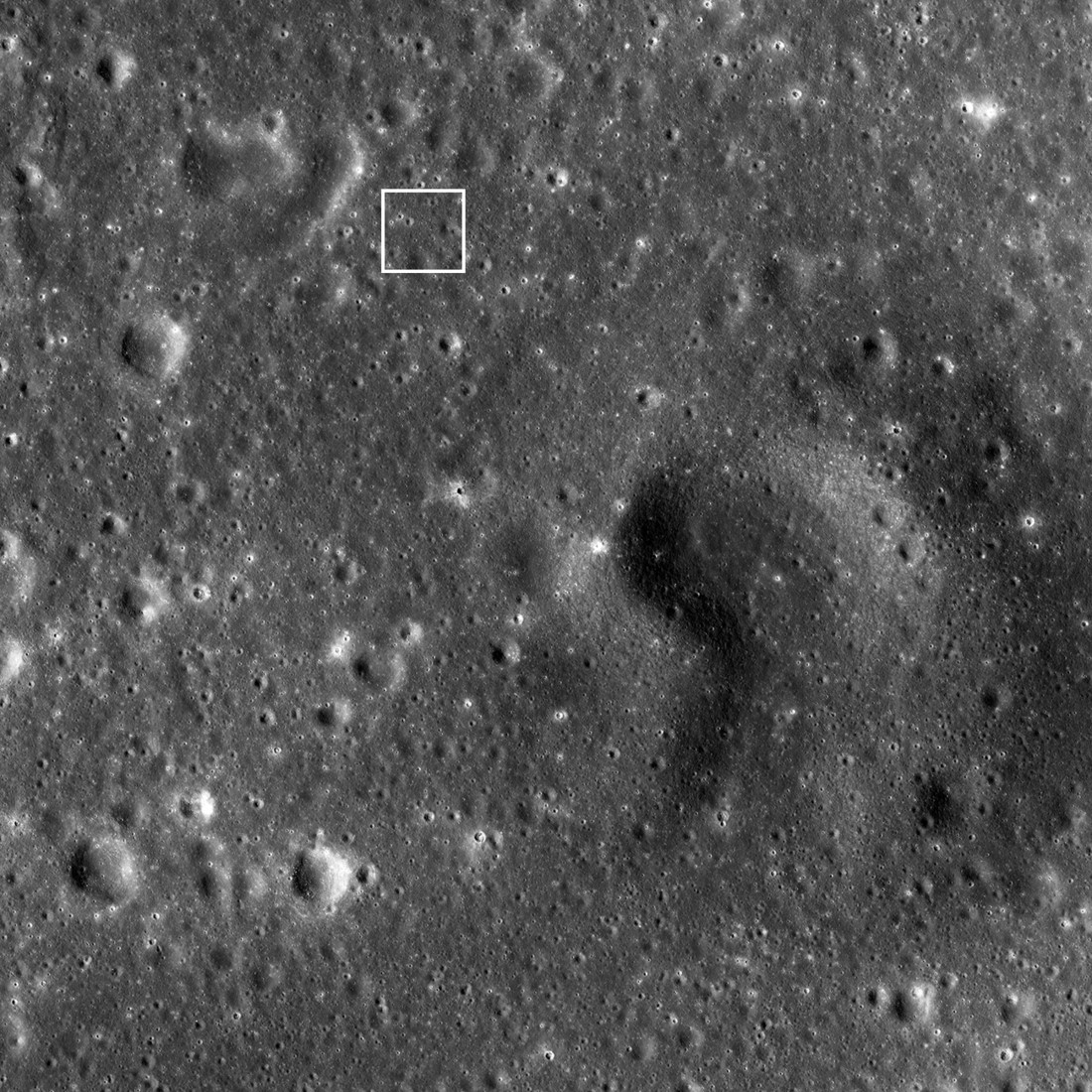
Blue Ghost landing region (white box) is 220 meters wide). North is up.
Image credit: NASA/GSFC/Arizona State University
Impact basin
Mare Crisium is an impact basin formed about four billion years ago when an asteroid roughly 40 kilometers in size struck the northeastern part of the Moon’s near side.
Earlier visitors
Blue Ghost is not alone in reaching this region.
In 1969, the former Soviet Union probe, Luna 15, crash-landed in Mare Crisium.
In November 1974, Luna 23, landed there but tipped over. That attempt to rocket samples from the area was followed in August 1976 by Luna 24 that successfully returned 170 grams of lunar material to Earth.
Firefly Aerospace’s Blue Ghost lander safely touched down in the eastern part of the Moon’s Mare Crisium.
Image credit: ASU/NASA GSFC
To inspect the LRO imagery on your own, go to:
https://www.lroc.asu.edu/images/1400
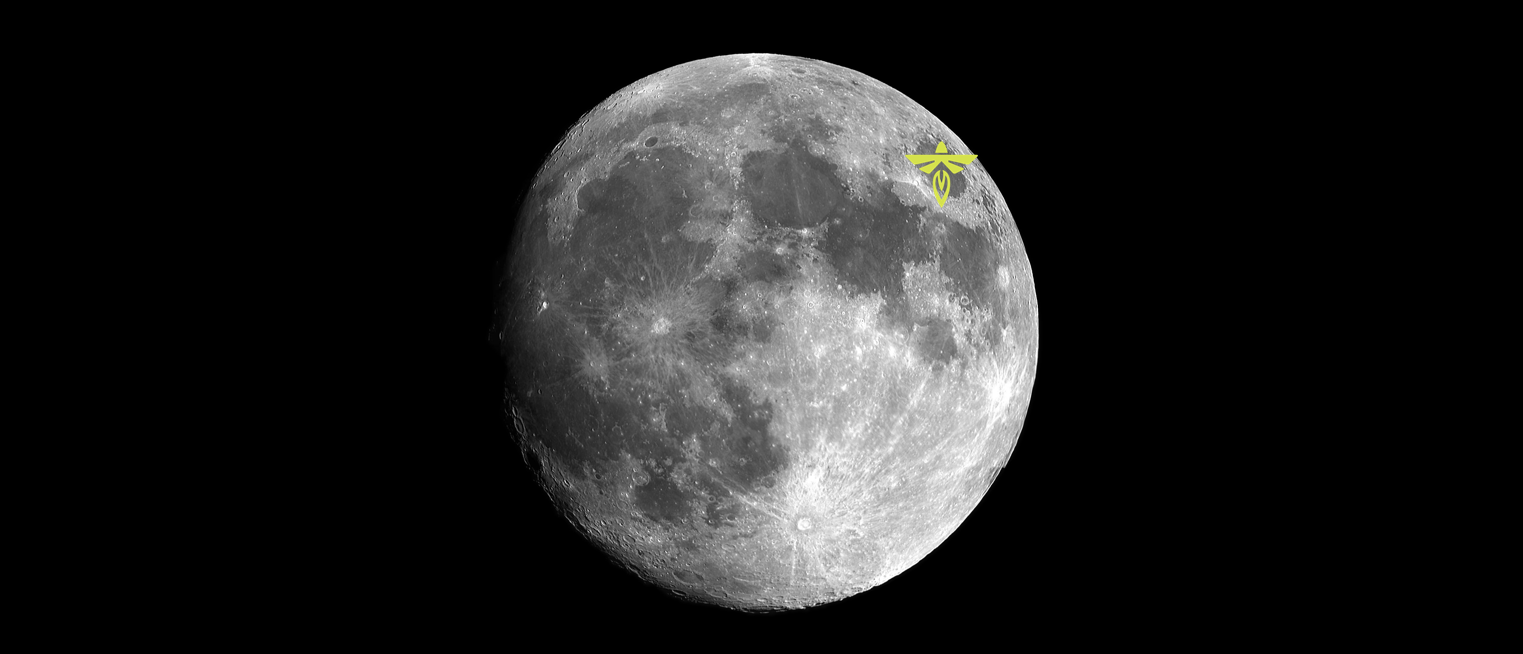
Image credit: Firefly Aerospace
The Firefly Aerospace Blue Ghost Mission 1, named Ghost Riders in the Sky, launched on January 15 and completed its 45-day Earth to Moon transit before softly touching down on the Moon on March 2.

Image credit: Firefly Aerospace
That touchdown signified that Firefly is the first commercial company in history to achieve “a fully successful Moon landing,” the group notes.
Carrying 10 NASA instruments, Blue Ghost completed a precision landing in Mare Crisium and touched down within a 328-feet (100-meters) landing target next to a volcanic feature called Mons Latreille.
Blue Ghost is now performing 14 days of surface operations, using a host of payloads.
Image credit: Firefly Aerospace
Working hypothesis
Meanwhile, Pascal Lee, a noted planetary scientist, has pieced together intriguing looks at the possible whereabouts of Blue Ghost – 1, the Moon lander flown by Firefly Aerospace of Cedar, Texas.
Given that Blue Ghost-1 landed roughly 100 meters of its target, Lee speculates where the Moon probe came to full stop. Drawing from released images so far, he notes that the lighting is not optimal at this point in time. So for now, “just a working hypothesis,” he adds.
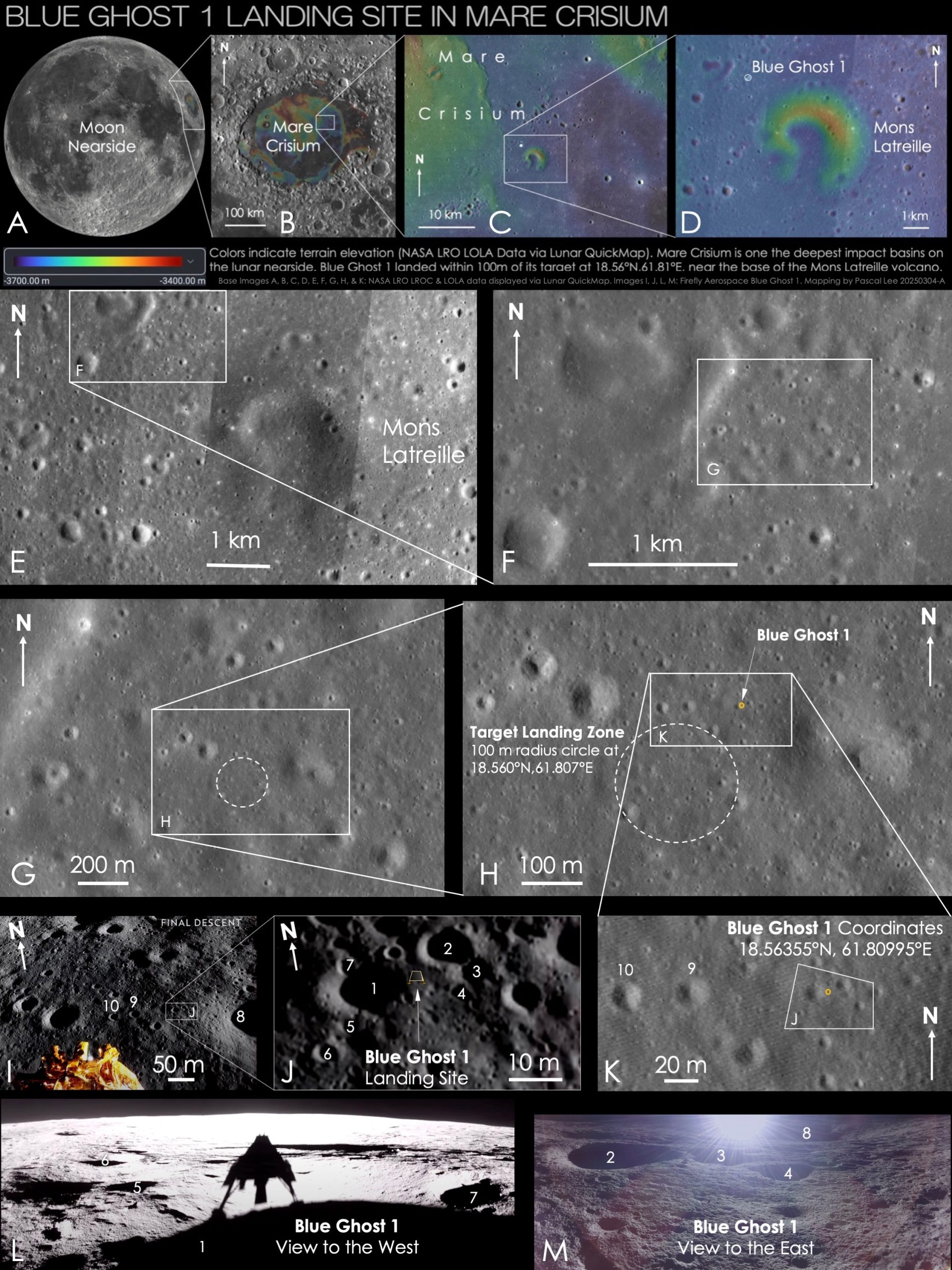
Image credit: Pascal Lee
Flight path
In earlier research, Lee reconstructed Blue Ghost-1’s orbital flight path over the lunar far side with names of prominent craters labeled, as shown a Firefly Aerospace issued video.
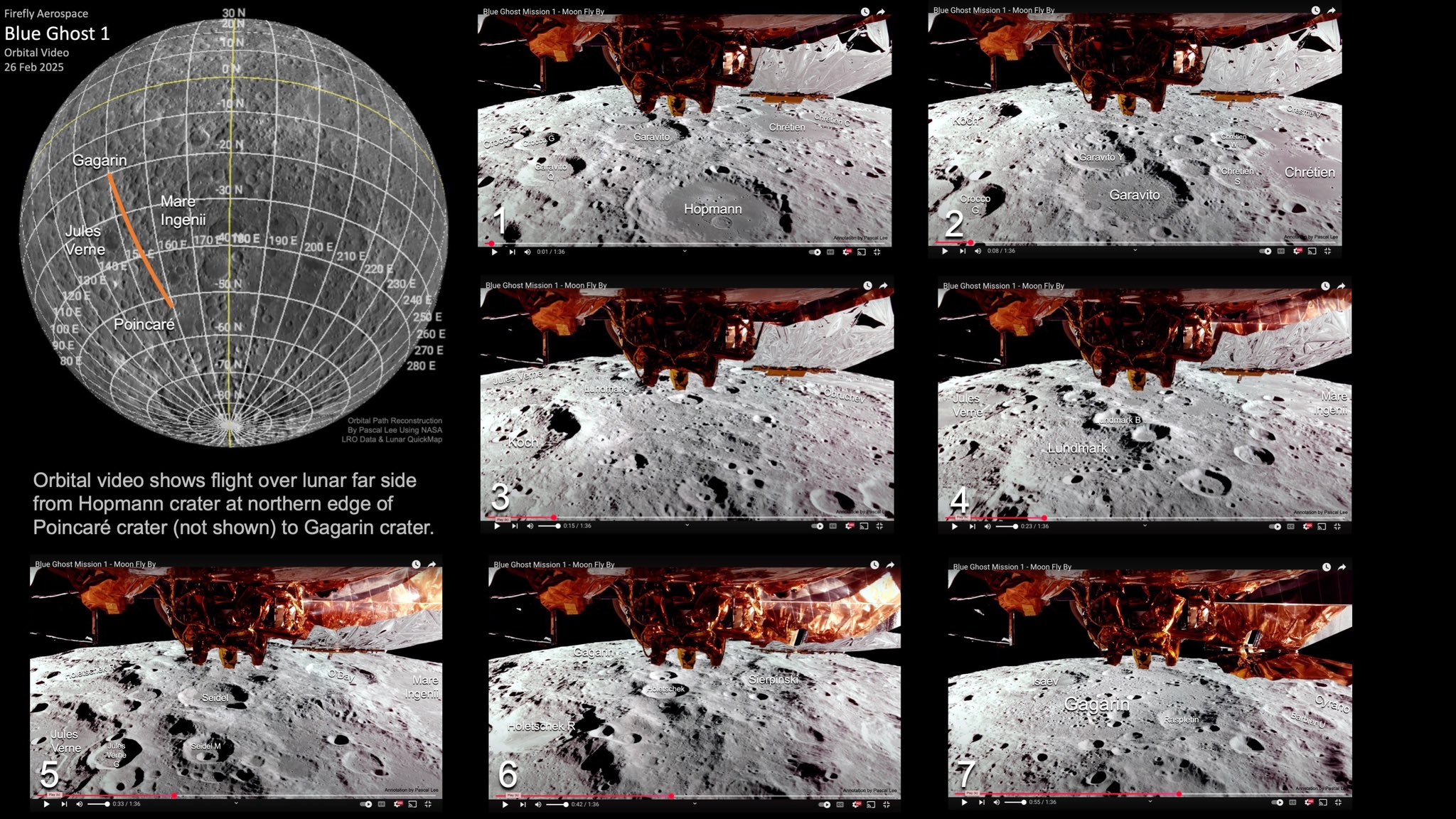
Image credit: Pascal Lee
Lee works at the Mars Institute and the SETI Institute, and is a professor of planetary science at Kepler Space University. He is also director of the NASA Haughton-Mars Project (HMP) at NASA Ames Research Center in Mountain View, California.

Every single Firefly employee’s name is etched on the Blue Ghost lunar lander plaque and is now on the Moon’s surface.
Image credit: Firefly Aerospace

This artist’s rendering shows NASA’s Europa mission spacecraft, which is being developed for a launch sometime in the 2020s.
Credit: NASA/JPL-Caltech/M. Carroll
NASA’s Europa Clipper, now en route to Jupiter, departed with less-than-satisfactory and vulnerable devices that are susceptible to Jupiter’s intense radiation.
The spacecraft’s liftoff on October 14 of last year, in many ways, is arguably a fingers-crossed undertaking, but one that has already produced a number of lessons-learned provisos, including the use of “Mil-Spec” parts for spacecraft forays beyond Earth.
Mil-Spec is short for “military specifications,” a set of criteria and standards promulgated by the U.S. Department of Defense and established to assure quality, reliability, and compatibility of parts used in aerospace.

Artist’s conception of water vapor plume erupting from the icy surface of Europa, a moon of Jupiter, based on data from the Hubble Space Telescope.
Credit: NASA/ESA/K. Retherford/SWRI
Prime mission
Europa Clipper is to reach Jupiter in April 2030, then perform repeated close flybys of one of giant Jupiter’s enigmatic moons, Europa. At the time of launch through its prime mission ending in 2034, the investment made and investigation of that icy world — having a likely internal ocean with conditions suitable for life — is a cool $5.2 billion.
For details on Europa Clipper and its cargo of unfit MOSFETs, go to my new SpaceNews story:
“End-run around radiation – The saga and surprise vulnerabilities of Europa Clipper” at:
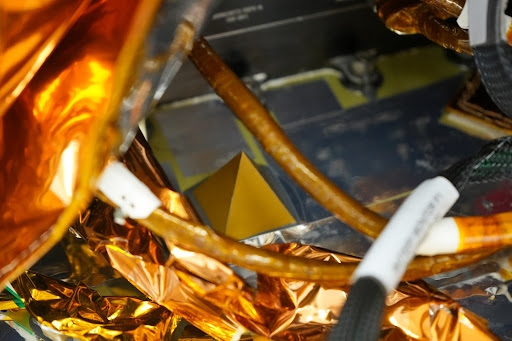
Image credit: Firefly Aerospace
“There is a Pyramid on the Moon – We’ve Landed.”
That’s the word from Ben Haldeman, founder of LifeShip, based in Carlsbad, California.
Now planted on the Moon within Mare Crisium, courtesy of the Firefly Aerospace Blue Ghost lunar lander, the Pyramid carries the complete genetic code for a human, etched into Cerabyte ceramic to last a billion years.
The tiny Pyramid carries:
- The seeds of life – including plant seeds, plant DNA, and the entire human genome, etched into ceramic to last a billion years.
- The stories, art, and messages of 100,000 people, many etched into NanoFiche to last essentially forever.
- A knowledge archive, including all of Wikipedia and a Language Primer.
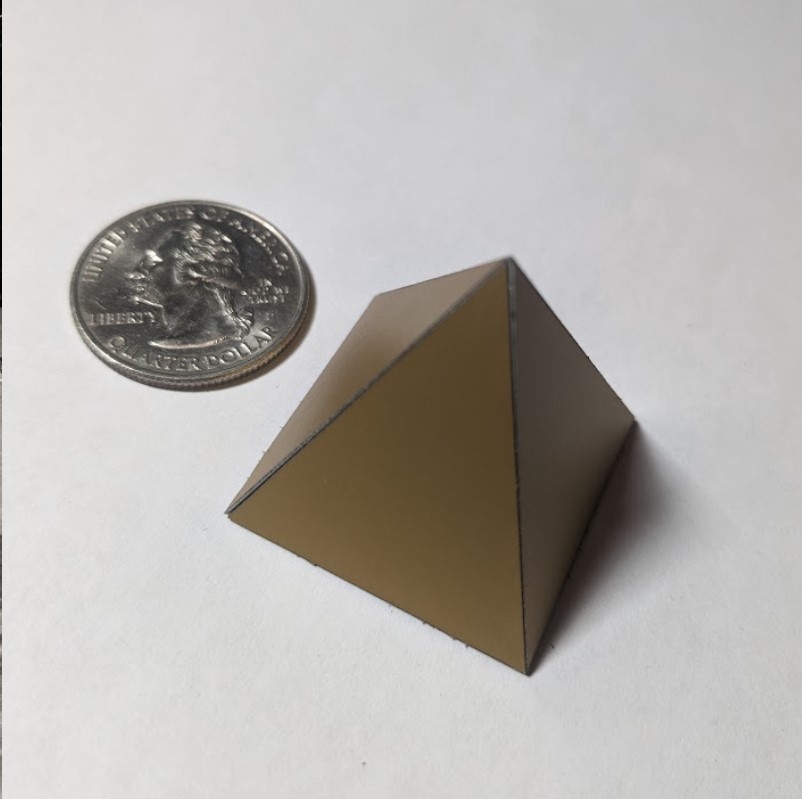
Image credit: LifeShip
Information-rich
“Throughout history, our ancestors have built pyramids across Earth,” Haldeman notes in the group’s post-landing message.
“Now, we as a species have created a pyramid on another celestial body that is more information-rich than any pyramid built before and will outlive the rest,” Haldeman added.
“This is a profound milestone in the evolution of life—one that even the greatest civilizations of the past, those who built pyramids, monuments, and cathedrals, would be in awe of,” said Haldeman.
Ups and downers
The group has been busy over the last few years.
LifeShip’s first DNA Seed Bank launched to the International Space Station (ISS) in April 2022, tucked away onboard a SpaceX Crew-4 mission. The capsule has the DNA of 500 species and over a thousand humans.
Later that year, in October, LifeShip’s second successful mission launched to the ISS on NASA’s Crew-5 mission. The capsule contained DNA from thousands of humans and 500 species representing plants native to 6 continents and 100 of Earth’s common food crops.
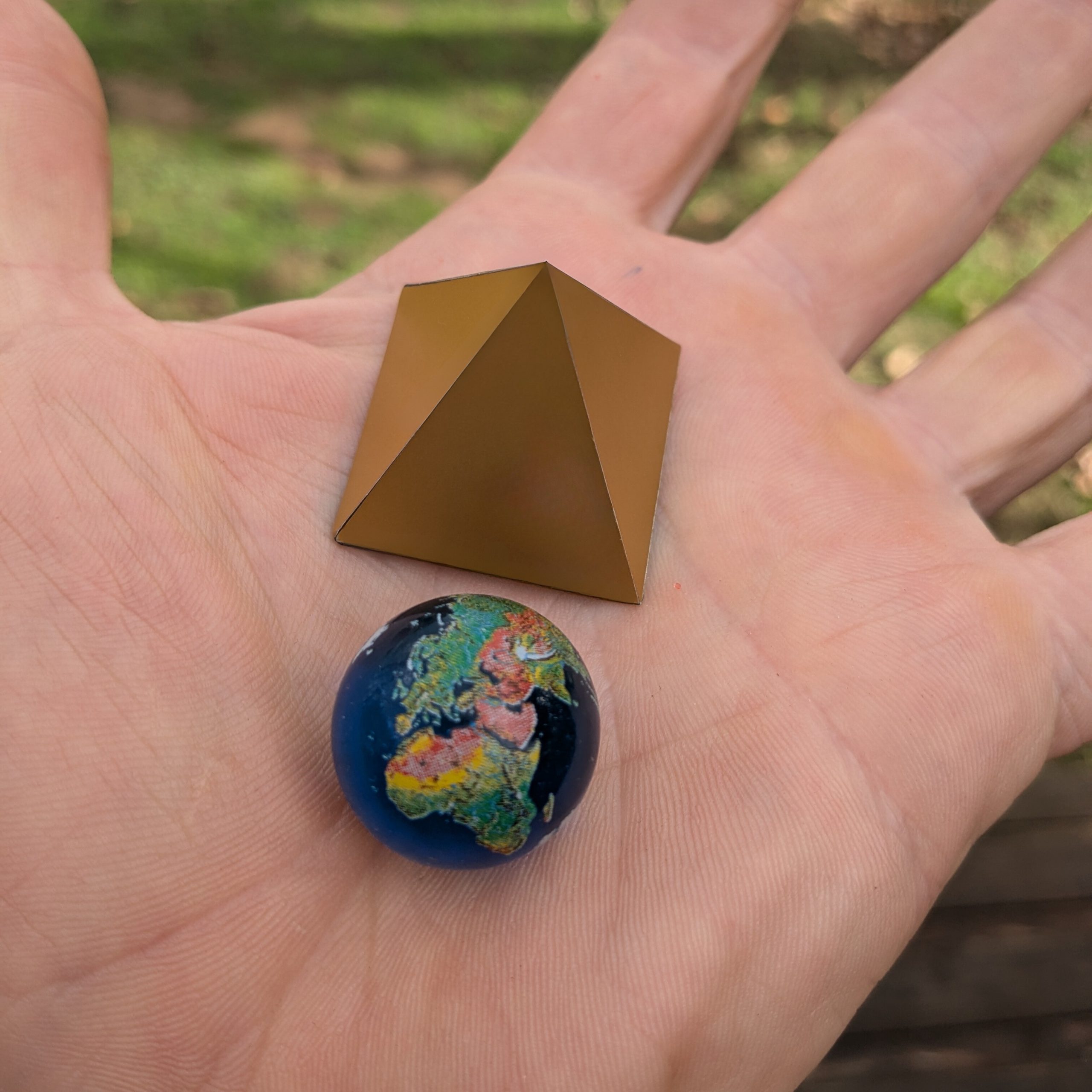
Image credit: LifeShip
LifeShip’s first mission to the Moon took place in early 2024, part of the Arch Mission Lunar Library II. But the flight of that Astrobotic private lunar lander was thwarted by a fuel leak, then ultimately and purposely targeted for reentry into Earth’s atmosphere.
The recently deployed AstroForge Odin spacecraft – meant to spearhead asteroid mining, also carries a LifeShip payload. But that probe now appears to be in trouble and its destination is doubtful.
Scheduled for delivery
An upcoming event is LifeShip onboard Astrolab’s Flex Lunar Innovation Platform (FLIP) Moon rover, scheduled to land at the lunar south pole as part of Astrobotic’s Griffin Mission 1.
That Astrobotic mission, originally meant to carry the NASA VIPER payload as part of NASA’s Commercial Lunar Payload Services initiative, is scheduled for delivery at the end of 2025.
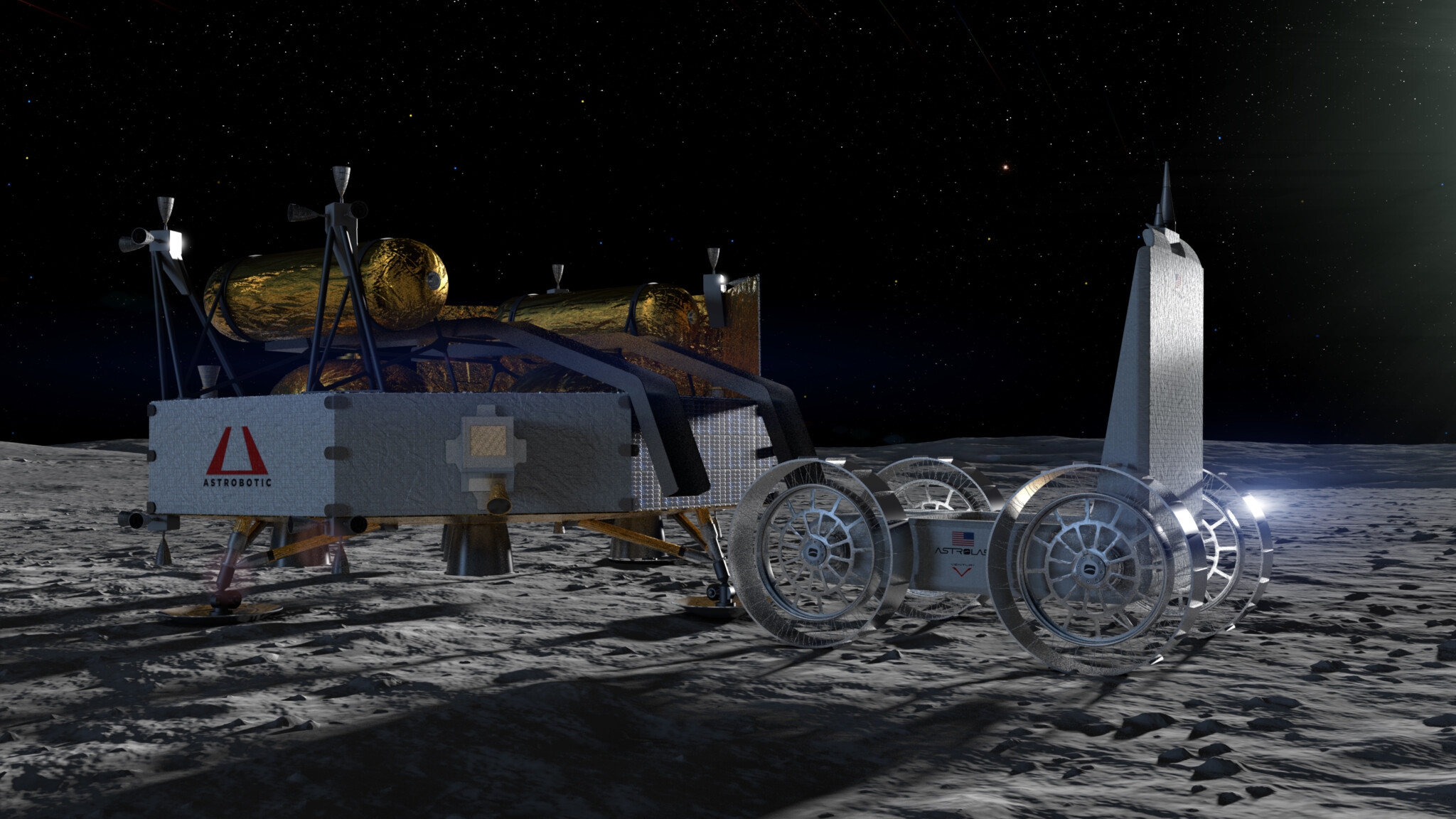
Image credit: Astrolab/Astrobotic
For more information on LifeShip, the group’s objectives, its missions and various partners, go to:

Image credit: NASA/Brandon Torres Navarrete
Engineers at NASA’s Ames Research Center in California’s Silicon Valley report progress in installing a heat shield on the first private spacecraft targeted for Venus.
Rocket Lab of Long Beach, California is leading the effort, along with their partners at the Massachusetts Institute of Technology (MIT) in Cambridge, Massachusetts.
Woven heat shield
NASA’s Heatshield for Extreme Entry Environment Technology (HEEET) was invented at the NASA Ames center
NASA’s Small Spacecraft Technology program, part of the agency’s Space Technology Mission Directorate, supported development of the heat shield for Rocket Lab’s Venus mission.
HEET is a textured material covering the bottom of the capsule (see above photo), a woven heat shield designed to protect spacecraft from temperatures up to 4,500 degrees Fahrenheit.
The private Venus probe would be deployed from Rocket Lab’s Photon spacecraft bus.

Image credit: Rocket Lab
This probe will take measurements as it descends through the clouds of Venus.
Morningstar missions
“We missed our January 2025 launch window and now wait until the next one summer 2026,” said MITs Sara Seager, a professor of planetary science, leader of the Morningstar Missions to Venus team – a series of planned missions designed to investigate the possibility of life in Venus’ clouds.
The first mission, a collaboration with Rocket Lab, is the small, low-cost probe designed to measure autofluorescence and backscattered polarised radiation to detect the presence of organic molecules in the clouds.
That spacecraft is now going on Rocket Lab’s yet-to-fly Neutron booster, instead of an Electron launcher, so the private Venus mission is tied to the Neutron coming online, Seager told Inside Outer Space.
“On my side we completed the instrument build and had our first integration tests with the probe, the part that will be dropped off into the Venus atmosphere. All is progressing,” said Seager.

Image credit: NASA/Ames Research Center


