Archive for the ‘Space News’ Category
 Author:
  May 20th, 2025
Image credit: CCTV/Inside Outer Space screengrab
China’s is preparing to enter the asteroid sample-return mission business, launching before month’s end its Tianwen-2 robotic probe.
To be launched within the coming two weeks from the Xichang Satellite Launch Center in Sichuan province, the Tianwen-2 robotic probe was moved to the launch preparation area at the center last Sunday.
Tianwen-2, an orbiter and a reentry module, is to be lofted by a Long March 3B booster and will target 2016 HO3, the smallest and closest “quasi-satellite” to Earth.
Mechanical arm action
After approaching 2016 HO3, the robotic spacecraft will orbit the asteroid for months and slip close to the space rock and use a mechanical arm to scoop dust from the object’s surface.

Image credit: CCTV/Inside Outer Space screengrab
Tianwen-2 will then fly back to Earth’s orbit and release its reentry module for Earth recovery. The return capsule is expected to land 100 grams of material to Earth in about two and a half years.
Next target
The orbiter will then head out toward a main-belt comet called 311P to continue its scientific exploration tasks.
311P is part of the main asteroid belt between Mars and Jupiter. Its physical composition is like those that of comets, but its orbital characteristics resemble those of asteroids, according to astrophysicists.

Image credit: CCTV/Inside Outer Space screengrab
Interplanetary missions
Tianwen-1 was launched in July 2020 and touched down on Mars in May 2021. The probe deployed the Zhurong rover that scouted about Utopia Planitia for several months.
According to Shan Zhongde, China National Space Administration’s director, said that Tianwen-2 is planned to fly alongside and sample an asteroid, return to Earth and fly alongside a main-belt comet in a single launch.
“In the future, we will advance deep space exploration missions such as the Tianwen-3 Mars sample-return mission and Tianwen-4 to Jupiter in an orderly manner,” Shan said.
 Posted in
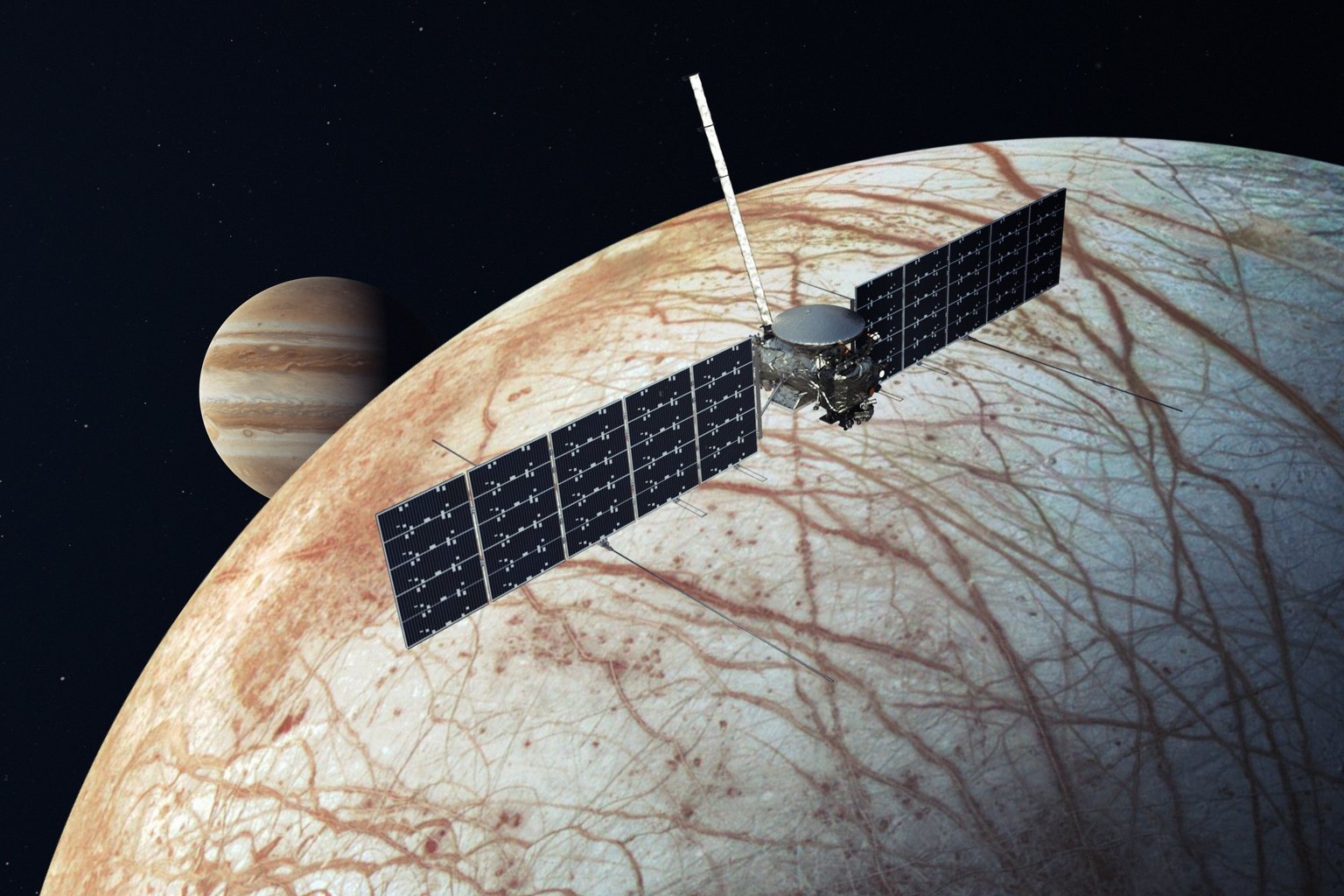
En route to Jupiter, the Europa Clipper.
Image credit: NASA/JPL-Caltech
“It has been a tumultuous few weeks, and we know there are many issues weighing heavily on our community,” explains a communiqué issued today from the Outer Planets Assessment Group (OPAG).
The OPAG community message addresses a “serious concern” regarding recent removal of abstracts and archived advisory group (AG) community documents on the Lunar and Planetary Science Conference (LPSC) website.
Purportedly, hundreds (over a thousand by one count) of conference and workshop abstracts have been removed…and space scientists are furious.
For years, NASA has taken steps to advance diversity, equity, inclusion, and accessibility (DEIA) in their workforce. However, the space agency has started to implement Trump White House directives related to DEIA, such as restricting funding for initiatives associated with DEIA – as well as removing documents that include DEIA discussion.
Open dialogues
Indeed, the overall future of the AGs is not clear – and at a time when projected NASA budget cuts to space science and exploration are looming.
The AG list includes ExMAG [Extraterrestrial Materials Assessment Group], LEAG [Lunar Exploration Analysis Group], MAPSIT [Mapping and Planetary Spatial Infrastructure Team], MEPAG [Mars Exploration Program Analysis Group], MExAG [Mercury Exploration Assessment Group], OPAG [Outer Planets Assessment Group], OWWG [Ocean Worlds Working Group], SBAG [Small Bodies Assessment Group], and the VEXAG [Venus Exploration Analysis Group].

Artwork depicts Dragonfly spacecraft skirting over Titan terrain. Image credit: NASA/Johns Hopkins APL/Steve Gribben
OPAG meetings and other AGs are essentially the only forums where the space science community receives direct information from NASA leadership enabling open dialogues with the NASA Planetary Science Division.
“Our meetings are also a place where we can freely discuss the needs of our community, find consensus, and distill that consensus into findings that are received and read directly by NASA Headquarters,” explains the OPAG statement.
Rapidly evolving landscape
The OPAG was established by NASA in late 2004 to identify scientific priorities and pathways for exploration in the outer solar system. OPAG provides input to NASA but does not make recommendations.
Image credit: NASA
As explained in the OPAG communiqué, “we are at a crossroads.”
What OPAG and the other AGs face is a “rapidly evolving landscape” and a myriad of issues.
In the past, President Trump actions include, but are not limited to, the following Executive Orders and Presidential memoranda:
Ending Radical and Wasteful Government Diversity, equity and inclusion (DEI) Programs and Preferencing
Initial Guidance Regarding Diversity, Equity, Inclusion, and Access (DEIA) Executive Orders
Go to: https://chcoc.gov/content/initial-guidance-regarding-deia-executive-orders
Initial Rescissions of Harmful Executive Orders and Actions
Defending Women from Gender Ideology Extremism and Restoring Biological Truth to the Federal Government
Initial Guidance Regarding President Trump’s Executive Order Defending Women
Unleashing American Energy
Go to: https://www.whitehouse.gov/presidential-actions/2025/01/unleashing-american-energy/

Image credit: White House
Breach of trust
In the OPAG message is a disclaimer that the views and opinions expressed in today’s email are those of the authors — Morgan Cable, OPAG Co-Chair and Carol Paty, OPAG Co-Chair — and do not necessarily reflect the views, opinions, or positions of the Universities Space Research Association (USRA), the USRA-led Lunar and Planetary Institute and its LPSC annual meeting.
The AG chairs have protested the recent actions taken and are in ongoing discussions with USRA to hopefully restore these critical records. “This breach of trust has deeply impacted our community,” the email explains.

Bright and dark streaks covering the slopes of the Olympus Mons aureole as seen by the European Space Agency’s ExoMars Trace Gas Orbiter using its Color and Stereo Surface Imaging System (CaSSIS). The image covers an area of approximately 50 square kilometers and was captured on October 3, 2024.
Image credit: ESA
Bright and dark streaks on Mars have sparked decades of debate.
Some experts interpret them as streaks, also cataloged as recurring slope lineae (RSL), created by flows of salty water, or brine, that could remain liquid long enough to form them. If so, perhaps they offer rare habitable zones on the Red Planet, a world where temperatures rarely rise above freezing.
But a new study led by planetary scientists at the University of Bern and Brown University throws cold water – nope, better to say — dry processes involving wind and dust activity!

On patrol – NASA’s Mars Reconnaissance Orbiter (MRO).
Image credit: NASA/JPL
Evolving over time
Researchers used a machine learning algorithm to scan and catalogue slope streaks in over 86,000 satellite images taken by NASA’s Mars Reconnaissance Orbiter (MRO). The team also turned to other cameras orbiting Mars by the European Space Agency’s Trace Gas Orbiter as well as MRO’s super-powerful High Resolution Imaging Science Experiment.
That Mars-orbiting gear has helped monitor how the streaks evolved over time.
Multiple triggering events
Writing in a just-issued research paper, the scientists concluded that dry processes – rather than liquid flow – drive the appearance of streaked slopes on Mars. They found that these winding features most likely form when layers of fine dust suddenly slide off steep terrain.

Global distribution of slope streaks and RSL on Mars.
Image credit: Valentin Tertius Bickel/Adomas Valantinas
There are multiple triggering events that could unleash this process, such as rocks falling, small meteoroid impacts or wind gusts causing shockwaves and shaking loose dust.
Dry drivers
“Overall, our observations suggest that slope streak and RSL formation may be predominantly controlled by two independent, dry drivers,” the paper explains: 1) the seasonal delivery of dust onto topographic inclines, and 2) the spontaneous activation of accumulated dust by energetic triggers – wind and impacts for slope streaks, as well as dust devils and rockfalls for RSL.
“This implies that slope streak and RSL locations are not likely to be habitable, alleviating strict planetary protection measures for future landed missions to those regions,” the research paper concludes.
For more details, take a look at “Streaks on martian slopes are dry” in Nature Communications at:
https://www.nature.com/articles/s41467-025-59395-w

Visualization of the deep learning-driven mapping workflow.
Image credit: Valentin Tertius Bickel/Adomas Valantinas
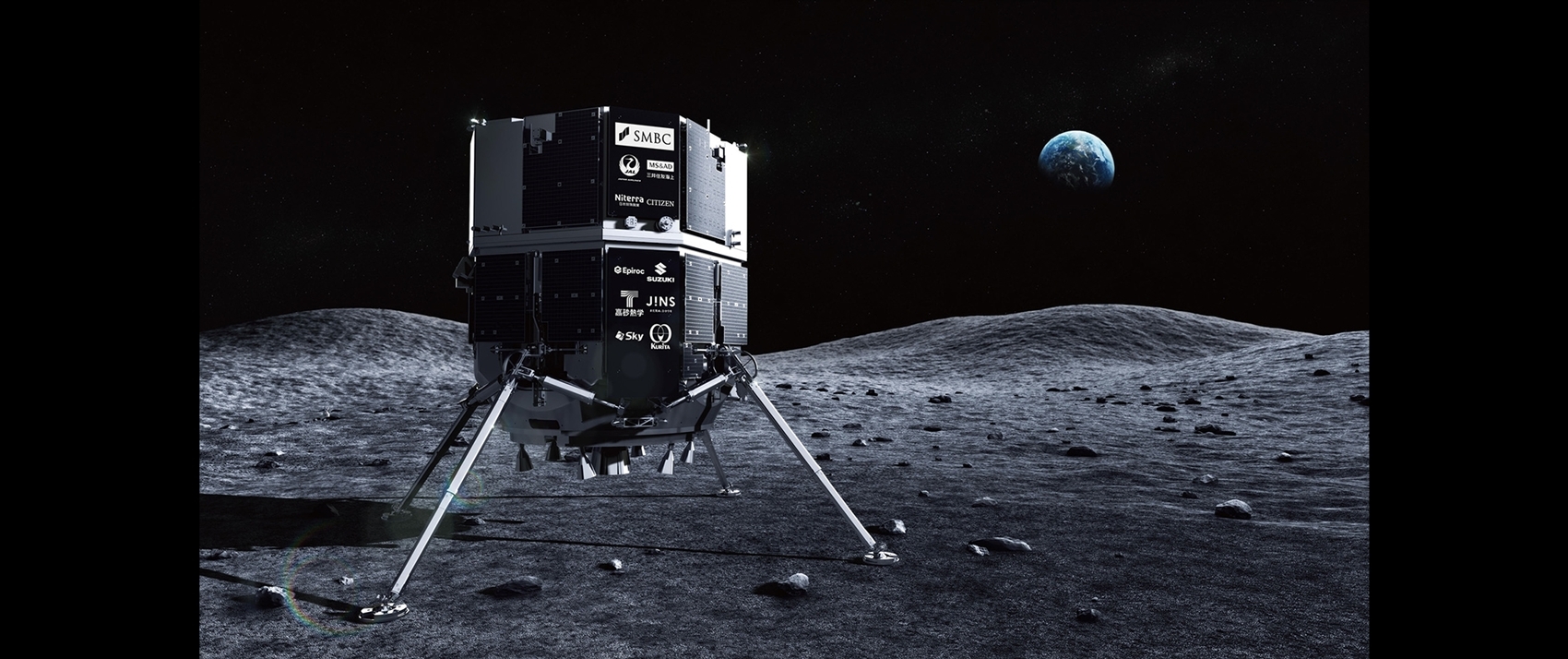
Image credit: ispace
Next stop, the Moon!
On June 5, 2025 Japan’s ispace Resilience lunar lander is set to plop down near the center of Mare Frigoris (Sea of Cold)!

Image credit: ispace
“Should conditions change, there are three alternative landing sites that are being considered with different landing dates and times for each,” an ispace posting explains.
Meanwhile, a newly-released image taken with the spot camera mounted on top of the lander. The cover that protects the Tenacious micro rover is visible in the bottom right of the image.

Image credit: ispace
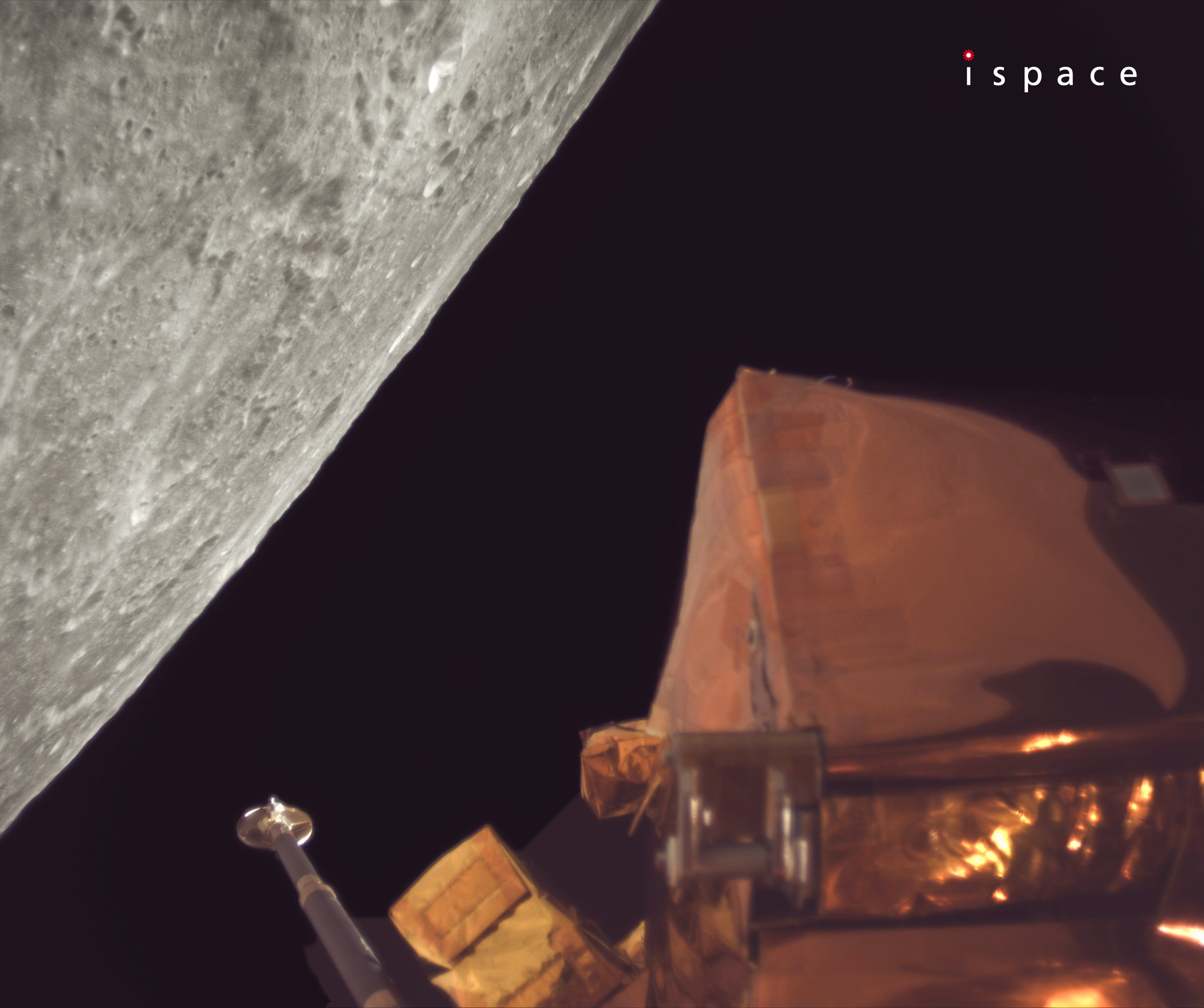
Image credit: ispace

Image credit: NASA
The White House released fiscal year 2026 budget proposal for NASA calls for nearly 25 percent less in funding than NASA received for fiscal year 2025.

Image credit: White House
The release on May 2 of that budget proposes significant changes to NASA’s crewed lunar plans, presence on the International Space Station, and science missions, among other changes.
Budget implications

Image credit: CSIS/Inside Outer Space screengrab
The implications of the budget took center stage in a highly-informative discussion at the Center for Strategic and International Studies (CSIS).
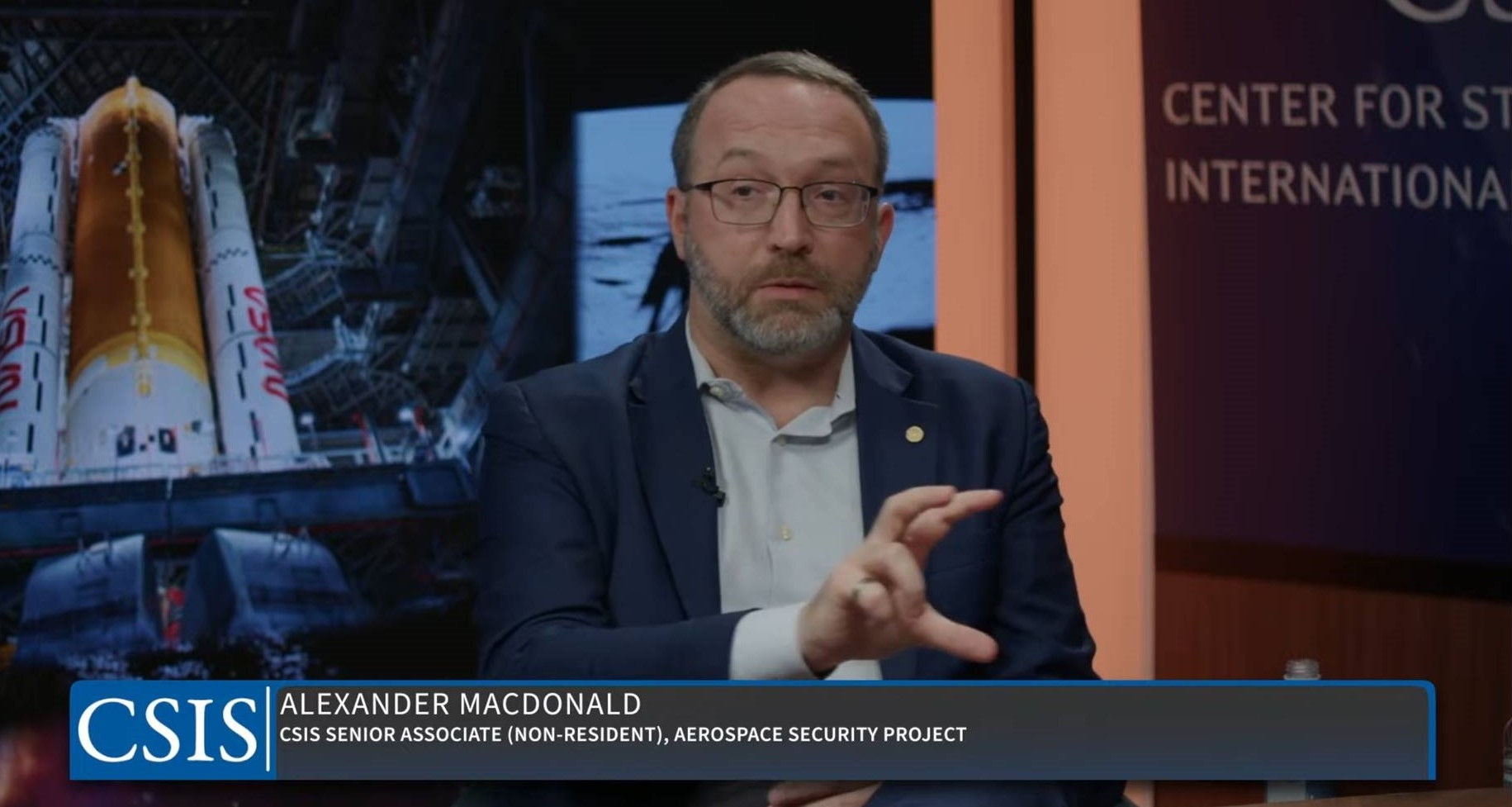
Image credit: CSIS/Inside Outer Space screengrab
This NASA Budget Outlook Discussion took place on May 14 involving Clayton Swope, Deputy Director of the CSIS Aerospace Security Project; Alexander MacDonald. Senior Associate (Non-resident) at the Aerospace Security Project; and Mike French, Founder of the Space Policy Group.

Image credit: CSIS/Inside Outer Space screengrab
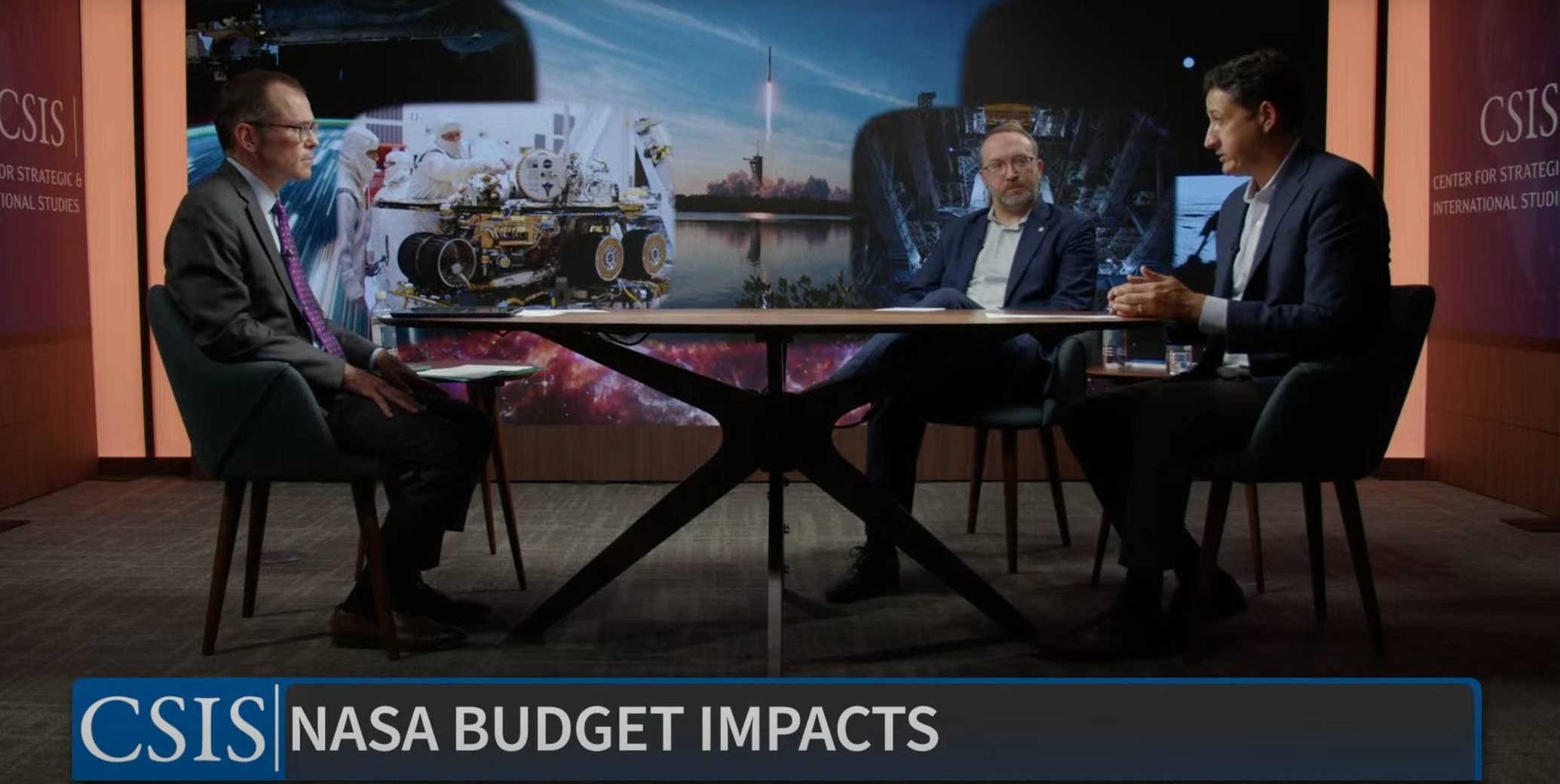
Image credit: CSIS/Inside Outer Space screengrab
This important event at CSIS is available for viewing at:
https://www.csis.org/events/nasa-budget-outlook-discussion
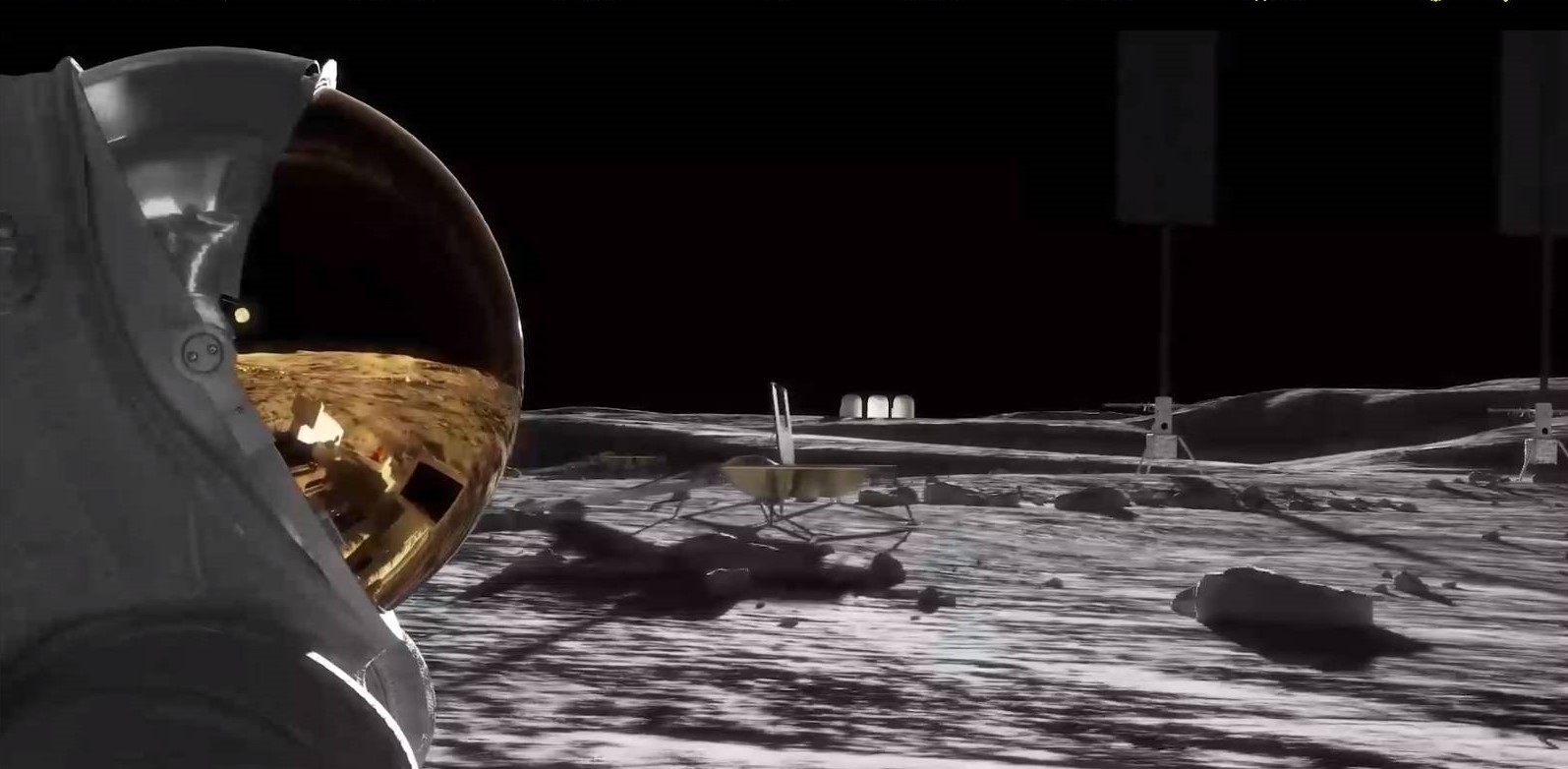
Creating a cis-lunar economy will take time, hardware, and political willingness to forge a link between the moon and Earth.
(Image credit: Lockheed Martin)
Cashing in on a cis-lunar economy is ballyhooed by space exploration advocates.
It’s a spillover term stirred up by today’s entourage of moon orbiters and investigative landers that are crossing the great divide of space between the Earth and moon.
But what needs to happen to help spark a cis-lunar economy? More yet, given actions of late, are we headed for entering a tariff-free zone?
Finding: There’s hard work ahead to put in place the needed hardware to sustain and define such a dollar-generating idea.

Taking the “Aquarius Regolith Run,” a Lockheed Martin video game demo showcased at the Space Symposium. But watch out for those crater rims!
Image credit: Barbara David
It turns out that power and day/night operations on the moon – that is, “plug-in and play” lunar equipment — stands out as a must-have if a cis-lunar economy is real not empty oratory.
For more information, go to my new Space.com story – “Can we actually build a thriving economy on and around the moon?” – “I don’t see an inner solar system in which we don’t significantly develop the moon if you’re going to go anywhere.”
https://www.space.com/astronomy/moon/can-we-actually-build-a-thriving-economy-on-and-around-the-moon

ispace lunar lander/rover.
Image credit: ispace
The Japanese ispace private Moon lander, Resilience, is slated to attempt a landing no earlier than June 5, 2025 UTC.
The landing area is in Mare Frigoris (60.5°N 355.4°E), a volcanic region interspersed with large-scale faults known as wrinkle ridges.
The Resilience lunar lander entered lunar orbit on May 7.
Meanwhile, NASA’s Lunar Reconnaissance Orbiter team has issued this image of the landing zone for Resilience.
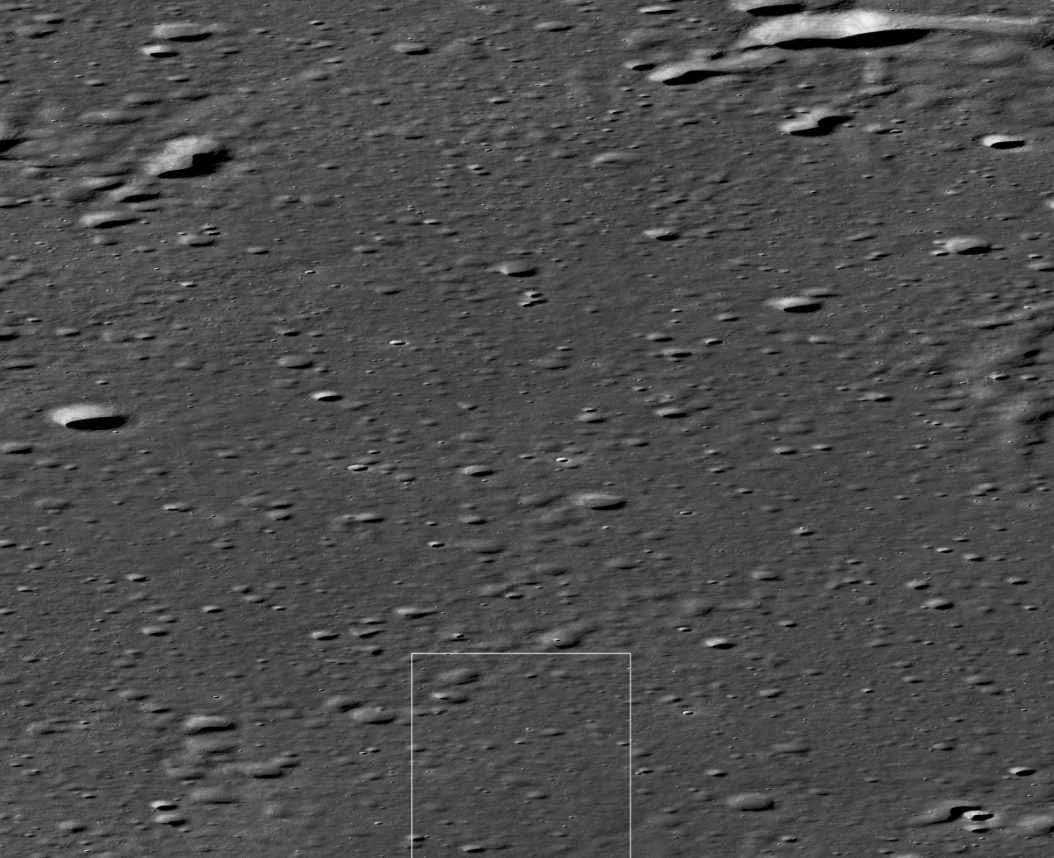
Image credit: NASA/GSFC/Arizona State University

Image credit: ispace

How best to deal with the growing prowess of China’s space program could start with a simple phone call – on a new hotline.
The United States needs to act now to address threats to space assets; champion space traffic management to support the growing space economy; and incorporate commercial perspectives into civilian and national security space policy.
That’s the output from a task force report sponsored by the Council on Foreign Relations, highlighted during the Space Foundation’s 40th Space Symposium held here April 7-10 by the Space Foundation at The Broadmoor.
For details, go to my new Space.com story – “US and China need a space hotline for orbital emergencies, experts say” – at:

Image credit: SpaceX
The upcoming test flight of the Starship-Super Heavy Flight 9 is subject to a Federal Aviation Administration go-ahead due to a still open mishap investigation of the Starship’s last flight on March 6.
Prior to the end of the ascent burn, an “energetic event” in the aft portion of Starship resulted in the loss of several Raptor engines. “This in turn led to a loss of attitude control and ultimately a loss of communications with Starship,” reported SpaceX. “Final contact with Starship came approximately 9 minutes and 30 seconds after liftoff.
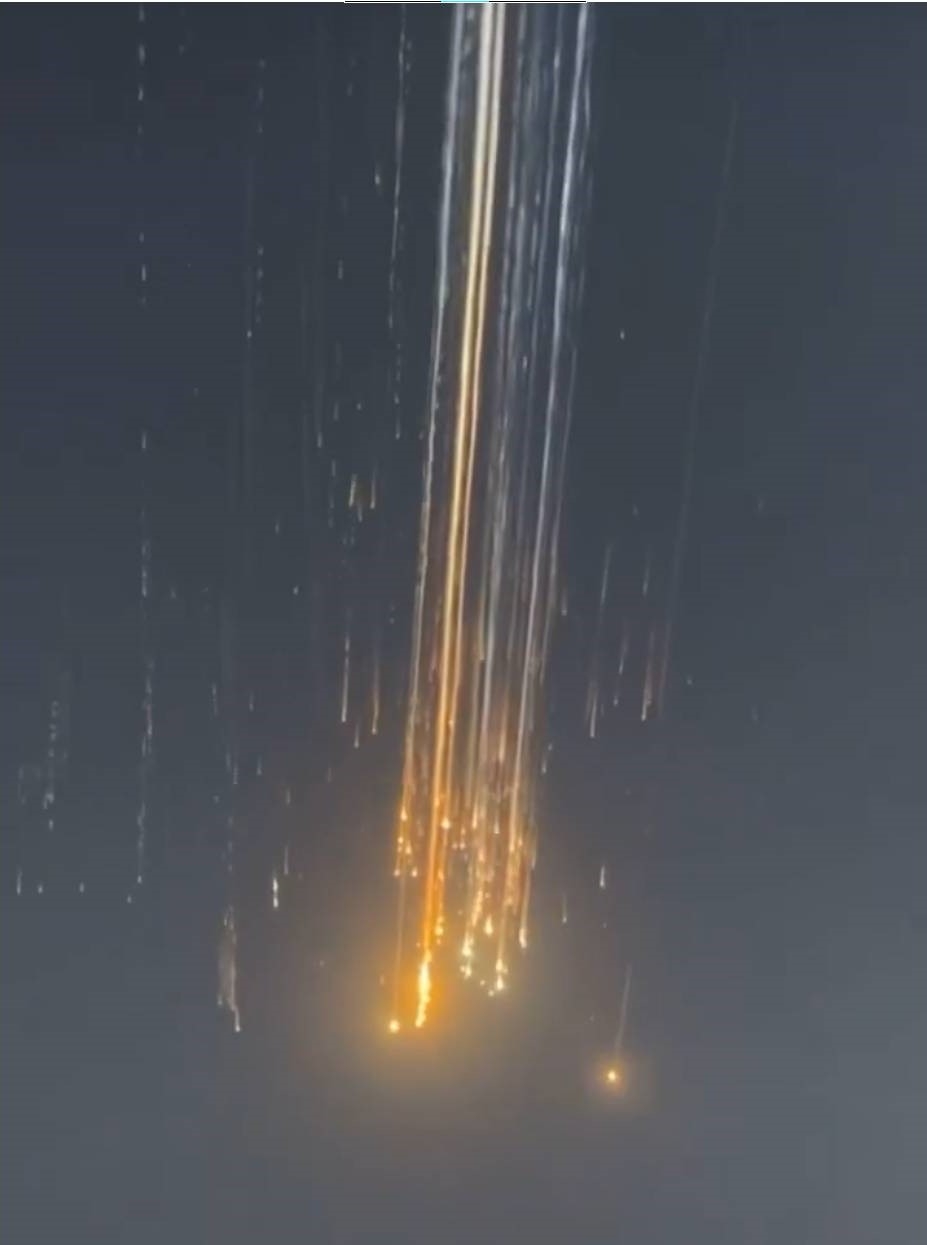
Starship debris image credit: Wandy Rodriguez@JustFlyAndRock
Mishap investigation
While the FAA has issued a license modification for SpaceX’s proposed Flight 9 operation, “the SpaceX-led mishap investigation for Starship-Super Heavy Flight 8 remains open,” states a communiqué from the FAA SpaceX Boca Chica Project Team.
“SpaceX may not proceed with the proposed Flight 9 launch until the FAA either accepts the final mishap investigation report or the FAA issues a return to flight determination,” the Team adds.
Aircraft hazard area
Based on the safety analysis for Starship-Super Heavy Flight 9, an Aircraft Hazard Area and associated Notice to Airmen (NOTAM) would necessitate FAA to close airspace over a portion of the Bahamas and the Turks & Caicos Islands.
An FAA “Tiered Environmental Assessment” indicates that the Aircraft Hazard Area (AHA) for Starship Flight 9 is projected to affect over 175 flights, “with 99 percent of the identified aircraft involved in international connecting routes.”
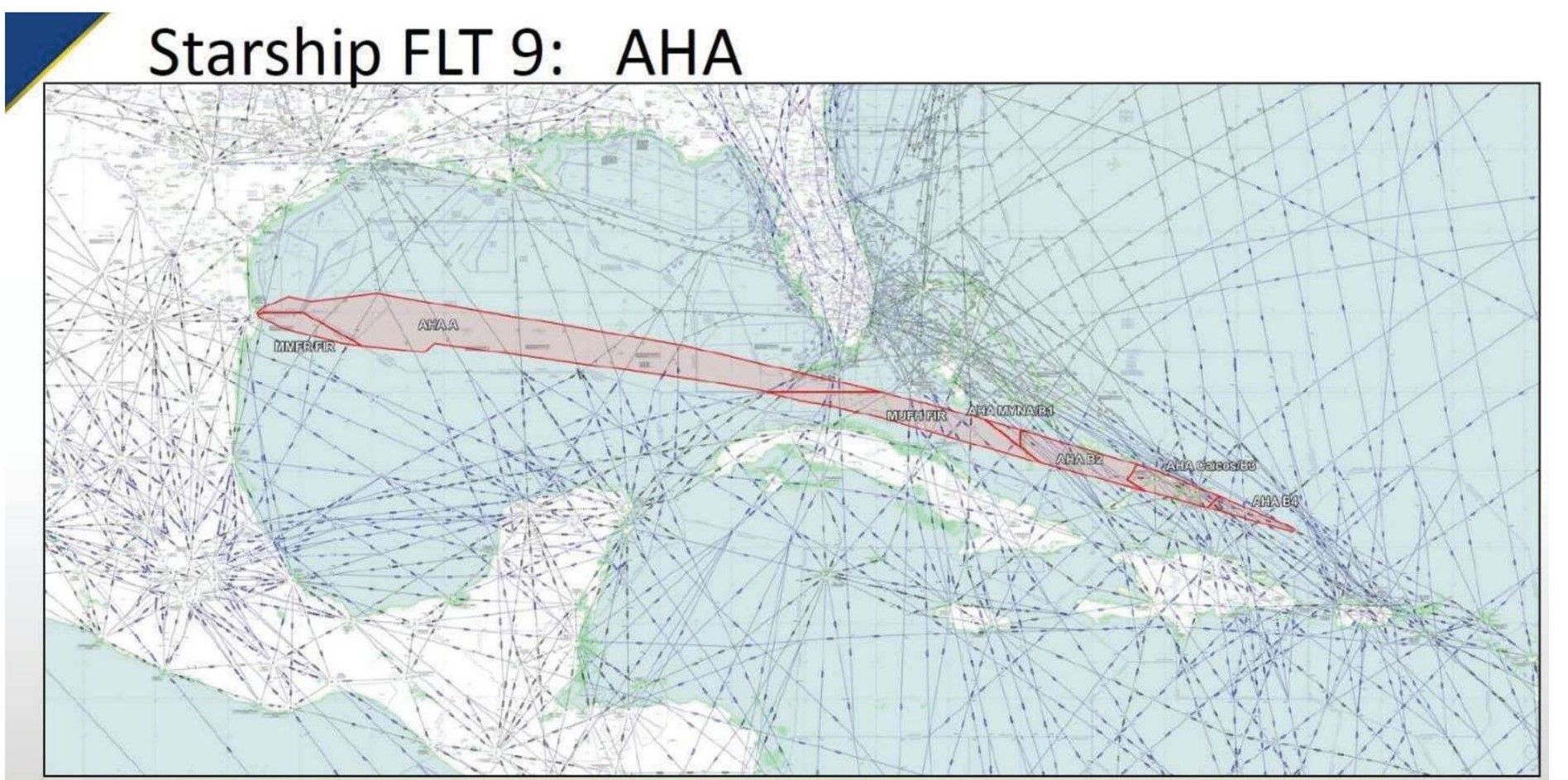
Image credit: FAA
To minimize disruption to National Airspace System (NAS) stakeholders, the launch window has been scheduled outside peak transit periods.

Global worry: Near-Earth Objects (NEOs).
Image credit: Texas A&M
Protecting Earth from threatening asteroids and comets must be a top priority for NASA.
That topic was addressed today in a Subcommittee on Space and Aeronautics hearing titled: From Detection to Deflection: Evaluating NASA’s Planetary Defense Strategy.
The hearing also evaluated NASA’s progress towards completing the survey of Near Earth Objects (NEOs) greater than 140 meters in diameter as statutorily required by the George E. Brown, Jr. Near-Earth Object Survey Act.

Image credit: Subcommittee on Space and Aeronautics/Inside Outer Space screengrab
Hearing witnesses
- Nicola Fox, Associate Administrator, Science Mission Directorate, NASA
- Amy Mainzer, Department of Earth, Planetary, and Space Sciences, University of California, Los Angeles
- Matthew J. Payne, Director, Minor Planet Center, Smithsonian Astrophysical Observatory
NEO Surveyor status
Subcommittee Chairman Mike Haridopolos noted that as of last September, NASA estimated it had identified approximately 44 percent of the estimated population of NEOs larger than 140 meters, less than half of its goal.

Amy Mainzer, Principal Investigator of NEO Surveyor.
Image credit: Subcommittee on Space and Aeronautics/Inside Outer Space screengrab
“But help is on the way,” Haridopolos said, spotlighting the NEO Surveyor mission, the first spacecraft explicitly built to detect near-Earth asteroids and comets. It is scheduled to launch by 2028. NEO Surveyor uses infrared detectors to track objects that would otherwise be difficult to find due to the glare of sunlight.
Hazardous asteroids yet to be found
Brian Babin, House Science, Space, and Technology Committee chairman, noted U.S. efforts to detect NEOs began in the 1990s, but a major initiative was passed as part of the 2005 NASA Authorization.
“The George E. Brown Jr. Near-Earth Object Survey Act directed NASA to detect, track, and catalogue 90 percent of NEOs larger than 140 meters in diameter within 15 years. At that size, a NEO-Earth impact could cause significant regional destruction,” Babin said in an opening statement.

Image credit: APL
“Nearly 20 years after the Act’s passage, only 44 percent of the estimated NEOs larger than 140 meters have been identified,” said Babin. “Despite being five years past the original deadline, many potentially hazardous asteroids have yet to be found.”
To view the hearing, go to:
https://www.youtube.com/live/5SamCKEOoeQ?si=yhws_rMsow7-R2TR

