Archive for the ‘Space News’ Category
 Author:
  January 9th, 2015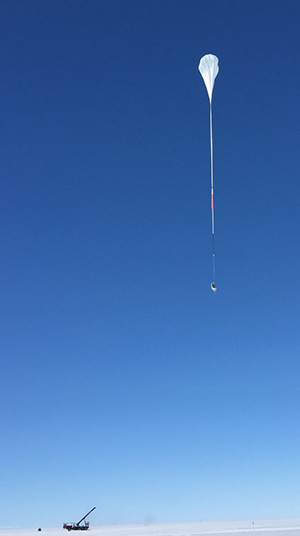
Credit: Zigmund Kermish, Department of Physics, Princeton University
A balloon-borne telescope was launched to the edge of Earth’s atmosphere on January 1, traveling on a 20-day mission from Antarctica.
The onboard payload was SPIDER, a telescope designed to investigate the origin of the universe.
Nudged along by circumpolar winds, the balloon will carry SPIDER at an altitude of roughly 120,000 feet while the instrument’s six cameras search for faint remnants of gravitational waves left over from the Big Bang during a rapid-expansion process known as inflation.
Once SPIDER floats back to Earth in early January, the researchers have about a week to locate it and retrieve the recorded data.
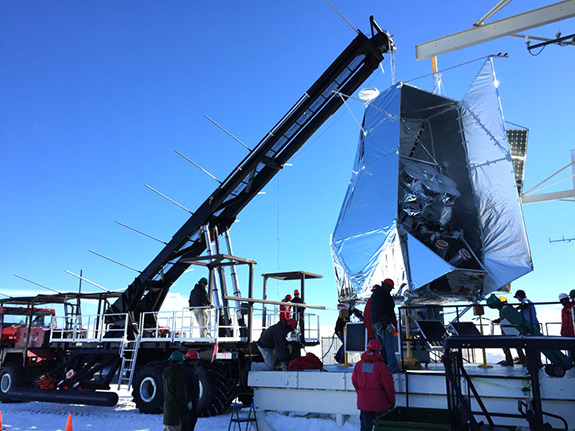
Preparing for liftoff.
Credit: Zigmund Kermish, Department of Physics, Princeton University
Recovering SPIDER depends on where it lands, which could be near the launch site, or somewhere on the ice shelf that requires a trek on skis or by tractor to haul the instrument back. The researchers must be gone by mid-February before the onset of the severe Antarctic winter in March.
SPIDER, a stratospheric spacecraft, was constructed primarily in Princeton’s Jadwin Hall.
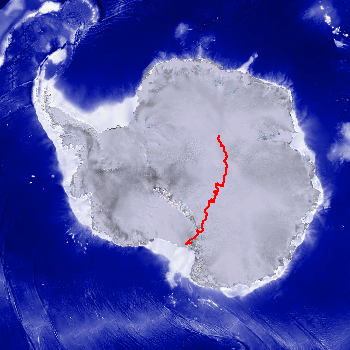
Tracking of SPIDER is underway.
Credit: Columbia Scientific Balloon Facility
SPIDER is funded largely by a grant from NASA, the David and Lucile Packard Foundation, as well as the National Science Foundation, the Columbia Scientific Balloon Facility, the Natural Sciences and Engineering Research Council of Canada, and the Canadian Space Agency.
NOTE:
Watch the launch here:
https://www.youtube.com/watch?v=yaYqKqeBuHo
Updates from the SPIDER team are posted to Princeton’s SPIDER blog at:
The instrument can be tracked on the Columbia Scientific Balloon Facility’s website at:
 Posted in
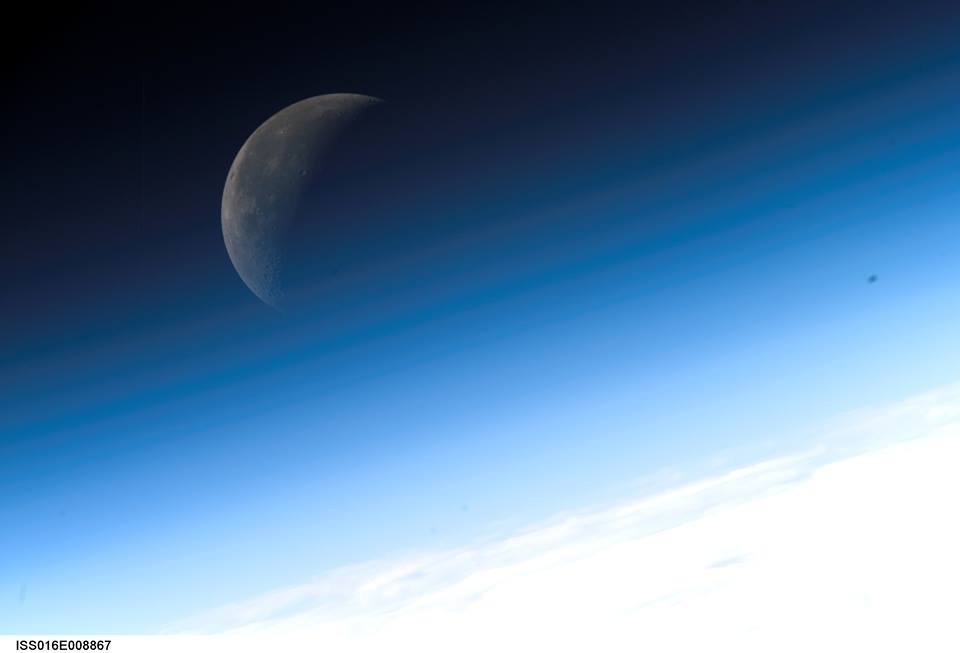
Earth’s Moon seen from the International Space Station – ready for mining or not?
Credit: NASA

Up close contact! Scene from Earth vs. the Flying Saucers circa 1956.
Credit: Columbia Pictures
In a December 29 tweet from the Central Intelligence Agency (CIA), word is that their #1 most read on their #Bestof2014 list: “Reports of unusual activity in the skies in the ‘50s? It was us.”
An attached document from 1998 is titled The CIA and the U-2 Program, 1954-1974, a document prepared by the CIA’s history staff within the Center for the Study of Intelligence (see below for link).
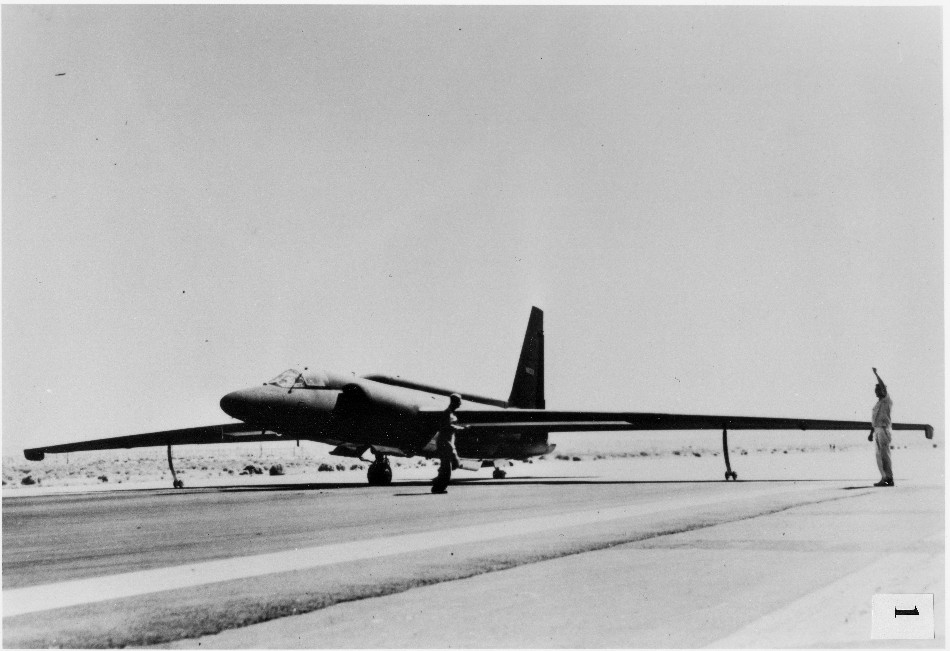
High-flying U-2 spy plane stirred up UFO reports.
Courtesy: National Security Archive
That paper notes that “high altitude testing of the U-2 soon led to an unexpected side effect – a tremendous increase in reports of unidentified flying objects (UFOs).”
Specifically, in the mid-1950’s, most commercial airliners flew at altitudes between 10,000 and 20,000 feet. But once U-2s started flying at much higher altitudes – above 60,000 feet—“air traffic controllers began receiving increasing numbers of UFO reports,” the report explains.
Airline pilots also wrote letters to the Air Force Unit at Wright Air Development Command in Dayton, a group charged with investigating the UFO phenomena.
“This, in turn, led to the Air Force’s Operation BLUE BOOK. Based at Wright-Patterson, the operation collected all reports of UFO sightings.”
BLUE BOOK officials regularly called on the CIA to help investigators eliminate the majority of the UFO reports, “although they could not reveal to the letter writers the true cause of the UFO sightings.”
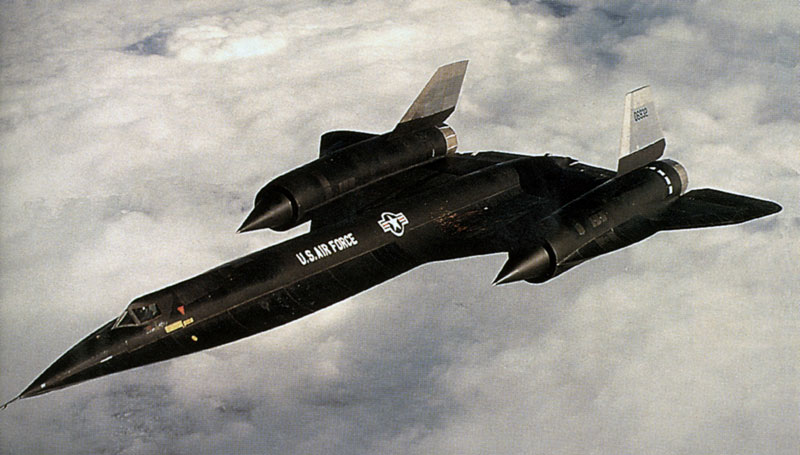
A-12 aircraft, one of several types of vehicles developed under the OXCART program.
Credit: CIA
To read the full CIA document, go to:
BTW: There’s a fascinating account of the use of Area 51 by the CIA, the U.S. Air Force and others, using that infamous area to test super-secret aircraft.

Dwight Jon Zimmerman is the author of Area 51: The Graphic History of America’s Most Secret Military Installation, published by Zenith Press. Zimmerman and artist Greg Scott have put together an informative account, available at:
http://www.qbookshop.com/products/210843/9780760346648/Area-51.html

After releasing a test return capsule, the service module is headed for Moon orbit after loitering at Earth-Moon L2.
Credit: China Space Website
Chinese space controllers are placing into Moon orbit the service module used for the country’s circumlunar test flight last November.
Slated to return to the Moon’s orbit mid-month, the service module has departed a temporary position at the Earth-Moon second Lagrange Point (L2).
According to the State-run Xinhua news agency: “It was the first time for a Chinese spacecraft to reach the L2 point, and the service module completed three circles around the point, expanding probe missions,” said Zhao Wenbo, vice director of China’s State Administration of Science, Technology and Industry for National Defense (SASTIND).
As of Monday, the service module was over 276,000 miles (445,000 kilometers) away from Earth and roughly 35,418 miles (57,000 kilometers) from the Moon.
According to ground controllers, the service module contains support systems used for spacecraft operations and they reportedly are operating smoothly.
Earlier reports noted that a camera system is onboard the service module, designed to assist in identifying future landing spots for the Chang’e 5 mission that will return lunar samples back to Earth in the 2017 time frame.
The service module now en route to the Moon was separated from a test lunar orbiter return capsule on Nov. 1, with that capsule returning to Earth under parachute after successfully making a round-trip to the Moon during an eight-day mission.

Credit: Shut Up Infinity
Shoot For the Moon is a short film depicting a homeless astronaut as he sets out for the Moon – armed with nothing more than a travel case, some bottle rockets, but carrying a cargo of ambition.
At the close of the film, these words: “If we choose to support the explorers, the innovators, the dreamers, we might find the stars closer than we think.”
The short film about space exploration comes from Shut Up Infinity that produces narrative-driven British comedy “with a focus on the absurd, science, the universe and the farce that is human existence,” according to their website.

Credit: Shut Up Infinity
The director and writer of Shoot For the Moon is Chris Wickett, based in London. He taps the talent of Gemma Hurley as a writer and producer. Andrew Rodger is the director of photography.
To view this distinctive film, go to:

China’s Yutu lunar rover took this image of Change’3 lander.
Credit: NAOC/Chinese Academy of Sciences
China’s Moon exploration community has been saluting the anniversary of its Chang’e 3 lunar lander that touched down on December 14, 2013.
Chang’e 3 became the first spacecraft to make a soft touchdown on the Moon since the Soviet Union’s Luna 24 sample return mission in 1976. The instrument-carrying lander deployed the Yutu rover that carried out a suite of scientific measurements.
An impressive set of images from China’s Chang’e 3 mission to the Moon is available here:
http://moon.bao.ac.cn/multimedia/img2dce3.jsp
The site is supported by the Science and Applications Center for Moon and Deepspace Exploration and the National Astronomical Observatories of China (NAOC).

China’s Chang’e 3 mission to the Moon yielded survey images of the lunar terrain.
Credit: NAOC/Chinese Academy of Sciences
NASA chief Charles Bolden lead a delegation and visited NAOC in mid-November with discussion topics that included possible collaboration on future Moon, deep space exploration and the planetary sciences, according to NAOC.
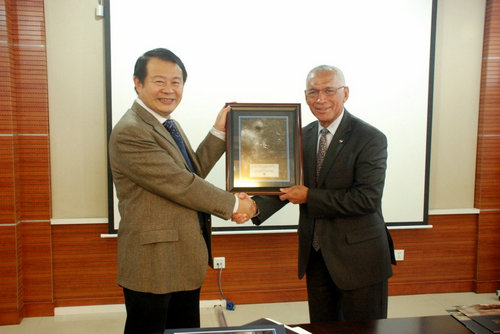
Director of NAOC, Prof. Yan Jun and NASA Administrator, Charles Bolden.
Credit: NAOC
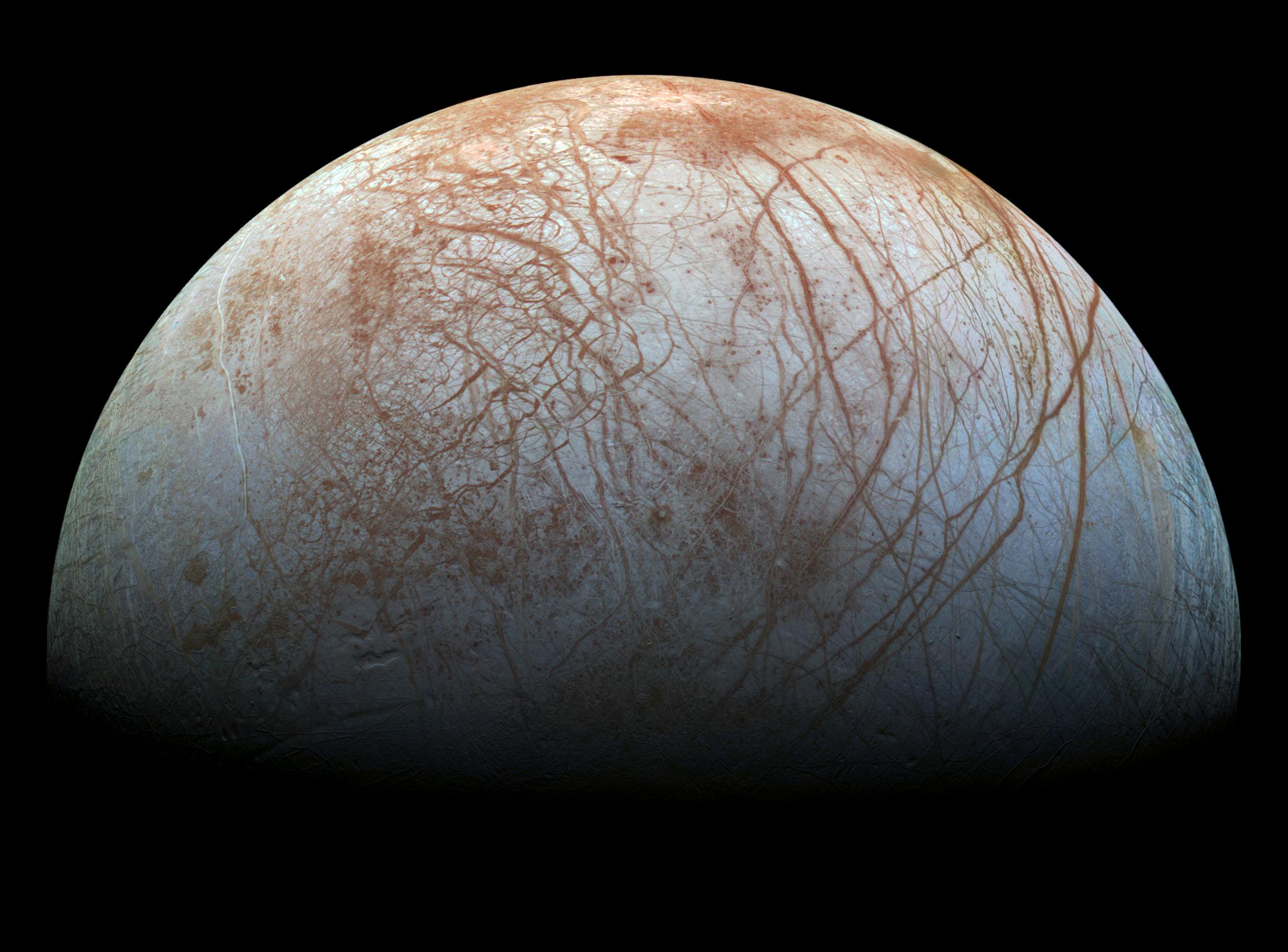
Jupiter’s icy moon Europa displays many signs of activity, including its fractured crust and a dearth of impact craters. Scientists continue to hunt for confirmation of plume activity.
Image Credit: NASA/JPL-Caltech/SETI Institute
Billions of dollars have been spent on the Red Planet Mars to divine whether that world is an extraterrestrial address for past and/or present life. The question of life on Mars is still breathing today as it was decades ago.
Meanwhile, the search for life beyond Earth quest is turning to yet another destination: One of Jupiter’s many moons, Europa.
Current Europa missions are under study focused on answering the question “Is Europa habitable?”
For one, the potential presence of water plumes on the satellite could present an opportunity to pursue the question of whether or not that moon is capable of supporting life.

Artist’s conception of water vapor plume erupting from the icy surface of Europa, a moon of Jupiter, based on data from the Hubble Space Telescope.
Credit: NASA/ESA/K. Retherford/SWRI
Fresh look
On the other hand, a fresh look at data collected by NASA’s Cassini spacecraft during its 2001 flyby of Jupiter shows that Europa’s tenuous atmosphere is even thinner than previously thought.
Furthermore, the Cassini data also suggests that the thin, hot gas around the moon does not show evidence of plume activity occurring at the time of the flyby. The new research provides a snapshot of Europa’s state of activity at that time, and suggests that if there is plume activity, it is likely intermittent.
So answering the question of life on Europa is far more challenging because measurements currently possible may provide only “ambiguous results” from a mission that either orbits or flies by Europa at relatively high velocity.
Next month, NASA’s Planetary Science Division is convening a workshop at NASA Ames Research Center to consider strategies to investigate Europa’s putative plumes for evidence of life.
“Europa is a complex, amazing world, and understanding it is challenging given the limited observations we have,” said Curt Niebur, Outer Planets program scientist at NASA Headquarters in Washington, D.C.
Scientists are currently using the NASA Hubble Space Telescope to conduct an extensive six-month long survey looking for plume activity, and the space agency is also studying various possible Europa missions for future exploration.

Credit: NASA
Fareed Zakaria is the host of CNN’s Global Public Square (GPS).
“Americans used to understand moonshots inspire us, but also power America’s future: My take on this week’s special,” Zakaria notes in a recent tweet.
The GPS special airing called “Moonshots” on Sunday, January 4 at 10 a.m. and 1 p.m. U.S. Eastern Time on CNN.
A CNN opinion column was adapted from Moonshots and expresses Zakaria’s personal views.

Credit:Fareed Zakaria
Titled “Reagan’s big lesson for America,” Zakaria contends:
— Ambitious scientific projects are worth pursuing
— Federal funding for research and development is barely keeping up with inflation
— Funding basic science research didn’t use to be a partisan issue
— Today’s politicians should follow Ronald Reagan’s advice and invest in future
Go to:
http://us.cnn.com/2014/12/26/opinion/zakaria-moonshots-technology/index.html?hpt=hp_t3
Also, check out this video:
Fareed interviews NASA Administrator Charles Bolden on NASA’s plans to send a human mission to Mars in the 2030s. Why do it?
Go to:
http://www.msn.com/en-us/news/video/gps-moonshots-sending-astronauts-to-mars/vp-BBh7ww5
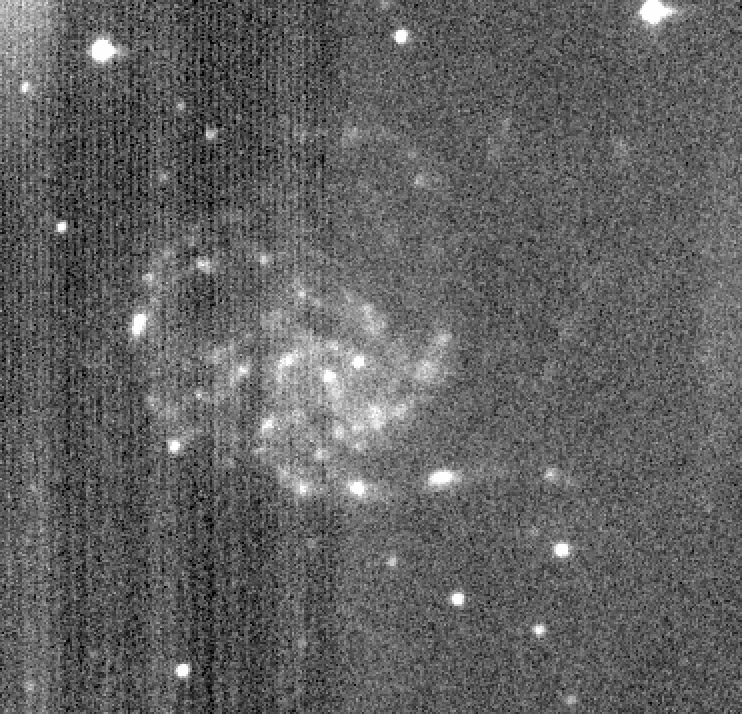
Image taken by China’s Chang’e 3 Moon lander: M101 Spiral.
lmage Credit: NAOC & International Lunar Observatory Association; University of Hawaii Hilo; Canada France Hawaii Telescope.
China’s Chang’e-3 lunar lander remains operational, in evidence by a newly distributed image taken by the spacecraft from the Moon’s surface.
According to the informative Lunar Enterprise Daily, the Chinese lander made the first observation of a galaxy from its landing site: M101 Spiral. [SEE NOTE BELOW]
The lander’s Lunar Ultraviolet Telescope (LUT) made the observation on December 2.
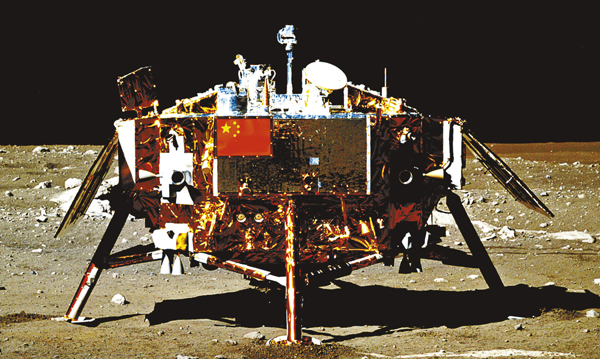
China’s Chang’e 3 Moon lander, imaged by Yutu lunar rover.
Credit: NAOC
The Moon-based telescope image is to be “refined further” by the National Astronomical Observatories of China (NAOC) in Beijing.
The work has been done in collaboration with the International Lunar Observatory Association – an interglobal enterprise incorporated in Hawaii – and the University of Hawaii at Hilo, and the Canada-France-Hawaii Telescope Lunar Astronomy Team on Hawai`i Island.
China scored its first robotic lunar landing in mid-December 2013. The large lander deployed the Yutu lunar rover.
NOTE: According to Walter Kiefer of the Lunar and Planetary Institute:
“The Chang’e 3 image is not the first galaxy imaged from the Moon. During the Apollo 16 mission in 1972, astronauts John Young and Charlie Duke operated the Far UV Camera/Spectrograph from the lunar surface. One of the astronomical targets that they imaged was the Large Magellanic Cloud, which is a satellite galaxy to our Milky Way Galaxy. According to the Apollo 16 Preliminary Science Report, the imagery of the Large Magellanic Cloud revealed evidence of active star formation regions.”

Credit: Virgin Galactic
Eager to take to space? Here are some encouraging words.
A new story from me up on Space.com:
http://www.space.com/28133-commercial-spaceflight-health-requirements.html

