Archive for the ‘Space News’ Category
 Author:
  July 28th, 2025
X-37B (OTV-8) military space plane being readied for flight.
Image credit: U.S. Air Force/U.S. Space Force
The U.S. Space Force is slated to launch the eighth X-37B robotic space plane mission next month.
According to a statement from the Secretary of the Air Force Public Affairs, the X-37B Orbital Test Vehicle (OTV-8) will be lofted on Aug. 21 from Kennedy Space Center, Florida.
A SpaceX Falcon 9 rocket will launch the vehicle, designated US Space Force-36 (USSF-36).
Seemingly more open to discuss what the uncrewed space plane will do during its mission, the statement explains that onboard the winged vehicle will be several next-generation technologies.
These include laser communications and the highest performing quantum inertial sensor ever tested in space, according to the statement. “Mission partners include the Air Force Research Lab and the Defense Innovation Unit, respectively.”
Data transport speeds
Mission 8 will focus on improving the resilience, efficiency and security of U.S. space based communications architectures “by conducting laser communications demonstrations involving proliferated commercial satellite networks in low Earth orbit.”

X-37B space plane. Image credit: Boeing/Inside Outer Space screengrab
“OTV-8’s laser communications demonstration will mark an important step in the U.S. Space Force’s ability to leverage proliferated space networks as part of a diversified and redundant space architectures,” says Chief of Space Operations General Chance Saltzman stated. “In so doing, it will strengthen the resilience, reliability, adaptability and data transport speeds of our satellite communications architecture.”
More secure transmissions
In the Air Force release, it is pointed out that laser communications are integral to the future of space communications as the shorter wavelength of infrared light increases the amount of data that can be sent with each transmission.
“Additionally, they are more secure than traditional radio frequency transmissions owing to the more targeted nature of laser beams. The use of proliferated relay networks enhances the resilience of U.S. space architectures by ensuring that they contain no single point of failure,” the statement adds.

Image credit: Boeing
Quantum inertial sensor
The OTV-8 mission will also demonstrate the world’s highest performing quantum inertial sensor ever used in space.
“This demonstration will inform accurate unaided navigation in space by detecting rotation and acceleration of atoms without reliance on satellite networks like traditional GPS. This technology is useful for navigation in GPS-denied environments and consequently will enhance the navigational resilience of U.S. spacecraft in the face of current and emerging threats,” the statement notes.
“As quantum inertial sensors would be useful for navigation in cislunar space, they additionally promise to push the technological frontiers of long-distance space travel and exploration.”
Flight roster
Here’s a listing of previous flights of the space plane:
OTV-1: launched on April 22, 2010 and landed on December 3, 2010, spending over 224 days on orbit.
OTV-2: launched on March 5, 2011 and landed on June 16, 2012, spending over 468 days on orbit.
OTV-3: launched on December 11, 2012 and landed on October 17, 2014, spending over 674 days on-orbit.
OTV-4: launched on May 20, 2015 and landed on May 7, 2015, spending nearly 718 days on-orbit.
OTV-5: launched on September 7, 2017 and landed on October 27, 2019, spending nearly 780 days on-orbit.
OTV-6: launched on May 17, 2020 and landed on November 12, 2022, circling Earth for 908 days.
OTV-7: lofted on December 28, 2023 and touched down on March 7, 2025, circling Earth for 434 days.

X-37B Air Force space plane.
Credit: Boeing/Inside Outer Space Screengrab
 Posted in

Image credit: Roscosmos
Russia is prepping for an August 20 launch of a biosatellite from the Baikonur Cosmodrome atop a Soyuz-2.1b rocket.
The craft is considered a “Noah’s Ark” of space, carrying 75 mice, more than 1,000 fruit flies, cell cultures, microorganisms and plant seeds.
The Bion-M No. 2 will reportedly be lofted into a nearly circular orbit at an inclination of roughly 97 degrees, a pole-to-pole orbit, remaining in space for 30 days.
That orbit will increase the level of cosmic radiation by at least an order of magnitude compared to that on the Bion-M No. 1 spacecraft launched back in April 2013, flying for 30 days.
Radiation data
According to the Institute of Medical and Biological Problems, Bion-M No. 2 is flying to obtain data, such as:
— Data on effects of microgravity on radiation susceptibility, therefore on radiation damageability of living beings in the environment of real deep space flight under exposure to increased doses of space radiation of wide spectrum
— general data applicable to development of adjusted requirements to the medical support of future space flights
— data on biological outcomes of space effects applicable to the general Earth medicine.

Technicians work on the Bion-M No. 2 mission.
Image credit: Roscosmos
Moon simulants
Also onboard is a payload tied to future exploration of the Moon.
The Vernadsky Institute of Geochemistry and Analytical Chemistry teamed with the Institute of Medical and Biological Problems to produce a container holding 16 test tubes. The vials hold lunar simulants – dust and rocks — that mimic Moon topside materials found at high latitudes of the Moon.
To be exposed in radiation and vacuum for a month, the lunar simulants will be appraised after return to Earth as to their behavior in space, providing insight into Moon construction ideas.

Bion-M No. 1’s return to Earth.
Image credit: Institute of Medical and Biological Problems

NASA’s Mars rover Curiosity acquired this image, looking toward the upper slopes of Mount Sharp, using its Left Navigation Camera (Left Navcam) on July 20, 2025. Curiosity captured the image on Sol 4605, or Martian day 4,605 of the Mars Science Laboratory mission.
Image credit: NASA/JPL-Caltech
NASA’s Curiosity rover continues its exploration of the fractured boxwork terrain on the slopes of Mount Sharp, reports Deborah Padgett, an Operational Product Generation Subsystem (OPGS) task lead at NASA’s Jet Propulsion Laboratory.
“After a successful 5-meter drive (about 16 feet), our rover is resting in a hollow on its way to a boxwork ridge viewpoint,” Padgett notes. Over the July 19-20 weekend, Curiosity began an atmospheric observation with the Sample Analysis at Mars (SAM) instrument.

Curiosity Right B Navigation Camera image taken on Sol 4611, July 27, 2025.
Image credit: NASA/JPL-Caltech
Deep dip
“Because the SAM instrument is complex and powerful, it uses a great deal of energy when it operates, causing what we call a ‘deep dip’ in the battery charge level,” Padgett points out. “This means that we have to wait a bit after the SAM observations complete for the battery to recharge enough for Curiosity to observe its surroundings with other science instruments, or move its arm or wheels.”
For this reason, a recent plan did not include a drive, and contact science at this location will be done on the second sol of the plan for Sols 4607-4608.

Curiosity Right B Navigation Camera image taken on Sol 4611, July 27, 2025.
Image credit: NASA/JPL-Caltech
Cloud observations
On Sol 4607, Curiosity was to begin the day with SAM atmospheric composition activity, which will run for several hours.
“After it finishes, we will use the rover’s navigation camera to perform a cloud altitude observation, looking for cloud shadows on the upper reaches of Mount Sharp, and clouds drifting by overhead at the zenith,” Padgett adds. “Overnight, Curiosity’s battery will recharge, allowing us to perform a targeted science block on the morning of Sol 4608. This starts with Navcam observations of dust opacity across the floor of Gale Crater, then a measurement of dust in the air toward the Sun with Mastcam.”

Curiosity image taken on July 24, 2025, Sol 4609, by Left Navigation Camera B.
Image credit: NASA/JPL-Caltech
Disturbed ground
Curiosity then was to turn Mastcam toward the ridge ahead to obtain a 15×1 mosaic on target “Cueva De Los Vencejos Y Murcielagos (Cave of Swifts and Bats).”
“Afterwards, Mastcam will look back along Curiosity’s tracks, hoping to see freshly broken rocks and determine the texture of disturbed ground,” says Padgett.
Next, the rover’s Chemistry and Camera (ChemCam) was to use its laser spectrograph to zap a nodular rock pillar named for the famous high-altitude “Lake Titicaca” bordering Bolivia and Peru.
A second ChemCam observation with the Remote Micro Imager (RMI) telescopic camera was to study stratigraphy on the Mishe Mokwa butte with a 5×2 image mosaic. Mastcam will finish off this science block by looking at the pits left behind by the ChemCam laser on target “Lake Titicaca.”

This image was taken by Left Navigation Camera onboard NASA’s Mars rover Curiosity on Sol 4609, July 24, 2025.
Image credit: NASA/JPL-Caltech
Big mystery
Padgett in wrapping up the report adds that Curiosity’s arm was slated to reach out to brush the dust from the bedrock target “La Tranquita,” and then observe it with the Mars Hand Lens Imager (MAHLI) microscopic imager and the Alpha Particle X-Ray Spectrometer (APXS).
“MAHLI and APXS will also investigate plate-like rock formations at target “Aqua Dulce.” A third target with more complex rock structures dubbed “Paposo,” after a natural monument along the Pacific Coast of northern Chile, will be imaged only by MAHLI. The next morning will include another targeted science block. Curiosity will then drive away toward the next viewpoint in the boxwork terrain of Mars, Padgett concludes.
“A big mystery is why the ridges were hardened into these big patterns and why only here,” explains Curiosity’s project scientist, Ashwin Vasavada of NASA’s JPL. “As we drive on, we’ll be studying the ridges and mineral cements to make sure our idea of how they formed is on target.”

NASA’s Curiosity Mars rover has imaged part of the boxwork region the robot is exploring, perhaps formed by ancient groundwater.
Image credit: NASA/JPL-Caltech/MSSS

NASA 1976 Viking 2 lander image of the Mars Utopian Plain.
Credit: NASA/JPL-CalTech
The idea that modern Mars is entirely devoid of liquid water is being challenged by data gleaned from the 1970s NASA Viking 2 landing site.
These findings provide “a new perspective on the transient presence of liquid water on Mars, a key factor in assessing planetary habitability.”
That’s the view of Vincent Chevrier, an associate research professor at the University of Arkansas’ Center for Space and Planetary Sciences. His case for the existence of liquid brines on Mars was recently published in Nature Communications Earth and Environment.
Frost factoid
Chevrier’s research combined Viking 2 meteorological data and computer modeling.

Image credit: NASA/JPL-Caltech/E. Vandencbulek
“The confirmation that brines can form at the Viking 2 landing site during late winter — albeit for short periods — suggests that similar processes may occur in other frost-bearing regions, especially at mid-to-high latitudes” on the Red Planet, Chevrier’s paper – “Perchlorate brine formation from frost at the Viking 2 landing site” – states, “which could guide the planning of future astrobiological investigations.”
The new looksee into Viking 2 data could mean the planet might have supported life adapted to a much colder, drier planet.
NASA’s Viking 2 landed on Mars in 1976. “It was the only mission that clearly observed, identified and characterized frost on Mars,” Chevrier says in a University of Arkansas research posting.
However, frost on Mars tends to sublimate rapidly, transitioning from a solid to a gas quickly, without spending much time in a liquid state due to atmospheric conditions on the Red Planet.

Image credit: NASA/JPL-Caltech/AndreaLuck
Brief window
In sifting through the Viking 2 meteorological data, combined with data from the Mars Climate Database, Chevrier found there was a brief window in late winter and early spring when the conditions were right for the formation of brines.
That period of time spans one Mars month — roughly equivalent to two Earth months — where the conditions were generally ideal in the early morning and late afternoon.
“Robotic landers equipped with in situ hygrometers [to gauge moisture content in air] and chemical sensors could target these seasonal windows to directly detect brine formation and constrain the timescales over which these liquids persist,” Chevrier’s research paper notes.

Mosaic of the Valles Marineris hemisphere of Mars composed of 102 Viking Orbiter images of this huge feature on the Red Planet.
Credit: NASA, USGS, Viking Project
Brine stability
The research scientist adds that the methodology applied — using Viking 2 meteorological data to reconstruct brine stability – could be extended to datasets from more recent missions, such as NASA’s InSight lander and the Curiosity rover, to appraise whether similar processes occur in different climatic settings.
“Moreover, this work underscores the need for future landers to deploy high-resolution imaging and thermal mapping to track frost evolution in real-time,” Chevrier concludes.
To access the research paper – “Perchlorate brine formation from frost at the Viking 2 landing site” – go to:
https://www.nature.com/articles/s43247-025-02411-0

Earth has been on the receiving end of several incoming objects resulting in human injury.
Credit: NASA
Recent NASA budget uncertainties could make one space agency endeavor up for grabs – defending the Earth from incoming space rocks.
That effort undertaken by NASA for many years could be given to the Space Force that has a far-larger new budget.
On the other hand, is a Space Force takeover of taking out space rocks that are cross-haired on our home planet warranted and what might be the ramifications?
For details, go to my new Space.com story — “NASA or the Space Force: Who should protect Earth from dangerous asteroids?” – at:
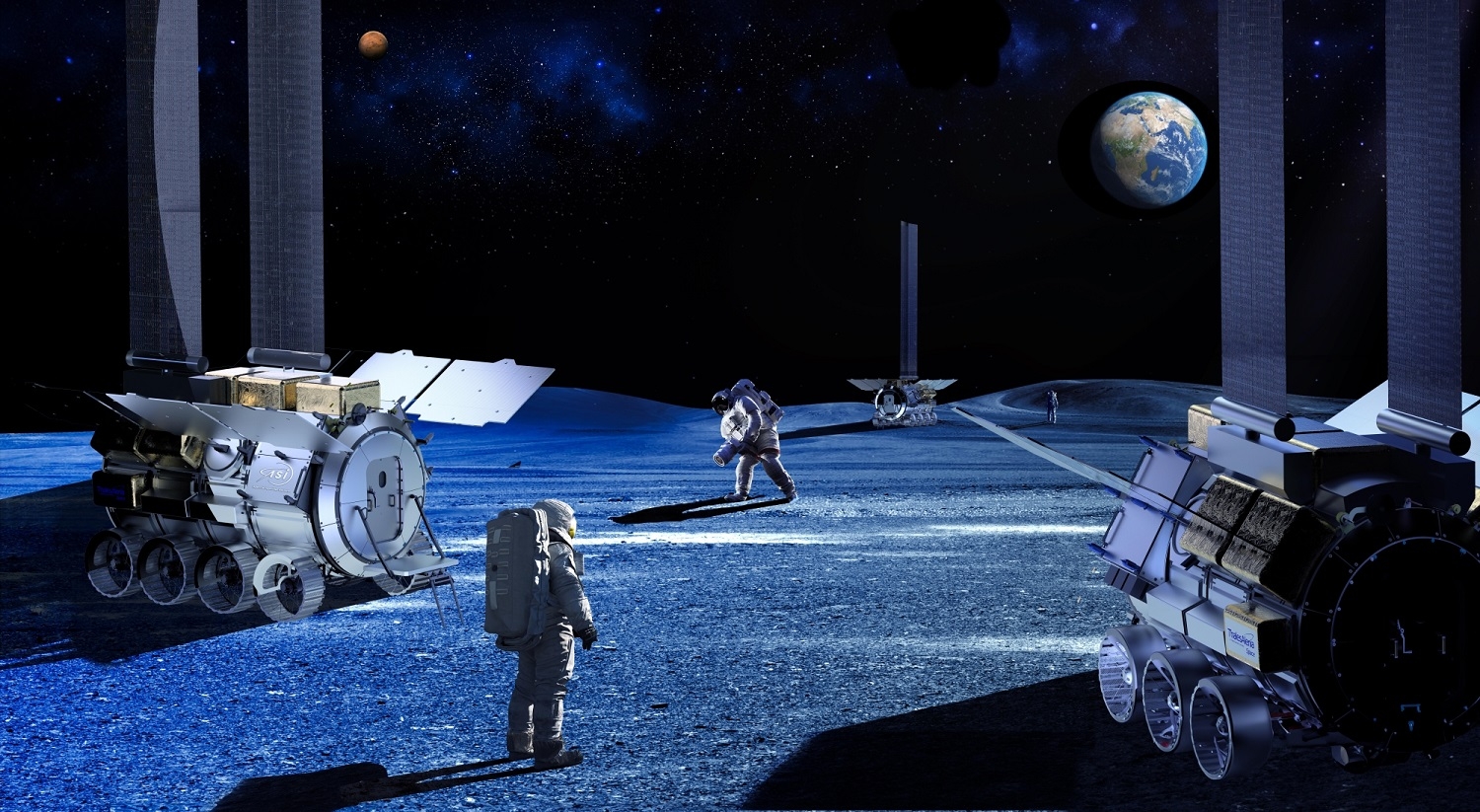
Image credit: Thales Alenia Space
A Multi-Purpose Habitation module for the Moon is under development.
Thales Alenia Space has inked a contract with the Italian Space Agency (ASI) to develop the human outpost on the lunar surface.
The Multi-Purpose Habitation (MPH) module is leveraging Italy’s technological and manufacturing capabilities.
MPH is planned for launch from NASA’s Kennedy Space Center in 2033 and will be the “first ever dedicated habitation asset” on the lunar surface as part of the Artemis Accords between NASA and ASI for bilateral Moon cooperation, according to a Thales Alenia Space press statement.
With/without astronauts
The MPH module can host astronauts, support surface operations, enable scientific research experiments – with and without the presence of a human crew.
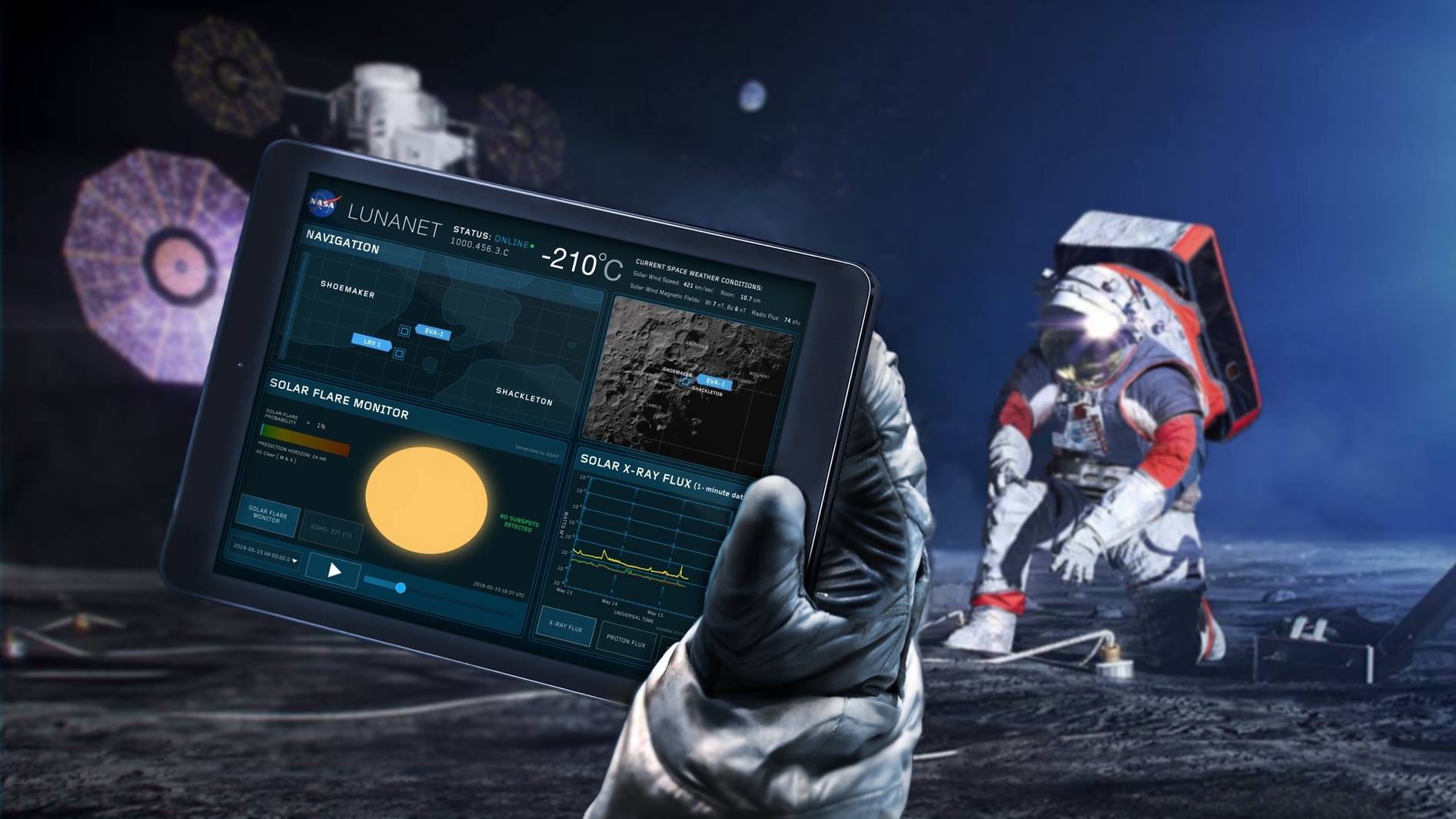
Image credit: NASA/Reese Patillo
The MPH will have the capability to move on the lunar surface.
Early work on MPH will focus on enabling technologies to thwart the cruel environmental conditions on the Moon, the wild thermal variations, as well as omnipresent lunar dust, high radiation levels, micrometeoroid impacts, and the effects of reduced lunar gravity, adds the statement from Thales Alenia Space.
Thales Alenia Space supports industrial sites located in France, Italy, Spain, Belgium, United Kingdom, Germany, Switzerland, Poland, and Luxembourg.
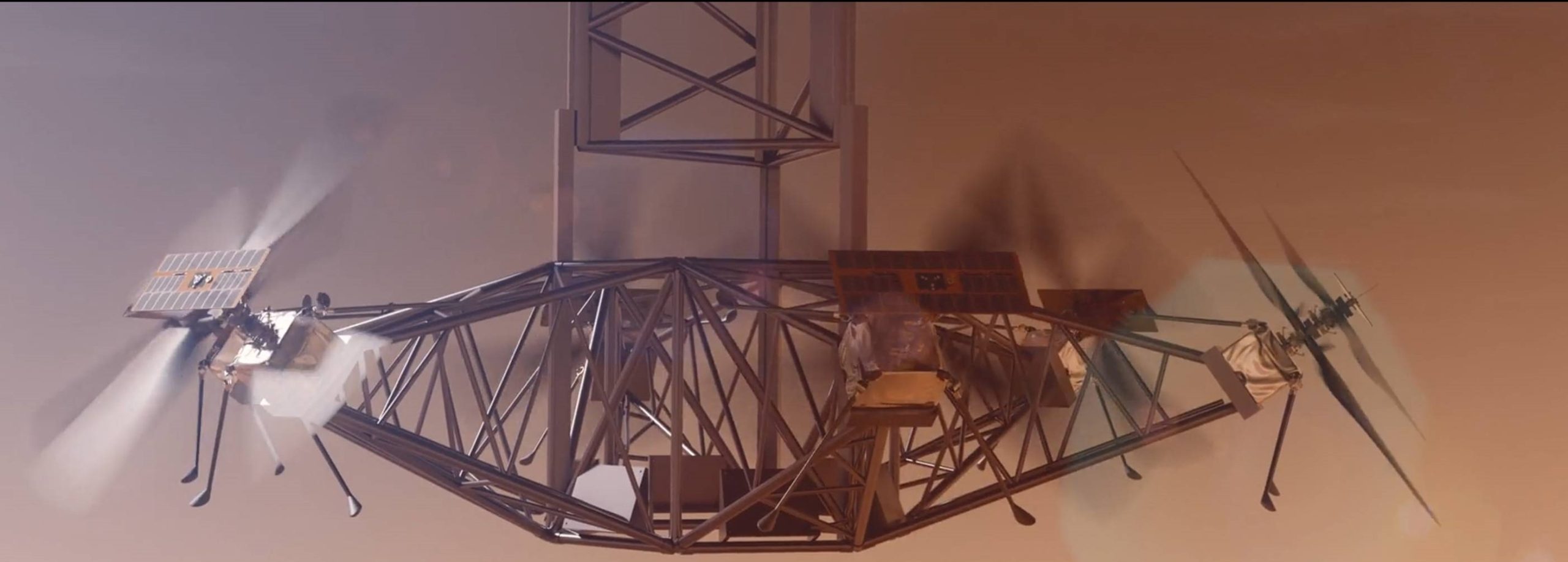
Image credit: AeroVironment/Inside Outer Space screengrab
A new Mars exploration idea seemingly would drop a hornet’s nest of helicopters from high above the Red Planet.
The idea comes from the world of unmanned aerial vehicle (UAV) concepts here on Earth, but fashioned for Mars.
AeroVironment of Arlington, Virginia and NASA’s Jet Propulsion Laboratory today aired Skyfall, a potential concept for next-generation Mars Helicopters to help pave the way for human landing on Mars through autonomous aerial exploration.

NASA’s Ingenuity Mars Helicopter is seen with Jezero Crater in an image captured by the Mastcam-Z instrument aboard the space agency’s Perseverance Mars rover.
Image credit: NASA/JPL-Caltech/ASU/MSSS
For more information, go to my new Space.com story – “Wild new ‘Skyfall’ Mars mission would drop 6 scout helicopters onto the Red Planet from the air” – at:

Image credit: Air University Press
The transformation of Earth’s Moon to an industrial site is fully explored in a new publication.
The Commercial Lunar Economy Field Guide: a vision for industry on the Moon in the next decade is fully explored in the document, issued by Air University Press, stationed at Maxwell Air Force Base, Alabama.
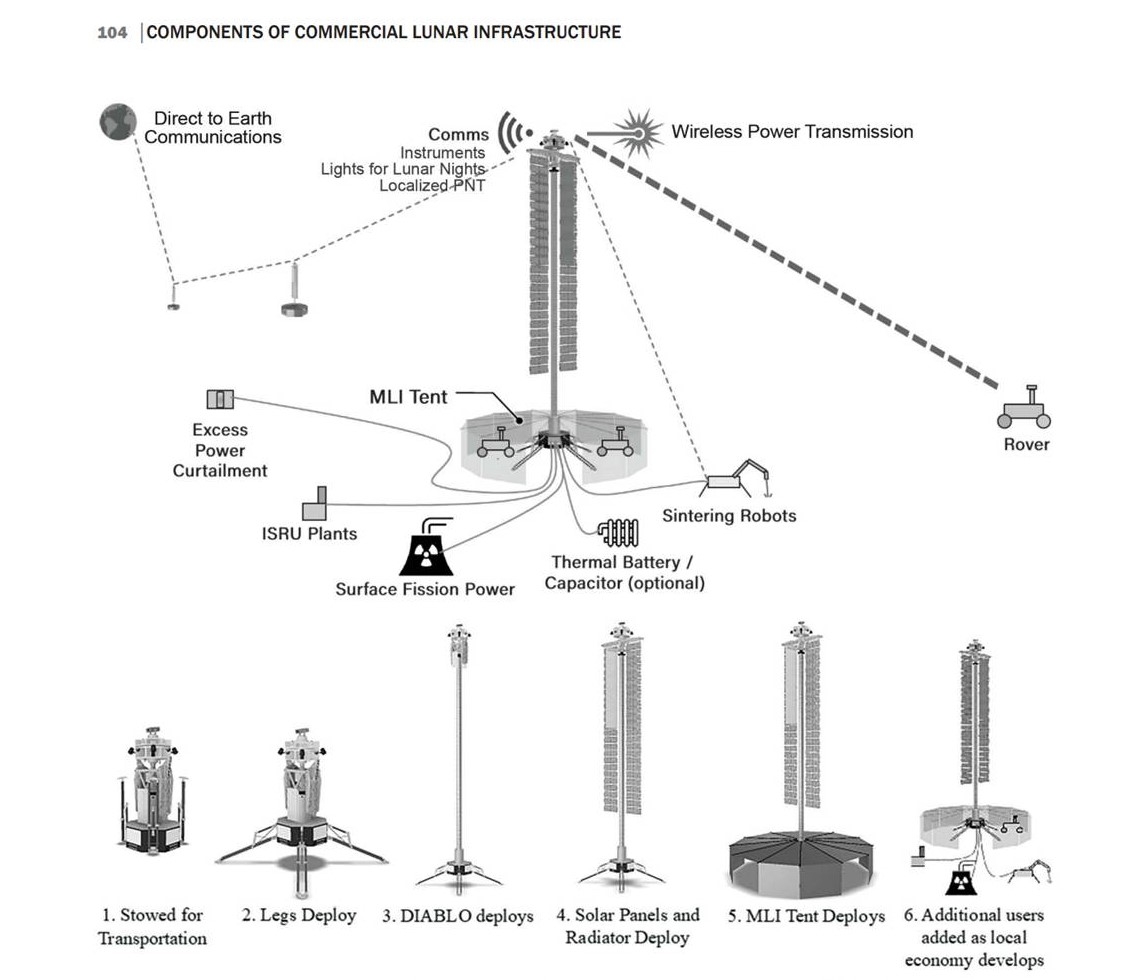
Image credit: Honeybee Robotics
“At the heart of the Moon’s transformation from a distant dream to a vibrant marketplace is the Defense Advanced Research Projects Agency’s groundbreaking LunA-10 initiative, a ten-year blueprint aimed at forging scalable lunar infrastructure and unlocking the economic potential of our closest celestial neighbor,” explains this invaluable resource.
“This book serves as your guide to foundational technology concepts that will help move the nation into future off-Earth economic development.”
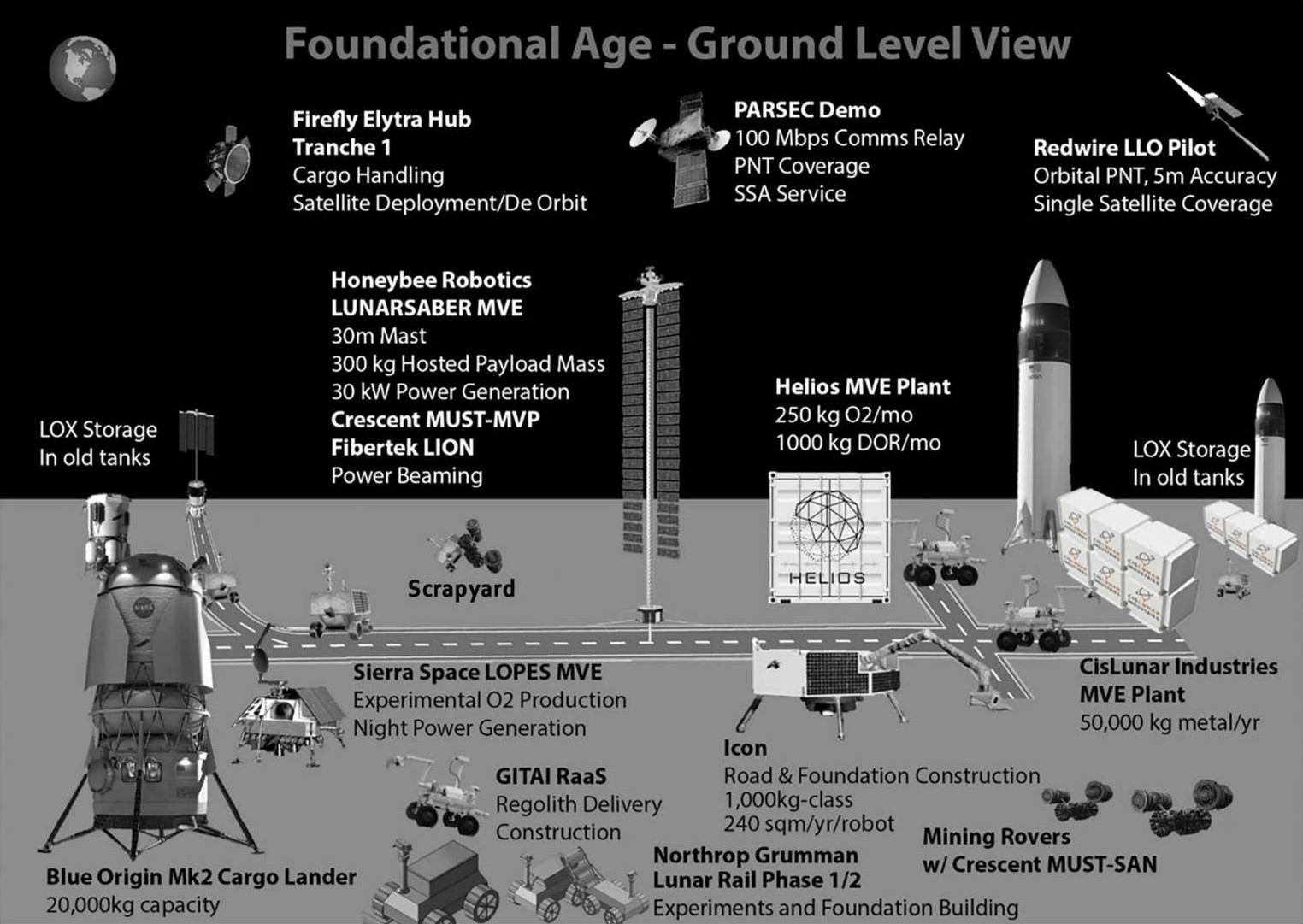
Image credit: Air University Press
Edited by Michael Nayak, a DARPA program manager, The Commercial Lunar Economy Field Guide offers an unprecedented technical, economic, and commercial roadmap for a literal “Moon makeover.”
The book’s 23 chapters fleshes out the foundational technology concepts sparked by early individual scientific efforts to create self-sufficient, monetizable services for future lunar buyers and sellers; and sustain off-Earth economic vibrancy.
For free access to this invaluable document, go to:

Image credit: Air University Press

Image credit: Buzz Aldrin via X
Pope Leo XIV marked the 56th anniversary of man’s arrival on the Moon with a visit to the Vatican astronomical observatory in Castel Gandolfo and a call to Apollo 11 astronaut Buzz Aldrin on July 20.
At the astronomical observatory located in the Pontifical Villas, Leo took a close look at the telescopes that have supported celestial exploration from a faith-based perspective for decades.
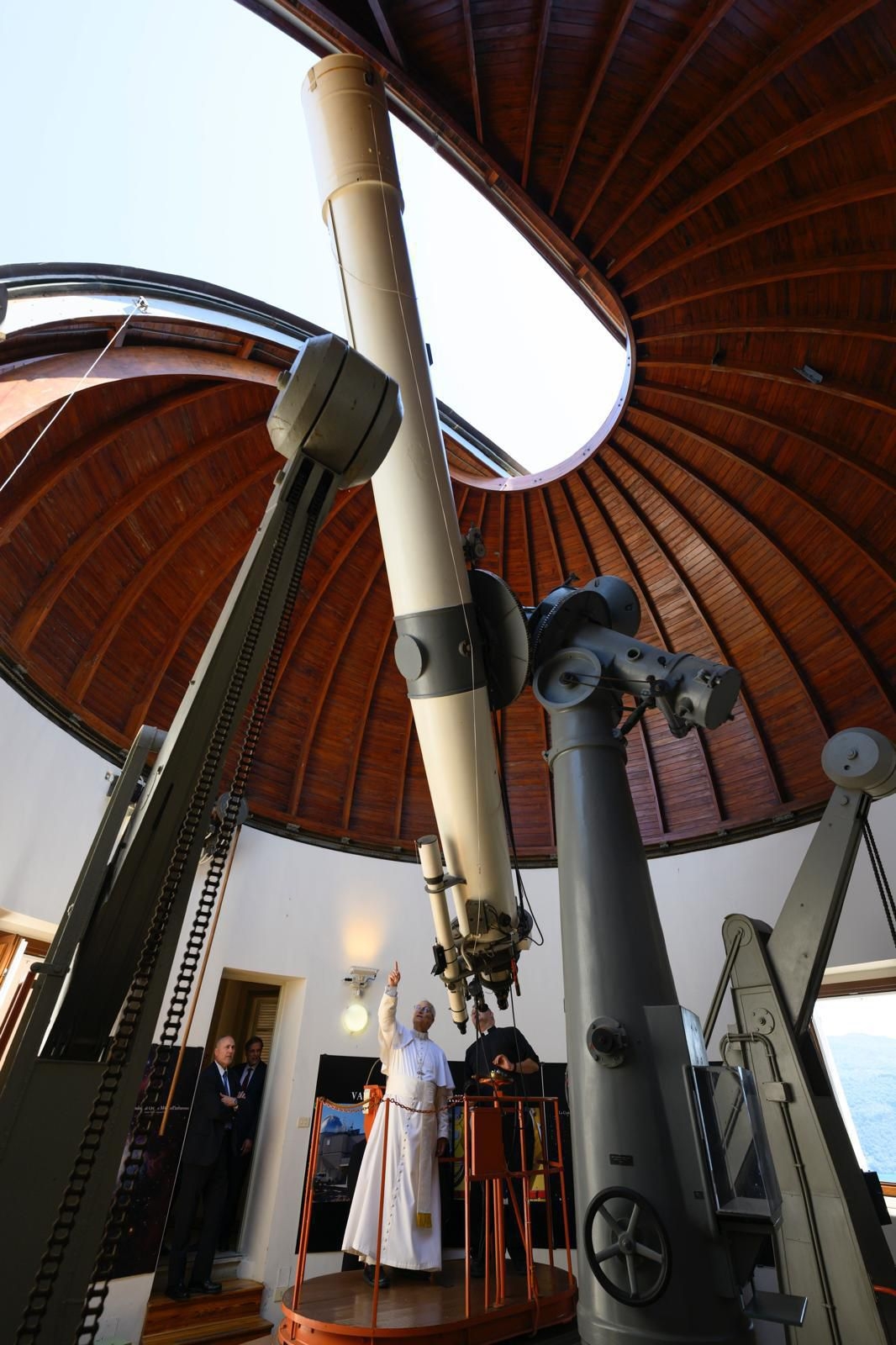
Image credit: The Holy See Press Office
“This evening, 56 years after the Apollo 11 moon landing, I spoke with the astronaut Buzz Aldrin. Together we shared the memory of a historic feat, a testimony to human ingenuity, and we reflected on the mystery and greatness of Creation,” Leo posted on X.
Mystery of Creation
Reports Buzz Aldrin on X: “Anca and I were grateful and touched to receive the highest blessing today, from His Holiness, Pope Leo XIV on the 56th Anniversary of the Apollo 11 moon landing. What an honor! We prayed for good health, long life, and prosperity for all humankind.”
According to the Vatican News, “with the words of Psalm 8, together they meditated on the mystery of Creation, its greatness and its fragility. Before the end of the phone call, the Pope blessed the astronaut, his family, and his collaborators.”

Apollo 11 moonwalkers, Neil Armstrong and Buzz Aldrin.
Credit: NASA
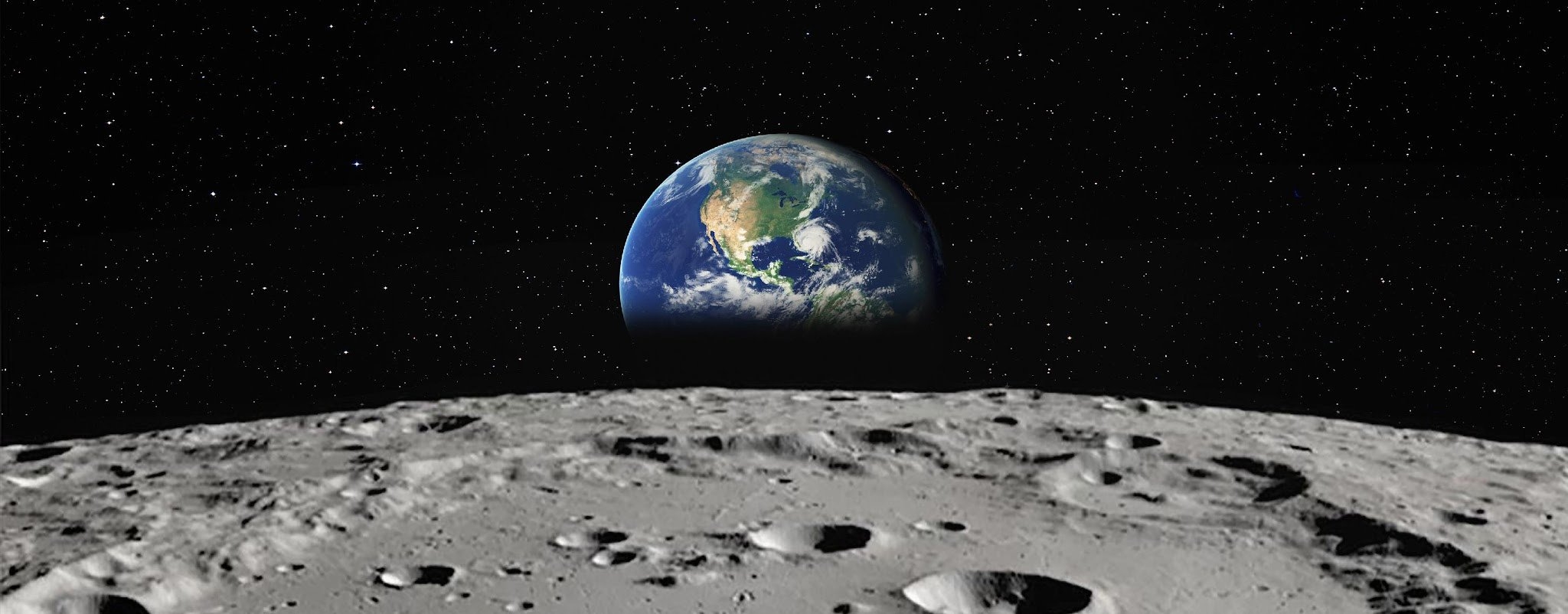
Image credit: Stand Up For Science
In response to the Trump administration’s dismantling cuts and devastating attacks on NASA programs and missions, the Stand Up For Science has published the “Voyager Declaration” – a statement to Interim NASA Administrator Sean Duffy.
This document constitutes a “Formal Dissent,” and raises a set of concerns, including “a permanent loss of capability to the United States both in space and on Earth” actions that will “jeopardize NASA’s core mission.”
For detailed information, go to:

