Archive for the ‘Space News’ Category
 Author:
  June 26th, 2015
Left to right: Moderator – Gil Rudawsky, Vice President, GroundFloor Media; Leonard David, Reporter – Inside Outer Space; Laura Keeney, Business Reporter – The Denver Post; Greg Avery, Reporter – Denver Business Journal; and Maya Rodriguez, TV Reporter – KUSA.
Photo credit: Barbara David
Colorado’s aerospace industry is growing and outperforming national economic trends.
Eight of the country’s major space contractors have a significant presence in Colorado and the state continually outperforms national averages in employment, salary, and education.
In 2014, Colorado ranked first in private aerospace employment in the U.S. and direct and indirect aerospace employment exceeded 160,000 workers in high wage jobs, with a payroll of close to $3.2 billion.
Digital landscape
Given those factoids, the Colorado Space Business Roundtable held on Thursday, June 25 a media-centric Aerospace Exchange and Media panel discussion. The event took place at The Denver Press Club.
This reporter was honored to take part in the conversation.
Panel members focused on how best aerospace firms can build relationships with journalists across Colorado, the challenges facing media in the evolving digital landscape, and understanding what journalists find most interesting to cover.
Special thanks to Edgar Johansson, President of the Colorado Space Business Roundtable; Citizens for Space Exploration; Aerospace Exchange Sponsor, Braxton Science & Technology Group; and Event Chair, Krystal Scordo, Marketing Services Manager for Sierra Nevada Corporation’s Space Systems.
For more information on the Colorado Space Business Roundtable, go to:
 Posted in
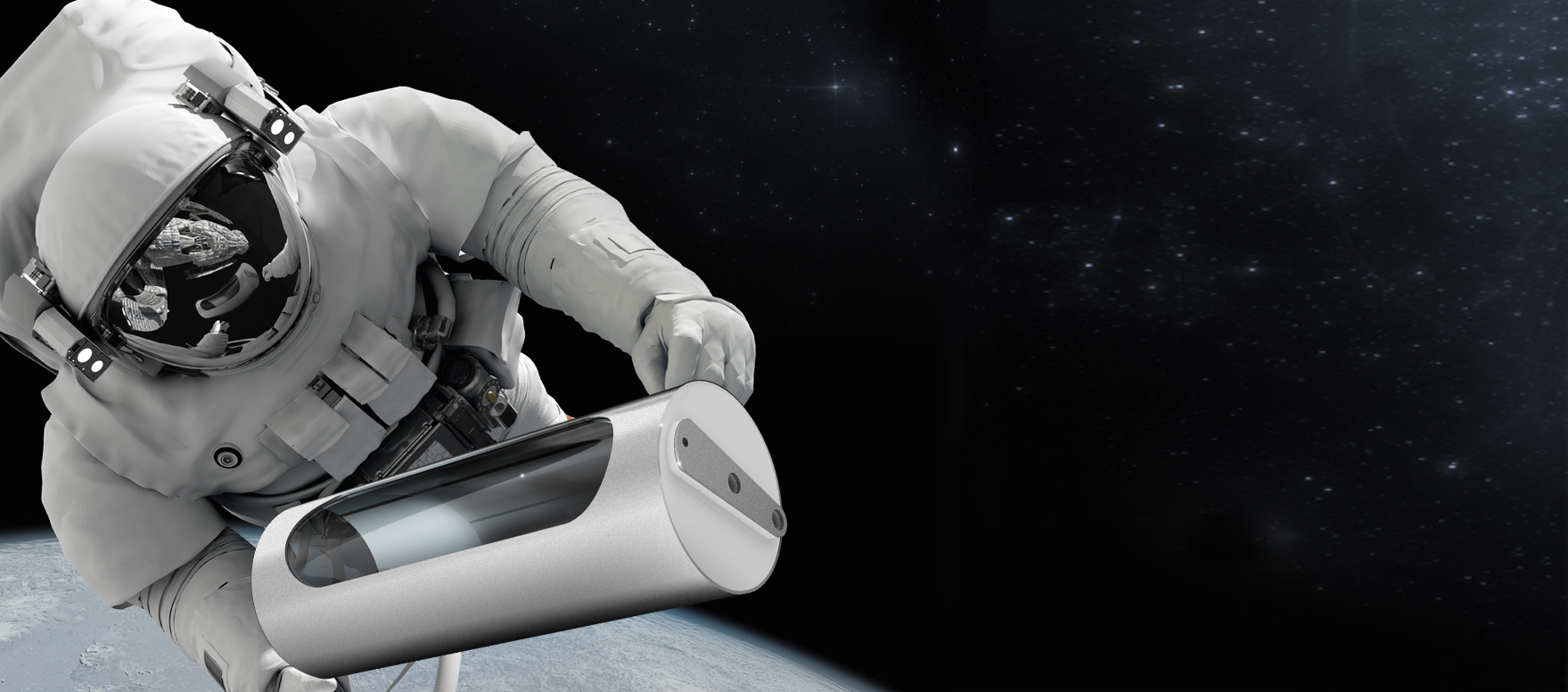
Credit: Orbital Systems
A design concept for future Mars missions has led to a system commercially suitable for Earthly water applications for non-potable use.
The “Shower of the Future” offered by Orbital Systems, a Swedish clean tech start-up, shares the same water purification technology that NASA uses in space.
This technology was spurred by a cooperative effort of the Habitation and Exploration Missions and Systems Office at NASA’s Johnson Space Center (JSC), together with the School of Industrial Design at Lund University in Sweden.
Space certified
The Space Foundation’s international Space Certification program announced today that it has “space certified” the new technology.
“Products and services that display the Space Certification seal are guaranteed to have stemmed from, or been dramatically improved by, technologies originally developed for space exploration or to have significant impact in teaching people about the value of space utilization,” according to The Space Foundation, based in Colorado Springs, Colorado.
This technology — setting a higher standard for domestic water consumption — began as an academic joint project between Mehrdad Mahdjoubi, Orbital Systems’ CEO and Founder, and NASA JSC in Houston.
The team is supported by an advisory board that includes Larry Toups, a NASA systems engineer, as well as designer and professor Claus-Christian Eckhardt and Skype founder Niklas Zennström, who is also an investor in the company.

Credit: Orbital Systems
Precious resources
“It’s Rocket Science,” explains the company’s website. “Inspired by an academic collaboration project with NASA, our technology applies the same principles you live by in space; that Earthly resources are precious and must be used in the most efficient way possible.”
According to Orbital Systems: “We are facing a very interesting future as our technology is breaking grounds and changing the way we humans relate to domestic water consumption. We aim to replace the inefficient and costly structures of today, with a cleaner, cheaper and more sustainable solution. Domestic water consumption, whether it’s drinkable water to secure living conditions or heated water for hygienic purposes, is a key factor for our future well-being.”
FAQ
The company has assembled a “Frequently Asked Questions” list, starting off with: “What happens if I urinate in the Shower of the Future?”
To find out the answer and learn more about the “Shower of the Future,” go to:
and
Orbital Systems logo
Credit: Orbital Systems

Big bang theory: ESA’s Asteroid Impact Mission (AIM), a candidate mission due for launch in 2020.
Credit: ESA–ScienceOffice.org
They are mean and malicious – and could mess up your day here on Earth.
That said about asteroids, an upcoming “global day of awareness and education” is incoming on June 30 – the anniversary of the 1908 Tunguska impact in Siberia, the largest asteroid hit on Earth in recently recorded history.
The Tunguska incident shattered roughly 800 square miles of forest, the approximate size of a major metropolitan city today.
Tunguska is the only natural disaster that we know how to prevent through early detection, yet less than one percent of asteroids of this size have been detected.
Ready, AIM, fire!
Over the years, many ideas have been “floated” on how best to deal with a menacing asteroid that has Earth’s name on it.
For example, engineers recently began the preliminary design of the European Space Agency’s (ESA) Asteroid Impact Mission (AIM) concept.

The European Space Agency’s (ESA) Asteroid Impact Mission concept, currently under study, would be humanity’s first mission to a binary asteroid: the 2,624 feet (800 meter) diameter Didymos is accompanied by a 558 feet (170 meter) diameter secondary body.
Credit: ESA–ScienceOffice.org
That mission could involve some four different spacecraft. AIM is tasked to encounter and chart the Didymos double asteroid — the binary asteroid system of Didymos and its moon — and then witness it being struck by another spacecraft, returning data to help guide planetary defense strategies.
AIM workers are now busy at work sketching out details. The chosen concept will be presented to ESA’s Council of Ministers in November 2016 for possible approval.
Double trouble
If approved, the mission concept would then become an actual ESA mission. From there, it’s translating artwork and computer-aided design drawings into reality.
AIM must be in position before late 2022 when NASA’s Double Asteroid Redirection Test, or DART, is planned to crash into the asteroid’s moon for detailed before-and-after impact monitoring.
These observations will help determine how far the DART kinetic impactor has moved the rocky world.
The two missions together are components of an international collaboration on an asteroid-deflection demonstration mission called the Asteroid Impact & Deflection Assessment (AIDA).

Wake-up call: The 2013 incoming space rock over Chelyabinsk, Russia.
Credit: Alex Alishevskikh
Global cooperation
“We are delighted that ESA has completed their AIM Pre-Phase-A study, and decided to officially move on to Phase-A concept definition,” says Lindley Johnson, NASA’s Near-Earth Object Program Executive.
“Our own DART mission is scheduled to initiate its Phase-A study in a few months,” Johnson adds.
The bottom line is that such a combined mission of AIM and DART would make the joint AIDA mission “the world’s first attempt to demonstrate that international space agencies working together could protect the Earth from an asteroid impact,” ESA points out.

Tunguska: The largest recent impact event.
Credit: Leonid Kulik Expedition
Tune-in time
While policy, technology and international cooperation work their respective ways, tune into Asteroid Day at the California Academy of Sciences.
To be held on June 30, the event includes asteroid experts and astronauts speaking at the event, as well as individuals signing the 100X Declaration showing their support for increased public education and early detection of asteroids.
It will be Webcast at: www.asteroidday.org
The hosts are the B612 Foundation and California Academy of Sciences.
Also highlighted on Asteroid Day are additional videos from more than 50 worldwide events.
Follow Asteroid Day on Twitter: #AsteroidDay @AsteroidDay and Facebook:

Credit: U.S. Air Force
Just in time for the December release of the next installment of Star Wars.
A new center is being eyed by the U.S. Pentagon and the intelligence community to hone tactics in the event of war in orbit.
That’s the news from reporters at Defense One, based on coverage of Deputy Defense Secretary Robert Work’s keynote address at a GEOINT symposium, an annual intelligence conference sponsored by the United States Geospatial Intelligence Foundation.

Credit: Walt Disney Company
The ops center is to be up and running within six months, making use of data from satellites belonging to all government agencies, Defense One reports.
The new center would back up the military’s Joint Space Operations Center at Vandenberg Air Force Base, California.
The center would assist the military and the government to coordinate preparations for and responses to any attack, Defense One explains. This new facility is tied to a $5 billion boost for space security in the Department of Defense 2016 budget request.
Resources
To read the Defense One story, “Pentagon Rushing to Open Space-War Center to Counter China, Russia,” go to:
http://www.defenseone.com/management/2015/06/pentagon-preparing-war-space-russia-china/116101/
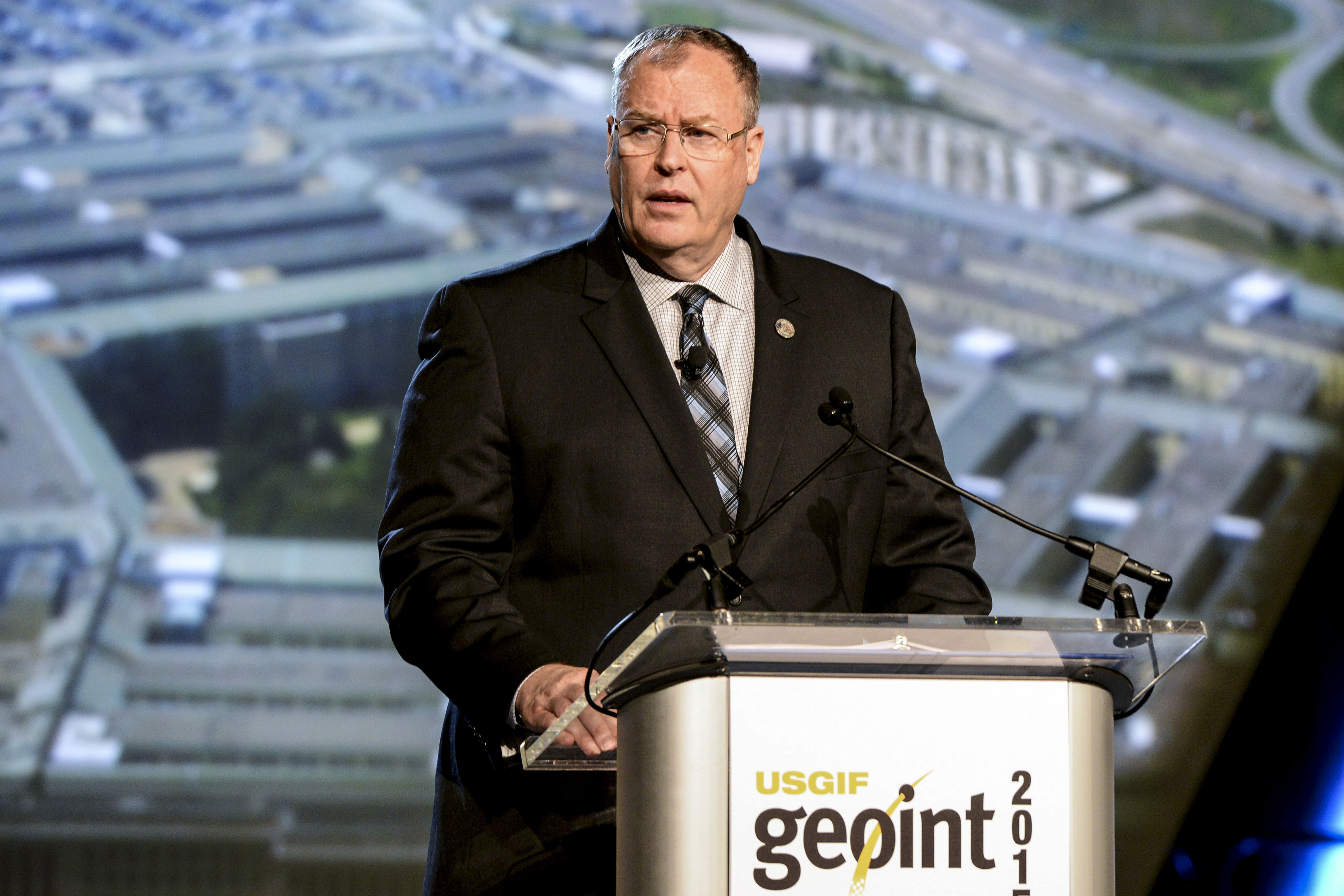
Deputy Secretary of Defense Bob Work delivers remarks at the U.S. Geospatial Intelligence Foundation (GEOINT 2015) Symposium, Walter E. Washington Convention Center on June 23 , 2015.
Credit: DoD/U.S. Army Sgt First Class Clydell Kinchen
To view a video of Deputy Defense Secretary Robert Work’s keynote talk this week at the GEOINT symposium, go to:
https://vimeo.com/131619967#at=0

Long distance interstellar sailing.
Credit: UCSB/Adrian Mann
It is tagged as Directed Energy Propulsion for Interstellar exploratioN (DEEP-IN), work that will also chart laser driver elements that require technology development.
Thanks to a grant from the NASA Innovative Advanced Concepts (NIAC) program, research is underway to consider using directed energy propulsion for interstellar travel.
Directed energy propulsion
The work is underway by the University of California Santa Barbara’s (UCSB) Experimental Cosmology Group. They are focused on use of lasers as a means to power a spacecraft. A laser-powered, wafer-thin spacecraft, the UCSB group suggests, could be capable of reaching Alpha Centauri in 20 years.
Explains UCSB physics professor Philip Lubin: “We propose a system that will allow us to take the first step toward interstellar exploration using directed energy propulsion combined with miniature probes.”

UCSB physics professor Philip Lubin is leading a “stellar team” that’s locked in on laser propulsion to travel interstellar distances.
Credit: UCSB
Lubin adds that, along with recent work on wafer-scale photonics, “we can now envision combining these technologies to enable a realistic approach to sending probes far outside our solar system.”
Ultimate goal
The UCSB group’s “ultimate goal” is to send small probes to supplement the current long-range remote sensing done by orbital and ground-based telescopes.
The NIAC funding is enabling Lubin’s team to create a more complete roadmap for building a fully functional wafer-scale spacecraft complete with power, laser communications and controllable photon thrusters.
UCSB’s DEEP-IN design keeps the main propulsion driver back in Earth’s orbit (or nearby) – yet still capable of propelling highly integrated spacecraft to speeds vastly higher than anything scientists can currently achieve.
No intrinsic speed limit
According to a UCSB press advisory, the laser photon driver would use photon pressure in the form of streamed energy to power the spacecraft as it travels away from Earth.
With no intrinsic speed limit, this technology allows for the relativistic speeds necessary for interstellar flight, according to the study team.
“We’ve had to radically rethink our strategy in order not to give up our dreams of reaching the stars,” Lubin added. “DEEP-IN posits a technological path forward that, while not simple, is within our technological reach to begin.”
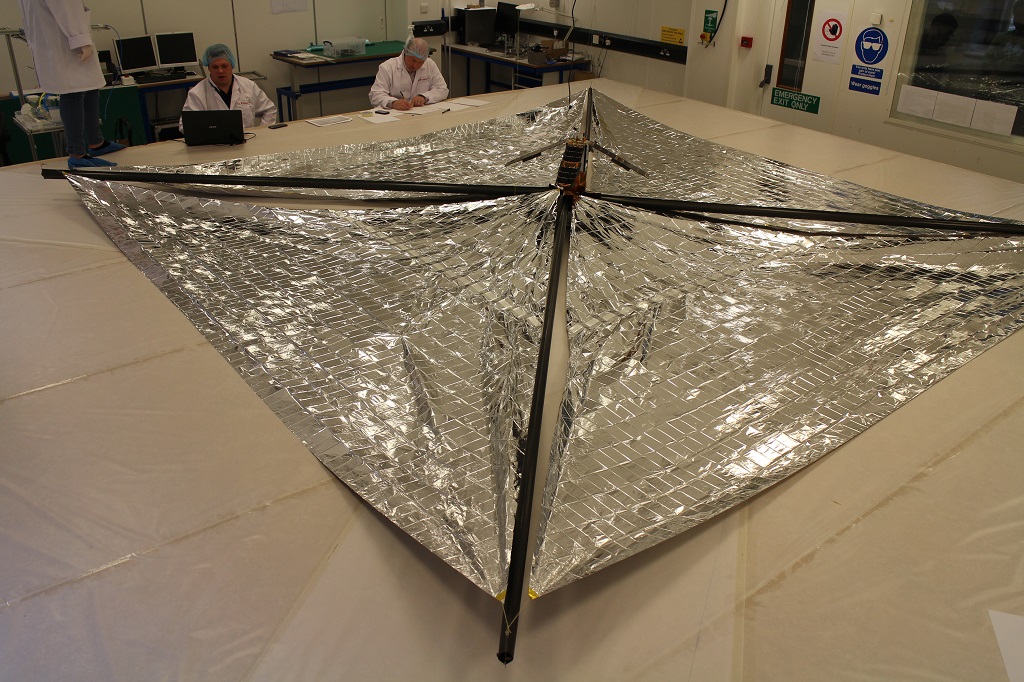
Credit: Surrey Space Centre
Following in the wake of the Planetary Society’s LightSail-A mission, another solar sail effort is being readied for a July departure.
Boxed up and delivered to India last month, the DeorbitSail mission is among a number of payloads to be rocketed into space from the Satish Dhawan Space Center, Sriharikota, India.
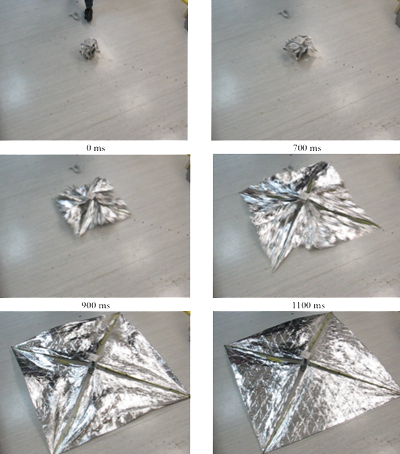
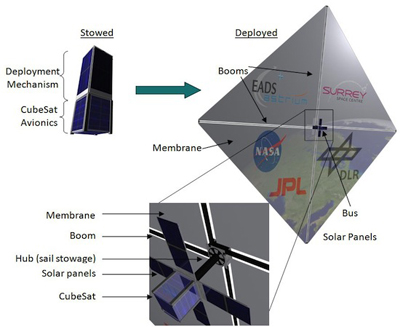
The DeorbitSail project is a collaboration to build a 3 unit (3U) CubeSat-sized satellite with a deployable sail that will demonstrate rapid deorbiting.
Credit: Surrey Space Centre
Leader of the project is the Surrey Space Centre at the University of Surrey in Guildford, United Kingdom.
Test of rapid deorbiting
DeorbitSail is a small satellite mission that will launch and deploy a roughly 13 foot by 13 foot (four-by-four-meters), four-quadrant sail to showcase rapid deorbiting.
The sail will be able to change the satellite’s orbit through drag and solar radiation pressure.
DeorbitSail will use atmospheric drag as its primary method of deorbitation, but the same design can be effective for solar sailing at higher altitudes.

Credit: Surrey Space Centre
Top level objectives
Top level objectives of the DeorbitSail Project are to:
— Provide research in the field of deorbiting
— Provide a demonstrated and verified design for deorbiting of satellites and debris
— Provide effective and efficient in-space propulsion technologies based on solar sails
Cooperative effort
As detailed by Surrey Space Centre, “Solar sailing” is a method of propulsion that uses the very small force exerted by sunlight to propel a spacecraft. This force, solar radiation pressure, is much smaller than the weight of the sail on the Earth’s surface, even though the sail material is thinner than human hair.
Credit: Surrey Space Centre
The DeorbitSail project is a cooperative effort between Surrey Space Centre (UK), Caltech (USA), DLR (Germany), EADS Astrium (France), Stellenbosch University (South Africa), University of Patras (Greece), Athena-SPU (Greece), Middle-Eastern Technical University (Turkey), Surrey Satellite Technology Limited (SSTL) (UK), and ISIS (Netherlands).
The project is funded by the European Commission’s Seventh Framework Program, FP7.

Credit: Surrey Space Centre
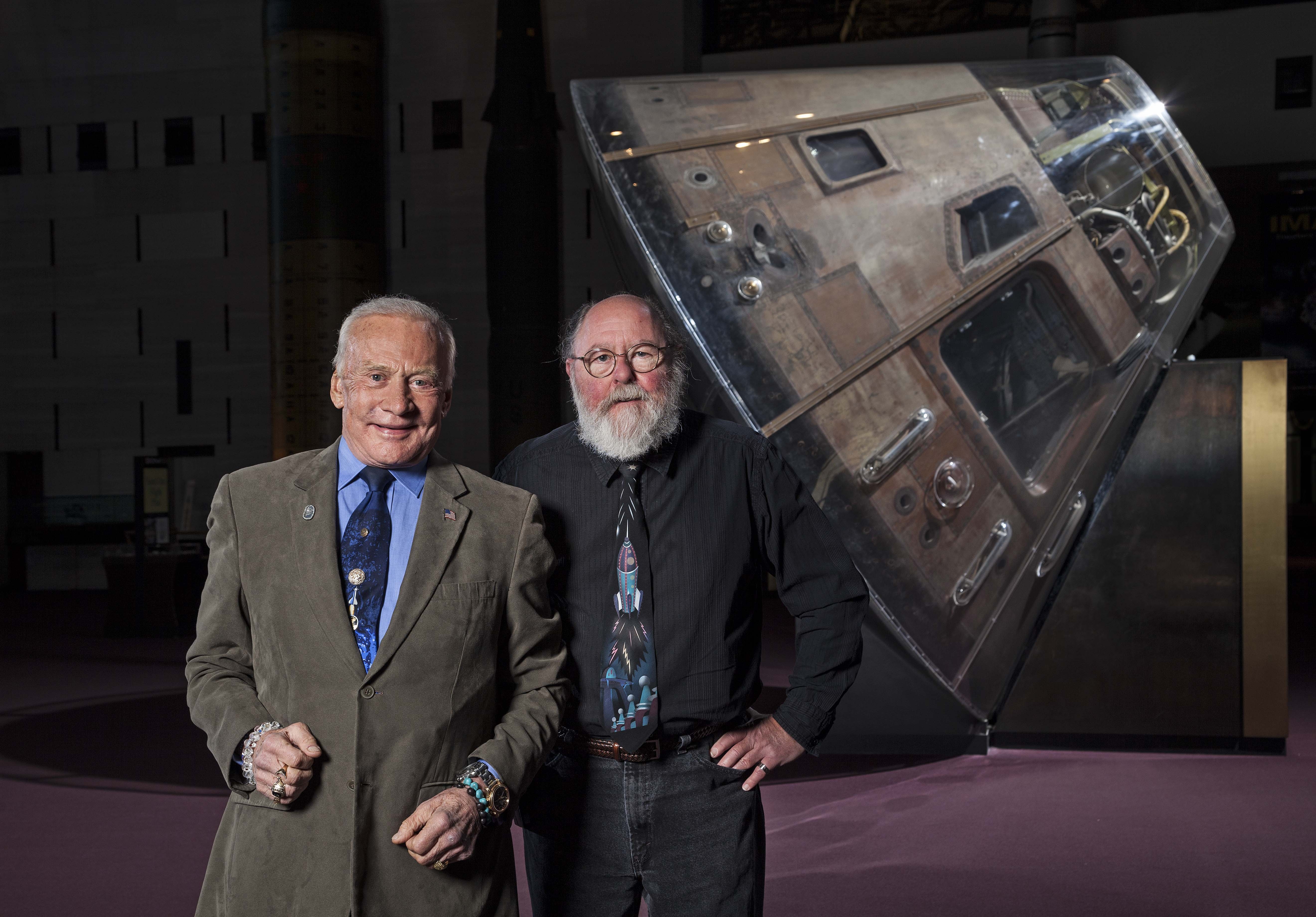
Buzz Aldrin and Leonard David with the Apollo 11 Command Module.
Credit Eric Long/NASM
For all you folks in the South Dakota environs – Rushmore Mall welcomes Apollo 11 Astronaut Buzz Aldrin and Leonard David.
I hope you’ll join us for a special update on our book: “Mission to Mars: My Vision for Space Exploration.”

Credit: National Geographic
The book is now in soft cover with a new essay on the future of space exploration. Books will be available for purchase during the event.
We will be visiting Rushmore Mall, on Saturday, July 11.
Aldrin and co-author Leonard David will host a question-answer session followed by a book signing from 11 a.m. – 2 p.m.
For more information, go to:
http://www.simon.com/mall/rushmore-mall/stream/rushmore-mall-welcomes-astronaut-buzz-aldrin-3438943
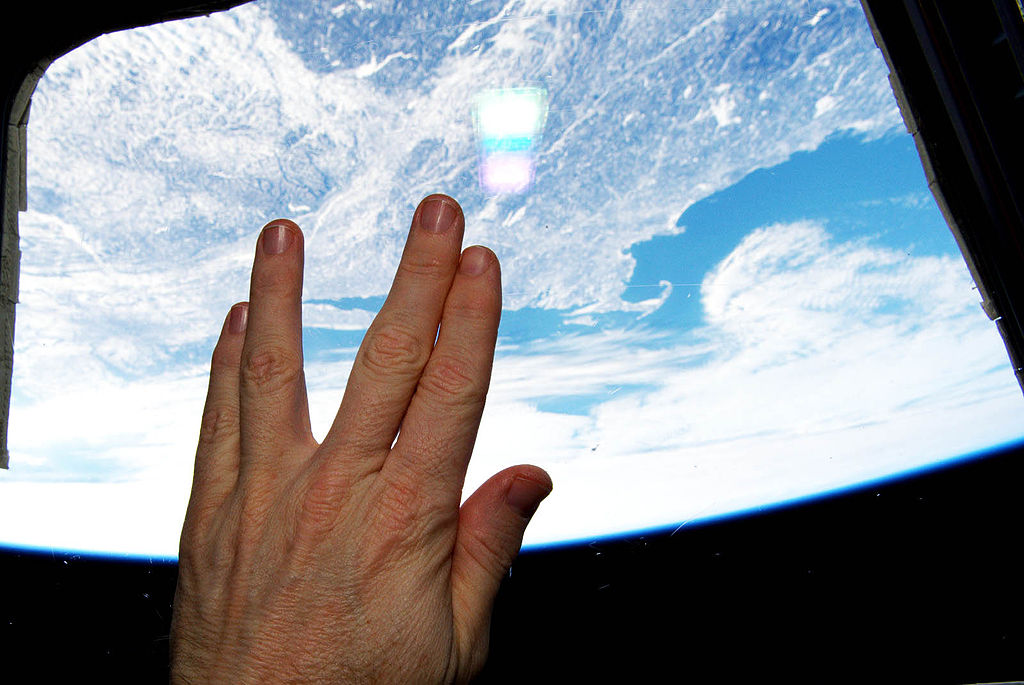
On February 28, 2015, NASA Astronaut Terry Virts took this picture of the Vulcan salute from the International Space Station as it flew above Leonard Nimoy’s hometown of Boston.
Credit: NASA
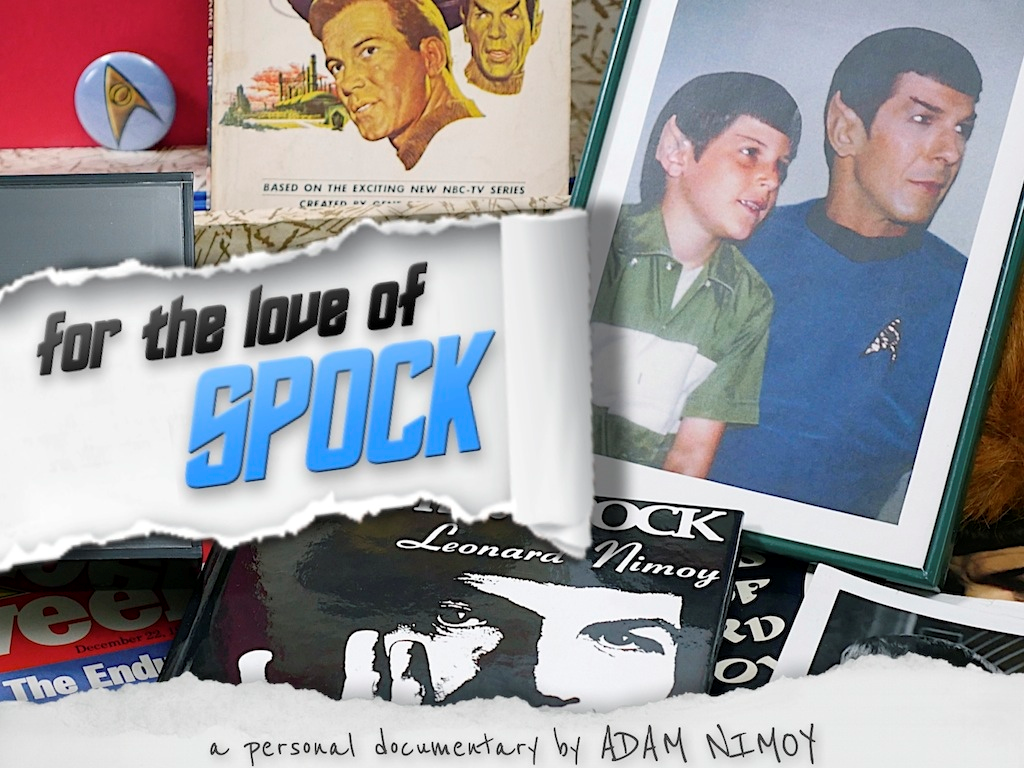
“For the Love of Spock” – a documentary film about Leonard Nimoy is under development by his son – Adam Nimoy.
A Kickstarter campaign has been established to help Adam Nimoy complete the project.
Adam Nimoy is an American television director.
“Last year, just before Thanksgiving, I approached my dad, Leonard Nimoy, about the possibility of working together on a film about Mr. Spock. I had skimmed through some of the books on the making of Star Trek and felt there was so much more to explore about the birth and evolution of Spock. And the timing seemed right, as the 50th anniversary of Star Trek: The Original Series was not that far away,” Adam Nimoy explains.
Credit: Adam Nimoy
Leonard Nimoy passed away earlier this year on February 27.
To take part in this Kickstarter campaign, view this video prepared by Adam Nimoy.
Go to:
https://www.kickstarter.com/projects/adamnimoy/for-the-love-of-spock-a-documentary-film
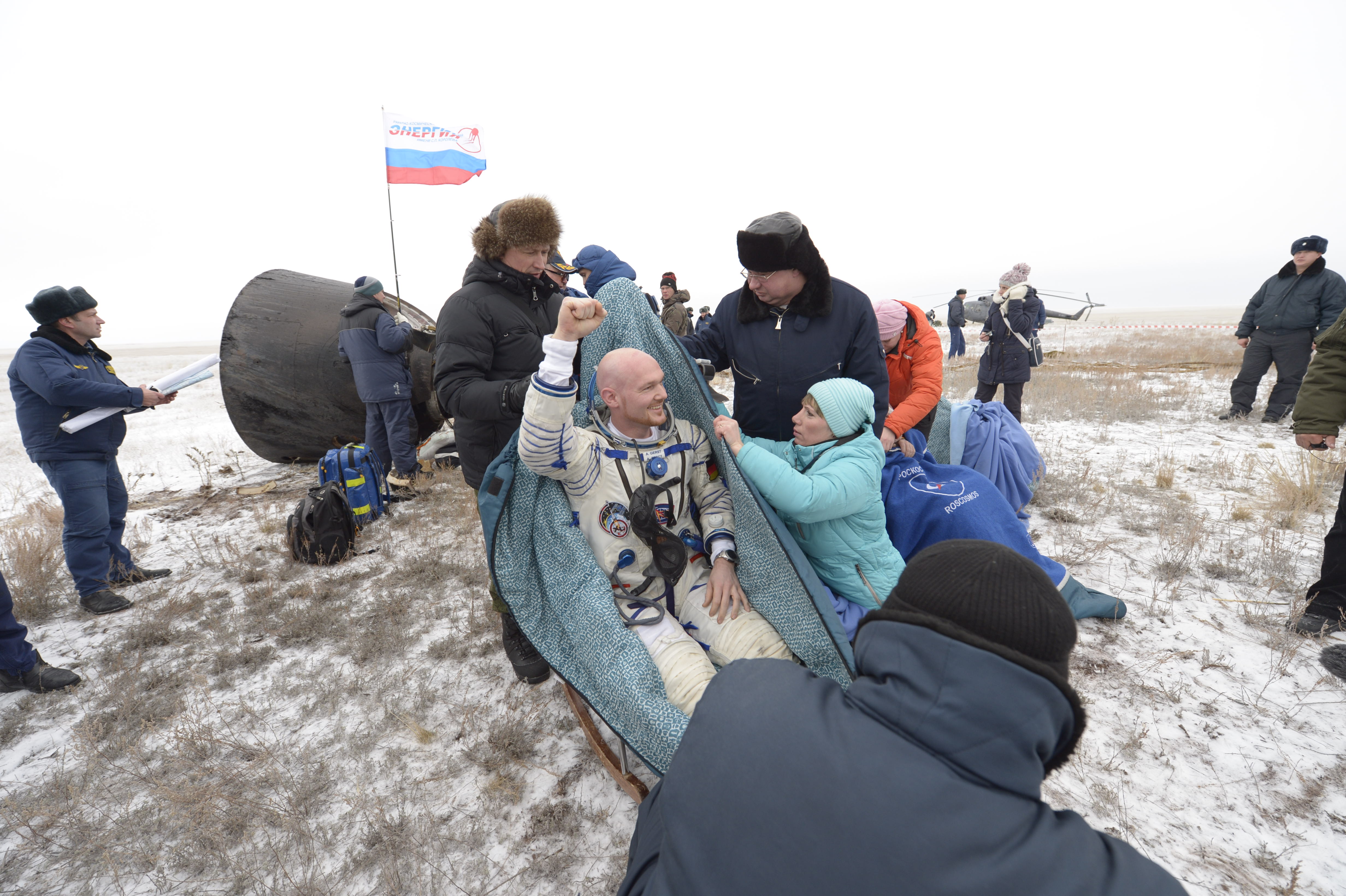
ESA astronaut Alexander Gerst, Russian commander Maxim Suraev and NASA astronaut Reid Wiseman returned to Earth on November 10, 2014, landing in the Kazakh steppe.
Their Soyuz return, landing was in the same Soyuz TMA-13M spacecraft that flew them to the International Space Station on May 28, 2014.
Credit: ESA–S. Corvaja, 2014
European Space Agency (ESA) astronaut, Alexander Gerst, video recorded an inside look at speeding back to Earth onboard a Russian Soyuz spacecraft.The last leg of the return to Earth from space is one of the trickiest and potentially most dangerous moments in the astronaut’s journey.
Alexander Gerst is Germany’s most high profile astronaut.
Between May and November 2014, Gerst spent six months on the ISS for ESA’s Blue Dot mission.
He became the third German to visit the ISS.
Check out this video “The Astronaut Academy: The ‘rollercoaster ride’ of reentry to Earth” made available by Euronews at:
https://www.youtube.com/watch?v=V5uYR6Zb8oM

Credit: Orbit Logic Incorporated
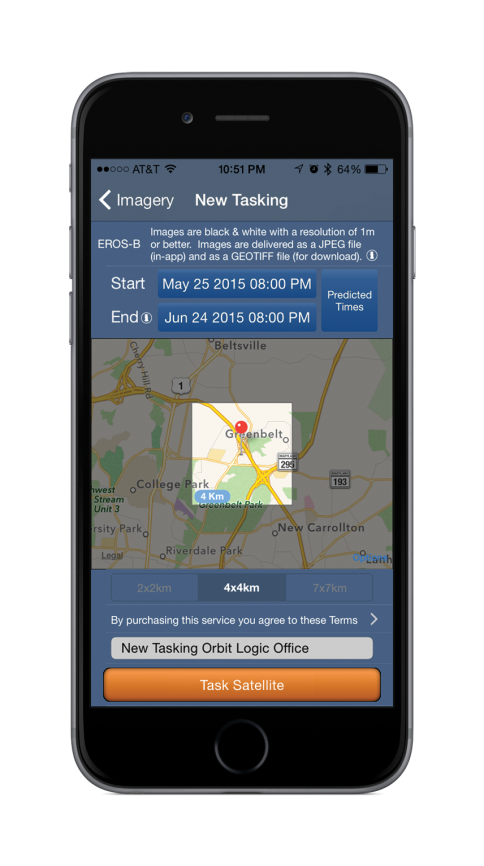
The folks at Orbit Logic Incorporated have issued a new version of SpyMeSat. It allows smart phone users to task a high resolution imaging satellite to take an image of a user-specified location.
SpyMeSat users can task a high resolution imaging satellite (EROS-B) right from their smartphone to take a new image just for them . . . of any location within the supported regions (western Europe, North America, and Oceania (Australia/New Zealand, etc.).
This new version of SpyMeSat also includes an Apple Watch app as well. That allows the wearer to get notifications and see countdowns to upcoming imaging passes on your Apple Watch.
Sat snaps on demand
Alex Herz, president of Orbit Logic in Greenbelt, Maryland, developers of the SpyMeSat app, adds: “We are making archive imagery and new tasking accessible, responsive and affordable for everyone.”
SpyMeSat users can now order new images from an orbiting high resolution commercial imaging satellite.
Credit: Orbit Logic Incorporated
This type of tasking enables industrial and government uses, for real estate and construction purposes. Perhaps you want to take an image of your group or sports team from space?
Prices for new tasking start at $500, an affordable option for high resolution satellite imagery collection.
SpyMeSat users can choose from image sizes ranging from 2km x 2km to 7km x 7km.
Resources
You can find additional information about the new version of SpyMeSat at:
A YouTube demo video for the new version can be viewed at:

