Archive for the ‘Space News’ Category
 Author:
  August 13th, 2025
A healthy commercial space ecosystem should be founded on more transparency and a reduction in red tape surrounding launch and reentry licensing and activity.
Image credit: SpaceX
Today, President Donald J. Trump signed an Executive Order to streamline regulations and foster a competitive commercial space industry, ensuring the United States maintains its leading role in the commercial use of space.
The Order directs the Secretary of Transportation, in consultation with the Chair of the Council on Environmental Quality, “to eliminate or expedite environmental reviews for launch and reentry licenses and permits.” In addition, the Order also directs the Secretary of Transportation “to review regulatory requirements to eliminate outdated, redundant, or overly restrictive rules for launch and reentry vehicles.”
Far-reaching actions
In Trump’s August 13 Presidential Action document, it explains that “it is imperative that we build on the far-reaching actions taken by my Administration during my first term to ensure that new space-based industries, space exploration capabilities, and cutting-edge defense systems are pioneered in America rather than by our adversaries. Ensuring that United States operators can efficiently launch, conduct missions in space, and reenter United States airspace is critical to economic growth, national security, and accomplishing Federal space objectives.”

Illustration of Haven-1 space station and docked SpaceX Dragon.
Image credit: Vast
U.S. Transportation Secretary and acting NASA Administrator Sean Duffy joined President Trump at the White House Wednesday for the signing of the Executive Order.
Outdated regulations
The U.S. House Science, Space, and Technology Committee Chairman Brian Babin released the following statement after President Trump signed the Executive Order.
“President Trump’s new Executive Order is a bold step to cut red tape, speed approvals, and strengthen America’s leadership in commercial space,” Chairman Babin said. “For too long, outdated regulations and duplicative reviews have slowed progress, hindered investment, and given our adversaries like China an opening to close the gap. This action puts America’s commercial space industry on a trajectory to continue leading the world—driving breakthroughs, creating jobs, and bolstering our national security.”
Regulatory relief
The Commercial Space Federation (CSF) issued a statement on President Trump’s signing of the Executive Order. CSF President Dave Cavossa stated, “CSF applauds President Trump and the leaders across the Federal
Government for taking bold action to prioritize space. Building upon the work of his first administration,
today’s executive order reorganizes key aspects of the FAA and Department of Commerce and provides regulatory relief to unleash the U.S. commercial space industry.”
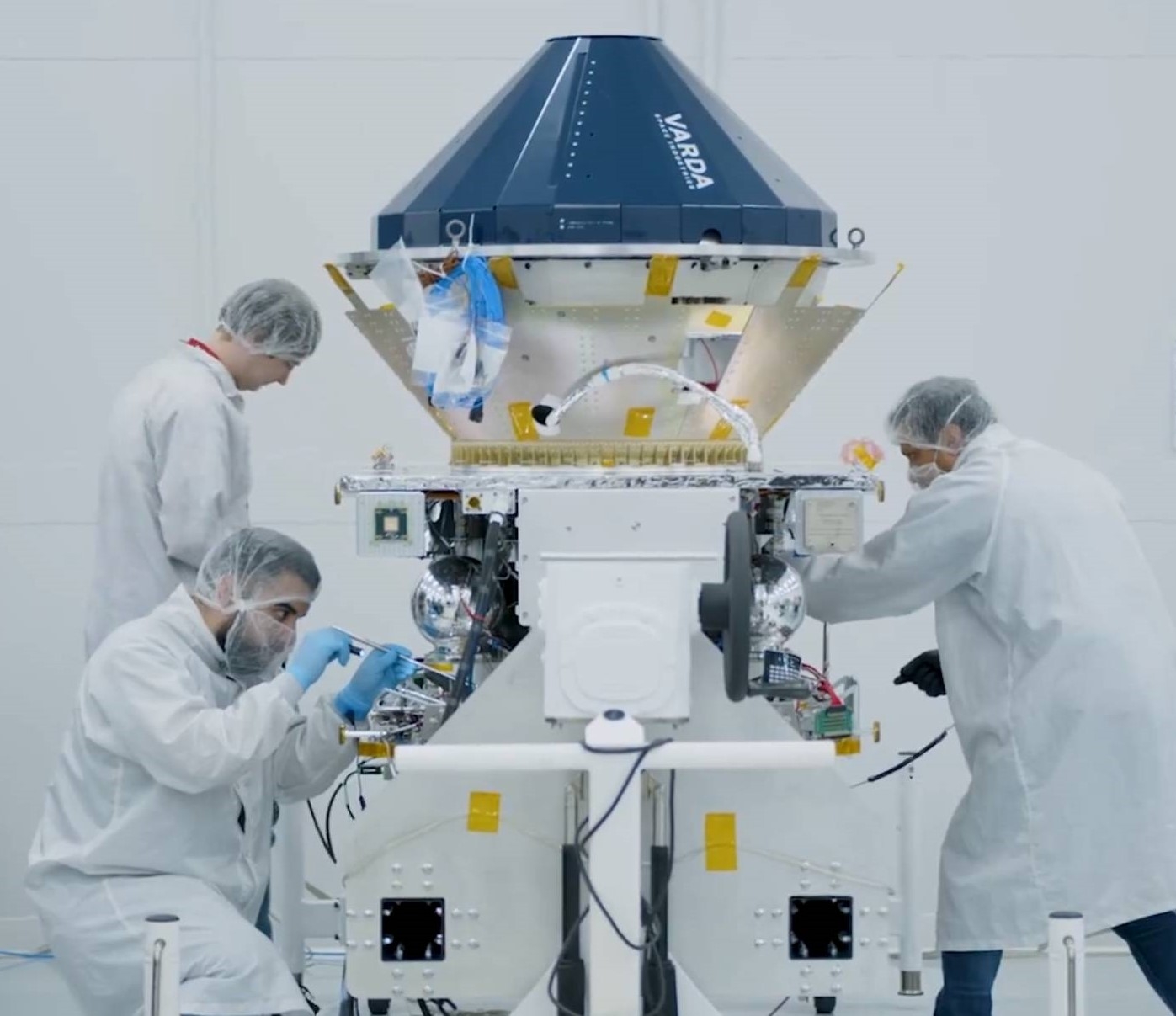
Pre-launch photo shows technicians working on the Varga capsule-mounted spacecraft.
Image credit: Rocket Lab
Cavossa added that, with these actions, “it is clear that President Trump is serious about maintaining U.S. dominance in space in the face of growing international competition, especially from China. This executive order will strengthen and grow the U.S. commercial space industry by cutting red tape while maintaining a commitment to public safety, benefitting the American people and the U.S government that are increasingly reliant on space for our national and economic security.”
Fact sheet
Go to this informative Fact Sheet: President Donald J. Trump Enables Competition in the Commercial Space Industry at:
Also, read the full document “Enabling Competition in the Commercial Space Industry” at:
 Posted in
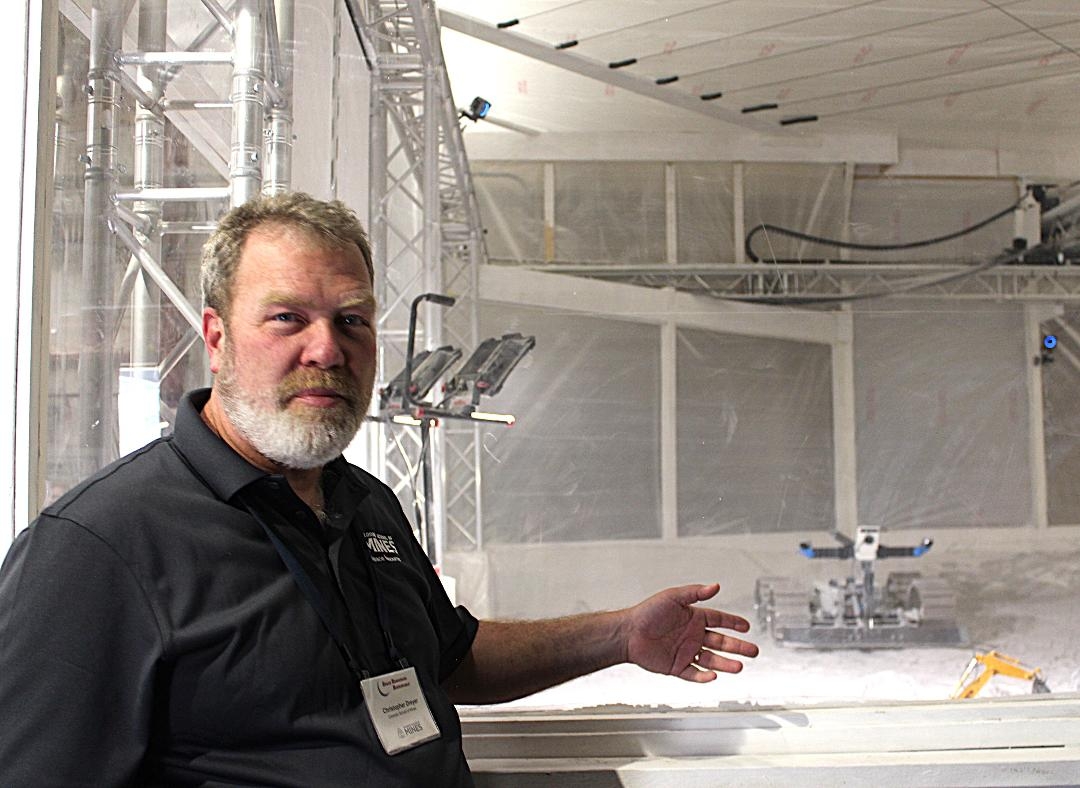
Chris Dreyer, director of engineering at the Colorado School of Mines Center for Space Resources and the new Mines Lunar Surface Simulator.
Image credit: Barbara David
GOLDEN, Colorado – The Colorado School of Mines has built a large simulated moonscape. The specialized facility is being used to test lunar rovers, evaluate lunar landing and launch pads, excavation gear and assess other hardware ideas.
It’s all about getting a lunar leg up on how best to robotically work effectively on the Moon.
For more details, go to my new Space.com story – “New lunar surface simulator in Colorado puts Moon machinery to the test” – at:
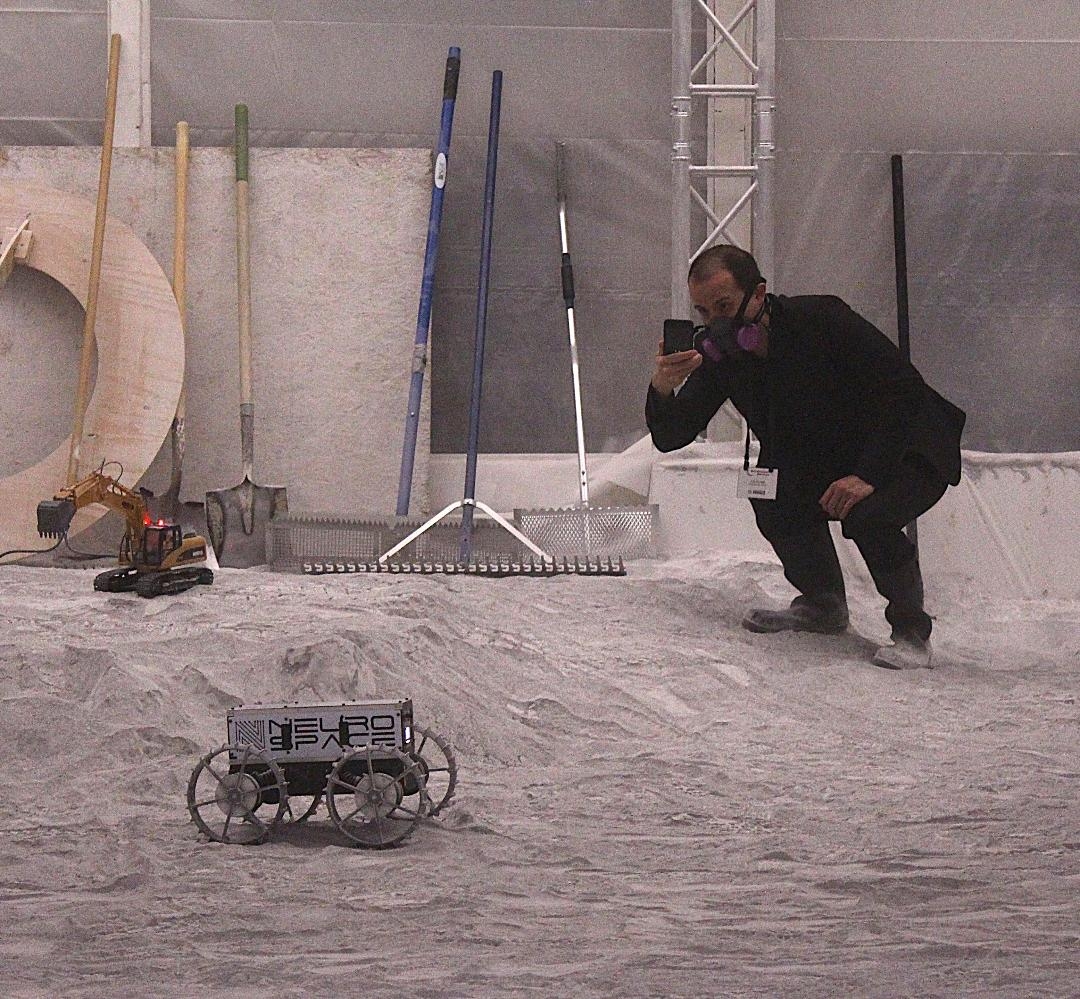
NEUROSPACE GmbH of Berlin, Germany evaluates its modular rover platform within the Mines Lunar Surface Simulator.
Image credit: Barbara David

Image credit: Virgin Galactic
Virgin Galactic’s new Delta class space plane could fly as soon as fall 2026
The company is also looking at using its mothership aircraft that releases spacecraft at high altitude as a carrier platform for other customers.
Go to my new Space.com story at:

Image credit: CMG
The Shenzhou-20 crew aboard China’s Tiangong space station has been occupied in the unpacking of new extravehicular spacesuits and carrying out multiple scientific experiments and tests.
The astronaut trio — Chen Dong, Chen Zhongrui and Wang Jie — entered the Tiangong space station on April 25 this year.
Last week, the crew unpacked the two new sets of extravehicular spacesuits transported by the Tianzhou-9 cargo craft, and conducted functional performance tests and maintenance, as reported by China Central Television (CCTV).

Image credit: CCTV/CMSA/Inside Outer Space screengrab
Spacewalking suits
The design lifespan of the two suits, designated D and E, has been significantly extended from 15 extravehicular activities (EVAs) within three years to 20 EVAs within four years, CCTV adds.
In performing science duties, the crew used organ-on-a-chip technology to study the effects of the space environment on the blood-brain barrier and brain function at cellular, tissue, and organ levels, while exploring the underlying mechanisms.

Image credit: CCTV/Inside Outer Space screengrab
The crew has been investigating bone metabolism regulation and studying microbiota and nutritional metabolism.
Mixed reality glasses
Crew members also began trial operation of an on-orbit mixed reality (MR) training device. The astronauts wore portable MR glasses and achieved seamless interaction with the MR system through simple voice or gesture commands.

Image credit: CMG
Similarly, in terms of new technology and applications, the crew conducted microbial control experiments in the extraterrestrial habitat. They used bacterial detection plates to compare microbial levels on the selected module before and after disinfection, thus evaluating the effectiveness of the disinfection process, CCTV reports.
Health monitoring
The taikonaut threesome conducted comprehensive health monitoring, including bone density and muscle volume measurements, maximal isometric strength testing, and audiometric examinations, while actively performing exercises to cope with weightlessness.
Lastly, the crew completed the installation and testing of the -80 degrees Celsius space refrigerator in the Wentian lab module, and carried out the replacement of the core module’s sleeping compartment door.
Go to this CCTV video detailing work onboard China’s space outpost:

China’s Tiangong space station as imaged by MAXAR satellite.
Image credit: MAXAR

The Chang’e-6 sample container is shown being removed from the Chang’e-6 return capsule.
Image credit: Jin Liwang via SegerYU X posting.
Findings from China’s Chang’e-6 lunar sample mission provide evidence of a “super-reduced” state in the Moon’s mantle.
Published in the journal Nature Communications, the study shows the mantle material beneath Chang’e-6’s landing site is not only drier and more depleted than samples from the Moon’s near side, but also exists in a more chemically reduced state, meaning elements tend to exist in lower oxidation states.
“It either hasn’t undergone oxidation, or may have become more reduced later, possibly due to some major impact event,” said Yang Wei, a researcher at the Institute of Geology and Geophysics of the Chinese Academy of Sciences.
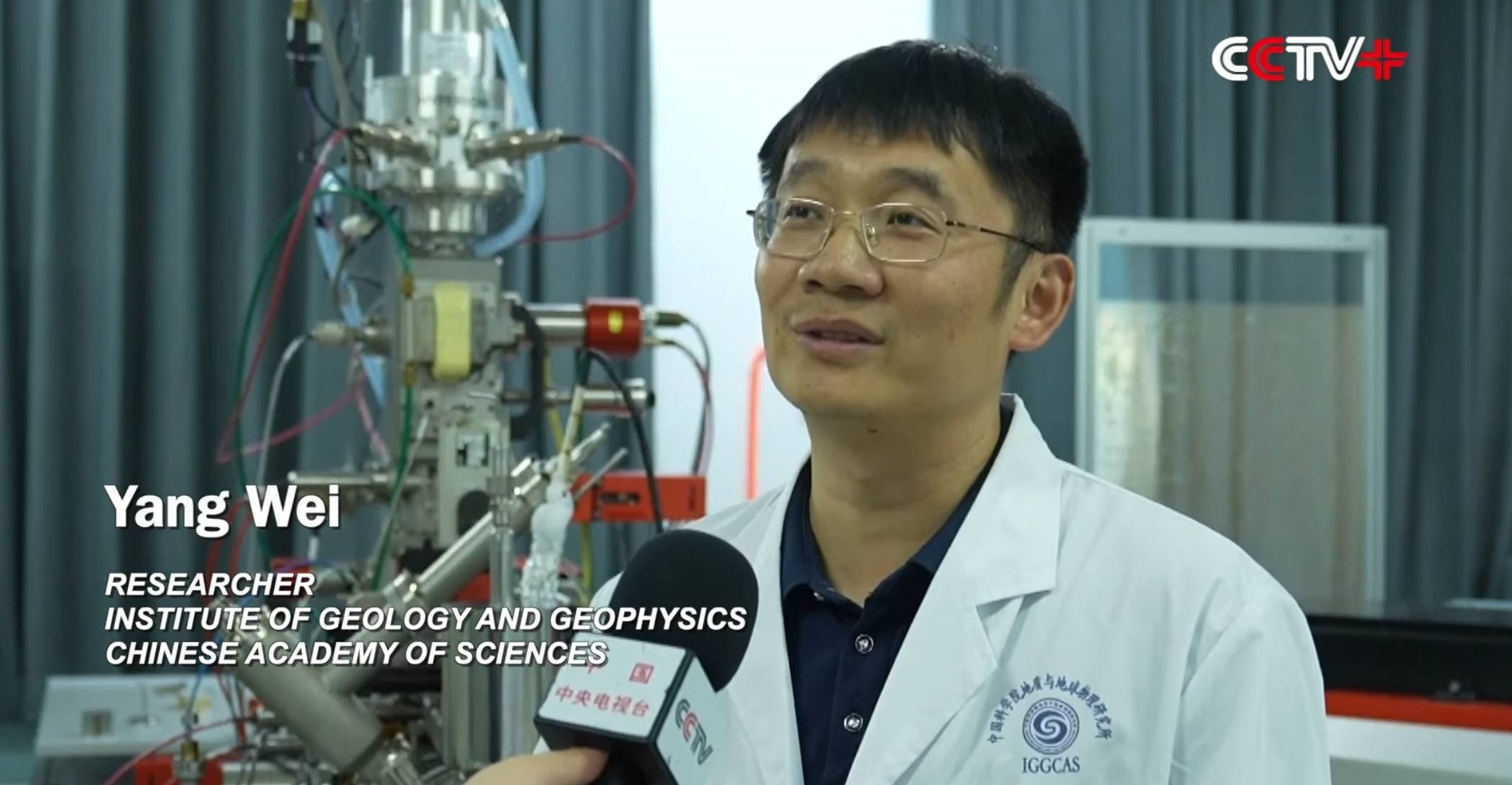
Image credit: CCTV/Inside Outer Space screengrab
Yang told China Central Television (CCTV) that the redox state of planetary bodies has always been a key indicator for understanding their internal processes and surface habitability.
Significant differences
The new findings confirm that significant differences between the lunar near side and far side extend deep into the mantle.
In 2024, Chang’e-6 rocketed to Earth 1,935.3 grams of lunar farside samples. These samples were collected from the South Pole-Aitken (SPA) Basin, the largest, deepest, and oldest basin on the Moon.

China’s Chang’e-6 lander/ascender in farside sampling scenery.
Image credit: CNSA/CLEP
Analysis of the lunar samples is clarifying the compositional differences between the near and far sides and to unravel the long-standing mystery of their asymmetry.
Guidance for ISRU
“Previously we could only observe the differences between the near side and far side through images,” Yang said. “But were these differences just superficial or did they extend hundreds of kilometers deep into the mantle? At least our current results prove that even at depths of several hundred kilometers, differences between the near side and far side persist. This is our new discovery.”
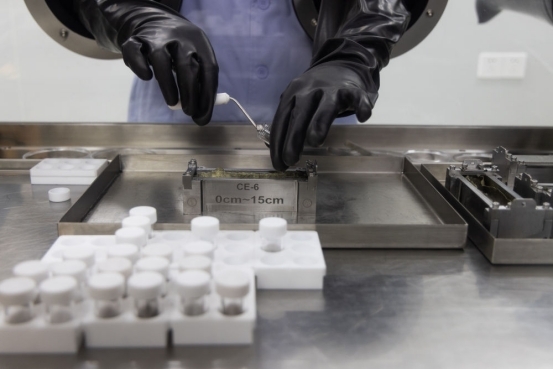
Image credit: CLEP
The new insight regarding the Moon’s formation and evolution also offers guidance for future lunar resource assessment and utilization.
To access the paper – “Magnetic signatures and origins of ferromagnetic minerals in Chang’e-6 lunar farside soils” – go to:
https://www.nature.com/articles/s41467-025-61705-1
Also, watch this CCTV video at:
https://www.facebook.com/share/v/177WSAr9kC/
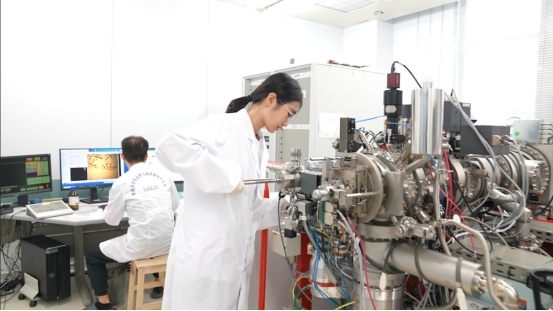
Researchers from the Institute of Geology and Geophysics load test samples into lab equipment.
Image credit: CLEP
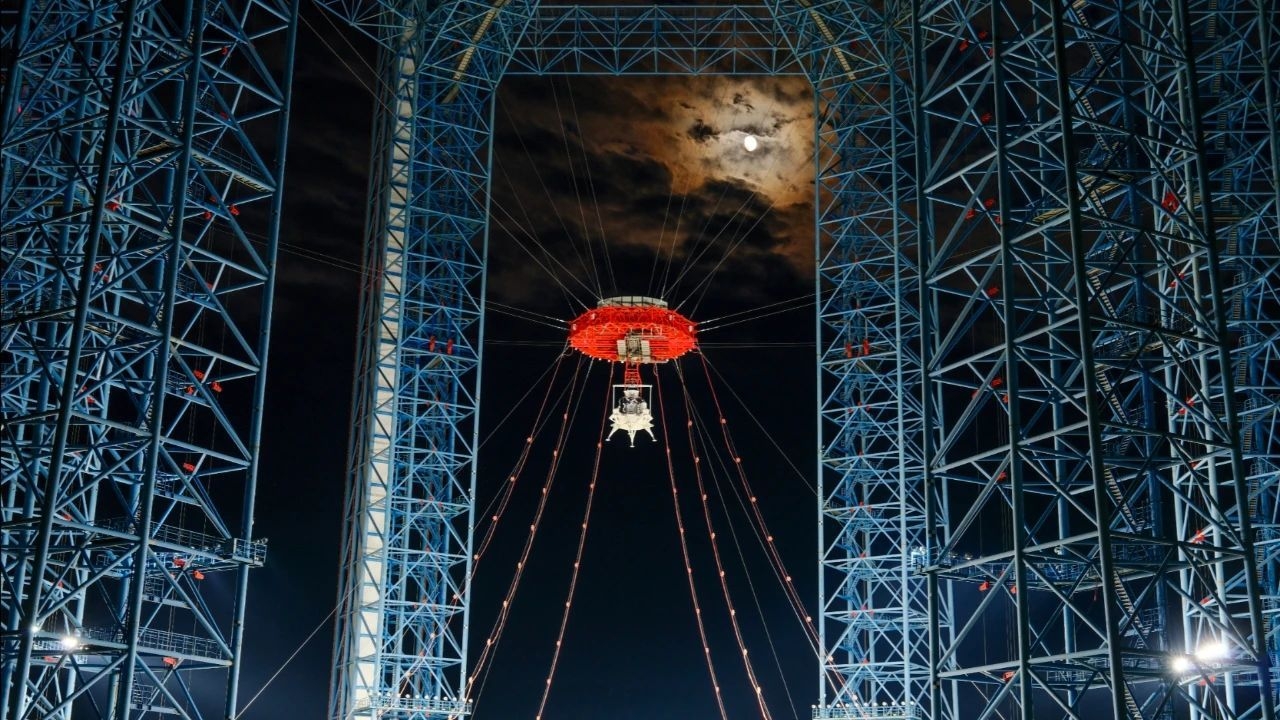
China completed a comprehensive test of its crew-carrying Moon lunar lander Lanyue in north China’s Hebei Province, August 6, 2025.. Image credit: CGTN//China Media GroupI
China’s lunar lander aces touchdown and takeoff tests ahead of planned 2030 crewed moon mission.
“For our manned space missions, we must ensure that astronauts land on the lunar surface very comfortably and smoothly.”
Go to my new Space.com story at:

Image credit: CCTV
China’s crewed Moon lander completed a comprehensive landing and takeoff verification test.
The “Lanyue” lunar lander is undergoing testing at the “extraterrestrial celestial landing test site” in Huailai County, north China’s Hebei Province, reports China Central Television (CCTV).
Lanyue is a crew-carrying descent and ascent vehicle designed for China’s first human lunar exploration mission, set to be attempted before 2030.

Image credit: CCTV/Inside Outer Space screengrab
Test validation
The craft is primarily used for transporting astronauts between lunar orbit and the lunar surface, capable of carrying two astronauts back and forth. It can also carry a lunar rover and scientific payloads, supporting astronauts’ stay and activities on the Moon, CCTV reports.
“During the test, the engine was ignited, simulating the landing of the lunar lander on the Moon and its subsequent takeoff,” added CCTV. “The test validated the lander’s landing and takeoff system, control plan, lunar contact shutdown procedures, and the compatibility of interfaces between subsystems, including Guidance, Navigation, Control (GNC) and propulsion.”

Image credit: CCTV/CMSA/Inside Outer Space screengrab
Landing, takeoff and loitering
Lanyue tests are meant to appraise the performance verification of the lunar lander under different scenarios throughout the landing and takeoff process.
“For instance, during the launch phase, we need to verify its launch payload. So we conducted large-scale mechanical tests to ensure a smooth transition in the extremely complex environment during the launch,” Huang Zhen from China Aerospace Science and Technology Corporation told CCTV.
“The lander will also orbit the Moon for a long period,” Huang added, “so we performed many thermal tests to ensure that it can withstand the thermal environment of the cislunar space.”

Huang Zhen, researcher, China Aerospace Science and Technology Corporation.
Image credit: CCTV/Inside Outer Space screengrab
China completed a comprehensive test of its crew-carrying Moon lunar lander Lanyue in north China’s Hebei Province, August 6, 2025. Image credit: CGTN//China Media Group

Long March-12 in preparation for launch.
Image credit: CCTV/Inside Outer Space screengrab
It has been a one-two punch as the Philippine Space Agency had to alarm citizens regarding China-launched rocket debris fell into local waters.
This new incident involved the “estimated drop zone” of China’s Long March-12 rocket that was lofted from the Hainan commercial spacecraft launch site in the southern island province of Hainan on Monday.
That sendoff lobbed a group of internet satellites into space, just five days following the launch of a Long March-8A rocket from the same site, also stirring up worries by the Philippine Space Agency.
Act responsibly
On August 4, 2025 Philippine authorities cautioned the public to avoid any contact with suspected rocket debris that may have fallen off the waters of Palawan province.

Estimated drop zone of the Long March-12 Launch.
Image credit: Philippine Space Agency
The Philippines have been on the receiving end of a fall of debris from Chinese rocket launchings into its waters. They are urging spacefaring nations to act responsibly and safeguard the interests of other states.
In a press briefing on Tuesday, Presidential Communications Office Undersecretary and Palace Press Officer Claire Castro read the Department of Foreign Affairs’ (DFA) official statement on the August 4 launch of China’s Long March-12 rocket, which left debris within Philippine maritime territory.
Post-launch effects
“The Philippines takes this opportunity to urge all spacefaring states to conduct their space activities in a manner consistent with norms of responsible behavior and with due regard to the rights of interest of other states,” Castro quoted DFA Secretary Ma. Theresa Lazaro as saying.
Lazaro has noted that under the 2023 agreement between President Ferdinand R. Marcos Jr. and Chinese President Xi Jinping, both countries committed to maintain appropriate communication mechanisms in handling rocket launches and their post-launch effects.
Philippine Space Agency (PhilSA) Deputy Director General Gay Jane Perez reportedly assessed the incident and found the debris drop zone “medyo malapit nga po” (somewhat close) to Philippine territory.

Image credit: Philippine Space Agency
Leftover rocket parts
Details of the estimated drop zone of the Long March-12 launch were disclosed through a Notice to Airmen (NOTAM) warning of an “aerospace flight activity.” PhilSA disseminated a pre-launch report to relevant government agencies and authorities prior to the launch.
That pre-launch communiqué explained that leftover rocket parts are not projected to fall on land features or inhabited areas, but that “falling debris poses danger and potential risk to ships, aircraft, fishing boats, and other vessels that will pass through the drop zone.”
Furthermore, the notice said a possibility exists for the debris to float around the area and wash toward nearby coasts.

Long March-8 liftoff.
Image credit: CCTV/Inside Outer Space screengrab
Back-to-back launches
From the Chinese, they are highlighting that their commercial spaceport achieved dual-pad launches within five days.
China launched the Long March-12 carrier rocket just five days after launch of a Long March-8A rocket from the same site, but from two different launch pads.
Long March-8A was made on the No. 1 pad. Long March-12 launch mission was performed on No. 2 pad.
According to the China Central Television (CCTV), the back-to-back launches from dual pads within a short timeframe further validate the site’s capability for high-frequency launch operations.

Image credit: Philippine Space Agency
Inter-model switching
“Since the initial design phase, we have targeted high-frequency launches. In designing the routing for gas supply lines and the control system, we have taken into consideration the requirement for rapid inter-model switching,” Yang Tianliang, president of the Hainan International Commercial Aerospace Launch Center told CCTV.
“For instance, after completing a launch from the No.1 pad, it only takes about two to three days to switch the launch configuration onto the No. 2 pad,” said Yang, adding that although the launch site was designed for high-frequency operations, conducting two launches just five days apart was still a first for them, posing numerous challenges that had to be overcome.
“There are significant differences between the two pads. For example, the No.1 pad uses liquid hydrogen, while the No. 2 pad does not. Since these two types of propellants cannot be mixed, we have to thoroughly clean the gas supply lines to ensure no residual traces of the other propellant remained,” Yang said.

Long March-12 logo. Image credit: CCTV/Inside Outer Space screengrab
CCTV also reported that two additional pads are currently under construction at the site. “Once completed, the facility will adopt a configuration with two phases and four pads, further enhancing its ability to meet the growing demand for high-frequency, high-capacity, and low-cost launch services,” the news agency explained.
Go to this CCTV at:
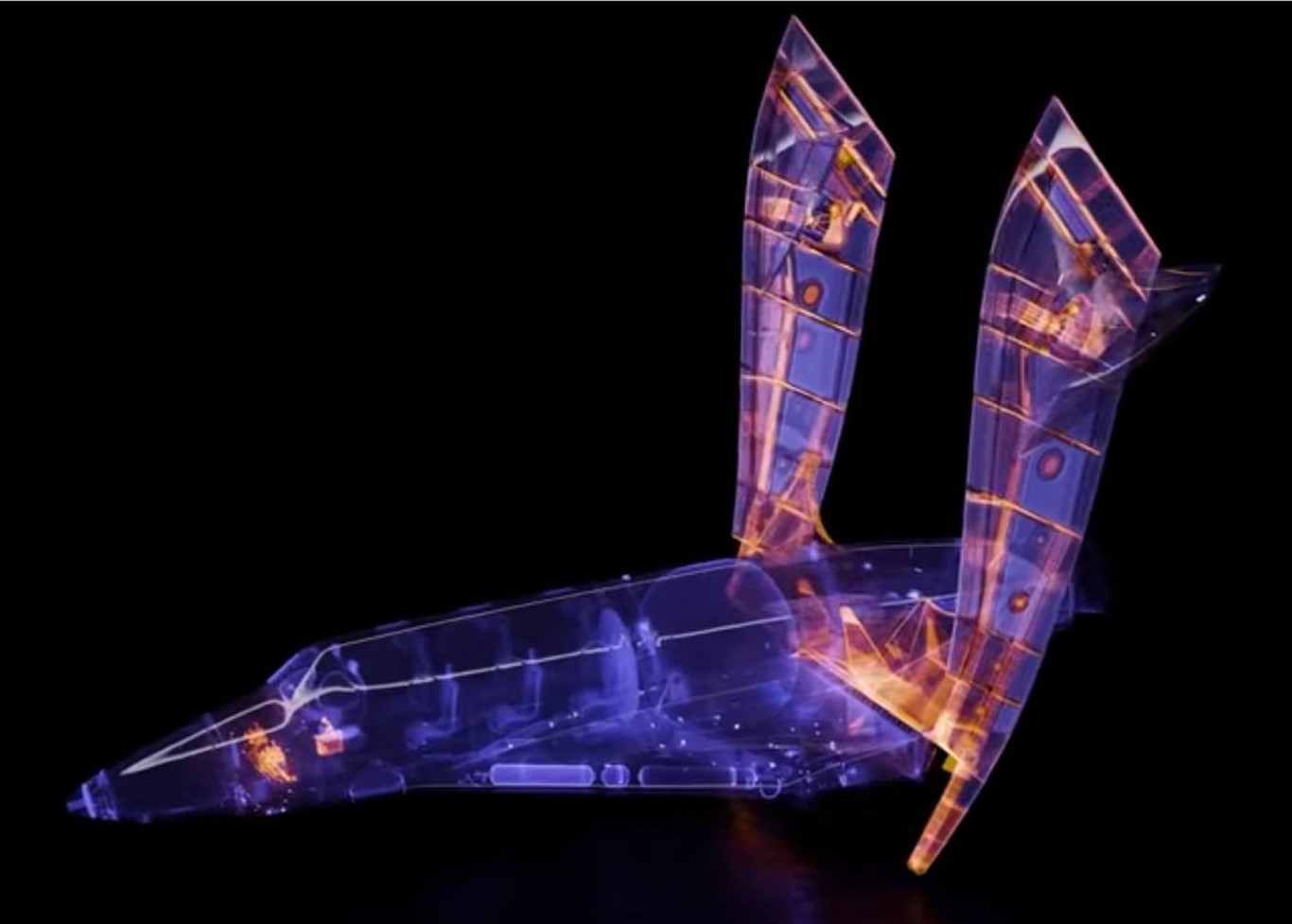
Image credit: Virgin Galactic/Inside Outer Space screengrab
Things are progressing for Virgin Galactic’s Delta Class suborbital spaceships for hauling payloads and passengers.
A Virgin Galactic Holdings earnings overview was held on August 6, providing an update on construction of the new SpaceShip as well as the mother ship carrier aircraft.
Michael Colglazier, CEO of Virgin Galactic noted that “Commercial service remains planned for 2026, with both research and private astronaut flights expected in the fall next year.”

Image credit: Virgin Galactic/Inside Outer Space screengrab
Carrier platform
Spotlighted in the meeting were several updates on the program, including:
— Collaborating on a feasibility study with Lawrence Livermore National Laboratory to leverage the capabilities of the company’s launch vehicle as a carrier platform.
— Progress on a feasibility study to potentially develop a second spaceport in Italy.
— Commercial spaceflight continues to track for 2026, with both research and private astronaut flights expected to commence in the fall of 2026.
— Progress on SpaceShips Continues Across All Systems and Structures.
— SpaceShip wing assembly and feather assembly expected to be completed during Quarter 4 of 2025.
— SpaceShip fuselage expected to be completed late Quarter 4 2025 or early Quarter 1 in 2026.
Image credit: Virgin Galactic

Image credit: Virgin Galactic/Inside Outer Space screengrab
Frequency of flight
Sir Richard Branson’s Virgin Galactic is gearing up to build its advanced SpaceShips and launch vehicle. The firm explains that their next-generation vehicles will bring humans to space at an unprecedented frequency with an industry-leading cost structure.
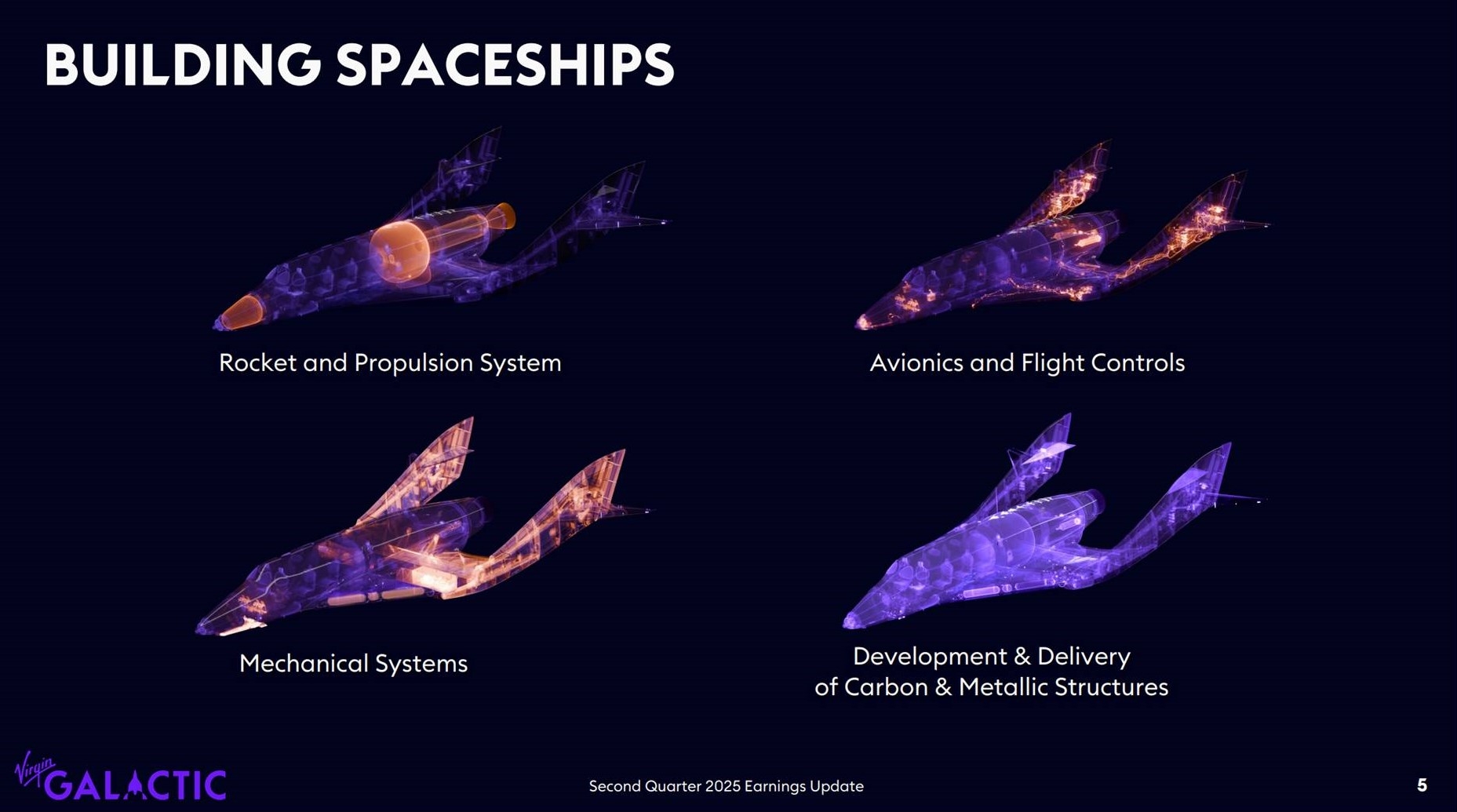
Image credit: Virgin Galactic
Virgin Galactic also released a new video with Spaceline President, Mike Moses, that recaps the latest milestones and highlights the progress made to date on the Delta Class spaceship design.
Go to:

Image credit: Bipartisan Commission on Biodefense
It is a hot topic bracketed by cold hard facts: How best to handle Mars samples here on Earth?
Yes, the specter of “Andromeda Strain” is alive and well, brought home by the 1969 novel written by Michael Crichton, later turned into a techno-thriller of a movie.

China’s roadmap for a Mars Sample Return mission to be launched in 2028.
(Image credit: The University of Hong Kong/Zengqian Hou, et al.)
China is moving forward on a specialized facility for that country’s Mars Sample Return (MSR) project. Should their handling and containment construction plans and ideas undergo international inspection?
What about verifying China’s MSR facilities and research tactics; are they up to snuff by standards promoted by NASA and other outside organizations? Could that be an approach to promote working together?
For details, go to my new Space.com story – “China wants to return samples from Mars. Will there be any international cooperation? – International oversight would reduce risks, but could be “a politically sensitive and contentious matter” — at:

