Archive for the ‘Space News’ Category
 Author:
  August 13th, 2015
Credit: ULA
The fourth mission of the pilotless X-37B Orbital Test Vehicle is nearing 100 days of flight at month’s end, testing and making use of a cargo bay of payloads. Its mission – or multiple duties – remains classified.
The Air Force launched the winged craft, designated OTV-4 and codenamed AFSPC-5, aboard an Atlas V rocket from Cape Canaveral Air Force Station on May 20 of this year.I put together this overview on the robotic space plane’s current mission.
One added mystery: Where will the robotic space plane land after mission-complete? It could be Florida, from whence the vehicle took to space.

Former shuttle processing area at the Kennedy Space Center has been overhauled by Boeing to prep the military’s secretive X-37B space plane.
Credit: Malcolm Glenn
For more details, check out my Space.com story at:
US Military’s Top-Secret X-37B Space Plane Mission Nears 3-Month Mark
by Leonard David, Space.com’s Space Insider Columnist
August 13, 2015 01:20pm ET
http://www.space.com/30245-x37b-military-space-plane-100-days.html
 Posted in

NASA’s Mars rover Curiosity acquired this image using its Mars Hand Lens Imager (MAHLI), located on the turret at the end of the rover’s robotic arm, on August 12, 2015, Sol 1072 of the Mars Science Laboratory Mission.
Credit: NASA/JPL-Caltech/MSSS
Wheeling its way across Mars, NASA’s Curiosity rover traveled some 115 feet (35 meters) on sol 1072.
Rover planners are set to take a load of new mast camera (Mastcam) images on Sol 1073 to document geology at its new locale.
According to Ryan Anderson, a planetary scientist at the USGS Astrogeology Science Center in Flagstaff, Arizona: “We are planning a 31×1 mosaic of the outcrop in Marias Pass, plus a 13×3 mosaic of “Mt. Shields” (not to be confused with Mt. Sharp!) and a 10×3 stereo mosaic of “Gunton.”
Anderson adds that the schedule also calls for an “active” measurement with the Dynamic Albedo of Neutrons (DAN) instrument. The device will produce neutrons to help detect hydrogen in the subsurface, rather than relying on natural background neutrons.

This map shows the route driven by NASA’s Mars rover Curiosity through the 1067 Martian day, or sol, of the rover’s mission on Mars (August, 07, 2015).
Numbering of the dots along the line indicate the sol number of each drive. North is up. The scale bar is 1 kilometer (~0.62 mile). From Sol 1066 to Sol 1067, Curiosity had driven a straight line distance of about 57.32 feet (17.47 meters).
The base image from the map is from the High Resolution Imaging Science Experiment Camera (HiRISE) in NASA’s Mars Reconnaissance Orbiter.
Image Credit: NASA/JPL-Caltech/Univ. of Arizona
DSN outage
Word is that last weekend there was an outage at the Deep Space Network, the communication connection to Curiosity.
That outage on Earth prevented the plan for the weekend from being sent to the rover.
Curiosity was in “runout” mode, making routine environmental monitoring measurements and waiting patiently for more instructions, Anderson explains.
Problem fixed and the machinery is now making tracks on Mars.

This image was taken by Mastcam: Right onboard NASA’s Mars rover Curiosity on August 11th, Sol 1071.
Image Credit: NASA/JPL-Caltech/MSSS

Credit: ULA
For those watching the on-going U.S. Air Force saga regarding SpaceX and the United Launch Alliance competitive launch issues, the U.S. Government Accountability Office (GAO) released the following report today: Evolved Expendable Launch Vehicle: The Air Force Needs to Adopt an Incremental Approach to Future Acquisition Planning to Enable Incorporation of Lessons Learned.
In the report, the GAO warns that the Air Force “is at risk of making decisions about future Evolved Expendable Launch Vehicle (EELV) acquisitions without sufficient knowledge.”

Credit: SpaceX/NASA
GAO recommends that, when planning for the next phase of competition for launches, that “the Air Force use an incremental approach to the next acquisition strategy to ensure that it does not commit itself to a strategy until data is available to make an informed decision.”
The GAO noted that DOD concurred with the recommendation.
To take a look at the new GAO report, go to:
http://www.gao.gov/products/GAO-15-623
The report highlights are here:
http://www.gao.gov/assets/680/671928.pdf

These three images of comet Churyumov-Gerasimenko were acquired by the OSIRIS camera on board the Rosetta spacecraft on July 29, 2015. In the first image the outburst is not yet visible. Eighteen minutes later, the camera captures an enormous gas outflow. The third image displays only the weak remains of the jet. The images were acquired from a distance of 115 miles (186 kilometers) from the comet.
Credit: ESA/Rosetta/MPS for OSIRIS Team/MPS/UPD/LAM/IAA/SSO/INTA/UPM/DASP/IDA
The European Space Agency’s Rosetta orbiter has been imaging comet Churyumov-Gerasimenko – watching the celestial wanderer hurling dust and gas into space.
All that action is prelude to the comet making its closest point to the Sun in its orbit, the perihelion, on August 13.
According to experts at the Aerospace Center (Deutsches Zentrum für Luft- und Raumfahrt; DLR), roughly 220 pounds (100 kilograms) of the comet’s mass are disappearing into space per second. In its approach to the Sun, the comet’s frozen ice has been heating up and turned into gas, which has dragged along some dust with it as it spills out into space.
Powerful outburst
The instruments on the ESA Rosetta spacecraft succeeded in imaging and analyzing the most powerful outburst yet, from a distance of roughly 115 miles (186 kilometers).
“The activity of the comet will likely increase slightly in the days after perihelion,” says Ekkehard Kührt, a researcher at the DLR. “We are now excited to see how it will evolve in the coming days and weeks.
“The activity will depend mainly on where the active areas are with respect to the comet’s seasonal cycle, Kührt, adds in a DLR press statement. “With the mission, we are for the first time accompanying a comet and monitoring its development for such a long period of time.”
How’s Philae?
The Philae lander, deposited on the comet by Rosetta, is along for the ride.

Rosetta’s Optical, Spectroscopic, and Infrared Remote Imaging System (OSIRIS) camera shows the spot (marked with a red circle) on Comet 67P/Churyumov-Gerasimenko, where the massive gas eruption occurred on July 29, 2015.
Credit: ESA/Rosetta/MPS for OSIRIS Team/MPS/UPD/LAM/IAA/SSO/INTA/UPM/DASP/IDA
However, Rosetta’s current trajectory is not favorable for establishing communications with the landed probe.
“The orbiter, which is a kind of relay station to Philae for us, is flying over the southern hemisphere, which is particularly active,” explains DLR engineer Koen Geurts, Technical Project Manager for the Philae lander.
“From August 11, Rosetta will once again be flying over latitudes where communication with Philae would be possible,” says Geurts. But the great distance between the orbiter and the comet could complicate communication with the lander.
The last contact between Philae and the team at the DLR Lander Control Center in Cologne took place on July 9, 2015.
On the job
To make sure Philae could still carry out its job on the surface, even without communication with the ground team, the DLR engineers tested some commands on their ground model in Cologne.
These commands were then sent “blind” – in other words, without a response, to Philae.
In the event that the lander receives these commands and executes them, it will initiate a sequence in which various instruments will be operated and the data stored until contact is resumed.
Rosetta was launched in 2004 and arrived at Comet 67P/Churyumov-Gerasimenko in August 2014. It is the first mission in history to rendezvous with a comet, escort it as it orbits the Sun, and deploy a lander to its surface, the Philae probe, in November 2014.

Credit: Ad Astra Rocket Company © all rights reserved
A potential advancement in the United States’ electric propulsion capability for the future of spaceflight is being underscored by a new NASA contract to support work on the VASIMR project – short for the Variable Specific Impulse Magnetoplasma Rocket.
VASIMR works with plasma, an electrically charged gas that can be heated to extreme temperatures by radio waves and controlled and guided by strong magnetic fields.
Ad Astra Rocket Company announced today that it has completed contract negotiations with NASA on the group’s Next Space Technology Exploration Partnerships (NextSTEP) award and are now entering the execution phase of the project.
Long duration, high-power test
Under the award, Ad Astra is to conduct a long duration, high-power test of an upgraded version of the VX-200™ VASIMR prototype, the VX-200SS (“SS” for steady state), for a minimum of 100 hours continuously at a power level of 100 Kilowatts.
Testing will be conducted in Ad Astra’s large, state-of-the-art vacuum chamber in the company’s Webster, Texas facility.
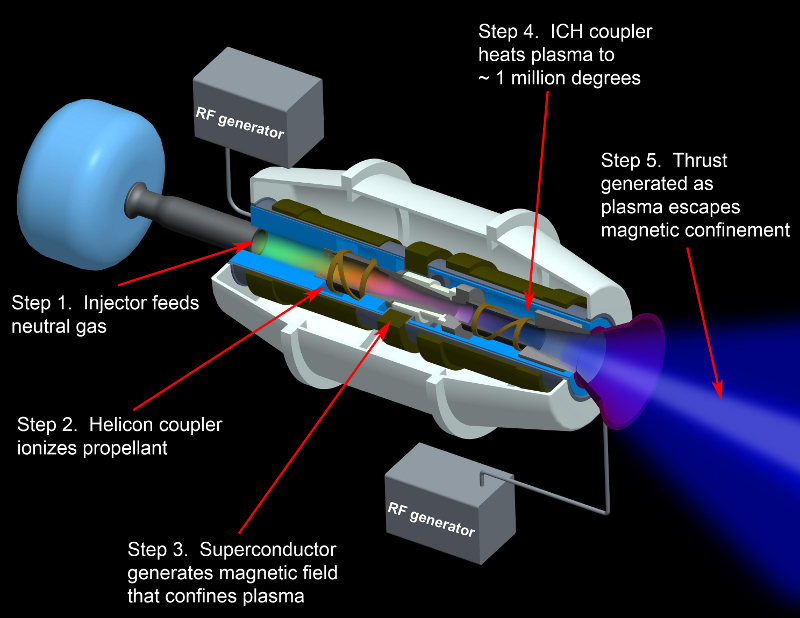
Credit: Ad Astra Rocket Company © all rights reserved
“These experiments aim to demonstrate the engine’s new proprietary core design and thermal control subsystem and to better estimate component lifetime,” according to an Ad Astra Rocket Company press statement.
Raising the readiness level
In the past, Ad Astra advanced the technology readiness level (TRL) of the VASIMR engine almost exclusively with private funding.
That funding enabled the company to complete more than 10,000 successful high-power firings, demonstrating the engine’s reliability and performance, with no measurable signs of engine wear. However, those tests were of short-duration, lasting less than one minute.
A longer duration test is needed to validate the new rocket core design for extended operation in space. Plasma rockets feature exhaust velocities far above those achievable by their chemical cousins, so their fuel consumption is extremely low.

Former astronaut, Franklin Chang Díaz, serves as Chairman of the Ad Astra Board and Chief Executive Officer.
Credit: Robert Markowitz and Bill Stafford.
50/50 cost partnership
The NASA and Ad Astra executed the contract — a three-year, fixed price agreement — on August 7, 2015 for a total value of just over $9 million.
The agreement is structured as a one-year contract with two additional one-year extensions based on the accomplishment of mutually agreed upon progress milestones, Ad Astra added in their press statement.
NASA’s Advanced Exploration Systems Program sponsors NextSTEP awards in a 50/50 cost partnership with industry.
Former astronaut, Franklin Chang Díaz, serves as Chairman of the Ad Astra Board and Chief Executive Officer – a space traveler with NASA for 25 years and a veteran of seven space shuttle flights.

This August 7 image was taken by Curiosity’s Navcam: Left B on Sol 1067.
Credit: NASA/JPL-Caltech
Late last week, NASA’s Curiosity rover on the Red Planet wheeled its way for a drive of over 60 feet (19 meters). That Sol 1067 stroll put it back at “Missoula” for more targeted science.
“The goal is to perform a detailed study of the Stimson-Pahrump contact, and to determine the relative timing of some of the veins that we’ve observed here,” explains research geologist, Lauren Edgar, at the USGS Astrogeology Science Center in Flagstaff, Arizona.
The current plan calls for a lot of ChemCam analyses, with the instrument looking at four different Missoula targets. ChemCam makes use of a laser to analyze the elemental composition of vaporized materials from areas smaller than 1 millimeter on the surface of Martian rocks and soils.
“We’ll also acquire several Mastcam images to document those targets,” Edgar adds.
Passive observations
On Sol 1070, the action plans calls for acquiring a ChemCam passive observation on the target “Coombs” (“passive” means not firing the laser – there is passive collection of the spectrum of the target). A regular ChemCam LIBS observation on the target “Stenerson” is on the books.

Following drilling operations by Curiosity, the Mars Hand Lens Imager (MAHLI), located on the turret at the end of the rover’s robotic arm, took this image on Sol 1060.
Credit: NASA/JPL-Caltech/MSSS
Over the past weekend, Curiosity was to perform a number of environmental monitoring activities, to assess the opacity of the atmosphere and search for dust devils, Edgar notes.
After thoroughly investigating this outcrop with ChemCam, the robot was to resume its drive through Marias Pass on Sol 1070. The robot was to take post-drive imaging to prepare for science this week.

This Curiosity rover image was taken August 5 by Mastcam: Right on Sol 1065.
Credit: NASA/JPL-Caltech/MSSS

Credit: Icarus Interstellar
While interstellar targets of opportunity are distant, close at hand is the Starship Congress 2015 to be held at Drexel University in Philadelphia this September.
Starship Congress 2015 is being subtitled “Interstellar Hackathon” featuring talks and presentations centered on hacking the paradigm of interstellar space exploration.
Starship Congress 2015: Interstellar Hackathon – to be held September 4-5 — will be built around workshops and punctuated by speakers from the deep space science community.
Drexel University is home to the first collegiate chapter of Icarus Interstellar. Founded as an organization in 2009, Icarus Interstellar became a 501c3 not-for-profit group in 2011.
The organization grew out of Project Icarus — a five year design study for a fusion powered starship that began in September 2009 – initiated jointly by the British Interplanetary Society and the Tau Zero Foundation.

Credit: British Interplanetary Society/Tau Zero Foundation
Cutting edge research
Icarus Interstellar welcomes paper presentation by representatives of aerospace, aeronautics, advanced materials, fission and fusion research fields.
This year’s space career fair aims to match student attendees potential for innovation with companies in the fields of aerospace, materials science, space exploration component and systems R&D, Earth observation, imaging and related services.
“Two personal reasons for being involved in interstellar studies… It’s the most fun and the most significant achievement humanity has undertaken,” notes Andreas Tziolas, president of Icarus Interstellar.
“Icarus’ role is to keep up the pressure by coordinating cutting edge research in a way which is approachable and understandable to everyone seeking to participate,” says Tziolas. “This first ever, Interstellar Hackathon will be as fun as it will be productive, as we challenge participants to think fast and hard about exploring our place in the universe.”
Icarus Interstellar is affiliated with The British Interplanetary Society, Institute for Interstellar Studies, Tau Zero Foundation, Global Starship Alliance and Star Voyager.

Credit: Icarus Interstellar
Taking flight before 2100
The mission of Icarus Interstellar is to realize interstellar flight before the year 2100. To help accomplish this objective a number of projects are in research mode, created to develop the science and the technologies that will make interstellar flight a reality:
Project Icarus: A design study for an unmanned fusion-powered interstellar probe.
Project Astrolabe: Navigating the Future of Civilization.
Project Voyager: Mapping a path to the stars.
Project Helius: A practical investigation of laser-initiated pulse propulsion.
Project Tin Tin: Interstellar nanosat mission to Alpha Centauri.
Project Forward: A study of beamed energy and sails for interstellar propulsion.
Project XP4: Explores deep future propulsion and energy generation concepts.
Project Bifrost: A study to advance the use of nuclear space technologies.
Project Hyperion: A far-looking design study for a manned interstellar vessel.
Project Persephone: A study of adaptable architecture for both starships and cities.

Credit: Icarus Interstellar
Resources:
To register for Starship Congress, go to:
https://www.eventbrite.com/e/starship-congress-2015-interstellar-hackathon-tickets-16813758404
For additional information, contact Icarus Interstellar at:
starshipcongress@icarusinterstellar.org

Credit: Icarus Interstellar

Robot swarm can carry out self-organizing exploration tasks.
Credit: Ferrante et al.
Given the wide variety of scientific zones of interest on the Moon, Mars and other worlds, future use of “robot swarms” may carve up exploration duties.
Work by a research team has been captured in a recently published paper: “Evolution of Self-Organized Task Specialization in Robot Swarms.”
Division of labor is ever-present in biological systems, the researchers point out, as evidenced by various forms of complex task specialization seen in both animal societies and multi-cellular organisms.
Recently, evolutionary swarm robotics has emerged as a test bed to study the evolution of coordinated group-level behavior, the team observes.
The work has been led by Eliseo Ferrante, Edgar Duéñez-Guzmán, Tom Wenseleers at the Laboratory of Socio-Ecology and Social Evolution, Zoological Institute, KU Leuven, Leuven, Belgium. Additional researchers are Ali Emre Turgut of the Mechanical Engineering Department, Middle East Technical University, Ankara, Turkey and Marco Dorigo of IRIDIA–CoDE, Université Libre de Bruxelles, Brussels, Belgium.
Task partitioning
The investigative team reports that, for the first time, they have studied the evolutionary origin of behavioral task specialization among groups of identical robots. The scenario investigated involves an advanced form of division of labor, common in insect societies and known as “task partitioning,” whereby two sets of tasks have to be carried out in sequence by different individuals.
“One of the unsolved mysteries in biology is how a blind process of Darwinian selection could have led to such highly complex forms of sociality,” they explain in the research paper published by PLOS — Public Library of Science — a nonprofit publisher and advocate of open access research.
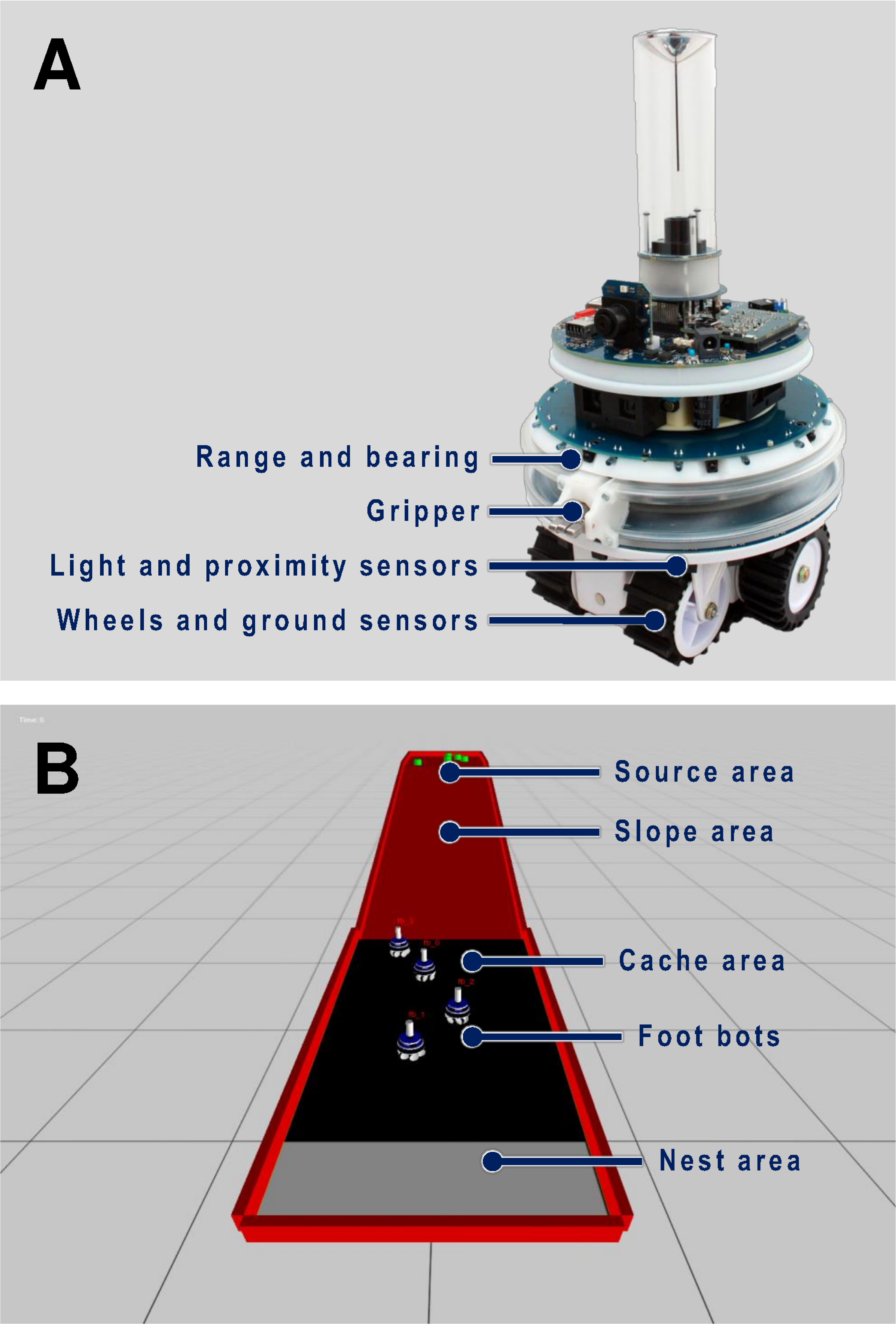
Credit: Ferrante et al.
Inspired by ants
Their experimental setup was inspired by the type of task partitioning observed in Atta leafcutter ants that collect leaves and other plant material as a substrate for a fungus that is farmed as food.
In a first set of experiments, “dropper,” “collector,” and “generalist” foraging strategies were implemented:
— Dropper strategy: A dropper robot is a robot that climbs the slope area and never descends it again, continuously collecting items from the source area and dropping them to the slope area.
— Collector strategy: A collector robot is a robot that never climbs the slope area. Instead, it continuously collects items from the cache (when present) and brings them back to the nest. If it cannot find any items, the collector robot keeps exploring the cache area by performing random walk, until an item is found.
— Generalist strategy: A generalist robot is a robot that performs a standard foraging task. It climbs the slope and explores the source area, collects items, and brings them all the way back to the nest. The generalist robot does not explore the cache area, but in case it finds an item at the cache while going towards the source, it collects it and brings it back to the nest.
Note: Ferrante tells Inside Outer Space: “In the second set of experiments, it was shown that those strategies (above) do not need to be available a priori in order to evolve task specialization. In fact, this has been the first time that both task allocation and the capability to carry out the individual tasks evolved together.”
Teams of robots
From an engineering perspective, Ferrante and colleagues report, “our nature-inspired evolutionary method of Grammatical Evolution clearly has significant potential as a method for the automated design of adaptively behaving teams of robots.”
For more information on this research, go to:
http://journals.plos.org/ploscompbiol/article?id=10.1371/journal.pcbi.1004273

Mastcam Right image on Sol 1064 on August 4, 2015.
Credit: NASA/JPL-Caltech/MSSS
NASA’s Curiosity Mars rover has reached its third anniversary of landing in Gale crater.
“It’s been a great three years, full of a number of important science discoveries,” observes Lauren Edgar, a research geologist at the USGS Astrogeology Science Center in Flagstaff, Arizona and a member of the Mars Science Lab’s science team.
Edgar said that to celebrate the rover’s start of its 4th year on Mars, Curiosity is driving away from the Lion outcrop, and back toward the Missoula outcrop.
“I feel like Curiosity has really grown up in these past couple of years, and she’s acting like a true field geologist – quickly interpreting key science data, and revisiting sites that will improve our understanding of the geologic history here,” Edgar explained in a website posting.
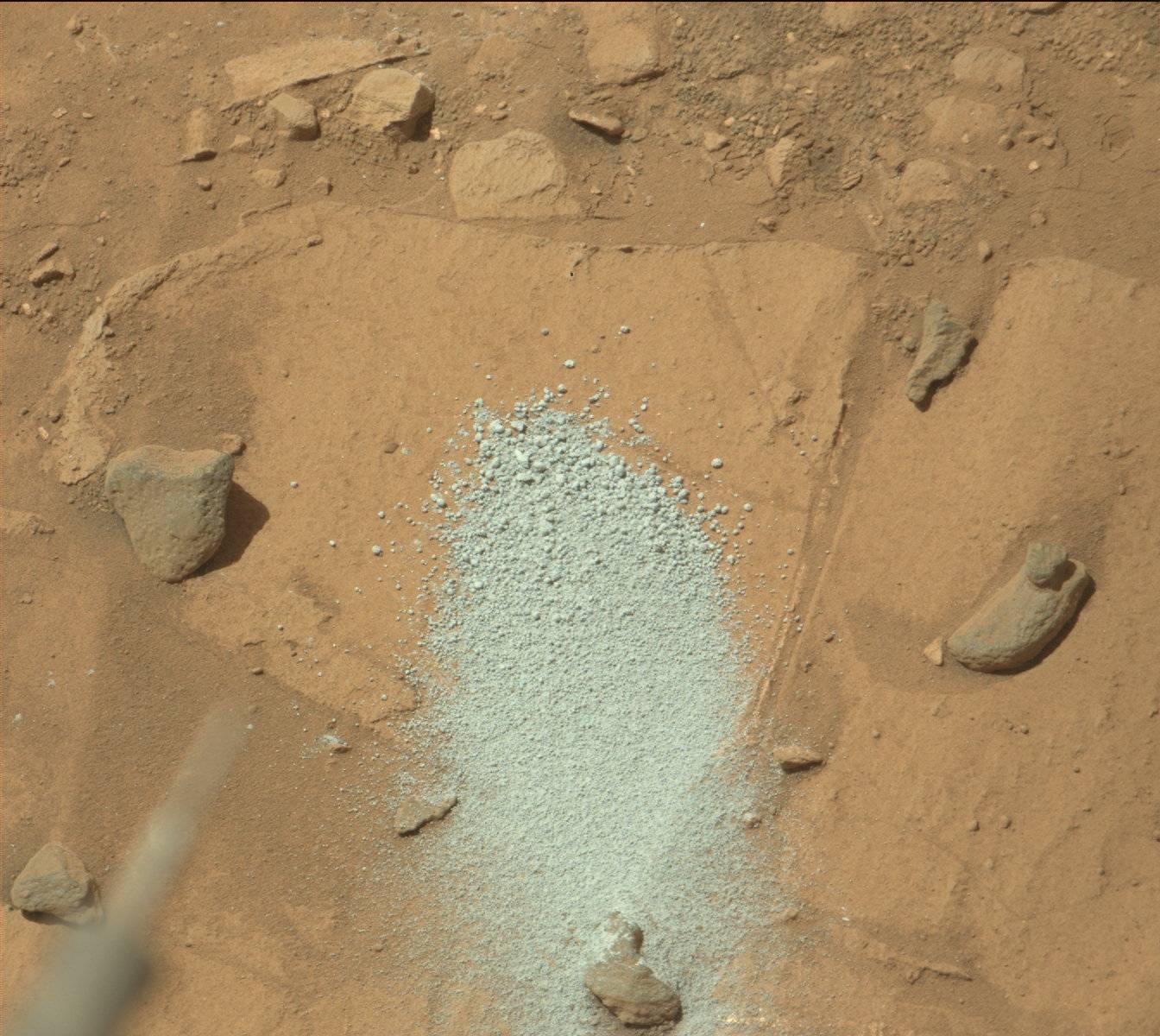
Mastcam Right image on Sol 1064 on August 4, 2015.
Credit: NASA/JPL-Caltech/MSSS
Dump pile
The plan called for Curiosity to make a couple of final observations at Lion before driving away and acquire ChemCam and Mastcam images of the target “Moiese” to look for chemical variations across the outcrop.
Time has been taken to acquire images of a “pre-sieve” dump pile. Pre-sieve refers to the sample material that didn’t make it through the sieve, in other words, the larger size fraction.
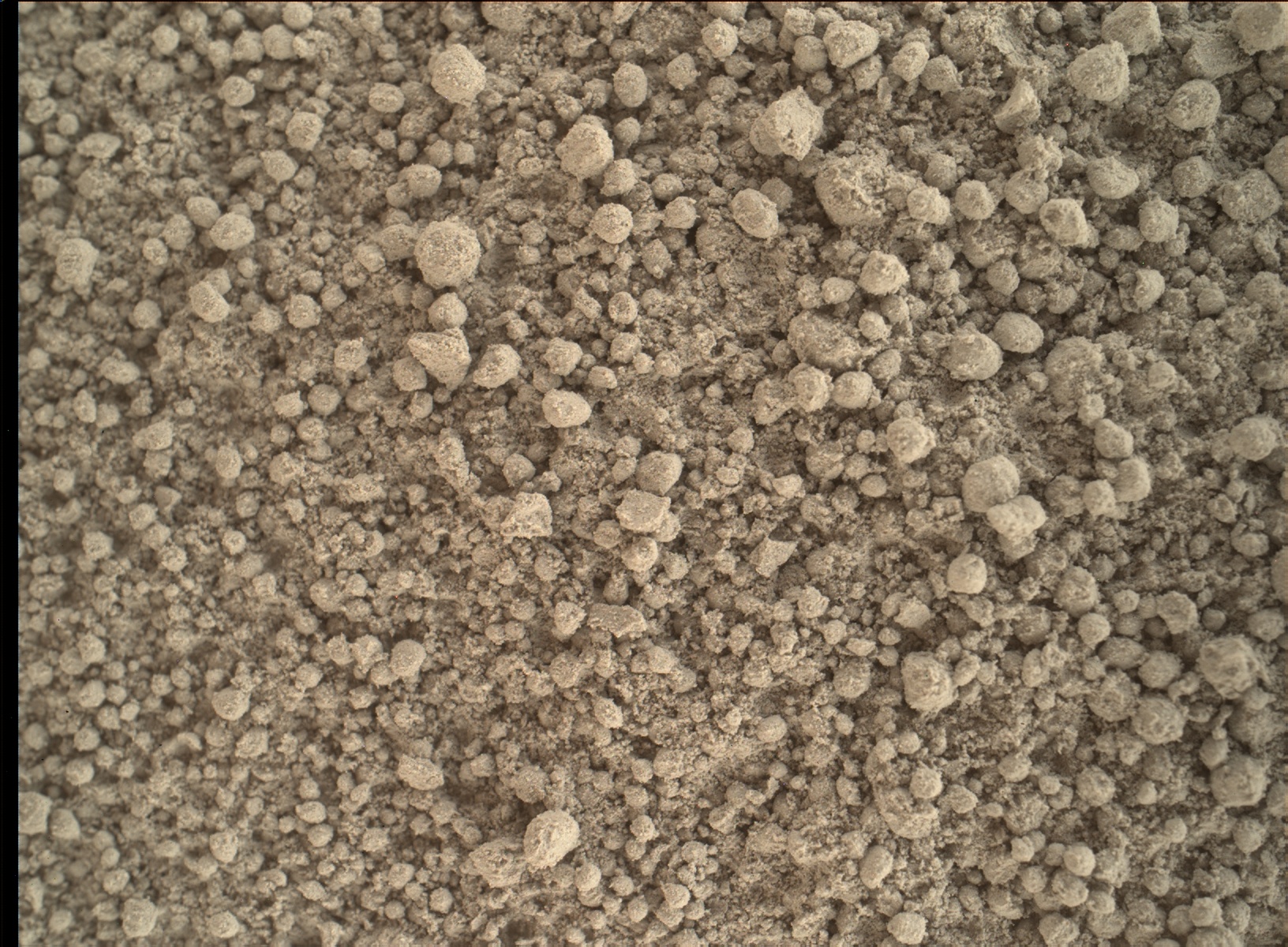
Image from Curiosity’s Mars Hand Lens Imager (MAHLI), located on the turret at the end of the rover’s robotic arm, taken on August 5, 2015, Sol 1065.
Credit: NASA/JPL-Caltech/MSSS
“By dumping it on the ground we can see what the larger size particles look like and whether they have a composition that varies from that of the full mix of particle sizes,” Edgar adds.
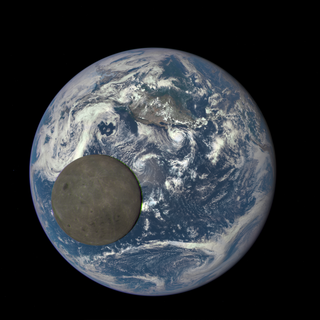
Credits: NASA/NOAA
A NASA camera — the Earth Polychromatic Imaging Camera (EPIC) — aboard the Deep Space Climate Observatory (DSCOVR) satellite has captured a unique view of the Moon as it moved in front of the sunlit side of Earth last month.
The series of test images shows the fully illuminated “dark side” of the moon that is never visible from Earth.
These images were taken between 3:50 p.m. and 8:45 p.m. EDT on July 16, showing the moon moving over the Pacific Ocean near North America.
The Earth’s North Pole is in the upper left corner of the image, reflecting the orbital tilt of Earth from the vantage point of the spacecraft.
The same side of the moon always faces an earthbound observer because the moon is tidally locked to Earth. That means its orbital period is the same as its rotation around its axis.
An animation features actual satellite images of the far side of the moon, illuminated by the sun, as it crosses between the DSCOVR spacecraft’s Earth Polychromatic Imaging Camera (EPIC) and telescope, and the Earth – one million miles away.
Check out this YouTube video:
https://www.youtube.com/watch?v=DMdhQsHbWTs
Also, for more detail on this celestial photo-shoot, go to:

