Archive for the ‘Space News’ Category
 Author:
  September 2nd, 2026
Wait-a-Minute!
Image credit: Barbara David
Yet another wait-a-minute moment in space exploration?
The in boxes at NASA are now pondering a petition regarding the plasma physics of the outer heliosphere.
Retired NASA chief scientist, James Green, has kick-started the petition “expressing the critical need for continued heliophysics measurements by the New Horizons mission and respectfully ask NASA to ensure future data collection and downlink of all the mission’s data.”
New Horizons is the interplanetary space probe launched back in January 2006, the first spacecraft to reconnoiter far-off Pluto…and continues to plow outward and onward on its exploratory trajectory.
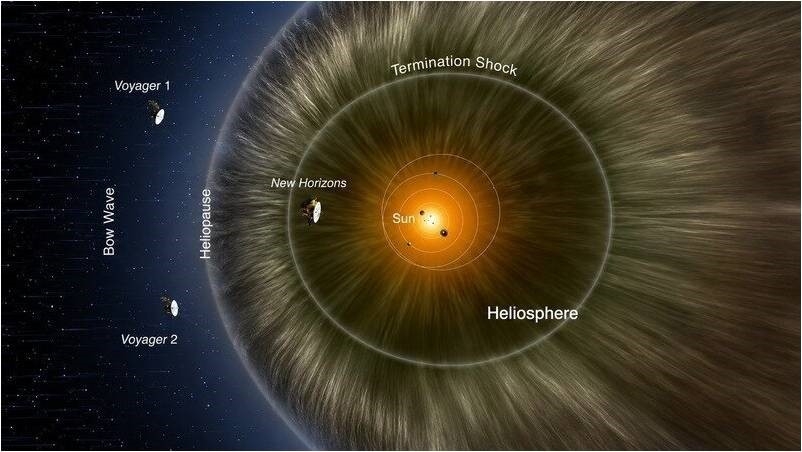
Image from Petition: “Heliophysics Community Support for Continued Measurements by NASA’s New Horizons Mission”
Unique measurements
That probe is projected to operate until 2050 and is currently observing the radial evolution of the solar wind, Pick-Up Ions (PUIs), propagating solar disturbances, energetic particles, Galactic Cosmic Rays (GCRs) and dust throughout the entire heliosphere.
New Horizons is equipped to make “historically unique measurements” of H+ and He+ interstellar PUIs that NASA’s Voyager Mission was not equipped to do.
Bottom line: New Horizons is the only spacecraft that can follow up on what Voyager found, and with more advanced instrumentation.

Onward, ever deeper. NASA’s New Horizons.
Credit: NASA/APL/SwRI
Threatened: downlink data
“It is our understanding that continued New Horizons heliophysics measurements are threatened unless NASA finds a way for the Heliophysics Division to fund the data collection and downlink,” the petition notes.
As the only spacecraft now in the outer heliosphere, New Horizons is therefore an essential element to make unique, on-the-spot heliophysics measurements. As the petition states, those remote observations represent “a unique opportunity that will never again arise and must be fully exploited.”
If these New Horizons measurements were to cease, as currently planned, without the Heliophysics Division funding in FY27 and beyond, the petition states “it would signal that NASA cedes the farthest frontier of space exploration.”
The petition is specifically pitched to Nicola Fox, NASA Associate Administrator, Science Mission Directorate, along with Joseph Westlake, Director of the space agency’s Heliophysics Division, and Louise Prockter, Director, of NASA’s Planetary Science Division.
Take a look at the petition that supports continued measurements by NASA’s New Horizons mission at:

Wait-a-Minute!
Image credit: Barbara David
 Posted in

Up close and personal! Scene from Earth vs. the Flying Saucers circa 1956.
Image credit: Columbia Pictures
A new poll has found that about half of Americans, 49 percent, think all Unidentified Flying Object (UFO) sightings can be explained by human activity on Earth or natural phenomena.
That poll also found 37 percent believe at least some UFOs have been alien spacecraft visiting Earth from other planets or galaxies.
Another 13 percent do not have an opinion.
These findings come as the Department of War continues to release previously classified UFO files under a President Donald Trump executive order.
Latest findings
These latest findings come from a Gallup poll, taken July 1-19.

Credit: U.S. Department of Defense/To The Stars Academy of Arts & Science
Other data points found in the poll include:
- Americans were also more inclined to associate UFOs with earthly than supernatural causes the two prior times Gallup measured this, although the alien-skeptical share was higher in 2019 (60%) than in 2021 (50%) and today.
- Meanwhile, rather than become increasingly convinced that some sightings have been alien spacecraft, the percentage of Americans who are unsure has grown, from 7% in 2019 to 13% in 2026.
The demographic subgroups showing the greatest skepticism about UFOs being alien spacecraft are men, young adults aged 18 to 29, college graduates, residents of the Midwestern and Western U.S., and Democrats.
Beyond general awareness
Also, the poll notes that many people are familiar with UFOs – but few have seen one.
More than four in five Americans, 83%, say they have heard or read about UFOs. That is similar to the 86% recorded in 2019 but below readings from earlier decades, including 94% in 1973 when the question was first asked.
Beyond general awareness, 17 percent of Americans say they have personally seen something they thought was a UFO. This is essentially unchanged from 16% in 2019 but higher than Gallup readings between 1973 and 1996, which ranged from 9% to 14%.
U.S. adults who say they have seen something they thought was a UFO are much more likely than those who have not to believe that some UFOs are alien spacecraft (61% vs. 33%, respectively).

Courtesy: CIA
Reports of UFO sightings are highest among men, middle-aged adults, those without a college degree, and residents of the Eastern and Western U.S.
What does the U.S. government know?
The new Gallup poll also notes that a majority say the U.S. government is withholding UFO information.
Seventy-eight percent of Americans say the U.S. government knows more about UFOs than it is telling the public, higher than the 68% and 71% who said so in 2019 and 1996, respectively.
Just 17 percent now say the government is not withholding information, down from 29% in 2019 and 19% in 1996.

Project Blue Book looked into lights photographed in 1952 over a Coast Guard air station in Salem, Massachusetts.
Credit: U.S. Coast Guard
Classified files
There is little difference in views across subgroups, including by party identification.
The widespread belief that the government is withholding information about UFOs comes after Trump ordered the Pentagon and other federal agencies in February to begin identifying and releasing government files related to UFOs and extraterrestrial life.
The Pentagon released its first batch of previously classified files in May, with additional releases continuing since.
To go the full story — “Americans Still Skeptical That UFOs Are Aliens” — as written by Megan Brenan, a senior editor at Gallup, go to:
https://news.gallup.com/poll/713765/americans-skeptical-ufos-aliens.aspx

Image credit Gallup
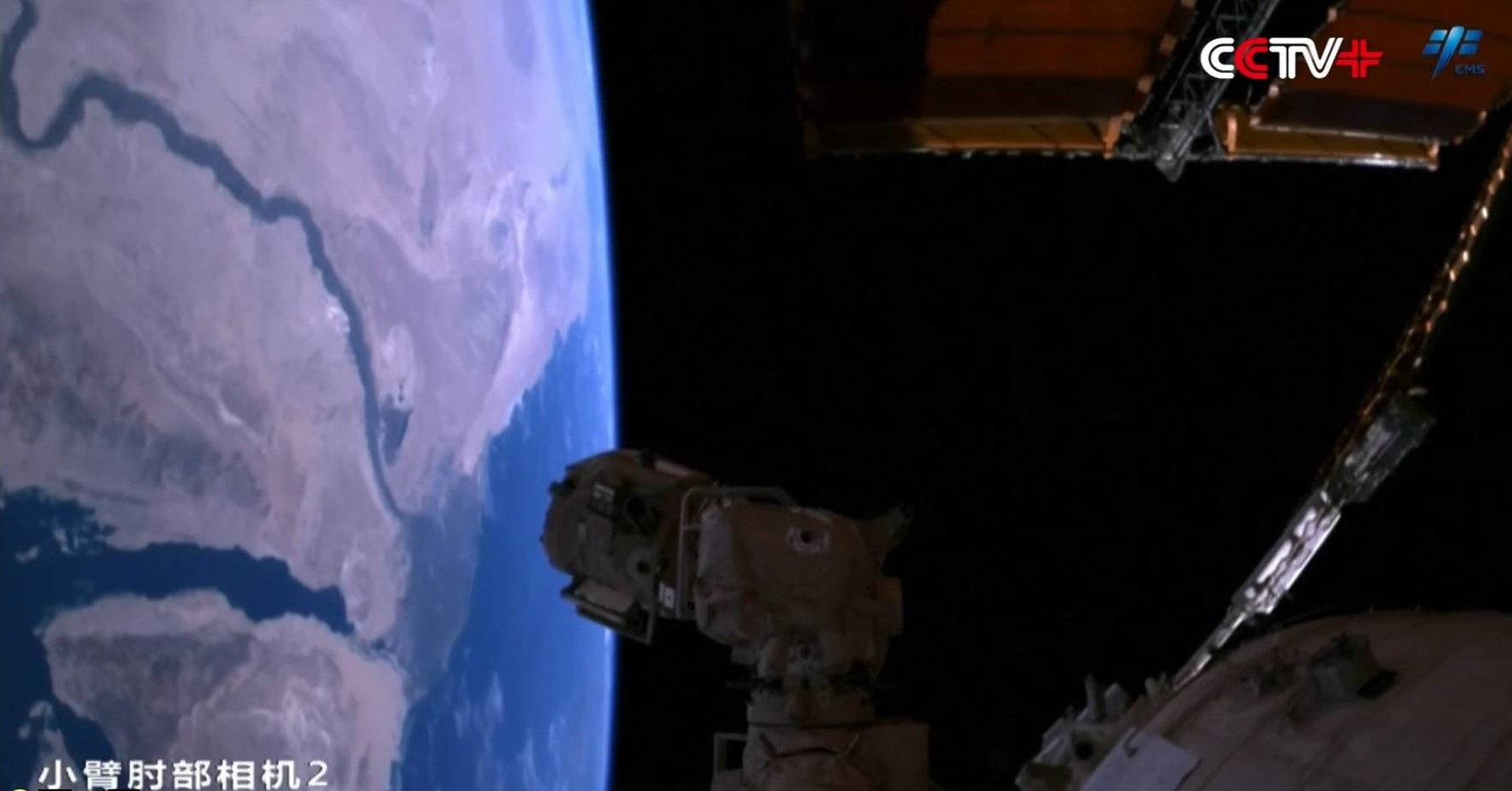
Image credit: CCTV/Inside Outer Space screengrab
The Shenzhou-23 crew aboard China’s orbiting space station completed their mission’s first series of extravehicular activities on Friday, according to the China Manned Space Agency.
The Shenzhou-23 crew aboard China’s orbiting space station completed their mission’s first series of extravehicular activities on Friday, according to the China Manned Space Agency (CMSA).
The astronaut trio — Zhu Yangzhu, Zhang Zhiyuan and Lai Ka-ying — worked for approximately 5.5 hours and completed their tasks, assisted by the space station’s robotic arm and ground support teams.
The two spacewalkers — Zhu and Zhang — installed debris shields and repaired the station’s solar panels, according to the CMSA.
The three astronauts were launched aboard the Shenzhou-23 spacecraft on May 24 for an extended in-orbit mission.
Go to this video of the spacewalk at:

Image credit: SpaceX

Image credit: SpaceX

Image credit: SpaceX

Image credit: SpaceX

Image credit: SpaceX
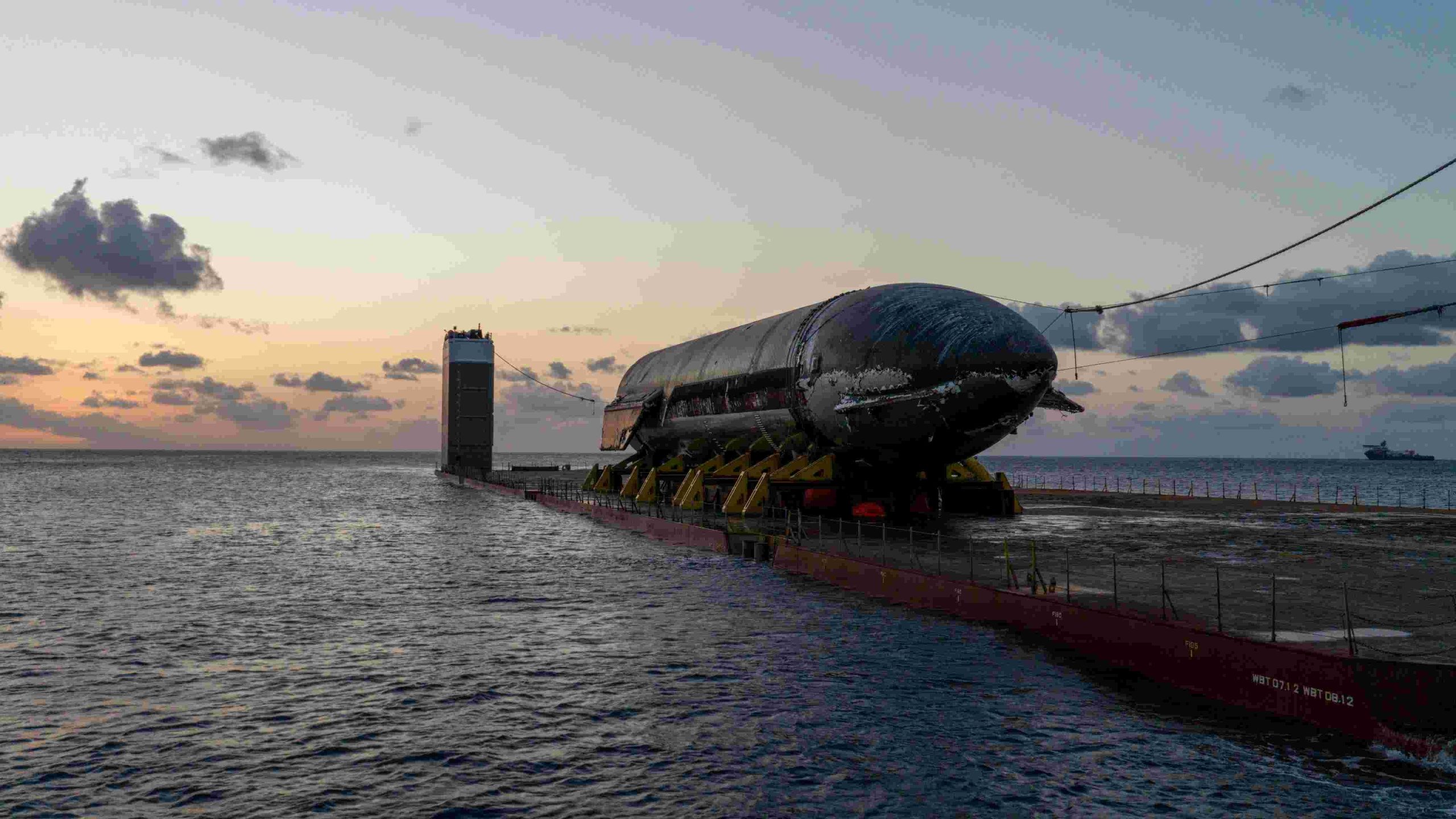
Image credit: SpaceX
Starship Recovery: “SpaceX engineers spent several days inspecting Ship 40 in the waters off Christmas Island. They collected heatshield samples and gained vital insight into how the vehicle handled reentry with improvements now planned on future vehicles.”

Image credit: NASA/GSFC
That botched re-boost/rescue of NASA’s Swift observatory now means an uncontrolled downing of the multi-wavelength scanning spacecraft that was fine-tuned to digging deep into gamma-ray burst science.
The Neil Gehrels Swift Observatory was hurled into orbit back in November of 2004. Over the years, it carried out its duties of studying gamma-ray bursts, the most powerful explosions in the universe, and other cosmic objects and events.
But now the spacecraft is destined for a fiery fall from space.
“The most likely outcome is that any surviving debris will land in the sea, but there is a chance it could impact a built-up area and cause a casualty,” said one reentry expert.
For more details, go to my new Space.com story – “After failure of private rescue mission, NASA’s Swift space telescope will crash back to Earth. But when and where?” – at:
A bullish look at a future lunar economy predicts that the infrastructure, markets and strategic forces for returning to the Moon could generate up to $566 Billion in economic value through 2050.
The report has been assembled by Deloitte – an organization that tracks emerging technologies and markets, “ones that feel speculative today but may reshape industries tomorrow,” the group explains.
“Building the Lunar Economy: How a sustained presence on the Moon could transform life, industry, and infrastructure on Earth and beyond” takes a dedicated look at what a sustained lunar presence could create for companies around the globe.
Growth scenarios
The report’s bottom line is estimating that the lunar economy could potentially generate $343 billion in cumulative potential economic value through 2050 under a conservative growth scenario, and $566 billion under an accelerated growth scenario.
Deloitte’s analysis considers both the infrastructure required to enable lunar activity and the downstream markets that could emerge once that infrastructure exists.
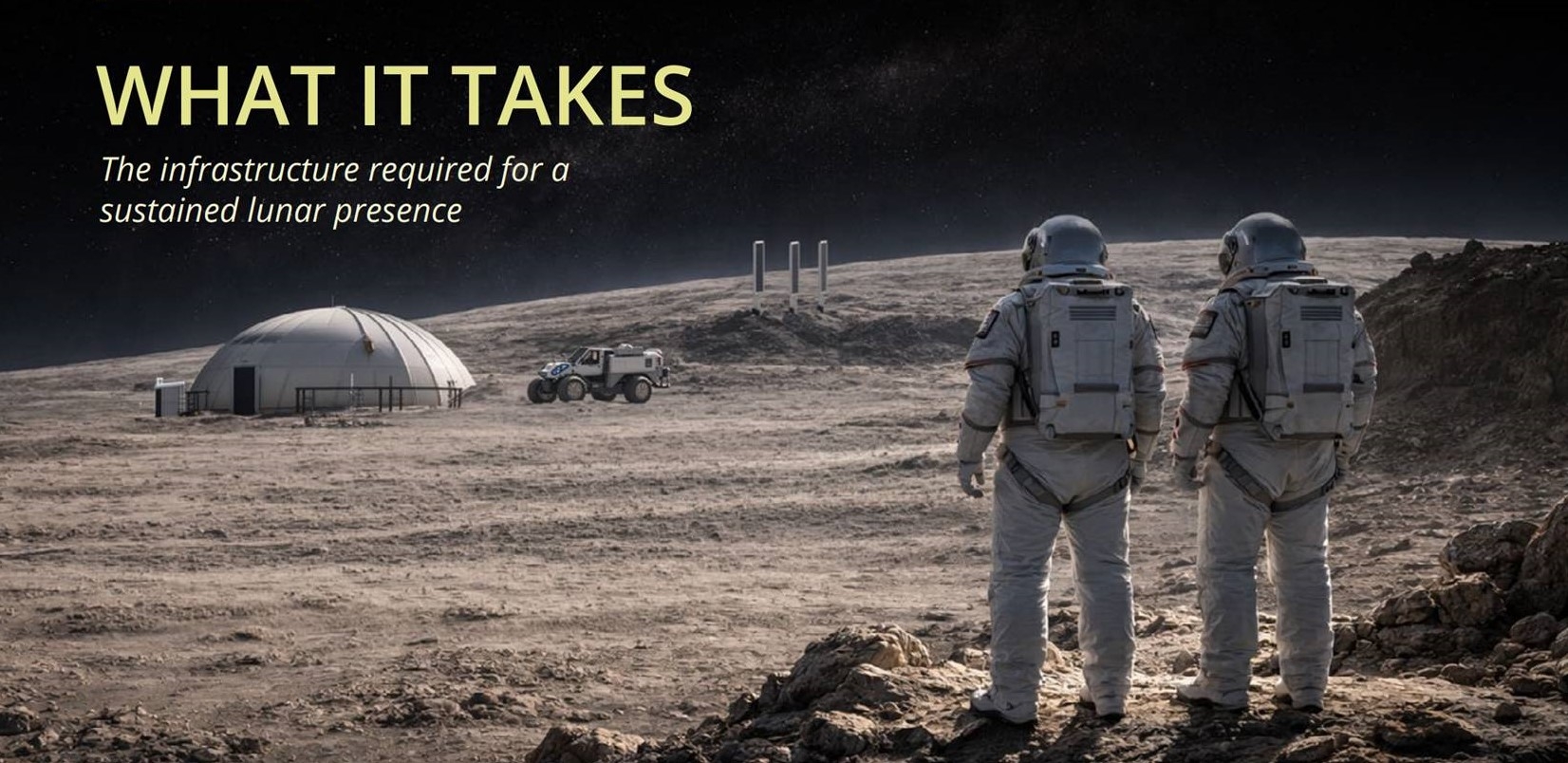
Image credit: Deloitte
“The debate is no longer whether humanity is going back to the Moon. It is what happens once we stay,” the report points out.
Downstream demand
The Deloitte appraisal, however, also cautions that a thriving lunar economy is not inevitable.
“Some markets, such as lunar data and national security services, may develop sooner because they do not require the full lunar economy to exist first. Others, such as lunar propellant, helium-3 extraction, and space-based compute may depend on infrastructure, technology, and downstream demand that are still emerging,” Deloitte adds.
Over the past year, Deloitte team members spoke with a wide swath of experts, from engineers, investors, economists, as well as government leaders “to understand what is actually being built and which opportunities are likeliest to matter.”
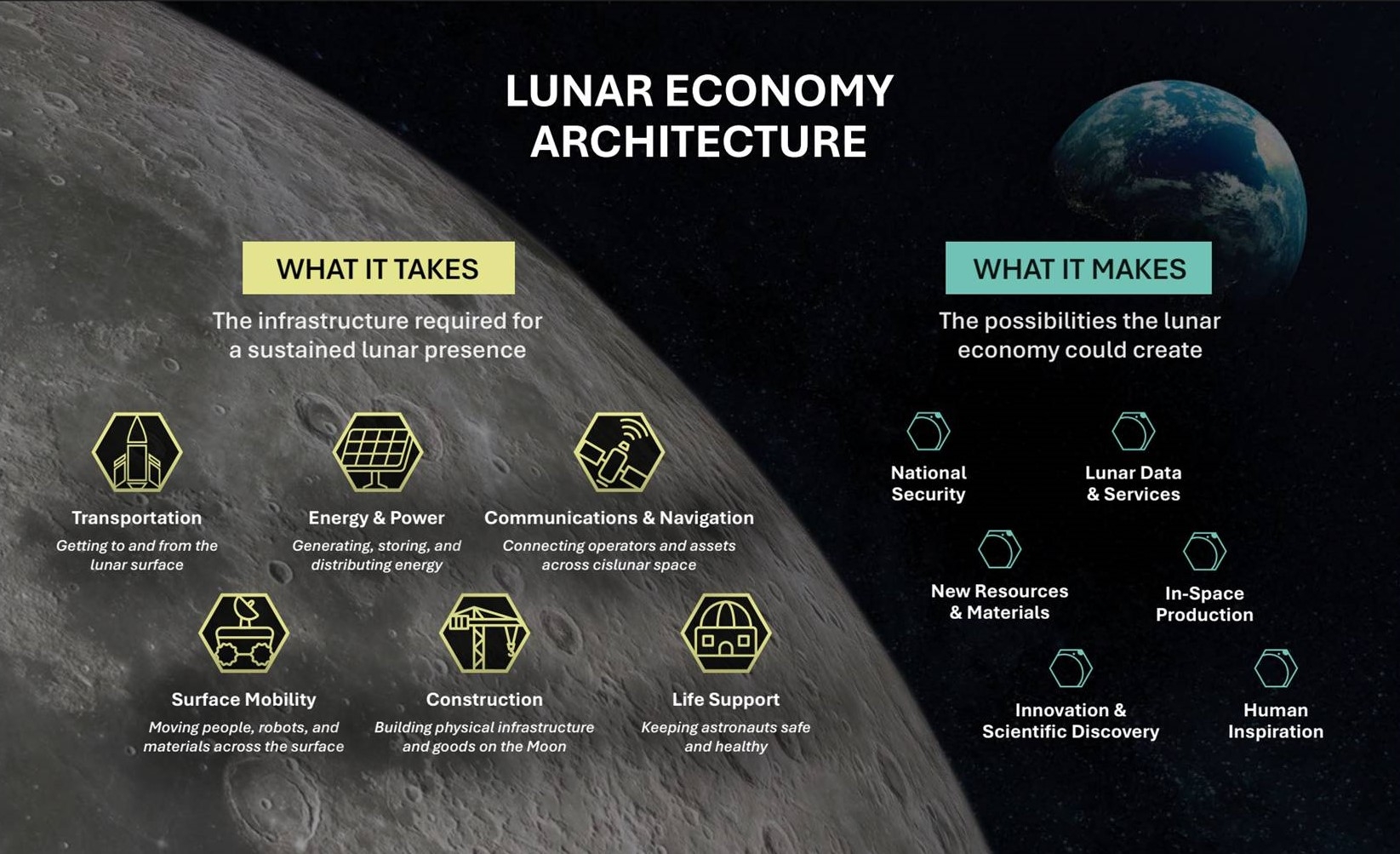
Image credit: Deloitte
Standards and norms
Falling launch costs, coupled with new public-private procurement models, the report states, are reshaping the economics of sustained lunar operations.
For governments, the infrastructure being funded today is setting the standards and norms that may govern lunar activity for decades. “The countries that build first may likely shape the rules,” the report suggests.
For space companies, the ones gaining traction are designing for multiple customers, building interoperable systems, and operating on commercial timelines. A competitive advantage in this market is compatibility, the report observes.
New possibilities
For industries beyond space, a thriving lunar economy is unlikely to be built by the space sector alone. It will likely draw on capabilities from across the broader economy, including advanced manufacturing, logistics, robotics, communications, energy, and materials, states the report.
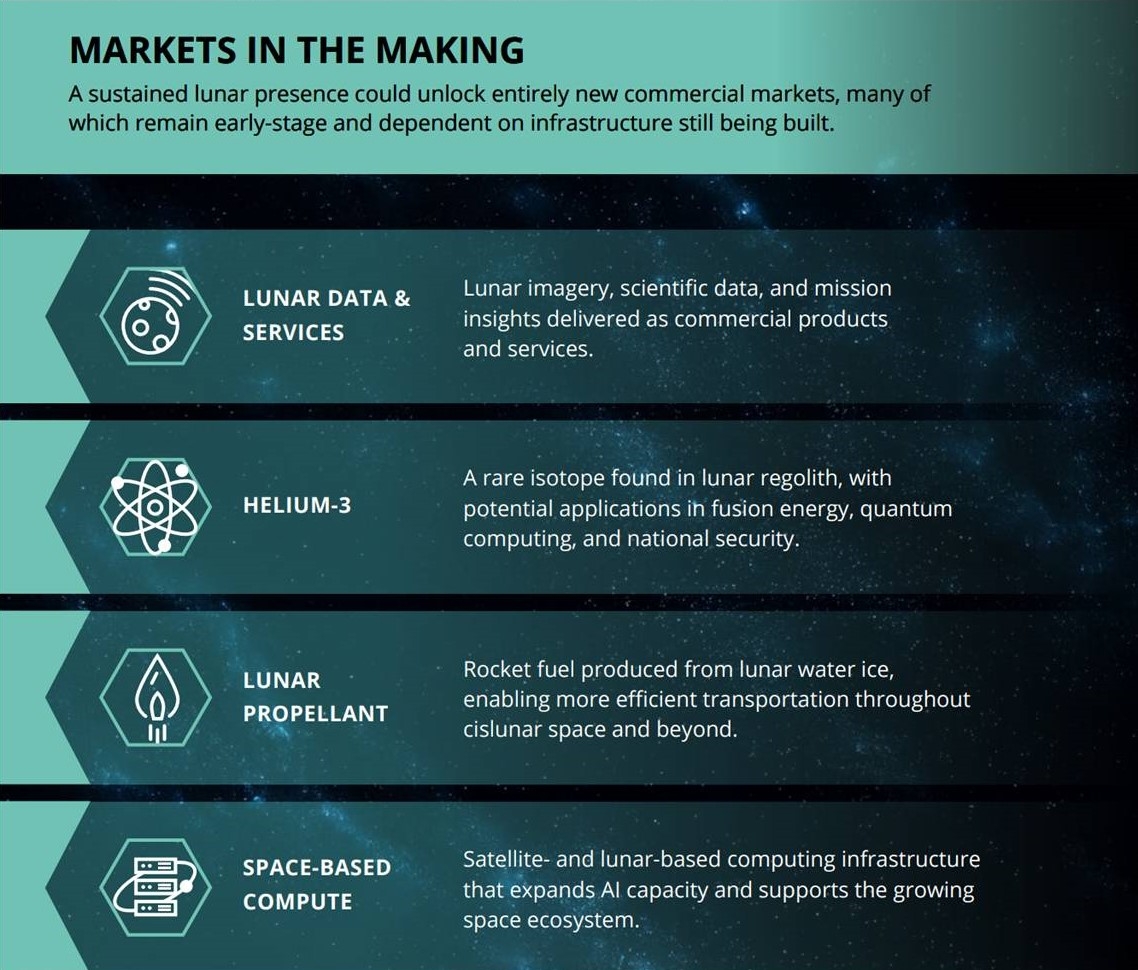
Image credit: Deloitte
“Some of the companies that contribute to the lunar economy may never even think of themselves as space companies, though they may be playing a critical role.”
The technologies developed for the Moon “may reshape industries on Earth, creating new innovations that inspire humanity to dream bigger,” the report states.
As of today what new possibilities may unfold in the next 50 years to come is a TBD.
“For the first time in more than half a century, we now have the opportunity to find out,” states the report.
To access this unique and exploratory report, go to:
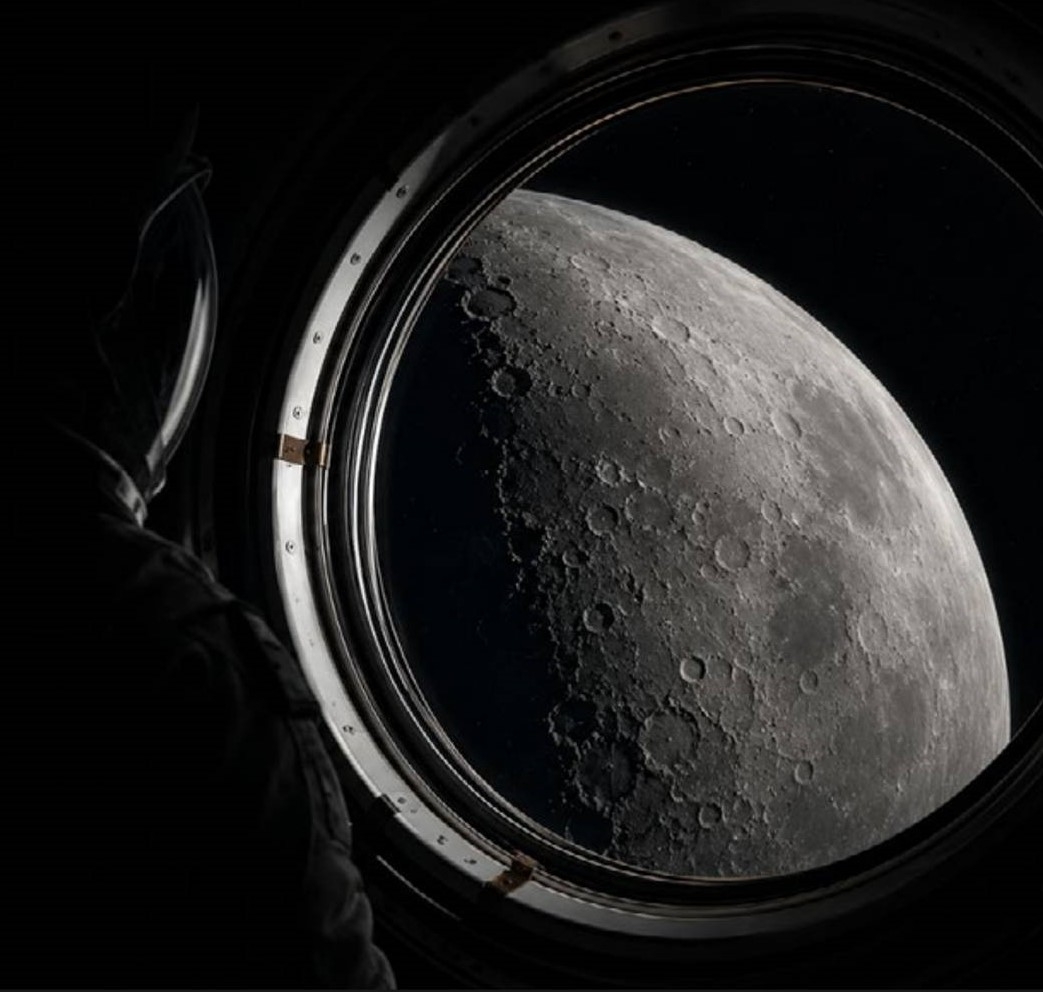
Image credit: Deloitte

China’s Chang’e-7 lunar probe sitting atop its Long March-5 Y14 carrier rocket has been rolled back to the assembly and test building at the Wenchang Space Launch Site in Hainan.
Chang’e-7 was ready to head for the Moon’s south pole on August 24 (Beijing Time) in a search for evidence of water ice.
“China’s Chang’e-7 launch will not proceed in planned window this year” – that was the word from China Central Television (CCTV).
Confluence of issues
While not cancelled, the Moon mission was delayed due to an apparent confluence of issues.

Candidate landing region of China’s Chang’e-7 lunar lander.
Image credit: Yang Liu/Wang C. et al.
“Chang’e-7 will rely primarily on solar power, meaning it must arrive at the right time to take advantage of favorable lighting conditions. The spacecraft needs to reach and land in the target area before a high-quality period of continuous sunlight begins,” reports China Global Television Network (CGTN).
“Preliminary estimates suggest that the total period each year offering particularly favorable lighting conditions for stable exploration may be only around 100 days,” CGTN reports. “These opportunities do not occur every month, and they cannot necessarily be recovered simply by launching a few days later.”
Timing
So the word posted on the China Manned Space Engineering Website explains:
“Based on the principles of prudence, reliability, and absolute safety, and after comprehensive assessment, the Chang’e-7 mission does not meet the launch requirements and cannot be carried out within the scheduled launch window this year.”
CGTN explains that is why official statements noted that Chang’e-7 could not be launched during its planned window this year, rather than simply saying that the launch has been delayed by a few days.
“For a mission to one of the Moon’s most challenging environments, timing is not just about when the rocket leaves Earth. It is about making sure the spacecraft arrives at the Moon at exactly the right moment,” CGTN points out.

Image credit: CCTV/Inside Outer Space screengrab
Illuminating decision
So it looks as if a tight launch window, a blossoming and troublesome Tropical Depression Narra, the need to have the lunar lander touch down precisely at an illuminated site near Shackleton Crater, as well as use of a Chinese lunar relay satellite to handle telecommunications between Earth and spacecraft – all have conspired to re-calibrate the sendoff of Chang’e-7.
Indeed, typhoon Narra is forecast to land in China between late Tuesday night and Wednesday. Typhoon Saudel may hit the Chinese coast between late Thursday night and Friday morning, according to the National Meteorological Center (NMC).
“It is my understanding that due to impending weather (tropical storm in the Gulf of Tonkin off Hainan Island), the launch of Chang’e-7 has been postponed beyond this week,” said James Head, a leading lunar expert at Brown University in Providence, Rhode Island.
“Launch rescheduling is a complex algorithm for orbital study of the landing site with the optimal in-orbit time and also optimizing the landing illumination conditions,” Head told Inside Outer Space.
For a detailed look at the challenging Chang’e-7 mission, go to this pre-delay story focused on this innovative mission by China at:

A Heart for Space: An Astronaut’s Guide to Achieving the Impossible by Eiman Jahangir; Forefront Books; August 2026; 224 pages (Hardcover); $26.00.
In August of 2024, the author of this insightful and inspiring book flew aboard Blue Origin’s New Shepard suborbital rocket.
“People often assume that achieving a dream means following a straight line,” explains Jahangir. “My experience taught me the opposite. Dreams evolve. Doors close. New opportunities appear. The key is staying in motion long enough to recognize them.”
A Heart for Space is just that, a compassionate account of Jahangir’s dedication to travel spaceward.
On August 29, 2024, he became the first Iranian American man to travel to space and the first commercial physician astronaut. He is a professor of medicine and radiology in Nashville, Tennessee, where he serves as a leading cardiologist. Jahangir has authored more than fifty peer-reviewed publications and book chapters advancing the understanding of heart health.
This discerning and personal story is told in eight chapters, from Iran with love, why you need a flexible mindset to get ahead, to one moment can change everything and the author’s view from space. Jahangir notes the powerful impact of the “Overview Effect,” the psychological shift manifested in many space travelers when they view our home planet from space.
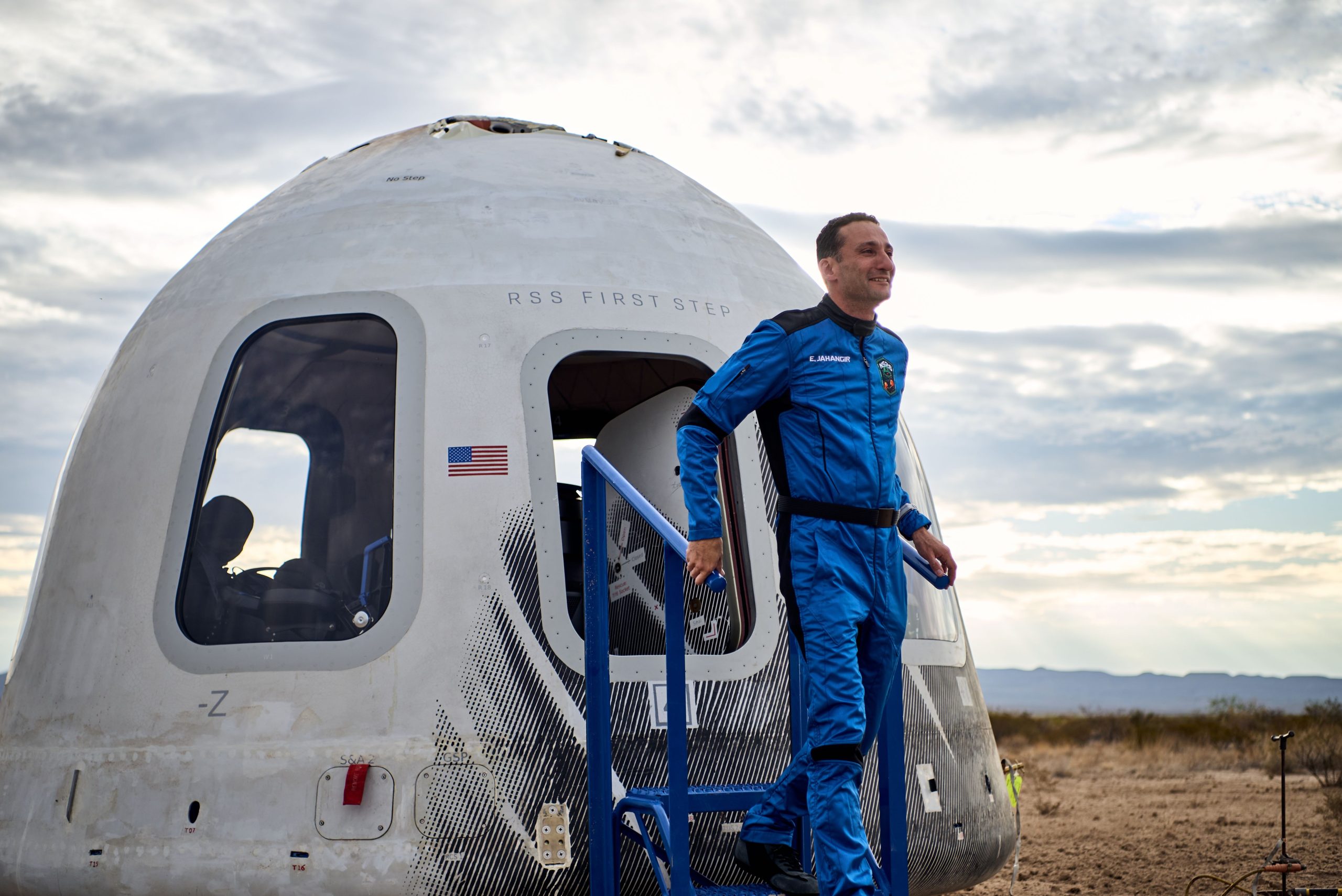
Image credit: Blue Origin/Eiman Jahangir
Vaulting to space via New Shepard, Jahangir recounts his crossing of the Karman Line, the internationally accepted border of space. “That four-year-old boy who started dreaming of space after setting foot in America was now looking down at the Earth from space,” he writes. The ten minute and eight second sojourn gave him clarity of purpose, enough rocket oomph and trajectory for Jahangir’s to write “8 steps to Chasing Your Dreams.”
Not only does the author motivate the reader to enjoy the ride of life. Within the book, there are appealing interviews he’s done with modern space pioneers, like current NASA administrator Jared Isaacman; Nicole Stott; Sian Proctor; Kellie Gerardi; Hayley Arceneaux; Eytan Stibbe; Chris Huie; and Drew Gaffney.
Jahangir has captured their candid reflections on risk, identity, leadership, and perseverance to shed light on what it takes to fulfill goals and ambitions, such as reaching orbit literally and figuratively.
For more information on this book, go to:
https://www.forefrontbooks.com/book/a-heart-for-space/
Also, visit his informative website at:
https://www.eimanjahangir.com/

Image credit: Eiman Jahangir
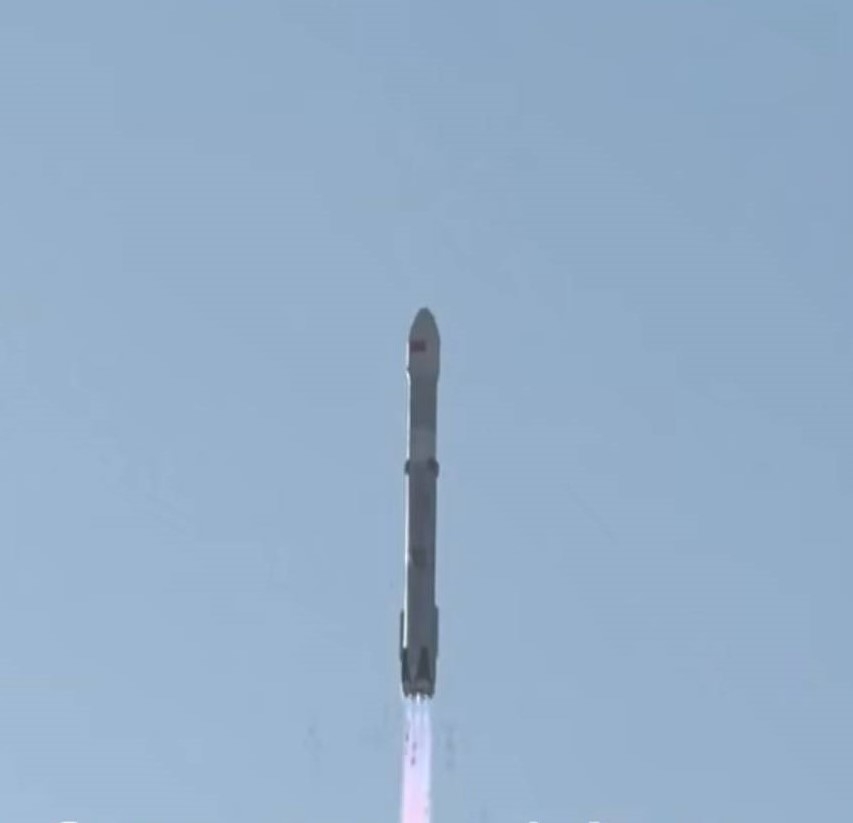
Image credit: CCTV/Inside Outer Space screengrab
China launched the reusable Zhuque-3 Y2 rocket on Wednesday morning, achieving its first recovery of a rocket’s first stage on land. The rocket blasted off from the Dongfeng commercial space innovation pilot zone in northwest China.
The launcher’s second stage sent the Honghu-03 satellite into a preset orbit.
The first stage recovery site is located in Minqin County of Gansu Province in northwest China. The central target zone makes use of specialized fire-resistant cement.
Zhuque-3 has been developed by Chinese commercial aerospace company LandSpace. The vehicle is approved by the China National Space Administration as a new-generation liquid oxygen-methane-powered rocket for low-cost, high-capacity and high-frequency launches.
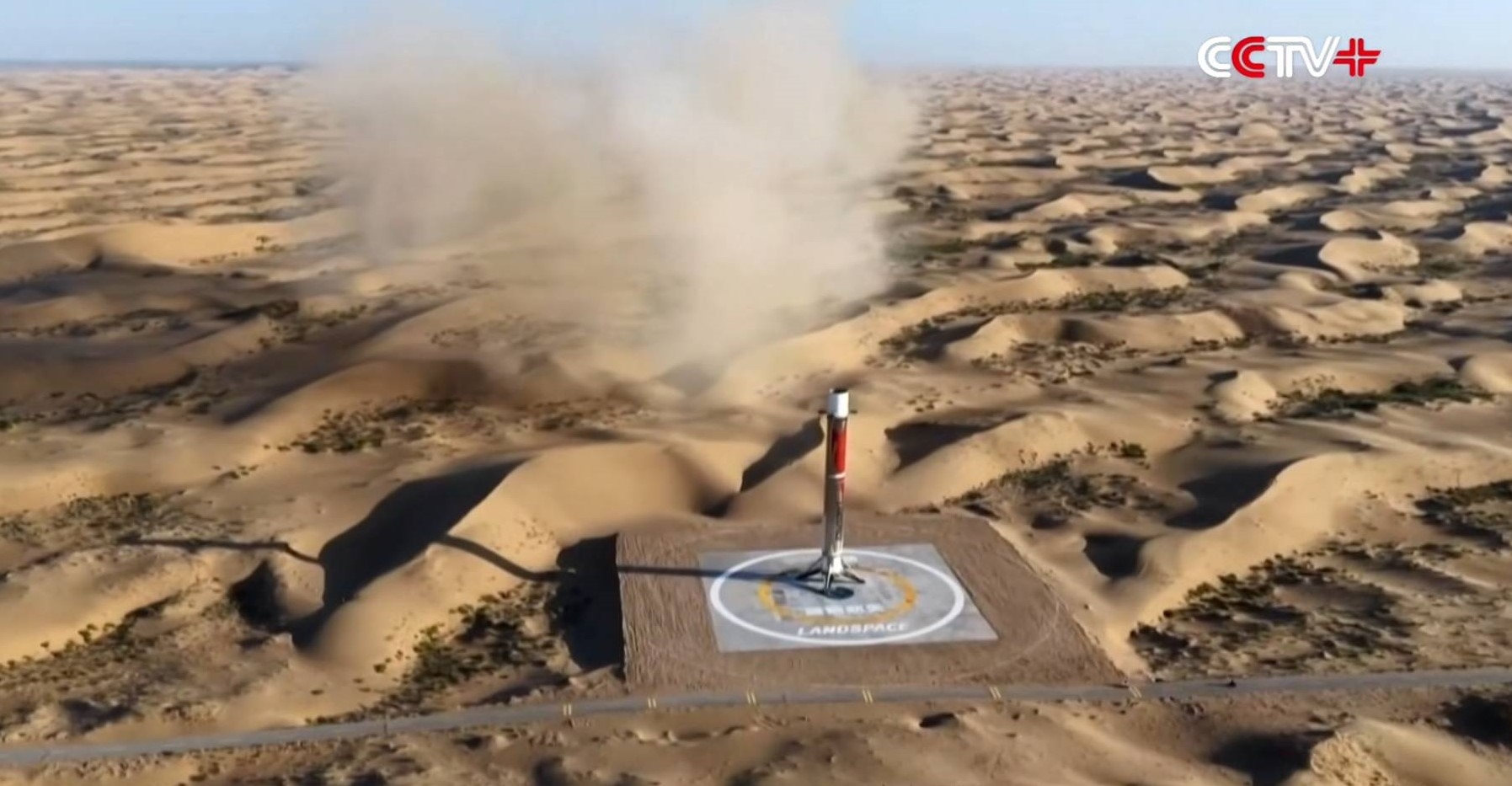
Image credit: CCTV/Inside Outer Space screengrab
First stage landing zone
The land-based recovery of the rocket’s first stage is roughly 240 miles (390 kilometers) away from the launching site. The recovery site is a 60-by-60-meter square concrete pad surrounded by desert, away from populated areas and key infrastructure.
“The recovery site is not just a place for the rocket to land, but a key infrastructure supporting the entire reusable rocket system,” said Dai Zheng, chief commander of the Zhuque-3 rocket at LandSpace. “It will handle post-landing propellant disposal, landing leg removal, and the tilting and transportation of the rocket for subsequent reuse.”
Two rocket recovery sites have been built up in the region, both now completed and ready for operations.
Go to this China Central Television (CCTV) video at:
https://www.facebook.com/reel/1592974642186045
Also, go to these impressive videos posted by CNSpaceflight at:
https://x.com/CNSpaceflight/status/2090066570756362357/video/1
https://x.com/CNSpaceflight/status/2089950963335631088/video/1
https://x.com/CNSpaceflight/status/2089951085679284291/video/1
https://x.com/CNSpaceflight/status/2089950701153820912/video/1

Image credit: NASA/Carla Escamilla
NASA’s new reduced-gravity research aircraft is on duty to support the space agency’s Artemis return-to-the-Moon, onward to Mars program.
This Boeing 737-700 reportedly spent years as a secretive U.S. Air Force flying testbed. Now it will be used to confirm astronaut lunar suits are in ready-to-go condition and other Artemis-related tasks.
NASA’s Armstrong Flight Research Center in Edwards, California took ownership of the jet from the Air Force in June 2026.
NASA’s contracting documentation indicates that the aircraft previously served as an Air Force classified military program.
Controlled flight profile
The aircraft made its final flight under the U.S. Air Force in January 2009. NASA subsequently preserved the airplane at Edwards AFB, where it is on display near the Armstrong Flight Research Center.
Now under NASA’s wing, the aircraft can follow a controlled flight profile that produces short periods of reduced gravity inside the cabin. Each roller coaster-like parabola runs for some 20 seconds, with typical flights combining 15-30 parabolas.
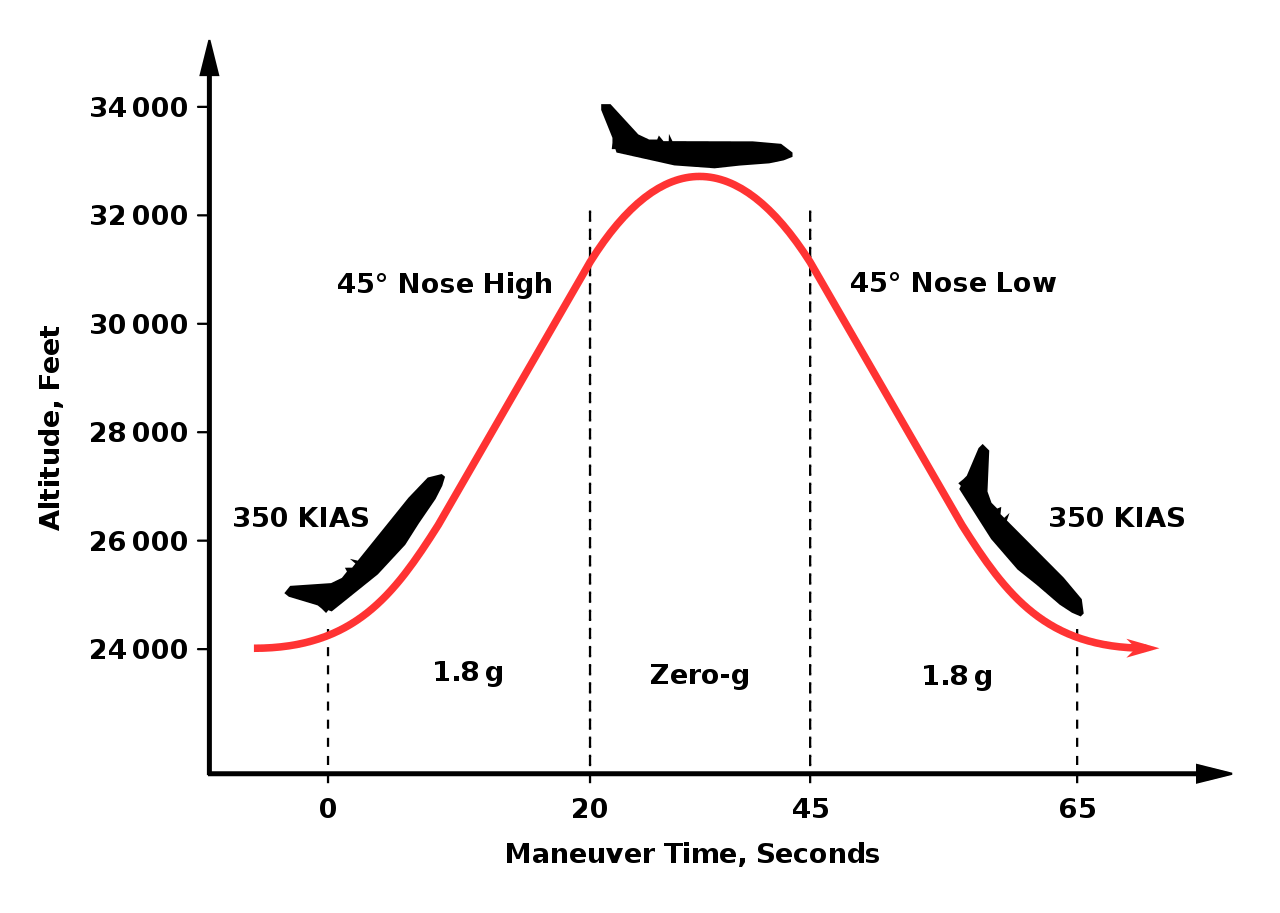
Flight trajectory for a typical zero gravity flight maneuver.
Image credit: MikeRun/NASA Reduced Gravity Research Program via Wikimedia Commons
By varying the trajectory, researchers can mimic different gravitational environments, be it the Moon or Mars.
Modifications
Earlier this year, NASA selected Denmar Technical Services of Nevada to provide aircraft modifications, maintenance, and testing services to the Human Spaceflight Mission Directorate at NASA’s Armstrong Flight Research Center in Edwards, California, and Johnson Space Center in Houston.
Once modifications are complete, NASA Armstrong will own the aircraft and oversee aircraft operations out of NASA Johnson.
For more details on the history of this plane, go to this story at:
https://theaviationist.com/2026/08/17/nasas-new-vomit-comet-has-a-secretive-air-force-past/

