Archive for the ‘Space News’ Category
 Author:
  September 7th, 2025
Image credit: CCTV/Inside Outer Space screengrab
China has unveiled their first comprehensive plan for a near-Earth asteroid defense system.
The proposed strategic concept for asteroid defense development was rolled out during the Third International Deep Space Exploration Conference held last week in Hefei, the provincial capital of Anhui in east China.
Chinese scientists are calling for global partners to work together to protect the safety of the Earth from an impact event.
Strategic concept
Wu Weiren, chief designer of China’s lunar exploration program, said the strategic concept has been put forward within the framework of the United Nations Committee on the Peaceful Uses of Outer Space (COPUOS).
According to China Central Television (CCTV), the concept “covers aspects of monitoring and early warning, in-orbit handling, and systematic response, with the goal of building a comprehensive near-Earth asteroid detection and defense system.”

Image credit: CCTV/Inside Outer Space screengrab
China’s asteroid defense system includes an integrated, space-ground collaborative monitoring and early warning system capable of precise alerts and routine operation, said Wu, also director and chief scientist of the Hefei-based Deep Space Exploration Lab, the conference’s organizer.
Observer and impactor spacecraft
Wu said the mission will follow a “fly-along–impact–fly-along” model, involving both an “observer” and an “impactor” spacecraft.
The observer will arrive first to conduct close-up surveys of the target asteroid, collecting detailed physical parameters.

Image credit: CCTV/Inside Outer Space screengrab
The impactor will then strike the asteroid at high speed, while both spacecraft, together with ground- and space-based assets, record the event using advanced imaging technologies to precisely assess the results, Wu said.
“We are going to launch a kinetic impactor to meet a small celestial body coming towards us at a distance of about 10 million kilometers. The convergence is expected to generate tremendous kinetic energy to change the orbit of this small celestial body. And the strike will prevent it from hitting the Earth again for at least several decades or even 100 years,” Wu said.
Scientific, economic value
Yan Wei, senior engineer at the National Astronomical Observatories of the Chinese Academy of Sciences, added his view.

Image credit: CCTV/Inside Outer Space screengrab
“From the scientific community’s perspective, asteroids are relatively less evolved, so they have preserved some of the original materials from the early formation of the solar system. Therefore, exploring and studying them are very helpful for understanding the origin of our solar system, as well as the evolutionary history of planets.”
Li Haiyang, senior engineer at the Deep Space Exploration Lab, told CCTV that asteroids offer very significant resource value, and may contain many scarce resources that are not found on the Earth.
“From the perspective of future development,” Li said, “it is therefore a highly promising target. We hope to launch more spacecraft to asteroids to obtain more detailed data.”
For more detail, go to this CCTV videos – “China unveils blueprint for asteroid defense mission” – at:
https://www.facebook.com/NewsContent.CCTVPLUS/videos/776416955119199
Also, go to:
https://www.cctvplus.com/news/20250906/8444015.shtml

Image credit: Illustration by John DiJulio, University of Virginia Communications
 Posted in

Signs of the times.
Image credit: NASA Watch/Keith Cowing
A new protest focused on budget cuts is slated to be held outside NASA Headquarters in Washington, D.C.
“We are a peaceful protest group, and we stand in solidarity with other scientific advocacy groups,” explains the NASA Needs Help website.
“We’re fighting for science, engineering, and exploration. Tell Congress to push back on the 2025 Presidential Budget Request that cuts NASA Science by 47%, STEM education by 100%, and NASA’s full budget by 25%!”
The protest is to be held Monday, September 15, between 8 AM to 1 PM.
Win the Space Race
As explained by the website:

Image credit: NASA Needs Help
“Current NASA leadership is already acting on the President’s and OMB’s proposed budget by beginning to greatly reduce the number of civil servants and contractors, which will be detrimental to the mission of this Agency.
Cuts to NASA’s science budget will drastically hinder NASA’s ability to produce science from current and future missions.
To win the Space Race to the Moon, NASA was prioritized and appropriated $68 billion in 1965 alone (adjusted for inflation).

Image credit: NASA Needs Help
In 2026, with goals to reach Mars, NASA’s proposed budget is only $18.8 billion.
Some of the cuts to NASA science involve turning off spacecraft that are already in space and actively sending back data. NASA contributes to agriculture, weather predictions, and safety.
Without NASA Earth science, early detection for natural disasters and forecasting would be imprecise and difficult.”
For more information, go to:

Wait-a-Minute!
Image credit: Barbara David
There is continued concern regarding disclosure of unidentified anomalous phenomena (UAPs).
So much so that next week the U.S. Congress will hold a hearing titled: “Restoring Public Trust Through UAP Transparency and Whistleblower Protection.”
To be explored on September 9 is reported information that’s being held by federal agencies on UAP and how best to examine transparency issues surrounding the Department of Defense (DoD) and the intelligence community.

Image credit: SCU
Also to be evaluated is the work and effectiveness of DoD’s congressionally mandated All-Domain Anomaly Resolution Office (AARO).
It’s yet another wait-a-minute moment in probing UAPs.
Witness list
Congresswoman Anna Paulina Luna will lead as Chairwoman of the House Declassification Task Force – a subcommittee of the House Committee on Oversight and Government Reform.
Witnesses are to be:

UAP have been reported by military pilots unlike anything they have ever witnessed.
Image credit: Enigma Labs/Lt. Cmdr. Alex Dietrich
Jeffrey Nuccetelli, U.S. Air Force Veteran
Chief Alexandro Wiggins, UAP Witness
Dylan Borland, UAP Witness, U.S. Air Force Veteran
George Knapp, UAP Journalist
Maximum transparency
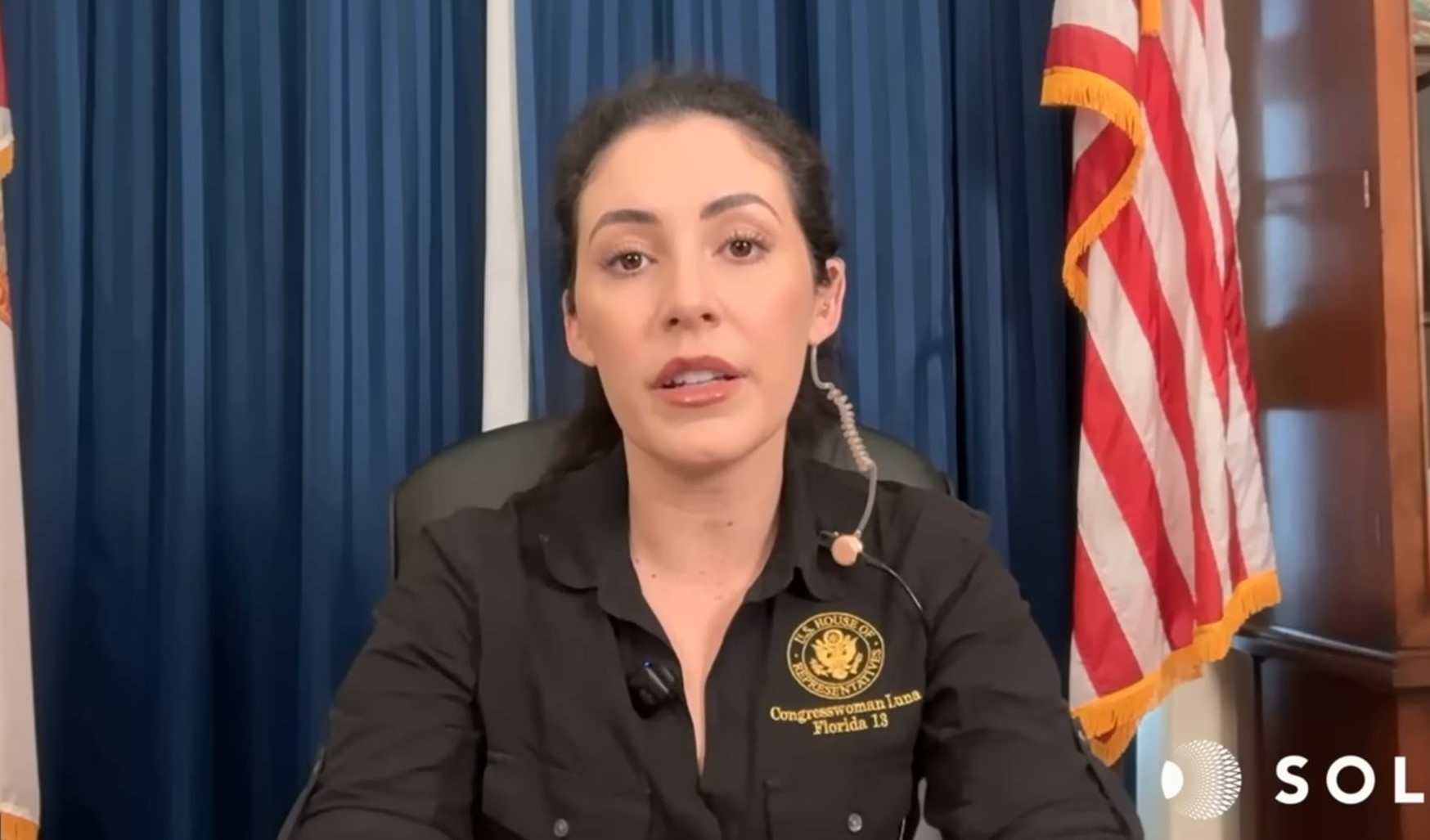
Image credit: SOL/Inside Outer Space screengrab
“The American people deserve maximum transparency from the federal government on sightings, acquisitions, and examinations of UAPs and whether they pose a potential threat to Americans’ safety,” Congresswoman Luna said in a statement.
“Whistleblowers who provide details on spending information and policies and procedures regarding the classification and declassification of UAPs should be able to do so without retribution,” Luna added. “I look forward to hearing from witnesses on how the federal government can improve transparency and provide better answers on UAPs.”
To witness for yourself the Task Force on the Declassification of Federal Secrets hearing that starts at 10:00 AM Eastern Standard Time — “Restoring Public Trust Through UAP Transparency and Whistleblower Protection” – go to this website at:

Wait-a- minute, Congress at work.
Image credit: Barbara David
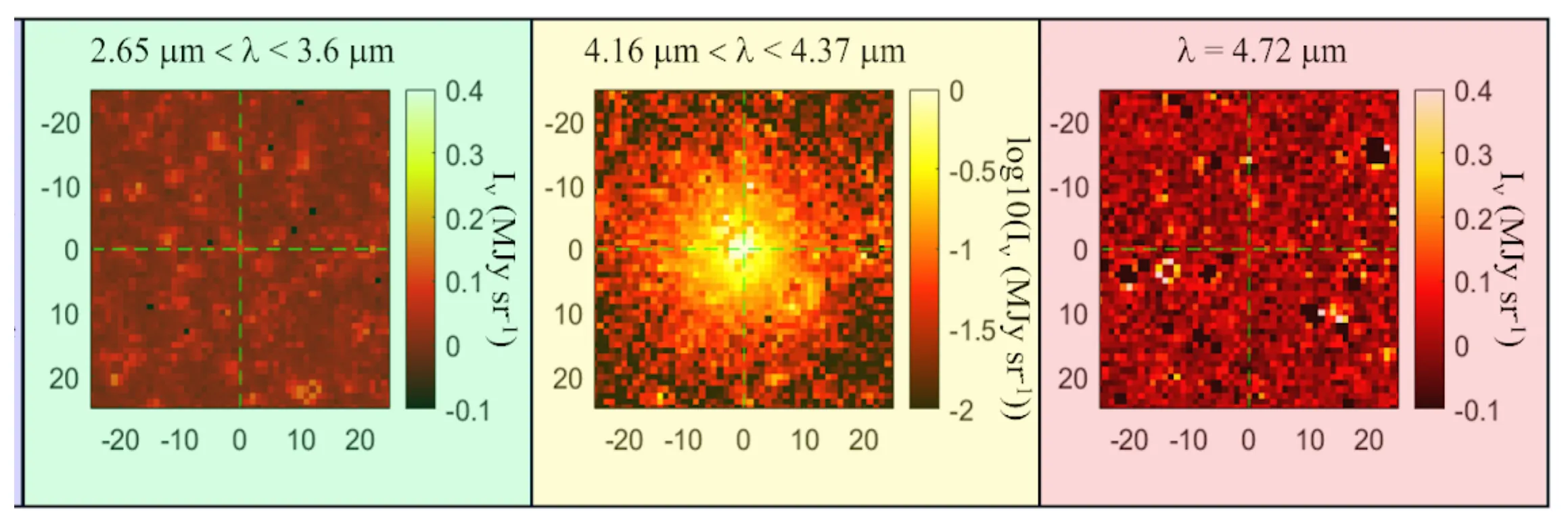
Images of 3I/ATLAS taken by the NASA SPHEREx Space Observatory.
Image credit: C.M. Lisse et al, 2025
That third confirmed interstellar interloper — 31/ATLAS – is getting serious attention as a possible “technosignature” – perhaps a celestial calling card sent our way by extraterrestrials.
These interstellar objects (ISO’s) deserve our attention suggests James R. A. Davenport, Director of the Institute for Data Intensive Research in Astrophysics & Cosmology (DiRAC) at the University of Washington.
Davenport and colleagues have outlined broad classes of technosignatures that are well suited for ISO follow-up, the type of data needed, as well as the best timing for study.

This image of interstellar comet 3I/ATLAS was captured by the Hubble Space Telescope’s Wide Field Camera on July 21, 2025.
Image credit: NASA, ESA, D. Jewitt (UCLA); Image Processing: J. DePasquale (STScI)
Care must be taken
“Given the limitations in the current understanding of ISOs, we show that care must be taken in identifying technosignatures based primarily on comparison to objects in the Solar System,” a Davenport-led research paper reports.
A roadmap has been blueprinted for “careful and consistent study” of the population of ISOs in the hope of identifying technosignatures, the research team adds.
Objects with likely interstellar origins are particularly noteworthy for such investigation.
Wanted: Stringent and detailed confirmation
“As technosignatures are possibly one of the most unambiguous and longest lived signals for the detection of life, these observations allow facilities like the Rubin Observatory to play a critical role in astrobiology over the coming decade,” Davenport suggests.
Anomalies from technosignatures could arise across many axes.
“Any potential detection of technosignatures from an ISO will require the most stringent and detailed confirmation possible. This includes validation of the raw data, analysis methodology, and if possible independent observation of the signal.”
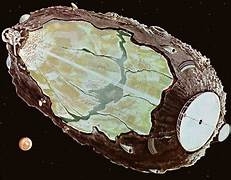
Image credit Roy Scarfo
Modified natural objects
Davenport and colleagues note that, to date, no credible evidence for technosignature signals has been found from the three known ISOs.
That said, the team’s research paper points out that several of the proposed scenarios for interstellar probes in the literature highlight the possibility of technology being connected to natural objects such as asteroids or comets, for example buried in, or sitting on, the surface.
“These natural objects may have even been modified in a number of ways, such as hollowed-out asteroids with stable rotation to generate an interior surface and spin gravity for habitation,” the research paper explains. “In addition, since we can detect very low power communication systems from objects within a few AU, it is important to continue observing ISOs throughout their passage, and with many wavelengths and facilities.”

The Vera C. Rubin Observatory, previously referred to as the Large Synoptic Survey Telescope (LSST).
Credit: The LSST Corporation (LSSTC)
Look more than once
Davenport and his fellow researchers state that the presence of “normal” behavior, such as natural cometary activity, or surface colors consistent with bare asteroids, should not deter follow-up observations aimed at identifying technosignatures.
“As with all technosignature searches, if we only look once, we may simply miss an incredibly obvious transmission or signal,” concludes the research paper.
To access the draft research paper – “Technosignature Searches of Interstellar Objects” – go to:

China’s Chang’e-7 is to launch a mini-scout that will overfly a shadowed crater at the Moon’s south pole to look for possible traces of water or ice.
Image credit: CCTV/Inside Outer Space screengrab
China’s Chang’e-7 robotic Moon mission is scheduled for the second half of 2026 and will carry a Russian instrument to monitor the pervasive nature of lunar dust.
A memorandum was signed by the Roscosmos State Corporation and the China National Space Administration following the recent meeting of Russian President Vladimir Putin with Chinese President Xi Jinping.
Chang’e-7’s goal is to conduct scientific research in the vicinity of the Moon’s South Pole.
Near-surface exosphere
The Russian scientific instrument “Dust Monitoring of the Moon” will carry out experiments on the study of dust components and dynamics of the near-surface exosphere of the Moon; Registration of micrometeorites and secondary particles of lunar regolith; and study the parameters of low-energy plasma near the surface of the Moon.

Lunar dust haunted Apollo moonwalkers.
Image credit: NASA/Azita Valinia
According to Roscosmos, because the lunar exosphere is very weak and thin, it can only be effectively studied from the surface of the Moon. The Russian instrument will be integrated into Chang’e-7, along with other foreign payloads from such countries as Egypt, Bahrain, Italy, Switzerland, and Thailand.
Chang’e-7 is to explore the environment and resources of the south pole of the Moon, especially the evidence of water.
Mobile hopper
Wu Weiren, chief designer of the Chinese Lunar Exploration Program, stated earlier this year that the Chang’e-7 probe – comprising an orbiter, a lander, a rover, and a mobile hopper – will face extreme challenges, including temperatures below minus 100 degrees Celsius and complex terrain.

China’s Chang’e-7 lander launches hopper craft to search for lunar ice.
Image credit: CCTV/CNSA/Inside Outer Space screengrab
Reportedly, the hopper is slated to “jump” from sunlit areas to shadowed craters to conduct detailed analyses. The lander will also deploy China’s inaugural deep-space “landmark image navigation” system to ensure precision, while the hopper utilizes active shock-absorption technology to safely land on slopes.
The Chang’e-8 mission, set for around 2028, will test technologies for building habitats using lunar soil said Wu.
The two upcoming lunar landers are assigned duties to assist in orchestrating China’s planned, multi-phased, International Lunar Research Station (ILRS).
Detailed discussion about the ILRS is on the agenda at the 3rd International Deep Space Exploration Conference (Tiandu Forum) now underway September 4-5 in Hefei, Anhui Province.
Meanwhile, China’s first crewed landing on the Moon is expected by 2030.

China’s Chang’e-8 lunar lander, a step forward in building the International Lunar Research Station.
Image credit: CNSA
A just-issued Congressional Research Service (CRS) report has been prepared for members and committees of the U.S. Congress.
The document — Hypersonic Weapons: Background and Issues for Congress – has been updated and issued August 27, 2025.
Written by Kelley M. Sayler, a CRS Specialist in Advanced Technology and Global Security, the newly issued report is an excellent primer on hypersonic propulsion. Also, the document is a good update on the work of other countries on hypersonics – particularly China and Russia.
Global strike
“The United States has actively pursued the development of hypersonic weapons—maneuvering weapons that fly at speeds of at least Mach 5—as a part of its conventional prompt global strike program since the early 2000s,” the CRS report explains.
“In recent years, the United States has focused such efforts on developing hypersonic glide vehicles, which are launched from a rocket before gliding to a target, and hypersonic cruise missiles, which are powered by high-speed, air-breathing engines during flight.”
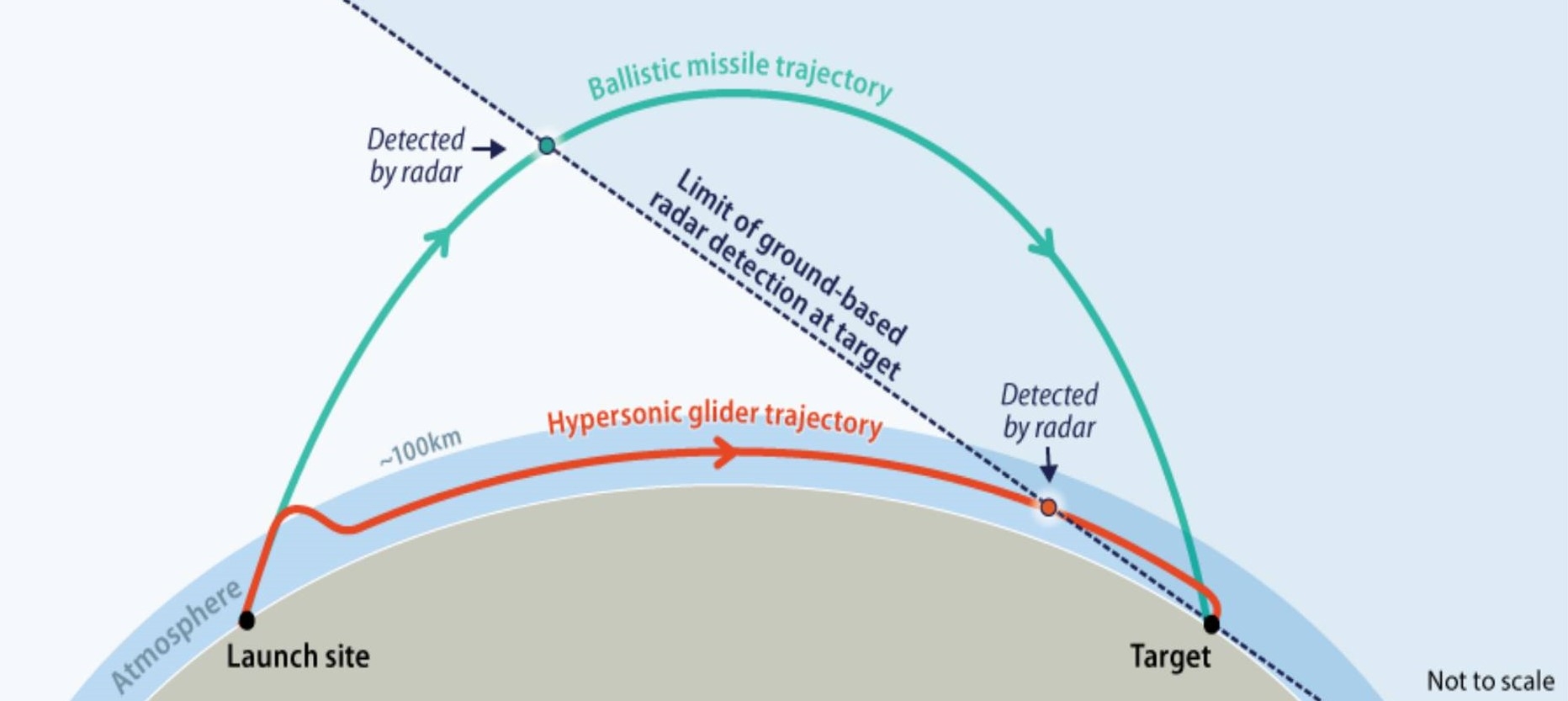
Image credit: CRS
Strategic stability
As Congress reviews the Pentagon’s plans for U.S. hypersonic weapons programs, the CRS document suggests lawmakers might consider questions about the rationale for hypersonic weapons, their expected costs, and their implications for strategic stability and arms control.
Any implications for non-weapon use of hypersonic technology? While not specifically addressed in the document, a reader can glean some insight on this prospect.
Potential questions
- What mission(s) will hypersonic weapons be used for? Are hypersonic weapons the most cost-effective means of executing these potential missions? How will they be incorporated into joint operational doctrine and concepts?
- Given the lack of defined mission requirements for hypersonic weapons, how should Congress evaluate funding requests for hypersonic weapons programs or the balance of funding requests for hypersonic weapons programs, enabling technologies, and supporting test infrastructure? Is an acceleration of research on hypersonic weapons, enabling technologies, or hypersonic missile defense options both necessary and technologically feasible?
- How, if at all, will the fielding of hypersonic weapons affect strategic stability?
- Is there a need for risk-mitigation measures, such as expanding New START, negotiating new multilateral arms control agreements, or undertaking transparency and confidence-building activities?
To gain access of this CRS report — Hypersonic Weapons: Background and Issues for Congress – go to:
https://s3.documentcloud.org/documents/26080068/r4581154.pdf
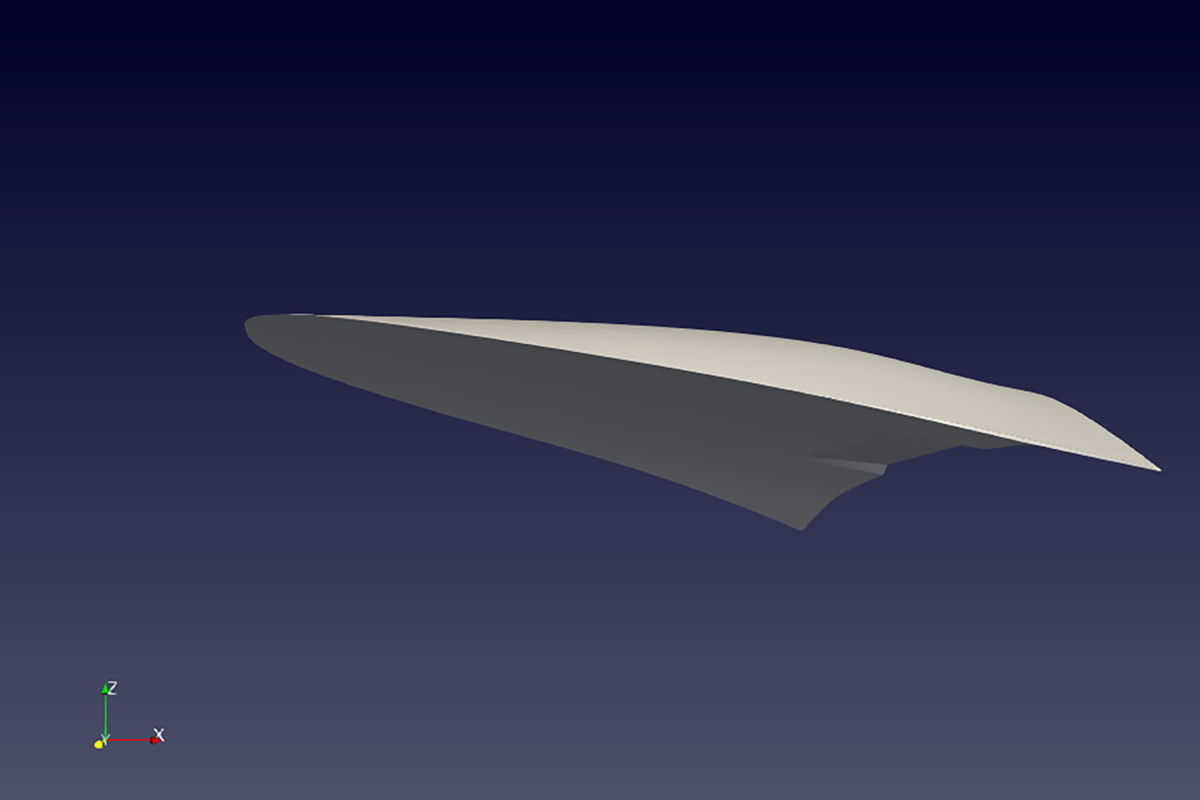
Illustration of a waverider in glide orientation. Courtesy of P. Rodi/Rice University

Image credit: &SPACE PROJECT
Using scrap materials from rockets to create furniture, from a space tank bench and a space parasol table to hi-fi speakers made out of discarded booster fuel tanks.
That’s the “upcycling” output by the &SPACE PROJECT, a Japanese undertaking that aims to make the space industry accessible to everyone.
The &SPACE PROJECT has been collaborating with furniture manufacturers and factories in Hokkaido to fashion unique offerings.

Kazunori Toshinai’s &SPACE PROJECT.
Image credit: Osaka-Kansai Expo Co-Design Challenge program/Inside Outer Space screengrab
Space industry boost
Interior designer Kazunori Toshinai’s at 11 Co., Ltd explains that the &SPACE PROJECT creates an opportunity to incorporate space into daily life, and by doing so will boost the industry as a whole. In his warehouse, a variety of unusually shaped furniture pieces are made from rocket manufacturing leftovers.
For example, a bench is a remodeled version of a rocket test fuel tank. Then there’s a chair made from rocket parts. It uses the outer fuselage walls used in a helium tank, made of carbon fiber reinforced plastic.
&SPACE PROJECT collects scrap materials and jigs generated during rocket development and the manufacturing process. Furniture craftsmen from Hokkaido visit the site, sort them by shape and condition, and then bring them back to the workshop.
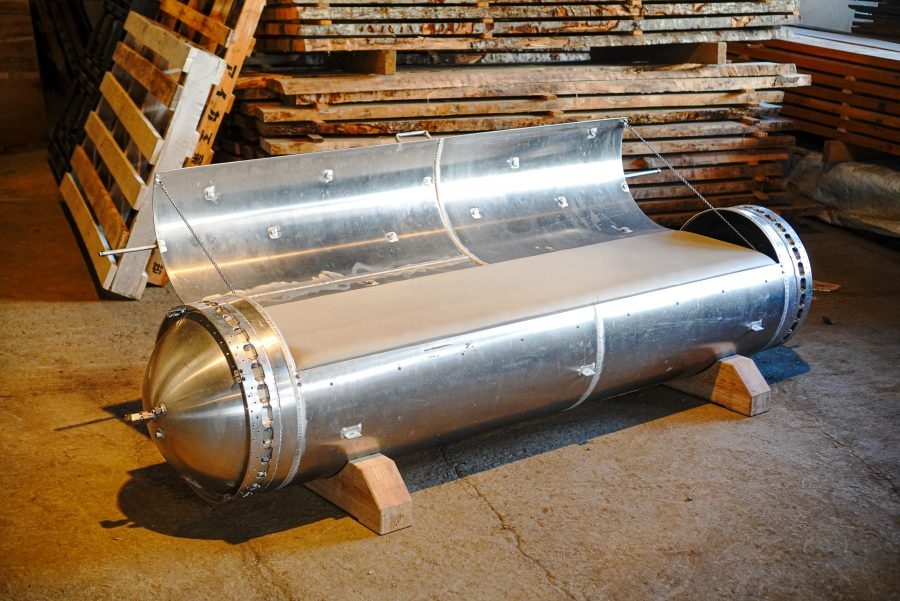
Image credit: Osaka-Kansai Expo Co-Design Challenge program
Future life experience
The space furniture is created by combining various materials. Scratches and stains on the scrap materials were intentionally left in order to give a sense of the time of rocket development, explains the &SPACE PROJECT website.
The group’s “Space Tank Bench,” made from rocket waste, was selected for the Osaka-Kansai Expo Co-Design Challenge program.
During the expo, running from April 13 to October 13, 2025, the bench has been installed at the Future Life Experience venue within the expo site.

Image credit: &SPACE PROJECT/noon by material record
Speaker system
Yet another development is the rocket tank speaker system called “DEBRIS.”
DEBRIS is a speaker born from the meeting of &SPACE PROJECT and the organization, noon by material record. The two parties created the acoustic device using rocket fuel tanks.
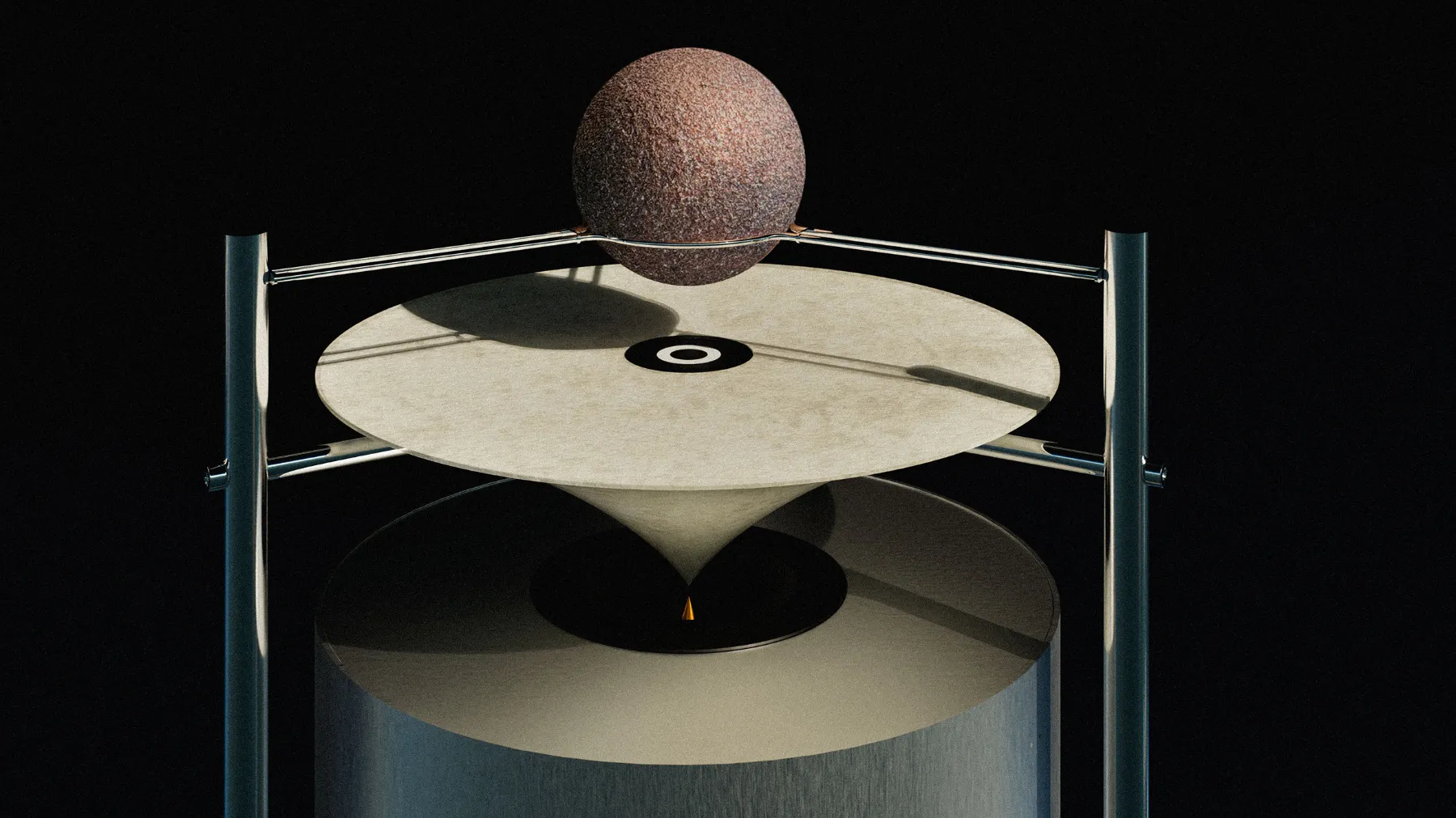
Image credit: &SPACE PROJECT/noon by material record
“The name DEBRIS embodies the idea of taking on various undefined fragments, such as fragments of sound, fragments of memory, and feelings that spilled out during the process of creation. DEBRIS is not limited to a single product; it serves as a starting point that connects fragments, and will continue to chart various creative trajectories,” reports &SPACE PROJECT.
For detailed information regarding these special and spacey furniture styles, go to:
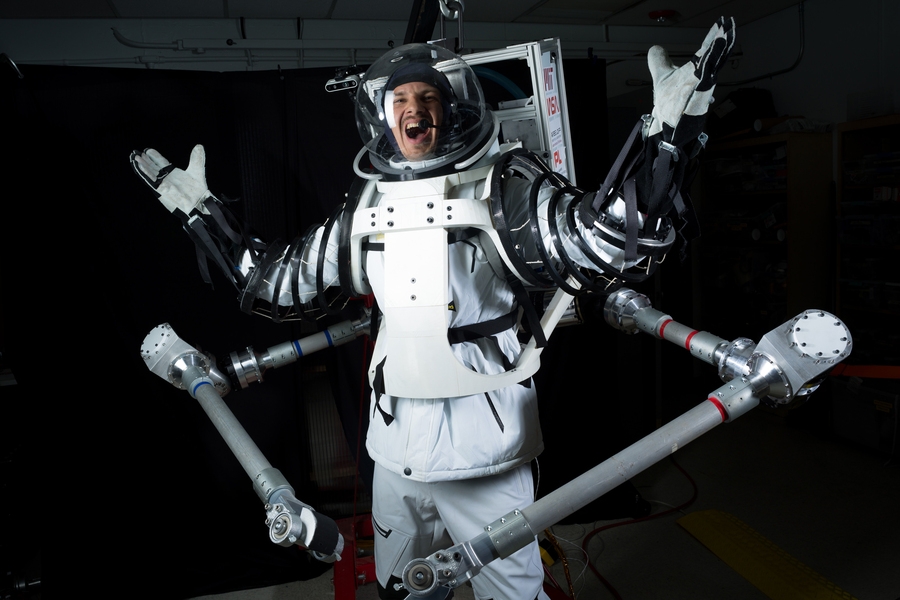
Image credit: Ryan A Lannom/Jet Propulsion Laboratory
On the Moon, several moonwalkers stumbled and fell onto the lunar surface.
One technological out to this issue could be a pair of wearable robotic arms that extend out from a backpack. The arms could also crab-walk around a spacecraft’s exterior as an astronaut inspects or makes repairs.
Yes, this sounds a bit like “Inspector Gadget” or “Doctor Octopus,” but MIT’s Erik Ballesteros and his advisor, Harry Asada, have developed a system dubbed SuperLimbs.
Ballesteros is working with NASA Jet Propulsion Laboratory engineers to improve the design, which he plans to introduce to astronauts at the Johnson Space Center in the next year or two, hungry for practical testing and user feedback.
Ballesteros and Asada are continuing the work and refining the SuperLimbs concept.

Image credit: NASA/Bill Ingalls
It looks like Senator U.S. Senator Ted Cruz (R-Texas) and Creedence Clearwater Revival are singing from the same lyrics page.
From the popular rock group:
I see the bad moon a-rising
I see trouble on the way
I see earthquakes and lightning
I see bad times today.
U.S.-China space race
Fast forward to Senator Cruz, Chairman of the Senate Committee on Commerce, Science, and Transportation.

Image credit: CCTV/Inside Outer Space screengrab
Cruz is holding a Congressional hearing: “There’s a Bad Moon on the Rise: Why Congress and NASA Must Thwart China in the Space Race” in early September.
The September 3 hearing will examine legislative priorities for the upcoming reauthorization of NASA to ensure continued U.S. leadership in space.
“It will also explore the strategic, economic, and scientific importance of American dominance in low Earth orbit (LEO), lunar operations, Mars exploration, and deep space missions,” states a Cruz posting. “The hearing will assess how U.S. policy and investments can foster America’s competitive edge in the face of growing challenges from adversarial nations, like China, whose rapid space advancements pose a direct threat to U.S. leadership in the domain.”
Global leader
Announcing the upcoming hearing, Sen. Cruz notes:

Image credit: Huazhong University
“For decades, NASA has made the United States a global leader in space explorations, scientific discovery, and innovation. But make no mistake: we are in a 21st century space race. Communist China is not playing by the same rules, and they are aggressively investing resources to dominate space,” contends Cruz.
The lawmaker adds that the hearing promises to be an important opportunity to chart a course that “reinforces American leadership in space, strengthens NASA, fuels our growing commercial space sector, and protects our economic and national security interests in the final frontier.”

Image credit: Huazhong University
Witnesses
The on-tap hearing witnesses, with an additional witness perhaps announced at a later date, are:
Jim Bridenstine, Managing Partner of the Artemis Group and Former NASA Administrator
Dave Cavossa, President of the Commercial Space Federation
Allen Cutler, President and Chief Executive Officer of the Coalition for Deep Space Exploration
Dave Cavossa, President of the Commercial Space Federation
The September 3 hearing at 10:00 AM Eastern Time will stream live on the Committee web site and YouTube.
Go to: https://www.commerce.senate.gov/home
Also, go to my recent Space.com story – “China is making serious progress in its goal to land astronauts on the moon by 2030” – at:

Image credit: CCTV/CMSA/Inside Outer Space screengrab

NASA’s Robert Mosher displays a piece of webbing material, known as Zylon, which comprise the straps of HIAD aeroshell samples now in Earth orbit aboard the military’s X-37B space plane.
Image credit: NASA/Joe Atkinson
Another payload has been identified flying aboard the recently launched Space Force X-37 space plane – an experiment that may help land humans on Mars.
Lofted into Earth orbit on August 21, the X-36 carries several pieces of webbing material, known as Zylon that are being exposed to the harsh vacuum of space.
The Zylon material is under study as part of NASA’s Hypersonic Inflatable Aerodynamic Decelerator – or HIAD in space shorthand. HIAD is an aeroshell concept under development by NASA’s Langley Research Center in Hampton, Virginia.
The HIAD aeroshell technology is designed to allow larger spacecraft to safely descend through the atmospheres of celestial bodies like Mars, Venus, and even Saturn’s moon, Titan.

Illustration of Low-Earth Orbit Flight Test of an Inflatable Decelerator (LOFTID).
Image credit: NASA
Webbing material
“We’re researching how HIAD technology could help get humans to Mars. We want to look at the effects of long-term exposure to space – as if the Zylon material is going for a potential six to nine-month mission to Mars,” said Robert Mosher, HIAD materials and processing lead at NASA Langley. “We want to make sure we know how to protect those structural materials in the long term,” he added in a NASA statement.
Flying Zylon material aboard the Space Force’s X-37B mission will help NASA researchers understand what kind of aging might occur to the webbing on a long space journey before it experiences the extreme environments of atmospheric entry, during which it has to retain strength at high temperatures.
NASA’s HIAD aeroshell work builds on the agency’s Low-Earth Orbit Flight Test of an Inflatable Decelerator (LOFTID) mission back in 2022.

X-37B (OTV-8) military space plane being readied for flight, with its service module not shown in photo.
Image credit: U.S. Air Force/U.S. Space Force
Sensor, laser communications testing
The Boeing-built X-37B space plane – also identified as the Orbital Test Vehicle (OTV-8) – is outfitted with a service module that expands the capacity for experiments for mission partners, which include the Air Force Research Laboratory and the Defense Innovation Unit.
OTV-8 is to perform a quantum inertial sensor demonstration, as well as testing laser communications.
Shortly after its August 21 launch, the secretive U.S. Space Force X-37B deployed in Earth orbit a payload dubbed Limasat, probably ejected from the space plane’s service module, according to seasoned amateur satellite trackers.
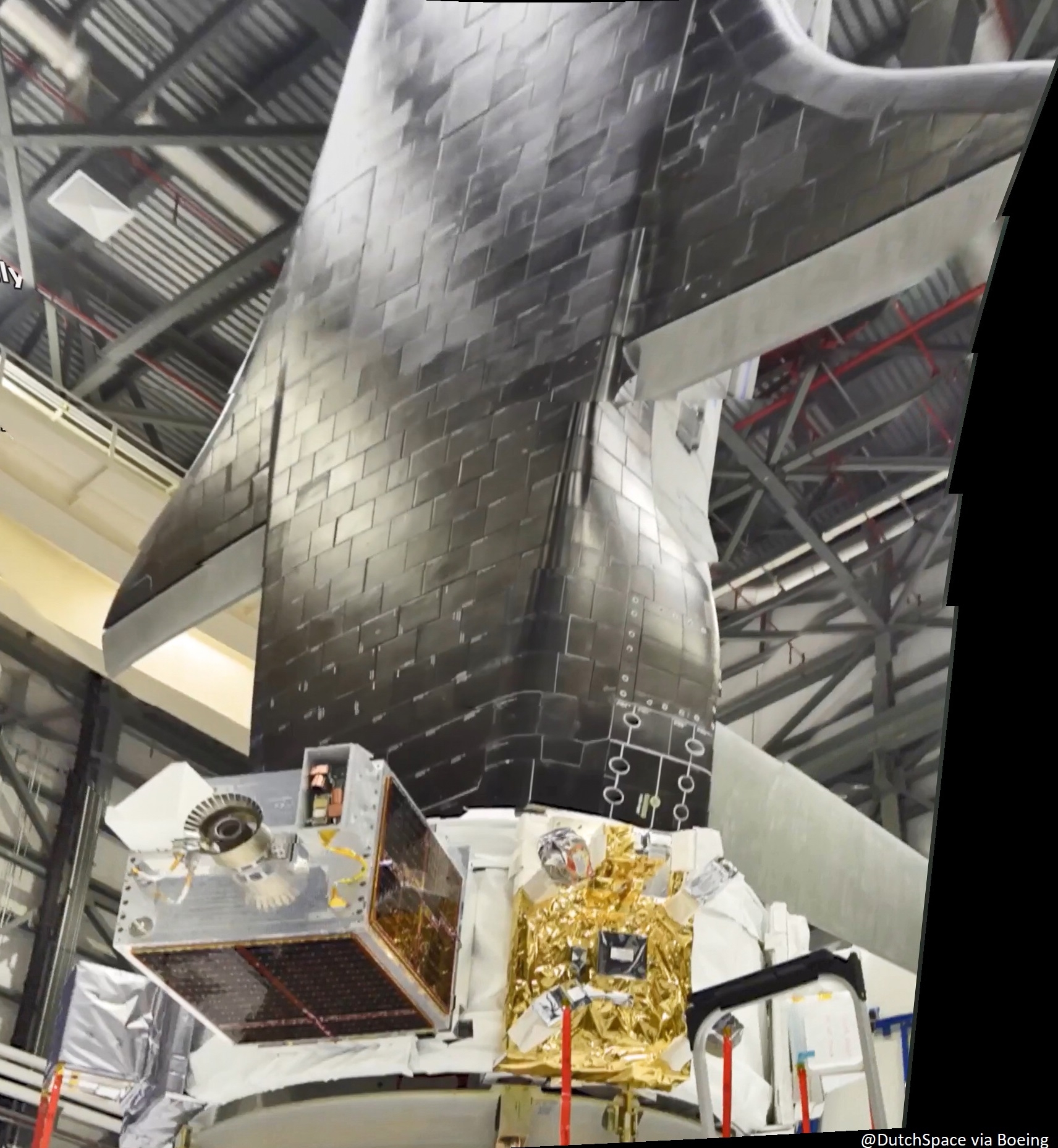
Image of Falconsat 8 mounted on the X-37B OTV-6 service module..
Image credit: Boeing via DutchSpace
Small canisters
As for NASA’s HIAD experiment, multiple samples of strap material are in small canisters on the X-37B, some tightly coiled up while others are loosely stuffed in.
“Typically, we pack a HIAD aeroshell kind of like you pack a parachute, so they’re compressed,” NASA’s Mosher said. “We wanted to see if there was a difference between tightly coiled material and stuff-packed material like you would normally see on a HIAD.”
Some of the canisters also include tiny temperature and humidity sensors set to collect readings at regular intervals.
When the U.S. Space Force de-orbits the X-37B – no telling how long the craft will be in orbit, NASA’s Mosher said he compare them to a set of samples that have remained in canisters here on Earth to look for signs of degradation.

The U.S. Space Force’s X-37B Orbital Test Vehicle Mission Seven successfully landed at Vandenberg Space Force Base, Calif., March 7, 2025. The X-37B landed at Vandenberg SFB to exercise the service’s ability to recover the spaceplane across multiple sites.
Image credit: U.S. Space Force courtesy photo
Previous flights
In related news regarding the hush-hush military space plane, U.S. President Trump’s “One, Big Beautiful Bill Act,” H.R. 1 includes $1 billion for the U.S. Space Force X-37B military spacecraft program.
Here’s a listing of previous flights of the space plane:
OTV-1: launched on April 22, 2010 and landed on December 3, 2010, spending over 224 days on orbit.
OTV-2: launched on March 5, 2011 and landed on June 16, 2012, spending over 468 days on orbit.
OTV-3: launched on December 11, 2012 and landed on October 17, 2014, spending over 674 days on-orbit.
OTV-4: launched on May 20, 2015 and landed on May 7, 2015, spending nearly 718 days on-orbit.
OTV-5: launched on September 7, 2017 and landed on October 27, 2019, spending nearly 780 days on-orbit.
OTV-6: launched on May 17, 2020 and landed on November 12, 2022, circling Earth for 908 days.
OTV-7: lofted on December 28, 2023 and touched down on March 7, 2025, circling Earth for 434 days.
OTV-8: launched on August 21, 2025 with no reported landing date.

Artwork depicts X-37B space plane. Image credit: Boeing/Inside Outer Space screengrab
Testing critical technologies
“OTV-8 exemplifies the X-37B’s status as the U.S. Space Force’s premier test platform for the critical space technologies of tomorrow,” said Air Force Rapid Capabilities Office (AFRCO) Acting Director, William Blauser, in an August 14 press statement. “Through its mission-focused innovation, the X-37B continues to redefine the art of the possible in the final frontier of space,” he stated.
Go to these previous Inside Outer Space-posted stories regarding this latest mission of the X-37B:
U.S. Military Space Plane – August Takeoff
https://www.leonarddavid.com/u-s-military-space-plane-august-takeoff/
Caught on Camera: U.S. Space Force Secretive Space Plane – Payload Deployed

Artwork depicts HIAD use for humans-to-Mars program.
Image credit: NASA Langley Research Center

