Archive for the ‘Space News’ Category
 Author:
  May 16th, 2016
Credit: Paul Hudson/NASA
NASA’s quest to place boot prints on Mars in the 2030’s is advancing, bolstered by new studies on a multi-function next-generation Mars Orbiter and how best to use Red Planet resources to sustain expeditionary crews on the planet.
Last year, nearly 50 locations on Mars were proposed by scientists as future locales for human landings. Those landing zone sites also flag “regions of interest” that can be reached from touchdown spots.

Credit: NEX-SAG
Now the call is out for a multi-functional next-generation Mars Orbiter that carries advanced telecommunications gear and makes use of powerful radar to scout out and better classify Martian resources for human landing parties. If approved, the spacecraft might be headed for Mars as early as 2022.
For more information, go to my new Space.com story at:
Humans on Mars: Scouting Needed for Red Planet Resources
http://www.space.com/32882-nasa-crewed-mars-missions-resources-orbiter.html
 Posted in

Courtesy of Mafic Studios, Inc.
A petition is gaining momentum to prompt the President of the United States to lead the transition to space-based energy.
Among items, the call to action urges the establishment of “congressionally chartered public-private corporations for space-based energy, space mining, and spacefaring logistics. These corporations shall provide the United States, its allies, and trading partners with sustainable and carbon emission free space-based energy.”
The petition is to be delivered to the President of the United States, the U.S. Senate and the U.S. House of Representatives.
Shedding light

Father of solar power satellite idea, Peter Glaser.
Credit: AD Little, Inc.
Space-based solar power (SBSP) consists of orbiting solar power satellites continuously harvesting the Sun’s intense energy in space.
The energy is beamed wirelessly to rectifying antennas on the Earth, and then transmitted to existing electrical power grids. Unlike terrestrial renewable energy sources, space-based solar power is nearly infinitely scalable. It is also continuous, so it can supply the planet’s baseload energy requirements.
Not a new idea
Space-based solar power is not a new idea.

Credit: U.S. Patent Office
Peter Glaser, an American scientist and strong advocate of the concept, obtained U.S. Patent Number US003781647 for SBSP back in 1973.
Since then, the idea has been studied by NASA, the Department of Energy and other government agencies, academic groups, private organizations, and individuals.

Power beaming from space to Earth is attracting technologists.
Credit: John Mankins
“Every technology required for the implementation of SBSP exists, and they are each well understood,” claim advocates.
The petition can be found here at:
To reach and read from an informative site on the ins and outs of collecting solar energy in space for broadcast to Earth, go to Citizens for Space Based Solar Power at:
Video Resources:
1)
Space Based Solar Power – a solution to the carbon crisis at:
https://www.youtube.com/watch?v=zrcoD_vHzxU
2)
Space Solar Proposal Presentation at:
https://www.youtube.com/watch?v=M9dQsRv1XDg
3)
Boeing video takes a glimpse into the future – the next 100 years – and envisions such concepts as power beaming from space and elevators to space. Take a look at “You Just Wait” at:
https://www.youtube.com/watch?v=nEjPLHmFAM8

Credit: NASA

Curiosity Mastcam Right image taken on Sol 1338, May 11, 2016.
Credit: NASA/JPL-Caltech/MSSS
Word is that there’s a change of plans for using the wheeled robot. An over the weekend long drive of the robot has been put off.
Ken Herkenhoff of the USGS Astrogeology Science Center in Flagstaff, Arizona reports why that’s the case.
Fresh rock surfaces
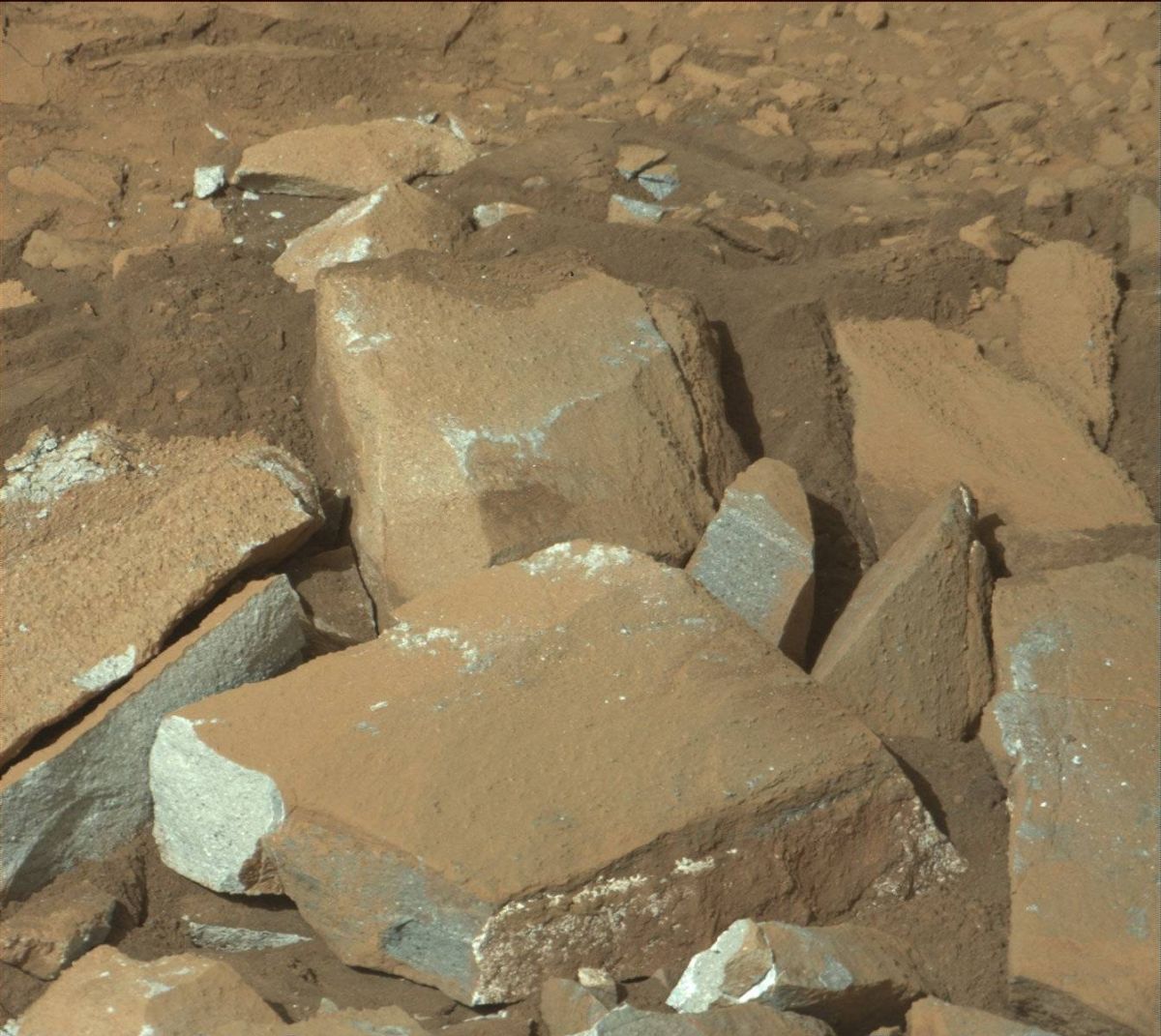
“There was enough interest in the fresh rock surfaces exposed near the rover that we decided to investigate them instead,” Herkenhoff explains. Before the Mars science team could decide whether to “bump” the rover to the rocks that were broken when it drove over them, scientists had to make sure they could be well imaged by the robot’s Mars Hand Lens Imager (MAHLI).
“Taking MAHLI images of nearly vertical faces is difficult, because the turret at the end of the arm must be placed close to the ground,” Herkenhoff adds. “While the Strategic Rover Planner worked to find ways to get MAHLI close to the fresh surfaces, we planned pre-drive remote sensing and arm activities.”
Bedrock brush off
On Sol 1341, the plan calls for the Chemistry & Camera (ChemCam) to observe its calibration target, a bedrock target named “Kobos 3,” and the wall of the Okoruso drill hole.
Mastcam is then to provide context for the ChemCam observations and take stereo mosaics of “Naob” and other bedrock near the rover.
Later in the day on Mars, the Dirt Removal Tool (DRT) is scheduled to be used to brush dust off a brighter layer in the bedrock. MAHLI imagery will be taken before and after that brushing, Herkenhoff points out.
The plan also calls for close-up MAHLI images to be taken of a nearby bedrock target dubbed “Mariquita” and a lower-resolution MAHLI mosaic of the area including Mariquita.
Also on tap is use of the Alpha Particle X-Ray Spectrometer (APXS) to measure the chemistry of the brush spot overnight, before another busy sol begins.
Broken rocks
Curiosity’s robotic arm is to be stowed, making possible a Mastcam multispectral observation of the brush spot before the rover bumps over to the broken rocks.
During the drive, the Dynamic Albedo of Neutrons (DAN) instrument is to actively measure the subsurface hydrogen content by turning on its neutron generator.

Curiosity Mastcam Right image taken on Sol 1333, May 6, 2016.
Credit: NASA/JPL-Caltech/MSSS
After acquiring post-drive images, the rover will take a nap before the Chemistry & Mineralogy X-Ray Diffraction/X-Ray Fluorescence Instrument (CheMin) performs another overnight analysis of the Okoruso drill sample.
Autonomous software
Early on the morning of Sol 1343, Navcam will search for clouds and dust devils, and Mastcam will measure the optical thickness of dust in the atmosphere.
Later that sol, ChemCam will use the NASA-created, newly-validated Autonomous Exploration for Gathering Increased Science (AEGIS) software to acquire ChemCam Laser Induced Breakdown Spectrometer (LIBS) data that identifies rock composition.
Concludes Herkenhoff : “Of course, we are hoping that the software continues to work well!”

Apollo astronaut tripping his way across the Moon.
Credit: NASA/Image
elaboration Schlacht and Umhof.
The problem of walking – and falling — on the Moon is gaining renewed attention by a research team.
Principal Investigator, Irene Lia Schlacht of the Politecnico di Milano and Karlsruhe Institute of Technology, along with her colleagues, are asking some key questions: How crewmembers will walk inside and outside a lunar habitat. How high does a person jump off the Moon? Should Moon architecture have steps or should a facility support climbing to move about?
“The hypogravity will lead to vestibular system malfunction, loss of muscular mass, and stiffness of the legs, negatively affecting a person’s balance: Yes, we can climb, but we can also easily lose our balance and trip up,” the research team explains in an abstract prepared for the Fourth European Lunar Symposium to be held May 18-19 in Amsterdam, the Netherlands.
Gait and balance
To avoid all of this, there is work to be done to appreciate gait and balance on the Moon, the research team suggests. Their investigation will address balance and deconditioning, for the first time getting much closer to the real conditions that will affect astronauts during Moon and Mars missions.

Interpretation of Moon walking posture and
sight-line image.
Credit: NASA/Apollo 14/M. Masali
Also, a methodology is to be devised that focuses on the collection of basic anthropometrical and postural data.
A “Walking on the Moon” experiment aims to measure the walking pattern of astronauts during space walks and strutting around within the confines of a spacecraft.
Avoid tripping
“On the Moon, the research group advises, “it is very important to avoid tripping by increasing one’s balance in order to assure the safety required in those extreme contexts. Balance is a factor that depends on many variables, such as: visual field, sensorimotor system, vestibular system.”
These variables are all affected by the different environmental constraints of Moon and Mars environments.
Trio of techniques
To simulate the same conditions of a Moon/Mars mission, the team has formulated ways to attain their data.
Partial gravity can be achieved with a vertical treadmill, deconditioning achieved with bed rest, and artificial gravity as a physiological countermeasure. Making use of this trio of techniques, a realistic reduced gravity effect can be obtained to simulate and analyze Moon and Mars walking patterns.

ESA’s Neutral Buoyancy Facility.
Credit: ESA–S. Corvaja, 2015
Another data gathering tool consists of using the swimming pool of the European Space Agency’s Neutral Buoyancy Facility at the European Astronaut Centre located near Cologne, Germany.
Also engaged in the study: J. Rittweger of the German Aerospace Center, B. Foing of ESA/ESTEC, M. Daumer of the Human Motion Institute, and M. Masali of the Universitá di Torino.
While awaiting the results of this research, go to this video collection of Moonwalkers losing their lunar legs:
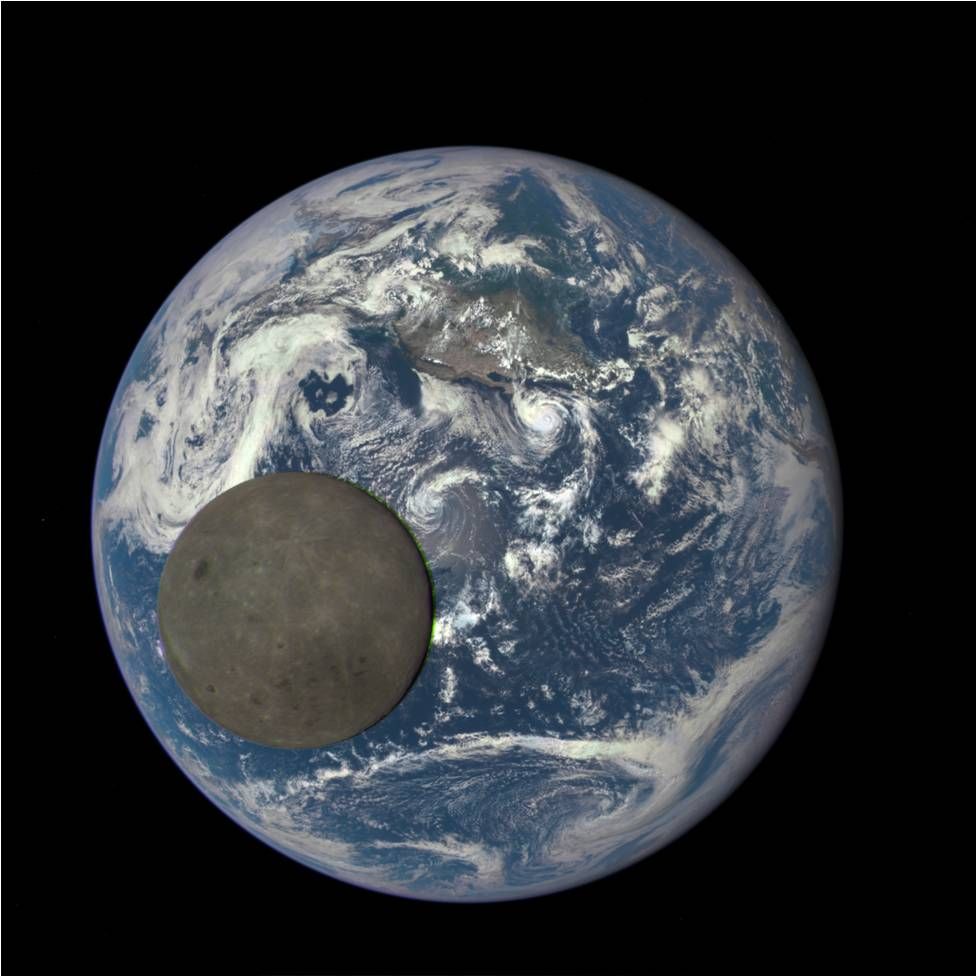
Moon’s far side captured by NOAA’s Deep Space Climate Observatory (DSCOVR).
Credit: NOAA/NASA
China has a stated interest to send a lander to the Moon’s far side – the Chang’e-4 (CE-4) mission.
New details about possible instruments of CE-4 are to be detailed in a forthcoming conference on Moon exploration.
Y.L. Zou and colleagues from the Key Laboratory of Lunar and Deep Space Exploration in Beijing are on the agenda of the Fourth European Lunar Symposium to be held May 18-19 in Amsterdam, the Netherlands.
Propositional payloads
The CE-4 scientific objectives are anchored to a lander, a rover, and use of a telecommunication relay that will be sent to the Earth–Moon L2 Lagrange point.

China’s Yutu lunar rover took this image of Change’3 lander. New lunar landers are being readied for China’s next step in Moon exploration.
Credit: NAOC/Chinese Academy of Sciences
CE-4 would be launched toward the Moon in about 2018. The weight of payloads onboard the lander total about 77 pounds (35 kilograms) and 37 pounds (17 kilograms) on the rover.
CE-4 mission “propositional payloads” involve six on the lander, five payloads on the rover, and one payload on the telecommunication relay orbiter.
Objectives
The researchers report that the scientific objectives of CE-4 are many, including:
- Study the characteristics and the formation mechanism of lunar surface floating dust;
- To measure lunar surface temperature, analyzing its change with time and in different light conditions;
- Measure the chemical compositions of lunar rocks and soils and study their distribution;
- Carry out lunar surface low-frequency radio astronomical observation and research;
- Identify the structure of cosmic rays, and to find the possible original position for these cosmic rays;
- Observe the independent kilometer wave burst event from the high layer of the solar corona, investigate its radiation characteristics and mechanism, and to explore the evolution and transport of coronal mass ejection (CME) between the Sun and Earth.
Radio astronomy station
Once on the Moon, the lander would use cameras, a dust-analyzer, and other instruments.
Firmly footed on the bleak lunar terrain, the lander would also become a far side radio astronomical station, staging low, mid and high-frequency sweeps of space from the lunar surface.
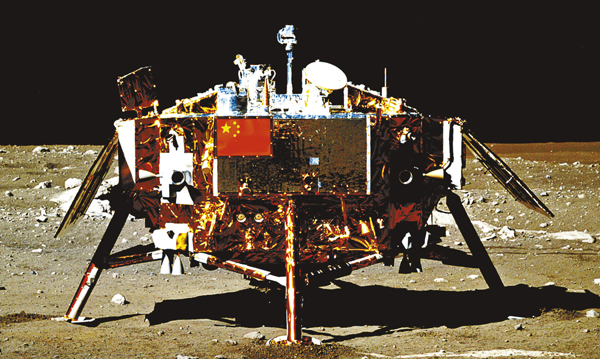
China’s Chang’e 3 Moon lander, imaged by Yutu lunar rover. It reportedly continues to serve as an astronomical observation outpost.
Credit: NAOC
Along with other devices, the Chinese lunar rover is expected to be equipped with ground penetrating radar.
Probing look at lunar ionosphere
In related Moon research, another paper to be presented at the meeting details probing of the lunar ionosphere. This investigation made use of a service module now in lunar orbit. That module was a component of China’s circumlunar return and reentry initiative that occurred in late 2014.
The circumlunar return and reentry spacecraft – commonly tagged as Chang’e 5-T1 — was launched on October 23, 2014 and nine days later the return vehicle landed at Inner Mongolia successfully. The service module performed a divert maneuver to avoid re-entry and moved to the Earth-Moon L2 point (EML2).

After releasing a test return capsule to Earth, the solar-powered service module first loitered at Earth-Moon L2 and then moved into orbit around the Moon.
Credit: CCTV/China Space Website
That module remained at that location until January 4, 2015 then conducted a departure maneuver to leave EML2 and begin a transition into lunar orbit. The module arrived on January 11, 2015 in lunar orbit and then lowered closer to the Moon. It imaged the target landing zone for the 2017 Chinese lunar sample return mission – Chang’e 5 – a touchdown site which has yet to be disclosed.
Radio occultation finding
“During this period, we performed the radio occultation experiment to detect the lunar ionosphere,” notes M. Y. Wang of China’s National Astronomical Observatories.
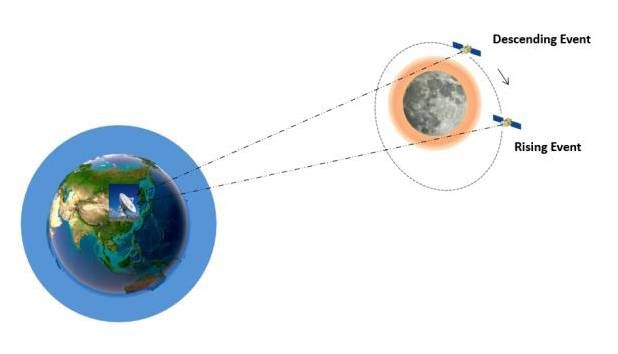
Illustration of the service module of the
circumlunar return and reentry spacecraft mission used for a radio occultation experiment.
Credit: M. Y. Wang/National Astronomical Observatories.
The observation confirms the presence of a large ionosphere surrounding the Moon, and data was collected on the total electron content, M.Y. Wang and his research colleagues report.
They add in their abstract for the upcoming meeting: “In the future, we will perform more observation and work on the lunar ionosphere and its distribution characteristics.”
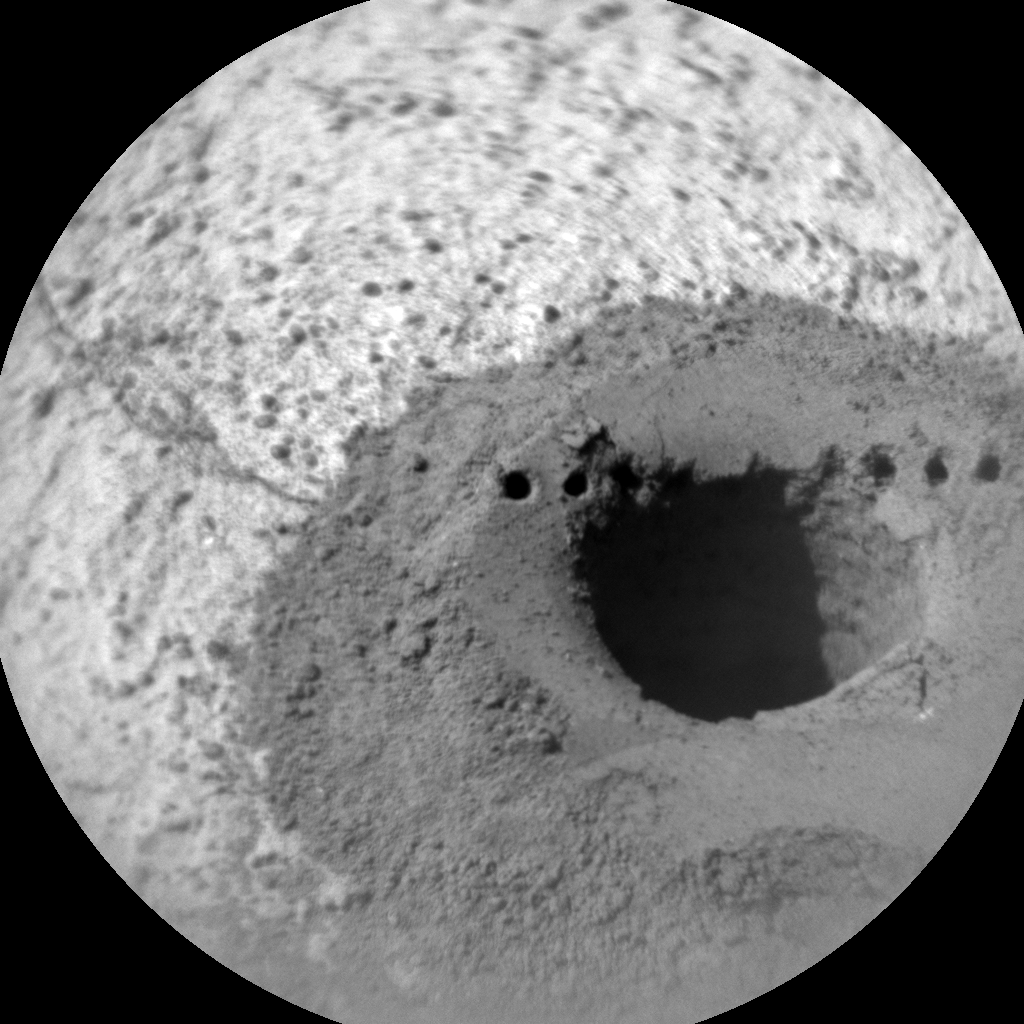
Curiosity’s ChemCam Remote Micro-Imager took this image on Sol 1338, May 11m 2016.
Credit: NASA/JPL-Caltech/LANL
Yesterday, on May 11, NASA’s Curiosity Mars rover has been on the surface of Mars for two Mars years – almost four Earth years.
During that time, the rover has made systematic measurements to compare how conditions change from year to year on the Red Planet.
Curiosity is now in Sol 1339, with the plan calling for the continuation of a drill campaign at the target “Okoruso,” reports Ryan Anderson, a planetary scientist at the USGS Astrogeology Science Center in Flagstaff, Arizona.
Also on tap for this Sol 1339, the rover’s Mars Hand Lens Imager (MAHLI) is to observe a pile of drill tailings that was dumped without being sieved.
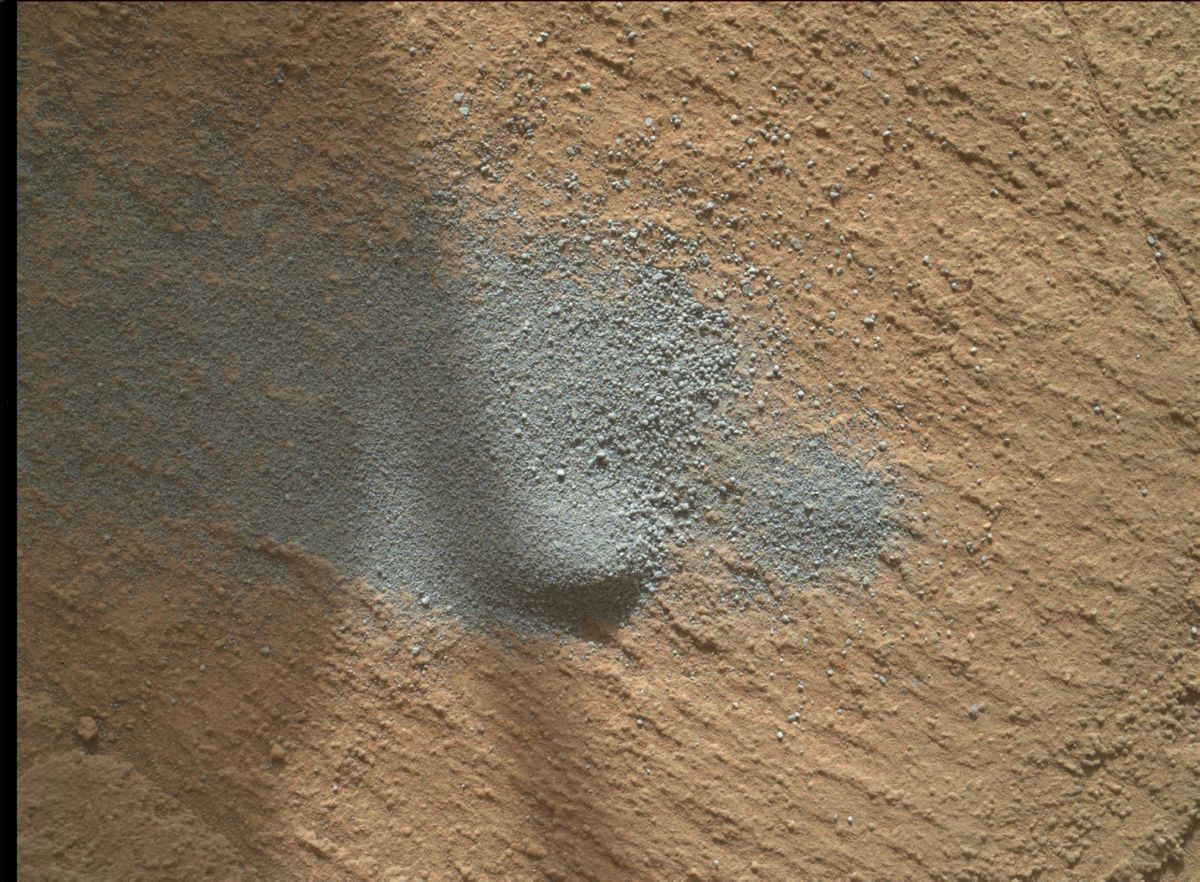
NASA’s Mars rover Curiosity acquired this image using its Mars Hand Lens Imager (MAHLI), located on the turret at the end of the rover’s robotic arm, on May 11, 2016, Sol 1337.
Credit: NASA/JPL-Caltech/MSSS
Science block
The robot’s Chemistry & Mineralogy X-Ray Diffraction/X-Ray Fluorescence Instrument (CheMin) is to complete the analysis from the Sol 1338 plan, and the Alpha Particle X-Ray Spectrometer (APXS) will make an overnight measurement of the dump pile.
Anderson notes that on Sol 1340, scientists have a targeted science block with the Chemistry & Camera (ChemCam) making passive and active observations of the dump pile, and active observations of the targets “Kobos 2”, “Stampriet”, and “Swartmodder.”
Curiosity’s Mastcam will then document those targets. Then Mastcam and Navcam will make some atmospheric dust observations.
Icing on the cake
On an eat your cake and have it all too, Anderson explains that French colleagues at CNES (Centre national d’études spatiales) made a Mars-themed cake to honor Curiosity’s two Mars years of exploration, “complete with a little rover exploring a delicious-looking cocoa-dusted martian surface!”
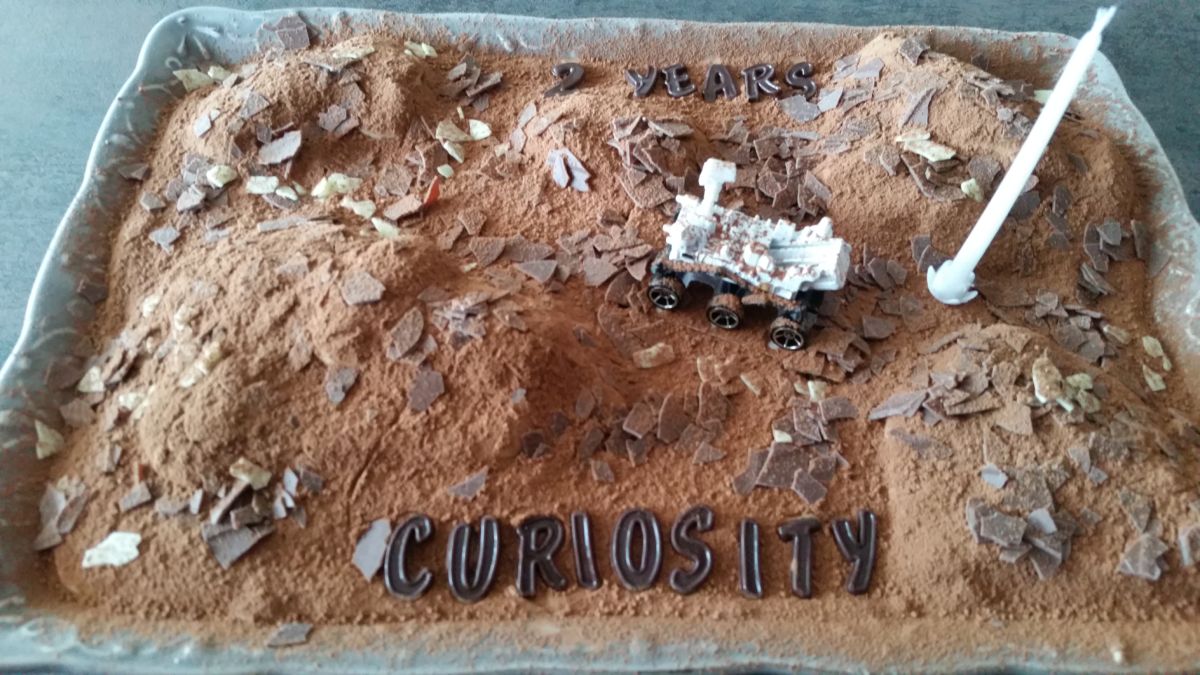
Tiramarsu cake made by French colleagues engaged in the Curiosity rover’s Mars exploration.
Credit: USGS
Meanwhile, the makings of a new Curiosity “selfie” appear to be now back here on Earth! Curiosity’s selfie requires 60 different images, and takes nearly an hour to acquire.

This picture is a thumbnail version of a larger image, a merged product from the Mars Hand Lens Imager (MAHLI) to create a rover selfie. MAHLI is located on the turret at the end of the rover’s robotic arm, taking this image on May 11, 2016, Sol 1338.
Credit: NASA/JPL-Caltech/MSSS
Dates of planned rover activities are subject to change due to a variety of factors related to the martian environment, communication relays and rover status.
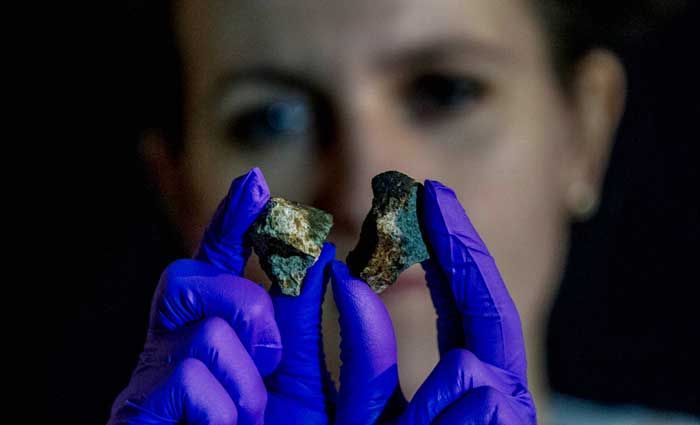
Lawrence Livermore National Laboratory (LLNL) researcher Megan Bruck Syal examines a pair of meteorites destined to be vaporized by high-powered lasers.
Credit: Julie Russell/LLNL
Asteroids are big bruisers that can lead to a bad day on Earth. Dealing with space rocks that are on-target to strike our planet has prompted a number of planetary defense ideas.
At the Lawrence Livermore National Laboratory (LLNL) in California, a group of physicists, material scientists, engineers and computational researchers have focused their efforts on two principle methods of asteroid deflection – nuclear explosions and hypervelocity projectiles.
Their goal: Not to destroy inbound space objects, but rather to nudge their trajectory just enough to make them miss the Earth.
Deflection data
“Each comet and asteroid has its own unique character, which presents a challenge for predicting how an individual target would respond to a deflection attempt,” says LLNL postdoctoral researcher, Megan Bruck Syal.
“The makeup may vary significantly from asteroid to asteroid. An individual body may have an abnormal orbit or rotation, and its size would also affect which method we might use to deflect it,” Bruck Syal notes in an LLNL press statement.
Because so little is known about asteroid strength, researchers are gathering data about how asteroid materials respond under extreme conditions.
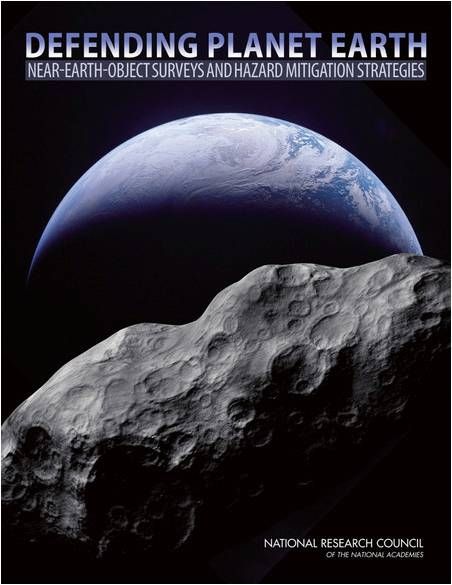
Numbers of studies have prompted planetary defense concepts.
Credit: NRC
Target chamber
Enter LLNL’s Jupiter Laser Facility. Come fall, specially prepared samples of meteorites will be mounted inside the target chamber of the powerful laser.
Months of preparation will come down to a nanosecond laser pulse, sending a haymaker shockwave through the samples.
The Jupiter Laser Facility (JLF) is a unique laser user facility for research in High Energy Density science. Its five diverse laser platforms offer researchers a wide range of capabilities to produce and explore states of matter under extreme conditions of high density, pressure and temperature.
The JLF includes the Titan, Janus, Callisto, Europa, and COMET lasers and associated target chamber.
Walnut-sized
The two meteorites to be used in the test — around the size of walnuts — were scavenged in Antarctica, later sorted and classified at NASA Johnson Space Center. The space rocks are to be vaporized by the high-powered laser, and the data they yield is expected to inform the prospect of asteroid deflection in the future.
Bruck Syal is teaming up with Laura Chen, a postdoctoral researcher at the University of Oxford, to help determine what sort of laser pulses to use to extract the data they need from the meteorite samples.

Credit: Lawrence Livermore National Laboratory
Space rocks aren’t like most laser targets. They tend to be much more heterogeneous, often containing chondrules, pebbly inclusions that were melted early in solar system history and embedded in a matrix of finer-grained material.
Moreover, it is this heterogeneous nature that makes it difficult to obtain the experimental data that will ultimately inform how best to deflect an incoming asteroid.
Avert disaster
This planetary defense initiative is one of dozens of research efforts that grew out of the capabilities and expertise developed and honed in Lawrence Livermore’s weapons program.
LLNL planetary defense work is part of a confab of NASA, Los Alamos and Sandia national labs experts, along with collaborators across a number of universities and international research centers.
The challenge facing this international coalition of scientists is to detect and deflect the next large Earth-bound object.

Credit: ESA – P.Carril
“It’s not a matter of if, but when,” Bruck Syal adds, referring to the eventual certainty of a large celestial object impacting the Earth. “Our challenge is to figure out how to avert disaster before it happens.”
Check out this informative video on the research at:
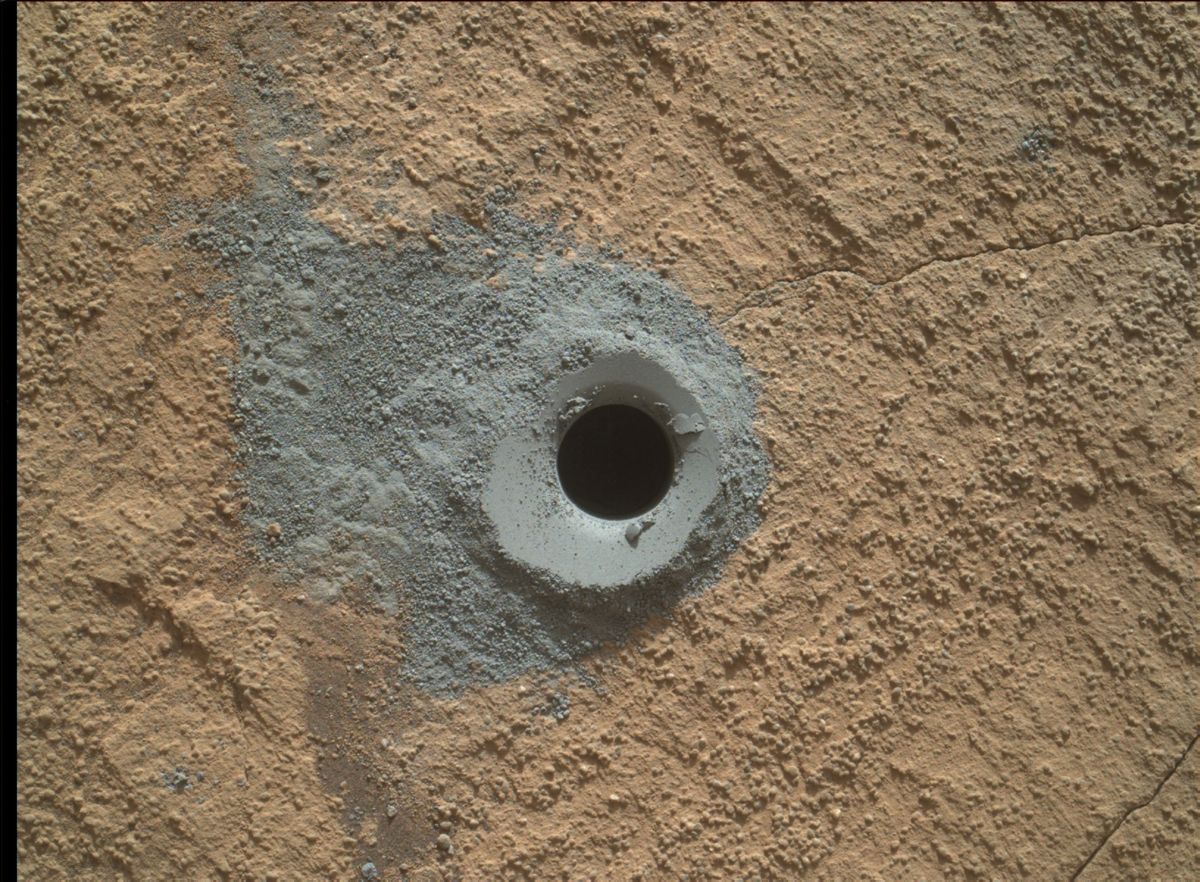
NASA’s Mars rover Curiosity acquired this image using its Mars Hand Lens Imager (MAHLI), located on the turret at the end of the rover’s robotic arm, on May 5, 2016, Sol 1332.
Credit: NASA/JPL-Caltech/MSSS
NASA’s Curiosity is now in Sol 1337, slated to go into an extensive arm workout.
Last weekend, the rover transferred and sieved the “Okoruso” drill sample, and analyzed it with the Chemistry & Mineralogy X-Ray Diffraction/X-Ray Fluorescence Instrument (CheMin).
The plan then called for imaging the drill location, starting by dumping the pre-sieved drill sample. Then use of the robot’s Mastcam was on tap to image the dump pile and drill site, reports Lauren Edgar, a research geologist at the USGS Astrogeology Science Center in Flagstaff, Arizona.
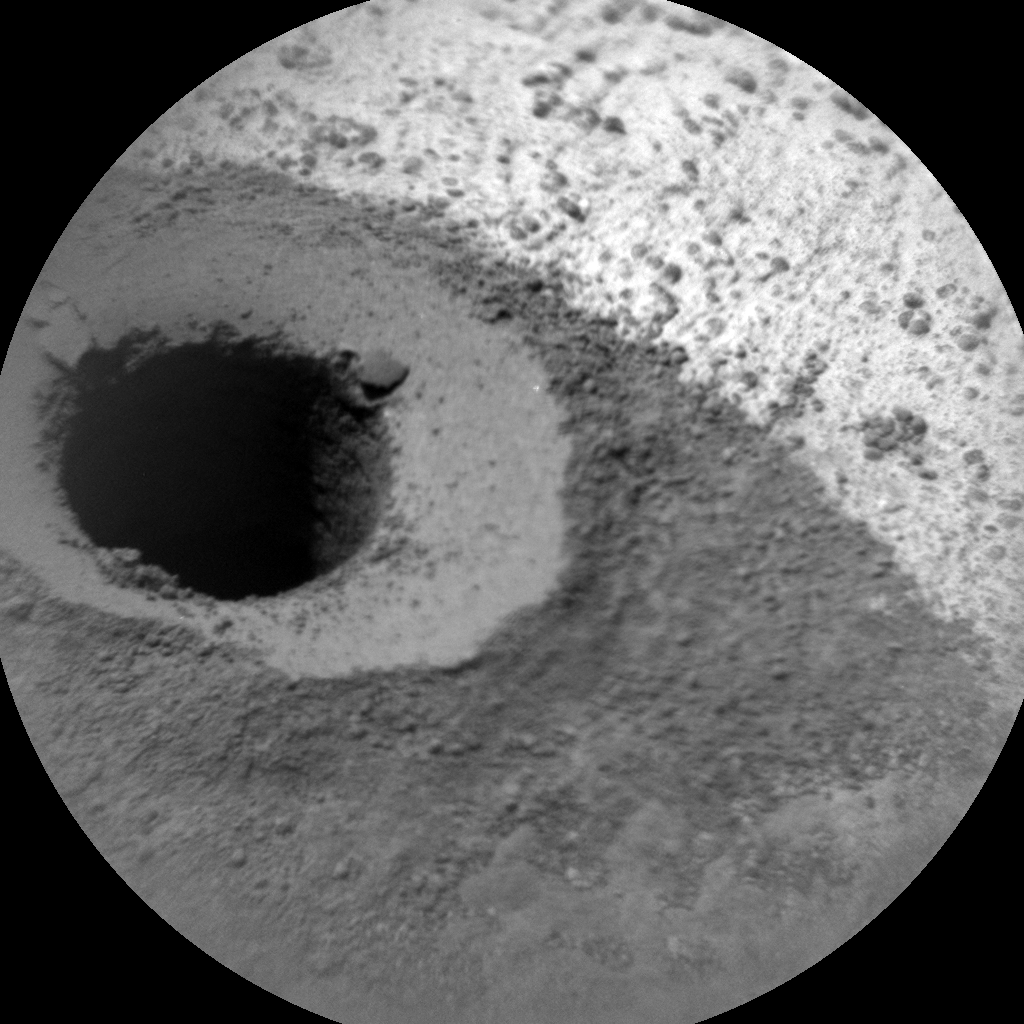
Curiosity ChemCam Remote Micro-Imager took this image on Sol 1336, May 9, 2016.
Credit: NASA/JPL-Caltech/LANLthe pre-sieved drill sample. Then use of the robot’s Mastcam is to image the dump pile and drill site, reports Lauren Edgar, a research geologist at the USGS Astrogeology Science Center in Flagstaff, Arizona.
Dump pile
Next item on the to-do list was to target the drill hole with the Chemistry & Camera (ChemCam) and also characterize a nearby bedrock target named “Ubib,” followed by use of the Mars Hand Lens Imager (MAHLI) to image the dump pile.
MAHLI is to also do some nighttime imaging of the drill hole and “Ubib” under different illumination conditions.
All in all, “that’s already several hours of arm activities, while holding a 66 pound (30 kg) turret at the end,” Edgar adds.
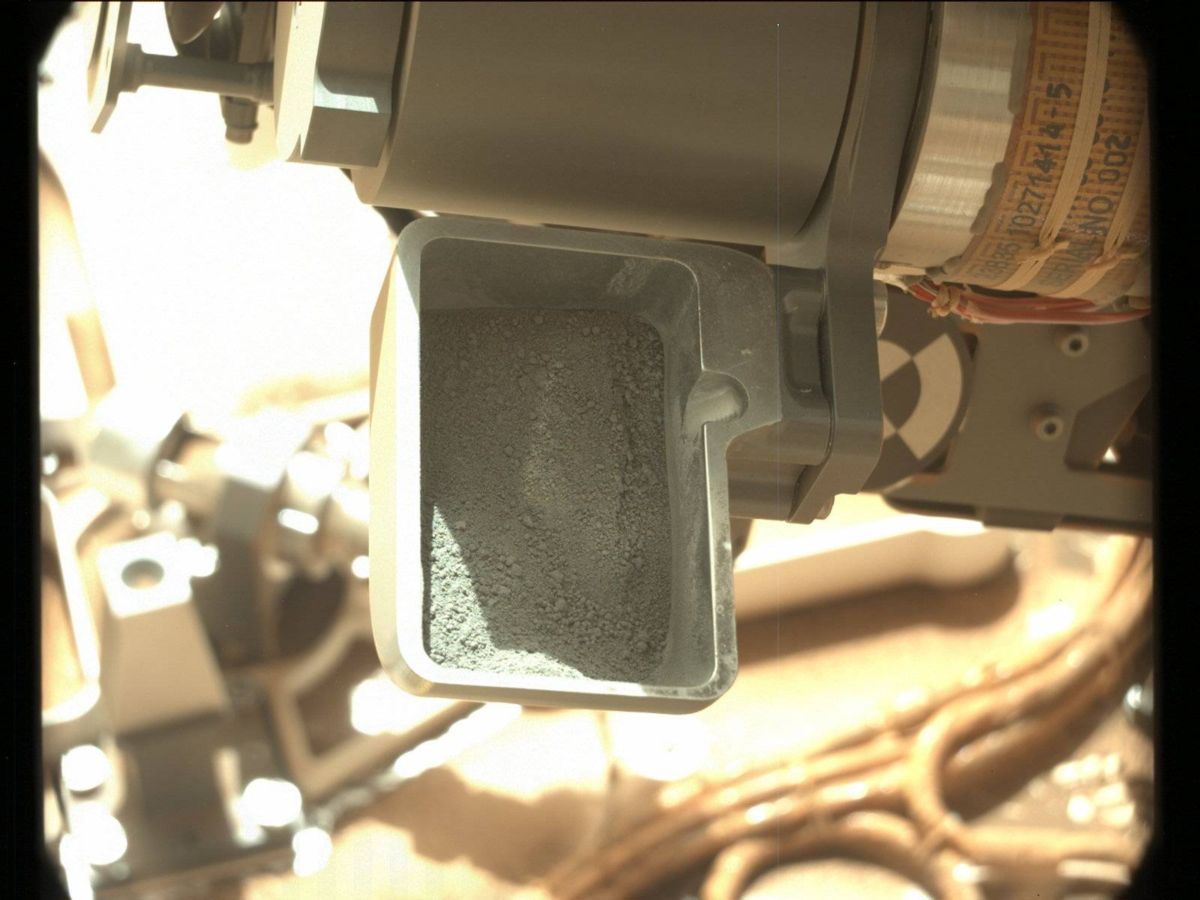
This image was taken by Curiosity’s Mastcam Left on Sol 1334, May 7, 2016.
Credit: NASA/JPL-Caltech/MSSS
Time for a selfie
After such an intense workout, what’s next?
“Time for a selfie,” Edgar says. Curiosity will take a MAHLI self portrait to document the drill site.
“But unlike most selfies, Curiosity’s selfie requires 60 different images, and will take nearly an hour to acquire. Finally, we’ll give the arm a break, and Curiosity will take several ChemCam and Mastcam observations of the drill tailings in the afternoon.
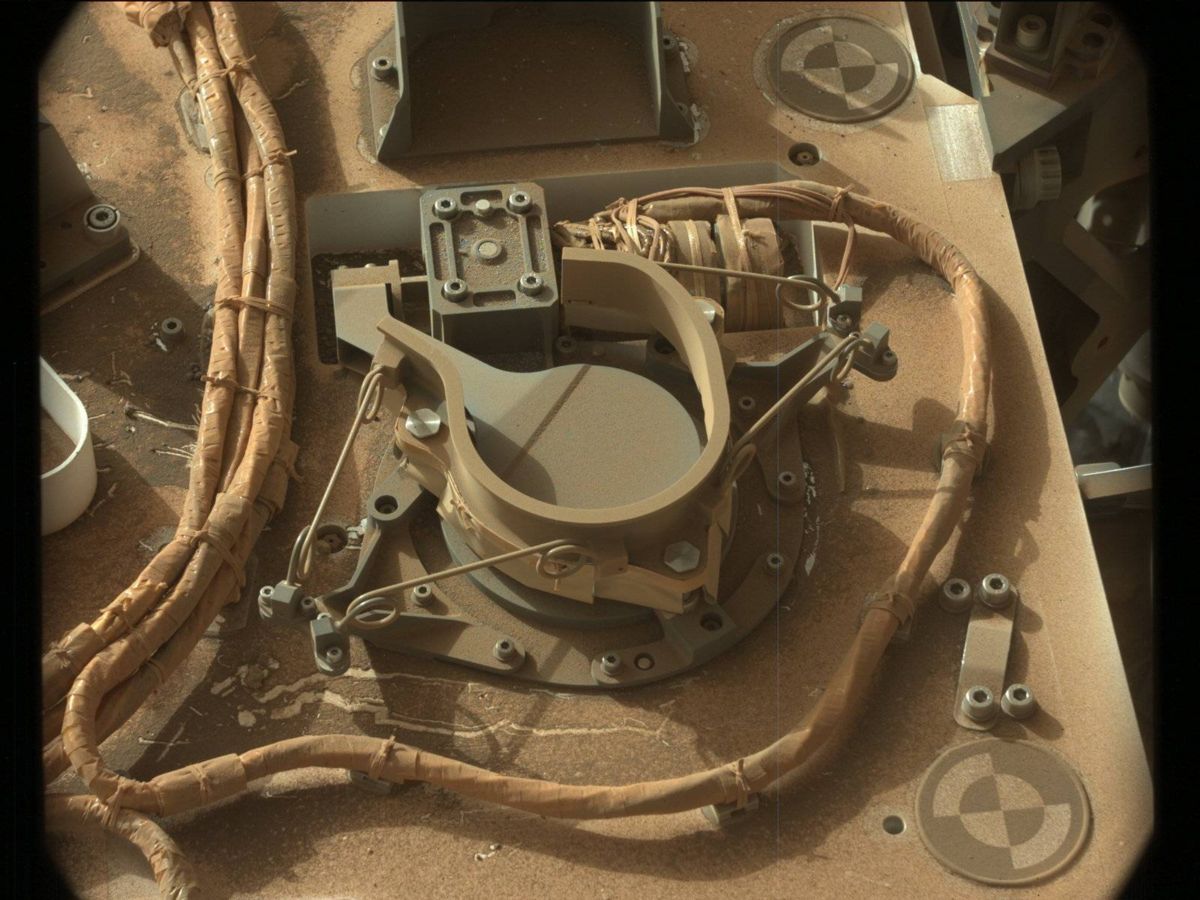
Curiosity Mastcam Left image taken on Sol 1334, May 7, 2016.
Credit NASA JPL Caltech MSSS
“Talk about a good workout…for a lot of great science,” Edgar concludes.

The first X-37B Orbital Test Vehicle waits in the encapsulation cell of the Evolved Expendable Launch vehicle on April 5, 2010 at the Astrotech facility in Titusville, Fla. Half of the Atlas V five-meter fairing is visible in the background.
Credit: U.S. Air Force
X-37B update:
Satellite watchers have indicated that the now-orbiting X-37B (OTV-4) recently made a significant orbit boost. In early May, ground observers started noticing the OTV-4 was not showing up as predicted. It was found on May 6 by José Luis Ruiz Gómez running around 44 minutes late. The OTV-4 orbit had been boosted by around 22 miles (36 kilometers). Such a maneuver may well indicate the craft is due to stay in Earth orbit or might suggest a burn off unneeded fuel and weight for a reentry. Special thanks to Thomas Dorman for this information. Satellite analyst Ted Molczan adds that the vehicle was also briefly at about its present altitude late last fall. OTV-3 was at a similar altitude twice during its flight, he points out.
The secretive mission of the United States Air Force’s X-37B space plane is nearing one year in Earth orbit.
Sent spaceward on the program’s fourth flight on May 20, 2015, the winged space plane’s on-orbit duties remain a tight-lipped affair. It was orbited by a United Launch Alliance Atlas V rocket from Florida’s Cape Canaveral Air Force Station, kicking off a mission dubbed OTV-4 (short for Orbital Test Vehicle-4).
In a response to a Space.com inquiry: “I can confirm the 4th OTV mission is approaching one year on-orbit,” responded Air Force Capt. Annmarie Annicelli at the Pentagon’s Air Force press desk.
Beyond that…nothing further to add, Annicelli said.

Recovery crew members process the X-37B Orbital Test Vehicle at Vandenberg Air Force Base after the program’s third mission complete.
Credit: Boeing
For additional info on this baffling project, go to my new Space.com story today:
Mystery Mission: Air Force’s X-37B Space Plane Nears 1 Year in Orbit
May 10, 2016 08:00am ET
http://www.space.com/32839-x37b-military-space-plane-one-year-mission-otv4.html
Credit:
Bob Sauls/XP4D
M. Wade Holler
Director, Digital Content and Media Strategy
Explore Mars, Inc.
Used with permission.
Nobody ever claimed that planting humans on Mars was easy – and that keeping them there safe and sound was a slam dunk.
Next week, the Humans to Mars Summit (H2M) will spotlight the needed steps to enable human exploration of the Red Planet by the 2030s. This confab of experts takes place May 17-19, 2016 at the George Washington University in Washington, D.C.
Presented by Explore Mars, Inc., the summit brings together high level experts from NASA, academia, and private companies to discuss the challenges and solutions required to dispatch expeditionary crews to Mars.
Critical juncture
“H2M is taking place at a critical juncture,” explains Chris Carberry, CEO of Explore Mars, Inc.
“There has been a tremendous amount of enthusiasm and support for human missions to Mars over the past couple years,” Carberry tells Inside Outer Space, “but as we approach a new administration, we want to make a clear statement to policy makers and candidates that Mars has broad support and it is an achievable goal as early as the early 2030s.”

Colorado’s U.S. Rep. Ed Perlmutter (CO-07), member of the House Science, Space, and Technology Committee.
Credit: NASA/Bill Ingalls
H2M will not only feature senior NASA, industry, and policy figures, but representatives from the entertainment industry, virtual reality experts, STEM education professionals, and experts on innovation and economics, Carberry adds.
“We want to be clear that Mars isn’t just the realm of a small group of space and aerospace professionals, but it has a tremendous reach and impact throughout society,” says Carberry.
Who’s who?
This year’s summit will feature top names in aerospace, science, policy, entertainment, and other fields including:
Buzz Aldrin (Apollo XI; Gemini XII)
Dava Newman (NASA Deputy Administrator)
Andy Weir (Author, The Martian)
Bill Nye ‘The Science Guy’ (CEO, The Planetary Society)
Robert Palumbo (National Geographic Channels Executive Producer)
Ellen Stofan (NASA Chief Scientist)
Joel Achenbach (The Washington Post)
James Green (NASA Director of Planetary Science)

Credit: Mars Explores, Inc.
For more information and to register for the May 17-19 Humans to Mars Summit, go to:

