Archive for the ‘Space News’ Category
 Author:
  July 9th, 2016
Selfie of NASA’s Curiosity Mars rover at a drilled sample site called “Okoruso.”
Credit: NASA/JPL-Caltech
NASA’s Curiosity is sitting on Mars, soaking up sun, deep into Sol 1395 since landing on the Red Planet back in August 2012.
But the Mars machinery early on Sol 1389 entered “safe mode” – likely due to a software problem that remains a challenge to engineers and software specialists here on Earth.
Six sols later, rover pictures of its surrounding landscape are no-shows.
Down time
I queried JPL’s spokesman, Guy Webster, on Curiosity’s overall status.
Is this the longest down time of the rover to date?
Webster advised Inside Outer Space:
Curiosity went from Sol 200 to Sol 215 without taking any images, after an unplanned computer side-swap on Sol 200. The rover didn’t really get back to science until Sol 222.
“I’m not sure whether that’s been the longest gap in image-taking — there may have been longer ones during conjunction periods — but it’s longer than the current stretch of concentrating on getting diagnostic information rather than new observations. There have been no new images taken since Curiosity entered safe mode on Sol 1389, so no new raw images to include in the downlinks this week.”

Last Picture Shows: Thumbnail Data Products – Front and Rear Hazard Avoidance Cameras (Hazcams) images for Sol 1388; Left and Right Navigation Cameras (Navcams) images for Sol 1388
Credit: NASA/JPL-Caltech
Fixes afoot?
So how’s it looking for Curiosity…in the big picture? Real trouble or are fixes afoot?
“Diagnostic work is proceeding, with all of the files identified as priorities now transmitted and received,” the statement from Webster explains. “The investigation so far has provided confidence that the cause of the anomaly does not represent a safety risk to the vehicle.”
Bottom line of the Webster communiqué: “Engineers are optimistic about resuming science observations and transmission of science data in coming days.”
 Posted in

Courtesy: VMMEPP
A special salute is being staged to celebrate 40 years on Mars – a retro-look at the pioneering work of men and women engaged in the U.S. Viking project – the effort that enabled the first U.S. surface mission to the Red Planet.
The event is to be held July 16th at Wings Over the Rockies Air & Space Museum in Denver, Colorado.
This engaging reflection on the past and future of Mars exploration is made possible by the Viking Mars Missions Education & Preservation Project (VMMEPP).
Courtesy: VMMEPP
Veteran Viking members
From 10am to 4pm the public can meet veteran Viking Mission Team Members that served in roles from Science and Engineering to Testing and Mission Operations from the many institutes and NASA Centers that designed, built, and operated all three craft – the Titan IIIE booster, the Viking Orbiters, and the Viking Landers.
This writer along with author Andy Chaikin will be there to autograph books and share insights and reflections on Viking, the Mars Underground, and what’s ahead in Red Planet exploration.
Among other speakers, Jim Rice of Mars Rovers Spirit and Opportunity will talk about those missions including current findings, as well as Alejandro M. San Martin, JPL, Chief Engineer for Guidance and Control.

Courtesy: VMMEPP
Resources
This event is sponsored by Lockheed Martin in partnership with The Space Foundation and Wings Over the Rockies Air & Space Museum.
VMMEPP is a 501©(3) nonprofit, preserving the history and artifacts from the Viking Mission, the first successful combined Orbiter and Lander Mars missions to Mars.
VMMEPP is partnering with institutions worldwide to share the educational and historical materials through exhibits, an online Viking Museum with original material for research, engineering, and historical documents and images, and presentations of current and Viking materials in person and through webcast events.
For more information on the July 16 event, go to:
http://wingsmuseum.org/event-calendar/viking-mars-missions-education-preservation-project/
For detailed information on VMMEPP, go to:
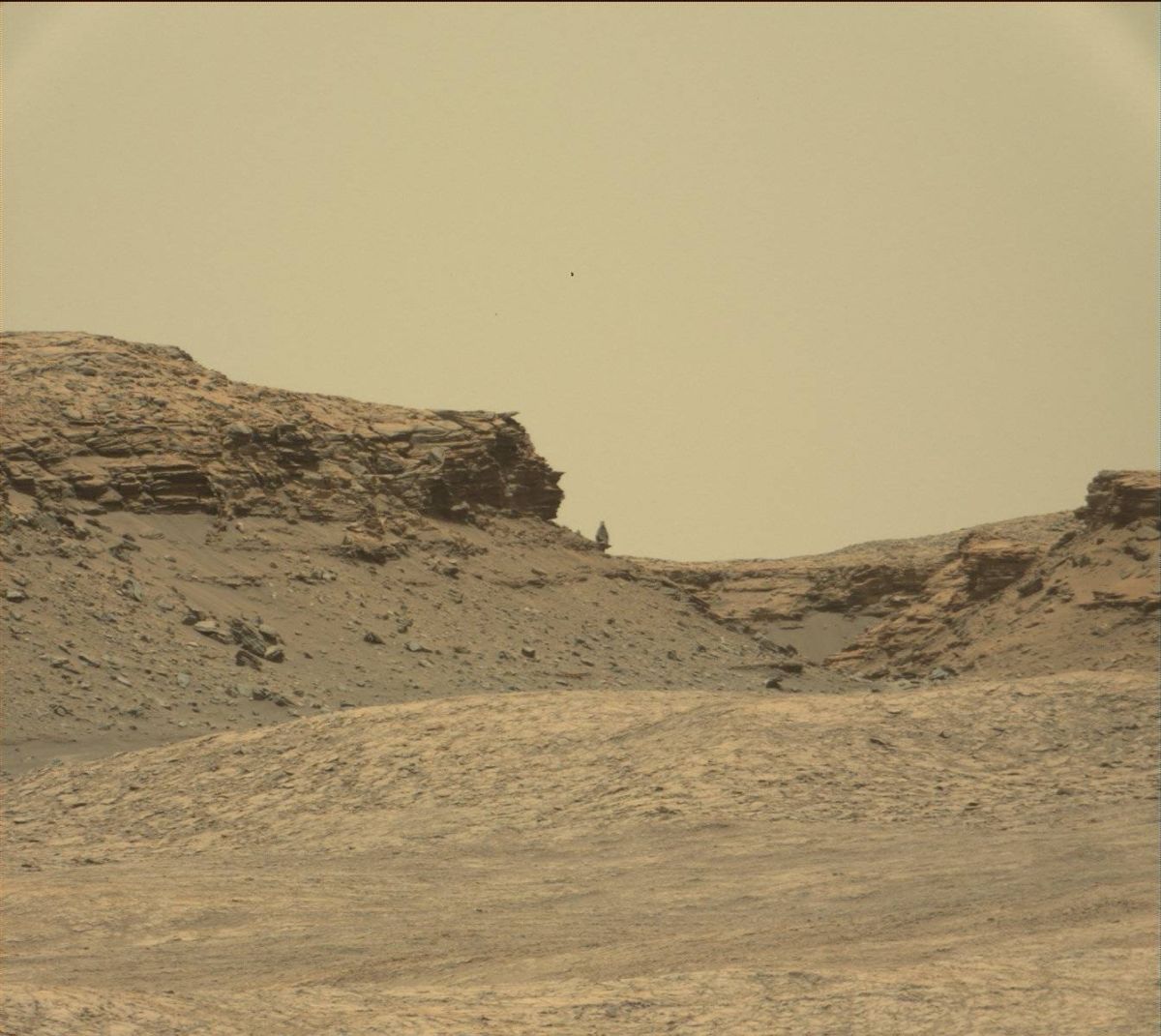
Panorama of the “Murray Buttes” shows a boulder that appears to be precariously balanced.
Curiosity Mastcam Right image taken on Sol 1387 July 1, 2016.
Credit: NASA/JPL-Caltech/MSSS
NASA’s Curiosity Mars rover is now in Sol 1393, recently experiencing an apparent software glitch that has placed it in “safe mode.”
According to the Jet Propulsion Laboratory, steps are underway to return the rover to full activity following a precautionary stand-down over the Fourth of July weekend.
Unexpected mismatch
“The rover put itself into safe mode on July 2, ceasing most activities other than keeping itself healthy and following a prescribed sequence for resuming communications,” notes a JPL update.
Curiosity has entered safe mode three times previously, all during 2013.
“Preliminary information indicates an unexpected mismatch between camera software and data-processing software in the main computer,” explains the JPL website on Curiosity. “The near-term steps toward resuming full activities begin with requesting more diagnostic information from Curiosity.”
Precariously balanced boulder
Meanwhile, Ken Herkenhoff of the USGS Astrogeology Science Center in Flagstaff, Arizona reports that rover activities planned for Sols 1387 and 1388 were completed successfully.
Lots of good data were returned, Herkenhoff says, including a stunning Right Mastcam panorama of the “Murray Buttes” toward the southwest.
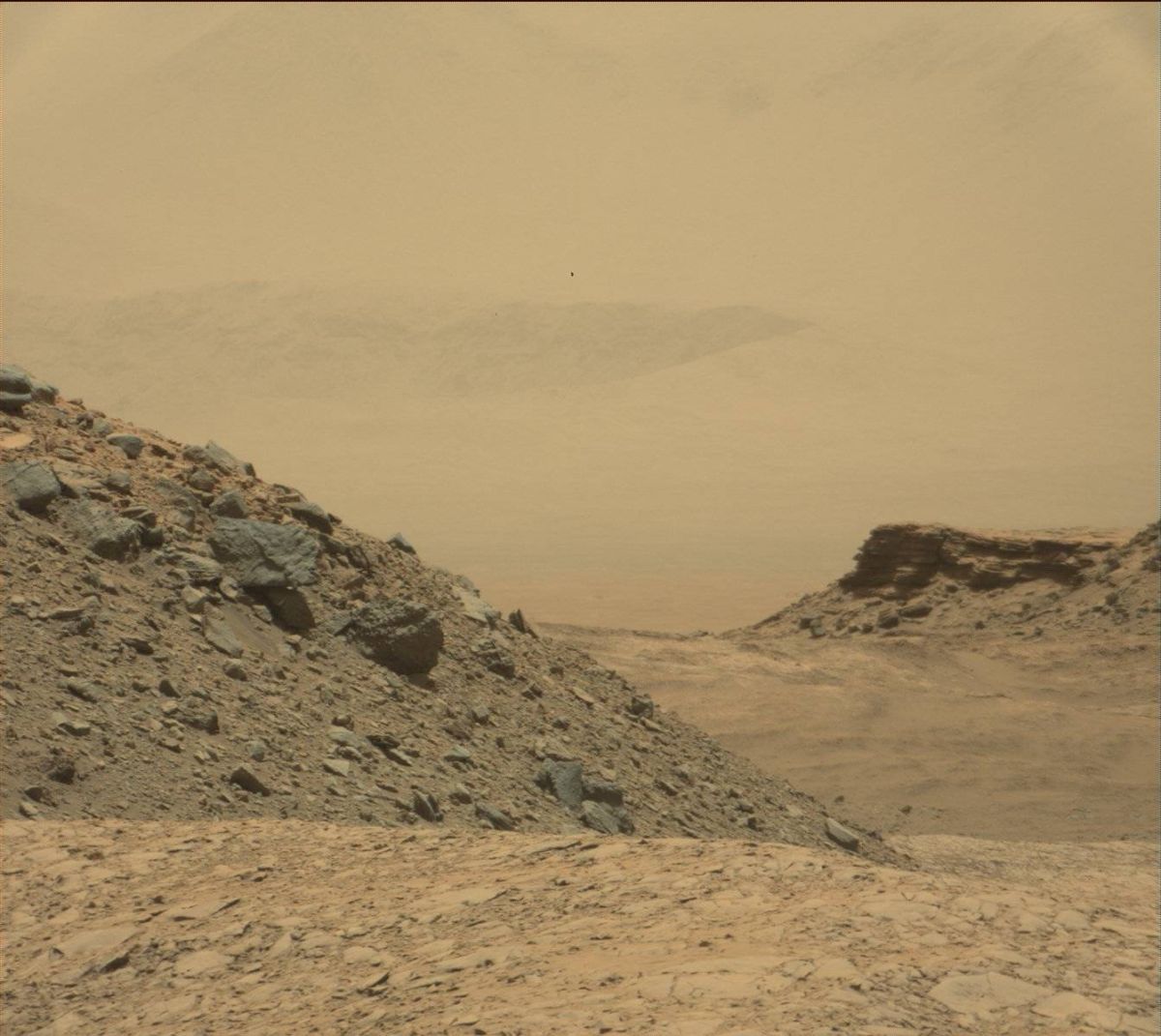
Curiosity Mastcam Right image taken on Sol 1387 July 1, 2016.
Credit: NASA/JPL-Caltech/MSSS
“One of the images in this panorama shows a boulder that appears to be precariously balanced,” Herkenhoff notes. “No, we don’t plan to drive right up next to it, but we’ll probably get closer looks as the rover proceeds toward Mount Sharp.”
Suspended science planning
Early on Sol 1389, the rover entered safe mode, apparently due to a software problem that is still not fully understood.
“So the 3-sol plan did not execute but the rover and all subsystems are healthy<” Herkenhoff adds. “Science planning has been suspended while critical engineering data are returned to Earth and studied by software experts at JPL,” he reports, “but I’m anxiously following the tactical team’s progress in recovering from safe mode.”

Cover photo: Sunrise over the Western U.S., taken by astronaut Scott Kelly on the International Space Station.
Credit: NASA
A new study has recommended augmenting the U.S. strategic posture by “enabling the use of space for the defense of the United States across military domains.”
Specifically, the appraisal — Space and the Right to Self Defense — urges that the United States immediately begin the necessary steps to deploy a space-based interceptor (SBI) capability.
Optimal vantage point

Credit: Missile Defense Agency
“An SBI capability would dramatically augment U.S. terrestrially- and sea-based defensive capabilities, reduce the demands upon current systems, and provide the United States with the optimal vantage point for destroying enemy missiles regardless of their launch or target location, whether on land, at sea, in the air, or in space,” the June 2016 report by the Hudson Institute explains.
A critical benefit of an SBI layer, adds the report, “is the ability to destroy many missiles during their boost phase, while the missile is still over enemy territory and before the enemy can deploy their nuclear warheads, countermeasures, and decoys.”
Pivotal moment
“We have long since passed the threshold of concern that space will one day become the next battlefield, and we are at a pivotal moment,” the document adds. “The United States of America will not maintain its pre-eminent global power status by default nor absent further action. We must choose this path, and if chosen, we must better utilize the space domain to nullify any adversary’s ability to coerce and blackmail the United States with missiles, possibly armed with nuclear weapons.”
Vulnerability of space assets
Among the study’s findings:
- U.S. adversaries are investing in missile technologies to contest U.S. military pre-eminence and challenge U.S. technical superiority.
- Due to the vulnerability of, and the U.S. reliance on, space assets, adversaries have sought to target those assets with a variety of weapons including direct-ascent anti-satellite missiles.
- A space-based interceptor (SBI) capability is essential to augment U.S. terrestrially and sea-based capabilities, and keep pace with the threats we face.
- No treaty or international conventions or norms prohibits the deployment of an SBI capability.
- Continue investments in directed energy technology to one-day aid or replace space-based kinetic interceptors.

Artist’s view of the Missile Defense Agency’s Space Tracking and Surveillance System-Demonstrator (STSS-D) spacecraft tracking objects in space.
According to Raytheon, developer of the sensor payloads onboard the spacecraft, they have demonstrated the ability to:
— Detect missile launches and track targets from boost phase into midcourse
— Acquire and track short range air-launched targets
— Track multiple targets simultaneously
— Communicate with missile defense command and control systems
— Provide “launch on remote” cueing information to U.S. Navy ship defenses before the ship itself acquired the target
Photo credit: Northrop Grumman Corporation
Challenge conventional thinking
Space and the Right to Self Defense, issued by the Hudson Institute, is authored by Rebeccah L. Heinrichs, the report’s study director and a Fellow at the Hudson Institute. She provides research and commentary on a range of national security issues, and specializes in nuclear deterrence, missile defense, and counter-proliferation.

Rebeccah L. Heinrichs, the report’s study director and a Fellow at the Hudson Institute.
Credit: Hudson Institute
The Hudson Institute is a research organization promoting American leadership and global engagement for a secure, free, and prosperous future. It was founded in 1961 by strategist Herman Kahn, dedicated to challenging conventional thinking and helps manage strategic transitions to the future through interdisciplinary studies in defense, international relations, economics, health care, technology, culture, and law.
To read the full report, Space and the Right to Self Defense, go to:

Illustration of NASA’s Juno spacecraft firing its main engine to slow down and go into orbit around Jupiter.
Credit: Lockheed Martin
DENVER, Colorado – After 5 years of travel, NASA’s Juno spacecraft has gunned its way into orbit around giant Jupiter.
Launched on August 4, 2011 – the $1.13 billion Juno is the first solar-powered spacecraft designed to operate at Jupiter.

Size of Juno relative to a basketball court.
Credit: NASA/JPL-Caltech
The spacecraft fired its main engine for some 35 minutes to insert itself into orbit around the massive Jupiter.
Burn, baby, burn
Space engineers, scientists and general public well-wishers burst into applause here at Lockheed Martin Space Systems Company given the word that Juno attained an initial orbit.
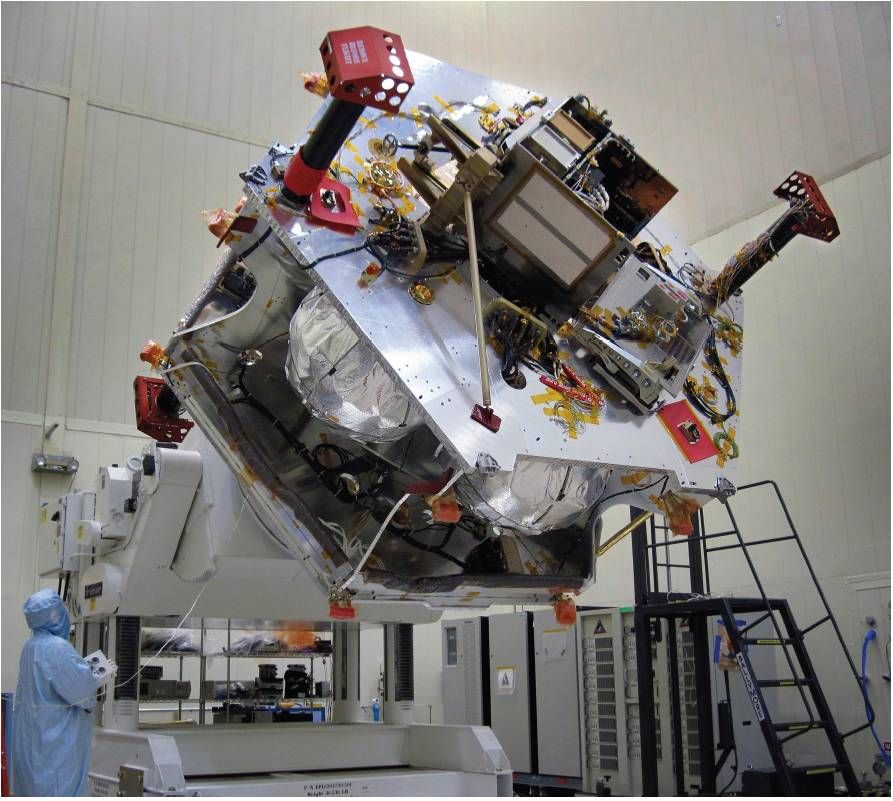
Juno’s specially designed radiation vault protects the spacecraft’s electronic brain and heart from Jupiter’s harsh radiation environment.
Credit: NASA/JPL-Caltech/LMSS
“The burn cut off within one second of what it was supposed to do,” reported Tim Gasparrini, Program Manager (Development) at Lockheed Martin.
It takes 48 minutes for transmission from Juno to get to Earth.
Lockheed Martin built the 4-ton Juno spacecraft and is on the flight operations team with the Jet Propulsion Laboratory (JPL) in Pasadena, California.
Sunblock
Juno’s primary goal is to improve our understanding of Jupiter’s formation and evolution.
Gasparrini detailed one of Juno’s engineering marvels – a large titanium vault. “It’s like sunblock,” he said.
To protect sensitive spacecraft electronics, the probe carries a radiation-shielded electronics vault, weighing about 400 pounds (200 kilograms).
This titanium box is about the size of a SUV trunk.
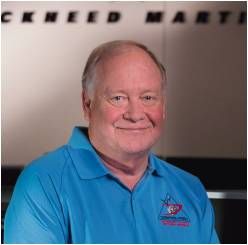
Kenneth Starnes, Lockheed Martin’s Juno program manager and leader of the Juno flight team.
Credit: Lockheed Martin
First big radiation dose
The mood of the team is one of elation, said Kenneth Starnes, Lockheed Martin’s Juno program manager and leads the Juno flight team. “We are in orbit,” he said.
Starnes told Inside Outer Space that the immediate task post-insertion was how well Juno’s solar panels are performing. “This was our first big radiation dose,” he said, with engineers also looking at the state of charge on the spacecraft’s batteries.
Providing Juno’s energy are 18,698 individual solar cells.
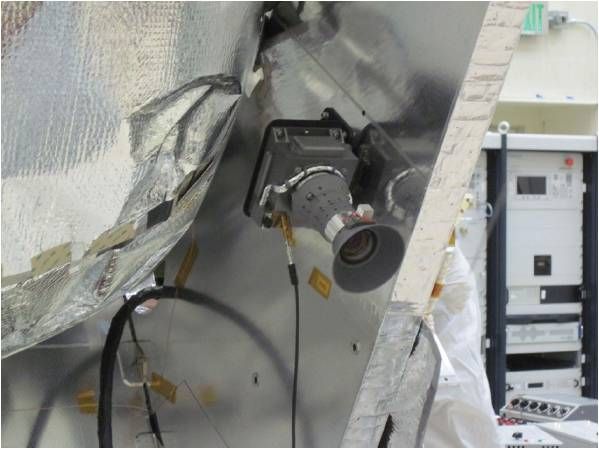
JunoCam is onboard the spacecraft, a visible-light camera that can provide the first pictures of Jupiter’s poles.
Credit: NASA/JPL-Caltech/LMSS
Ditching into Jupiter
Juno’s first two orbits are 53 day orbits, Gasparrini said, “time to understand how the spacecraft responded to Jupiter.”

Juno spacecraft being prepped for Jupiter at Lockheed Martin Space Systems. Bunny-suited Jack Farmerie, (left) Lockheed Martin’s lead spacecraft technician on the Juno project and SPACE.com reporter Leonard David (right).
Credit: Gary Napier
The spacecraft will orbit Jupiter 37 times.
Juno will nosedive into Jupiter at the end of its last orbit – closing off the almost one-and-a-half year science phase of the mission.
“NASA is extremely serious about protecting other worlds,” Gasparrini said. While a small probability, to assure the probe will not crash into any moon of Jupiter, the craft will be purposely ditched into Jupiter, he said.
For more information on the Juno mission, go to my 2011 story detailing its building and testing:
SPACE.com Gets an Inside Look at Jupiter-Bound Spacecraft
By Leonard David, Space.com’s Space Insider Columnist
February 23, 2011 07:09am ET
http://www.space.com/10889-jupiter-spacecraft-juno-person.html
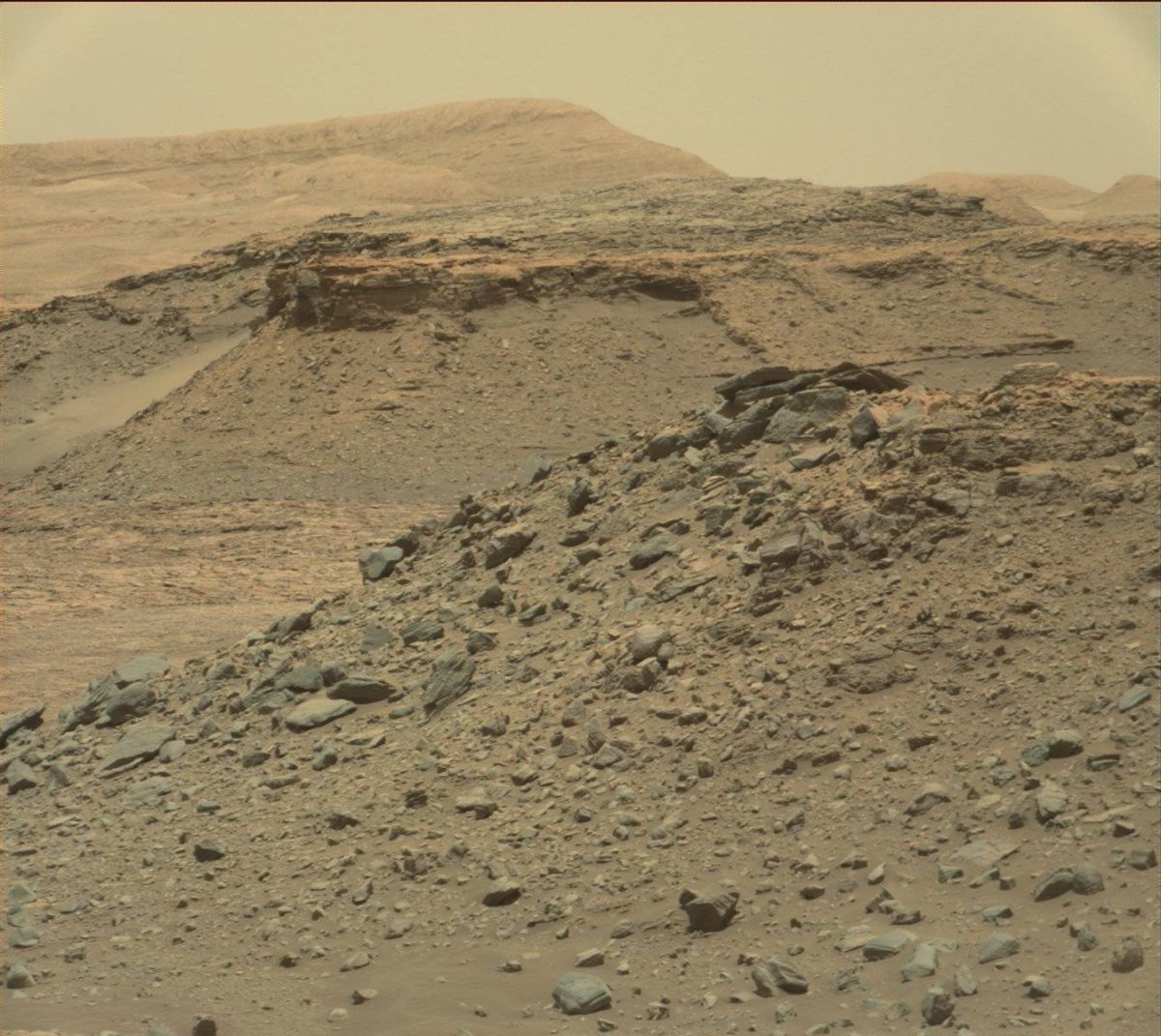
Curiosity Mastcam Right image taken on Sol 1387, July 1, 2016
Credit: NASA/JPL-Caltech/MSSS
NASA’s Curiosity Mars rover is slated to implement a three Sol plan taking it through the holiday weekend.
At this writing, the Mars machinery is busy at work on Sol 1389.
Contact science
Sol 1389 activities on tap were to perform contact science with the rover’s Alpha Particle X-Ray Spectrometer (APXS) and its Mars Hand Lens Imager (MAHLI) on the target “Outjo.”
Curiosity’s Sample Analysis at Mars (SAM) Instrument Suite is to begin an analysis of some of the “Mojave2” sample that was collected a while ago, explains Ryan Anderson, a planetary scientist at the USGS Astrogeology Science Center in Flagstaff, Arizona.
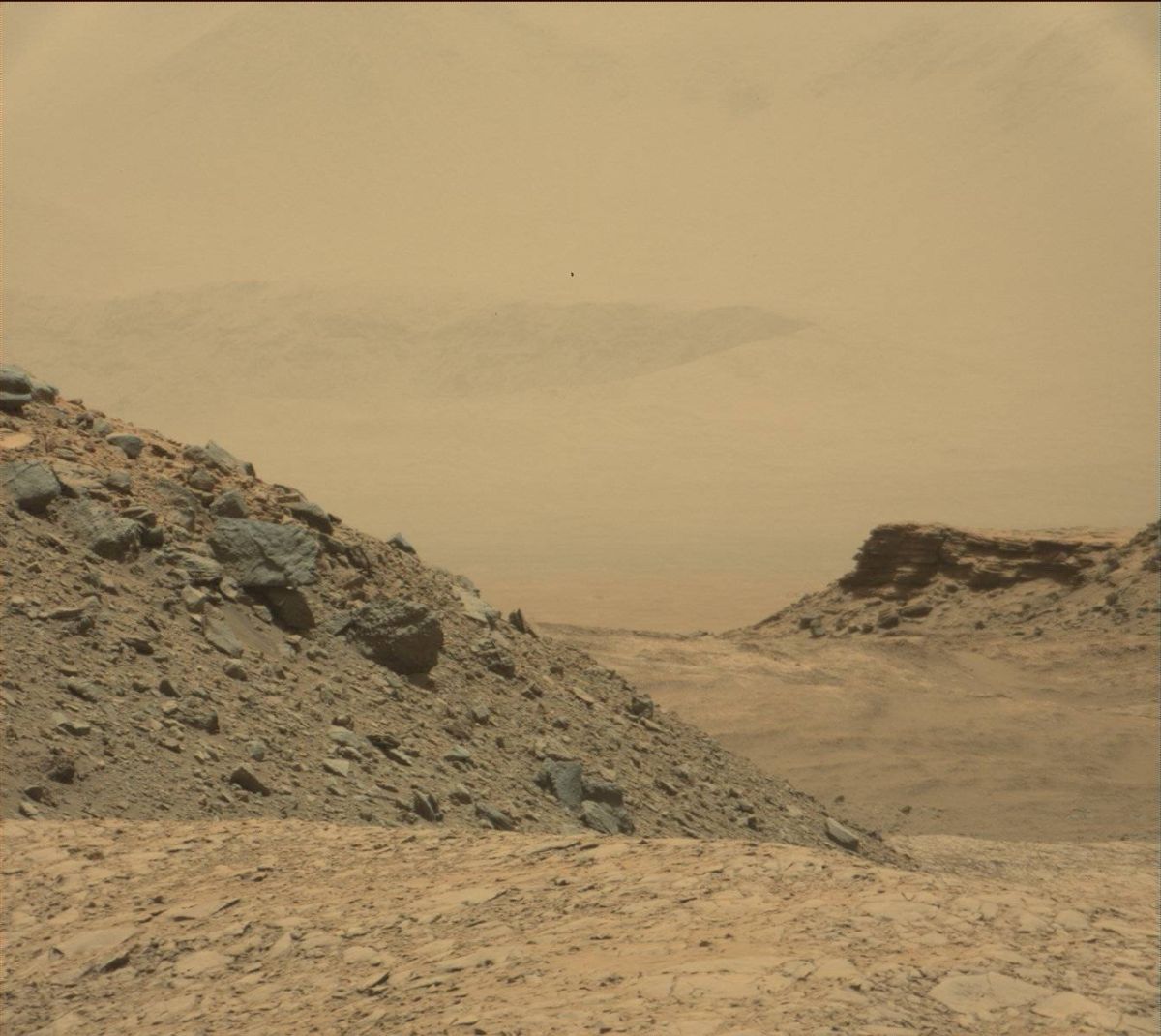
Curiosity Mastcam Right image taken on Sol 1387, July 1, 2016
Credit: NASA/JPL-Caltech/MSSS
Mosaics
The Sol 1390 plan is to start off with a long science block. Mastcam starts the block off with a multispectral observation of the brushed target “Outjo.” Then the Chemistry & Camera (ChemCam) has a long distance RMI observation of Mt. Sharp, plus analyses of the targets “Outjo” and “Luanda.”
After ChemCam, Anderson adds, Mastcam turns back on and takes mosaics of “Bukalo” and “Bailundo” which are blocky deposits, “Keetmanshoop,” an outcrop of the Murray formation, and “Quimavongo,” a small crater.
SAM will also continue its sample analysis.
Wheeling onward
Anderson explains that on Sol 1391, the plan calls for wheeling the robot about 196 feet (60 meters) and then collect post-drive imaging.
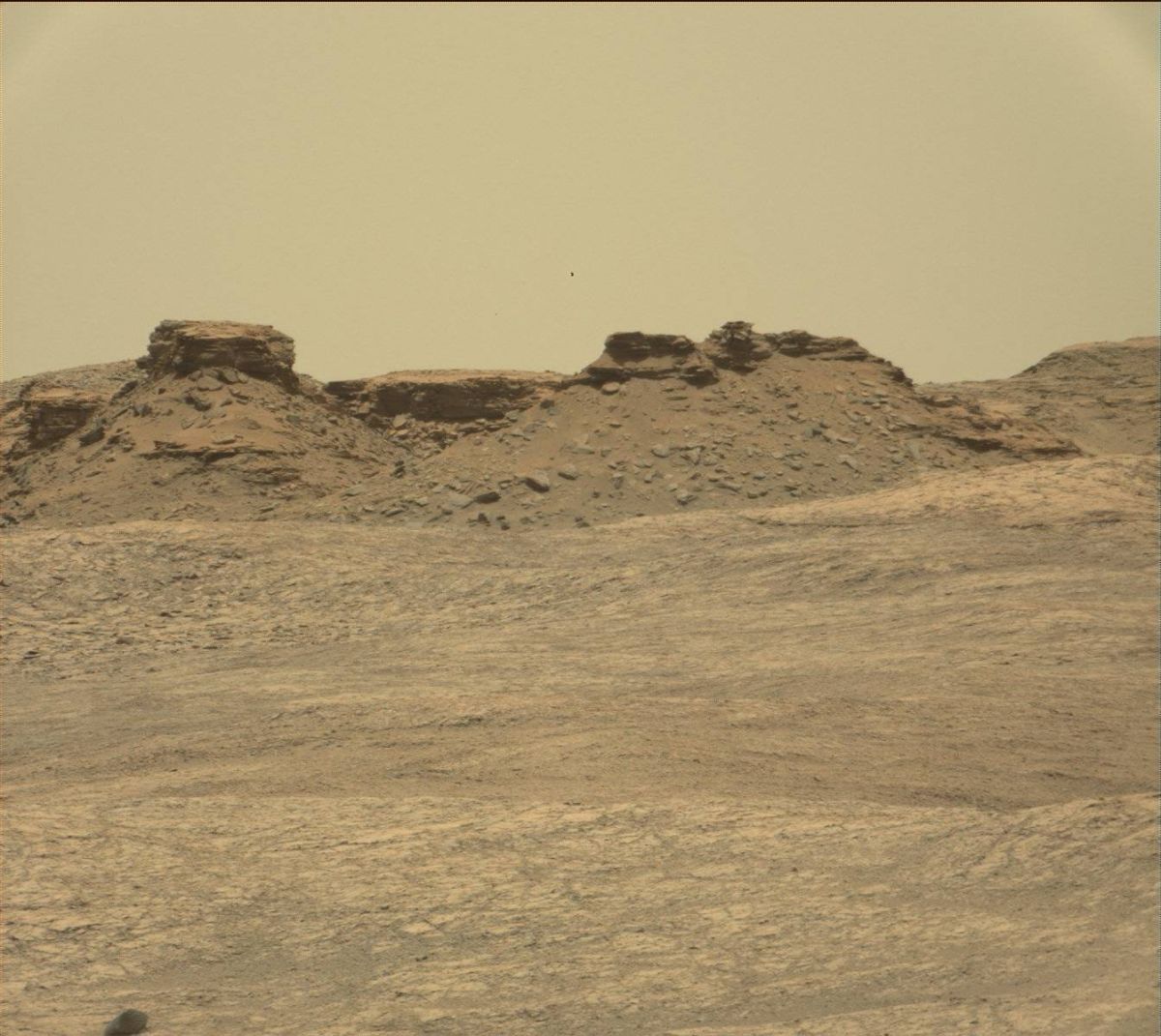
Curiosity Mastcam Right image taken on Sol 1387, July 1, 2016
Credit: NASA/JPL-Caltech/MSSS
In the early morning on Sol 1392, Navcam and Mastcam have a series of atmospheric observations.
Dates of planned rover activities are subject to change due to a variety of factors related to the Martian environment, communication relays and rover status.
As of Sol 1387, Curiosity has driven 8.22 miles (13.23 kilometers).

Credit: ShareSpace Foundation
A ShareSpace Foundation Gala event will be held on the 47th anniversary of Apollo 11’s historic return to Earth – and the 50th anniversary of Star Trek!
Joining Buzz Aldrin is Star Trek’s Mr. Sulu, George Takei, serving as host of the ShareSpace Foundation’s Apollo 11 Anniversary Gala. Star Trek alumna Nichelle Nichols (Uhura) as well as several other guest stars and astronauts are also taking part in the celestial celebration.
Star-studded evening
The event takes place on July 23, 2016 at NASA’s Kennedy Space Center with festivities taking place underneath a restored Saturn V rocket, the huge booster used for the Apollo lunar landing program. A specially crafted four-course dinner will be served underneath the restored Moon booster.

Credit: ShareSpace Foundation
Long-time space news reporter John Zarrella (CNN) will serve as the evening’s emcee. NASA astronauts from each era of human space flight will commemorate the 47th anniversary of the historic Apollo 11 mission as well as the 50th anniversary of Star Trek: The Original Series.
The star-studded evening includes an Apollo 11 Memorabilia Silent Auction and special raffle, available only to gala attendees. Also, as part of the anniversary salute, Aldrin and Takei will share their experiences during a time when space travel transitioned from fantasy to reality. There will be a professional photo opportunity with Aldrin and Takei, among additional surprise benefits.

Credit: ShareSpace Foundation
ShareSpace benefit
Event proceeds benefit Buzz Aldrin’s ShareSpace Foundation, a non-profit 501(c)(3) organization dedicated to igniting children’s passions for science, technology, engineering, arts, and math (STEAM) by providing educators with interactive and engaging hands-on educational activities.
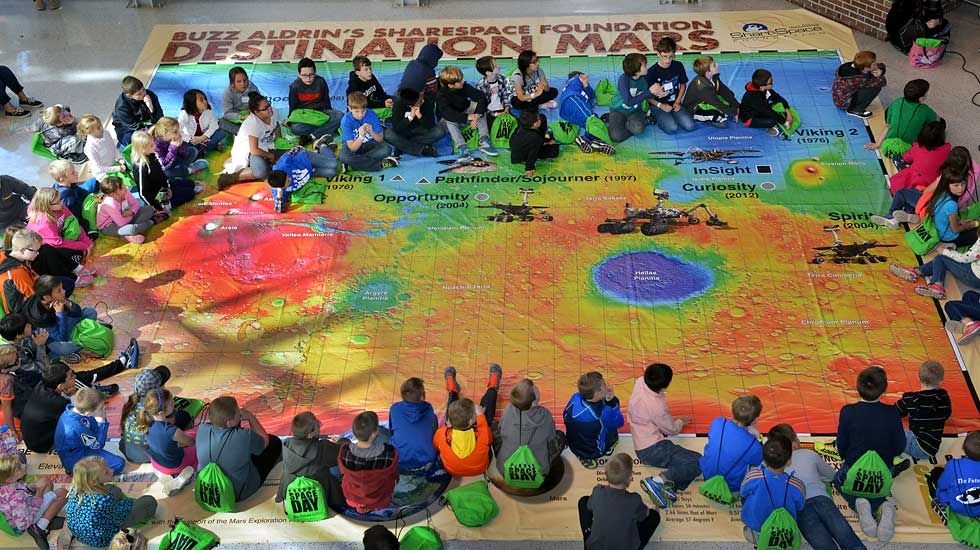
Credit: ShareSpace Foundation
For detailed information on the July 23 event and purchasing tickets, go to:
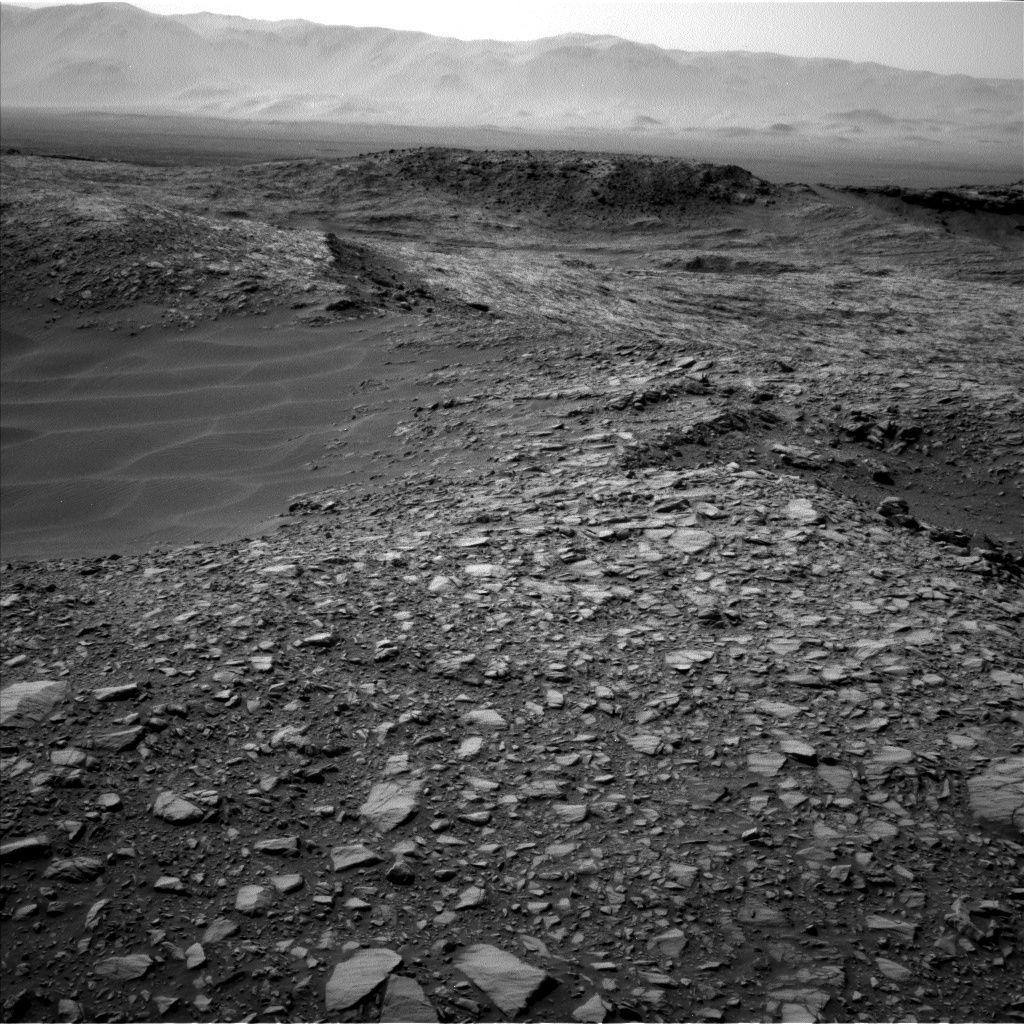
Curiosity Navcam Left B image taken on Sol 1387, July 1, 2016.
Credit: NASA/JPL-Caltech
The very independent Curiosity Mars rover is to be busy wheeling into the long 4th of July weekend.
A number of sols are being planned by Earth operators, explains Ryan Anderson, a planetary scientist at the USGS Astrogeology Science Center in Flagstaff, Arizona.
At this writing, Curiosity is just wrapping up Sol 1387 activities.
Rock, soil targets
Anderson says that the plan for this sol was having the Chemistry & Camera (ChemCam) to find analyze two targets: a rock named “Noordoewer” and a soil named “Savates.”
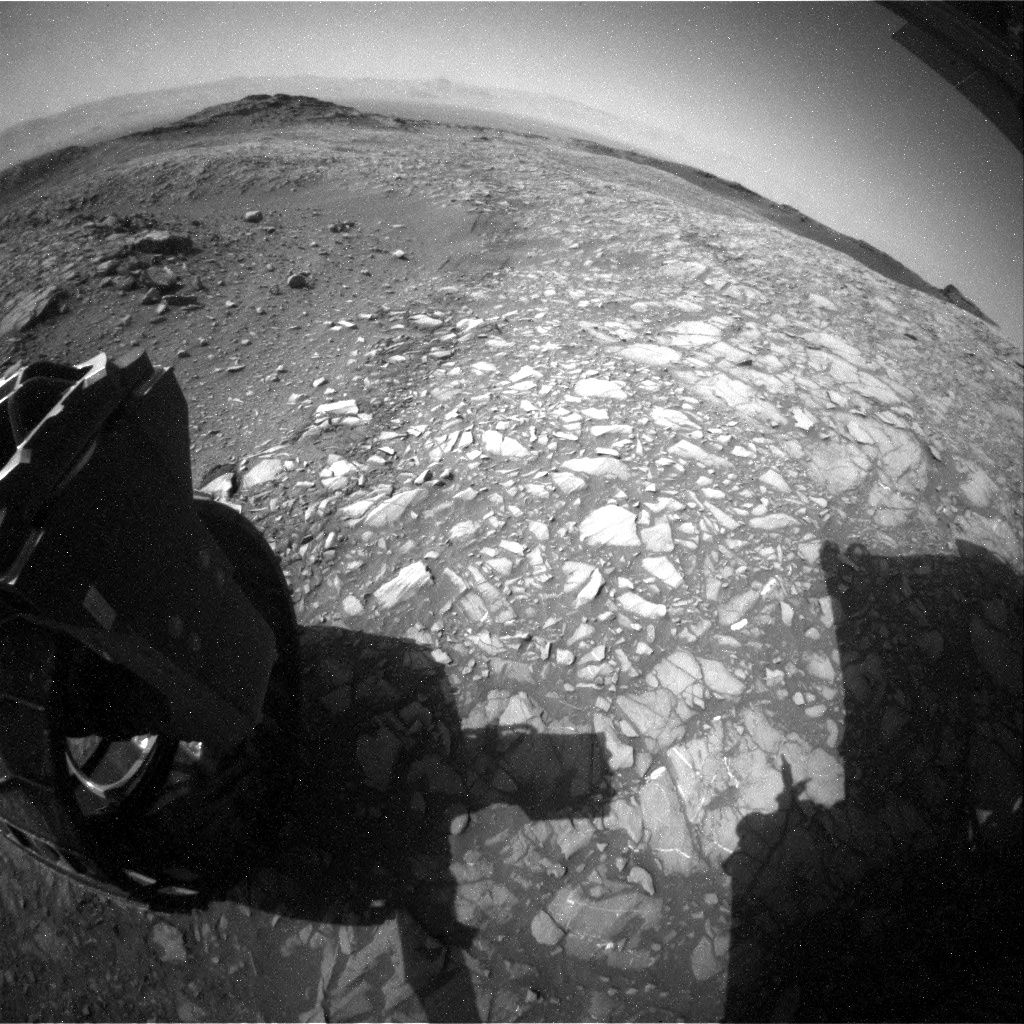
Curiosity image taken by Rear Hazcam Left B on Sol 1387, July 1, 2016.
Credit: NASA/JPL-Caltech
Mastcam was also set to document those targets and take a mosaic of the “Murray Buttes”. After that, the rover was to perform a short drive, followed by post drive imaging, Anderson notes.
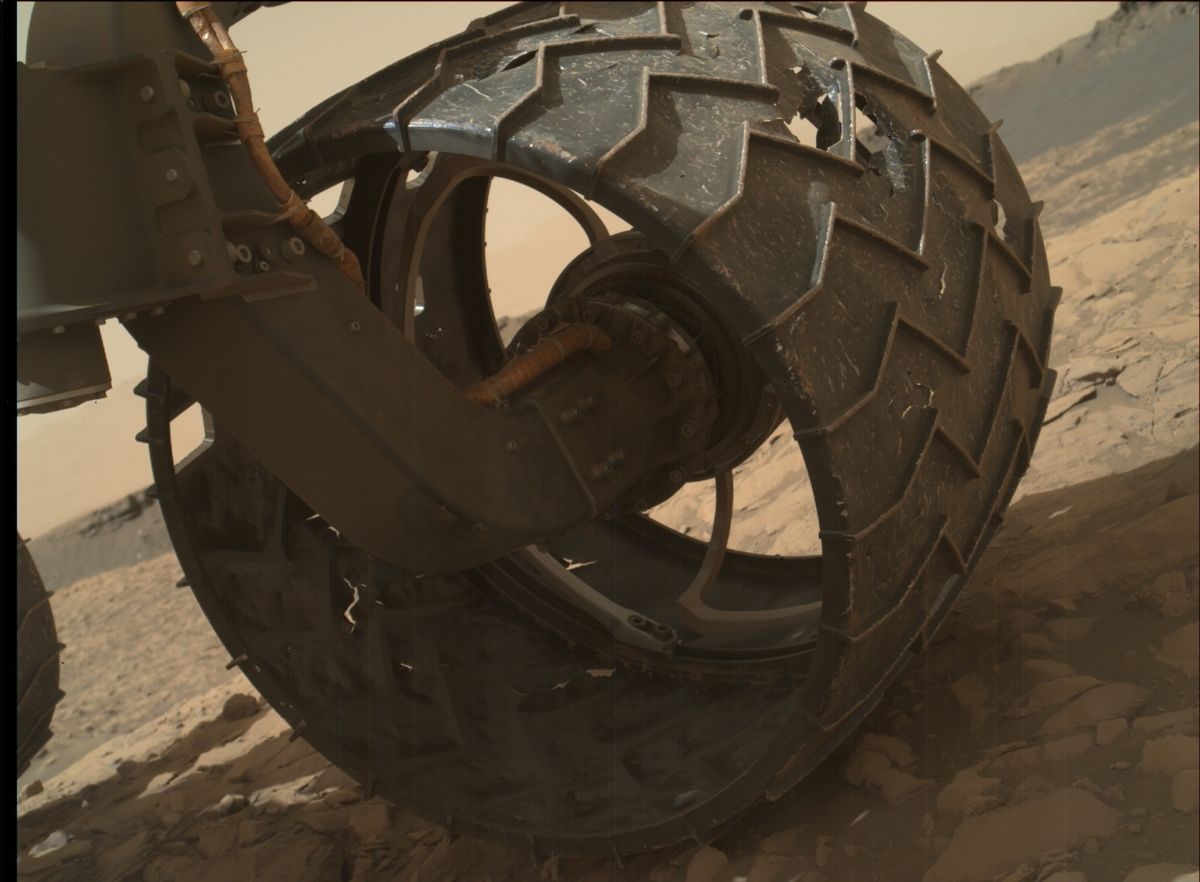
Curiosity Mars Hand Lens Imager (MAHLI) image taken on June 30, 2016, Sol 1386.
Credit: NASA/JPL-Caltech/MSSS
Lastly, a request is in, Anderson adds, for the rover’s Navcam to take imagery of Mt. Sharp along with the post drive imaging to help target more long distance ChemCam Remote Microscopic Imager (RMI) images.
“On Sol 1388, we have an easy day: ChemCam has a calibration observation and Navcam has a couple of atmospheric monitoring observations,” Anderson explains.
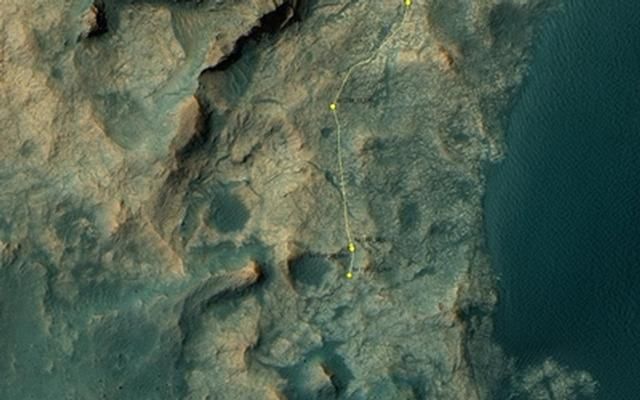
This map shows the route driven by NASA’s Mars rover Curiosity through the 1387 Martian day, or sol, of the rover’s mission on Mars (July, 01, 2016).
From Sol 1386 to Sol 1387, Curiosity had driven a straight line distance of about 41.43 feet (12.63 meters).
Since touching down in Bradbury Landing in August 2012, Curiosity has driven 8.22 miles (13.23 kilometers).
The base image from the map is from the High Resolution Imaging Science Experiment Camera (HiRISE) in NASA’s Mars Reconnaissance Orbiter.
Credit: NASA/JPL-Caltech/Univ. of Arizona
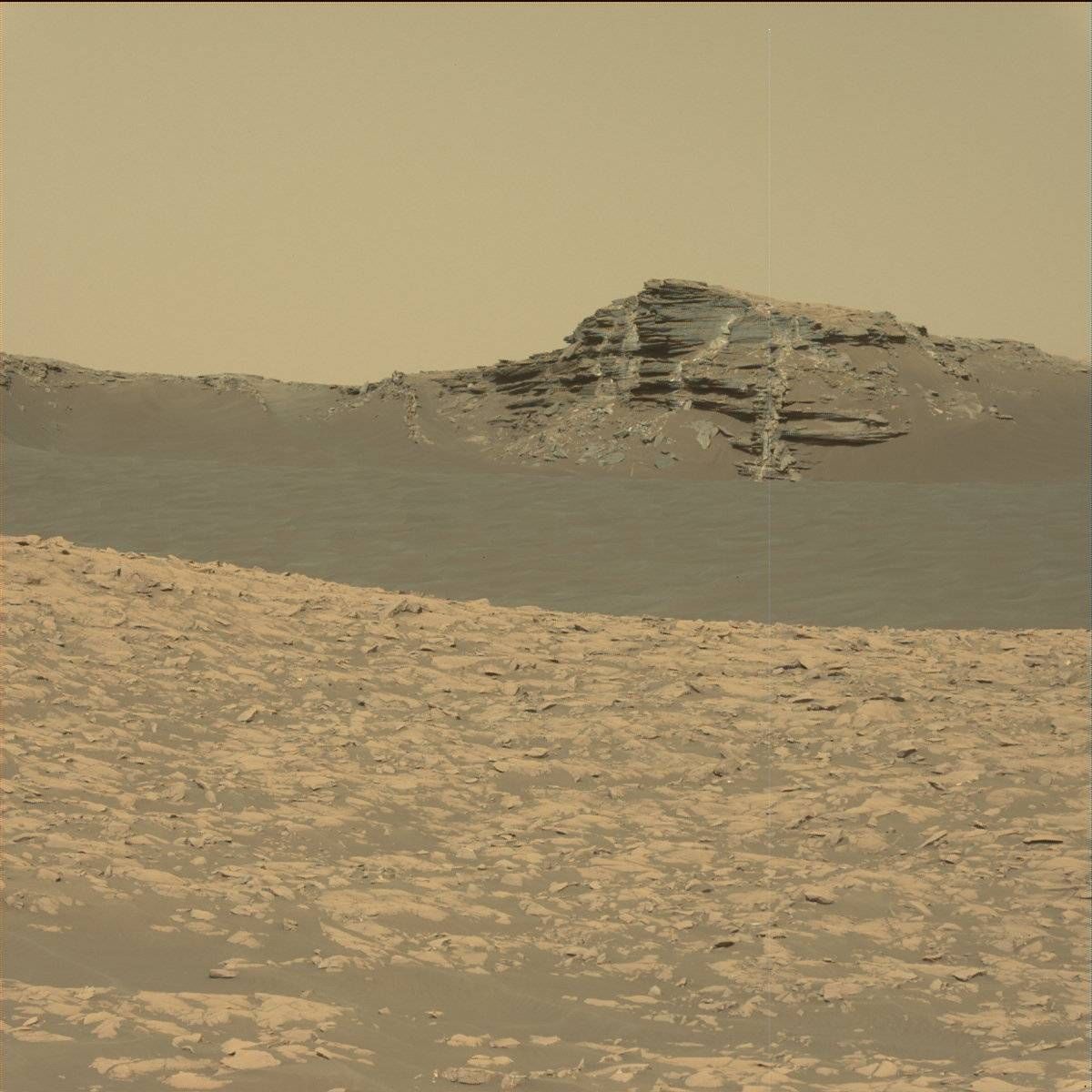
Curiosity Mastcam Left image taken on Sol 1384, June 28, 2016.
Credit: NASA/JPL-Caltech/MSSS
NASA’s Curiosity Mars rover is busy at work during Sol 1386.
Ryan Anderson, a planetary scientist at the USGS Astrogeology Science Center in Flagstaff, Arizona reports the robot has been wheeled over 216 feet (66 meters) last Sol.
The Mars machinery is continuing on its path south between the “Baynes Mountains” and “Helgas Dune.”
The plan for Sol 1386 is to start off with Alpha Particle X-Ray Spectrometer (APXS) and Hand Lens Imager (MAHLI) observations of the target “Trekkopje”, followed by a short science block.

Curiosity Navcam Left B image taken on Sol 1385, June 29, 2016.
Credit: NASA/JPL-Caltech
Curiosity’s Mastcam is slated to start off the block with some atmospheric measurements, then Chemistry & Camera (ChemCam) “is to join in the fun and analyze Trekkopje too,” Anderson adds.

Curiosity Navcam Left B image taken on Sol 1385, June 29, 2016.
Credit: NASA/JPL-Caltech
Also on the schedule is for the rover to churn out a couple of small mosaics studying the rim of a nearby crater.
“Instead of driving, we will use MAHLI to do a check-up on our wheels in today’s plan,” Anderson notes.

Credit: ULA
A major U.S. launch provider has outlined a plan to enable a cislunar space economy based on their need for propellant and refueling in Earth orbit.
Dubbed the “Cislunar 1000 Vision,” the initiative foresees a self-sustaining economy that supports a 1,000 people living and working in space roughly 30 years from now.
A central element of the plan involves use of a souped-up Centaur rocket stage called ACES, standing for Advanced Cryogenic Evolved Stage. This liquid oxygen/liquid hydrogen upper stage is designed to be reusable and can be refueled, perhaps by propellant made on Earth’s moon or extracted from asteroids.

Credit: ULA
The concept stems from an analysis and on-going technical work by United Launch Alliance (ULA), a 50-50 joint venture owned by Lockheed Martin and The Boeing Company to provide Atlas and Delta launch services.
A roadmap to attain the Cislunar 1000 Vision was recently detailed at the 7th joint meeting of the Space Resources Roundtable and the Planetary & Terrestrial Mining Sciences Symposium, held June 7-9, 2016 at the Colorado School of Mines in Golden, Colorado.
Go to my new Space.com story at:
Inside ULA’s Plan to Have 1,000 People Working in Space by 2045
By Leonard David, Space.com’s Space Insider Columnist
June 29, 2016 02:55pm ET
http://www.space.com/33297-satellite-refueling-business-proposal-ula.html

