Archive for the ‘Space News’ Category
 Author:
  September 27th, 2016
Credit: CCTV
Today the U.S. Committee on Science, Space, and Technology, Subcommittee on Space held a hearing titled: “Are We Losing the Space Race to China?”
The hearing purpose was to examine the achievements, capabilities, and future direction of China’s space program, as well as the impact to U.S. leadership in space.
To view the video of the hearing, go to:
Reassert leadership
In his prepared opening statement, U.S. Rep. Lamar Smith (R-Texas), chairman of the U.S. House Committee on Science, Space, and Technology, said that the Obama administration’s cuts to exploration and disruption of exploration planning “has eliminated our opportunities to return to the Moon. And the administration has no real plan for landing people on Mars.”

Credit: NASA
Meanwhile, China continues to make progress, Smith said. “We cannot resign ourselves to the remembrance of past achievements. It is time for the United States to reassert its leadership.”
Expert testimony
- Dennis C. Shea, Chairman, U.S.-China Economic and Security Review Commission
- Mark Stokes, Executive Director, Project 2049 Institute
- Dean Cheng, Senior Research Fellow, Asian Studies Center, Heritage Foundation
- James Lewis, Senior Vice President and Director, Strategic Technologies Program, Center for Strategic & International Studies
Lawmaker statements
The statement of Chairman Lamar Smith (R-Texas) is here:
The statement of Space Subcommittee Chairman Brian Babin (R-Texas) is here:
 Posted in
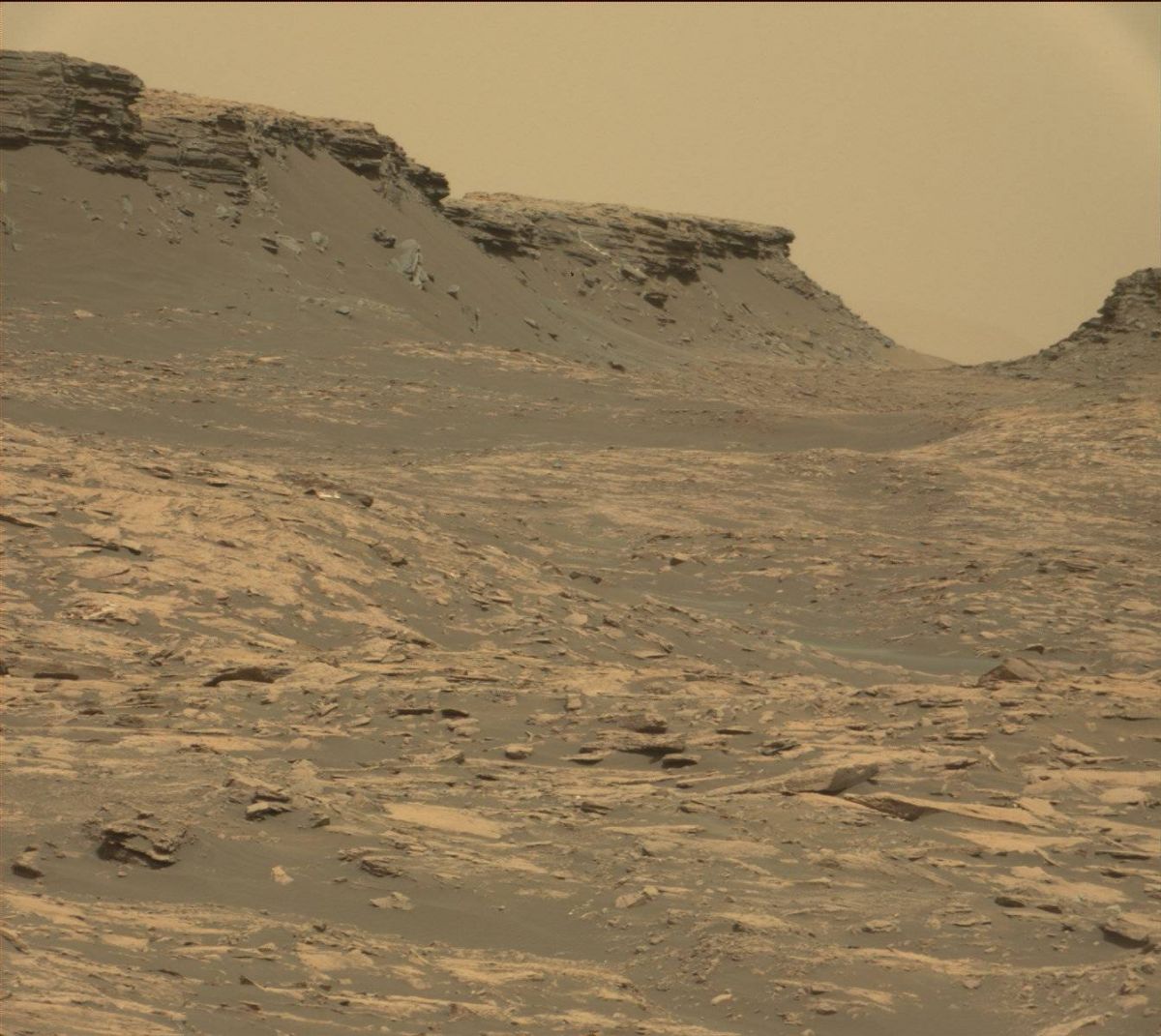
Goodbye buttes. Curiosity Mastcam Right-image taken on Sol 1470, September 24, 2016.
Credit: NASA/JPL-Caltech/MSSS
NASA’s Curiosity Mars rover has rolled into Sol 1473 – in search mode for a contact science locale.
Over last weekend, Curiosity drove over 140 feet (43 meters) to the south, in search of a good place for contact science.

Curiosity Mastcam Left image taken on Sol 1471, September 25, 2016.
Credit: NASA/JPL-Caltech/MSSS
“Unfortunately, our present location is in a small valley, and we don’t have many good rock targets in the workspace,” points out Lauren Edgar, a research geologist at the USGS Astrogeology Science Center in Flagstaff, Arizona.
Local bedrock and soil
“After evaluating the Mastcam drive direction imaging, we decided to drive further to the southwest. This should put us in front of a small exposure of cross-bedding for contact science,” Edgar explains.
The rover’s to-do list includes several Chemistry and Camera (ChemCam) observations to characterize the composition of the local bedrock and soil.

Rover’s Mars Hand Lens Imager (MAHLI) took this survey image of wheel damage on September 25, 2016, Sol 1471.
Credit: NASA/JPL-Caltech/MSSS
Extended mission duties
“We also planned a number of Mastcam mosaics to document some potentially coarser-grained rocks, sedimentary structures in the rocks in our workspace, and a linear feature that we can compare with observations from orbit,” Edgar adds.
Then the plan calls for a Curiosity drive toward an intended contact science target, and take post-drive imaging to prepare for future activities.
The robot has accomplished its first day of duties in its second extended mission, Edgar notes, “so it’s exciting to think about what we’ll accomplish in this next chapter!”

Credit: Elon Musk/SpaceX
Elon Musk, chief rocketeer at SpaceX, has tweeted a new technological success update – the firm just achieved the first firing of the Raptor interplanetary transport engine.
A key SpaceX propulsion development for Mars is the Raptor, a liquid oxygen/methane engine.

Credit: Elon Musk/SpaceX
Mars plans revealed
SpaceX founder, CEO, and Lead Designer Elon Musk is unveiling his humans to Mars plan at the 67th International Astronautical Congress (IAC), now underway in Guadalajara, Mexico.
In the past, Musk has detailed his intention to use a Red Dragon spacecraft to fly in un-crewed mode to Mars in the 2018 time period. Later flights of the craft would transport humans to the planet.
Using Supersonic Retro Propulsion to touch down on the Red Planet, the Red Dragon may well deploy scientific devices, particularly hardware that could demonstrate made-on-Mars propellant.

Retro-propulsion trial by fire. SpaceX first stage landing taken by remote camera photo from “Of Course I Still Love You” droneship on April 8, 2016.
Credit: SpaceX
Propulsive prelude
The engine test comes as a propulsive prelude to Musk’s unveiling of his Mars plan at the International Astronautical Congress (IAC).
Now taking place in Guadalajara, Mexico, the IAC has announced that, for the first time in its history, all Plenary Events are to be live broadcasted.

Credit: SpaceX
Musk is set to deliver his one-hour talk “Making Humans a Multiplanetary Species” – a presentation that will air on Tuesday, September 27th at 13:30 – 14:30 (local time in Guadalajara).

Credit: SpaceX
Technical challenges
Musk will discuss the long-term technical challenges that need to be solved to support the creation of a permanent, self-sustaining human presence on Mars. The technical presentation will focus on potential architectures for colonizing the Red Planet that industry, government and the scientific community can collaborate on in the years ahead.
Webcast resources
To tune in on the Musk presentation and other key Plenary Event discussions, go to:
Also, for a listing of all upcoming Plenary Event topics go to:
http://www.iafastro.org/events/iac/iac2016/plenary-programme/
The world space meeting runs from September 26-30.

Credit: NAOC
Construction of China’s “big ear” is formally completed – the Five-hundred-meter Aperture Spherical Radio Telescope, or FAST in short-speak.
The colossal FAST lies at a karst valley in Pingtang County of southwest China’s Guizhou Province. FAST is made up of more than 4,000 individual panels.
SETI listening
Scientists have described it as a super-sensitive “ear,” capable of detecting very weak signals from space – including star chatter from extraterrestrial intelligence.
Independently designed and built by China, FAST’s concept was initiated in 1994 and the construction took more than five years.
Now FAST is ready to open its “wide eyes” to observe the universe.

Credit: Chinese Academy of Sciences/XIN Ling
Feed sources from space
According to CCTV-Plus, the observatory building — which acts as the “brain” of the world’s largest radio telescope — will start operation today. The building houses the headquarters that issues instructions to the operation of FAST and monitor its performance.
The feed cabin of FAST was scheduled to have its first move test on Saturday afternoon before conducting its first mission today. The receivers within the cabin will help collect feed sources from space.
Construction of FAST started in March 2011, with an investment of 1.2 billion yuan. The telescope will be used to detect and collect signals and data from the universe.

Credit: NAOC
Tourist views
According to FAST project manager Qian Yiquan, tourist facilities are being built to observe operations.
Due to the need for radio silence in a five-kilometer radius, the observation deck is to be positioned at the top of a mountain nearby.
The deck, parking lots, and a road wending its way to the remote location will be finished by September, Qian said in an interview with China’s Xinhua news service.
Set your eyes on China’s big ear by viewing this video here:
http://l3-pv.news.cctvplus.com/2016/0924/8032859_Preview_1474717355029.mp4

Curiosity Navcam Left B image taken on Sol 1469, September 23, 2016.
Credit: NASA/JPL-Caltech
NASA’s Curiosity Mars rover is now in Sol 1470 as researchers set in place a change of plans.
A recent drive of the robot “went nicely,” reports Ryan Anderson, a planetary scientist at the USGS Astrogeology Science Center in Flagstaff, Arizona. “We are already about halfway to our next drill site!”
Exposed stratigraphy
An original plan to head toward an outcrop called “Karasburg” had to be changed because it turned out to be covered in sand and not very steep, making it a less-desirable science target, Anderson adds. “So instead we are heading toward a location where — we hope — the stratigraphy will be better-exposed.”

Curiosity Mastcam Right image taken on Sol 1467, September 21, 2016.
Credit: NASA/JPL-Caltech/MSSS
As scripted the weekend plan begins on Sol 1470 with a Navcam dust devil search and atmospheric observation, plus Chemistry and Camera (ChemCam) observations of the targets “Chiagne,” “Chibemba,” and “Chibanda.”
Curiosity’s Mastcam will document those three targets, as well as the location of the automated ChemCam observation that was collected after a recent rover drive.
Autonomous exploration
Mastcam is slated to produce three mosaics: a 6×3 of the Karasburg outcrop, a 4×1 of a location called “Longojo” and a 5×2 extension of the drive direction mosaic.
On the to-do list is a Sol 1471 wheel checkup with the Mars Hand Lens Imager (MAHLI) and then drive, Anderson adds, followed by the usual post-drive imaging.
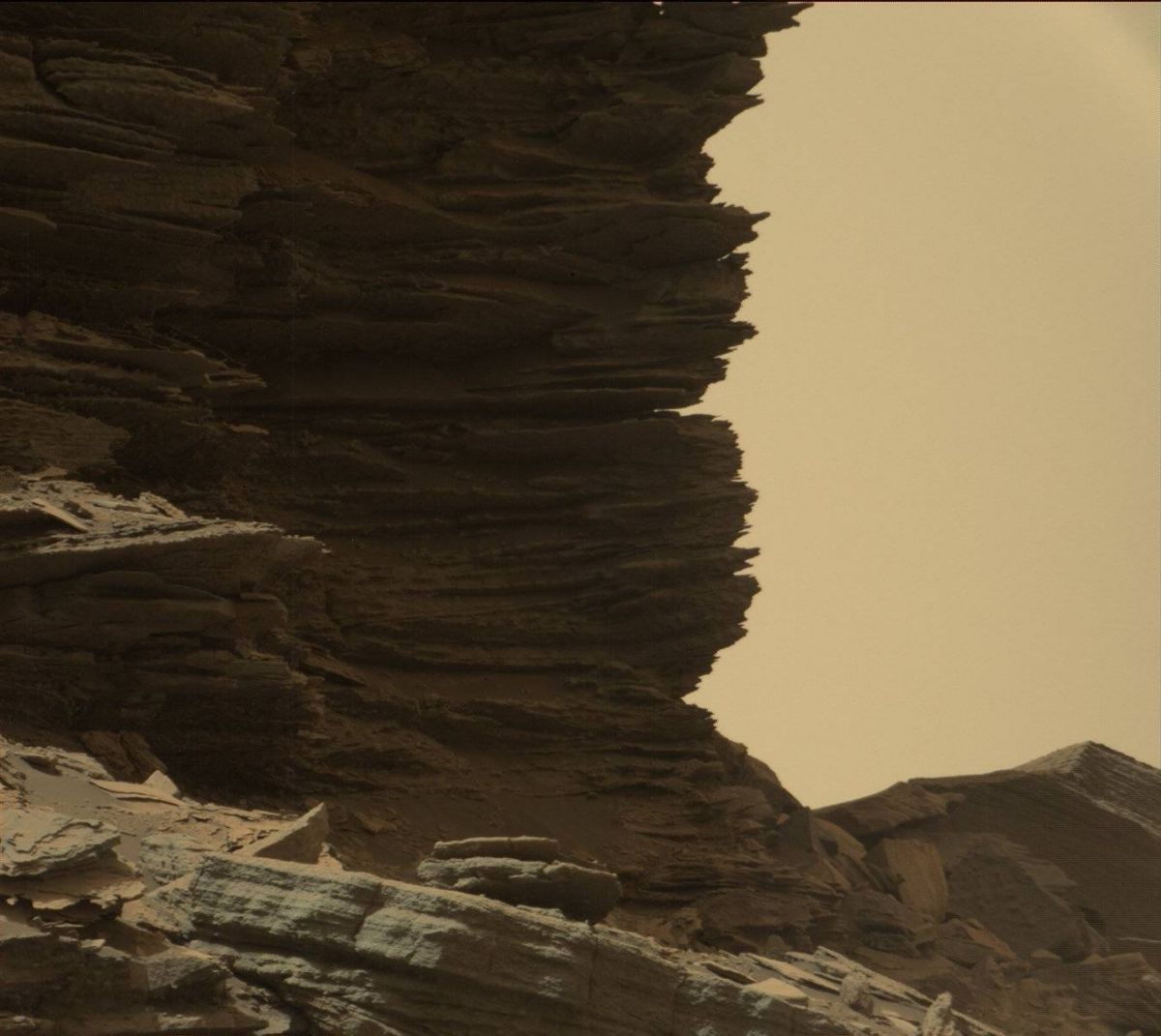
Curiosity Mastcam Right image taken on Sol 1467, September 21, 2016.
Credit: NASA/JPL-Caltech/MSSS
Beyond the buttes
On Sol 1472, on tap is another Autonomous Exploration for Gathering Increased Science (AEGIS) automated ChemCam observation, a couple of Mastcam atmospheric observations, and ChemCam calibration targets.
Points out Ken Herkenhoff, also a USGS Astrogeology Science Center Mars researcher: “While the Murray Buttes were spectacular and interesting, it’s good to be back on the road again, as there is much more of Mt. Sharp to explore!”
New map
A new map has been issued that shows the route driven by Curiosity through the 1469 Martian day, or sol, of the rover’s mission on Mars.
Numbering of the dots along the line indicate the sol number of each drive. North is up.
From Sol 1468 to Sol 1469, Curiosity had driven a straight line distance of about 114.36 feet (34.86 meters).
Since touching down in August 2012, Curiosity has driven 8.88 miles (14.29 kilometers).
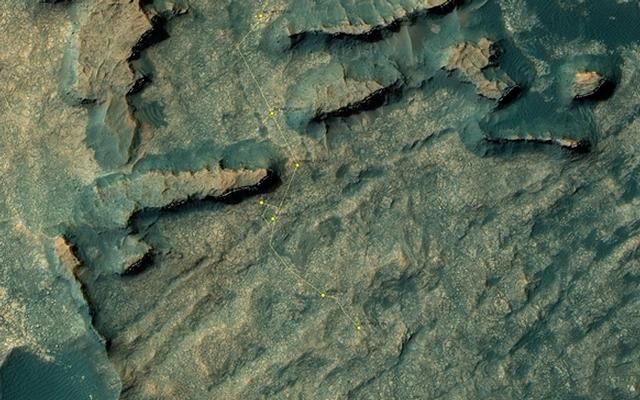
Rover on the road again. The base image from the map is from the High Resolution Imaging Science Experiment Camera (HiRISE) in NASA’s Mars Reconnaissance Orbiter.
Credit: NASA/JPL-Caltech/Univ. of Arizona

SpaceX Dragon makes use of Supersonic Retro-Propulsion (SRP) to land on Mars.
Credit: SpaceX
Elon Musk and his SpaceX rocketeers are blueprinting a plan to land humans on Mars in 2025 and to land payloads onto the Red Planet’s surface at each 26 month opportunity starting in 2018. A similar timeline may be pursued by other players.
That as a given, a specially convened “ePanel” of Mars experts recently tackled a specific question:
“If humans do land on Mars in 2025 what do we absolutely need to know from the surface of Mars before that time and specifically what measurements and demonstrations need to be done with the 2018 and later precursor landers to make that possible?”

SpaceX Red Dragon on Mars.
Credit: SpaceX
Clear and pressing issues
The report, now in draft form, is called Essential Precursor Activities for a Near-Term Human Mars Mission. It is the output from an independent virtual panel of researchers sponsored by Ceres Robotics of Montara, California.
The exercise had neither encouragement nor approval from SpaceX nor NASA. The initiative was led by Michael Sims, leader of Ceres Robotics and a Mars Exploration Rover co-investigator.
In its pages, the draft report underscores the fact that there are a number of “clear and pressing issues that need to be addressed as soon as possible.”
Tight timelines
The ePanelists for this inquiry were:
Christopher McKay (NASA Ames); Carol Stoker (NASA Ames); Margaret Race (SETI Institute); Andrew Schuerger (University of Florida); Penelope Boston (NASA Astrobiology Institute); Pascal Lee (NASA Ames; SETI Institute; Mars Institute); Charles Cockell (University of Edinburgh); and Michael Sims (moderator) from Ceres Robotics; Mars Institute.
“There is a great deal that needs to be tested and evaluated on the Mars surface on very tight timelines to be properly prepared for a near-term Mars mission. Clearly a mission within a decade can be considered near-term although even a considerably later mission will require expedience and a focused effort,” the report notes.

Credit: NASA
Primary concerns
In the view of the ePanel experts, primary concerns are:
– Crew safety
– Dangers to crew from exposure to surface materials and toxic chemistry
– Dangers to crew from possible pathogens
– Contamination of Mars surface by crew transported organisms from Earth
– Danger to Earth from return of (unlikely but possible) pathogens that are damaging to Earth’s biological balance
– Availability of resources useful for human activities including life sustaining materials.
Search for life
In terms of the search for life on the Red Planet, the report explains that it will not be possible to fully demonstrate the absence of life on all of Mars in any near-term basis “unless we find overwhelming evidence of its existence.”

Credit: Bob Sauls – XP4D/Explore Mars, Inc. (used with permission)
Furthermore, scouring the planet widely in this search is likely to be a slow process, the report adds. “This is probably the highest scientific goal for Mars exploration in the long term and it is reasonable for this science exploration be concurrently with the expansion of human presence on Mars. However, unlike the Moon, Mars does theoretically have many possible niches for life and hence as we continue the exploration of Mars we must also continue the search for extant Mars life far into the future.”
Initial gauntlet of views
As identified in the report, the ePanel experts made a number of suggestions, an “initial gauntlet” of views for further in-depth discussion. These are:
- If possible, land all future precursor missions to the single site of human landing. In addition to the value to future explorers of landed resources at this site, this also gives the best chance of evaluation of the local toxicities and a search for any extant Mars organisms at that site.
- There are no tricorders for life – even on Earth, but especially for life that might have a distinct genesis. We need to exercise a number of different instruments on the Mars surface to look for indications of extant life at the landing site. Those instruments need to be applied at a number of areas (niches) around any landing site. Confidence will grow in our outcome as the number of tests and sites increase.
- Although after 40 years we now believe we understand the Viking life on Mars experiment results, we need to be prepared for future surprises and uncertainties to come with our experiments. This leads to a preferred strategy to treat these life-detection instruments as an ongoing development (across precursor and human missions) of more refined instrumentation in search of indicators of extant life.
- Until we understand the extent of extant life on Mars (if it exists at all) then one reasonable approach is to exercising a zoned approach to planetary protection.
- We need to characterize the chemistry and especially toxicity of the surface and near subsurface materials at the landing site. We also need to demonstrate techniques for mitigation of those toxicities that are compatible with human crew use and safety.
- Resource needs for the crew and minimizing the burden of keeping a crew safe are parameters to be evaluated in the base site selection. If the case can be closed on pumping water and oxygen and other trace gases out of the atmosphere then that approach has the advantage of ease of crewed operations and relative location independence of the base landing site.

Scene from “Mars,” a National Geographic Channel miniseries due to air in November.
Credit: National Geographic, Imagine, RadicalMedia, Robert Viglasky


Curiosity Mastcam Right image taken on Sol 1464 September 18, 2016.
Credit: NASA/JPL-Caltech/MSSS
Now in Sol 1466, NASA’s Curiosity Mars rover accomplished a successful second attempt to drill into Quela – but there was a timing issue during sample manipulation with the Collection and Handling for Interior Martian Rock Analysis (CHIMRA).
That timing issue resulted in premature halting of the Sol 1465 sequence.

Image from Curiosity’s ChemCam Remote Micro-Imager, taken on Sol 1466, September 20, 2016.
Credit: NASA/JPL-Caltech/LANL
Sieve new sample
The plan for Sol 1466 is to pick up where Curiosity stopped and sieve the new sample, dump the un-sieved fraction, and drop some of the sieved sample into the Chemistry & Mineralogy X-Ray Diffraction/X-Ray Fluorescence Instrument (CheMin).
But first, the Chemistry & Camera instrument (ChemCam) is set to acquire passive spectra of the Quela drill tailings and use its laser to measure the chemistry of the wall of the new drill hole and of bedrock targets “Camaxilo” and “Okakarara.”

Dirty deed! Drilling into Mars. Image of the working end of drill taken by Curiosity’s Mastcam Left imager, taken on Sol 1464, September 18, 2016.
Credit: NASA/JPL-Caltech/MSSS
Right Mastcam images of these targets are also planned, reports Ken Herkenhoff of the USGS Astrogeology Science Center in Flagstaff, Arizona.
Drill hole angles
Herkenhoff adds that, after sunset, the rover’s Mars Hand Lens Imager (MAHLI) will use its LEDs to take images of the drill hole from various angles and of the CheMin inlet to confirm that the sample was successfully delivered.
Lastly, the Alpha Particle X-Ray Spectrometer (APXS) will be placed over the drill tailings for an overnight integration, Herkenhoff reports.

Credit: Bob Sauls – XP4D/Explore Mars, Inc. (used with permission)
Humans to Mars: Why, How, and When?
That’s the front-and-center issue to be addressed today in a Congressional Briefing Panel, sponsored by Explore Mars, Inc.
This webcast is set for today, Tuesday, September 20, 2016 starting at 10:00 am Eastern Daylight Time (New York, GMT-04:00).
Panelists

Courtesy: Explore Mars, Inc.
John Grunsfeld- Moderator (Former NASA Associate Administrator, Science Mission Directorate/Former Astronaut)
Darby Cooper (Boeing: Launch Vehicle Architect)
Rob Chambers (Lockheed Martin: Orion Production Strategy Lead)
Kent Rominger (Orbital ATK: Vice President of Strategy and Business Development, Propulsion Systems Division)
Joe Cassady (Aerojet Rocketdyne: Executive Director, Space)
“It is important to show Congress and policymakers that Mars is a realistic and attainable goal,” said Explore Mars CEO Chris Carberry. “As we approach the start of a new administration and Congress, the United States must continue to push forward with our plans for Mars.”
Webcast meeting link
Meeting number (access code): 803 343 048
Meeting password: Explore2016!
1-650-479-3208 Call-in toll number (US/Canada)

Credit: IAC

Credit: SpaceX
The upcoming International Astronautical Congress (IAC) — to be held in Guadalajara, Mexico September 26-30 — has announced that, for the first time in IAC history, all Plenary Events are to be live broadcasted.
For those eagerly awaiting the talk by SpaceX’s Elon Musk, his one-hour talk “Making Humans a Multiplanetary Species” will air on Tuesday, September 27th at 13:30 – 14:30 (local time in Guadalajara).
Architectures for colonizing Mars
Musk will discuss the long-term technical challenges that need to be solved to support the creation of a permanent, self-sustaining human presence on Mars. The technical presentation will focus on potential architectures for colonizing the Red Planet that industry, government and the scientific community can collaborate on in the years ahead.
SpaceX Red Dragon on Mars.
Credit: SpaceX
Webcast resources
To tune in on the Musk presentation and other key Plenary Event discussions, go to:
Also, for a listing of all upcoming Plenary Event topics go to:
http://www.iafastro.org/events/iac/iac2016/plenary-programme/

Mars Hand Lens Imager (MAHLI), located on the turret at the end of the rover’s robotic arm, took this image on September 19, 2016, Sol 1465.
Credit: NASA/JPL-Caltech/MSSS
Now in Sol 1465, Curiosity’s Mars survey work is ongoing, with new imagery showing success for the robot’s drilling activities.
The drill target is “Quela.”
Incoming Curiosity imagery also points to what appears to be assembly of yet another “selfie” – a Mars mosaic that shows the current whereabouts of Curiosity and its surrounding terrain.

Curiosity Front Hazcam Right B image taken on Sol 1465, September 19, 2016.
Credit: NASA/JPL-Caltech
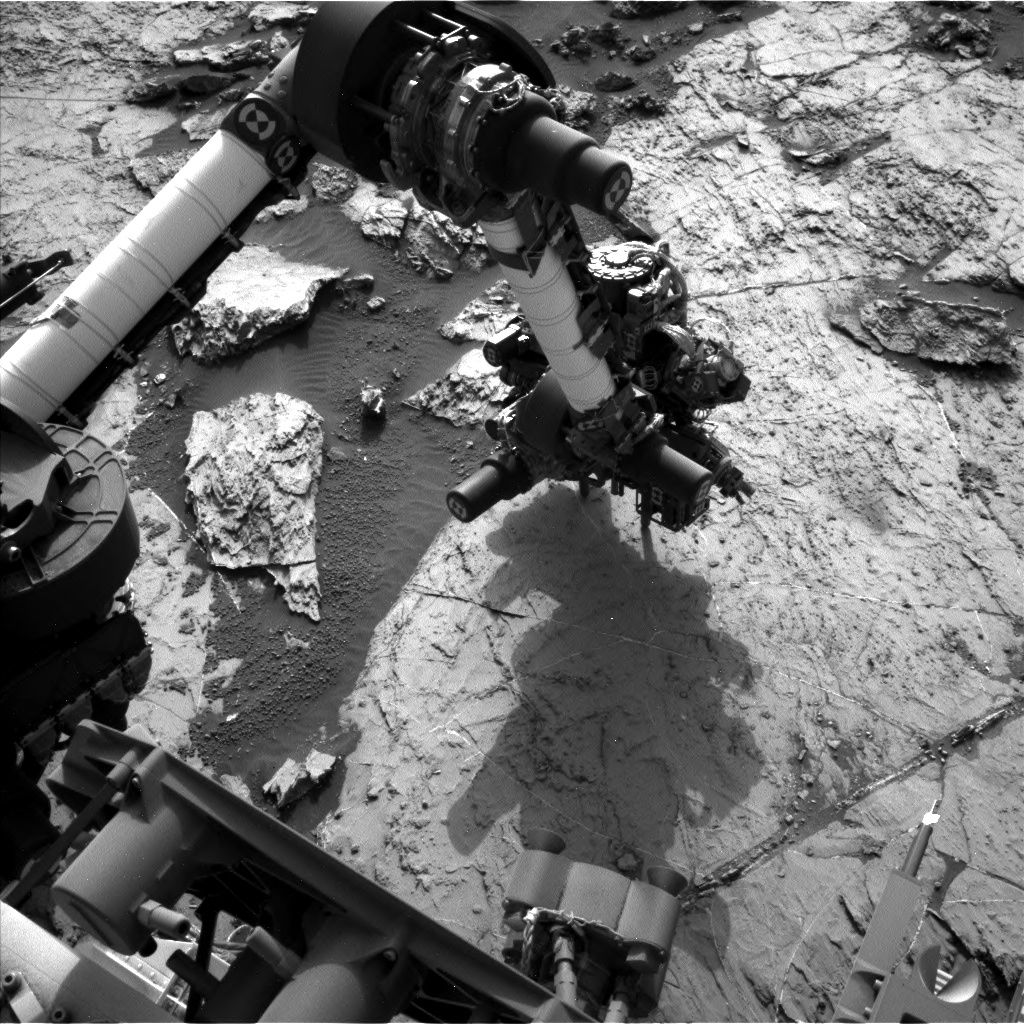
Curiosity Navcam Left B image taken on Sol 1464 September 18, 2016.
Credit: NASA/JPL-Caltech

Mars Hand Lens Imager (MAHLI), located on the turret at the end of the rover’s robotic arm, took this image on September 18, 2016, Sol 1464.
Credit: NASA/JPL-Caltech/MSSS
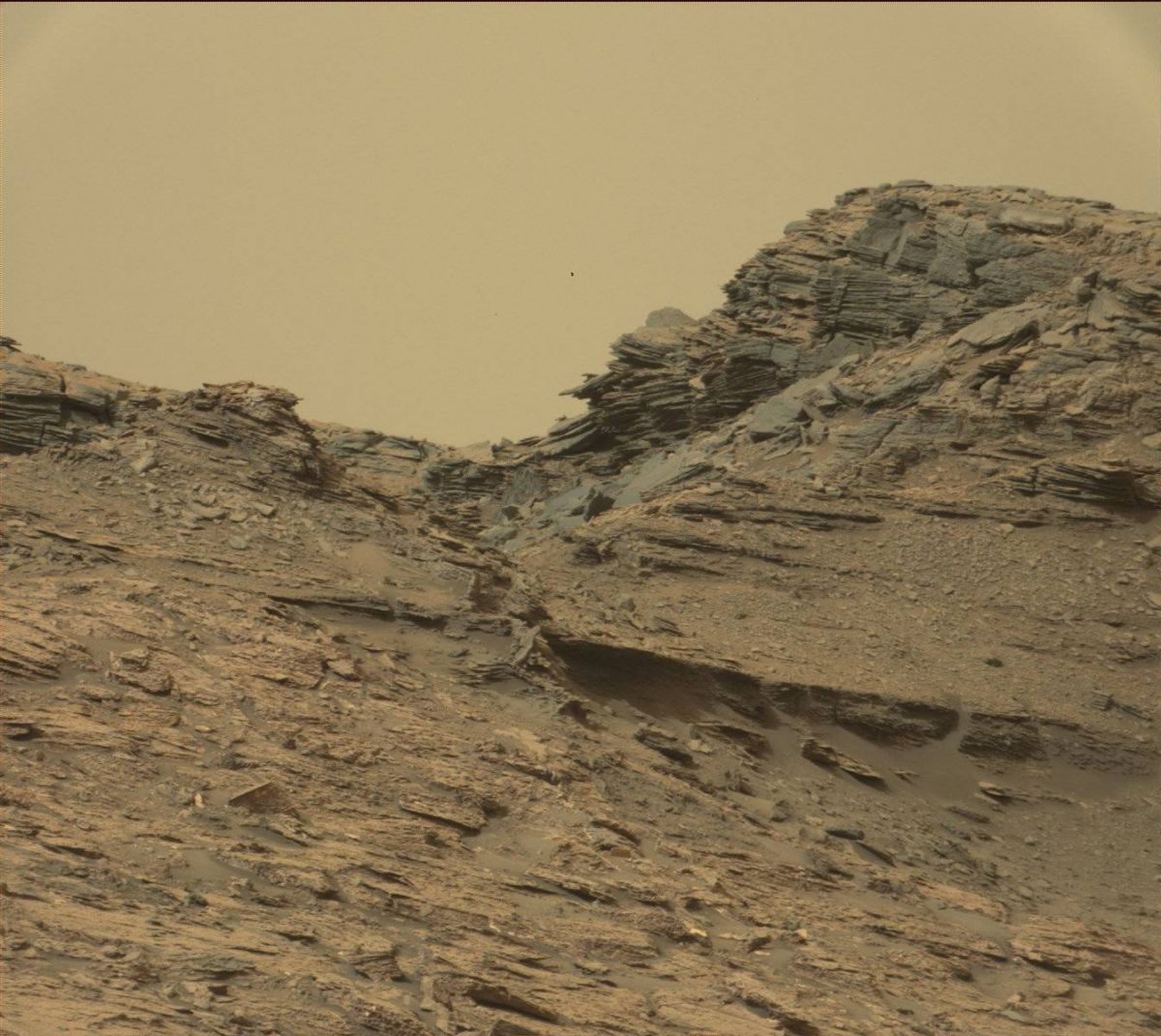
Curiosity Mastcam Right image taken on Sol 1463, September 17, 2016.
Credit: NASA/JPL-Caltech/MSSS

