Archive for the ‘Space News’ Category
 Author:
  February 17th, 2017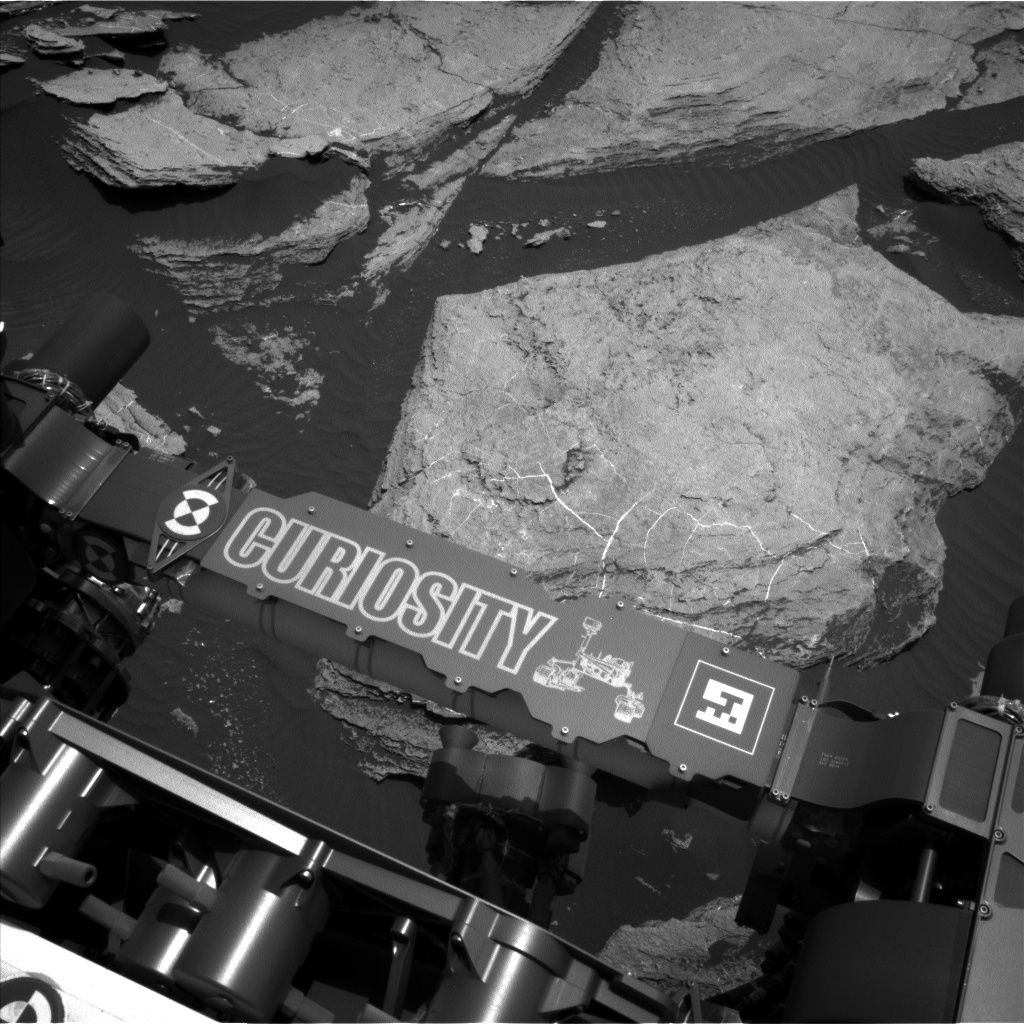
Curiosity Navcam Left B image taken on Sol 1612, February 17, 2017.
Credit: NASA/JPL-Caltech
NASA’s Curiosity Mars rover is conducting Sol 1612 science duties. The robot completed a drive of 75 feet (23 meter) on Sol 1611.
The Mars machinery ended up in an area with many bedrock blocks partly covered by dark sand, reports Ken Herkenhoff of the USGS Astrogeology Science Center in Flagstaff, Arizona.
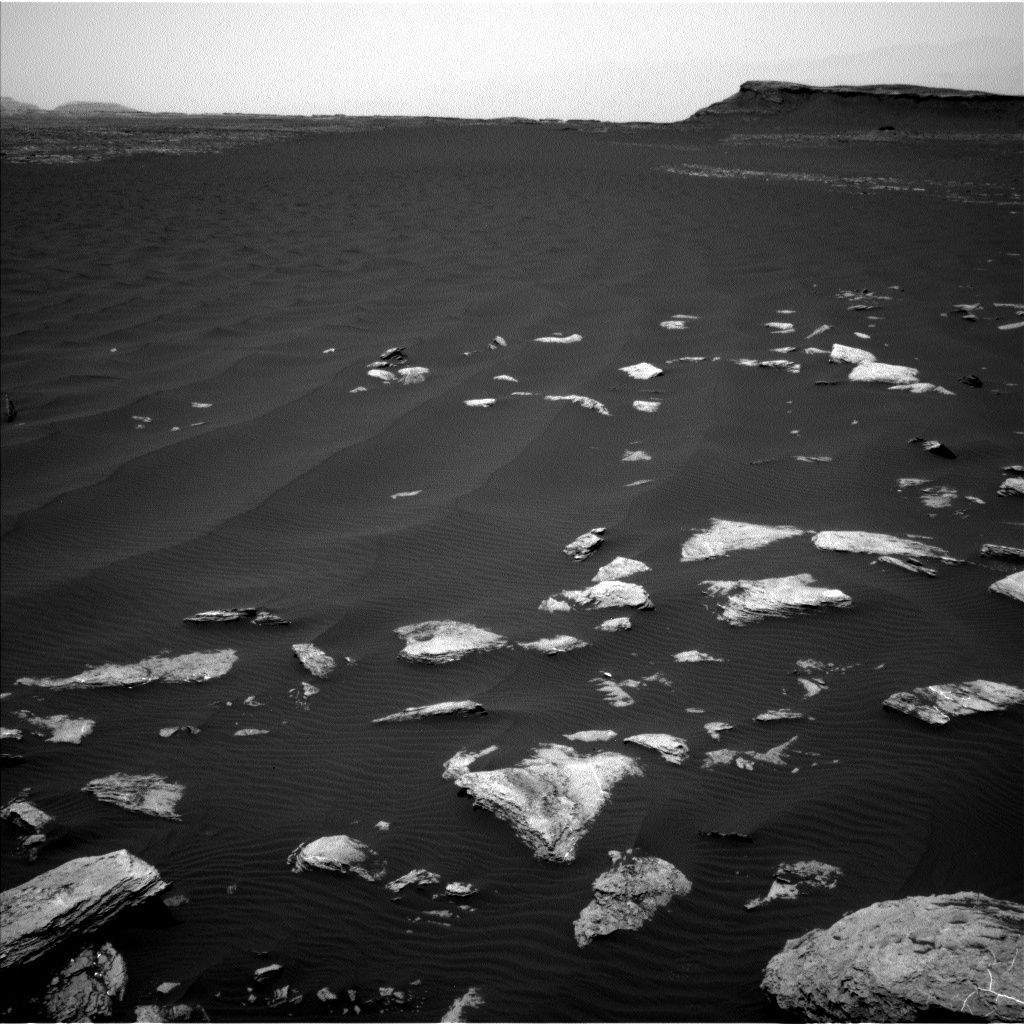
Curiosity Navcam Left B image taken on Sol 1612, February 17, 2017.
Credit: NASA/JPL-Caltech
Holiday happenings
A two sol plan has been scripted to get a head start on planning for the holiday weekend, with the first sol strategically planned to allow the “touch and go” option, Herkenhoff adds.
“But there’s a ridge about 30 meters ahead that we can’t see over, and we would like to be able to drive up onto it on Sol 1612 to allow a drive past it to be planned this weekend,” Herkenhoff notes. “There isn’t enough time before the ‘decisional’ telecommunications opportunity to fit both contact science and a 30-meter drive into the plan, so we had to pick one of these two options.”
Lots of bedrock
Based on images taken from orbit and by the rover, lots of bedrock is exposed at the crest of the ridge 98 feet (30 meters) away.
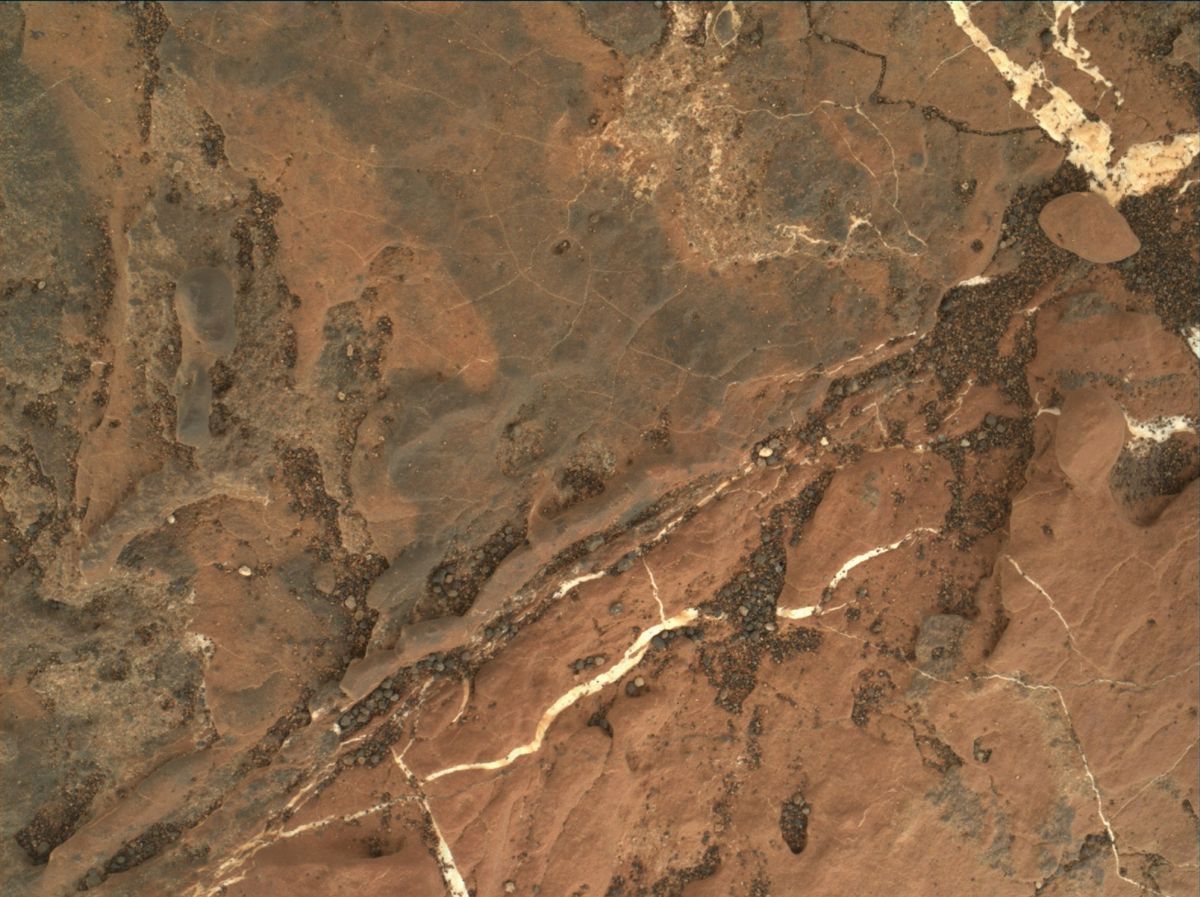
Curiosity Mars Hand Lens Imager (MAHLI), located on the turret at the end of the rover’s robotic arm, acquired this merged imagery on February 16, 2017, Sol 1611.
Credit: NASA/JPL-Caltech/MSSS
That being the case, rover scientists picked the longer drive at the expense of contact science, hoping that Curiosity will be in a better place for contact science this weekend.
Before the drive, the rover’s Chemistry and Camera (ChemCam) and Right Mastcam will observe a bright/dark boundary on a block at the left side “Frenchville” and the Right Mastcam is slated to acquire a 2×2 mosaic of another block named “Third Lake.”
Post-drive plans
Following the drive, scientists plan fewer images to support weekend planning because the expected downlink data volume is much less than usual.
“We therefore spent more time than usual carefully prioritizing the post-drive images for downlink, and may not receive all of the data we need to plan contact science and a drive this weekend,” Herkenhoff reports.
Later in the afternoon of Sol 1612, ChemCam will again use special software to autonomously select a Laser-Induced Breakdown Spectrometer (LIBS) target and acquire a 3×3 set of chemical measurements.
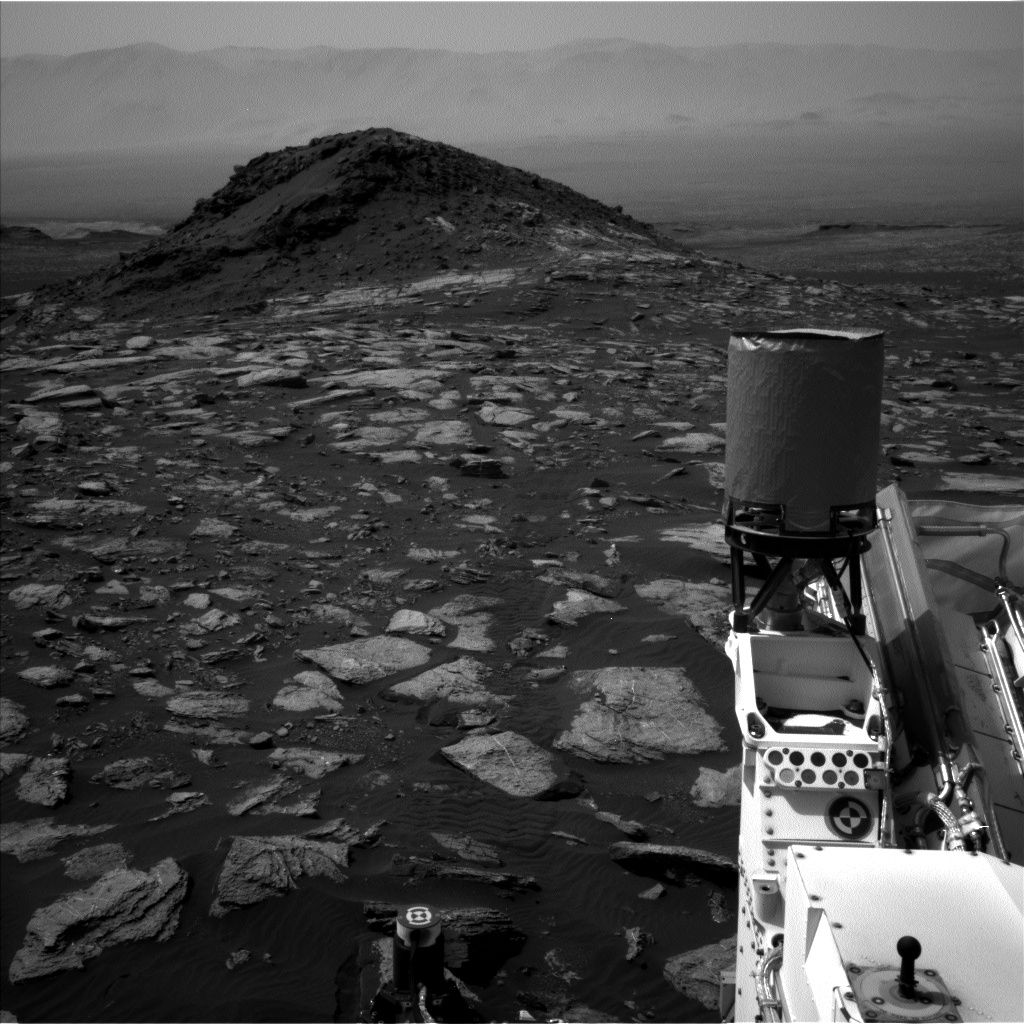
Ireson Hill as seen by Curiosity’s Navcam Left B camera, taken on Sol 1612, February 17, 2017.
Credit: NASA/JPL-Caltech
The Rover Environmental Monitoring Station (REMS) software upgrade went well, so REMS environmental monitoring was on the schedule.
Overnight sleep-in
On Sol 1613, ChemCam will acquire passive calibration data, and Navcam will search for dust devils and clouds.
“Finally, the rover will sleep overnight in preparation for what we hope will be a busy weekend plan,” Herkenhoff concludes.
 Posted in
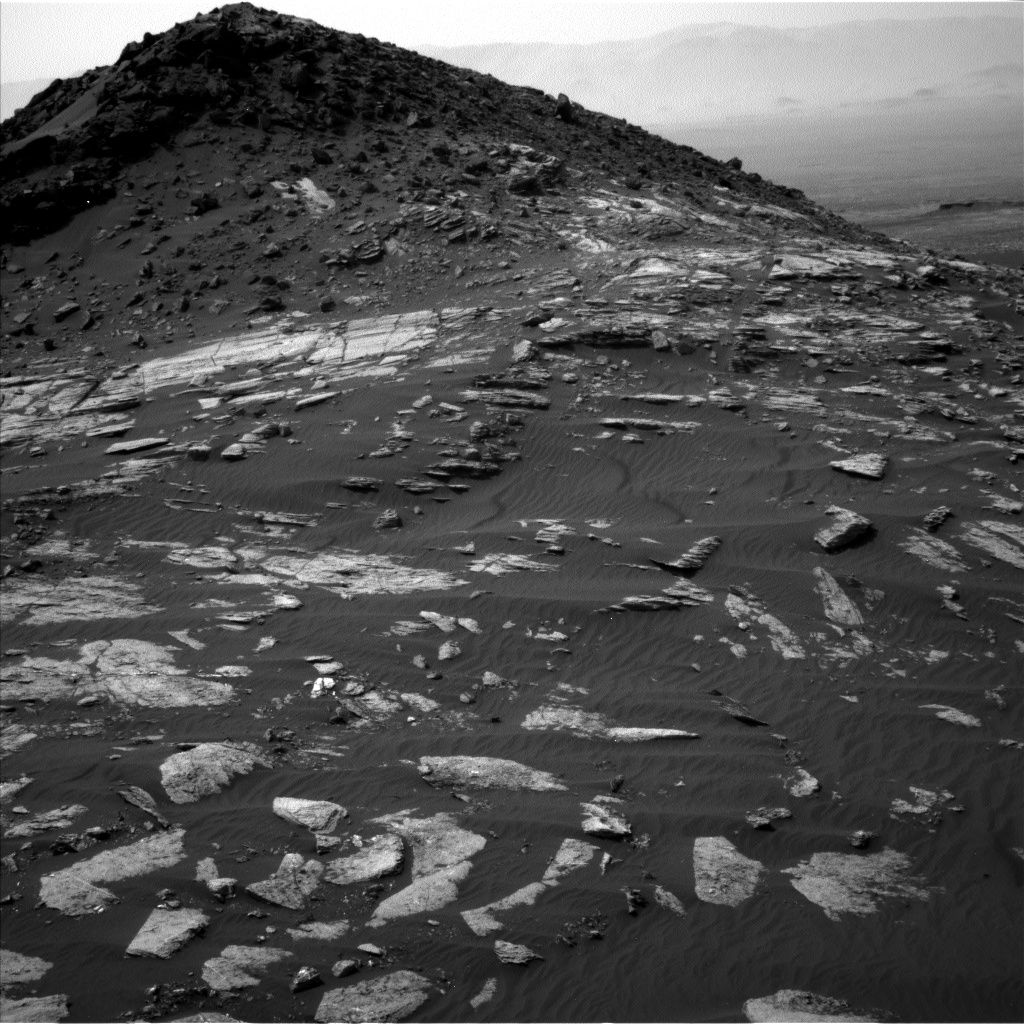
Curiosity Navcam Left B image taken on Sol 1610, February 15, 2017.
Credit: NASA/JPL-Caltec
Now in Sol 1611, the Curiosity Mars rover is on location to survey several potential targets.
On Sol 1610 the Curiosity Mars rover drove nearly 89 feet (27 meters).
Dark bedrock
A dark patch of bedrock, appropriately named “Patch Mountain” was chosen for Curiosity’s Chemistry and Camera (ChemCam), Right Mastcam, and Mars Hand Lens Imager (MAHLI) observations.
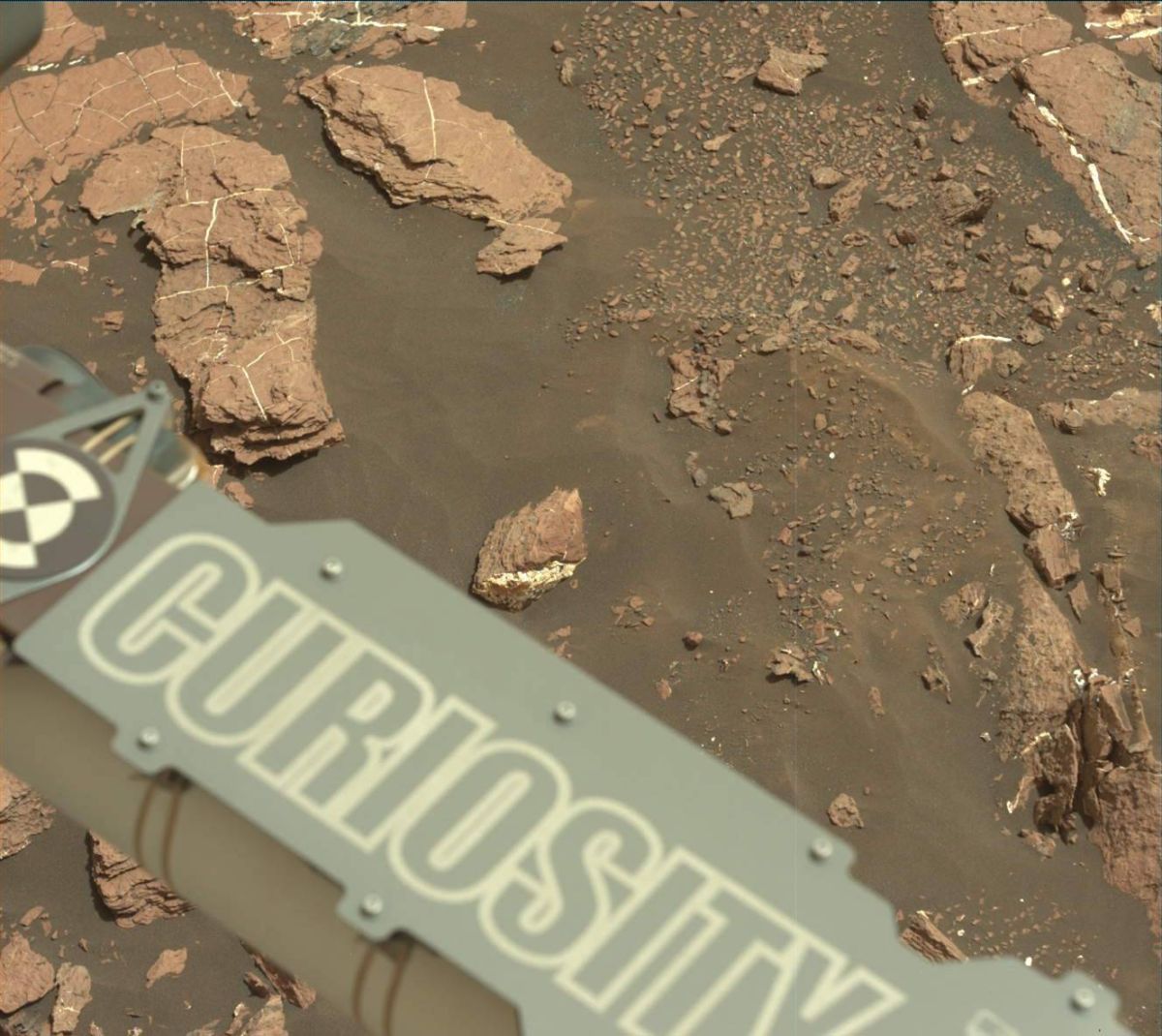
Curiosity Mastcam Left image taken on Sol 1610, February 15, 2017.
Credit: NASA/JPL-Caltech/MSSS
The MAHLI imaging was moved after the ChemCam observation so that the laser-induced breakdown spectroscopy (LIBS) impact spots would be visible, reports Ken Herkenhoff of the USGS Astrogeology Science Center in Flagstaff, Arizona.
An additional MAHLI image was added to the standard full suite, to provide a 3-image mosaic from 5 centimeters.
Future driving
“Then the rover will drive again, and take images afterward to enable planning more activities on Sol 1612,” Herkenhoff adds.
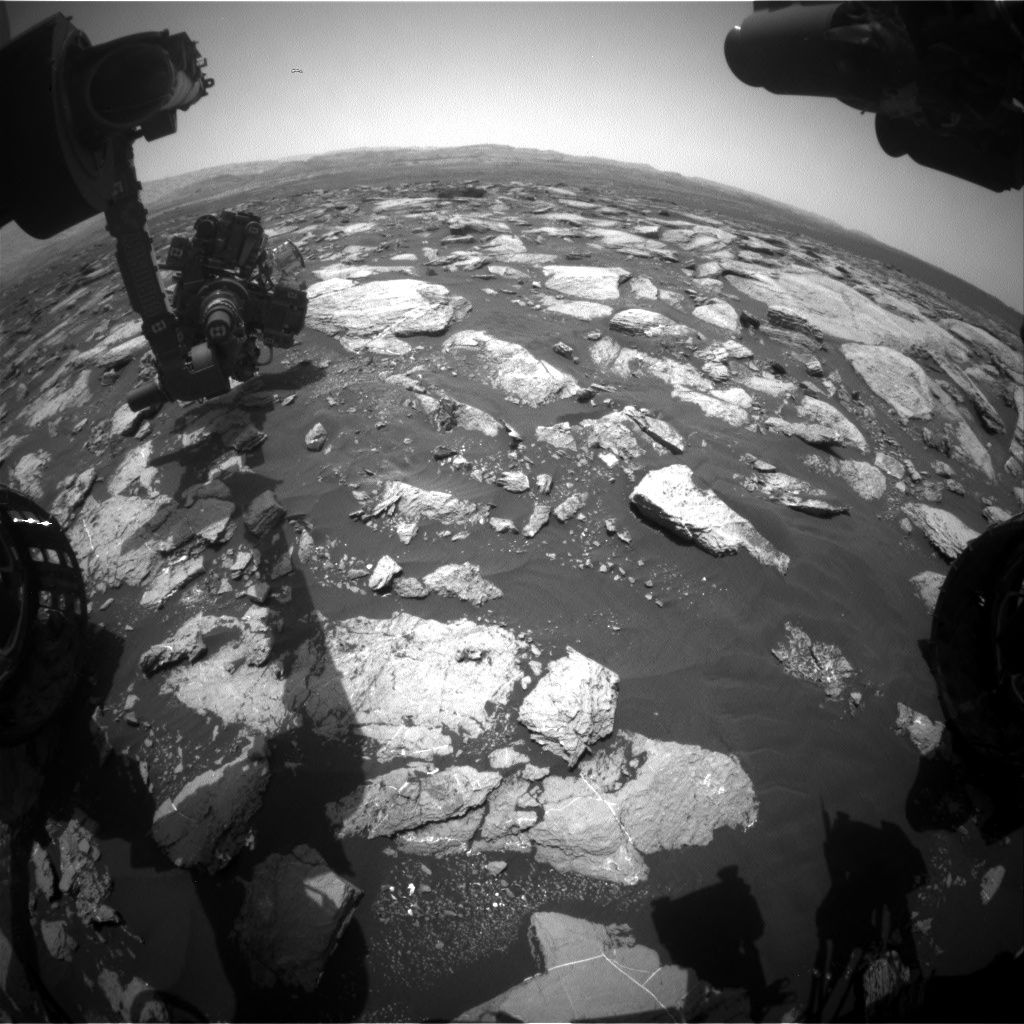
Curiosity Front Hazcam Right B image taken on Sol 1611, February 16, 2017.
Credit: NASA/JPL-Caltech
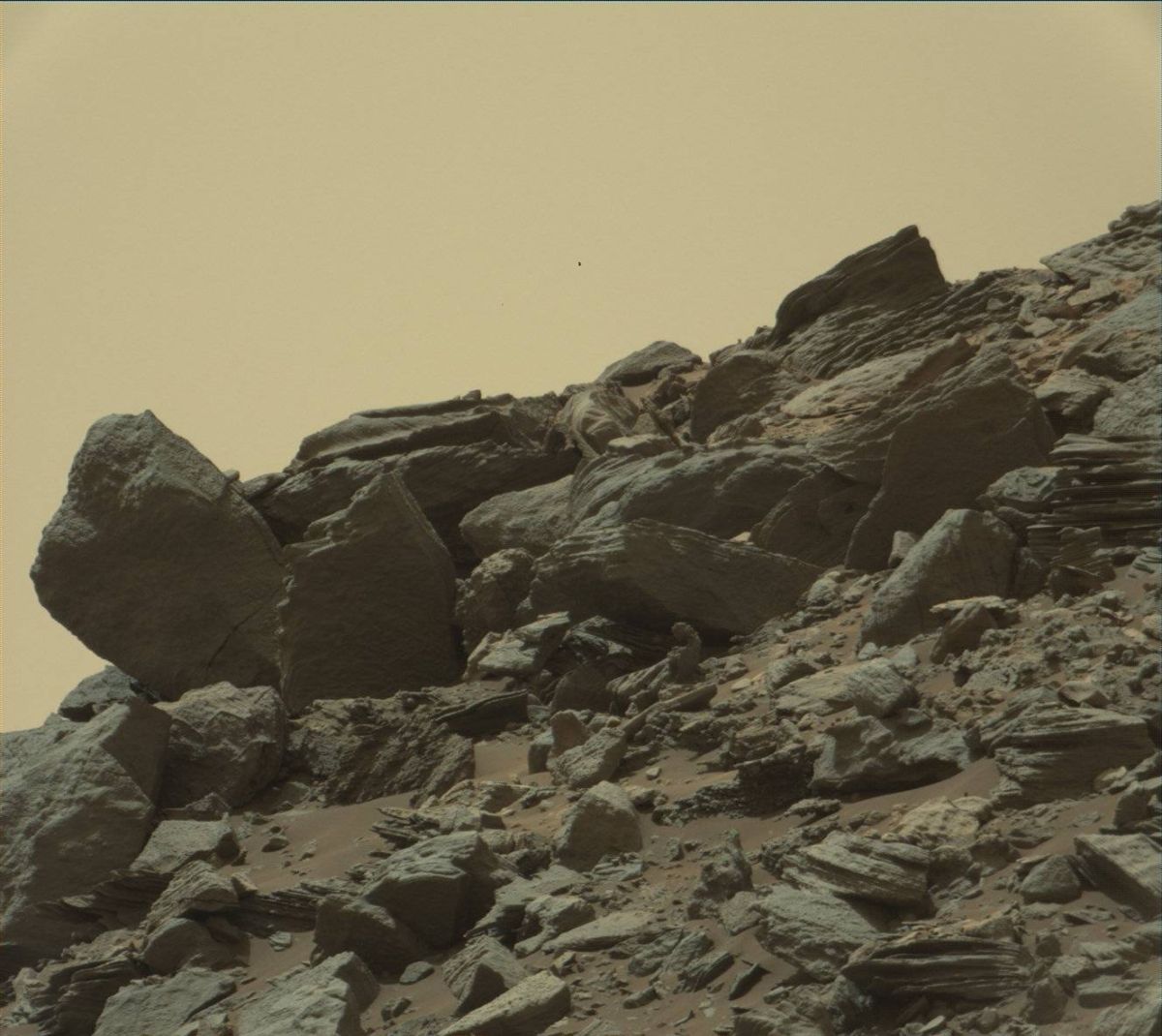
Curiosity Mastcam Right image taken on Sol 1610, February 15, 2017.
Credit: NASA/JPL-Caltech/MSSS
Just before sunset, the robot’s Navcam will search for dust devils and
the Rover Environmental Monitoring Station (REMS) will complete the second part of their flight software update.
Dates of planned rover activities are subject to change due to a variety of factors related to the Martian environment, communication relays and rover status.
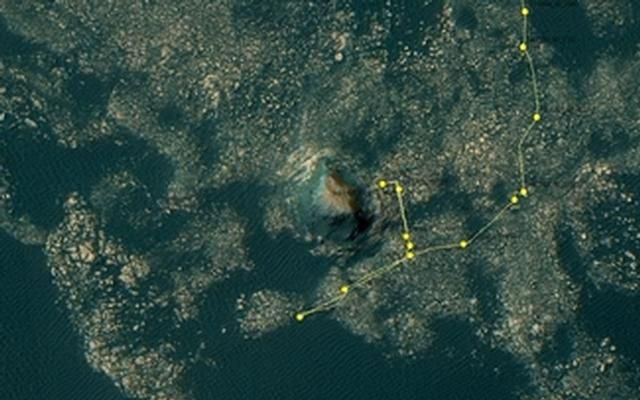
This map shows the route driven by NASA’s Mars rover Curiosity through the 1610 Martian day, or sol, of the rover’s mission on Mars (February 15, 2017).
From Sol 1608 to Sol 1610, Curiosity had driven a straight line distance of about 71.89 feet (21.91 meters). Since touching down in Bradbury Landing in August 2012, Curiosity has driven 9.67 miles (15.56 kilometers).
The base image from the map is from the High Resolution Imaging Science Experiment Camera (HiRISE) in NASA’s Mars Reconnaissance Orbiter.
Credit: NASA/JPL-CALTECH/University of Arizona

Full Committee Hearing- NASA: Past, Present, and Future
Date: Thursday, February 16, 2017 – 10:00am
Location: 2318 Rayburn House Office Building
NASA: Past, Present, and Future
1)
Hon. Harrison Schmitt
Apollo 17 Astronaut; Former United States Senator
2)
Lt. Gen. Thomas P. Stafford
Gemini VI, Gemini IX, Apollo 10, Apollo-Soyuz Test Project Astronaut; Chairman, NASA International Space Station Advisory Committee
3)
Dr. Ellen Stofan
Former Chief Scientist, NASA
4)
Mr. Tom Young
Past Director, Goddard Spaceflight Center; Past President/COO, Martin Marietta; Past Chairman, SAIC

This artist’s rendering depicts NASA’s Mars 2020 rover, with its robotic arm extended.
Credit: NASA/JPL-CALTECH
MONROVIA, California – Now on the books is NASA’s Mars 2020 rover mission, arriving at a wheels-down spot on the Red Planet in 2021. On its to-do agenda is surveying a site likely to have been habitable and poke about for signs of past Martian life. And if that’s not enough, there’s more.
This robot is also to select and hoard the most compelling samples on site for later return to Earth, even testing out prototype hardware to shore up a future human expedition to Mars, perhaps in the 2030s.
Landing where?
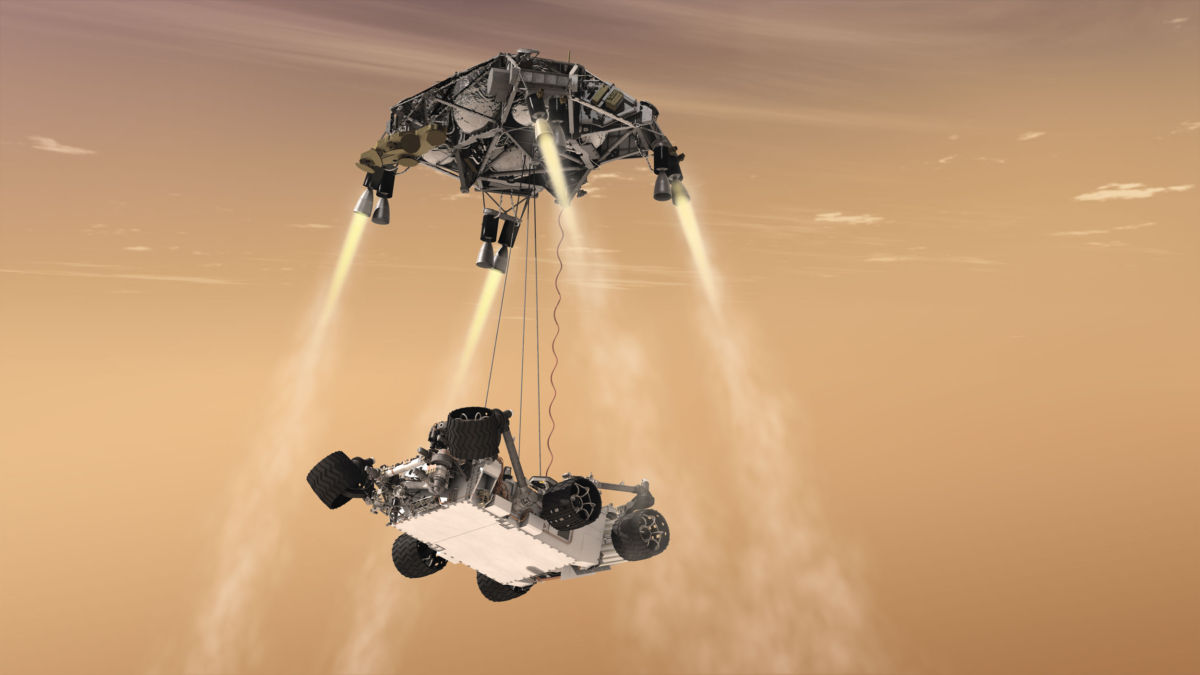
Screaming in! Mars 2020 rover’s entry, descent and landing – microphones and cameras will capture the sounds and sights.
Credit: NASA/JPL-Caltech
As part of the mission process, a third confab of experts on where to land the rover took place here February 8-10. It was an international tribunal of some 250 scientists and engineers.
For an overview of what took place, take a look at my new Scientific American story at:
NASA’s Mars 2020 Rover: Stepping Stone to What?
https://www.scientificamerican.com/article/nasas-mars-2020-rover-stepping-stone-to-what/
The Committee on Science, Space, and Technology will hold a hearing titled NASA: Past, Present, and Future.
This hearing is set for Thursday, February 16th at 10:00 a.m. Eastern Standard Time.
The purpose of the hearing is to review NASA’s past portfolio of missions, evaluate existing exploration programs, and provide a venue for consideration of potential bold and innovative missions going forward.

Off-world geologist, Apollo 17’s Jack Schmitt.
Credit: NASA
Witness List
Testifying is a panel of witnesses:
- Harrison Schmitt, Apollo 17 astronaut; former United States senator
- Thomas P. Stafford, Gemini VI, Gemini IX, Apollo 10, Apollo-Soyuz Test Project astronaut; chairman, NASA International Space Station Advisory Committee
- Ellen Stofan, former chief scientist, NASA
- Tom Young, past director, Goddard Spaceflight Center; past president/COO, Martin Marietta; past chairman, SAIC

Future of International Space Station – sure to be a hearing topic.
Credit: NASA
Live streaming
The hearing will be available on the committee’s website and via YouTube.
Go to:
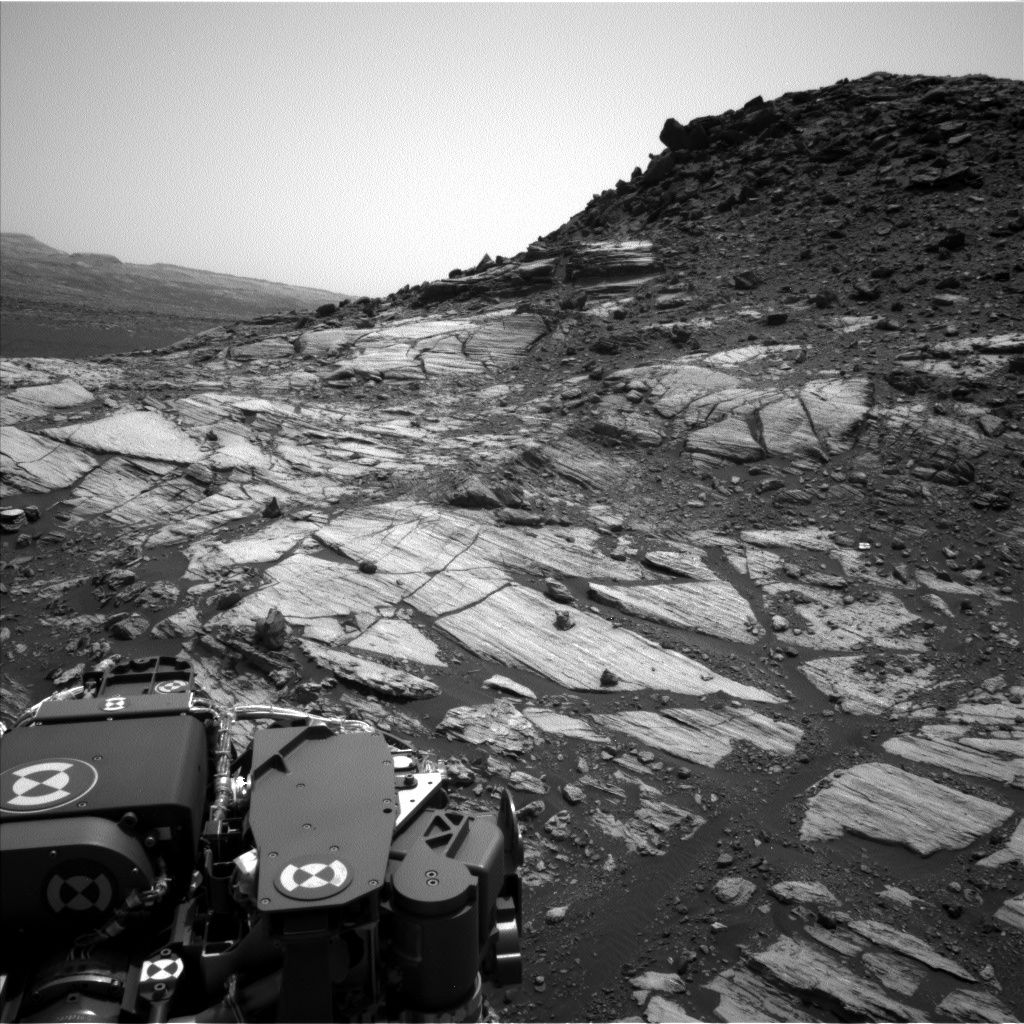
Ireson Hill as imaged by Curiosity’s Navcam Left B om Sol 1608, February 13, 2017.
Credit: NASA/JPL-Caltech
NASA’s Curiosity rover is carrying out Sol 1609 duties on Mars, driving over 30 feet (9 meters) on Sol 1608.
That drive has placed the robot closer to Ireson Hill, making it possible to image dark blocks that have tumbled down from the top of the hill.
Dark blocks
“Two of these blocks are within reach of the arm, but both are challenging targets,” reports Ken Herkenhoff of the USGS Astrogeology Science Center. Even the name chosen for the dark block is difficult: “Passagassawakeag.”
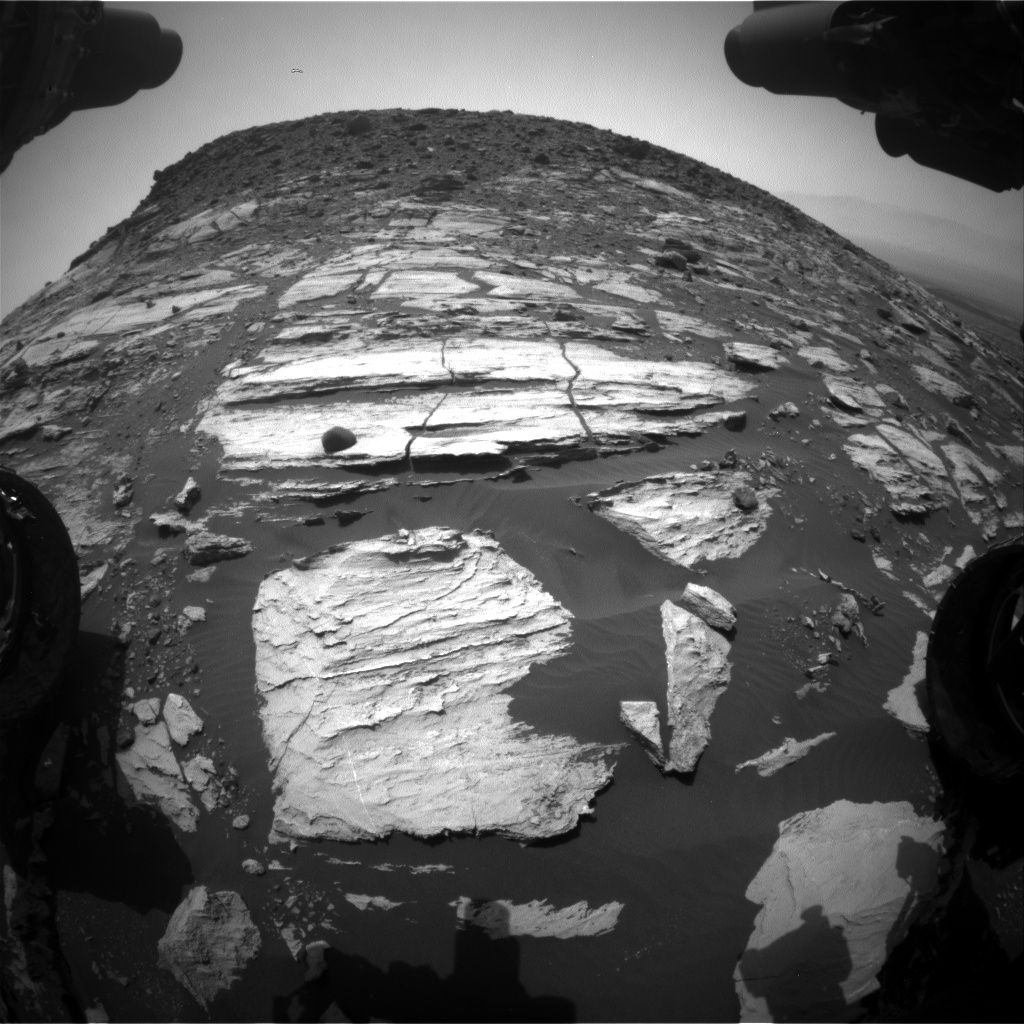
Curiosity Front Hazcam Right B image taken on Sol 1608, February 13, 2017.
Credit: NASA/JPL-Caltech
Herkenhoff adds that this block is pointier than scientists would like for contact science, and the other dark block, dubbed “Perry” is close enough to the rover that there is a risk of collision with the arm.
Arm action
Complicating the plan further, Herkenhoff points out, is that the best time to take Mars Hand Lens Imager (MAHLI) images of these targets is late in the afternoon, when they won’t be shadowed by the arm.
However, the last chance to send data to Earth in time to make them available for planning is earlier in the afternoon, making it difficult to return all of the data needed to respond to a possible arm fault.
Safe distance
“Therefore, we decided to acquire a single MAHLI image of Passagassawakeag from a safe distance of 5 centimeters before the critical communications opportunity, and send it in case the full suite of MAHLI images of Perry planned later in the afternoon is not successful,” Herkenhoff says. Doing so, science teams would be better able to plan contact science on Perry in the near-term, if necessary.
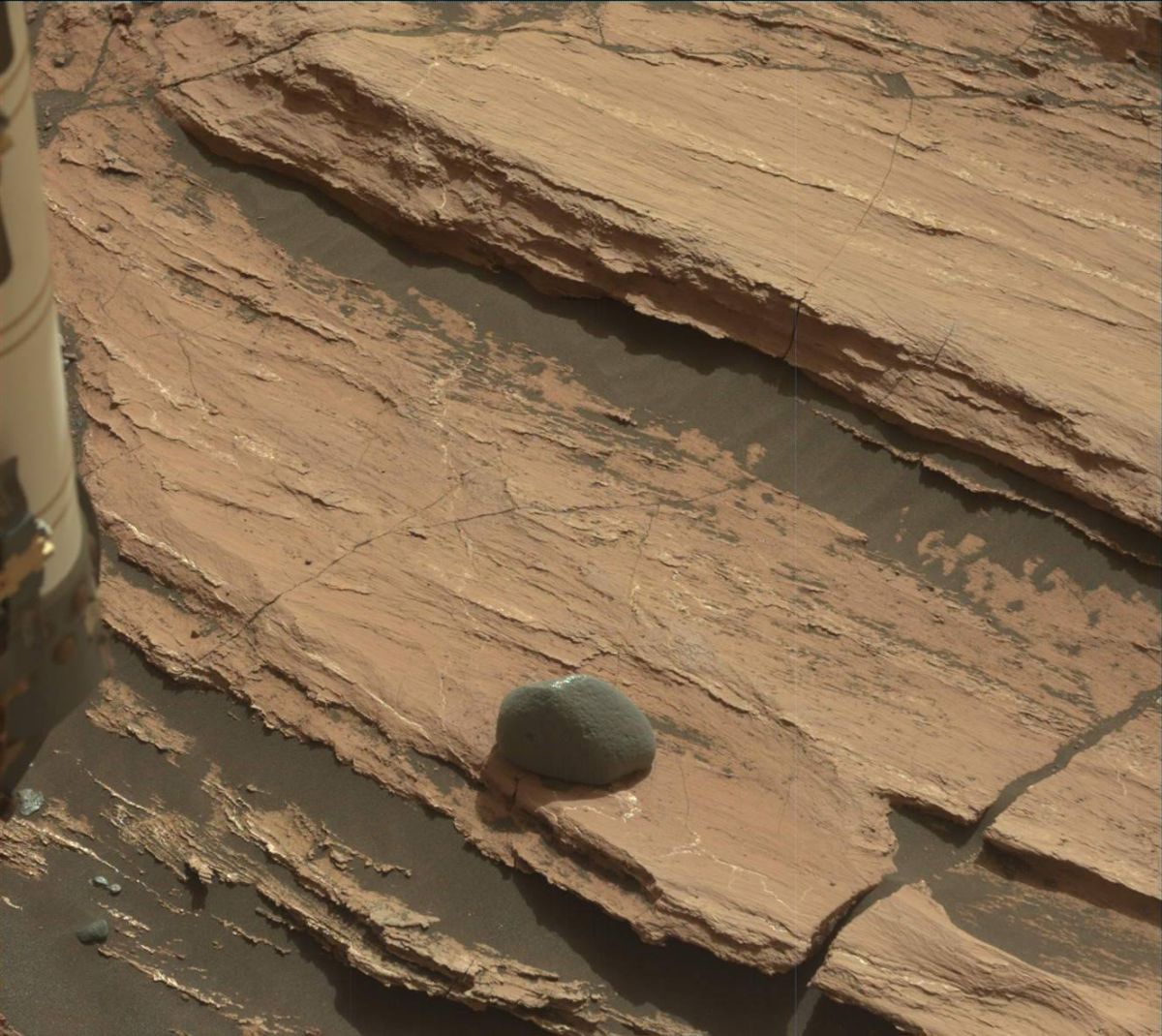
Curiosity Mastcam Left image taken on Sol 1608, February 13, 2017.
Credit: NASA/JPL-Caltech/MSSS
According to the Sol 1609 plan, it was to start with Chemistry & Camera (ChemCam) and Right Mastcam observation of Passagassawakeag, a typical Murray bedrock exposure named “Spurwink,” and a more distant dark block called “Wassataquoik.”
Then the plan schedules Curiosity’s Right Mastcam to acquire a 3×1 mosaic of the Perry area, single images of rocks near the top of the hill named “Gonic,” “Kineo,” and “Edmunds,” followed by an 8×4-frame mosaic of the right side of the hill.
Complicated plan
Prior to the MAHLI imaging of Perry, a full suite of MAHLI images, plus extra stereo frames, is planned on Spurwink.
After all of the MAHLI activities have been completed, Herkenhoff says, the robot’s Alpha Particle X-Ray Spectrometer (APXS) is to be placed on Perry for a pair of short integrations, then placed on Spurwink for an overnight integration.
Concludes Herkenhoff: “Of course we are hoping that this complicated plan goes well!”
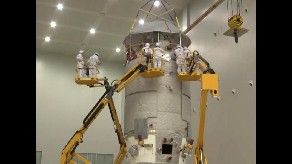
Tianzhou-1 supply ship is being readied for April launch.
Credit: CCTV-Plus
A key element of China’s human spaceflight program is being prepared for launch this April.
The country’s first cargo-carrying spacecraft – Tianzhou-1– has arrived at a launch site in Wenchang City of southern Hainan Province on Monday.
Shoot and ship
Tianzhou-1 can shoot and ship into Earth orbit upwards of six tons. This supply ship is integral to China’s future space station on the drawing boards for the 2020’s.
Once lofted by a Long March-7 booster from the Wenchang spaceport, the cargo ship will dock with the now-orbiting Tiangong-2 space lab and refuel that facility.

China’s cargo ship will dock with the now-orbiting Tiangong-2 space lab and refuel that facility.
Credit: CMSE
Payload ratio
In an interview on CCTV-Plus, Bai Mingsheng, chief designer of Tianzhou-1 at China Aerospace Science and Technology Corporation said: “The carrying capacity of Tianzhou-1 is designed based on the scale of the space station, in the principle of achieving the highest carrying capacity with the lowest structural weight. There is an index for the spacecraft’s carrying capacity, which is called payload ratio,” Bai said. “The payload ratio of Tianzhou-1 can reach 0.48, which is a relatively high figure in the world.”
As noted by CCTV-Plus, payload ratio refers to the ratio of the cargo weight to the weight of the spacecraft. A high payload ratio means high carrying capacity of the spacecraft. The figure is higher than that of the existing spacecraft of Japan and some European countries.
Verifying technology
Tianzhou-1 spacecraft will latch up with the orbiting Tiangong-2 space lab. That lab late last year hosted two astronauts for China’s longest human spaceflight mission.
The supply craft will refuel the space lab, verifying the technology needed for on-orbit transfer of liquid propellant – one of the key technologies required in assembling and maintaining China’s future space station.

China’s 60-ton medium-size space station for the 2020’s is depicted in this artwork.
Credit: CNSA
Two-month process
Bai said that two days after the launch of Tianzhou-1, it will dock with the Tiangong-2 space lab.
“The whole process takes about two months. After the completion of the two-month docking, we will check the status of the equipment and refill the propellant,” Bai added.
For a look at Tianzhou-1 preparations, go to these CCTV-Plus video clips:
http://l3-pv.news.cctvplus.com/2017/0213/8043031_Preview_1486991619869.mp4
http://l3-pv.news.cctvplus.com/2017/0213/8043022_Preview_1486992765374.mp4
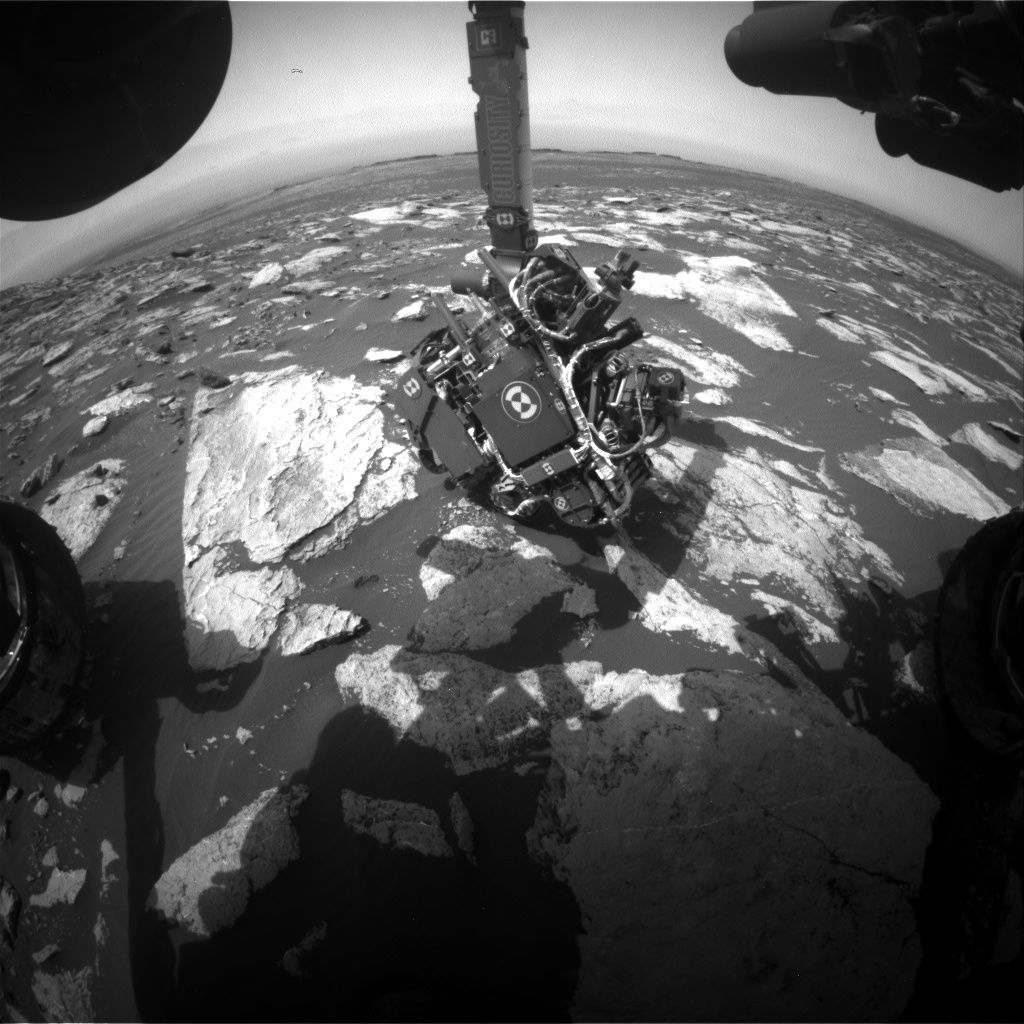
Curiosity Front Hazcam Right B image taken on Sol 1607, February 12, 2017.
Credit: NASA/JPL-Caltech
NASA’s Curiosity Mars rover is closing out Sol 1607 activities. The robot has wrapped up work on the first stop of a second phase look at the Bagnold Dunes.
The rover’s Mastcam produced images that were repeated throughout the day to look for changes in the dunes.
Sand formations
Curiosity’s Chemistry and Camera (ChemCam) Remote Microscopic Imager (RMI) was focused on the target “Mapleton” and then Mastcam carried out a series of images of nearby sand formations.
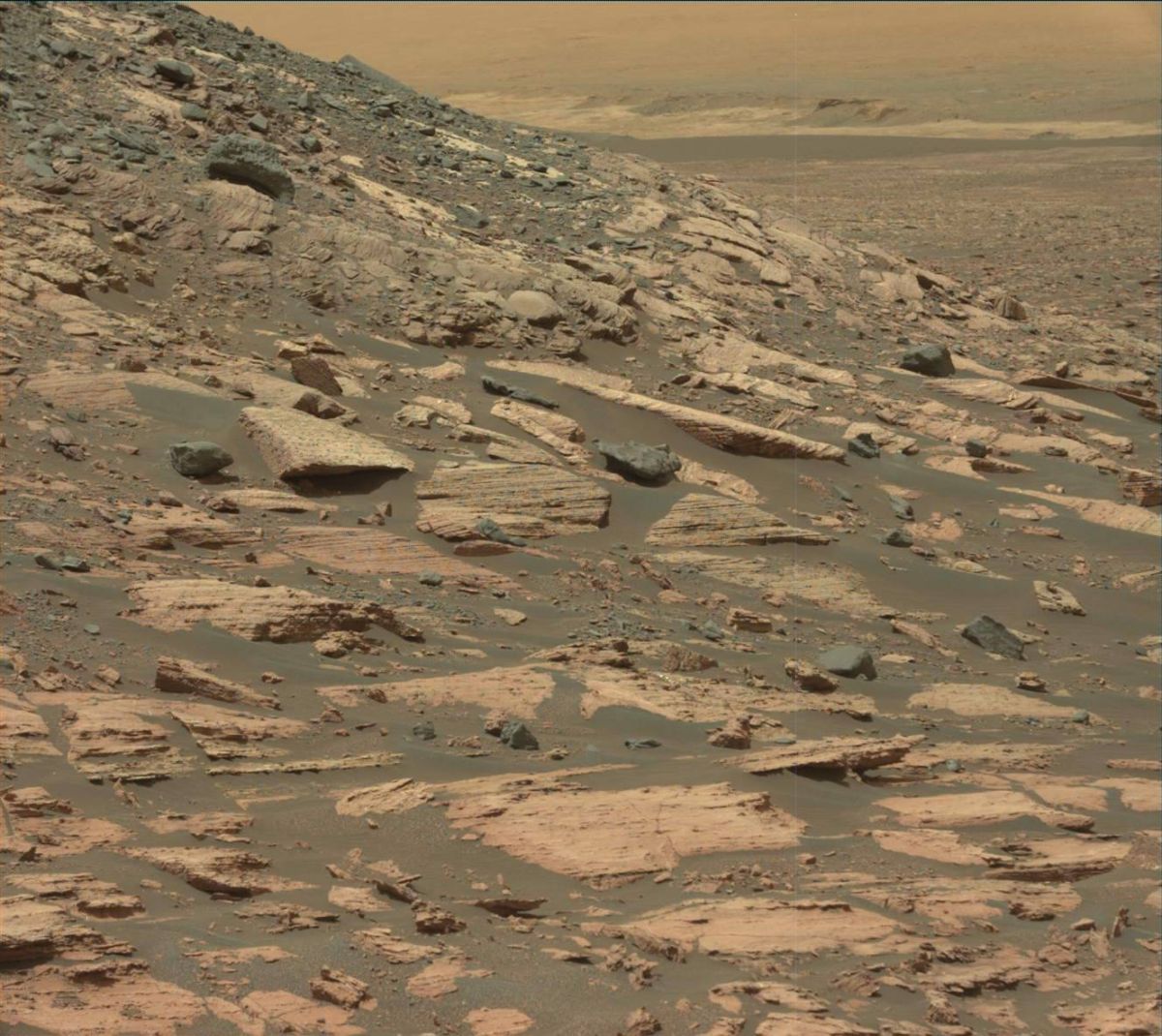
Curiosity Mastcam Left image taken on Sol 1605, February 10, 2017.
Credit: NASA/JPL-Caltech/MSSS
“Once that was taken care of, we decided to drive back toward Ireson Hill so that we can take a closer look at some of the geology there,” reports Ryan Anderson, a planetary scientist at the USGS Astrogeology Science Center in Flagstaff, Arizona.
That drive equaled roughly 180 feet (55 meters) followed by post-drive imaging.
Targets of interest
In the 1605 plan, the rovers ChemCam’s laser was slated to be back in action with an analysis of the target “Carys Mills”. Mastcam was scheduled to take a supporting image of the same target, as well as a small mosaic of the target “Calderwood”.
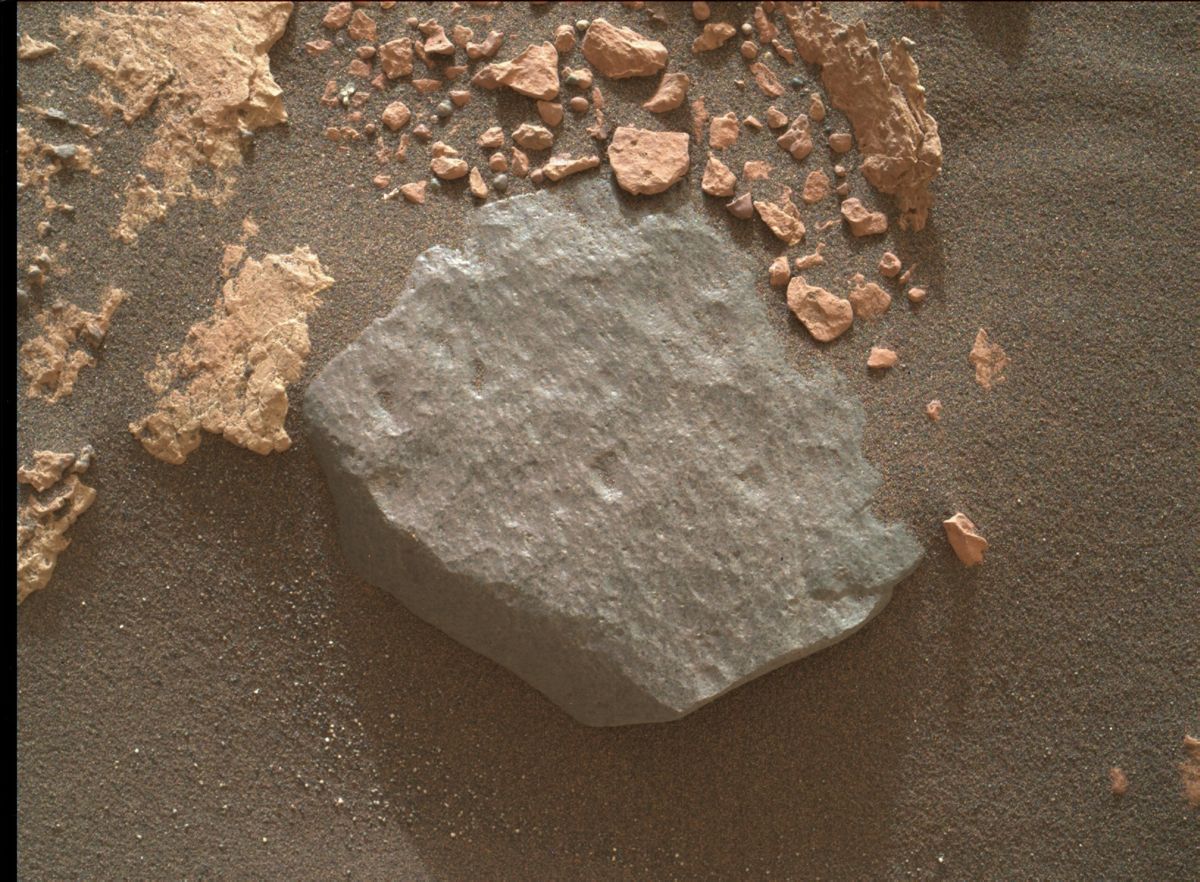
Mars Hand Lens Imager (MAHLI), located on the turret at the end of the rover’s robotic arm, acquired this image on February 11, 2017, Sol 1606.
Credit: NASA/JPL-Caltech/MSSS
“We will then continue driving around the east side of Ireson hill toward our targets of interest, ending at a rock that may be part of the hill’s capping layer,” Anderson notes.
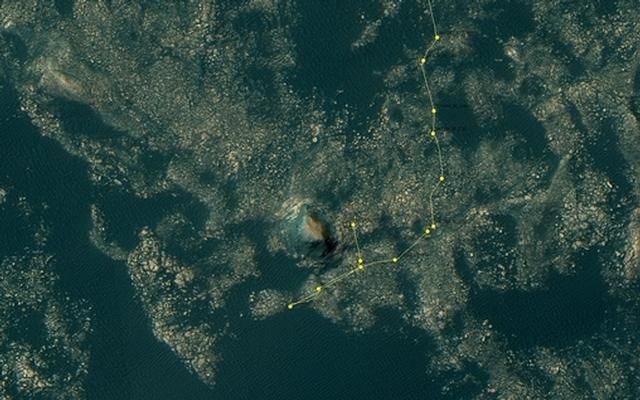
Curiosity rover’s location as of Sol 1605, February 10, 2017.
From Sol 1604 to Sol 1605, Curiosity had driven a straight line distance of about 71.56 feet (21.81 meters). Since touching down in Bradbury Landing in August 2012, Curiosity has driven 9.64 miles (15.52 kilometers).
The base image from the map is from the High Resolution Imaging Science Experiment Camera (HiRISE) in NASA’s Mars Reconnaissance Orbiter.
Credit: NASA/JPL-CALTECH/University of Arizona
Dates of planned rover activities are always subject to change due to a variety of factors related to the Martian environment, communication relays and rover status.
Credit: NASA/JPL
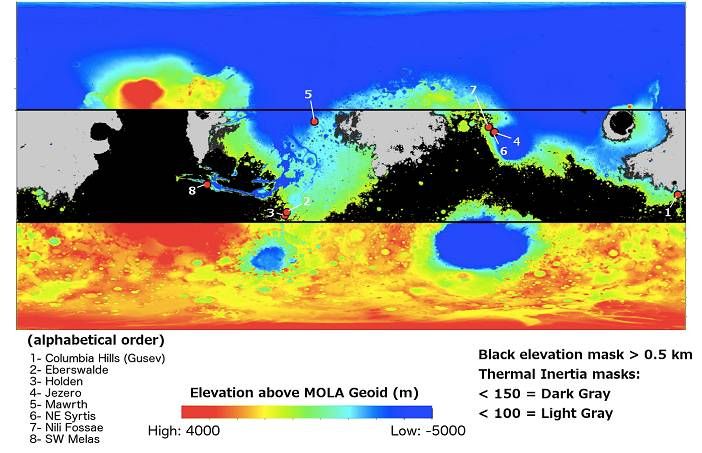
MONROVIA, California – The 3rd landing site workshop for the 2020 Mars Rover mission was held here, bringing some 250 researchers together to mull over and whittle away at eight candidate landing sites.
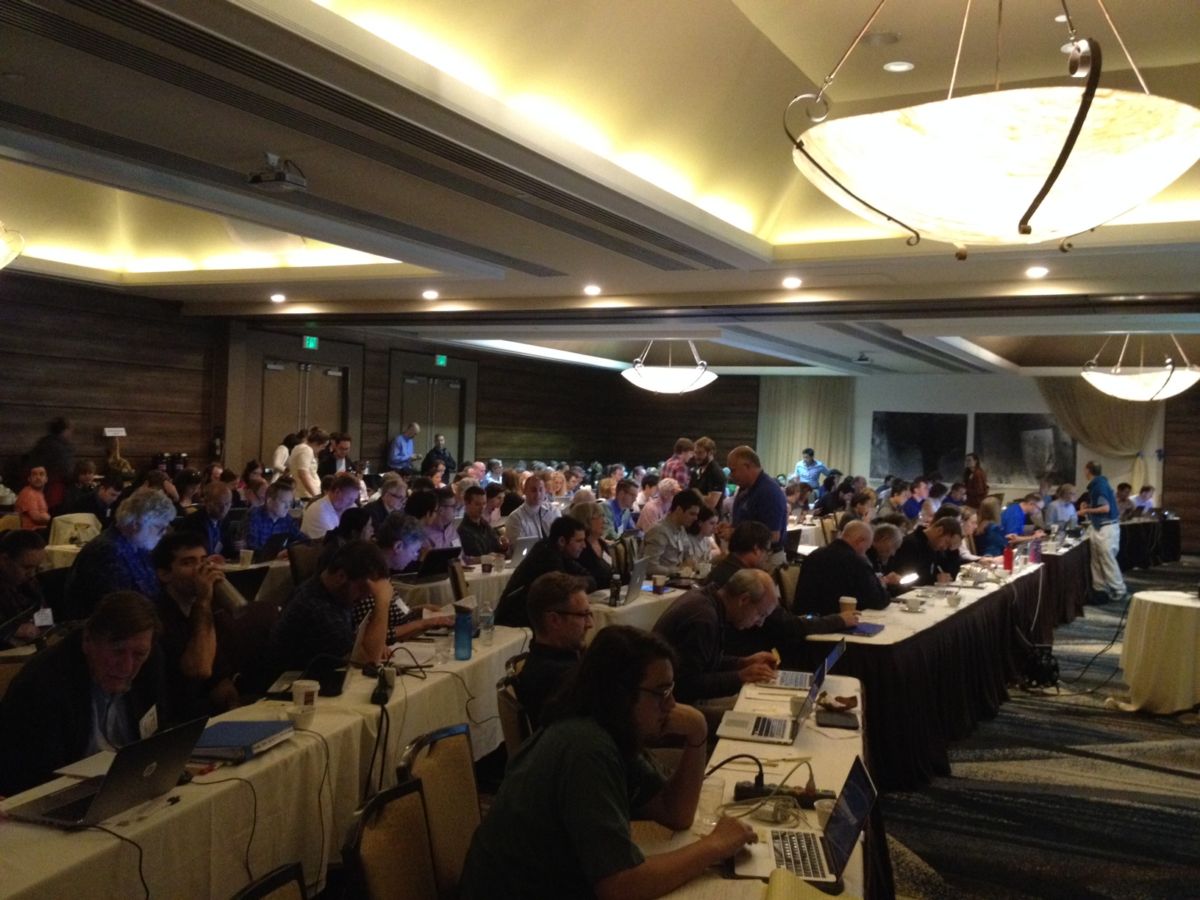
Mars via Monrovia. International group mulls over prospective landing sites for Mars 2020 rover.
Credit: Leonard David
After nearly 3 days of deliberation – and much debate and discussion – a trio of landing sites for the future rover has apparently emerged: Jezero, NE Syrtis, and a hotly contested and invested candidate – the Columbia Hills/Gusev crater.
Yet another landing site workshop is on the books to further detail these candidate locales for the Mars 2020 rover.
This artist’s rendering depicts NASA’s Mars 2020 rover, with its robotic arm extended.
Credit: NASA/JPL-CALTECH
Eventually, the final go-to spot for the 2020 Red Planet robot is to be made by NASA Headquarters.
Contentious chatter
Of the three sites, the most contentious chatter involved Columbia Hills/Gusev. It’s the site where the Spirit rover cruised about, later becoming stuck in sand and died there. In May 2011, NASA ended its shout outs to the mired in sand Mars machinery.

On Mars, “Home Plate” is a ancient and eroded volcanic ash deposit about 100 yards across that lies in Gusev Crater’s Columbia Hills. At some point in the past a hot spring was active here, producing silica outcrops that appear nearly identical to the features found at the El Tatio hot springs in Chile. The silica outcrops lie next to Home Plate’s right edge, near the Spirit rover (circled).
Credit: NASA/JPL-Caltech/University of Arizona
Proponents of this return mission want to investigate and sample siliceous deposits discovered by the Spirit rover on the east side of a featured dubbed “Home Plate” as well as candidate deposits not visited by Spirit to the west and south of Home Plate.
These deposits have been compared on the basis of their morphology and mineralogy to hot spring sinter deposits known to support microbial life on Earth, and have thus been called potential biosignatures.
That’s the Spirit
As discussed earlier on Inside Outer Space, go to these stories for more background on the Columbia Hills/Gusev site:
Did the Spirit Mars Rover Find a Biosignature of Past Life?
https://www.leonarddavid.com/did-the-spirit-mars-rover-find-a-biosignature-of-past-life/
Searching for Life on Mars: A Re-look at Spirit Rover Finding
https://www.leonarddavid.com/searching-for-life-on-mars-a-re-look-at-spirit-rover-finding/
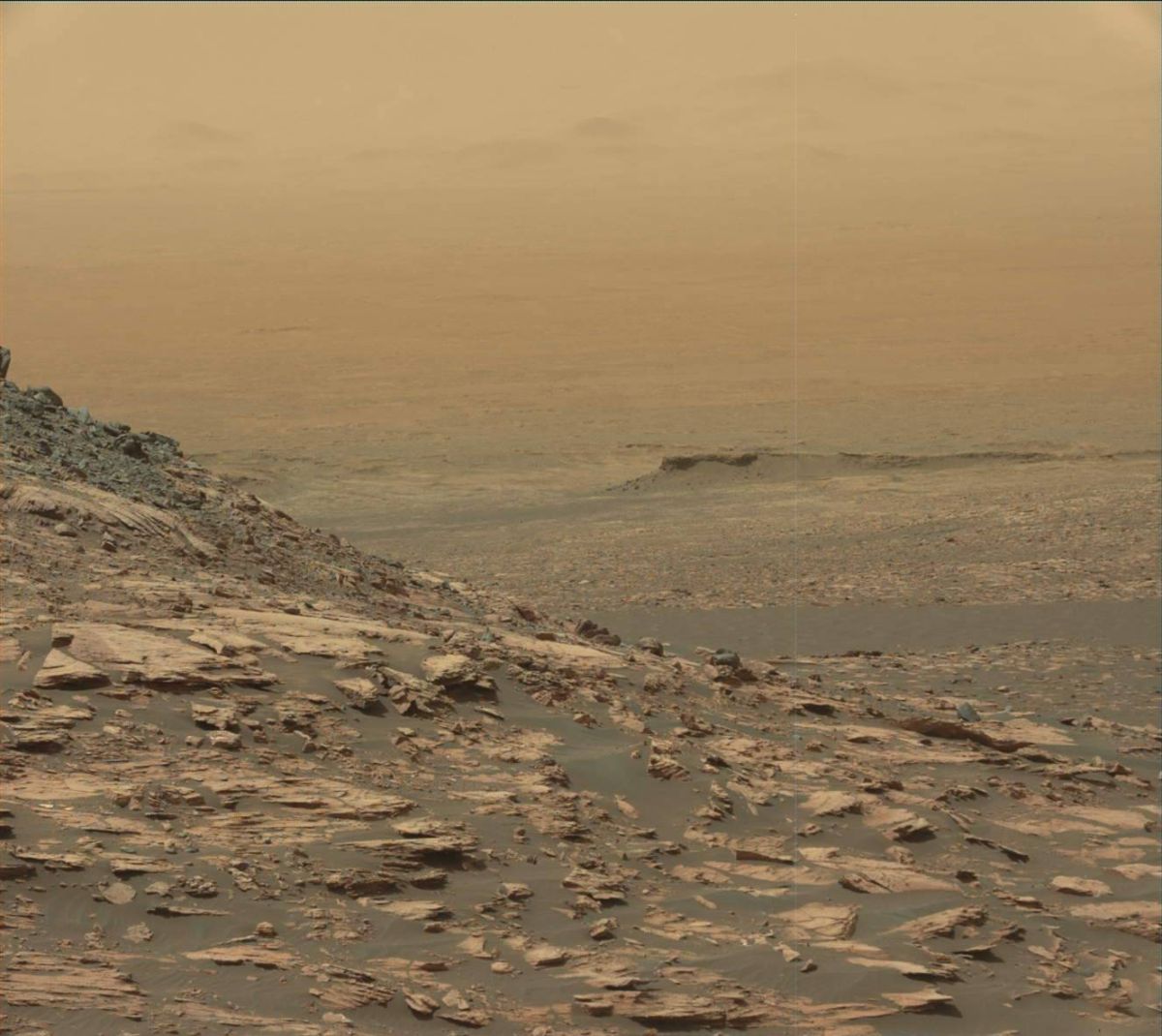
Mastcam Left image from Curiosity rover taken on Sol 1604, February 9, 2017.
Credit: NASA/JPL-Caltech/MSSS
The Curiosity Mars rover’s Chemistry & Camera (ChemCam) is expected to be back in operation shortly, after running a set of planned diagnostics.
Mastcam observations have been underway to look for any changes in the nearby sand.
Mastcam also has multispectral observations of targets “Matagamon,” “Scarboro,” and “Flume Ridge.” Mastcam is on tap too to create a mosaic of some interesting sand ripples.
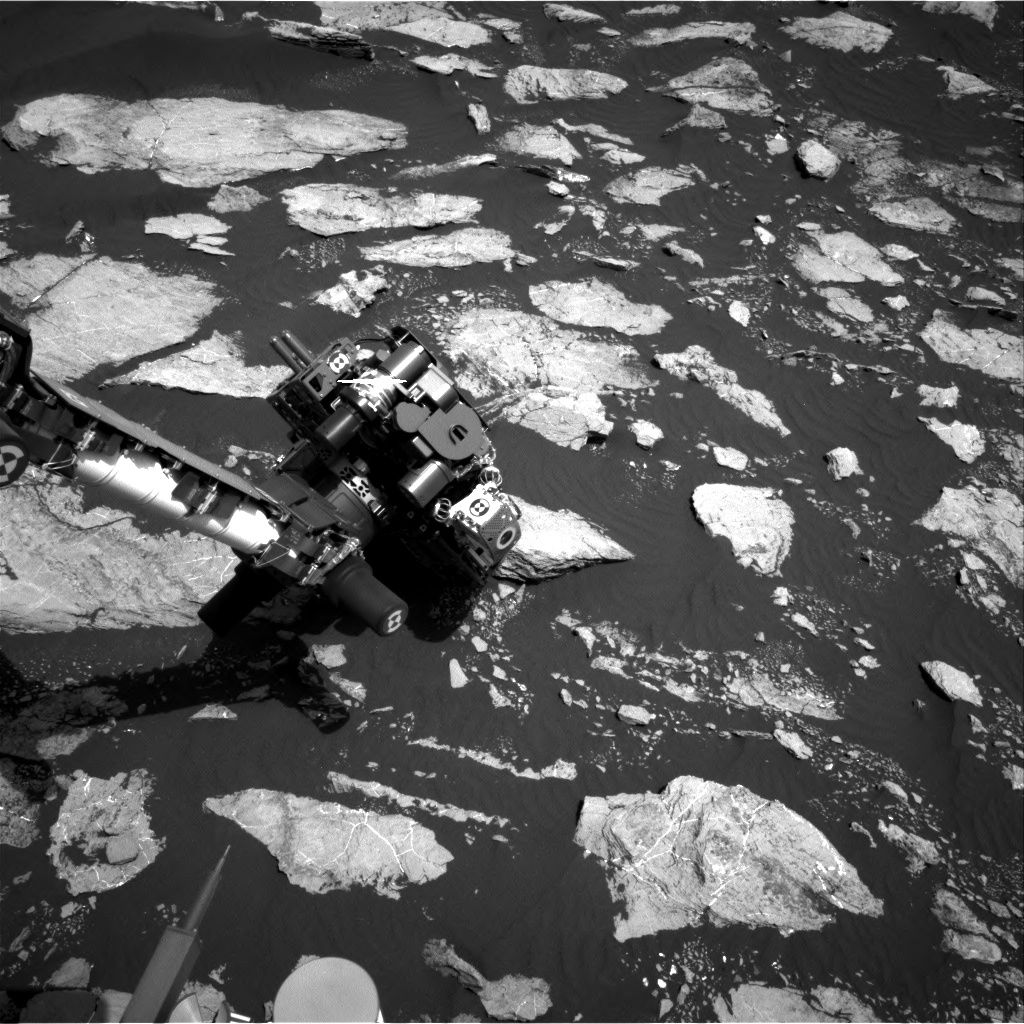
Curiosity Navcam Right B image taken on Sol 1605, February 10, 2017.
Credit: NASA/JPL-Caltech
Dust devil movie
In addition, Mastcam atmospheric observations and a Navcam dust devil movie is on the schedule, reports Ryan Anderson, a planetary scientist at the USGS Astrogeology Science Center in Flagstaff, Arizona.
The robot’s assignments included use of the Mars Hand Lens Imager (MAHLI) to take a look at “Matagamon,” “West Branch,” “Flume Ridge,” “Dry Wall” and “McKenny.”
Moving on
This action is to be followed by an engineering test with the rover’s Alpha Particle X-Ray Spectrometer (APXS) and perform an overnight APXS measurement of the target “Flume Ridge.”
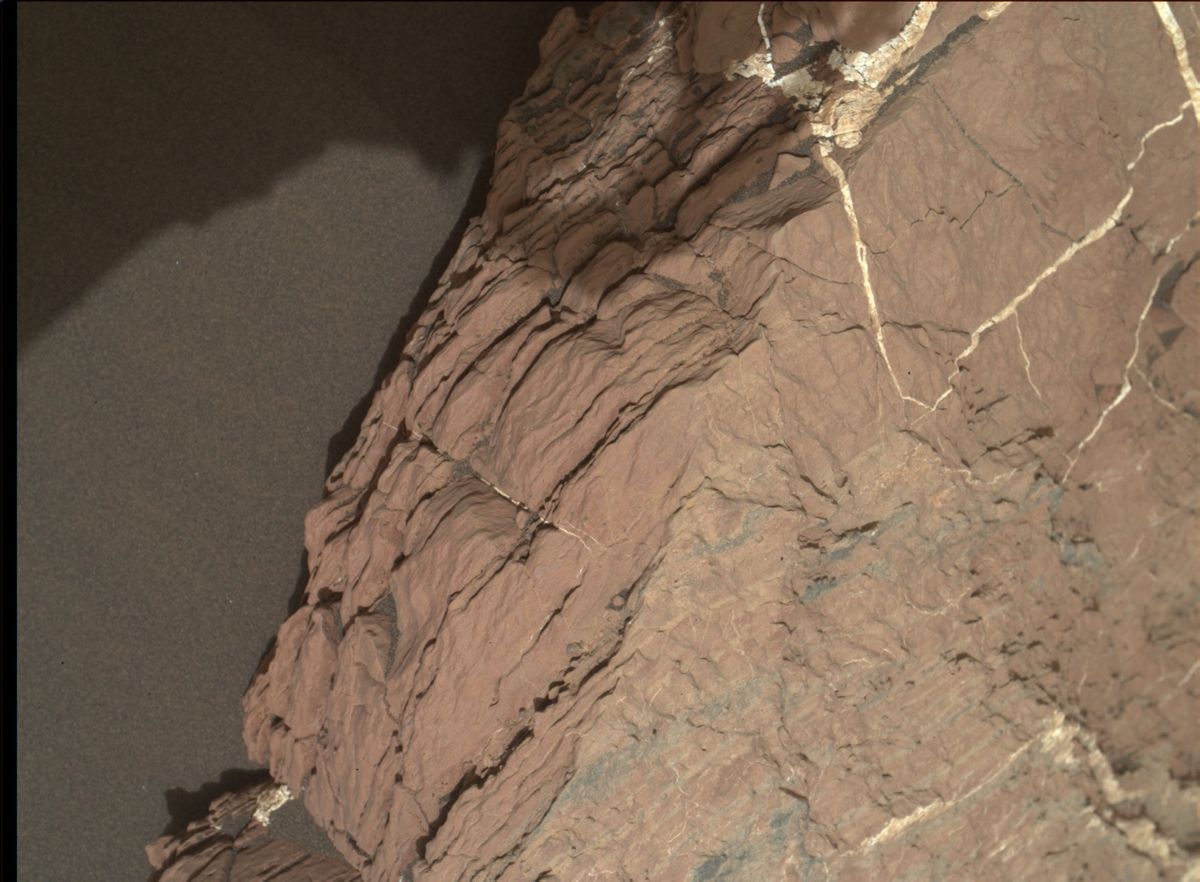
Curiosity Mars Hand Lens Imager (MAHLI) photo acquired on February 10, 2017, Sol 1605.
Credit: NASA/JPL-Caltech/MSSS
If all goes according to plan, observations by Curiosity will move on to stop #2 of this second campaign to study Bagnold dunes, Anderson concludes.

