Archive for the ‘Space News’ Category
 Author:
  June 7th, 2017
Mars – what is our future on the Red Planet.?
Credit: ESA/D. O’Donnell – CC BY-SA IGO
The Planetary Society has announced a new paper on NASA’s Mars exploration program.
Not all is well with the future of Mars exploration, suggests the paper. “NASA’s robotic Mars Exploration Program is on a troubling path of decline…and decisions must be made now in order to stop it.”
This new report from The Planetary Society is titled: Mars in Retrograde: A Pathway to Restoring NASA’s Mars Exploration Program.
Among recommendations for NASA, the paper suggests:
— NASA should immediately commit to a Mars telecommunications and high-resolution imaging orbiter to replace rapidly aging assets currently at Mars.
— NASA should begin formulation of a sample retrieval rover and Mars Ascent Vehicle mission to continue the overall Mars Sample Return campaign.
To view the paper, go to:
 Posted in

Apollo 15 image captures landing locale of China’s Chang’e-5 Moon lander – the Mons Rümker region in the northern part of Oceanus Procellarum.
Credit: NASA
China space officials are detailing their upcoming set of robotic lunar exploration missions at the Global Space Exploration Conference (GLEX) 2017 meeting being held this week in Beijing.
To be launched this November, the Chang’e-5 Moon lander is slated to touch down within the Mons Rümker region in the northern part of Oceanus Procellarum.
Mons Rümker features a cluster of volcanic domes.
Liu Jizhong, director of China Lunar Exploration and Space Engineering Center of China National Space Administration identified the Chang’e-5 landing and sampling site.
Far side lander
In addition, new details of China’s Chang’e-4 far side lander to be launched in 2018 were detailed by Liu.
“For the first time, it [the Chang’e-4 probe] will carry scientific payload to the Moon’s surface, a micro ecosphere developed under lead of the Chongqing University,” Liu told CCTV in an interview.
Chang’e-4 will also be outfitted with two micro satellites developed by the Harbin Institute of Technology and one laser corner reflector developed by the Zhongshan (Dr. Sun Yat-sen) University.

The lunar far side as imaged by NASA’s Lunar Reconnaissance Orbiter using its LROC Wide Angle Camera.
Credit: NASA/Goddard/Arizona State University
Shielded science
The Moon’s far side is shielded from the buzz and crackle of electromagnetic interference from the Earth. Thus, it provides an ideal field for studies of low-frequency radio and research of the space environment and solar bursts.
“We will also try to use the clean electromagnetic environment of the Moon’s far back side to carry out the world’s first low-frequency radio detection, with some breakthrough outcome anticipated,” Liu said.
For Earth-far side communications, China is readying a relay satellite to be positioned in the Earth-Moon Lagrange Point L2.

How best to strike up conversations with other star folk? Mathematics might be the common lingo for star speaking between civilizations.
Credit: ESA/Hubble & NASA
Shared communication between we Earthlings and other star folk should be based on mathematics – exo-arithmetic greetings that form a “foreign” lingo.

Science, extraterrestrials and math – a powerful combination for high-brow communications?
Credit: Berghahn Books
The idea is that mathematics is as much a part of our humanity as music and art. And it is mathematics that might be understandable — even familiar — to extraterrestrial civilizations for striking up star-speak repartee.
For more information on this proposal, go to my new Space.com story at:
Talking to E.T.? Why Math May Be the Best Language
By Leonard David, Space.com’s Space Insider Columnist
June 7, 2017 06:50am ET
http://www.space.com/37109-making-contact-aliens-language-math.html
Credit: White House
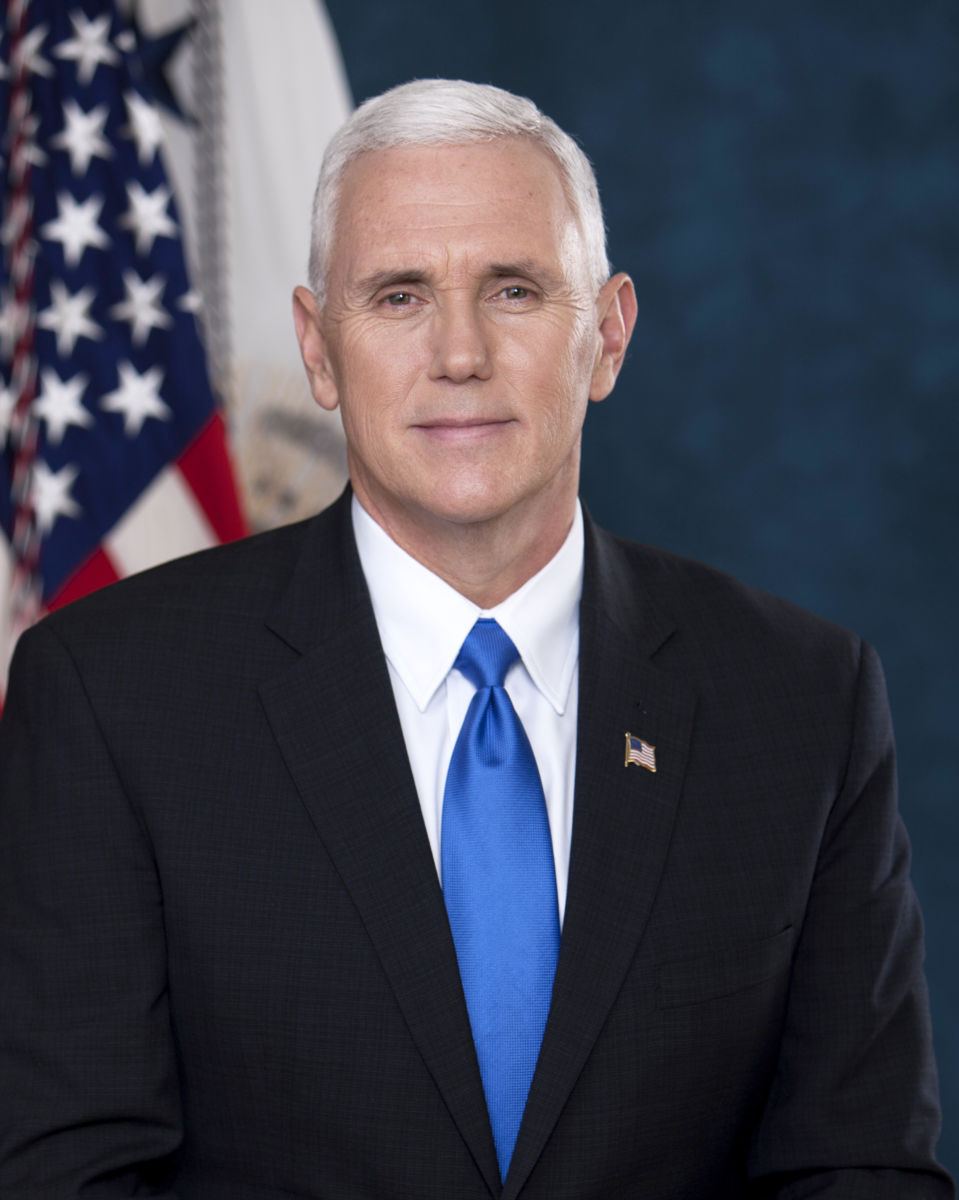
NASA’s Johnson Space Center (JSC) is on high-alert, at least at the Vice Presidential level.
U.S. Vice President Pence is traveling to the NASA field center in Houston, Texas, slated to take part in the Wednesday, June 7 announcement of a new class of astronaut candidates.
The announcement is at 1 p.m. Central Standard – Texas time. Note that the event will air live at 2 p.m. eastern time on NASA Television and the agency’s website.
Additionally, the Vice President will tour the Christopher C. Kraft Jr. Mission Control Center and hear briefings on current human spaceflight operations.
Selected few
After evaluating a record number of applications, NASA will introduce its new astronaut candidates. They will report to JSC in August to begin their training in spacecraft systems, spacewalking skills, teamwork, Russian language and other necessary skills.
The new astronaut candidates were chosen from more than 18,300 people who submitted applications from December 2015 to February 2016, more than double the previous record of 8,000 set in 1978.

Credit: ESA/NASA
Moon, Mars trajectory
U.S. citizens in all 50 states, the District of Columbia, and U.S. territories Puerto Rico, Guam, and American Samoa applied for a chance to join NASA’s astronaut corps and take part in the nation’s human spaceflight program.
Requirements to apply were U.S. citizenship, a bachelor’s degree from an accredited institution in a science, technology, engineering or math (STEM) field and at least three years of related experience, or at least 1,000 hours of pilot-in-command time in jet aircraft.
According to NASA: “The new astronaut candidates could one day be performing research on the International Space Station, launching from American soil aboard spacecraft built by American companies, and traveling to the Moon or even Mars with the help of NASA’s new Orion spacecraft and Space Launch System rocket.”

NASA’s Space Launch System.
Credit: NASA
Space Council TBD?
Given past statements by Pence, the White House is expected to declare in the near-term the creation of a National Space Council, a deliberative body to chart the U.S. space agenda, an entity that would be led by the Vice President.
Additionally, still to come is a White House decision on a new NASA Administrator.
At tomorrow’s event, the astronaut candidates will join acting NASA Administrator Robert Lightfoot, Johnson Center Director Ellen Ochoa, and Flight Operations Director Brian Kelly on stage.

Credit: IAF
Space officials from numbers of nations have gathered in Beijing for the Global Space Exploration Conference (GLEX) 2017.
The three-day GLEX 2017 conference, running from June 6-8, will cover an array of topics such as space station development, exploration of the Moon, Mars and near-Earth asteroids and international cooperation. The meeting involves over a thousand delegates from 51 countries.
According to China’s CCTV, Chinese space officials detailed the latest on the upcoming Chang’e-5 and Chang’e-4 lunar probe missions.
Return sample

Drawing purportedly shows China’s Chang’e-5 – a robotic Moon lander and sampling craft to be launched in 2017.
Courtesy: China Space website posting
China is set to launch its Chang’e-5 lunar probe at the end of November this year, departing from the Wenchang Space Launch Center in south China’s Hainan Province. This ambitious lunar sampling mission is to be hurled moonward atop a Long March-5 booster.
Chang’e-5 is China’s first automated lunar surface sampling, first Moon surface take-off, first automatic docking in lunar orbit, and first return flight at a speed close to the “second cosmic velocity,” according to the China Aerospace Science and Technology Corporation (CASC).
Far side landing
At the GLEX gathering, Liu Jizhong, director of Lunar Exploration and Space Engineering Center of the Chinese Society of Astronautics reported on the Chang’e-4 lunar mission. It will attempt a pioneering first to touchdown on the far side of the Moon.
The lunar far side as imaged by NASA’s Lunar Reconnaissance Orbiter using its LROC Wide Angle Camera.
Credit: NASA/Goddard/Arizona State University
“We will begin in the third quarter of this year building the protocol of the probe proper and its flight mission is scheduled for next year,” said Liu.
Jan Woerner, Director General of the European Space Agency (ESA) expressed the wish to invite the global space community to join a cooperative Moon Village concept.
Station core module
Meanwhile, as reported by China’s state-run Xinhua news agency, China will carry out at least four piloted spaceflight missions over about five years to build a space station.

China’s medium-size space station for the 2020’s is depicted in this artwork.
Credit: CNSA
China’s first astronaut, Yang Liwei, detailed the plan at GLEX. Yang is deputy director of China’s manned space program office.
Yang said that two piloted space missions will be conducted in 2020. China plans to complete the building of the space station by around 2022, aiming to carry out about a dozen launch missions beforehand, Yang said. He noted that China would launch the first core module of the space station in 2019, followed by launches of two experiment modules.
The space station will enable astronauts to stay in the space for three months to half a year, Yang added. Astronauts are currently preparing for the space station program he said, and that China will start the selection of new astronauts this year.
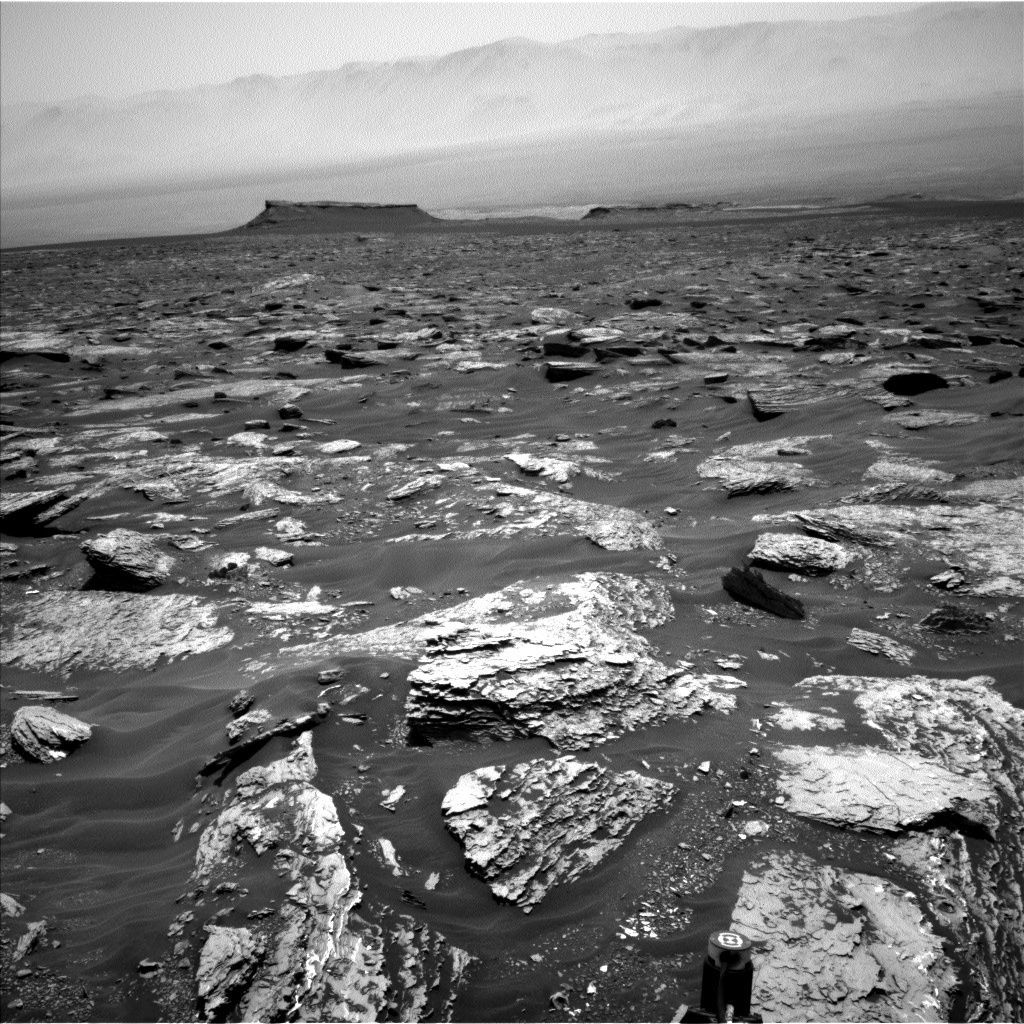
Curiosity Navcam Left B image taken on Sol 1717, June 5, 2017.
Credit: NASA/JPL-Caltech
NASA’s Curiosity Mars rover is busy at work performing Sol 1718 duties.
The robot has started to turn toward the east and southeast as it wheels toward Vera Rubin Ridge, reports Scott Guzewich, an atmospheric scientist at NASA’s Goddard Space Flight Center in Greenbelt, Maryland.
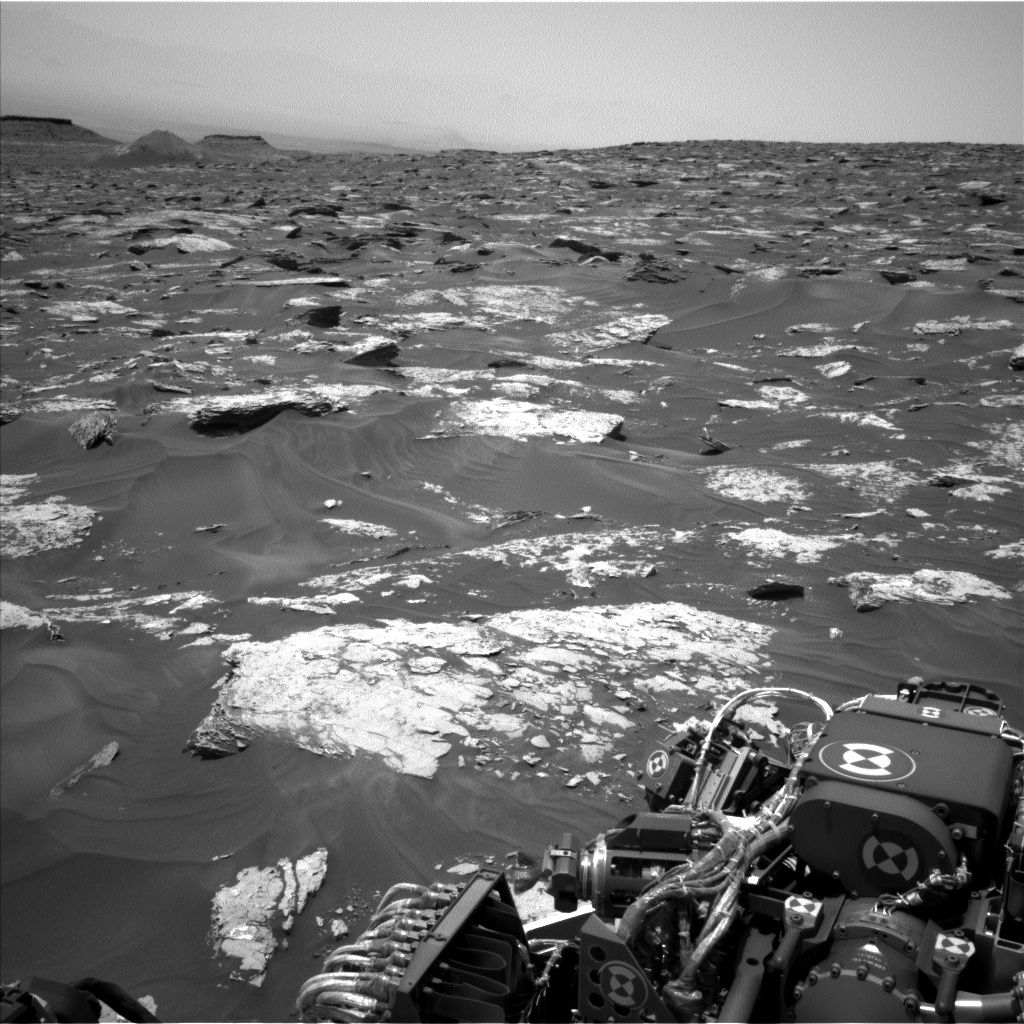
Curiosity Navcam Left B image taken on Sol 1717, June 5, 2017.
Credit: NASA/JPL-Caltech
Weighing priorities
After a busy and successful plan over last weekend, Guzewich notes that the rover science team members weighed priorities between using the Alpha Particle X-Ray Spectrometer (APXS) to study the bedrock Curiosity is driving over or drive farther along the path.
Sol 1718 plans took into account that the rover had only gained roughly 10 feet (3 meters) of elevation the robot’s last drive. “We decided to forgo contact science with APXS in favor of extending our drive distance,” Guzewich adds.
Bedrock interest
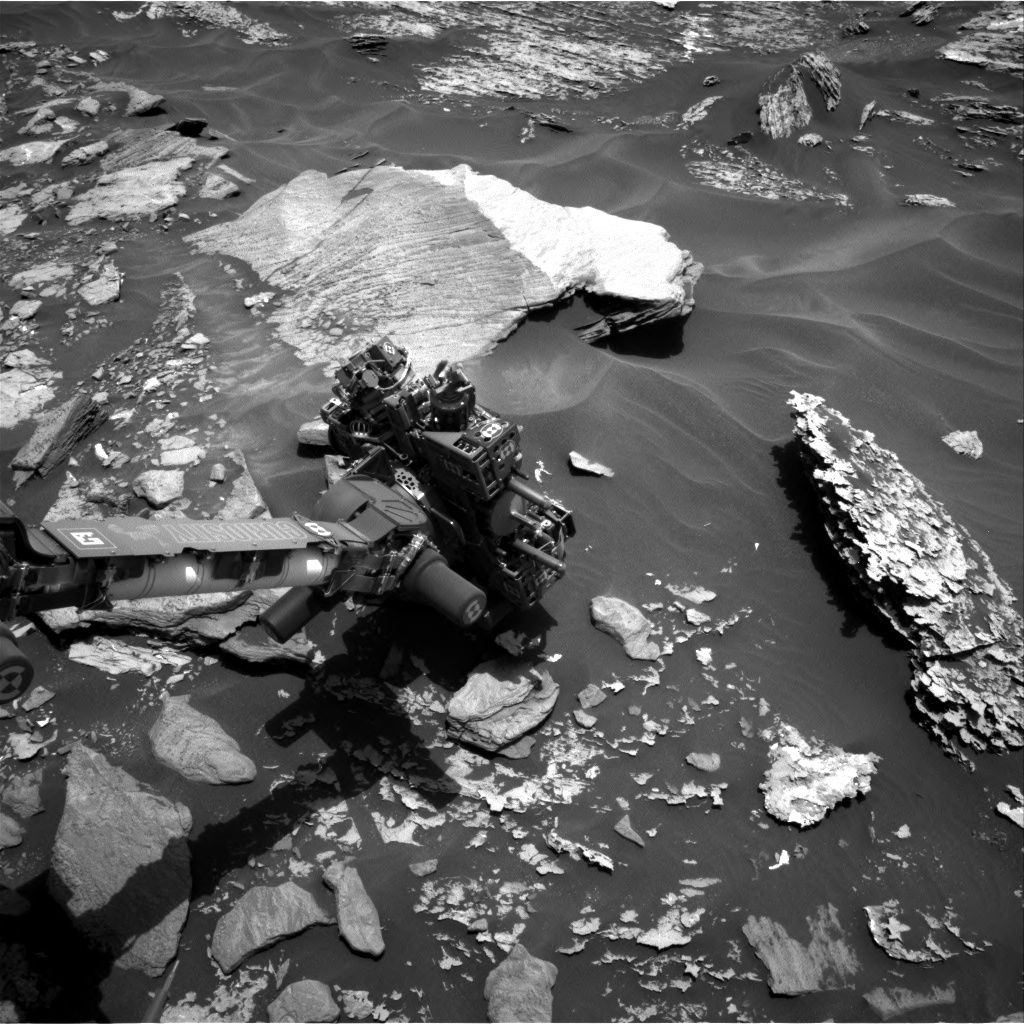
Curiosity Navcam Right B image taken on Sol 1716, June 4, 2017.
Credit: NASA/JPL-Caltech
The geology science theme group has found some interesting bedrock — “East Point,” “East Pond,” and “Eastern Point Harbor” — to target with Chemistry and Camera (ChemCam) and Mastcam before the drive begins.
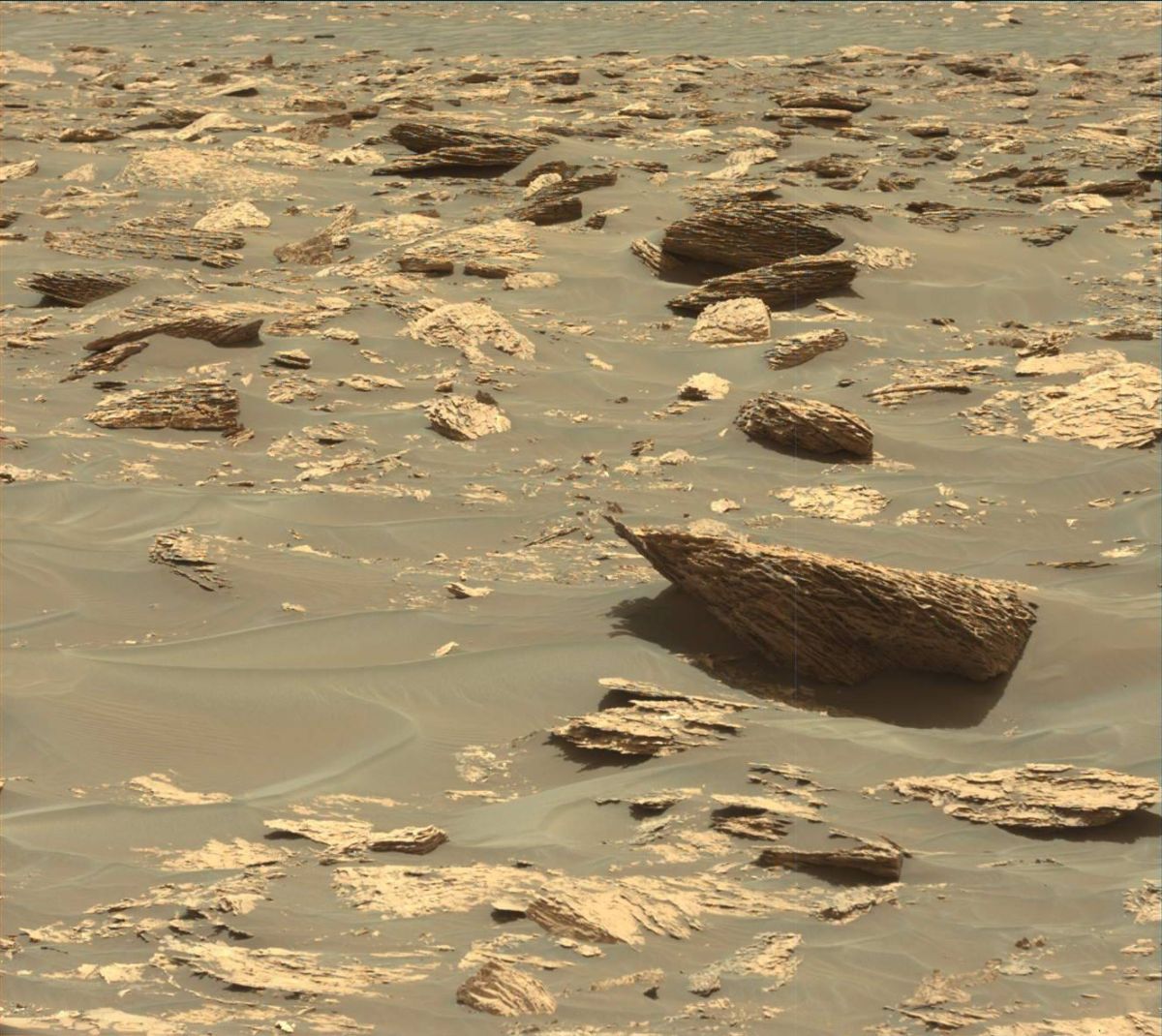
Curiosity Mastcam Left image acquired on Sol 1717, June 5, 2017.
Credit: NASA/JPL-Caltech/MSSS
After a drive of roughly 85 feet (26 meters), the plan calls for post-drive imaging to prepare for the next sol’s activities involving ChemCam, as well as Dynamic Albedo of Neutrons (DAN) and Rover Environmental Monitoring Station (REMS) observations, Guzewich points out.
On the trail
A newly issued Curiosity traverse map shows the route driven by Curiosity through the 1717 Martian day, or sol, of the rover’s mission on Mars (June 05, 2017).
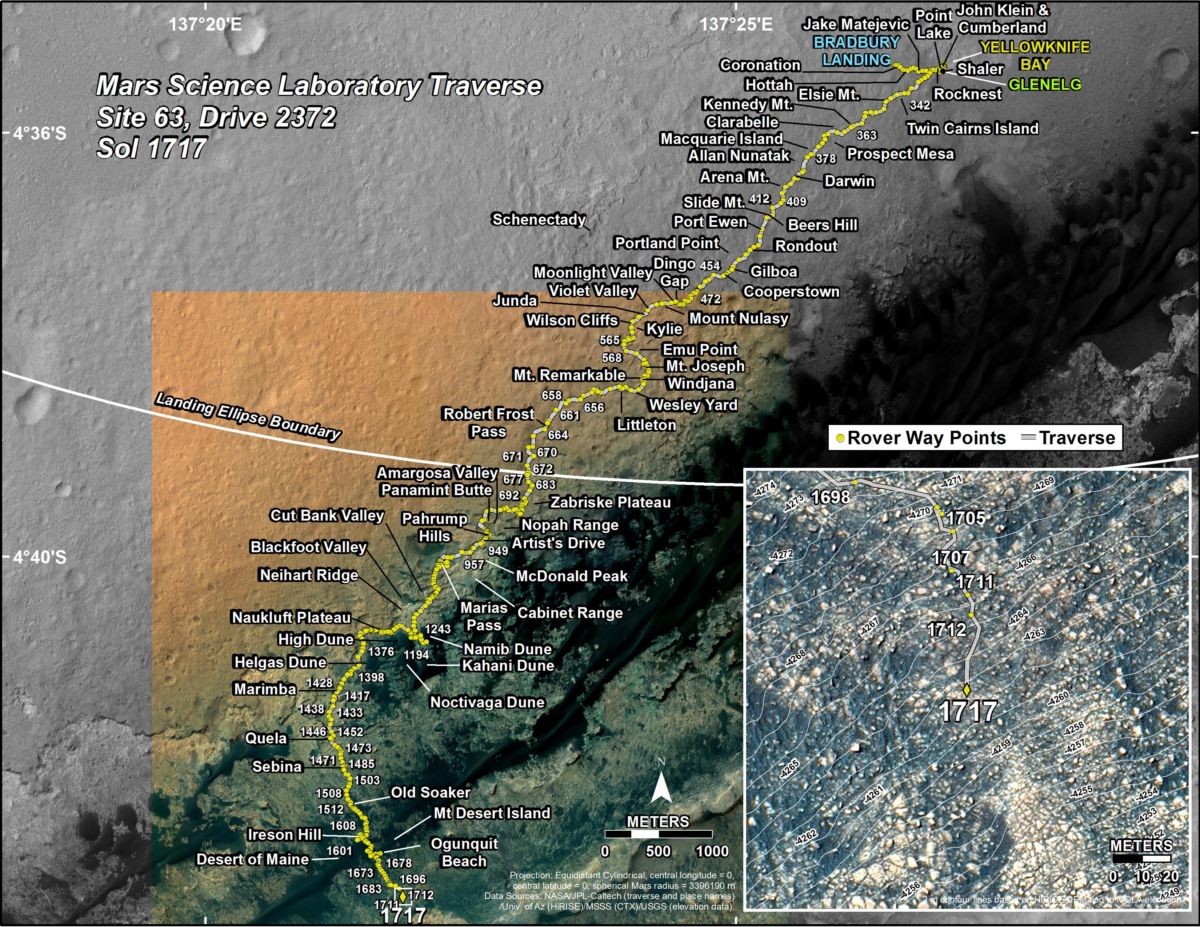
Credit: NASA/JPL-Caltech/University of Arizona
Numbering of the dots along the line indicate the sol number of each drive. North is up. The scale bar is 1 kilometer (~0.62 mile).
From Sol 1712 to Sol 1717, Curiosity had driven a straight line distance of about 85.55 feet (26.08 meters), bringing the rover’s total odometry for the mission to 10.29 miles (16.57 kilometers).
The base image from the map is from the High Resolution Imaging Science Experiment Camera (HiRISE) in NASA’s Mars Reconnaissance Orbiter.

The first X-37B Orbital Test Vehicle waits in the encapsulation cell of the Evolved Expendable Launch vehicle on April 5, 2010 at the Astrotech facility in Titusville, Fla. Half of the Atlas V five-meter fairing is visible in the background.
Credit: U.S. Air Force
The Secure World Foundation (SWF) has issued an updated version of the group’s fact sheet on the U.S. Air Force’s X-37B Orbital Test Vehicle.
This fact sheet includes details on the first four flights of the two X-37Bs, including launch and re-entry locations and dates, as well as updated analysis of the various missions the X-37B could potentially be used for while on orbit.

Recovery crew members process the X-37B Orbital Test Vehicle at Vandenberg Air Force Base after the program’s third mission complete.
Credit: Boeing
Official objectives of the X-37B program include “space experimentation, risk reduction and concept of operations development for reusable space vehicle technologies.”
The SWF fact sheet notes that “none of the potential missions posited by the U.S. military appear to justify the program’s existence, especially on a cost basis, and this has led to speculation about what the ‘real’ mission may be.”

The X-37B Orbital Test Vehicle mission 4 (OTV-4), the Air Force’s unmanned, reusable space plane, landed at NASA’s Kennedy Space Center Shuttle Landing Facility May 7, 2017.
Credit: USAF
The fact sheet discusses the feasibility, advantages, and drawbacks of five of the most cited potential missions for the X-37B.
The SWF fact sheet can be found here:
https://swfound.org/media/205879/swf_x-37b_otv_fact_sheet.pdf

International Space Station.
Credit: NASA
A Chinese experiment is headed toward the International Space Station (ISS), tucked inside the SpaceX Dragon cargo spacecraft that launched yesterday, June 3.
NanoRacks, a Houston-based company that helps commercial companies make use of the space station, worked with the Beijing Institute of Technology to fly Chinese DNA research to the orbiting outpost.
No commercial Chinese payload has ever flown to the orbiting lab before.
Space radiation
The SpaceX CRS-11 spacecraft is to linkup with the ISS on Monday, if all goes as planned.
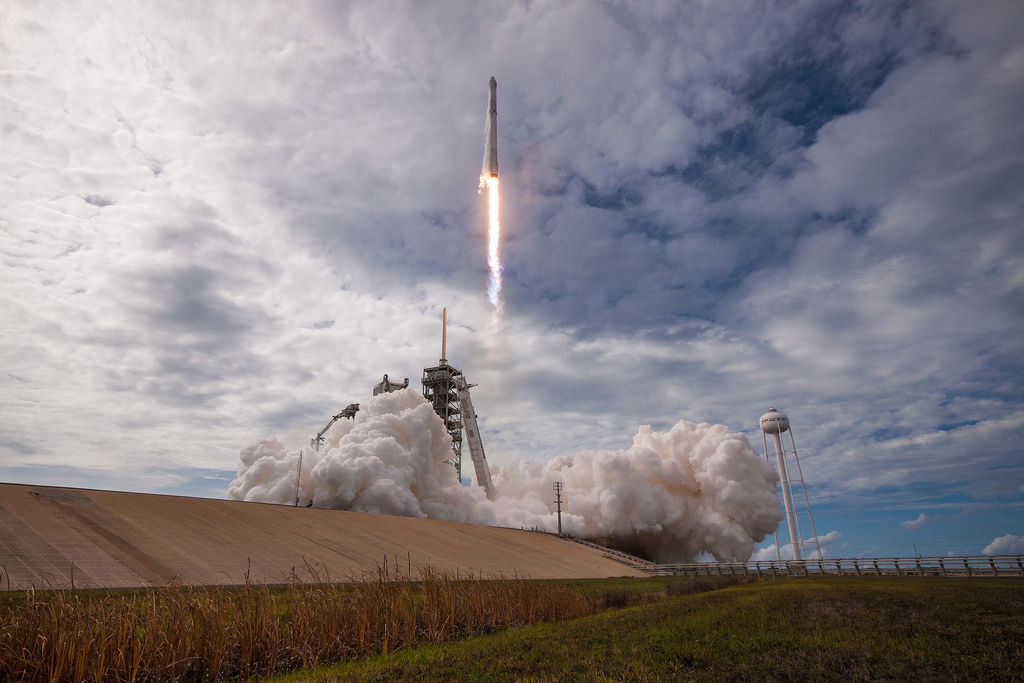
SpaceX Falcon booster topped with Dragon supply ship departs for the International Space Station.
Credit: SpaceX
China’s Xinhua news agency reported today that the 8-pound (3.5 kilogram) experiment is keyed to answer questions, such as: “Does the space radiation and microgravity cause mutations among antibody-encoding genes and how does it happen?”
The experiment is headed for the U.S. side of the ISS, with Xinhua noting that astronauts there will conduct studies using the device in about two weeks, data from which will be sent back to the Chinese researchers.
Wolf trap
“There is a U.S. law in place, known as the Wolf amendment, that bans cooperation between the U.S. space agency NASA and Chinese government entities, but this deal is purely commercial and therefore considered legal,” Xinhua said.
Chinese Professor Deng Yulin, who led the Chinese research, said that this is the first time an ISS experiment has been independently designed and fabricated in China.
“This cooperation does not violate any laws and regulations, including the Wolf amendment. We do it in an open and visible way,” Deng told Xinhua. “This is a new model of cooperation that we can follow in the future.”
Spirit of the concerns
Inside Outer Space contacted NanoRacks leader for a comment:
“We were careful to honor not only the Wolf Amendment but the spirit of the concerns of some towards working with the Chinese,” Jeff Manber said. “But, via the commercial pathway, we are able to craft a world-class research project that demonstrates the leadership of NASA and the space station in low-Earth orbit,” he said.
Manber said he was pleased to have this first commercial project from China underway “and look forward to carefully building a program that enhances the commercial competitiveness of American companies in space. I also look forward to one day soon working onboard the Chinese space station,” he added.
For more information on this experiment, go to my 2015 Space.com story:
US-China Space Freeze May Thaw with Historic New Experiment
http://www.space.com/30337-chinese-experiment-international-space-station.html
Credit: ESA/NASA
The European Space Agency (ESA) has launched a new General Studies Program called “Conceiving a Lunar Base Using 3D Printing Technologies.”
At the heart of the study is to find ways of creating habitable structures using all resources available at the destination – the Moon.
The study is looking into additive manufacturing (or 3D printing) technology from a wider perspective, including the ancillary equipment needed to operate this and the high-level requirements to ultimately achieve a lunar habitat.
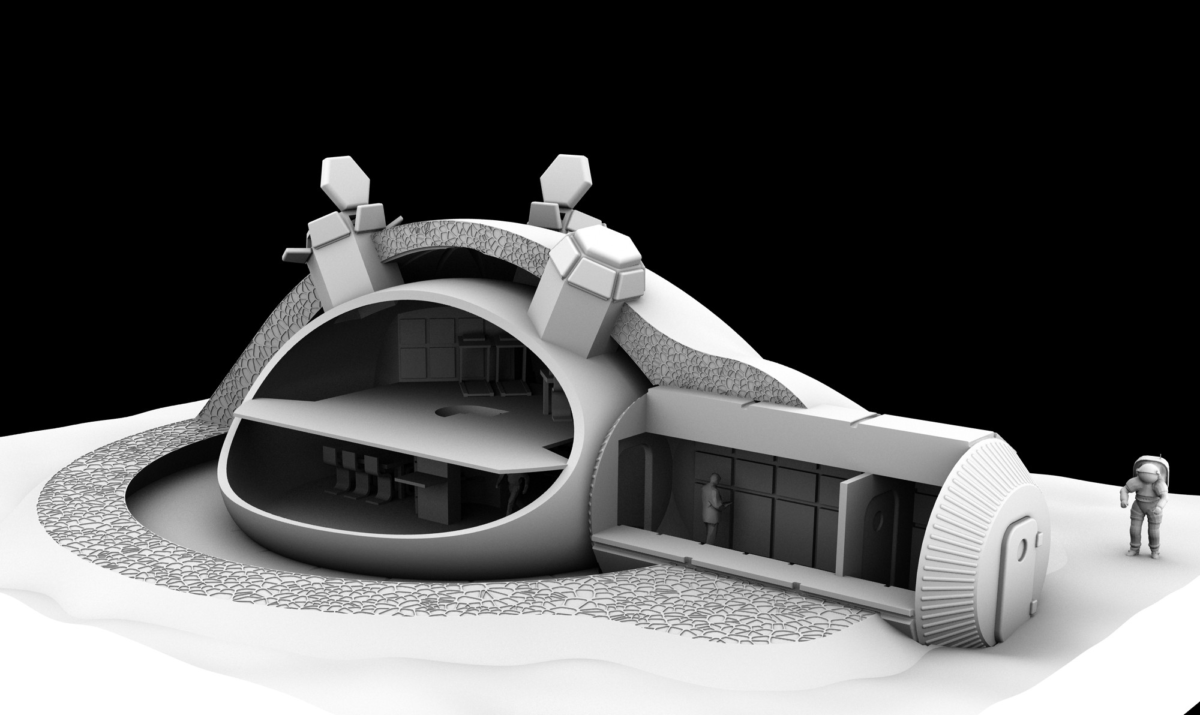
Credit: ESA/Foster + Partners
Additive manufacturing has been identified as one of the most promising applications for building structures on the Moon.
Analyze the possibilities
This new appraisal is to analyze the possibilities of using additive manufacturing for the realization of a lunar base, including:
- production of internal equipment for the crew
- the processing of food based on a limited number of basic elements
- the possibility of making spare parts needed to maintain the base
Past studies have focused on conceptual designs, often based on single elements, rather than taking into account the overall needs in terms of energy, collection and transportation of the regolith, machinery, and so on.

Moon village advocate, ESA’s chief, Johann-Dietrich Woerner.
Credit: ESA–S. Corvaja
Moonville
ESA’s chief, Johann-Dietrich Woerner, has been vocal regarding the establishment of a “Moon Village.”
“Moon Village is not a single project, nor a fixed plan with a defined time table,” explains Woerner. “It’s a vision for an open architecture and an international community initiative.”
The Moon Village is open to any and all interested parties and nations, Woerner explains. “There are no stipulations as to the form their participation might take: robotic and astronaut activities are equally sought after. You might see not only scientific and technological activities, but also activities based on exploiting resources or even tourism. It is precisely the open nature of the concept that would allow many nationalities to go to the Moon and take part while leaving behind them on Earth any differences of opinion.”
To view a ESA video regarding the Moon Village, go to:
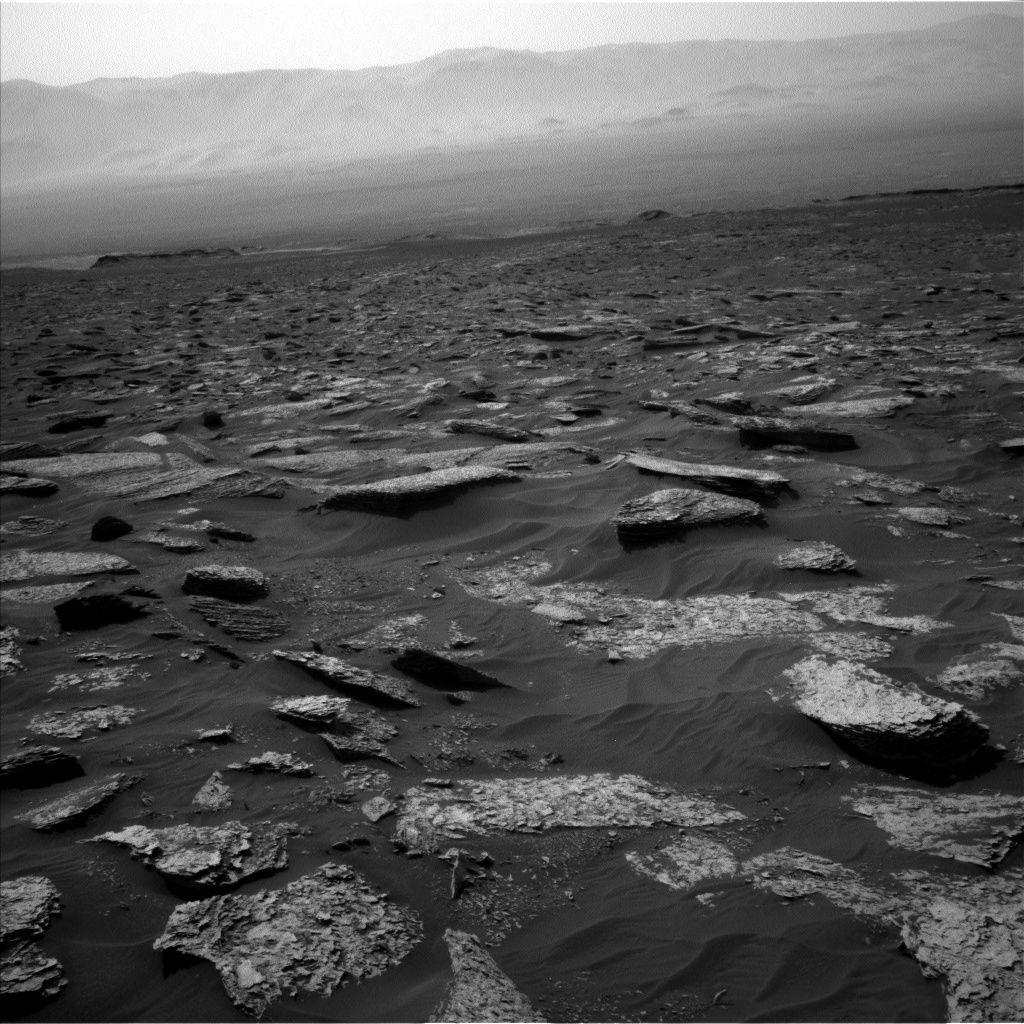
Curiosity Navcam Left B image taken on Sol 1712, May 31, 2017.
Credit: NASA/JPL-Caltech
NASA’s Curiosity Mars rover is carrying out Sol 1712 science duties.
Unfortunately the rover’s Sol 1713 activities were not uplinked due to an issue at the Deep Space Network (DSN) station, reports Lauren Edgar, a planetary geologist at the USGS in Flagstaff, Arizona.
A new plan has been scripted, focused on recovering the activities that were planned the previous day, Edgar notes. “The good news is that we’ll be in the same location for the start of the weekend plan, so we’ll be able to add some additional contact science targets at this interesting site.”
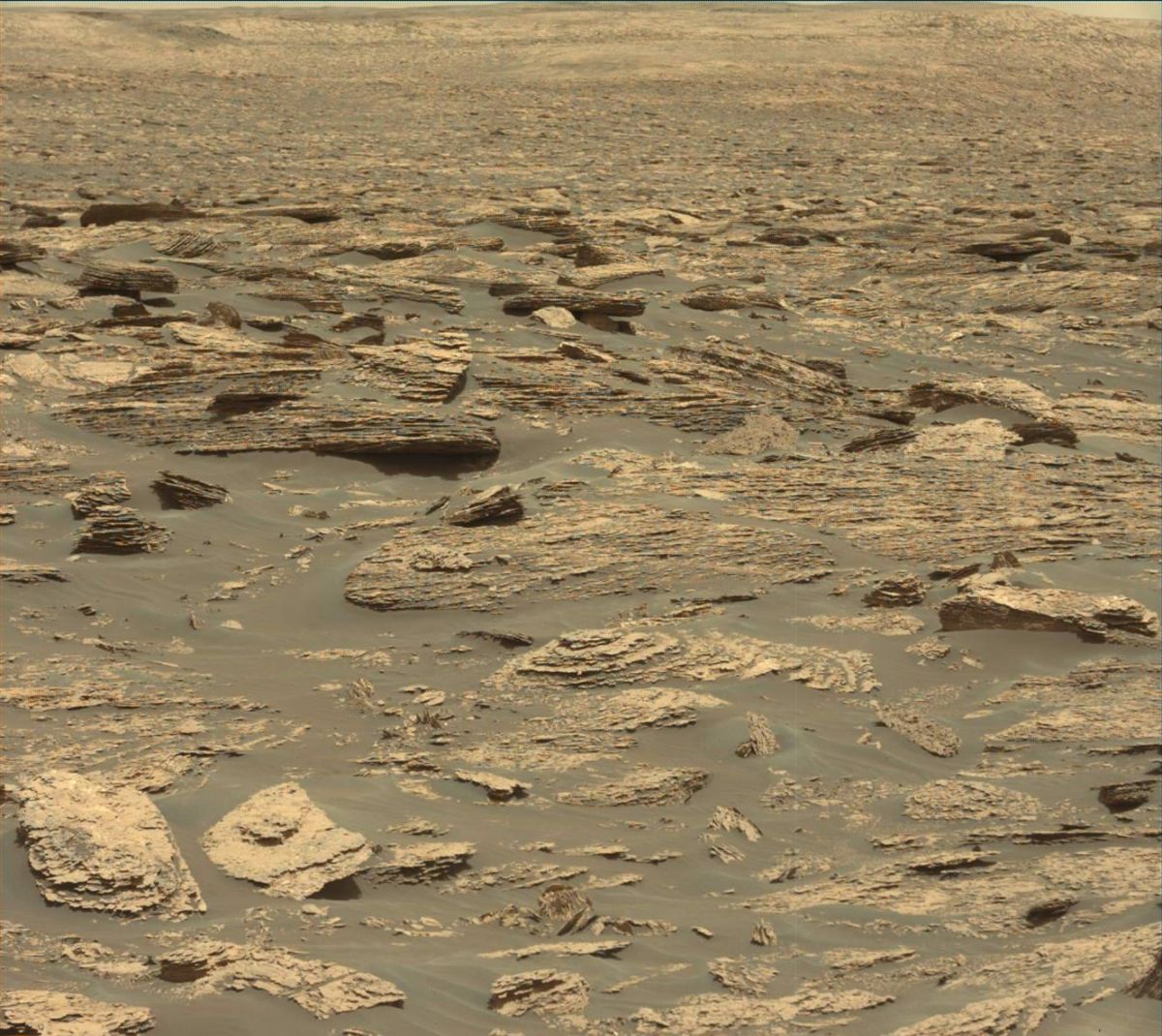
Curiosity Mastcam Left image acquired on Sol 1712, May 31, 2017.
Credit: NASA/JPL-Caltech/MSSS
Sedimentary structures
The plan kicks off with Curiosity creating Mastcam mosaics of “The Whitecap,” “Trap Rock,” and “Pond Island” to document some nearby sedimentary structures.
Then the Chemistry and Camera (ChemCam) will target “Heron Island” and “McNeil Point” to investigate variations in chemistry within the darker gray rocks in this area, Edgar adds. Also, there will be a ChemCam Remote Micro-Imager (RMI) acquisition to assess the grain size and stratification at “Sols Cliff.”
This will be followed by using the robot’s Navcam to carry out a dust devil survey to monitor atmospheric activity.
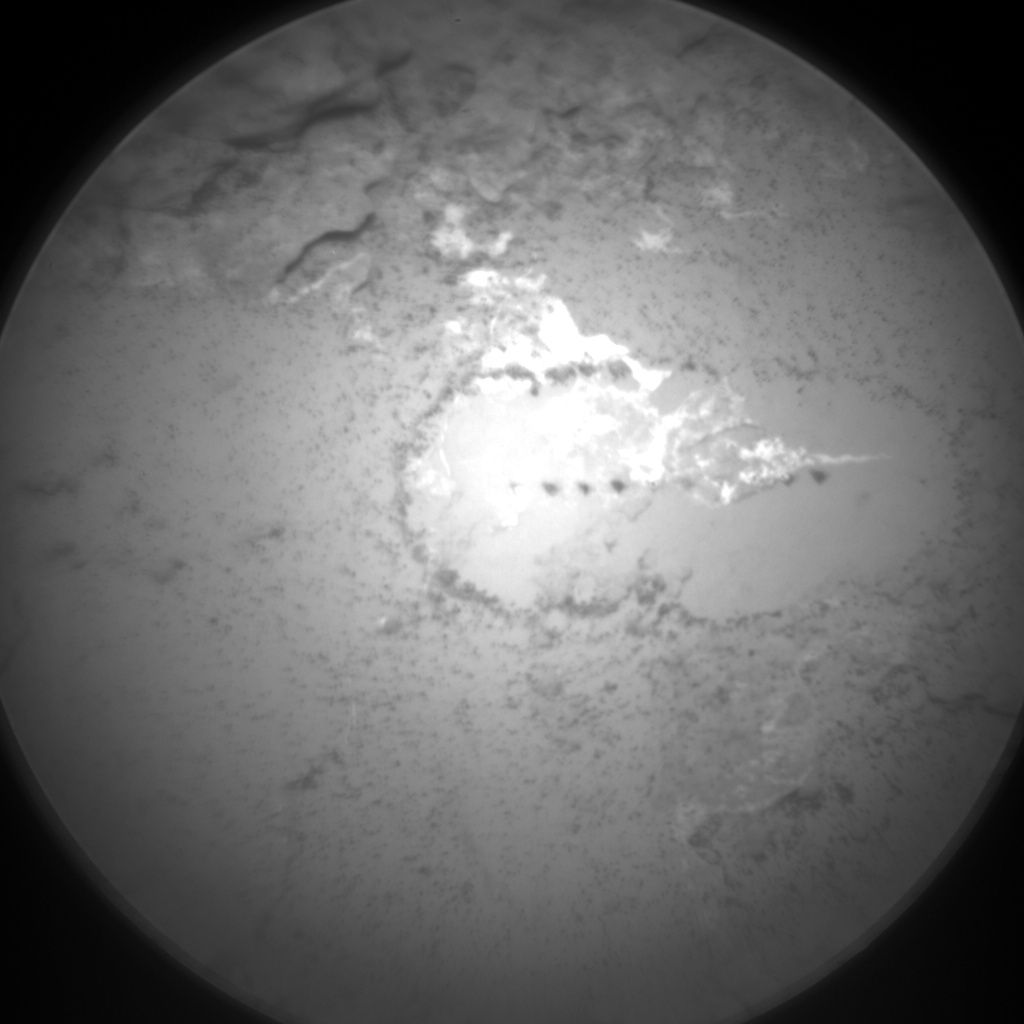
Curiosity ChemCam Remote Micro-Imager photo taken on Sol 1712, May 31, 2017.
Credit: NASA/JPL-Caltech/LANL
Juicy plan
Slightly later in the afternoon, the plan calls for acquisition of a Mastcam mosaic to document the contact science target “Prays Brook” and surrounding rocks, and a multispectral observation will be taken on “Heron Island.”
“The meat of the plan lies in the contact science,” Edgar says.
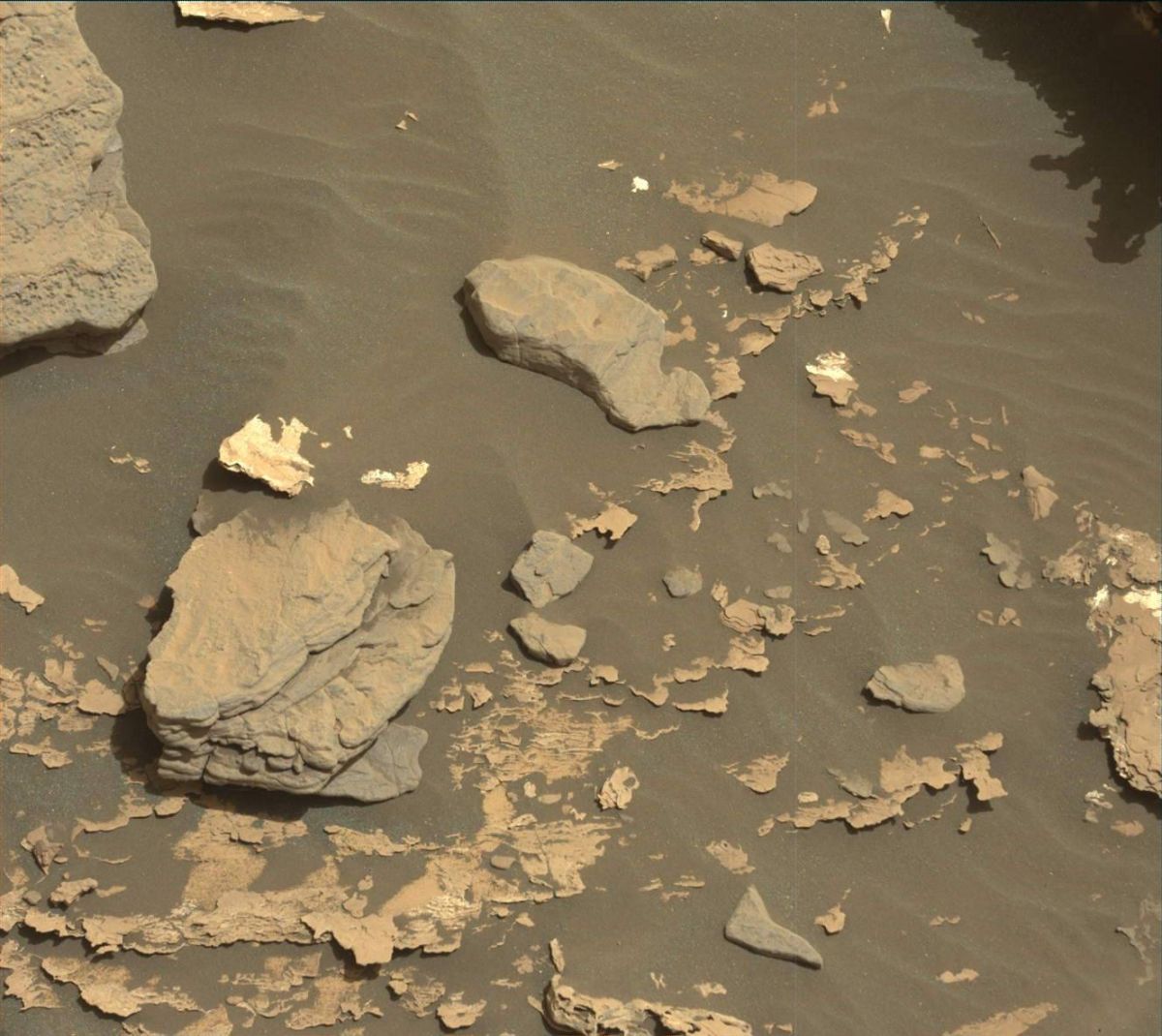
Curiosity Mastcam Left image acquired on Sol 1712, May 31, 2017.
Credit: NASA/JPL-Caltech/MSSS
Also on tap, Alpha Particle X-Ray Spectrometer (APXS) and Mars Hand Lens Imager (MAHLI) observations on “Berry Cove” and “Heron Island” to assess the darker gray rocks both with and without nodules, as well as a dog’s eye MAHLI mosaic along “Prays Brook” to characterize the contact between the dark gray rocks and the underlying typical Murray formation.
Edgar concludes that “It’s a juicy plan so I hope it all goes smoothly this time, and we’re looking forward to more contact science tomorrow before we hit the road to Vera Rubin Ridge.”
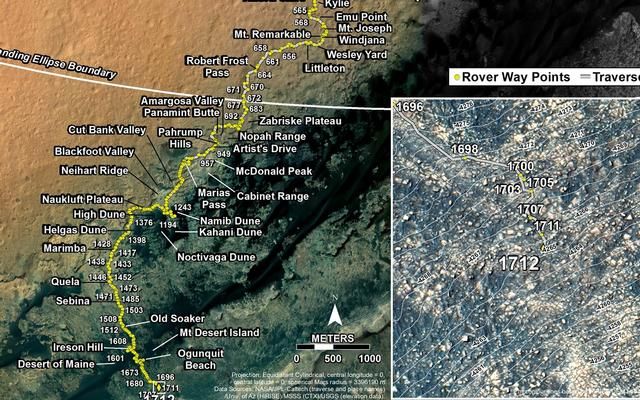
IMAGE CREDIT: NASA/JPL-CALTECH/UNIV. OF ARIZONA
Traverse map
A newly issued Curiosity’s traverse map through Sol 1712 shows the route driven by Curiosity through the 1712 Martian day, or sol, of the rover’s mission on Mars (May 31, 2017).
Numbering of the dots along the line indicate the sol number of each drive. North is up. The scale bar is 1 kilometer (~0.62 mile).
From Sol 1711 to Sol 1712, Curiosity had driven a straight line distance of about 23.26 feet (7.09 meters), bringing the rover’s total odometry for the mission to 10.28 miles (16.54 kilometers).
The base image from the map is from the High Resolution Imaging Science Experiment Camera (HiRISE) in NASA’s Mars Reconnaissance Orbiter.

