Archive for the ‘Space News’ Category
 Author:
  June 16th, 2017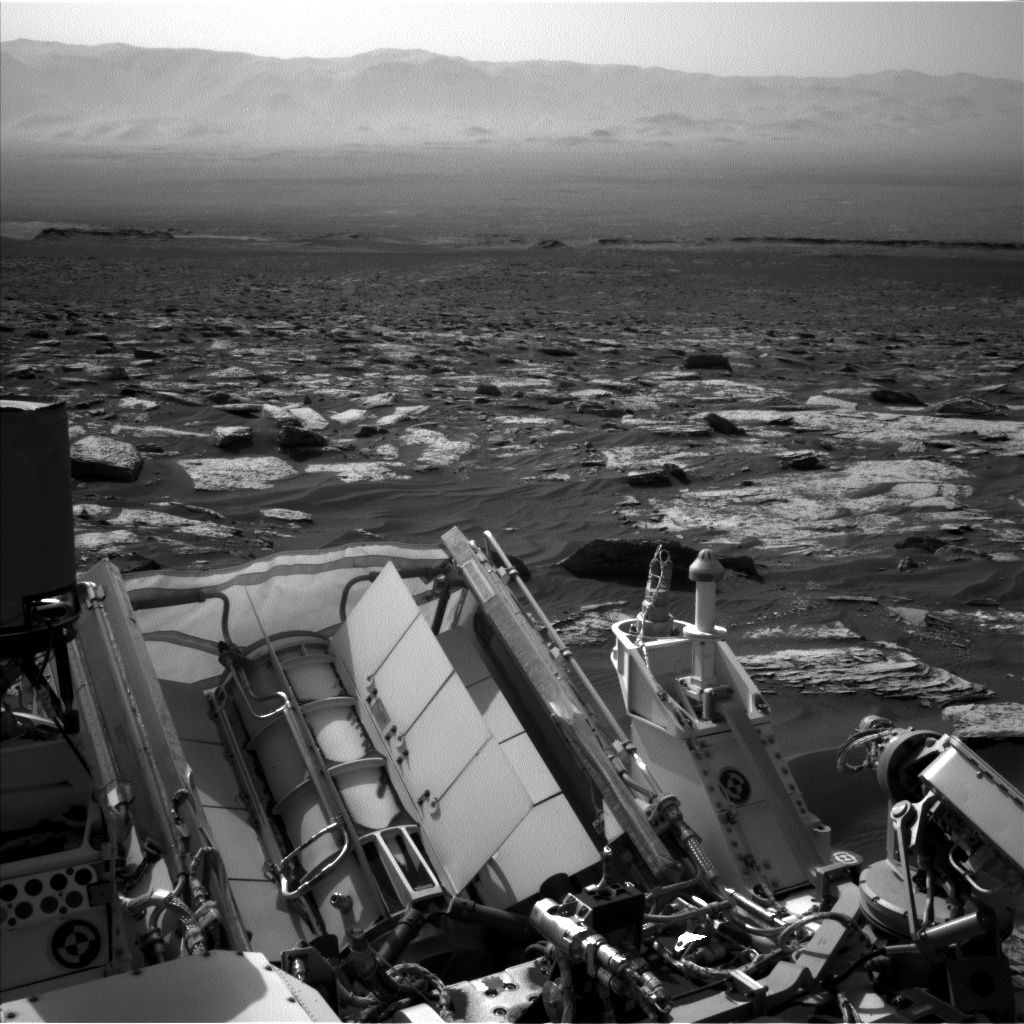
Curiosity Navcam Left B image taken on Sol 1727, June 15, 2017.
Credit: NASA/JPL-Caltech
Now in Sol 1728, NASA’s Curiosity Mars rover completed a busy day of contact science yesterday, reports Rachel Kronyak, a planetary geologist at the University of Tennessee in Knoxville. The plan now is dedicated towards remote science and driving.

“Fernald Point” as imaged by Curiosity Mars rover using Navcam Right B on Sol 1727, June 15, 2017.
Credit: NASA/JPL-Caltech
Fernald Point
A suite of Mastcam images for Curiosity to take included mosaics of “Preble Cove” and “Fernald Point”, some nice blocks of the Murray formation just in front of the rover.
Also on tap is snagging a few images of “Freeman Ridge” to follow up on a multispectral observation.
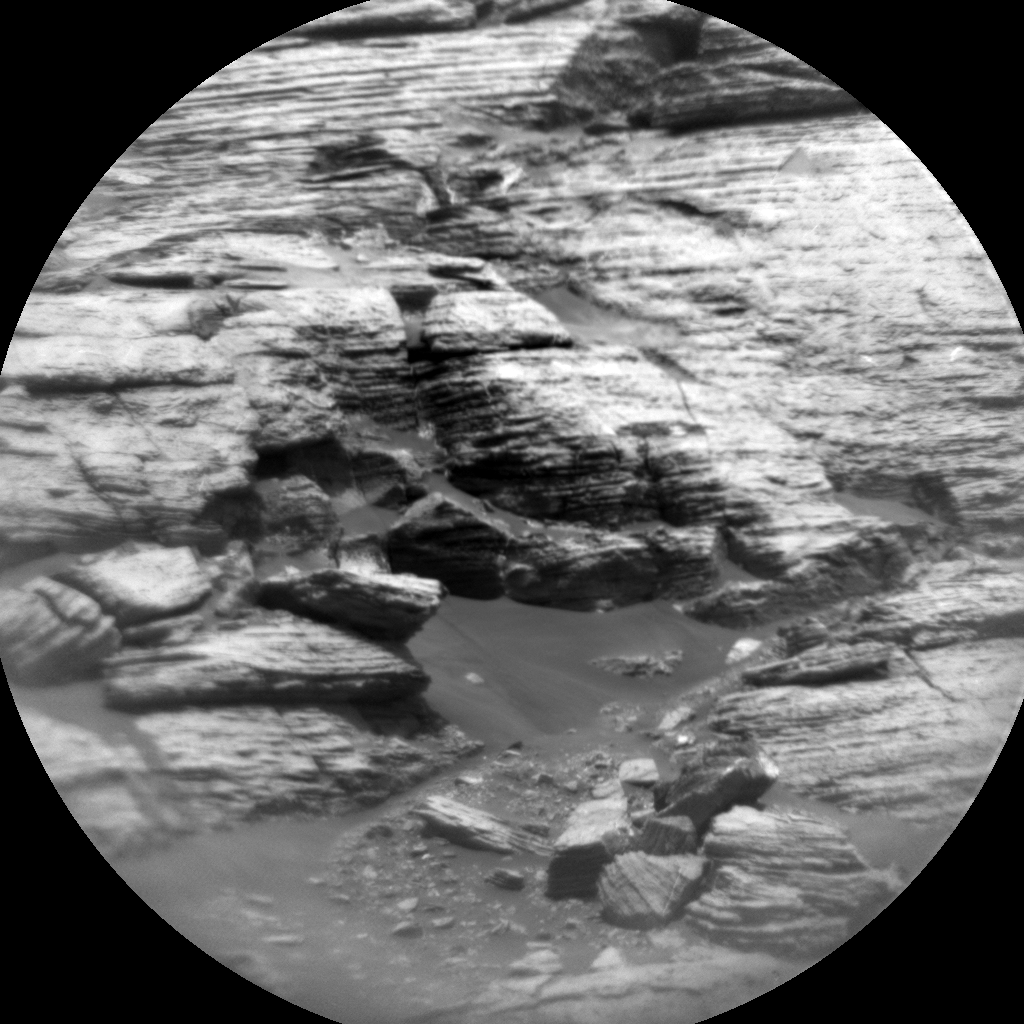
Long distance eye of ChemCam Remote Micro-Imager. Photo acquired on Sol 1727, June 15, 2017.
Credit: NASA/JPL-Caltech/LANL
Drive ahead
The plan includes standard Rover Environmental Monitoring Station (REMS) and Dynamic Albedo of Neutrons (DAN) observations.
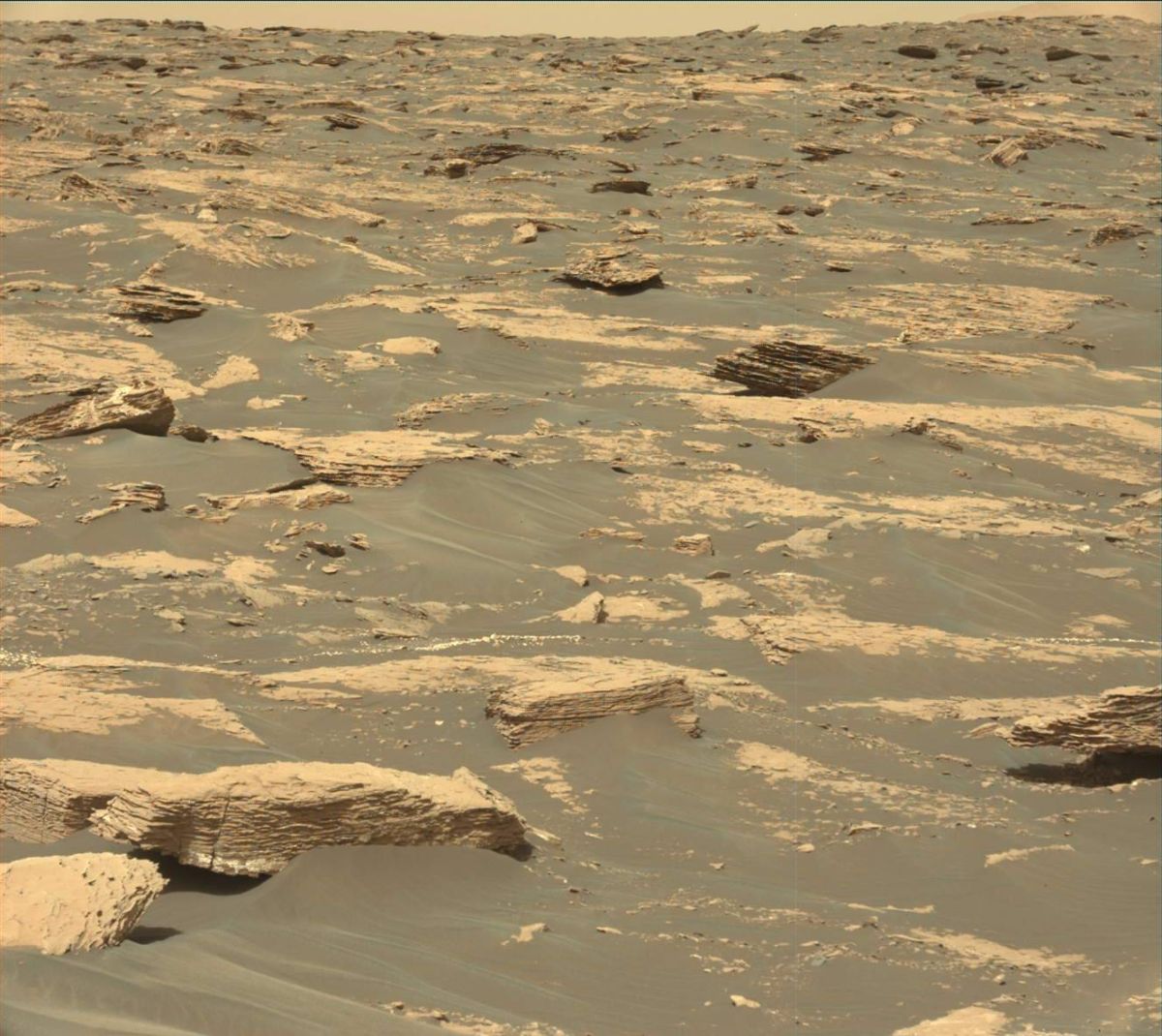
Mastcam Left image taken on Sol 1726, June 14, 2017.
Credit: NASA/JPL-Caltech/MSSS
“We’ll then continue driving towards Vera Rubin Ridge,” Kronyak adds, “and take some post-drive images to set ourselves up for an exciting weekend of more remote and contact science!”
 Posted in
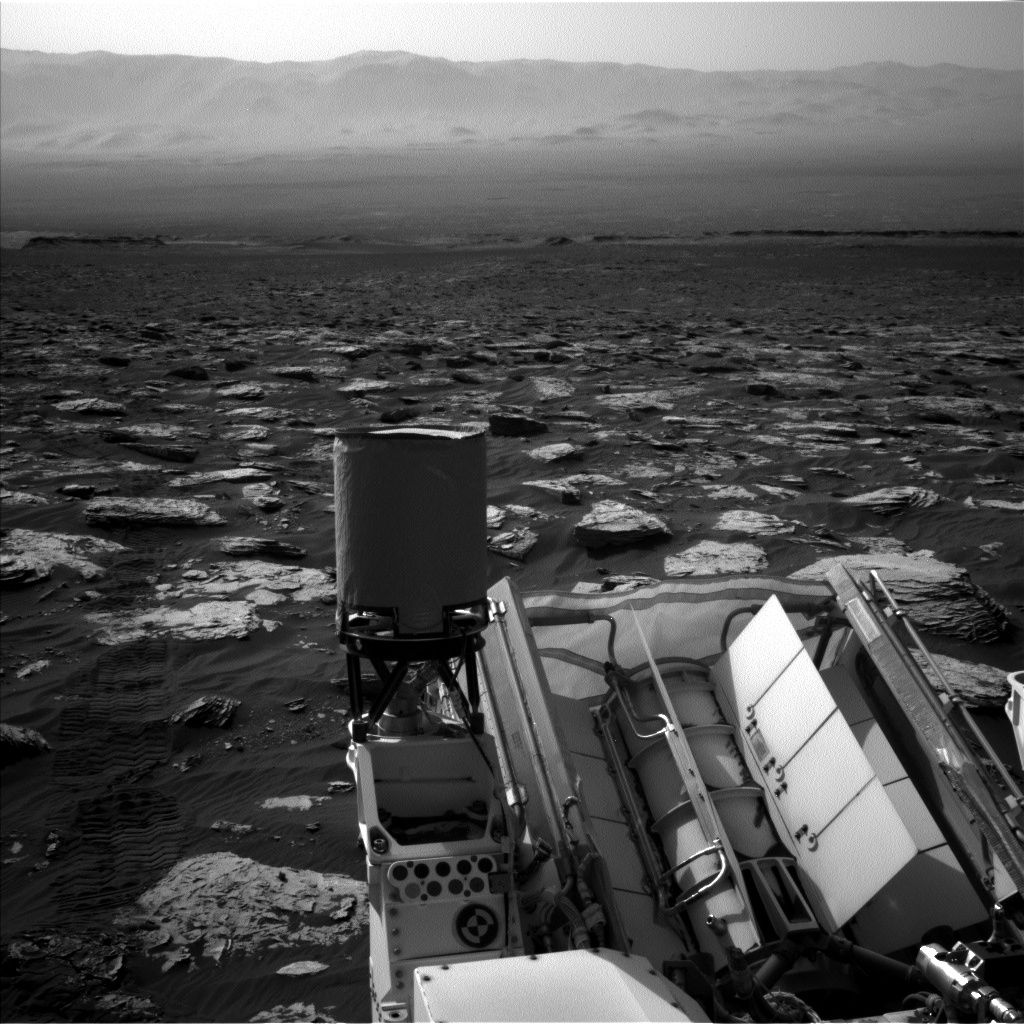
Curiosity Navcam Left B image taken on Sol 1726, June 14, 2017.
Credit: NASA/JPL-Caltech
NASA’s Curiosity Mars rover is performing Sol 1727 science duties.
“After a successful drive, our parking spot included a nice patch of Murray bedrock to allow us to perform contact science,” reports Rachel Kronyak, a planetary geologist at the University of Tennessee in Knoxville.
That contact science involves use of the rover’s Mars Hand Lens Imager (MAHLI) and its Alpha Particle X-Ray Spectrometer (APXS).
“Our target for contact science is “Jones Marsh,” a dark patch of the Murray,” Kronyak adds.
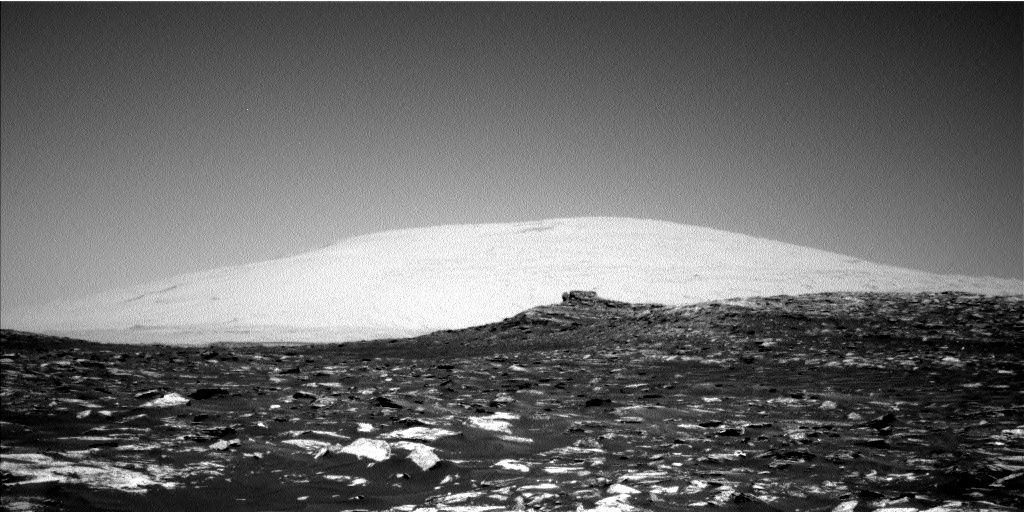
Curiosity Navcam Left B image acquired on Sol 1726, June 14, 2017.
Credit: NASA/JPL-Caltech
On the roll
The Curiosity geology group has also planned a suite of observations of Vera Rubin Ridge (VRR), which the robot is progressing towards.
Curiosity’s Mastcam is slated to perform a multispectral observation on “Freeman Ridge,” a small butte just in front of VRR that shows interesting color variations, Kronyak notes.

Laser zaps shown in this Curiosity ChemCam Remote Micro-Imager photo taken on Sol 1725, June 13, 2017.
Credit: NASA/JPL-Caltech/LANL
The rover’s Chemistry & Camera (ChemCam) is scheduled to take a mosaic of VRR using its Remote Micro-Imager (RMI) to complement the Mastcam mosaic that was taken in an earlier plan. Also, an additional Mastcam mosaic will be made of “Spaulding Mountain,” an area of exposed Murray formation blocks along the robot’s drive path.
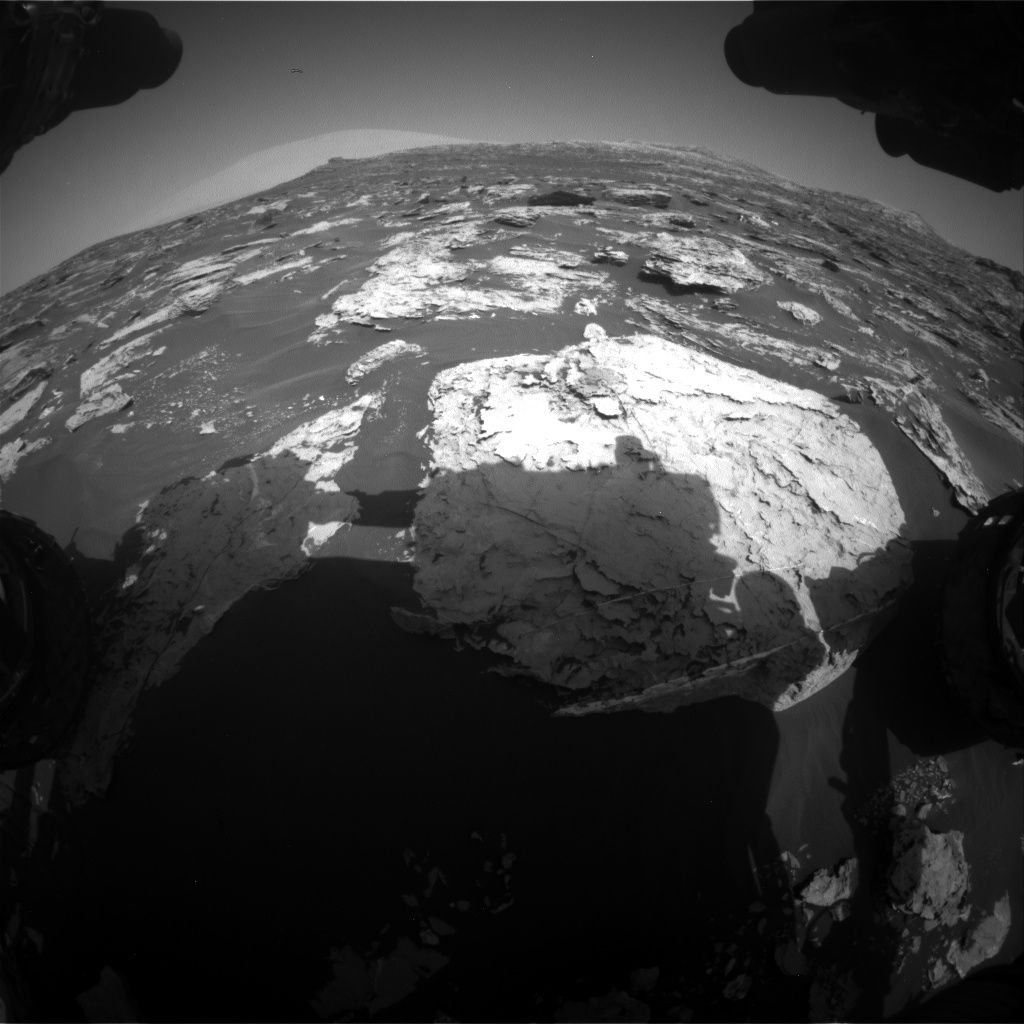
Curiosity Front Hazcam Right B image acquired on Sol 1726, June 14, 2017.
Credit: NASA/JPL-Caltech
Environmental observations
“We will then complete a drive, do some post-drive imaging of our new location, and finish up today’s plan with some environmental observations,” Kronyak explains. “These include tau, line-of-sight extinction, and sky survey measurements with Mastcam to assess how much dust is in the atmosphere.”
The plan also calls for performing standard Rover Environmental Monitoring Station (REMS) and Dynamic Albedo of Neutrons (DAN) activities.
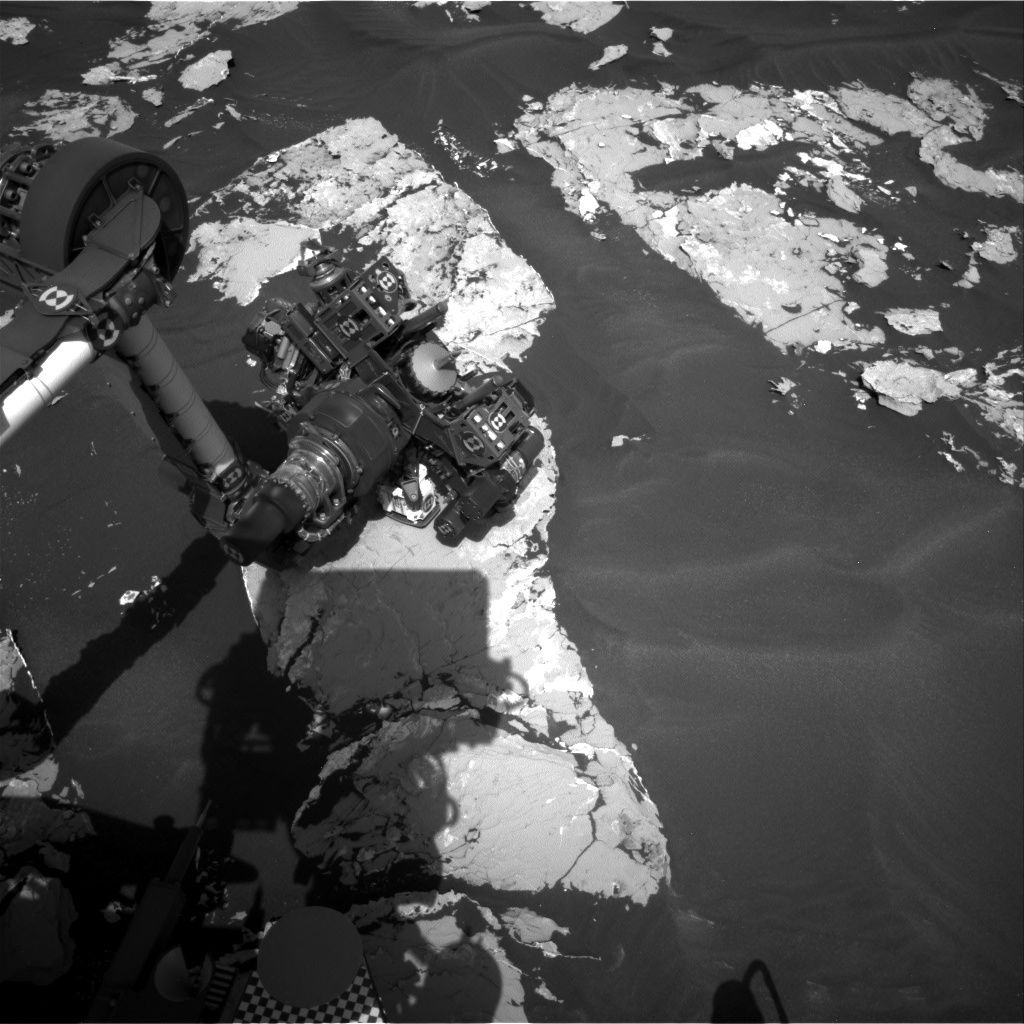
Curiosity Navcam Right B image taken on Sol 1725, June 13, 2017.
Credit: NASA/JPL-Caltech
“With VRR on the horizon and the fantastic Murray formation underneath our wheels,” Kronyak concludes, “there is never a shortage of things to image!”

Image from first refueling test as craft approached space lab in April.
Credit: CGTM
Chinese space officials report that a second refueling test has been completed.
The testing involves the country’s Tianzhou-1 and Tiangong-2 space lab.
This second refueling lasted about two days, reports China’s Xinhua news agency “and cemented technical results from the first refueling.”
As China’s first cargo spacecraft, Tianzhou-1 was lofted into Earth orbit on April 20 from the Wenchang spaceport in south China’s Hainan Province. The first auto-docking with Tiangong-2 space lab took place on April 22, followed by the two spacecraft completing their first in-orbit refueling on April 27.

Larger Chinese space station to be constructed on orbit in the 2020s.
Credit: CMSA
29 step program
As reported earlier on CCTV-Plus, during its two-month flight in space, the cargo spacecraft is slated to refuel the space lab three times.
Each refueling is scheduled to demonstrate a different aspect to China’s approach to space refueling. The refueling procedure takes 29 steps to complete and lasts for several days each time.
In-orbit refueling has been deemed as a major need-to-have by Chinese space officials to further their future space station plans – a multi-module complex to be completed in the mid-2020’s.
Go to this CCTV-Plus video clip regarding the Tianzhou-1 and Tiangong-2 space lab exercise at:
http://www.cctvplus.com/news/20170616/8053255.shtml
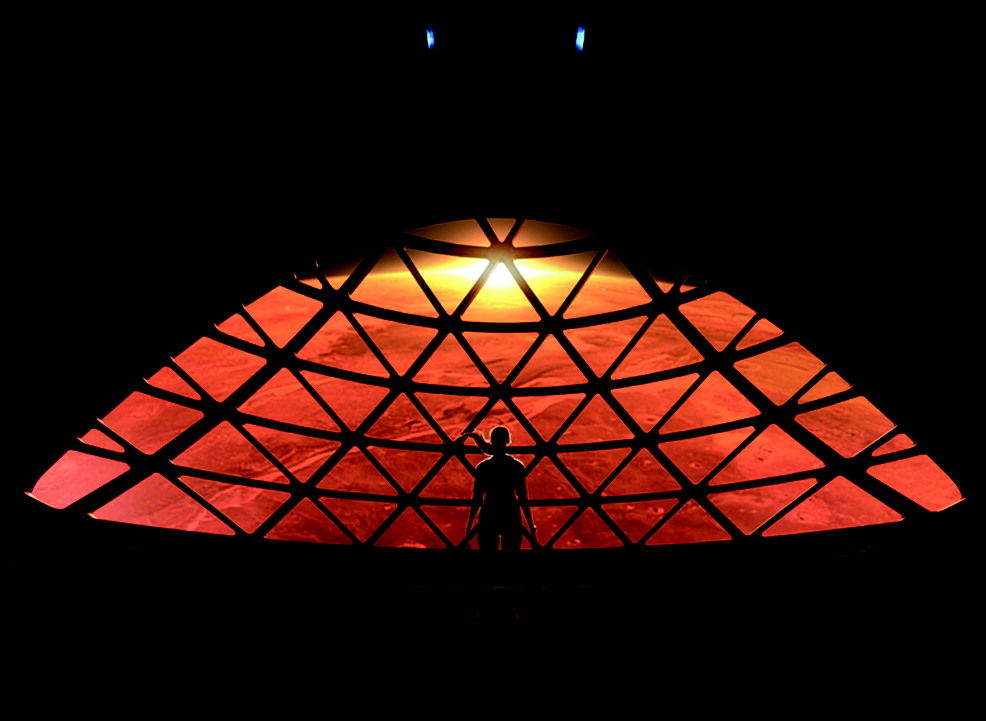
Credit: Elon Musk/SpaceX
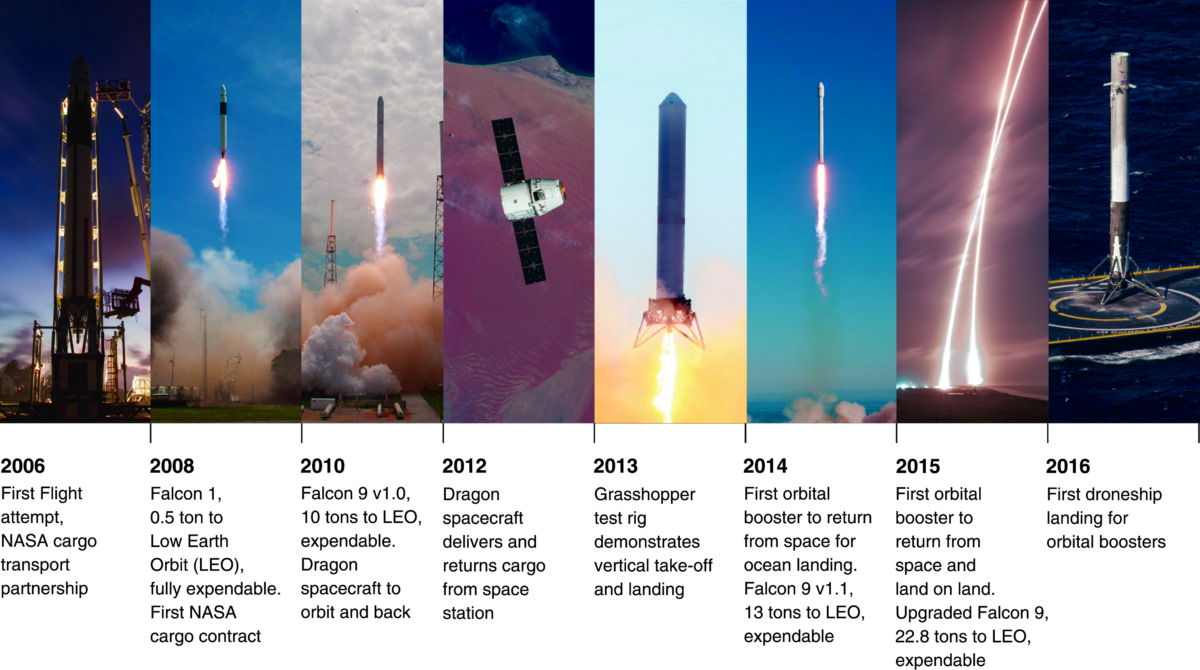
The informative New Space journal is making available an Elon Musk commentary entitled “Making Humans a Multi-Planetary Species” – a detailed overview of Musk’s plan to create a self-sustaining city on Mars.
The article draws upon Musk’s presentation at the 67th International Astronautical Congress in Guadalajara, Mexico, September 26–30, 2016.

Credit: Elon Musk/SpaceX
Major challenge
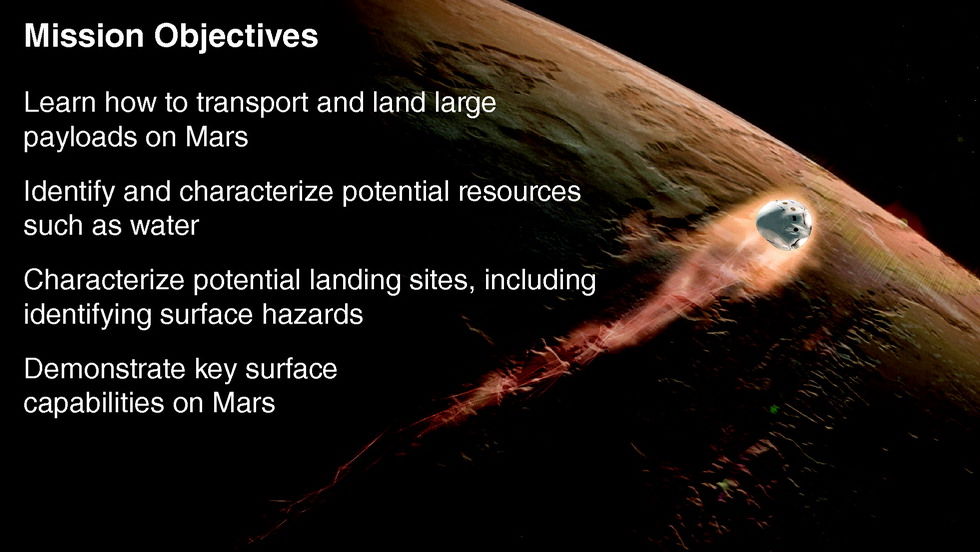
In the New Space commentary, Musk explores the planetary options for expanding to a spacefaring civilization and describes the advantages Mars offers. He provides a comprehensive review of a system architecture required for a rocket and spaceship capable of transporting people and supplies to Mars, comparing possible vehicle designs and performance features.
A major challenge facing engineers and scientists at present and discussed in the commentary is the need to improve the cost per ton of transporting materials to Mars by 5 million percent.
Credit: Elon Musk/SpaceX
Archival reference
“In my view, publishing this paper provides not only an opportunity for the spacefaring community to read the SpaceX vision in print with all the charts in context, but also serves as a valuable archival reference for future studies and planning,” explains Scott Hubbard, Editor-in-Chief of New Space.
“My goal is to make New Space the forum for publication of novel exploration concepts,” Hubbard adds, “particularly those that suggest an entrepreneurial path for humans traveling to deep space.”
Credit: Elon Musk/SpaceX
Make Mars possible
Musk notes in the commentary, “by talking about the SpaceX Mars architecture, I want to make Mars seem possible…make it seem as though it is something that we can do in our lifetime. There really is a way that anyone could go if they wanted to.”
New Space is a peer-reviewed journal from Mary Ann Liebert, Inc., publishers.
The article is available free on the New Space website until July 5, 2017.
Go to:
http://online.liebertpub.com/doi/full/10.1089/space.2017.29009.emu
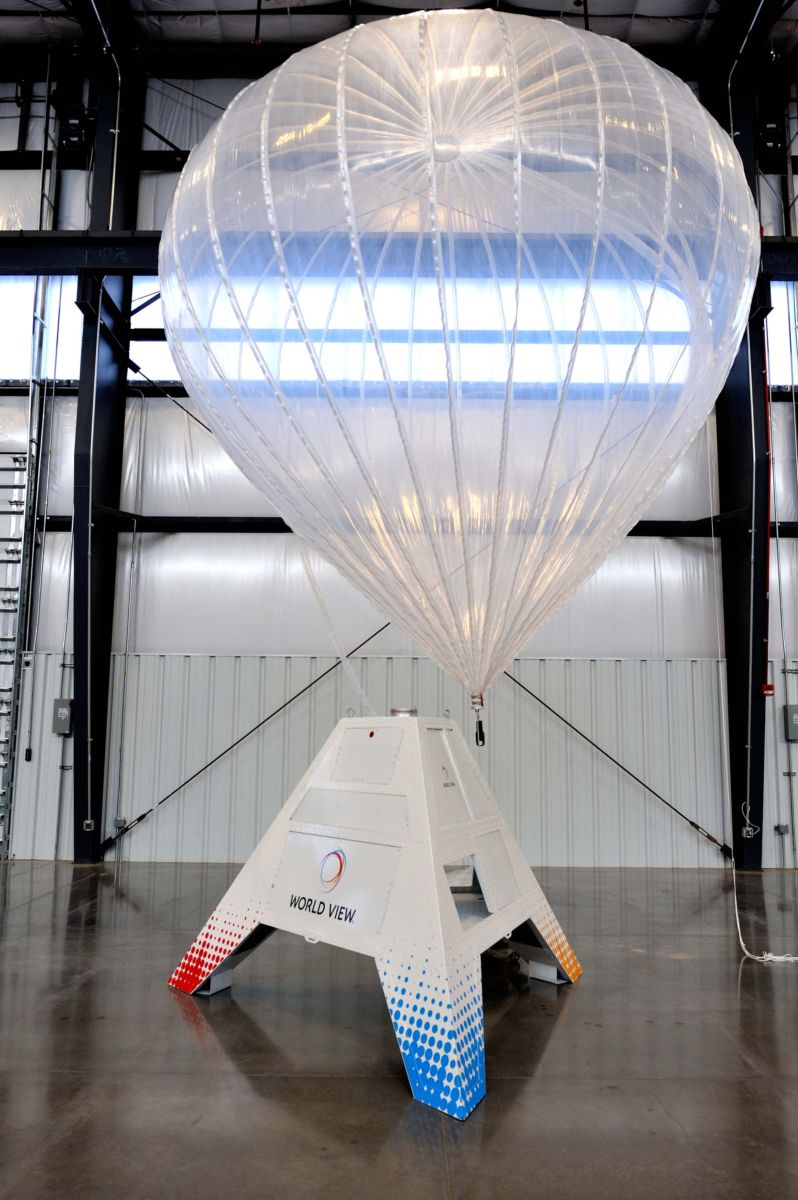
Stratollite-with-not-to-scale-balloon.
Credit: World View
World View has announced a first-ever, multi-day shake-down Stratollite demonstration mission.
Stratollite is a navigable stratospheric payload-carrying focused on unlocking a new economy in the stratosphere and a variety of important applications for things like remote sensing, disaster recovery, communications, and weather forecasting.
The shake-out flight has a finger-licking flair.
Zinger of a sandwich
This first demo flight has a commercial payload: Sending KFC’s new spicy Zinger chicken sandwich to the edge of space as a marketing stunt and experiment.
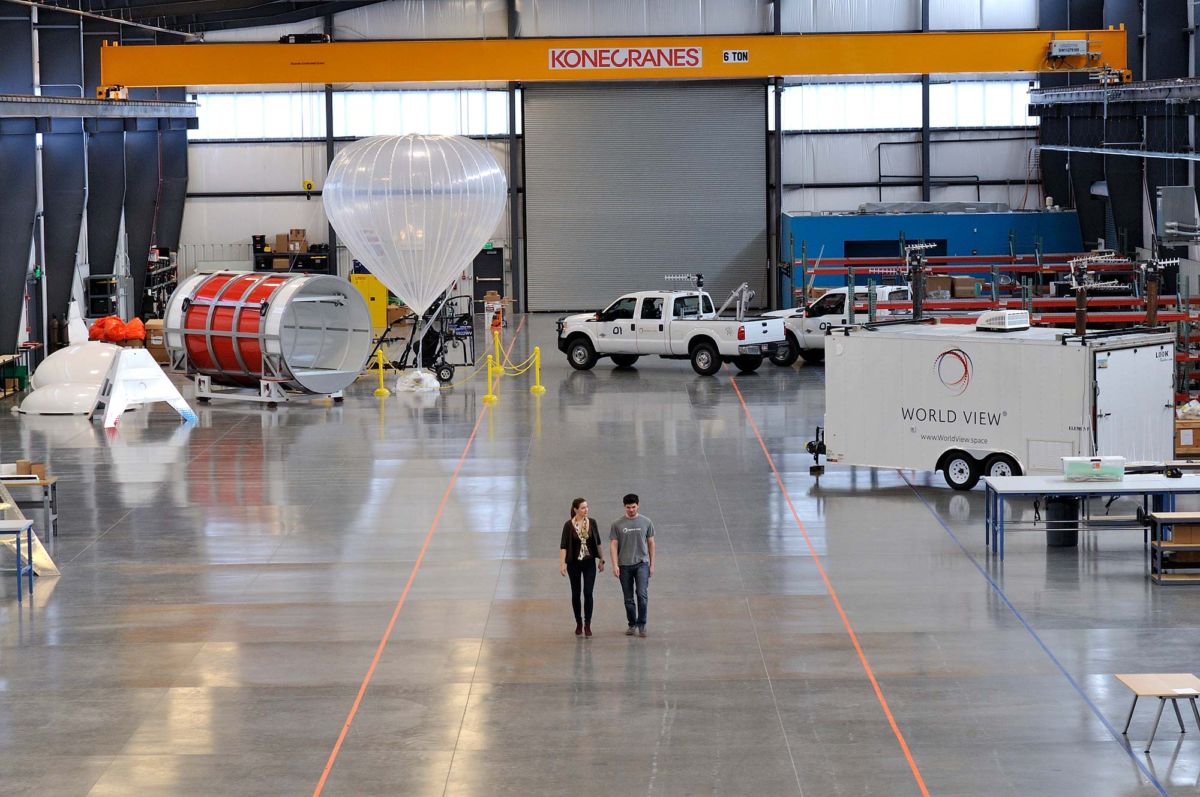
“KFC approached us a few months ago looking for a unique way to launch their new chicken sandwich in U.S. markets,” explains Jane Poynter, CEO of the Tucson, Arizona-based World View.
Credit: World View
Win, win
“We thought it was a bit ridiculous and funny at first ourselves, but quickly realized that this is what commercial space is all about – giving access to companies and organizations that typically would never dream of access to space,” Poynter adds. “Their offer would also help us simultaneously finance a significant portion of the development of our vehicle and introduce the Stratollite to a mass public audience. It’s a win, win for all parties. That’s why we truly are excited to support their incredibly fun mission as our flight and live broadcast partner.”
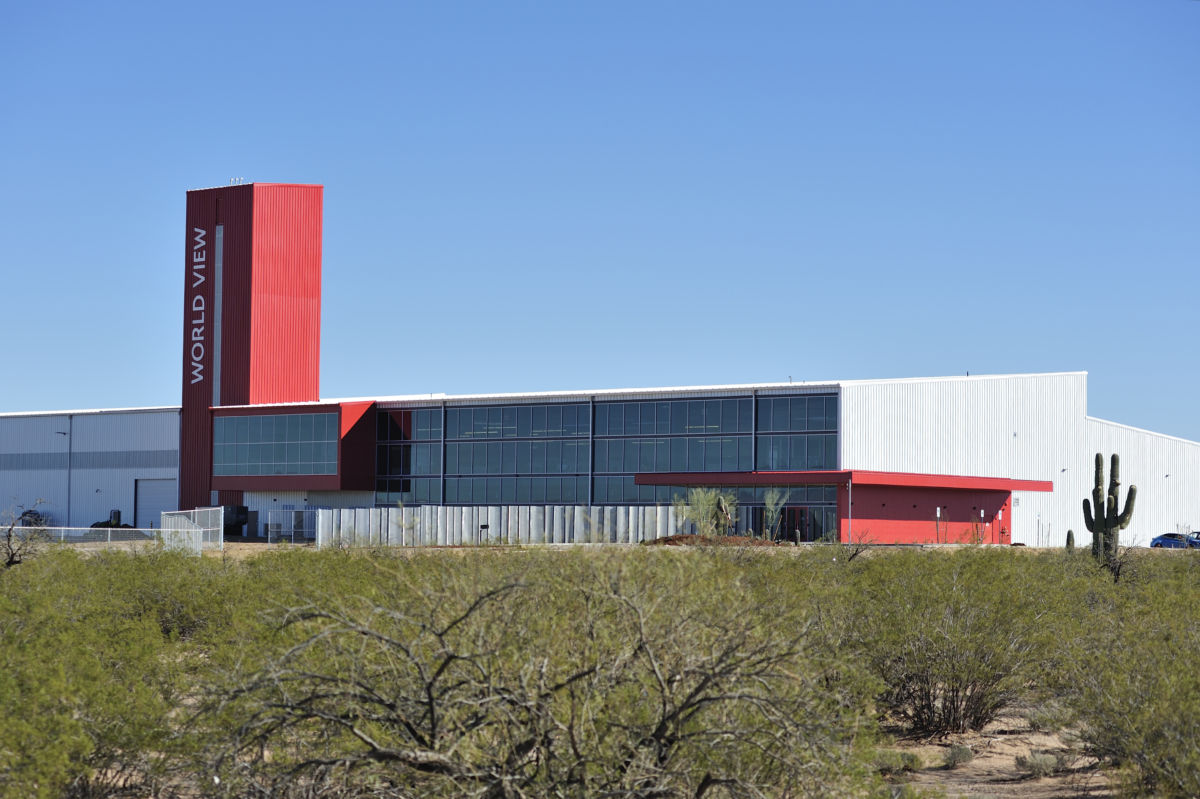
World View Headquarters in Tucson, Arizona.
Credit: World View
Launch window
The launch window for this mission opens officially on June 21st (weather will ultimately dictate the true launch day).
To keep an eye open for updates on the live broadcast, go to:
Also, go to video at:
Check out this video KFC produced about the sponsorship of this mission:

Courtesy: ISEC
Space Elevator – A History is now available via the International Space Elevator Consortium (ISEC). This fascinating history was published in April 2017 and thanks to the editorship of David Raitt.
This book brings together for the first time the record of people, places, developments and activities — in fiction and in fact — of the space elevator – a 100,000 km long, meter wide, ribbon reaching up from the Earth and into space along which robotic climbers that will travel to bring payloads into orbit at a fraction of the price of rocket launches.

Climber makes it way up lengthy space elevator.
Credit: Frank Chase/Chase Design Studios
Doable plans
The chapters in the book cover the early pioneers who dreamed and schemed about the concept initially some 120 years ago; the work of modern day scientists and engineers who have developed the concept into doable plans; how the concept has been portrayed in novels, films and art; the conferences at which interested people could present and discuss their work and ideas; the global community that has grown up around space elevators and the competition challenges that have been held; and what the future may hold.
Resources
To download a free copy, go to:
http://www.isec.org/index.php/20-thank-you/118-space-elevator-a-history-pdf-download
If you would like to purchase a printed copy of the book, click Space Elevator – A History at:
http://www.lulu.com/shop/david-raitt/space-elevators-a-history/paperback/product-23125994.html
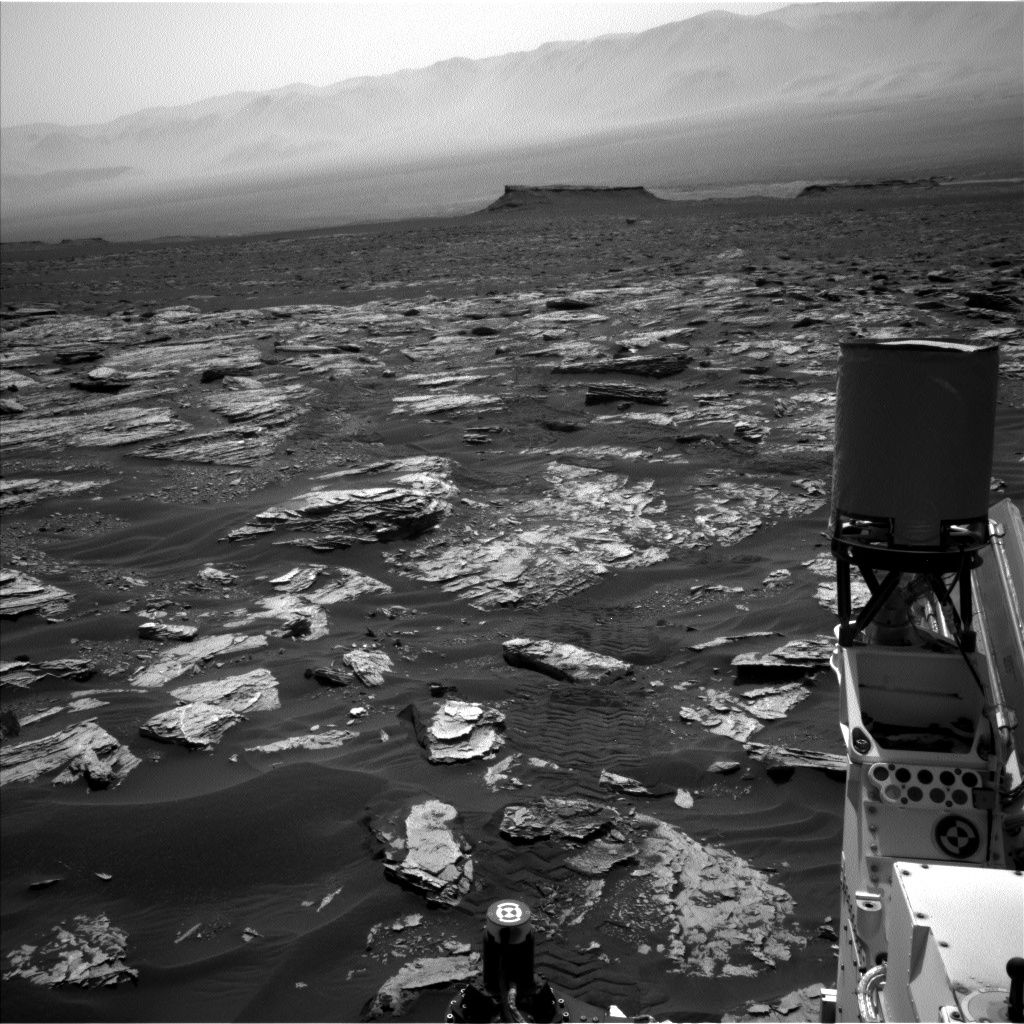
Curiosity Navcam Left B image acquired on Sol 1724, June 12, 2017.
Credit: NASA/JPL-Caltech
NASA’s Curiosity Mars rover is now in Sol 1725, busily at work after a weekend of science choirs.
In a report by Michelle Minitti, a planetary geologist at Framework in Silver Spring, Maryland, the Mars rover dedicated itself to more rare and more complex work.
Rarer, more complex
Last weekend…time and power were dedicated to a rarer and more complex, activity – analysis of a previously-drilled rock sample by the Sample Analysis at Mars (SAM) Instrument Suite, Minitti said.
“To keep up our regular cadence of contact science, the team effectively extended the weekend by a day, planning contact science in this Monday plan,” Minitti reports. “The workspace in front of the rover did not disappoint, with no shortage of options on a nice slab of Murray formation bedrock to reach out and touch!”
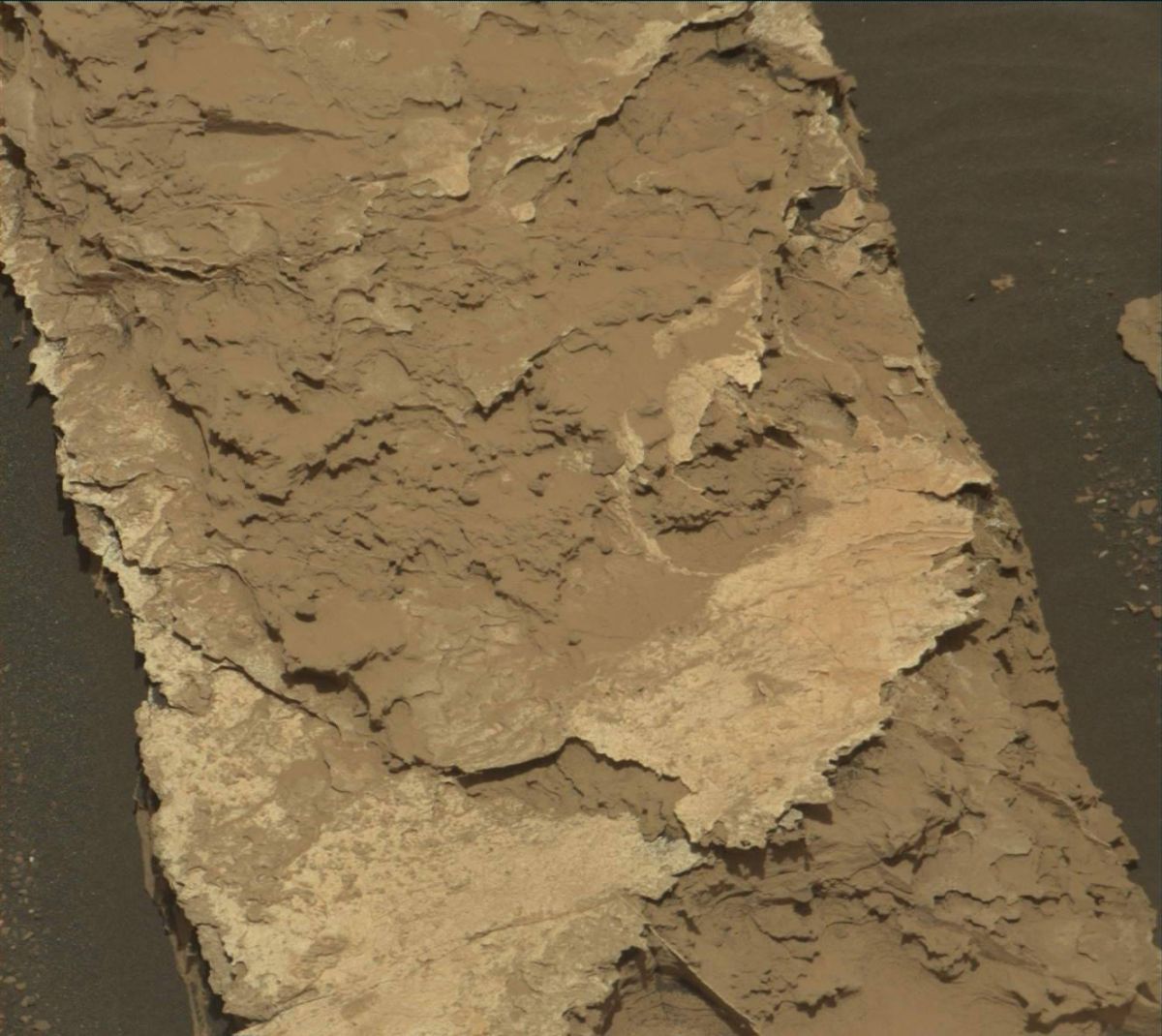
Curiosity Mastcam Right image acquired on Sol 1721, June 9 , 2017.
Credit: NASA/JPL-Caltech/MSSS
Trifecta of targets
Minitti added that the science team selected a trifecta of targets for the rover’s Mars Hand Lens Imager (MAHLI) and the robot’s Alpha Particle X-Ray Spectrometer (APXS), “each with its own unique characteristic.”
Curiosity is inspecting “Haynes Point” as well as “John Small Cov” and “Barr Hill” that’s located on flat-lying white vein material coating parts of the workspace bedrock.
Rock interrogation
The mast instruments also got in on the action, with the rover’s Chemistry and Camera (ChemCam) shooting both Haynes Point and Barr Hill, and Mastcam acquiring a multispectral observation that covered all three contact science targets, Minitti added.
“Planning such complementary observations with multiple instruments helps the team extend their understanding of the rocks interrogated by the rover,” Minitti noted.
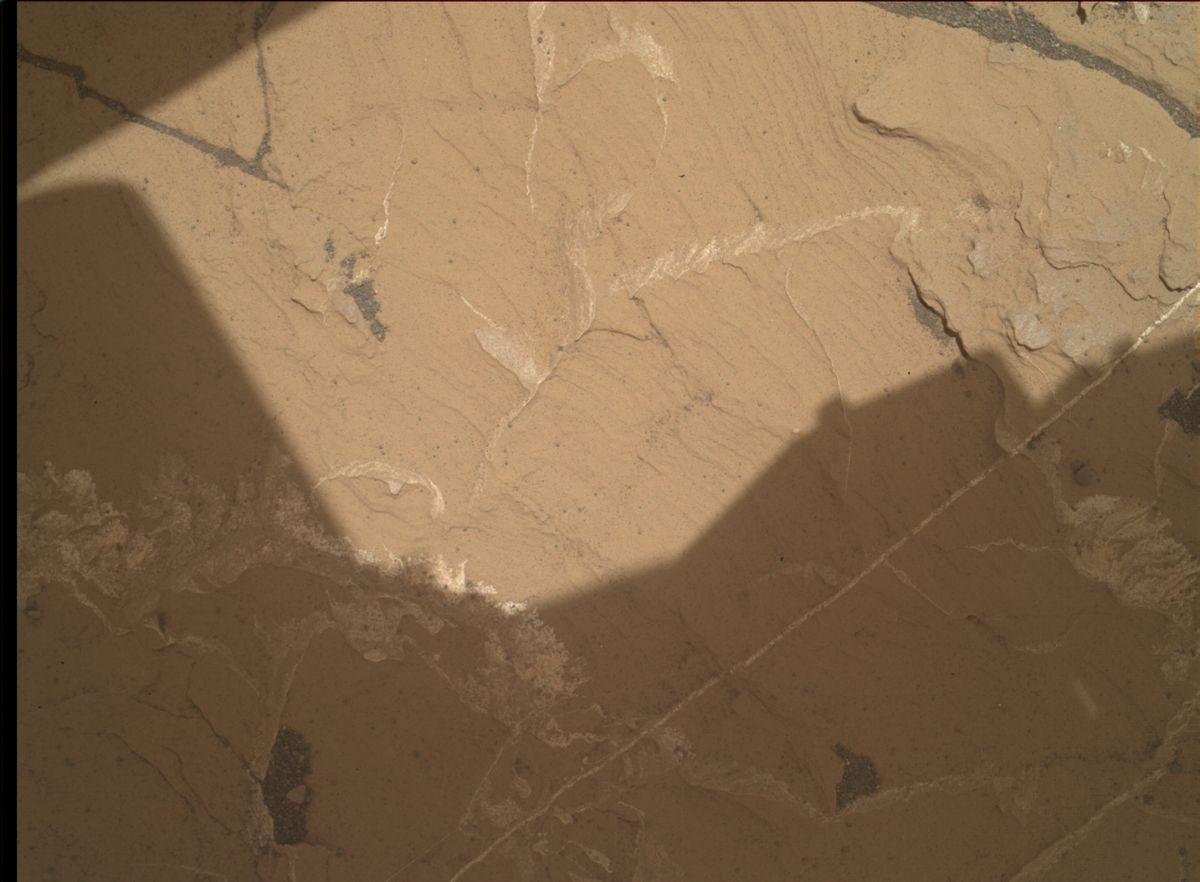
Curiosity Mars Hand Lens Imager (MAHLI) photo taken on Sol 1721, June 9, 2017.
Credit: NASA/JPL-Caltech/MSSS
Spectacular topography ahead!
After starting off Sol 1725 with an early morning suite of environmental observations, only a few additional sky observations by the robot were acquired in the rest of the plan along with regular Rover Environmental Monitoring Station (REMS) and Radiation Assessment Detector (RAD) measurements.
“Curiosity will get back on the road tomorrow, driving ever closer to the spectacular topography of the Vera Rubin Ridge,” Minitti concluded.

Apollo 15 image captures landing locale of China’s Chang’e-5 Moon lander – the Mons Rümker region in the northern part of Oceanus Procellarum.
Credit: NASA
China space officials made use of last week’s Global Space Exploration Conference (GLEX) 2017 meeting in Beijing to provide details of the country’s Moon exploration plans.
Upcoming is the late November liftoff of the Chang’e-5 Moon return sample lander, slated to plunk down within the Mons Rümker region of Oceanus Procellarum. Mons Rümker features a cluster of volcanic domes.
New details of China’s Chang’e-4 far side lander to be launched in 2018 were also provided.

Credit: IAF
Scientific response
Reactions of U.S. scientists regarding China’s pinpointing of a Chang’e-5 lunar site:
“It’s a great target for a sample return mission as we have no Apollo samples from mare less than roughly 3.0 billion years old. I believe the youngest are from the Apollo 12 site,” said Mark Robinson, a leading lunar expert at Arizona State University in Tempe. He is also the principal investigator of the Lunar Reconnaissance Orbiter Camera system now circling the Moon.
“Hopefully, those young mare are their target,” Robinson told Inside Outer Space. Returning samples from that area would be “a super important science return,” he said, “important for understanding the lunar volcanism over time and calibrating model ages from crater counts for the Moon, Mercury Mars, Venus etc…”
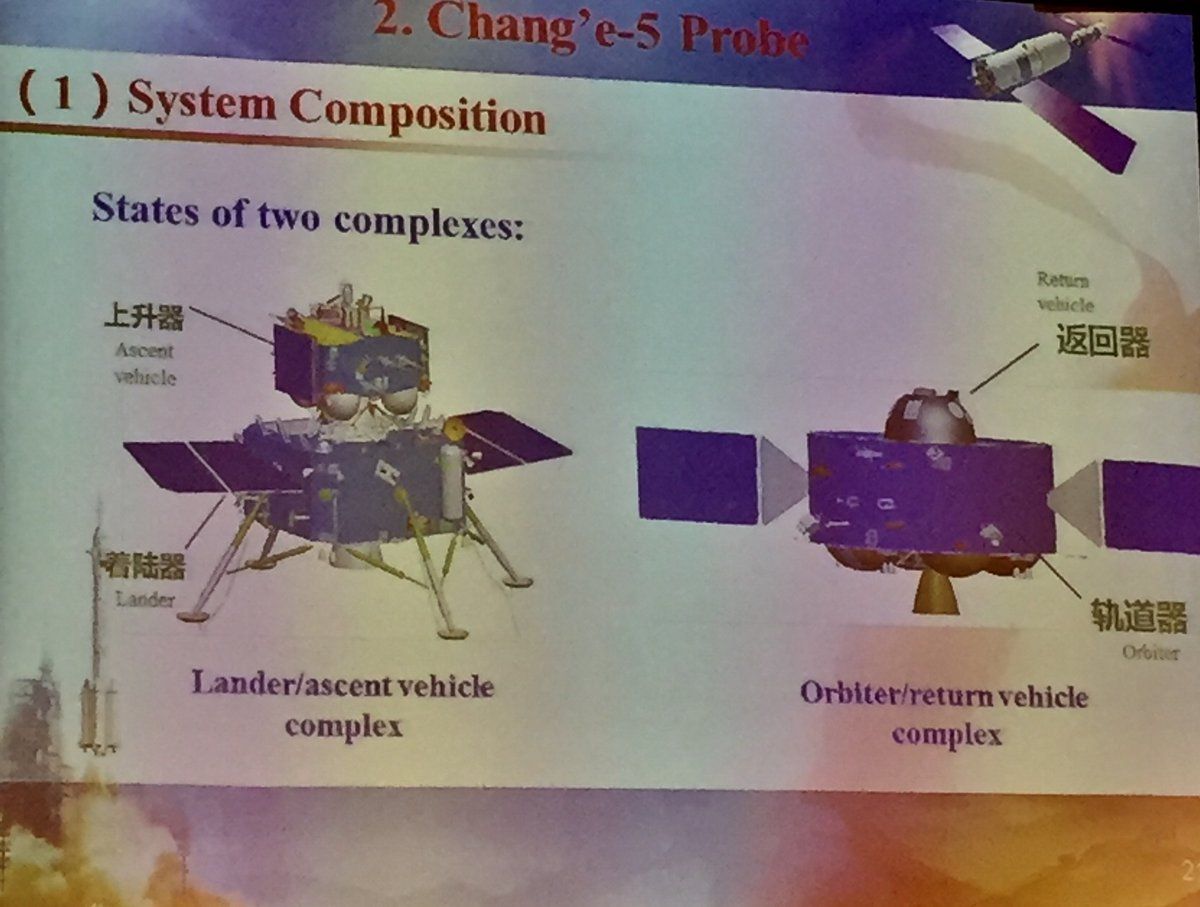
Screen image taken during briefing on China’s Chang’e-5 Moon sample mission.
Credit: Chris Welch
Global community
According to James Head of Brown University’s Department of Earth, Environmental and Planetary Sciences in Providence, Rhode Island: “The distinctive aspects of the Rümker Hills is that it is characterized by mare domes, thought to be the small shield volcanoes that are likely to be the source vents of older lavas, in contrast to the surface lava flows sampled by the Apollo missions and the Soviet Union’s Luna 16 and 24.”
Head advised that the samples to be returned by Chang’e 5 will be of “very significant interest” to the global scientific community. They would serve to provide new perspectives and new insights into the nature of lunar volcanism and the history of the Moon, he said.
Political issue
But if China is successful in hauling back the goods from Mons Rümker there is a political catch-22 for American scientists.
“Mons Rümker is well chosen in terms of understanding the thermal history of the Moon. Young lunar volcanism is important to study so yes…it is exciting but disappointing that the U.S. lunar community can’t directly participate in the study of the returned samples,” said Moon researcher Clive Neal at the University of Notre Dame in Indiana.
NASA won’t provide funds for U.S. scientists to collaborate directly with Chinese scientists because it is illegal so to do, Neal said. “If we want to work on the samples we have to travel to China…they won’t be shipped out for study.”
Logical fashion
In Neal’s view, China is building space capability in a logical fashion. “I am confident they will have humans on the Moon in the next decade.
“Unlike the U.S.,” Neal added, “China has a long term plan to send humans beyond low Earth orbit with a series of capability milestones, not timelines. They are serious about long term human space travel.”
The GLEX 2017 also included updates on the Chang’e-4 mission to the Moon’s far side.

The lunar far side as imaged by NASA’s Lunar Reconnaissance Orbiter using its LROC Wide Angle Camera.
Credit: NASA/Goddard/Arizona State University
Far side science
According to Liu Jizhong, director of Lunar Exploration and Space Engineering Center of Chinese Society of Astronautics, “we will begin in the third quarter of this year building the protocol of the probe proper and its flight mission is scheduled for next year.”
Germany, the Netherlands, Sweden and Saudi Arabia, Liu said, will send scientific detectors to the Moon’s far side courtesy of China’s Chang’e-4.
The Chang’e-4 lunar probe was designed to be a platform for international cooperation.
“There are more than 20 cooperation suggestions from over ten countries. And after comprehensive studies and selections, we confirmed four countries Germany, the Netherlands, Sweden and Saudi Arabia to participate in the task,” Liu said at GLEX 2017.
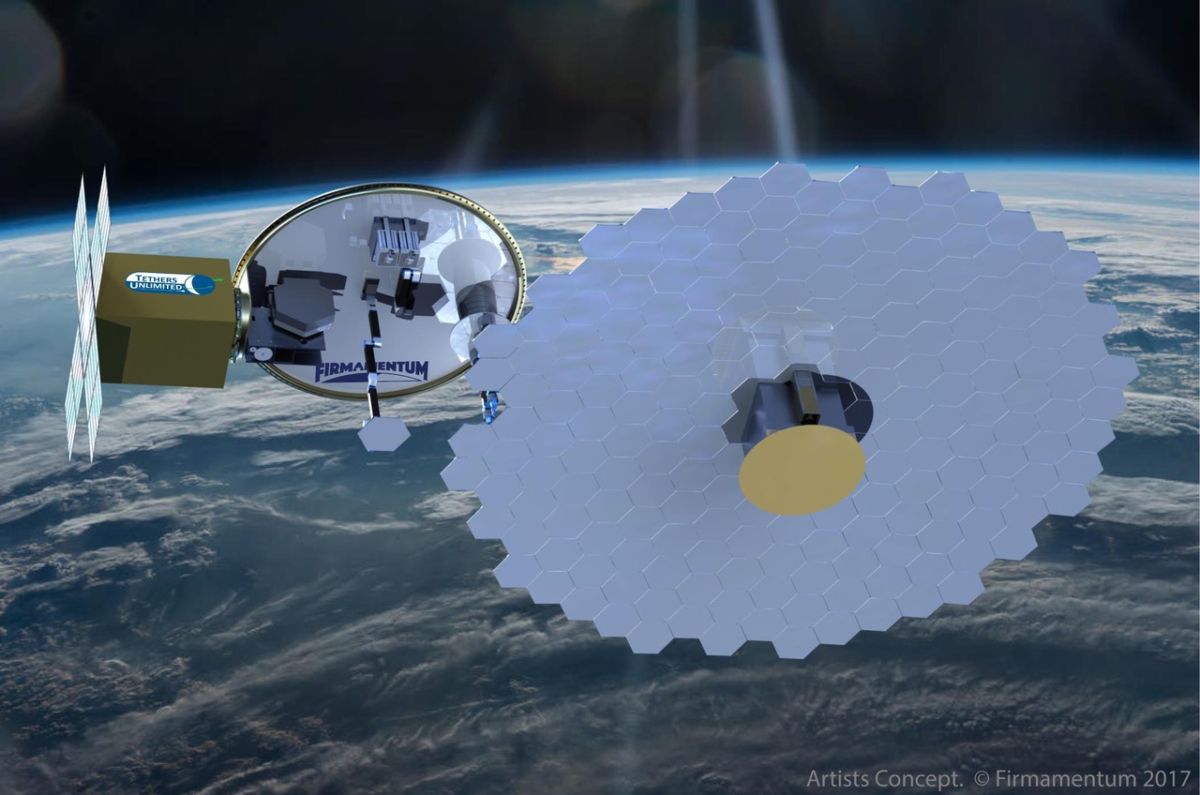
OrbWeaver™ payload.
Credit: TUI/Firmamentum
On-the-spot construction of spacecraft high above Earth is getting a boost thanks to “OrbWeaver” – an in-space manufacturing and robotic assembly concept.
Firmamentum of Bothell, Washington announced today it has sealed a deal with the Defense Advanced Research Projects Agency (DARPA) on the idea to fabricate a small satellite able to provide high-bandwidth satellite communications services to mobile receivers on the ground.
Secondary payload
Under the OrbWeaver Direct-to-Phase-II Small Business Innovation Research effort, Firmamentum aims to combine its technologies for in-space recycling, in-space manufacturing, and robotic assembly to create a system that could be launched as a secondary payload on an Evolved Expendable Launch Vehicle.
This system would recycle a structural element of that rocket — known as an EELV Secondary Payload Adapter ring — by converting the ring’s aluminum material into a very large, high-precision antenna reflector.
Unique capability
The OrbWeaver™ payload would then attach this large antenna to an array of radios launched with the OrbWeaver payload to create a small satellite capable of delivering up to 12 gigabits per second of data to K-band very small aperture terminals on the ground.
The OrbWeaver effort will combine several of the firm’s technologies “into a unique capability for rapidly and affordably fielding high-performance communications satellites,” said Rob Hoyt, Firmamentum’s CEO. “In the near term, this technology could enable the Defense Department to address critical needs,” he said, specifically for satellite communications resiliency.

Credit: TUI
In-space ecosystem
Firmamentum is a division of Tethers Unlimited, Inc. established to develop an “ecosystem” of in-space manufacturing and construction services to build the infrastructure needed for a robust in-space economy.
The innovative company is now preparing flight demonstrations of in-space recycling as well as in-space manufacturing of satellite components.
For more information on this and other technologies in the TUI/Firmamentum toolkit, go to:
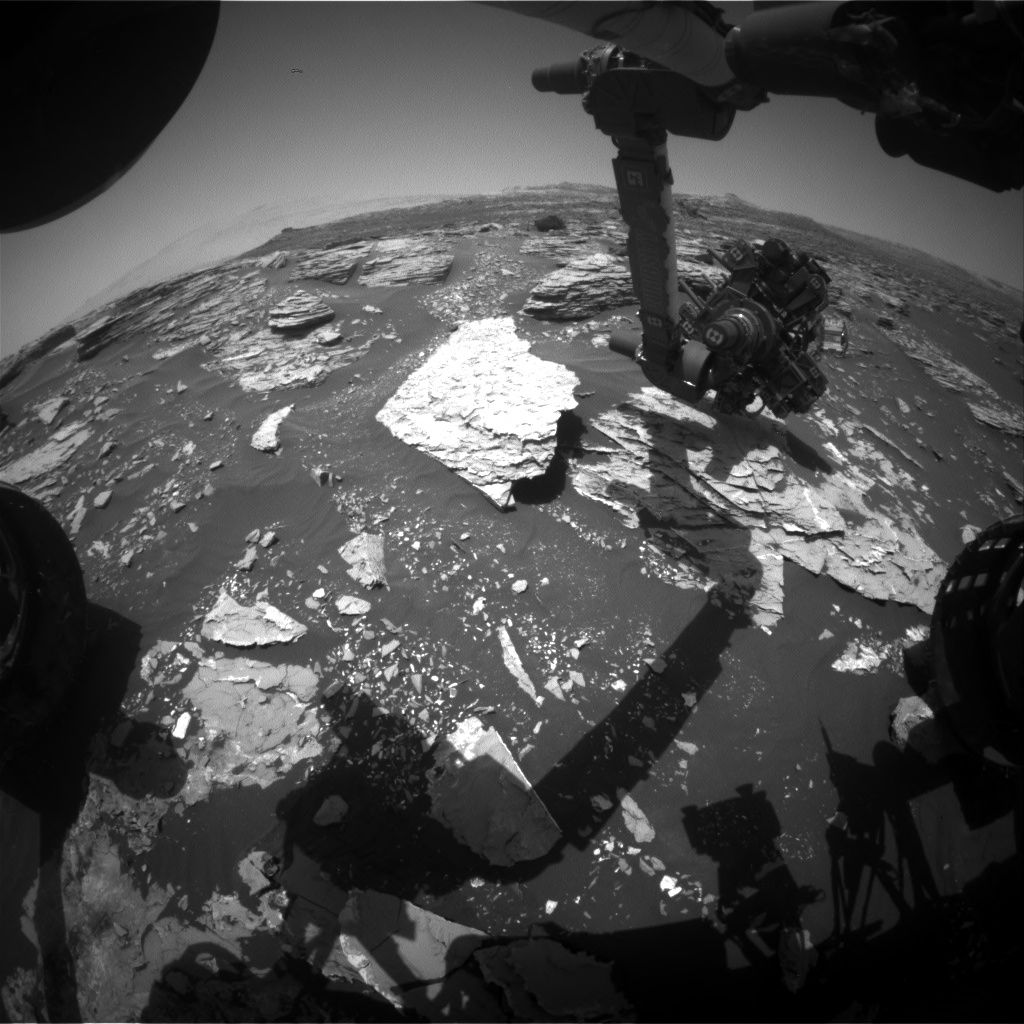
Curiosity Front Hazcam Right B image taken on Sol 1721, June 9, 2017.
Credit: NASA/JPL-Caltech
NASA’s Curiosity Mars rover is now in Sol 1722, carrying out a three sol duration plan to keep the robot busy over the weekend.
Reports Scott Guzewich, an atmospheric scientist at NASA’s Goddard Space Flight Center in Greenbelt, Maryland, almost the entirety of the first two sols (1722 and 1723) are dedicated to a Sample Analysis at Mars (SAM) Instrument Suite analysis of a “doggy bagged” sample from the Quela drill hole collected back in September 2016 (Sol 1464).
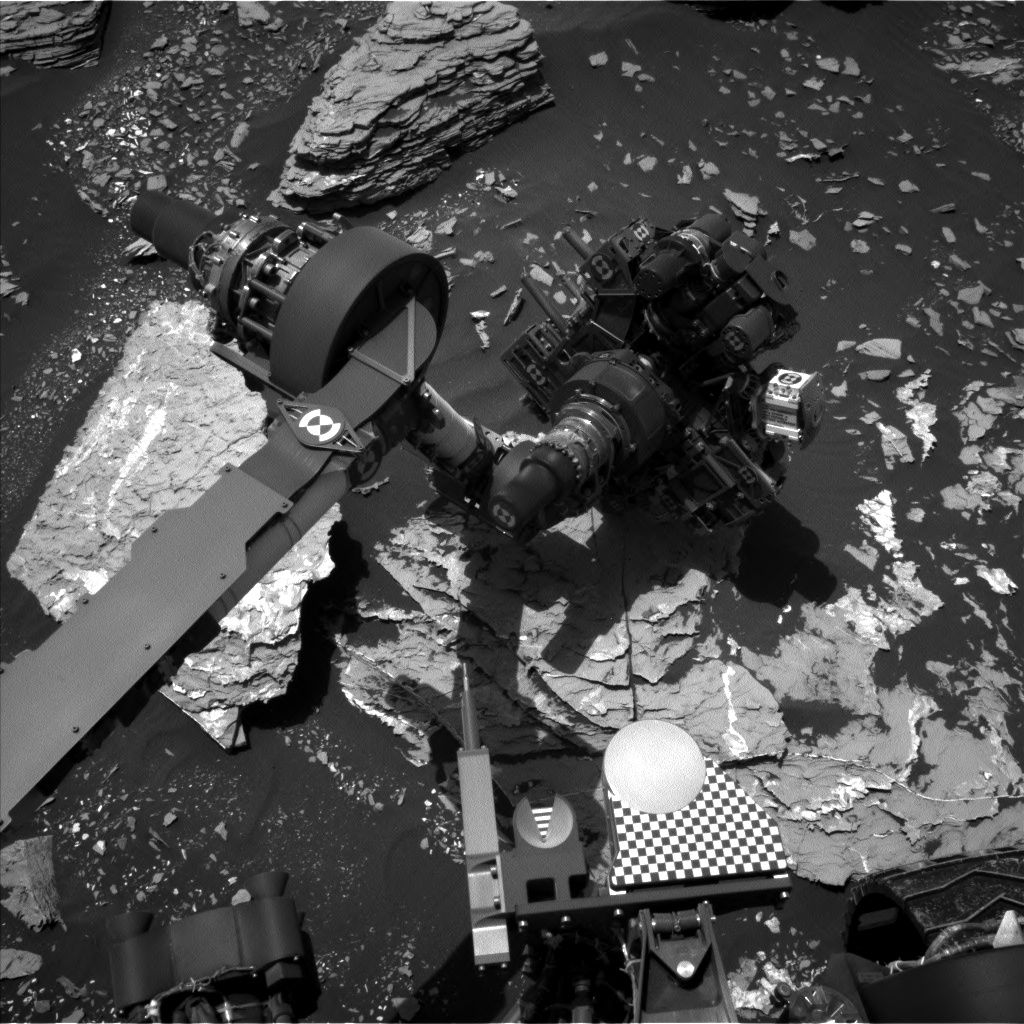
Curiosity Navcam Left B Sol 1721 June 9, 2017
Credit: NASA/JPL-Caltech
“Several times in the mission we’ve saved samples from our drill locations to analyze later,” Guzewich adds. “This SAM analysis will help us determine the precise chemical composition of the Martian bedrock and therefore improve our understanding of ancient Martian history.”
Bedrock, atmospheric observations
On the third sol of the rover plan (1724), the Chemistry & Camera (ChemCam) and Mastcam observations of a bedrock target termed “Old Point” is on tap.
Scheduled is an early morning science block on Sol 1725 before the start of that sol’s plan. “These morning activities help us understand how atmospheric conditions change at different times of day, for example, how the clouds and dust in the atmosphere vary between morning and afternoon,” Guzewich points out.
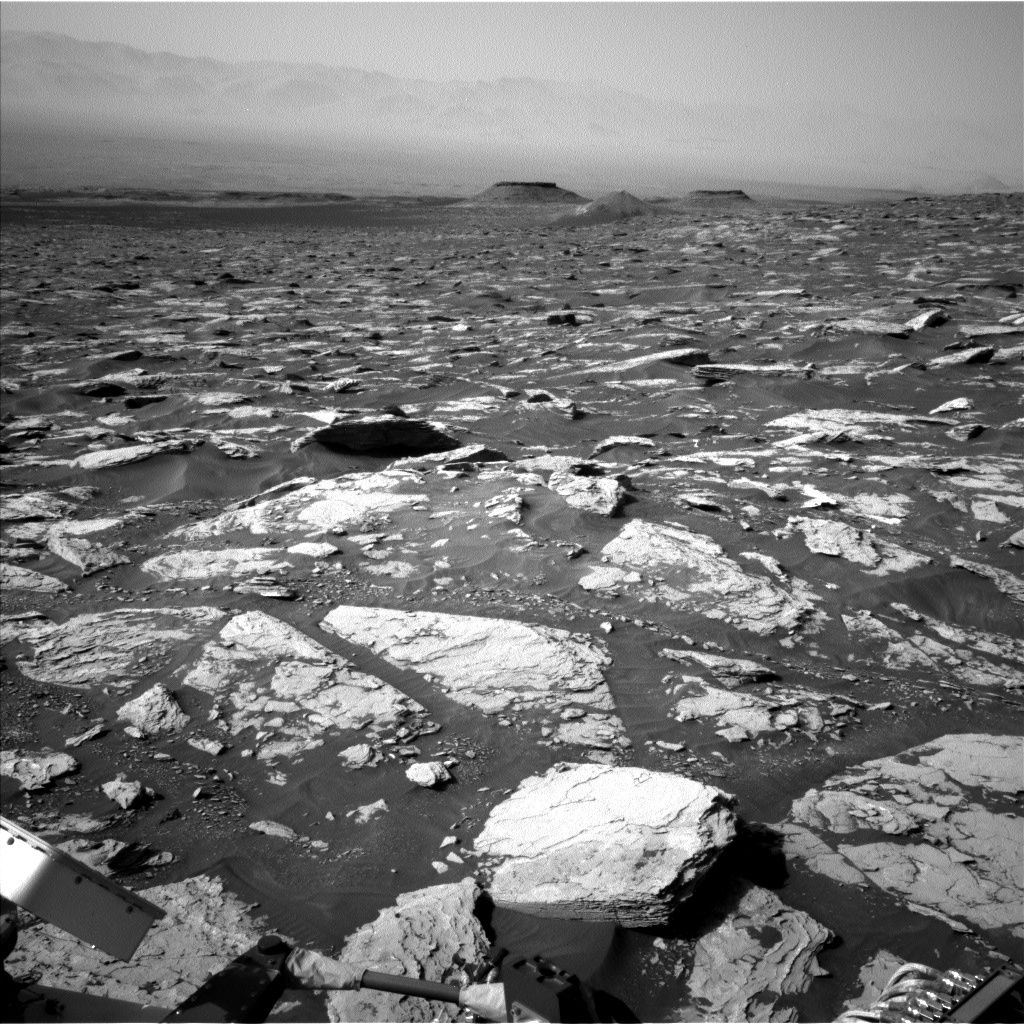
Curiosity Navcam Left B Sol 1721 June 9, 2017
Credit: NASA/JPL-Caltech
Diversity of minerals
In a JPL new release, it has been reported that scientists have found a wide diversity of minerals in the initial samples of rocks collected by the Curiosity rover in the lowermost layers of Mount Sharp on Mars, suggesting that conditions changed in the water environments on the planet over time.
The research underscores the liquid water and a chemical diversity at the site that could have been exploited by microbial life.
This appraisal – “Mineralogy of an ancient lacustrine mudstone succession from the Murray formation, Gale crater, Mars” – can be found here:
https://www.sciencedirect.com/science/article/pii/S0012821X17302005
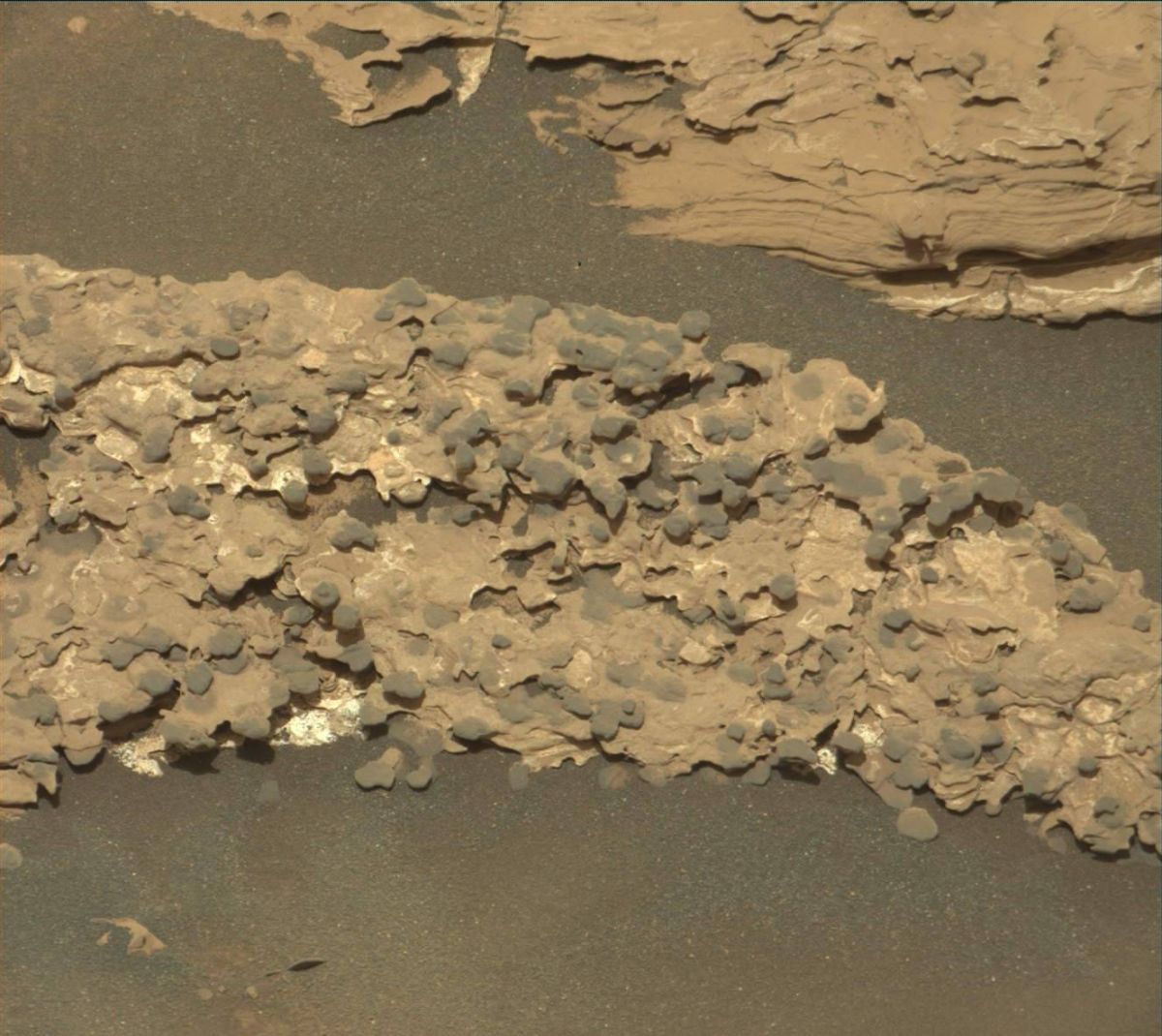
Mastcam Right image acquired on Sol 1718, June 6, 2017.
Credit: NASA/JPL-Caltech/MSSS
Traverse map
Meanwhile, a new Curiosity’s traverse map through Sol 1721 has been issued.
The map shows the route driven by NASA’s Mars rover Curiosity through the 1721 Martian day, or sol, of the rover’s mission on Mars (June 09, 2017).
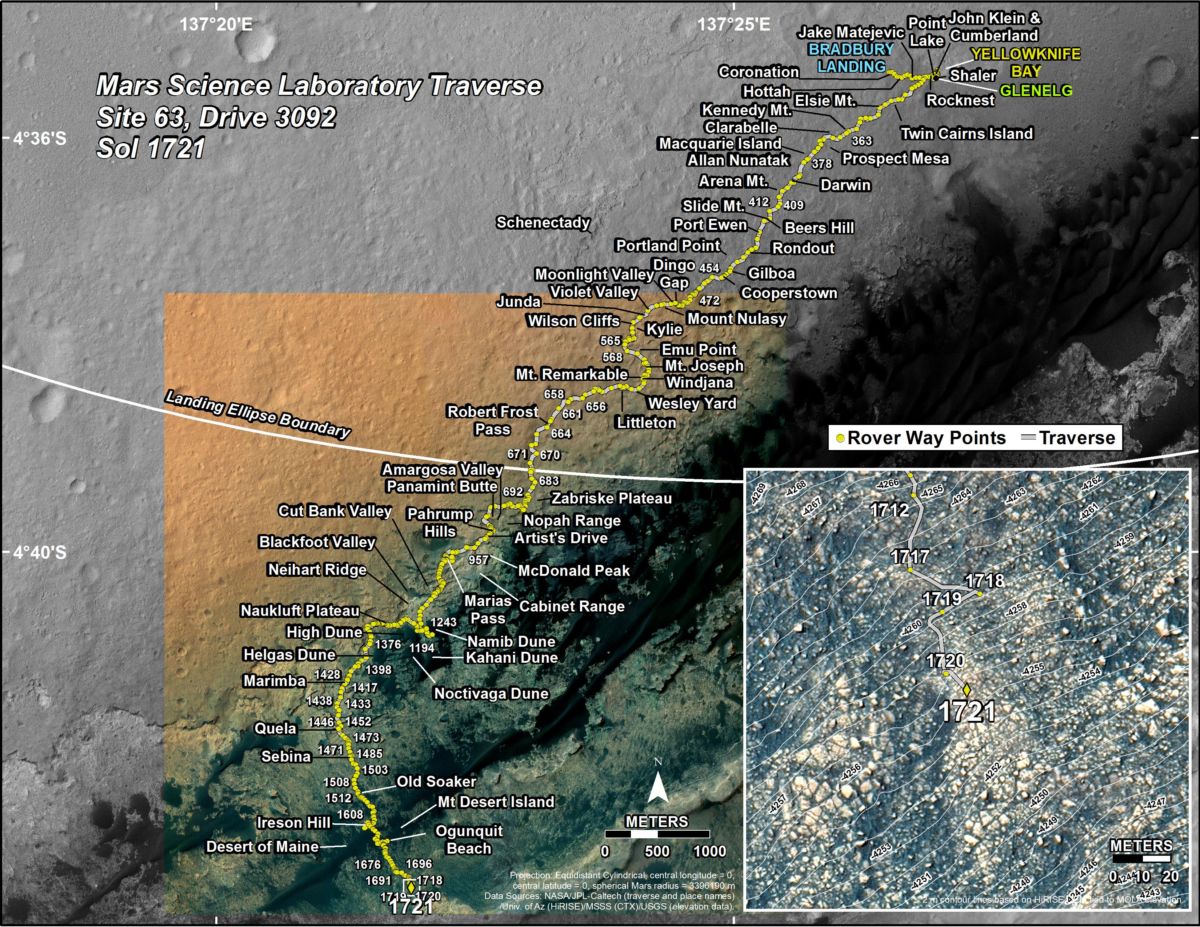
IMAGE CREDIT: NASA/JPL-CALTECH/UNIV. OF ARIZONA
Numbering of the dots along the line indicate the sol number of each drive. North is up. The scale bar is 1 kilometer (~0.62 mile).
From Sol 1720 to Sol 1721, Curiosity had driven a straight line distance of about 40.36 feet (12.30 meters), bringing the rover’s total odometry for the mission to 10.34 miles (16.65 kilometers).
The base image from the map is from the High Resolution Imaging Science Experiment Camera (HiRISE) in NASA’s Mars Reconnaissance Orbiter.

