Archive for the ‘Space News’ Category
 Author:
  May 29th, 2018
Credit: Virgin Galactic
From Virgin Galactic:
Richard Branson joined Virgin Galactic and The Spaceship Company teams this morning, on the Mojave Air and Space Port flight line, to witness VSS Unity’s second successful, supersonic, rocket powered test flight.
“It was great to see our beautiful spaceship back in the air and to share the moment with the talented team who are taking us, step by step, to space” Branson said. “Seeing Unity soar upwards at supersonic speeds is inspiring and absolutely breathtaking. We are getting ever closer to realizing our goals. Congratulations to the whole team!”

Credit: Virgin Galactic
Center of gravity
The focus of today’s flight was to expand our understanding of the spaceship’s supersonic handling characteristics and control system’s performance with vehicle parameters that were closer to the ultimate commercial configuration. This involved shifting the vehicle’s center of gravity rearward via the addition of passenger seats and related equipment. The rocket motor burned for the planned 31 seconds and propelled Unity to a speed of Mach 1.9 and an altitude of 114,500 ft. As will be the case for future commercial flights, Unity’s unique re-entry feathering system was deployed for the initial descent before the final glide home to a smooth runway landing.
Vision: a little closer
Once in commercial service, Virgin Galactic’s spaceships are designed to be turned around and flown at a higher frequency than has traditionally been the case for human spaceflight. The flight today brought that vision a little closer, coming less than two months after Unity’s first rocket powered flight. Great credit goes to the engineering and maintenance teams for working through the first flight’s data diligently and efficiently before preparing Unity again for flight.
Richard Branson was on the runway tarmac to greet this flight’s VSS Unity pilots Dave Mackay and Mark “Forger” Stucky. In addition to the pilots of VSS Unity, Branson recognized CJ Sturckow and Nicola Pecile, the pilots of the carrier aircraft, VMS Eve.

Flight data review
“Today we saw VSS Unity in her natural environment, flying fast under rocket power and with a nose pointing firmly towards the black sky of space” Branson said. “The pathway that Unity is forging is one that many thousands of us will take over time, and will help share a perspective that is crucial to solving some of humanity’s toughest challenges on planet Earth.”
The teams will now conduct flight data review for this flight and continue planning preparations for the next flight.
While in Mojave, Richard Branson also toured the facilities of The Spaceship Company (TSC), Virgin’s Galactic sister company. TSC is focused on manufacturing next generation aerospace vehicles, with a primary focus on new spaceships for Virgin Galactic’s future fleet. Branson viewed the next two spaceships on the TSC’s manufacturing line, as well as the production facilities for TSC’s spaceship rocket motors.
 Posted in

Credit: China Manned Space Agency
As the United States debates the future of the International Space Station, China is orchestrating a campaign to spotlight its own space station – and open its airlocks to other nations for experimental purposes.
A version 1.0 handbook on the China Space Station (CSS) and its resources for international cooperation was issued May 28 by the UN Office for Outer Space Affairs and China Manned Space Agency.
In many ways, China’s approach to space station operations mirror’s the fundamentals of the International Space Station – with some exceptions.
Mission statement
The 28-page document explains that the mission of the CSS project is:
- To develop technology for long-term manned space flight and study related medical issues to find long-term solutions for the healthy living and efficient work of astronauts and lay the foundations for future exploration in long-term manned space flight;
- To build a national space laboratory of an internationally advanced level for large-scale science and technology experiments, educative purposes and promote international/regional cooperation to study and uncover significant scientific results and benefits;
- To establish a complete manned spacecraft operation and its corresponding operation and management systems, and to train a high-quality engineering and management team to lay the foundations for the future development of manned space exploration.
Inclination, altitude, weight
Other areas of the handbook call attention to some key facts:
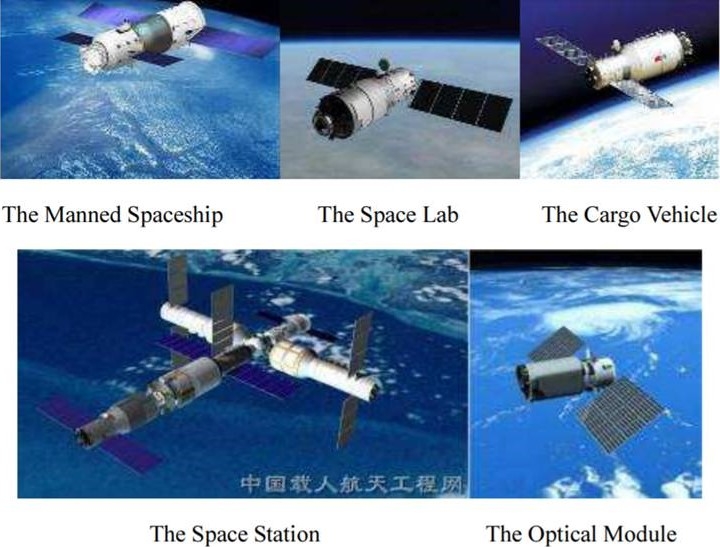
Credit: CMSA
The CSS is designed to operate in low-Earth orbit about 400km above the Earth’s surface, with an inclination of approximately 41°~43°.
The station’s three main module components are horizontally symmetrical and T-shaped. The total mass is approximately 66 tons, and may reach roughly 100 tons when docked with several manned spaceships and cargo vehicles.
In-orbit life span (after the assembly of the three modules) is in the range of 10 years. Number of crew members 3 (rated) or 6 astronauts (at most).
Optical Module System
Along with station, a main section of an Optical Module System would be launched into orbit separately and flies along the same orbit as the CSS. It can support multi-color photometry, seamless spectrum survey and Earth observation with multi-function optical capabilities. If necessary, it can dock with the CSS for refueling, equipment maintenance, payload equipment upgrade and other maintenance activities.
Experiment racks
A number of scientific experiment racks in the pressurized modules of the Space Station include a Human System Research Rack; Medical Sample Analysis Rack;
Ecological life Experiment Rack; Biotechnology Experiment Rack; Fluid Physics Experiment Rack; Two-Phase System Experiment Rack; High Temperature Materials Science Experiment Rack; Combustion Science Experiment Rack; and a Container-Free Materials Science Experiment Rack.
Life span extension
The in-orbit assembly of the basic configuration of the three modules of the China Space Station is planned to be completed around 2022 when the station is operational and able to carry out large-scale space science research.
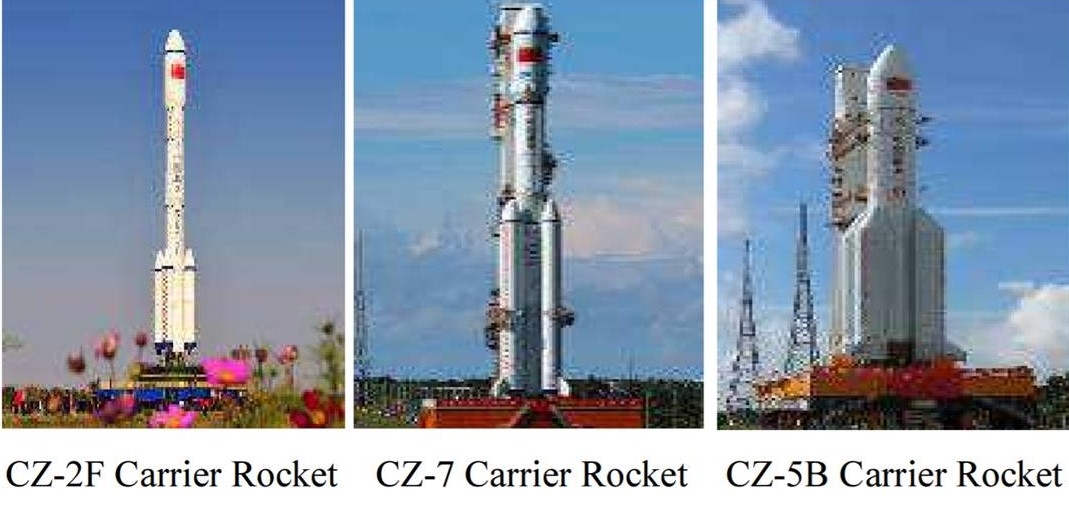
Carrier rocket system for China Space Station.
Credit: CMSA
The life span of the Station can be further extended by maintenance, replacement, upgrading and expansion to enable longer term space science research. Primarily, extensible interfaces are reserved on the Space Station.
Extra modules
After completion of the basic configuration of the three modules, the inboard and outboard utilization support capabilities can be enhanced further by adding extra modules.
Secondly, outside the modules of the Space Station, many large-scale payload mounting points and extensible experiment platform interfaces are reserved, through which more payload support capability can be provided.
In addition, based on the need of space science research and international cooperation, the Space Station can meet the needs of evolving space science research through the maintenance, replacement and extension of payloads.
A United Nations/China Cooperation on Utilization of the China Space Station Application Form is available at:
http://www.unoosa.org/documents/doc/psa/hsti/CSS_1stAO/CSS_1stAO_ApplicationForm_2018.doc
To read the entire handbook, go to:
http://www.unoosa.org/documents/doc/psa/hsti/CSS_1stAO/CSS_1stAO_Handbook_2018.pdf

Credit: CMSE
China is working with the United Nations to seek countries interested in performing experiments onboard that country’s space station.
The United Nations Office for Outer Space Affairs and China’s Manned Space Agency have invited applications from United Nations Member States to conduct experiments on China’s Space Station.
Operational space station
In 2016, the two signed a Memorandum of Understanding to work together to develop the space capabilities of United Nations Member States via opportunities to use China’s space station, which is expected to be operational from 2022.

Credit: CSIS
The Announcement of Opportunity for this initiative, as well as application instructions, were released at a ceremony hosted by the UN Outer Space Affairs office and the Permanent Mission of China to the United Nations and Other International Organizations in Vienna on May 28.
Promote and provide
The UNOOSA-CMSA initiative aims to:
- promote international cooperation in human space flight and activities related to space exploration;
- provide flight experiment and space application opportunities on-board the CSS for United Nations Member States;
- promote capacity-building activities by making use of human space flight technologies, including facilities and resources from China’s human spaceflight program; and
- promote increased awareness among United Nations Member States of the benefits of utilizing human space technology and its applications.
Space diplomacy
“This is space diplomacy in action. I appreciate China’s partnership and support on this exciting initiative, and look forward to seeing a number of interesting applications from United Nations Member States,” said Simonetta Di Pippo, Director of the United Nations Office for Outer Space Affairs.

China’s medium-size space station for the 2020’s is depicted in this artwork.
Credit: CNSA
“The China Space Station belongs not only to China, but also to the world. Just as the Outer Space Treaty of 1967 proclaimed, the exploration and use of outer space shall be a common province for humankind. Outer space should become a new domain for promoting the common interests of everyone, rather than a new battlefield for competition and confrontation,” said Ambassador Shi Zhongjun, representative of China to the United Nations and other International Organizations in Vienna.
Orbital experiments
There are three possibilities for orbital experiments in the first round of opportunities, according to a UN press statement.
- Conducting experiments inside the Chinese space station by utilizing experiment payloads developed by selected applicants.
- Conducting experiments inside the Chinese space station by utilizing experiment facilities provided by China.
- Conducting experiments outside China’s space station by utilizing payloads developed by selected applicants.
Lastly, public and private organizations including institutes, academies, universities and private enterprises with a scientific orientation are invited to apply for the opportunity by August 31, 2018. Institutions from developing countries are particularly encouraged to apply.
For more information, go to these key documents as posted by the UN:
http://www.unoosa.org/documents/doc/psa/hsti/CSS_1stAO/CSS_1stAO_Announcement_2018.pdf
http://www.unoosa.org/documents/doc/psa/hsti/CSS_1stAO/CSS_1stAO_Handbook_2018.pdf
http://www.unoosa.org/documents/doc/psa/hsti/CSS_1stAO/Leaflet_18-01901_Cooperation_2pp_Ebook.pdf
Credit: CMSE
Chinese astronauts have completed desert survival training – part of exercises devoted to building China’s space station in the 2020’s.
Fifteen Chinese astronauts took part in desert training within Badain Jaran Desert near Jiuquan Satellite Launch Center in northwest China.
Wilderness training
The readiness effort was organized by the Astronaut Center of China (ACC), designed to prepare astronauts with the capacity to survive in the wilderness in the event their re-entry capsule lands off target, according to a Xinhua news report.

Credit: CMSE
China’s wilderness survival training has China’s space mission candidates stranded at sea, in deserts, in jungles or on glaciers.
European astronauts
Last year, Chinese astronauts underwent survival training with two European astronauts in waters off the coast of Yantai in east China’s Shandong Province.

European Space Agency (ESA) astronaut Matthias Maurer joined Chinese colleagues in Yantai, China in August 2017 to take part in their sea survival training.
Returning from space in a Chinese capsule, astronauts need to be prepared for any eventuality – including landing in the sea. Water survival is a staple of all astronaut training but this is the first time non-Chinese astronauts have taken part.
Credit: ESA–Stephane Corvaja, 2017
In the latest training program, reports Xinhua, each team, all wearing spacesuits, simulated an emergency landing scenario in which they needed to exit the capsule themselves, report their location and survive in the desert until rescue arrived 48 hours later. The desert survival training tested the allocation of emergency supplies so their design can be improved in the future, said Huang Weifen, deputy chief designer at the ACC.
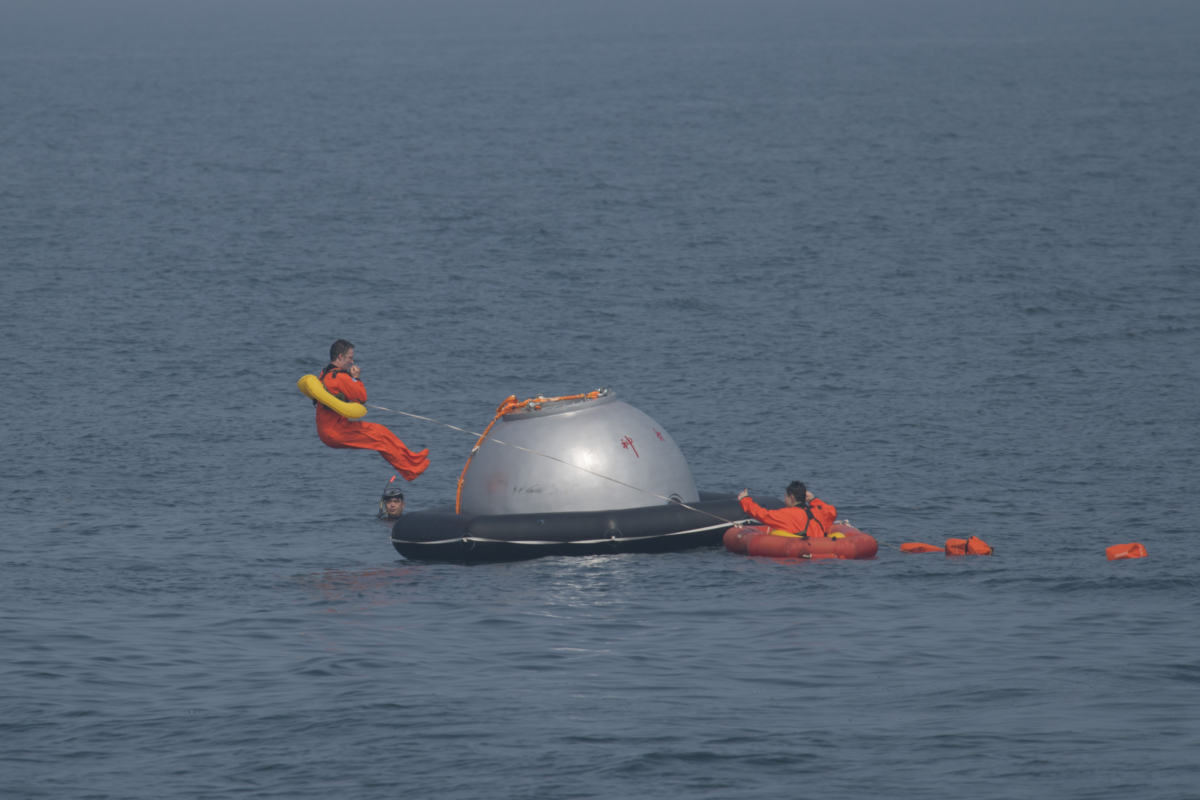
ESA astronaut Matthias Maurer jumping from a Chinese Shenzou capsule during sea survival training in August 2017. ESA astronauts Samantha Cristoforetti and Matthias joined Chinese colleagues in Yantai, China.
An ESA astronaut to fly on China’s space station is in play.
Credit: ESA–Stephane Corvaja, 2017
The training programs are in tune with China’s intent to start assembling its space station in space in 2020. It is scheduled to become fully operational around 2022.
Go to this New China TV video that details the training of Chinese astronauts at:
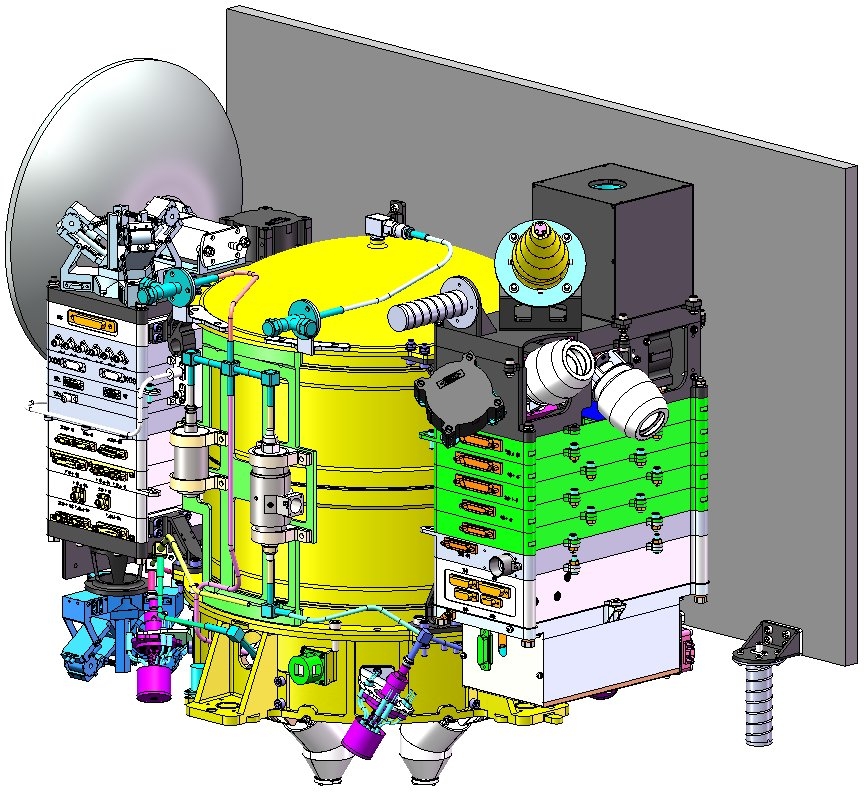
A pair of 104 pound (47 kilograms) microsatellites hitchhiked a ride on China’s Moon relay launch.
Credit: Harbin Institute of Technology
Two microsatellites DSLWP-A1 and DSLWP-A2 carrying amateur radio payloads were launched with China’s Chang’e-4 relay satellite. The pair of hitchhiking microsatellites are unofficially called DSLWP-A1 and DSLWP-A2 (DSLWP = Discovering the Sky at Longest Wavelengths Pathfinder). The twosome are also known as Longjiang-1 and Longjiang-2.
However, help has been requested to monitor for signals from one of the lunar microsats.
Several amateurs received telemetry from the satellites. But now DSLWP-A1 reportedly appears to have encountered problems.
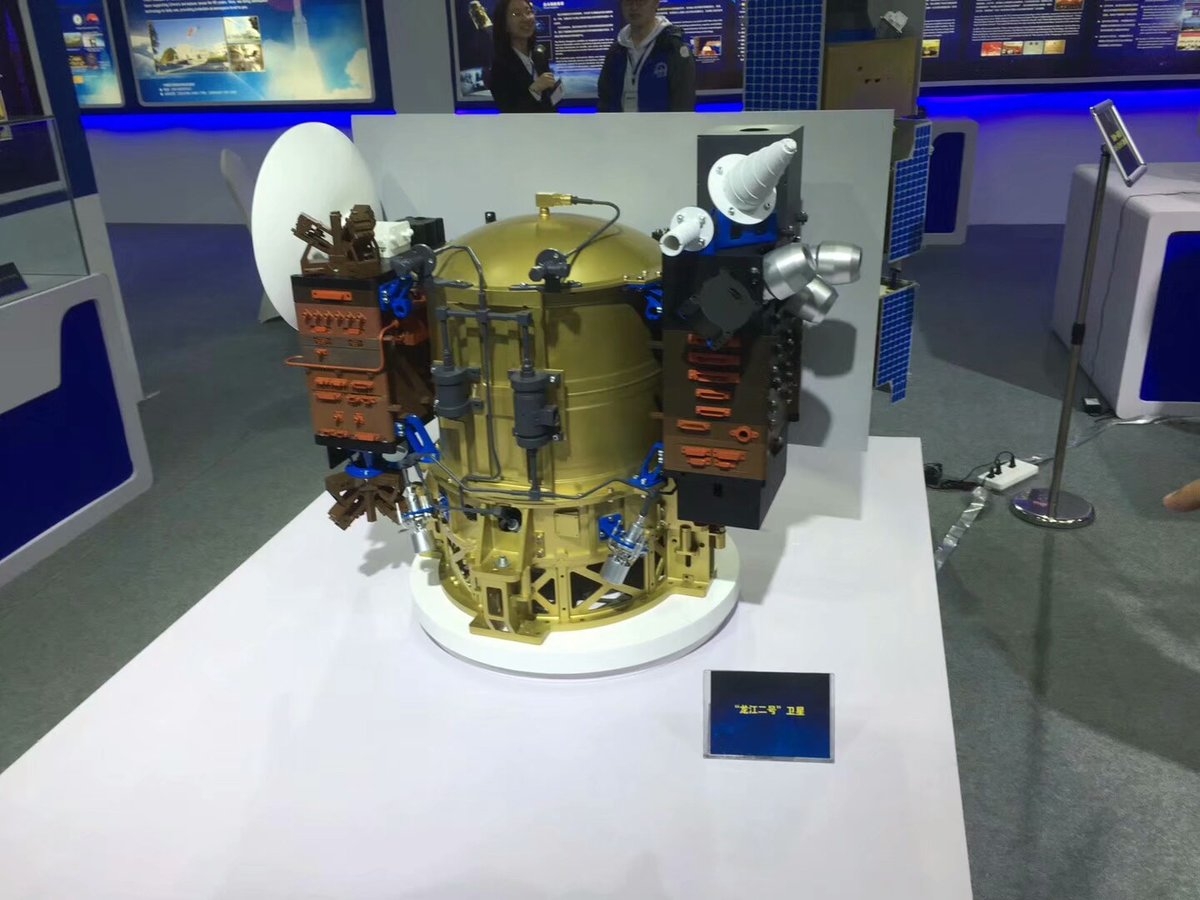
Credit: Harbin Institute of Technology
Contact lost
Quoting Wei BG2BHC: “Can you help to find amateurs in the U.S. to help to monitor DSLWP-A on 435.425 and 436.425 now? We lost the contact of satellite A on S band after an orbit adjustment. We just tried to switch on UHF, but we don’t know if it works or not. If operating, 435.425 MHz should be 500bps GMSK and JT4 alternately. 436.425 MHz should be 250 bps GMSK. Both transmit once in 5 minutes. LONGJIANG 1 – NORAD CAT ID 43471 LONGJIANG 2 – NORAD CAT ID 43472.”
Developed by students at the Harbin Institute of Technology the amateur radio are designed to evaluate lunar formation flying for low frequency radio astronomy, amateur radio and education.
Hopefully, dedicated amateur radio specialists will recover the microsatellite.
Credit: CNSA
Vital step
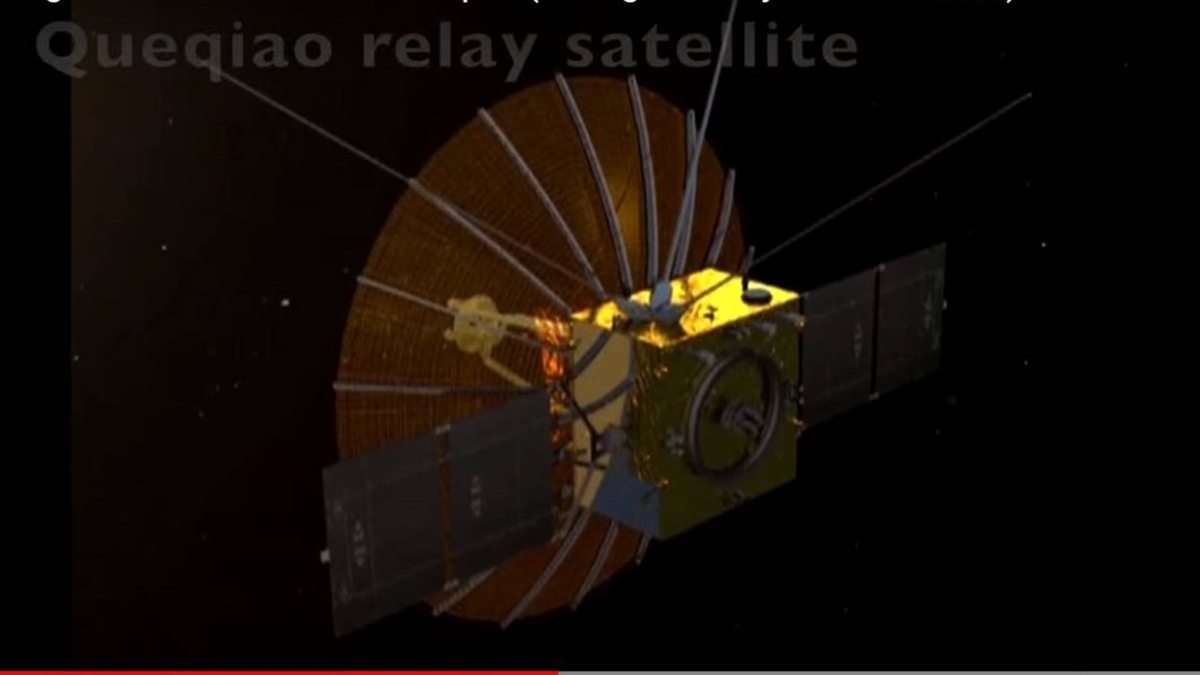
Meanwhile, China’s relay satellite – Queqiao — braked near the Moon last Friday, completing a vital step before entering a desired orbit, according to the China National Space Administration.
The relay satellite has entered a transfer orbit from the Moon to the second Lagrangian (L2) point of the Earth-Moon system.
“There was only a short window for the braking,” said Zhang Lihua, project manager of the mission in an Xinhua news story. “And Queqiao had only one chance due to limited fuel.”
Once in its halo orbit, the relay satellite will provide a communications link between Earth and the planned Chang’e-4 lunar probe that will attempt the first landing on the Moon’s far side.
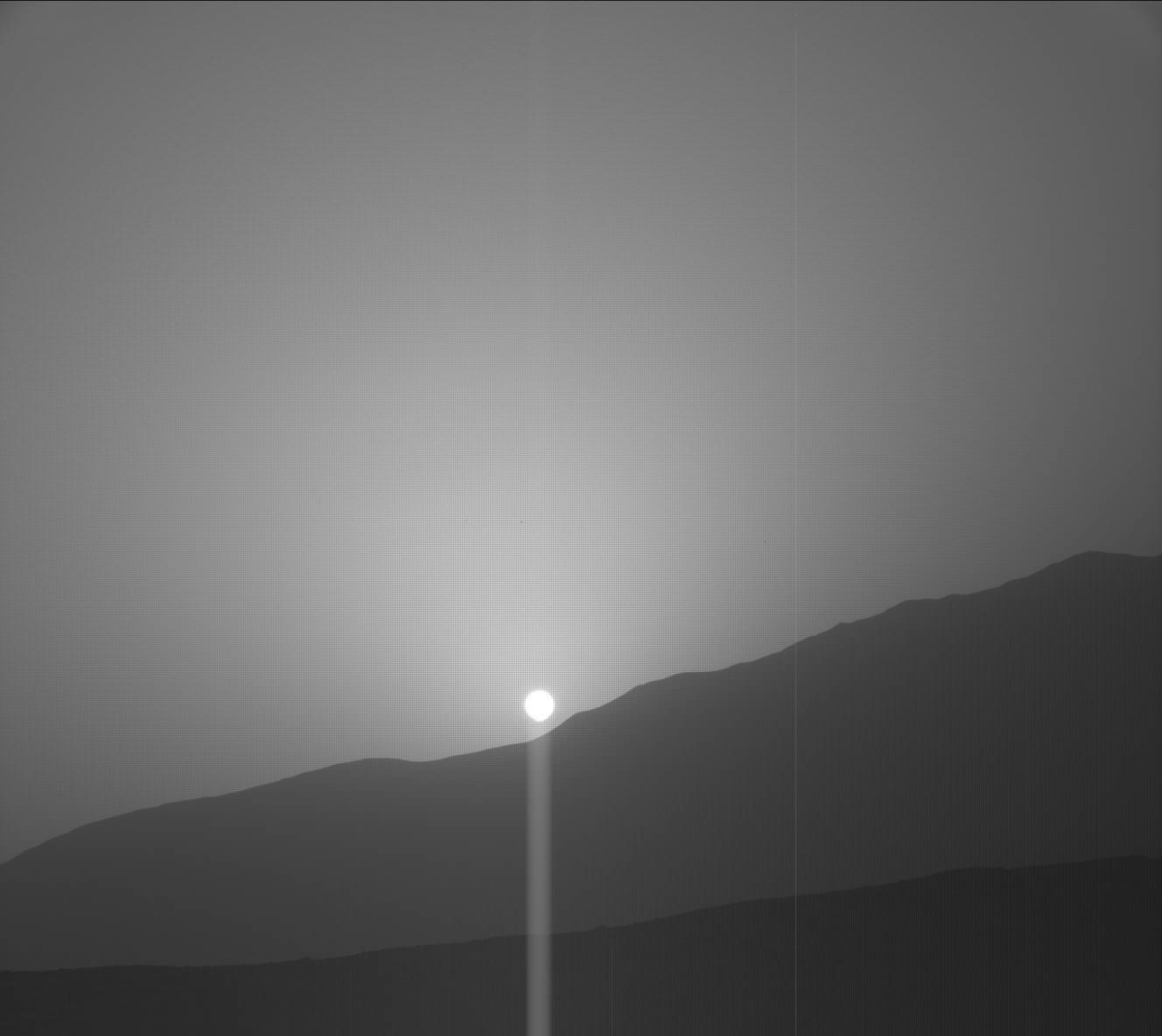
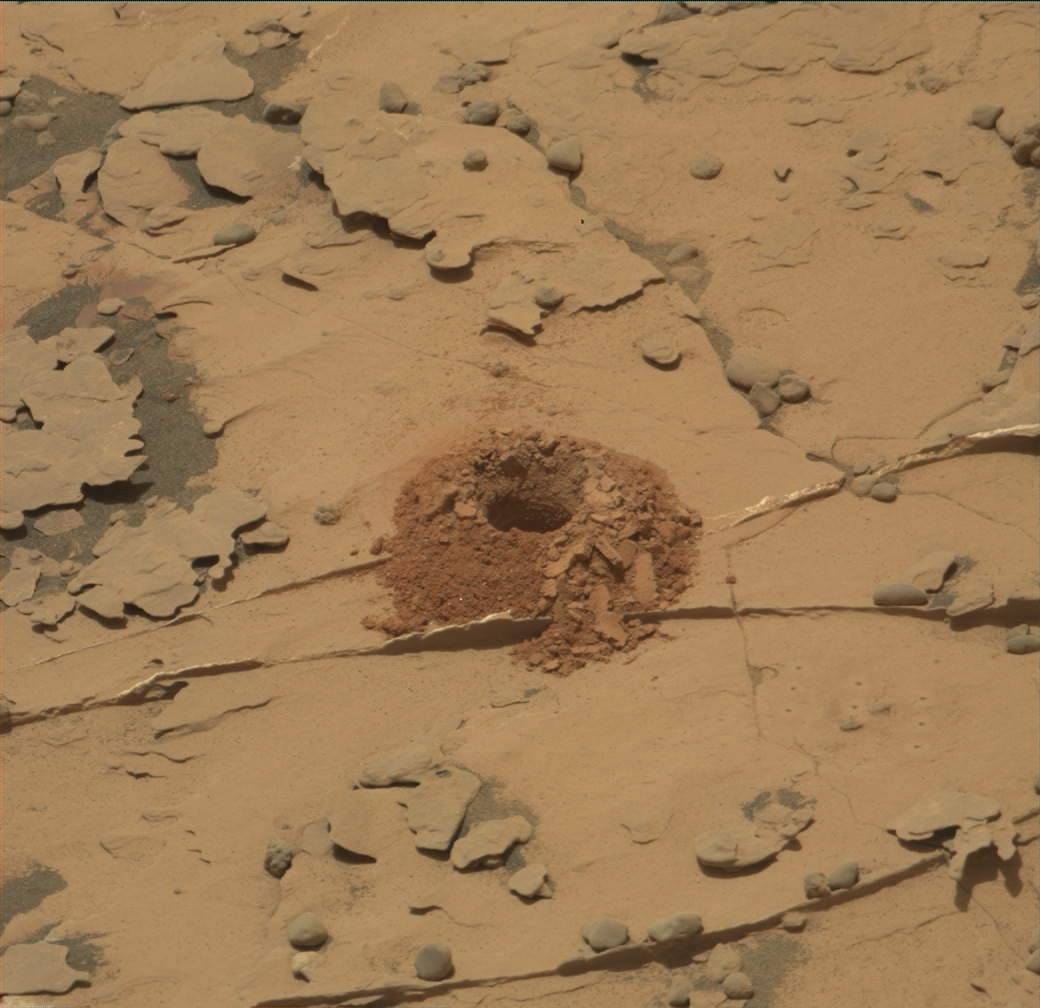
Curiosity Mastcam Left photo acquired on Sol 2060, May 23, 2018.
Credit: NASA/JPL-Caltech/MSSS
NASA’s Curiosity Mars rover is now carrying out Sol 2063 duties.
Reports Ken Herkenhoff, a planetary geologist at the USGS in Flagstaff, Arizona, some of the Duluth drill sample was dropped into the robot’s Chemistry & Mineralogy X-Ray Diffraction/X-Ray Fluorescence Instrument (CheMin), but not enough for a proper mineralogical analysis.
So the top priority in a newly scripted plan is to again test the new drop-off procedure.
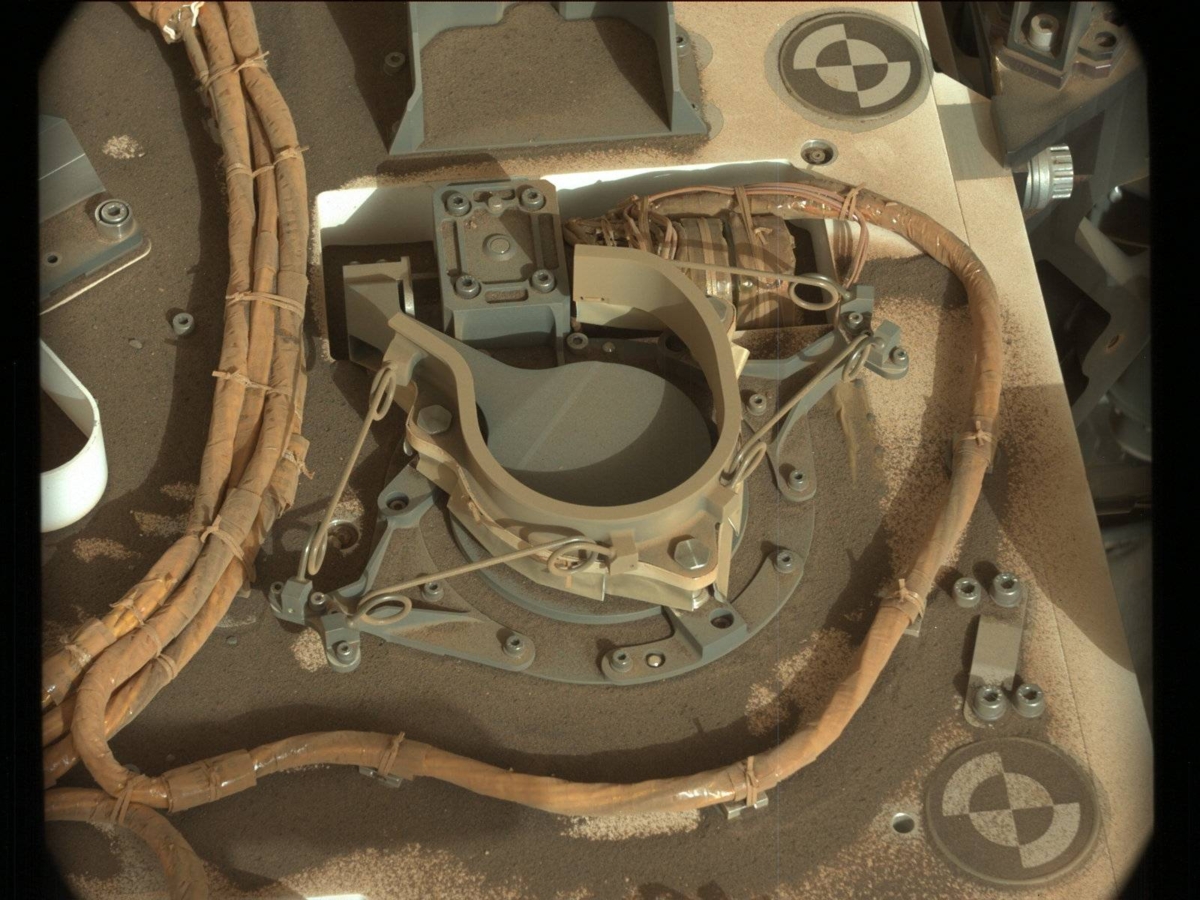
Curiosity Mastcam Right image taken on Sol 2061, May 24, 2018.
Credit: NASA/JPL-Caltech/MSSS
Sample transfer issue
Since the drill feed mechanism became unreliable over a year ago, Herkenhoff adds, drill samples can no longer be sieved and processed in the Collection and Handling for In-Situ Martian Rock Analysis (CHIMRA) device as they were earlier in the mission. CHIRMA is attached to the turret at the end of Curiosity’s robotic arm.
“Instead, portions of the sample must be dropped from the tip of the drill directly into the analytical instruments,” Herkenhoff explains. This new Feed-Extended Sample Transfer (FEST) procedure will be repeated on Sol 2064, over bedrock and over the closed Sample Analysis at Mars (SAM) Instrument Suite inlet cover.
“Mastcam images will be taken both before and after the drop-off in both locations, to allow the size of the sample portion to be estimated. The results of these tests will be used to inform future drop-off planning,” Herkenhoff adds.
Curiosity Mastcam Right photo taken on Sol 2059, May 22, 2018.
Credit: NASA/JPL-Caltech/MSSS
Change detection observations
Mars researchers have planned for four sols of rover work so that the tactical operations team can take a day off for the Memorial Day holiday.
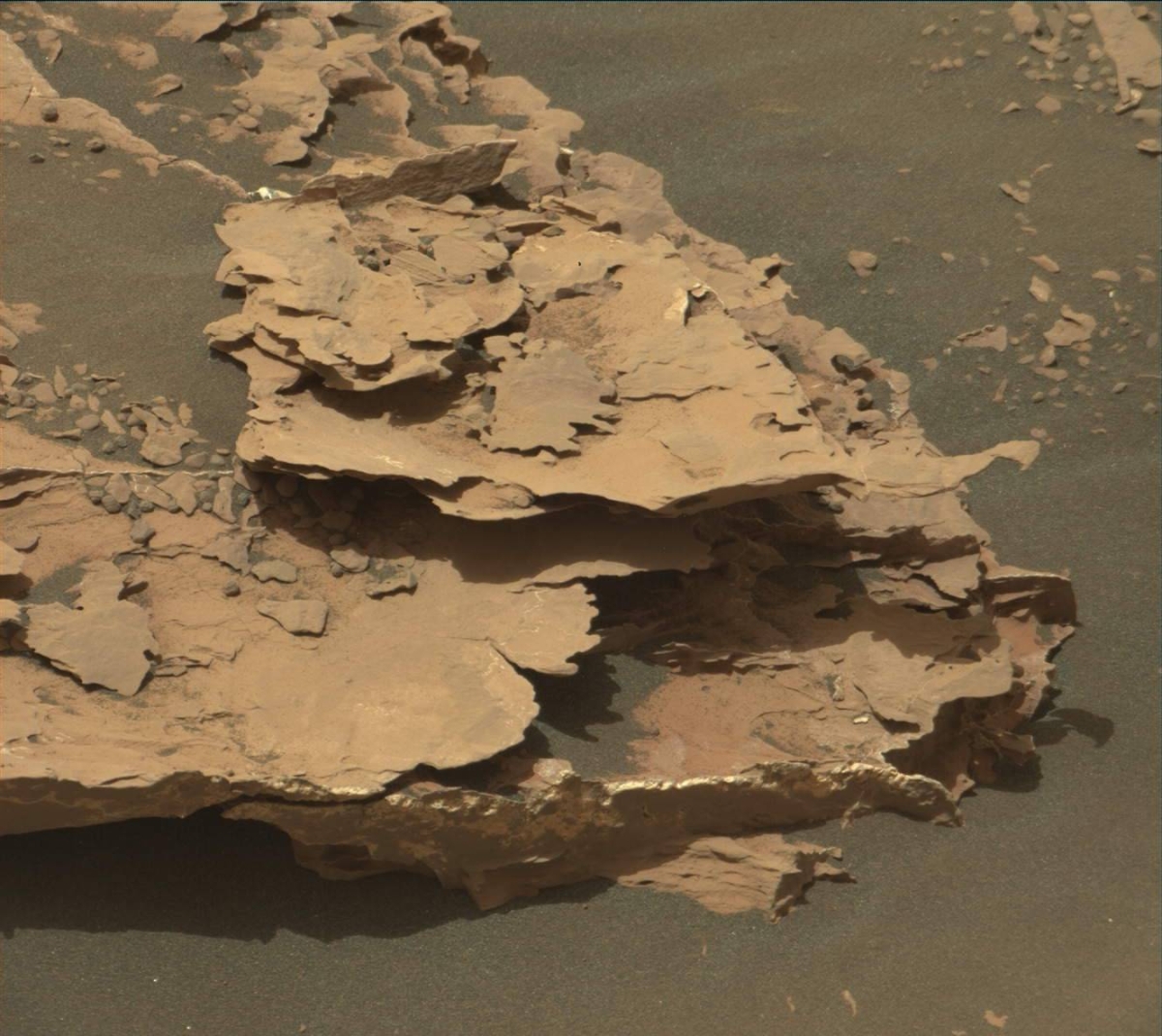
More change detection observations are scattered throughout the plan, with Right Mastcam images of dark sand ripples at “Noodle Lake” and the Duluth drill tailings on Sol 2063 at various times; the same for Sol 2064 and Sol 2065.
“The goal of these observations is to constrain the frequency of wind gusts that are strong enough to move loose material. The Rover Planners also requested multiple Right Mastcam images of the sample drop-off location on nearby bedrock for the same purpose,” Herkenhoff says. These are scheduled in the afternoons of Sols 2063, 2065, and 2066.
Curiosity Mastcam Right image taken on Sol 2061, May 24, 2018.
Credit: NASA/JPL-Caltech/MSSS
Bumpy bedrock
Chemistry and Camera (ChemCam) will also be busy this weekend, measuring the chemistry of a bumpy bedrock target named “Brule Mountain” and layered bedrock targets “Devil Track” and “Devilfish Tower” on Sol 2063.
The latter two targets will be captured in a single Right Mastcam image soon afterward.
On Sol 2064, ChemCam will observe some pebbles dubbed “Paupores” and Right Mastcam will acquire a single image covering both Brule Mountain and Paupores.
Early on Sol 2065, Mastcam and Navcam will measure the amount of dust in the atmosphere, and Navcam will search for clouds. Later that morning, Right Mastcam will take a picture of a nearby bedrock block dubbed “Deerwood.” In the afternoon, Mastcam will image the Sun and sky to measure the scattering properties and size distribution of dust in the atmosphere over Gale Crater, with supporting Navcam imaging, Herkenhoff concludes.

Commercial interest in returning to the Moon.
Photo Credit: NASA/GSFC
NASA is orchestrating a robotic lunar campaign, one that will rely upon commercial partners to deliver instruments and technology to the Moon’s surface.
Among the instruments to be flown are those once to be onboard the now scuttled NASA Resource Prospector. That rover project once aimed to be the first mining expedition on another world. Using a suite of instruments to locate elements from a lunar polar region, the rover was designed to excavate volatiles such as hydrogen, oxygen and water from the Moon.
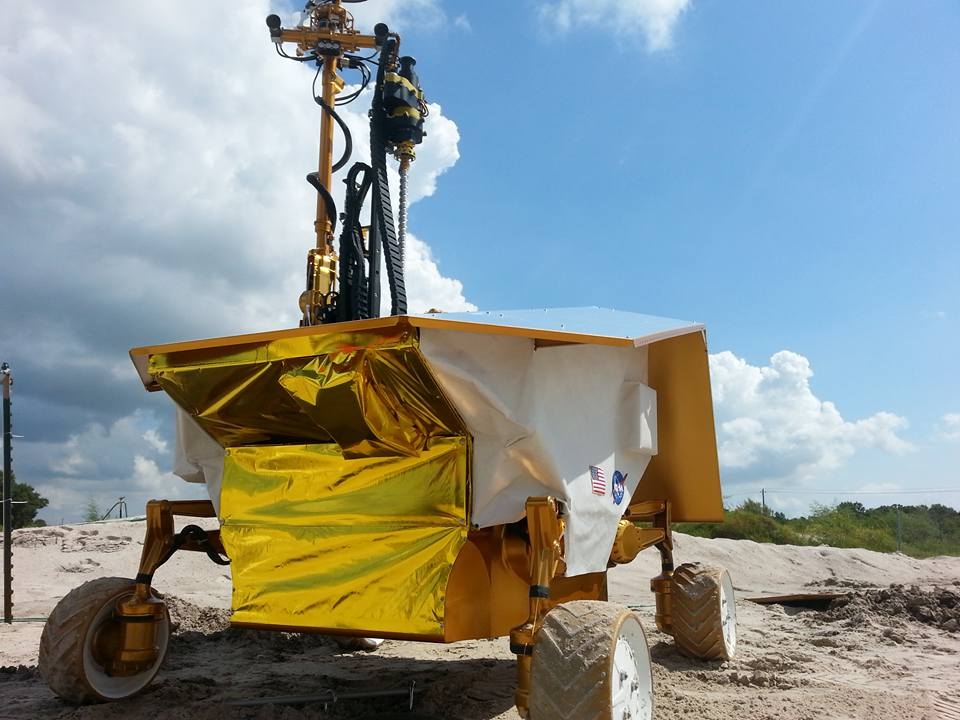
NASA Resource Prospector.
Credit: NASA
High technology readiness
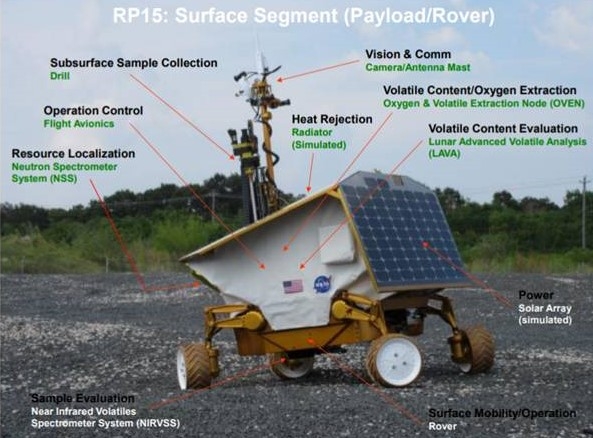
Dennis Andrucyk, deputy associate administrator, Science Mission Directorate, at NASA Headquarters has said that a thorough science and engineering assessment of Resource Prospector was recently done. It was determined that all four Resource Prospector instruments are at a high technology readiness level, ready for flight on future Commercial Lunar Payload Services (CLPS) missions.
Credit: NASA
The science potential for each instrument varies with the potential landing site, and most can be enhanced “through mobility after landing,” according to a NASA statement. Those instruments are:
— Near Infrared Volatile Spectrometer Subsystem, or NIRVSS, to monitor the Moon’s surface and identify water and other volatiles
— Neutron Spectrometer Subsystem, or NSS, to search for hydrogen below the Moon’s surface
— A regolith and ice drill
— Water Analysis and Volatile Extraction (WAVE) instrument to accept and heat samples to quantify water and other volatiles extracted from below the surface
Lunar subsurface
These early instruments will be an important step to better understanding what’s below the Moon’s surface.
“We know there are volatiles at the poles on the Moon, and quite frankly, that water ice could represent rocket fuel,” said NASA Administrator Jim Bridenstine in a recent public town hall meeting.
“If we have the capability to generate rocket fuel from the surface of the Moon, and get them into orbit around the Moon, we could use that to build a fueling depot. If we want to make that happen though, we will need commercial partners,” Bridenstine said.
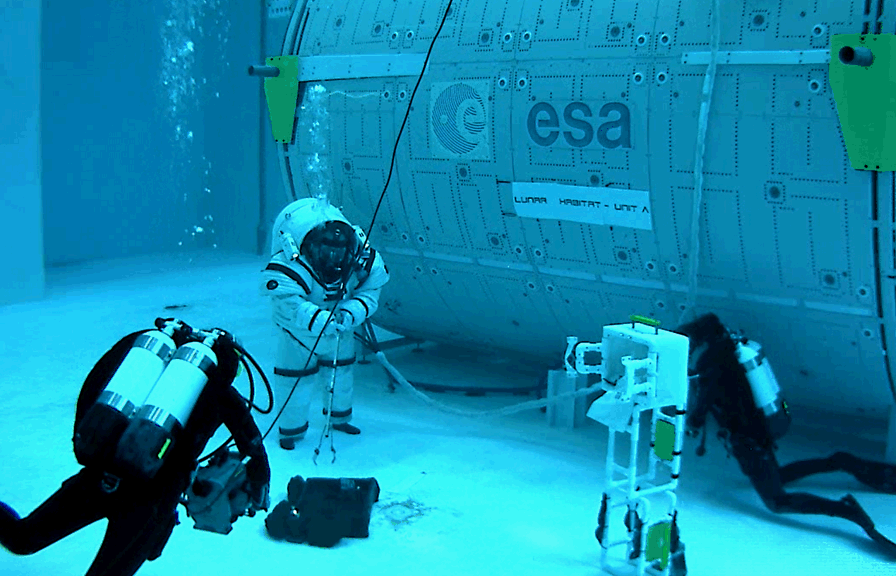
ESA’s 10 meters deep Neutral Buoyancy Facility at the European Astronaut Center has been the site of the ‘Moondive’ study.
Credit: ESA/COMEX
Total immersion – Moondive style.
One of the deepest neutral buoyancy facilities in Europe is in use to simulate lunar gravity – one-sixth that of Earth.
The European Space Agency’s Neutral Buoyancy Facility (NBF) at the European Astronaut Center (EAC) near Cologne in Germany has been the site of a three year “Moondive” study. The facility has been used to investigate moonwalk procedures for the lunar surface.
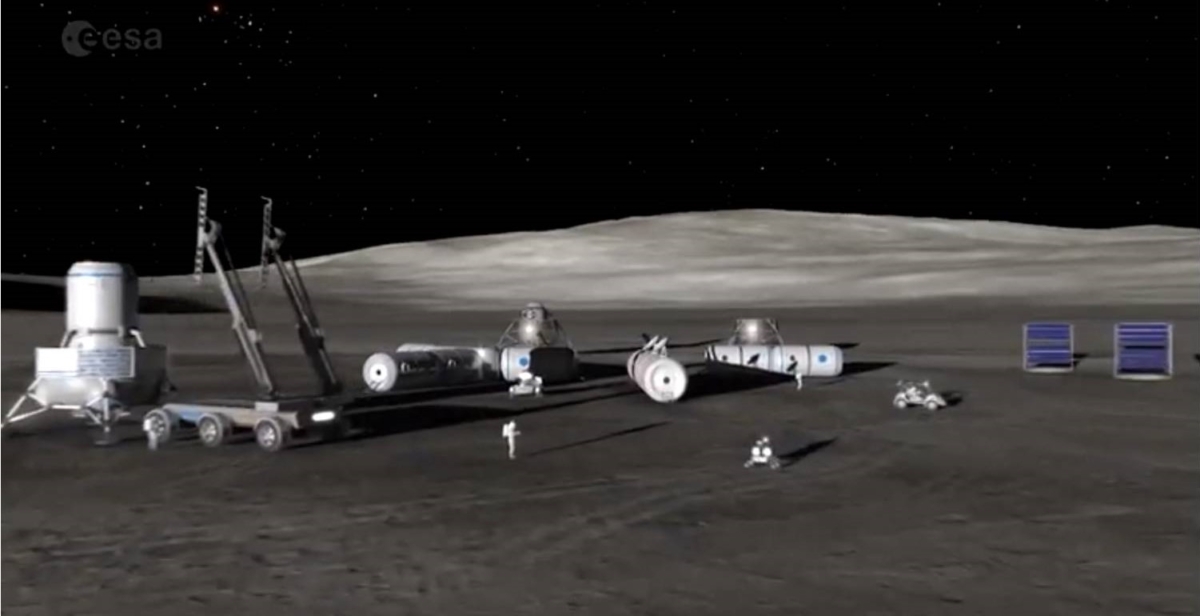
Artwork depicts ESA lunar base. Europe is testing and training in specialized facilities for the human exploration of the Moon.
Credit: ESA/Screengrab
The updated facility joins a range of ESA simulators, training software and hardware and EAC’s “Luna Dome.” That dome is now in preparation, designed to simulate the effects of lunar dust on equipment and hardware. The intent of all the simulators is to place Europe in the forefront of testing and training facilities for the human exploration of the Moon.
One small kangaroo jump
Moondive was run by a consortium led by the French company, Comex, which specializes in human and robotic exploration of extreme environments.
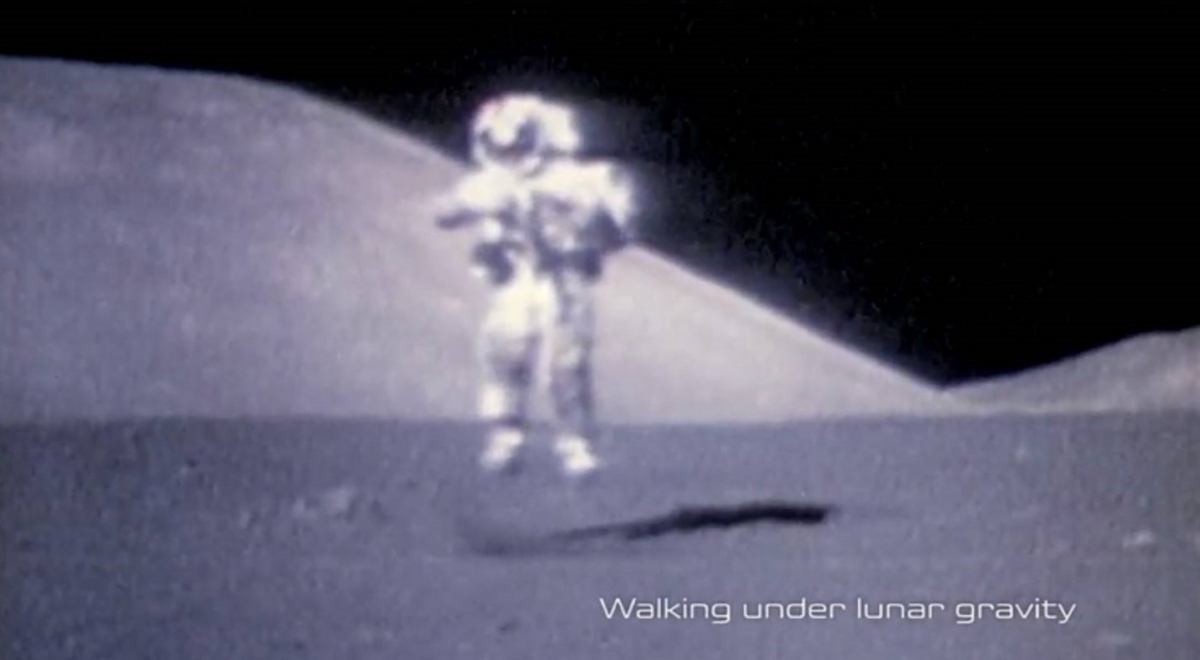
Kangaroo jumping on the Moon, the optimum walking strategy.
Credit: NASA
The optimum walking strategy in this finely-tuned negative buoyancy turns out to be to kangaroo jump – just like the Apollo astronauts did on the Moon, notes Hervé Stevenin, ESA’s Head of EVA Training and NBF Operations.
Techniques and technology
Adds Peter Weiss, Head of the Space Department at Comex: “We focused on the techniques and technology we will need to prepare astronauts for future missions to the Moon. The idea was to come up with a database of items, tools and tasks that astronauts may have to handle on missions to the Moon, not just for training purposes but also for testing and validating new equipment and ways of doing things,” Weiss explains in an ESA press statement.
Go to this informative Moondive video at:
https://dlmultimedia.esa.int/download/public/videos/2018/04/009/1804_009_AR_EN.mp4

Mars expedition probes the promise that Mars was a home address for past, possibly life today.
Credit: NASA
“This time, we will not only plant our flag and leave our footprint. We will establish a foundation for an eventual mission to Mars.” – President Donald J. Trump
The White House has issued the following fact sheet regarding President Donald J. Trump’s Reforming and Modernizing American Commercial Space Policy:
Directive-2
President Trump’s Space Policy Directive – 2 reforms America’s commercial space regulatory framework, ensuring our place as a leader in space commerce.
Issued on May 24, 2018, the Space Policy Directive – 2 sets executive branch policy to ensure that government regulations adopted and enforced promote economic growth; minimize uncertainty for taxpayers, investors, and private industry; protect national security, public-safety, and foreign policy interests; and encourage American leadership in space commerce.
New regulatory system
Under the Directive, the Secretary of Transportation is to release a new regulatory system for managing launch and re-entry activity, targeting an industry that is undergoing incredible transformation with regulations that have failed to keep up.

Credit: SpaceX/Screengrab
In writing the new rules, the Secretary will consider requiring a single license for all types of commercial space flight launch and re-entry operations and replacing prescriptive requirements in the process with performance-based criteria.
The President is committed to ensuring that the Federal government gets out of the way and unleashes private enterprise to support the economic success of the United States.
Remote sensing
The commercial remote sensing industry is a critical national asset. As such, the Directive requires the Commerce Secretary to review commercial remote sensing regulations for consistency with the Directive’s policy and address regulations that do not conform.
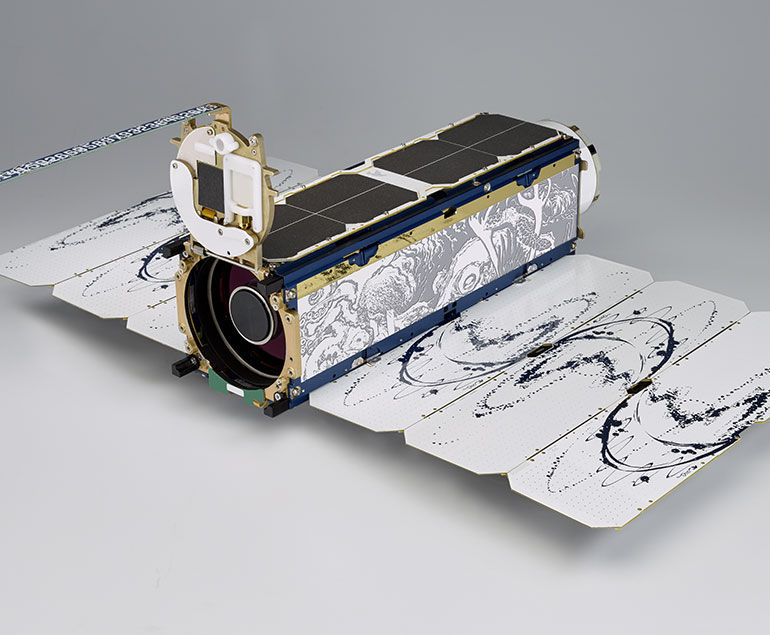
Earth remote sensing spacecraft.
Credit: Planet
The current regulatory system is woefully out of date and needs significant reform to ensure the United States remains the chosen jurisdiction for these high tech companies.
President Donald J. Trump is committed to reform these systems in order to ensure American companies have every advantage in the international marketplace.
One-stop shop
Within 30 days, the Commerce Secretary is directed to transmit a plan to create a “one-stop shop” within the Department of Commerce for administering and regulating commercial space flight activities.
Agencies are directed to present to the President a report on improving global competitiveness of United States space radio frequency spectrum policies, regulation, and activities at the International Telecommunication Union and other multilateral forums.
The Directive requires the National Space Council to review export licensing regulations affecting commercial space flight activity and deliver recommendations to the President within 180 days.
President Trump is committed to reforming our out-of-date space policies and has already taken significant steps to refocus United States space strategy.

U.S. President Donald Trump holds up the Space Policy Directive – 1 after signing it, directing NASA to return to the Moon, alongside members of the Senate, Congress, NASA, and commercial space companies in the Roosevelt room of the White House in Washington, Monday, Dec. 11, 2017.
Credit: NASA/Aubrey Gemignani
Past actions
On March 23, 2018, President Trump unveiled a National Space Strategy that prioritizes American interests, ensuring a strategy that will make America strong, competitive, and great.
On June 30 2017, President Trump signed an Executive Order reconvening the National Space council for the first time in 24 years.
On December 11, 2017, the President signed Space Policy Directive – 1, instructing NASA to return American astronauts to the Moon, followed by human missions to Mars.
Space Policy Directive – 2 is the second batch of recommendations made to the President by the National Space Council.
Paperwork and oversight
“When people watch an American spaceship soaring towards the heavens, or look at a satellite map on their cell phone, they don’t realize that a lot of paperwork and careful oversight from the federal government empowered a U.S. company to launch a rocket or collect and sell overhead imagery,” said Eric Stallmer, President of the Commercial Spaceflight Federation, reflecting on the new Directive.
“Today’s signing will help make it easier for American entrepreneurs to get permission to invent new breakthroughs in space. You might say the space frontier became a little more “open” to the American people today,” Stallmer said in a press statement.
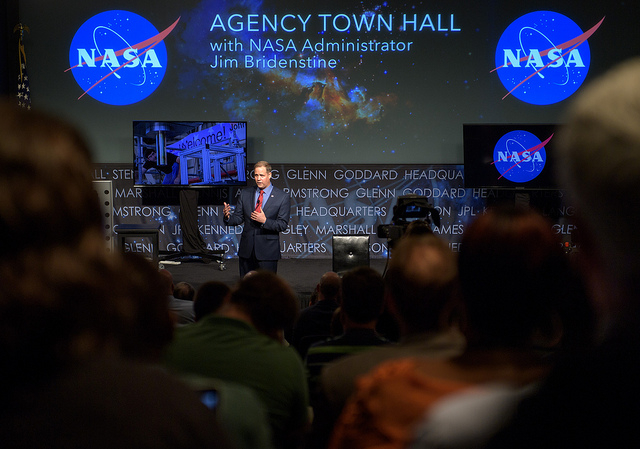
NASA Administrator Jim Bridenstine is seen during a NASA town hall event, Thursday, May 17, 2018 at NASA Headquarters in Washington. Credit: NASA/Bill Ingalls
NASA response
The following is a statement from NASA Administrator Jim Bridenstine on Thursday’s signing of Space Policy Directive-2 by President Donald Trump:
“NASA is pleased with the White House’s continued commitment to advancing America’s leadership in space. Space Policy Directive-2 (SPD-2) is another step towards bolstering our nation’s dedication to uncovering new knowledge, protecting our national security, developing breakthrough technologies, and creating new jobs.
“Our thriving space economy will continue to grow and support our missions to the Moon and Mars thanks to the Administration’s long-term investment in commercial partners who now successfully carry research and cargo to the International Space Station, and will soon transport U.S. astronauts from American soil for the first time since 2011.
“Giving American entrepreneurs the tools and guidance to pursue innovation to the best of their abilities has served our space program well from the beginning, and allows the government to purchase services it needs while we focus on returning to the Moon, expanding our presence on Mars, and pushing deeper into space.
“We look forward to working with the Secretary of Transportation as that agency works on transforming the licensing of commercial space flight launch and re-entry and to coordinating with the Department of Commerce as it consolidates commercial spaceflight activities in the Office of the Secretary.
“A light but focused regulatory touch will help our industry partners provide the best and safest services for our nation and expedite their work. There are many innovative companies across this nation working hard to build a bright future in space, and our policies should help ensure their success on all fronts.
“SPD-2 provides yet another way for the members of the National Space Council to provide much-needed direction for the many different aspects of our nation’s activity in space, providing communication and coordination on these complex enterprises for the benefit of our nation and the world.”

ROC™ FALL
Credit: Roccor
A deployable atmospheric drag deorbit device called ROC™ FALL has entered into the marketplace, facilitating the reliable and predictable passive deorbit of spacecraft at end-of-life.
Roccor, based in Longmont, Colorado, has developed a simple roll-out drag sail design to meet the Inter-Agency Space Debris Coordination Committee (IADC) 25-year deorbit lifetime guideline.
Recently, a large defense contractor developing a 150kg class small satellite for launch on the U.S. Air Force’s Space Test Program-2 (STP2) mission came to Roccor to provide a baseline strategy to ensure deorbit within 25 years after the spacecraft’s end of life. The booster for STP2 is a SpaceX Falcon Heavy to be loaded with a cluster of military and scientific research satellites.
Despite being given minimal payload volume, mass, development time, and budget with which to work, Roccor was able to develop a simple roll-out drag sail design to meet the requirements.
The result was Roccor’s ROC™ FALL concept, a cost-effective solution with regulatory approval for end-of-life management.

Credit: Roccor
Two tail-feathers
“Given the hazard to all space users that uncontrolled orbital debris can pose, for example the recent Chinese Space Station that crashed to Earth, it is more important than ever to have systems in place upon launch that will ensure safe end-of-life systems now and decades to come,” said Doug Campbell, president and CEO of Roccor, in a press statement.
Dana Turse, Director of Space R&D Programs, Roccor adds that the FCC is now enforcing this 25-year standard on all U.S.-based satellite users who apply for an FCC license. “Yes, U.S. satellites that carry radios that communicate with the ground must have an FCC license in order to operate… and that’s why the FCC is interested in space trash!”
Turse notes that Roccor conceived of the idea to add two tail-feather-light deployable sheets to an unused outer deck of the satellite.

Credit: Roccor
“At the end of the satellite’s useful life, these so-called ROC™ FALL “feathers”2 will be extended out several meters in length and produce enough drag to slow the satellite gradually and ensure it de-orbits long before the IADC-mandated 25-year limit,” Turse explains.
Reverse the trend
“So, we know we can reverse the trend of increasing space debris, and we’ve shown it doesn’t have to break the bank,” Turse continues. “Moreover, we believe we should not wait for international treaties or further regulations from the U.S. government to compel us to do so. The US satellite industry should embrace a Space Age leave no trace ethic and show the rest of the spacefaring nations how to protect the economic – if not environmental – sanctity of space,” she concludes.
For more information, go to:
Also, go to this short video:


