Archive for the ‘Space News’ Category
 Author:
  June 17th, 2018
Earth orbit is a junkyard of human-made space clutter.
Credit: Space Junk 3D, LLC. Melrae Pictures
A new report — Safeguarding the Heavens: The United States and the Future of Norms of Behavior in Outer Space – has been issued by the Brookings Institution in Washington, D.C.
This policy paper has been scribed by Frank A. Rose, a senior fellow for security and strategy in the Foreign Policy program at the Brookings Institution.
Orbital debris, anti-satellites

The crowded space environment may look like this a decade from now, with proposed mega-constellations.
Credit: Center for Space Policy & Strategy
Rose explains that access to outer space and space-derived data is becoming increasingly important to the national and economic security of the United States and its allies. Yet that access is increasingly at risk due to the growth of orbital debris and the development of anti-satellite capabilities by potential adversaries like Russia and China.
The United States will need a comprehensive strategy in order to manage this increasingly congested and contested environment.
A key element of that strategy should be the development of effective bilateral and multilateral norms of behavior in outer space.
To read the full paper, go to:
https://www.brookings.edu/wp-content/uploads/2018/06/FP_20180614_safeguarding_the_heavens.pdf
 Posted in
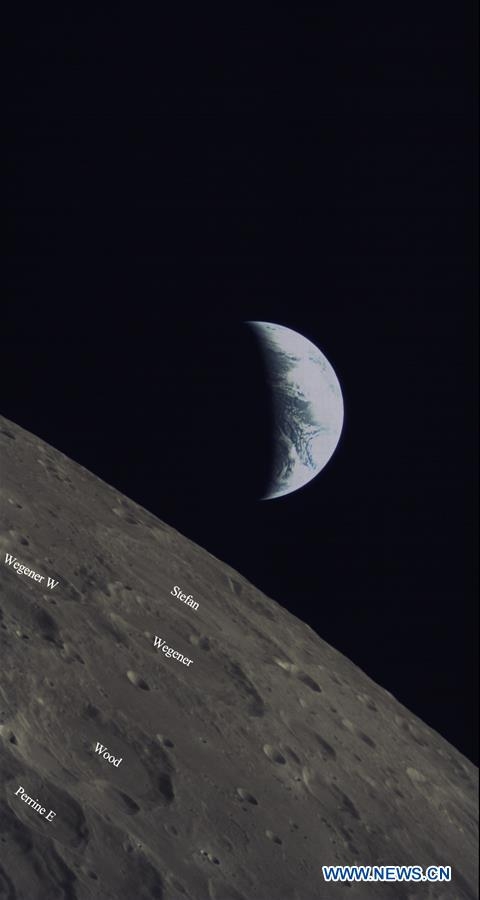
Credit: CNSA/King Abdulaziz City for Science and Technology
China and Saudi Arabia have jointly unveiled lunar images acquired through cooperation on the relay satellite mission for the upcoming Chang’e-4 lunar mission.
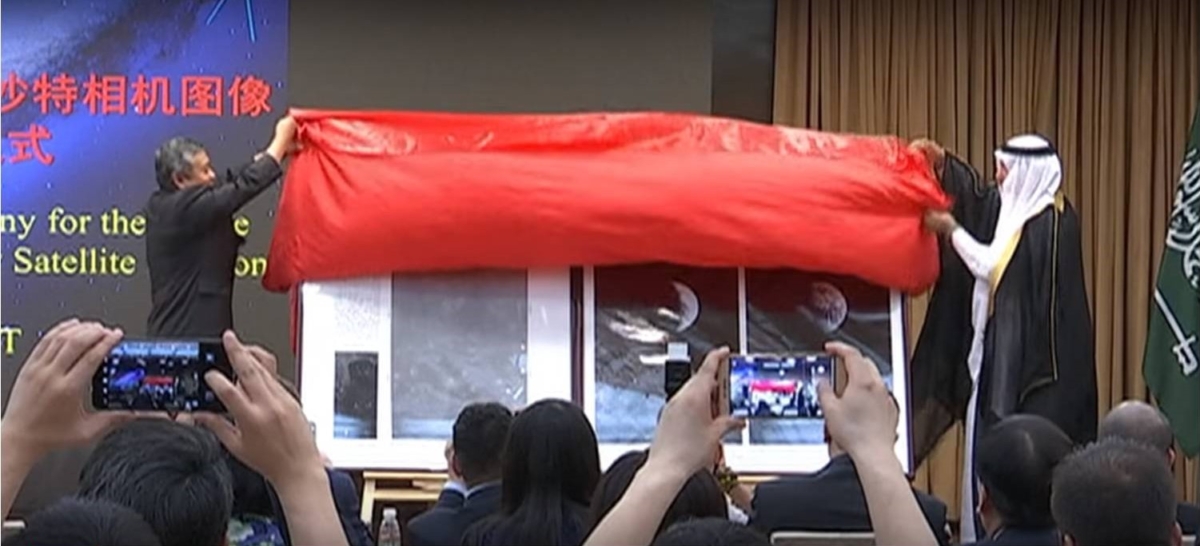
Moon imagery unveiled in Beijing on June 14 by Zhang Kejian, head of the China National Space Administration (CNSA), and Prince Dr. Turki Saud Mohammad Al Saud, president of the King Abdulaziz City for Science and Technology of Saudi Arabia.
Credit: CNSA/Screengrab
An optical camera, developed by the King Abdulaziz City for Science and Technology of Saudi Arabia, was installed on a micro satellite, named Longjiang-2. The small spacecraft is a hitchhiking probe that was sent moonward on the May 21 relay satellite launch.
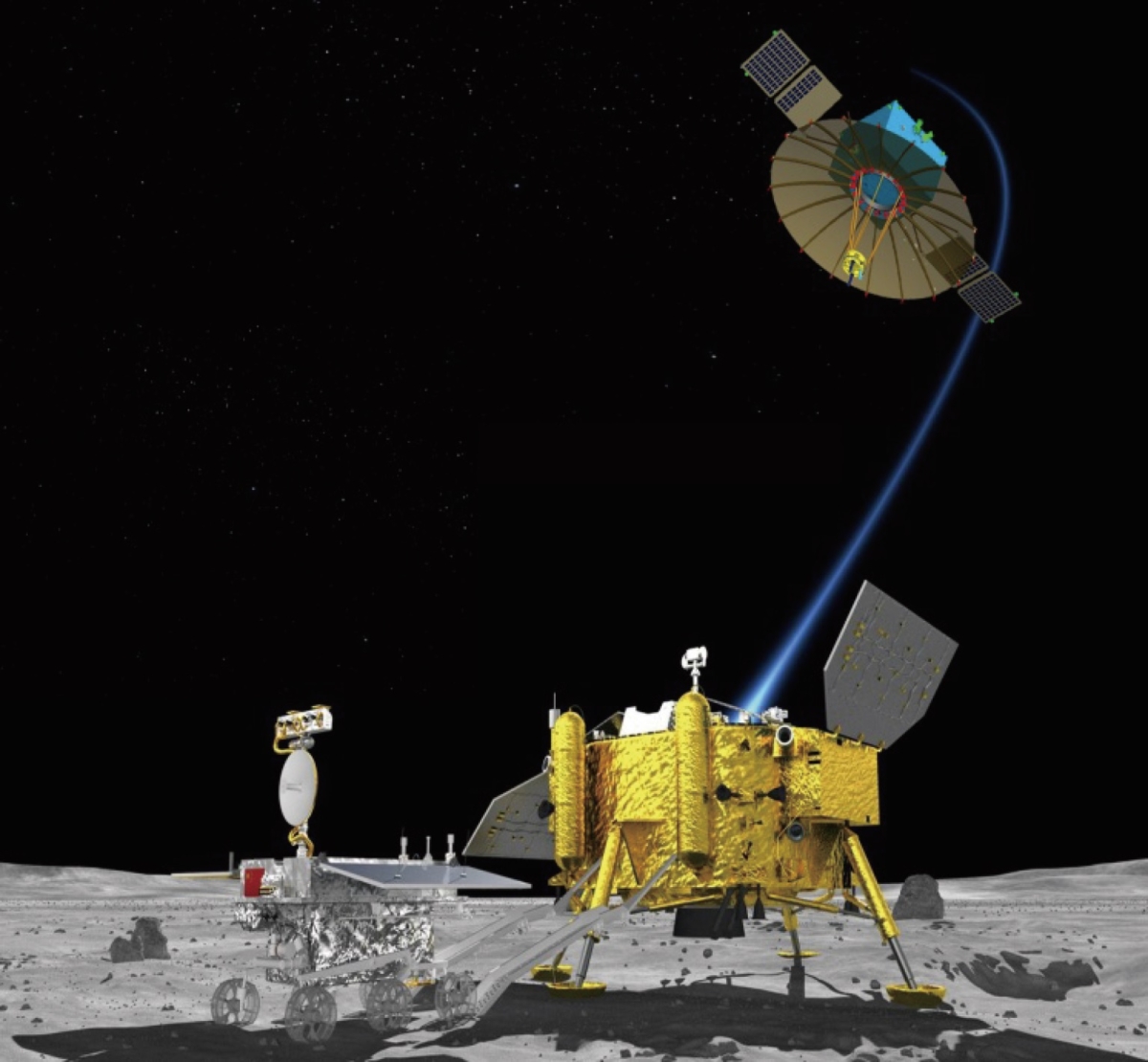
Chang’e-4 Moon lander and rover.
Credit: Chinese Academy of Sciences
Lunar images, data
The camera, which began to work on May 28, has conducted observations of the Moon and acquired a series of lunar images and data, as reported by Xinhua, the Chinese news agency.
The images were unveiled in Beijing on June 14 by Zhang Kejian, head of the China National Space Administration (CNSA), and Prince Dr. Turki Saud Mohammad Al Saud, president of the King Abdulaziz City for Science and Technology of Saudi Arabia.
Halo orbit
The relay satellite for China’s Chang’e-4 lunar lander/rover — named Queqiao or Magpie Bridge — was launched on May 21.
Last Thursday, after a journey of more than 20 days, Queqiao entered a halo orbit around the second Lagrangian (L2) point of the Earth-Moon system, about 40,389 miles (65,000 kilometers) from the Moon.
This relay satellite will handle back and forth transmissions between Earth and the Chang’e-4 lunar lander expected to be lofted in late December. If successful, the spacecraft will touch down on the Moon’s far side – the first spacecraft to do so — in January 2019.
Landing region
The candidate landing region for the Chang’e-4 lander mission is 45°S-46°S 176.4°E-178.8°E, which is in the southern floor of the Von Kármán crater, within the South Pole-Aitken (SPA) basin.

Chang’e-4 landing site: Von Karman Crater as viewed by NASA’s Lunar Reconnaissance Orbiter Camera, or LROC.
Credit: NASA/GSFC/Arizona State University
Chang’e-4 will carry payloads for Germany, the Netherlands, Saudi Arabia and Sweden.
China’s lunar exploration program is designed to be conducted in three phases. The first phase is to orbit the Moon, which was completed by Chang’e-1 in 2009. The second phase is to land on the Moon, which was done by Chang’e-3 in 2013. The third phase is to collect samples and return them to the Earth, which will be advanced by Chang’e-4, Chang’e-5 and Chang’e-6.
The China National Space Administration has released this video spotlighting the newly acquired lunar images taken by the Longjiang-2 micro satellite.
Go to: https://youtu.be/2JS6q0ioBcI?list=PLpGTA7wMEDFjz0Zx93ifOsi92FwylSAS3

Curiosity Mars Hand Lens Imager (MAHLI) photo produced on Sol 2082, June 15, 2018. It is one image of many to create a new selfie.
Credit: NASA/JPL-Caltech/MSSS
NASA’s Curiosity Mars rover is now in Sol 2083. The robot has been busily taking new images to create a “selfie.”
Ken Herkenhoff, a planetary geologist at the USGS in Flagstaff, Arizona, reports that the investigation of the Duluth drill hole is going well, work that continued on Sol 2082.

Curiosity Front Hazcam Left B image acquired on Sol 2082, June 15, 2018.
Credit: NASA/JPL-Caltech
The robot’s Mars Hand Lens Imager (MAHLI) has produced pictures of the drill tailings to look for an imprint of the Alpha Particle X-Ray Spectrometer (APXS) contact sensor, then will acquire another rover selfie, Herkenhoff notes.
Dust storm: environmental effects
“The major dust storm that caused the solar-powered Opportunity rover, on the other side of Mars, to shut down has somewhat darkened the skies over Gale Crater,” Herkenhoff adds, but is not expected to seriously affect Curiosity operations.
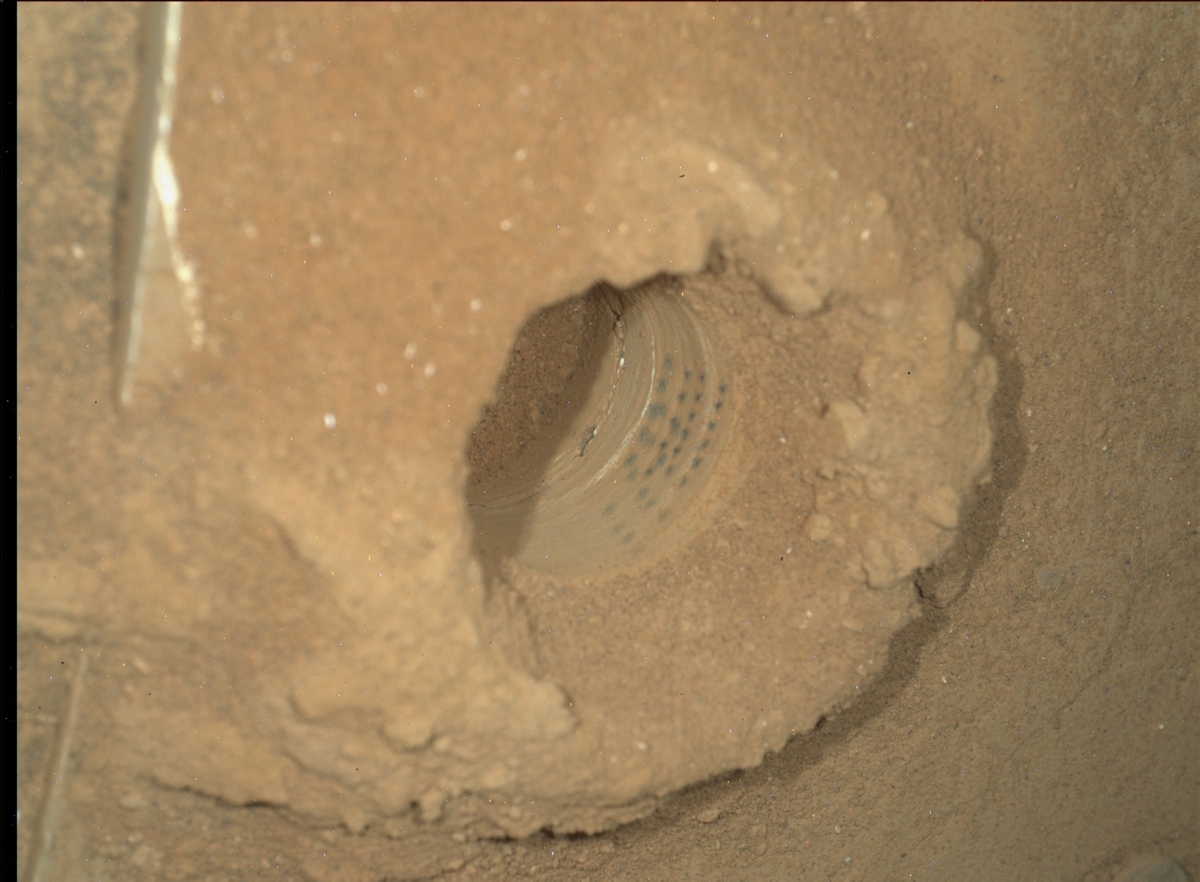
Curiosity Mars Hand Lens Imager (MAHLI) photo produced on Sol 2081, June 14, 2018.
Credit: NASA/JPL-Caltech/MSSS
Still, there is great interest in the environmental effects of the dust storm, so the Sol 2082 plan included more Navcam and Mastcam observations of atmospheric dust and Right Mastcam images intended to detect changes due to winds.
Dump pile
The rover’s Chemistry and Camera (ChemCam) was also to measure the elemental chemistry of the material in the sample dump pile, Herkenhoff notes, “if the wind hasn’t blown the pile away by then!”
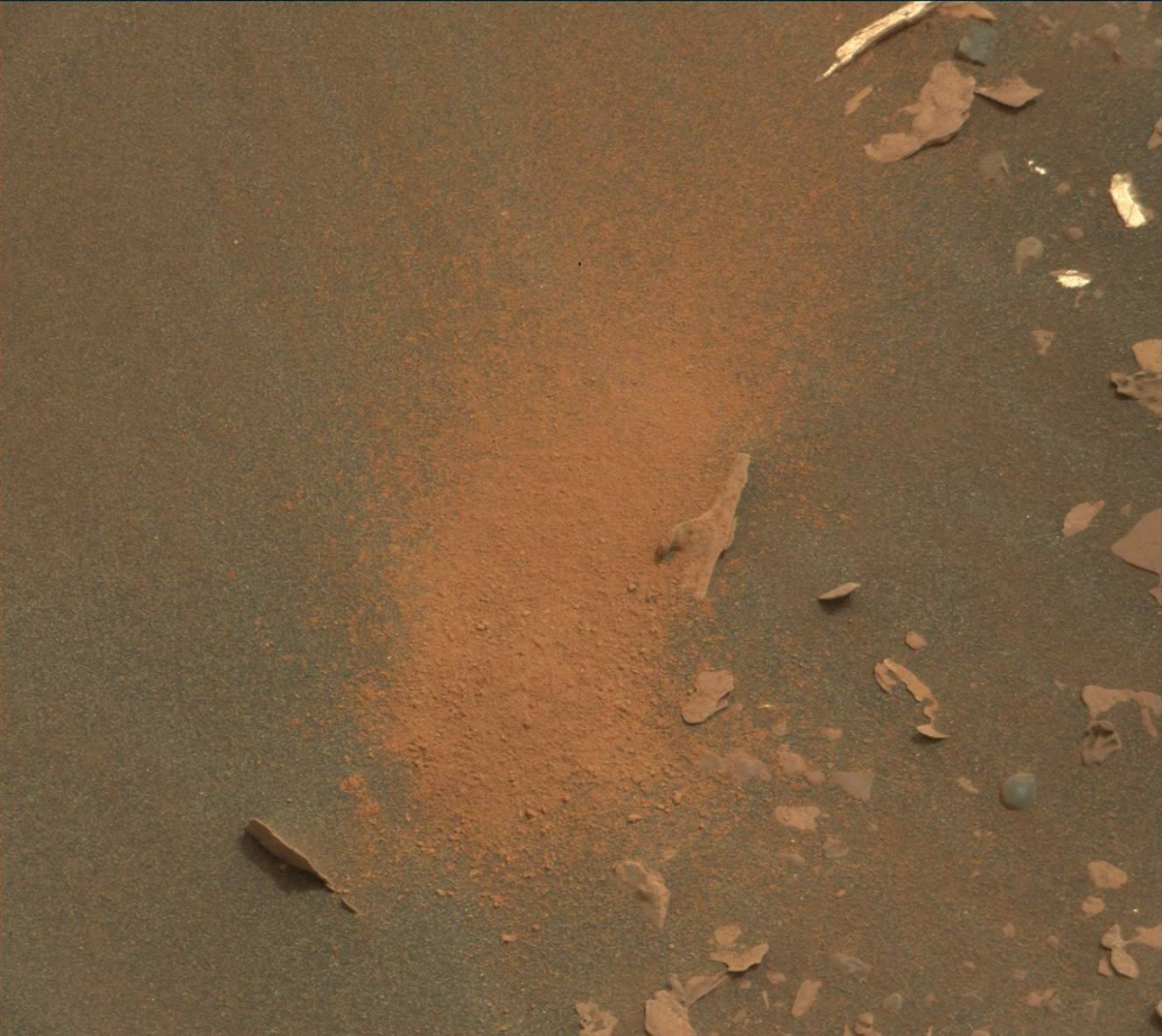
Curiosity Mastcam Right image acquired on Sol 2081, June 14, 2018.
Credit: NASA/JPL-Caltech/MSSS
Lastly, MAHLI was tasked to take images of the calibration targets on the front of the rover to monitor camera performance.
Credit: ISRO
“It is time to reexamine the framework of U.S. space policy in light of the dramatic changes in the space enterprise over the last decade.”
A new report suggests that better standardization of regulations across military, civil, and commercial sectors would help close loopholes and reduce confusion.
That’s a key message from a just issued report — Trespassing on the Final Frontier – Regulatory Challenges for New Space Entrants — issued by The Aerospace Corporation’s Center for Space Policy & Strategy.
The report has been written by Barbara Braun and Eleni “Sam” Sims.
Efficiency and effectiveness
The report notes that there is increased demand across the globe for governments to find ways to improve the efficiency and effectiveness of service delivery. The space regulatory environment is not an exception to this trend.
Ensuring that U.S. space policy is agile enough to evolve with a growing commercial space industry can help make sure both access to space for all and safety in space for all.
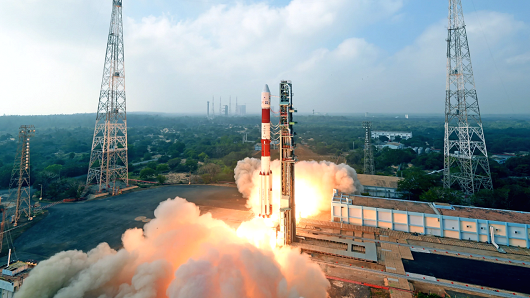
Highlighted in the report is the case of the launch of four small satellites, built by Swarm Technologies, rocketed into Earth orbit by an Indian Polar Satellite Launch Vehicle rocket — despite being denied frequency approval ahead of time by the U.S. Federal Communications Commission.
To review this informative report, go to:
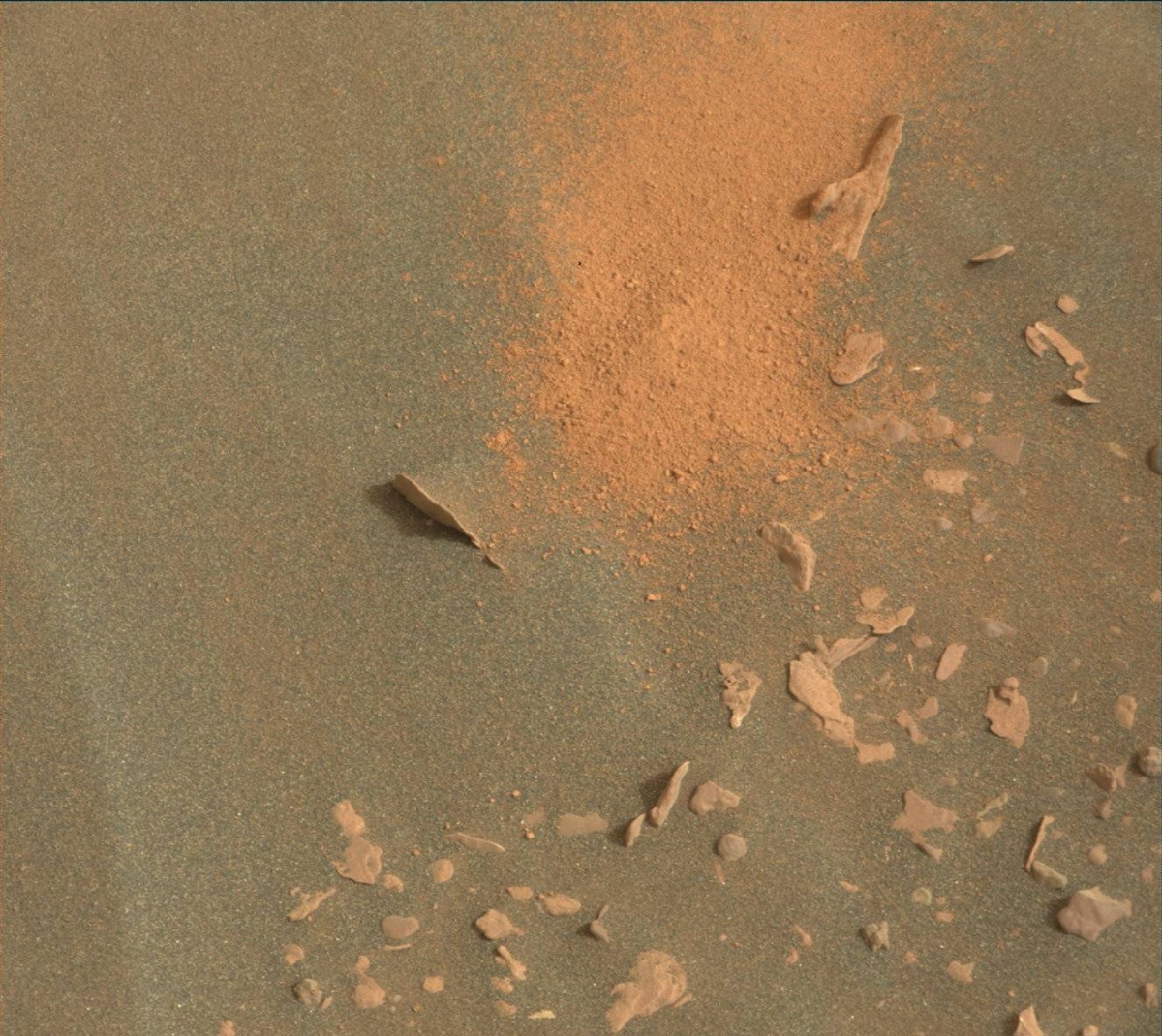
Curiosity Mastcam Right image taken on Sol 2080, June 13, 2018.
Credit: NASA/JPL-Caltech/MSSS
NASA’s Curiosity Mars rover is now in Sol 2081.
Roger Wiens, a geochemist at Los Alamos National Laboratory, reports that the final several sols of Curiosity’s drill activities at “Duluth” are devoted mostly to imaging and to analysis of the pile of drill tailings that are dumped on the ground after the delivery to rover instruments.
“Some people think dirt is uninteresting,” Wiens notes. Curiosity’s “bunch of dirt” is the dump pile consisting of drill tailings. Photos taken by the robot’s Mars Hand Lens Imager (MAHLI) shows the pile that’s roughly 16.3 by 12.2 centimeters in dimension – and the tailings bunched around the drill hole itself.
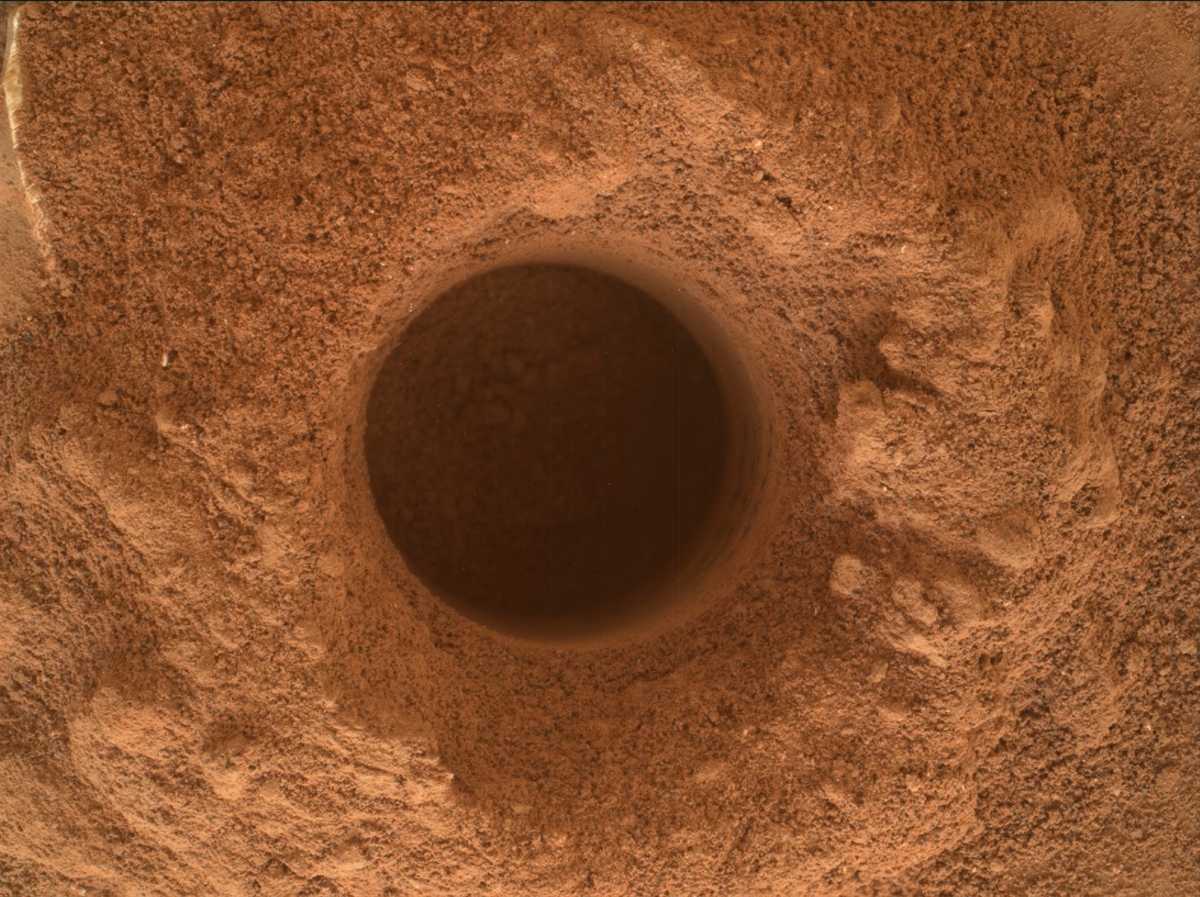
Curiosity Mars Hand Lens Imager photo produced on Sol 2081, June 14, 2018.
Credit: NASA/JPL-Caltech/MSSS
Dusty surroundings
The rover plans involve science activities with Mastcam and Chemistry and Camera (ChemCam) passive multispectral observations of the dump pile, and Mastcam and ChemCam active interrogation of target “Elbow Creek” (a vein).
Also, the rover’s Alpha Particle X-Ray Spectrometer (APXS) instrument is placed in position on the dump pile for an overnight integration, Wiens points out.
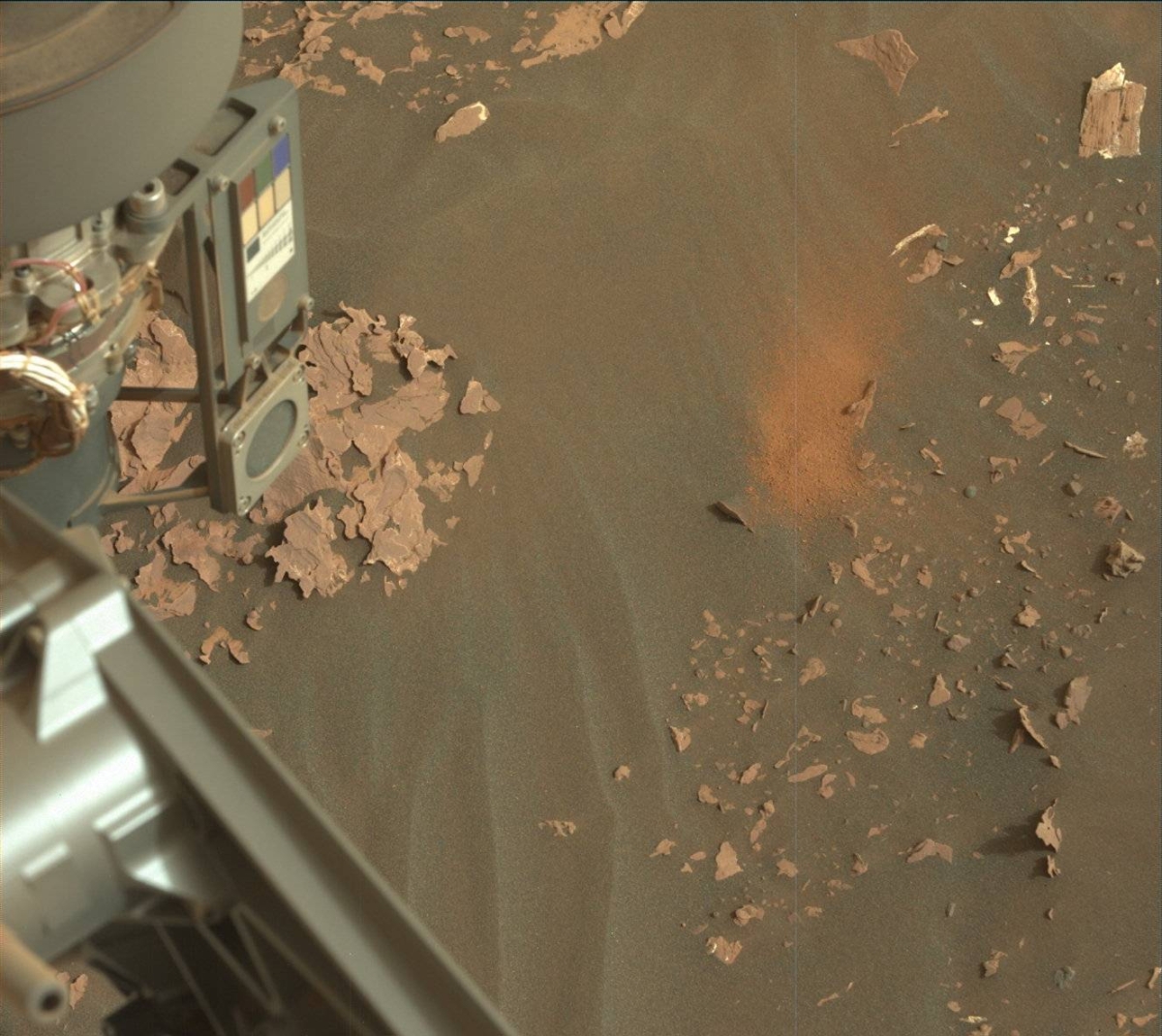
Curiosity Mastcam Left photo taken on Sol 2080, June 13, 2018.
Credit: NASA/JPL-Caltech/MSSS
“In between these activities the rover will continue observing the dust and surroundings,” Wiens explains, with Mastcam continuing a change-detection series of daily observations of the nearby surface, as well as looking at the observation tray and getting a view out to the crater rim.
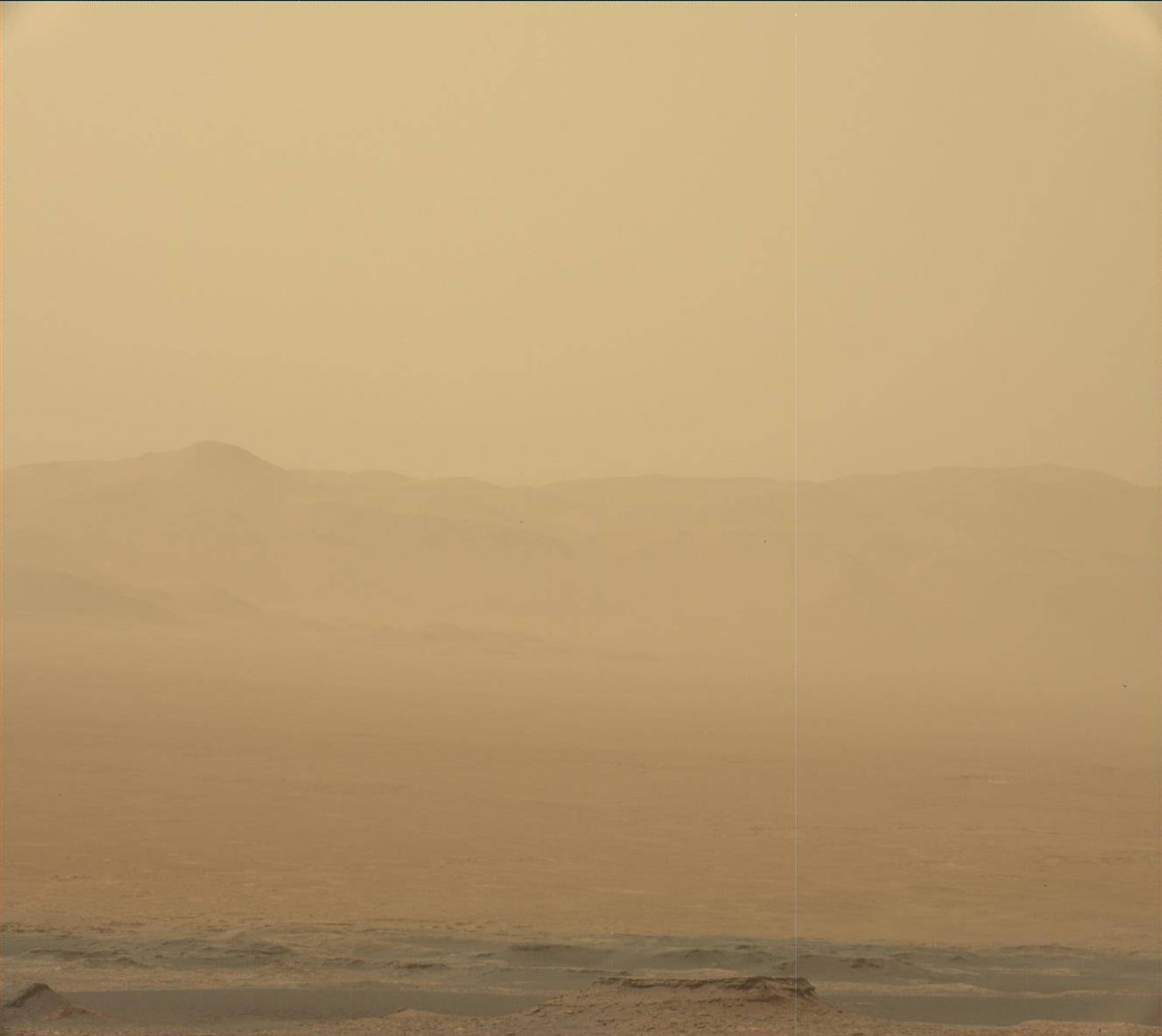
Curiosity Mastcam Left image acquired on Sol 2079, June 12, 2018.
Credit: NASA/JPL-Caltech/MSSS

Credit: ESA/Hubble & NASA
NASA, with support from Bryce Space and Technology, has developed a map capturing a cultural perspective of locations in the solar system and points beyond. The Strategic Geography of the Solar System and Beyond was produced for NASA Space and Technology Mission Directorate Office of Emerging Space.
The map’s emphasis is on three parts of human geography:
— strategic geography (control of, or access to, spatial areas that have an impact on the security and prosperity of nations),
— economic geography (patterns of trade and finance, infrastructure and facilities that contribute to the economy of a region), and
— social geography (interaction of social processes, cultural products and norms and their variations).
Unique in that it is not strictly science or engineering focused, the wall chart is designed to elicit discussion and creative thinking about our future in space.
Go to: https://brycetech.com/insight-2018-05-21.html

Axiom space station.
Credit: Axiom Space
Axiom Space is offering expeditions to space aboard the International Space Station (ISS)…and ultimately the Axiom commercial space station complex.
Ten-day missions are priced at $55 million with the first launch occurring in 2020. The price includes transportation to and from the ISS, everything necessary to live and enjoy the experience while on orbit, and a 15-week, transformational training experience.
Axiom Space is building the world’s first commercial space station. The Axiom commercial space station complex would be assembled while connected to ISS and separate upon the retirement of the ISS.
Axiom Space is headquartered in Houston, Texas and is led by Mr. Michael Suffredini, former Manager of NASA’s International Space Station program.

Axiom Station Crew Quarter View.
Credit: Axiom Space
Dream project
The new station habitation spaces, including the crew quarters, dining area and galley, are being designed in partnership with Philippe Starck, an architect and designer.

Axiom Station Cupola View.
Credit: Axiom Space
“This is a dream project for a creator like me with a genuine fascination for aviation and space exploration,” said Starck in a press statement. “The greatest human intelligence in the world focuses on space research. My vision for the Habitation Module on Axiom Station is to create a comfortable egg that is inviting with soft walls and a design perfectly in harmony with the values and movements of the human body in zero gravity.”
For more information, go to:
Panoramic Camera: image from Opportunity on Sol 5111.
Credit: NASA/JPL
NASA will host a media teleconference today at 10:30 a.m. PDT (1:30 p.m. EDT) Wednesday, June 13, to discuss the health of NASA’s Opportunity rover.
A massive Martian dust storm is affecting operations of the solar powered robot. The storm is one of the most intense ever observed on the Red Planet.
As of June 10, the dust storm covered more than 15.8 million square miles (41 million square kilometers) — about the area of North America and Russia combined.
It has blocked out so much sunlight, it has effectively turned day into night for Opportunity which is located near the center of the storm, inside Mars’ Perseverance Valley on the west rim of Endeavour Crater.
Low-power response
In response, on Monday, June 4, 2018 and Tuesday, June 5, 2018 (Sols 5106 and 5107), two low-power plans were developed for Opportunity. Since then the atmosphere over the rover has continued to deteriorate. On Sol 5105 (June 3, 2018; the last sol of the weekend plan), Opportunity’s solar arrays generated 468 watt-hours of energy with an atmospheric opacity (tau) of around 1.0.
On Sol 5106 (June 4, 2018), energy was down to 345 watt-hours with a tau of 2.1. Additionally, on Sol 5107 (June 6, 2018), the energy dropped further to 133 watt-hours. We were unable to get a measurement of tau on Sol 5107 (June 6, 2018), but it is estimated to be above 3.0.
Opportunity has not seen this level of atmospheric opacity in over a decade.
Wake-up calls
In Sol 5108 (June 7, 2018) the rover team crafted a minimum-power two-sol plan, where the rover wakes on the first sol only to receive the morning commands then sleeps to the next sol with a brief wake-up in the morning. Subsequently, naps until the afternoon for a quick atmospheric measurement with the Panoramic Camera (Pancam) then a brief communication session with MRO and back to sleep.
The rover team will likely continue this low-power strategy for Opportunity until conditions improve.
Far from dead
Opportunity landed in Meridiani Planum on January 24, 2004 at 9:05 pm Pacific Time.
Rumors of Opportunity’s death are very premature, explains James W. Rice, Jr., Geology Team Leader on the Mars Exploration Rover Project. “We are far from dead at this moment! It’s a grim situation right now, no doubt about it, and we still have a long way to go in this our latest challenge on the Red Planet. However, we have an impressive record of overcoming challenges in the past 14.5 years and our team is the best on both worlds!”
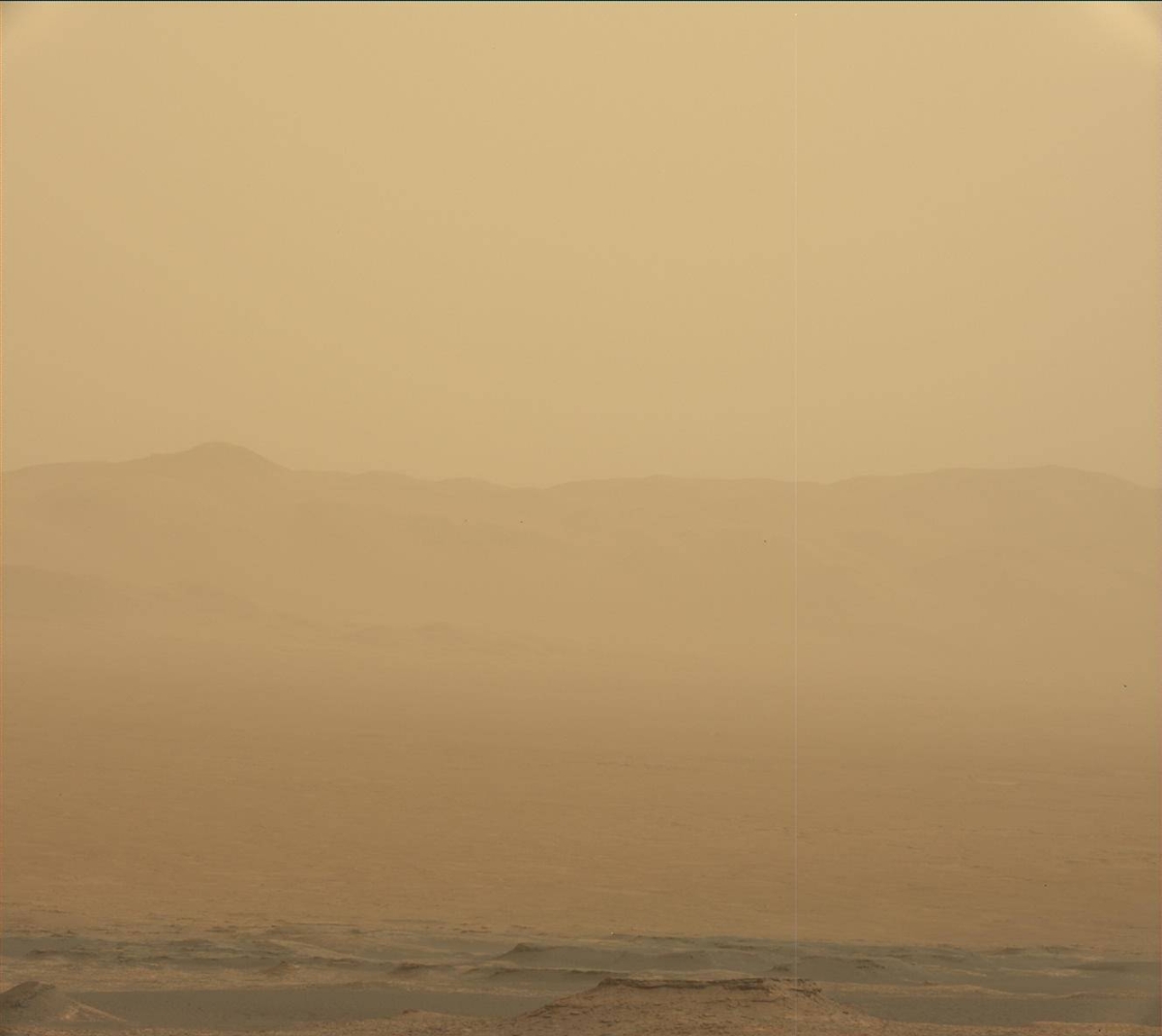
Curiosity Mastcam Left image acquired on Sol 2077, June 10, 2018.
Credit: NASA/JPL-Caltech/MSSS
Now in Sol 2079, NASA’s Curiosity Mars rover is monitoring an evolving dust storm on the Red Planet.
Over the weekend, an error cropped up during a regular test of the high gain antenna (HGA) actuators, leaving the antenna unavailable for uplink of a recent plan, but otherwise healthy, reports Michelle Minitti, a planetary geologist for AFramework in Silver Spring, Maryland.
The team instead was to use Mars Reconnaissance Orbiter (MRO) to uplink a brief suite of activities to the rover, including the commands to recover the high gain antenna for use.
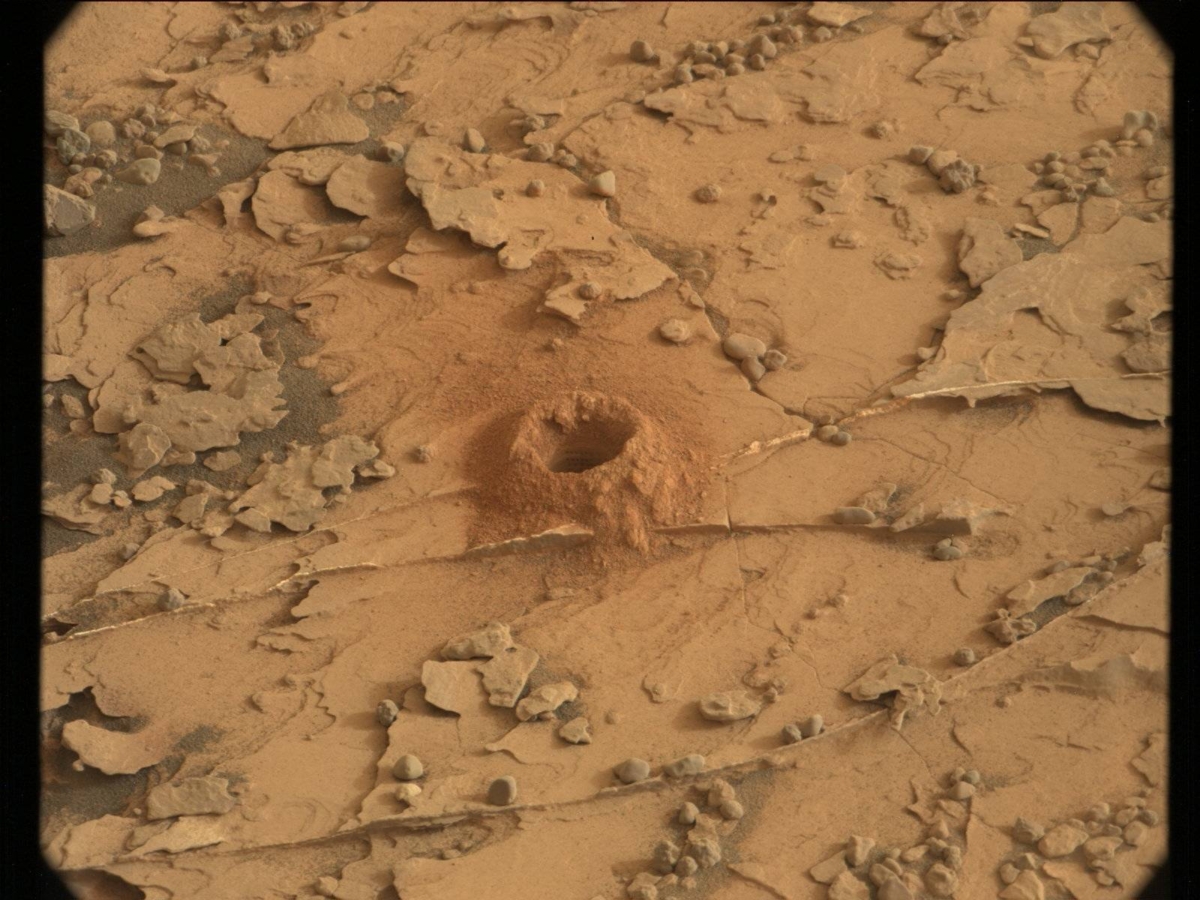
Curiosity Mastcam Right photo taken on Sol 2078, June 11, 2018.
Credit: NASA/JPL-Caltech/MSSS
Drill-related duties
The MRO uplink window is hours later than a usual HGA uplink window, so with less time in the plan, so robot operators had to postpone drill-related work until a later plan, Minitti adds.
Curiosity researchers, however, did get confirmation that all is ready for the next step of drill-related activities: dumping the “Duluth” sample for analysis by Alpha Particle X-Ray Spectrometer (APXS), the rover’s Mars Hand Lens Imager (MAHLI), Chemistry and Camera (ChemCam) and Mastcam.
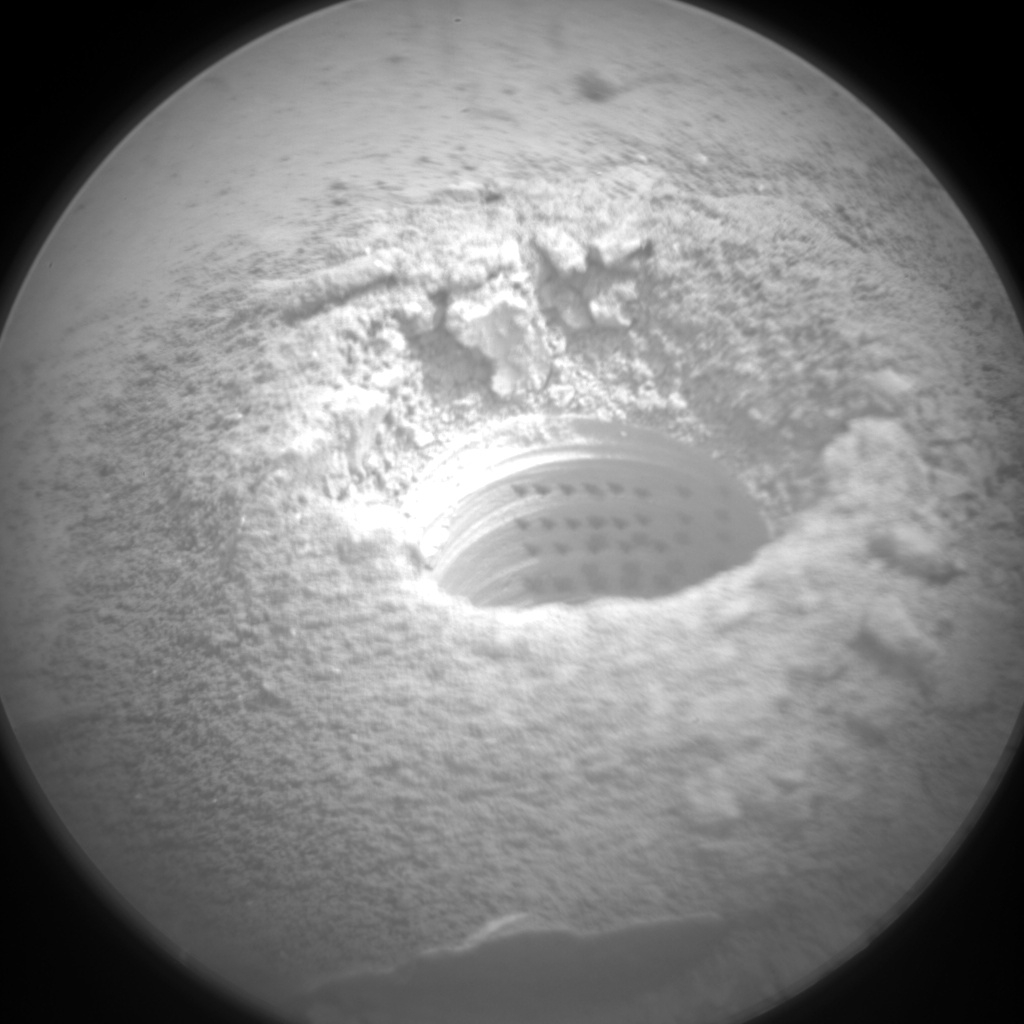
Curiosity ChemCam Remote Micro-Imager photo taken on Sol 2077, June 10, 2018.
Credit: NASA/JPL-Caltech/LANL
A new plan calls for high-priority activities dedicated to monitoring the changing conditions associated with the ever-growing dust storm on Mars, Minitti notes.
Dust loads
“Mastcam will measure the dust load in the atmosphere, and image two areas, ‘Noodle Lake’ and a spot where a test Duluth sample portion was dropped, to look for wind-induced changes,” Minitti reports.
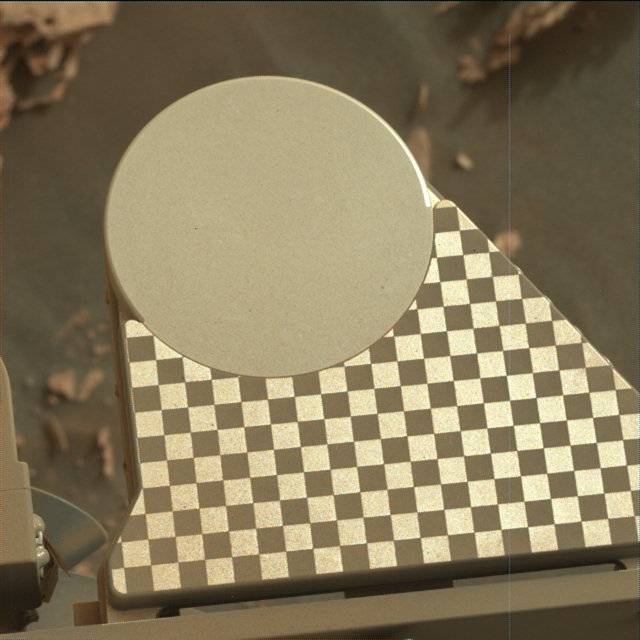
Curiosity Mastcam Left image taken on Sol 2078, June 11, 2018 at 08:11:51 UTC.
Credit: NASA/JPL-Caltech/MSSS
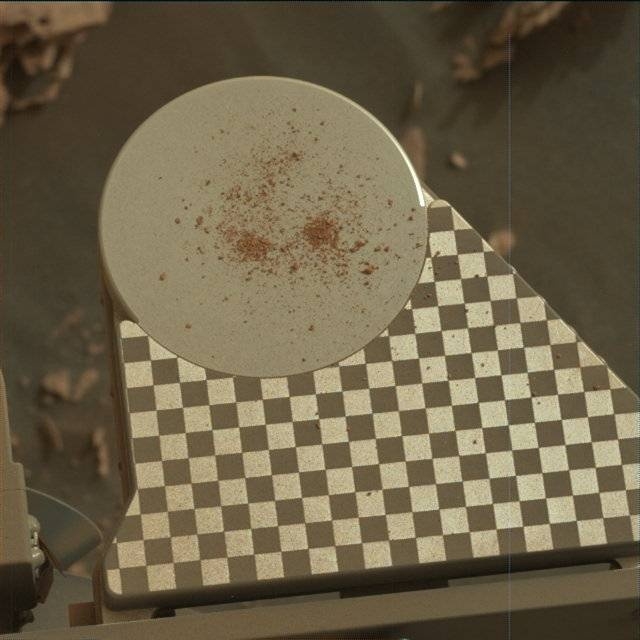
Curiosity Mastcam Left photo acquired on Sol 2078 June 11, 2018 at 08:16:40 UTC.
Credit: NASA/JPL-Caltech/MSSS
Regular Rover Environmental Monitoring Station (REMS) measurements will provide scientists the data they need for weather reports as the storm builds.

Credit: Boeing
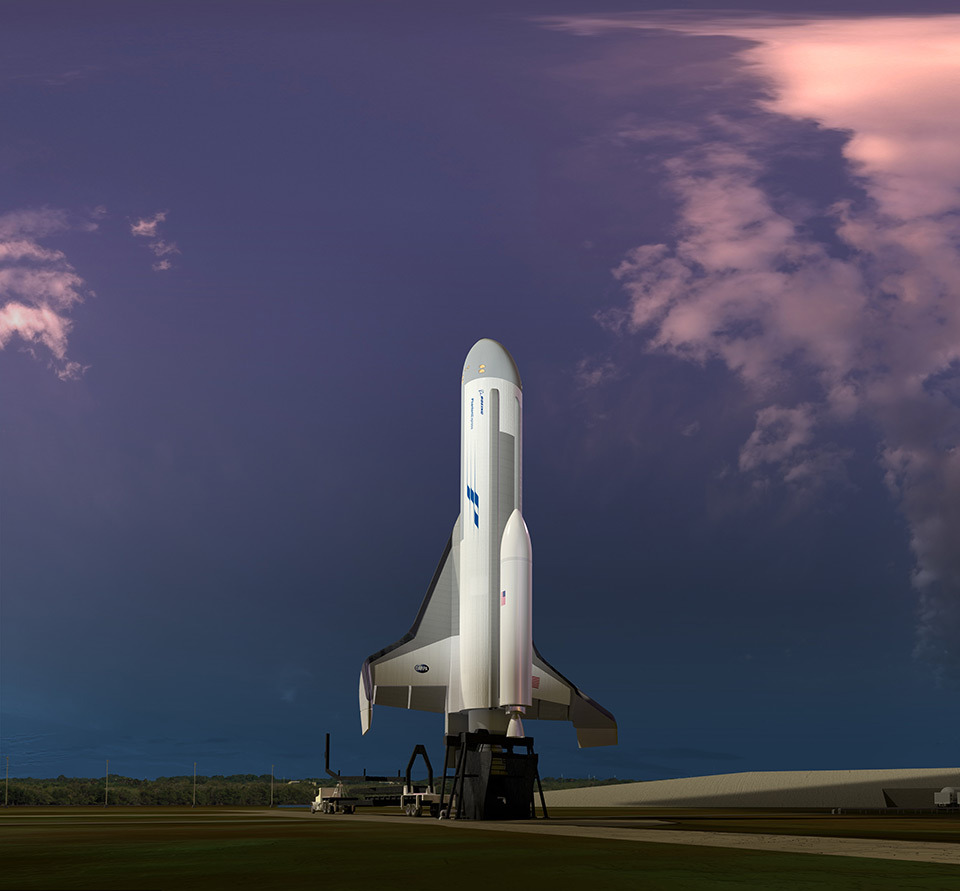
The powerhouse engine for the reusable Phantom Express spaceplane is slated to undergo a series of daily hot-fire tests at NASA’s Stennis Center in Mississippi starting this summer.
Boeing is building the spaceplane under the Defense Advanced Research Projects Agency (DARPA) program.
The reusable Phantom Express spaceplane will take off vertically and land horizontally. The vehicle will be equipped with an expendable second stage capable of placing up to 3,000 pounds (1,361 kg) of payload into low Earth orbit.
Behind the program is demonstrating a new paradigm for more routine, responsive and affordable space access.
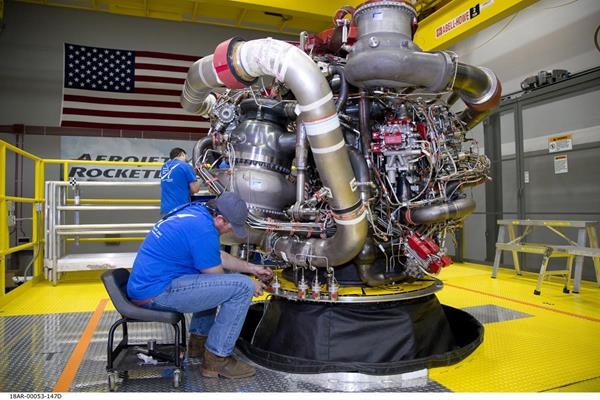
Aerojet Rocketdyne technicians complete final assembly on the first AR-22 rocket engine, shown at its facility located at Stennis Space Center. The engine was built for Boeing as part of the U.S. Defense Advanced Research Projects Agency Experimental Spaceplane program.
Credit: Aerojet Rocketdyne
Reusability feature
Aerojet Rocketdyne’s AR-22 engine is capable of generating about 375,000 pounds (170,097 kg) of thrust and was designed to fly 55 missions with service every 10 missions. This reusability feature makes the AR-22 ideally suited for Phantom Express.
Derived from the Space Shuttle Main Engine that was designed from the outset for reusability, the AR-22 is the main propulsion for Phantom Express.
Aircraft-like operations
In a company statement, AR-22 Program Manager Jeff Haynes said: “The aircraft-like operations of Phantom Express are an important factor in the rapid turnaround of this spaceplane.” Haynes added that the engine has a hinged nacelle “that makes it easier to access and inspect the engines for rapid turnaround.”
Credit: Boeing
AR-22 testing will also provide insights that will be used to refine Phantom Express flight and turnaround procedures, while also informing the design requirements for the new ground infrastructure that Boeing is developing for the flight program.

