Archive for the ‘Space News’ Category
 Author:
  November 22nd, 2025
Image credit: CCTV/Inside Outer Space screengrab
China purposely delayed the return of its Shenzhou–20 crew from the country’s space station. The reason: a suspected impact of space debris that compromised the crew’s return vessel’s window.
Space officials in that country labeled the November 5 wave-off of the crew’s return to Earth as the first successful implementation of an “alternative return procedure” in China’s space station program history.
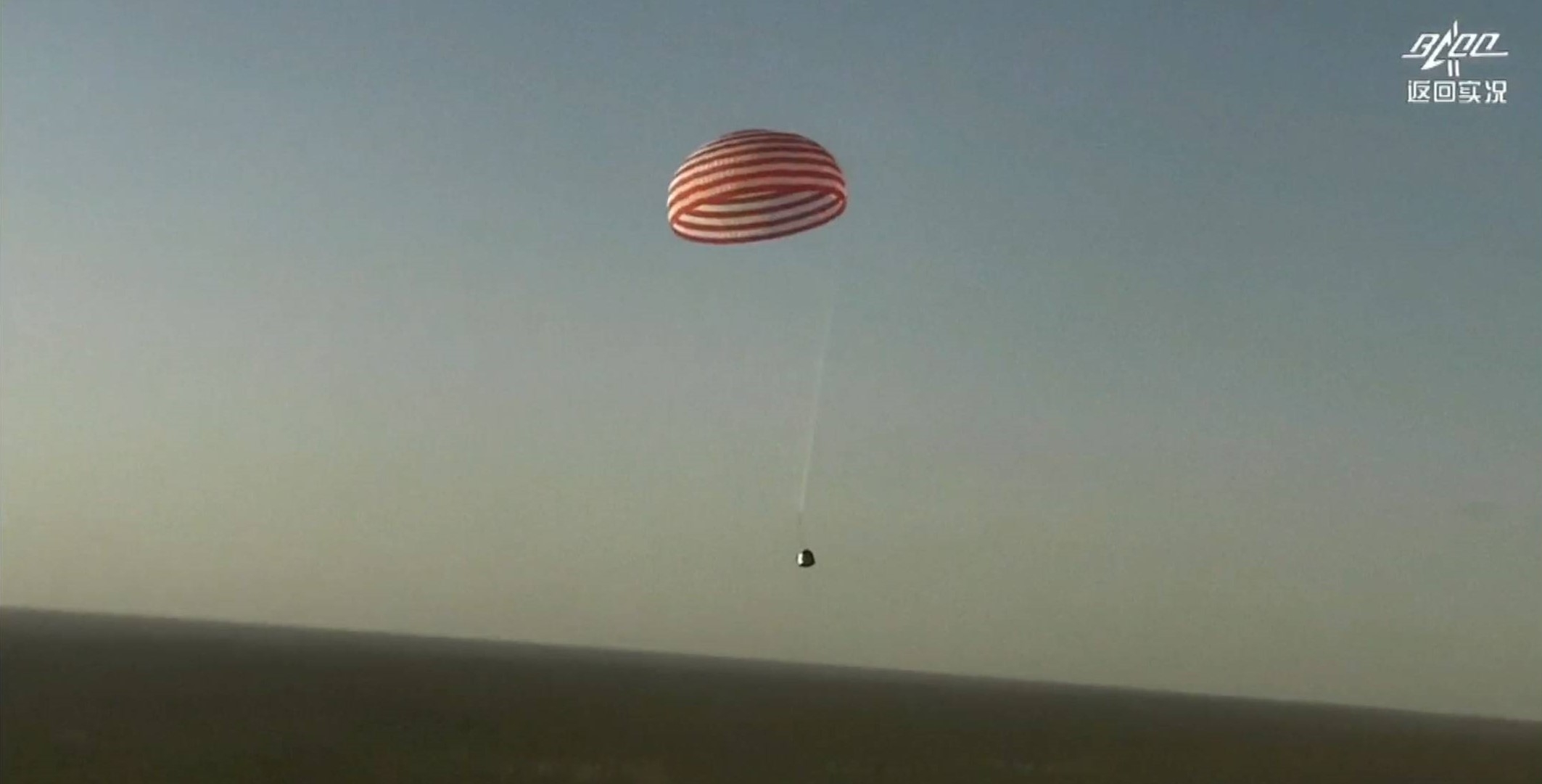
Shenzhou-20 crew back on Earth on November 14. Image credit: CCTV/Inside Outer Space screengrab
The trio of taikonauts did return to Earth in a fresh but “borrowed” Shenzhou-21 spacecraft on November 14. But doing so left the current on-orbit, three-person space station crew with a damaged and docked vehicle that has been deemed unsafe for re-entry.
This incident is a wake-up call by advocates of a space rescue capability, and also a call for an organization to shape that capacity.
Go to my new Space.com story – “Space junk strike on China’s astronaut capsule highlights need for a space rescue service, experts say” – at:
 Posted in

Frank Wolf, a Republican Congressman from Virginia.
Credit: Office of Frank Wolf
The Aerospace Corporation and the Space Policy Institute at George Washington’s Elliott School of International Affairs held a lively debate on “Should the Wolf Amendment be Repealed?”
As background, nearly 15 years after its inclusion in a 2011 annual appropriations bill in the U.S. Congress, the Wolf Amendment remains a hotly debated topic.
It reflects many of the core geopolitical and philosophical issues at the heart of the debate over the U.S.-China relationship on matters of space and more.
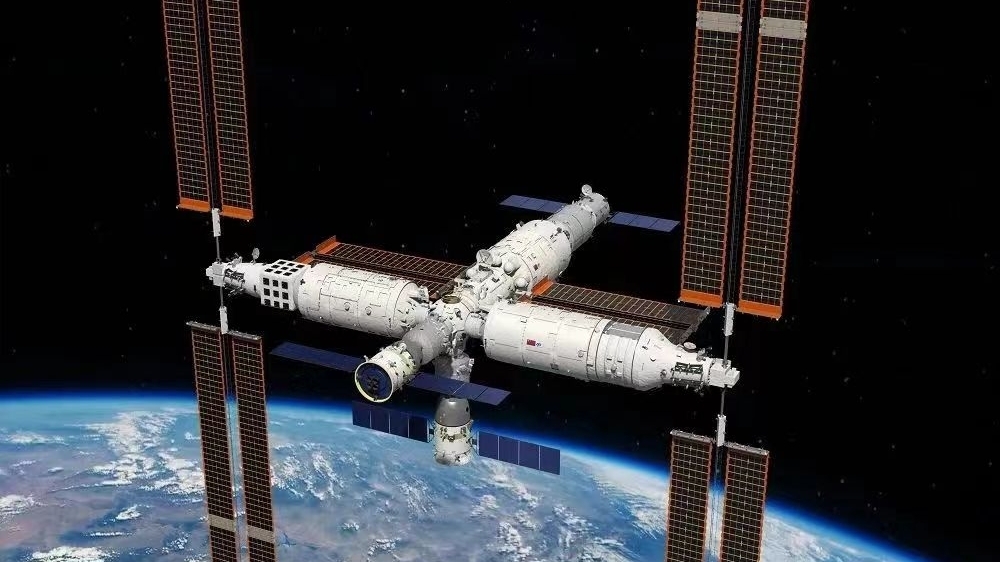
Artwork depicts China’s Tiangong space station.
Image credit: China Manned Space Agency
Contrasting views
Indeed, there are contrasting views on the efficacy and relevance of the Wolf Amendment.
One view argues for retaining the amendment, clarifying its limits and pointing out possible consequences repeal could initiate.
The opposing view recommends repeal of the amendment, calling it a vestige from an earlier time that only creates more bureaucracy and waste while over-politicizing space engagements between the United States and China.

Panel participants
Dan Hart, nonresident Senior Fellow at the Atlantic Council and President of HarTechnologies
Dean Cheng, nonresident Senior Fellow at the Potomac Institute for Policy Studies
Remarks from Space Policy Institute Director Scott Pace, as well as Professor of Practice of International Affairs, Robert Sutter.
The panel was moderated by Brian Weeden, Director of Civil and Commercial Policy, the Aerospace Corporation’s Center for Space Policy and Strategy.
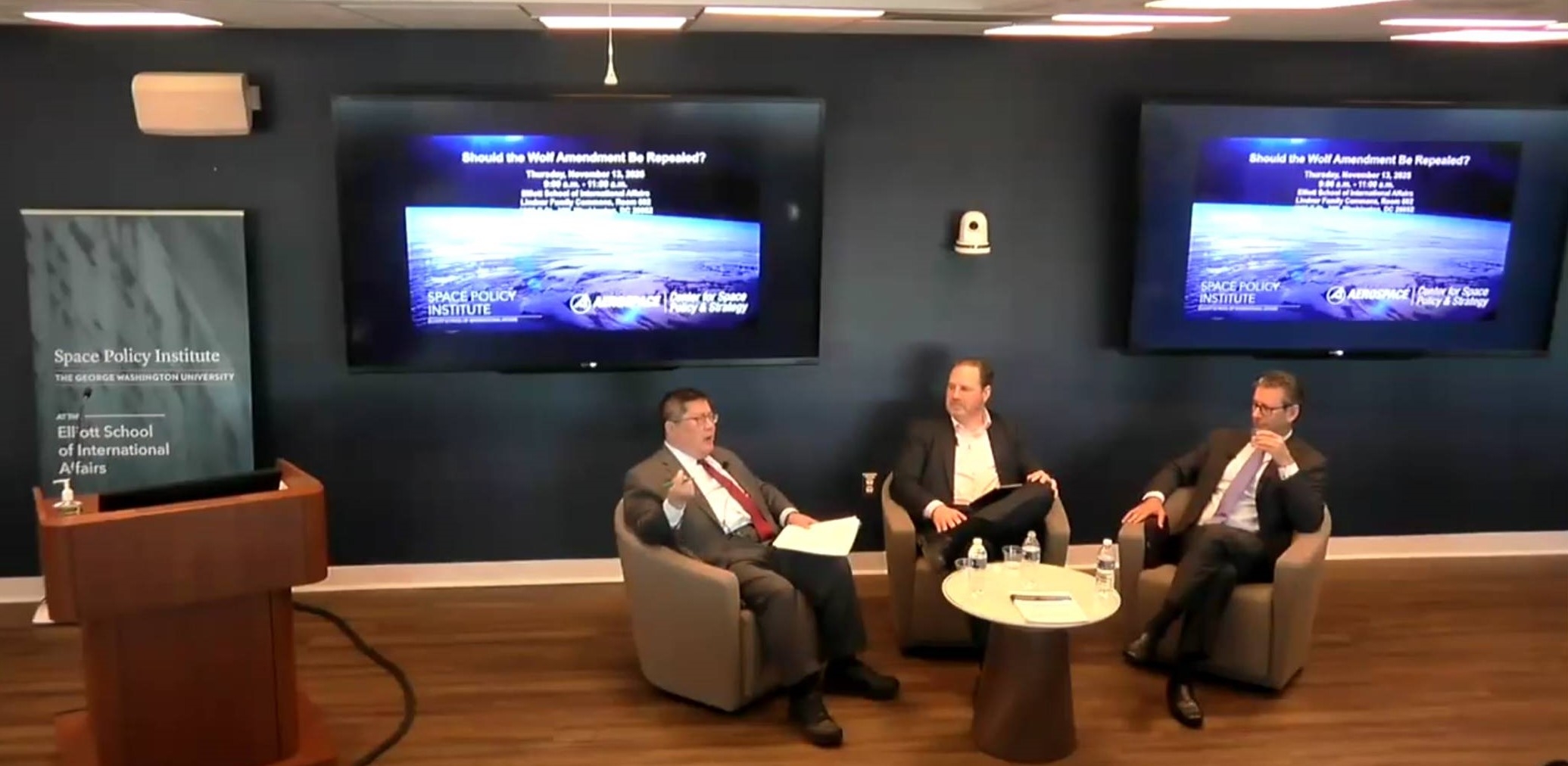
Image credit Space Policy Institute/Inside Outer Space screengrab
A video view of this informative event — held on November 13th — is now available at:
Note: Special thanks to George Leaua for the link!
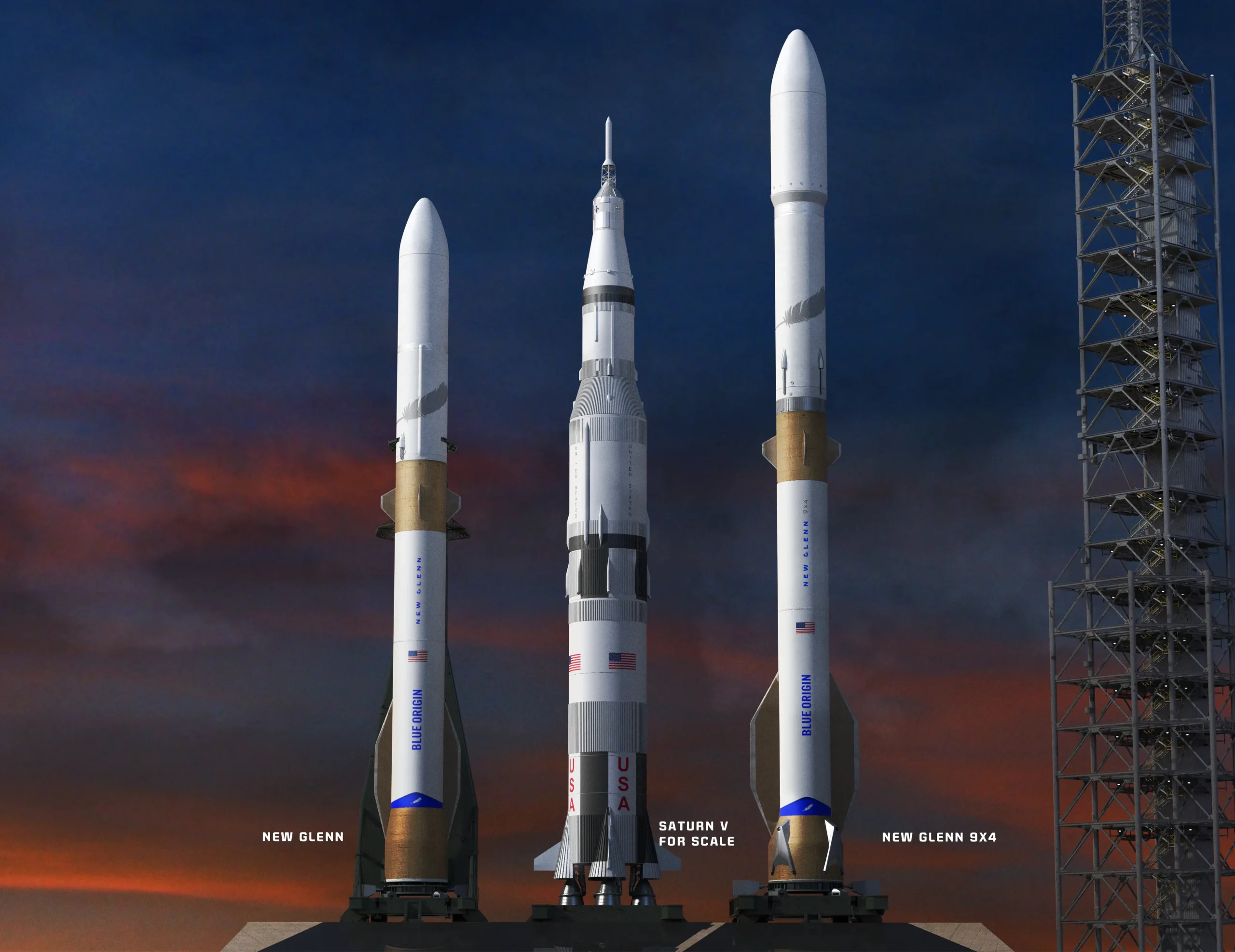
Image credit: Blue Origin
Fresh from its successful New Glenn (NG-2) flight on November 13, an update has been posted by Blue Origin.
The group has announced a series of upgrades designed to increase payload performance and launch cadence of the New Glenn.
According to Blue Origin, the enhancements span propulsion, structures, avionics, reusability, and recovery operations. These enhancements will start to show in upcoming New Glenn missions, starting with the launch of the NG-3.
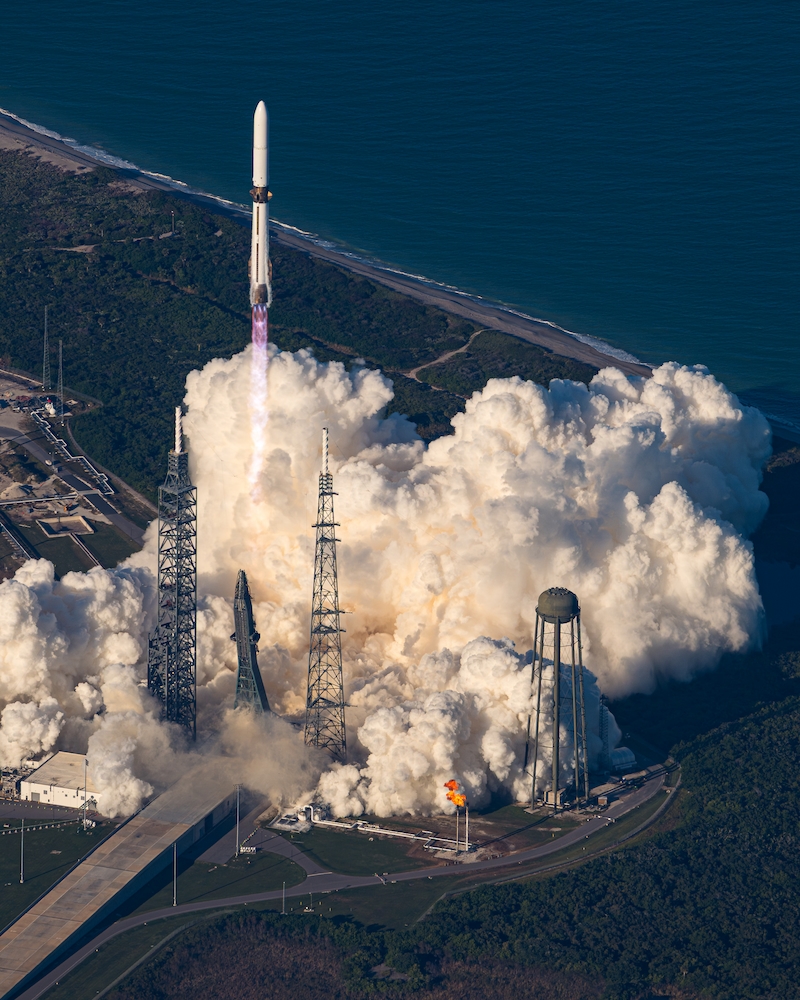
NG-2 liftoff.
Image credit: Blue Origin
Improvements
Blue Origin points to these improvements:
- Higher-performing engines on both stages. Total thrust for the seven BE-4 booster engines is increasing from 3.9 million lbf (lbf = pounds thrust) to 4.5 million lbf). BE-4 has already demonstrated 625,000 lbf on the test stand at current propellant conditions and will achieve 640,000 lbf later this year, with propellant subcooling increasing the current thrust capability from the existing 550,000 lbf.
- The total thrust of the two BE-3Us powering New Glenn’s upper stage is increasing from the original design of 320,000 lbf to 400,000 lbf thrust over the next few missions. BE-3U has already demonstrated 211,658 lbf on the test stand.
- A reusable fairing to support increased flight rates.
- An updated lower-cost tank design
- A higher-performing and reusable thermal protection system to improve turnaround time.
“These enhancements will immediately benefit customers already manifested on New Glenn to fly to destinations including low-Earth orbit, the Moon, and beyond,” notes the Blue Origin posting.
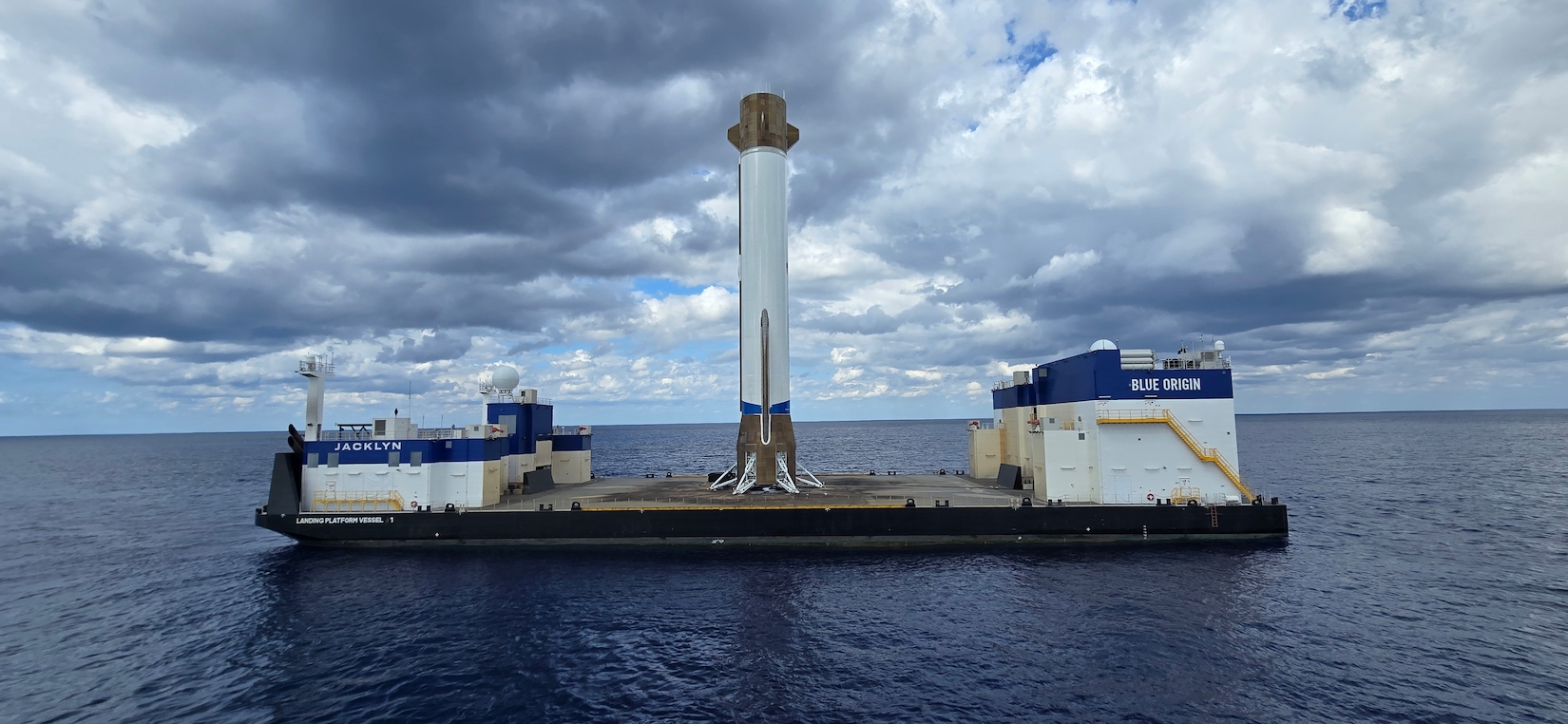
The New Glenn booster after landing on Jacklyn in the Atlantic Ocean during NG-2 flight on November 13, 2025.
Image credit: Blue Origin
Super-heavy class rocket
On the New Glenn’s roadmap is a new super-heavy class rocket, New Glenn 9×4, named after the number of engines on each stage.
New Glenn 9×4 can loft over 70 metric tons to low-Earth orbit, over 14 metric tons direct to geosynchronous orbit, and over 20 metric tons to trans-lunar injection.
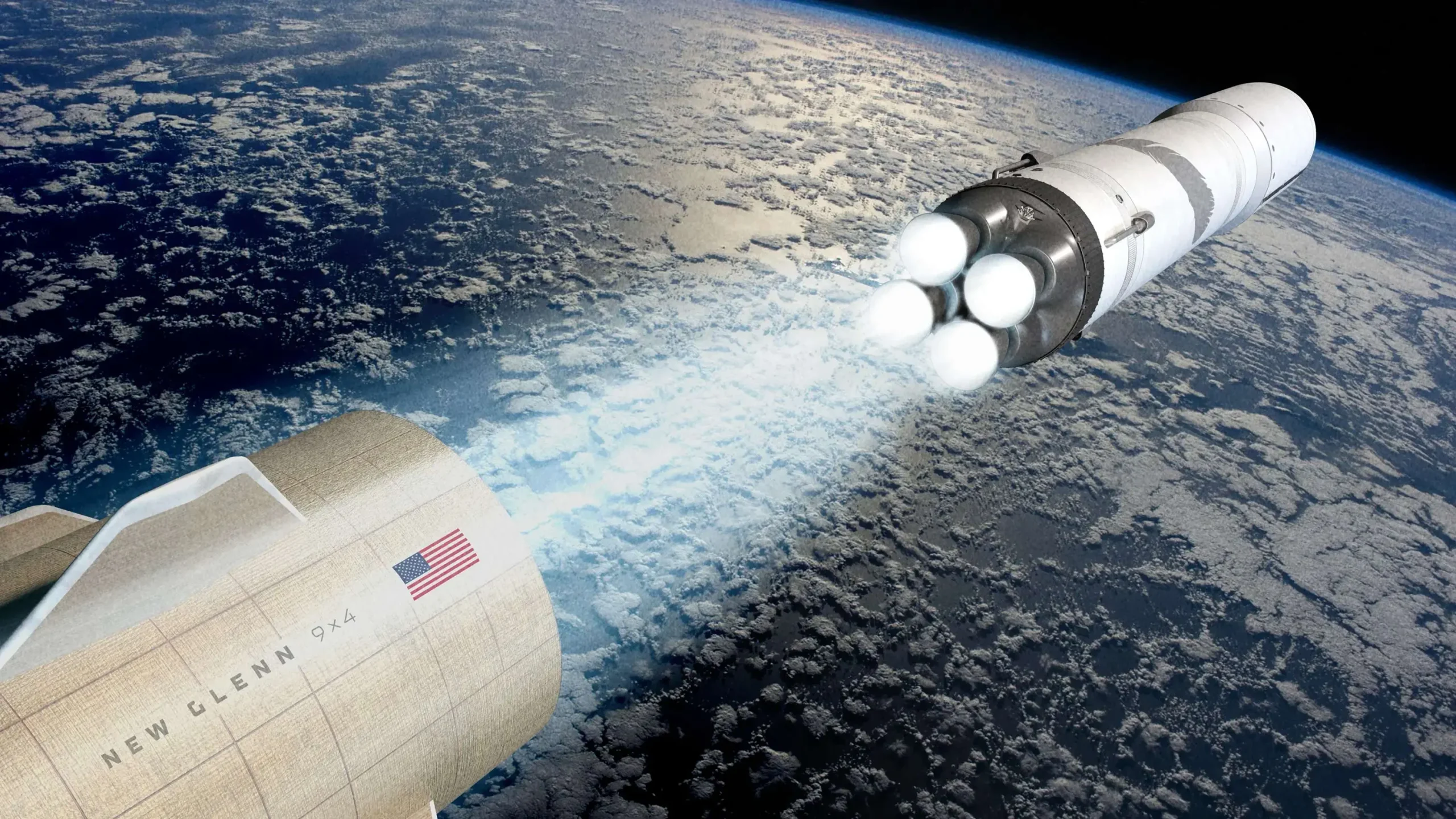
Image credit: Blue Origin
Additionally, the 9×4 vehicle will feature a larger 8.7-meter fairing.
Both vehicles, 9×4 and Blue Origin’s current variant, 7×2, “will serve the market concurrently, giving customers more launch options for their missions, including mega-constellations, lunar and deep space exploration,” the company explains, as well as national security projects such as the Trump Administrations Golden Dome – a proposed multi-layer missile defense system for the United States.

Chinese team on lunar habitat construction is led by Ding Lieyun. He is an academician of the Chinese Academy of Engineering and chief scientist of the National Center of Technology Innovation for Digital Construction (NCTI-DC) at central China’s Huazhong University.
Image credit: CCTV/Inside Outer Space screengrab
One of the items returned by the landing of China’s Shenzhou-20 crew were “lunar soil bricks” intended to further the country’s construction technology for the Moon.
The Xinhua news agency reports that the first set of experimental bricks were returned to Earth after a year-long exposure to the space environment.
The experiment began in November 2024, when China’s Tianzhou-8 cargo ship ferried the simulated lunar-soil samples up to the space station.
A total of 74 small bricks were designed to be mounted on an external exposure platform on the station’s exterior, Xinhua reports.

Ding Lieyun, a scientist at Huazhong University of Science and Technology.
Image credit: Huazhong University
Three year study
The project is led by Ding Lieyun, a scientist at Huazhong University of Science and Technology. Planned as a three-year study, Ding and colleagues will study sample batches exposed for extended periods to the harshness of space.
By analyzing the chemical fingerprint of authentic lunar specimens brought back by China’s Chang’e-5 mission, Ding’s team engineered a regolith simulant and pressed it into bricks through hot-press sintering.
That selected simulant was volcanic ash from Changbai Mountain in northeast China’s Jilin Province, material that closely mirrors the composition of lunar regolith.
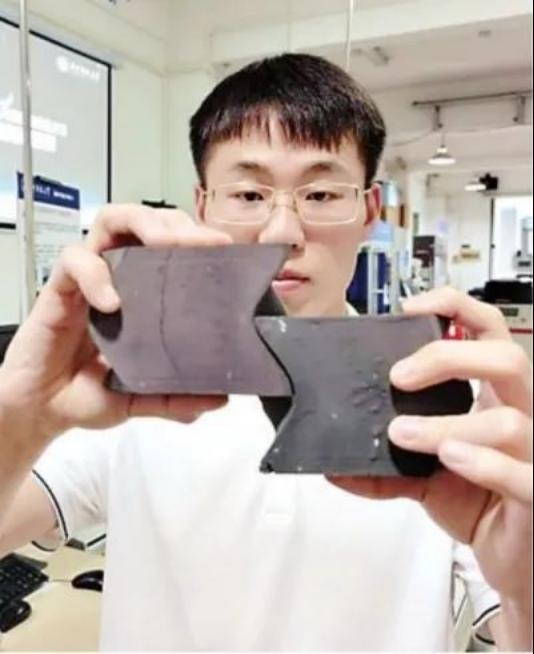
Image credit: Huazhong University
The research team has developed a way to sinter simulated lunar dust into bricks of various sizes. The sintering process is expected to be powered by concentrated solar energy on the Moon.
They also developed a robotic system to handle assembly of lunar structures like LEGO blocks, with the final step involving the use of 3D printing to reinforce the structure.
China’s long-term lunar program includes landing astronauts on the Moon by 2030 and building a basic model of the International Lunar Research Station (ILRS) by 2035.

Image credit: Huazhong University
For more information, go to these earlier stories:
Building Blocks: China to Test Moon Construction Bricks on Space Station
Moon Dwellings: China Taps 7,000 Year Old Building Technique
https://www.leonarddavid.com/moon-dwellings-china-taps-7000-year-old-building-technique/
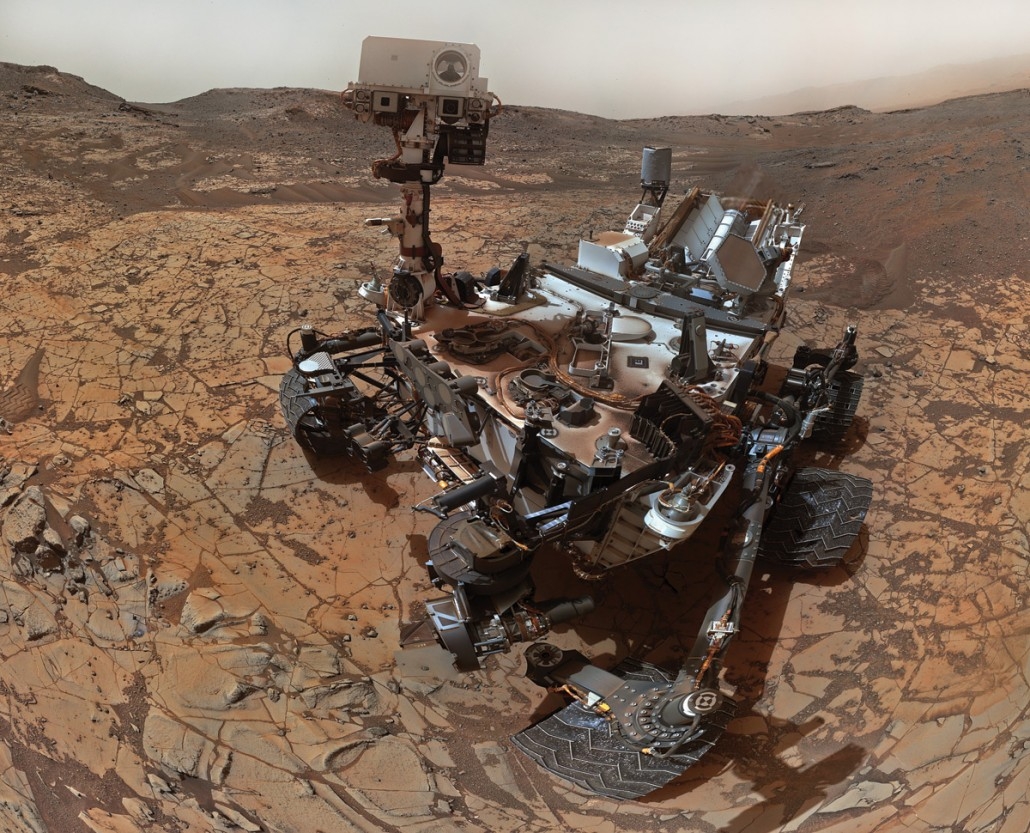
Image credit: NASA/JPL-Caltech
Scientists have uncovered new evidence that water once flowed beneath the surface of Mars. If so, the Red Planet may have remained habitable for life much longer than previously thought.
That’s the view of researchers from New York University Abu Dhabi (NYUAD).
An intriguing study has been published in the Journal of Geophysical Research – Planets.
Rock formations – Earth and Mars
The research shows that ancient sand dunes in Gale Crater, a region now being explored by NASA’s Curiosity rover, gradually turned into rock after interacting with underground water billions of years ago.
That Mars machinery has been on the prowl since August 6, 2012, wheeling about Gale crater and Mount Sharp.

Image credit: Utah Geological Survey
Led by Dimitra Atri, principal investigator of NYUAD’s Space Exploration Laboratory, with research assistant Vignesh Krishnamoorthy, the research team compared data from the Curiosity rover with rock formations in the United Arab Emirates (UAE) desert that formed under similar conditions on Earth.
Protected environments
The scientists found that water from a nearby Martian mountain once seeped into the dunes through tiny cracks, soaking the sand from below and leaving behind minerals such as gypsum, the same mineral found in Earth’s deserts. These minerals, they report, can trap and preserve traces of organic material, making them valuable targets for future missions seeking evidence of past life.
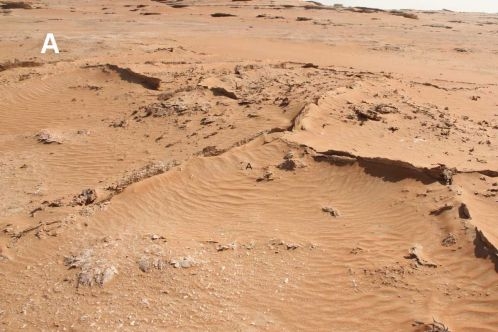
A: This is the surface of the UAE desert.
Image credit: New York University Abu Dhabi
“Our findings show that Mars didn’t simply go from wet to dry,” said Atri. “Even after its lakes and rivers disappeared, small amounts of water continued to move underground, creating protected environments that could have supported microscopic life.”
This research provides new insight into how Mars evolved over time and highlights the potential of subsurface environments as promising sites to search for signs of ancient life.
Complementary field studies
According to the paper: “Ancient Mars had stable and abundant aqueous environments; however, due to the gradual loss of most of its atmosphere, the environment evolved into cold and dry landscapes that we see today. The surface of Mars shows signs of wet and dry environments as captured by NASA’s Curiosity rover.”
The study group investigated the solidified dunes in the Stimson formation of the Gale crater.
“Using data from various instruments on the rover, we study the interaction between dry aeolian environments with groundwater and surface water, along with complementary field studies in the United Arab Emirates. We find that water interactions with dunes could be prime targets for the search for life on Mars,” they report.
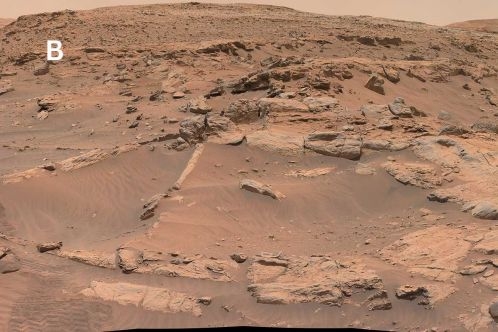
Surface of Mars. Image credit: NASA/JPL-Caltech
UAE: global space exploration
Supported by the NYUAD Research Institute, the study was conducted at NYUAD’s Center for Astrophysics and Space Science. NYU Abu Dhabi is a partnership between New York University and the emirate of Abu Dhabi, contributing to the UAE’s growing role in global space exploration.
This study was conducted in collaboration with James Weston of NYUAD’s Core Technology Platform and Panče Naumov’s research group.
To access the study – “Aeolian Sediment Lithification From Late-Stage Aqueous Activity in the Gale Crater: Implications for Habitability on Mars” – go to:
https://agupubs.onlinelibrary.wiley.com/doi/10.1029/2024JE008804

Image credit: CCTV/Inside Outer Space screengrab
New reports based on restricted aviation zones, known as Notice to Air Missions (NOTAMs), appear to indicate that China intends to loft a Shenzhou-22 spacecraft atop a Long March 2F rocket in the coming days. Its destination is China’s Tiangong space station.
This craft would serve as a replacement vehicle for the window-damaged Shenzhou-20 spaceship. Once docked with the station, that craft would ensure the now-orbiting crew a safe and sound return home.
That’s the word from Andrew Jones at SpaceNews, citing that the launch would occur at approximately 11:10 p.m. Eastern Nov. 24 (0410 UTC, Nov. 25) from the Jiuquan Satellite Launch Center in the Gobi Desert.
Image credit: CCTV/Inside Outer Space screengrab
Window cracks
The Shenzhou-20 vessel was damaged by space debris, with cracks discovered in its window, forcing use of Shenzhou-21 to recently return a trio of taikonauts. Doing so left the now-in-orbit crew without a viable spacecraft for a secure way back to terra firma.
The Shenzhou-22 spacecraft and launcher were in standby mode, originally manifested for launch in 2026.
Shenzhou-20 crew back on Earth on November 14. Image credit: CCTV/Inside Outer Space screengrab
Chinese space officials labeled the wave-off and delay to bring the Shenzhou-20 crew back to Earth as the first successful implementation of an “alternative return procedure” in China’s space station program history.
Valuable resource
As of this posting, there has been no official word from the China Manned Space Agency (CMSA) on any upcoming launch of Shenzhou-22.
However, Zhou Yaqiang, an official with the China CMSA told China Central Television (CCTV) that the mission for launching the Shenzhou-22 spacecraft “has been initiated, with preparations for all systems in full swing, including testing the spacecraft and rocket components and preparing the cargo.

Image credit: CCTV/Inside Outer Space screengrab
“The Shenzhou-22 spacecraft is sure to carry supplies. The spacecraft’s cargo-carrying capacity is a highly valuable resource for the manned space program,” Zhou said, “so we will make full use of every opportunity. The Shenzhou-22 spacecraft will mainly deliver food supplies for the astronauts and some equipment for the space station.”
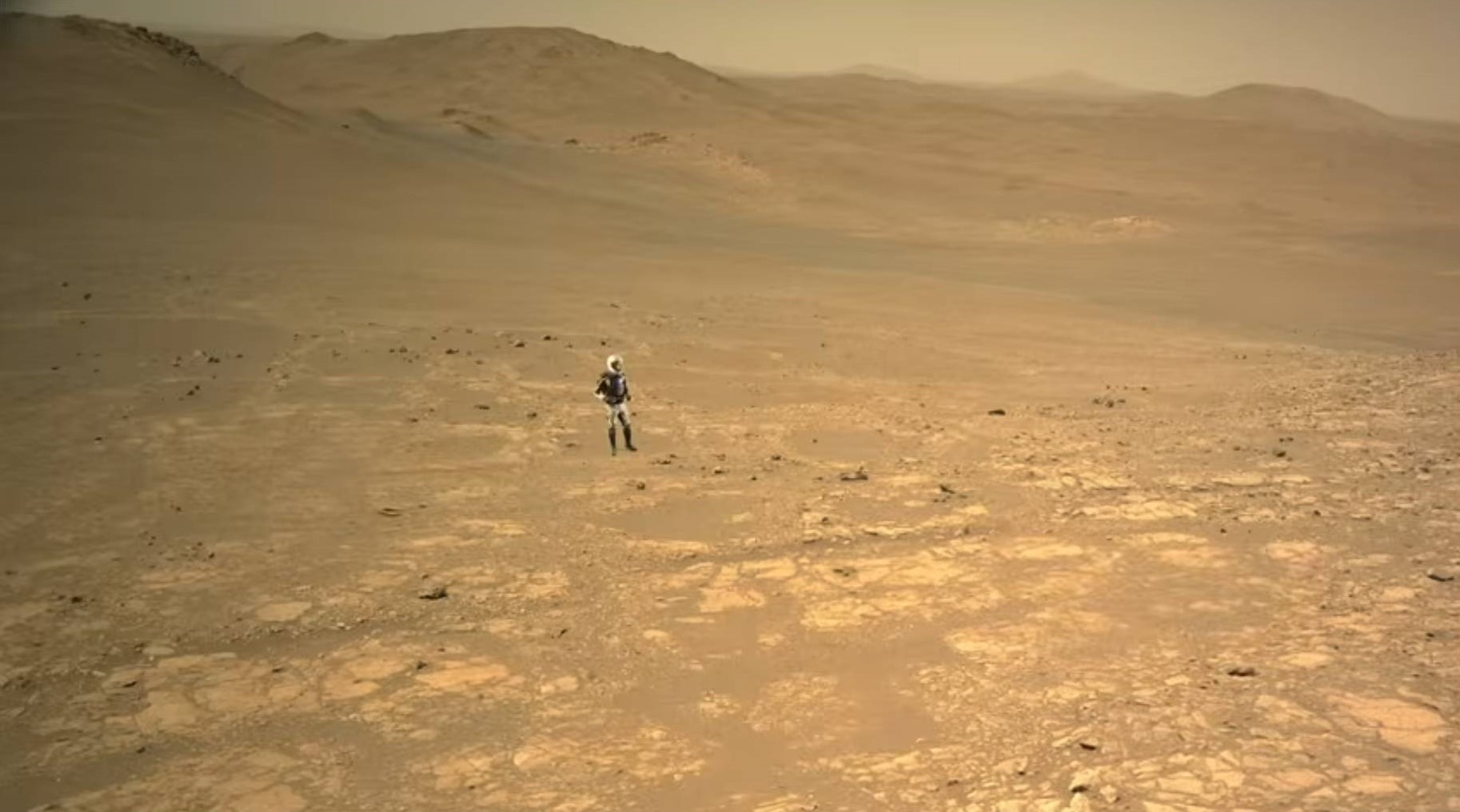
Image credit: Mars Guy/NASA JPL-Caltech/Inside Outer Space screengrab
Mars Guy notes that NASA’s Perseverance Mars rover has arrived among some truly enigmatic rocks – pockmarked with holes.
“In places they display little knobby protuberances while nearby they have circular holes. Maybe they’re unrelated to each other,” Mars Guy explains, “or maybe some holey rocks on Earth can help explain both.”
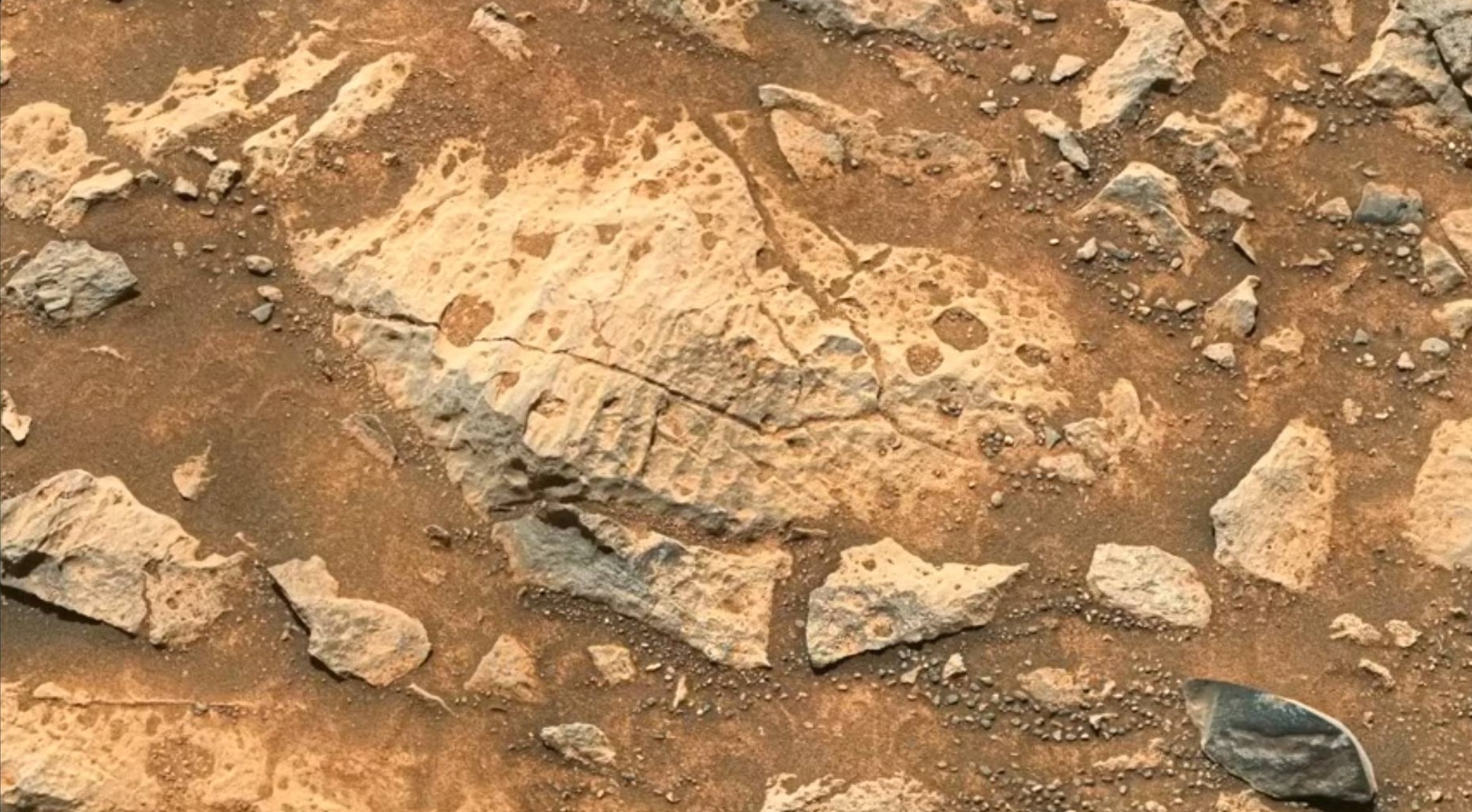
Image credit: Mars Guy/NASA JPL-Caltech/Inside Outer Space screengrab.
Mosaic credit: Neville Thompson
Go to this new and informative video at:
Image credit: CCTV/Inside Outer Space screengrab
Preparations for China’s Shenzhou-22 mission has moved into full swing – an action required to assure that the now-orbiting space station crew can be sustained, and in a safe manner.
Zhou Yaqiang, an official with the China Manned Space Agency (CMSA) explains that the mission for launching the Shenzhou-22 spacecraft “has been initiated, with preparations for all systems in full swing, including testing the spacecraft and rocket components and preparing the cargo,” Zhou told China Central Television (CCTV).
Image credit: CCTV/Inside Outer Space screengrab
“The Shenzhou-22 spacecraft is sure to carry supplies. The spacecraft’s cargo-carrying capacity is a highly valuable resource for the manned space program,” Zhou said, “so we will make full use of every opportunity. The Shenzhou-22 spacecraft will mainly deliver food supplies for the astronauts and some equipment for the space station.”
Uncrewed mode
Although not directly stated, it would appear that the Shenzhou-22 will be flown to the Chinese space station in an uncrewed mode.
Doing so would allow replacement of the unfit-for-reentry Shenzhou-20 craft, sure to be discarded uncrewed for trashing within the Earth’s atmosphere at a later date.
After more than a week’s delay, the Shenzhou-20 crew did return to Earth, using the trusted Shenzhou-21 spacecraft.
Image credit: CCTV/Inside Outer Space screengrab
Therefore, the current on-orbit crew was left tending a damaged vehicle that has been deemed unsafe for reentry.
Alternative return procedure
Meanwhile, at the Jiuquan launch site, technicians are hurriedly readying a Shenzhou-22 and its booster for flight (likely uncrewed) to the space station.

Meng Fanliang, an engineer at the Jiuquan Satellite Launch Center.
Image credit: CCTV/Inside Outer Space screengrab
According to Meng Fanliang, an engineer at the Jiuquan Satellite Launch Center:
“The return process [of the Shenzhou-20 crew] involved the coordinated efforts of tens of thousands of people across numerous departments and positions.”
Chinese space officials labeled the wave-off and delay to bring the Shenzhou-20 crew back to Earth as the first successful implementation of an “alternative return procedure” in China’s space station program history.

Image credit: CCTV/CMSA/Inside Outer Space screengrab
China’s Shenzhou-20 crew arrived in Beijing on Saturday, fresh from their touch down at the Dongfeng landing site in north China’s Inner Mongolia Autonomous Region on Friday, November 14.
The space traveling threesome — Chen Dong, Chen Zhongrui and Wang Jie — landed back on Earth aboard the Shenzhou-21 spacecraft after spending 204 days in orbit.
China’s Xinhua news agency noted that the trio made “the first successful implementation of an alternative return procedure in the country’s space station program history.”
Image credit: CCTV/Inside Outer Space screengrab
Window damage
That alternative plan was put in place after the original return vessel, the Shenzhou-20 spacecraft, experienced a suspected impact in the return vessel’s window from space debris, reported the China Manned Space Agency (CMSA).
Tiny cracks were found in the Shenzhou-20 return capsule’s viewport window which are most probably caused by external impact from space debris, the CMSA added.
The agency said that the Shenzhou-22 spacecraft will be launched at an appropriate time in the future, also ferrying a fresh cargo batch to the station.
“The launch capacity is precious, so we make full use of it,” said Zhou Yaqiang, an expert from the CMSA. “This flight will bring the crew new food supplies as well as devices and equipment for the station.”
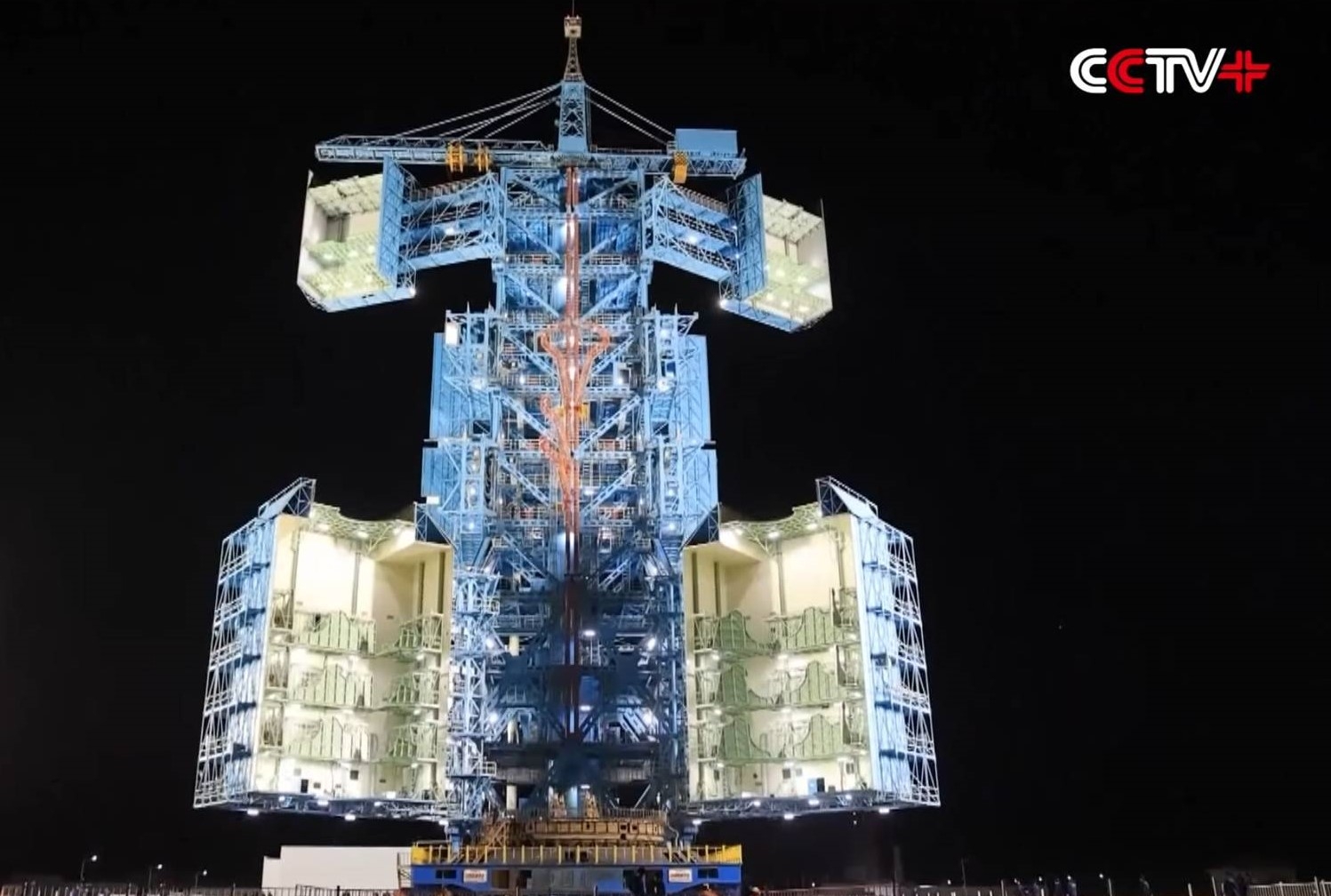
Work appears underway to launch a Shenzhou-22 spacecraft to replace the debris damaged Shenzhou-20 vessel.
Image credit: CCTV/Inside Outer Space screengrab
Experimental samples
Along with the crew whisked to Beijing from the landing zone, so too were a new batch of experimental samples flown aboard China’s Tiangong space station.
Medical experimental samples from the Shenzhou-20 mission, as well as the Tianzhou-9 cargo spacecraft which docked with Tiangong space station in July were transferred to scientists in Beijing.

Shenzhou-20 crew return to Beijing.
Image credit: CCTV/Inside Outer Space screengrab
The returned package contained 199 individual samples across seven categories: blood, urine, feces, saliva, throat swabs, microorganisms and cells, all of which will support the research and implementation of 19 space medical experiment projects designed for the space station.
Return of experiments
Samples from 26 scientific experiments carried out aboard China’s space station, totaled roughly 46.67 kilograms, according to Xinhua.
Upon landing, mice from a life science investigation underwent immediate field processing, according to the Technology and Engineering Center for Space Utilization (CSU) under the Chinese Academy of Sciences (CAS).
While these four mice were having their physiological data collected in space, another group of mice — serving as the control group — were housed in identical raising facilities in a laboratory on Earth.
“These samples allow us to deeply analyze the effects of weightlessness and spaceflight on humans from multiple dimensions and in a comprehensive manner by using integrated cutting-edge omics and other technologies,” said Li Yinghui, a researcher with the China Astronaut Research and Training Center.

Image credit: CCTV/Inside Outer Space screengrab
“On the other hand, we can analyze the brain homeostatic control, biological rhythms, and bone metabolic regulation, all of which are closely related to human health,” Li told China Central Television (CCTV.) “Meanwhile, we await new understanding and discoveries regarding heart failure and aging in people on Earth with the use of our newly established models.”
Other biological samples – such as zebrafish, hornwort, streptomyces, planarians and brain organoids — along with select materials science and combustion experiment samples, were transported to the CSU.
Lunar infrastructure experiment
Additionally, returned materials science samples — such as tungsten-hafnium alloys, soft magnetic materials and relaxor ferroelectric single crystals – are to be appraised, focused on how gravity influences material growth, composition segregation, solidification defects, and overall performance, while also revealing the in-service performance of materials under space conditions.
According to CCTV these results are anticipated to advance several applications: protective materials for high-performance solar cells, high-gain radiation-resistant optical fibers, and innovative material processing techniques for lunar infrastructure.

Image credit: CCTV/Inside Outer Space screengrab
International influence
Zhang Lu, a CSU researcher told CCTV: “China’s in-orbit experiments have been carried out continuously over the long term. Currently, the space laboratory has entered a very normal and fully productive operating state.”
Zhang added that the hope is, “through these experimental samples and subsequent ground-based research, we can further follow up and achieve more original scientific results with international influence.”
For CCTV-provided videos showcasing the Shenzhou-20 crew return to Beijing, as well as the handover of experiments returned to Earth, go to:
https://www.facebook.com/reel/4186492614945148
Image credit: Blue Origin
The Blue Origin New Glenn orbital launch vehicle successfully completed its second mission on November 13.
Successfully deployed was the NASA Escape and Plasma Acceleration and Dynamics Explorers (ESCAPADE) twin-spacecraft into their designated “loiter orbit.”
In addition to deploying the NASA spacecraft, the Viasat HaloNet demonstration onboard New Glenn’s second stage successfully executed the first flight test of Viasat’s telemetry data relay service for NASA’s Communications Services Project.
Blue Origin also successfully landed the fully reusable first stage on the Jacklyn drone ship in the Atlantic Ocean.
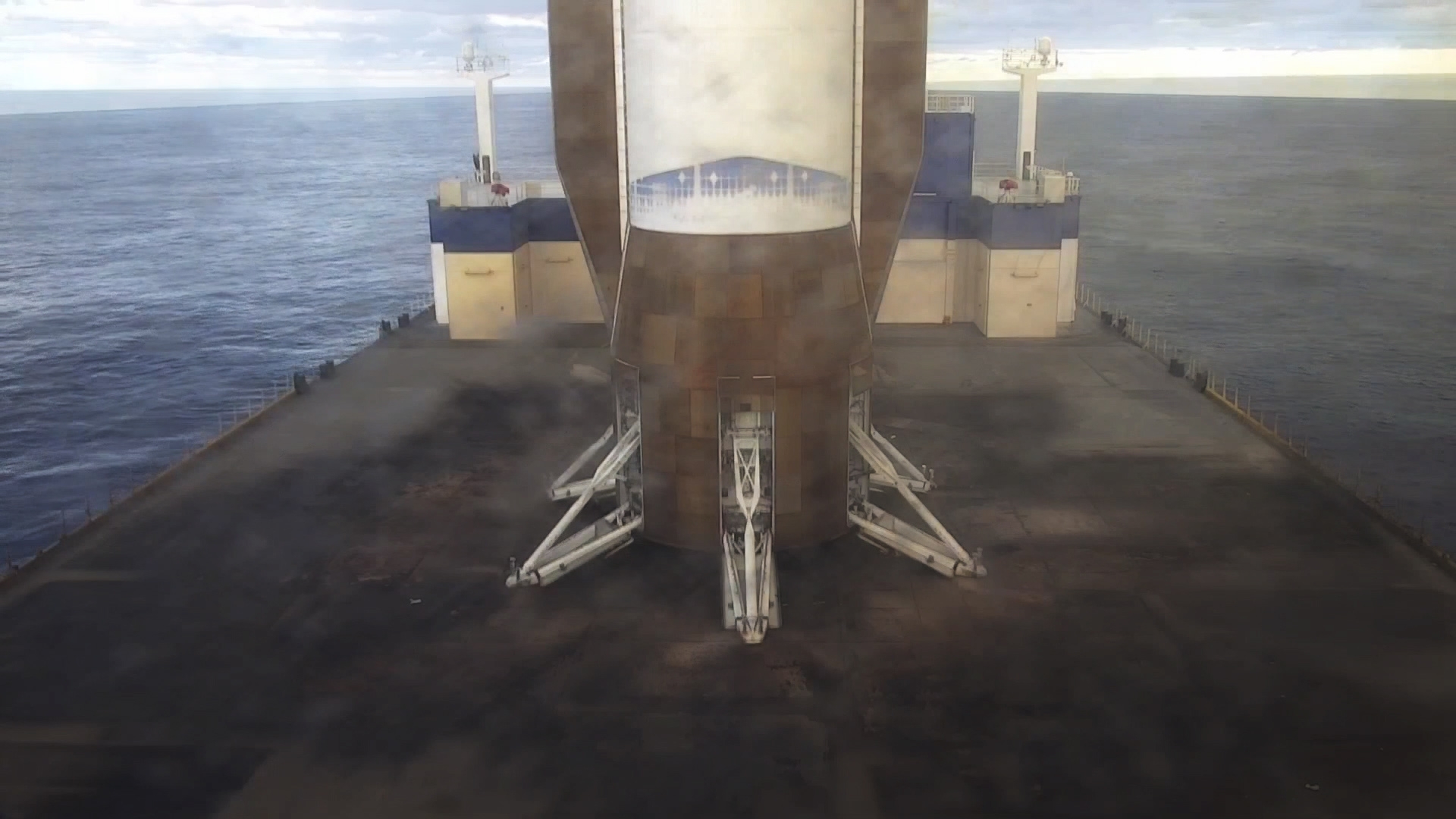
Image credit: Blue Origin
Perfect odds
“We achieved full mission success today,” said Dave Limp, CEO of Blue Origin. “It turns out ‘Never Tell Me The Odds’ had perfect odds—never before in history has a booster this large nailed the landing on the second try. This is just the beginning as we rapidly scale our flight cadence and continue delivering for our customers.”
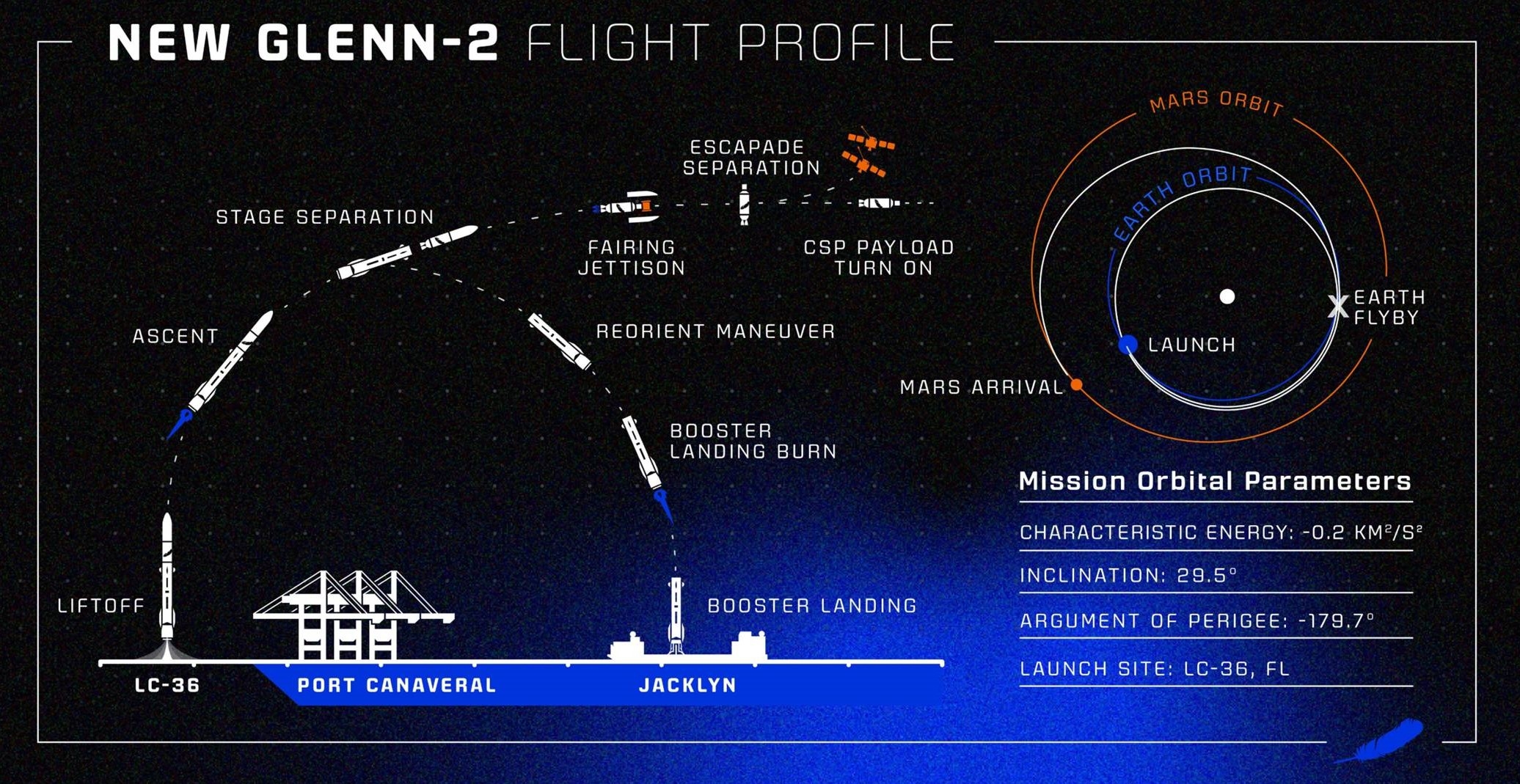
Image credit: Blue Origin
According to a Blue Origin statement, New Glenn is “underpins our efforts to establish sustained human presence on the Moon, harness in-space resources, provide multi-mission, multi-orbit mobility through Blue Ring, and establish destinations in low Earth orbit.”
Loiter orbit
That loiter orbit used by the ESCAPADE twins for Mars comes courtesy of Advanced Space, a Westminster, Colorado group that provides mission design, trajectory optimization, maneuver design, and future navigation operations.
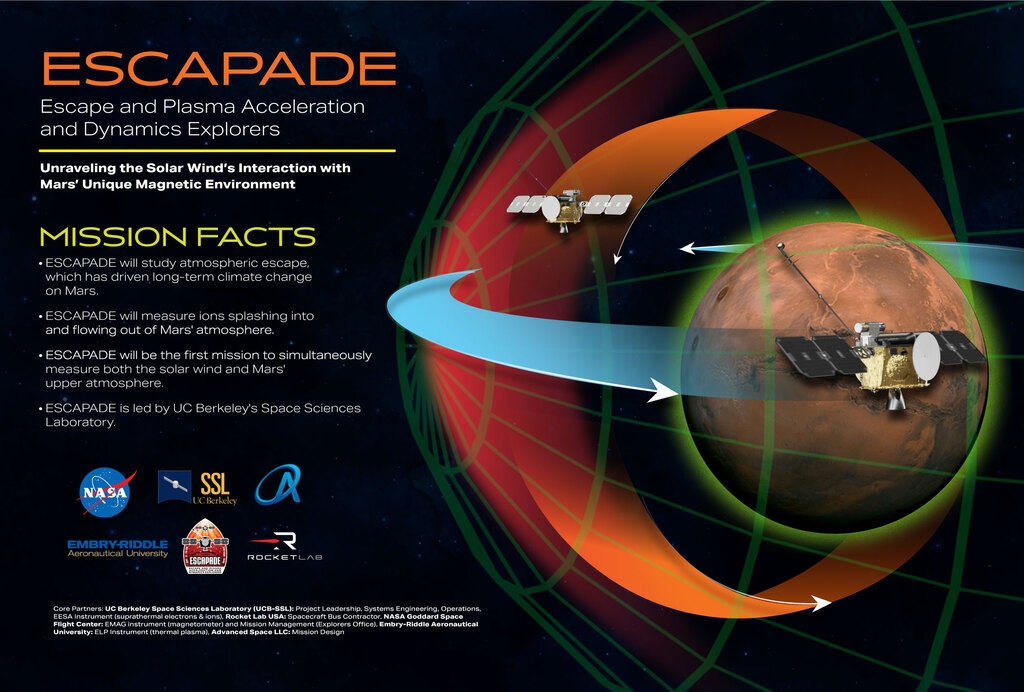
Image credit: NASA
“Once the planets have reached the ideal alignment in fall 2026, the ESCAPADE spacecraft will use an Earth gravity assist to loop around Earth and begin the journey to Mars,” noted an Advanced Space statement. “ESCAPADE represents a new era of interplanetary exploration — one that is faster, more agile, and highly collaborative,” said Bradley Cheetham, CEO of Advanced Space.
The dual spacecraft will arrive at the Red Planet in September 2027.
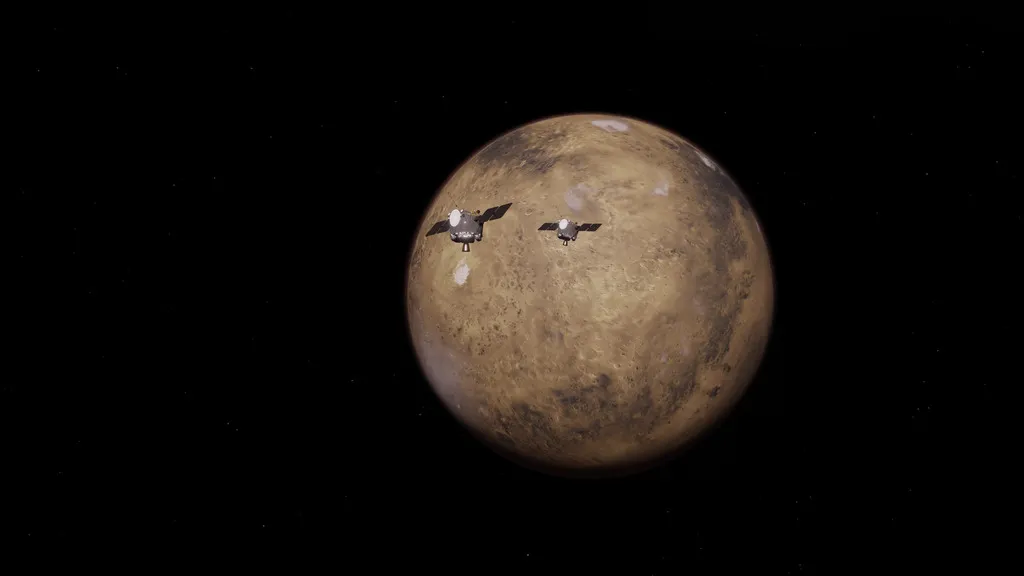
A stylized illustration shows the twin ESCAPADE spacecraft entering Mars’ orbit Image credit: James Rattray/Rocket Lab USA
Mars duties
ESCAPADE represents a first-of-its-kind formation of two satellites, built by Rocket Lab.
The two satellites will be sent into Martian orbit to conduct coordinated, multipoint observations aimed at unraveling the complex interplay between space weather and Mars’ unique “hybrid” magnetosphere.
By examining how solar wind interactions drive atmospheric loss, ESCAPADE will provide insight into Mars’ climate history and evolution.
The ESCAPADE mission is led by the University of California, Berkeley Space Sciences Laboratory for NASA.

