Archive for the ‘Space News’ Category
 Author:
  July 7th, 2018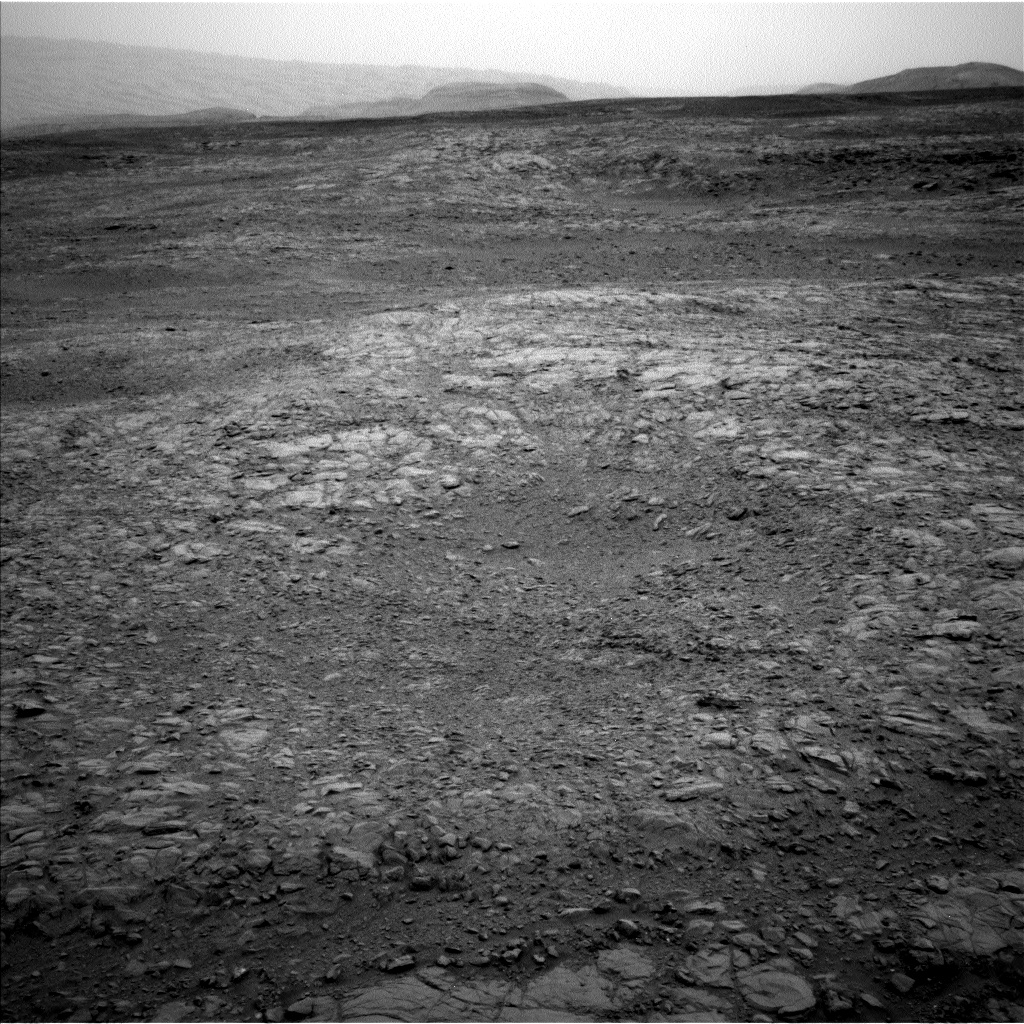
Curiosity Navcam Left B image taken on Sol 2102, July 5, 2018.
Credit: NASA/JPL-Caltech
NASA’s Curiosity Mars rover is performing Sol 2104 duties.
Scott Guzewich, an atmospheric scientist at NASA’s Goddard Space Flight Center in Greenbelt, Maryland reports that a primary goal for recent planning was for the robot to approach its next drill location on the Vera Rubin Ridge.
To do so, Curiosity is paralleling the north side of the ridge during a new drive while documenting the geochemistry of the bedrock the rover is currently parked on.
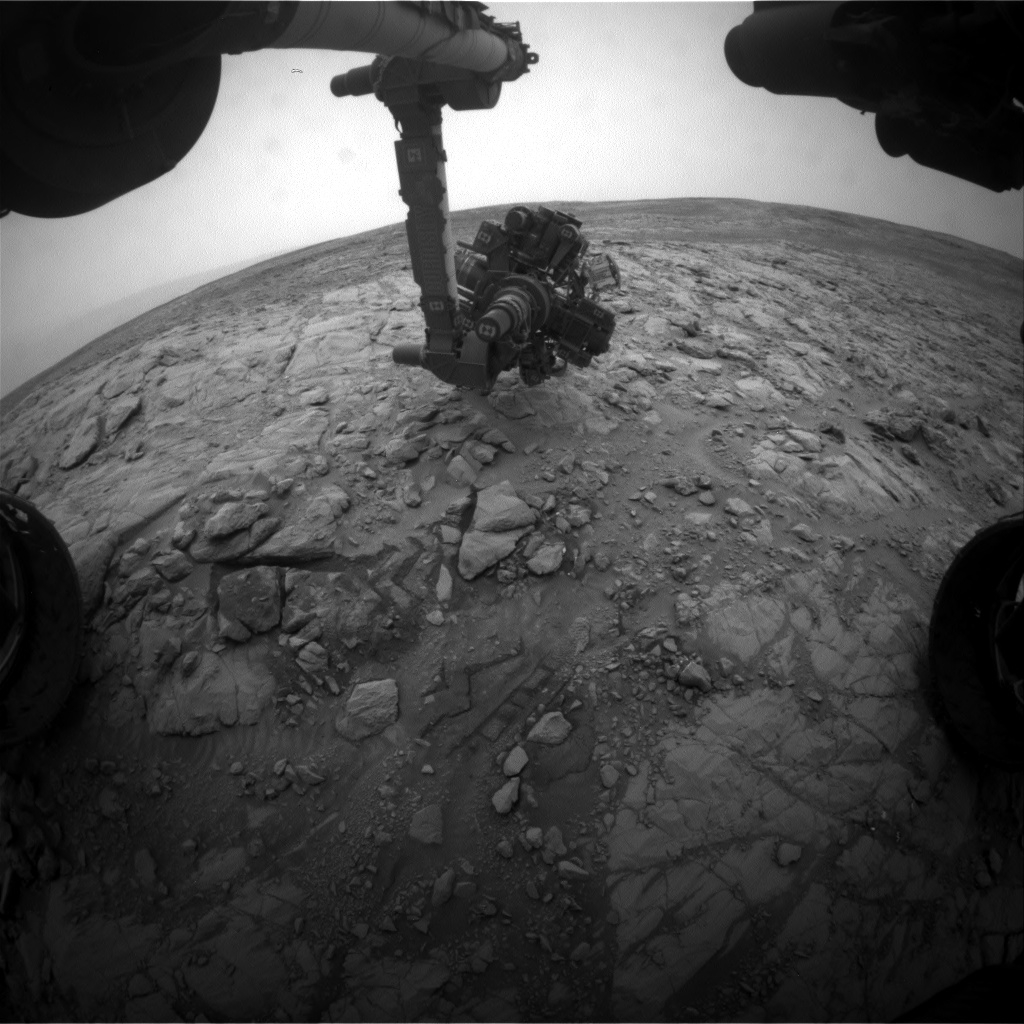
Curiosity Front Hazcam Right B image acquired on Sol 2102, July 5, 2018.
Credit: NASA/JPL-Caltech
Dust storm update
Curiosity is also to continue studying the ongoing planet-encircling dust storm.
A warning from the rover’s Chemistry and Camera (ChemCam) initially prevented ground controllers from employing ChemCam for data gathering, but it was cleared up later and will be ready for Monday’s planning.
“We therefore took advantage of the unexpected availability of science time to include some routine Mastcam calibration activities and additional observations of the dust storm,” Guzewich notes.
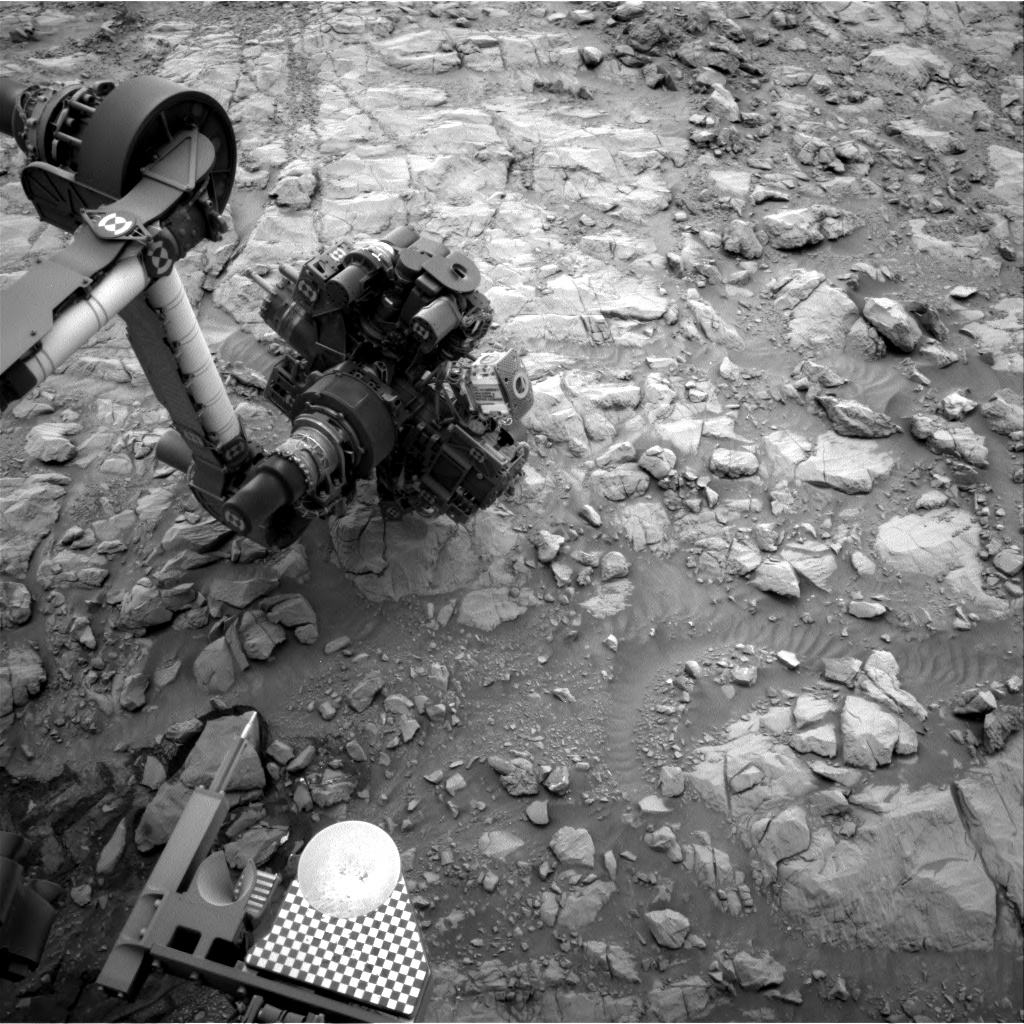
Curiosity Mastcam Right photo taken on Sol 2100, July 3, 2018.
Credit: NASA/JPL-Caltech/MSSS
Reached its “peak”?
The amount of dust over Gale Crater, Guzewich adds, has been slowly declining over the last two weeks and it’s possible the dust storm has reached its “peak.”
“Whereas on Earth we have thousands of surface weather stations and a constellation of spacecraft observing the weather, on Mars we are comparatively blind to global conditions. But based on what data we do have, we may now be entering — or soon entering — the period where the massive amount of dust in the atmosphere will slowly settle out, and Mars’ shrouded surface may once again be clearly visible from space,” Guzewich explains.
 Posted in
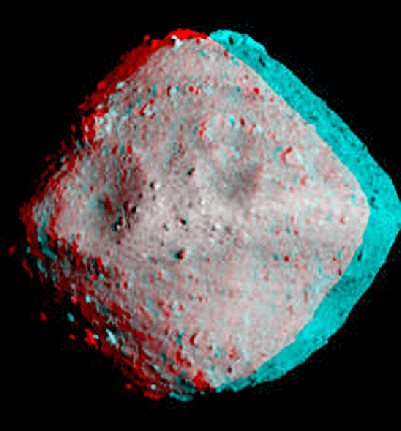
Image to be used with red/blue stereo glasses.
Credits: Yoshiro Yamada, credit for the original stereoscopic image is Brian May and credit for the images of Ryugu is JAXA, University of Tokyo, Kochi University, Rikkyo University, Nagoya University, Chiba Institute of Technology, Meiji University, Aizu University.
The Japan Aerospace Exploration Agency’s (JAXA) Hayabusa2 has been busy reconnoitering its target asteroid, Ryugu.
Brian May, the lead guitarist from the British rock band, Queen, has created a stereoscopic image of Ryugu from photographs captured with the Optical Navigation Camera onboard Hayabusa2, so that the asteroid can be viewed in three dimensions.
Planetary defense
Brian May is an astronomer, with a doctoral degree in astrophysics from Imperial College London. He has a strong interest in planetary defense or space guard, which considers the potential threat to the Earth from meteorites.
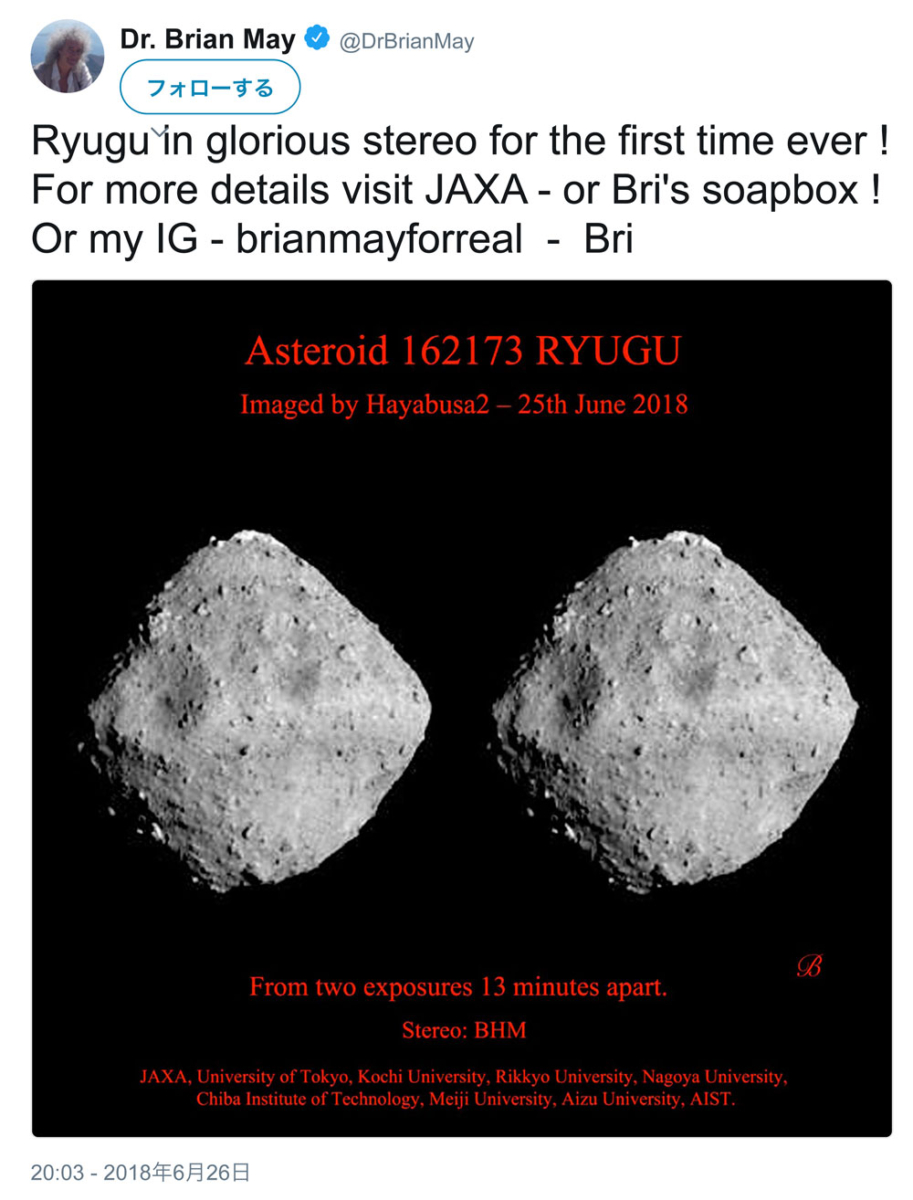
May is a core member of “Asteroid Day”, that began about three years ago to increase awareness of asteroids and action that can be taken to protect the Earth.
In particular, the two asteroids explored by Japan’s Hayabusa and Hayabusa2 missions, Itokawa and Ryugu, both have orbits that approach the Earth, and data from these missions is also being used to better understand planetary defense.
Brian May has previously created images to sterescopically view celestial bodies, and approached the Hayabusa2 Project to propose a stereoscopic image of Ryugu.
Go to this video for May’s explanation of the stereo imaging of the asteroid at:
http://www.hayabusa2.jaxa.jp/topics/20180704je/img/BrianMayStereoRyugu_Sound4.mp4
1302 days after leaving Earth, Hayabusa2 has finally arrived at Ryugu! Look how our view of this new world has already changed. https://t.co/veo3WGJtoa pic.twitter.com/K6Fx2kuwtR
— HAYABUSA2@JAXA (@haya2e_jaxa) June 29, 2018

Artist’s illustration of asteroid ISRU showing astronauts at an asteroid as well as other mining and transportation vehicles operating in space.
Credit: TransAstra Corporation & Anthony Longman
An international team has taken a hard look at the potential existence and utilization of “minimoons.”
The minimoon source population, the set of objects from which minimoons are drawn, are Earth’s co-orbital asteroids.
Within a few years, they suggest, the Large Synoptic Survey Telescope (LSST) will either begin to regularly detect temporarily-captured orbiters (TCOs) — colloquially known as minimoons — or force a re-analysis of the creation and dynamical evolution of small asteroids in the inner solar system.
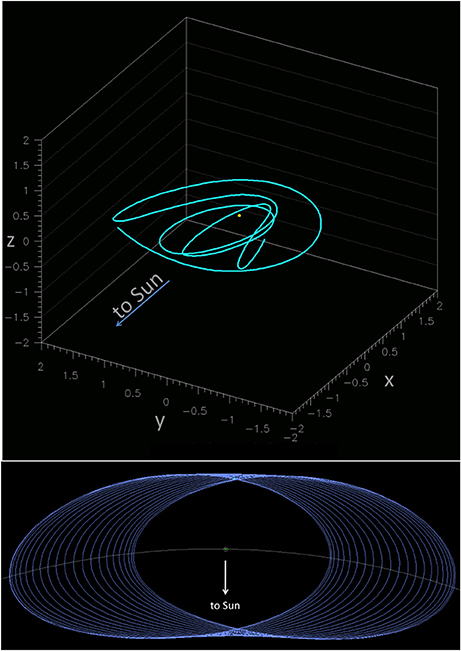
Minimoons (temporarily captured objects, TCOs) are gravitationally bound to the Earth-Moon system.
Credit: Paul Chodas (NASA/JPL)
There should be a steady state population of the minimoons, with about one 1- to 2-meters diameter captured objects at any time, with the number of captured meteoroids increasing exponentially for smaller sizes.
Robert Jedicke of the Institute for Astronomy, University of Hawai’i at Mānoa, Honolulu, Hawaii led the research, published in Fundamental Astronomy, a section of the journal Frontiers in Astronomy and Space Science.
Minimoon hypothesis
The major problem with the minimoon hypothesis is the small number of known objects that have ever been minimoons.
“There remain at least a few difficulties with establishing the reality of new minimoons: (1) overcoming a prejudice against their existence, (2) obtaining evidence that they have a natural provenance, and (3) establishing that they are not “merely” lunar fragments ejected from the Moon’s surface during an impact event,” Jedicke and his colleagues write.
“The first issue will eventually be resolved when so many minimoons have been discovered that it is impossible to maintain a prejudice against them or when a serious flaw is discovered in the dynamical models that predict their existence,” the research team reports.
Candidates for future missions
Minimoons will provide interesting science opportunities as a consequence of their small sizes and their relatively long capture duration.
While scientifically valuable, Earth’s minimoons have also entered the game as candidates for future space missions, the researchers suggest. “They have been delivered for free to cis-lunar space by the solar system’s gravitational dynamics and are now available in our own backyard under favorable energetic conditions which make them ideal targets.”

The Large Synoptic Survey Telescope (LSST) might regularly detect minimoons. A simulated night sky provides a background for the LSST facilities building on Cerro Pachón in this artist’s conception.
Credit: The LSST Corporation (LSSTC)
Technological and commercial opportunities
From a technological and commercial perspective minimoons provide an ideal opportunity for:
— the development and testing of planetary defense technologies (e.g., deflecting an asteroid;
— validating and improving close-proximity guidance, navigation, and control algorithms;
— testing close-proximity procedures and protocols for safe operation of crewed missions around asteroids; and
— establishing the feasibility of asteroid mining technologies for future commercial applications, all in an environment where the round-trip light-time delay is a few seconds.
“While naturally produced minimoons will be too small for commercially profitable enterprises they will be extremely useful for testing techniques in a cis-lunar environment before moving operations into distant heliocentric space,” the research team adds.
To view the research report — Earth’s Minimoons: Opportunities for Science and Technology – go to:
https://www.frontiersin.org/articles/10.3389/fspas.2018.00013/full

Lisa Pratt
Credit: Anna Powell Teeter/IU Bloomington
When it comes to planetary protection and assuring valid and safe scientific exploration for extraterrestrial life, there’s a new space sheriff in town. The job comes with central celestial duties: Avoid forward contamination of other worlds by terrestrial organisms carried on spacecraft. Also, prevent toting back to Earth “creature features” or bioactive molecules in samples returned for scientific study.
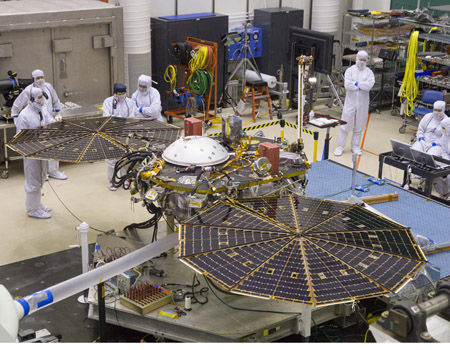
Clean room care: InSight Mars lander undergoes a solar array deployment test at Lockheed Martin.
Credit: Lockheed Martin
Lisa Pratt is a NASA Headquarters newbie, entering the role of Planetary Protection Officer in early February. As an Indiana University Bloomington astrobiologist, she’s taken the tiller just as the space agency office was shifted from the Science Mission Directorate to the Office of Safety and Mission Assurance.
To learn of Pratt’s check list of planetary protection do’s and don’ts, here’s my new Scientific American story:
As Space Becomes a Busy Place, NASA Bolsters Its Planet-Contamination Police
Lisa Pratt, the space agency’s new planetary protection officer, could soon oversee major shifts in regulations on public- and private-sector space missions
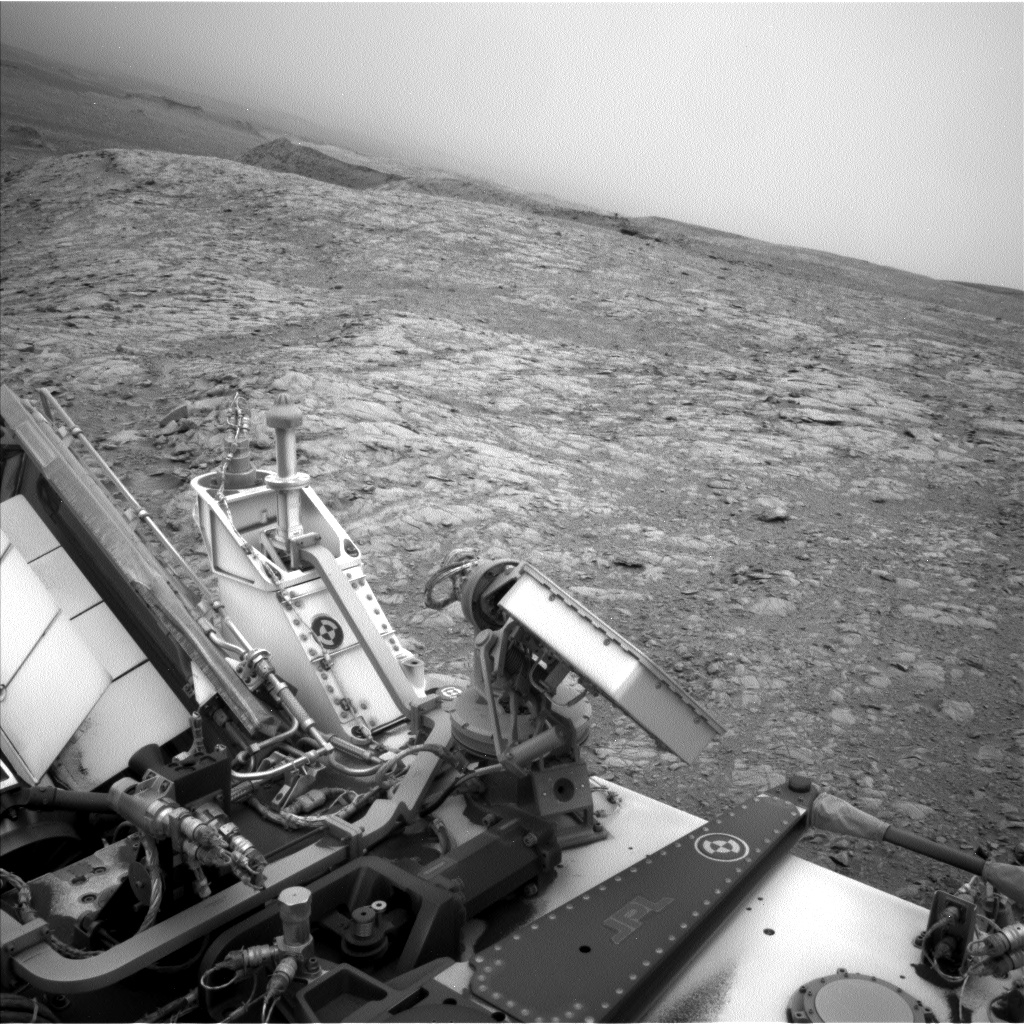
Curiosity Navcam Left B image taken on Sol 2098, July 1, 2018.
Credit: NASA/JPL-Caltech
“Curiosity is back on top of the Vera Rubin Ridge once more, having completed our drive over the weekend as we move toward our next drilling target in the ‘Pettegrove Point’ geological member,” reports Scott Guzewich, an atmospheric scientist at NASA’s Goddard Space Flight Center in Greenbelt, Maryland.
“After climbing back onto the ridge, there is no lack of interesting bedrock targets nearby and the ground is much smoother and suitable for driving compared to where we’ve been for the last many weeks while we studied our “Duluth” drill hole and its surroundings,” Guzewich adds.
Dust storm
A dust storm campaign continues with a variety of measurements of atmospheric dust opacity (which has continued a very slow decline from a peak about 2 weeks ago).
“We’ve had to alter existing measurement techniques for measuring dust opacity and create new ones to account for the high amounts of dust in the atmosphere and the corresponding low light levels at the surface,” Guzewich explains. “But this also affords us new opportunities to study the properties of dust particles themselves.”
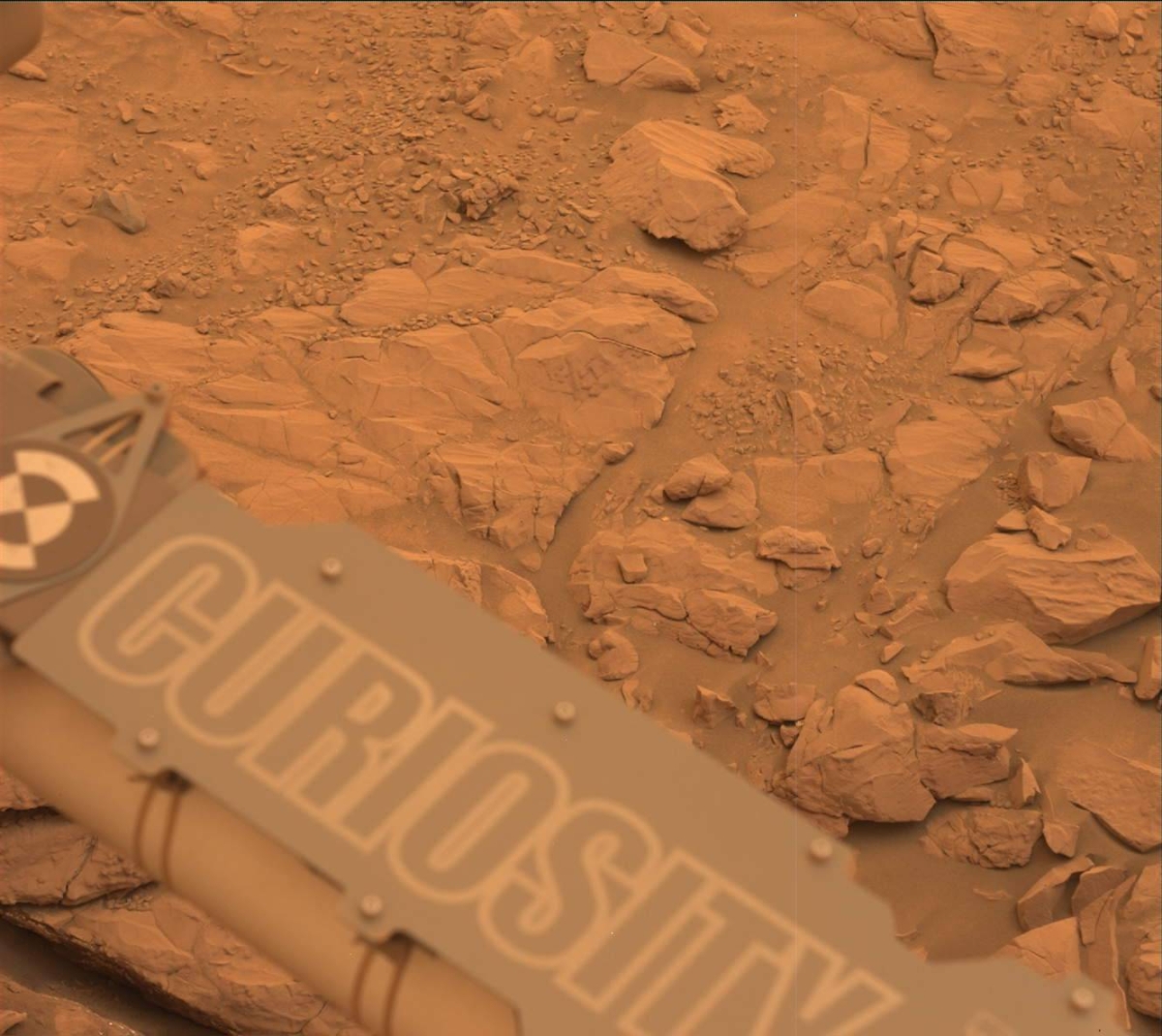
Curiosity Mastcam Left photo acquired on Sol 2098, July 1, 2018.
Credit: NASA/JPL-Caltech/MSSS
Slippage
In an earlier report, Christopher Edwards, a planetary geologist at Northern Arizona University in Flagstaff, Arizona, noted that Curiosity was facing uphill challenges.
“Curiosity stopped its drive a bit earlier than anticipated. It so happens that the autonomous software onboard Curiosity designed to keep it driving safely kicked in and ended the drive short of the planned distance,” Edwards notes.
Setback to science
“When things like this happen, it’s a bit of a setback to science, but keeping the rover safe is priority number one,” Edwards adds.
Not only did the drive stop short, but Curiosity actually ended up in a location where there wasn’t a good surface model, Edwards remarks, triggering the Slip Risk Assessment Process (SRAP) to fail.
A failed SRAP means that Curiosity cannot safely carry out any arm-based activities, so the science team resorted to remote sensing activities using the cameras and the Chemistry and Camera (ChemCam) instrument to continue to assess the Vera Rubin Ridge.
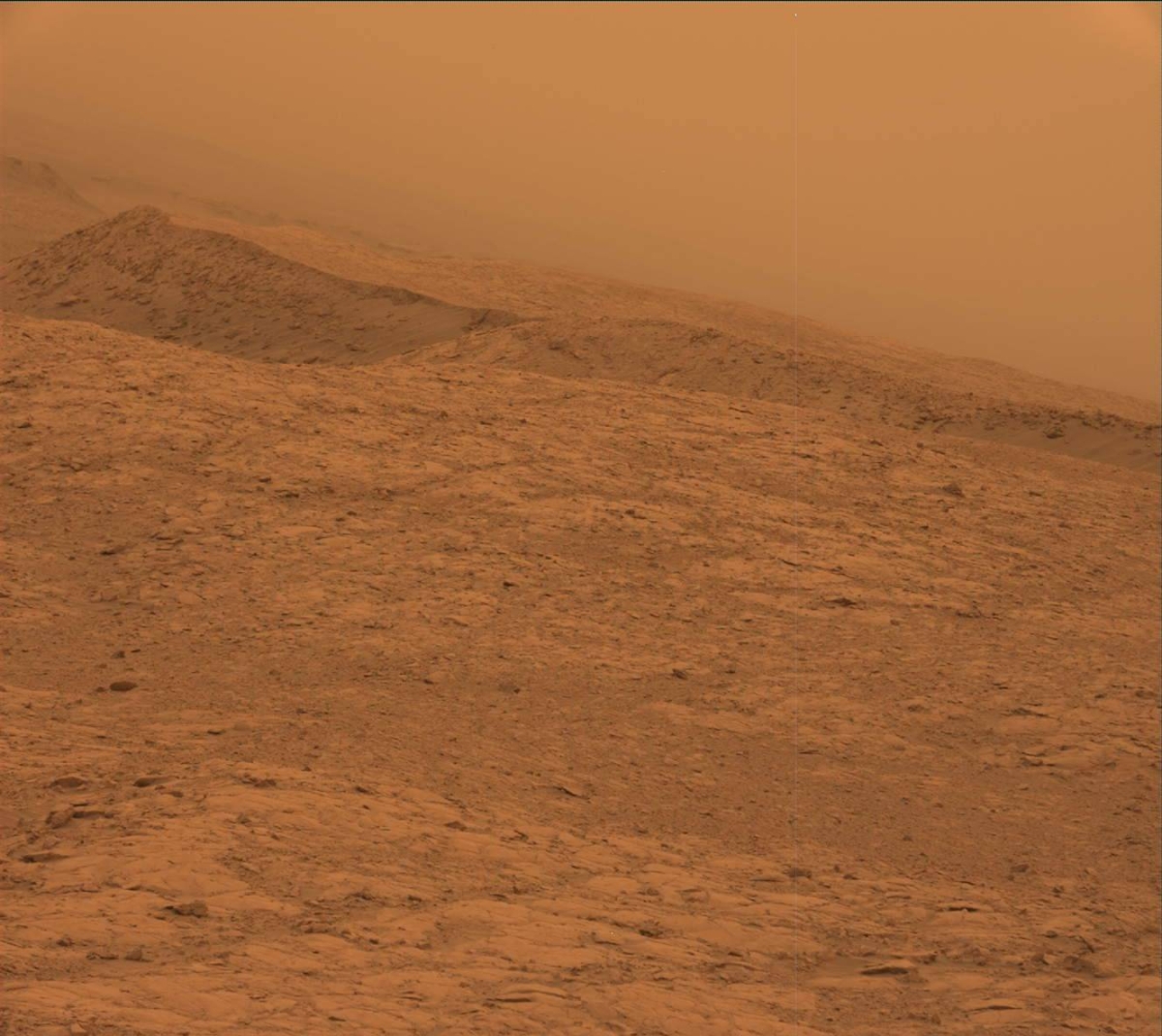
Curiosity Mastcam Left photo acquired on Sol 2098, July 1, 2018.
Credit: NASA/JPL-Caltech/MSSS
Remote sensing activities
In a newly drafted three sol plan, Curiosity will first carry out a host of remote sensing activities including five ChemCam activities, Mastcam documentation images of the ChemCam locations and a small Mastcam mosaic of a layered rock outcrop on the horizon, Edwards explains.
On the second sol, the rover will make good progress driving along the previously planned path using only the existing terrain surface model that is available.
The usual suite of post-drive imaging to help decide science targets in the next plan will also be acquired.
Priority monitoring
“Importantly, as the dust storm on Mars continues to affect Curiosity, activities designed to monitor the amount of dust in the atmosphere will remain a priority and be made as frequently as possible,” Edwards concludes.

Mars 2020 rover is a first step in bringing back specimens from the Red Planet to Earth.
Credit: NASA/JPL
A just-released study recommends that NASA should update policies that protect planets and other solar system bodies during space exploration missions.
The current process for planetary protection policy development is inadequate, the report explains, and also notes that private-sector space exploration activities are another reason why planetary protection policies need re-examination.
The new report comes from the National Academies of Sciences, Engineering, and Medicine.
Wanted: Strategic plan
The report — Review and Assessment of Planetary Protection Policy Development Processes — calls for NASA to develop a planetary protection strategic plan, assess the completeness of policies, and initiate a process to formally define requirements that are missing.
NASA should also identify a strategy for dealing with major policy issues, the report adds, such as sample-return from and human missions to Mars and private-sector solar system exploration missions.

Humans on Mars – the reach for the Red Planet.
Credit: Boeing
Mars, icy moons
Spotlighted in the report are Mars Sample Return and exploration campaigns to the icy moons of Jupiter and Saturn.
Furthermore, NASA does not currently have a planetary protection policy in place regarding human exploration to Mars, which could take place in the 2030s. Moreover, the current U.S. government process to oversee samples returned from Mars and elsewhere dates back to the Apollo era – a process that is out of date.
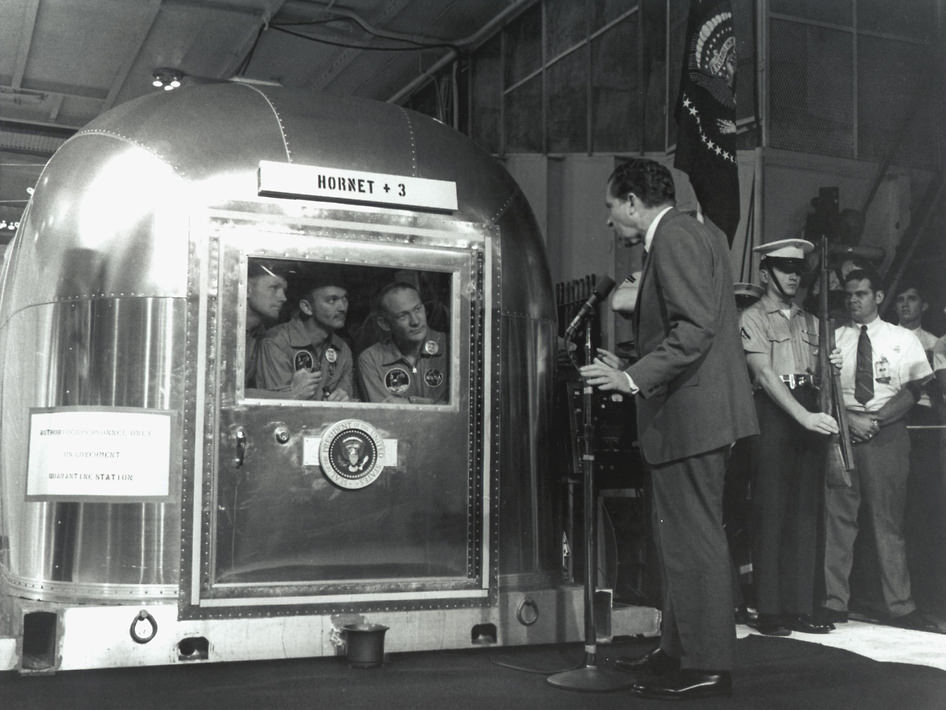
Apollo-era back-contamination policies are out of date.
Credit: NASA
Tesla tossing
In terms of commercial space exploration, there is no regulatory agency within the U.S. government with the authority to regulate space exploration by non-government entities. Legislation should be proposed that grants authority to an appropriate federal regulatory agency to authorize and supervise private sector space activities, the report says.
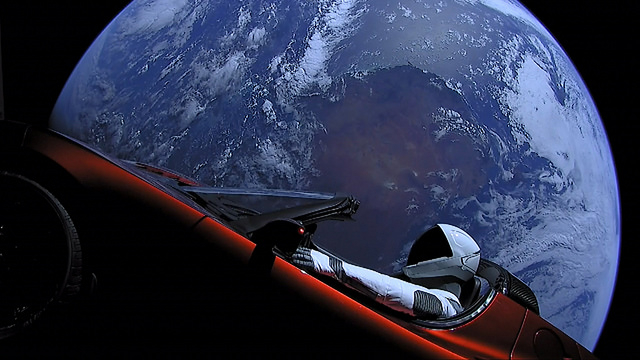
Tesla tossing: planetary protection implications.
Credit: SpaceX
Flagged in the report as a current example of this concern is the SpaceX Falcon 9 Heavy booster tossing of a used Tesla roadster into a Mars-crossing orbit. To the best of the committee’s knowledge that wrote the report, no consultations as to the test’s planetary protection implications took place.
To read the report — Review and Assessment of Planetary Protection Policy Development Processes – go to:
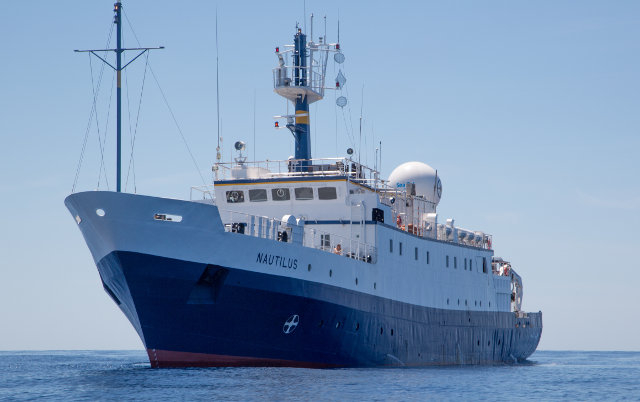
Exploration Vessel Nautilus.
Credit: Ocean Exploration Trust
Update July 3: Preliminary Findings from the Nautilus Meteorite Hunt
“In July 2018, Exploration Vessel Nautilus attempted to locate and recover fragments of a rare, large meteorite fall that was recently observed in NOAA’s Olympic Coast National Marine Sanctuary off the coast of Washington.
Credit: Ocean Exploration Trust
An overnight multibeam sonar survey on July 1 attempted to identify possible meteorite impact locations, but no obvious changes to the seafloor were observed.
On July 2, robot underwater vehicles, Hercules and Argus, were launched to conduct a 7-hour visual survey of the seafloor in a region identified to likely include the impact site.
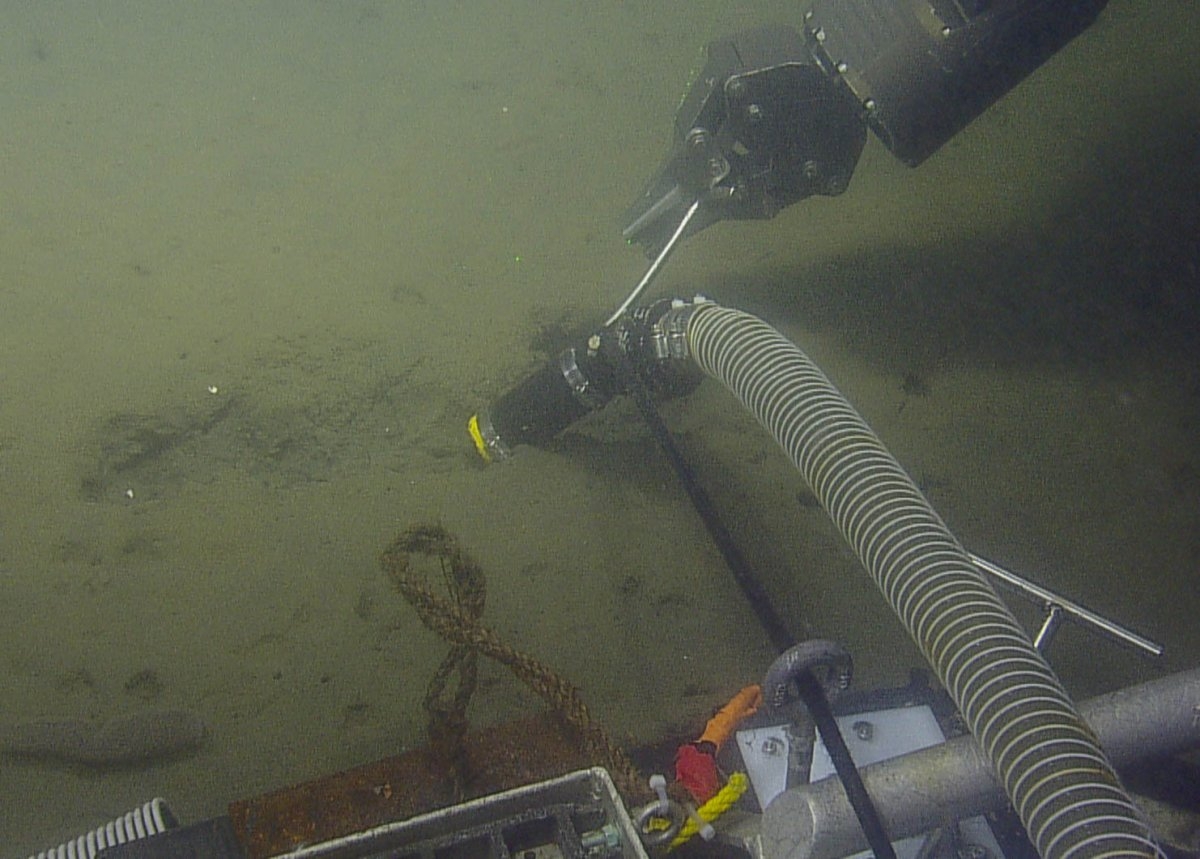
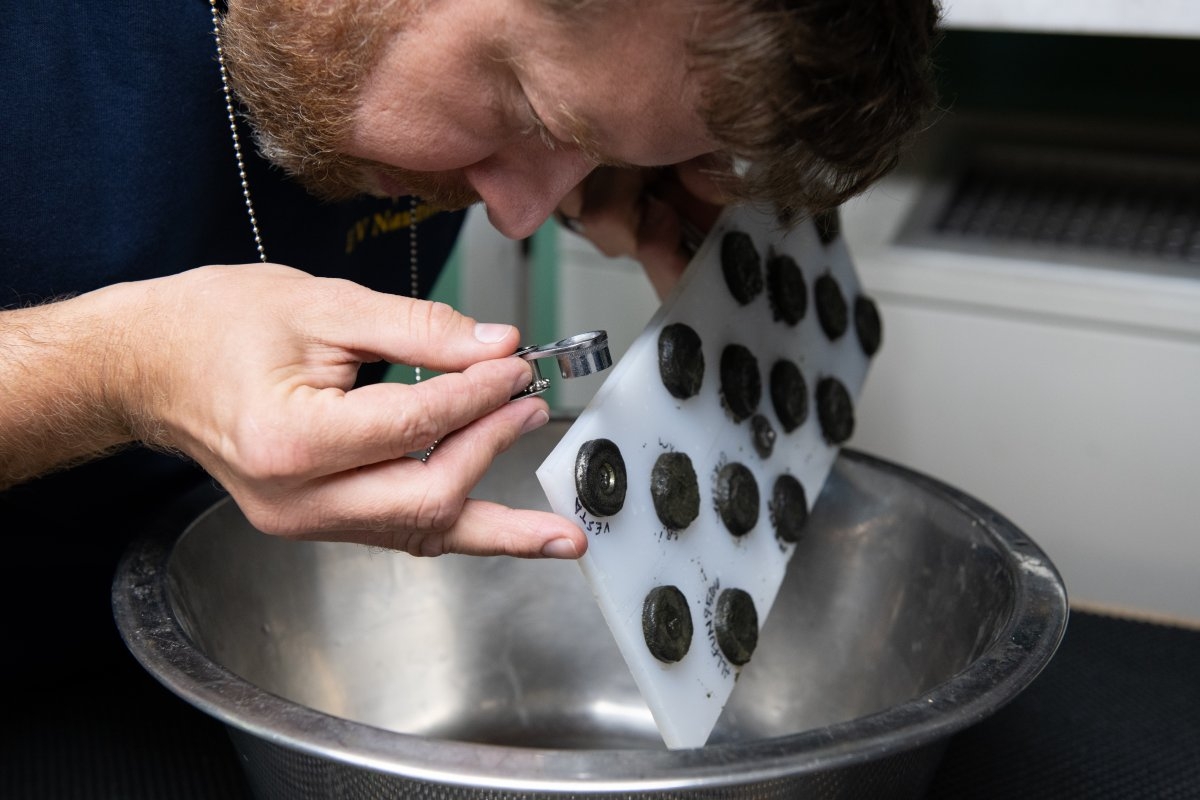
While exploring this area, the Nautilus team collected several sediment samples using a suction hose sampler, magnetic plate, and sediment scoop. Upon recovering the vehicles, the team spent about six hours in the ship’s wet lab sifting and processing through these silty samples.
Credit: Ocean Exploration Trust
NASA Cosmic Dust Curator Marc Fries conducted an initial visual analysis of the samples collected, and his preliminary findings include two small fragments of fusion crust–meteorite exterior that melted and flowed like glaze on pottery as it entered the atmosphere.
Additional analysis will be conducted in the coming weeks to determine if these fragments indeed came from the massive meteorite fall seen entering the Pacific Ocean off Washington’s coast in March 2018.”
According to the expedition team, they will continue to post updates on this exciting research as they learn more.
Fall guy
On March 7, 2018, a bright meteorite (called a bolide) fall was observed about 15 miles (25 kilometers) off the coast of Grays Harbor County, Washington.
Ocean Exploration Trust is worked with scientists from Olympic Coast National Marine Sanctuary, NASA, and University of Washington to locate the meteorite fall.
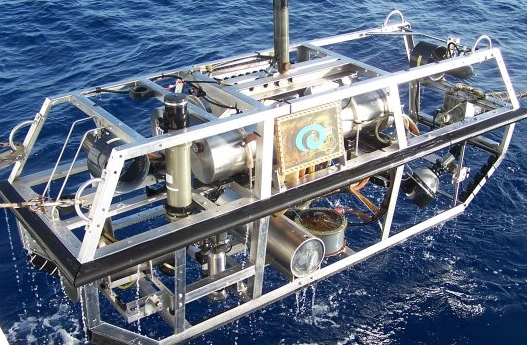
Remotely operated underwater vehicles scoured ocean floor.
Credit: Ocean Exploration Trust
Underwater vehicles
Exploration Vessel Nautilus mapped a 1 square kilometer area, and then conducted a search of the area with remotely operated underwater vehicles — Hercules and Argus — and recover any fragments located.
Support for this expedition comes from NOAA’s Office of Ocean Exploration and Research, Ocean Exploration Trust, and National Geographic Society.
Sea floor site
An analysis by NASA Cosmic Dust Curator Marc Fries, who is onboard Nautilus for the expedition, indicated this fall is approximately two tons of meteorites. Fries estimated that, at the fall site for the largest meteorite, there may be two to three meteorites for every 10 square meters of sea floor.
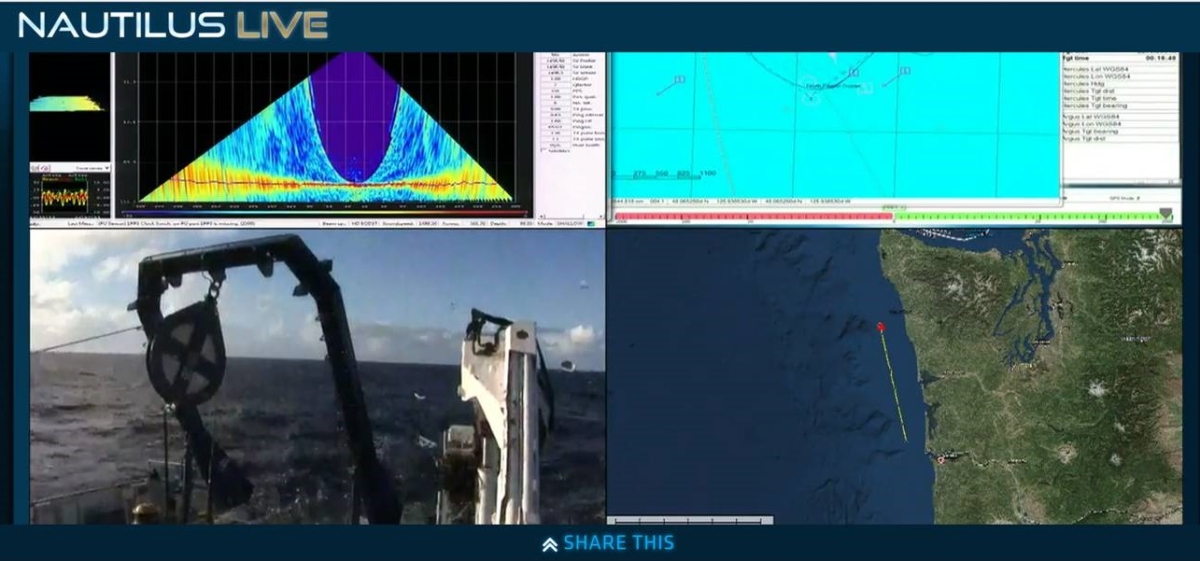
Expedition was broadcast for public viewing.
Credit: Nautilus Live/Screengrab
If meteorite fragments are found they will be shipped to the Smithsonian Institution in Washington, D.C. and become part of their research collections.
A remotely operated vehicle (ROV) dive will occur on July 2, 2018, from approximately 9am-4pm Pacific Time (weather dependent).
The public can explore with the Nautilus team in real-time on Nautilus Live!
Go to: www.nautiluslive.org
Also, go to this informative video about the meteorite hunt at:
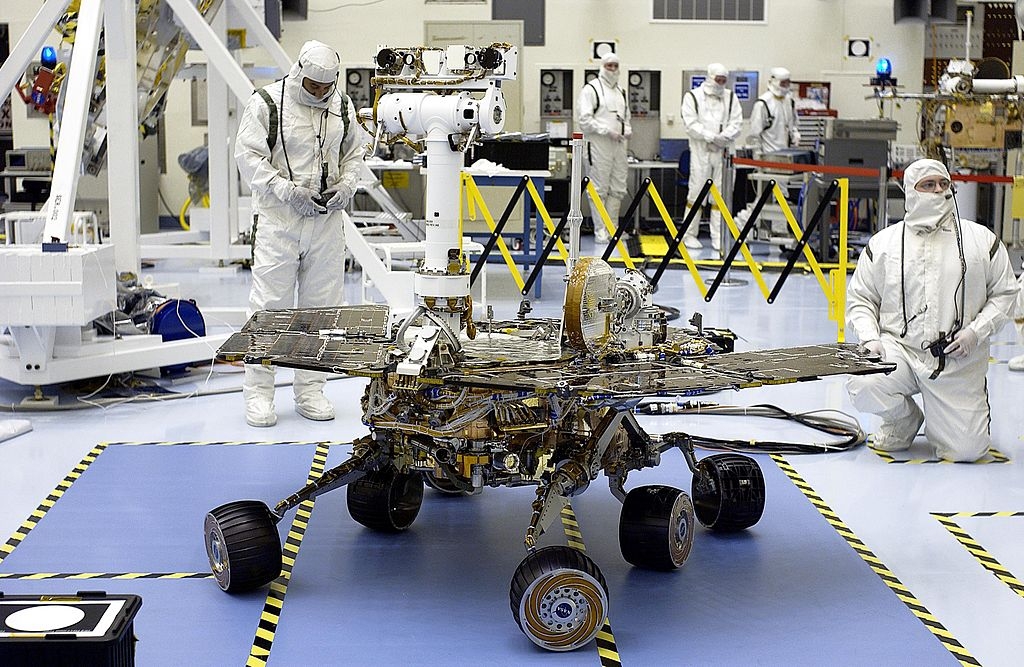
Pre-launch photo of Opportunity at Kennedy Space Center, Florida.
Credit: NASA
That thick dust storm on Mars continues. The storm caused NASA’s Opportunity rover at Meridiani to suspend science operations.
The Martian dust storm began on May 30.
Latest status
What’s the latest status on the solar-powered Opportunity rover, now in Sol 5132?
“We have not heard from the rover for a couple of weeks,” explains Ray Arvidson of Washington University in Saint Louis. He is deputy principal investigator for the Mars Exploration Rovers – Opportunity and Spirit.
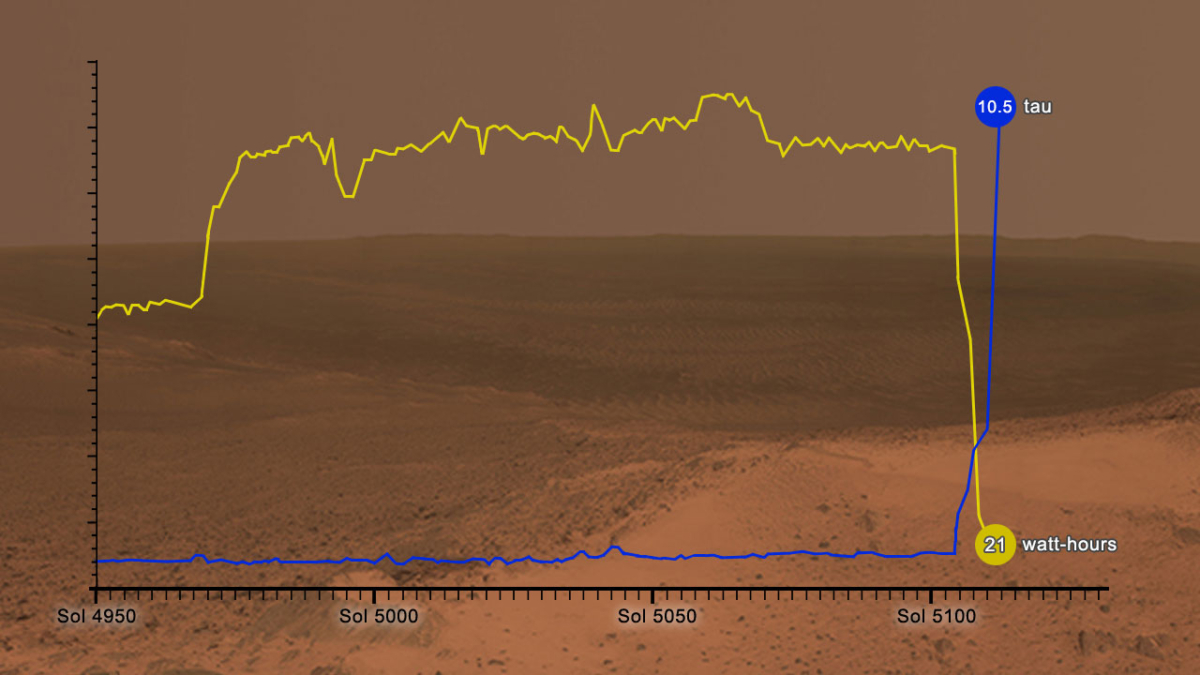
This graphic shows how the energy available to NASA’s Opportunity rover on Mars (in watt-hours) depends on how clear or opaque the atmosphere is (measured in a value called tau).
Credit: NASA/JPL-Caltech/New Mexico Museum of Natural History
Spirit has long been silent, becoming bogged down in sand late 2009. Its last communication with Earth was sent on March 22, 2010.
Opportunity has been wheeling and dealing with Mars since it landed in Meridiani Planum on January 25, 2004. But the rover’s last image received on Earth was from its Panoramic Camera, way back on Sol 5111.
Getting back to full operation
Most likely Opportunity is in a low power mode “in which the rover wakes up, checks its power, and if too low just goes back to sleep again,” Arvidson told Inside Outer Space.
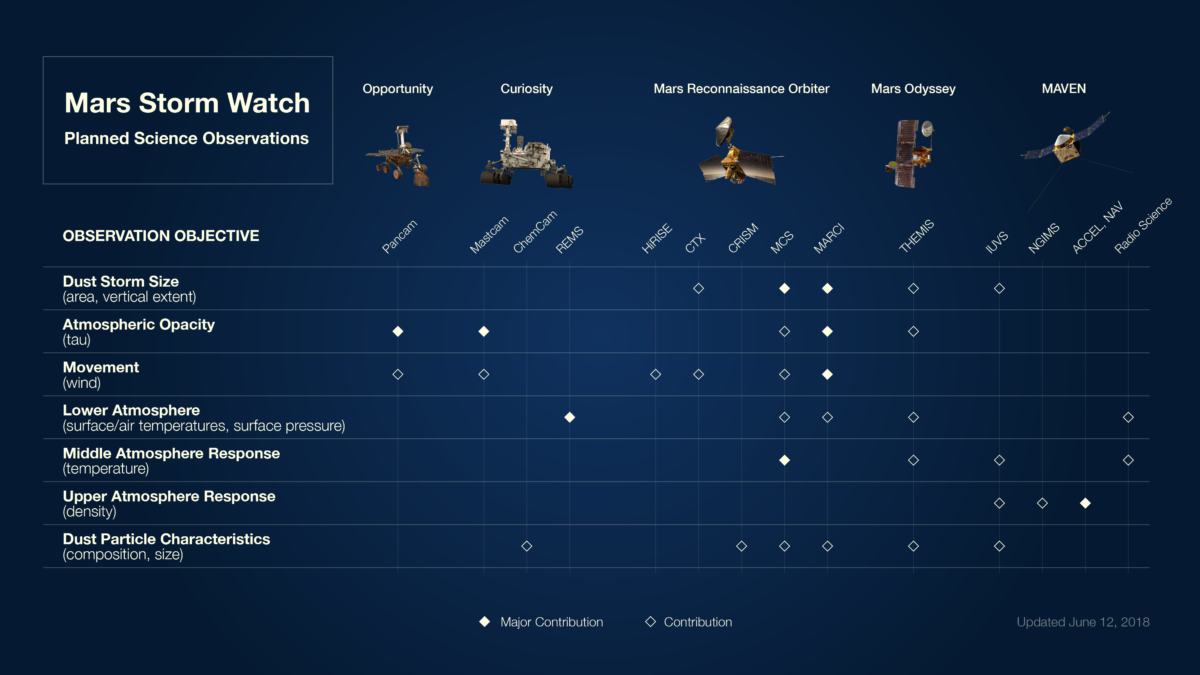
Graphic shows the ongoing contributions of NASA’s rovers and orbiters during a Martian dust storm that began on May 30, 2018. Not shown is Europe’s ExoMars Trace Gas Orbiter and Mars Express, also active circling the Red Planet, as is India’s Mars Orbiter Mission.
Credit: NASA/JPL
“At some point as the storm subsides Opportunity should wake up, decide it has enough power to transmit a signal from its low gain antenna saying ‘I am awake and ok, but I am going back to sleep again.’ This should happen every sol until it decides to go back to full operation,” Arvidson adds.
“We have been listening but no low-gain antenna communications yet. And the storm continues in full force,” Arvidson says.
“The storm has gone global and is still raging. Three weeks today since we last heard from Opportunity,” adds Jim Rice, Geology Team Leader for the Mars Exploration Rover Project at the Arizona State University’s Mars Space Flight Facility. “I’m still confident we make it through this.”
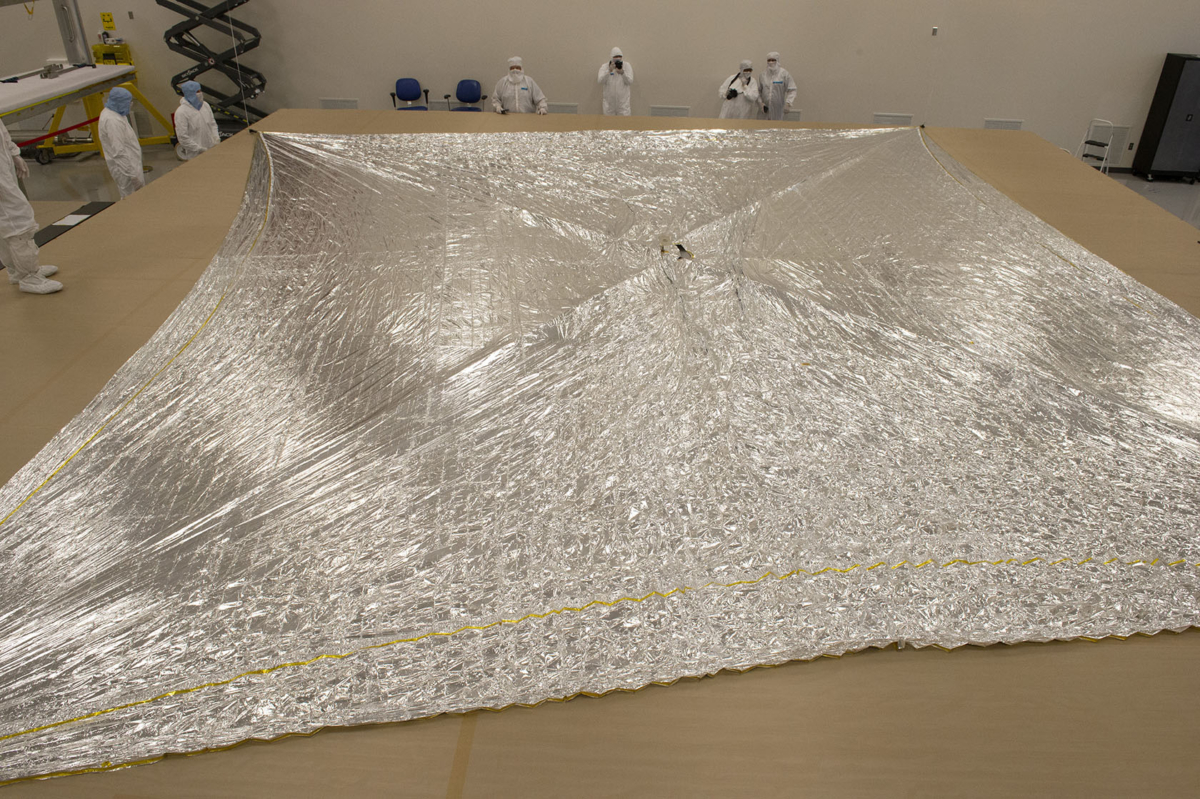
Solar sail test to be utilized by the Near-Earth Asteroid Scout (NEA Scout).
Credit: NASA/Emmett Given
A solar sail to be used in NASA’s Near-Earth Asteroid Scout has been deployed in a ground test facility.
The test was performed in an indoor clean room at the NeXolve facility in Huntsville, Alabama.
The Near-Earth Asteroid Scout (NEA Scout) is a small satellite designed to study asteroids close to Earth. The successful deployment test took place on June 28.
Six-unit cubesat
NEA Scout is a six-unit CubeSat that relies on a solar sail for propulsion. It is one of 13 secondary science payloads NASA selected to fly on NASA’s Exploration Mission-1 (EM-1).
EM-1 will be the first integrated test of NASA’s Space Launch System rocket, NASA’s Orion spacecraft and the newly upgraded Exploration Ground Systems at Kennedy Space Center in Florida.

Deep space destination
In addition to testing these integrated systems, EM-1 will also provide the opportunity for these small experiments to reach deep space destinations, conducting science missions and testing key technologies beyond low-Earth orbit.
NEA Scout will deploy from the rocket after the Orion spacecraft is separated from the upper stage. When deployed, the sail, which is square in shape, with each side about the length of a school bus, will harness the light of the sun to use as propulsion to move through space.
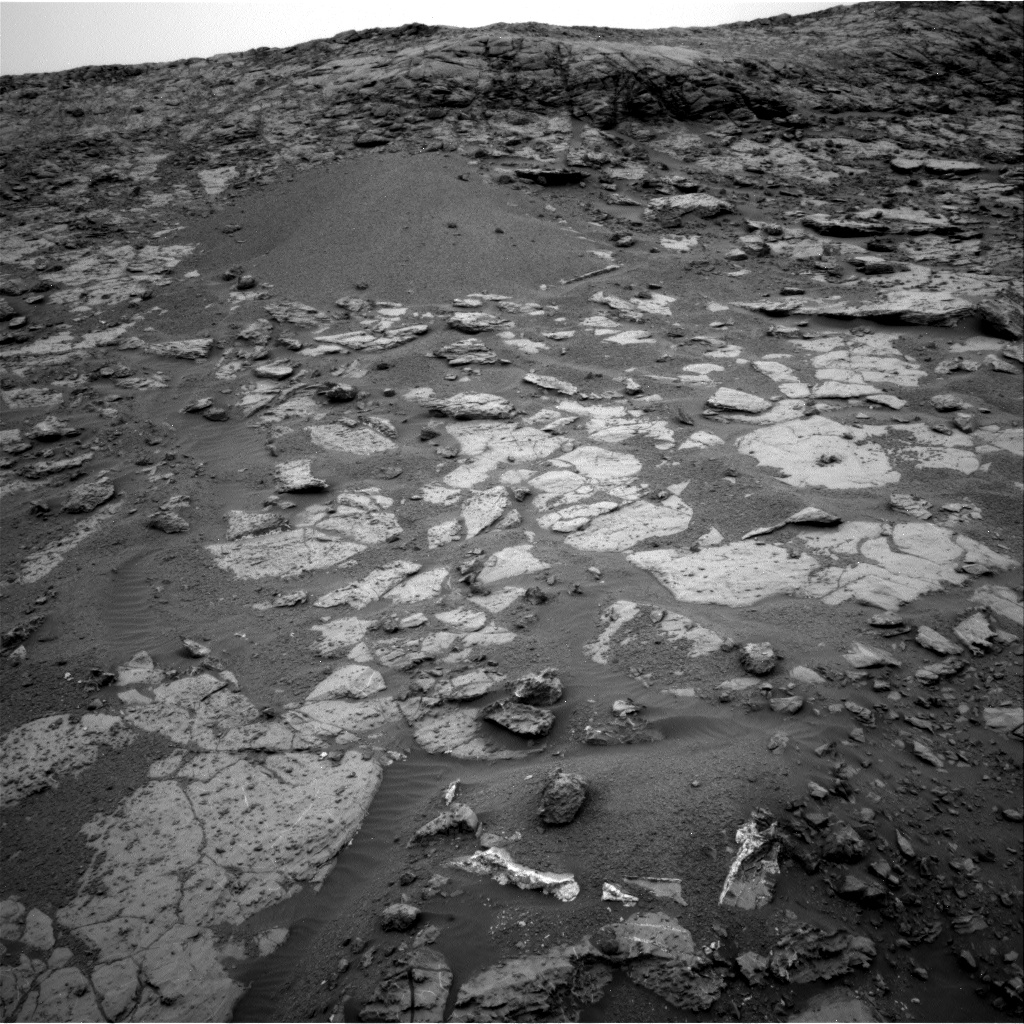
Curiosity Navcam Right B image acquired on Sol 2095, June 28, 2018.
Credit: NASA/JPL-Caltech
Now performing Sol 2096 duties, NASA’s Mars Curiosity rover has made a steep drive on Sol 2094 and is back over the crest of Vera Rubin Ridge and enjoying the view of flatter terrain ahead.
That’s the report from Lauren Edgar, a planetary geologist at the USGS in Flagstaff, Arizona.
“Everything was going smoothly and we were excited to plan some potential contact science, until we found a rock under the left front wheel that might make Curiosity unstable during arm activities,” Edgar explains.
Weekend plan
At the last minute Mars scientists swapped out Mars Hand Lens Imager (MAHLI)
MAHLI and Alpha Particle X-Ray Spectrometer (APXS) activities for some additional remote sensing.
“We still packed a lot of science into the two-sol plan, and we’ll have another opportunity to do contact science in the weekend plan,” Edgar explains.
The first sol plan included a Chemistry and Camera (ChemCam) and Mastcam observations of “Crosby” and “Hekkla Lake” to characterize the bedrock at this location.
“This plan is also full of atmospheric observations to monitor the ongoing dust storm, which will provide some great data from the surface regarding this unique event,” Edgar adds.
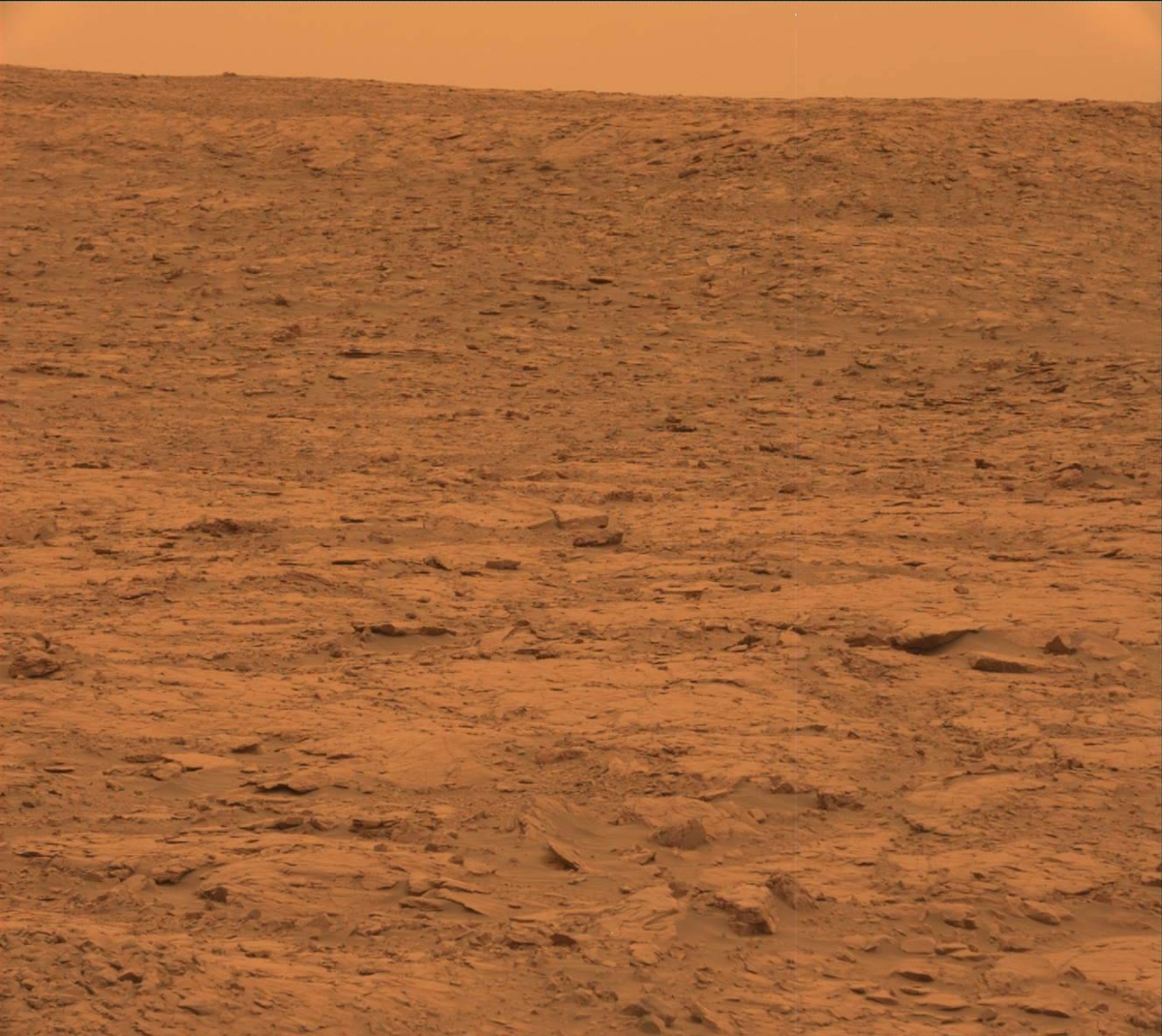
Curiosity Mastcam Left image acquired on Sol 2094, June 27, 2018.
Credit: NASA/JPL-Caltech/MSSS
Rover deck
“We also planned Mastcam imaging of the rover deck to monitor the accumulation and movement of fine material,” Edgar continues, “as well as a number of ChemCam calibration activities under high atmospheric opacity conditions.”
The plan calls for the robot to continue driving to the south and it will acquire post-drive imaging to prepare for the weekend plan.
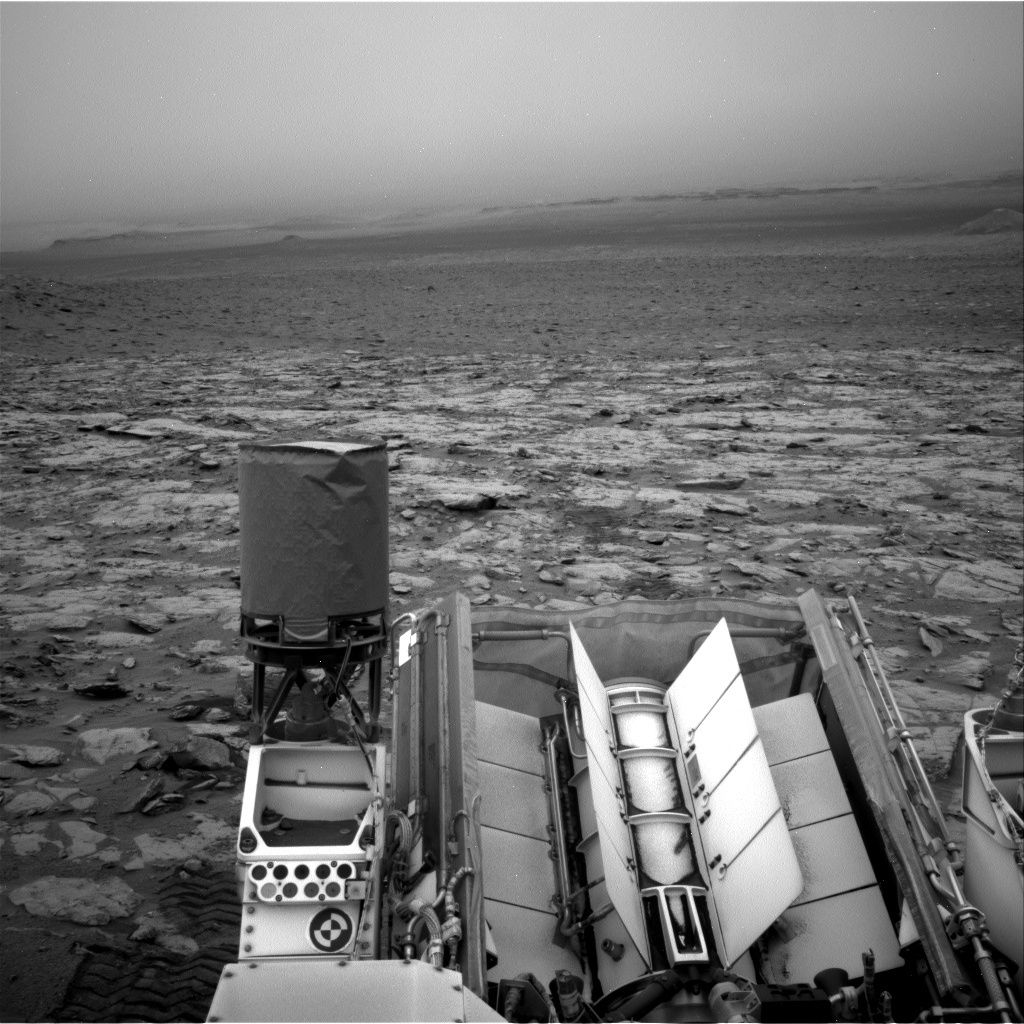
Curiosity Navcam Right B image acquired on Sol 2095, June 28, 2018.
Credit: NASA/JPL-Caltech
Hoping for clear skies
Overnight, the rover’s Chemistry & Mineralogy X-Ray Diffraction/X-Ray Fluorescence Instrument (CheMin) was slated to carry out the last analysis of the Duluth drill sample.
A second sol plain outlined more atmospheric monitoring and calibration activities, along with a ChemCam Autonomous Exploration for Gathering Increased Science (AEGIS) observation to autonomously target bedrock in the rover’s new location.
“Hoping for clearer skies,” Edgar concludes, “and fewer loose rocks under our wheels!”
New map!

Credit: NASA/JPL-Caltech/Univ. of Arizona
Meanwhile, a new Curiosity Rover location map for Sol 2094 has been issued.
The map shows the route driven by NASA’s Mars rover Curiosity through the 2094 Martian day, or sol, of the rover’s mission on Mars (June 28, 2018).
Numbering of the dots along the line indicate the sol number of each drive. North is up. From Sol 2092 to Sol 2094, Curiosity had driven a straight line distance of about 114.27 feet (34.83 meters).
Since touching down in Bradbury Landing in August 2012, Curiosity has driven 11.91 miles (19.17 kilometers).
The base image from the map is from the High Resolution Imaging Science Experiment Camera (HiRISE) in NASA’s Mars Reconnaissance Orbiter.

