Archive for the ‘Space News’ Category
 Author:
  October 27th, 2018
Credit: Elon Musk/SpaceX
If you didn’t have that winning big billion dollar + lottery ticket, here’s another toss of the dice.
The new space race isn’t to the Moon, but rather to Mars and the analysts at MyBookie say the smart money is on Elon Musk.
In-depth look
Analyst & oddsmaker, David Strauss took an in-depth look at the two private aerospace companies and determined that SpaceX and their Big Falcon Rocket places the company far ahead of Blue Origin as well as any government organization.

Credit: Subcommittee on Space, Committee on Science, Space, and Technology/Screengrab
Strauss said in a press statement: “Bezos may have the discipline, but Musk has the infrastructure and just the right amount of craziness to make a successful mission happen. The days of government organizations staging trip to another planet are behind us. I would be surprised if NASA truly makes it back to the Moon.”

Rocketeer Jeff Bezos and his commercial rocket firm, Blue Origin.
Credit: Blue Origin
Odds are
The MyBookie stats regarding the first organization to send a crewed mission to Mars:
Space X: -300 odds or 75% chance
Blue Origin: +400 or 20% chance
Boeing: +500 or 17% chance
US Space Force: +2000 or 5% chance
Russia: +4500 or 2% chance
NASA: +6000 or 1.5 percent chance
Link to odds at:
 Posted in
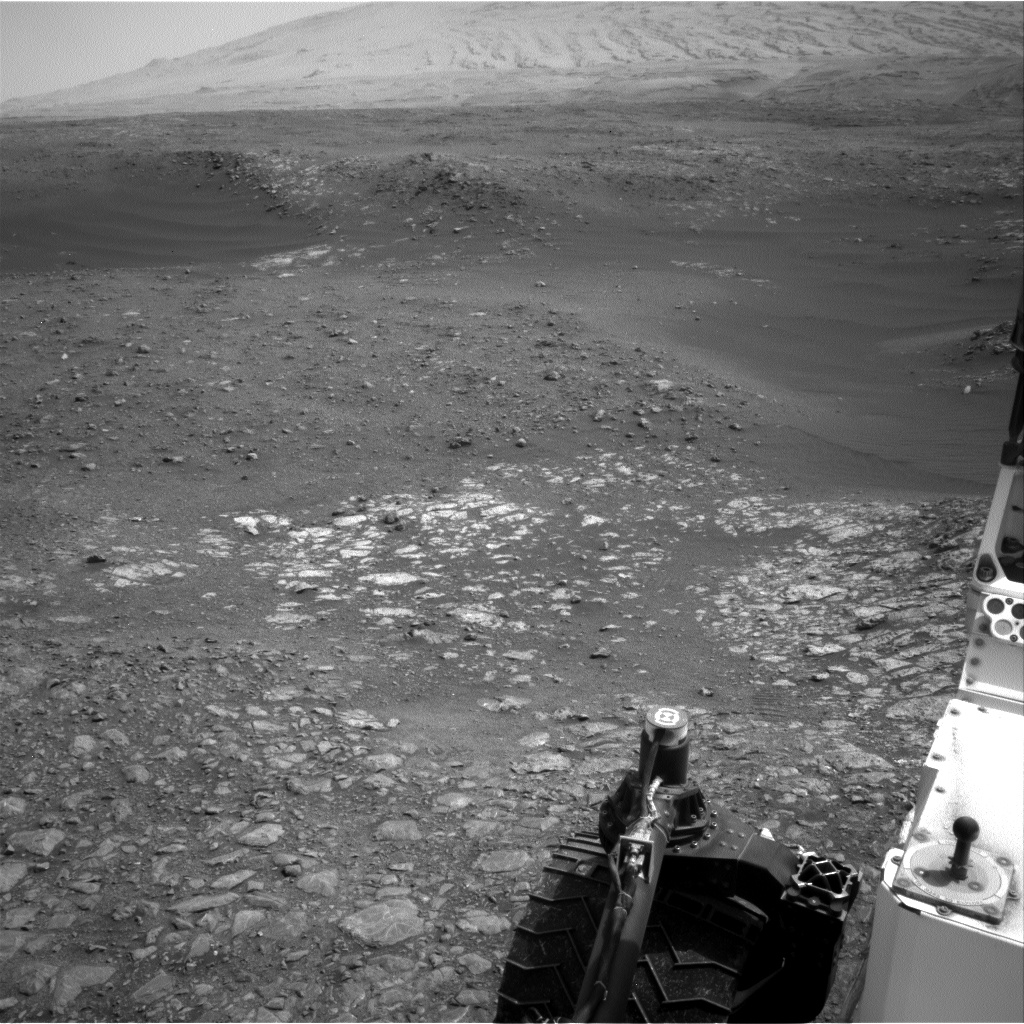
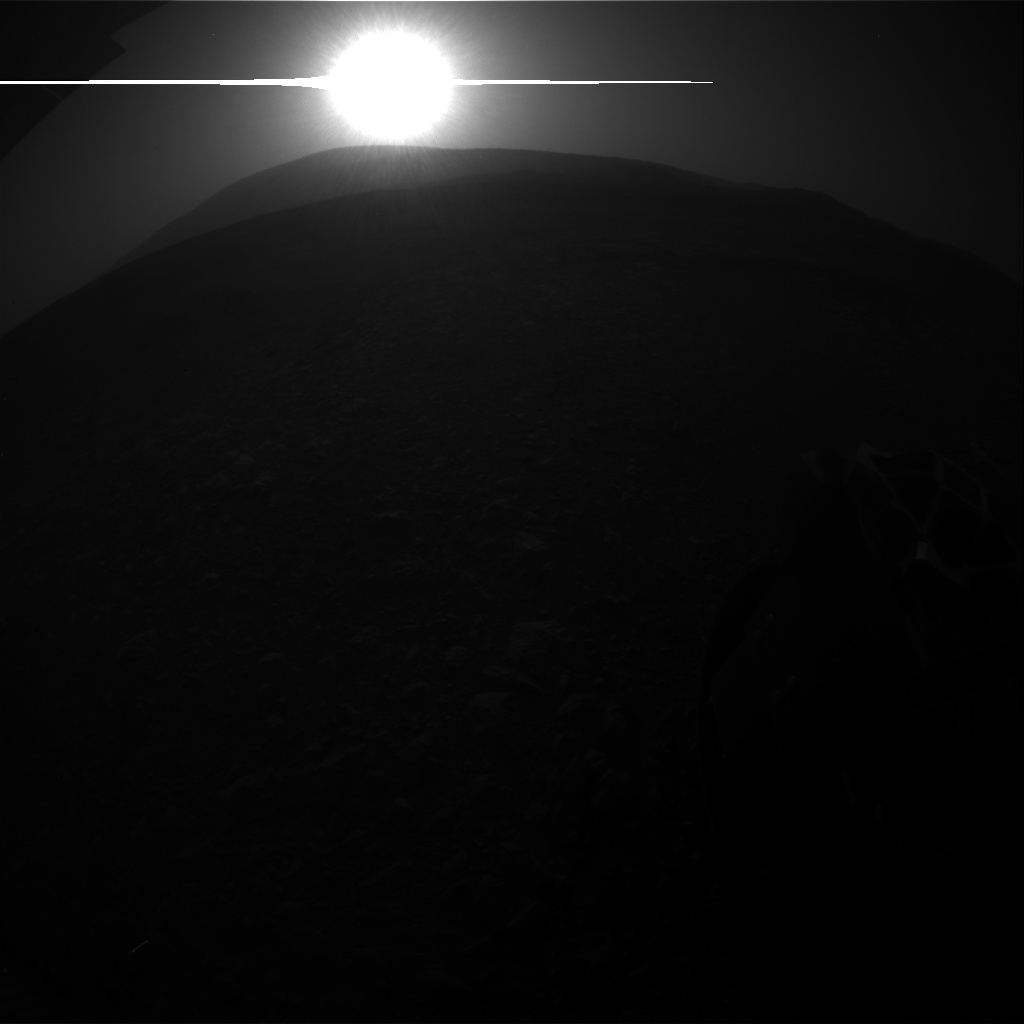
Curiosity Navcam Right A photo acquired on Sol 2210, October 24, 2018.
Credit: NASA/JPL-Caltech
NASA’s Curiosity Mars rover is now in Sol 2213 and its eyes are on the sky reports Lauren Edgar, a planetary geologist at the USGS in Flagstaff, Arizona.
A three-sol script has the robot focusing on environmental monitoring, as the robot continues to be on the mend following a memory glitch that’s impacted transmission of imagery and data.
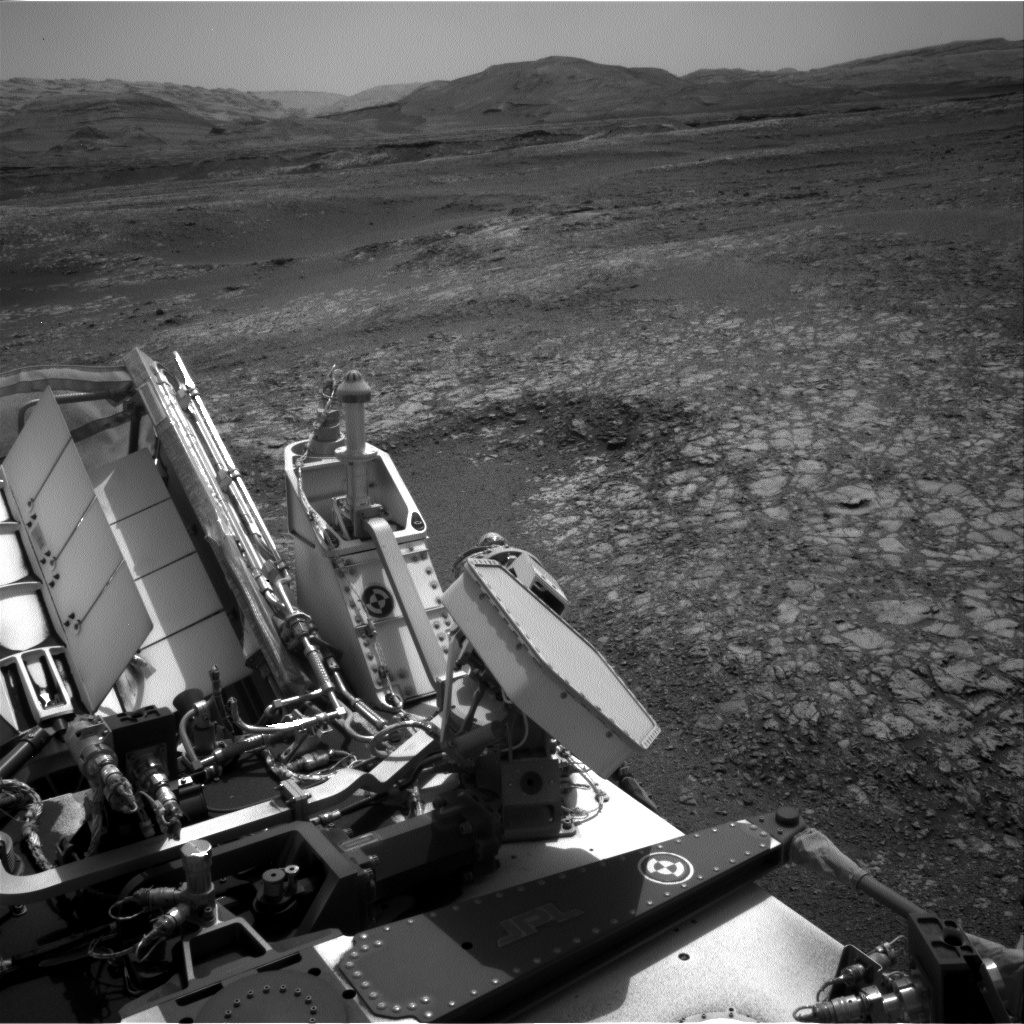
Curiosity Navcam Right A image taken on Sol 2210, October 24, 2018.
Credit: NASA/JPL-Caltech
Dust content
“The first sol kicks off with Mastcam tau, Navcam line of sight, and Navcam dust devil observations, to monitor the dust content in the atmosphere and search for dust devils,” Edgar says.
Then the rover’s Chemistry & Mineralogy X-Ray Diffraction/X-Ray Fluorescence Instrument (CheMin) will return the remaining raw data frames from the “Stoer” analysis from early September.
In the afternoon, Curiosity will acquire a Mastcam sky survey, Navcam zenith movie, and Navcam suprahorizon movie, which will provide additional atmospheric monitoring data.
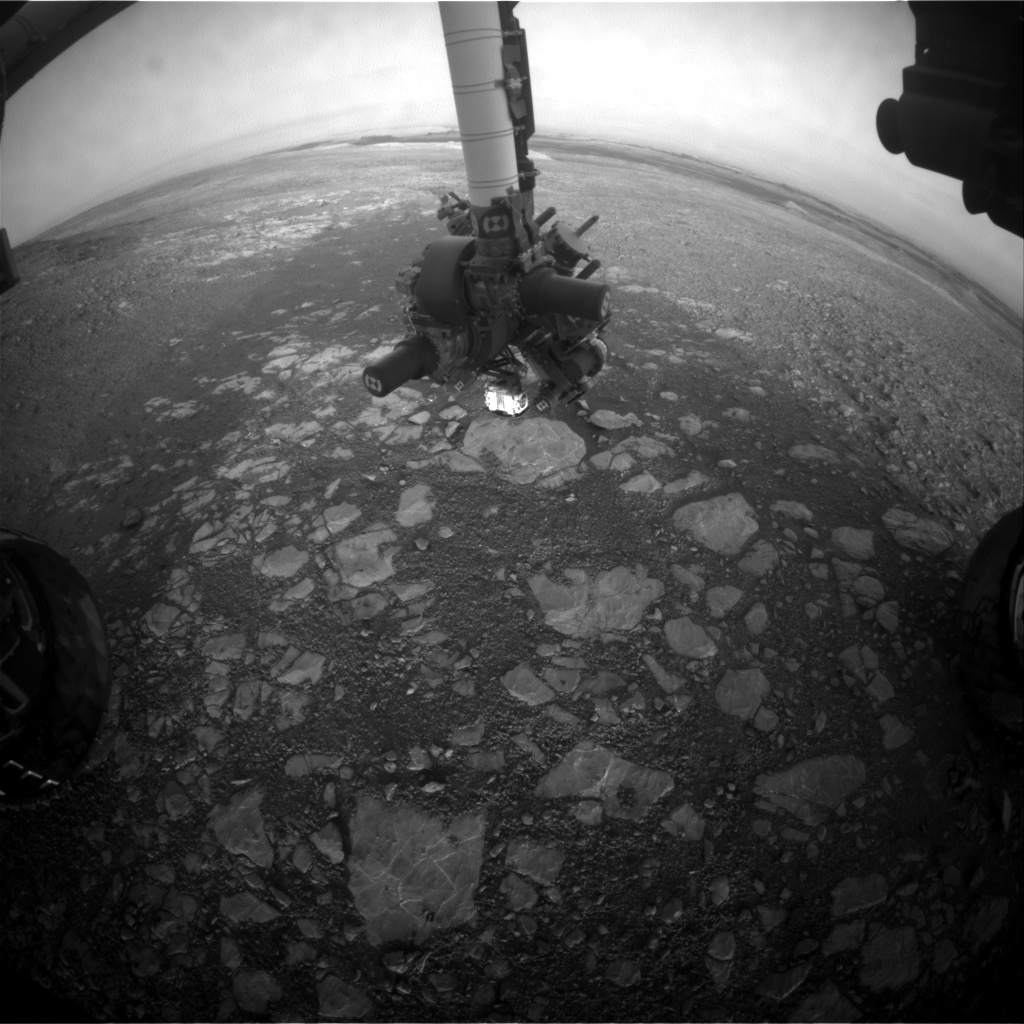
Curiosity Front Hazcam Left A image acquired on Sol 2210, October 24, 2018.
Credit: NASA/JPL-Caltech
Pre-anomaly imaging
“Similar environmental observations will be acquired early the next morning, with an additional Mastcam crater rim extinction observation,” Edgar points out. “The second sol also includes a redo of the pre-anomaly post-drive imaging, to look for changes and provide a terrain mesh prior to resuming full arm and mobility activities.”
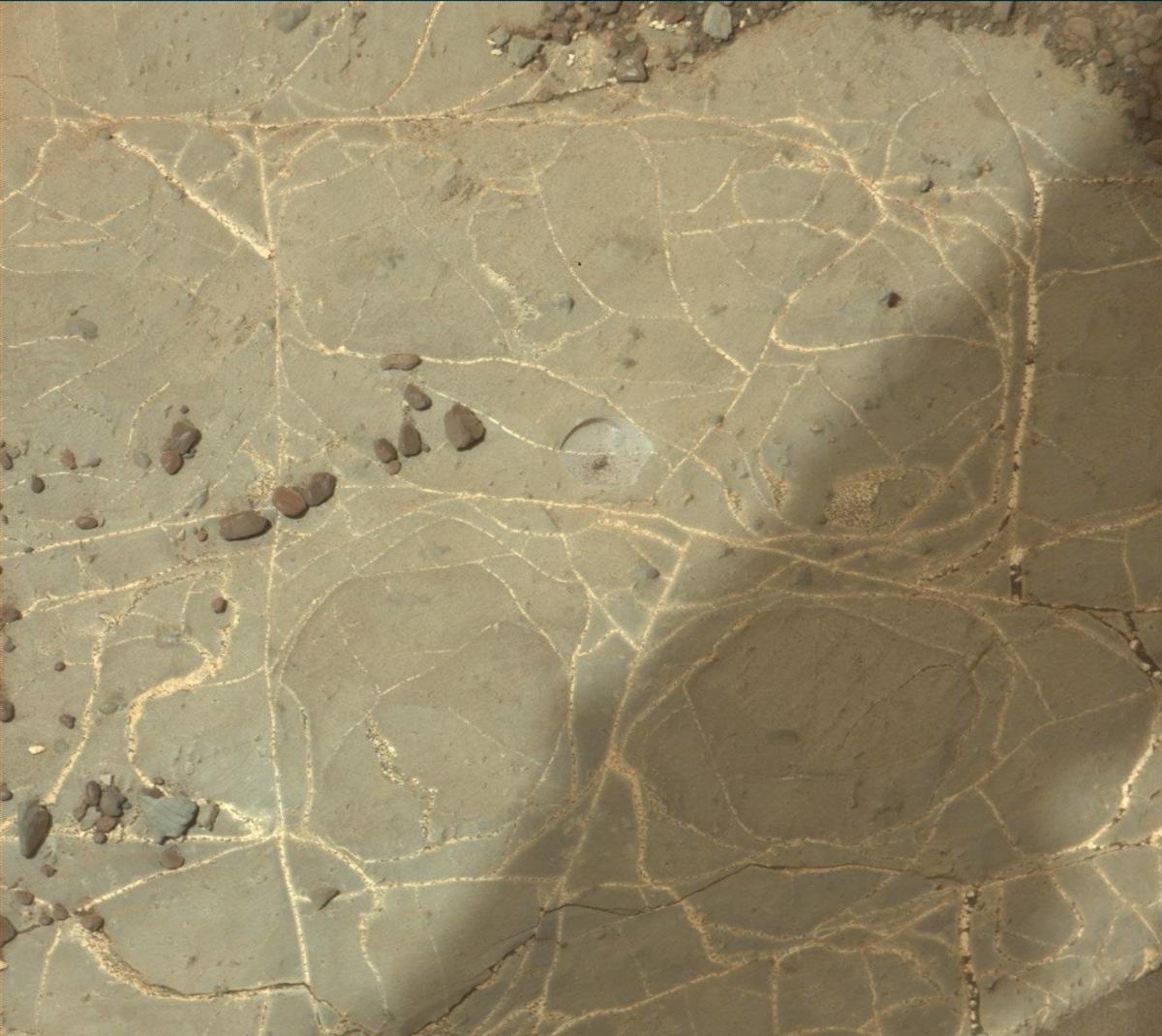
Curiosity Mastcam Right image taken on Sol 2211, October 25, 2018.
Credit: NASA/JPL-Caltech/MSSS
Curiosity Rear Hazcam Right A photo taken on Sol 2210, October 24, 2018.
Credit: NASA/JPL-Caltech
The third sol planned includes a final suite of Mastcam tau, Navcam dust devil and Navcam suprahorizon movies, in addition to the standard Rover Environmental Monitoring Station (REMS) and Dynamic Albedo of Neutrons (DAN) passive observations throughout the plan.
“But while the environmental theme group has their eyes on the sky, I’ve got mine on the ground…looking south over the back of the rover, and the new terrain that we are tantalizingly close to reaching,” Edgar concludes. “Looking forward to resuming full science operations soon!”
Credit: Virgin Orbit
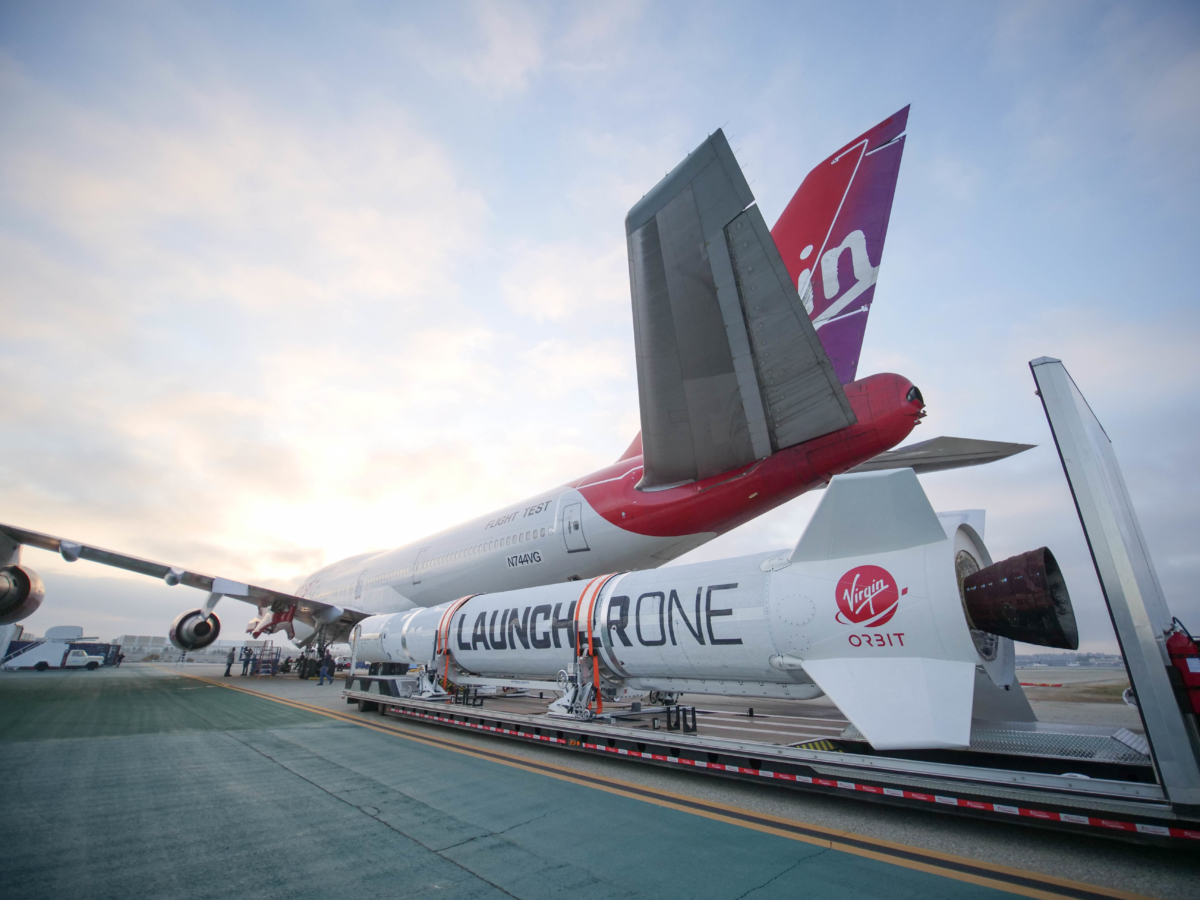
The Long Beach Airport in California was the scene, for the first time, Virgin Orbit’s LauncherOne rocket was integrated with its 747 carrier aircraft.
Credit: Virgin Orbit
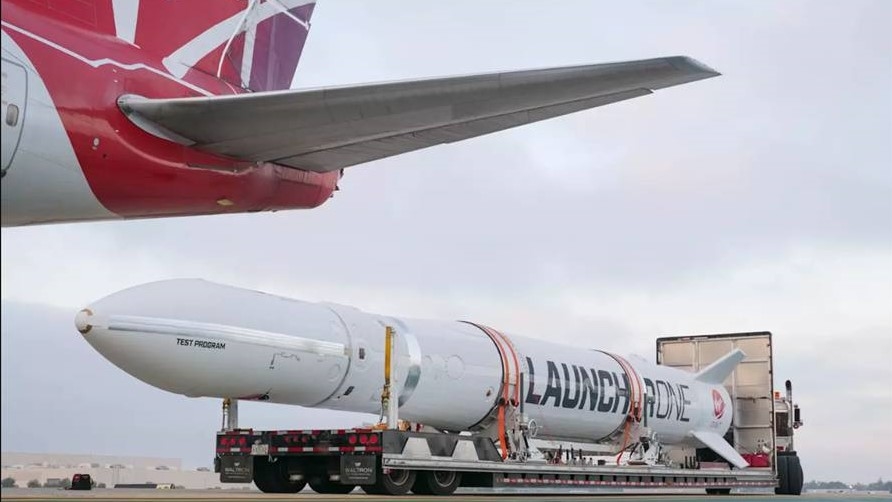
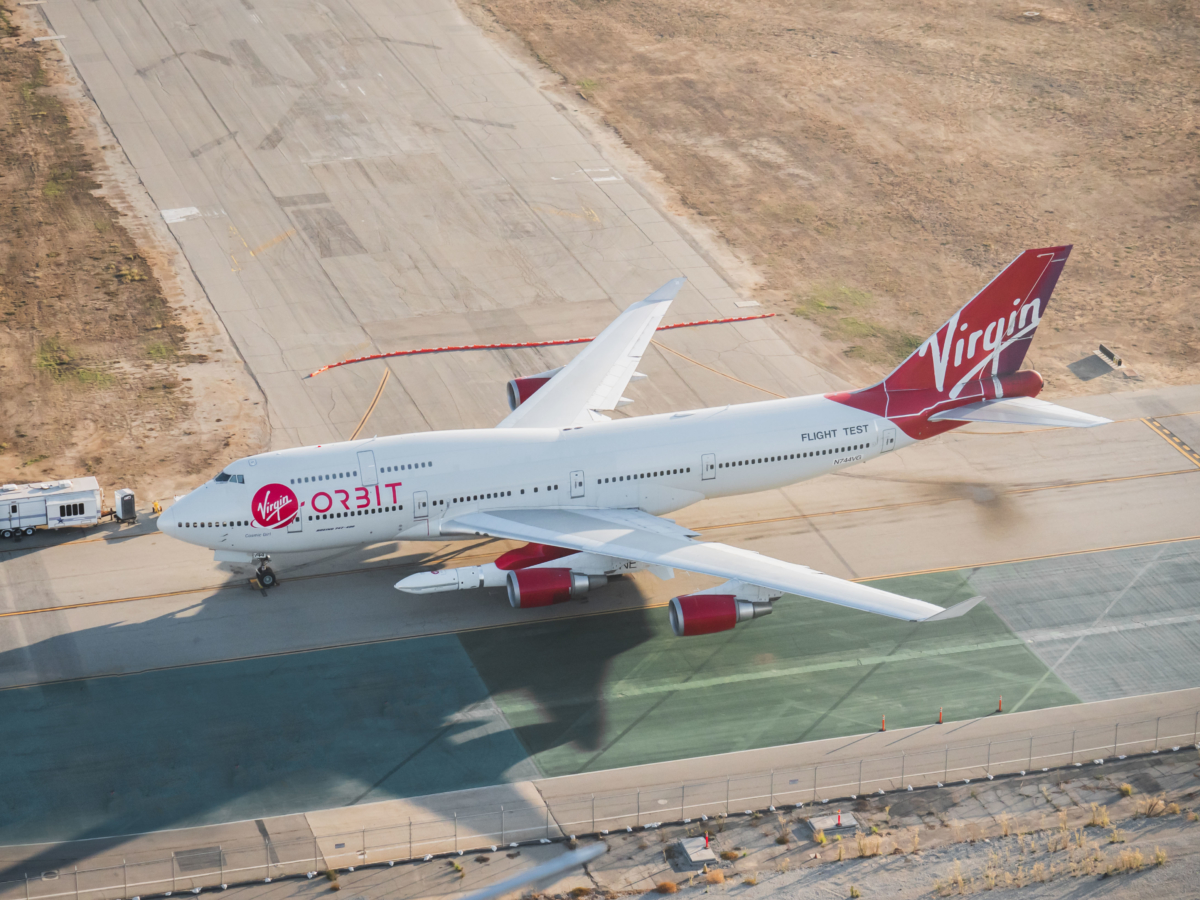
LauncherOne is carried aloft by a customized 747-400 aircraft dubbed “Cosmic Girl,” modified explicitly for the purpose of serving as a flying launch site.
Richard Branson’s Virgin Orbit’s system becomes the world’s “first concierge launch service,” said the company in an October 25 press statement.
Captive carry testing
Each mission of the system is to be tailored to a customer’s specific needs for launch location and orbital inclination—a boon to small satellite customers who want flexibility and responsiveness.
The rocket is outfitted and ready for flight on Cosmic Girl in the near future.
It will be used for an extensive test flight campaign that includes a number of “captive carry” flights—during which the rocket will remain attached to the aircraft, gathering terabytes of test data about aerodynamic performance, structural loading, and more.
Credit: Virgin Orbit
High-altitude launch
The company has already manufactured its first orbital rocket and has fully integrated rocket stages actively in testing on custom-built stands at the Mojave Air and Space Port in California.
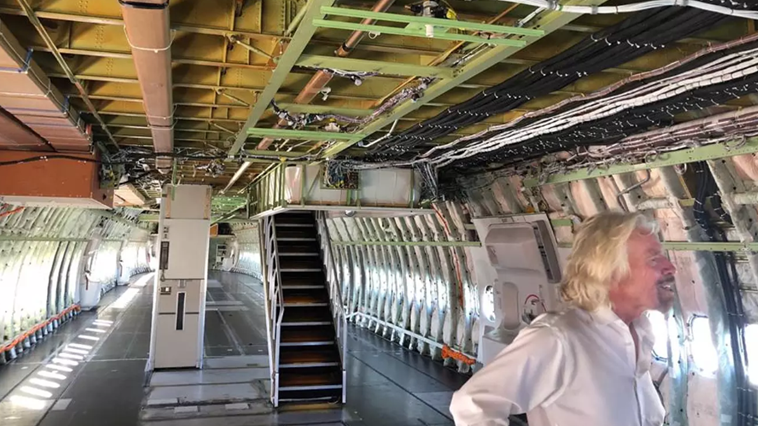
Richard Branson inspects modified 747 aircraft, Cosmic Girl.
Credit: Virgin Orbit
LauncherOne, at 70 feet long, weighs 57,000 pounds and is intended to toss satellites into Earth orbit, as small as a loaf of bread or as large as a household refrigerator.
Cosmic Girl will carry the rocket to an altitude of 30,000+feet before the rocket engages its thrusters, taking it to outer space.

Credit: NASA’s Scientific Visualization Studio
NASA’s Scientific Visualization Studio issued on October 20 a visualization using a digital 3D model of the Moon built from global elevation maps and image mosaics by NASA’s Lunar Reconnaissance Orbiter (LRO) mission.
Set to Claude Debussy’s Clair de Lune, this visualization uses LRO data to show the stark beauty of evolving light and shadow near sunrise and sunset on the rugged lunar surface. Background music is performed by Timothy Michael Hammond, distributed by Killer Tracks.
Melancholy moonlight
The visualization was created to accompany a performance of Claude Debussy’s Clair de Lune by the National Symphony Orchestra Pops, led by conductor Emil de Cou, at the Kennedy Center for the Performing Arts in Washington, DC, on June 1 and 2, 2018, as part of a celebration of NASA’s 60th anniversary.
Clair de Lune (moonlight in French) was published in 1905, as the third of four movements in the composer’s Suite Bergamasque, and unlike the other parts of this work, Clair is quiet, contemplative, and slightly melancholy, evoking the feeling of a solitary walk through a moonlit garden.

Lunar Reconnaissance Orbiter flies over Shackleton crater near the lunar south pole in this computer rendering.
Credit: NASA’s Scientific Visualization Studio
Sunrise, sunset
The visuals were composed like a nature documentary, with clean cuts and a mostly stationary virtual camera. The viewer follows the Sun throughout a lunar day, seeing sunrises and then sunsets over prominent features on the Moon. The sprawling ray system surrounding Copernicus crater, for example, is revealed beneath receding shadows at sunrise and later slips back into darkness as night encroaches.
This video is public domain and along with other supporting visualizations can be downloaded from the Scientific Visualization Studio at:
Visualization Credits: Ernie Wright (USRA), Lead Visualizer and Editor; Laurence Schuler (ADNET Systems Inc.), Technical Support; Ian Jones (ADNET Systems Inc.), Technical Support; Wade Sisler (NASA/GSFC), Producer; and Noah Petro (NASA/GSFC), Scientist.
Go to YouTube video at:
https://www.youtube.com/watch?time_continue=7&v=cFC71rFejvo

Credit: Deep Space Industries
ASDReports of Amsterdam, the Netherlands has published a new study on the prospective space mining market.
The appraisal — Space Mining Market – Global Forecast to 2025 – reports in a statement that the space mining market is expected to grow at a Compound Annual Growth Rate (CAGR) of 23.6% from 2018 to 2025. The space mining market is expected to grow from USD 0.65 billion in 2018 to USD 2.84 billion by 2023, at a CAGR of 23.6%.
“Ongoing and impending space mining missions, increasing investments of private stakeholders in space mining companies, and rising number of government initiatives to frame regulations with respect to asteroid mining drive the space mining market growth,” says an ASDReports statement. “However, the high costs associated with asteroid mining may hinder the growth of the space mining market.”

NASA’s Psyche spacecraft is targeted to launch in summer 2022 and travel to the asteroid using solar-electric (low-thrust) propulsion, arriving in 2026.
Artist’s concept of the asteroid 16 Psyche, which is thought to be a stripped planetary core. Image credit: SSL/ASU/P. Rubin/NASA/JPL-Caltech
M type asteroids
The study explains that type M asteroids are expected to grow at the highest CAGR in the space mining market during the forecast period.
Type M asteroids are metallic asteroids and are made of rare metals, such as the platinum group metals. These asteroids dwell in the middle region of the main belt in between S-type and C-type asteroids and have albedos varying from 0.10 to 0.18. Albedo is a measure of the reflecting power of a nonluminous object. The more reflective, or shiny, the object is the more light it will reflect. Darker objects reflect little sunlight.
These asteroids account for nearly 8% of the known asteroids. Examples of M-type asteroids include 16 Psyche, 21 Lutetia, 22 Kalliope, and 55 Pandora, among others.
Type M asteroid would grow at the highest CAGR during the forecast period. “M-type asteroids can be mined, and mined materials can be used in construction activities in space. Precious metals can be mined and taken back to Earth. Hence, a few players are targeting M-type asteroids for exploration and mining,” the market research group adds.

Artist’s illustration of astronauts at an asteroid as well as other mining and transportation vehicles operating in space.
Credit: TransAstra Corporation & Anthony Longman
Legal framework
Luxembourg is the first European country to have a legal framework for the extraction of space-based resources. Luxembourg, under the SpaceResources.lu initiative, provides legal, regulatory, and business environment, enabling private investors and companies to explore and use space resources.
Also, the collaboration of Government of Luxembourg with various private players (such as Deep Space Industries and Planetary Resources) to explore and mine asteroids is expected to provide opportunities for the players in the space mining market. “Therefore, Europe is likely to exhibit the highest CAGR in the space mining market during the forecast period.”
Major players
Major players and space agencies in the space mining market include Deep Space Industries (US); Planetary Resources (US); Moon Express (US); ispace (Japan); Asteroid Mining Corporation (UK); Shackleton Energy Company (SEC, US); Kleos Space (Luxembourg); TransAstra (US); OffWorld (US); SpaceFab.US (US); National Aeronautics and Space Administration (NASA, US); European Space Agency (ESA, France); Japan Aerospace Exploration Agency (JAXA, Japan); China National Space Administration (CNSA, China); and Russian Federal Space Agency (ROSCOSMOS, Russia).

Honey Bee Robotic asteroid capture for ISRU resource return, as viewed in this artist’s conception.
Credit: TransAstra Corporation
Competitive landscape
The report covers qualitative information on different types of commodity resources available in space, categorization of asteroids based on their distance from earth, applications of space mining, and space and on-Earth utilization of space-mined materials.
Major drivers, restraints, opportunities, and challenges pertaining to the space mining market are detailed in the report.
An in depth competitive landscape of the key players (along with their revenues) in the market is included in the report.
In the process of determining and verifying the market size for several segments and sub-segments gathered through secondary research, extensive primary interviews have been conducted with people holding key positions across regions.
For more information on this 114-page report — Space Mining Market – Global Forecast to 2025, go to:
https://www.asdreports.com/market-research-report-469908/space-mining-market-global-forecast

Prototype of the Tianhe core module. China’s space station is expected to be operational around 2022. CCTV/Screengrab
The China Manned Space Agency has released technical specifications of the core module of the country’s future manned space station. Tianhe — or Harmony of Heavens — will have three parts: the connecting section, life-support and control section, and resources section.
Details on the Chinese space facility were issued during the Fifth Manned Space Conference, which opened on Tuesday in Xi’an, Shaanxi province.

The Tianhe core module for China’s Space Station undergoes ground testing.
Credit: CCTV/Screengrab
As reported by Ecns.cn, the official English-language website of China News Service (CNS), the module will be equipped with three docking hatches reserved for visiting manned or cargo spacecraft and two berthing locations used to connect with space laboratories. There will also be a hatch for astronauts’ extravehicular activities.
Core module
The core module will be nearly 55 feet (16.6 meters) long with a diameter of 14 feet (4.2 meters). This module is central to the space station’s operations, as astronauts will live there and from inside the module control the entire station. The module will also be capable of hosting scientific experiments.

China’s medium-size space station for the 2020’s is depicted in this artwork.
Credit: CNSA
Chinese engineers are building a prototype of the core module, and construction of the core module is scheduled to start around year’s end, according to a China Manned Space Agency statement.
China will begin assembling the orbiting complex around 2020, according to government plans. First, a Long March 5B heavy-lift rocket will orbit the station’s core module, reportedly in the 2019-2020 time period. Next, about four manned spaceflights will be made to send astronauts to assemble the station.
Multi-module makeup
The space station is expected to be fully operational around 2022. It is set to operate for about 15 years, according to the China Academy of Space Technology, developer of the station.

Credit: CSIS
In 2024, it will become the world’s only space station if the United States-led International Space Station is retired that year as planned.
The multi-module station, named Tiangong, or Heavenly Palace, will be composed mainly of three parts: a core module attached to two space labs and have a combined weight of more than 90 metric tons.
The station will be able to carry more than 10 tons of scientific and experimental equipment. It will have 26 internal payload cabinets, 67 external hatches designed to dock with medium-sized extravehicular apparatuses and four external points for towing large instruments.
Cooperation
In late May, the United Nations Office for Outer Space Affairs and China Manned Space Agency jointly published their first announcement inviting scientists from around the world to submit their research proposals for a chance to conduct their own experiments on the Chinese space station.
China also has announced that it welcomes foreign astronauts on its space station and has trained two European astronauts in sea survival, which is necessary for the space station mission, Ecns.cn reports.
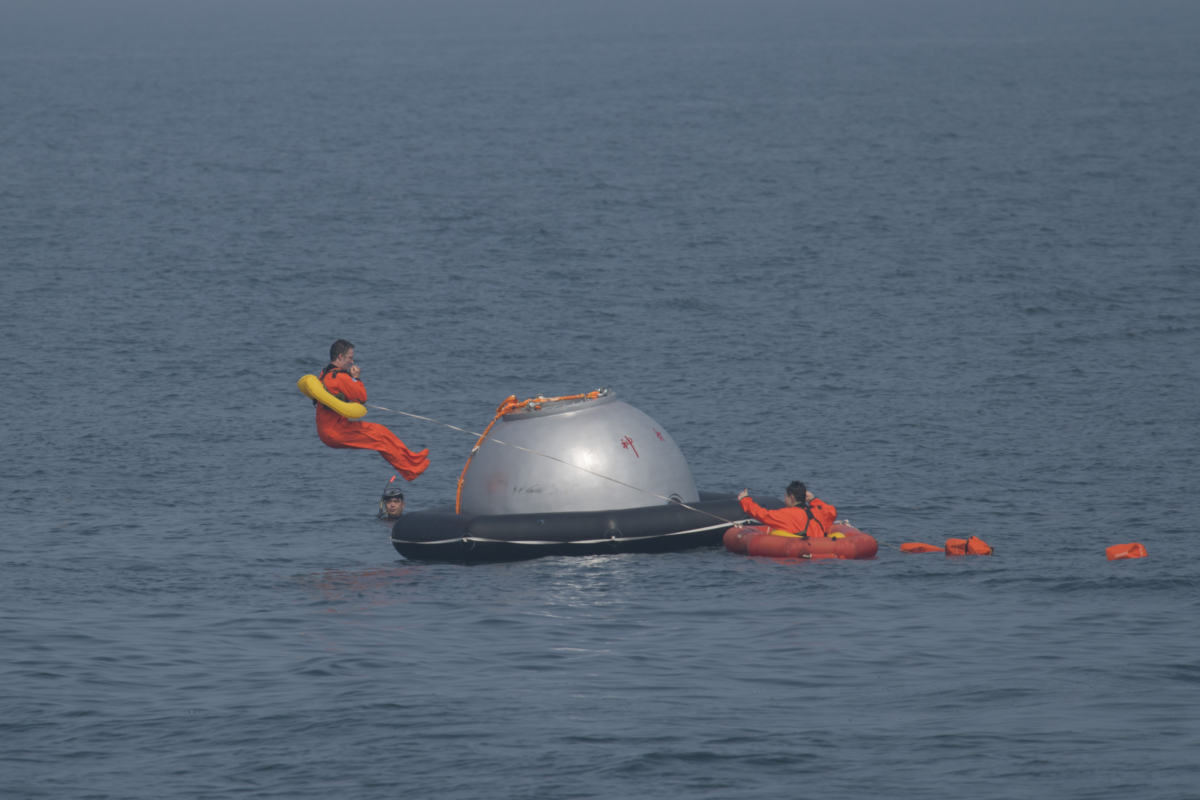
ESA astronaut Matthias Maurer jumping from a Chinese Shenzou capsule during sea survival training in August 2017. ESA astronauts Samantha Cristoforetti and Matthias joined Chinese colleagues in Yantai, China.
An ESA astronaut to fly on China’s space station is in play.
Credit: ESA–Stephane Corvaja, 2017
New astronauts
“Currently, we are making steady progress in the space station research and construction. Key technological breakthroughs have been made in producing the three modules including the core capsule and the Long March-5B carrier rocket. Selection of the third batch of reserve astronauts is also underway as scheduled,” said Hao Chun, director of China Manned Space Engineering Office, in a recent CCTV interview.
“We will complete on-orbit construction of the space station around 2022 as planned. It will be a national orbital space lab in the long run after being completed,” Hao said.

Credit: SpaceLife Origin
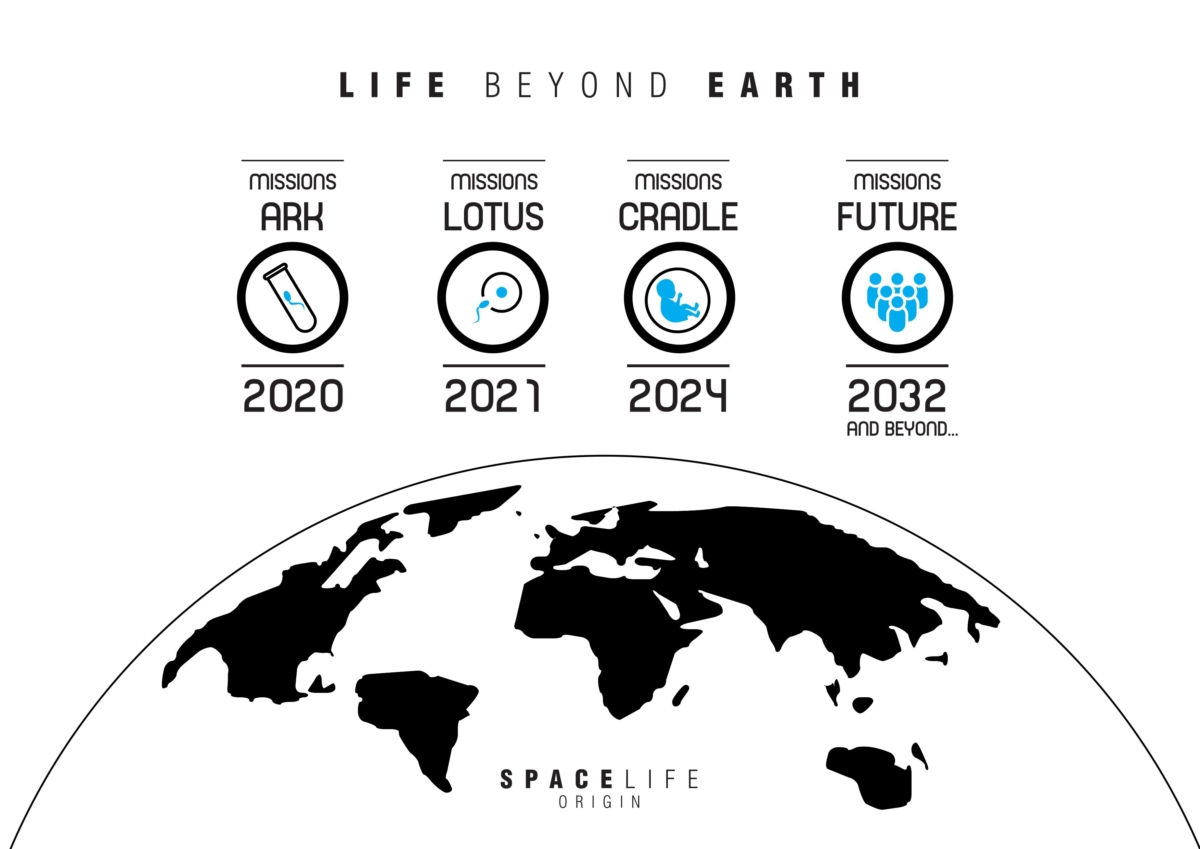
A bio-tech company announced today a ‘Seeds-of-Life’ in space initiative by 2020, make human embryo conception feasible by 2021 and human birth by 2024.
SpaceLife Origin, based in The Netherlands, has entered in partnerships with universities and leading suppliers from the space technology and medical sector. The group has outlined a step-by-step methodology making use of unique patent pending technology to enable sustainable life beyond Earth.
Credit: SpaceLife Origin
Patent pending
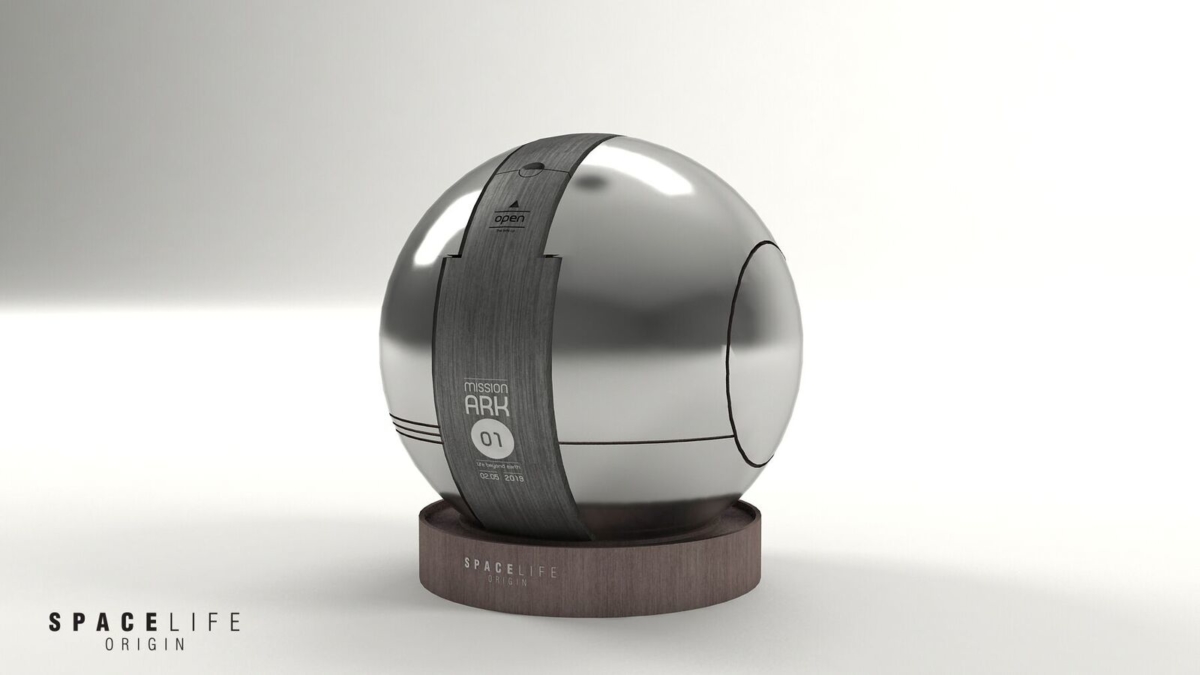
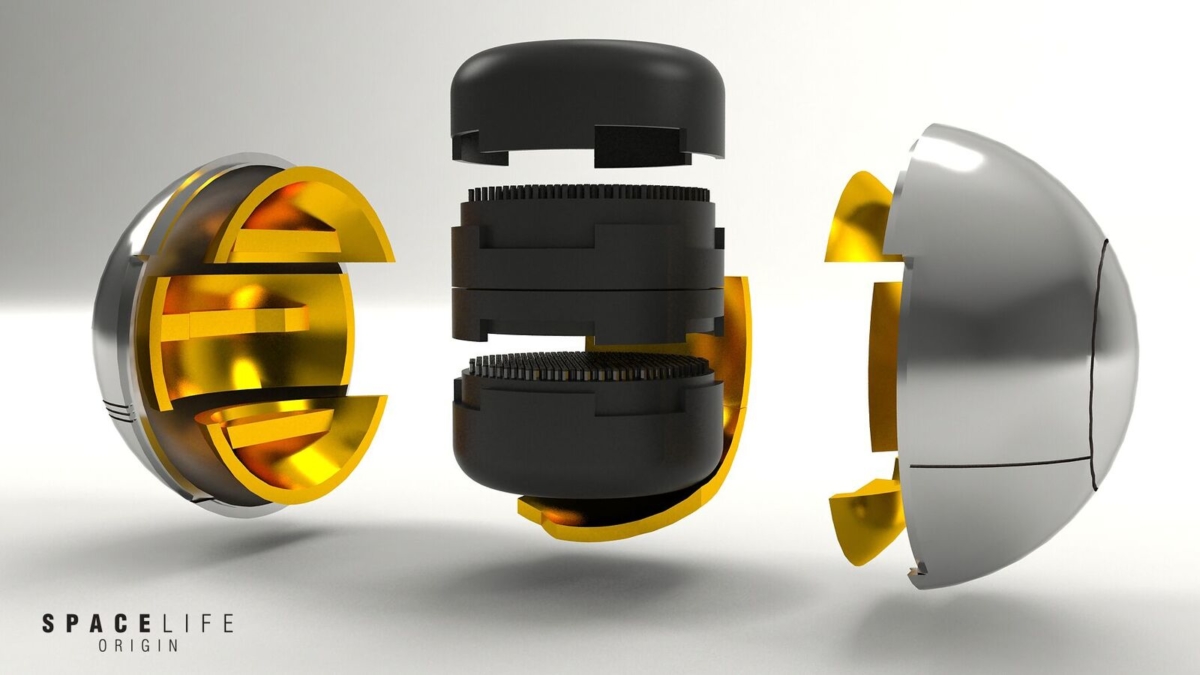
Patent pending technology is the core of SpaceLife Origin Ark, which contains 1.000 protected tubes with human reproduction cells.
The Ark provides a safe, radiation shielded environment. The cells (male, female and 2-PN) are harvested in approved and supervised IVF clinics worldwide.
Credit: SpaceLife Origin
The cells are vitrified and stored safely in secure Earth locations and in a satellite in space. Protecting the cells for any catastrophic event on Earth for decades. The ultimate and most unique insurance for mankind. Real-time tracking and footage from cameras on board enable customers to view and show their ‘seeds-of-life’ cells in orbit.
Credit: SpaceLife Origin
Space embryos
According to the group, a new “Space-Embryo-Incubator” is to be sent into space containing male and female reproduction cells. Once in space the embryos are conceived and start developing. After four days, the incubator returns to Earth where the embryos are checked.
The actual pregnancies and births will occur on Earth.
For more information, go to:
https://spacelifeorigin.com/en
Go to this video at:
https://spacelifeorigin.com/uploads/video/SpaceLife_Origin_Trailer_v180601.mp4

Hayabusa2 image taken at an altitude of about 155 feet (47 meters), captured on
October 15, 2018. Red circle marks the candidate touchdown site, L08-B.
Credit: JAXA, University of Tokyo,
Kochi University, Rikkyo University, Nagoya
University, Chiba Institute of Technology, Meiji
University, Aizu University, (AIST).
Excitement is building as the Japan Aerospace Exploration Agency’s Hayabusa2 mission reaches a new exploration phase of the near-Earth asteroid Ryugu.
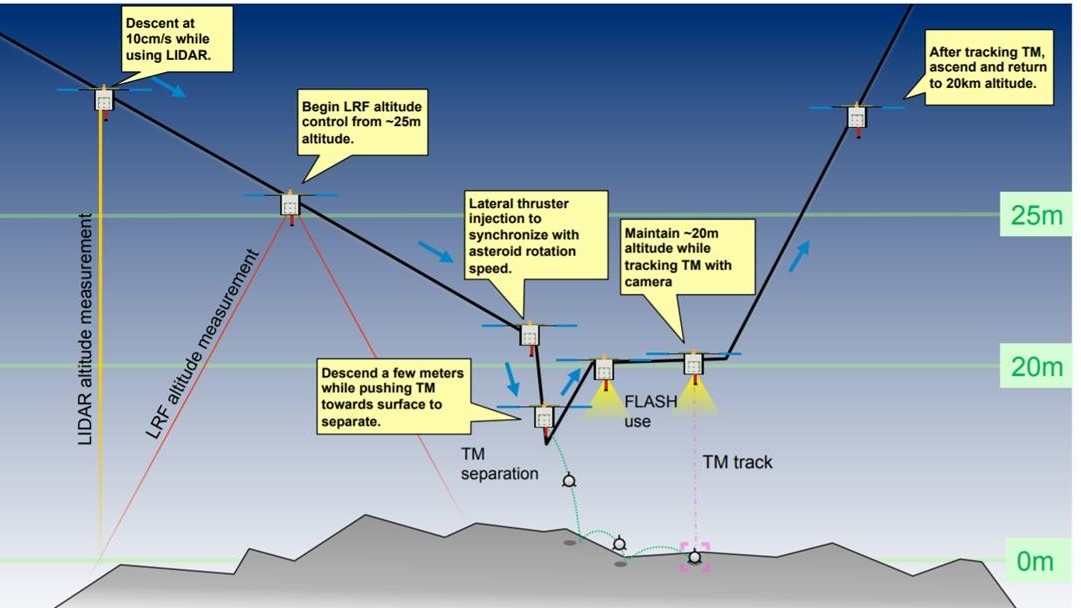
A third rehearsal for the first asteroid touchdown of the spacecraft (TD1-R3) is now underway, being held from October 23-25.
Credit: JAXA
Rehearsal aim
The aim of this third rehearsal for touchdown is to confirm the accuracy of the navigation guidance control at low altitude by the following steps:
- Use the measured Laser Range Finder (LRF) value to control the spacecraft.
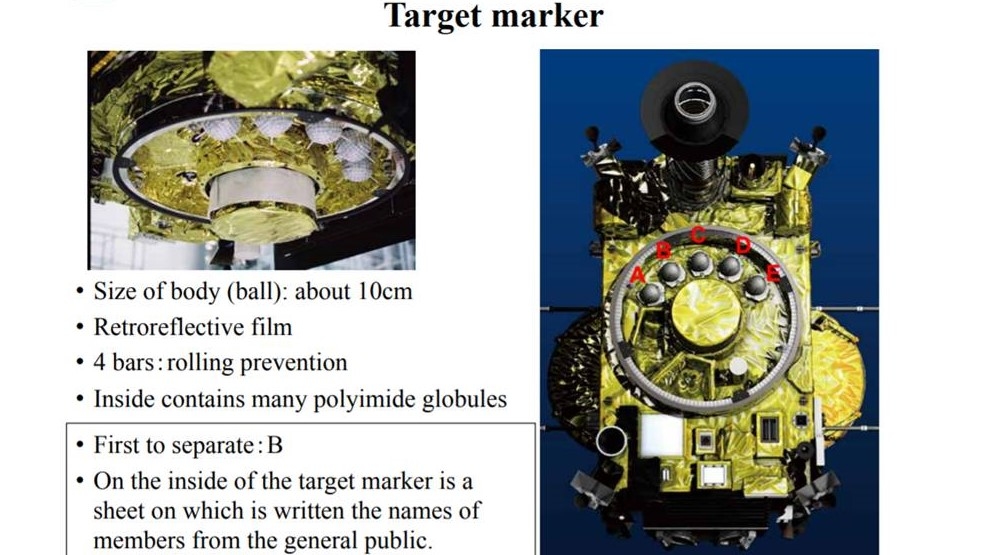
- If conditions are satisfactory, release a target marker.
- Track released target marker.
Credit: JAXA
Never before in the history of space has a body of the Solar System been explored in this way.
Ryugu is a C-type asteroid – a carbon-rich representative of the oldest bodies of the four-and-a-half-billion year-old Solar System.
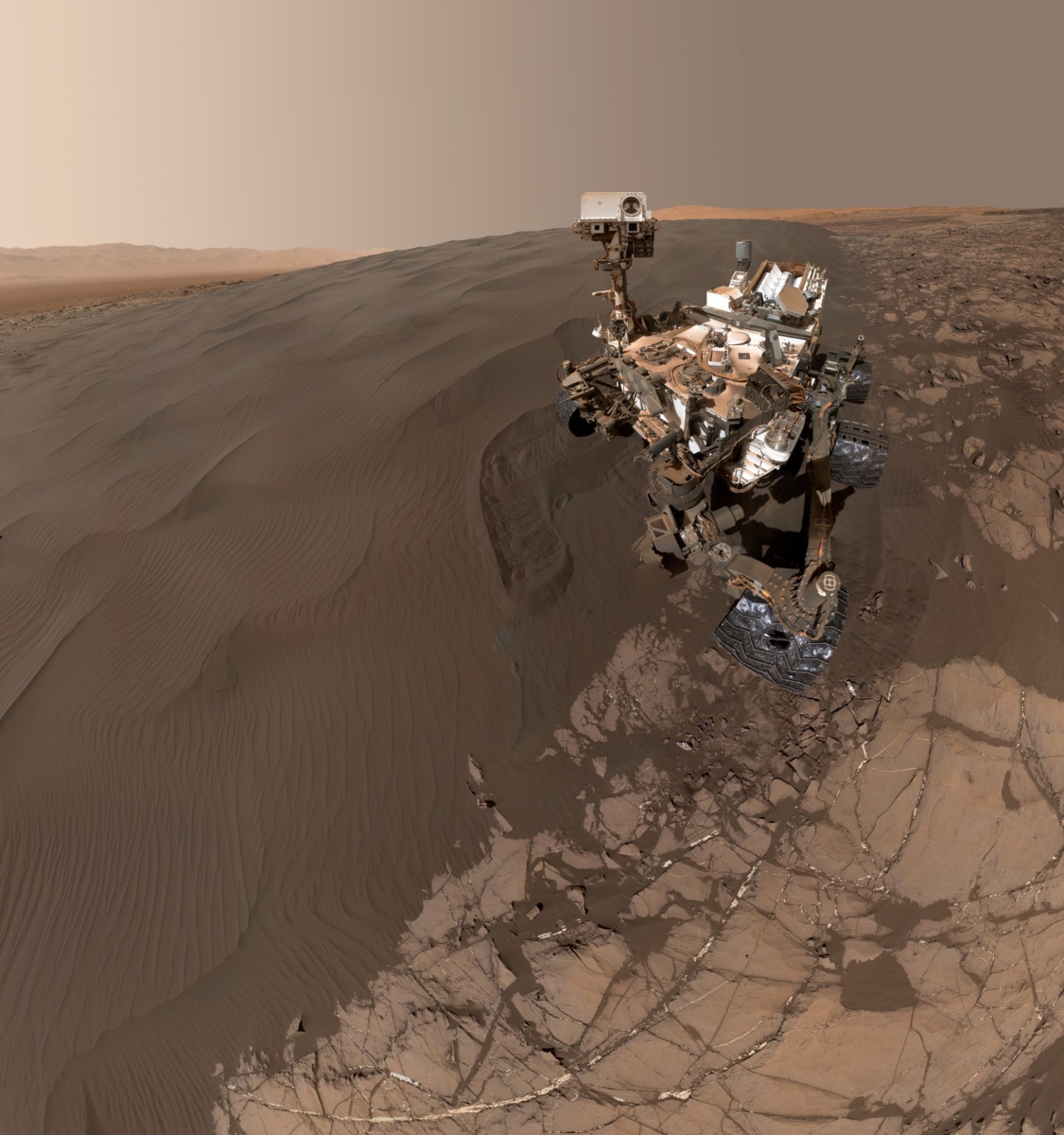
Self-portrait of NASA’s Curiosity Mars rover from January 19, 2016 shows the vehicle at “Namib Dune,” where the rover’s activities included scuffing into the dune with a wheel and scooping samples of sand for laboratory analysis.
Credit: NASA/JPL-Caltech/MSSS
NASA’s Curiosity Mars rover is now performing Sol 2209 duties. Engineering trouble-shooting continues regarding the robot’s memory that prevents the machine from sending much of gathered science and engineering data.
Recapping the rover’s earlier dune exploration, Catherine O’Connell, a planetary geologist at the University of New Brunswick, Fredericton, New Brunswick in Canada, reports: As Curiosity continues on its journey up Mount Sharp (the mound in the center of Gale crater), rocks encountered by the robot contain evidence for changing environmental conditions.
The fine-grained mudstones of the Murray formation show that lakes were present in the past, whilst the sandstones of the Stimson formation are evidence for ancient dune fields.
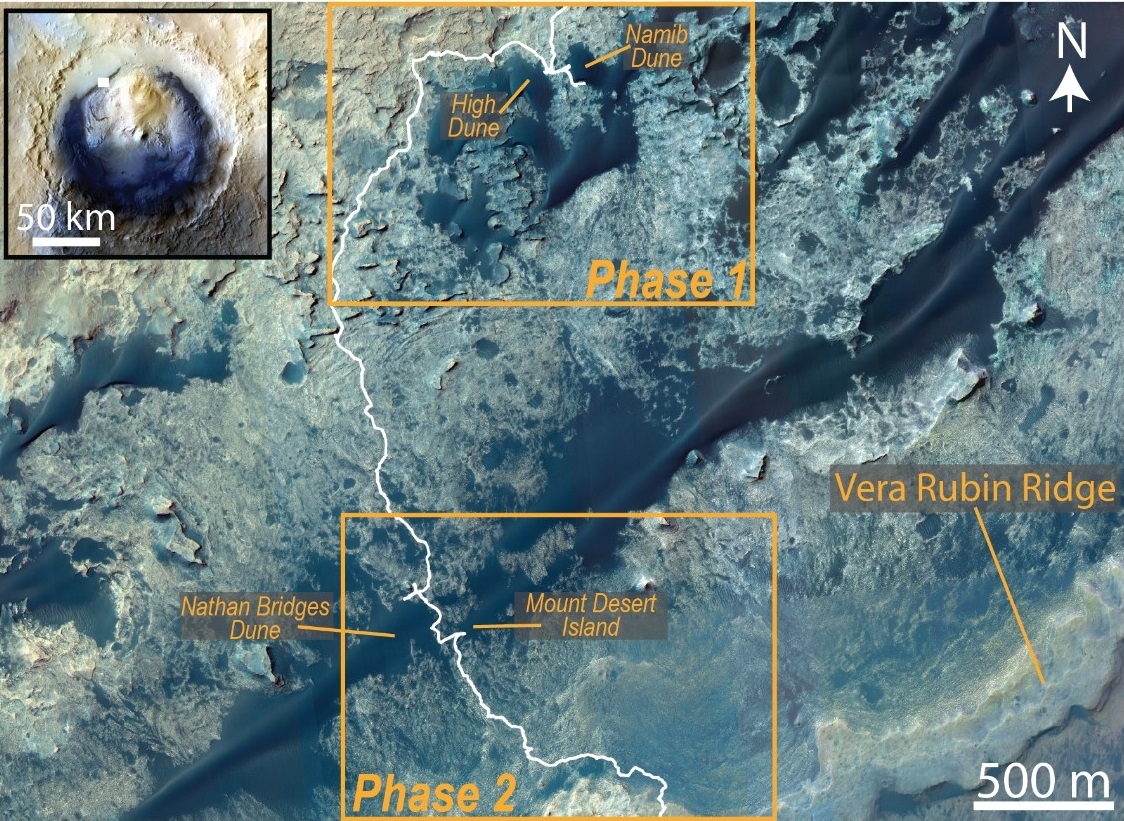
Curiosity’s traverse (white line) and two-phase investigation of the Bagnold Dunes. Inset shows the study location (white rectangle) within Gale crater.
Credit: after Lapotre and Rampe, 2018
Active dune system
“During 2015-2017, we crossed the Bagnold dune field, a (22-mile) 35-kilometer long by 1-2 kilometers wide dune field that wraps around the northwest side of Mount Sharp. This was the first time that scientists have explored an active dune system on another planet,” O’Connell says.
In the Martian fall/winter, the rover investigated two “barchans” dunes, O’Connell adds. Barchan dunes are crescent shaped and are formed by winds blowing in one direction, and when sediment supply is limited.
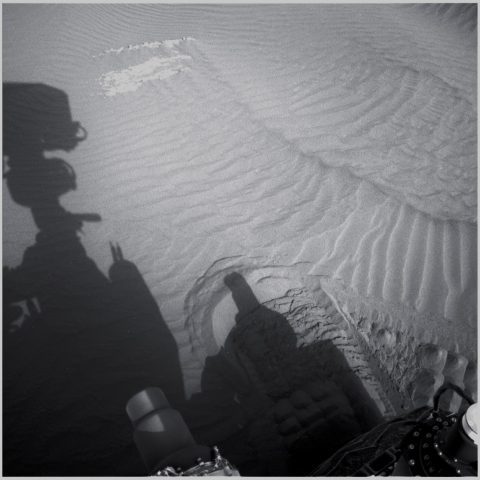
Curiosity’s shadow over potential sampling targets.
Credit: NASA/JPL/Caltech/MSSS-480×480
Blowing winds
Later on, during the Martian summer, Curiosity examined a linear dune. Linear dunes are formed by winds blowing in two directions, with more abundant sediment supply, and can be very long (on Earth, they can reach 160 miles in length e.g., Namib Sand Sea, Namibia).
“Curiosity lived up to her official name ‘Mars Science Laboratory’ for both parts of the campaign, utilizing almost every scientific instrument on board, plus the engineering cameras (Navcam and Hazcam) to collect observations and measurements,” O’Connell points out.
Grain size, motion
As the rover traversed the dune field and at each stop, scientists observed the physical properties of the sand dunes, such as grain size, rates of grain motion, and the overall bedform morphologies, using the robot’s Mars Hand Lens Imager (MAHLI), the Chemistry and Camera (ChemCam) instrument, Mars Descent Imager (MARDI) as well as the Mastcam, Navcam, and the Rover Environmental Monitoring Station (REMS).
“We observed differences in wind activity levels, with lower wind and less movement of sand during the fall/winter than during the summer,” O’Connell says.
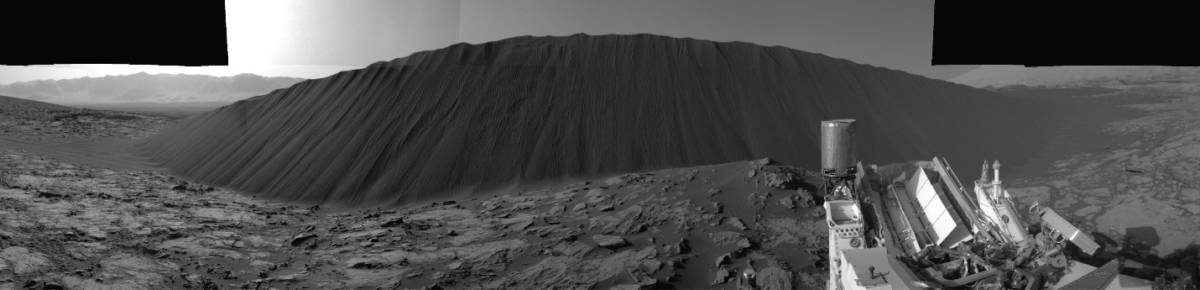
Mosaic of Mast Camera (Mastcam) images showing the downwind face (stoss) of Namib Dune, acquired on sol 1196 during Phase 1 of the science campaign. Credit: NASA/JPL-Caltech/MSSS
Dust content
Dust content — indicated by sulphur, chlorine and zinc levels – were measured by the robot’s Alpha Particle X-Ray Spectrometer (APXS). Higher concentrations mean higher dust content, indicating that observed activity levels were higher in the linear dunes which were investigated during the summer (higher winds, less dust settling) and lower in the barchan dunes, which were investigated during the fall/winter.
Also determined were chemical composition, mineralogy and volatile content of sands using APXS, ChemCam, the Chemistry & Mineralogy X-Ray Diffraction/X-Ray Fluorescence Instrument (CheMin), Dynamic Albedo of Neutrons (DAN) instrument and the Sample Analysis at Mars (SAM) Instrument Suite.
“My role as a member of the APXS operations team involved evaluating the composition of samples analyzed, comparing between the barchan and linear dunes, as well as sands previously analyzed by the Opportunity rover (at Meridiani Planum) and Spirit (at Gusev Crater),” O’Connell adds.
Subtle variations
The basaltic Bagnold sands show subtle variations in mineralogy and chemistry, both between the barchan and linear dunes, but also depending on location within a dune.
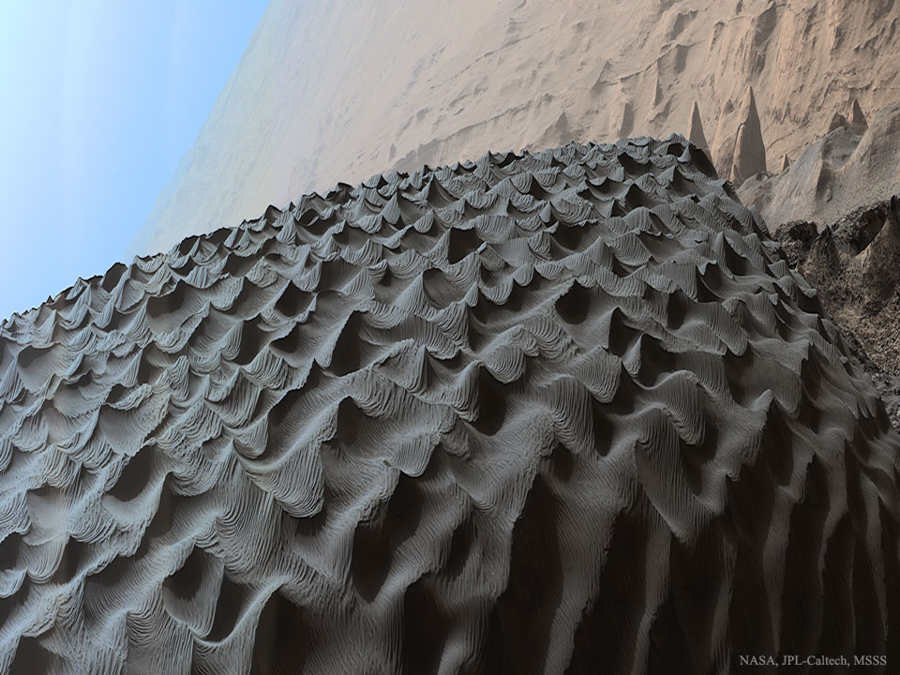
Dark dunes on Mars.
Credit: NASA/JPL-Caltech/MSSS
For example, ripple crests were often more coarse-grained and enriched in magnesium and nickel, whilst off-crest sands within the linear dunes were enriched in chromium. These variations may reflect sorting processes, or minor enrichments from local bedrock sources.
“Our journey through the Bagnold Dunes,” O’Connell concludes, “has helped advanced our understanding of how winds shape modern Martian landscapes, and the properties of windblown materials, in the form of both the active Bagnold dunes and in ancient Martian dunes now preserved as rock in units such as the Stimson formation at Gale crater.”
For more information, go to this October 17, 2018 scientific paper, “Seeing Mars in a Grain of Sand” by Lapotre, M. G. A. in American Geophysical Union’s Eos publication:

National Geographic’s Space Atlas combines updated maps, lavish photographs, and elegant illustrations to chart the solar system, the universe, and beyond. For space enthusiasts, science lovers, and star gazers, here is the newly revised edition of National Geographic’s enduring guide to space, with a new introduction by American hero Buzz Aldrin.
In this guided tour of our planetary neighborhood, the Milky Way and other galaxies, and beyond, detailed maps and fascinating imagery from recent space missions partner with clear, authoritative scientific information.
Starting with the Sun and moving outward into space, acclaimed science writer and physicist James Trefil illuminates each planet, the most important moons, significant asteroids, and other objects in our solar system. Looking beyond, he explains what we know about the Milky Way and other galaxies–and how we know it, with clear explanations of the basics of astrophysics, including dark matter and gravitational waves.
For this new edition, and to celebrate the 50th anniversary of his moonwalk, astronaut and American hero Buzz Aldrin offers a new special section on Earth’s Moon and its essential role in space exploration past and future.
Note: Truth in advertising – I helped on this informative book, working with Buzz Aldrin on his detailing of the Apollo 11 mission and its aftermath – LD
For more information, go to:
https://shop.nationalgeographic.com/collections/books-space/products/space-atlas-second-edition

