Archive for the ‘Space News’ Category
 Author:
  December 7th, 2025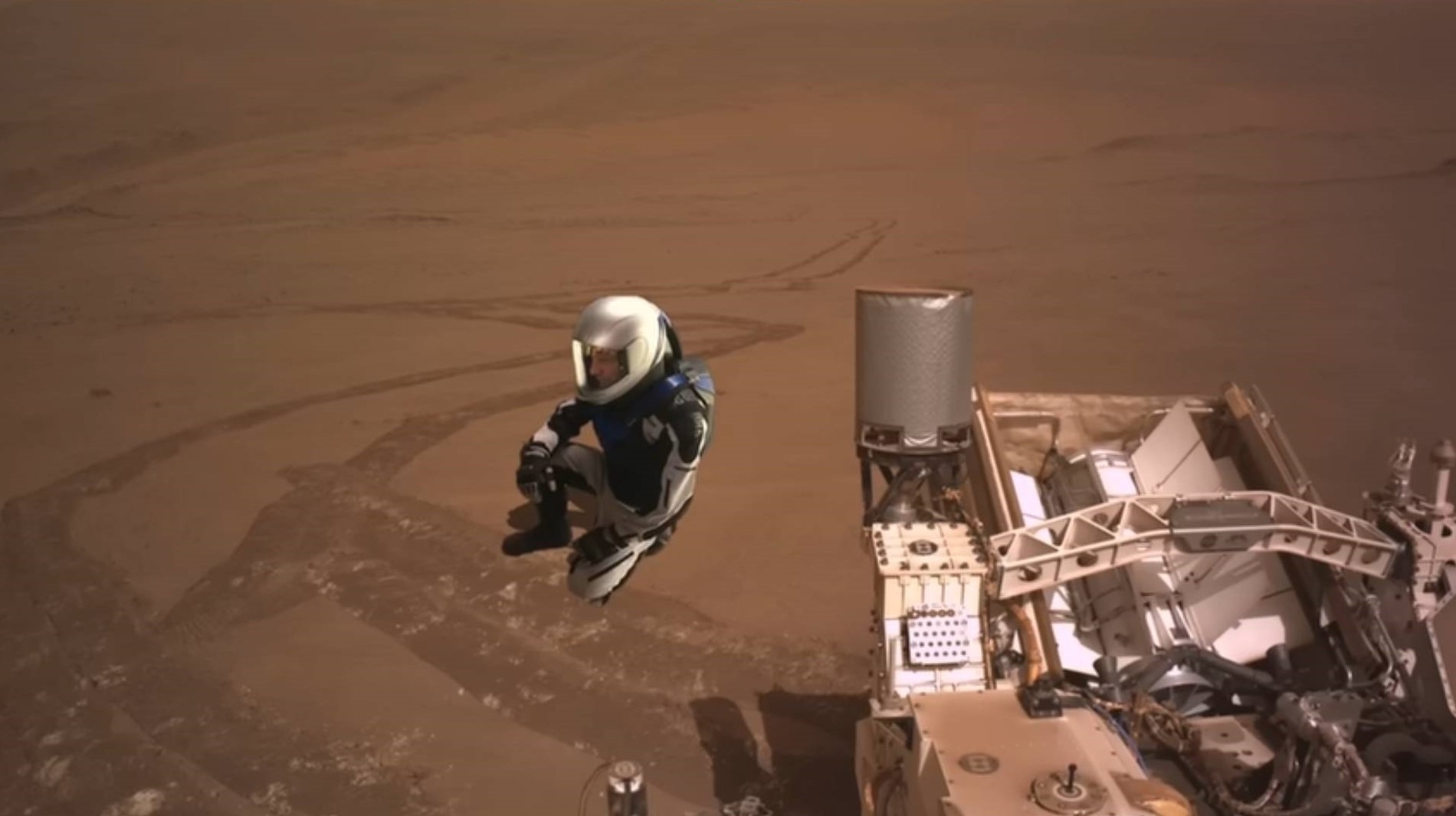
Image credit Mars Guy/NASA/JPL-Caltech
Mars Guy spotlights NASA’s Perseverance rover at Jezero Crater that carries the first successfully operating microphone on Mars.
The robot has been building up a record of the Martian soundscape – as well as sound from the rover itself. “Now it has answered a longstanding question about Mars thanks to some shocking sounds,” explains Mars Guy. Go to this new video episode at:
https://www.youtube.com/watch?v=OIGm7Icle3A
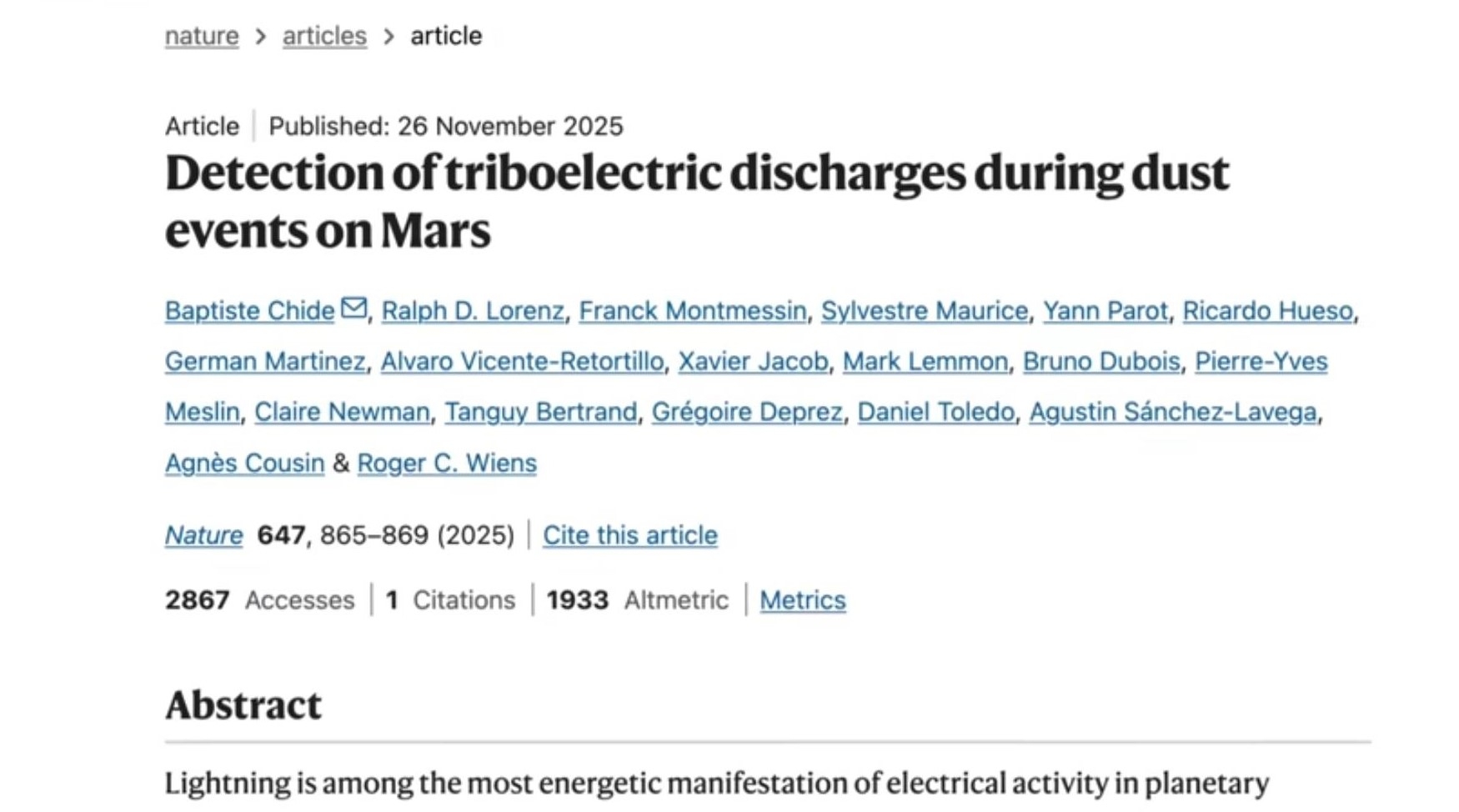
Image credit: Mars Guy/Nature
 Posted in

Image credit: NAS
What is a science strategy for the human exploration of Mars?
A special webinar is being held on December 9, tied to release of a National Academy of Sciences report.
This new National Academies report — A Science Strategy for the Human Exploration of Mars — outlines how future missions can advance the highest-priority scientific goals for understanding the Red Planet.
Also, how best to prepare for sustained human exploration of that world.
New era of discovery
The report identifies opportunities to search for signs of life beyond Earth, reveal how planets evolve, and test systems and resources that can support humans far from home.
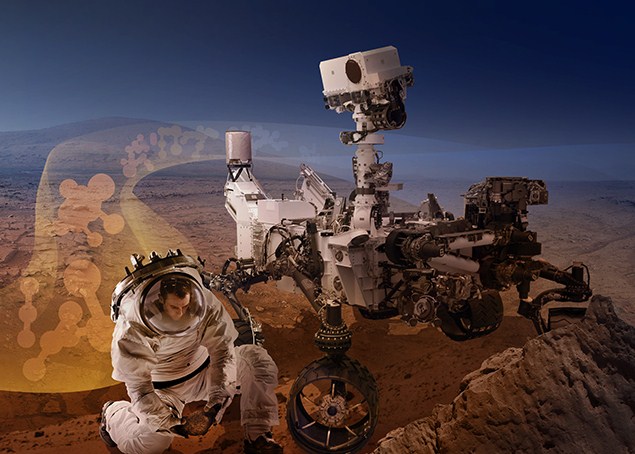
Humans and robots on Mars are likely to team up to augment the types of exploration avenues that can be done on the Red Planet.
Credit: NASA/Ames Research Center
“When astronauts set foot on Mars, it will be one of humanity’s greatest milestones,” explains the National Academies. “These first steps will be the result of decades of research, engineering, and imagination coming together, marking the beginning of a new era of discovery on another planet.”
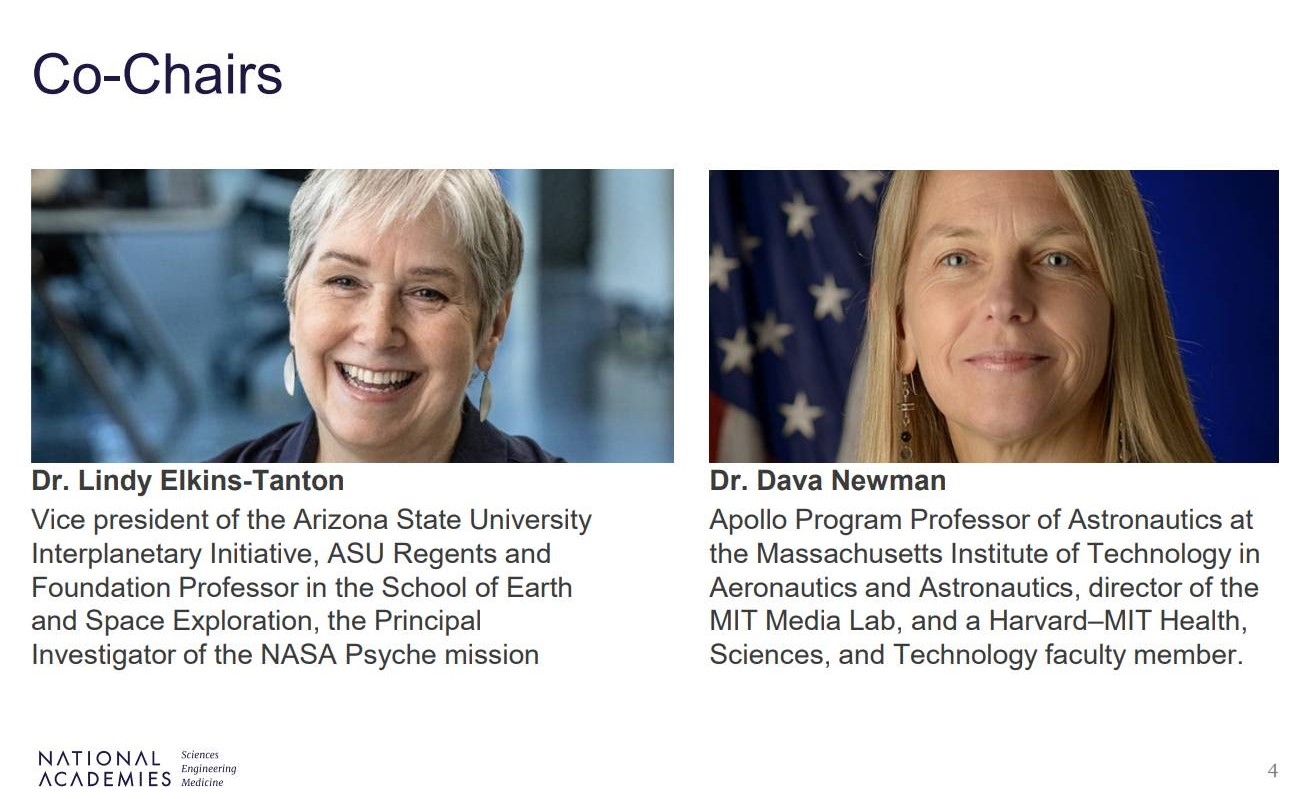
Image credit: NAS
Blue-ribbon study group
Steering Committee Members for the report are:
DOMINIC (TONY) ANTONELLI, Antonelli Consulting Company, LLC
PENELOPE J. BOSTON, NASA Ames Research Center
CHRISTOPHER E. CARR, Georgia Institute of Technology
BARBARA A. COHEN, NASA Goddard Space Flight Center
JONATHAN H. JIANG, Jet Propulsion Laboratory, California Institute of Technology
JAMES F. KASTING (NAS), Pennsylvania State University
PASCAL LEE, SETI Institute, Mars Institute, Kepler Space University, NASA Ames Research Center, Ceres Robotics
JAMES A. PAWELCZYK, Pennsylvania State University
NILTON O. RENNO, University of Michigan
MICHAEL G. RYSCHKEWITSCH, Johns Hopkins Applied Physics Laboratory
JULIANNA M. SCHEIMAN, Space Exploration Technologies
WANDA A. SIGUR (NAE), Lambent Engineering
ERIKA B. WAGNER, Blue Origin
Live streamed
The event will be held at the National Academies Keck Center in Washington D.C. and live streamed online on December 9 from 12:00 PM to 1:30 PM (ET).
To tap into the event, go to:
https://events.nationalacademies.org/46072/begin?i=PppaBO1MIWxCjoWZntZw9lMS6Uv0nSeN

The Red Planet as seen by Europe’s Mars Express.
Image credit: ESA/D. O’Donnell – CC BY-SA IGO
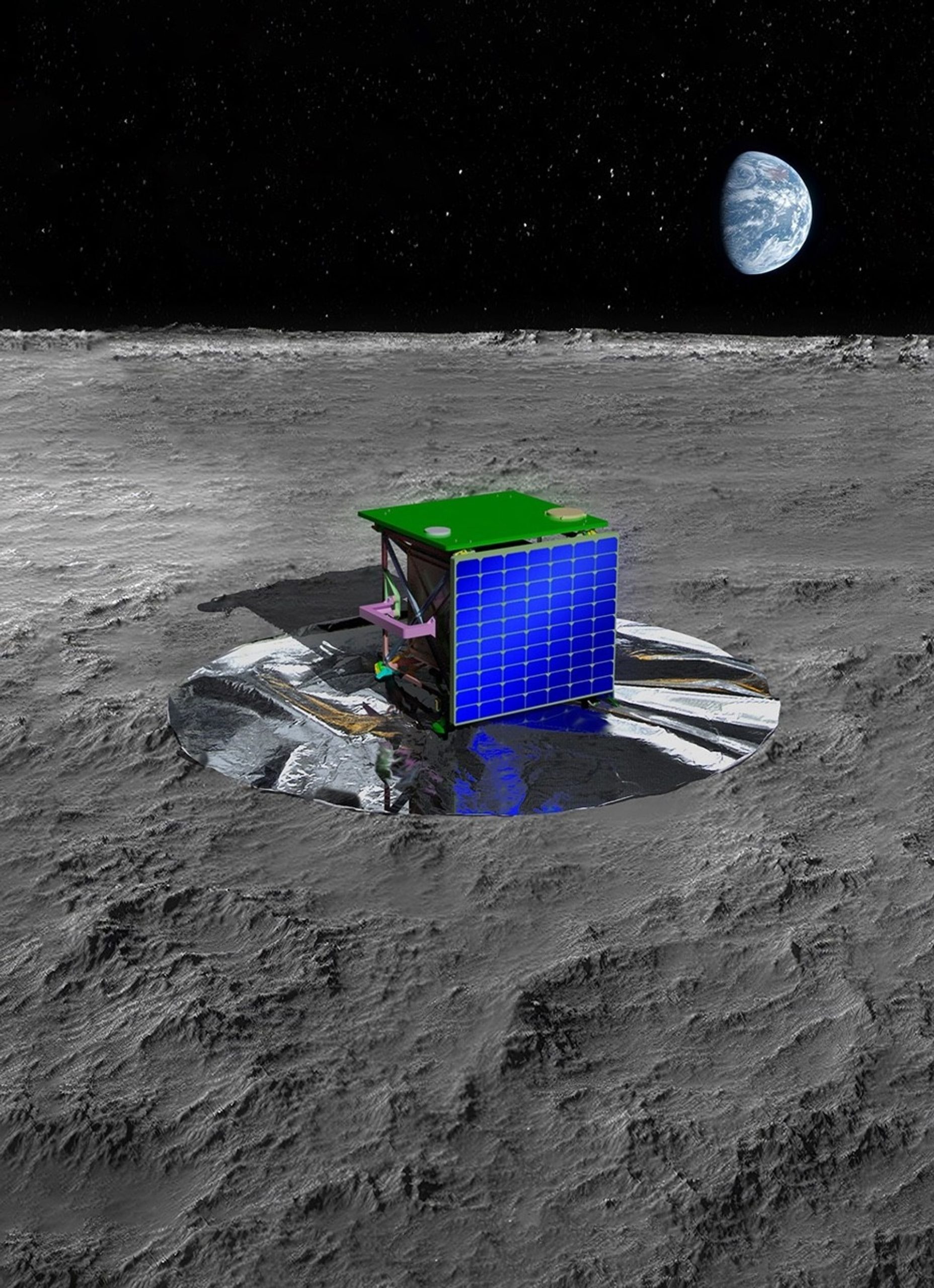
South Pole Seismic Station. Image credit: NASA
While NASA is undergoing an upheaval trying to sort out how best to return humans to the Moon via its Artemis program, the space agency has picked two Artemis-4 science instruments designed for astronauts to deploy on the surface of the Moon.
The two payloads were selected for further development to fly on the future Artemis-4 mission. However, final manifesting decisions about the mission will be determined at a later date.
To be emplaced by an Artemis-4 crew at the lunar south polar region at a projected 2028 time frame, the instruments just picked by NASA are:

Image credit: NASA
- DUSTER (DUst and plaSma environmenT survEyoR) will measure the charge, velocity, size, and flux of dust particles lofted from the lunar surface, as well as characterize the average electron density above the lunar surface using plasma sounding.
Based in Golden, Colorado, Lunar Outpost’s MAPP (Mobile Autonomous Prospecting Platform) rover will support NASA’s DUSTER investigation, in partnership with the Laboratory for Atmospheric and Space Physics (LASP) at the University of Colorado Boulder, the University of Central Florida, and the University of California Berkeley.
- South Pole Seismic Station (SPSS) is designed to characterize the lunar interior structure to better understand the geologic processes that affect planetary bodies, by meteorite impacts for example. SPSS will also monitor the real-time seismic environment and how it can affect operations for astronauts, and determine properties of the Moon’s deep interior. The SPSS instrument is led by Mark Panning of NASA’s Jet Propulsion Laboratory (JPL).
For more information, go to:

Michaela “Michi” Benthaus is on a trajectory to become the first wheelchair user in space.
(Image credit: AstroAccess)
Blue Origin is readying its New Shepard-37 suborbital flight that will rocket six passengers to the edge of space.
One traveler onboard that mission is Michaela “Michi” Benthaus, and her voyage carries special significance. She is on a trajectory to become the first wheelchair user in space.
In 2018, Benthaus became wheelchair-bound after a mountain biking accident resulted in a spinal cord injury.
Passionate about space travel, Benthaus was selected to fly in 2022 with AstroAccess on a parabolic flight, becoming one of the first wheelchair users to test accessibility experiments in weightlessness.
For more details, go to my new Space.com story – “Blue Origin’s next space tourism flight will break new ground for people with disabilities – at:

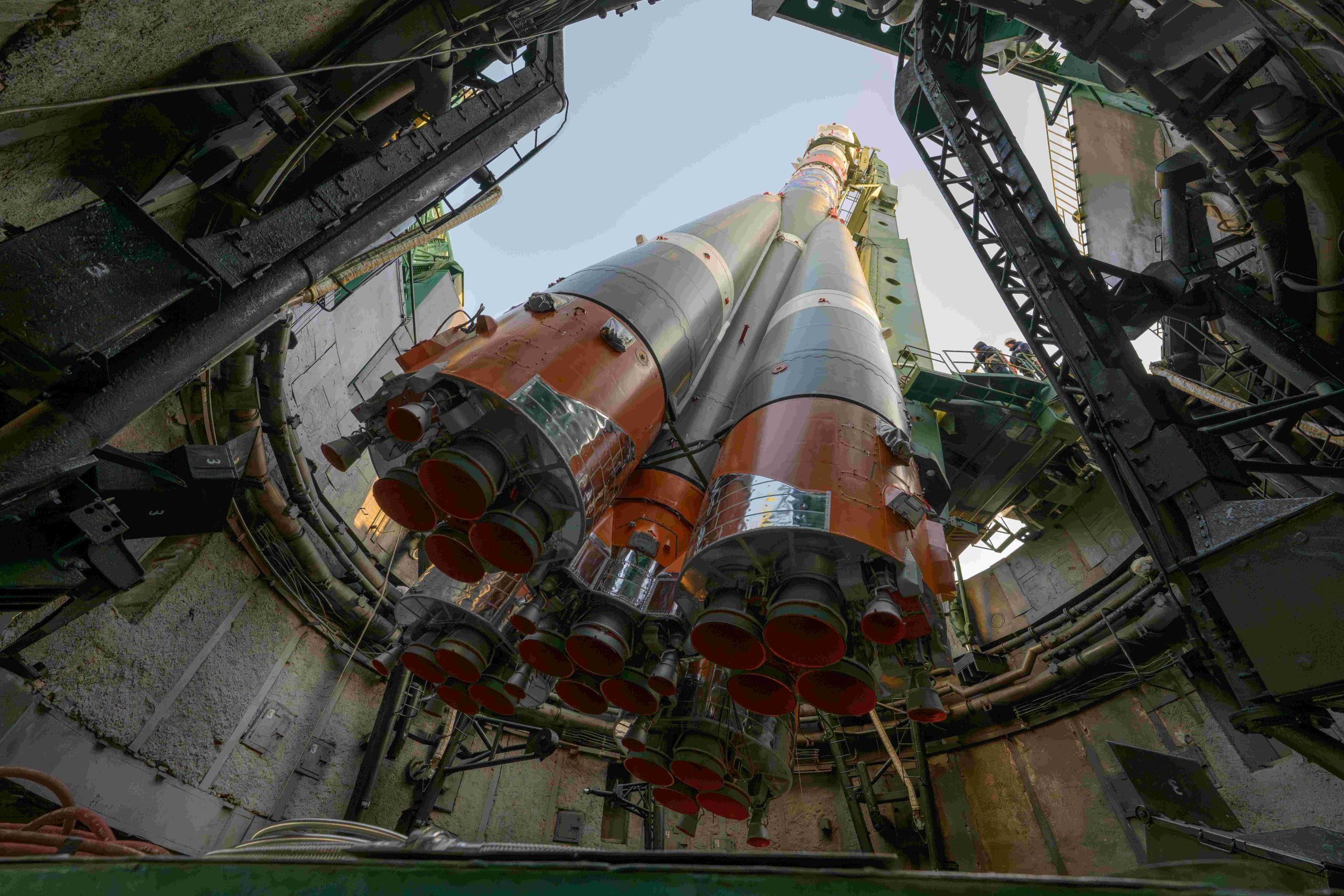
Blazing a trail…of debris. Soyuz MS-28 spacecraft departs Russia’s Baikonur cosmodrome, leaving in its wake launch pad damage.
(Image credit: Ivan Timoshenko/Roscosmos)
Following their launch on November 27 onboard Russia’s Soyuz MS-28 spacecraft, cosmonauts Sergey Kud-Sverchkov and Sergei Mikaev, along with NASA astronaut Chris Williams, safely docked to the International Space Station.
But it turns out that there was more “blast” to their blastoff considering the impact on their departure point at Russia’s Baikonur cosmodrome.
For more details, go to my new Space.com story – “Damaged launch pad: How long before Russia can send astronauts to the ISS again?” – at:

The Shenzhou-22 spacecraft, without a crew, autonomously docked to the forward port of the Tianhe Core Module on November 25. 2025. The Shenzhou-22 spacecraft will transport back to Earth the Shenzhou-21 crew: Zhang Lu, commander), Wu Fei, and Zhang Hong Zhang, at the end of their mission on the China Space Station.
Image credit: China National Space Administration (CNSA)/China Central Television (CCTV)/Inside Outer Space screengrab
China’s Shenzhou-21 crew is scheduled to carry out their first extravehicular activity in the coming days the China Manned Space Agency (CMSA) said on Thursday.
Since entering the China Space Station complex on November 1 (Beijing time), the Shenzhou-21 crew has carried out station maintenance, emergency supply inspections and organization, and finished daily life and health support tasks.
Compromised spacecraft inspection?
The trio of taikonauts also performed a full-system emergency pressure drill and on-orbit robotic arm training. The crew welcomed the arrival of the Shenzhou-22 spacecraft, a replacement for the still docked and compromised Shenzhou-20 vessel due to an apparent space debris strike.
It is likely that during the upcoming extravehicular activity (EVA), the Shenzhou-20 will be inspected by the spacewalkers.
To view a video on the upcoming spacewalk, go to:
https://www.facebook.com/reel/874812278270046

Image credit: CMSA/CCTV/Inside Outer Space screengrab

Image credit: CMSA/CCTV/Inside Outer Space screengrab

Image credit: CMSA/CCTV/Inside Outer Space screengrab
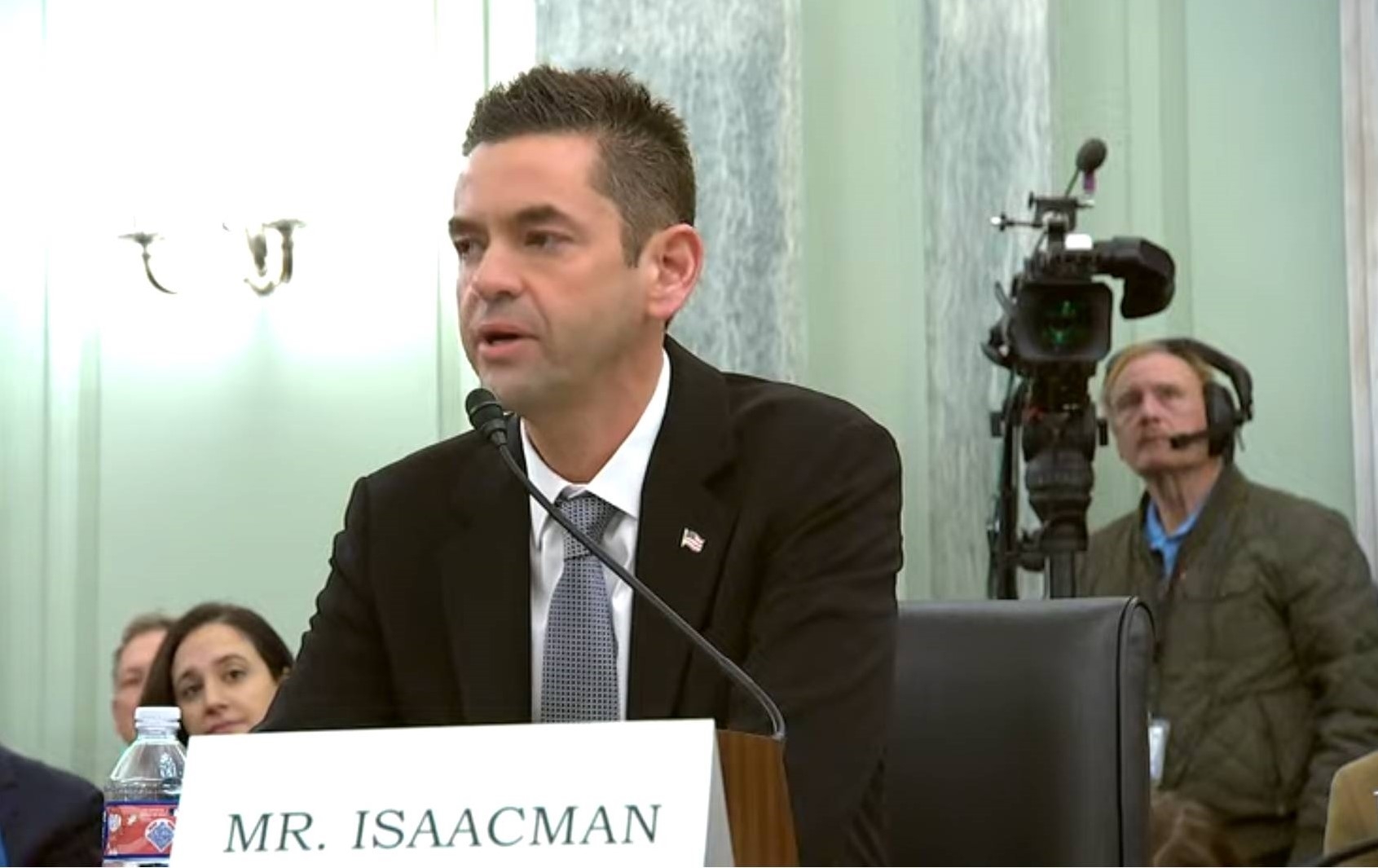
Image credit: U.S. Senate/Inside Outer Space screengrab
U.S. Senator Ted Cruz (R-Texas), Chairman of the Senate Committee on Commerce, Science and Transportation, led a hearing on December 3 regarding the nomination of Jared Isaacman to be NASA Administrator.
“NASA is at the forefront of American leadership in science and technology. It is critical to our national security amid what I have called the second ‘space race.’ But the agency finds itself at an inflection point,” Cruz said in his opening remarks.
“Its next leader must be both disciplined and purposeful,” Cruz continued, “candidly assessing what is working and what is not, while recognizing that each policy decision has tradeoffs. NASA can’t do everything it wants to; the agency must prioritize if we are to beat China back to the Moon.”

Image credit: CCTV/Inside Outer Space screengrab
Competitive race
In written testimony, Isaacman underscored the competitive race to return to the Moon between China and the United States.
“And I know it is not lost on anyone in this room that we are in a great competition with a rival that has the will and means to challenge American exceptionalism across multiple domains, including in the high ground of space. This is not the time for delay, but for action, because if we fall behind–if we make a mistake–we may never catch up, and the consequences could shift the balance of power here on Earth,” Isaacman stated.

NASA’s Artemis Program, enabling Moon to Mars human exploration.
Image credit: NASA
Key theme
Providing an overview of the hearing is veteran space policy expert, Marcia Smith, who reports:
“Ensuring the United States stays ahead of China in space remained a key theme today as it was at Isaacman’s first nomination hearing in April and a September hearing specifically on what Cruz calls the “second space race.” Getting Americans back on the Moon through the Artemis program before China puts taikonauts there is one of the few issues that unifies both parties.”
For Smith’s assessment of the hearing, go to — “Isaacman’s Second Hearing Mostly Friendly, Nomination Could Clear Senate Soon” – at:
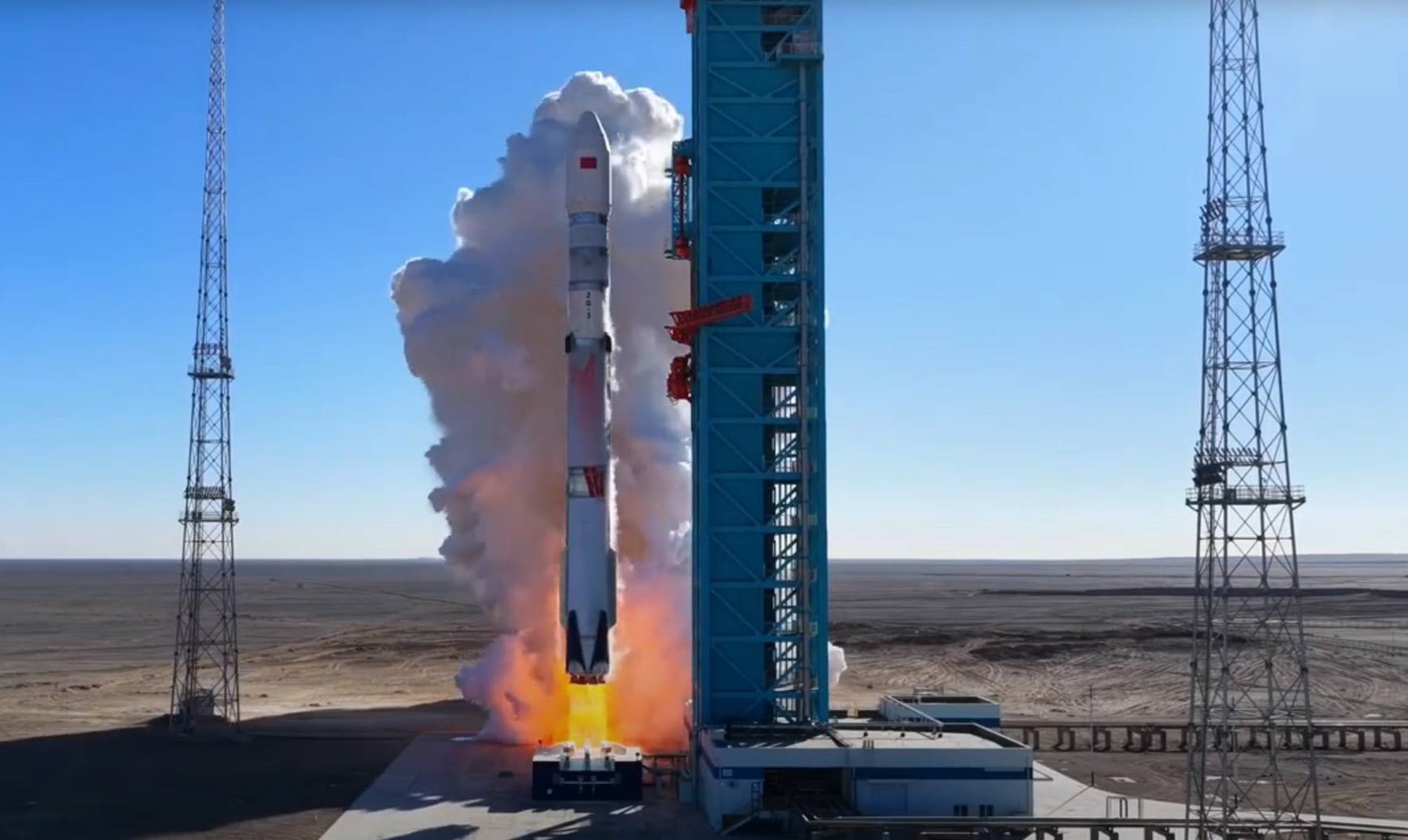
Image credit: LandSpace/Inside Outer Space screengrab
Chinese private aerospace company LandSpace scored a partial success on the road to landing the Zhuqaue-3’s first stage – SpaceX Falcon 9 style.
The reusable stage of the Zhuque-3 rocket exploded en route to a targeted touchdown on December 3.
While the booster was successful in hurling its dummy payloads into orbit, an “uncontrolled fire” occurred during the landing process, reports China’s Xinhua News Agency. The first-stage impacted the ground.
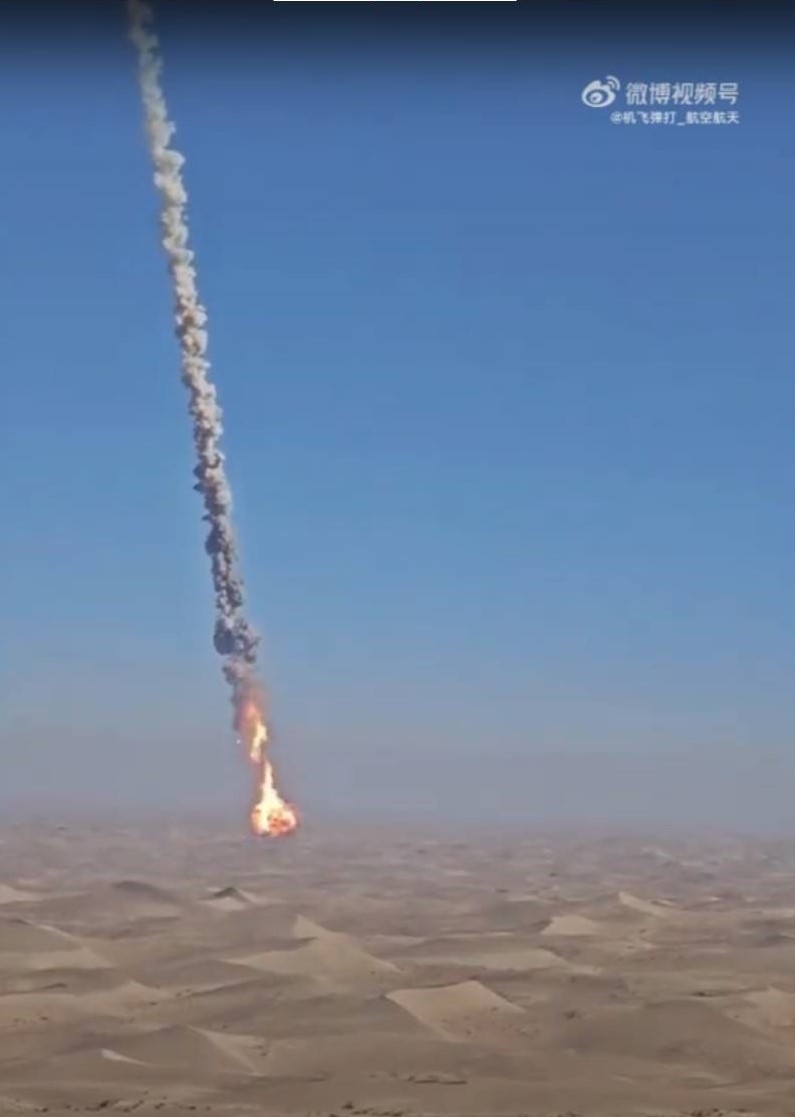
Image credit: Aerospace Fans Network/Aircraft Flight Aerospace on Weibo/Inside Outer Space screengrab
The stage was aiming for a landing pad at Minqin County in Gansu province.
LandSpace’s Zhuque-3 is a two-stage oxygen-methane rocket and lifted off from Launch Area 96B at the Jiuquan Satellite Launch Center.
Go to these posted YouTube videos at:
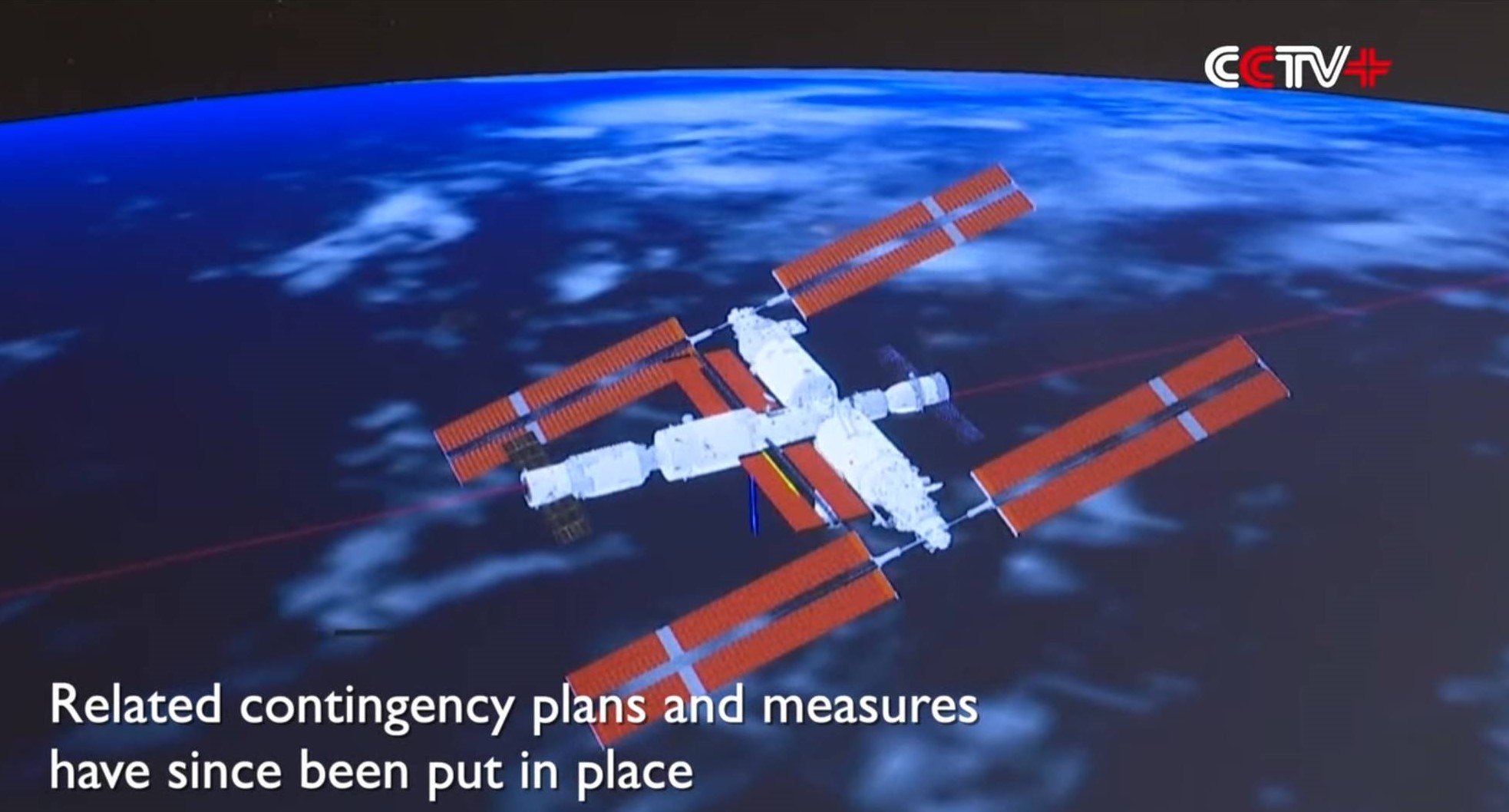
Image credit: CCTV/Inside Outer Space screengrab
China has announced that the Shenzhou-20 spacecraft now docked with the country’s space station will make an uncrewed return to Earth.
Following a suspected debris strike on Shenzhou-20’s viewport, a trio of astronauts originally scheduled to return to Earth aboard the spacecraft were redirected to Shenzhou-21, which brought them home safely on November 14.
Billed as the first emergency launch in the history of its human spaceflight program, China launched the Shenzhou-22 on November 25 to provide a new return vehicle for the now orbiting crew.

Image credit: CCTV/Inside Outer Space screengrab
Consensus view
“We eventually reached a consensus: there must have been a crack, a penetrating one that had gone through the glass, from the inner surface to the outer surface,” said Jia Shijin, chief designer of the crewed spaceship system from the China Academy of Space Technology.
A day prior to the Shenzhou-20 crew’s planned return on November 5, the taikonauts spotted an anomaly on the viewport’s edge: a triangular, paint-like mark. They photographed it from multiple angles and under different lights, while the orbital station’s robotic arm cameras were employed to take supplemental external pictures.
Cracked viewport
Jia said in an interview with China Media Group (CMG), broadcast on China Central Television (CCTV), that the now-in-orbit Shenzhou-21 crew may be tasked with inspecting the cracked viewport during a spacewalk.

Image credit: CMG/CCTV/Inside Outer Space screengrab
They may also perform protective work on it using specialized devices, Jia added, delivered by the Shenzhou-22 launch. That procedure is still being validated in ground tests, he noted.
Jia said that when the window crack was found, ground teams conducted extensive simulations and tests, and commissioned two research institutions to perform wind tunnel tests for independent verification.
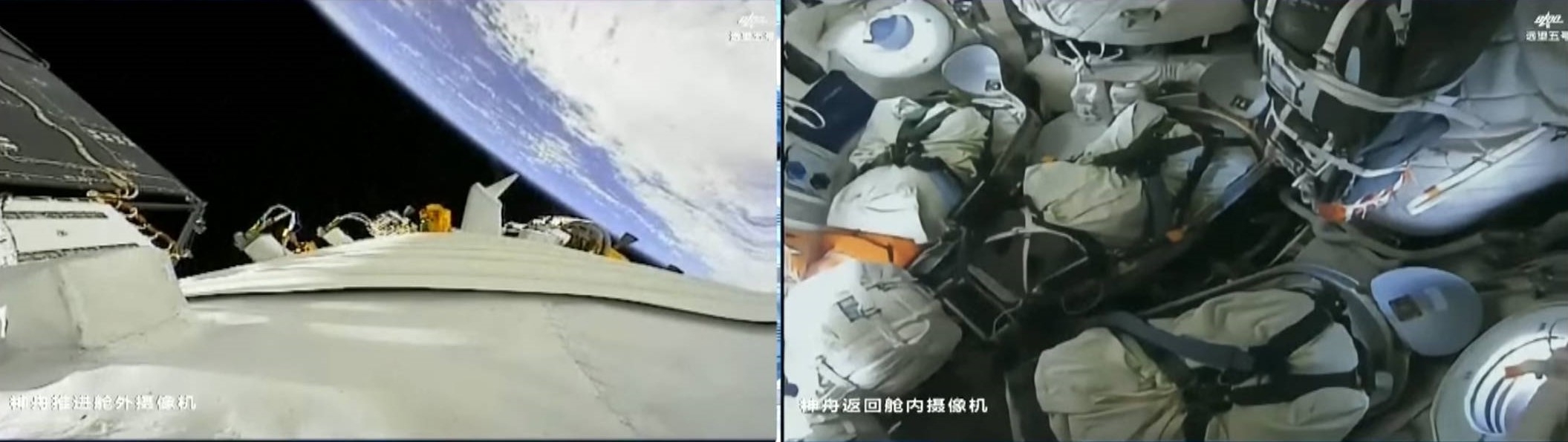
Uncrewed Shenzhou-22 loaded with supplies.
Image credit: CCTV/Inside Outer Space screengrab
High-speed gases
In a worst-case scenario, Jia explained, the cracks could spread, causing the outer pane to detach, with this leading to the failure of the inner pressure-sealing glass, resulting in cabin depressurization and the ingress of high-speed gases.
He said that further and more detailed investigation will be conducted after the return of the Shenzhou-20 spaceship.
“Through our initial assessment of the crack, we believe the space debris is less than one millimeter in size, but moving at a very high speed,” Jia told the CMG. “The entire crack is over 10 millimeters in size. From one corner, it looks like it has been pierced through.”
Go to this newly released video about the incident at:
Ted Cruz (R-Texas), Chairman of the Senate Committee on Commerce, Science
Credit: Inside Outer Space Screengrab
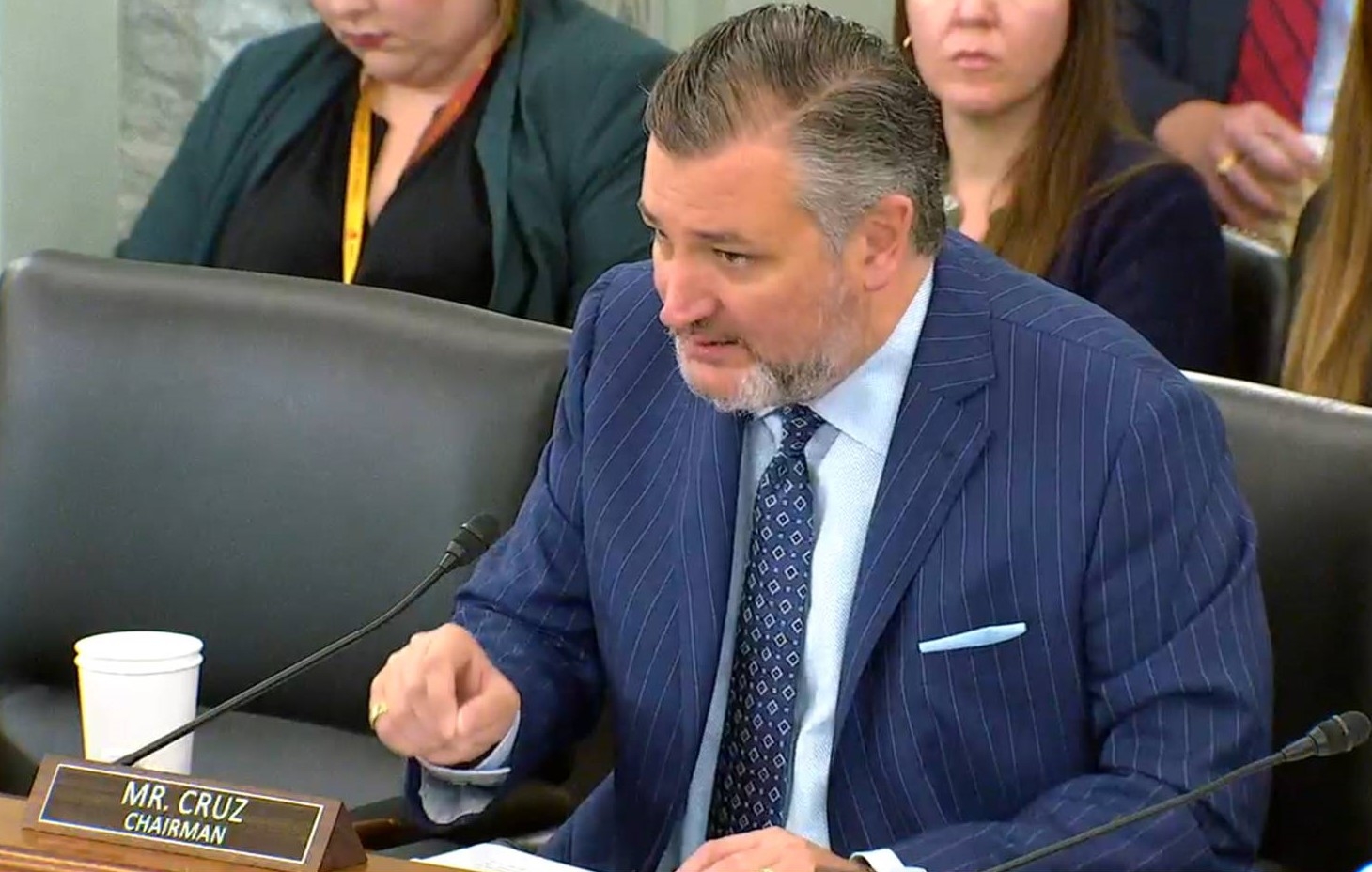
U.S. Senator Ted Cruz (R-Texas), Chairman of the Senate Committee on Commerce, Science and Transportation, along with Ranking member U.S. Senator Maria Cantwell (D-Wash.) recently received a letter of support from former NASA astronauts for Jared Isaacman’s nomination to be NASA Administrator.
Isaacman is now poised Wednesday, December 3, 2025 to appear at a hearing for NASA and Commerce Nominees at 10:00 AM Eastern Time in Washington, D.C.

Entrepreneur Jared Isaacman, President Trump’s nominee to be NASA administrator.
NASA / Bill Ingalls
2nd time around
The Commerce, Science, and Transportation committee is convening the hearing to consider the nominations of:
- Jared Isaacman, of Pennsylvania, to be Administrator of the National Aeronautics and Space Administration
- Steven Haines, of Virginia, to be an Assistant Secretary of Commerce for Industry and Analysis
Isaacman is a “been there and done that once before” NASA Administrator nominee. That earlier confirmation hearing was back on April 9. But his name was withdrawn by President Trump on May 31, then reinstated on November 6.

Image credit: Jared Isaacman
NASA facing challenges
“He will bring renewed energy and sense of purpose to NASA,” the November 22 letter from former NASA astronauts states. “NASA is facing many challenges right now including the rapidly approaching launch of the Artemis II mission. We therefore urge the Senate to move expeditiously towards Mr. Isaacman’s confirmation.”
For a look at the letter, go to Keith Cowing’s informative NASA Watch website at:
https://nasawatch.com/wp-content/uploads/2025/12/isaacmanAstro.pdf

