Archive for the ‘Space News’ Category
 Author:
  December 21st, 2018
China’s Chang’e-4 Moon lander – farside bound
Credit: New China TV
China is once again at the door step of exploring the Moon.
Hurled moonward by a Long March-3B carrier rocket from the Xichang Satellite Launch Center in southwest China’s Sichuan Province, Chang’e-4 has nudged itself into an elliptical lunar orbit with instructions yet to come on when the craft will nose-dive to a farside of the Moon landing.
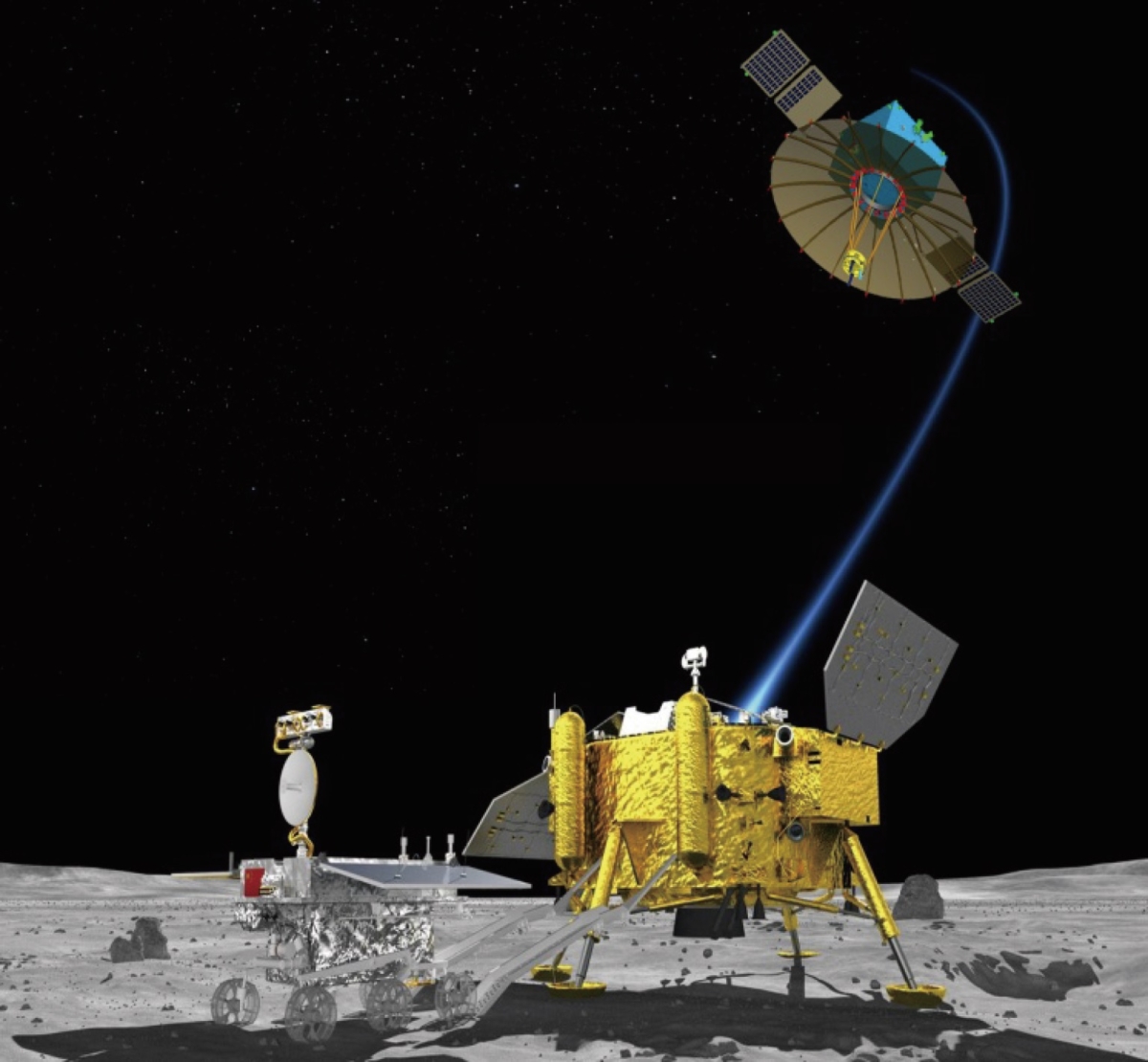
Chang’e-4 Moon lander and rover.
Credit: Chinese Academy of Sciences
For more details on the implications of Chang’e-4, go to my new Scientific American story:
With First-Ever Landing on Moon’s Farside, China Enters “Luna Incognita”
The Chang’e-4 mission could have major effects on Earthbound science and politics
By Leonard David on December 21, 2018
 Posted in
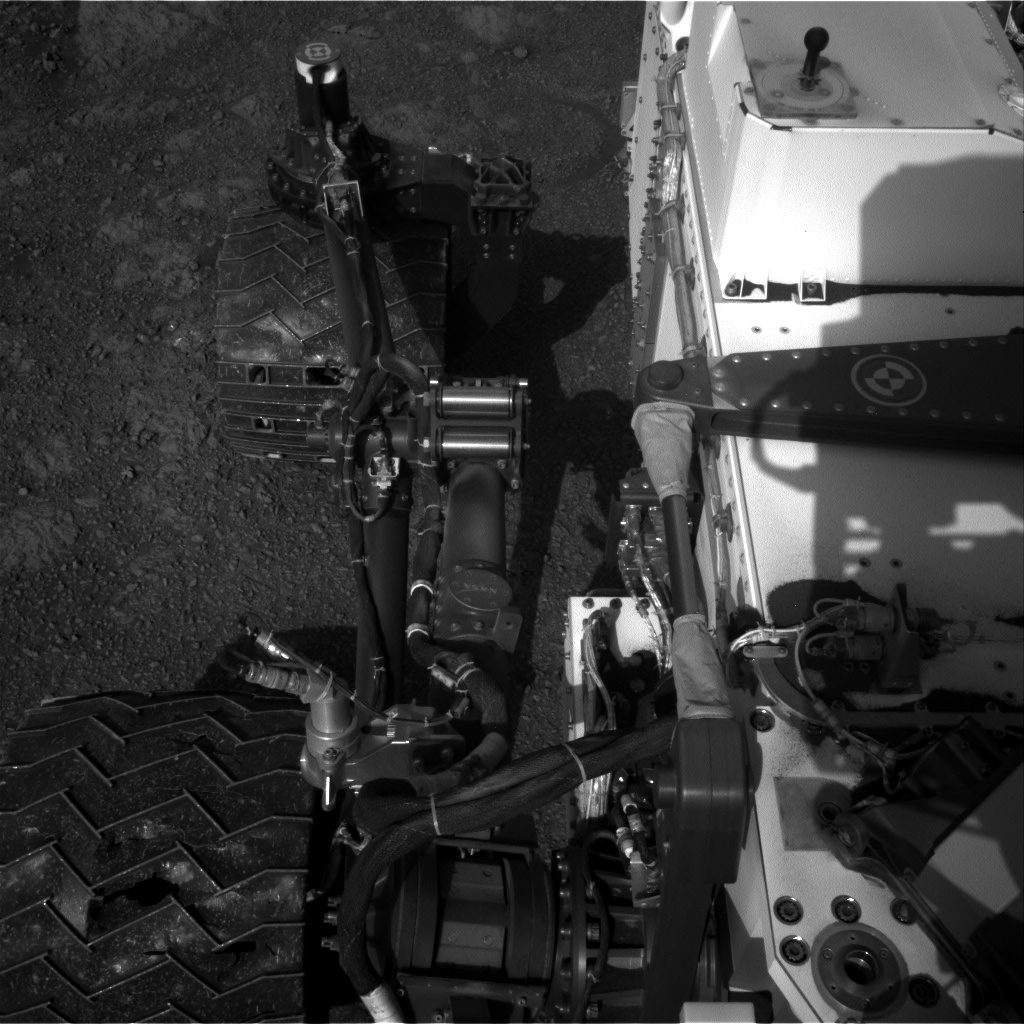
Curiosity Navcam Left A image acquired on Sol 2265, December 20, 2018.
Credit: NASA/JPL-Caltech
NASA’s Curiosity Mars rover is now performing Sol 2266 duties.
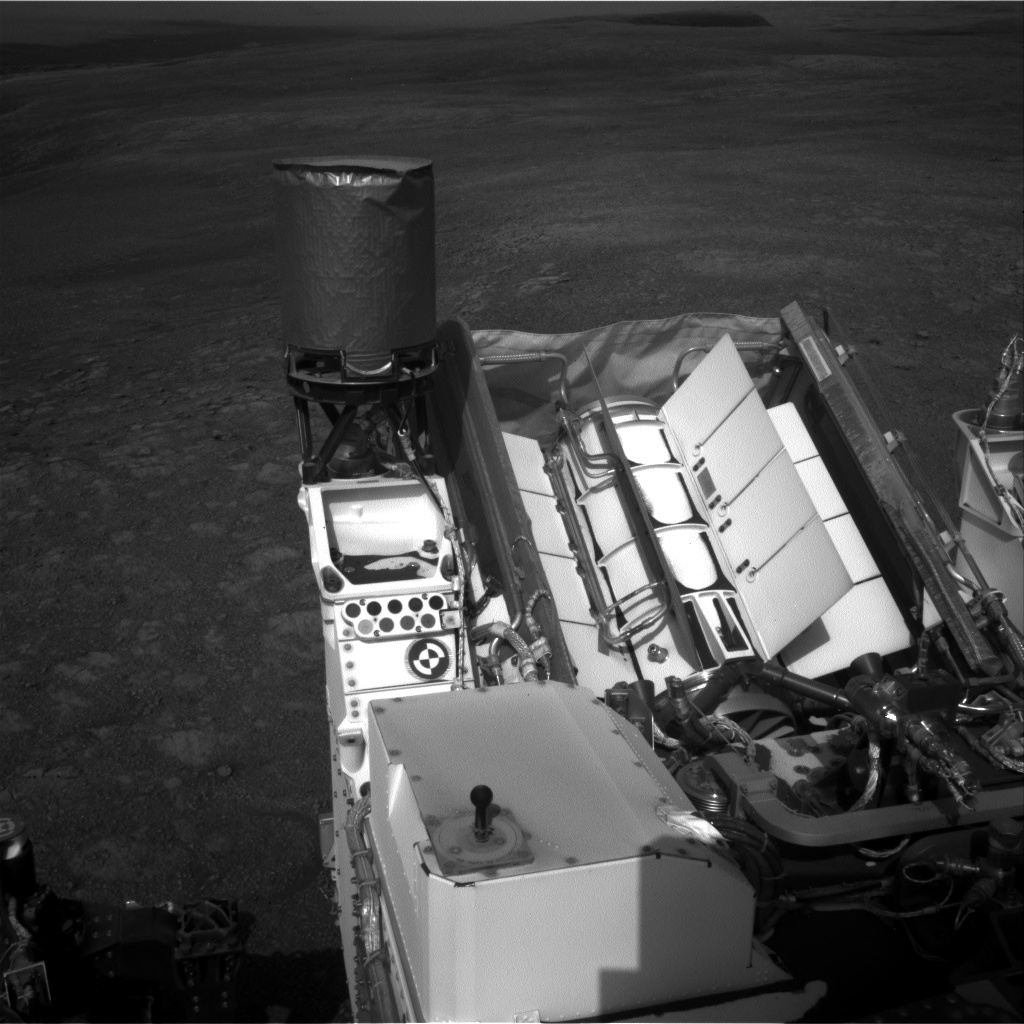
Curiosity Navcam Left A image acquired on Sol 2265, December 20, 2018.
Credit: NASA/JPL-Caltech
Reports Lucy Thompson, a planetary geologist at the University of New Brunswick, Fredericton, New Brunswick, Canada, there’s been extensive planning for the rover for the holidays.
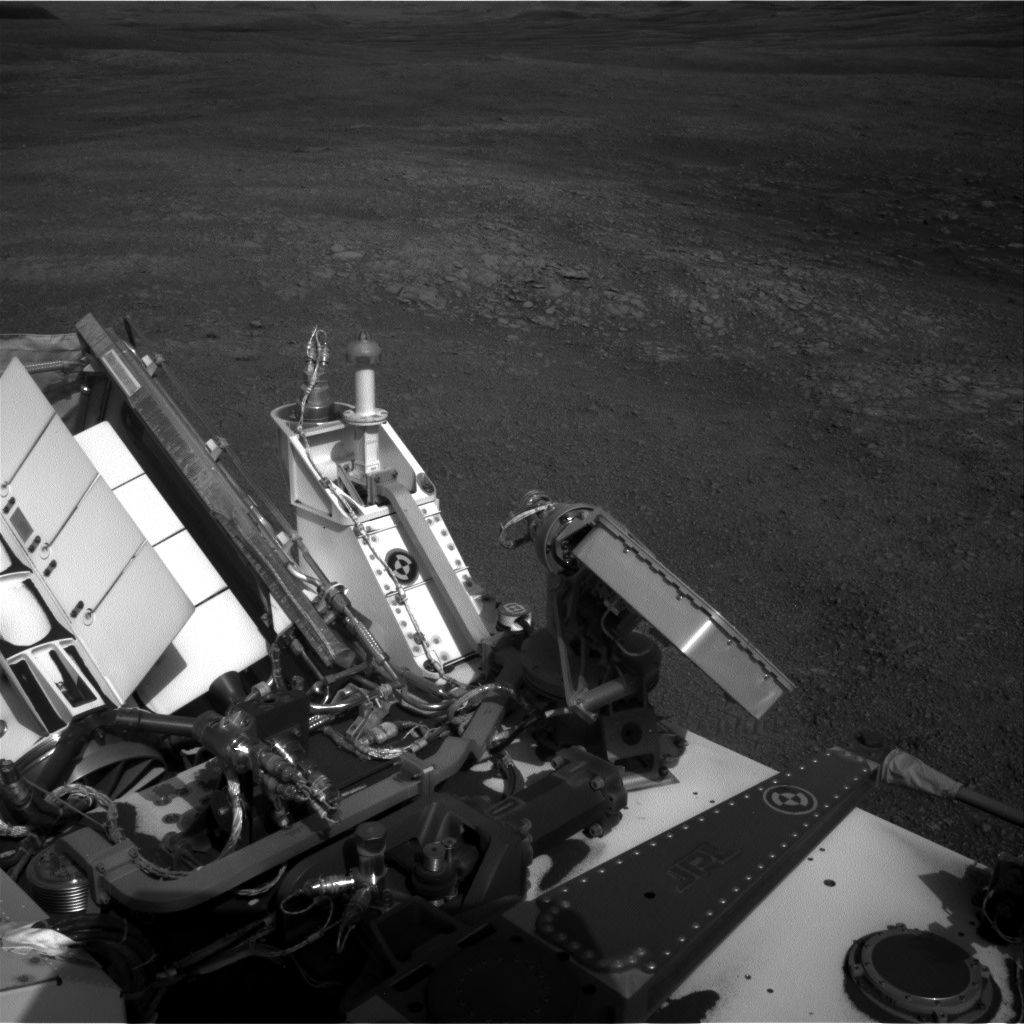
Curiosity Navcam Left A image acquired on Sol 2265, December 20, 2018.
Credit: NASA/JPL-Caltech
Planning has revolved around making sure that Curiosity has enough power after the Christmas holidays to be able to continue analyzing “Rock Hall,” the red Jura sample that was successfully drilled last weekend.
Uplinked plans
One martian day of science and diagnostic activities have been uplinked to the robot, Thompson adds, along with 10 sols of Rover Environmental Monitoring Station (REMS) observations through the end of December.
Also underway are Curiosity plans for Sols 2276 – 2278 to be executed on Mars before the team here on Earth returns to nominal planning activities.
“The priority was to facilitate diagnostic testing of the B-side computer to help assess the rover anomaly we experienced a few months ago,” Thompson points out. “The diagnostics require Curiosity to be awake for long periods of time, which drains her battery, and does not leave much power for other activities.”
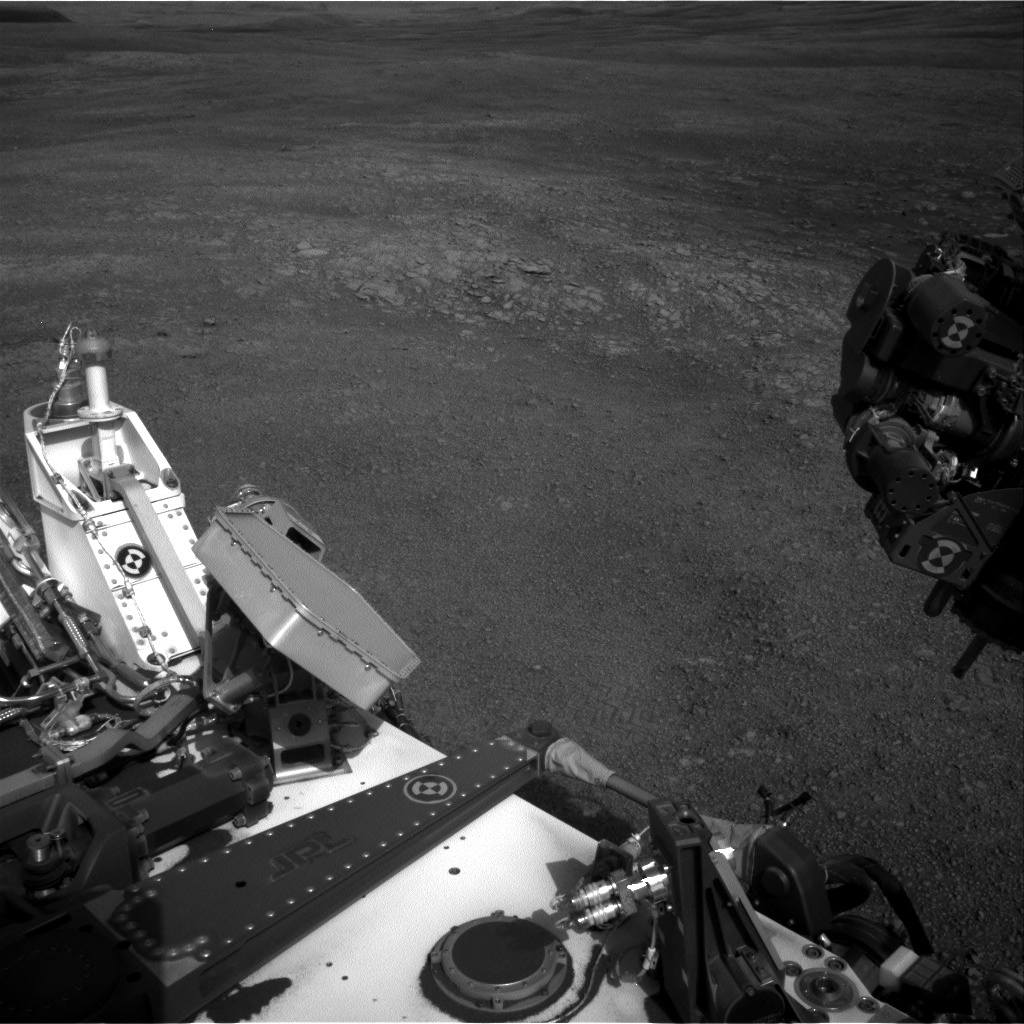
Curiosity Navcam Right A image taken on Sol 2265, December 20, 2018.
Credit: NASA/JPL-Caltech
Change detection imagery
While there had been tentative plans for some Chemistry and Camera (ChemCam)
Laser-induced Breakdown Spectroscopy (LIBS) and Remote Micro-Imager (RMI) observations of rock targets in the workspace, as well as some Mastcam and Navcam environmental activities, scientists were unable to fit them into the final plan.
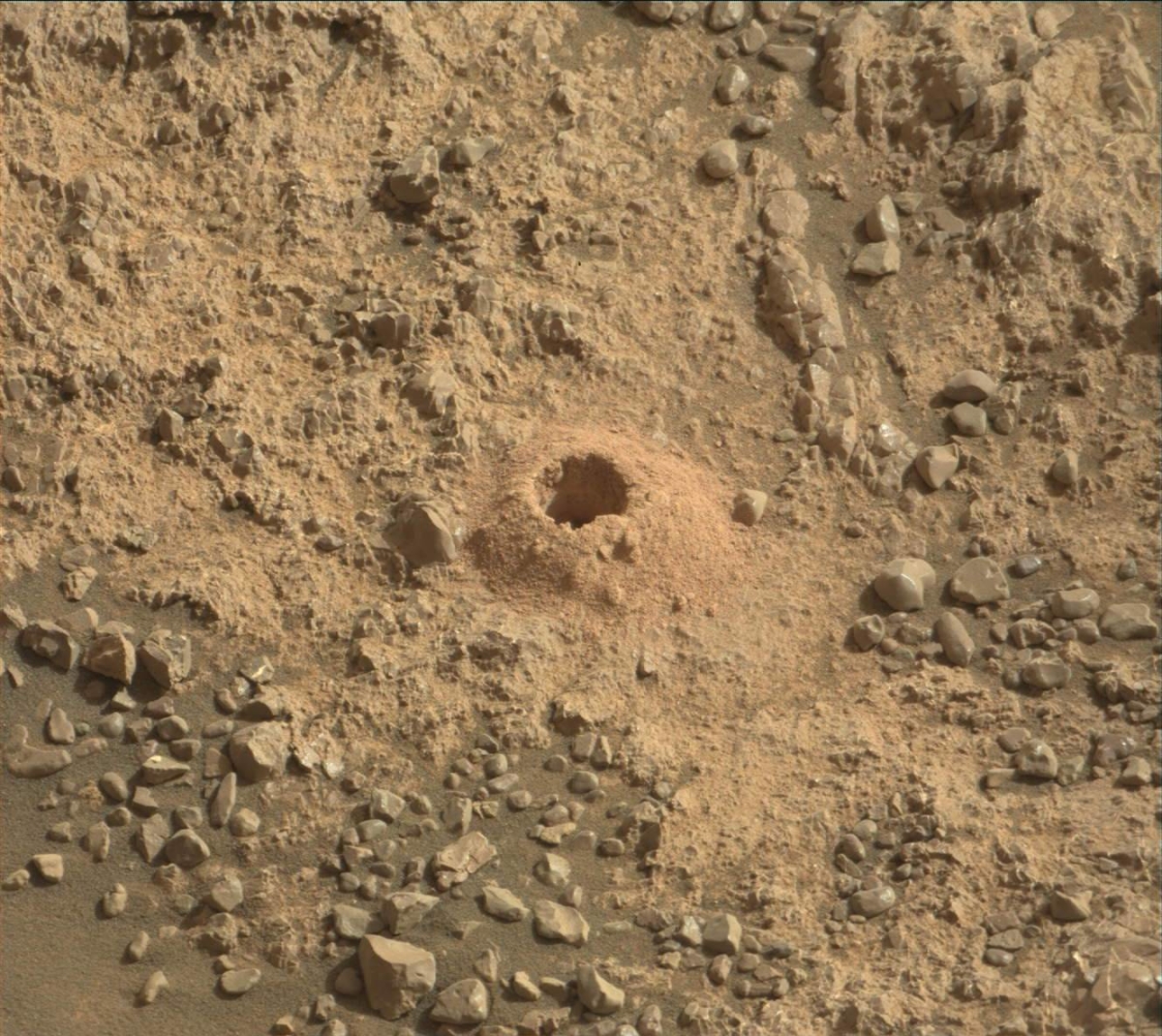
Curiosity Mastcam Right image acquired on Sol 2264, December 19, 2018.
Credit: NASA/JPL-Caltech/MSSS
“We were able to include some Mastcam change detection images of a couple of the sand-filled polygonal troughs in this area (“Luskentyre” and “Fishertown”), Thompson says, “to monitor how the wind moves sand around, as well as a Navcam deck pan to observe the rover deck.”
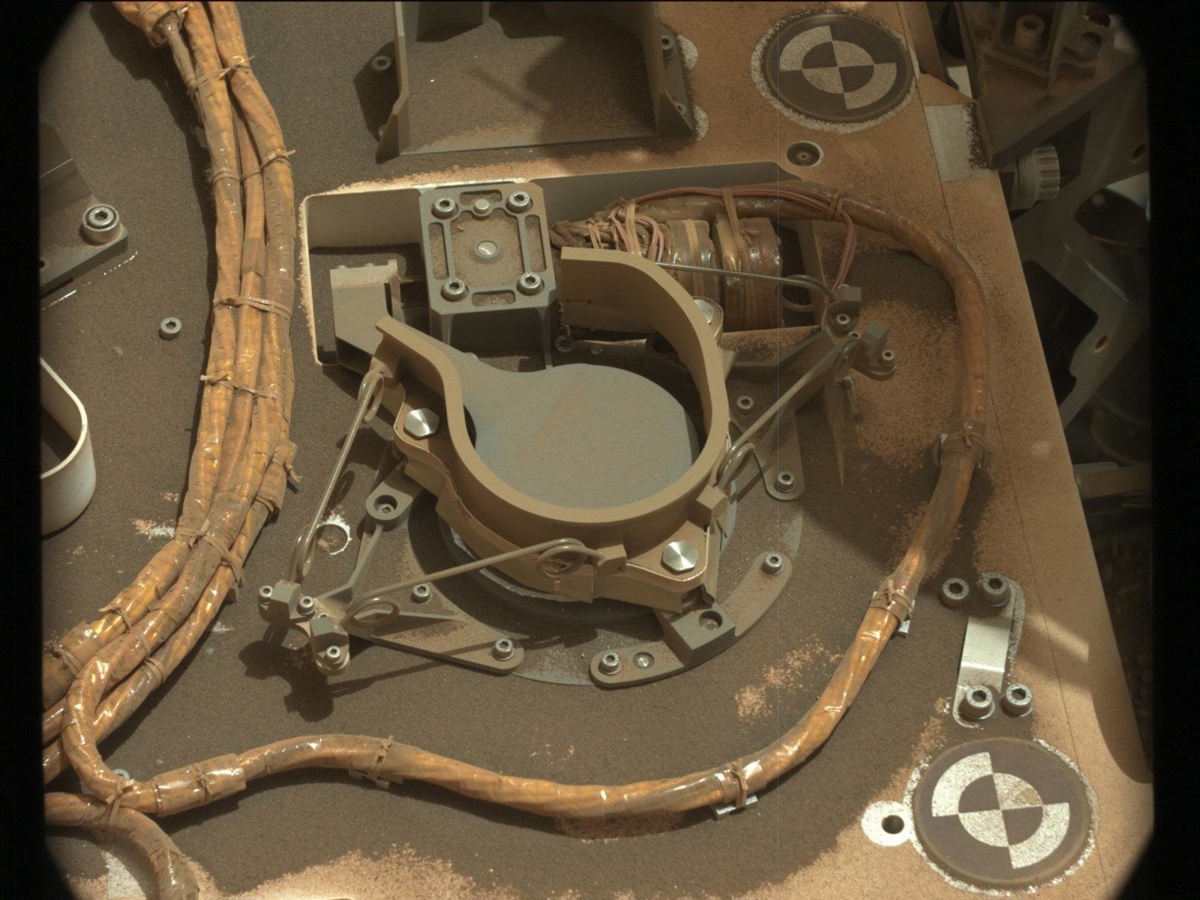
Curiosity Mastcam Left photo taken on Sol 2264, December 19, 2018.
Credit: NASA/JPL-Caltech/MSSS
Standard Dynamic Albedo of Neutrons (DAN) passive and DAN active, Radiation Assessment Detector (RAD) and REMS activities round out the plan, Thompson concludes.
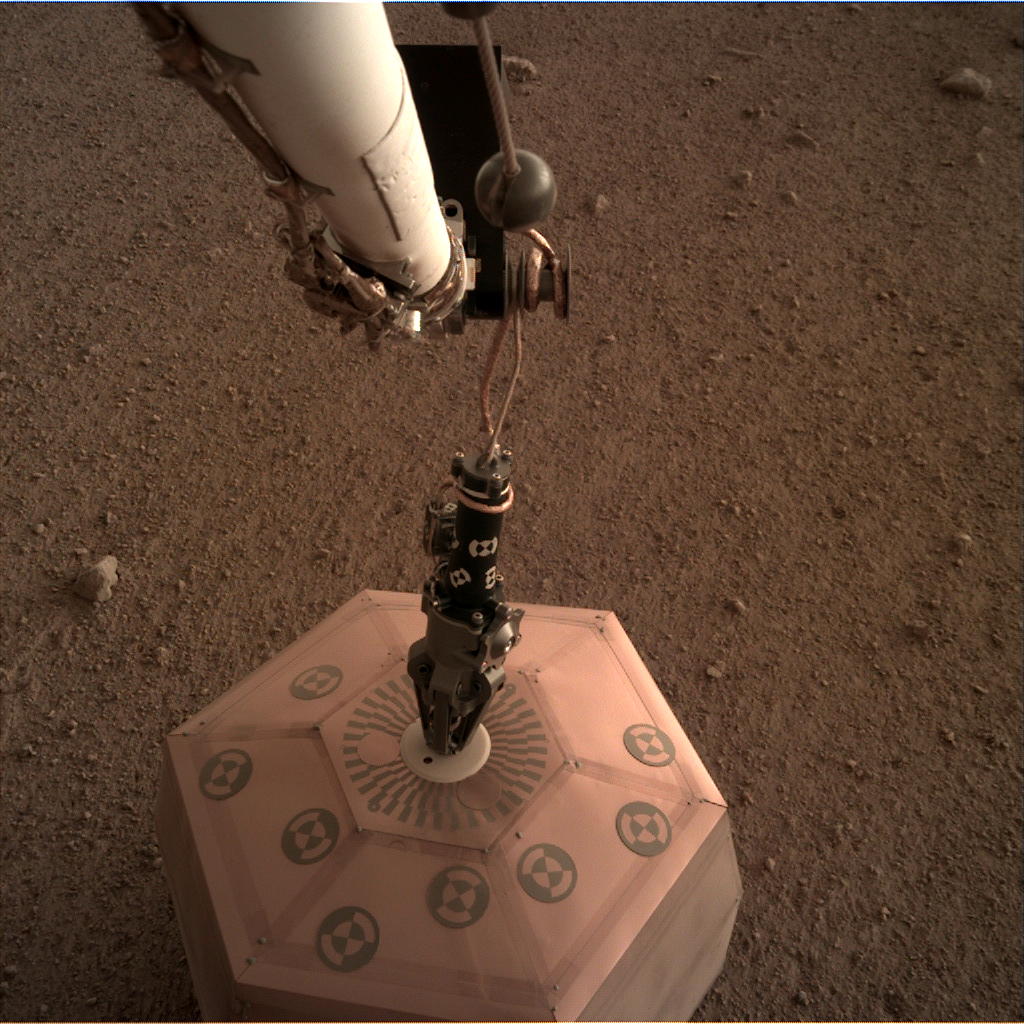
Seismometer on the surface! Sol 22: Instrument Deployment Camera (IDC)
NASA’s InSight Mars lander acquired this image using its robotic arm-mounted, Instrument Deployment Camera (IDC).
Credit: NASA/JPL-Caltech
Landing on Mars on November 26, NASA’s InSight lander has used its robotic arm outfitted with grippers to emplace its Seismic Experiment for Interior Structure, or SEIS, on the Red Planet’s surface.
On Wednesday, Dec. 19, the seismometer was gently placed onto the ground directly in front of the lander, about as far away as the arm can reach – 5.367 feet, or 1.636 meters, away).

Credit: IPGP/Manchu/Bureau 21
On the level
In the coming days, the InSight team will work on leveling the French-built seismometer, which is sitting on ground that is tilted 2 to 3 degrees. The first seismometer science data should begin to flow back to Earth after the seismometer is in the right position.
According to a JPL press statement, engineers and scientists at JPL, the French national space agency Centre National d’Études Spatiales (CNES) and other institutions affiliated with the SEIS team, will need several additional weeks to make sure the returned data are as clear as possible.
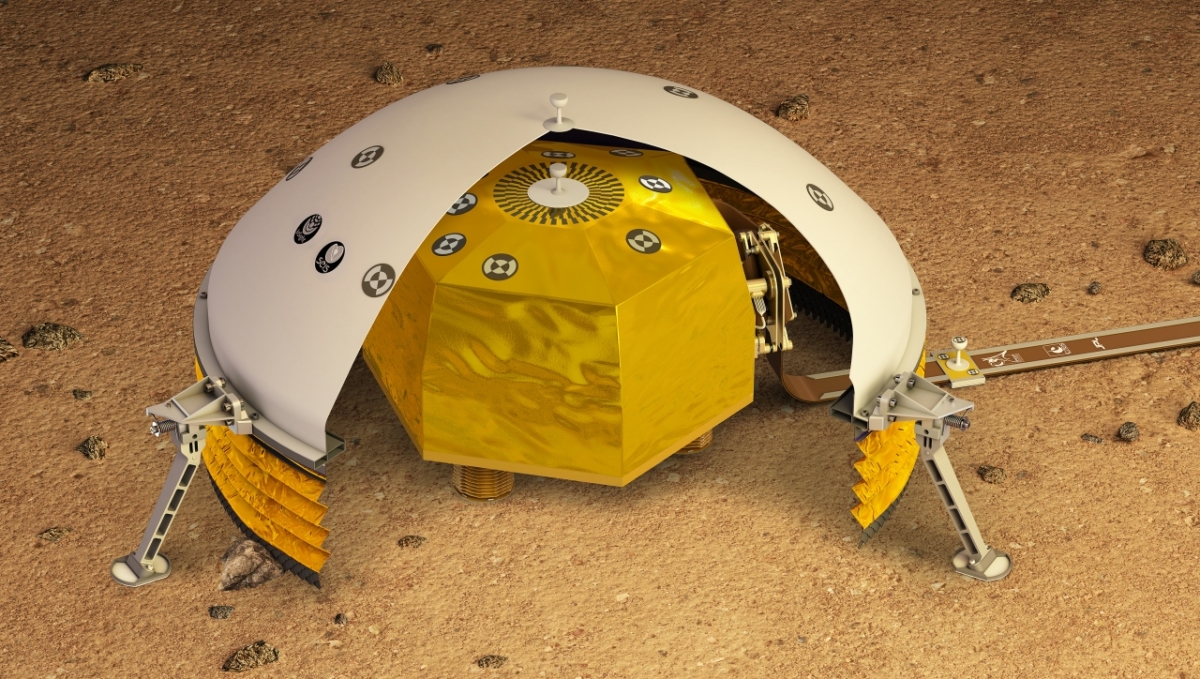
Artist concept showing the protective role of the wind and thermal shield (WTS) at the martian surface.
Credit: IPGP/David Ducros).
Next steps
In early January, engineers expect to command the robotic arm to place the Wind and Thermal Shield over the seismometer to stabilize the environment around the sensors.
By Late January, assuming that no problems crop up, the InSight team plans to deploy the German-provided Heat Flow and Physical Properties Probe, or HP3) onto the Martian surface. HP3 will be on the east side of the lander’s work space, roughly the same distance away from the lander as the seismometer.
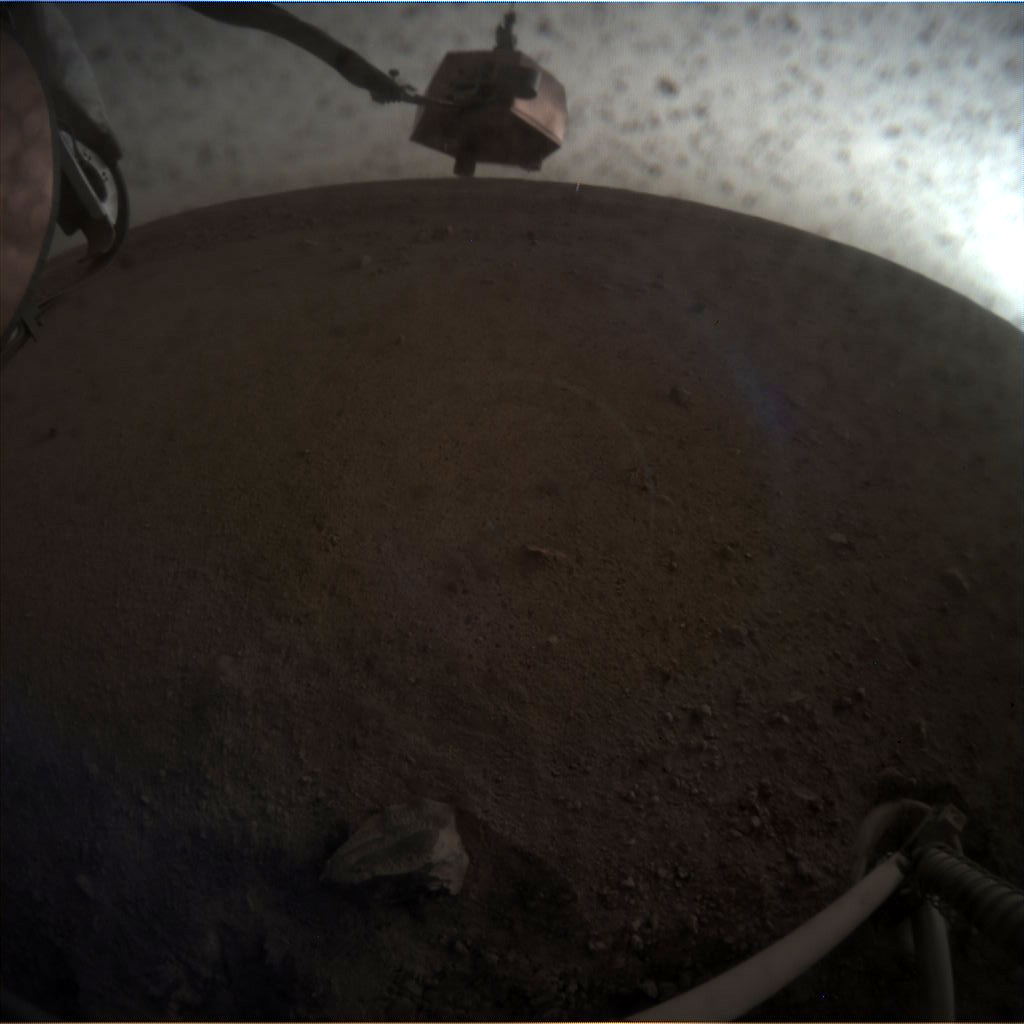
Sequence of Sol 22: Instrument Context Camera (ICC) shows deployment of seismometer. Credit: NASA/JPL-Caltech
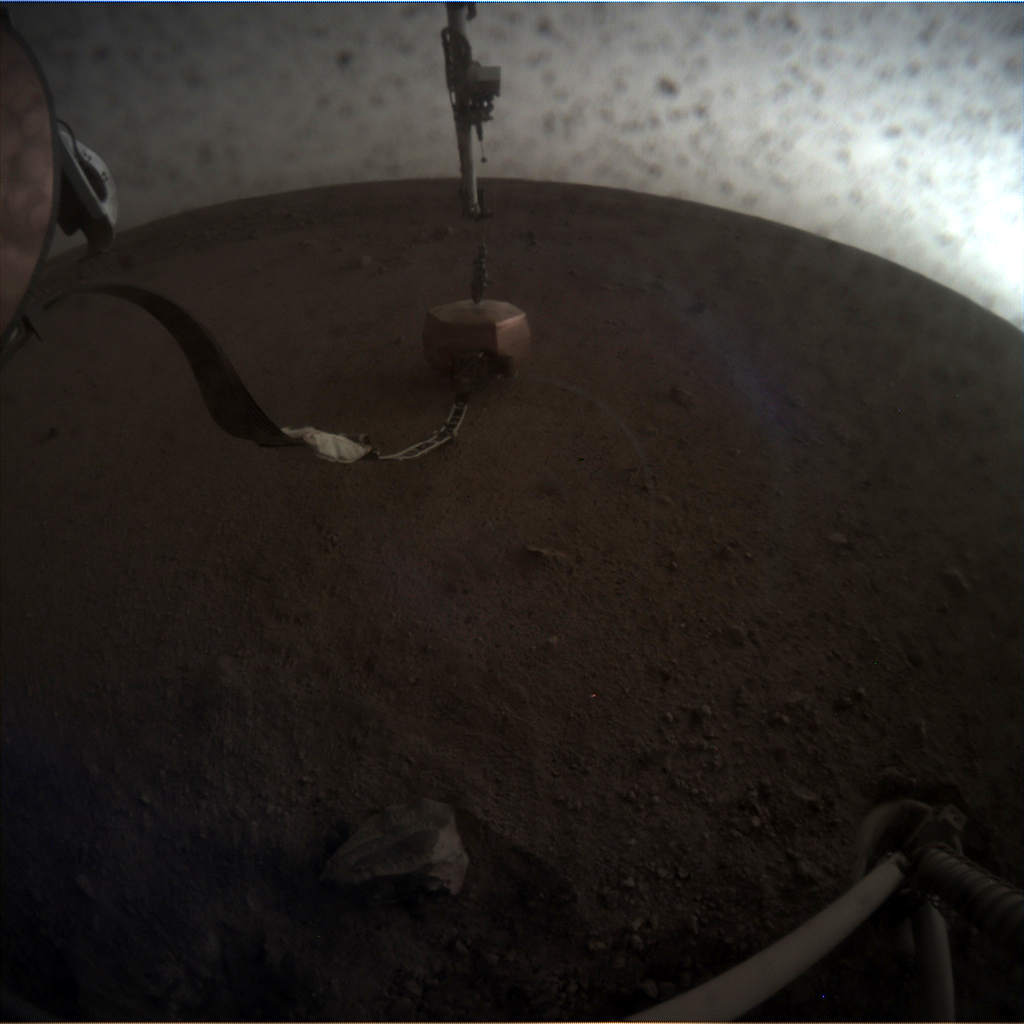
Instrument Context Camera (ICC) shows deployment of seismometer. Credit: NASA/JPL-Caltech
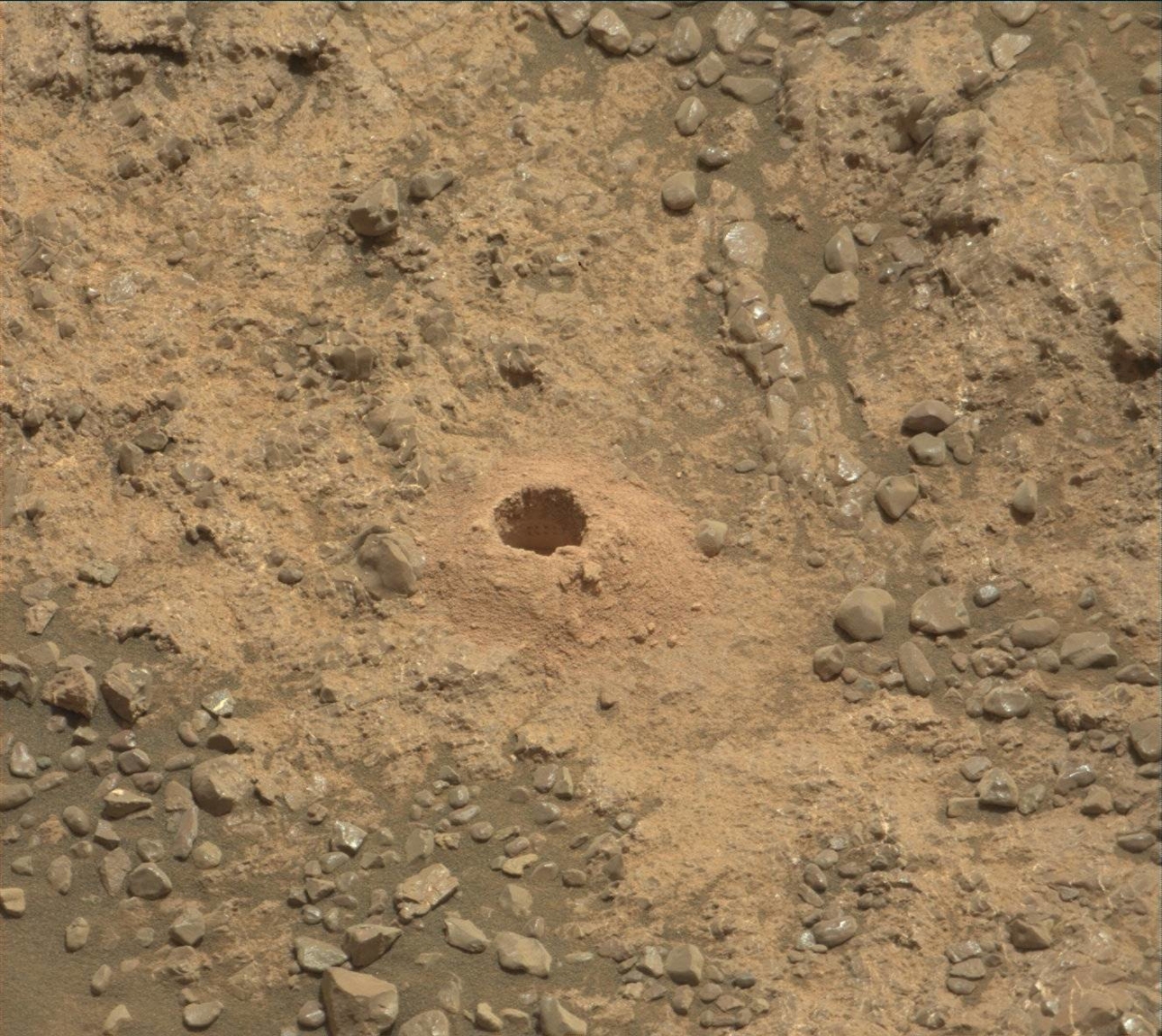
Barely visible laser shots within newly drilled hole. Curiosity Mastcam Right image acquired on Sol 2263, December 18, 2018.
Credit: NASA/JPL-Caltech/MSSS
NASA’s Curiosity Mars rover has just begun Sol 2265 tasks.
“We are still very excited and happy that the final drill hole, “Rock Hall,” on Vera Rubin Ridge was successful over the weekend,” reports Kristen Bennett, a planetary geologist at the USGS in Flagstaff, Arizona.
“Now we get to analyze the drilled sample with rover instruments…and the big event will be delivering some of the Rock Hall sample to the CheMin [Chemistry & Mineralogy X-Ray Diffraction] instrument.
Drill hole
Additionally, Curiosity’s Chemistry and Camera (ChemCam) Laser Induced Breakdown Spectroscopy (LIBS) device is planned to target the drill hole to understand the chemistry, and a Mastcam 360-degree mosaic is planned to document the surroundings around the drill hole, Bennett explains.
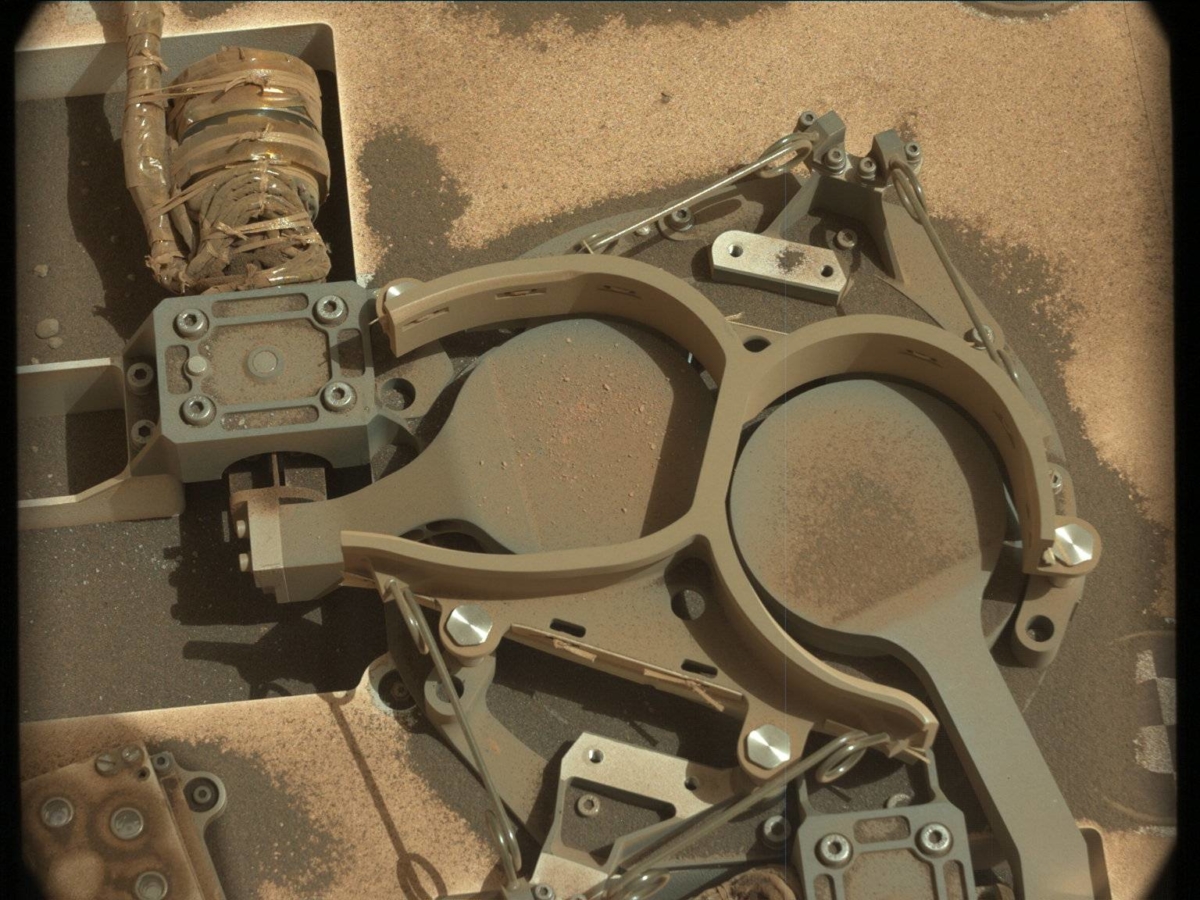
Curiosity Mastcam Left photo taken on Sol 2263, December 18, 2018.
Credit: NASA/JPL-Caltech/MSSS
“Although the drill was successful over the weekend, a few of the remote science observations were not obtained,” Bennett adds.
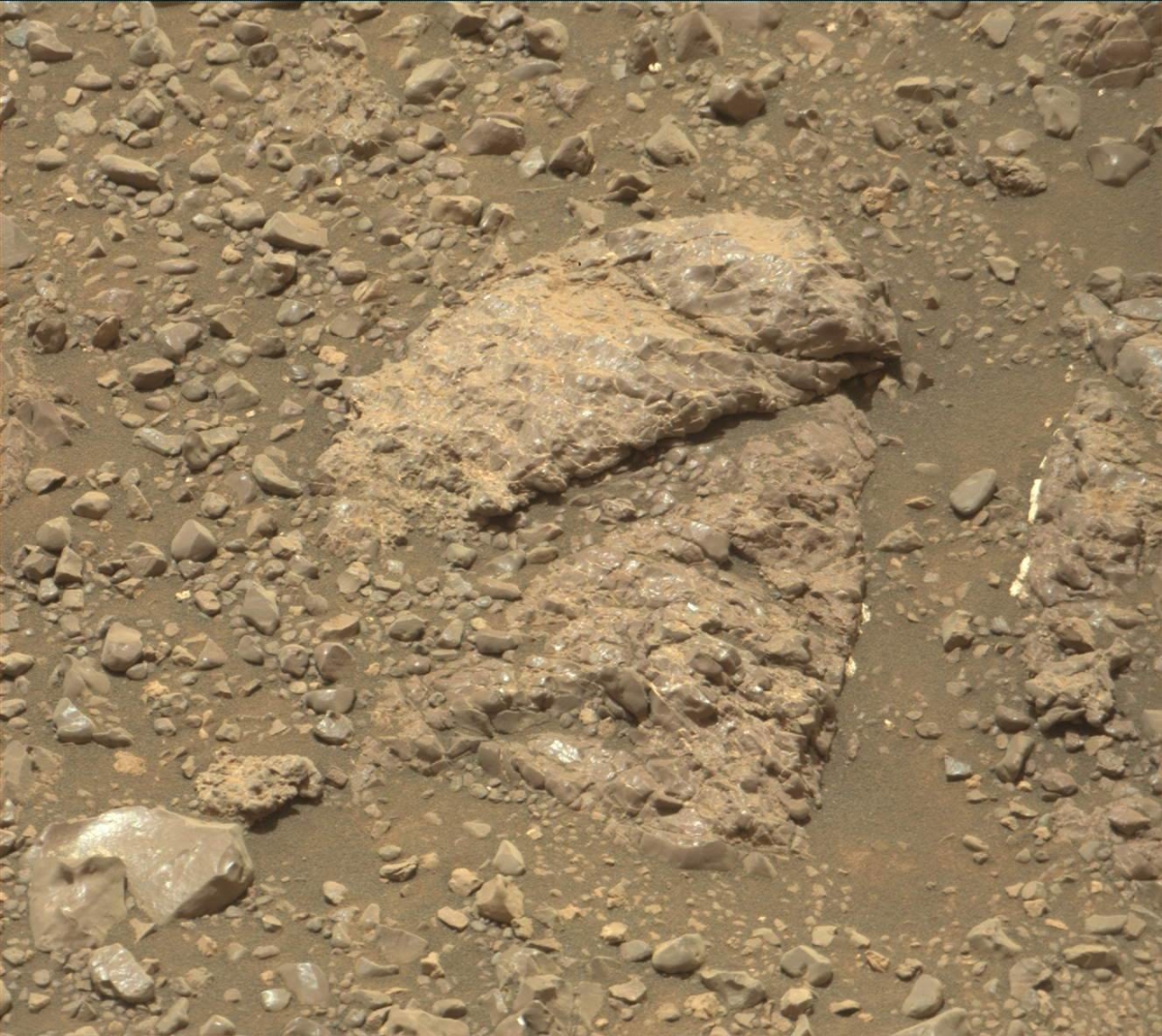
Curiosity Mastcam Right image acquired on Sol 2263, December 18, 2018.
Credit: NASA/JPL-Caltech/MSSS
To recover some of those observations, Bennett concludes, the plan for the Mars robot was to retake the “Lairig Ghru” Mastcam observation that would document layering near Curiosity.
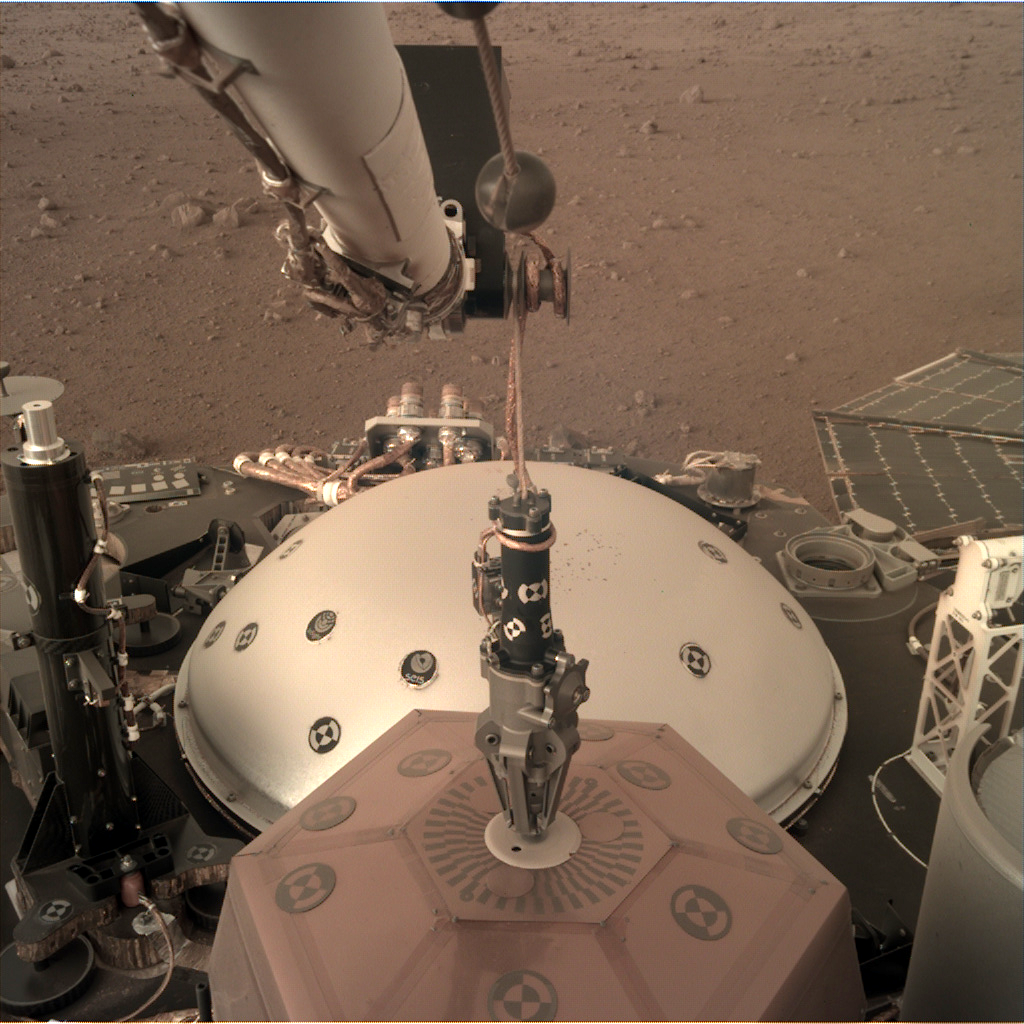
NASA’s InSight Mars lander acquired this image on December 17, 2018, Sol 20, using its robotic arm-mounted, Instrument Deployment Camera (IDC).
Credit: NASA/JPL-Caltech
Progress with the Instrument Deployment Arm (IDA), a two-meter-long robotic arm designed to deploy with the greatest precision and safety possible the mission’s two main instruments, namely the French-built seismometer and the German-provided HP3 heat flow sensor.
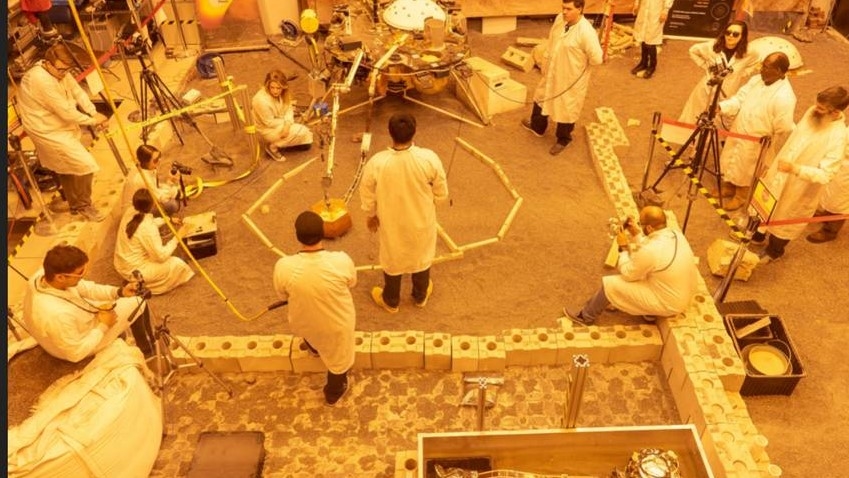
ForeSight, a fully functional, full-size model of NASA’s InSight lander, sits in a lab space that has been sculpted to match terrain in front of the real lander on Mars.
Credit: NASA/JPL-Caltech/IPGP
InSight’s seismometer, SEIS, the Seismic Experiment for Interior Structure, is a round, dome-shaped instrument that will sit on the Martian surface and take the “pulse” or seismic vibrations of Mars.

Credit: IPGP/Manchu/Bureau 21
Wind and thermal shield
The SEIS seismometer involves use of a dome-shaped wind and thermal shield (WTS) that protects it from wind and temperature variations.
With the aid of two cameras, InSight operators need to choose a landing site for these two instruments before setting them down using the robotic arm.
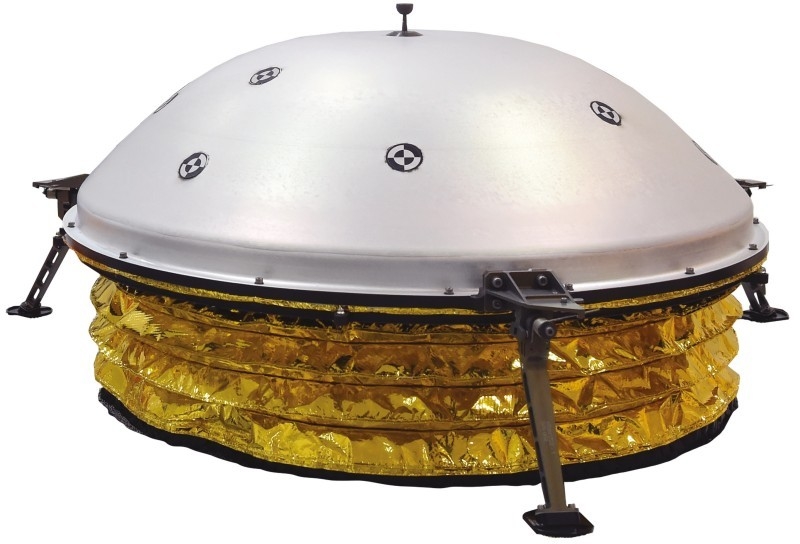
The wind and thermal shield (WTS).
Credit: Agence Idé/CNES.
Five-claw gripper
The IDA on the InSight probe will soon lift the SEIS seismometer 64 pound (29 kilograms), the 21 pound (9.5 kilogram) wind and thermal shield and the HP3 penetrator that weighs 7 pounds (3 kilograms).
Artist concept showing the protective role of the wind and thermal shield (WTS) at the martian surface.
Credit: IPGP/David Ducros).
Each device to be placed on the ground is fitted with a “handle” consisting of a rigid rod terminating in a sphere. This is designed so that it can be grasped as easily as possible by the five-claw gripper attached to the IDA.
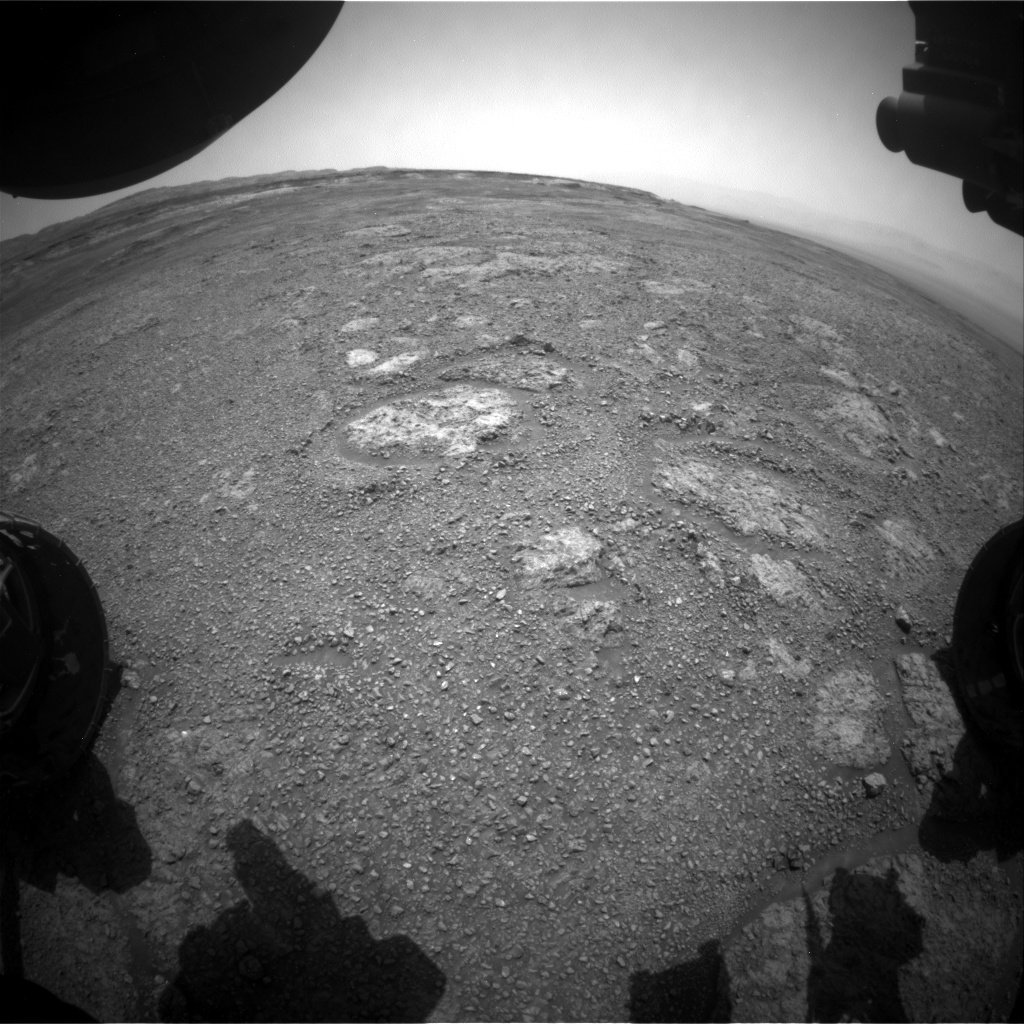
Curiosity Front Hazcam Left A image acquired on Sol 2262, December 17, 2018.
Credit: NASA/JPL-Caltech
Now in Sol 2363, the Curiosity Mars rover is performing science duties and ready for new drilling activities on the Red Planet.
It is “Go for drill on the red Jura!” – the signal from Catherine O’Connell, a planetary geologist at the University of New Brunswick in Fredericton, New Brunswick, Canada.
Triage activities
In the rover’s last plan, triage activities were carried out on the red Jura target, “Rock Hall,” says O’Connell, including Alpha Particle X-Ray Spectrometer (APXS) analysis of the target to determine composition, and engineering tests to assess the stability of the rock and its hardness, both of which would affect the robot’s ability to drill.
“It was decided that this would be a suitable candidate, both geochemically and physically, O’Connell advises, so a recent plan will center around the drilling of what will hopefully be the mission’s 19th drill sample for analysis on Mars!
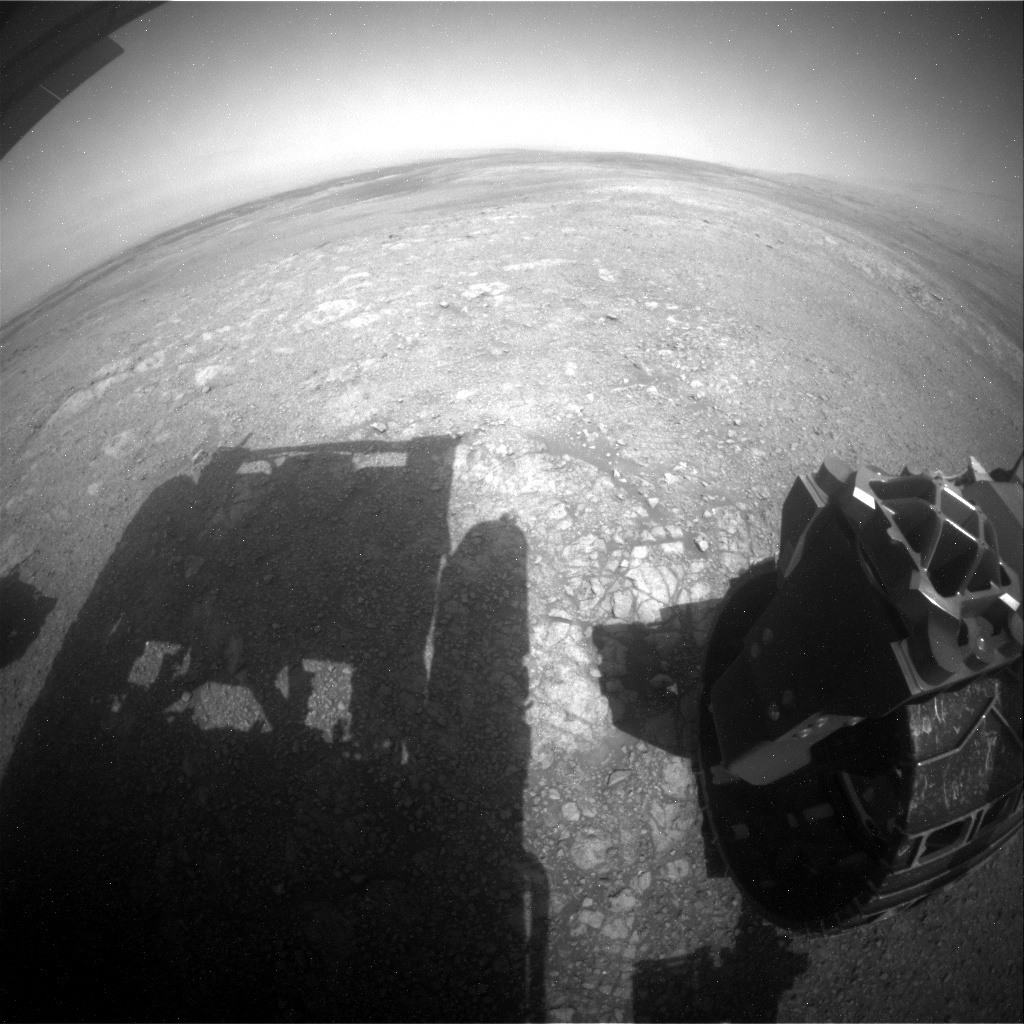
Curiosity Rear Hazcam Right A photo taken on Sol 2262, December 17, 2018.
Credit: NASA/JPL-Caltech
Excess sample dumping
On Sol 2260, Curiosity’s Mars Hand Lens Imager (MAHLI) was slated to take a series of images to characterize locations chosen by the rover planners as the areas in which they would eventually like to dump excess sample generated by the drilling.
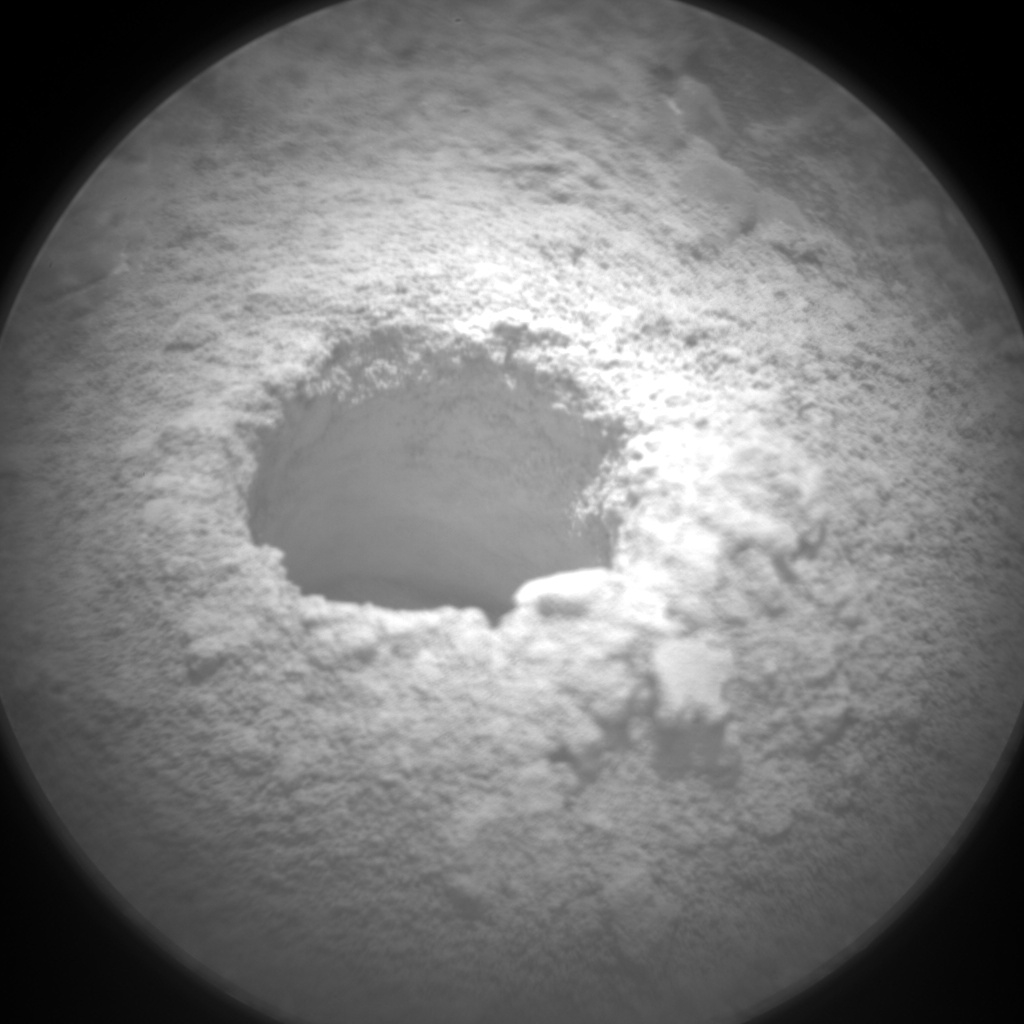
Curiosity ChemCam Remote Micro-Imager photo taken on Sol 2262, December 17, 2018.
Credit: NASA/JPL-Caltech/LANL
The drilling itself was to take place on the morning of the second sol (sol 2261).
In the blind
“Once this has completed, in the afternoon of sol 2261, the robot’s Chemistry and Camera (ChemCam) was scheduled to do passive analysis of the drill tailings, and image the drill hole,” O’Connell adds.
Both will be done “in the blind” (without confirmation images), based on where the rover planners estimate their likely location to be. Scientists were also set to acquire Mastcam multi-spectral analysis of the drill tailings.
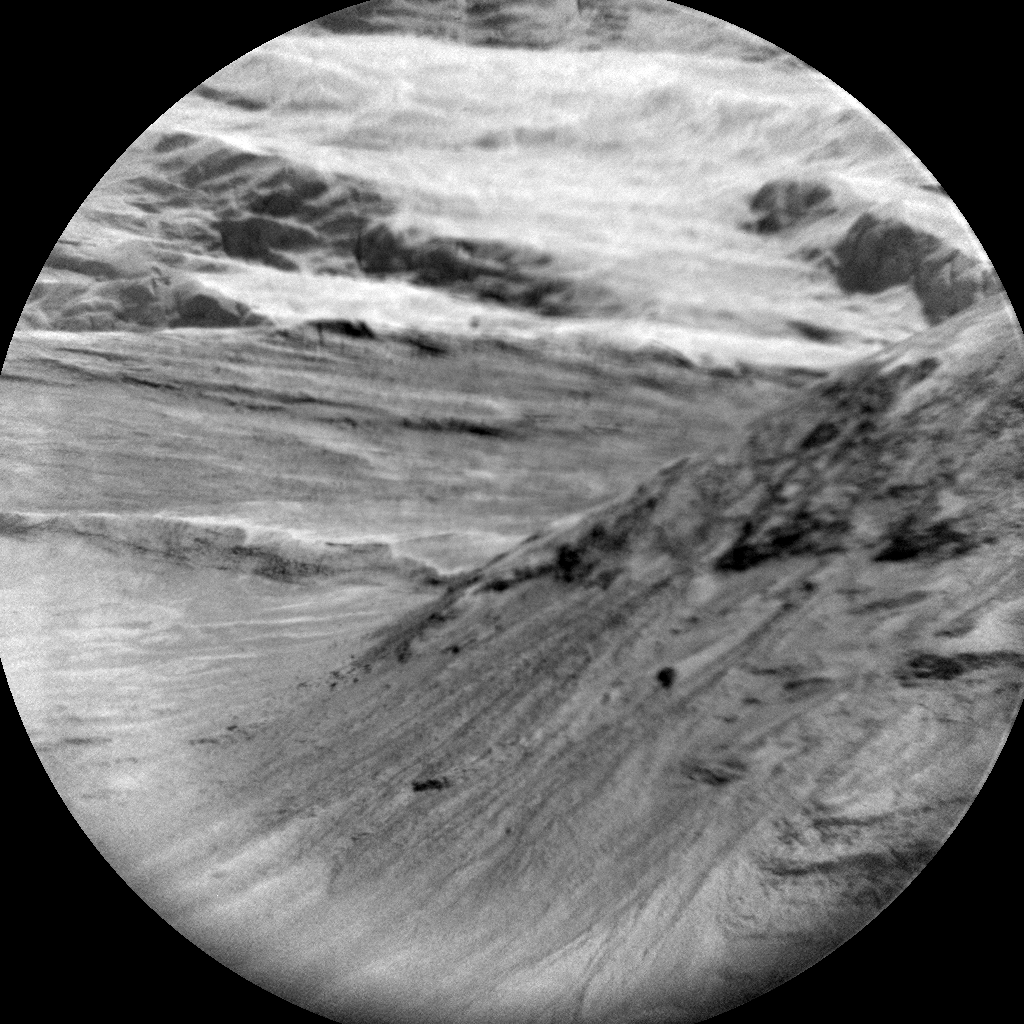
Curiosity ChemCam Remote Micro-Imager photo acquired on Sol 2262, December 17, 2018.
Credit: NASA/JPL-Caltech/LANL
Layering in a hill
The Environmental theme group has requested some Mastcam atmospheric measurements, to be run in the morning and the afternoon of sol 2262.
In addition to the afternoon environmental activities, Mastcam was to document layering in a hill called “Lairig Ghru.”
Standard Rover Environmental Monitoring Station (REMS) and Dynamic Albedo of Neutrons (DAN) passive activities are spread throughout the three sol plan, O’Connell concludes.
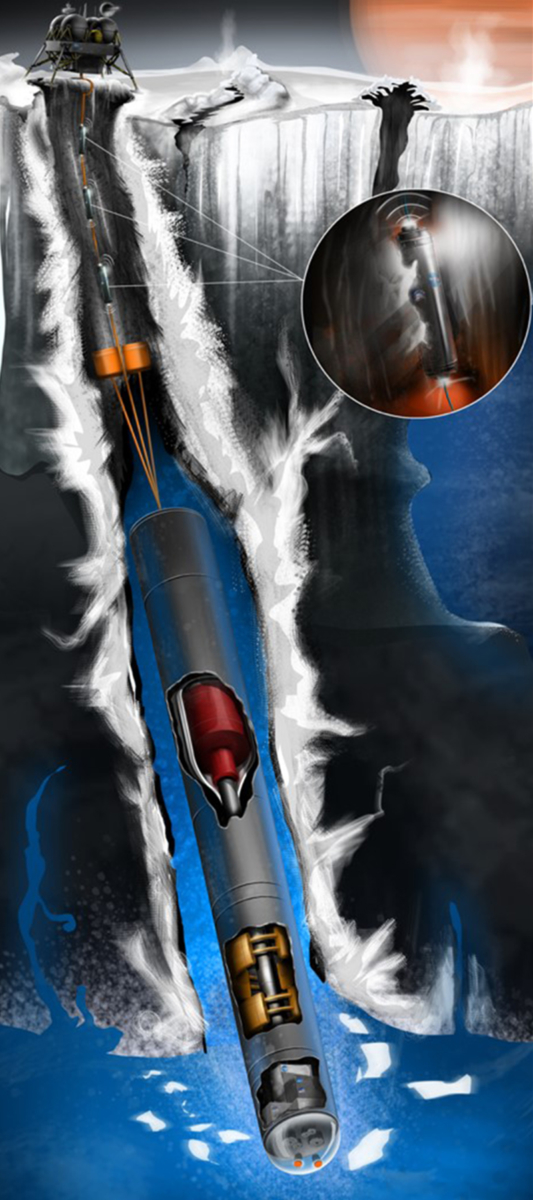
Credit: Alexander Pawlusik, LERCIP Internship Program NASA Glenn Research Center
A nuclear-powered ‘tunnelbot’ – that’s an icy, innovative approach to search for life on Jupiter’s icy moon Europa.
Researchers at the University of Illinois at Chicago performed a concept study for a nuclear-powered “tunnelbot” that can penetrate the ice shell and reach the top of Europa’s ocean while carrying devices and instruments that can be used to search for signs of life or extinct life.
The automaton would also evaluate the habitability of the ice shelf itself.
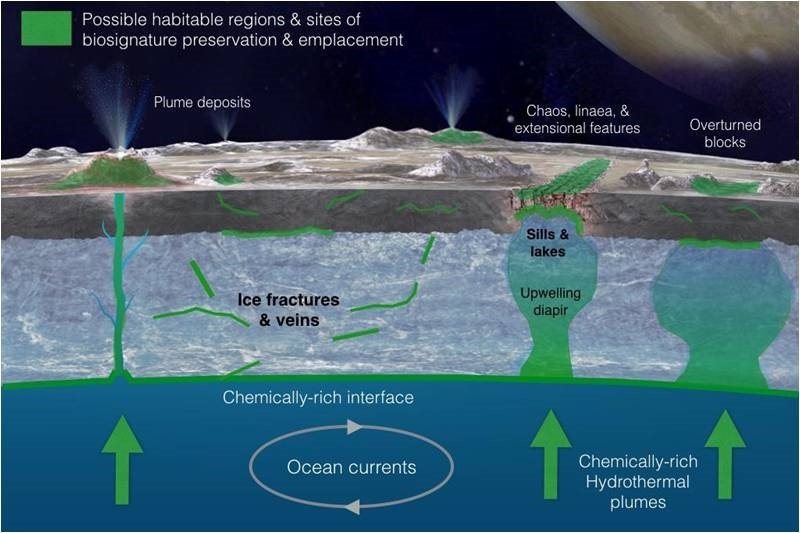
Europan environments that may harbor life or preserve biosignature. A variety of geologic
and geophysical processes, including ocean currents governed by tides, rotation, and heat exchange, are
required to drive water from the subsurface to the surface and govern how any exchange operates.
SOURCE: Kevin Hand, Jet Propulsion Laboratory, “On the Habitability of Ocean Worlds,” presentation
to the Workshop on Searching for Life across Space and Time, December 5, 2016.
Ice thickness
“Estimates of the thickness of the ice shell range between 2 and 30 kilometers (1.2 and 18.6 miles), and is a major barrier any lander will have to overcome in order to access areas we think have a chance of holding biosignatures representative of life on Europa,” said Andrew Dombard, associate professor of earth and environmental sciences at the University of Illinois at Chicago (UIC).
In a university press statement, Dombard and his spouse, D’Arcy Meyer-Dombard, associate professor of earth and environmental sciences at UIC, are part of a group of scientists on the NASA Glenn Research COMPASS team, a multidisciplinary group of scientists and engineers tasked with designing technology and solutions for space exploration and science missions.
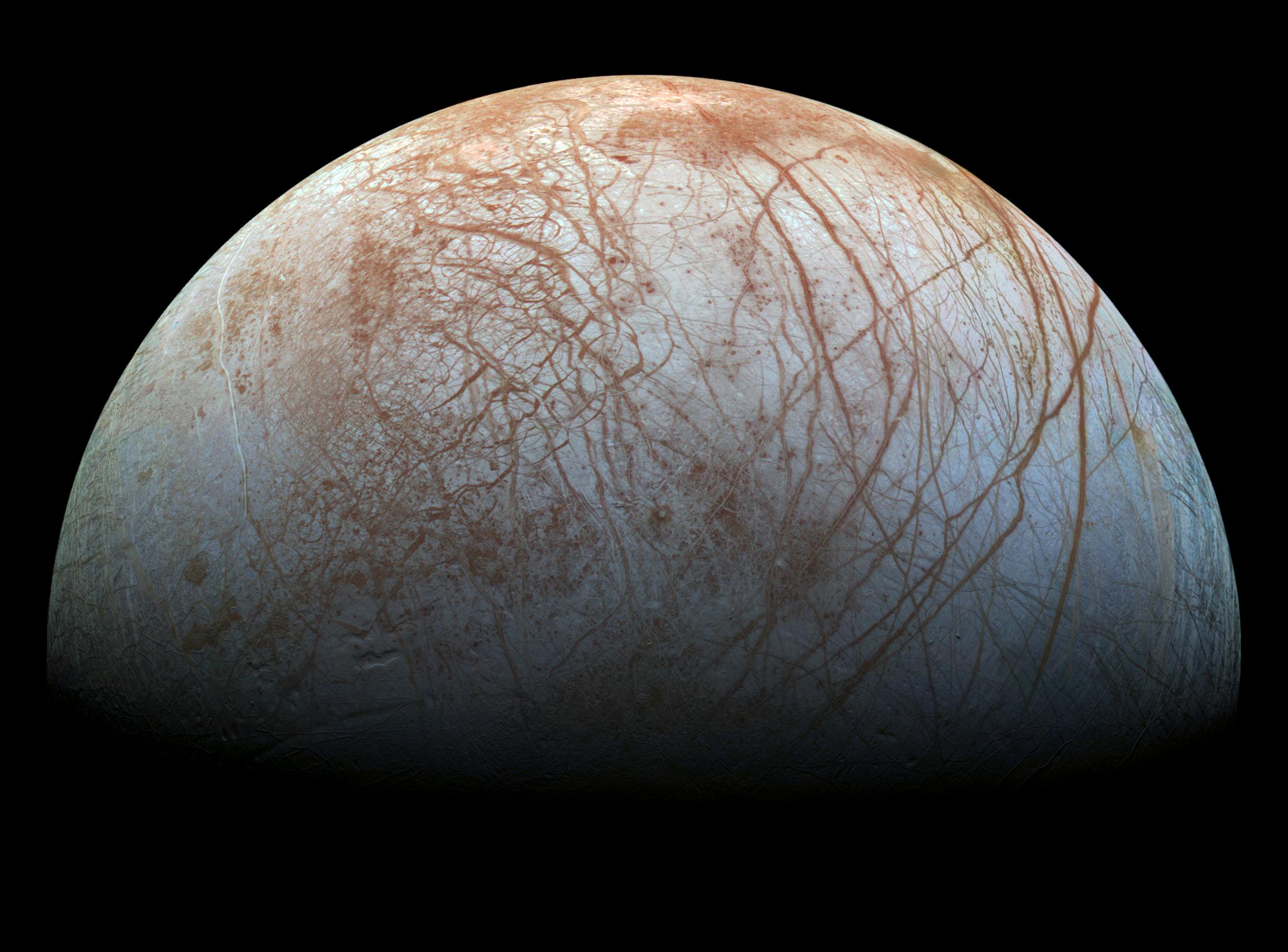
Jupiter’s icy moon Europa displays many signs of activity, including its fractured crust and a dearth of impact craters. Scientists continue to hunt for confirmation of plume activity.
Image Credit: NASA/JPL-Caltech/SETI Institute
Collaborative modeling
COMPASS stands for Collaborative Modeling for Parametric Assessment of Space Systems (COMPASS).
The bot would sample ice throughout the shell, as well as water at the ice-water interface, and would look at the underside of the ice to search for microbial biofilms.
The bot would also have the capability of searching liquid water “lakes” within the ice shell.

Collage of Galileo images of Jupiter’s icy Europa.
Credit: JPL/Univ. of Texas at Austin’s Institute for Geophysics
Device designs
The researchers considered two designs for their robotic tunnel device:
one powered by a small nuclear reactor, and the other powered by General Purpose Heat Source bricks — radioactive heat source modules designed for space missions. Heat from both these sources could be used to melt the ice shell. Communications would be provided by a string of “repeaters” connected to the bot by fiber optic cables.
Below surface
Europa has become a hotbed for the search for life.
Between 1995 and 2003, NASA’s Galileo spacecraft made several flybys of Jupiter’s moon, Europa. Several findings from observations of the moon pointed to evidence of a liquid ocean beneath Europa’s icy surface. The ocean, researchers believe, could harbor microbial life, or evidence of now-extinct microbial life.
The tunnelbot idea was recently floated at the American Geophysical Union meeting in Washington, D.C.

ELaNa19 Liftoff. Credit: Trevor Mahlmann
Rocket Lab’s Electron rocket launched NASA’s ELaNa-19 mission from Launch Complex 1 on Mahia Peninsula, New Zealand, on December 16, 2018 local time.
NASA Venture Class Launch Service flight of the CubeSat Launch Initiative Educational Launch of Nanosatellites (ELaNa) XIX mission launched the following cubesats: Ceres and STF-1 (NASA Goddard Spaceflight Center), CubeSail (University of Illinois at Urbana-Champaign), CHOMPTT (University of Florida), NMTSat (New Mexico Institute of Mining and Technology), DaVinci (North Idaho STEM Charter Academy), Rsat (U. S. Naval Academy), ISX (California Polytechnic State University), Shields-1 (NASA Langley Research Center), ALBus (NASA Glenn Research Center) and SHFT-1 (NASA JPL).
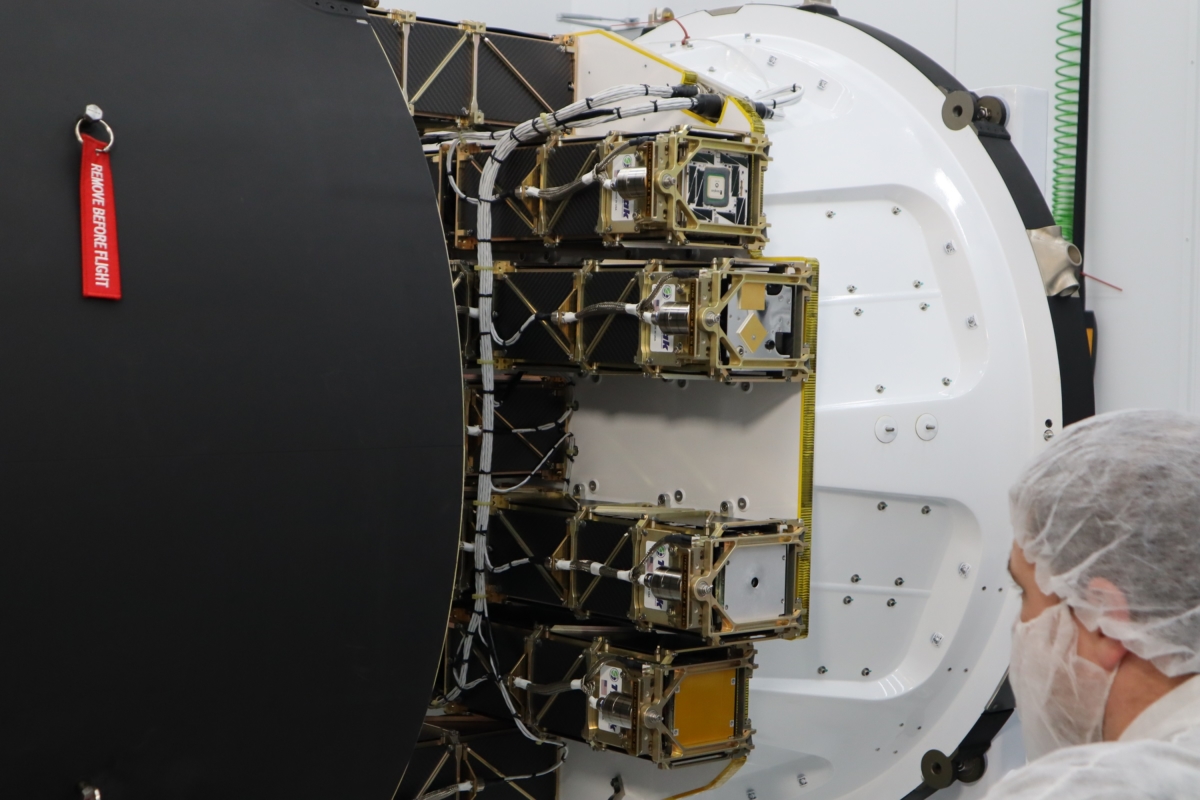
NASA ELaNa-19 mission fairing encapsulation.
Credit: Rocket Lab
The mission, designated Educational Launch of Nanosatellites (ELaNa)-19 , took place just over a month after Rocket Lab’s last successful orbital launch, ‘It’s Business Time.’ Rocket Lab has launched a total of 24 satellites to orbit in 2018.
The next Rocket Lab Electron vehicle will be on the pad at Launch Complex 1 in January 2019.
For video of launch, go to: https://youtu.be/KZwLJMPuos8
Credit: NASA/JPL-Caltech
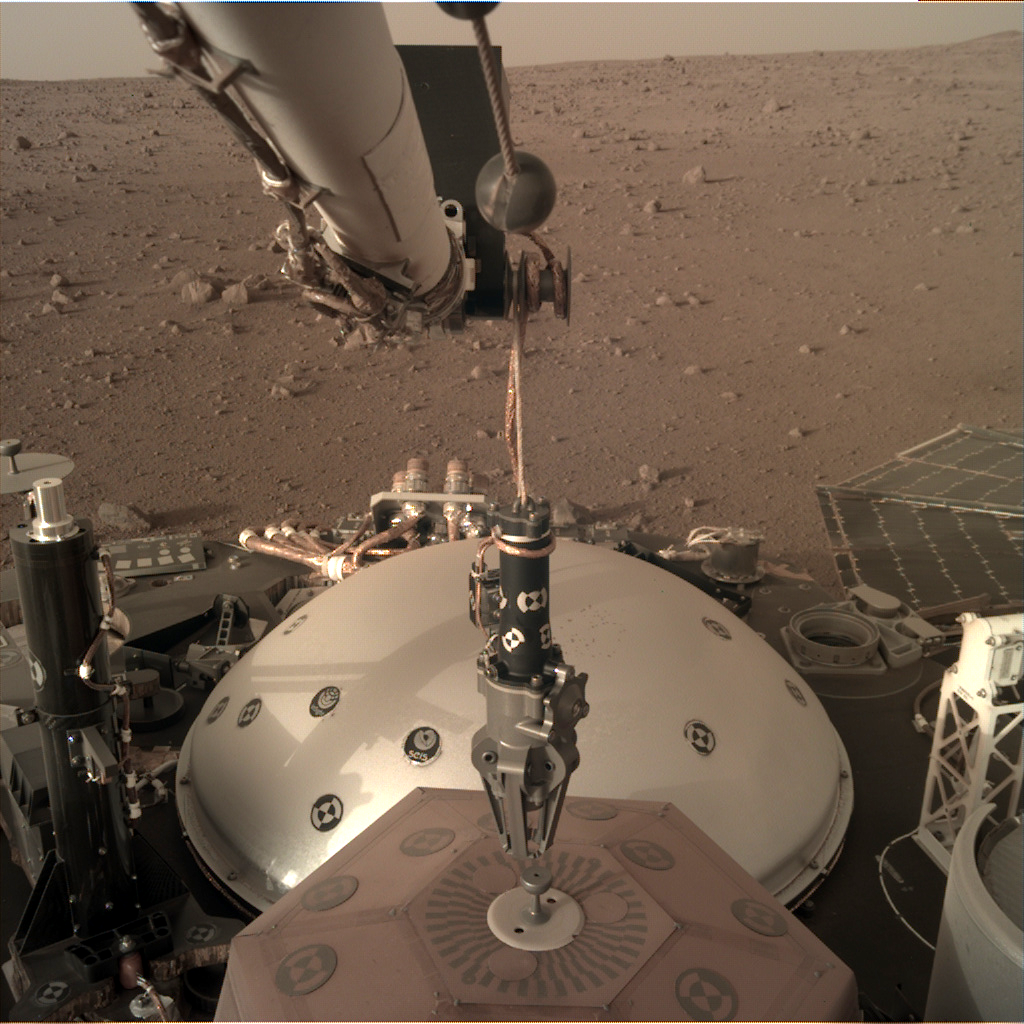
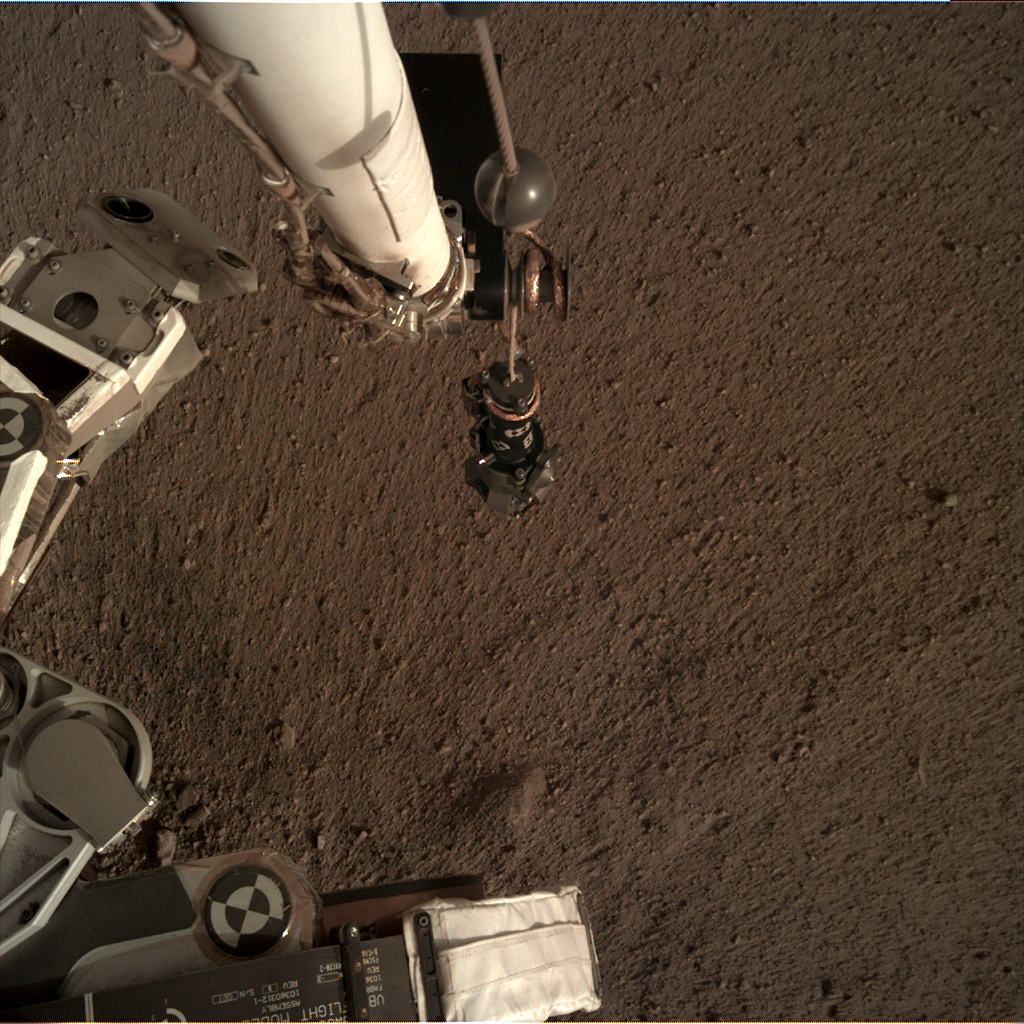
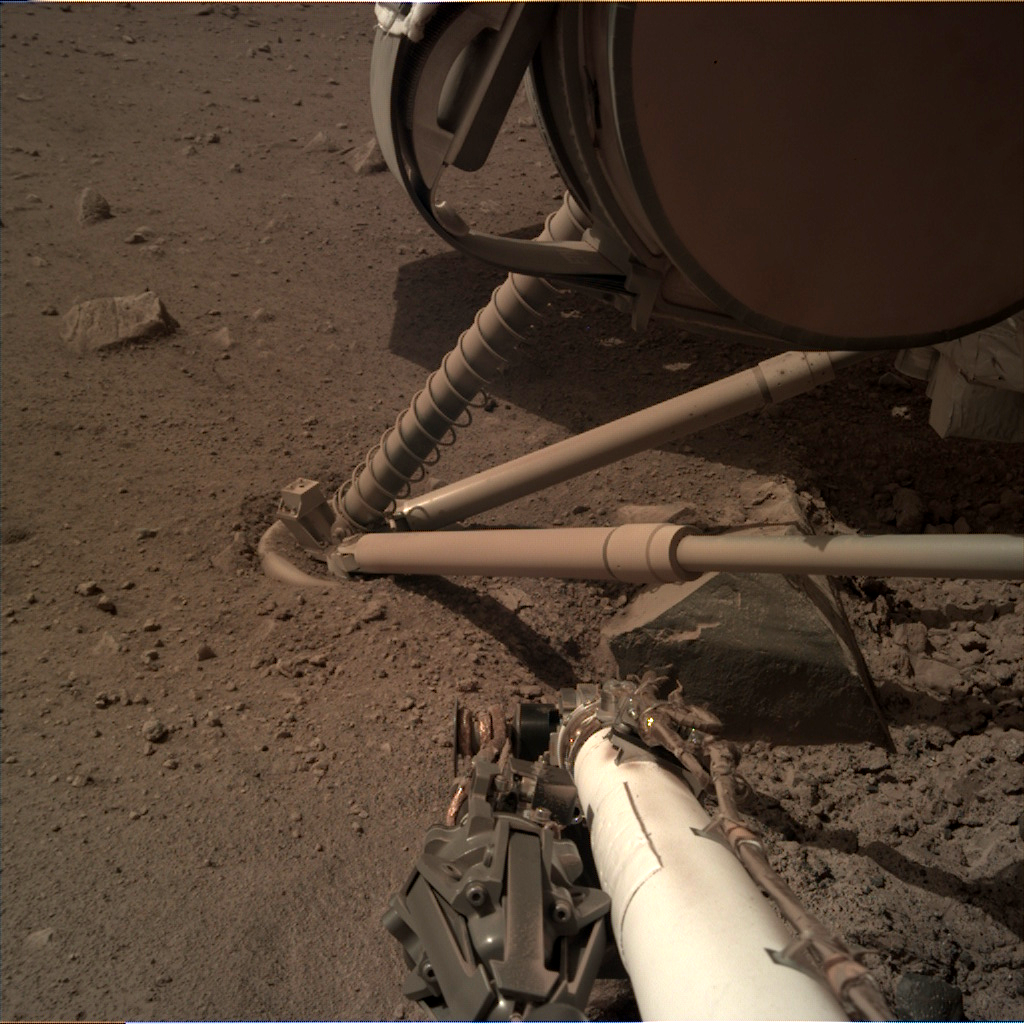
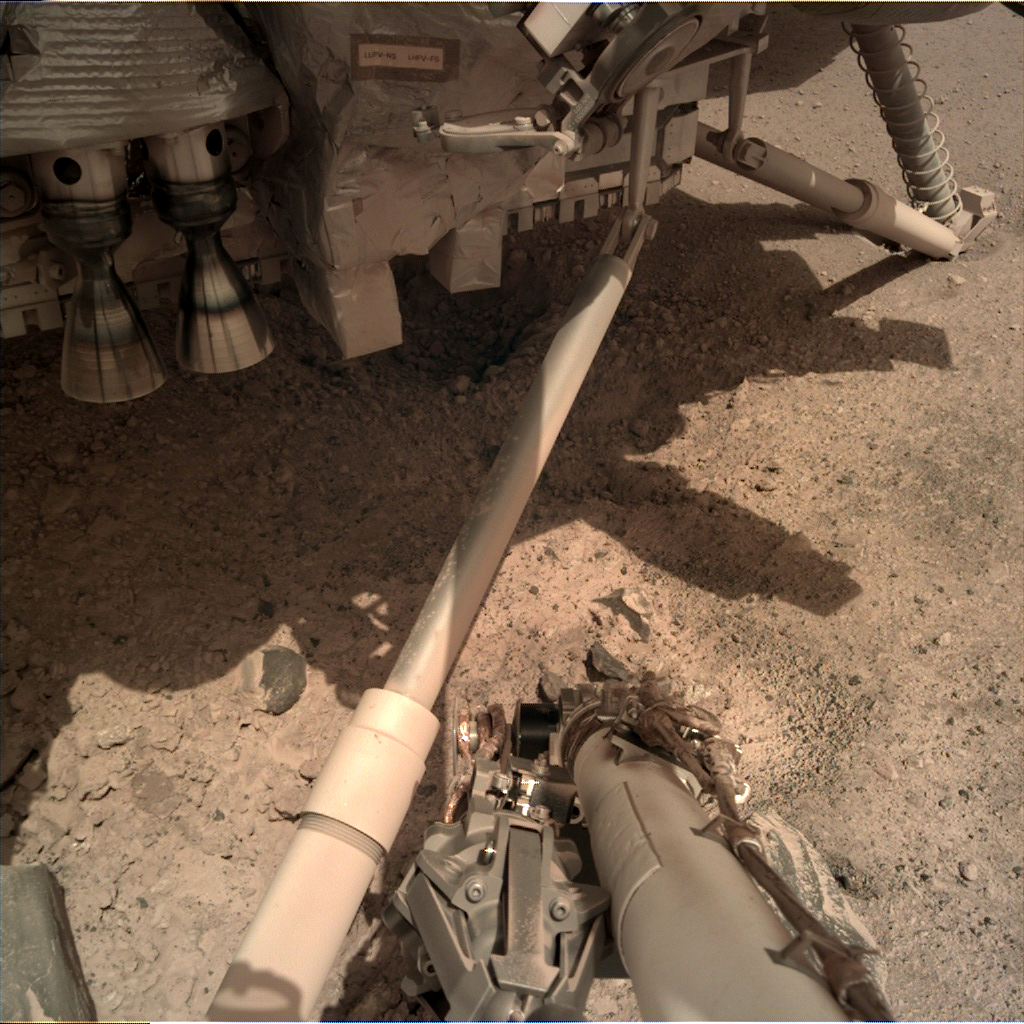
NASA’s InSight Mars lander has produced new Sol 18: Instrument Deployment Camera (IDC) imagery, acquired on December 15, 2018.
Credit: NASA/JPL-Caltech
The robotic arm-mounted, Instrument Deployment Camera (IDC) is surveying the lander surroundings in preparation for deployment of surface science gear.
InSight touched down on Mars at 11:52:59 a.m. PT (2:52:59 p.m. ET) on Nov. 26, 2018.
The lander plunged through the thin Martian atmosphere, heatshield first, and used a parachute to slow down. It fired its retro rockets to slowly descend to the surface of Mars, and land on the smooth plains of Elysium Planitia.
Credit: NASA/JPL-Caltech
Credit: NASA/JPL-Caltech
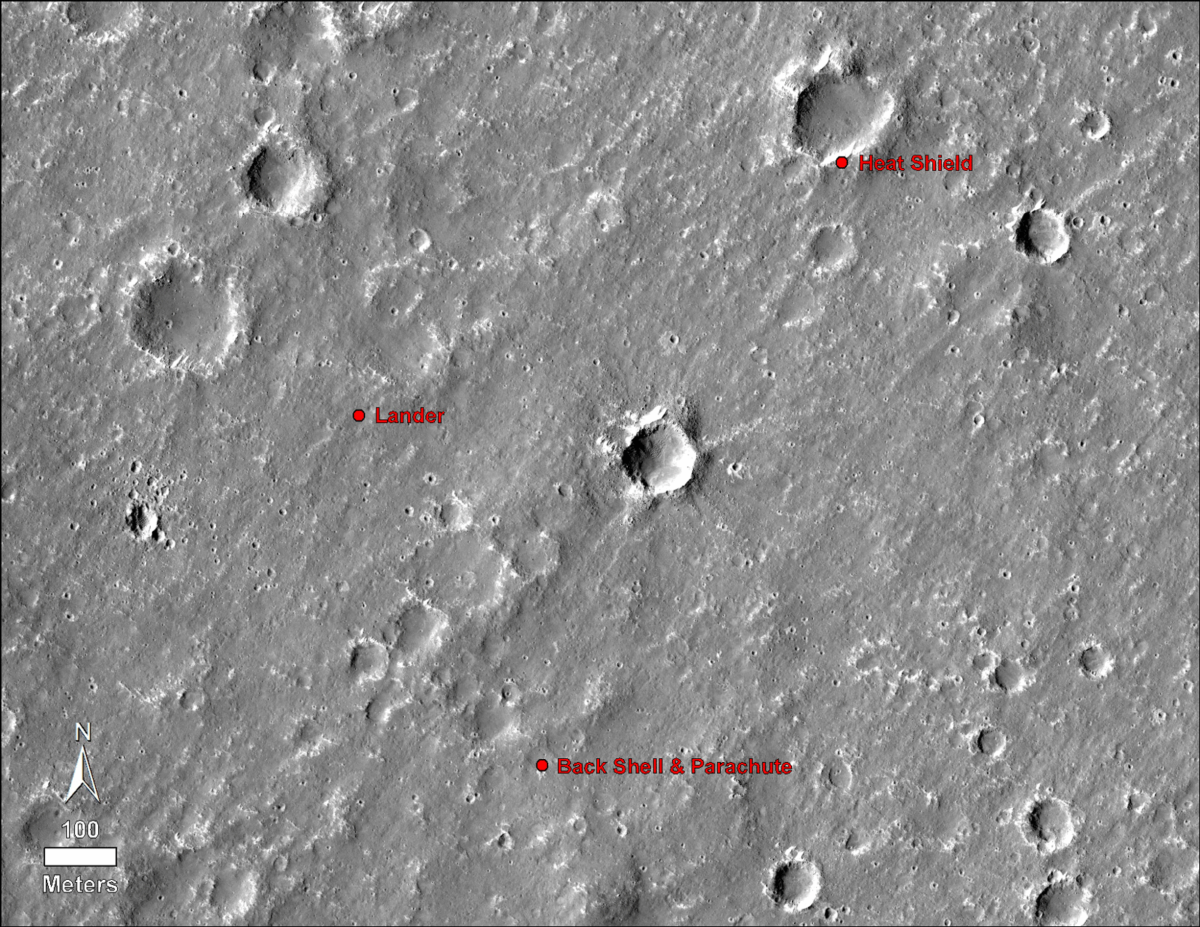
An annotated image of the surface of Mars, taken by the HiRISE camera on NASA’s Mars Reconnaissance Orbiter (MRO) on May 30, 2014. The annotations — added after InSight landed on Nov. 26, 2018 — display the locations of NASA’s InSight lander, its heat shield and parachute.
Credit: NASA/JPL-Caltech/University of Arizona
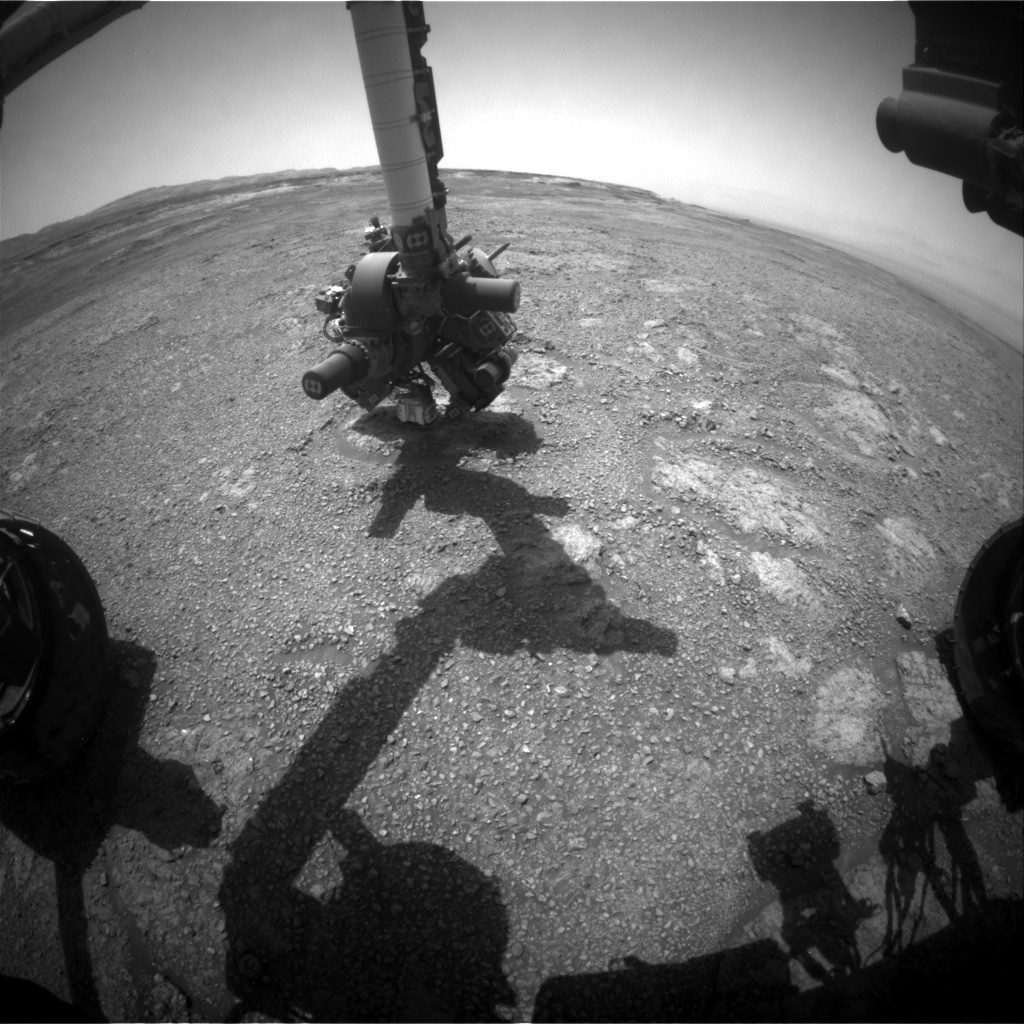
Curiosity Front Hazcam Left A photo taken on Sol 2259, December 14, 2018.
Credit: NASA/JPL-Caltech
NASA’s Curiosity Mars rover is now performing Sol 2259 tasks.
“May the (drill) force be with us!” reports Michelle Minitti, a planetary geologist at Framework in Silver Spring, Maryland
A recent Curiosity rover drive around to the north side of “Rock Hall” in was successful, placing the robot at a lower tilt and with room in the workspace to place all the piles of sample dropped on the surface (purposely!) in the aftermath of drilling.
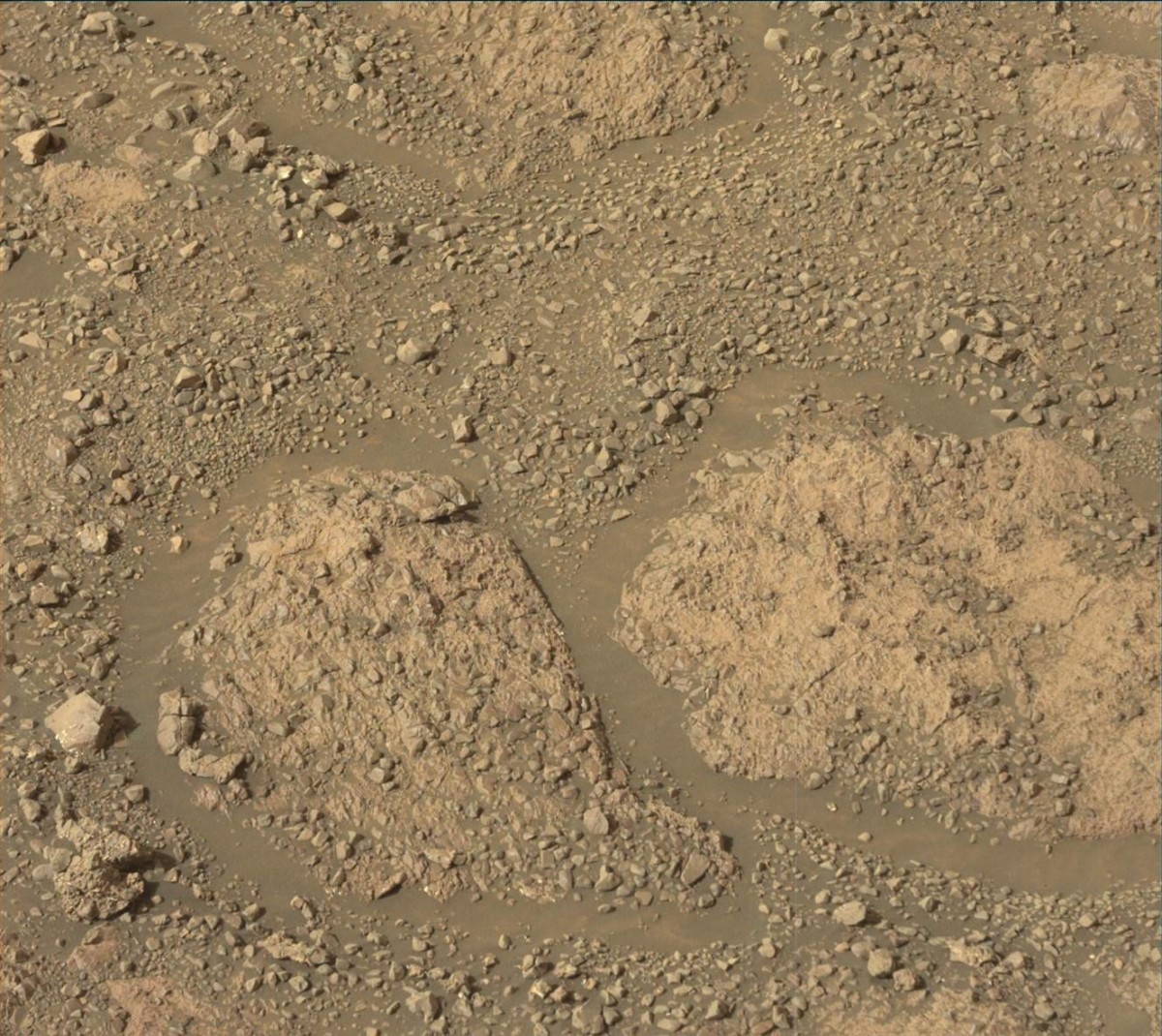
“Rock Hall” (right) and “Cluny Hill” bedrock slabs from Curiosity’s Sol 2256 parking spot. Photo obtained by rover’s Mastcam Left Sol 2256 December 11, 2018.
Credit: NASA/JPL-Caltech/MSSS
Observations of Rock Hall gave scientists confidence that they were at a promising red Jura target for drilling, Minitti adds.
Trio of targets
Curiosity’s Chemistry and Camera (ChemCam) rasters across three different targets on Rock Hall, Minitti points out, indicated the slab had chemistry and spectral character consistent with red Jura.
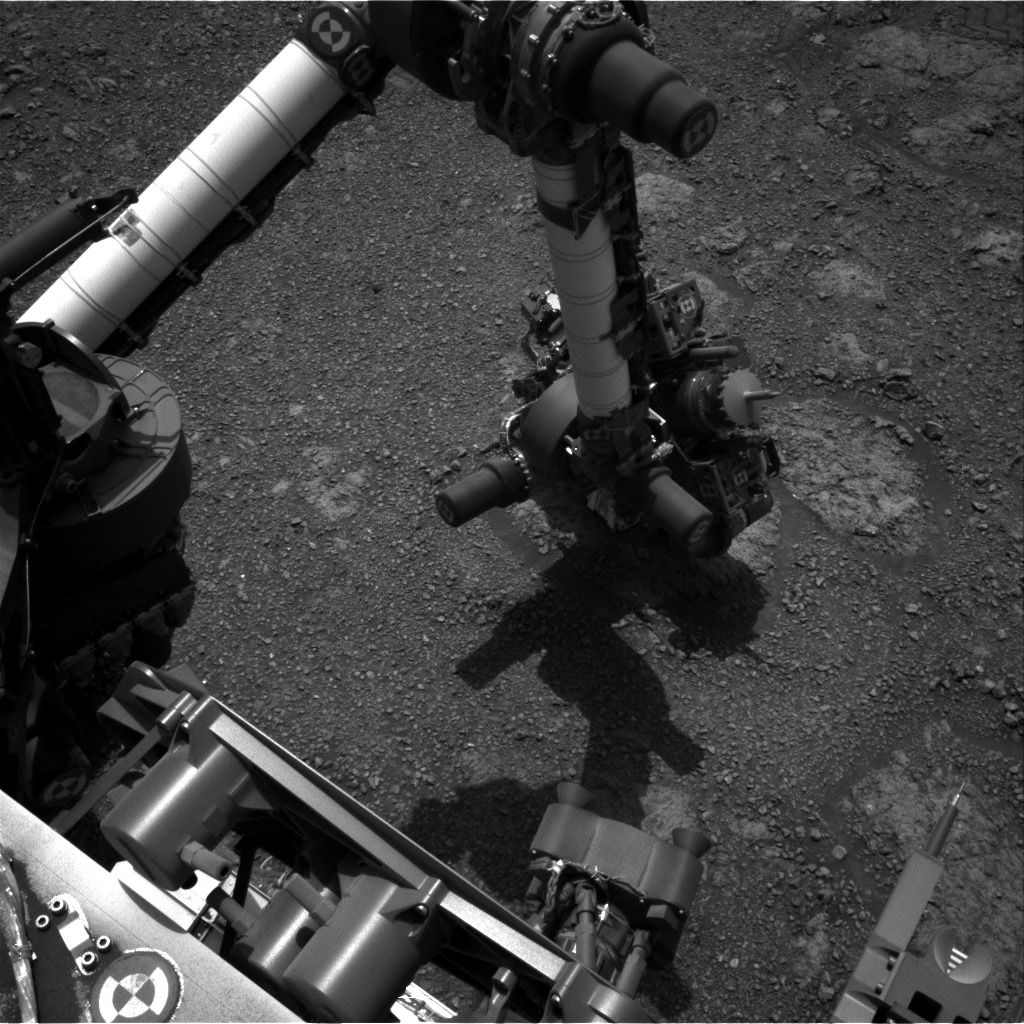
Curiosity Navcam Left A photo acquired on Sol 2259, December 14, 2018.
Credit: NASA/JPL-Caltech
“Mastcam images focused on the slab demonstrated that while it was dusty in flatter areas, and covered with scattered, loose gray and red pebbles in others, the slab had the red, shiny appearance we associate with red Jura,” Minitti explains. “This placed us farther down the path toward drilling red Jura than we had been with any of our previous sites!”
A new plan for the rover focused on characterizing the would-be drill target.
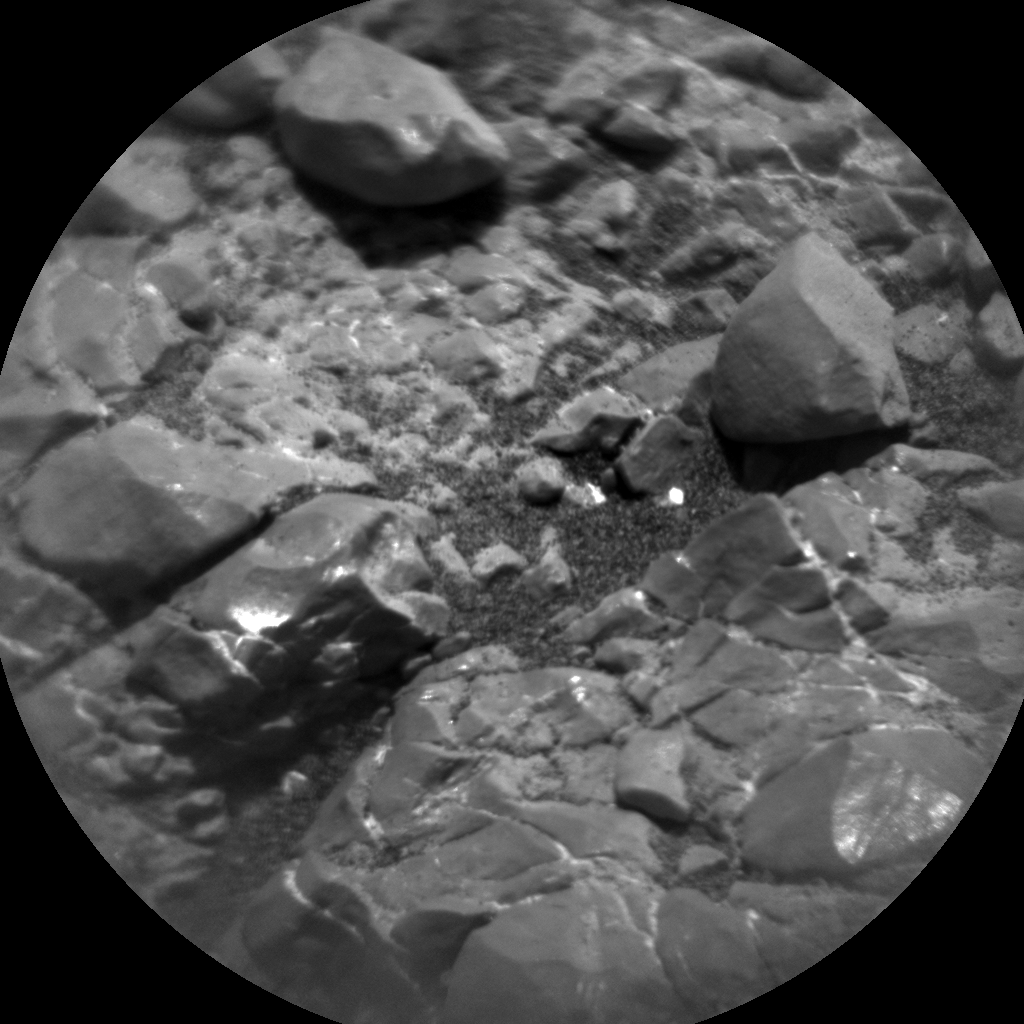
Curiosity ChemCam Remote Micro-Imager photo taken on Sol 2259, December 14, 2018.
Credit: NASA/JPL-Caltech/LANL
Suitable for drilling?
The loose pebbles on the Rock Hall slab precluded use of the Dust Removal Tool. On the schedule was acquisition of ChemCam, Mars Hand Lens Imager (MAHLI) and Alpha Particle X-Ray Spectrometer (APXS) observations of the unbrushed drill target itself.
“We will also push the drill into the target, called a pre-load test, to assess the suitability of the Rock Hall block for drilling. Whether or not we see a mark from the drill in the target after the pre-load test will give us some idea of the hardness of the drill target. The science team will scrutinize the mark from the drill (or lack thereof) carefully as a predictor of the likelihood of drilling success,” Minitti points out. “We also had time to gather data from other targets of interest both on and around the Rock Hall slab.”

Curiosity Mars Hand Lens Imager (MAHLI) product performed on Sol 2259, December 14, 2018. MAHLI is located on the turret at the end of the rover’s robotic arm.
Credit: NASA/JPL-Caltech/MSSS
The plan called for acquiring MAHLI and APXS data on “Corrieshalloch Gorge,” a slightly less dusty (and thus redder) portion of the Rock Hall slab. Also, on tap was shooting “Cluny Hill,” a target on a rubbly, heterogeneous neighbor of Rock Hall, with ChemCam.
Candidate iron meteorite
Mastcam multispectral observations of “Gometra” will give scientists further insight into this candidate iron meteorite target, of which there has been surprisingly many in this part of the “Vera Rubin Ridge.”
The robot will image “Marsco,” a small sand-filled depression that might represent a small impact crater, with Mastcam.
Navcam will scan the skies for clouds and dust devils and Dynamic Albedo of Neutrons (DAN) passive and active observations for H will ping the ground under Curiosity’s new parking spot, Minitti concludes.
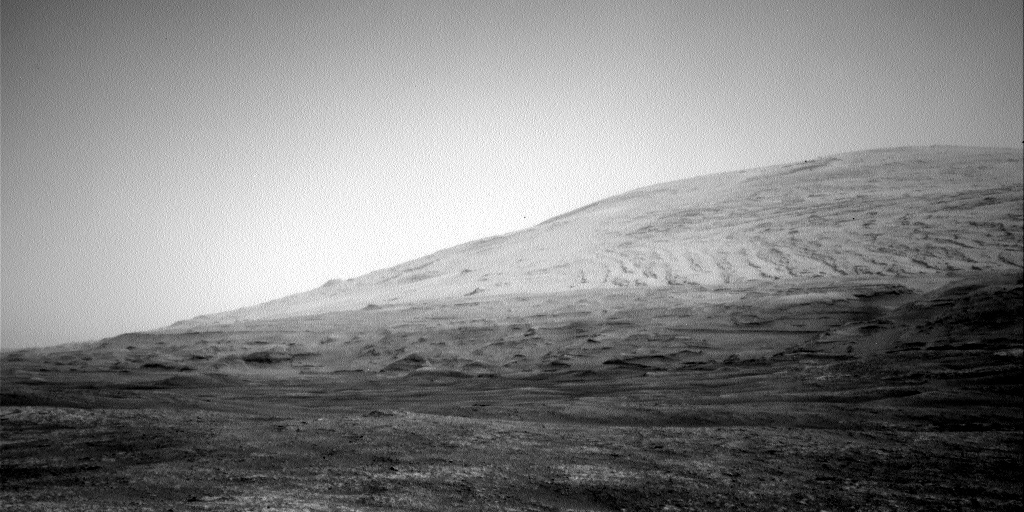
Curiosity Navcam Left A photo acquired on Sol 2259, December 14, 2018.
Credit: NASA/JPL-Caltech
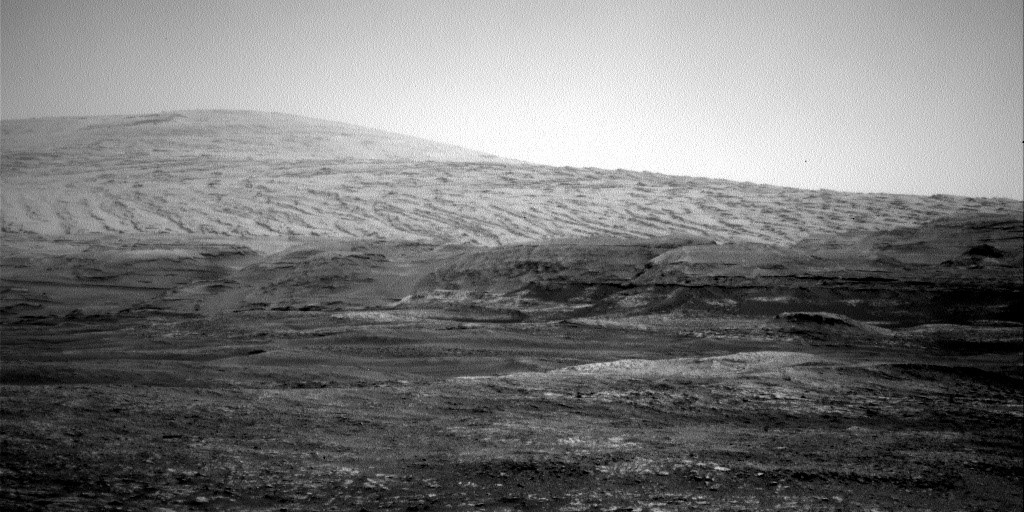
Curiosity Navcam Left A photo acquired on Sol 2259, December 14, 2018.
Credit: NASA/JPL-Caltech

