Archive for the ‘Space News’ Category
 Author:
  January 6th, 2019
Yutu-2 rover moves toward crater inspection.
Credit: CGTV/CNSA/CLEP
China’s Chang’e-4 mission to the farside of the Moon is expected to provide “breakthrough findings.”
As the lander and the recently dispatched Yutu-2 rover survey their lunar surroundings, important discoveries are on tap.
“The farside of the Moon has very unique features, and has never been explored in situ, so Chang’e-4 might bring us breakthrough findings,” said Zou Yongliao, director of the lunar and deep space exploration division of the Chinese Academy of Sciences, as quoted in a recent Xinhua news story.

Soviet Luna 3 image from October 1959.
Credit: NSSDC Image Catalog/Goddard Space Flight Center
Nearside/farside differences

Apollo 8 farside view.
Credit: NASA
The farside of the Moon was first imaged by the former Soviet Union’s Luna 3 probe. As for humans seeing the farside, that occurred during the Apollo 8 mission in December 1968.
The Moon’s nearside and farside are different: the nearside has more and relatively flat lunar mares, while the farside is peppered with impact craters at different sizes.
“There are great differences in terms of substance composition, terrain and landforms, structure and the age of rocks. For instance, about 60 percent of the nearside is covered by mare basalt, but most part of the farside is covered by lunar highland anorthosite. Of the 22 lunar mares, 19 are located on the near side,” said Zou.
Hidden information

Credit: NASA/GSFC/Arizona State University
Chang’e-4 landed within the South Pole-Aitken (SPA) Basin, the largest and deepest basin in the solar system. The touchdown was in Von Kármán crater, a 110 miles (186-kilometers) wide region.
“With the Chang’e-4 probe, we can detect information hidden deeply inside the Moon. I believe there will be surprising scientific findings,” Zou said. “The rocks on the farside are more ancient. The analysis of their substance composition might help us better understand the evolution of the moon,” he told Xinhua.
The Chang’e-4 lander/rover are geared with instruments developed by scientists from Sweden, Germany and China to study the lunar environment, cosmic radiation and the interaction between solar wind and the lunar surface.

Advanced Small Analyzer for Neutrals (ASAN) device.
Credit: Swedish Institute of Space Physics
Water on the Moon
The Swedish Institute of Space Physics (IRF) in Kiruna developed the 1.4 pound (650 grams) Advanced Small Analyzer for Neutrals (ASAN) device. The aim of the instrument is to study how the solar wind interacts with the lunar surface.
ASAN was built in collaboration with the Chinese National Space Science Center (NSSC). It is the first time an energetic neutral atom sensor is deployed on the lunar surface. From a vantage point of only a few decimeters above the regolith surface, ASAN will measure energy spectra of energetic neutral atoms originating from reflected solar wind ions under different solar wind illumination conditions.

On a roll. China’s Yutu-2 rover on the Moon’s farside.
Credit: CNSA/CLEP
ASAN is mounted on the Yutu-2 rover making it possible to perform measurements at different locations. The measurements could shed light on the processes responsible for the formation of water on the Moon.
Lunar night
The next step for ASAN is the instrument commissioning.
“The first science data are expected before February, 11th”, says Martin Wieser, researcher at the Swedish Institute of Space Physics and principal investigator of ASAN.
“The lunar night is especially difficult, but both the rover and our instrument are designed to withstand these extreme conditions. ASAN is mounted inside a thermally insulated payload compartment that is open during daytime and closed during night time to cope with the low temperatures. We keep our fingers crossed that all systems will work as designed”, says Wieser.

Pre-launch prepping of Yutu-2 rover.
Credit: China Central Television (CCTV)/China National Space Administration (CNSA)/Screengrab/Inside Outer Space
Smarter, stronger
Yutu-2 needs solar power to operate. After sunset, this power source is not available and the temperatures will drop significantly during the two-week-long lunar night.
Xinhua also notes that, although the rover of the Chang’e-4 probe looks similar to its predecessor Yutu of the Chang’e-3 probe, Chinese space engineers have made Yutu-2 lighter, smarter, stronger and more reliable.
Scientists hope Yutu-2 will travel farther that Yutu-1 and send more images of the farside scenery.
Weighing nearly 300 pounds (135-kilograms) Yutu-2 is 4.4 pounds (2 kilograms) lighter than its predecessor. At that weight-class it is the lightest rover ever sent to the Moon, said Jia Yang, deputy chief designer of the Chang’e-4 probe, from the China Academy of Space Technology (CAST).
The main reason for the weight reduction is the removal of a robotic arm and its replacement with the Swedish ASAN instrument, said Jia.

The first close-up photo of the Moon’s farside, taken by a monitoring camera on the Chang’e-4 lander showed the direction the rover would drive on to the lunar surface. Top of image shows the rails the rover will use to access the surface.
Credit: CNSA/CLEP
Design life
Two panoramic cameras on the wheeled robot can take high-resolution, color images.
The rover has a design life of three months and can cross rocks as high as 7.9 inches (20 centimeters).
Yutu-2 will automatically enter a dormant state based on the level of sunlight, and it can also enter the work state on its own.
“We made this adjustment because communication between ground control and the Chang’e-4 probe on the farside of the Moon is not as convenient as communication with Chang’e-3 on the nearside,” said Zhang.
Preventing short circuits
China’s first lunar rover Yutu-1 suffered a mechanical fault after driving about 375 feet (114 meters) five years ago.
“How to solve that problem so that it won’t happen again was the main challenge in developing the new rover,” said Zhang Yuhua, another deputy chief designer of the probe.
“We have improved the layout of the wires on the new rover and taken measures to prevent short circuits. We also made a fault isolation design so that if a problem occurs, it will not affect the whole system,” said Sun Zezhou, chief designer of the Chang’e-4 probe. “We are confident our new rover can run farther on the Moon and obtain more scientific results,” Sun said.

Artwork depicts Chang’e-4 touchdown on Moon’s farside.
Credit: CCTV/Screengrab/Inside Outer Space
What’s next?
According to Zhang Yuhua, deputy chief commander and designer for the Chang’e-4 lunar mission in a story posted by China Global Television Network (CGTN):
“What’s next for the rover is to take a picture of the front side of the lander, after that, it will go to its planned area and start a series of scientific exploration projects in the Von Kármán crater,” said Zhang.

Leonard David is author of Moon Rush: The New Space Race to be published by National Geographic in May 2019.
To pre-order Moon Rush: The New Space Race, go to:
https://shop.nationalgeographic.com/products/moon-rush
https://www.barnesandnoble.com/w/moon-rush-leonard-david/1129287265?ean=9781426220050
https://www.amazon.com/Moon-Rush-New-Space-Race/dp/1426220057
 Posted in

Curiosity Front Hazcam Left A image taken on Sol 2280, January 4, 2019.
Credit: NASA/JPL-Caltech
Now in Sol 2081, a set of holiday science duties were completed by NASA’s Curiosity Mars rover, reports Claire Newman, an Atmospheric Scientist at Aeolis Research in Pasadena, California.
The holiday planning completed successfully and included 10 sols of five-hour-long morning meteorological observations by the Rover Environmental Monitoring Station (REMS), Newman adds, during the period when more complex activities were precluded.
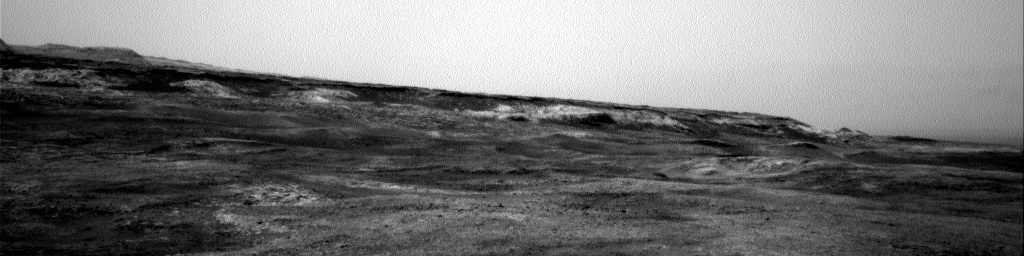
Curiosity Navcam Left A photo acquired on Sol 2280, January 4, 2019.
Credit: NASA/JPL-Caltech
Catch up tasks
“The main goals for the Sol 2279-2280 plan were to catch up on our other regular atmospheric monitoring activities, which were largely on hold over the holidays, and to prepare for drop-off of the ‘Rock Hall’ red ‘Jura’ drill sample into SAM for analysis,” Newman explains. SAM stands for the Sample Analysis at Mars Instrument Suite.
A dust devil 360° image search and 30-minute movie pointing to the south-west were added in the late morning on sol 2280, with REMS covering the same time period.
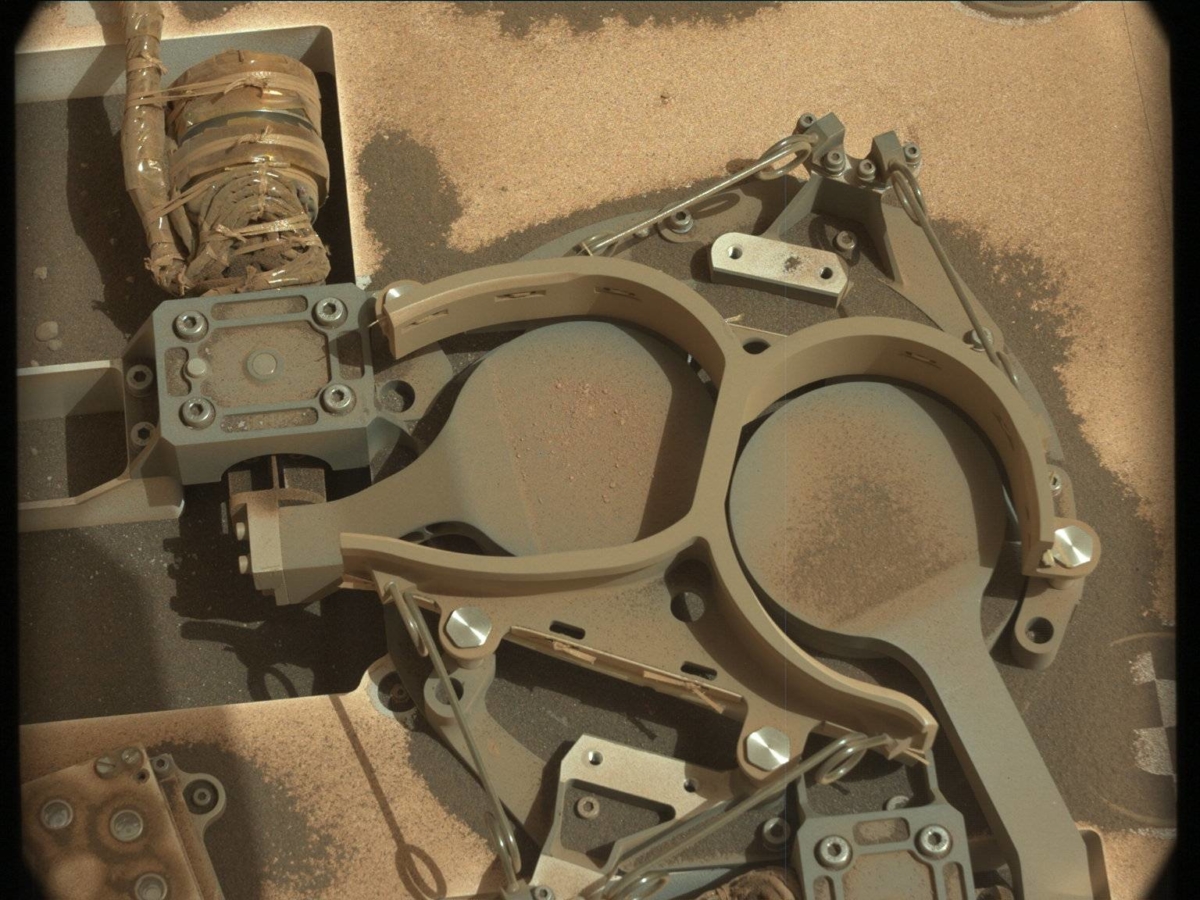
Curiosity Mastcam Left image taken on Sol 2279, January 3, 2019.
Credit: NASA/JPL-Caltech/MSSS
“This allows us to see if any of the dusty vortices found by imaging coincide with vortex-like (sharp, short-lived) pressure drops in the REMS pressure data,” Newman notes. In addition, the atmospheric column opacity, as well as the amount of dust between Curiosity and the crater rim, were measured in the morning and afternoon, with morning and afternoon ‘cloud search’ movies added too, plus regular Radiation Assessment Detector (RAD) and Dynamic Albedo of Neutrons (DAN) passive measurements.
Wind strength
Newman reports that, to look for surface changes indicating wind strength and direction over the holiday break, controllers of the robot also added Mastcam imaging of targets “Luskentyre” and “Fishertown” at roughly 15:30 on Sol 2280, to match imaging of them at the same time (and hence the same lighting conditions, making it easier to spot changes) on Sols 2266 and 2276.
The three images of each target will be analyzed to look for changes in position of sand grains or ripple crests (such as those seen in the image of “Luskentyre” from sol 2276) over the intervening sols.
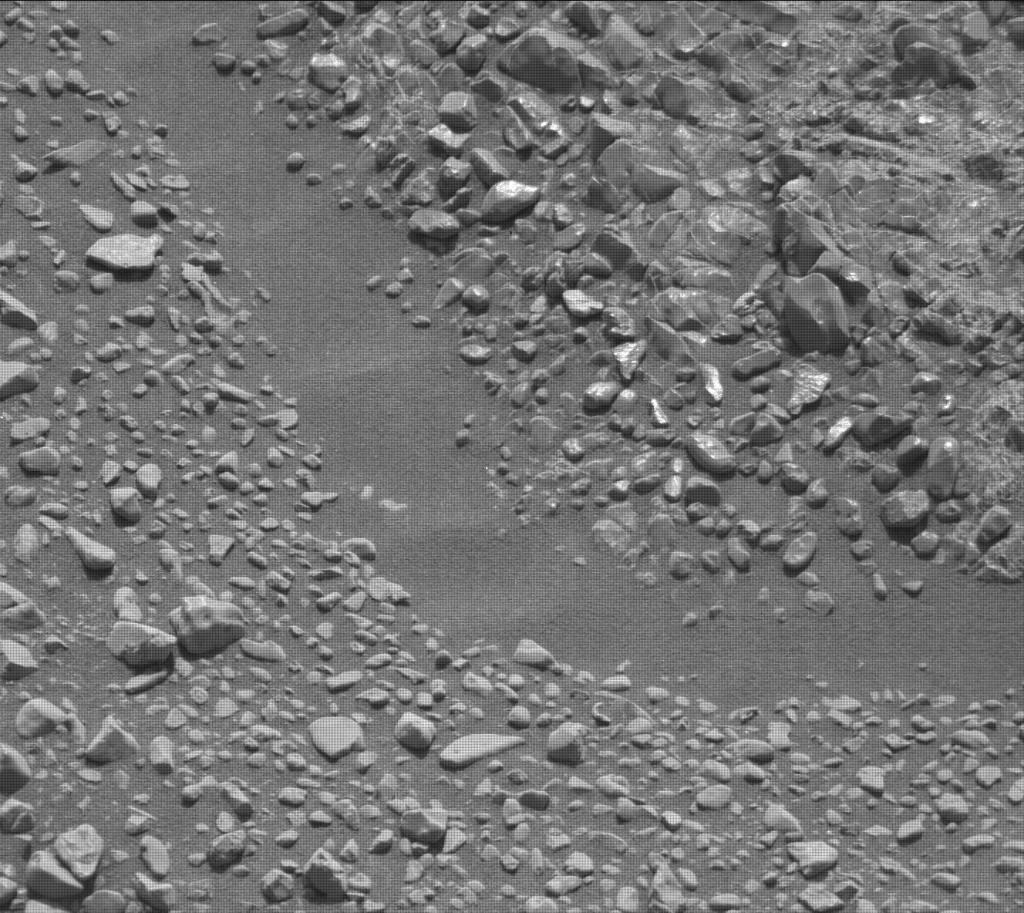
Curiosity image of “Luskentyre” taken by Mastcam Right Sol 2276 December 31, 2018
Credit: NASA/JPL-Caltech/MSSS
Drill hole
SAM pre-conditioning during this plan would normally have been joined by a Chemistry and Camera (ChemCam) passive measurement of the drill hole, but as this is a big measurement the ChemCam team recommended re-imaging the target first, in case the rover had shifted a little over the long break.
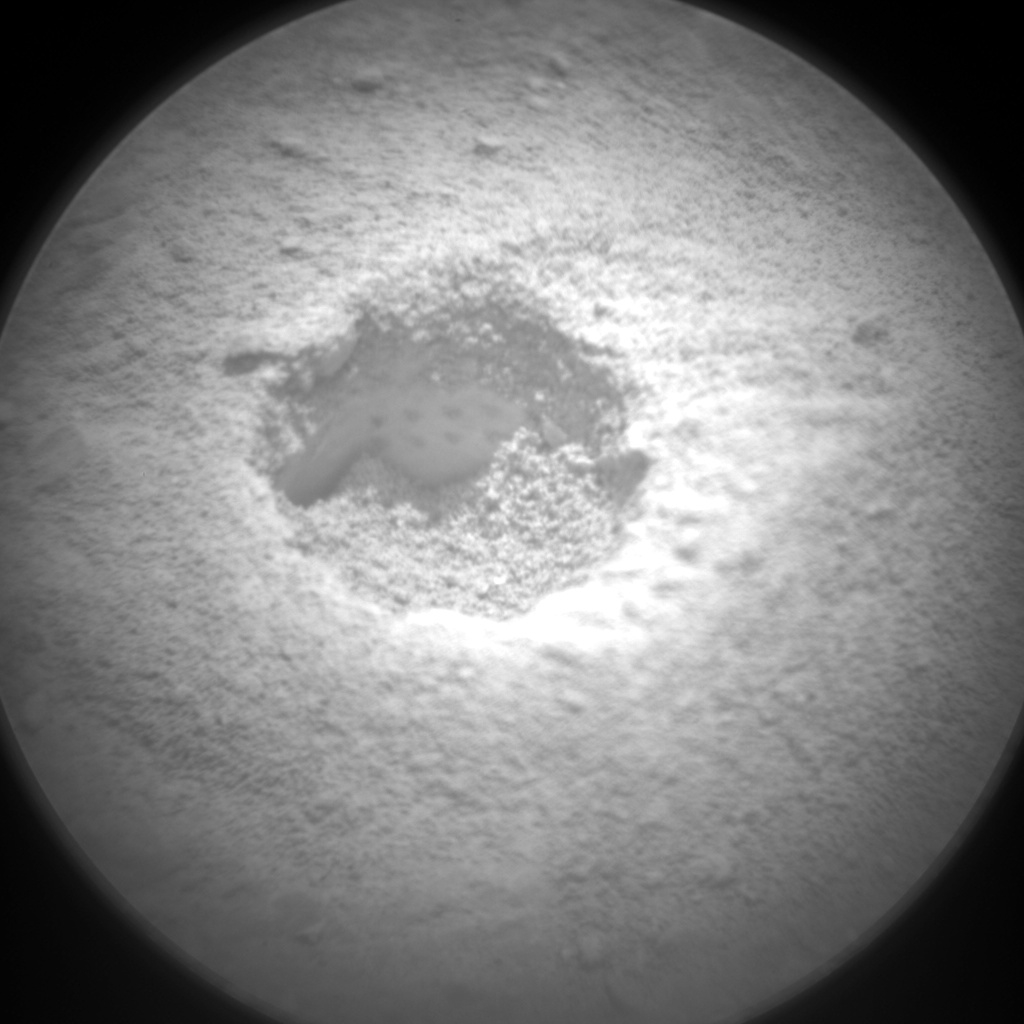
Curiosity ChemCam Remote Micro-Imager photo acquired on Sol 2279, January 3, 2019.
Credit: NASA/JPL-Caltech/LANL
So a Remote Micro-Imager photo of the Rock Hall target was added in this plan, with the full ChemCam measurement postponed until the imaging has been assessed.
In addition, to build up statistics on local bedrock variability, Newman concludes, scientists added ChemCam passive measurement of targets “Port Askaig,” “Portnockie” and “Bothwell.”
China’s lunar rover is driving smoothly on the Moon’s farside.
The state-run Xinhua news service explains that the China National Space Administration (CNSA) said late Friday that both the lander and rover are currently gathering data.
On a roll. China’s Yutu-2 rover on the Moon’s farside.
Credit: CNSA/CLEP

Credit: CNSA/CLEP
At 17:00 local time in Beijing, the three 16-foot (5-meter) antennas of the low-frequency radio spectrometer on the lander have fully spread out, said the CNSA in a statement.
Additionally, Germany’s lunar neutron and radiation detector was turned on for testing. The ground control has been receiving geographic and geomorphic images of the Moon’s farside.
Route planning
The recently unleashed Yutu-2 rover, dispatched from the Chang-e’4 lander, is equipped with a data transmission link to relay with the Queqiao relay satellite, and has completed environment perception and route planning.
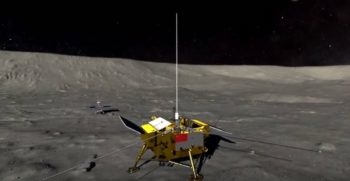
Three 16-foot (5-meter) antennas of the low-frequency radio spectrometer on the lander have fully spread out.
Credit: CCTV/Screengrab/Inside Outer Space
Driving on the lunar surface, the controlled robot is on schedule and arrived at preset location A to carry out observations. The radar and panorama camera on the rover have been operating smoothly and other devices will begin operation according to schedule.
Napping mode
According to the CNSA, in the following days, Yutu-2 and the lander will face the challenge of extremely high temperatures in the lunar day. Yutu-2 will enter a “napping” mode at an appropriate time and is expected to resume moving next Thursday.
Space engineer Ron Creel notes that it should be about Sunday, January 6, 2019 at 3:14 p.m. Central Time for Lunar Noon at the Chang’E-4 landing site of 177.6 degrees East longitude on the Moon.
“This will be the approximate time for maximum solar heating and maximum Moon surface temperature at that site,” Creel advised Inside Outer Space. “Discussions with Russian Lunokhod engineers indicated that they also had to stop vehicle movement (nap) near noon conditions on the Moon – primarily to avoid visibility “washout” from reflected sun rays,” he explains.
Xinhua explains that the Moon rotates on its axis once every 28 days, so every part of the Moon’s surface has a day/night pattern. Subsequently, temperatures on the Moon vary between extremes of some 200 Celsius degrees and minus 200 degrees.
[Note: Mark Robinson of ASU adds that the max temperature is about 120°C, not 200°C, citing the Lunar Sourcebook, edited by Grant H. Heiken, David T. Vaniman, Bevan M. French©1991, Cambridge University Press at:
https://www.lpi.usra.edu/publications/books/lunar_sourcebook/
see pages 34/35]
Leonard David is author of Moon Rush: The New Space Race to be published by National Geographic in May 2019.
To pre-order Moon Rush: The New Space Race, go to:
https://shop.nationalgeographic.com/products/moon-rush
https://www.barnesandnoble.com/w/moon-rush-leonard-david/1129287265?ean=9781426220050
https://www.amazon.com/Moon-Rush-New-Space-Race/dp/1426220057
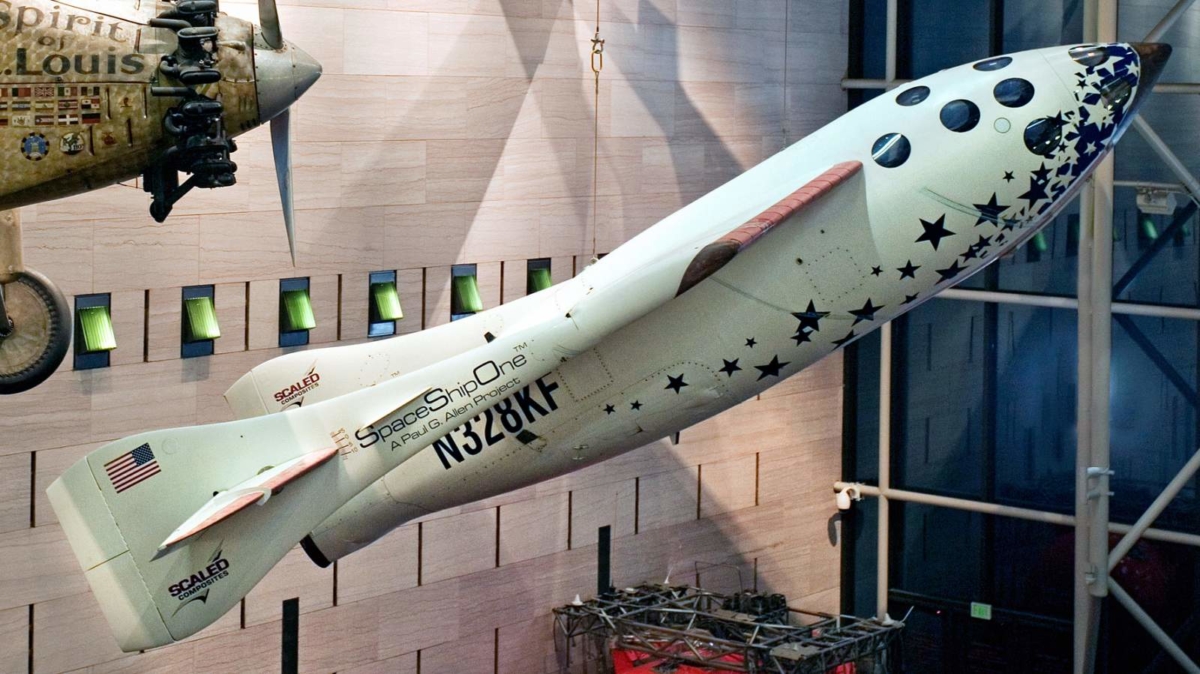
Credit: National Air and Space Museum
NASA’s New Horizons flyby of Ultima Thule (a Kuiper Belt Object beyond Pluto) is an outbound spacecraft carrying a number of “foreign” objects – from Planet Earth.

Section of seat from SpaceShipOne – the first private craft to enter space.
Credit: Burt Rutan/Scaled Composites
One item onboard is a piece of a past milestone in itself: A section of seat from SpaceShipOne – the first private craft to enter space.
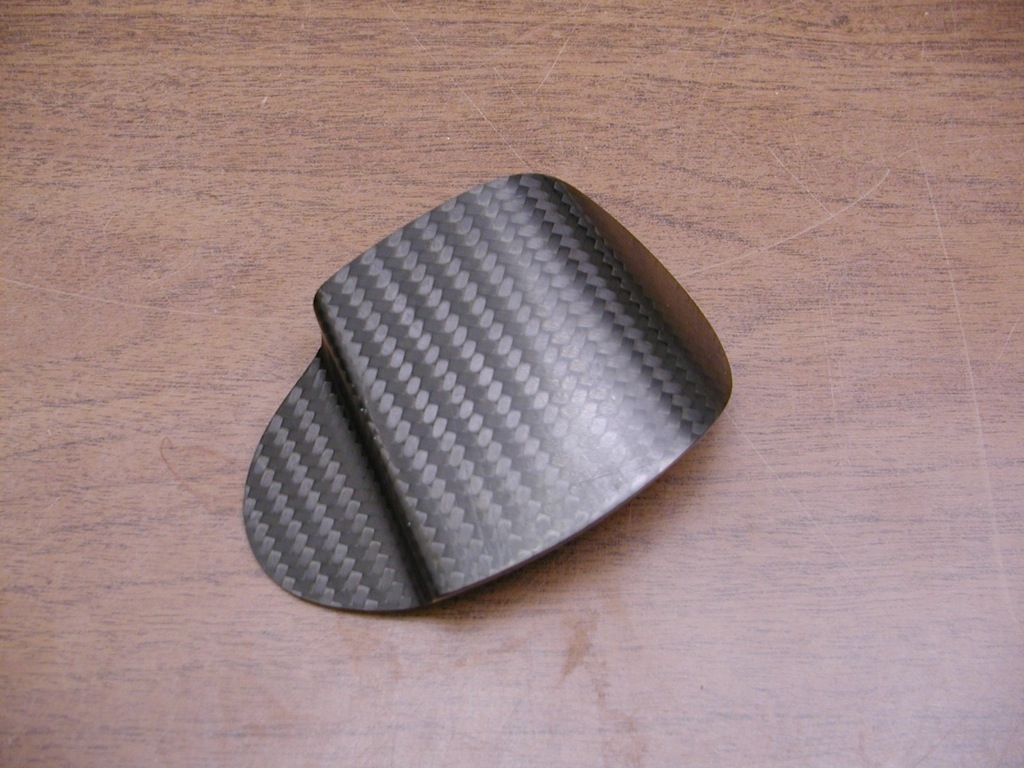
Section of seat from SpaceShipOne – the first private craft to enter space.
Credit: Burt Rutan/Scaled Composites
SpaceShipOne was developed by Mojave Aerospace Ventures (a joint venture between Paul Allen and Burt Rutan’s Scaled Composites in Mojave, California.
The flyby of the KBO object “makes the Scaled team proud to know Paul Allen’s ship is still making history 15 years after it flew above 100 Kilometers,” Rutan told Inside Outer Space. “Lookin up….way up,” he adds.
Other items
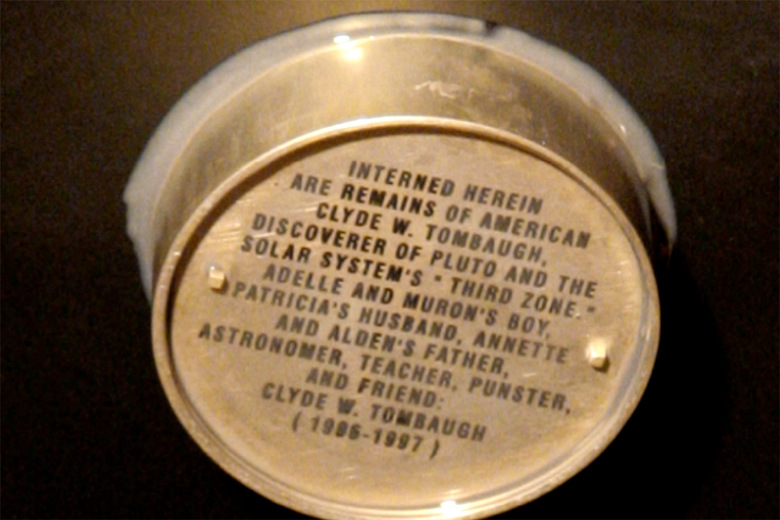
Carried onboard New Horizons are ashes of American astronomer Clyde Tombaugh, the discoverer of Pluto.
Credit: NASA/APL
New Horizons also totes a tiny amount of the ashes of American astronomer Clyde Tombaugh, the discoverer of Pluto. Also onboard CD-ROMs, the 1991 U.S. stamp proclaiming, “Pluto: Not Yet Explored,” Florida (launch state) and Maryland (New Horizons built there) state quarters and an American flag.

Chang’e-4 release of Yutu-2 rover shown in artwork.
Credit: China Central Television (CCTV)/China National Space Administration (CNSA)/Screengrab/Inside Outer Space
China’s Chang’e-4 mission to the farside of the Moon has garnered a number of new China Central Television (CCTV) interviews, revealing details of the pioneering effort and those involved in the undertaking.

Safe on the farside, Chang’e 4 set down somewhere in this NASA Lunar Reconnaissance Orbiter LROC image obtained July 17, 2010. The lines connect craters seen in the Chang’e 4 descent image (CNSA/CLEP) with the same craters seen in the LROC image.
Credit: NASA/GSFC/Arizona State University
China’s Yutu-2 (Jade Rabbit-2) lunar rover, which on January 3 (Beijing time) made a historic touchdown on the farside of the Moon together with the Chang’e-4 probe, has a strong all-terrain mobility to safely trundle across the treacherous lunar surface, said its design director.

Image of Yutu-2 on the Moon’s farside during deployment from lander.
Credit: China Central Television (CCTV)/China National Space Administration (CNSA)/Screengrab/Inside Outer Space
Six-wheel drive
The rover’s cross-country ability is supported by its six-wheel drive system and four-wheel-steering system, said Shen Zhenrong, design director of Rover of Chang’e-4 Probe Project, fifth institute of China Aerospace Science and Technology Corporation (CASC).
“The rover has all of its six wheels drivable, and at its four trundles there is a steering wheel, which allows the rover to make a pivot turn, thus comes the six-wheel drive and four-wheel steering systems,” he said.
In addition to the special drive system, the rover also features light body weight and a unique wide mesh wheel design that not only enhances its payload capacity but also avoids lunar dust accumulation on the wheels.
Pre-launch prepping of Yutu-2 rover.
Credit: China Central Television (CCTV)/China National Space Administration (CNSA)/Screengrab/Inside Outer Space
Terramechanics
“We did some terramechanics tests to come up with this elastic mesh wheel design. The width of the wheels enhances the rover’s payload capacity to some extent, and the mesh sifts through the fine dust on the Moon, which lightens the burden on the wheels,” said Shen.
With such a design, the rover is able to climb a slope of up to 20 degrees, said Shen.
Originally a backup plan for the rover of Chang’e-3 probe, the Yutu-2 is actually more than just a simple replica of its predecessor the Yutu lunar rover, according to Shen.

Credit: China Central Television (CCTV)/China National Space Administration (CNSA)/Screengrab/Inside Outer Space
Upgraded version
The Yutu-2 rover is an upgraded version of its predecessor in terms of software and hardware.
“For different purposes of scientific exploration, we removed the X-ray detector and installed at its head a neutral atom detector, which is jointly developed by China and Sweden. Other loaded devices such as the infrared spectrograph, the built-in panorama camera, and the lunar exploration radar, remain unchanged in comparison with that of (the rover of) the Chang’e-3,” said Shen.
On a roll. China’s Yutu-2 rover on the Moon’s farside.
Credit: CNSA/CLEP
Another subtle change on the Yutu-2 is better cable enclosure, which leaves almost no single cable unprotected on the body.
“Because on the lunar surface, the cables could scratch on the rock’s edges and trigger short circuit. So we adopted a new method to enclose the Chang’e-4’s cables and then tested the enclosure with some stability, reliability and duration tests,” said Shen.
The Chang’e-4 lander/rover spacecraft are now expected to study the mineral composition and shallow lunar surface structure of the Moon’s farside, as well as perform low-frequency radio astronomical observation.
Yutu-2 rover moves toward crater inspection.
Credit: CGTN/CNSA/CLEP
Chang’e-4 touched down at a preselected landing area at 177.6 degrees east longitude and 45.5 degrees south latitude on the farside of the Moon at 10:26 (Beijing Time), the China National Space Administration announced.
The process was recorded by the camera on the lander and the images were sent back to Earth via the relay satellite “Queqiao” (Magpie Bridge), which operates in the halo orbit around the second Lagrangian (L2) point of the Earth-moon system, about 65,000 kilometers from the Moon, where it can see both Earth and the moon’s far side.

Relay satellite for handling farside operations.
Credit: CNSA’s Lunar Exploration and Space Engineering Center (CNSA-LESEC)
Stern challenges
Engineers and scientists overcame various obstacles before succeeding in developing the Chang’e-4 probe and Yutu-2 rover.
One of the stern challenges is taking on the day/night changes in temperature on the Moon’s surface.
“We have adopted a new temperature control technology to keep an ideal temperature inside the probe on the Moon, day and night. It may sound quite easy but we encountered many obstacles, including the two-phase fluid system. When conducting the experiment on ground, we found that the heat-transfer capability of the system was not what as we expected,” said Sun Zezhou, chief designer of the Chang’e-4 probe, China Academy of Space Technology.
He explained that it was because they couldn’t perfectly simulate the gravity of the Moon on the Earth. After tons of work and by introducing innovative measures, the team finally managed to pull it off and build a reliable heat control system.

Chang’e-4 carrying out low-frequency radio astronomical studies.
Credit: CCTV/Screengrab/Inside Outer Space
The sustainability and reliability of the rover in negotiating the changing terrains is crucial.
“So we were sure we could accomplish the designated targets, that is, the rover must move at least 10 kilometers on different terrains. Just as what I mentioned, we made the lifespan of the rover at least four times that of the original under the simulated high and low temperatures and the topography of the moon surface,” said Zhang Xiao, executive director of Chang’e-4 probe, China Academy of Space Technology.
Visualization program
Chinese engineers have developed a system to visualize the abstract data of Chang’e-4’ lunar exploration.
“With this visualization program, we created a lunar rover in the virtual world and established a coordinate system of moonwalk. We can observe where the rover walks to with the real ratio. Also our rover, the conditions of the lander can be displayed to our scientists in a visualized way,” said Zhang Kan, engineer of software office of the Beijing Aerospace Control Center (BACC).
The first close-up photo of the Moon’s farside, taken by a monitoring camera on the Chang’e-4 lander showed the direction the rover would drive on to the lunar surface. Top of image shows the rails the rover will use to access the surface.
Credit: CNSA/CLEP
The exploration process is displayed in the form of animation, but without a predesigned script. All the development is decided by the real time data sent back from the Chang’e-4 probe.
Lunar tour
“After we received the data, we start all parts of our three-dimensional visualized program, like the angle of rotation and lunar tour. Our real time reflection of the rover’s gesture and position is of great importance,” said Zhang.
The system can also help scientists and engineers tell whether the probe is in good condition and detect any mistake it may have during lunar exploration, according to Zhang.
“If any mistake occurs, the system can reflect on our rover and lander in real time. If any part is out of order, or the data is wrong, the system can reflect in real time. Therefore the scientists and engineers can notice immediately and analyze and track down which part went wrong,” said Zhang.

Credit: China Central Television (CCTV)/China National Space Administration (CNSA)/Screengrab/Inside Outer Space
One small roll
Chang’e-4’s rover, named “Yutu-2” (Jade Rabbit-2), rolled onto the floor of the moon’s Von Karman Crater in the South Pole-Aitken Basin at 22:22 Beijing Time (14:22 GMT) about 12 hours after the probe’s soft-landing on the moon’s uncharted side, which is never visible from Earth.
“The separation process of Chang’e-4’s rover was smooth and perfect. The rover rolled only a small step onto the moon, but it represented a huge stride for the Chinese nation. It is a crucial step for us in exploring space and the universe,” said Wu Weiren, the chief designer of China’s lunar exploration program.
Radio clean environment
The probe will conduct low-frequency radio astronomical observations, survey the terrain and landforms, detect mineral compositions and shallow lunar surface structures and measure the neutron radiation and neutral atoms to study the environment on the far side of the moon, according to the China National Space Administration.
“The probe will detect various physical phenomena dating back to the formation of the universe. The farside of the Moon has a clean environment with low noise, which is very helpful for our research. It is of great scientific significance to reach the farside in terms of a deeper understanding of the Moon,” said Ye Peijian, an academic from the Chinese Academy of Sciences.

Germany’s scientific payload is a “Lunar Lander Neutron and Dosimetry” instrument, developed by Kiel University.
Credit:
Kiel project manager. Jia Yu
Dose rate
The Chang’e-4 is installed with payload Lunar Lander Neutrons and Dosimetry. Jointly developed by Chinese and German scientists, the project is expected to overcome some of these concerns.
“Our instrument measures the dose rate or the radiation which astronauts would experience on the moon. If you were on the moon, both the neutral and the charge dose rate, and that’s something which is important because that’s the only risk, once an astronaut has come back from the moon, that’s the only risk that remains,” said Robert F. Wimmer-Schweingruber, a professor with Kiel University in Germany who took part in the Lunar Lander Neutrons and Dosimetry project.
“This instrument also plans to measure whether there is water on the farside of the Moon’s surface, and its quantity. We hope to measure the quantity as precisely as possible,” said Zhang Shenyi, Chinese co-principal investigator of the Lunar Lander Neutrons and Dosimetry project.
Particle analyzer
Another payload, the Advanced Small Analyzer for the Neutrals, developed by Chinese and Swedish scientists, has taken on a different responsibility.
“The payload will measure two kinds of particles – the ones brought by solar winds, which may be charged with electrons and later produce a hydrogen atom, and the other, original particles of the Moon, such as sodion, oxygen ion,” said Zhang Aibing, co-principal investigator of Chang’e-4 Advanced Small Analyzer for Neutrals.
This instrument was jointly developed by Chinese and Swedish Scientists back in 2015.
“It is very important to understand what happens when the solar wind crashes into the lunar surface, and it interacts there and spread particles around. And these particles form the extremely thin atmosphere like gases environment of the moon surface,” said Johan Kohler, head of the Space Situational Awareness of Rymdstyrelsen Swedish National Space Agency.
Credit: NASA/GSFC/Arizona State University
Open data policy
The Low-Frequency Explorer was installed on the relay satellite Queqiao. It was jointly developed by scientists from China and the Netherlands.
“It (exploring the low frequency) aims to understand how that planet is rotating, what is the major cause of such activity. Whether all of these movements inside the solar system will affect human being’s lives is also a question,” said Ping Jinsong, co-principal investigator of the Low-Frequency Explorer.
Over the next few months, scientists from around the world will receive first-hand data from their instruments. They say they will study and share their findings with other global experts in accordance with an open data policy.
Go to these informative videos about the Chang’e-4 mission:
Note: Leonard David is author of Moon Rush: The New Space Race to be published by National Geographic in May 2019.
To pre-order Moon Rush: The New Space Race, go to:
https://shop.nationalgeographic.com/products/moon-rush
https://www.barnesandnoble.com/w/moon-rush-leonard-david/1129287265?ean=9781426220050
https://www.amazon.com/Moon-Rush-New-Space-Race/dp/1426220057
The first close-up photo of the Moon’s farside, taken by a monitoring camera on the Chang’e-4 lander showed the direction the rover would drive on to the lunar surface. Top of image shows the rails the rover will use to access the surface.
Credit: CNSA/CLEP
China’s Chang’e-4 is in getting down to business mode as the first controlled farside landing in history on January 3rd (Beijing local time).
NASA’s Lunar Reconnaissance Orbiter (LRO) is slated to overfly the area in coming weeks and may possibly spot the Chang’e-4 and its rover.
This was done previously for Chang’e-3, the first Chinese landing on the Moon’s nearside back in December 2013.

NASA’s Lunar Reconnaissance Orbiter can use its super-powerful camera to spot the Chang’e-4, as it did in imaging China’s earlier Moon lander, Chang’e-3.
LROC NAC view of the Chang’e 3 lander (large arrow) and rover (small arrow) just before sunset on their first day of lunar exploration. Credit: NASA/GSFC/Arizona State University
Giant cliffs
“It’s an incredible landing spot. Just alone the view is going to be spectacular, such as giant cliffs off in the distance,” Robinson told Inside Outer Space. He is principal investigator for the Lunar Reconnaissance Orbiter LROC camera system at Arizona State University in Tempe.
Safe on the farside, Chang’e 4 set down somewhere in this NASA Lunar Reconnaissance Orbiter LROC image obtained July 17, 2010. The lines connect craters seen in the Chang’e 4 descent image (CNSA/CLEP) with the same craters seen in the LROC image.
Credit: NASA/GSFC/Arizona State University
LRO will be able to scout for Chang’e-4 about midnight, January 31st, Robinson said.
Credit: NASA/GSFC/Arizona State University
Diverse landforms
Robinson said that a human visit to that site would be scientifically significant given so many diverse landforms.
A future expedition, for instance, could document the nature of the farside crust, age date highlands material, even check out a landslide within the Von Kármán crater.
“I mean, I want to go,” Robinson said.
Relay satellite
Once Chang’e-4 decelerated near the Moon and successfully orbited the Moon on Dec. 12, 2018, it proceeded with orbit modification twice and carried out testing four times with the relay satellite, Queqiao, meaning Magpie Bridge in Chinese.
Queqiao becomes the key medium between Chang’e-4 and the Earth.
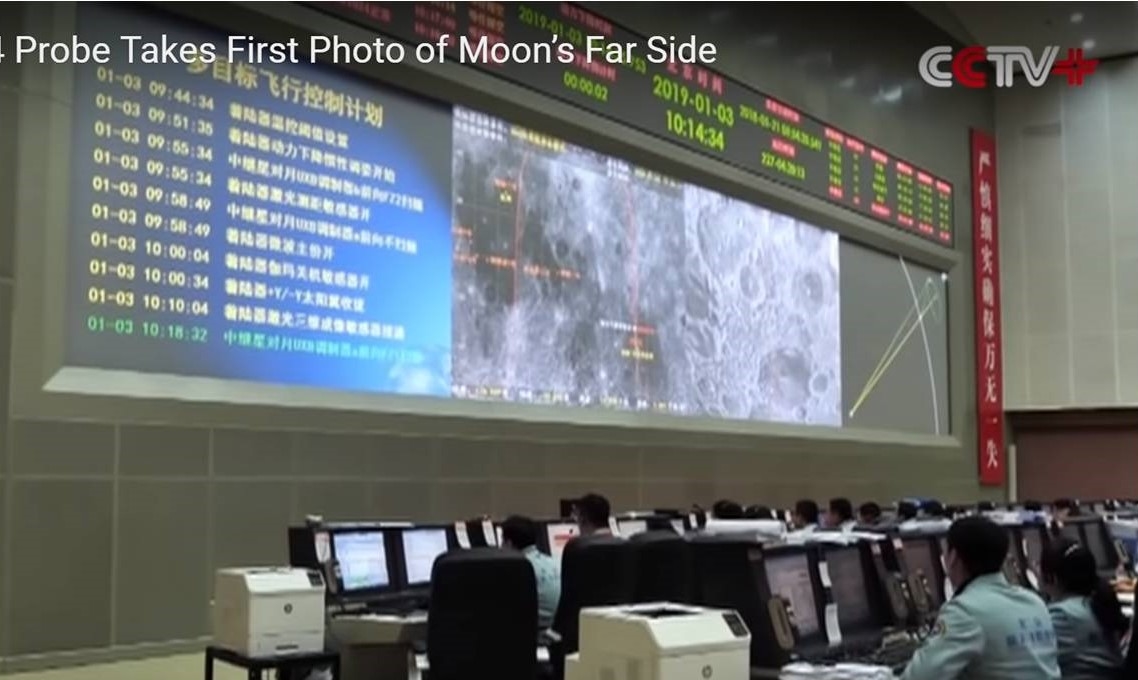
Control room for Chang’e-4 touchdown.
Credit: CCTV/Screengrab/Inside Outer Space
The touchdown of Chang’e-4 relied on the relay satellite to receive and send communications to and from the uncharted side.
Historic landing
Jim Head, a leading lunar expert at Brown University in Providence, Rhode Island, saluted China’s achievement:
“Congratulations to our Chinese science, engineering, operations and management team colleagues for the successful launch and operation of the Queqiao communications relay satellite enabling the successful and historic landing of the Chang’e 4 spacecraft on the far side of the Moon!”
“We look forward to the exploration of Von Kármán crater in the South Pole-Aitken Basin,” Head said, “and other Chinese Lunar Exploration Program exploration destinations in the future!”
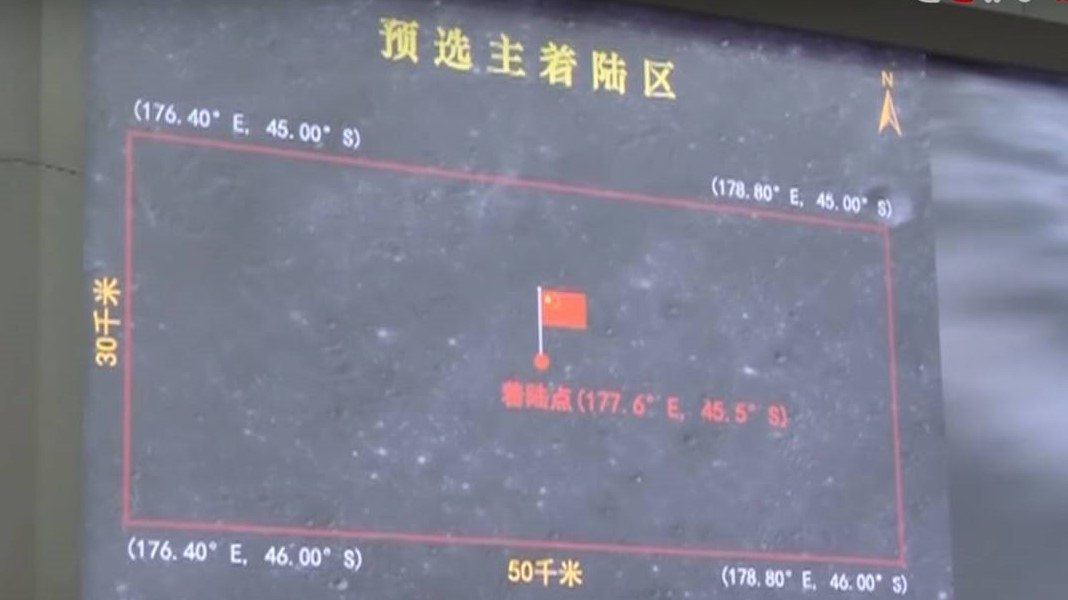
Credit: CCTV/Screengrab/Inside Outer Space
“Congratulations to Chang’e 4 scientists and engineers,” adds Carle Pieters, noted Moon expert, also at Brown University.
“Landing on the far side of the Moon opens the other half of the 8th Continent for detailed exploration,” Pieters said. “What a wonderful way to start 2019!!”
Landing region
A summary of the geology of the Chang’e-4 landing region can be found in the Journal of Geophysical Research: 5294 – Huang, J., Z. Xiao, J. Flahaut, M. Martinot, J. W. Head III, X. Xiao, M. Xie, and L. Xiao (2018), Geological characteristics of Von Kármán crater, northwestern South Pole-Aitken basin: Chang’E-4 landing site region, J. Geophys. Res., 123, doi: 10.1029/2018JE005577.
Go to:
http://www.planetary.brown.edu/pdfs/5294.pdf
Leonard David is author of Moon Rush: The New Space Race to be published by National Geographic in May 2019.
To pre-order Moon Rush: The New Space Race, go to:
https://shop.nationalgeographic.com/products/moon-rush
https://www.barnesandnoble.com/w/moon-rush-leonard-david/1129287265?ean=9781426220050
https://www.amazon.com/Moon-Rush-New-Space-Race/dp/1426220057

Credit: CNSA/CLEP
China’s Chang’e-4 successfully has made a 12 minute high dive onto the Moon’s farside.
According to the state-run Xinhua news service, Chinese space experts chose the Von Kármán crater in the South Pole-Aitken Basin as the landing site of Chang’e-4 on January 3, local time.
The area available for the landing is only one eighth of that for Chang’e-3 that landed on the Moon’s nearside in December 2013.
Von Kármán crater is surrounded by mountains as high as 6 miles (10 kilometers).
Credit: NASA/GSFC/Arizona State University
Vertical landing
“Unlike the parabolic curve of Chang’e-3’s descent trajectory, Chang’e-4 made an almost vertical landing,” said Wu Weiren, chief designer of China’s lunar exploration program. “It was a great challenge with the short time, high difficulty and risks,” Wu said.
On autopilot, Chang’e-4 made the touchdown, with the Queqiao relay satellite in an L2 halo orbit transmitting images of the landing process back to Earth.
“We chose a vertical descent strategy to avoid the influence of the mountains on the flight track,” said Zhang He, executive director of the Chang’e-4 probe project, from the China Academy of Space Technology.

Chang;e-4 en route to farside landing.
Credit: CNSA/CLEP
Safe site
Li Fei, one of the designers of the lander, said when the process began, an engine was ignited to lower the craft’s relative velocity from 1.7 kilometers per second to close to zero, and the probe’s attitude was adjusted to face the Moon and descend vertically.
When it descended to an altitude of about 1.2 miles (2 kilometers), Chang’e-4’s cameras took pictures of the lunar surface so the probe could spot large obstacles such as rocks or craters, said Wu Xueying, deputy chief designer of the probe.
At 328 feet (100 meters) above the surface, the lander hovered to identify smaller obstacles and measure the slopes on the lunar surface, Wu said.

Chang’e-4 lander deploys lunar rover. Credit: CCTV/Screengrab/Inside Outer Space
After calculation, the probe found the safest site, and continued its descent. When the craft was 7 feet (2 meters) above the surface, the engine stopped, and the spacecraft landed with four legs cushioning against the shock, reports Xinhua.
Post-landing
After landing, the solar panels and antennas on the probe were unfolded under the control of the space engineers in Beijing through the communication transmission of the relay satellite, which was operating in the halo orbit around the second Lagrangian point of the earth-moon system, about 65,000 km from the Moon, where it can see both the Earth and the Moon’s farside.
The first close-up photo of the Moon’s farside, taken by a monitoring camera on the lander at 11:40 a.m., showed the direction the rover would drive on to the lunar surface, reported Xinhua.
The control center in Beijing will choose a proper time to let the rover separate from the lander, according to the China National Space Administration (CNSA).
Credit: NASA/GSFC/Arizona State University
From Mark Robinson of Arizona State University, the leader of the NASA’s Lunar Reconnaissance Orbiter’s LROC super camera:
If all goes well, on January 3rd or 4th the Chang’e 4 spacecraft will gently set down on the floor of Von Kármán crater (186 kilometers diameter, 176.2°E, 44.5°S).
This will be the second soft landing on the Moon for the China National Space Administration, and the first ever landing on the farside.
Spectacular views
And what a site! Von Kármán crater and its surroundings hold a wealth a of geologic targets: mare basalts, low relief volcanic constructs, massive landslides, secondary craters, and swirls (just outside Von Kármán crater). Not to mention the spectacular views!

Chang’e-4 lander deploys lunar rover. Credit: CCTV/Screengrab/Inside Outer Space
Von Kármán crater would be a worthy target for future crewed landings.
Key questions
When did the crater form? What is the age, origin and composition of farside basalts (and thus the farside mantle)? What are those volcanic constructs (lower left of the opening image)? Is there any KREEPy material in the local mare or highlands?
Chang’e-4 carrying out low-frequency radio astronomical studies.
Credit: CCTV/Screengrab/Inside Outer Space
[Editor’s note: KREEP is believed to have formed early in the history of the Moon during the solidification of the Moon’s molten stage, known as the magma ocean.]
What is the age of Antoniadi crater (its ejecta lies on the floor of Von Kármán crater)?
Explore this fascinating crater and its surroundings in this zoomify mosaic by going to:

Chang’e-4 powers down to farside landing.
Credit: CCTV/Screengrab/Inside Outer Space
If all remains on schedule, China’s Chang’e-4 is slated to attempt the first controlled farside landing in history.
The target remains the Von Kármán crater, within the South Pole‐Aitken (SPA) basin.

Chang’e-4 touchdown on Moon’s farside.
Credit: CCTV/Screengrab/Inside Outer Space
The scientific instruments of China’s farside spacecraft, mounted on a lander and a rover, will analyze both surface and subsurface of this region.
Landing ahead
One of those experiments mounted on the lander is a German lunar neutron and radiation dose detector to explore the farside surface environment.

Germany’s scientific payload is a Lunar Lander Neutron and Dosimetry instrument, developed by Kiel University.
Credit:
Kiel project manager. Jia Yu
“Yes, indeed, we are anxious to get the first data after landing on the farside of the Moon tomorrow at 08:20 CET,” says Robert F. Wimmer-Schweingruber of the University of Kiel. “It’ll be exciting to see the first data and check out instrument health. The plan is still to land in the Von Kármán crater,” he told Inside Outer Space in an early morning January 2nd communique.
No official word on the landing attempt time from Chinese space authorities.
Other international joint collaboration payloads within the Chang’e-4 explorer mission includes Sweden’s Advanced Small Analyzer for Neutrals (ASAN) installed on the rover and the Netherlands-China Low-Frequency Explorer (NCLE) installed on the relay satellite.

Candidate landing region of China’s Chang’e-4 lander within Von Kármán crater in SPA basin.
Credit: Jun Huang, et al.
Crater facts
The Von Kármán crater is approximately 115 miles (186 kilometers) in diameter, lying in the northwestern SPA basin. The topography of the landing region is generally flat.
The SPA basin is the largest and oldest impact basin of the Moon.

Von Karman Crater as viewed by the Lunar Reconnaissance Orbiter Camera, or LROC,
Credit: NASA/GSFC/Arizona State University
Although the terrain is low, this region is not filled with mare basalts as other Moon basins suggesting its special thermal history and unique evolution features.
The materials in the region are likely to be of great significance to reveal the compositions of the crust and even the mantle of the Moon. Lunar exploration data show that SPA basin possesses unique geochemical characteristics.
Relay satellite
Prior to the Chang’e-4 mission, a detailed 3-D geological analysis of the nature and history of Von Kármán crater was done; the region contains farside mare basalts affected by linear features and ejecta material from a wide range of surrounding craters; and a new geological analysis provided a framework for the Chang’e-4 mission to carry out on-the-spot exploration.

Chang’e-5 mission rocket’s lunar samples into Moon orbit.
Credit: CCTV/Screengrab/Inside Outer Space
Already in place and ready for action for the upcoming mission is the Chinese relay satellite Queqiao. Queqiao was successfully launched last May on a Long March 4C from the Xichang Satellite Launch Center. That relay spacecraft successfully reached an Earth-Moon L2 halo orbit to support communications between Earth and the Moon’s farside…and future farside missions.
Exploration outing
Since both the lander and the rover were designed as a backup for the December 2013 Chang’e-3 mission – a lander carrying the Yutu rover — some of the science payloads on Chang’e-4 are similar, such as a landing camera, a terrain camera, a panorama camera on the lander and a visible/near infrared imaging spectrometer, along with two ground penetrating radars able to reveal the subsurface structure of the landing area.
China’s next lunar probe, Chang’e-5, is designed to bring select samples from the Moon back to Earth. It builds upon a progression of Chinese Moon explorers: Chang’e-1 and Chang’e-2 orbiters in 2007 and 2010, respectively, and the Chang’e-3 lunar lander/rover mission in December 2013.
An informative paper — “Geological Characteristics of Von Kármán Crater, Northwestern South Pole-Aitken Basin: Chang’E-4 Landing Site Region” – has been published in the American Geophysical Union’s Journal of Geophysical Research: Planets.
It can be found here:

Chang’e-4 ready for attempted farside landing.
Credit: CCTV/Screengrab/Inside Outer Space
China’s Chang’e-4 will shortly nosedive toward a farside of the Moon touchdown.
The state-run China Daily reports January 1st that the country’s Chang’e 4 robotic probe is expected to land on the South Pole–Aitken basin on the Moon’s farside sometime between Wednesday and Thursday, citing information from China Aerospace Science and Technology Corp, a major contractor of the country’s lunar exploration programs.
The Chang’e-4 mission totes six kinds of scientific payloads.

Chang’e-4 powers down to farside landing.
Credit: CCTV/Screengrab/Inside Outer Space
On the lander, it carries the Landing Camera (LCAM), the Terrain Camera (TCAM), and the Low Frequency Spectrometer (LFS). There are three kinds of payloads on the rover, the Panoramic Camera (PCAM), the Lunar Penetrating Radar (LPR), and the Visible and Near-Infrared Imaging Spectrometer (VNIS).
That Low Frequency Spectrometer is newly developed for Chang’e-4 lander; the other payloads are inherited instruments from an earlier Chang’e-3 lunar mission.

Chang’e-4 touchdown on Moon’s farside.
Credit: CCTV/Screengrab/Inside Outer Space
International joint collaboration payloads on the Chang’e-4 mission include:
Germany’s Lunar Lander Neutrons and Dosimetry (LND) installed on the lander
Sweden’s Advanced Small Analyzer for Neutrals (ASAN) installed on the rover
Netherlands-China Low-Frequency Explorer (NCLE) installed on the relay satellite
Scientific objectives
Chang’e-4 lander deploys lunar rover. Credit: CCTV/Screengrab/Inside Outer Space
Overall, the scientific objectives for the Chang’e-4 are:
Low-frequency radio astronomical study on the lunar surface
Shallow structure investigation at the lunar farside within the roving area
Topographic and mineralogical composition studies of the lunar farside within the rover’s patrol area.

Chang’e-4 carrying out low-frequency radio astronomical studies.
Credit: CCTV/Screengrab/Inside Outer Space
The Chang’e-4 mission carrying out low-frequency radio astronomical studies on the lunar surface is intriguing.
The lunar farside blocks the Earth’s ionosphere, human-made radio frequency interference, and the auroral kilometric radiation noise. Additionally, also blocked is the solar radio emission during the night time.
Lunar radio environment
“We’ve been following the Chang’e-4 mission closely,” says Jack Burns, Professor of Astrophysics and Planetary Science at the University of Colorado, Boulder. He is also the Director of the NASA-funded Network for Exploration and Space Science (NESS).
Credit: CNSA’s Lunar Exploration and Space Engineering Center (CNSA-LESEC)
Several Dutch members of the NESS team, Burns notes, are co-principal investigators of the Netherlands-China Low-Frequency Explorer (NCLE) installed on China’s relay satellite positioned at an L2 halo orbit.
“Their antenna won’t be deployed until after the main mission involving the farside lander is complete. They expect to begin gathering data in the spring. The expectations for this experiment are modest,” Burns pointed out. There are two issues, he said.
“First, no effort was made to make the satellite radio quiet. In fact, the team doesn’t even know what the amount of internally-generated radio frequency interference (RFI) will be. It could be overwhelming or more modest. Second, the satellite is not in an ideal orbit for radio astronomy.”
The L2 halo orbit is in constant view of the Earth and, thus, is exposed to Earth RFI which is quite substantial, Burns explained. “This too may limit the quality of the data. Nonetheless, this is an exciting experiment as it is the first to characterize the lunar radio environment since NASA’s Radio Astronomy Explorer-2 (RAE) in 1972.”
Germany’s scientific payload is a Lunar Lander Neutron and Dosimetry instrument, developed by Kiel University. Credit: Kiel project manager, Jia Yu
Radiation, life science
Provided by Germany, the Lunar Lander Neutron and Dosimetry instrument was developed by Kiel University. The device is designed to gauge radiation on the Moon, mainly for future human missions. It will also measure the water content underneath the lander.
Also onboard the mission is a “lunar mini biosphere” experiment designed by 28 Chinese universities, led by southwest China’s Chongqing University, The cylindrical tin, made from special aluminum alloy materials, weighs roughly 7 pounds (3 kilograms).
The tin also contains water, a nutrient solution, and air. A tiny camera and data transmission system allows researchers to keep an eye on the seeds and see if they blossom on the Moon.
Mini biosphere
“We have to keep the temperature in the ‘mini biosphere’ within a range from 1 degree to 30 degrees, and properly control the humidity and nutrition. We will use a tube to direct the natural light on the surface of Moon into the tin to make the plants grow,” said Xie Gengxin, chief designer of the experiment, in a recent Xinhua news story.
Added Liu Hanlong, chief director of the experiment and vice president of Chongqing University: “Our experiment might help accumulate knowledge for building a lunar base and long-term residence on the Moon.”
The Moon-bound mini biosphere experiment was selected from more than 200 submissions, according to the China National Space Administration (CNSA).

Chang’e-4 rover is outfitted with a Lunar Penetrating Radar.
Credit: CCTV/Screengrab/Inside Outer Space
Penetrating look
Another aspect of the Chang’e-4 rover is use of a Lunar Penetrating Radar, able to detect the lunar subsurface structure on the robot’s patrol route, and to detect the thickness and structure of the lunar regolith. The device is a nanosecond impulse radar with bistatic antennas.
A similar device was utilized on the Chang’e-3 rover, Yutu, that wheeled across the Moon in December 2013.
It works like this: An ultra-wideband nanosecond impulse is produced by a transmitter, sent through the transmitting antenna down to lunar surface. The receiving antenna receives the reflected signal. The echo signal from the underground target is received by the receiving antenna, amplified in the receiver and then restored as data record.

Chang’e-5 mission hurls lunar samples into Moon orbit.
Credit: CCTV/Screengrab/Inside Outer Space
Next phase
China’s next lunar probe, Chang’e-5, is designed to bring select samples from the Moon back to Earth. It builds upon a progression of Chinese Moon explorers: Chang’e-1 and Chang’e-2 orbiters in 2007 and 2010, respectively, and the Chang’e-3 lunar lander/rover mission in December 2013.
Zhang Kejian, deputy minister of the Ministry of Industry and Information Technology of China, has stressed China’s willingness to cooperate with other countries within the space program.
Zhang, who is also the head of the CNSA, noted that Chang’e-6, China’s second sample return lunar mission, will provide 22 pounds (10 kilograms) of payload space on the orbiter and lander for international partners.

