Archive for the ‘Space News’ Category
 Author:
  January 21st, 2019
Radioisotope Power System for the Curiosity Rover at Kennedy Space Center.
Credit: NASA
An automation process is geared to resolving a key bottleneck in boosting the annual production of Pu-238 toward NASA’s goal of 1.5 kilograms of Pu-238 per year by 2025.
Oak Ridge National Laboratory in eastern Tennessee, near Knoxville, is automating the production of neptunium oxide-aluminum pellets.
Pu-238 provides a constant heat source through radioactive decay, a process that has powered spacecraft such as NASA’s New Horizons mission to Pluto and beyond, the Cassini mission to Saturn and the Curiosity Mars Rover.

Nuclear power system is shown in this Curiosity Navcam Left A photo taken on Sol 2297, January 22, 2019.
Credit: NASA/JPL-Caltech
Upping yearly production
“Automating part of the Pu-238 production process is helping push annual production from 50 grams to 400 grams, moving closer to NASA’s goal of 1.5 kilograms per year by 2025,” said ORNL’s Bob Wham.

Artist’s concept of the nuclear powered New Horizons spacecraft encountering Pluto and its largest moon, Charon (foreground) in July 2015.
Credit: NASA/Johns Hopkins University Applied Physics Laboratory/Southwest Research Institute/Steve Gribben/Alex Parker
Wham adds that the automation tactic is expected to increase the output of pressed pellets from 80 to 275 per week.

Oak Ridge National Laboratory scientists have automated part of the process of producing plutonium-238, which is used by NASA to fuel deep space exploration. Credit: Genevieve Martin and Jenny Woodbery/Oak Ridge National Laboratory, U.S. Dept. of Energy
Once the pellets are pressed and enclosed in aluminum tubing, they are irradiated at ORNL’s High Flux Isotope Reactor and chemically processed into Pu-238 at the Radiochemical Engineering Development Center.
In 2012, NASA reached an agreement with the Department of Energy to restart production of Pu-238, and ORNL was selected to lead the project.
Go to this ORNL video at:
https://www.youtube.com/watch?time_continue=16&v=gl8vESVnRBc
as well as the video on New Horizons below:
 Posted in

Courtesy: CSPS
The Aerospace Corporation’s Center for Space Policy and Strategy has compiled an extensive collection of current and historical documents on U.S. and international space policy, law, and regulation.
Many of these documents are difficult to find and previously had not been brought together in a single online source.

Credit: NASA
This archive is designed to serve as a resource for researchers, students, and anyone interested in the history and future of space exploration, development, and security.
For example, the collection contains a memo from John F. Kennedy to Lyndon Johnson that kicked off the Apollo program. Also you’ll find the directive that resulted in ubiquitous GPS, as well as a little-known report that led to the International Space Station.
Go to:

Artist’s view of the European launcher family.
Shown from left to right: Ariane 5, Vega, Vega-C, as well as the two booster Ariane 6 (A62) and the four booster Ariane 6 (A64) variants.
The first flight of Ariane 6 is planned for 2020. Ariane 6 provides a modular architecture using either two boosters (Ariane 62) or four boosters (Ariane 64), depending on the required performance. The P120C solid-propellant boosters will be common with Vega-C.
Credit: ESA – D. Ducros
The European Space Agency (ESA) has signed a one-year contract with ArianeGroup to study and prepare for a mission to go to the Moon with the aim of mining regolith.

Credit: PTScientists
ArianeGroup with Arianespace joined forces with a German start-up, PTScientists, which will provide the lunar lander, and a Belgian SME, Space Applications Services, which will provide the ground control facilities, the communications and the associated service operations.
Booster use
This 100% European innovative consortium could provide services for the entire mission, from launch and Moon transfer to Moon landing and communication on the lunar surface of the payloads needed for the mission.
“This first contract – symbolically announced on the day of a lunar eclipse – is a milestone for ArianeGroup, which has for a long time been working on technological proposals for space logistics servicing,” explained André-Hubert Roussel, CEO of ArianeGroup.

Credit: Joerg Mitter/PTScientists
“It is also an opportunity to recall the ability of Ariane 64 to carry out Moon missions for its institutional customers,” Roussel said in a press statement, a booster with a payload capacity of up to 8.5 metric tons.
Independent access
ArianeGroup underscores its ambition to guarantee independent, sovereign access to space for Europe.

PTScientists: In our first mission, Mission to the Moon, we will be sending two Audi lunar quattro rovers to the lunar surface and revisiting the landing site of NASA’s Apollo 17 mission, humans last set foot on the Moon, back in 1972.
Credit: PTScientists
ArianeGroup is lead contractor for Europe’s Ariane 5 and Ariane 6 launcher families, responsible for both design and the entire production chain, up to and including marketing by its Arianespace subsidiary.
For more information on PTScientists, go to:

Japan’s Hayabusa2 is pulling up to Ryugu – a C-type asteroid – for detailed study.
Artwork: Akihiro Ikeshita
The Japan Aerospace Exploration Agency’s (JAXA) Hayabusa2 is being readied for its first asteroid Ryugu touchdown and collecting samples next month.
First touchdown
The first Hayabusa2 touchdown (TD1) is planned for the week of February 18. A backup week is March 4.
JAXA Hayabusa2 team members have decided that another target marker will not be dropped onto the asteroid. The target marker (TM-B) previously landed will be used. This marker is to be used in maneuvering the spacecraft to attempt the first sample collection.
Touchdown candidate sites for the asteroid probe that are currently under consideration are identified as L08-B1 and L08-E1. A Digital Elevation Map has been created to accurately estimate the rock shapes near the touchdown candidate sites.

Target Marker-B position and touchdown candidate sites.
Credit: JAXA
Big shot: carry-on impactor
In addition to touchdown, readiness procedures for a planned deployment of the small carry-on impactor (SCI) were carried out January 16, a test that involved using spacecraft thrusters for about 10 seconds in four directions. This successful test was done in preparation for where the spacecraft must move quickly after separating the SCI.

Small carry-on impactor (SCI).
Credit: JAXA
The SCI is a compact kinetic impactor designed to remove the asteroid surface regolith locally and create an artificial crater for later study by Hayabusa2.
This SCI comprises a roughly 4 pound (2 kilograms) copper lump. This impactor called “Liner” is shot from Hayabusa2 at a velocity of 2 kilometers per second to make an artificial crater by collision conical shape structure filled with explosives.

The names for topographic features on Ryugu’s surface have been decided. The theme is “Names that appear in stories for children”, in keeping with Ryugu. On the map, yellow indicates an official name recognised by the International Astronomical Union while orange is a nickname.
Credit: JAXA
Big boulders
There are scads of boulders distributed on the surface of Ryugu, including a huge boulder near the South Pole. The existence of boulders is important for characterizing the surface layer of Ryugu so JAXA team members decided to name these features.
It has been noted that there was no precedent for the naming of boulders. JAXA suggested Saxum (meaning “rocks and stones” in Latin) as a boulder type and this was adopted by the International Astronomical Union (IAU). At the time of the Hayabusa mission, boulders on the asteroid’s surface were not permitted to be named.

Hayabusa2 project members.
Credit: ISAS/JAXA

In practice mode, Hayabusa2 image taken at an altitude of about 155 feet (47 meters), captured on
October 15, 2018. Red circle marks a candidate touchdown site, L08-B.
Credit: JAXA, University of Tokyo,
Kochi University, Rikkyo University, Nagoya
University, Chiba Institute of Technology, Meiji
University, Aizu University, (AIST).
Boxing trials
After dealing with a solar conjunction period that ended on December 29, 2018, Hayabusa2 mission controllers continue to sharpen their touchdown skills by moving the probe to various altitudes.
BOX-A corresponds to the Home Position, with an altitude of about 12 miles (20 kilometers).
BOX-B is at same altitude as BOX-A, but the spacecraft can now move plus or minus 6 miles (10 kilometers) forwards, backwards, left and right.
BOX-C has the same dimensions at BOX-A front-to-back and left-to-right, but this region contains an altitude down to about 3 miles (5 kilometers) from the asteroid’s surface.
Another BOX-B operation is slated for this month.

Chang’e-4 lander on the Moon’s farside as imaged by Yutu-2 rover.
Credit: CNAS/CLEP
A recent posting by NASA has indicated that the U.S. space agency and the China National Space Administration (CNSA) are coordinating efforts focused on the farside landing of China’s Chang’e-4. That robotic spacecraft touched down in the South Pole-Aitken Basin on January 3rd.
In particular, NASA’s Lunar Reconnaissance Orbiter (LRO) is expected to image the Chang’e-4 landing site on January 31 in a manner similar to what was done on Chang’e-3, the NASA story explains.

NASA’s Lunar Reconnaissance Orbiter can use its super-powerful camera to spot the Chang’e-4 lander and rover, as it did in imaging China’s earlier Moon lander, Chang’e-3.
LROC NAC view of the Chang’e 3 lander (large arrow) and rover (small arrow) just before sunset on their first day of lunar exploration. Credit: NASA/GSFC/Arizona State University
NASA and CNSA are also exploring the prospect of observing a signature of the landing plume of the Chang’e-4, making use of the LRO-carried Lyman Alpha Mapping Project (LAMP), an ultraviolet imaging spectrograph instrument. LAMP was developed by the Southwest Research Institute.

Chang’e-4’s farside landing zone.
Credit: NASA/GSFC/Arizona State University
Plume residue
This isn’t the first time that a NASA lunar orbiter has searched for plume residue of a Chinese Moon lander.
The Chang’e-3 landing in northern Mare Imbrium in mid-December 2013 was surveyed by NASA’s Lunar Atmosphere and Dust Environment Explorer (LADEE).
LADEE controllers uploaded a command sequence that scheduled the science instruments for operations during the Chang’e-3 landing period, gathering data and gas species before and after the landing to provide the science team with a comparison.
The intent of using LADEE in this manner was to compare any results to theoretical predictions of gas and exhaust plume particle ejecta. Doing so would inform and update just how Moon lander propulsion systems interact with surface materials.
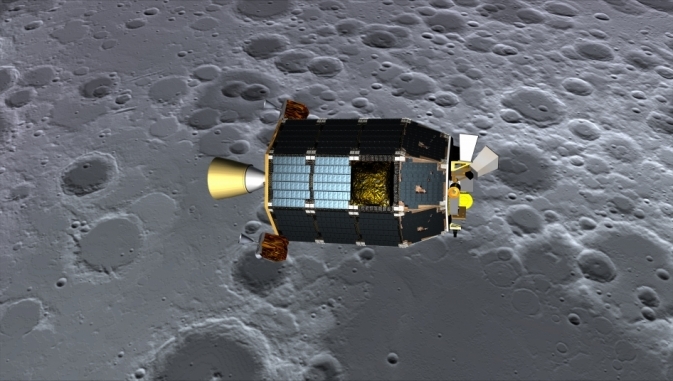
NASA’s Lunar Atmosphere and Dust Environment Explorer (LADEE).
Credit: NASA
Initial evaluation
Going over the LADEE data collected, the science teams’ initial evaluation of the data did not reveal any large effects attributable to Chang’e-3’s descent through the thin lunar atmosphere (an exosphere) and subsequent, rocket powered touchdown. LADEE instruments observed no increase in dust and no propulsion products were measured.
In reviewing the Chang’e-3 descent video, the interval of time that dust was launched by that December 2013 landing is very short, perhaps less than 15 seconds.
“It is actually an important and useful result for LADEE not to have detected the descent and landing. It indicates that exhaust products from a large robotic lander do not overwhelm the native lunar exosphere,” said Rick Elphic, Project Scientist for LADEE at NASA’s Ames Research Center, in outlining initial observations of the Chang’e-3 landing in a December 20, 2013 posting.
“LADEE would probably have had to be in just the right place at the right time to intercept it,” Elphic added. Also, significant amounts of exhaust products apparently cannot migrate to large distances, say hundreds and thousands of miles, and linger with sufficient density to be measured, he advised.
The mission of LADEE ended on April 18, 2014, with the spacecraft purposely crashed into the farside of the Moon.
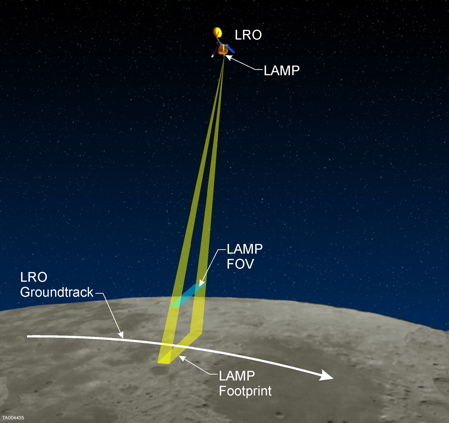
LRO-carried Lyman Alpha Mapping Project (LAMP).
Credit: NASA/SwRI
Inform future missions
For the Chang’e-4 landing spot, LRO’s LAMP would scout for any signature of the landing plume of Chang’e-4.
NASA is still interested in possibly detecting the plume well after the landing, explains the January 19 space agency-posted article.
“Science gathered about how lunar dust is ejected upwards during a spacecraft’s landing,” the NASA story notes, “could inform future missions and how they arrive on the lunar surface.”

Relay satellite for handling farside operations.
Credit: CNSA’s Lunar Exploration and Space Engineering Center (CNSA-LESEC)
Farside politics
In a related development, the South China Morning Post last week reported that Wu Weiren, chief scientist of China’s lunar program, said that U.S. space scientists had asked permission to “borrow” China’s Chang’e-4 spacecraft and relay satellite to plan a mission to the farside of the Moon. That overture was made at an international conference a few years ago, citing Wu’s comments to state broadcaster China Central Television (CCTV).

Wu Weiren, general designer of China’s lunar exploration program.
Credit: SCIO
An essential aspect of the Chang’e-4 farside mission is use of a relay satellite launched last May and is now in a halo orbit at the L2 Lagrange point. It is needed to link Earth controllers with farside operations.
The story goes that American scientists had asked China to extend the Queqiao relay satellite’s lifespan and outfit a U.S.-supplied beacon on the Chang’e-4 mission, helping the U.S. in staging its own lunar landing strategy, Wu said.
“We asked the Americans why they wanted our relay satellite to operate longer,” Wu told CCTV. “They said, perhaps feeling a little embarrassed, that they wanted to make use of our relay satellite when they make their own mission to the farside of the Moon.”
To view the NASA-posting — NASA’s Campaign to Return to the Moon with Global Partners — go to:
https://www.nasa.gov/feature/nasa-s-campaign-to-return-to-the-moon-with-global-partners
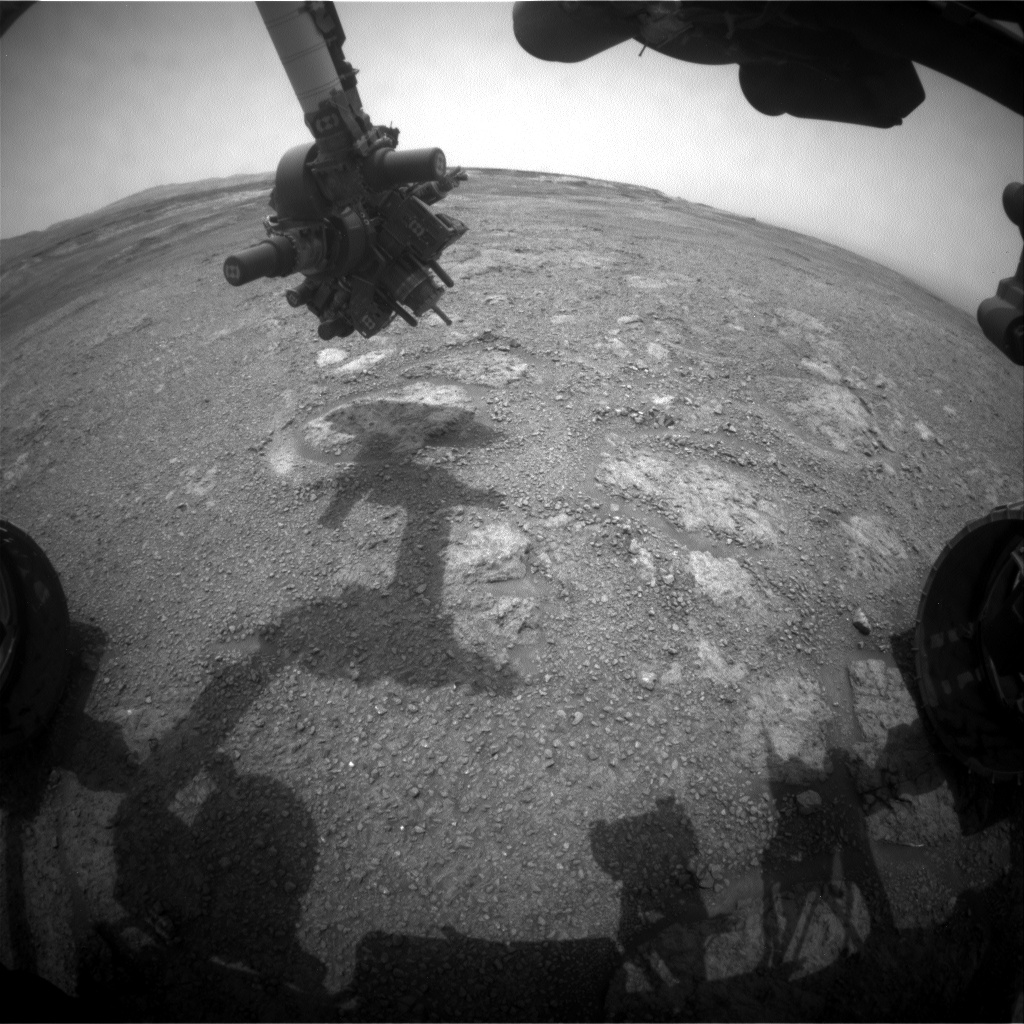
Curiosity Front Hazcam Right A image taken on Sol 2294, January 19, 2019.
Credit: NASA/JPL-Caltech
NASA’s Curiosity Mars rover is wrapping up Sol 2294 duties.
But reports Melissa Rice, a planetary geologist at Western Washington University in Bellingham, Washington: “Sometimes the best laid plans of rovers go astray.”
After wrapping up looks at the Rock Hall drill site, the plan was for Curiosity to start driving towards the clay-bearing unit — the rover’s first drive in about a month — starting with a series of small bumps so that the Mars Hand Lens Imager (MAHLI) could take images of the full outer circumference of the robot’s wheels.
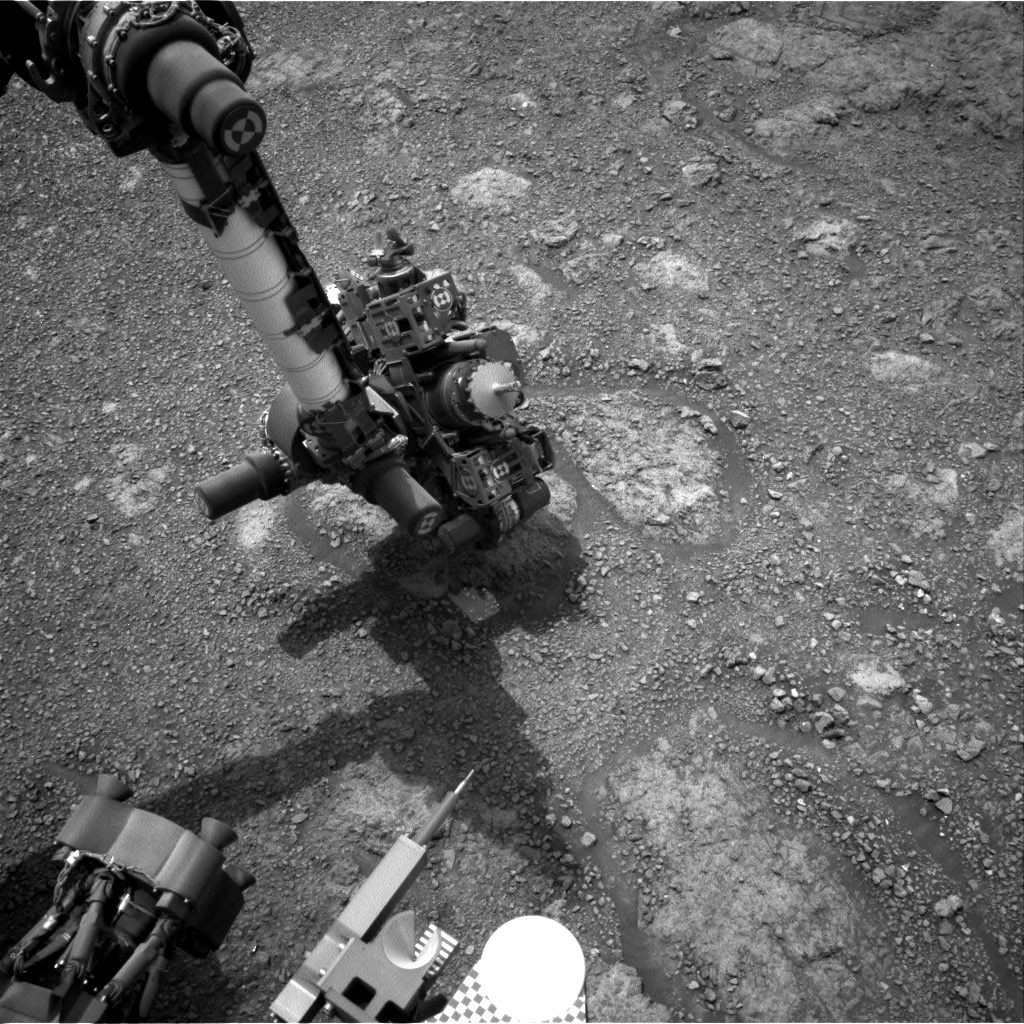
Curiosity Navcam Right A photo acquired on Sol 2293, January 18, 2019.
Credit: NASA/JPL-Caltech
Arm fault
However, an arm fault prevented yesterday’s drive from executing, and Curiosity remained parked in front of Rock Hall, Rice explains. “The good news is that we get one more day to explore this spot.”
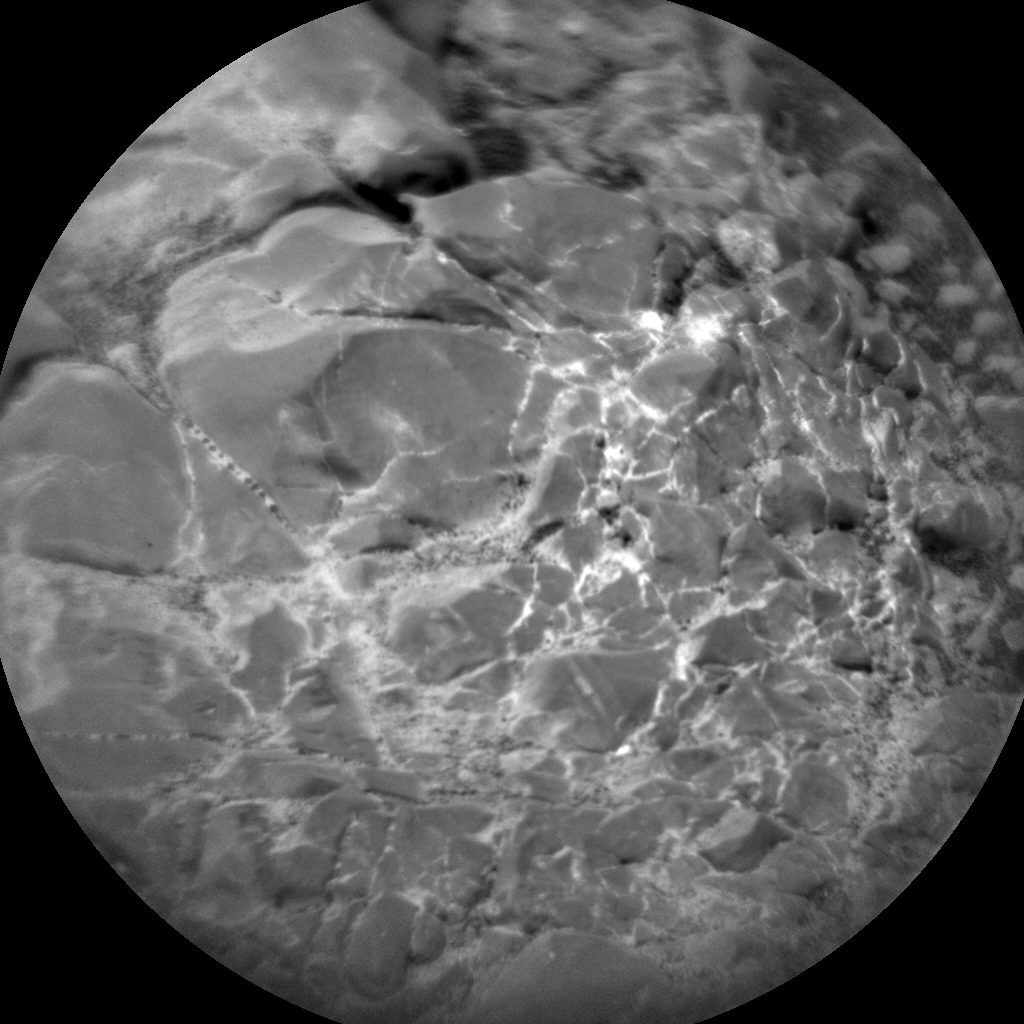
Curiosity ChemCam Remote Micro-Imager photo taken on Sol 2294, January 19, 2019.
Credit: NASA/JPL-Caltech/LANL
Before a reattempt of the MAHLI wheel imaging and the drive, Curiosity will use the Dust Removal Tool to brush dust off of the target Bothwell, image it with MAHLI, and collect chemical data overnight with the Alpha Particle X-Ray Spectrometer (APXS).
Bonus science
The rover’s Chemistry and Camera (ChemCam) will explore a few more targets as well, including Laser-Induced Breakdown Spectrometer (LIBS) observations of the bedrock targets “St Ninians Tombolo,” “Stac Pollaidh” and “St Cyrus 3,” and a long-distance Remote Micro-Imager (RMI) mosaic of a butte of layered sulfate-bearing rocks towards Mount Sharp.

Wheel inspection 2019: Curiosity Mars Hand Lens Imager (MAHLI) photo produced on Sol 2291, January 16, 2019. MAHLI is located on the turret at the end of the rover’s robotic arm.
Credit: NASA/JPL-Caltech/MSSS
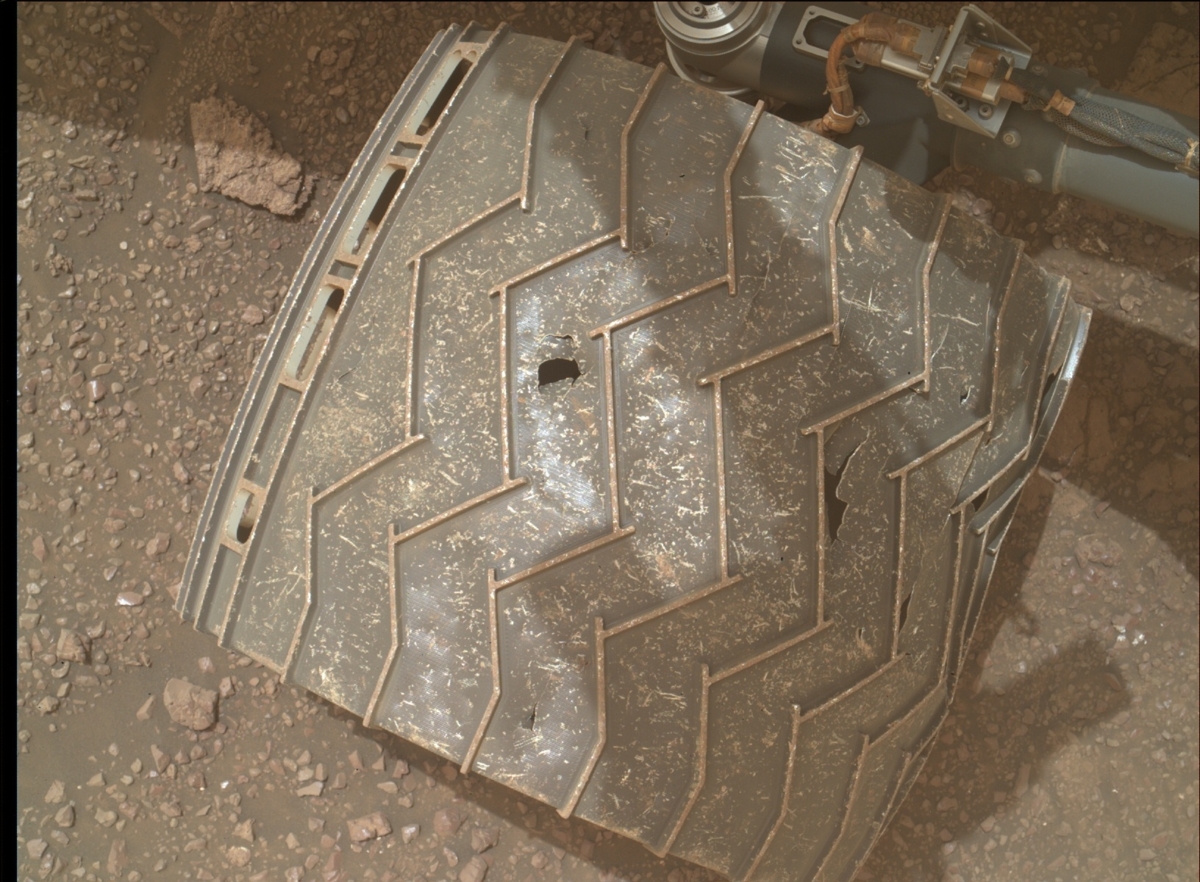
Curiosity Mars Hand Lens Imager (MAHLI) photo produced on Sol 2291, January 16, 2019.
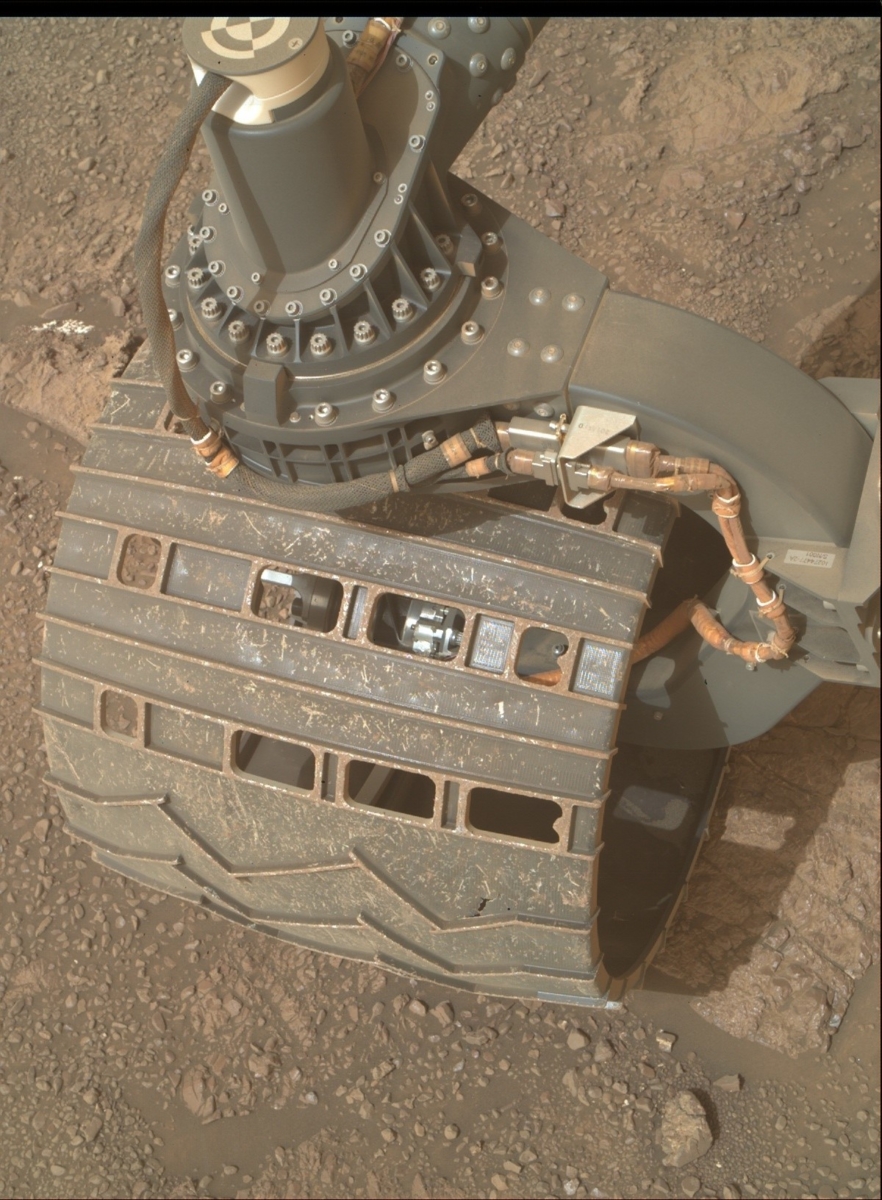
Curiosity Mars Hand Lens Imager (MAHLI) photo produced on Sol 2291, January 16, 2019.
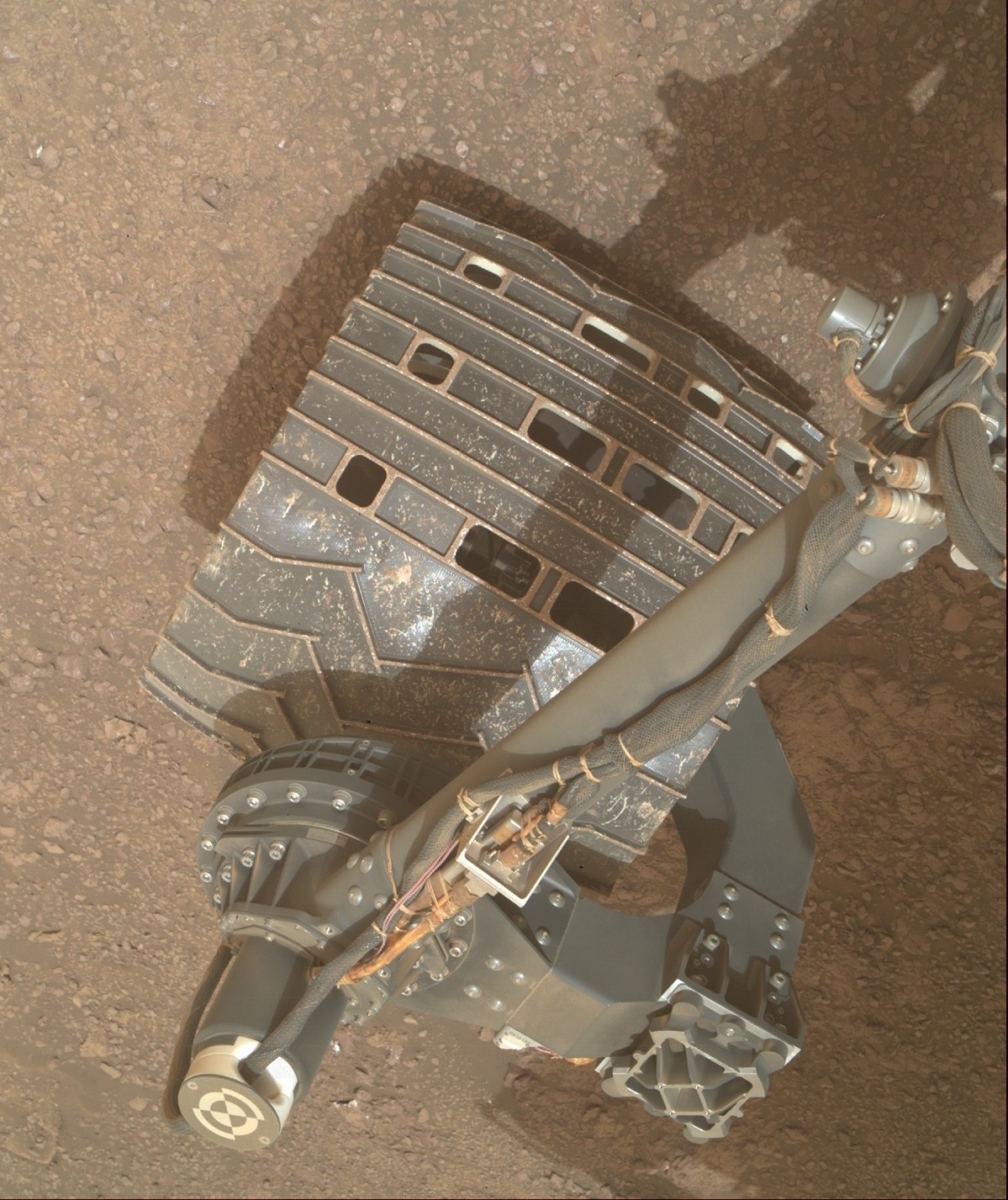
Curiosity Mars Hand Lens Imager (MAHLI) photo produced on Sol 2291, January 16, 2019.
“After this bonus science, Curiosity will make the first of several eastward drives to exit the Vera Rubin Ridge and enter the clay-bearing unit,” Rice notes. “When we return from the Martin Luther King Jr. Day holiday next week, hopefully we’ll be greeted with images of a brand-new workspace to explore!”
Productive stay
Michelle Minitti, a planetary geologist at Framework in Silver Spring, Maryland, also reports it has been a productive stay at the “Rock Hall” drill site.
The number and diversity of analyses performed on the drill target and drilled sample itself – mineralogy from the robot’s Chemistry & Mineralogy X-Ray Diffraction/X-Ray Fluorescence Instrument (CheMin), organics and volatiles from the Sample Analysis at Mars (SAM) Instrument Suite, chemistry and spectral characteristics of the bedrock, drill tailings and excess drilled sample from APXS, ChemCam, and Mastcam, “speak to the importance of samples we so painstakingly extract from Mars,” Minitti adds.
Clay-bearing unit
Curiosity is ready to drive toward the clay-bearing unit.
“This unit, which lies between us and the next set of mesas further up Mount Sharp, exhibits a strong spectral signature of clay minerals from orbit. As clays are associated with the action of water and, typically, that of neutral pH [a measure of acidity and alkalinity] waters, we are keen to learn about the nature and origins of the clays and the rocks that host them,” Minitti points out.
The plan calls for a series of bumps that will scoot Curiosity forward 6.5 feet (2 meters) as MAHLI images of the wheels are taken.

Curiosity Mars Hand Lens Imager (MAHLI) photo produced on Sol 2291, January 16, 2019.
Full MAHLI
“The process, called full MAHLI wheel imaging, involves poising MAHLI obliquely above the wheels to image them, stowing the arm, bumping forward a few tens of centimeters to bring the next segment of wheel into view, unstowing the arm, and imaging the wheels once again,” Minitti says.
It takes four small bumps to fully image the outer circumference of the wheels.
The first set of wheel images was acquired by MAHLI on Sol 2291. “Even with the bumps and tears visible in this image,” Minitti reports, “the wheels are still capable of carrying us for many more kilometers across the clay-bearing unit and up Mount Sharp!”

Curiosity Mars Hand Lens Imager (MAHLI) photo produced on Sol 2291, January 16, 2019.
New workspace
As Curiosity bumps forward to take the wheel images, also on tap is acquiring a Mars Descent Imager (MARDI) image at each stop, resulting in a tightly overlapping set of MARDI images that can be combined to create a digital elevation model of the terrain under the rover.
“The final stop will place the Rock Hall drill hole in the MARDI field of view, giving MARDI our last look at Rock Hall,” Minitti adds.
After the drive, Curiosity is to image a new workspace in about a month, acquire a ChemCam raster using the Autonomous Exploration for Gathering Increased Science (AEGIS) targeting system, and acquire a host of Navcam and Mastcam images and movies to monitor changes in the atmosphere caused by the regional dust storm.
Minitti concludes: “Perhaps Curiosity will have another up-close-and-personal encounter with a dust devil!”
Courtesy: DIA
The U.S. Defense Intelligence Agency (DIA) began in 2017 to produce a series of unclassified Defense Intelligence overviews of major foreign military challenges faced by the United States.
A new volume — CHINA MILITARY POWER: Modernizing a Force to Fight and Win — provides details on China’s defense and military goals, strategy, plans, and intentions; the organization, structure, and capability of its military supporting those goals; and the enabling infrastructure and industrial base.

Control center
Courtesy: DIA
This product and other reports in the series are intended to inform the public, U.S. leaders, the national security community, and partner nations about the challenges to be faced in the 21st century.
The just-issued report covers a number of space themes: Space/Counterspace, Satellites, Counterspace, Human Spaceflight and Space-Exploration Probes.

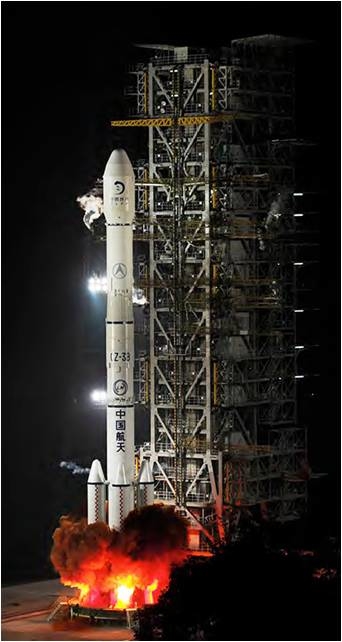
China operates four space launch sites: Jiuquan, Taiyuan, Xichang, and Wenchang.
Credit: DIA, D3 Design
For the report, go to:
Also, a video is available at:

Phobos, the larger of Mars’ two moons as seen by the High-Resolution Imaging Sciences
Experiment (HiRISE) on NASA’s Mars Reconnaissance Orbiter in March, 2008. The illuminated portion of the
image is some 21 km across and objects as small as some 6-meters across can be resolved. Courtesy of
NASA/JPL/University of Arizona.
A new study has been issued — Planetary Protection Classification of Sample-Return Missions from the Martian Moons – Phobos and Deimos. Currently, the Committee on Space Research of the International Council of Scientific Unions’ (COSPAR for short) planetary protection policy does not specify the status of sample return missions from Phobos or Deimos.
Although the moons themselves are not considered potential habitats for life or of intrinsic relevance to prebiotic chemical evolution, recent studies indicate that a significant amount of material recently ejected from Mars could be present on the surface of Phobos and, to a lesser extent, Deimos.
Robotic/human missions
Japan plans to launch the Martian Moons Exploration (MMX) mission in the mid-2020s to collect and return samples from Phobos (or Deimos) to Earth. Furthermore, the moons of Mars are potential targets for future human exploration.
Therefore, an understanding of the potential for life from Mars to persist on Phobos and/or Deimos is relevant to assuring astronaut safety on those missions.
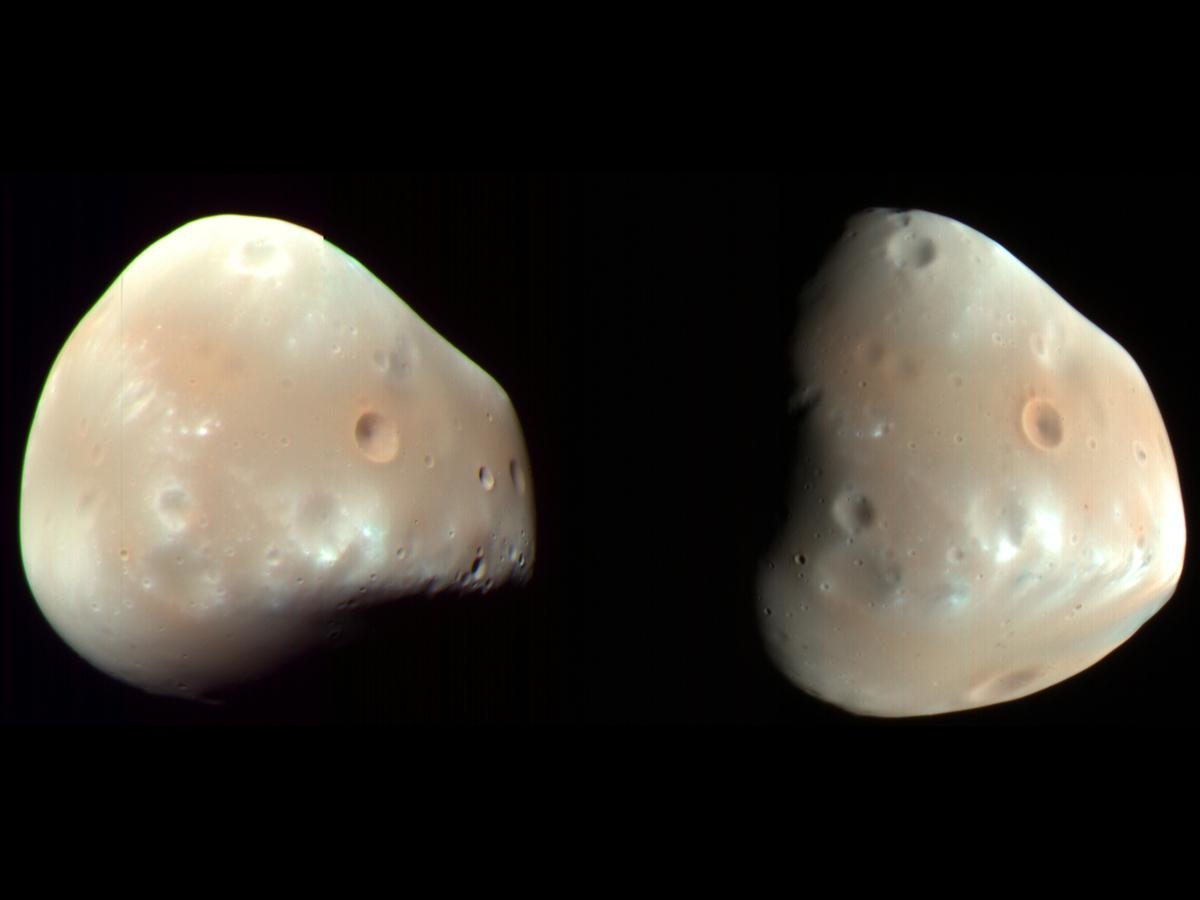
These color-enhanced views of Deimos, the smaller of the two moons of Mars, were taken on Feb. 21, 2009, by the High Resolution Imaging Science Experiment (HiRISE) camera on NASA’s Mars Reconnaissance Orbiter. Deimos is about 7.5 miles in diameter.
Credit: NASA/JPL-Caltech/University of Arizona
Unrestricted Earth return
To lessen the scientific uncertainties concerning the planetary protection status of the martian moons, NASA and the European Space Agency (ESA) commissioned research to perform modeling and experimental activities to assess the extent to which material from Mars might be deposited on the planet’s moons.
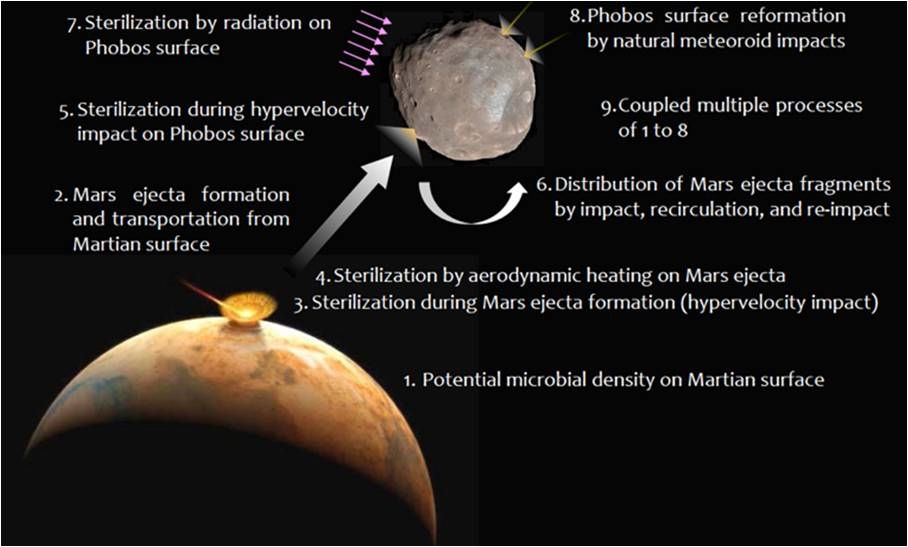
The various steps of martian material transferred to Phobos (and inferred for Deimos). Teams undertook experimental studies and/or numerical modeling to study each distinct step in the chain
from the surface of Mars to that of its moons. The committee organized its report around the various steps outlined
above. Image taken from Japan’s JAXA report with permission.
One report focus is gauging the post-ejection environmental conditions that might inactivate potential martian life transported to Phobos and Deimos.
Tests of that idea have already included hypervelocity impact sterilization of relevant Earth organisms, as well as use of ionizing radiation and heat.
One bottom line of the report is that the committee carrying out the study recommends that samples returned from the martian moons be designated “unrestricted” Earth return.
Go to this informative website on Japan’s Martian Moons Exploration (MMX) mission at:
http://mmx.isas.jaxa.jp/en/mission/
You can download the full report — Planetary Protection Classification of Sample-Return Missions from the Martian Moons — for free here:

NASA Lunar
Reconnaissance Orbiter imagery used to help pinpoint China’s Chang’e-4 lander location. A January 31st flyover of the area may spot the lander and Yutu-2 rover.
Credit: NASA/Arizona State University
NASA’s Lunar Reconnaissance Orbiter can use its super-powerful camera to spot the Chang’e-4 lander and rover, as it did in imaging China’s earlier Moon lander, Chang’e-3.
LROC NAC view of the Chang’e 3 lander (large arrow) and rover (small arrow) just before sunset on their first day of lunar exploration. Credit: NASA/GSFC/Arizona State University
NASA has posted a January 19th story regarding its campaign to return to the Moon with global partners.
This past month, the article explains, NASA held discussions with the China National Space Administration (CNSA) to explore the possibility of observing a signature of the landing plume of their lunar lander, Chang’e 4, using the space agency’s Lunar Reconnaissance Orbiter’s (LRO) LAMP instrument.
LAMP stands for Lyman Alpha Mapping Project, an ultraviolet imaging spectrograph instrument on LRO. LAMP was developed by the Southwest Research Institute.
Chang’e-4 lander on the Moon’s farside as imaged by Yutu-2 rover.
Credit: CNAS/CLEP
Plume detection interest
“For a number of reasons, NASA was not able to phase LRO’s orbit to be at the optimal location during the landing, however NASA was still interested in possibly detecting the plume well after the landing,” explains the NASA-posted article. “Science gathered about how lunar dust is ejected upwards during a spacecraft’s landing could inform future missions and how they arrive on the lunar surface.”

NASA’s Lunar Reconnaissance Orbiter (LRO).
Credit: NASA/Goddard Science Visualization Studio (SVS)
Since the Chang’e-4 landing on, LRO instruments have been collecting data that are currently being analyzed.
“LRO is expected to image the Chang’e 4 landing site on January 31 in a manner similar to what was done on Chang’e 3,” the NASA story adds.
Transparent, reciprocal and mutually beneficial
“NASA and CNSA have agreed that any significant findings resulting from this coordination activity will be shared with the global research community at the 56th session of the Scientific and Technology Subcommittee meeting of the UN Committee on the Peaceful Uses of Outer Space meeting in Vienna, Austria, February 11-22, 2019.”
All NASA data associated with this activity are publicly available, the NASA article adds. “In accordance with Administration and Congressional guidance, NASA’s cooperation with China is transparent, reciprocal and mutually beneficial.”
To view the NASA-posting, go to:
https://www.nasa.gov/feature/nasa-s-campaign-to-return-to-the-moon-with-global-partners
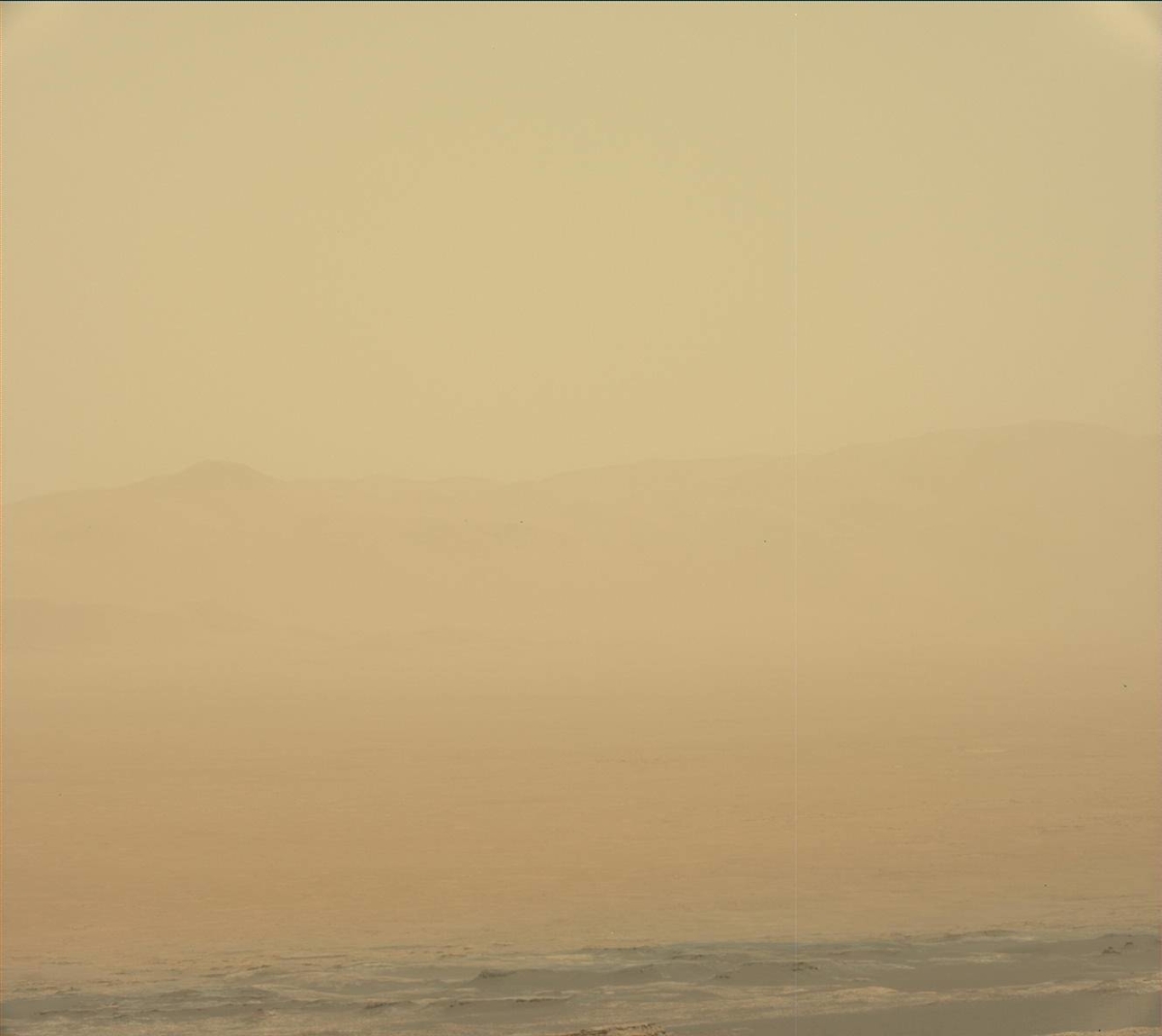
Curiosity Mastcam Left image taken on Sol 2283, January 7, 2019.
Credit: NASA/JPL-Caltech/MSSS
NASA’s Curiosity Mars rover is wrapping up Sol 2293 duties.
The robot’s last day at Rock Hall saw scientists gathering last data at this location.
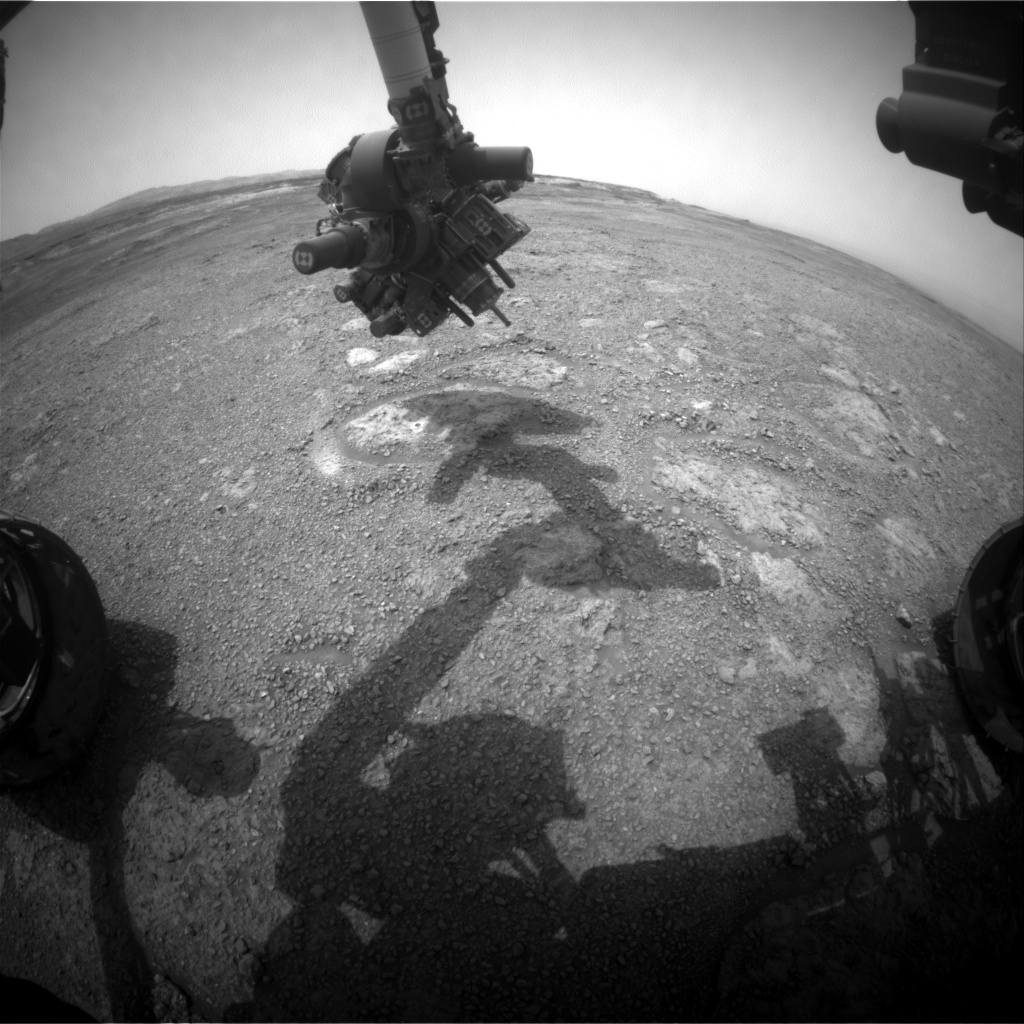
Curiosity Front Hazcam Left A photo taken on Sol 2293, January 18, 2019.
Credit: NASA/JPL-Caltech
Reports Brittney Cooper, an atmospheric scientist at York University, Toronto, Ontario, Canada and Claire Newman, also an atmospheric scientist at Aeolis Research in Pasadena, California: Scientists had a 2.5 hour science block filled with Mastcam change detection imaging of the Rock Hall drill fines and alternating Chemistry and Camera (ChemCam) Remote Micro-Imager (RMI) and Laser-Induced Breakdown Spectrometer (LIBS) observations of the Rock Hall dump pile, drill tailings, and target “St.Cyrus 2.”
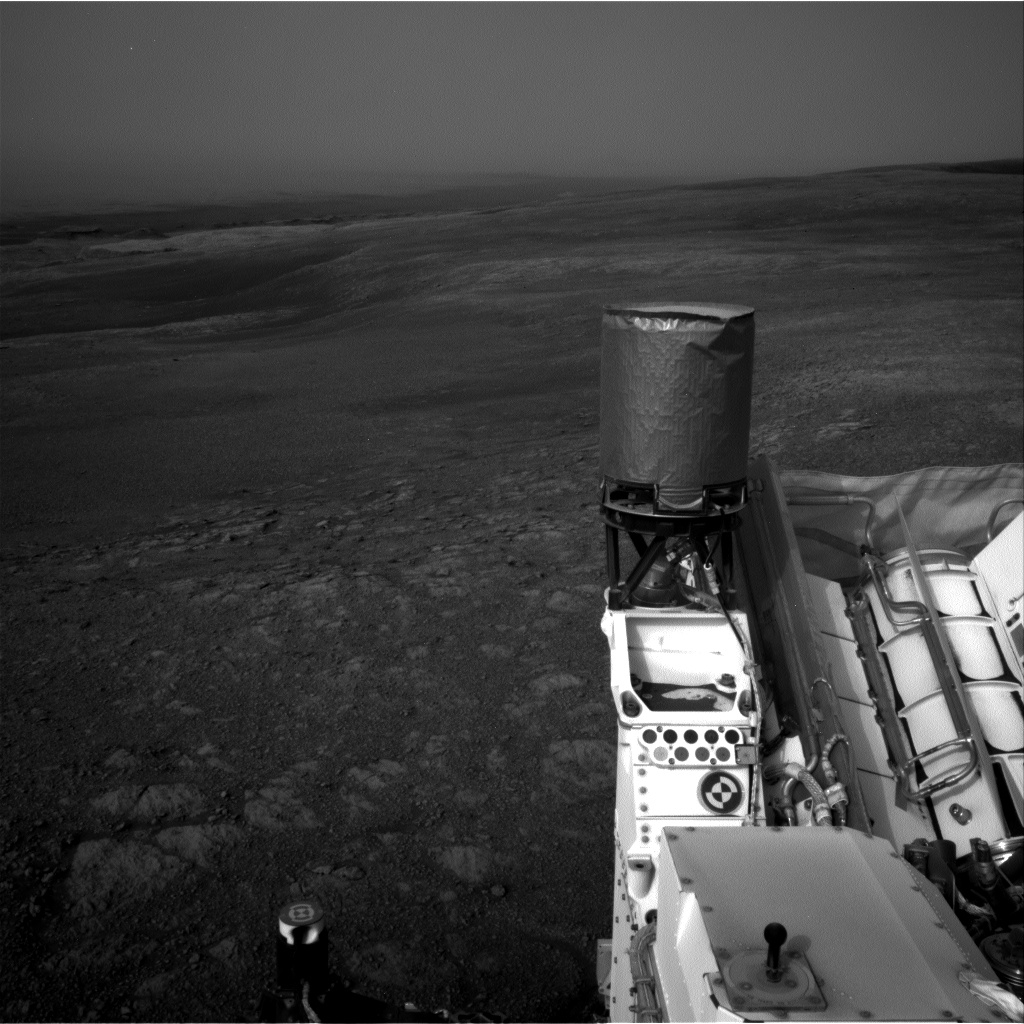
Curiosity Navcam Left A image acquired on Sol 2293, January 18, 2019.
Credit: NASA/JPL-Caltech
Regional dust storm
“Gale Crater has become a lot dustier in recent sols due to a regional dust storm in the southern hemisphere that was spotted by the Mars Climate Sounder team, so we added several extra environmental observations to see how this is affecting the atmosphere,” Cooper and Newman explain. These included extra measurements of the amount of dust above us (with the observation known as the “Mastcam tau”) and of visibility across the crater (with the “Navcam Line of Sight” and “Mastcam Crater Rim Extinction” observations), they add.
Also added were more Rover Environmental Monitoring Station (REMS) one-hour measurements to better capture the diurnal cycles of pressure and temperature.
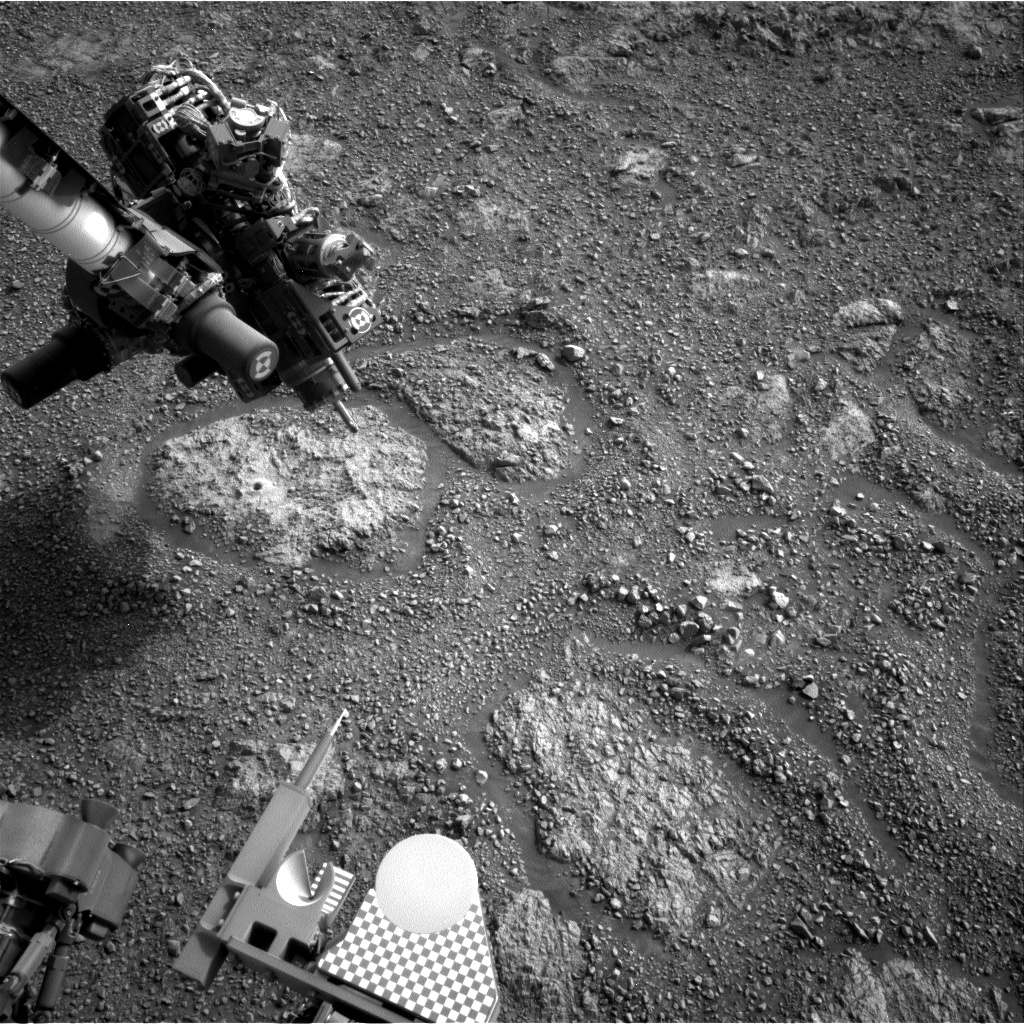
Curiosity Navcam Right A image taken on Sol 2293, January 18, 2019.
Credit: NASA/JPL-Caltech
Daily pressure cycle
“When the regional or global dust loading increases, it changes how the atmosphere expands and contracts in response to solar insolation, which affects how air moves around and alters the large-scale patterns of surface pressure (since pressure is caused by the mass of air in a column over the surface). We monitor this by seeing how the shape of the daily pressure cycle changes from sol to sol,” Newman and Cooper explain.
More atmospheric dust also means more of the incoming solar radiation is absorbed before it reaches the rover, the atmospheric specialists point out, so daytime near-surface and ground temperatures decrease compared to normal. At night, however, the warmer overlying atmosphere emits more thermal radiation, keeping the temperature of the surface and near-surface warmer than usual. More dust heating also means that near-surface and surface temperatures are more strongly coupled, resulting in a reduced surface-to-air temperature contrast, all of which REMS measurements are starting to show.
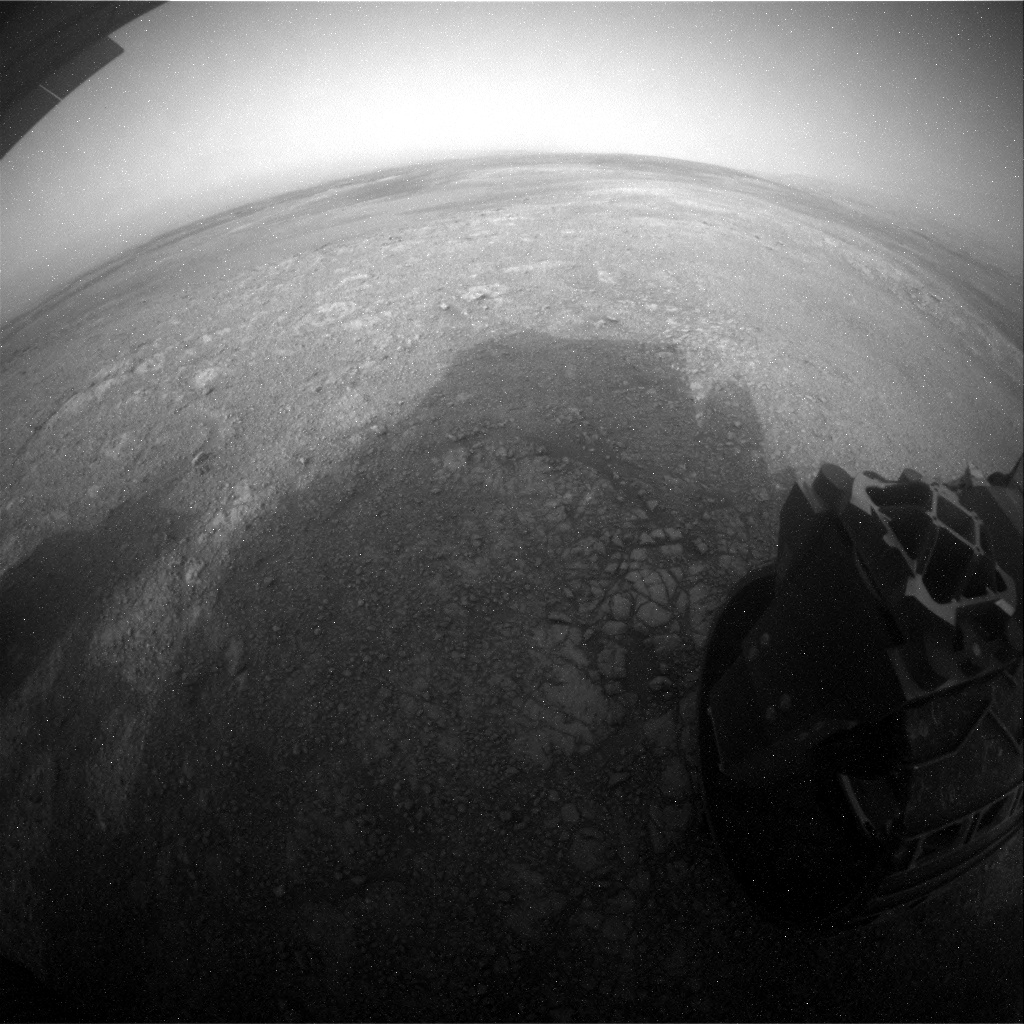
Curiosity Rear Hazcam Right A photo acquired on Sol 2293, January 18, 2019.
Credit: NASA/JPL-Caltech
Dust devil searches
“Another effect of increased dustiness is therefore that we expect to observe fewer convective vortices and dust devils (dusty vortices), because a smaller surface-to-air temperature difference means less heat is pumped into the atmosphere to drive convection,” Cooper and Newman say. “So tosol we also included three types of Navcam dust devil searches, to see if the dust activity produces a decrease in the number or size of dust devils. We’d normally expect to see a lot of dust devils in the current season (local summer).”
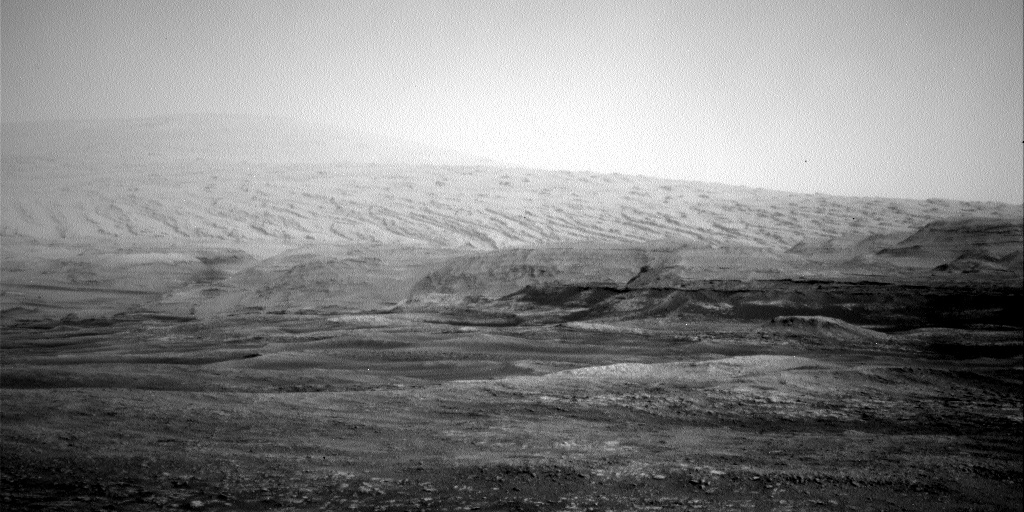
Curiosity Navcam Left A image acquired on Sol 2293, January 18, 2019.
Credit: NASA/JPL-Caltech
In fact, the atmospheric researchers note, one dust devil passed right over Curiosity just as a movie was being taken a few sols before the dust began to increase!
Vortex pressure drop
In investigating frames of the movie, there was a slight reduction in visibility as this happened; at the same time, the dust devil’s low-pressure core produced the largest vortex pressure drop ever measured on Mars (over 7 pascal) which is about 1% of the total surface pressure). A pascal (Pa) is a metric measurement unit of pressure.
“Although we can’t ‘see’ the dust devil in the images, we can tell the rover was inside one because of the decrease in visibility combined with the dramatic decrease in pressure,” Newman and Cooper conclude.

