Archive for the ‘Space News’ Category
 Author:
  December 12th, 2025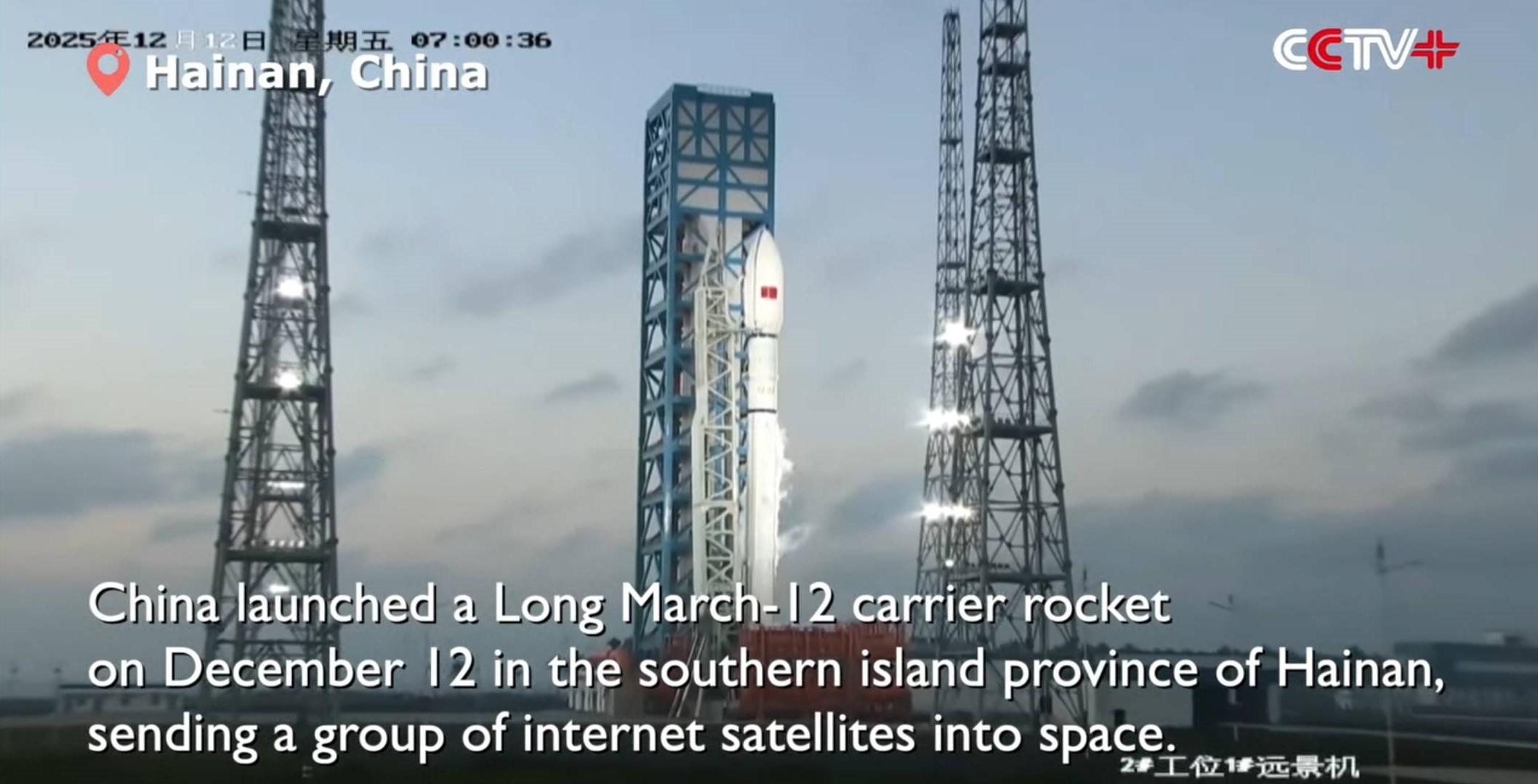
Image credit: CCTV/Inside Outer Space screengrab
China lofted a Long March-12 carrier rocket on December 12 from the southern island province of Hainan. The booster sent a group of internet satellites into space – with the Philippine Space Agency (PhilSA) on the other end of expected debris from the rocket launch.
The Long March-12 departed the Hainan commercial spacecraft launch site. The payloads, the 16th group of low-orbit internet satellites, entered into preset orbit successfully, according to China Central Television (CCTV).
The launch was the 616th flight mission of the Long March carrier rocket series, according to the launch site.
Drop zone
Meanwhile, the Philippine Space Agency confirmed the launch, projecting that rocket leftovers may fall within an identified drop zone approximately 23 nautical miles away from Puerto Princesa and 21 nautical miles away from Tubbataha Reefs Natural Park.
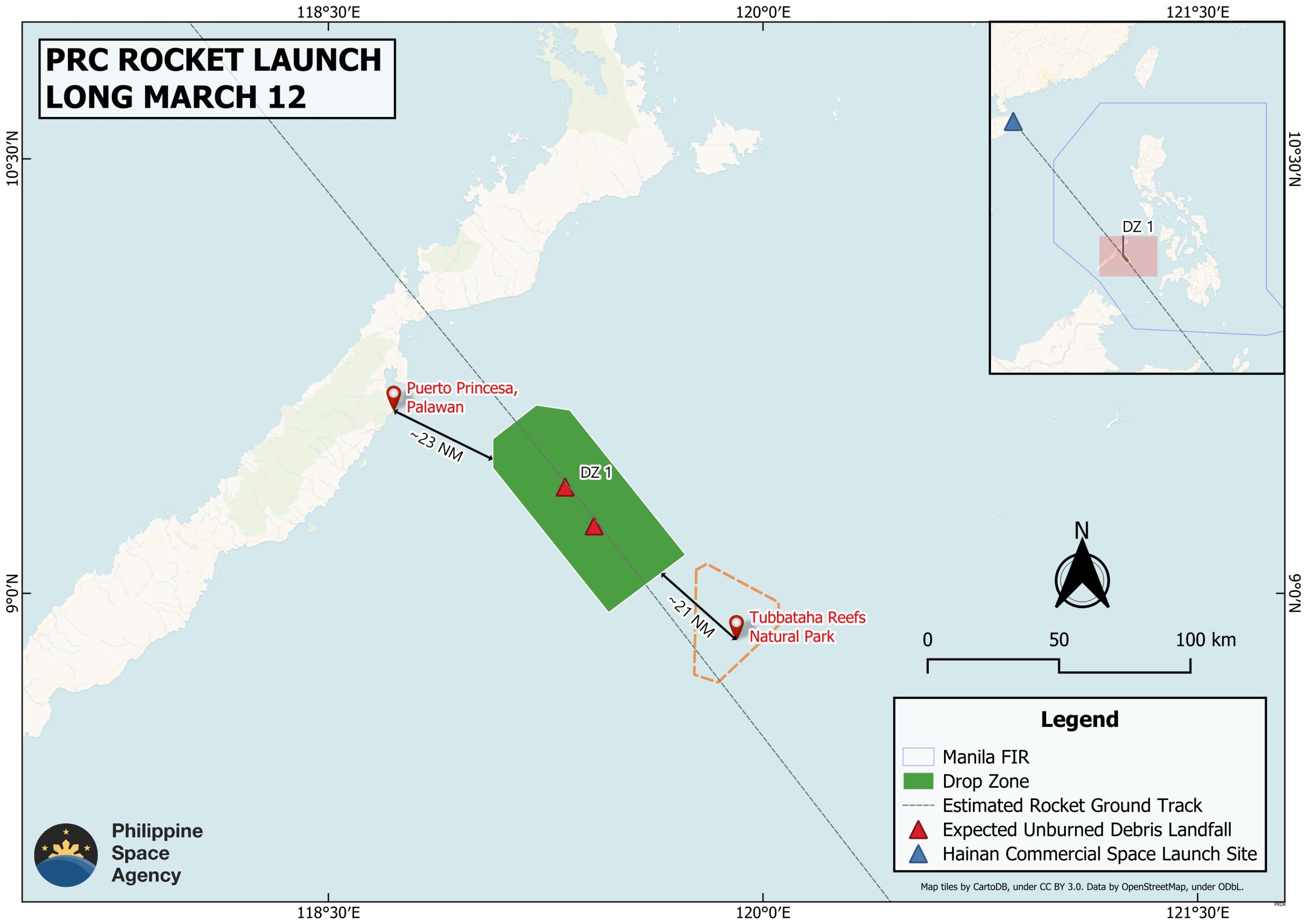
Image credit: PhilSA
The drop zone is within Philippine archipelagic waters.
Details of the rocket drop zone were disclosed through a Notice to Airmen (NOTAM) warning of an “aerospace flight activity.”
Unburned debris
PhilSA disseminated a pre-launch report to relevant government agencies and authorities prior to the launch.
“Unburned debris from rockets, such as the booster and fairing, are designed to be discarded as the rocket enters outer space. While not projected to fall on land features or inhabited areas, falling debris poses danger and potential risk to ships, aircraft, fishing boats, and other vessels that will pass through the drop zone,” warned a PhilSA statement.

Image credit: Philippine Space Agency
“There is also a possibility for the debris to float around the area and wash toward nearby coasts,” PhilSA said. “Additionally, the possibility of an uncontrolled re-entry to the atmosphere of the rocket’s upper stages returning from outer space cannot be ruled out at this time.”

Rocket debris recovered in 2022.
Image credit: Philippine Coast Guard
Toxic substances
As it repeatedly has done from past launches from China, PhilSA reiterated its advice for the public to inform local authorities if suspected debris is sighted.
“PhilSA also cautions against retrieving or coming in close contact with these materials that may contain remnants of toxic substances such as rocket fuel.”
 Posted in

Artwork depicts Qingzhou cargo spacecraft (left) docked to Chinese space station, leading to growth of the orbiting outpost.
Image credit: CCTV/Inside Outer Space screengrab
China’s up and coming Qingzhou cargo spacecraft has completed multiple key technology verifications and entered integrated testing.
Qingzhou, which means “Light Ship” in Chinese, is under development by the Innovation Academy for Microsatellites of the Chinese Academy of Sciences.
The vehicle is expected to provide a low-cost solution for transporting supplies to and from China’s space station.
Maiden flight
Full engineering model production is scheduled to begin in early 2026, and all construction will be completed by the end of that year, followed by its maiden flight.
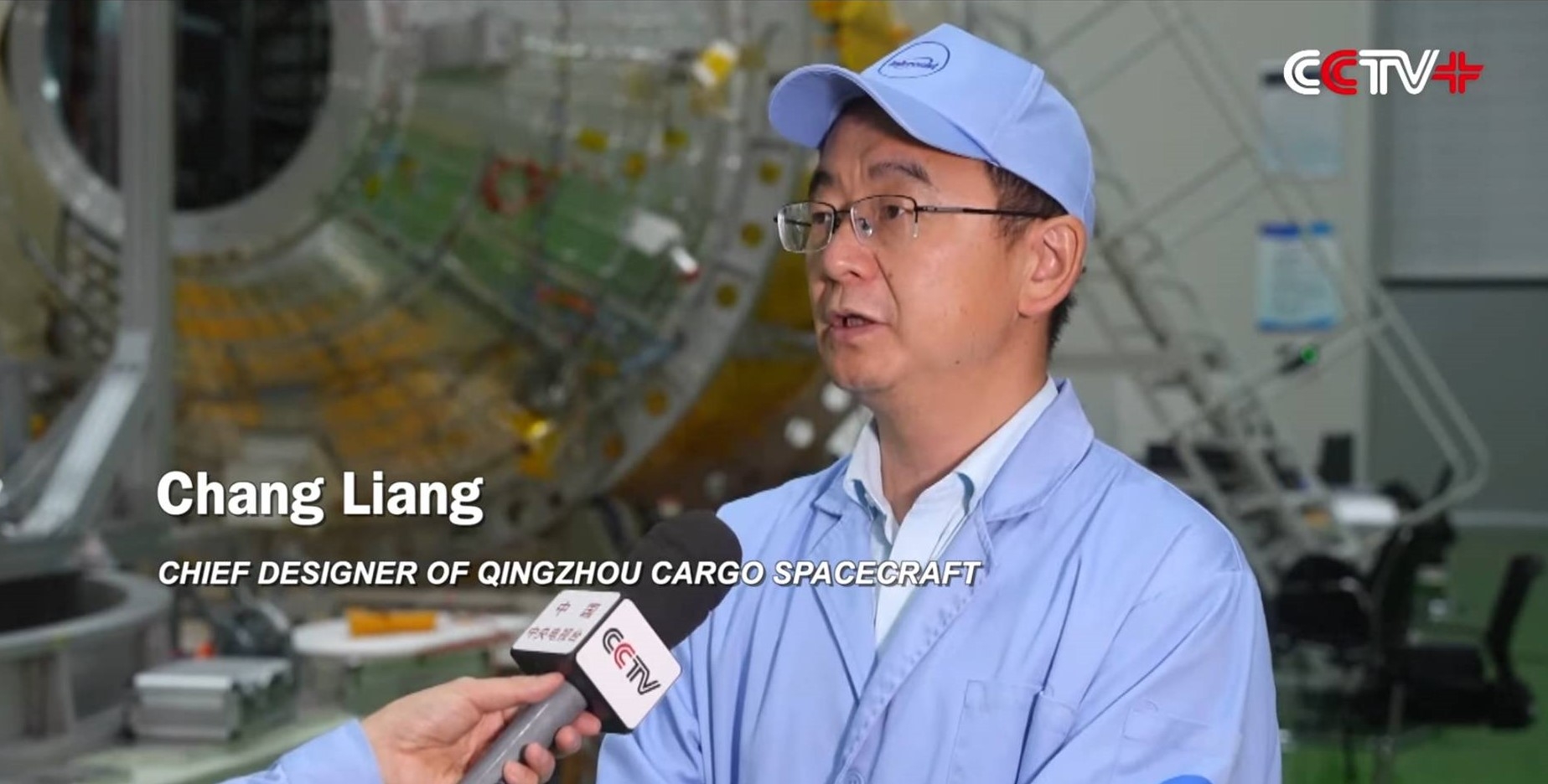
Image credit: CCTV/Inside Outer Space screengrab
“After the maiden flight of the Qingzhou cargo spacecraft, we will follow the plan for the in-orbit development of the space station,” said Chang Liang, chief designer of the Qingzhou cargo spacecraft.
“In the future, the space station will be expanded from a T-shape to a structure of a cross with a horizontal bar atop,” Chang told China Central Television (CCTV), “which requires a large amount of supplies being transported to the space station.”
Stronger delivery capacity
Chang said that, together with the Tianzhou cargo craft and the Haolong space cargo shuttle, there will be a stronger delivery capacity to the Chinese Space Station.
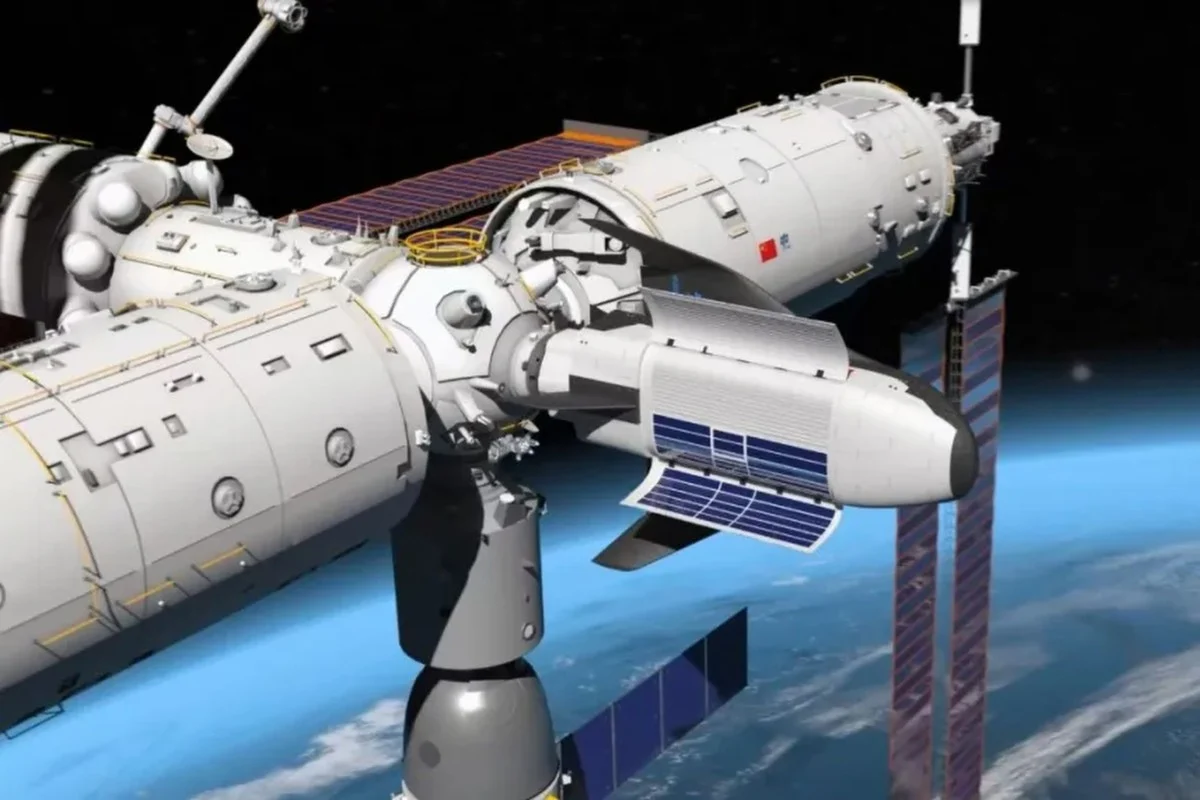
Artwork shows the design of the Haolong space shuttle cargo-carrier.
Image credit: WeChat/ Aviation Industry Corporation of China
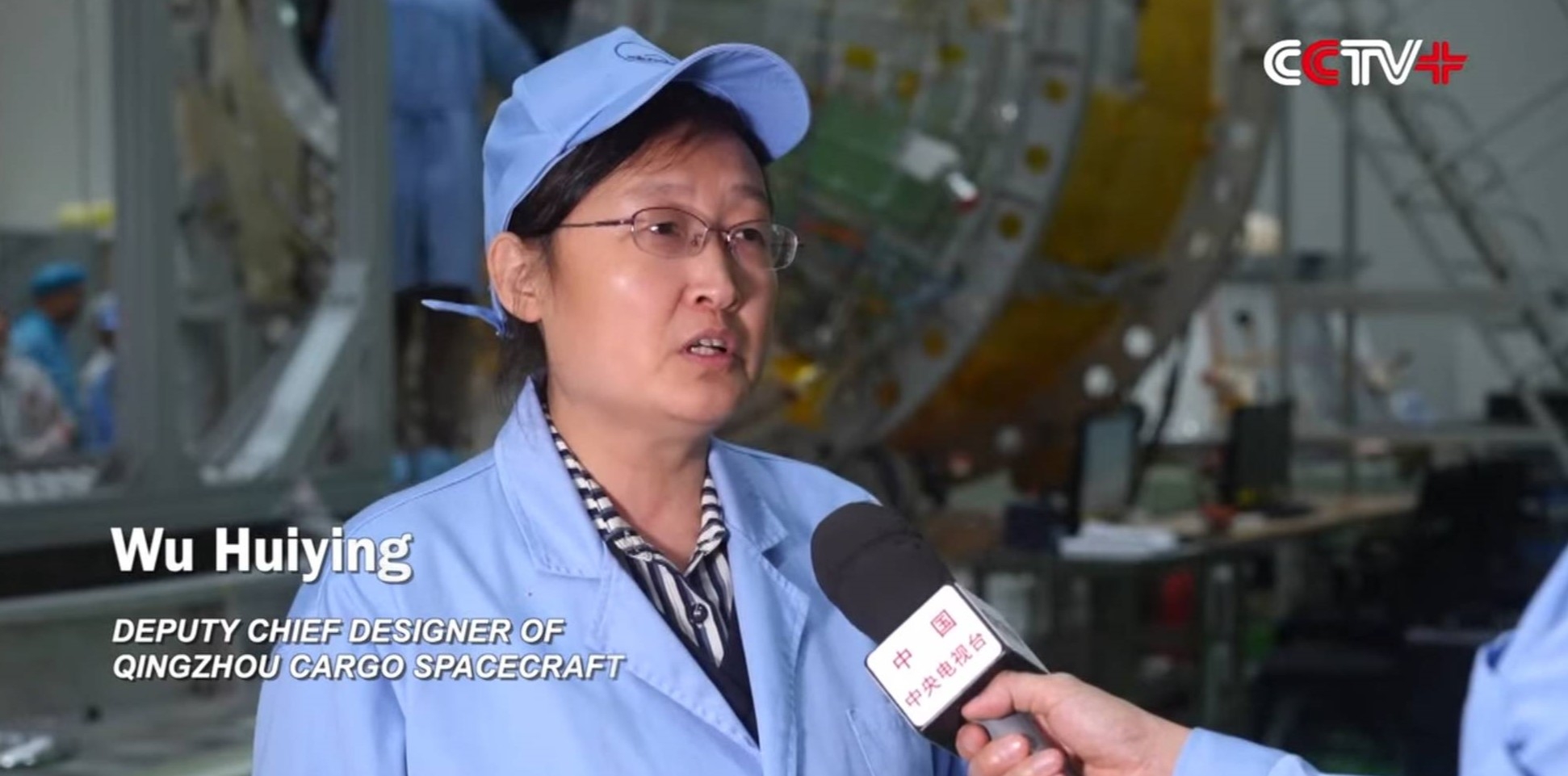
Image credit: CCTV/Inside Outer Space screengrab
“We have now conducted large-scale experiments and are currently loading and verifying the status of the remaining individual machines, as well as conducting final testing. The overall test results are quite good,” said Wu Huiying, deputy chief designer of the Qingzhou cargo spacecraft.
For an informative video focused on the Qingzhou supply ship, go to:

Blue Ghost-2 – a far side Moon lander.
Image credit: Firefly Aerospace
From the folks that landed their Blue Ghost lander on the Moon in March of this year.
Firefly Aerospace of Cedar Park, Texas has announced a new commercial payload agreement on its Blue Ghost Mission 2 lander. Volta Space Technologies is providing a wireless power receiver, a technology demonstration for Volta’s planned lunar power network, called LightGrid.
LightGrid consists of a network of satellites in lunar orbit that would collect solar energy and transmit it via laser to receivers known as LightPorts that are integrated on customer landers, rovers, and infrastructure on the Moon’s surface.
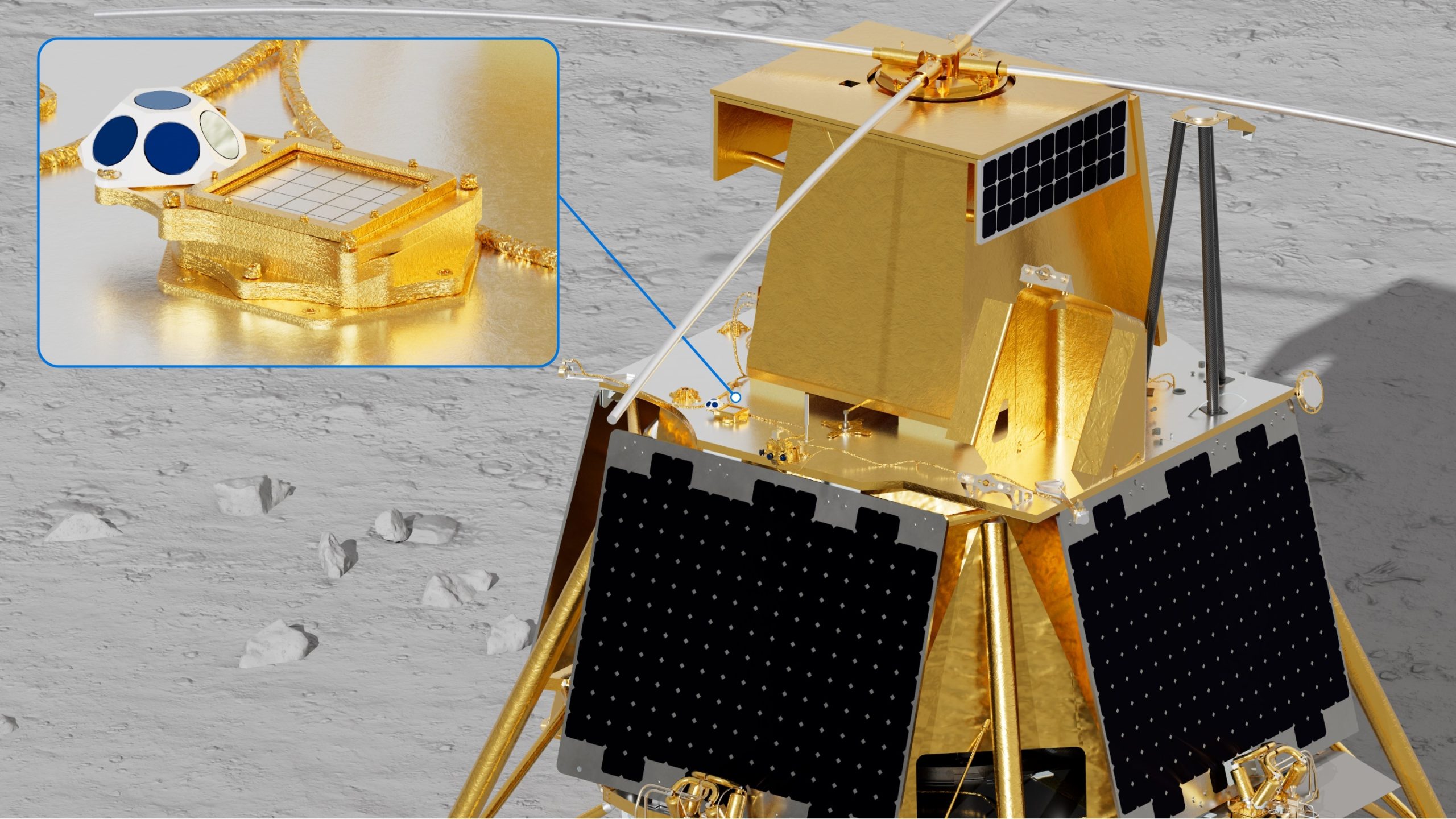
Volta payload highlighted in this artistic rendering.
Image credit: Firefly Aerospace
The Volta payload hosted on Blue Ghost Mission 2 will be used to test and validate the first LightPort.
Far side landing
With the addition of Volta based in Montreal, Canada, Blue Ghost Mission 2 will now carry six payloads from five different countries, the US, UK, UAE, Australia, and Canada.
Three payloads are through NASA’s Commercial Lunar Payload Services (CLPS) and 3 additional government and commercial payloads.
Targeted to launch late 2026, Blue Ghost Mission 2 is set to land on the far side of the Moon.
Qualification testing for the fully stacked Blue Ghost and Elytra spacecraft structure is well underway for Blue Ghost Mission 2.
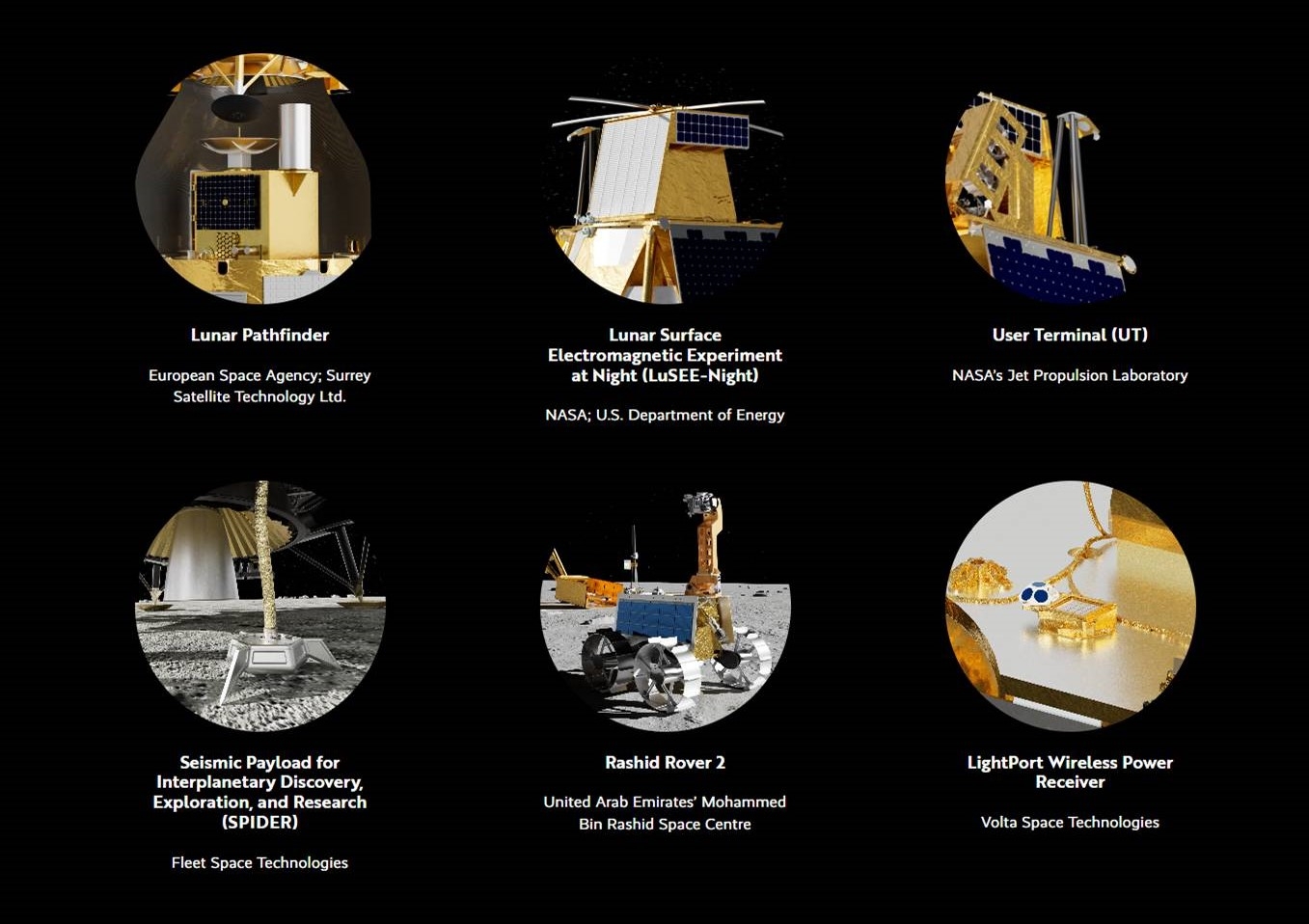
Blue Ghost-2 payloads.
Image credit: Firefly Aerospace
Spotting mineral deposits
“Elytra will first serve as a Blue Ghost transfer vehicle and communications relay for the mission and then remain operational in lunar orbit for more than five years to provide ultraviolet and visible spectrum imaging – a key capability to identify mineral deposits on the Moon’s surface, map future landing sites with higher fidelity, and enable cislunar situational awareness,” notes a Firefly Aerospace statement.
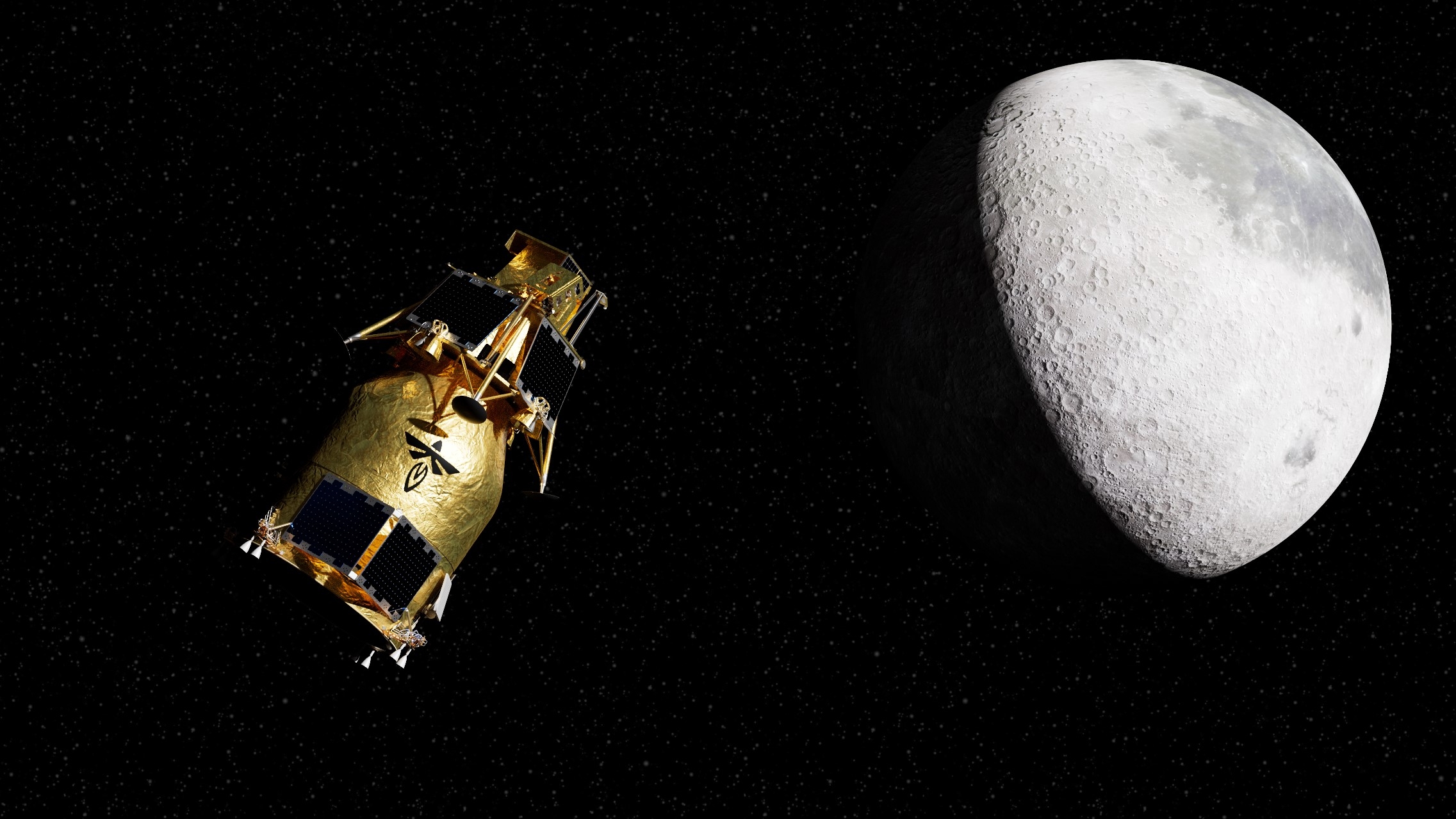
Blue Ghost-2 and Elytra.
Image credit: Firefly Aerospace
The Firefly Aerospace team has also begun assembling flight hardware and has accepted and tested a majority of the payloads at Firefly’s spacecraft facility.
For more details on the mission, go to:

Image credit: Monogram models/Celestis
The late Willy Ley, a visionary science writer, rocketry advocate, and one of the earliest public voices to express what a true Space Age may become is on an Earth-departure trajectory.
Next year, a symbolic portion of Willy Ley’s cremated remains will fly aboard Serenity Flight – an Earth-orbit memorial mission launching from Cape Canaveral.
Cremated remains
In early 2025, Ley’s cremated remains were unexpectedly discovered in the basement of a Manhattan apartment building.

Image credit: Leonard David Archives
“Serenity Flight will place a symbolic portion of Ley’s remains into Earth orbit alongside other participants who share a common passion for exploration, legacy, and meaning,” explains Charles Chafer, CEO and co-founder of Celestis Memorial Spaceflights.
“Like all Celestis orbital missions,” Chafer added, “the spacecraft will circle our planet for months to years before its natural reentry—creating a poetic, celestial farewell.”

Pioneers recording the future.
Image credit: Leonard David Archives
Seminal visionary
Willy Ley was born in Berlin in 1906. He was among the founding members of the Verein für Raumschiffahrt (VfR), the early amateur rocketry society whose ideas shaped the foundations of modern aerospace engineering.
After fleeing Nazi Germany in 1935, Ley became a U.S. citizen and one of America’s top science communicators. He died in June 1969, just weeks before Apollo 11’s Neil Armstrong and Buzz Aldrin became the first humans to land on the Moon.
Ley penned several influential books, such as Rockets, Missiles, & Space Travel and other seminal works. His “Imagineering” views about space exploration appeared in such publications as Life and Time magazine.
To learn more regarding this Serenity Flight, go to:
Willy Ley’s Long-Awaited Journey to Orbit: Honoring a Space Pioneer on Celestis’ Serenity Flight in 2026
Credit: The Aerospace Corporation/CORDS
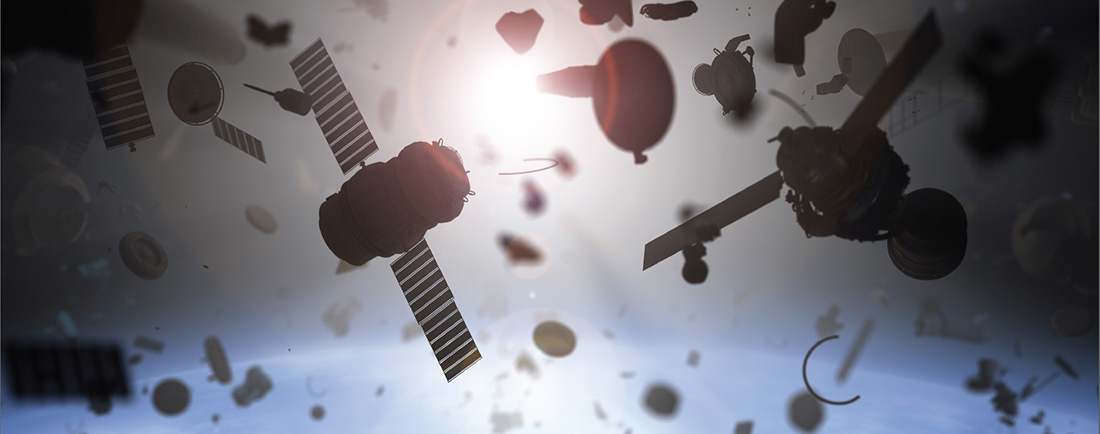
A university team has found that small orbital debris hits can emit radio bursts when they collide or approach each other in space. The signal can be detected with large radio dishes on Earth, as well as satellites in orbit.
One upshot of the research is to help monitor the onset of the “Kessler syndrome”- a chain reaction of collisions in space that, in turn, generates more space debris. That situation makes it far harder for satellite operators to navigate around and avoid hazardous clouds of high-speed rubble.

Data useful for gauging tiny space debris is being gleaned from the radio frequency sensor onboard the U.S. Defense Department’s STPSat-6 in geostationary orbit.
Image credit: Northrop Grumman
The work on using hypervelocity impact signals to track and characterize space debris is being led by Nilton Rennó, a professor of climate and space sciences and engineering at the University of Michigan in Ann Arbor.
For more details, go to my new SpaceNews story – “Colliding space debris produces radio bursts, raising prospect of ‘debris weather’ alerts” – at:

Image credit: Overview Energy
Overview Energy, a space startup, has announced its plan on building a constellation of large, deployable power-beaming satellites.
Based in Ashburn, Virginia, the group has initiated an ongoing airborne program that has already demonstrated precise delivery of low-intensity, infrared light from a moving aircraft to solar panels on the ground.
The power-beaming hardware uses the same optics and lasers that would fly in orbit, the company explains. Overview Energy adds that a next step is a low Earth orbit demonstration in 2028, with commercial operations in geosynchronous orbit targeted to begin in 2030 with the world’s first megawatt transmission from space.

Image credit: Overview Energy
“In the early 2030s, we’ll be capable of delivering more than a gigawatt of 24/7 clean energy anywhere on Earth,” the group reports.
Aircraft demonstration
In November 2025, Overview Energy achieved what they say is a world first in power beaming: transmitting power from a moving airplane to solar panels on the ground, across a distance of more than 16,500 feet (5,000 meters).

Image credit: Overview Energy
Overview’s laser and optical systems were loaded into a Cessna Caravan airplane. On the ground, the group installed a receiver of standard solar panels, like those used in utility-scale projects or homes. As the aircraft flew overhead, the system identified the receiver, locked onto it, and beamed the infrared light. The panels converted that light into electricity in the same way they convert sunlight.

Infrared power beaming ground test.
Image credit: Overview Energy/Inside Outer Space screengrab
Mass manufacturing
The power-beaming team points out that launch costs have dropped more than tenfold. Mass manufacturing satellites is now routine and high-efficiency photovoltaics and high-power, high-efficiency lasers have become inexpensive, reliable, and commercially available.
“Space solar energy can sound like something far off in the future: satellites in orbit, precision optics, lasers delivering energy to Earth. But we’ve changed that,” explains the group.
For more information on Overview Energy, go to:
https://www.overviewenergy.com/
and also review this informative update at:

Image credit: NAS
A detailed blueprint for human exploration of the Red Planet centers on the first three crewed expeditions to Mars.
Out of an agenda of what-to-do when there, a top priority for human investigation is the search for past or present life, and/or prebiotic chemistry on Mars.
The just-issued study — A Science Strategy for the Human Exploration of Mars — comes from the National Academies of Sciences, Engineering and Medicine. It was sponsored by NASA.

Image credit: NASA
Campaigns
A blue-ribbon report group identified a set of “campaigns,” with the trio of human sojourns to Mars undertaking 11 prioritized science objectives to characterize and determine what the Red Planet has to offer, specifically:
- Determine if, in the exploration zone, evidence can be found for any of the following: habitability, indigenous extant or extinct life, and/or indigenous prebiotic chemistry.
- Characterize past and present water and carbon dioxide cycles and reservoirs within the exploration zone to understand their evolution.
- Characterize and map the geologic record and potential niche habitats within the exploration zone to reveal Mars’s evolution and to provide geologic context to other investigations, including the study of bolide impacts, volcanic and intrusive igneous activity, the sedimentary record, landforms, and volatiles, including liquids and ices.
- Determine the longitudinal impact of the integrated martian environment on crew physiological, cognitive, and emotional health, including team dynamics, and confirm effectiveness of countermeasures.
- Determine what controls the onset and evolution of major dust storms, which dominate present-day atmospheric variability.
- Characterize the martian environment for in situ resource utilization (ISRU) and determine the applications associated with the on-the-spot resource utilization processing, ultimately for the full range of materials supporting permanent habitation but with an early focus on water and propellants.
- Determine whether the integrated martian environment affects reproduction or the functional genome across multiple generations in at least one model plant species and one model animal species.
- Determine throughout the mission whether or not microbial population dynamics and species distribution in biological systems and habitable volumes are stable and are not detrimental to astronaut health and performance.
- Characterize the effects of martian dust on human physiology and hardware lifetime
- Determine the longitudinal impact of the integrated martian environment on plant and animal physiology and development across multiple generations where possible as part of an integrated ecosystem of plants, microbes, and animals.
- Characterize the primary and secondary radiation at key locations in the crew habitat and astrobiological sampling sites to contextualize sample collection and improve models of future mission risk.

Mars expedition probes the promise that Mars was a home address for past, possibly life today.
Credit: NASA
Top-ranked campaign
The report spells out four campaigns for Mars Science, with the top ranked campaign to possibly achieve every science objective named in the report, includes a human landing lasting 30 sols (Mars days which are slightly longer than an Earth day).
There would be an uncrewed cargo delivery, and a longer 300 sol mission.
Each of these landings would occur at a single site in an exploration zone approximately 62 miles (100 kilometers) in diameter, and with specific features such as ancient lava flows and known dust storms.

Image credit: NAS
Suite of science instruments
To augment astronaut sorties on Mars, field measurements would require a wide suite of science instruments to be brought to Mars, including drilling and meteorological equipment.
More detailed investigations would be carried out in a Mars habitat laboratory and further study of samples that would be brought back to Earth.
The second ranked campaign seeks to optimize achieving the measurements that are the most needed in common across all the science objectives. This approach offers a campaign with “looser needs” for a specific landing site, as some measurements could be achieved at a range of possible landing sites.

Image credit: NAS
Deep drilling
The third ranked campaign focuses on searching for life on Mars, noted as the top-ranked science priority. This campaign would focus on selecting a site where deep drilling to liquid water would be possible.
That drilling would be followed by core collection and initial analysis of samples on Mars. The bulk of the samples would be returned to Earth for further study of habitability and past and present life on Mars.
Lastly, the fourth uses three short missions at different locations on Mars to achieve a variety of the top science objectives, and would enable exploration of widely varying environments
In this regard, the report suggests three possible types of sites that could be selected for this campaign:
- an area with igneous and impact melt geology;
- a site with sedimentary rocks to search for evidence of ancient life or prebiotic processes
- and glaciers located within a dust storm-forming region of Mars.
Recurring summit at NASA

Human explorers on Mars will enlist a variety of tools to reveal the secrets of the Red Planet.
Image credit: NASA
The report says NASA should also include a surface laboratory on Mars in its mission plans, return samples to Earth from every human mission to Mars, and start a recurring summit on teaming between humans, robotic exploration tools, and artificial intelligence to support Mars missions.
“By imagining different ways that priority science could be pursued during actual human missions, our report shows there are many different options for humans to explore Mars and achieve great scientific breakthroughs,” said committee co-chair, Dava Newman, Apollo Program Professor in the Department of Aeronautics and Astronautics at the Massachusetts Institute of Technology (MIT).
“Importantly,” Newman added in a National Academies statement, “it also offers a synergistic review of science priorities enhanced by human exploration.

Image credit: NASA
Consensus report
“I think this document will really help provide the rigorous scientific framework needed to guide the human exploration of Mars,” said Pascal Lee of the SETI Institute, Mars Institute, Kepler Space University, NASA Ames Research Center, and Ceres Robotics.
“Not surprisingly, the search for signs of indigenous life would be the top science priority for humans on Mars,” Lee told Inside Outer Space, “with many other aspects of planetary origin and evolution, and also humans in space, to be addressed as well.”
Lee noted that this consensus report resulted from broad science community input on this topic.

Image credit: NAS
To access the full report and its findings, go to:
https://doi.org/10.17226/28594
Live streamed
A report release event will be held at the National Academies Keck Center in Washington D.C. and live streamed online today, December 9 from 12:00 PM to 1:30 PM (ET).
To tap into the event, go to:
https://events.nationalacademies.org/46072/begin?i=PppaBO1MIWxCjoWZntZw9lMS6Uv0nSeN

Image credit: Inside Outer Space screengrab

Image credit: Inside Outer Space screengrab

The release of the U.S.-China Commission’s 2025 Annual Report to Congress covers a swath of topics, including China’s aggressive space agenda.
“China has achieved major civil space milestones,” the report points out, such as the Chang’e-6 mission returning the first samples from the Moon’s far side.
“These ‘global firsts’ are much more than just about science; Beijing uses them to assert technological leadership to reshape global perceptions of power,” the report explains.
Beyond symbolic milestones
As for the U.S.-China “space race,” that competition “now extends beyond symbolic milestones to a contest over who will define the rules, infrastructure, and norms governing space.”
Moreover, if the United States cedes leadership, “China is poised to advance a state-driven, opaque governance model that could embed long-term global reliance on its systems and standards,” the report suggests.

China’s Chang’e-6 lander/ascender in farside sampling scenery.
Image credit: CNSA/CLEP
Commission recommendations
Notable in the document is Chapter 7: “The Final Frontier: China’s Ambitions to Dominate Space, as well as a set of Commission recommendations.
To preserve and strengthen U.S. primacy in the critical space domain as China pursues sweeping advancements across military, commercial, and civil space sectors, Congress should:
Increase or reallocate appropriations for the U.S. Space Force to levels necessary to achieve space control and establish space superiority against China’s rapidly expanding space and counterspace capabilities.

Credit: U.S. Space Force
Direct the U.S. Department of Defense to enhance the U.S. Space Force’s capacity to conduct space wargaming and develop realistic modeling and simulation of potential threats from China, including training programs for space operators on warfighting tactics, techniques, and procedures necessary for space control.
Conduct oversight hearings and other activities to ensure the United States maintains primacy in the space domain by identifying investments in cutting-edge space technologies and assessing China’s space capabilities and threats to U.S. space industrial base capacity.

The Zhuque-3 by LandSpace.
Image credit: LandSpace
Direct the U.S. Department of Commerce, in coordination with the U.S. Departments of Defense, State, and the Treasury, to produce an unclassified report to Congress within 180 days identifying China’s commercial space capabilities, the dual-use nature of Chinese space technologies, and China’s commercial space industry’s support to the People’s Liberation Army.
Direct the U.S. National Space Council to increase international outreach on space launch services and ensure the United States remains the partner of choice for both government and commercial space launch.

NASA’s Artemis Program, enabling Moon to Mars human exploration.
Image credit: NASA

Image credit: U.S.-China Commission
Express support for the strategic importance of U.S. leadership in civil space exploration and direct relevant agencies to assess the progress of the Artemis Accords, evaluate risks China poses to U.S. civil space priorities, including NASA programs, and ensure program delays do not undermine U.S. credibility in establishing global norms for lunar and Martian exploration.
To access the full report, go to:
https://www.uscc.gov/sites/default/files/2025-11/2025_Annual_Report_to_Congress.pdf
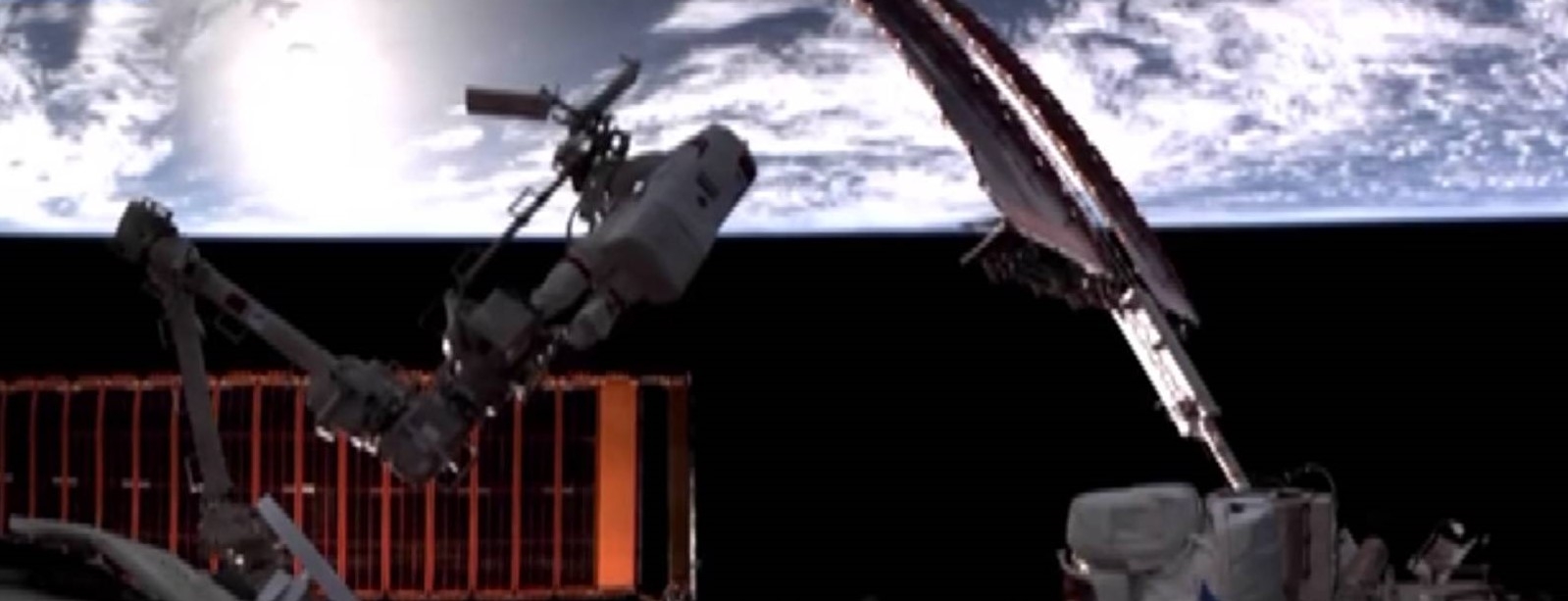
Station crew member carries out spacewalk.
Image credit: CNSA/CCTV/Inside Outer Space screengrab
China’s Shenzhou-21 crew carried out their first spacewalk of the taikonauts projected six-month mission.
The December 9th extravehicular activity (EVA) lasted roughly 8 hours, with astronauts Zhang Lu (commander) and Wu Fei making the space walk. Colleague Zhang Hongzhang assisted them from inside the Tianhe Core Module.
Inspection of viewport window
According to the China National Space Administration (CNSA), the two spacewalkers installed various devices and inspected external equipment, including the viewport window of the Shenzhou-20 spacecraft.
That spacecraft suffered an apparent space debris hit, preventing it from being used for safe return of the Shenzhou-20 crew.

Image credit: CCTV/Inside Outer Space screengrab
Emergency launch
Following that suspected debris strike on Shenzhou-20’s viewport, a trio of astronauts originally scheduled to return to Earth aboard the spacecraft were redirected to Shenzhou-21, which brought them home safely on November 14.
Billed as the first emergency launch in the history of its human spaceflight program, China launched the uncrewed Shenzhou-22 on November 25 to provide a new return vehicle for the now orbiting crew.
The damaged Shenzhou-20 vessel will be later de-docked from the orbiting outpost for an uncrewed re-entry.
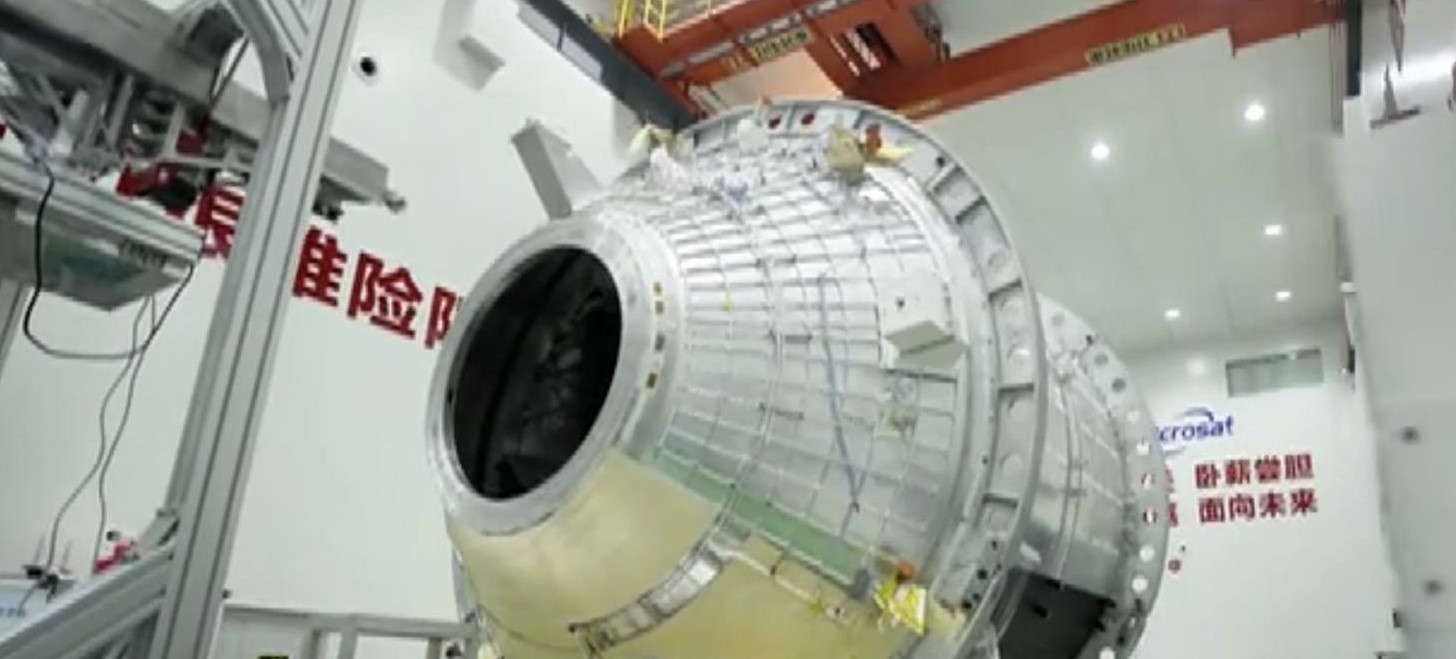
Work progressing on China’s Qingzhou Cargo Spacecraft.
Image credit: CCTV/Inside Outer Space screengrab
New cargo spacecraft
Meanwhile, China Central Television (CCTV) has issued a video spotlighting development of China’s Qingzhou cargo-carrying spacecraft for the country’s future space station operations.
China is to start prototype development of the new cargo spacecraft in 2026.
Earlier this year, China Daily reported that the next-generation cargo spacecraft is designed for future in-orbit supply deliveries, including missions to China’s Tiangong space station.
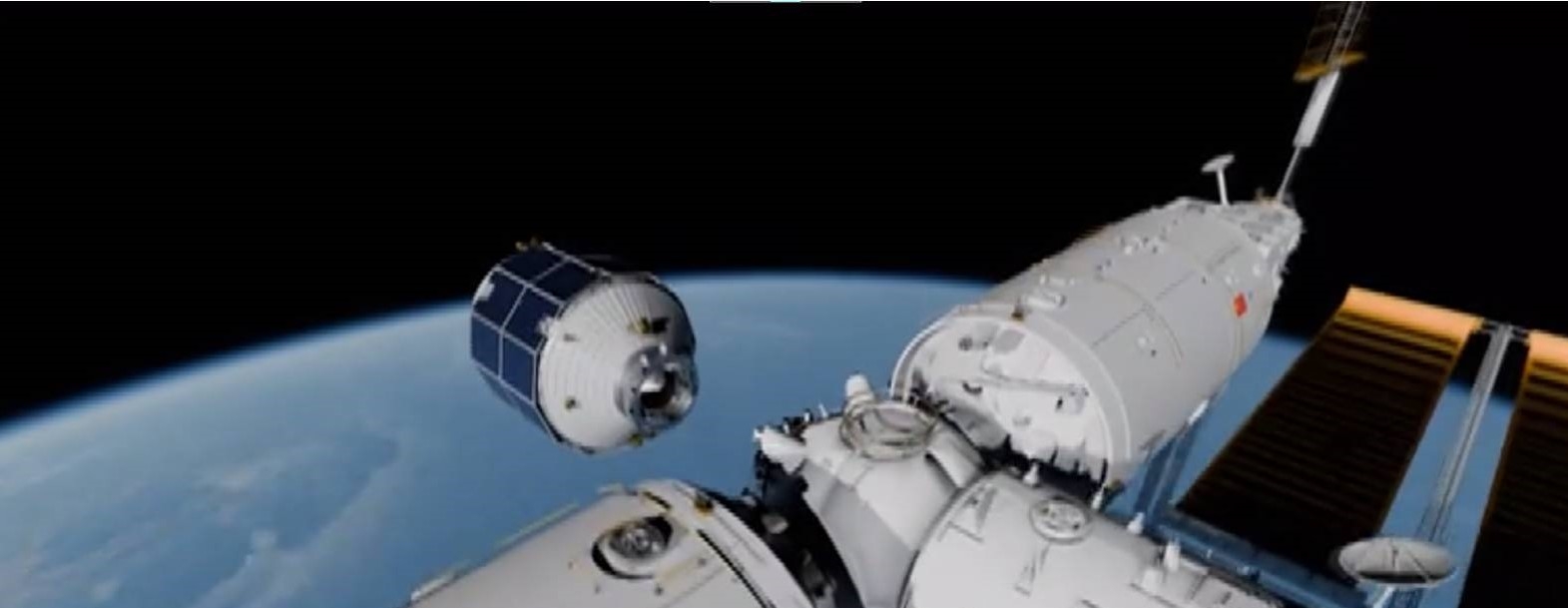
Artwork depicts Qingzhou Cargo Spacecraft docking to China’s space station.
Image credit: CCTV/Inside Outer Space screengrab
Qingzhou is developed by the Innovation Academy for Microsatellites of the Chinese Academy of Sciences.
Meaning “Light Ship” in Chinese, Qingzhou sports a cargo volume of 27 cubic meters and a capacity up to 2 metric tons. It features a four-tier shelving system with 40 compartments and interfaces for special cargo needs, China Daily reported.

The Harvard Kennedy School’s Belfer Center for Science and International Affairs has issued a new paper focused on improving space governance and accelerating the growth of the space economy.
Research Fellow Ely Sandler notes that, with human activity in outer space proliferating, existing international space law is ill-equipped to address emerging challenges such as militarization, space debris, satellite collision risks, and conflicts over resources.
Rules of the road
Sandler calls for establishing a Conference of the Parties (COP) for the Outer Space Treaty that might forge a new pathway to deal with a preponderance of thorny space-related issues.

Dean Rusk (2nd from right), Secretary of State of the United States, signed the Outer Space Treaty at a White House ceremony on January 27, 1967. At the table, right to left: President Lyndon B. Johnson of the United States; Ambassador Arthur J. Goldberg, Permanent Representative of the United States to the UN; Sir Patrick Dean, Minister of State for Foreign Affairs and Permanent Representative of the United Kingdom to the UN; and USSR Ambassador to the United States Anatoly F. Dobrynin.
Image credit: United Nations
Despite widespread agreement that shared “rules of the road” are needed, Sandler adds, current geopolitical competition makes negotiating new treaties or amending existing ones all but impossible.
Wanted: a space COP
Sandler argues that a space COP would provide a mechanism for incremental progress on space governance, converting areas of existing agreement into binding international law without requiring “all-or-nothing” treaty amendment or passage.
The paper also sets out model language for incorporating a COP into the Outer Space Treaty and outlines an initial agenda of issues.
For access to the paper, go to:
https://www.belfercenter.org/research-analysis/space-cop-governance

